Special attention has been paid in the past to the study of ceramic building materials (henceforth: CBM) of the Roman period, mainly due to the impressions of private names, military legions, and auxiliary units that they often bear.Footnote 1 Research on undecorated or unstamped CBM, however, has been extremely limited considering their abundancy at Roman-period sites. While CBM have attracted the interest of archaeological material scientists, who have investigated aspects such as their origin and the processing of raw materials,Footnote 2 there remains a notable gap in the investigation of CBM originating from the southern Levantine coast. CBM production and distribution are associated with numerous aspects of cultural identity, technological and architectural traditions, and trade. The study of trade in roof tiles can enhance our comprehension of cultural diffusion patterns while also shedding light on various economic aspects, including market dynamics, price fluctuations, demand, and competition. The Roman Empire had an interest in the industrial production of CBM for economic reasons. Moreover, in some cases, the use of CBM is considered evidence for politically motivated building campaigns.Footnote 3 The extent of CBM production, trade, and consumption makes it a significant resource for archaeologists, who can learn much about ancient economy and exchange patterns through the study of CBM.Footnote 4 Impressions bearing the abbreviated names of Roman legions serve as the focus of many studies of CBM in the southern Levant.Footnote 5 These include the well-known impressions of the Roman Tenth Legion FretensisFootnote 6 and the Sixth Legion Ferrata.Footnote 7 Other impressions include those of Colonia Aelia Capitolina and of private individuals and veterans from Jerusalem and its vicinity.Footnote 8 Petrographic analyses indicate that all the Roman- and Byzantine-period CBM from Jerusalem and its vicinity were made from local clays or marls of the Cenomanian Moza Formation.Footnote 9 CBM stamped by the Sixth Legion Ferrata from northern Israel, found mainly near the legionary camp at Legio, Kefar ‘Othnay,Footnote 10 were also locally produced.Footnote 11 Several studies were conducted on Roman CBM found in Jordan, where a local manufacture has been suggested.Footnote 12 However, no such studies have yet been conducted on CBM from sites along the southern Levantine Mediterranean coast, even though several Roman-period cities thrived in the region, such as Caesarea and Ashqelon (Fig. 1), and were likely characterized by a common way of using CBM.Footnote 13 Suitable clays for CBM could be found almost anywhere, while, on the other hand, they were bulky and costly to transport. Therefore, the common assumption has been that CBM were made near to construction sites.Footnote 14 However, CBM in the Roman Empire were sometimes traded over considerable distances, using river, coastal, and overseas transport.Footnote 15 Evidence for long-distance transportation is provided by stamp impressions, provenance studies, and attestations of CBM in shipwrecks.Footnote 16
Geographic locations mentioned in the article. (Prepared by Yuliya Gumenny, Israel Antiquities Authority.)

The 13 CBM presented in this study originated in a Roman-period bathhouse that formed part of a farmstead excavated on the northern fringes of the site of Khirbat Khaur el-Bak, ca. 4 km northeast of ancient Ashqelon (Roman-period Ascalon), on the southern Mediterranean coast of Israel (Fig. 1). The CBM discussed provide an opportunity to examine their provenance through petrographic analyses. In addition, four CBM (roof tile) samples from the Roman basilica excavations in AshqelonFootnote 17 have also been analyzed, in order to compare the Khirbat Khaur el-Bak samples to more or less contemporaneous finds from a neighboring site and to investigate the degree of uniformity in the patterns of consumption and distribution of CBM in the region. The petrographic results, considered in combination with other characteristics of the site, enable a discussion of the identity of the population of Khirbat Khaur el-Bak and its interregional connections. Moreover, this study contributes to our understanding of CBM manufacture and trade patterns in the Eastern Mediterranean.
Khirbat Khaur el-Bak in the hinterland of Ashqelon
Khirbat Khaur el-Bak, located on the plain south of the local stream of Naḥal Evtaḥ, was excavated in 2017–18 prior to construction activity to the north of the modern city of Ashqelon.Footnote 18 The excavation yielded architectural remains and other features attributed to three major periods: Hellenistic (2nd–early 1st c. BCE), Roman (mid-/late 1st–4th c. CE), and Byzantine–Early Islamic (late 4th/5th–early 8th c. CE).
The Roman period represents the main occupation phase at the site in terms of construction intensity. The Roman-period remains can be interpreted as belonging to a wealthy farmstead consisting of three main components: a winepress, a bathhouse, and a storehouse or residential structure(s).Footnote 19 The identification of the site as a farmstead is based on the combination of the above-mentioned elements, located in proximity to each other, while the bathhouse specifically indicates the rather elevated status of the site (see further discussion below).Footnote 20 It seems that all these units were constructed more or less simultaneously, that is, around the mid-/late 1st c. CE (Fig. 2). The remains occupy an area of about 30×30 m, though the overall extent of the farmstead complex is unknown, since the remains of the residential/storage structures surely continued to the east and northeast of the excavated area, as indicated by walls which extend into the edges of the excavation. Based on pottery, glass, and coins, the farmstead functioned between the middle or later part of the 1st c. to the early 4th c. CE.Footnote 21 The end of this phase is characterized by the abandonment of the winepress and bathhouse and their conversion into refuse dumps.Footnote 22 The relatively poor state of preservation of the residential and storage buildings and their reuse in the Byzantine period prevent a firm conclusion as to whether they too were abandoned in the early 4th c. or remained in use more or less continuously (though not necessarily on the same scale and by the same population). At any rate, the domestic nature of the refuse discarded in the winepress and bathhouse (as indicated by its heterogeneity; that is, the presence of ceramic, glass, stone and metal objects, and animal bones) suggests that this material originated in the nearby residential and storage buildings and represents the clearance of those buildings, apparently by new occupants of the site at the end of the Roman/beginning of the Byzantine period.
Khirbat Khaur el-Bak: plan of excavation area. (Prepared by Elena Delerson, IAA.)

The bathhouse, which yielded the CBM discussed in this article, is a small building (ca. 8×16 m) built with a west–east orientation, whose plan can be almost fully reconstructed, although most of its floors (and doorways) were not preserved (Figs. 3–4). The bathhouse consisted of the following spaces: an entrance room/courtyard (vestibulum), a dressing room (apodyterium), a cold room (frigidarium), a warm room (tepidarium), a hot room (caldarium), a furnace room (praefurnium), and a water reservoir, in addition to an underground drainage system (composed of ceramic pipes). It represents a variant of the block- or ring-type bathhouse,Footnote 23 arranged in two parallel rows composed of the cold and hot rooms, respectively.
Khirbat Khaur el-Bak: aerial view of the Roman-period bathhouse, looking north. (Photo by Emil Aladjem, IAA.)

Khirbat Khaur el-Bak: aerial view of the Roman-period bathhouse, looking west. (Photo by Emil Aladjem, IAA.)

The bathhouse walls had fieldstone foundations, which probably supported upper courses built of dressed stones that were almost completely dismantled. The vestibulum was poorly preserved, and the debris that covered its floor contained fragments of ceramic roof tiles, which suggests that the bathhouse's vestibulum was roofed; this is the only location in the bathhouse that yielded roof tiles. The tepidarium and caldarium were founded on a platform made of small fieldstones. The hypocaust systems of both the tepidarium and caldarium had a total of 33 suspensurae (maximum preserved height 0.68 m) with roughly fixed spaces between them. The suspensurae were built of square, rectangular, or (rarely) round fired bricks. A short channel built of vertically set bricks connected the tepidarium and caldarium and was designated to carry a flow of hot air from the caldarium's hypocaust to the tepidarium. At the western end of the bathhouse, the elongated, narrow furnace (praefurnium) that was connected to the caldarium's hypocaust was located. The furnace had two L-shaped walls built of square and rectangular bricks. The short sections of these walls (which delimited the caldarium's hypocaust from the west) were thinner than their long sections and were lined from the west with similar bricks coated with mortar.
The hypocaust of the tepidarium and the caldarium, as well as the furnace, were found filled with a uniform debris layer, which also covered the surrounding wall foundations. The debris was composed of ashy earth, fragmentary and complete bricks, numerous fragments of square-sectioned tubuli (ceramic heating pipes), pieces of mortar and plaster (a few of which bore yellow and red paint), marble slabs of various colors (one complete and a few fragmentary), and elongated marble fragments covered with gray mortar. The mortar and marble slabs most probably belonged to the tepidarium and caldarium floors and/or walls (which were not preserved), while the elongated marble fragments seem to have originated from another part of the superstructure. The tubuli likely ran along the inner face of the bathhouse walls, both within and above the hypocaust. As the bathhouse walls were destroyed down to their foundation courses, no tubuli were found in situ. Other components of the debris included (mostly fragmentary) pottery, glass, animal bones, a few metal objects, and an unidentified coin; these finds most probably represent refuse discarded into the bathhouse simultaneously with or shortly after its abandonment and partial dismantling. The latest pottery and glass found in the accumulations inside and outside the bathhouse date its abandonment, demolition, and subsequent conversion into a dump to the early 4th c. CE.
The Khirbat Khaur el-Bak CBM
The Khirbat Khaur el-Bak bathhouse yielded four types of CBM: roof tiles, bricks, tubuli, and drainage pipes, with the latter three categories representing the great majority of finds (bricks were also partially used in the construction of the nearby winepress – see below).
Roof tiles
The tiles include lower/flat and upper/convex tiles (tegulae and imbrices, respectively). All are made of the same coarse yellowish-orange fabric. The illustrated tegula has a flange with a curving outer edge and inner and upper straight (knife-cut) edges (Fig. 5: 1). It can be associated with Mills's tegula Type FSS3/2,Footnote 24 attributed to Phase 6 in Beirut and dated from ca. 70 CE until the mid-2nd c.;Footnote 25 this fits the date of the Khirbat Khaur el-Bak bathhouse and its associated tiles. The imbrices are of two types: one with a convex-rounded cross-section (the so-called Sicilian style; Fig. 5: 2),Footnote 26 and the other with a more flattened, faceted cross-section (the Corinthian style; Fig. 5: 3).Footnote 27 The two imbrex types and tegulae were sampled for petrographic analysis.
Khirbat Khaur el-Bak: selected roof tiles. (Scans by Avshalom Karasik and Argita Gyermen-Levanon. Photos by Dafna Gazit. Prepared by Marina Shuisky, IAA.)

Bricks
Five types of bricks were identified in the remains of the Roman-period bathhouse, at least one of which was also used in the construction of some of the walls of the nearby winepress. All of the bricks were made of a coarse, rather brittle yellowish, yellowish-orange, or yellowish-gray fabric. The most common type is roughly square (average dimensions 18.5×18.5 cm), with raised, oblique-sectioned edges. Consequently, the bricks have one more flattened and one slightly sunken surface, and their thickness is ca. 2 cm in the center and 2.7 cm along the edges (Fig. 6: 1–3). The second type is somewhat larger (20.5×21.5 cm), with slightly thickened edges, but a roughly even thickness (2 cm) throughout (Fig. 6: 4). The third type is rectangular (13.5×20.5 cm) and resembles the first type in its slightly oblique edges and uneven thickness of 1.8–2.5 cm (Fig. 6: 5). The fourth brick type is the largest; the illustrated example is incomplete (32 cm length, 25 cm known width) and hence it is unknown whether originally it had a square or a rectangular shape. It has oblique-sectioned edges, and its thickness varies from 2.5 cm in the center to 5 cm along the edges (Fig. 6: 6). The fifth and least common type is round (ca. 20 cm in diameter), with a thickness varying from 2.5 cm along the edges to 2.8 cm in the center (Fig. 6: 7). Bricks of the first to third and fifth types were used in the construction of the bathhouse suspensurae and other elements, including the L-shaped walls that framed the furnace. Bricks of the fourth type were probably used in the construction of the bathhouse floors, mainly of the caldarium and/or tepidarium. The bricks used in the construction of some of the winepress walls seem to be of the first and/or second types. Samples for petrographic analysis were taken from the first, third, fourth and fifth brick types (Table 1).
Khirbat Khaur el-Bak: selected bricks. (Scans by Avshalom Karasik and Argita Gyermen-Levanon. Photos by Dafna Gazit. Prepared by Marina Shuisky, IAA.)

Inventory and results of the petrographically analyzed CBM from Khirbat Khaur el-Bak.

Tubuli
All of the tubuli fragments found at Khirbat Khaur el-Bak are made of a coarse yellowish or yellowish-brown fabric, and they all belong to the rectangular box type, with rectangular or square air holes. They can be divided into two variants in terms of their width and depth: one is 9×9 cm (Fig. 7: 1) and the other is 14×14 cm (Fig. 7: 2), though both have the same thickness (ca. 1.4 cm); none of the tubuli fragments are complete in length, but the largest was at least 21 cm long. Similar tubuli have been published from several Roman-period contexts, for example, from the Jerusalem area.Footnote 28 Both variants were sampled for petrographic analysis.
Khirbat Khaur el-Bak: selected tubuli (1, 2) and drainage pipe sections (3, 4). (Scans by Avshalom Karasik and Argita Gyermen-Levanon. Photos by Clara Amit and Dafna Gazit. Prepared by Marina Shuisky, IAA.)

Drainage pipe sections
Pipe sections belonging to the bathhouse drainage system are represented here by two complete examples. The first, made of a coarse reddish-brown fabric, is fashioned in a regular pipe section form, namely with one wide and one narrow end and a sharply-carinated “shoulder” below the narrow end (43 cm length, 12 cm narrow inner diameter, 15 cm wide inner diameter; Fig. 7: 3). The second pipe section, made of a coarse orange-brown fabric, is different, with an almost uniform width and ribbed walls (38.5 cm length, 9 cm narrow inner diameter, 10 cm wide inner diameter; Fig. 7: 4).
Petrographic analysis
Thirteen fragments of CBM from Khirbat Khaur el-Bak were petrographically analyzed: three roof tiles (one tegula and two imbrices), three square bricks, two rectangular bricks, one rounded brick, two tubuli, and two drainage pipe sections (Table 1). These samples serve as representative examples that encompass the entire CBM assemblage unearthed during the excavations, selected through a visual assessment of their morphological and fabric characteristics. All samples were cut to standard (30 μm) thin sections and analyzed under a polarized light microscope.Footnote 29 This led to a classification of the sampled CBM into four petrographic groups according to the characteristics of their raw materials. The raw materials of the analyzed CBM were compared to previously analyzed materials from the area of Ashqelon,Footnote 30 as well as the four roof tiles (three tegulae and one imbrex) sampled from the Ashqelon basilica.Footnote 31
Results
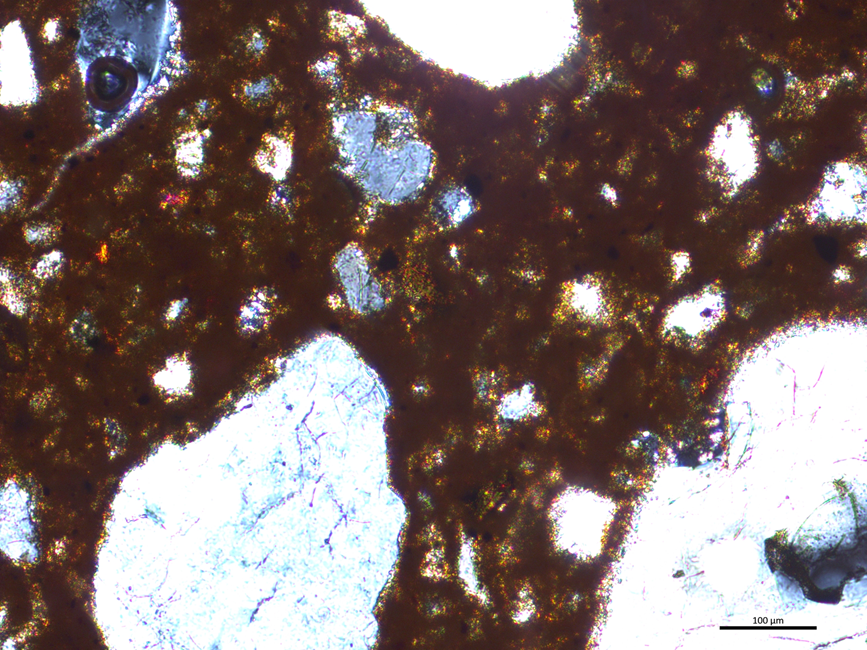
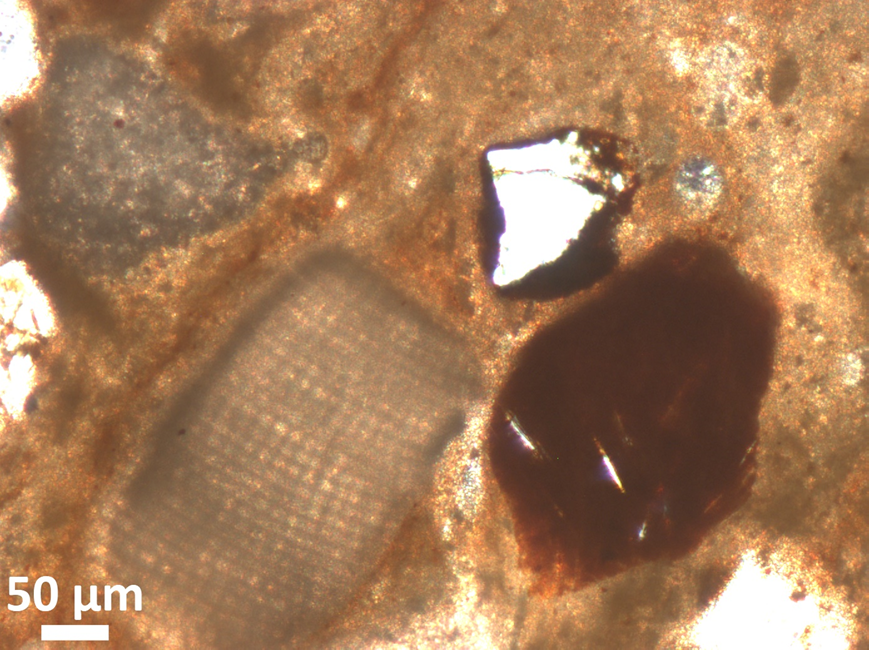
GROUP 1 – This group is represented by a single pipe (Fig. 7: 4) and characterized by an isotropic, non-calcareous matrix with abundant silt-sized quartz grains comprising ~15% of the paste. The sand-sized non-plastic components comprise ~10% of the paste and include mainly rounded to sub-rounded quartz grains of 200–300 μm, and a few coarse quartz grains of ≤1.2 mm. Other sand-sized components include a few feldspar grains and calcareous rock fragments, as well as rare chert fragments and fine hornblende and oxyhornblende (Fig. 8). A few elongated voids of vanished burnt-out straw are also visible.

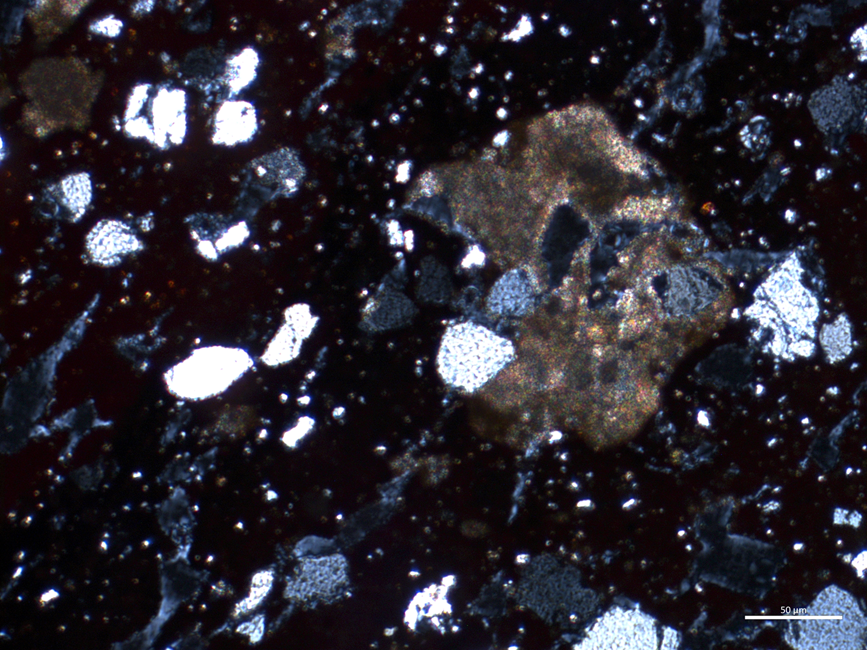
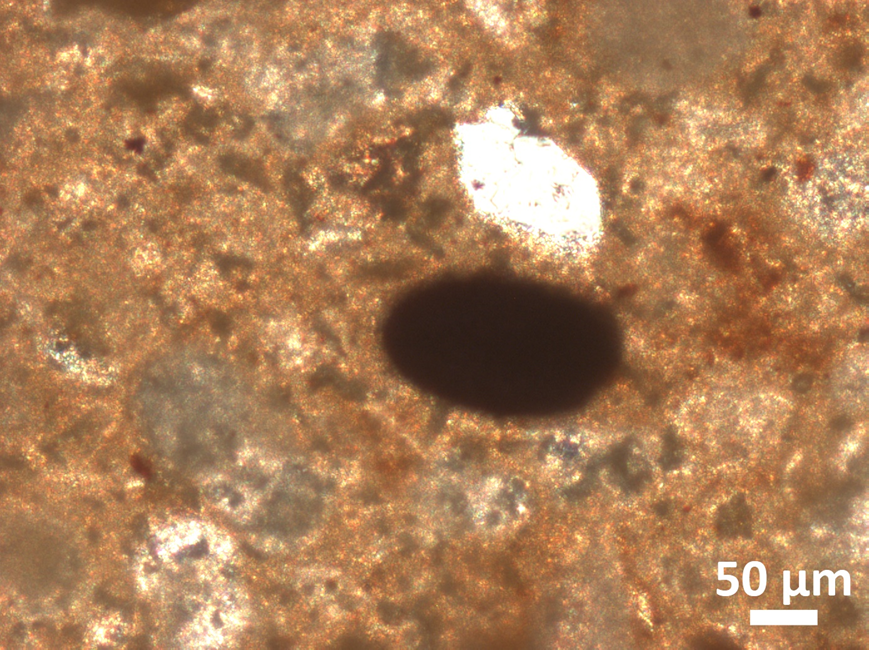
GROUP 2 – This group is represented by a single pipe (Fig. 7: 3) characterized by an isotropic, non-calcareous matrix with 5–10% very fine silt-sized quartz grains. The sand-sized non-plastic components comprise 10% of the paste and include mainly rounded to sub-rounded quartz grains of 200–500 μm and fragments of calcareous sandstone (kurkar) ≤1.2 mm (Fig. 9).

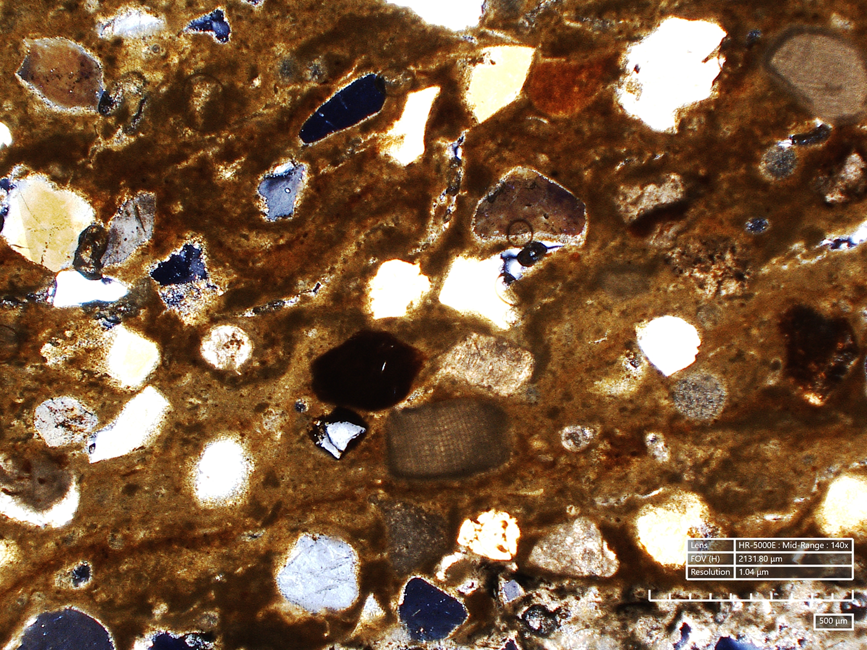
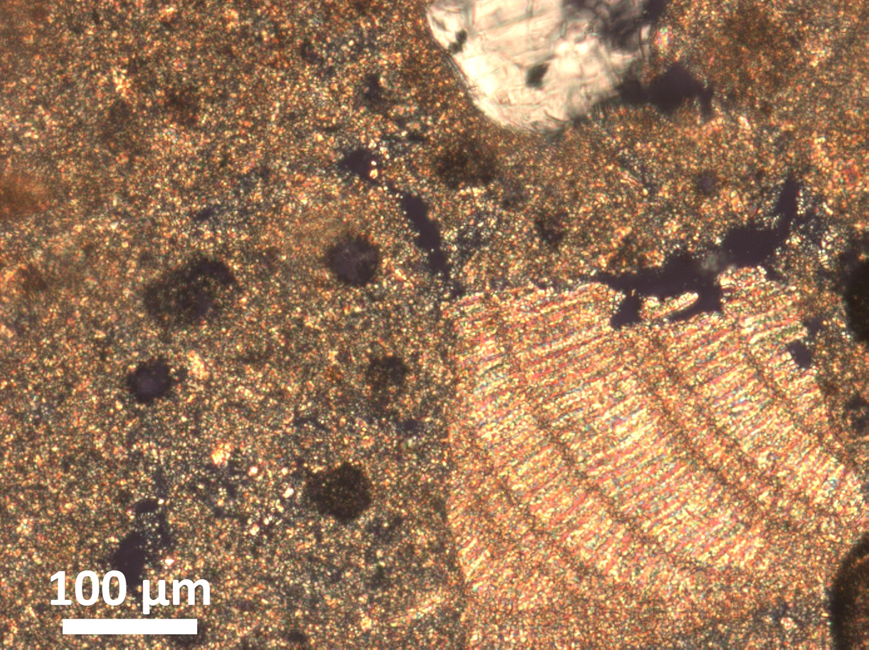
GROUP 3 – This group, to which the bricks (Fig. 6: 1–3, 5–7) and tubuli (Fig. 7: 1–2) belong, is characterized by a calcareous matrix with foraminifera that are often silicified. The foraminifera are poorly preserved and, with some degree of uncertainty, are identified as the Miocene genus Borelis sp. and the Miocene to Recent genus Orbulina d'Orbigny. Black, ferruginous, and opaque elliptical oolites and other shapes of iron oxides appear in the matrix, as well as a few appearances of glauconite pellets. The sand-sized non-plastic components are unevenly distributed, comprising 20–30% of the paste, while sub-angular and sub-rounded quartz grains of ≤300 μm predominate. A few quartz grains are coated by dark black ferruginous cement. Calcareous rock fragments of ≤300 μm are common, and coarse fragments of ~2 mm are rare. Algae fragments are common, their preservation allowing for their identification as Amphiroa sp. A few angular chert fragments, sandstone fragments with a dark black cement, and, rarely, highly weathered basalt fragments also appear (Figs. 10–14).


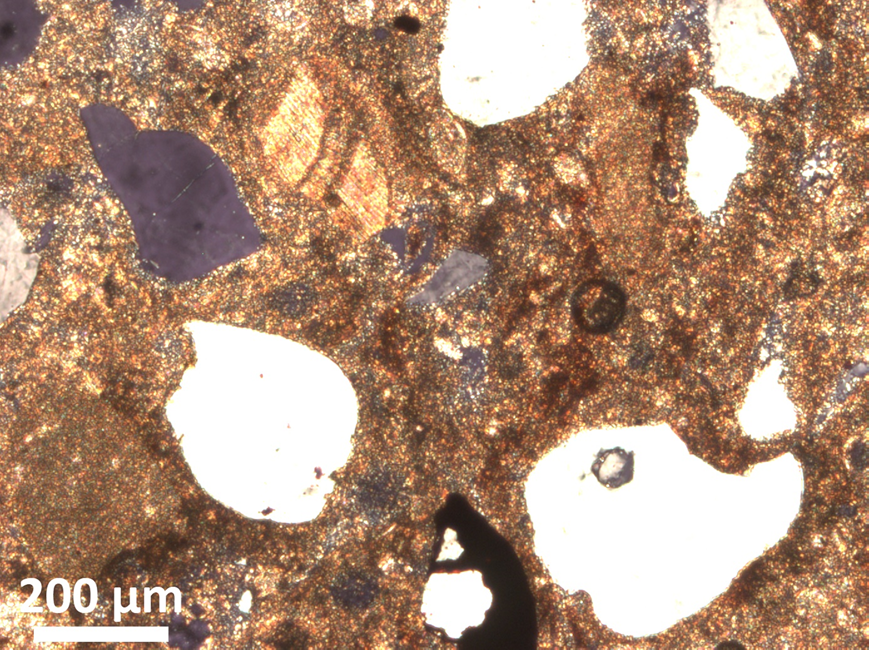
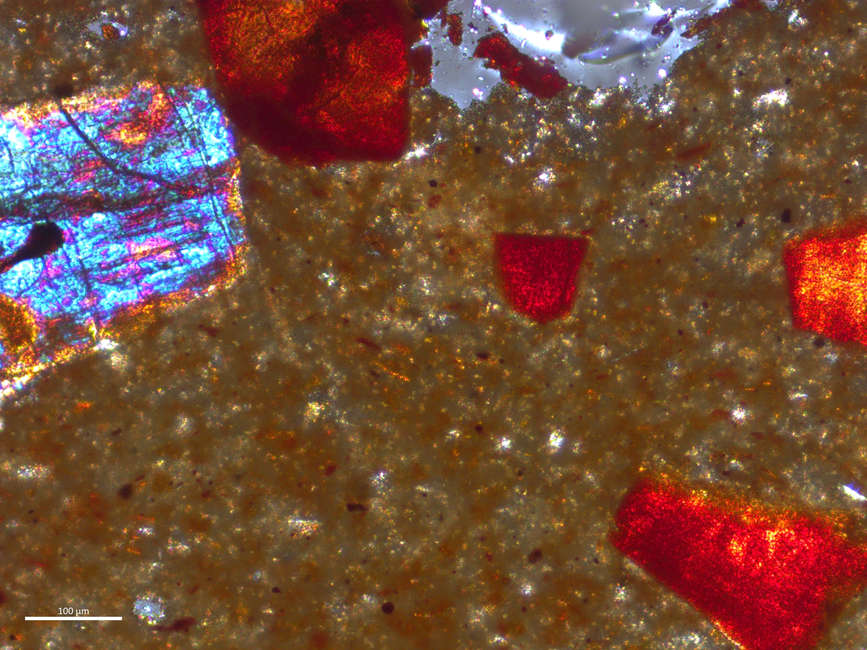
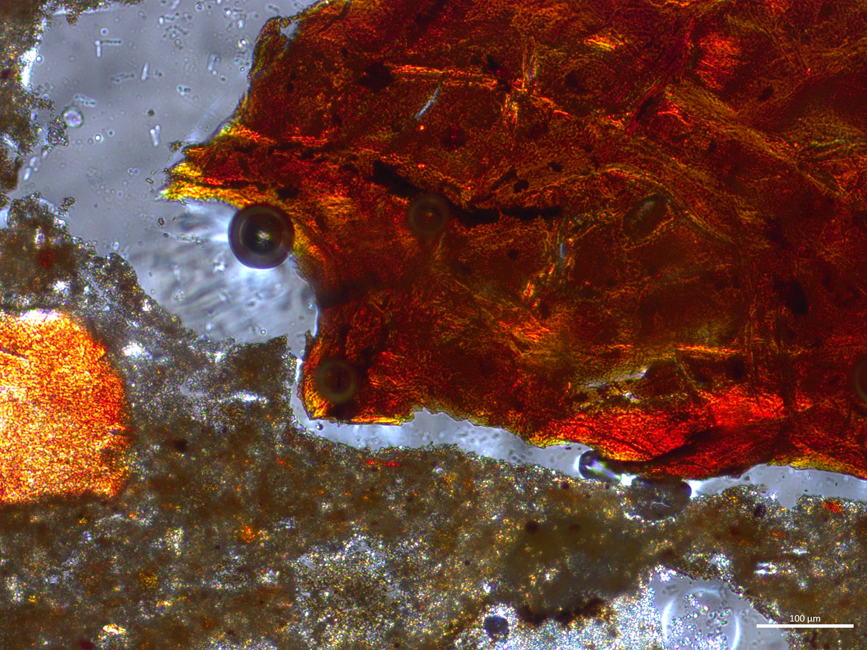
GROUP 4 – The three roof tiles from Khirbat Khaur el-Bak (Fig. 5: 1–3) and the four roof tiles from the Ashqelon basilica are attributed to this group, characterized by a dark brown matrix with silt-sized calcareous components. The sand-sized non-plastic components comprise ~20% of the paste, and the dominant component is olivine-iddingsite (up to ~300 μm) (Fig. 15). These minerals are derived from dunite, which is the olivine-rich end-member of the peridotite group of mantle-derived rocks. Other sand-sized components include a few calcareous rock fragments (up to 1 mm), serpentine, orthopyroxenes, highly weathered gabbro, and basalt. The serpentine color changed to brown-orange due to oxidation during the firing process (Fig. 16). The imbrex (Table 1: 11) is also characterized by a significant quantity of silt-sized mica laths, as well as a radiolarian chert fragment.


Interpretation
The characteristics of petrographic Groups 1 and 2 suggest a local provenance for the raw materials, in the area of Ashqelon. The geological setting of the coastal site of Ashqelon is associated with Quaternary sand dunes and kurkar rocks, as well as alluvial soil of the Kurkar Group.Footnote 32 The area is also characterized by dark brown grumusolic soils and residual dark brown soils.Footnote 33 The non-calcareous silty matrix with abundant sand-sized quartz grains and kurkar fragments fits the locally developed soils well. Previous studies indicate that ceramic vessels made of these soils are most common in Ashqelon.Footnote 34
The abundant quartz grains in the raw material of Group 3 are expected to appear in the raw materials local to Ashqelon and its vicinity. However, other components such as the Amphiroa sp. coralline alga, sandstone, ferruginous oolites, Miocene foraminifera, and basalt fragments indicate that the raw material is not local to the region of Ashqelon. The following considerations indicate that the Beirut region is the most suitable site for the identified set of components.
Quaternary sediments cover most of the Levantine coast and can vary considerably in composition. On the southern Levantine coast, the main source of the sand deposits are Nile sediments, dominated by quartz grains with a few accessory feldspar, and “heavy minerals.”Footnote 35 On the northern Levantine coast, from Akko northwards, including the restricted sandy coasts of Lebanon, this type of deposit diminishes and the sediments become increasingly calcareous with bioclastic grains and a significant appearance of coralline algae.Footnote 36 In this region, the coralline algae of the genus Amphiroa occur in bioclastic coastal sediments of Quaternary to Recent age and, in several localities, constitute nearly 70% of the sand components.Footnote 37 Raw materials used for pottery from sites on the coast of northern Israel and Lebanon (e.g., Tyre, Sarepta, and Sidon) contain fragments of Amphiroa sp. alga.Footnote 38 The significant occurrence of the Amphiroa sp. alga in Group 3 indicates a north Levantine coastal provenance for these CBM.
A gradual decrease in the quantity and size of sand quartz grains is evident as the distance from the source, the shores of the Nile Delta, increases.Footnote 39 It is noteworthy that sand-sized quartz still appears in significant quantities along several northern Levantine coasts, and the sand composition can vary considerably within a short distance.Footnote 40 The foraminifera in Group 3 are most likely derived from Miocene rocks. The Borelis occurs exclusively in the Miocene deposits, having disappeared since the Pliocene,Footnote 41 while the Orbulina d'Orbigny ranges from the Miocene to Recent deposits.Footnote 42 A sequence of Middle to Late Miocene Age limestones occurs along the Lebanese coast. These are termed the “Jebel Terbol Formation” near Tripoli and the “Nahr el-Kalb Formation” near Beirut.Footnote 43 The environs of Ras Beirut are characterized by Miocene to Recent calcareous coastal sand dunes, marl, chalk, and clays.Footnote 44 Lower Cretaceous shales, iron-rich sandstone, and marl appear immediately to the east of Beirut, together with Upper Cretaceous limestone series.Footnote 45 The area of Beirut is characterized by substantial volumes of Quaternary coastal ochre sand.Footnote 46 The Lower Cretaceous sandstone appears to be the origin of the coastal ochre sands of Beirut and its surroundings.Footnote 47 Basalt and pyroclastic rocks appear in significant exposures in Mount Lebanon, mostly north of the Beirut–Zahle line, also occurring in the Albien Formations of Lebanon.Footnote 48 These fragments were most likely transported to the coastal strip of Beirut from inland sites, where the Jurassic and Cretaceous volcanic formations are exposed. The sandstone, the ferruginous oolites, and the ferruginous-coated quartz grains in the thin sections may derive from the Lower Cretaceous sediments.
CBM from Beirut were previously analyzed and characterized by an abundance of quartz grains,Footnote 49 like petrographic Group 3. However, other components that appear in Group 3 have not been described in the fabric of the bricks from Beirut.Footnote 50
The raw material of Group 4 is not characteristic of the geology of Israel, indicating that the analyzed roof tiles from Khirbat Khaur el-Bak and the Ashqelon basilica excavations were imported to the site from an area of ultramafic igneous rocks. Ultramafic rocks, such as dunite, typically occur at the base of ophiolite sequences, where slabs of mantle rocks have been thrust onto continental crust. In the Eastern Mediterranean, ultra-basic rocks are exposed in several locations, among them the Troodos ophiolite in Cyprus, the southeastern Anatolian and the peri-Arabic ophiolite belts in Turkey, and the Baër-Bassit ophiolite in northern Syria.Footnote 51 Hence, the CBM of Group 4 were traded over substantial distances.
Within Group 4, one roof tile from Khirbat Khaur el-Bak (Table 1: 11) exhibits some distinct variations, yet its overall characteristics align with the ultramafic geological profile seen in the rest of the group. This observation hints at the possibility that this specific roof tile may have originated from a different workshop within the broader vicinity of the ophiolitic rock formations. Roof tiles found in Beirut are similar to Group 4, characterized by serpentine and volcanic inclusions. Mills suggested that they were imported from Cilicia.Footnote 52 During the Roman period, Rough and Flat Cilicia were highly active in the production of diverse amphorae that found their way to destinations such as Cyprus, the northern Levant, and Egypt.Footnote 53 Cilicia was a prominent region of ceramic production during this era, extending its distribution network to reach as far south as the northern coast of Israel, as has been previously noted in connection with the export of clay sarcophagi.Footnote 54 NAA has shown that these sarcophagi form a group with roof tiles that were manufactured in several workshops in Cilicia.Footnote 55 A petrographic analysis of sarcophagi from northwestern Israel and Cyprus has shown that their clay also matches that of the Cilician coast.Footnote 56 The abundance of sarcophagi found in Adana and Mersin, particularly concentrated in Tarsus, strongly indicates the presence of workshops in at least one of these central and eastern Cilician locations. These areas are closely linked to the Mersin ophiolite.Footnote 57 The petrographic affinities of the Group 4 CBM are similar to those of the sarcophagi, strengthening the attribution of their source to Cilicia.
Discussion and conclusions
While residential buildings, storerooms, and a winepress (as well as sporadic agricultural installations, such as an oil press) are expected for a rural farmstead, the presence of a bathhouse is unusual. The Khirbat Khaur el-Bak bathhouse, although small, contained all the basic components of a Roman bathhouse, and its interior decoration included a color mosaic floor, marble floor (and wall?) tiles, and painted plaster walls. Until the end of the Second Temple period/late 1st c. CE, most local bathhouses were built in typical private contexts; that is, mansions and palaces (including those of Herod and his successors). Later in the Roman period, the construction of bathhouses – both private and public – spread to urban settlements, waystations, and military outposts, as well as chosen farmsteads and villages.Footnote 58 For the Middle and Late Roman period, to which the farmstead complex at Khirbat Khaur el-Bak belongs, private bathhouses have been found at a handful of rural sites, usually identified as affluent mansions/villas associated with the Roman military population (including veterans), which employed specialist builders and architects familiar with bathhouse construction.Footnote 59 Notable examples are Moẓa, ‘En Ya‘al, and Ramat Raḥel, to the west and south of Jerusalem, and Khirbat ‘Urqan el-Khala and Ḥorvat ‘Ethri, near Bet Guvrin/Eleutheropolis in the Judean foothills east of Ashqelon (see Fig. 1).Footnote 60 In accordance with the above data, we suggest that the inhabitants of the Khirbat Khaur el-Bak farmstead were associated with the Roman army, leading us to infer that they practiced polytheistic beliefs. This is also suggested by the strong polytheistic background of the majority of the population of Ashqelon and its vicinity in Roman times,Footnote 61 and by two molded ceramic escutcheons in the form of Dionysos (?) heads, which decorated wine jugs/oinochoai, and a Bet Naṭṭif-type horseman ceramic figurine that were found in the refuse deposits that filled the bathhouse and winepress at the site.Footnote 62 The fabric and shape of the escutcheons suggest that they were manufactured in the Roman Tenth Legion pottery factory, which was established during the late 1st or early 2nd c. CE and excavated at the Jerusalem Convention Center.Footnote 63 The presence of a jug (or jugs) decorated with Dionysos heads and originating from Jerusalem at the Khirbat Khaur el-Bak farmstead indicates not only commercial contacts but also cultural affinity between the two locations. It is even possible that the farmstead's owner was a Roman army veteran who settled with his family on granted land, as was probably the case for some of the other Roman-period wealthy farmsteads mentioned above.Footnote 64 Moreover, prior to the Late Roman or Byzantine period, the tradition of using tiled roofs was never embraced by the local population in the southern Levant, and was largely absent from domestic and public architecture, both inland and along the coast. Even the local elite, who often embraced Greco-Roman cultural trends, did not adopt the construction of tiled roofs. Still, whether the inhabitants of Khirbat Khaur el-Bak were of local or foreign origin (or a mixture of both, even if formerly affiliated with the Roman army), the construction of a private bathhouse reflected the adoption, at least in part, of a Roman lifestyle, although the reasons for this remain unknown.Footnote 65
Contrary to the tentative assumption that CBM were locally produced, the petrographic analysis of CBM from the Khirbat Khaur el-Bak bathhouse undoubtedly indicates that most of them, with the exception of the drainage pipe sections, were imported from distant locations; these finds correspond with the imported roof tiles from the Ashqelon basilica. The presence of imported roof tiles within the basilica implies that the materials found in the nearby farmstead's bathhouse were not unique to that structure. This hints at extensive trading patterns in CBM along the coastal region, with a focus on their utilization in public buildings such as basilicas and bathhouses, primarily by foreigners. Further research is required to confirm if similar practices existed in other contemporary coastal locations.Footnote 66
The drainage pipe sections most likely originated in some neighboring, as yet unidentified workshop(s). As the production of cylindrical-sectioned pipe sections did not necessitate special skills or technology, they could be produced by local potters specializing in other wheel-made ceramics designated for the local market.Footnote 67 In addition, drainage pipes were used in various architectural contexts – domestic, public, and industrial – and were consequently in rather high demand, which could be met by local factories. The production of roof tiles deviates from the well-established wheel-made manufacturing process of pottery vessels and drainage pipe sections, requiring distinct sets of skills and technological traditions. The meticulous craftsmanship of roof tiles involved the use of molds, which was alien to the local ceramic tradition in the time period under discussion (with the exception of certain lamp types). Achieving this level of quality demanded highly skilled potters who had inherited and honed this tradition over generations. Therefore, the roof tiles (from both Khirbat Khaur el-Bak and Ashqelon) were imported from areas where there was a long tradition of building with this technique, e.g., Cilicia. In a manner akin to the situation observed at Khirbat Khaur el-Bak, where CBM were sourced from heterogeneous locales – tiles from Cilicia and tubuli and bricks from Beirut – several studies have shown that CBM from different sites were made up of a range of fabric types and included imported and locally produced examples.Footnote 68 Reynolds suggested that during the Roman period, Beirut relied almost entirely on imports for its tile supply and did not set up its own tile industry.Footnote 69 Similarly, Mills shows in his research that the roof tiles in Beirut were almost entirely imported (mainly from Cilicia), while bricks were locally produced in Beirut and other northern Levantine sites.Footnote 70
Cilician roof tiles have been found in Syria and Lebanon at Ras el-Bassit/Posideium, Ḥoms, Beirut, and Tyre.Footnote 71 In the Late Roman and Byzantine periods, at the Galilean sites of Ḥorvat Kur and Qana, locally made roof tiles were used alongside tiles imported from eastern Cilicia, perhaps around the Gulf of Iskenderun.Footnote 72 Khirbat Khaur el-Bak and Ashqelon are the southernmost Levantine sites at which Cilician roof tiles have thus far been documented.
The imported CBM used at Khirbat Khaur el-Bak were most likely purchased by the site's inhabitants at nearby Ashqelon, which was one of the major harbor towns of the southern Palestinian coast and functioned as the very gateway to the Mediterranean for the city's hinterland population.Footnote 73 Mills's studies show, based on data related to Hellenistic–Late Antique shipwrecks in the Mediterranean, that in the 1st and 2nd c. CE (the time period associated with the construction of the Khirbat Khaur el-Bak farmstead), the proportion of wrecks that carried roof tiles as their only or primary cargo was approximately 10%; specifically, the 1st-c. proportion of shipwrecks with roof tile cargoes was the highest throughout the examined period, although the overall quantity of tiles shipped in Late Antiquity (5th and 6th c. CE) was higher than in the 1th c.Footnote 74 Imported CBM could have arrived at Roman Ashqelon regularly, then been stored at designated warehouses and sold to occasional buyers; alternatively, they may have been especially ordered for specific building projects in the city and its vicinity, such as the construction of a bathhouse.Footnote 75 The convenient and accessible sea routes undoubtedly contributed to the preference for CBM supply to Ashqelon from Beirut and Cilicia.
The extensive use in Beirut of Cilician roof tilesFootnote 76 implies that both the Cilician tiles and the Beirut-produced bricks and tubuli found at Khirbat Khaur el-Bak were brought together (to Ashqelon's harbor) from Beirut, which functioned at times as a secondary distributor of Cilician tiles.Footnote 77 In this scenario, the Cilician roof tiles may have been transported to Beirut as their ultimate destination. Subsequently, in Beirut they could have been combined with other CBM for shipment to Ashqelon. This scenario highlights the role of Beirut as a staging area for CBM aggregation and redistribution. Alternatively, it is possible that the CBM under discussion arrived in a single shipment, but that the ship was first loaded with tiles in Cilicia and then continued to Beirut to be loaded with bricks and tubuli before heading to Ashqelon on the southern Levantine coast. This scenario emphasizes the possibility that the ship's journey may have included multiple stops for the acquisition of CBM from different regions. Both scenarios offer plausible explanations for the presence of imported CBM at Ashqelon and the potential roles of both Cilicia and Beirut in their distribution and transportation. Despite the extensive production of CBM by the Tenth Legion in JerusalemFootnote 78 and the apparent (commercial?) contacts and cultural affinity between the inhabitants of Jerusalem and those of Khirbat Khaur el-Bak, the CBM supplied to the latter site originated in overseas locations rather than in local production centers, such as the one near Jerusalem. Small quantities of CBM produced in Jerusalem were found in JaffaFootnote 79 and Caesarea,Footnote 80 located ca. 55 and 90 km from Jerusalem, respectively, but apparently not in and around Ashqelon. Perhaps the proximity of a harbor town (Ashqelon), regularly engaged with mass imports of various goods, influenced the inhabitants of Khirbat Khaur el-Bak to purchase the roof tiles together with the other imported CBM needed for the bathhouse construction in Ashqelon, rather than transporting the tiles from distant Jerusalem. Architectural traditions involving CBM go back a long way, to the Persian period, in Beirut.Footnote 81 They were also used when building the Roman Colonia Julia Augusta Felix Berytus, established in Beirut in the late 1st c. BCE by veterans of two Roman legions, who apparently introduced westernizing influences, including an intensive use of CBM.Footnote 82 The legionary CBM production in Jerusalem began at the end of the 1st c. CE, with the main phase of production in the following century.Footnote 83 It is therefore possible that the import of CBM by Roman Ashqelon occurred slightly before the beginning of local production of such items by the Roman army in Jerusalem, or at least before the intensification of this industry, namely when locally produced CBM were virtually unavailable for coastal communities, such as those living in and around Ashqelon.
The fact that roof tiles (and other CBM) were documented at Khirbat Khaur el-Bak primarily in relation to the bathhouse – with no examples securely associated with the dwelling/storage structures themselves (suggesting that they had flat, i.e., Levantine-style roofs) – supports Mills's claim that CBM were “a valuable commodity in [their] own right” and that, specifically, “the possession of a tiled roof [was] very expensive, and therefore, a major status signifier.”Footnote 84 Hence, in many rural settlements (e.g., in the Ḥoms region in Syria, used by Mills as an example), “roof tiles were reserved for a single structure per settlement.”Footnote 85 Russell also contends that CBM in North Africa were considered profitable commodities in their own right, with high-quality CBM being actively sought after.Footnote 86 Therefore, the CBM imported from Cilicia and Beirut likely had distinctive characteristics that rendered them appealing trade commodities, given the population's familiarity with these materials from their places of origin. At Khirbat Khaur el-Bak, the very existence of a bathhouse (a rare element in Levantine rural contexts of the 1st–2nd c. CE) into which a variety of (local and mainly imported) CBM were incorporated can on the one hand be linked to the assumed military/ex-military and perhaps foreign identity of the site's inhabitants, while on the other hand emphasizing the contrast with indigenous communities and vernacular architecture, echoing the above-mentioned picture reflected in Beirut.Footnote 87
Despite the limited dataset, mostly associated with a single site (in addition to a few comparative samples from Ashqelon), the present study sheds further light on CBM trade and consumption in the Roman Eastern Mediterranean, and consequently on the economy, architectural landscape, and cultural and ethnic dynamics of the hinterland of a major southern Levantine coastal town – Ashqelon. Moreover, this study stresses the importance of integrating petrographic analysis into the study of a given excavated site alongside the interpretation of artifactual and architectural remains. Hopefully, further interdisciplinary studies of CBM from the southern Levant will contribute to our knowledge about their production centers, their scales and modes of distribution, and their architectural and cultural contexts of usage.
Acknowledgments
We are grateful to Joe Uziel for editing the English text, and to the two anonymous reviewers for their insightful and constructive comments.