

Introduction
The hornbills (family Bucerotidae) have been recognised as important ecological indicators for forest health, especially in relationship to forest regeneration and tree diversity preservation (Meijaard et al. Reference Meijaard, Sheil, Nasi, Augeri, Rosenbaum, Iskandar, Setyawati, Lammertink, Rachmatika, Wong, Soehartono, Stanley and O’Brien2005, Kitamura, Reference Kitamura2011). Owing to their relatively large body size, hornbills require habitats with large forest patches, and this has made them useful indicators for forest condition and human disturbance as their habitat preference is towards non-fragmented forest and forest with large fruiting trees for feeding and nesting (Gale and Thongaree Reference Gale and Thongaree2006).
Understanding the threats faced by a species and relating them to population trends is important for effective conservation planning and to carry out appropriate conservation actions (Abram et al. Reference Abram, Meijaard, Wells, Ancrenaz, Pellier, Runting, Gaveau, Wich, Nardiyono and Nurcahyo2015). Habitat loss due to forest conversion is the main concern for the survival of hornbills (Naniwadekar Reference Naniwadekar, Shukla, Isvaran and Datta2015, Misni et al. Reference Misni, Rasam and Buyadi2017), though poaching is also a severe and direct threat to many hornbill species (Amin and Ripot Reference Amin and Ripot2017). The use of hornbills in cultural practices and beliefs results in some hornbill species being hunted for their feathers and casques, especially the large species which includes the Rhinoceros Hornbill Buceros rhinoceros and Helmeted Hornbill Rhinoplax vigil. The helmeted hornbills casques are known as “red ivory” due to their yellowish gold casques that are a result of stains from their preen gland that produces yellow oily secretions. This staining gives the Helmeted Hornbill casques aesthetic value, making them highly demanded for jewellery by Chinese traders and thus significantly affecting Helmeted Hornbill populations throughout its range (Kemp Reference Kemp1995, Gonzalez Reference Gonzalez2011). A press release by the Environmental Investigation Agency (EIA 2015) emphasized the severity of the threat faced by the Helmeted Hornbills, showing that black market prices for Helmeted Hornbill casques in China are up to five times higher than that of elephant ivory, with the increased supply and demand likely to continue at an escalating rate (Collar Reference Collar2015, Beastall et al. Reference Beastall, Shepherd, Hadiprakarsa and Martyr2016).
For the people of Sarawak, especially the Dayak, the hornbill is considered to be a culturally symbolic bird. Hornbills play an important role in the culture of many communities in Sarawak, carrying several different meanings to the respective indigenous communities. Hornbills are deeply associated with the local culture, and are a common subject in legends, traditional ceremonies, and beliefs (Bennett et al. Reference Bennett, Nyaoi and Sompud1997). The most well-known and majestic species of hornbill in Sarawak is the Rhinoceros Hornbill or “kenyalang”. It is used on the coat of arms of Sarawak and is also frequently incorporated into carvings, motifs, and ceremonial dresses (Amin and Ripot Reference Amin and Ripot2017). As such the kenyalang is considered a state-pride species for the people of Sarawak.
In spite of the celebrated status of hornbills in Sarawak, there is a serious lack of information on the perception and beliefs of people towards these birds, and limited research on ecological aspects of hornbills in Sarawak. The lack of attention on understanding indigenous knowledge, practices, and beliefs within local communities could affect the conservation of hornbills in Sarawak (Amin and Ripot Reference Amin and Ripot2017) as the complex nature of species management should incorporate conservation actions that are linked to both ecological and social systems (Crandall et al. Reference Crandall, Ohayon, de Wit, Hammond, Melanson, Moritsch, Davenport, Ruiz, Keitt, Holmes and Packard2018, Meijaard et al. Reference Meijaard, Mengersen, Buchori, Nurcahyo, Ancrenaz, Wich, Atmoko, Tjiu, Prasetyo, Hadiprakarsa and Christy2011a). Consistent interdisciplinary efforts are needed for successful conservation management of hornbills in Sarawak.
Understanding public awareness of the threats to hornbills and public opinion towards biodiversity protection could provide insights into garnering public support, interest, and enthusiasm at various levels, which in turn could lead to successful conservation action (Elands and Van Koppen Reference Elands and Van Koppen2007). The involvement of individuals, stakeholders, communities, and cultures is important as it leads to informed decisions for effective conservation efforts in a dynamic conservation environment.
Social survey methods to gauge public awareness and perception allows researchers to gather substantial information rapidly (Mohd-Azlan et al. Reference Mohd-Azlan, Belant and Meijaard2013). Such survey methods are also relatively inexpensive to administer and analyse. The use of questionnaires in conducting social surveys is considered to be a suitable method that embraces both ecological and non-ecological components in the management approach, specifically by gathering the perceptions of public and stakeholders (White et al. Reference White, Jennings, Renwick and Barker2005). Long-term residents in the survey area can provide valuable insights into changes that have taken place, especially in relation to the distribution of local wildlife in developing urban areas where such changes can be rapid and conspicuous (FitzGibbon and Jones Reference FitzGibbon and Jones2006).
In view of this, a perception survey on hornbills was carried out in western Sarawak in an attempt to elucidate the local communities’ perceptions and awareness of hornbills, as well as gathering information on their traditional knowledge of hornbills. The perception survey was designed to understand 1) the local communities’ awareness of the existence of hornbills, 2) the threats that hornbills face, 3) the cultural and ecological importance of hornbills and 4) their opinions about the effectiveness of existing conservation efforts for hornbills in Sarawak.
Methods
Study area
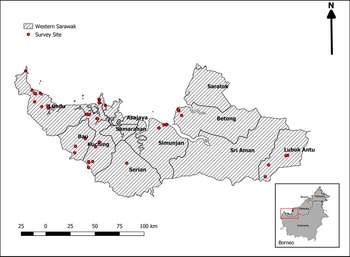
Hornbill perception surveys were carried out in areas located within and surrounding 10 Totally Protected Areas (TPA) and selected forest fragments in western Sarawak (Figure 1). The selected forest fragments include Borneo Highlands in Padawan, a nature-based resort that was nominated as an Important Bird Area (IBA) in 2010, and also Inges in Serian, a secondary forest area surrounded by oil palm plantations and logged forest. These areas are located in five administrative divisions in Sarawak, namely Kuching, Samarahan, Serian, Sri Aman, and Betong, and in total cover an area of approximately 722,654.06 ha. The dominant habitats in this region consist of mixed dipterocarp forest, peat swamp forest and mangrove forest. However agricultural and conventional logging activities have reduced much of the existing natural habitats surrounding these protected areas (Mohd-Azlan and Lawes Reference Mohd-Azlan, Lawes, Mokhtar and Halim2012). A total of 50 respondents were sampled in each survey area, resulting in a total of 500 questionnaire surveys in all 10 study areas from 187 survey sites in western Sarawak. Survey sites include villages, longhouses, sub-urban-rural areas, and urban areas surrounding TPAs.
Map of hornbill Perception Survey in western Sarawak carried out from April to November 2018, with red dots indicating the survey sites. The survey sites included villages, towns, and city areas around Sematan (Tanjung Datu National Park), Lundu (Gunung Gading National Park), Bau (Bungo Range National Park), Matang (Kubah National Park), Santubong (Santubong National Park), Padawan (Borneo Highland), Serian (Inges), Sebuyau (Ulu Sebuyau National Park), Maludam (Maludam National Park) and Lubok Antu (Batang Ai National Park).

Sampling design
Perception surveys were carried out over eight months from April to November 2018. In preparing the survey questionnaire, one of the most important aspects was to control for any acquiescence bias that might arise. Acquiescence bias is defined as “the propensity for respondents to agree (or disagree) with questionnaire items independent of their content” (Podsakoff et al. Reference Podsakoff, MacKenzie, Lee and Podsakoff2003). Thus, to lessen bias in the respondents’ choice of answers, we varied the use of positive and negative statements in the questions on perception. When conducting the perception survey, respondents were first assured of their anonymity. Such action was taken to reduce social desirability bias, where respondents might give positive answers enthusiastically, or restrain themselves in answering the questions (Meijaard et al. Reference Meijaard, Buchori, Hadiprakarsa, Utami-Atmoko, Nurcahyo, Tjiu, Prasetyo, Christie, Ancrenaz, Abadi and Antoni2011b). This is particularly important for topics that the respondents find sensitive, and thus are reluctant to provide truthful information for impression management reasons (Fisher Reference Fisher1993). Respondents’ social desirability bias could arise from the questions on important sighting information, such as the killing of hornbills. The respondents could give negative responses by under-reporting possibly due to their awareness on the protection status of hornbills or provide positive response by over-reporting due to their assumption of reporting the killing of hornbills is a form of showing their good hunting skill or knowledge of the forest (e.g. Meijaard et al. Reference Meijaard, Mengersen, Buchori, Nurcahyo, Ancrenaz, Wich, Atmoko, Tjiu, Prasetyo, Hadiprakarsa and Christy2011a).
The questionnaire was comprised of 34 questions (Appendix S1 in the online supplementary material). Local community members were asked about their encounters with hornbills, with data on the presence of hunting of hornbills also being collected. Variables used to develop the questionnaires were divided into four categories: 1) demographics, 2) knowledge, 3) sightings, and 4) perception. In assessing the knowledge of the respondents on hornbills, respondents were shown five pictures of different hornbill species and were asked to identify each species. The pictures included the male Black Hornbill Anthracoceros malayanus, female Black Hornbill Anthracoceros malayanus, Wreathed Hornbill Rhyticeros undulatus, Rhinoceros Hornbill and Helmeted Hornbill. Respondents were then asked about their sightings of hornbills, including information on localities, sighting periods, and the number of individuals encountered. Under sightings of hornbills, the respondents were also asked about the hunting of hornbills that they may be aware of in their residential areas. Questions on the perception of hornbills focused on how the respondents perceived hornbills culturally in terms of ecological importance, medicinal importance, awareness, and protection efforts. The questions were built in a balanced, scaled manner with the combination of positive and negative statements (Billiet and Davidov Reference Billiet and Davidov2008). The survey was conducted in six languages which included Bahasa Malaysia, English, Bahasa Sarawak, Mandarin, Bidayuh, and Iban.
Data collection
Open Data Kit (ODK) system was used to conduct the social surveys. ODK is an open- source application that allows systematic and efficient data collection and includes various question and answer types designed to work well even without network connection (Open Data Kit 2018). The questionnaire template was built using XLSForm. The completed template was then uploaded into the cloud server. The cloud server account was linked to the ODK Collect app in the device. ODK Collect also collects geo-point data to save location information from the survey. Date and time of each survey was automatically saved once a survey had started. Finalized forms were then sent directly to the cloud storage, allowing efficient and secure data management.
Data analyses
From the records of hornbill sightings, a Boosted Regression Tree (BRT) and Word Cloud analysis were generated. A general analysis of the demographic structure of respondents was carried out. BRT analysis with predictive linear models was carried out to relate respondents’ demographics, using demographics as predictors and questions as variables. BRT analysis allows evaluation of the strengths of predictor variables that would affect the outcome of an analysis. Identification of the strongest predictor variable was done by combining the strengths of two algorithms: regression trees and boosting. Regression trees models relate a response to its predictors by recursive binary splits while boosting allows the combination of many simple models to obtain enhanced prediction (Elith et al. Reference Elith, Leathwick and Hastie2008). The R package ‘dismo’ (Hijmans et al. Reference Hijmans, Philips, Leathwick and Elith2017) and ‘gbm’ package (Ridgeway Reference Ridgeway2017) were used for the BRT analysis. Word cloud analysis was used for visualization of texts and covered five questions in the hornbill perception survey, in which respondents were asked to give names of hornbills or identify species of hornbills based on their own knowledge. Word cloud analysis allows for visualisation of text patterns from responses collected (Younis Reference Younis2015). Information like the frequency of answer choices can be obtained by arranging the answers into a word cloud. The analysis used the text-mining ‘tm’ package (Feinerer and Hornik Reference Feinerer and Hornik2018) and ‘wordcloud’ package (Fellows Reference Fellows2018).
Results
Respondent demography
In terms of demographics, respondents consisted of 172 females (34%) and 328 males (66%). The perception survey respondents were primarily Malay (28%), Bidayuh (26%), Iban (21%) and Chinese (17%), while Selako, Melanau, Orang Ulu, Indian and Penan comprised 8%). The majority of respondents’ religions were Christian (51%) followed by Islam (31%), with Buddhism, Bahai, Taoism, Atheism and Hinduism making up the remaining 18% of respondents. The majority of respondents belonged to the group with a monthly income of less than RM 2,000 (79%). The second highest monthly income of respondents was RM 2,001 to RM 4,000 with 14%, followed by RM 4,001 to RM 6,000 with 3% and RM 6,001 to RM 8,000 with 2%. Respondent groups with monthly incomes greater than RM 10,000 and between RM 8,001 to RM 10,000 were the smallest. Regarding residency, 68% of the respondents were from rural areas while 17% and 15% were from towns and urban areas, respectively. The highest education attainment of respondents was primarily secondary school with 48%; 22% of respondents attended only primary school, and 12% had no formal education. Degree, diploma, certificate, masters, and foundation education made up less proportionally of the total respondents (18%).
Sightings
Sighting location
From the 500 respondents approached, 75% (378 out of 500) have seen a hornbill in the past. Of these 378 individuals, 63% claimed that their sighting location was in the forest, followed by 23% who saw hornbills in captivity. Approximately 8% of respondents encountered hornbills along the road while the rest (5%) saw hornbills in gardens and fields.
Sighting period and number of individuals sighted
Approximately 61% out of the 378 respondents have seen a hornbill more than a year ago, 26% saw a hornbill within a year, with 8% and 5% respondents last sighting a hornbill recently, i.e. within a month and a week of the survey, respectively.
Presence of hunting and hunting period
Information on the hunting of hornbills was gathered from the respondents to investigate the level of hunting near their residential area. Out of the 500 respondents, 88% did not participate in hunting, while 12% were involved in hunting near their residential area. When asked about the hunting period, 93% of the respondents answered that the last time someone hunted hornbills in their residential area was more than a year ago. Approximately 8% of the 53 respondents indicated that the last time someone in their residential area hunted hornbills was within a month. Only two respondents killed hornbills when they were invading fruit trees in their villages.
Perception and Boosted Regression Tree (BRT) analysis
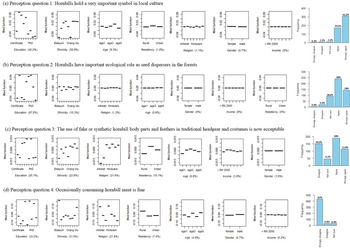
Almost all the respondents believed that “hornbills hold a very important symbol in local culture” (Figure 2a: Strongly agree: 61%; Agree: 34%). The BRT model output indicated that education (48.2%) and ethnicity (38.9%) were the two most impactful predictor variables, followed by age with 9.3% of relative influence value. Residency, religion, gender, and income made up the least impactful predictor variables. In general, these results suggest that most Sarawakians believe that hornbills are important cultural symbols within their beliefs.
Plots for the Boosted Regression Tree (BRT) models that relate the demographics of the respondents with the first four questions on their perception on hornbills and bar graphs of the perception analysis results.

Approximately 76% of the people approached think that hornbills have an important ecological role as seed dispersers in the forest (Figure 2b: Agree: 48%; Strongly agree: 28%). Education level appears to be the most powerful variable in influencing the answers of the respondents, with the highest relative inference of 87.8%, followed by the ethnicity variable (only 10.3%) and the rest of the variables below 2%. Approximately 60% concur that the use of artificial feathers is acceptable (Figure 2c: Agree: 38%; Strongly agree: 22.6%) in traditional headgear and costumes, however 151 respondents (30.9%) refused to choose fake or synthetic hornbill parts in traditional costumes. Similarly, the highest relative inference in influencing the respondents’ view was the level of education (25.1%) and their ethnicity (22.8%).
In the fourth perception question (Figure 2d), respondents were asked what they think about the occasional consumption of hornbill meat. The most common answer to the consumption of hornbill meat was “Strongly disagree” (87%), followed by 6.6% disagreeing with the statement and 6.4% unsure. Boosted regression tree modelling showed that statements on consuming hornbill meat occasionally showed a high relative influence of education. It was found that 33.2% of the answers to the question were influenced by education of the respondents. Ethnicity is the second most influential predictor variable with 31.9%, followed by religion (21.8%), residency (7.4%), age (4.8%), gender (0.7%) and income being the least influential (0.2%). When asked further on their opinions, most of the respondents were against the consumption of bushmeat as they felt it was not ethical to hunt down such threatened birds and that existing food sources were enough to sustain human needs.
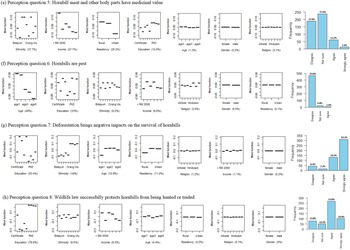
The majority of respondents (47.6%) were unsure about the statement “hornbill meat and other body parts have medicinal value” (Figure 3e), followed by 37.6% disagreeing and 12.2% agreeing with the statement. The strongest variable accounting for the pattern of respondents reacting to the statement was respondent ethnicity, with the highest relative inference of 37.7%, followed by the variable income with a relative inference of 27.7%. For respondents of Bidayuh ethnicity, some elders believed that the Helmeted Hornbill casque can be used to cure any type of poisoning. This traditional belief is however no longer practiced and is said to be something that was only verbally passed on by their ancestors. Residency is the third variable with a relative inference of 20.2% and education came in fourth with 12.6%. The statement “hornbills are pests” received “disagree” as an answer from 93.6% of respondents (Figure 3f). The preponderance of respondents regarded hornbills as wildlife that feeds on food resources from the forest and stays away from human settlements. They do not see hornbills as wild animals that would threaten their crops. Only approximately 2% of the respondents agreed with the statement that hornbills were invasive pests. The respondents who agreed to this statement claimed that they considered hornbills as pests during the fruiting of their fruit trees, such as the dabai plant (Canarium sp.) and bananas. The variable having the most influence in the answers to the statement “hornbills are pests” was age, with 49%, followed by the education with 33%.
Plots for the Boosted Regression Tree (BRT) models that relate the demographics of the respondents with questions five to eight on their perception of hornbills and bar graphs of the perception analysis results.

A majority of respondents believed that deforestation created negative impacts for the survival of hornbills (Figure 3g: Strongly agree: 62.2%; Agree: 26.2%). The boosted regression tree model shows that education (55.4%) has the most impact. Ethnicity came in second with a relative inference value of 18% and age and residency had values of 12.9% and 11.2% respectively. The statement “wildlife law successfully protects hornbills from being hunted or traded” was agreed by a large number of respondents (Figure 3h: Agree: 53.6%; Strongly agree: 20.4%). Generally, respondents were aware of the existing Sarawak Wild Life Protection Ordinance 1998 (WLPO 1998) for protected and totally protected wildlife. The boosted regression tree model shows the highest correlation between education and the respondents’ answers to the statement, with a relative inference of 76.6%. This could indicate the importance of education in spreading awareness on wildlife conservation through implementation of wildlife protection laws.
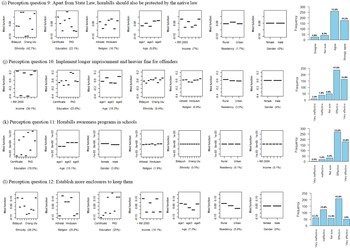
A majority of respondents agreed that hornbills should be protected by native laws in addition to protection under state laws (Figure 4i: Agree: 51.6%; Strongly agree: 35.2%). The most powerful variable as generated by the boosted regression tree model is ethnicity, with a relative inference of 42.7%, followed by education with a relative inference of 23.1% and religion with 16.7%.
Plots for the Boosted Regression Tree (BRT) models that relate the demographics of the respondents with questions nine to twelve on their perception of hornbills and bar graphs of the perception analysis results.

The last five perception questions in the survey were on the effectiveness of approaches related to conservation efforts for hornbills. Most respondents view longer imprisonment and heavier fines for offenders as an effective conservation approach for hornbills (Figure 4j: Effective: 47.6%; Very effective: 32.8%). The variables income and education ranked the highest in the relative inference with 38.1% and 23.8% respectively. Age is the third variable in influencing the respondents’ answers with a relative inference of 18.3%. The question on having hornbill awareness programs in schools resulted in a relatively positive feedback, with more than half the respondents reacting positively to this awareness approach (Figure 4k: Effective: 53.6%; Very effective: 35.8%). The boosted regression tree analysis showed that education had the highest influence on the (78.5%). The majority (72%) of respondents who believed having hornbill awareness programs in schools to be very effective have a degree or diploma education background. Age came in second with relative influence values of 15.1%. Respondents from the age groups of 45–54 years and more than 55 years of age (57%) tend to hold the view that hornbills are pests.
The third perception question on the effectiveness of conservation approaches was on the establishment of ex-situ conservation for hornbills. This received a mix of positive and negative perceptions from respondents. Approximately 41.6% of respondents found establishment of more hornbill enclosures to be an effective approach in conserving hornbill species, while 24.8% found it ineffective and approximately 11.4% were unsure of such approaches (Figure 4l:). Three variables yielded similar high relative inference values in the boosted regression tree model output – ethnicity, religion, and education. Ethnicity had a relative inference value of 26.2% while the religion variable was 25.8%.
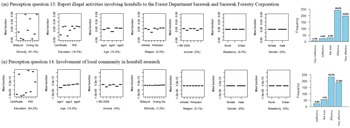
The statement “report illegal activities involving hornbills to the authorities” (Forest Department Sarawak and Sarawak Forestry Corporation) received positive feedback, with more than half of the respondents finding the approach effective (Figure 5m: Effective: 48.4%; Very effective: 39.6%). Ethnicity was the variable with the highest relative inference in the answering pattern for this statement, with a relative inference value 61.4%. The last perception question on the effectiveness of conservation approaches for hornbills was on the involvement of the local community in hornbill research. Most of the respondents (46.4%) said that they were unsure of the effectiveness of such an approach. When asked about this, the majority answered that they have not been informed or made aware of such an approach. However, they were positive about the efficacy of including the local community in hornbill research as it would spread conservation awareness. Approximately 37.8% of the respondents thought such methods would be very effective. BRT analysis on the questions of the effectiveness of hornbill conservation approaches generated education as the most powerful predictor variable in the contribution to the responses. Education influenced the responses the most with a relative inference value of 84.2%.
Plots for the Boosted Regression Tree (BRT) models that relates the demographics of respondents with questions thirteen to fourteen on their perception of hornbills and bar graphs of the perception analysis results.

Word cloud analysis
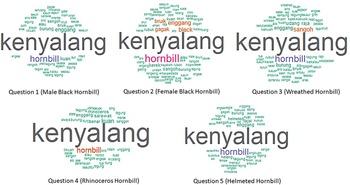
Word cloud analyses were used to display word choices of respondents for questions that required their knowledge on hornbill species (Figure 6), and also discovering the term associations and patterns of word choices in text outputs (Younis Reference Younis2015).
Results of the word cloud analysis for the respondents’ knowledge on the names of five species of hornbills. All hornbill species are primarily referred to as “kenyalang”.

It was found that the most used word to describe the five different hornbill pictures was “kenyalang”, which refers to Rhinoceros Hornbill in Bahasa Sarawak and Iban. The second most used word was “hornbill”. Some other words used to describe hornbills were also used, for instance “enggang” and “alau”. In general, the different hornbill species were regarded as a single species. Sarawak’s coat of arms, that includes the kenyalang, may have made it easy for locals to identify the kenyalang, thus influencing the respondent’s answers. A majority of respondents answered “hornbill” or “kenyalang” when shown the picture of the Rhinoceros Hornbill. It was found that some respondents gave the answer “burung Sarawak”, translated directly as “Sarawak bird”, given the symbolic value of the coat of arms of Sarawak.
A small number of respondents provided the local names of the different hornbill species with respect to their ethnicity. For example, the Rhinoceros Hornbill is known as “kenyalang” in Iban language while the Helmeted Hornbill is “tajai”. In Bidayuh language, Rhinoceros Hornbill is “kuan” or “tikuan” while the Helmeted Hornbill is called “togung”. In Selako language, the Rhinoceros Hornbill is known as “aro” while the Helmeted Hornbill is “tagung” (Table 1).
The local names of the hornbill species used for word cloud analysis.

Discussion
The present study provides insights to assist in the design and planning of conservation efforts for the hornbills of Sarawak. The findings of this study have clearly shown that the majority of respondents were aware of the existence of hornbills and regarded hornbills as very important symbols in local culture. They were also aware of the existence of the WLPO 1998 and how the hornbills are under protection within the Ordinance. However, most respondents believe that there is a need to increase the level of involvement among the public in making hornbill protection effective. Some respondents believe that there should be more engagement activities organised by the relevant authorities, such as public talks or radio announcements. A lack of interaction between conservation biologists and the general public related to biodiversity conservation issues may have led to a great discrepancy in conservation and management understandings, and there is a need to increase these connections to promote a greater recognition of conservation science (Brewer Reference Brewer2006). This suggests that an increase in awareness programmes could facilitate an increase in local knowledge on the ecological importance of hornbills in tropical rainforests. The introduction of additional awareness, education and outreach programmes related to the protection and conservation status of hornbills provided by the relevant authorities would be a significant step in the right direction. The data collected in this study have shown that the majority of respondents are keen and open to introducing more awareness programmes for hornbills in schools are those with bachelor’s degree and diploma education backgrounds and are in the 45–54 years and more than 55 years age groups. This suggests additional efforts are needed to introduce such programmes at the primary and secondary education levels.
It is important to incorporate relative conservation messages within mainstream education systems in order to allow better understanding on the importance of hornbill conservation in Malaysia. A change in perception is essential to allow positive assimilation of conservation science in the existing formal education system (Dhar et al. Reference Dhar, Rawal, Airi, Bhatt and Samant2002). Public talks, awareness in schools and meetings with local stakeholders have proven to be effective in spreading conservation messages (Engelbrecht et al. Reference Engelbrecht, Theron, Turner, Van Wyk, Pienaar, Kemp and Kemp2007). The dissemination of conservation awareness through media, such as newspapers, popular magazines, and social media platforms have proven to be very powerful tools for conservation awareness (Parsons et al. Reference Parsons, Shiffman, Darling, Spillman and Wright2014). Data from social media are very likely to play a vital role in biodiversity monitoring through information extraction on the spatial-temporal patterns, values and activities related to biodiversity conservation of diverse groups of people, thus facilitating the identification of biodiversity threats and conservation opportunities (Di Minin et al. Reference Di Minin, Tenkanen and Toivonen2015). Based on the findings of this study, education is the most influential variable in the respondents’ answers. Incorporation of educational postings on social media platforms therefore could be very effective in spreading conservation messages, especially to people of the younger age groups. An example of a successful use of such methods can be seen in the works of Rangkong Indonesia (Indonesia Hornbill Conservation Society) in Indonesia, a research unit under the Rekam Nusantara Foundation. Rangkong Indonesia (rangkongID) has set up multiple social media pages on Facebook, Instagram, and Twitter to engage with members of the public to directly convey conservation messages about hornbills in Indonesia (Rangkong Indonesia 2018). Examples of their educational social media postings include quizzes, infographics, and conservation news about hornbills. It is highly recommended that the relevant authorities involved in hornbill conservation in Sarawak emulate RangkongID’s steps to further enhance conservation efforts for hornbills in Sarawak.
The Bidayuh elders claimed that the casque of the Helmeted Hornbills contained medicinal value (i.e. when turned into powdered form, it could cure any type of poisoning). However, this is no longer practiced, as they are aware that Helmeted Hornbills are rare and protected. This could reflect the value the respondents have put on the traditional use of hornbills by acknowledging their traditional benefits, but also could be due to respondents’ awareness of existing legislation. Ethnozoological value of hornbills, particularly on traditional medicine practices, has been highlighted in several studies in South-east Asia and also South Africa for the case of Rufous Hornbill (Buceros hydrocorax hydrocorax), Luzon Tarictic Hornbill (Penelopides manillae manillae) and Southern Ground Hornbill (Bucorvus leadbeateri) (Derwent and Mander Reference Derwent and Mander1997, Engelbrecht et al. Reference Engelbrecht, Theron, Turner, Van Wyk, Pienaar, Kemp and Kemp2007, Gonzalez Reference Gonzalez2011). The use of hornbills in traditional medicine trade often involves consumption of hornbills in dried or oil form (Datta Reference Datta, Kemp and Kemp2007), however there is inadequate data on the use of such medicinal methods in Sarawak.
Most respondents are supportive towards the use and establishment of native laws in addition to the existing SWLPO 1998, which respondents believe could assist in conserving hornbills in their area. Respondents believe native laws would provide hornbill protection in the wild and allow preservation of their traditional beliefs. Ethnicity was the most influential predictor variable for this perception. This suggests that wildlife conservation could be incorporated into “Adat” or native laws or customs for protecting hornbills based on customary and personal conduct at the grassroots level. Although many respondents were aware of conservation efforts in switching to the use of synthetic or artificial hornbills body parts or feathers, some believe in the importance of holding on to their traditional customs. Some respondents even believe that having one or more genuine feathers embedded with the fake ones to respect local traditions would be beneficial. This situation brings up some fundamental questions in light of the conservation approaches for hornbills. When there is demand, there is a potential poaching threat to the species where cultural needs may supersede the protection status of a species. There is a need for additional, in-depth research on the effects of hunting pressure towards hornbills in understanding human-hornbill interactions, especially in relationship to the use of hornbills in traditional culture and beliefs for improving conservation efforts for these enigmatic birds (Gonzalez Reference Gonzalez2011). Continuous effort from all stakeholders involved would help to cover the many complexities of conservation management involving ecological, political, socio-cultural and economic factors and also to create a solid physical presence on the ground (Ancrenaz et al. Reference Ancrenaz, Dabek and O’Neil2007, Meijaard et al. Reference Meijaard, Mengersen, Buchori, Nurcahyo, Ancrenaz, Wich, Atmoko, Tjiu, Prasetyo, Hadiprakarsa and Christy2011a).
Religion also appeared to be one of the most important predictor variables in many responses within the perception survey, suggesting that religion could play a major role in conservation. As a creation of feelings and beliefs, religion is historically considered as a powerful instrument in nature conservation and the recognition of inviolability would be influential for protection of nature (McLeod and Palmer Reference McLeod and Palmer2015, Kala Reference Kala2017). Incorporation of religions in biodiversity conservation has provided positive impacts as it raises awareness and uplifts public concerns in Malaysia (Clements et al. Reference Clements, Foo, Syahaneem, Rahman, Ruqaiyah, Mustafa and Zulkifli2009). In Indonesia, environmentalists worked with local Hindu religious leaders to ban the use of turtle meat in local ceremonies, utilising local TV channels to raise awareness of the endangered sea turtles (McLeod and Palmer Reference McLeod and Palmer2015). In 2014, Islamic clerics in Indonesia successfully issued a religious decree (fatwa) to forbid wildlife trade under Islamic law resulting from a partnership between the ARC (Alliance of Religions and Conservation), WWF-Indonesia and the Indonesian Council of Ulema (McLeod and Palmer Reference McLeod and Palmer2015). Such approaches should be used consistently and regularly so that the environmental issues are presented, and people are reminded of such environmental importance (Azad Reference Azad2012).
This study has shown that more effective conservation of hornbills in Sarawak would demand a high level of awareness and understanding by local Sarawakians. There is a significant scope for further improvements that could be executed by conservation agencies in Sarawak using the findings of this study. We would like to recommend the relevant conservation agencies in Sarawak to a) implement effective conservation awareness dissemination through social media platforms, b) increase ecological and socio-cultural research on hornbills in Sarawak for future reference, c) embed fundamentals of conservation into the mainstream education system and d) establish an improved hornbill data collection in Sarawak by involving local communities. The use of social media platforms in broadcasting conservation awareness for hornbills should reach out to audiences from a wide range of backgrounds effectively. Research on the ecology of hornbills and socio-cultural information is lacking in Sarawak, especially research that involves collaboration with local communities.
Conclusion
Understanding the perceptions of local people towards hornbills in Sarawak is important. Improved knowledge will assist in constructing sound conservation policies for Sarawak’s hornbill species. This survey elucidated how people perceive hornbills and how hornbills have synergized into local culture and daily livelihoods. In general, local communities value hornbills highly as cultural symbols and in traditional beliefs. The use of socio-cultural data for hornbills is fundamental in better understanding the nature of threats and connecting the gaps between ecological and socio-cultural aspects. Such information is vital for formulating state-wide policies which later can be used to draft new policies and the amendment of the existing Sarawak Wild Life Protection Ordinance, 1998.
Supplementary Materials
To view supplementary material for this article, please visit http://dx.doi.org/10.1017/S0959270921000381.
Acknowledgements
We thank Universiti Malaysia Sarawak, Ministry of Higher Education for the grant (NRGS/1087/2013/(01), Forest Department Sarawak for the permit (NPW.907.4.4.(Jld.14)-71 and No. WL043/2017). We thank Mr Oswald Braken Tisen and Ms Sim Leh Keng from Sarawak Forestry Corporation for their support and collaboration and Lukmann Haqeem for his guidance in the analysis of this study. Last but not least, we thank Margot Brie, Philip Christopher Jitam, Sally Soo, Trevor Allen Nyaseng, Osman Bin Abdullah, Henry Anak Aboi, Kotis Anak Noel, Timotius Ngau Wan, Siang Anak Sayod, Leena Anak Assan and Leon Jimbau for their help in the perception surveys, and also every respondent that we approached for providing us their time and knowledge. We are also grateful to the anonymous reviewers and editor for improving the earlier version of this manuscript, and we thank Tony Pine and Marius Maiwald for helping us in the language editing.