Statement of Research Significance
Research Question(s) or Topic(s): This study examines how anxiety presents, is identified, assessed, and treated in children with dual diagnosis. It addresses key questions regarding the challenges of recognizing anxiety within this population, and the effectiveness of current intervention approaches. Additionally, it explores how overlapping symptomatology between disorders, and anxiety may complicate accurate diagnosis and treatment planning. Main Findings: The literature indicates that anxiety is highly prevalent yet frequently under-recognized in children with co-occurring disorders. In terms of treatment, modified cognitive-behavioral therapy (CBT) and caregiver-mediated interventions demonstrate promise, although empirical evidence remains limited, particularly for children with more severe intellectual impairments. Study Contributions: This study highlights critical gaps in assessment and intervention practices of anxiety in children with co-occurring disorders. Furthermore, it emphasizes the importance of individualized, multidisciplinary care and guiding future research toward more inclusive and methodologically rigorous studies focusing on this underserved population.
Introduction
Autism spectrum disorder (ASD) is a common neurodevelopmental condition characterized by notable challenges in social interactions and behaviors, including difficulties in social communication and the presence of restricted and repetitive behaviors or interests (APA, 2013). Information gathered from the Autism Spectrum Disorders in the European Union (ASDEU) initiative reveals an average occurrence of ASD at 12.2 per 1,000 children between the ages of 7–9 years, translating to approximately 1 in 89 (Ostrowski et al., Reference Ostrowski, Religioni, Gellert, Sytnik-Czetwertyński and Pinkas2024). In recent decades, there has been a consistent rise in the occurrence of ASD across various parts of the world, notably in Europe and the United States.
The elevated prevalence rates are especially troubling considering the association of ASD with various other debilitating mental health conditions (Winch et al., Reference Winch, Klaver, Simpson, Calub and Alexander2021). Early identification and diagnosis allows for the integration of appropriate and individualized therapeutic treatment approaches, which can greatly improve the everyday lives of those with ASD (Ostrowski et al., Reference Ostrowski, Religioni, Gellert, Sytnik-Czetwertyński and Pinkas2024). About 37% of children and adolescents diagnosed with ASD also have a co-occurring intellectual developmental disorder (IDD) (Rivard et al., Reference Rivard, Terroux, Mercier and Parent-Boursier2015). Studies indicate that the co-occurrence of ASD and IDD can intensify potential adverse effects for affected young individuals (Pinborough-Zimmerman et al., Reference Pinborough-Zimmerman, Satterfield, Miller, Bilder, Hossain and McMahon2007). Children with comorbid ASD and IDD often face heightened challenges in areas, such as adaptive functioning, emotional growth, and managing aggressive behaviors (Matson & Shoemaker, Reference Matson and Shoemaker2009; Sappok et al., Reference Sappok, Heinrich and Böhm2020; Tonnsen et al., Reference Tonnsen, Boan, Bradley, Charles, Cohen and Carpenter2016). The severity of IDD adds complexity to this relationship, as some children may show only minor deficits in adaptive functioning relative to those with more severe deficits (APA, 2013).
Current research indicates that anxiety disorders and anxiety-related symptoms frequently coexist as significant mental health challenges for children and adolescents with ASD, irrespective of their intellectual functioning (Hansen et al., Reference Hansen, Oerbeck, Skirbekk, Petrovski and Kristensen2018; Hossain et al., Reference Hossain, Khan, Sultana, Ma, McKyer, Ahmed and Purohit2020; Kirsch et al., Reference Kirsch, Huebner, Mehta, Howie, Weaver, Myers, Voigt and Katusic2020). The initial comprehensive account of ASD involving a group of 11 children, as reported by Kanner (Reference Kanner1943), highlighted that each child displayed significant symptoms of anxiety (Winch et al., Reference Winch, Klaver, Simpson, Calub and Alexander2021). After that, lots of research has persisted in uncovering the strong connections between anxiety and ASD (MacNeil et al., Reference MacNeil, Lopes and Minnes2009; van Steensel et al., Reference van Steensel, Bögels and Perrin2011; van Steensel & Heeman, Reference van Steensel and Heeman2017), although the current prevalence rates differ significantly. Clinically significant anxiety is believed to affect 40 to 69% of the children and adolescents with ASD (Kerns et al., Reference Kerns, Winder-Patel, Iosif, Nordahl, Heath, Solomon and Amaral2020; van Steensel et al., Reference van Steensel, Bögels and Perrin2011). Specific anxiety disorders in this population frequently encompass specific phobias, social anxiety disorder (SAD), and generalized anxiety disorder (GAD) (Leyfer et al., Reference Leyfer, Folstein, Bacalman, Davis, Dinh, Morgan, Tager-Flusberg and Lainhart2006; Magiati et al., Reference Magiati, Lerh, Hollocks, Uljarevic, Rodgers, McConachie, Ozsivadjian, South, Van Hecke, Hardan, Libove, Leekam and Simonoff2017; van Steensel & Heeman, Reference van Steensel and Heeman2017). For individuals with co-occurring IDD, the prevalence rates of anxiety are estimated to be significantly elevated, reaching as high as 62.2% (Gobrial, Reference Gobrial2019; Green et al., Reference Green, Berkovits and Baker2015).
With regard to the anticipated high prevalence of anxiety among young individuals with co-occurring ASD and IDD, there remains significant uncertainty/challenge in the field about the most effective methods for identifying and assessing and diagnosing and treating anxiety in this distinct group. As a result, the main objective of this narrative review is to examine and integrate the existing literature to pinpoint effective strategies for professionals engaging with this significantly neglected group.
Materials and methods
Literature search strategy
A search strategy was employed to identify relevant studies addressing the effective strategies and adjustments for evaluating and treating anxiety in children and adolescents who have co-occurring ASD and IDD. A range of electronic databases, including PubMed, MEDLINE, and Google scholar were queried using diverse combinations of the following keywords: “autism spectrum disorder,” “intellectual disability,” “anxiety,” “assessment,” “children,” “treatment,” “non-pharmacologic treatment,” and “psychological intervention.” The exact search terms for PubMed and MEDLINE were: ((((((((physiological) OR (behavioral)) OR (multiple-informant assessment)) OR (psychological intervention)) AND (anxiety)) OR (mental health)) AND (child)) OR (adolescen*)) AND (autism spectrum disorder/intellectual disability) https://pubmed.ncbi.nlm.nih.gov/?term=((((((((physiological)%20OR%20(behavioral))%20OR%20(multiple-informant%20assessment))%20OR%20(psychological%20intervention))%20AND%20(anxiety))%20OR%20(mental%20health))%20AND%20(child))%20OR%20(adolescen*))%20AND%20(autism%20spectrum%20disorder%2Fintellectual%20disability)&filter=dates.2000-2026&filter=pubt.clinicaltrial&filter=pubt.comparativestudy&filter=pubt.controlledclinicaltrial&filter=pubt.randomizedcontrolledtrial&filter=lang.english&filter=hum_ani.humans&filter=age.allchild&filter=other.medline.
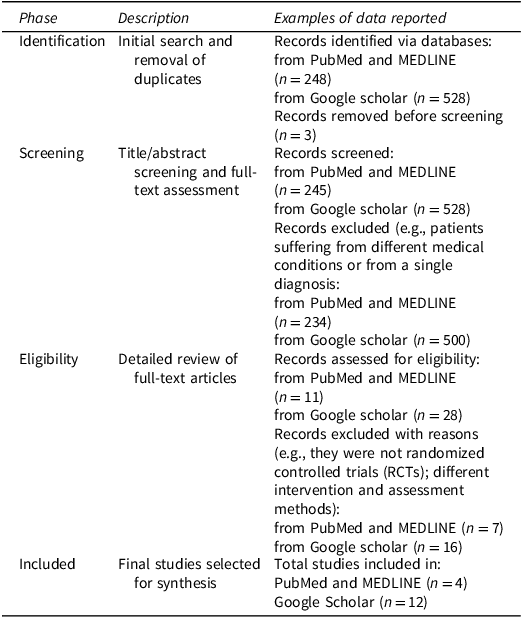
The search was restricted to studies published in English from 2020 to 2026. Despite the fact that there is still literature of some years ago in neurodevelopmental disorders, this review seeks to enhance the knowledge of contemporary evaluation methodologies and non-pharmacological psychotherapeutic interventions. The last search was performed on the 24th of April, 2026. Filters were used, such as the article’s language: English, subjects: humans, age range: child and studies of free full text were included, as well as Classical Articles, Clinical Trials, Comparative studies, Controlled Clinical Trials, and Randomized Controlled Trials (RCTs). Moreover, we did not attempt to find gray literature and only relied on published peer-reviewed studies. Relevant articles were also examined for their bibliographies, and certain references were incorporated to guarantee a thorough coverage of the pertinent literature (Table 1).
Identification of studies via databases and registers

Table 1 Long description
A table detailing the phases of a study search process. The table has four rows and three columns. The columns are labeled Phase, Description, and Examples of data reported. The rows are labeled Identification, Screening, Eligibility, and Included. Under Identification, the description is Initial search and removal of duplicates, and the examples of data reported are Records identified via databases from PubMed and MEDLINE (n = 248), from Google scholar (n = 528), and Records removed before screening (n = 3). Under Screening, the description is Title/abstract screening and full-text assessment, and the examples of data reported are Records screened from PubMed and MEDLINE (n = 245), from Google scholar (n = 528), and Records excluded (e.g., patients suffering from different medical conditions or from a single diagnosis from PubMed and MEDLINE (n = 234), from Google scholar (n = 500). Under Eligibility, the description is Detailed review of full-text articles, and the examples of data reported are Records assessed for eligibility from PubMed and MEDLINE (n = 11), from Google scholar (n = 28), and Records excluded with reasons (e.g., they were not randomized controlled trials (RCTs); different intervention and assessment methods) from PubMed and MEDLINE (n = 7), from Google scholar (n = 16). Under Included, the description is Final studies selected for synthesis, and the examples of data reported are Total studies included in PubMed and MEDLINE (n = 4) and Google Scholar (n = 12).
The exact search terms for Google scholar were: physiological, behavioral, multiple-informant assessments and treatment of anxiety NOT depression, children, adolescents, youth with ASD and co-occurring intellectual disability IDD, RCTs only https://scholar.google.com/scholar?hl=en&as_sdt = 0%2C5&as_ylo = 2000&as_yhi = 2026&q=physiological%2C+behavioral%2C+multiple+informant+assessments+and+treatment+of+anxiety+NOT + depression%2C+children%2C+adolescents%2C+youth+with+autism+spectrum+disorder+ASD + and+co-occurring+intellectual+disability+IDD%2C+RCTs+only&btnG.
Study selection criteria
Studies were included if they met the following criteria: (1) focused on assessment of anxiety in children and adolescents with comorbid ASD and IDD; (2) focused on the effectiveness of non-pharmacologic therapeutic interventions used for the treatment of anxiety in children and adolescents with comorbid ASD and IDD; (3) provided a clear description of the assessment and non-pharmacologic intervention methods employed for anxiety in children and adolescents with comorbid ASD and IDD; (4) reported outcomes related to assessment and non-pharmacologic therapeutic intervention methods; and (5) were published in peer-reviewed journals or reputable conference proceedings.
Data extraction and synthesis
Data extraction was conducted independently by two reviewers using a predefined extraction form. Extracted data included study characteristics (e.g., authors, year of publication), participant demographics (e.g., age range, diagnostic criteria), assessment method and outcomes (e.g., number of items, time to complete, format or subscales/domains, possible interviewees/raters, age range, reliability/validity, and use in comorbid ASD and IDD), and key findings related to intervention effectiveness. Any discrepancies between the reviewers were resolved through a discussion or consultation with a third reviewer to achieve consensus.
Quality assessment
The methodological quality of included studies was assessed using appropriate tools, such as the Cochrane Risk of Bias tool for RCTs and the Newcastle–Ottawa Scale for observational studies. Studies were rated independently by two reviewers, considering criteria, such as study design, participant selection, outcome measures, intervention description, and statistical analysis.
Data analysis
A narrative synthesis approach was employed to summarize the findings across studies. Themes related to the type non-pharmacologic interventions, their effectiveness, and the assessment of anxiety in children and adolescents with comorbid ASD and IDD were identified and synthesized to provide a comprehensive overview of the current evidence base.
Results
Assessment of anxiety in children with comorbid ASD and IDD
To effectively create and apply tailored interventions for addressing anxiety in young individuals with co-occurring ASD and IDD, it is essential to first conduct a precise assessment, identification, and diagnosis of the impairment. Evaluating anxiety in this group, however, can present significant challenges (Appleton et al., Reference Appleton, Connell, Fairclough, Tuomainen and Singh2019), which seem to arise, at least partially, from the significant overlap in symptoms between anxiety and the underlying features of ASD (Kerns & Kendall, Reference Kerns, Kendall, Davis III, White and Ollendick2014; Renno & Wood, Reference Renno and Wood2013). According to DSM-5, the criteria for diagnosing ASD encompass: notable and ongoing challenges in social communication or interaction, alongside the manifestation of restricted, repetitive patterns of behaviors, interests, or activities (APA, 2013). Nonetheless, these criteria frequently exhibit overlapping traits or symptoms with other anxiety disorders outlined in the DSM-5. For instance, those with ASD and individuals with anxiety may both exhibit repetitive or ritualistic behaviors, physical restlessness, and challenges in social communication skills (Appleton et al., Reference Appleton, Connell, Fairclough, Tuomainen and Singh2019; Mazurek et al., Reference Mazurek, Vasa, Kalb, Kanne, Rosenberg, Keefer, Murray, Freedman and Lowery2013). Additionally, these similarities can lead to considerable “diagnostic overshadowing,” where anxiety symptoms or behaviors might be mistakenly linked to the broader and more diverse diagnoses of ASD (Mazurek et al., Reference Mazurek, Vasa, Kalb, Kanne, Rosenberg, Keefer, Murray, Freedman and Lowery2013).
The varied manifestations of ASD significantly influence how anxiety presents in children and adolescents, complicating the identification of symptoms that are specific to anxiety. For instance, alongside the standard manifestations of anxiety, young individuals with ASD seem to exhibit a higher prevalence of atypical or unusual anxiety symptoms (Bearss et al., Reference Bearss, Taylor, Aman, Whittemore, Lecavalier, Miller, Pritchett, Green and Scahill2016; Kerns & Kendall, Reference Kerns, Kendall, Davis III, White and Ollendick2014; Lau et al., Reference Lau, Leong, Uljarevic, Lerh, Rodgers, Hollocks, South, McConachie, Ozsivadjian, Van Hecke, Libove, Hardan, Leekam, Simonoff and Magiati2020; Mayes et al., Reference Mayes, Calhoun, Murray and Zahid2011; Ozsivadjian et al., Reference Ozsivadjian, Knott and Magiati2012; Trembath et al., Reference Trembath, Germano, Johanson and Dissanayake2012). Children and adolescents with ASD seem to show a greater prevalence of idiosyncratic specific phobias compared to healthy controls (Kerns et al., Reference Kerns, Kendall, Berry, Souders, Franklin, Schultz, Miller and Herrington2014; Kerns et al., Reference Kerns, Winder-Patel, Iosif, Nordahl, Heath, Solomon and Amaral2020; Mayes et al., Reference Mayes, Calhoun, Murray and Zahid2011; Witwer & Lecavalier, Reference Witwer and Lecavalier2010). Individuals in this group tend to encounter more frequent and intense anxiety when faced with sensory-related stimuli, uncertainty, and deviations from their usual routines, especially when compared to their typically developing peers (Boulter et al., Reference Boulter, Freeston, South and Rodgers2013; Gotham et al., Reference Gotham, Bishop, Hus, Huerta, Lund, Buja, Krieger and Lord2013; Kerns et al., Reference Kerns, Kendall, Zickgraf, Franklin, Miller and Herrington2015; Rodgers et al., Reference Rodgers, Hodgson, Shields, Wright, Honey and Freeston2017; Uljarević et al., Reference Uljarević, Baranek, Vivanti, Hedley, Hudry and Lane2017). The presence of comorbid IDD may exacerbate these challenges. Communication challenges significantly hinder the identification and assessment of anxiety in this group, as numerous children and adolescents with ASD and co-occurring IDD do not possess the communication abilities required to clearly articulate or recognize their anxiety (Appleton et al., Reference Appleton, Connell, Fairclough, Tuomainen and Singh2019; Hagopian & Jennett, Reference Hagopian and Jennett2008; Helverschou & Martinsen, Reference Helverschou and Martinsen2011; Kerns et al., Reference Kerns, Kendall, Zickgraf, Franklin, Miller and Herrington2015; Kreiser & White, Reference Kreiser and White2014; Moskowitz et al., Reference Moskowitz, Rosen, Lerner and Levine2017; Rodgers & Ofield, Reference Rodgers and Ofield2018; Siegel et al., Reference Siegel, McGuire, Veenstra-VanderWeele, Stratigos, King, Bellonci, Hayek, Keable, Rockhill, Bukstein and Walter2020).
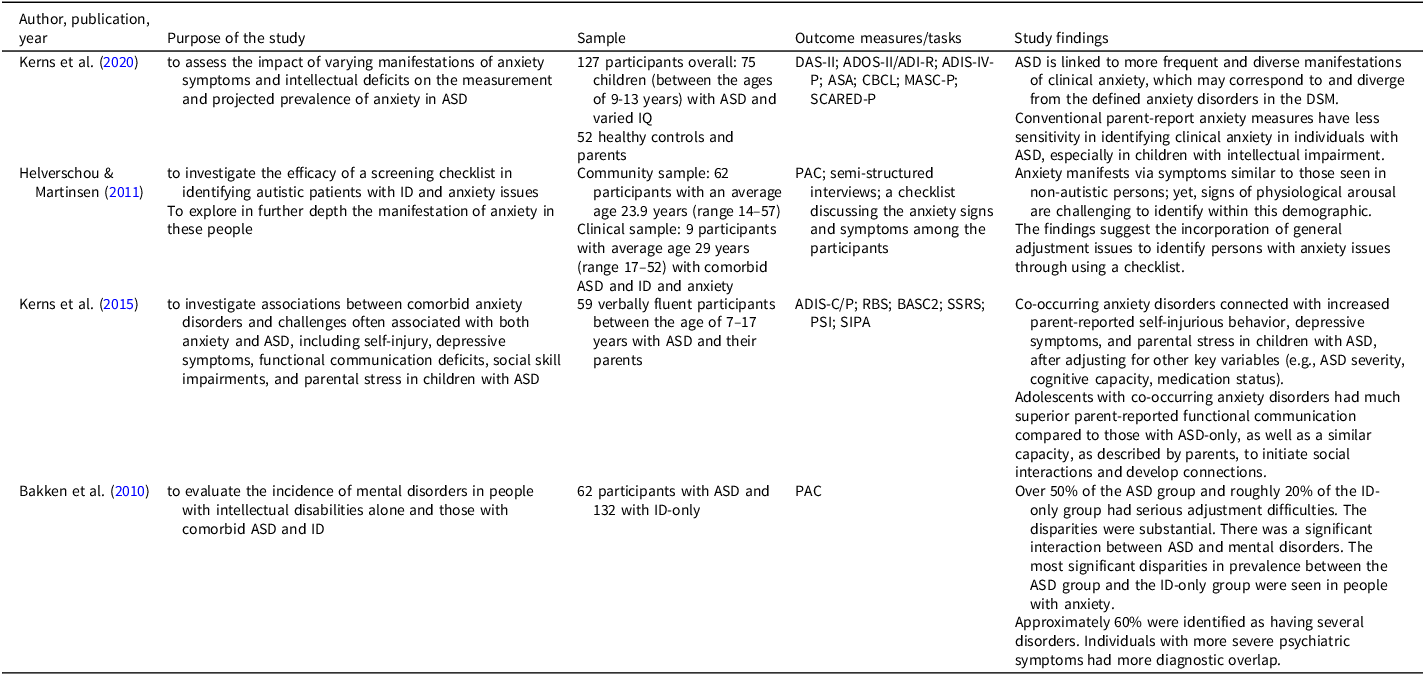
Due to these challenges, standard measures for anxiety that are usually employed with typically developing children and adolescents frequently prove to be less effective when assessing anxiety in children who also have comorbid ASD and IDD (Kerns et al., Reference Kerns, Winder-Patel, Iosif, Nordahl, Heath, Solomon and Amaral2020). Even the assessment modifications that were previously developed to specifically target anxiety in children and adolescents with ASD may not be effective when applied to youth who also have co-occurring ASD and IDD. Recent literature indicates that a thorough, multimodal evaluation may be necessary to effectively assess, identify, and diagnose anxiety in this group. Current research indicates that it is important to use physiological and behavioral assessments, along with input from various informants beyond the youth themselves (such as reports from parents or caregivers), to evaluate anxiety in this group (Koegel et al., Reference Koegel, Openden and Koegel2004; Moskowitz et al., Reference Moskowitz, Rosen, Lerner and Levine2017). Below a concise overview of the literature regarding these assessment modifications is further presented (Table 2).
Summary of the study findings concerning the recognition and assessment of anxiety symptoms among young individuals with comorbid ASD and IDD

Table 2 Long description
A table summarizing studies on anxiety symptoms in individuals with ASD and IDD. The table has 4 rows and 5 columns. Column headers are Author, publication, year, Purpose of the study, Sample, Outcome measures/tasks, and Study findings. Row 1: Author, publication, year: Kerns et al. (2020); Purpose of the study: to assess the impact of varying manifestations of anxiety symptoms and intellectual deficits on the measurement and projected prevalence of anxiety in ASD; Sample: 127 participants overall: 75 children (between the ages of 9-13 years) with ASD and varied IQ and 52 healthy controls and parents; Outcome measures/tasks: DAS-II; ADOS-II/ADI-R; ADIS-IV-P; ASA; CBCL; MASC-P; SCARED-P; Study findings: ASD is linked to more frequent and diverse manifestations of clinical anxiety, which may correspond to and diverge from the defined anxiety disorders in the DSM. Conventional parent-report anxiety measures have less sensitivity in identifying clinical anxiety in individuals with ASD, especially in children with intellectual impairment. Anxiety manifests with symptoms similar to those seen in non-autistic persons; yet, signs of physiological arousal are challenging to identify within this demographic. The findings suggest the incorporation of general adjustment issues to identify persons with anxiety issues through using a checklist. Row 2: Author, publication, year: Helverschou & Martinsen (2011); Purpose of the study: to investigate the efficacy of a screening checklist in identifying autistic patients with ID and anxiety issues. To explore in further depth the manifestation of anxiety in these people; Sample: Community sample: 62 participants with an average age 23.9 years (range 14-57). Clinical sample: 9 participants with average age 29 years (range 17-52) with comorbid ASD and ID and anxiety; Outcome measures/tasks: PAC; semi-structured interviews; a checklist discussing the anxiety signs and symptoms among the participants; Study findings: Co-occurring anxiety disorders connected with increased parent-reported self-injurious behavior, depressive symptoms, and parental stress in children with ASD, after adjusting for other key variables (e.g., ASD severity, cognitive capacity, medication status). Adolescents with co-occurring anxiety disorders had much superior parent-reported functional communication compared to those with ASD-only, as well as a similar capacity, as described by parents, to initiate social interactions and develop connections. Over 50% of the ASD group and roughly 20% of the ID-only group had serious adjustment difficulties. The disparities were substantial. There was a significant interaction between ASD and mental disorders. The most significant disparities in prevalence between the ASD group and the ID-only group were seen in people with anxiety. Approximately 60% were identified as having several disorders. Individuals with more severe psychiatric symptoms had more diagnostic overlap. Row 3: Author, publication, year: Kerns et al. (2015); Purpose of the study: to investigate associations between comorbid anxiety disorders and challenges often associated with both anxiety and ASD, including self-injury, depressive symptoms, functional communication deficits, social skill impairments, and parental stress in children with ASD; Sample: 59 verbally fluent participants between the age of 7-17 years with ASD and their parents; Outcome measures/tasks: ADIS-C/P; RBS; BASC2; SSRS; PSI; SIPA; Study findings: ASD is linked to more frequent and diverse manifestations of clinical anxiety, which may correspond to and diverge from the defined anxiety disorders in the DSM. Conventional parent-report anxiety measures have less sensitivity in identifying clinical anxiety in individuals with ASD, especially in children with intellectual impairment. Anxiety manifests with symptoms similar to those seen in non-autistic persons; yet, signs of physiological arousal are challenging to identify within this demographic. The findings suggest the incorporation of general adjustment issues to identify persons with anxiety issues through using a checklist. Row 4: Author, publication, year: Bakken et al. (2010); Purpose of the study: to evaluate the incidence of mental disorders in people with intellectual disabilities with comorbid ASD and ID alone and those with ID-only; Sample: 62 participants with ASD and ID and 132 with ID-only; Outcome measures/tasks: PAC; Study findings: Co-occurring anxiety disorders connected with increased parent-reported self-injurious behavior, depressive symptoms, and parental stress in children with ASD, after adjusting for other key variables (e.g., ASD severity, cognitive capacity, medication status). Adolescents with co-occurring anxiety disorders had much superior parent-reported functional communication compared to those with ASD-only, as well as a similar capacity, as described by parents, to initiate social interactions and develop connections. Over 50% of the ASD group and roughly 20% of the ID-only group had serious adjustment difficulties. The disparities were substantial. There was a significant interaction between ASD and mental disorders. The most significant disparities in prevalence between the ASD group and the ID-only group were seen in people with anxiety. Approximately 60% were identified as having several disorders. Individuals with more severe psychiatric symptoms had more diagnostic overlap.
Physiological assessments
Physiological arousal represents a significant aspect of anxiety experienced by both typically developing youth and those with co-occurring conditions, such as ASD and IDD (Moskowitz et al., Reference Moskowitz, Rosen, Lerner and Levine2017). For young individuals facing the challenges of co-occurring conditions such as ASD and IDD, particularly those with notable cognitive and social communication difficulties, incorporating physiological data can be especially advantageous in recognizing and diagnosing anxiety, especially when paired with additional assessment methods (Appleton et al., Reference Appleton, Connell, Fairclough, Tuomainen and Singh2019). Recent studies have integrated heart rate monitoring (Appleton et al., Reference Appleton, Connell, Fairclough, Tuomainen and Singh2019; Chok et al., Reference Chok, Demanche, Kennedy and Studer2010; Fodstad et al., Reference Fodstad, Kerswill, Kirsch, Lagges and Schmidt2020; Moskowitz et al., Reference Moskowitz, Mulder, Walsh, McLaughlin, Zarcone, Proudfit and Carr2013, Reference Moskowitz, Rosen, Lerner and Levine2017; Reference Moskowitz, Walsh, Mulder, McLaughlin, Hajcak, Carr and Zarcone2017a; Ferguson et al., Reference Ferguson, Marler, Altstein, Lee, Akers, Sohl, McLaughlin, Hartnett, Kille, Mazurek, Macklin, McDonnell, Barstow, Bauman, Margolis, Veenstra-VanderWeele and Beversdorf2016), regulatory sinus arrhythmia (the RSA relationship between heart rate and breathing; Moskowitz et al., Reference Moskowitz, Mulder, Walsh, McLaughlin, Zarcone, Proudfit and Carr2013, Reference Moskowitz, Rosen, Lerner and Levine2017; Reference Moskowitz, Walsh, Mulder, McLaughlin, Hajcak, Carr and Zarcone2017a), as well as sleep tracking and actigraphy (Rzepecka et al., Reference Rzepecka, McKenzie, McClure and Murphy2011; Yasuma & Hayano, Reference Yasuma and Hayano2004) to enhance the understanding of the physiological aspects of anxiety in young individuals with comorbid ASD and IDD.
While a limited number of empirical studies have explored the validity and reliability of these assessment tools in the context of evaluation and diagnosis, initial research indicates that physiological measures could be useful for tracking anxiety levels. Chok et al. (Reference Chok, Demanche, Kennedy and Studer2010) and Fodstad et al. (Reference Fodstad, Kerswill, Kirsch, Lagges and Schmidt2020) utilized heart rate monitoring to assess and monitor anxiety in children and adolescents with co-occurring ASD and IDD. Their findings indicated that heart rate monitoring serves as a sensitive and appropriate measure for this demographic, as evidenced by comparisons to behavioral assessments, including observations of avoidance or challenging behaviors. Additionally, patients with ASD frequently experience gastrointestinal issues, which can also influence their behavior. Ferguson et al. (Reference Ferguson, Marler, Altstein, Lee, Akers, Sohl, McLaughlin, Hartnett, Kille, Mazurek, Macklin, McDonnell, Barstow, Bauman, Margolis, Veenstra-VanderWeele and Beversdorf2016) explored the connection between gastrointestinal symptoms, analyzing the upper and lower gastrointestinal tract issues separately, and the functioning of the autonomic nervous system, measured through heart rate variability and skin conductance level, in a group of 120 ASD patients. Relationships involving simultaneous medical and psychiatric symptoms were also analyzed. At baseline, a positive correlation was observed between heart rate variability and lower gastrointestinal tract symptomatology (Ferguson et al., Reference Ferguson, Marler, Altstein, Lee, Akers, Sohl, McLaughlin, Hartnett, Kille, Mazurek, Macklin, McDonnell, Barstow, Bauman, Margolis, Veenstra-VanderWeele and Beversdorf2016). This relationship was notably strong among individuals who had both anxiety disorder diagnoses and those with a background of regressive ASD or a decline in previously acquired skills. These findings indicate a connection between autonomic function and gastrointestinal issues in children with ASD; however, establishing causality within this data set is not feasible (Ferguson et al., Reference Ferguson, Marler, Altstein, Lee, Akers, Sohl, McLaughlin, Hartnett, Kille, Mazurek, Macklin, McDonnell, Barstow, Bauman, Margolis, Veenstra-VanderWeele and Beversdorf2016). Future research should explore how addressing gastrointestinal issues affects autonomic function and anxiety, as well as how treating anxiety influences gastrointestinal conditions. All in all, it is essential to recognize that monitoring heart rate should be employed alongside other assessments of anxiety, as elevations in heart rate may stem from various factors (e.g., physical activity, other stimulating emotions, caffeine intake).
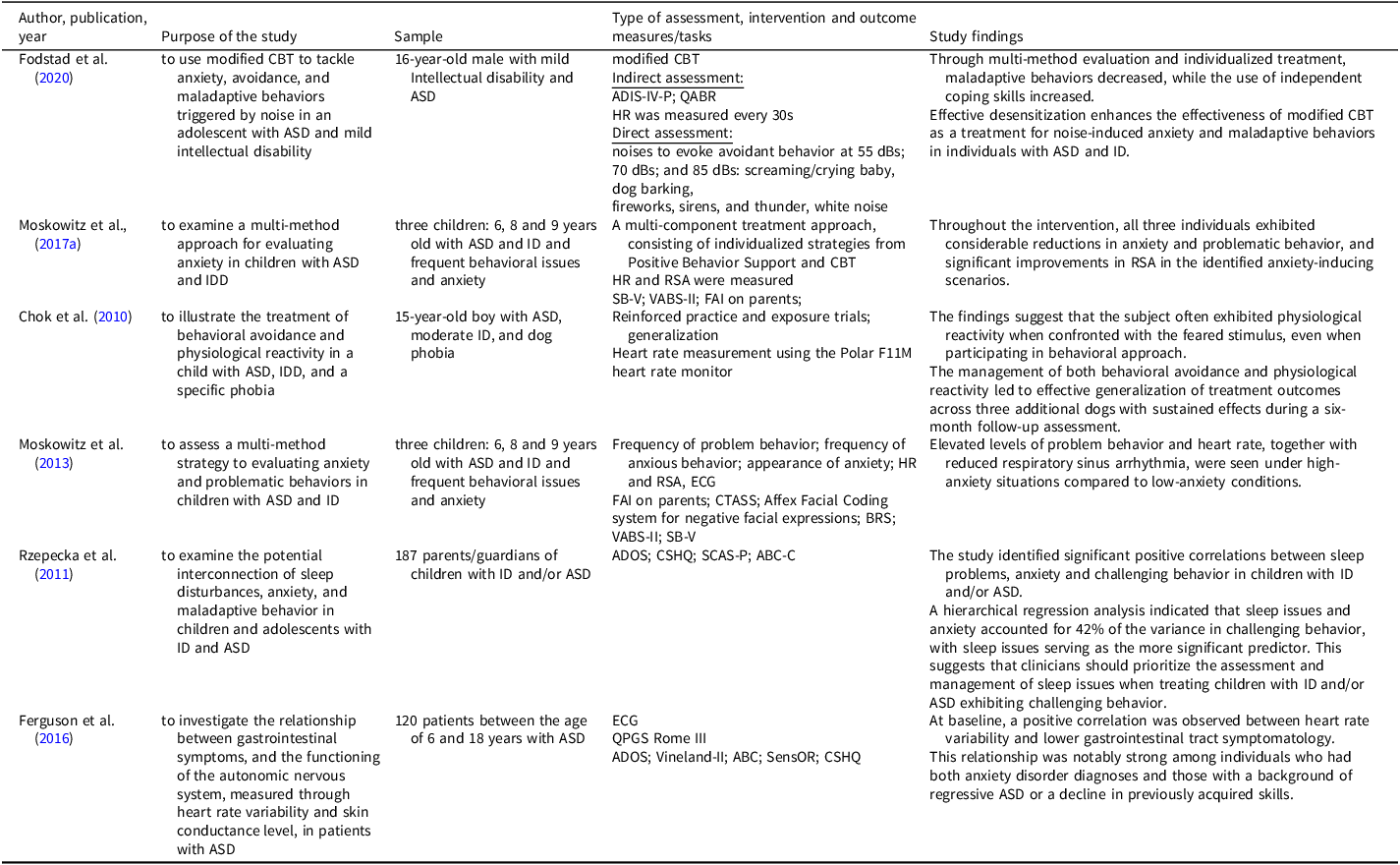
Comparable outcomes have been proposed for RSA (Rzepecka et al., Reference Rzepecka, McKenzie, McClure and Murphy2011; Yasuma & Hayano, Reference Yasuma and Hayano2004) and sleep (Appleton et al., Reference Appleton, Connell, Fairclough, Tuomainen and Singh2019; Minshawi et al., Reference Minshawi, Hurwitz, Morriss and McDougle2015; Rzepecka et al., Reference Rzepecka, McKenzie, McClure and Murphy2011). Moskowitz et al., (Reference Moskowitz, Mulder, Walsh, McLaughlin, Zarcone, Proudfit and Carr2013, Reference Moskowitz, Rosen, Lerner and Levine2017; Reference Moskowitz, Walsh, Mulder, McLaughlin, Hajcak, Carr and Zarcone2017a) employed RSA to monitor physiological decreases in anxiety among youth with comorbid ASD and IDD after undergoing anxiety-focused treatment. The findings indicated that treatment conditions had a significant and positive impact on RSA, implying that it could serve as an appropriate measure of the physiological components of anxiety in this group. Although these results are encouraging, it is crucial to recognize that these physiological techniques might not be applicable during the session itself, as they often necessitate data cleaning and should be assessed outside of the session. Nonetheless, alongside behavioral, cognitive, and emotional assessments, physiological techniques could play a role in diagnosing anxiety within this group (Table 3).
Summary of the physiological assessment tools

Table 3 Long description
The table has six rows and five columns. The columns are labeled Author, publication, year, Purpose of the study, Sample, Type of assessment, intervention and outcome measures/tasks, and Study findings. Each row provides details of different studies. Row 1: Fostad et al. (2020), to use modified CBT to tackle anxiety, avoidance, and maladaptive behaviors triggered by noise in an adolescent with ASD and mild intellectual disability, 16-year-old male with mild intellectual disability and ASD, modified CBT, Through multi-method evaluation and individualized treatment, maladaptive behaviors decreased, while the use of independent coping skills increased. Row 2: Moskowitz et al. (2017a), to examine a multi-method approach for evaluating anxiety in children with ASD and IDD, three children: 6, 8 and 9 years old with ASD and ID and frequent behavioral issues and anxiety, A component treatment approach, consisting of individualized strategies from Positive Behavior Support and CBT, Throughout the intervention, all three individuals exhibited considerable reductions in anxiety and problematic behavior, and significant improvements in RSA in the identified anxiety-inducing scenarios. Row 3: Chok et al. (2010), to illustrate the treatment of behavioral avoidance and physiological reactivity in a child with ASD, IDD, and a specific phobia, 15-year-old boy with ASD, moderate ID, and dog phobia, Reinforced practice and exposure trials; generalization, The findings suggest that the subject often exhibited physiological reactivity when confronted with the feared stimulus, even when participating in behavioral approach. Row 4: Moskowitz et al. (2013), to assess a multi-method strategy to evaluating anxiety and problematic behaviors in children with ASD and ID, three children: 6, 8 and 9 years old with ASD and ID and frequent behavioral issues and anxiety, Frequency of problem behavior; frequency of anxious behavior; appearance of anxiety; HR and RSA, ECG, Elevated levels of problem behavior and heart rate, together with reduced respiratory sinus arrhythmia, were seen under high-anxiety situations compared to low-anxiety conditions. Row 5: Rzepecka et al. (2011), to examine the potential interconnection of sleep disturbances, anxiety, and maladaptive behavior in children with ID and ASD, 187 parents/guardians of children with ID and/or ASD, The study identified significant positive correlations between sleep problems, anxiety and challenging behavior in children with ID and/or ASD. Row 6: Ferguson et al. (2016), to investigate the relationship between gastrointestinal symptoms, and the functioning of the autonomic nervous system, measured through heart rate variability and skin conductance level, in patients with ASD, 120 patients between the age of 6 and 18 years with ASD, ECG, QPGS Rome III, ADOS; Vineland-II; ABC; SensOR; CSHQ, At baseline, a positive correlation was observed between heart rate variability and lower gastrointestinal symptom severity.
Behavioral assessments
The changes in behavior or emotions can also indicate the levels of anxiety in young individuals who have both ASD and IDD (Appleton et al., Reference Appleton, Connell, Fairclough, Tuomainen and Singh2019; Moskowitz et al., Reference Moskowitz, Rosen, Lerner and Levine2017). Recent studies indicate that challenging behaviors, such as acts of aggression or self-injurious behaviors may represent unusual manifestations of anxiety in this group (Magiati et al., Reference Magiati, Lerh, Hollocks, Uljarevic, Rodgers, McConachie, Ozsivadjian, South, Van Hecke, Hardan, Libove, Leekam and Simonoff2017; Rzepecka et al., Reference Rzepecka, McKenzie, McClure and Murphy2011; Williams et al., Reference Williams, Leader, Mannion and Chen2015). As a result, behavioral assessments, conducted by the children’s parents, caregivers, teachers, and healthcare professionals may prove especially useful in recognizing and diagnosing anxiety.
To determine whether the challenging behavior is a reaction to anxiety-inducing stimuli, it is essential to carry out thorough observations of the factors leading up to the manifestation of the challenging behavior. A valuable observational approach that can be utilized is functional behavioral assessment (FBA) (O’Neill et al., Reference O’Neill, Horner, Albin, Sprague, Storey and Newton1997). The primary objective of this assessment is to identify the purpose behind a behavior (Hawkins et al., Reference Hawkins, Collins and Murphy2019; Herzinger & Campbell, Reference Herzinger and Campbell2007). In this context, FBA can elucidate the particular circumstances under which anxiety triggers or coincides with challenging behavior (Blakeley-Smith et al., Reference Blakeley-Smith, Meyer, Boles and Reaven2021), as well as the antecedent factors and repercussions associated with these behaviors (Kelley et al., Reference Kelley, LaRue, Roane, Gadaire, Fisher, Piazza and Roane2011; Minshawi et al., Reference Minshawi, Hurwitz, Morriss and McDougle2015). With this information, the professional can then formulate hypotheses regarding the contexts in which challenging behaviors are associated with anxiety.
If considered cost-effective, professionals may opt to conduct direct observations to more accurately determine whether the challenging behaviors co-occur with anxiety. A method of direct observation is narrative assessment, also known as narrative recording, which necessitates minimal training and equipment (Thompson & Borrero, Reference Thompson, Borrero, Fisher, Piazza and Roane2011). The Detailed Behavior Report (DBR) (Chafouleas et al., Reference Chafouleas, Riley-Tillman and Christ2009) is a narrative evaluation that provides structural guidelines for observations (Groden & Lantz, Reference Groden and Lantz2001). An alternative approach, particularly beneficial given the significant increase in remote healthcare services is video recording. Video recording a child in the presence of a potential anxiety-inducing stimulus is a valuable method for assessing anxiety reactions and tracking treatment advancements across different sessions. Furthermore, video recording acts as a valuable tool for implementing FBA (Winch et al., Reference Winch, Klaver, Simpson, Calub and Alexander2021).
Another method of using behavioral data to assess anxiety is to develop an individualized list of anxious behaviors based on the consensus of multiple people. Helverschou & Martinsen (Reference Helverschou and Martinsen2011) created a clinical assessment procedure in which family members and caregivers served as informants. Informants were first provided psychoeducation around anxiety and anxiety symptoms. Following this, informants were then interviewed to assist the clinician in creating a comprehensive list of behavioral indicators of anxiety (e.g., restlessness, hand flapping, and acts of aggression) present in the person with comorbid ASD and IDD. Finally, the informants met in a group with a trained clinician and made a composite list of symptoms that all informants agreed upon. This list was used to monitor treatment progress.
While it may be impossible to definitively distinguish between challenging behaviors stemming from anxiety and those arising from other factors in this population, studies have highlighted particular anxiety indicators in individuals with ASD that could aid in identifying whether these behaviors are anxiety-related. Research involving children with ASD indicates that their anxiety often arises from a single specific trigger rather than multiple sources. This can include disruptions to their need for consistency (Duerden et al., Reference Duerden, Oatley, Mak-Fan, McGrath, Taylor, Szatmari and Roberts2012) or a specific phobia (Kerns et al., Reference Kerns, Winder-Patel, Iosif, Nordahl, Heath, Solomon and Amaral2020). Evans et al. (Reference Evans, Canavera, Kleinpeter, Maccubbin and Taga2005) compared the fears and behavioral difficulties among 25 children with ASD, 43 children with Down syndrome, 45 matched by mental age, and 37 children matched by chronological age. Children’s fears, phobias, anxiety, and behavioral issues were evaluated via parental reports. Parents were administered a fear survey evaluating their child’s fears (an inventory including 69 fears and phobias assessed on a 5-point-Likert scale) together with the Conners Parent Rating Scale (CPRS). Marked disparities were seen across the diagnostic groups on various fears (Evans et al., Reference Evans, Canavera, Kleinpeter, Maccubbin and Taga2005). Children with ASD had higher prevalence of situation phobias and medical fears, although demonstrated lower incidence of fears of harm/injury compared to the other groups. The groups exhibited distinct patterns of relationships among fears, phobias, anxiety, and behavioral issues. In children with ASD, fears, phobias, and anxieties were significantly associated with problematic behaviors, although such associations were diminished in other subject groups (Evans et al., Reference Evans, Canavera, Kleinpeter, Maccubbin and Taga2005). The results indicated that children with ASD have a distinct profile of fear and anxiety in contrast to other chronologically and mentally age matched children, and these fears are correlated with the symptoms of ASD (Evans et al., Reference Evans, Canavera, Kleinpeter, Maccubbin and Taga2005). In a cohort of people with ASD and IDD, anxiety was associated with heightened tendencies to flee or conceal oneself from certain things or circumstances (Cervantes & Matson, Reference Cervantes and Matson2015). These results show that gathering information from informed sources on environmental characteristics associated with difficult behaviors or self-injurious behavior may aid in distinguishing anxiety-related problematic behaviors from other types of problematic behaviors. Once these correlations are established, treatment aimed at addressing the anxiety underlying the behaviors can commence.
Multiple-informant assessment
As mentioned above, the evaluation of anxiety for typically developing children frequently includes a range of self-reported and parent-reported tools. Although these tools show significant effectiveness among healthy controls, it is important to note that many of the tools used have not been validated for individuals with co-occurring ASD and IDD (Mingins et al., Reference Mingins, Tarver, Waite, Jones and Surtees2020). A recent study by Kerns et al. (Reference Kerns, Winder-Patel, Iosif, Nordahl, Heath, Solomon and Amaral2020) demonstrated that prevalent anxiety assessments for young people, including the Multidimensional Anxiety Scale for Children – Parent Report (MASC-P) (March et al., Reference March, Parker, Sullivan, Stallings and Conners1997), the Screen for Child Anxiety and Related Emotional Disorders – Parent Report (SCARED) (Birmaher et al., Reference Birmaher, Khetarpal, Brent, Cully, Balach, Kaufman and Neer1997, Reference Birmaher, Brent, Chiappetta, Bridge, Monga and Baugher1999), and the Autism Comorbidity Interview – Present and Lifetime (ACI-PL) (Leyfer et al., Reference Leyfer, Folstein, Bacalman, Davis, Dinh, Morgan, Tager-Flusberg and Lainhart2006), were insufficient in identifying anxiety disorders in individuals comorbid IDD. Likewise, the Child Behavior Checklist (CBCL) (Achenbach, Reference Achenbach and Maruish1999), a prevalent clinical assessment tool for youth, has faced criticism concerning its efficacy in evaluating anxiety in youth with ASD, attributed to the limited number of anxiety-related inquiries, the informant’s burden (Lecavalier et al., Reference Lecavalier, Wood, Halladay, Jones, Aman, Cook, Handen, King, Pearson, Hallett, Sullivan, Grondhuis, Bishop, Horrigan, Dawson and Scahill2014), and the inadequate sensitivity of the CBCL Anxiety Problem scale, a subscale for identifying anxiety in adolescents with ASD and intellectual challenges (Kerns et al., Reference Kerns, Winder-Patel, Iosif, Nordahl, Heath, Solomon and Amaral2020).
Currently there are limited validated tools available for use within this population. The Children’s Interview for Psychiatric Syndromes-Parent Version (P-ChIPS) (Weller et al., Reference Weller, Weller, Fristad, Rooney and Schecter2000) is a concise, semi-structured interview designed for parents, which has a strong inter-rater reliability for children with anxiety disorders, along with those with IQs less than 70 without comorbid ASD (Maddox et al., Reference Maddox, Kerns, Franklin and White2016). The Parent-rated Anxiety Scale - ASD (PRAS-ASD), a 25- item scale, is another valid and reliable tool, designed for assessing anxiety, based on parent reports, in patients with ASD (Scahill et al., Reference Scahill, Lecavalier, Schultz, Evans, Maddox, Pritchett, Herrington, Gillespie, Miller, Amoss, Aman, Bearss, Gadow and Edwards2019). In contrast to conventional anxiety assessments that rely on a child’s capacity to express their concerns verbally, the PRAS-ASD emphasizes observable behaviors, such as physiological responses, avoidance, sleep disturbances, and repetitive behaviors associated with anxiety. In addition, Montoro-Perez & Martinez-Gonzalez (Reference Montoro-Pérez and Martínez-González2026) also carried out a psychometric validation study of the PRAS-ASD involving a sample of 221 individuals with ASD (Mage = 8.60 years; SD = 4.76 years). Internal consistency and test–retest reliability were elevated. Significant correlations were obtained between anxiety and associated variables, but no significant sex differences were seen in the PRAS-ASD scale. Variations in anxiety levels were seen across ASD groups with differing degrees of ID (Montoro-Perez & Martinez-Gonzalez, Reference Montoro-Pérez and Martínez-González2026).
Furthermore, the Child and Adolescent Symptom Inventory – 5 (CASI-5) (Gadow & Sprafkin, Reference Gadow and Sprafkin2015) is a behavioral assessment tool offered in both parent and teacher formats and is intended to evaluate psychiatric disorders in children. The CASI-5 has strong predictive and concurrent validity for adolescents with ASD and effectively identifies psychiatric symptoms in less verbal individuals with ASD (Skwerer et al., Reference Skwerer, Joseph, Eggleston, Meyer and Tager-Flusberg2019). Despite the Spence Children’s Anxiety Scale-Parent Version (SCAS-P) (Spence, Reference Spence1999) not being initially intended for youth with comorbid ASD and IDD, Rzepecka et al. (Reference Rzepecka, McKenzie, McClure and Murphy2011) determined that the instrument was sufficiently sensitive to identify anxiety-related symptoms in this specific demographic.
Although these measures have not been specifically validated for this population, they have been used in research involving youth with co-occurring conditions to assess the presence of anxiety. The Anxiety Disorders Interview Schedule: Fourth Edition; Parent Edition (ADIS-IV-C/P) (Silverman & Albano, Reference Silverman and Albano1996) is among the most commonly used tools for assessing anxiety in young individuals who also have comorbid ASD and IDD. This reflects the empirical evidence supporting its use with children on the spectrum. Nonetheless, its validity has mostly been evaluated in adolescents without intellectual disabilities (Maddox et al., Reference Maddox, Kerns, Franklin and White2016). The Anxiety Disorders Interview Schedule Autism Spectrum Addendum (ADIS-ASA) is an extension to the ADIS-IV-C/P (Silverman & Albano, Reference Silverman and Albano1996). This part of the evaluation aimed to distinguish between symptoms of ASD and anxiety in young individuals by incorporating supplementary questions into the parent interview, thereby establishing a semi-structured format that enhances the standardization of the assessment process (Kerns et al., Reference Kerns, Renno, Kendall, Wood and Storch2017a). This measure has shown both convergent and divergent discriminant validity in identifying anxiety in young individuals with ASD (Kerns et al., Reference Kerns, Kendall, Berry, Souders, Franklin, Schultz, Miller and Herrington2014; Kerns et al., Reference Kerns, Renno, Kendall, Wood and Storch2017a, Reference Kerns, Winder-Patel, Iosif, Nordahl, Heath, Solomon and Amaral2020), but the validity has not been evaluated in those with IQs less than 68 (Kerns et al., Reference Kerns, Renno, Storch, Kendall and Jeffrey2017b). The Anxiety, Depression And Mood Scale (ADAMS) (Esbensen et al., Reference Esbensen, Rojahn, Aman and Ruedrich2003) is a measurement tool designed for individuals with IDD, but not for autistic children with IDD. The general anxiety subscale of the ADAMS exhibited poor inter-rater reliability, yet demonstrated good reliability results (Hermans et al., Reference Hermans, Van Der Pas and Evenhuis2011).
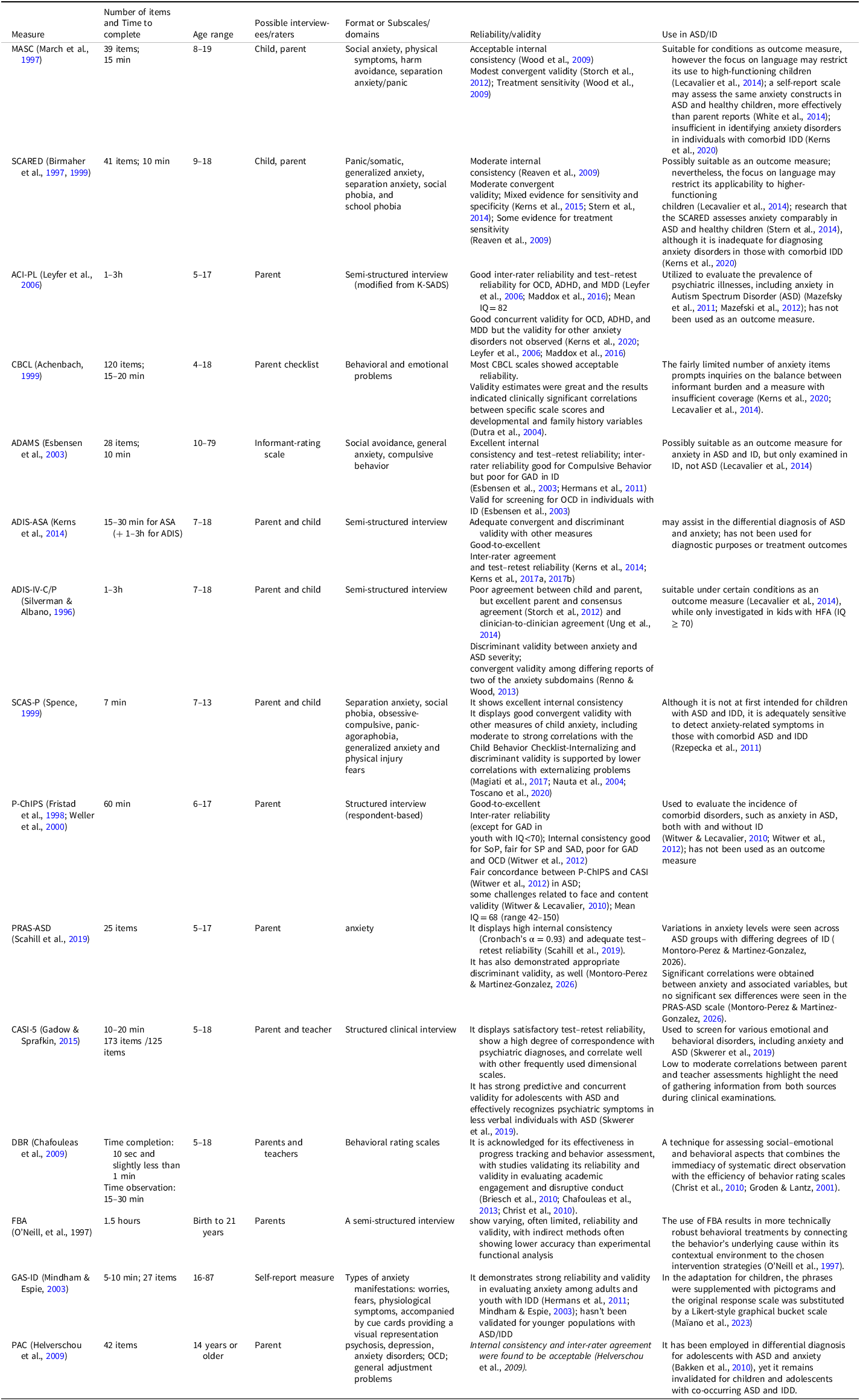
Psychopathology Autism Checklist (PAC) (Helverschou et al., Reference Helverschou, Bakken and Martinsen2009) has demonstrated its effectiveness in distinguishing psychiatric disorders in adults with ASD/IDD (Helverschou & Martinsen, Reference Helverschou and Martinsen2011). The PAC includes a subscale specifically for anxiety that is distinct from ASD symptoms (Helverschou & Martinsen, Reference Helverschou and Martinsen2011; Helverschou et al., Reference Helverschou, Kildahl and Bakken2020). The PAC has also been employed in differential diagnosis for adolescents experiencing ASD and anxiety (Bakken et al., Reference Bakken, Helverschou, Eilertsen, Heggelund, Myrbakk and Martinsen2010; Halvorsen et al., Reference Halvorsen, Heiervang, Mathiassen, Aman, Kaiser and Helverschou2025), yet it remains invalidated for children and adolescents with co-occurring ASD and IDD. In terms of potential self-report tools, the Glasgow Anxiety Scale for individuals with IDD (GAS-ID) (Mindham & Espie, Reference Mindham and Espie2003) demonstrates strong reliability and validity in evaluating anxiety among adults and youth with IDD (Hermans et al., Reference Hermans, Van Der Pas and Evenhuis2011; Maïano et al., Reference Maïano, Morin, Gagnon, Olivier, Tracey, Craven and Bouchard2023). However, it has not been validated for younger populations experiencing both ASD and IDD. Nonetheless, because it employs visual item responses, it may be especially beneficial for this group. For other youth self-report measurements, it is advisable for professionals to consider using pictorial responses similar to those found in the GAS-ID, in order to capture the youth’s perspective on their anxiety symptoms. Finally, Moskowitz et al. (Reference Moskowitz, Rosen, Lerner and Levine2017) emphasize that none of the aforementioned modifications, when considered in isolation, are adequate for diagnosing anxiety in young individuals who have both ASD and IDD. The optimal approach lies in the integration of these adjustments and evaluation methods, which effectively enhance diagnostic sensitivity and reduce the likelihood of diagnostic errors (Table 4).
Summary of the behavioral and the multiple-informant assessment tools

Table 4 Long description
The table compares different assessment tools for behavioral and multiple-informant evaluations. It includes columns for the measure name, number of items and time to administer, age range, possible informant sources, format or subscale description, reliability/validity, and use in ASD. The table has 15 rows and 7 columns. Each row provides details for a specific assessment tool, including MASC, SCARD, ACP-PL, CBCL, ADAMS, ADOS-ASA, ADOS+CP, SCAS-P, P-CHIPS, PRAS-ASD, CASI-5, DBR, FBA, GAS-ID, and PAC. The table lists the number of items and time required for each assessment, the age range for which they are suitable, the possible informants, the format or subscale description, reliability and validity information, and specific uses in ASD.
Non-pharmacologic therapeutic interventions utilized for the treatment of anxiety in children with comorbid ASD and IDD
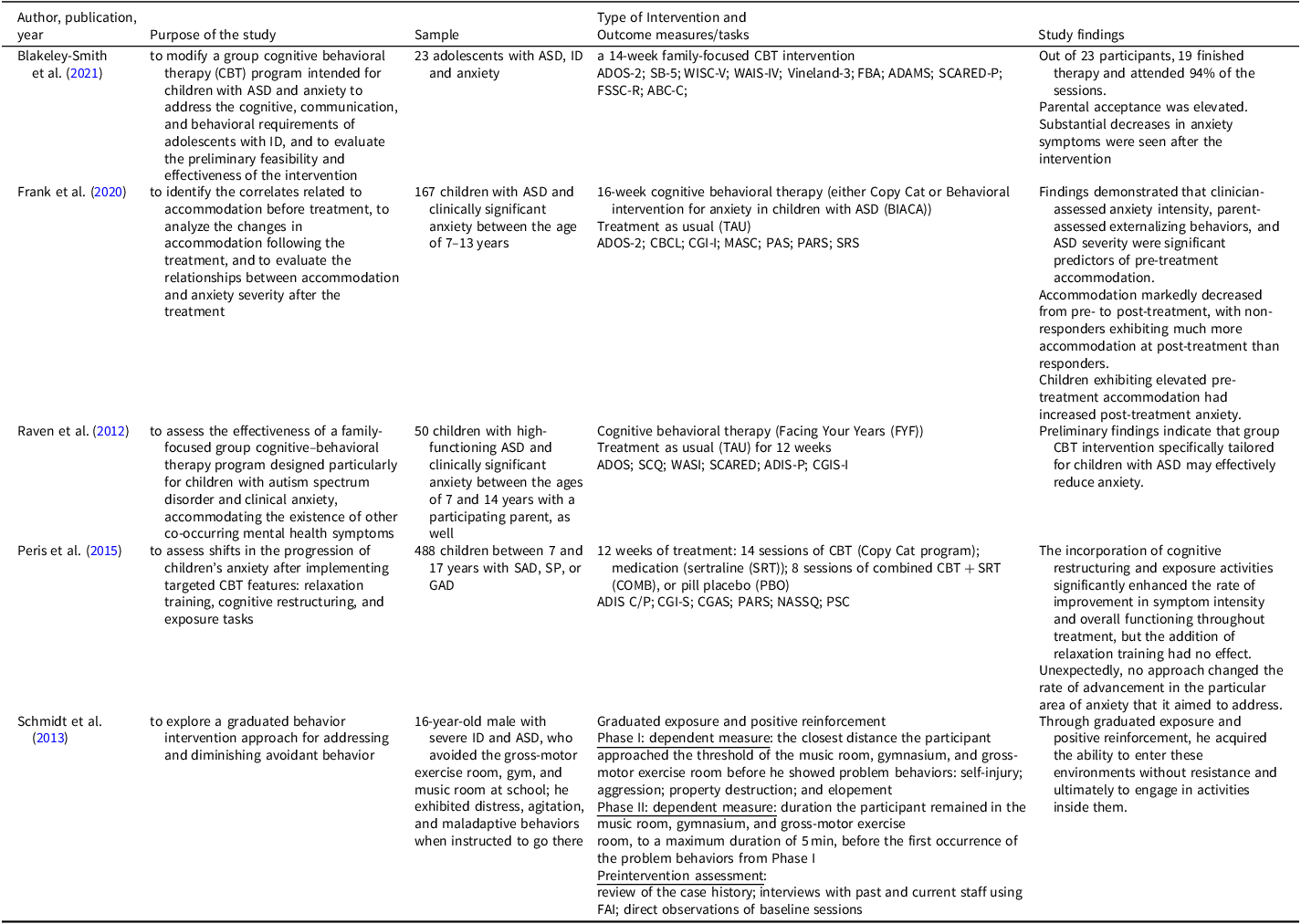
While CBT has been effective in treating anxiety among typically developing children (Higa-McMillan et al., Reference Higa-McMillan, Francis, Rith-Najarian and Chorpita2015; Lenz, Reference Lenz2015) and children with ASD (Ehrenreich-May et al., Reference Ehrenreich-May, Storch, Queen, Rodriguez, Ghilain, Alessandri, Lewin, Arnold, Murphy, Lin, Fujii, Renno, Piacentini, Laugeson and Wood2014; Perihan et al., Reference Perihan, Burke, Bowman-Perrott, Bicer, Gallup, Thompson and Sallese2020; Sukhodolsky et al., Reference Sukhodolsky, Bloch, Panza and Reichow2013; Ung et al., Reference Ung, Selles, Small and Storch2014), there has been ongoing discussion about its suitability for young individuals with ASD and comorbid IDD largely due to the cognitive constraints faced by this particular group (Rosen et al., Reference Rosen, Connell and Kerns2016). Nevertheless, recent studies indicate that a certain therapeutic approach could be beneficial for this group (Arias et al., Reference Arias, Gómez, Morán, Alcedo, Monsalve and Fontanil2018; Kazzi et al., Reference Kazzi, Campbell and Porter2024), especially when tailored adjustments are made, such as incorporating more visual aids, reducing cognitive aspects while enhancing behavioral aspects, and increasing the involvement of parents or caregivers (Blakeley-Smith et al., Reference Blakeley-Smith, Meyer, Boles and Reaven2021; Carreon et al., Reference Carreon, Brady-Ruehs and Van Laarhoven2024; Moskowitz et al., Reference Moskowitz, Rosen, Lerner and Levine2017; Walker, Reference Walker2025). A concise overview of the literature concerning these treatment modifications is presented below. Similar to other approaches for managing anxiety, the objectives of treatment focus on enhancing the ability to tolerate distress (McGuire & Storch, Reference McGuire and Storch2019). For individuals experiencing both ASD and IDD, a decrease in behavioral avoidance or disengagement might serve as an indicator of distress tolerance (Cervantes & Matson, Reference Cervantes and Matson2015).
The use of visual aids is an effective adjustment that has shown positive results in teaching young individuals with co-occurring ASD and IDD new skills, as they help in understanding abstract concepts (Graff & Gibson, Reference Graff and Gibson2003; Panerai et al., Reference Panerai, Ferrante and Zingale2002). The use of visual aids in treating anxiety among young individuals with co-occurring ASD and IDD has demonstrated effectiveness. Blakeley-Smith et al. (Reference Blakeley-Smith, Meyer, Boles and Reaven2021), Fodstad et al. (Reference Fodstad, Kerswill, Kirsch, Lagges and Schmidt2020), and Moskowitz et al. (Reference Moskowitz, Rosen, Lerner and Levine2017) integrated visual aids into therapy to illustrate coping techniques for children, which encompassed breathing exercises, the utilization of a ball for either squeezing (Fodstad et al., Reference Fodstad, Kerswill, Kirsch, Lagges and Schmidt2020) or throwing (Blakeley-Smith et al., Reference Blakeley-Smith, Meyer, Boles and Reaven2021), and taking breaks, which involved physically distancing oneself from the anxiety-inducing stimulus (e.g., walking; Blakeley-Smith et al., Reference Blakeley-Smith, Meyer, Boles and Reaven2021) or diminishing sensory exposure (e.g., employing earplugs; Fodstad et al., Reference Fodstad, Kerswill, Kirsch, Lagges and Schmidt2020). In the interventions carried out by Blakeley-Smith et al. (Reference Blakeley-Smith, Meyer, Boles and Reaven2021) and Moskowitz et al. (Reference Moskowitz, Rosen, Lerner and Levine2017), visual aids were employed to act as prompts for positive self-talk that the young individuals could use to manage their anxiety symptoms. Blakeley-Smith et al. (Reference Blakeley-Smith, Meyer, Boles and Reaven2021) employed picture-based instructions to help organize activities that provoke anxiety, while also integrating visual representations of chosen rewards to enhance engagement in the treatment process. Fodstad et al. (Reference Fodstad, Kerswill, Kirsch, Lagges and Schmidt2020) included visual aids in their treatment, which served as additional coping strategies. These aids comprised images of the youth’s favorite items, reminders to take a drink of water, and prompts to sing a preferred song.
A review of behavioral interventions for anxiety in individuals with lower-functioning autism indicated that modeling appropriate behaviors may be potentially effective (Rosen et al., Reference Rosen, Connell and Kerns2016). In particular, video modeling has been integrated into therapeutic approaches in the studies conducted by Blakeley-Smith et al. (Reference Blakeley-Smith, Meyer, Boles and Reaven2021) and Moskowitz et al. (Reference Moskowitz, Rosen, Lerner and Levine2017). In both studies, video modeling was employed to demonstrate desired behaviors, such as showcasing videos of other children with ASD and IDD engaging in the target behavior while facing anxiety-inducing stimuli and receiving positive reinforcement (Blakeley-Smith et al., Reference Blakeley-Smith, Meyer, Boles and Reaven2021). In this context, video modeling effectively supported the youth in grasping the expectations placed upon them.
In the case of children and adolescents facing both ASD and IDD, the engagement of parents or caregivers in the treatment process is essential. In cases involving young individuals experiencing anxiety, it is common for parents to engage more actively in the process. For instance, guardians, caregivers, and educators can play a crucial role in shaping the progression of fear hierarchies. In alignment with the approach for treating adolescents with anxiety, it is essential to provide parents with psychoeducation regarding how their actions may inadvertently reinforce anxiety-related behaviors in their child. Research indicates that caregivers of young individuals in this demographic exhibit heightened accommodating behaviors (Frank et al., Reference Frank, Kagan, Storch, Wood, Kerns, Lewin, Small and Kendall2020) and an inclination toward excessive protective actions (Reaven et al., Reference Reaven, Blakeley-Smith, Culhane-Shelburne and Hepburn2012). It is essential to evaluate caregiver involvement in these behaviors consistently during the course of treatment. Furthermore, it may be beneficial for parents or caregivers to attend therapy sessions to support the professional in involving their young ones in exposure activities (Adams et al., Reference Adams, Malone, Dargue, Keen, Rodgers, Simpson, Wicks, Bullot and Rapee2026; Blakeley-Smith et al., Reference Blakeley-Smith, Meyer, Boles and Reaven2021; Koegel et al., Reference Koegel, Openden and Koegel2004). In addition, involving parents in the treatment process with their children may enhance the transferability of the skills learned to various situations beyond those addressed during sessions (Blakeley-Smith et al., Reference Blakeley-Smith, Meyer, Boles and Reaven2021). Individuals with ASD often struggle to apply learned skills across different situations. Therefore, it can be advantageous for parents to engage in hands-on experiences with the treatment methods, enabling them to replicate these strategies at home and facilitate the transfer of skills acquired during therapy. Caregivers can play a supportive role in the therapeutic process, particularly when physical intervention is required, such as guiding the child away from unsafe situations or preventing them from engaging in avoidance behaviors. Consequently, providing parents with information about their involvement in the treatment process prior to the start of sessions could be especially beneficial.
Graduated exposure has proven effective in treating anxiety among children with lower-functioning autism (Rosen et al., Reference Rosen, Connell and Kerns2016). At present, there are two primary justifications behind graduated exposures: the emotional processing theory (EPT) and the inhibitory learning theory (ILT) (McGuire & Storch, Reference McGuire and Storch2019). As outlined in the EPT, graduated exposures entail presenting the individual with anxiety-provoking stimuli until they no longer feel anxious (i.e., habituation), or as evidenced by a reduction in their SUDS score (McGuire & Storch, Reference McGuire and Storch2019; Peris et al., Reference Peris, Compton, Kendall, Birmaher, Sherrill, March, Gosch, Ginsburg, Rynn, McCracken, Keeton, Sakolsky, Suveg, Aschenbrand, Almirall, Iyengar, Walkup, Albano and Piacentini2015). Tailored adjustments for children with ASD/IDD might include monitoring heart rate and interacting with anxiety-inducing stimuli until a reduction in heart rate is observed (Chok et al., Reference Chok, Demanche, Kennedy and Studer2010; Fodstad et al., Reference Fodstad, Kerswill, Kirsch, Lagges and Schmidt2020), recording the frequency of anxiety or challenging behaviors (Fodstad et al., Reference Fodstad, Kerswill, Kirsch, Lagges and Schmidt2020) during these exposures, or utilizing additional objective assessments. Nonetheless, based on the ILT, habituation should not be interpreted as a sign of success in the context of graduated exposures. The aim of therapy is not to eliminate anxiety, but to cultivate an acceptance of the discomfort that accompanies it (McGuire & Storch, Reference McGuire and Storch2019). In this case, the lack or decrease of avoidance or escape behaviors, along with maintaining a sense of calm, may suggest effective integration of distress tolerance strategies.
Alongside the changes in evaluating distress, exposure sessions for this group also incorporate variations from the traditional 1 hour treatment sessions. Some studies have shown favorable outcomes when minimizing exposure durations (Schmidt et al., Reference Schmidt, Luiselli, Rue and Whalley2013), while other studies suggest that extending the session length to 90 minutes can be advantageous, as it enables the professional to align with the young person’s pace (Walters et al., Reference Walters, Loades and Russell2016). Nonetheless, extending session durations has only been evaluated for addressing anxiety in young individuals with ASD and those within the normal IQ range. Consequently, further investigation is essential to establish the most effective duration of exposures for this group (Winch et al., Reference Winch, Klaver, Simpson, Calub and Alexander2021).
Last but not least, reinforcement of desired behaviors through the use of rewards is an essential part of treatment for young individuals facing various disorders, aimed at enhancing their adherence to the treatment plan. For this group, integrating interests that resonate with young individuals as a form of positive reinforcement can significantly enhance their engagement. Moskowitz et al. (Reference Moskowitz, Rosen, Lerner and Levine2017) effectively integrated youth-specific interests into visual aids to enhance understanding of the material, including these interests in social stories. Furthermore, Fodstad et al. (Reference Fodstad, Kerswill, Kirsch, Lagges and Schmidt2020) integrated the interests of young individuals into the available coping strategies, including activities like viewing images related to their passions or singing their favorite songs (Table 5).
Summary of the study findings of the non-pharmacologic therapeutic interventions utilized for the treatment of anxiety in children with comorbid ASD and IDD

Table 5 Long description
The table has six columns: Author, publication, year; Purpose of the study; Sample; Type of intervention and Outcome measures/tasks; and Study findings. It contains five rows of data. Row 1: Author, publication, year: Blakeley-Smith et al. (2021); Purpose of the study: to modify a group cognitive behavioral therapy (CBT) program intended for children with ASD and anxiety to address the cognitive, communication, and behavioral requirements of adolescents with ID, and to evaluate the acceptability and effectiveness of the modified intervention; Sample: 23 adolescents with ASD, ID and anxiety; Type of intervention and Outcome measures/tasks: a 14-week family-focused CBT intervention; Study findings: Out of 23 participants, 19 finished therapy and attended 94% of the sessions. Parental acceptance was elevated. Substantial decreases in anxiety symptoms were seen after the intervention. Row 2: Author, publication, year: Frank et al. (2020); Purpose of the study: to identify the correlates related to accommodation before treatment, to analyze the changes in accommodation following the treatment, and to evaluate the relationships between accommodation and anxiety severity after the treatment; Sample: 167 children with ASD and clinically significant anxiety between the age of 7-13 years; Type of intervention and Outcome measures/tasks: 16-week cognitive behavioral therapy (either Copy Cat or Behavioral intervention for anxiety in children with ASD (BIACA)); Study findings: Findings demonstrated that clinician-assessed anxiety intensity, parent-assessed externalizing behaviors, and ASD severity were significant predictors of pre-treatment accommodation. Accommodation markedly decreased from pre- to post-treatment, with non-responders exhibiting much more accommodation at post-treatment than responders. Children exhibiting elevated pre-treatment accommodation had increased post-treatment anxiety. Row 3: Author, publication, year: Raven et al. (2012); Purpose of the study: to assess the effectiveness of a family-focused group cognitive-behavioral therapy program designed particularly for children with autism spectrum disorder and clinical anxiety, accommodating the existence of other co-occurring mental health symptoms; Sample: 50 children with high-functioning ASD and clinically significant anxiety between the ages of 7 and 14 years with a participating parent, as well; Type of intervention and Outcome measures/tasks: Cognitive behavioral therapy (Facing Your Years (FYF)) or Treatment as usual (TAU) for 12 weeks; Study findings: Preliminary findings indicate that group CBT intervention specifically tailored for children with ASD may effectively reduce anxiety. Row 4: Author, publication, year: Peris et al. (2015); Purpose of the study: to assess the effects in the progression of children’s anxiety after implementing targeted CBT features: relaxation training, cognitive restructuring, and exposure tasks; Sample: 488 children between 7 and 17 years with SAD, SP, or GAD; Type of intervention and Outcome measures/tasks: 12 weeks of treatment: 14 sessions of CBT (Copy Cat program); medication (sertraline (SRT)); 8 sessions of combined CBT + SRT (COMB), or pill placebo (PBO); Study findings: The incorporation of cognitive restructuring and exposure activities significantly enhanced the rate of improvement in symptom intensity and overall functioning throughout treatment, but the addition of relaxation training had no effect. Unexpectedly, no approach changed the rate of advancement in the particular area of anxiety that it aimed to address. Through graduated exposure and positive reinforcement, he acquired the ability to enter these environments without resistance and ultimately to engage in activities inside them. Row 5: Author, publication, year: Schmidt et al. (2013); Purpose of the study: to explore a graduated behavior intervention approach for addressing and diminishing avoidant behavior; Sample: 16-year-old male with severe ID and ASD, who avoided the gross-motor exercise room, gym, and music room at school; and exhibited distress, agitation, and maladaptive behaviors when instructed to go there; Type of intervention and Outcome measures/tasks: Graduated exposure and positive reinforcement; Study findings: Through graduated exposure and positive reinforcement, he acquired the ability to enter these environments without resistance and ultimately to engage in activities inside them.
Discussion
Despite the estimated high prevalence of anxiety among young individuals with co-occurring ASD and IDD, there remains a lack of clarity in the field regarding the most effective methods for assessing, identifying, diagnosing, and treating these challenges within this group. It is important to recognize that various complicating factors within the population, including cognitive and social communication challenges, can diminish the effectiveness of standard assessment methods (Kerns et al., Reference Kerns, Winder-Patel, Iosif, Nordahl, Heath, Solomon and Amaral2020). Consequently, the existing research indicates that a thorough multimodal evaluation might be necessary to effectively evaluate anxiety within this population. Recent research indicates that physiological measures and behavioral measures, along with measures from multiple informants, may be advantageous in identifying anxiety. Furthermore, input from various informants, such as reports from parents or caregivers, can improve the recognition of anxiety. As far as the treatment of anxiety within this group, research indicates that CBT could serve as a valuable approach for alleviating anxiety symptoms and enhancing distress tolerance among young individuals with co-occurring ASD and IDD, especially when tailored modifications are made to meet their distinct requirements (Blakeley-Smith et al., Reference Blakeley-Smith, Meyer, Boles and Reaven2021; Moskowitz et al., Reference Moskowitz, Rosen, Lerner and Levine2017). Research indicates the importance of enhancing visual aids, fostering greater involvement from parents or caregivers, implementing more behavioral strategies (like graduated exposures), and integrating interests specific to young individuals into the therapeutic process. Nonetheless, further investigation is required.
This comprehensive review offers valuable insights for professionals regarding a population that has not received extensive attention in existing research. However, the suggested best practices should be considered with awareness of several limitations. Initially, it is important to note that, as a traditional review, this work lacks the methodological rigor typically associated with systematic or scoping reviews. Also, given the increasing availability of AI-assisted translation tools, another potential limitation of this review is the lack of inclusion of non-English publications as well as studies published before the year of 2020. Furthermore, most existing studies on CBT in children with ASD and co-occurring IDD are characterized by single-subject experimental designs, case studies, and single-arm, pre–post designs. It is essential to conduct randomized control studies with a comparison condition to better assess the effectiveness of CBT in alleviating anxiety among children who have both ASD and IDD. Moreover, the studies examined in this review feature relatively small sample sizes, which could restrict the ability to generalize findings to the wider, lower functioning population with ASD. Conducting independent replication studies with larger samples will be crucial, particularly in light of the significant variability observed within this population (Masi et al., Reference Masi, DeMayo, Glozier and Guastella2017).
Concluding remarks and future directions
The main objective of this paper was to examine the existing literature on effective strategies and adjustments for evaluating and treating anxiety in children and adolescents who also have comorbid ASD and IDD, aiming to support professionals working with this significantly underserved group. This comprehensive review contributes to the existing body of knowledge by summarizing and synthesizing the latest research and evidence, while also offering practitioners practical and beneficial modifications that may enhance their practice.
Even though the main objective of this paper was to support professionals in their efforts to assist a significantly underserved group, the findings from this review also highlight multiple directions for future inquiry concerning the evaluation and management of young individuals facing anxiety alongside comorbid conditions, such as ASD and IDD. Future research could gain from evaluating physiological and behavioral indicators of anxiety in children and adolescents with comorbid ASD and IDD, as recent studies indicate that these measures may be essential for anxiety assessment in this demographic (Appleton et al., Reference Appleton, Connell, Fairclough, Tuomainen and Singh2019; Chok et al., Reference Chok, Demanche, Kennedy and Studer2010; Fodstad et al., Reference Fodstad, Kerswill, Kirsch, Lagges and Schmidt2020; Moskowitz et al., Reference Moskowitz, Mulder, Walsh, McLaughlin, Zarcone, Proudfit and Carr2013, Reference Moskowitz, Rosen, Lerner and Levine2017). In addition, further research should also investigate psychophysiological markers, genetic profiles and perhaps other biomarkers in the future, as well as the presence of other comorbid conditions to tailor personalized therapies, since traditional interventions often have limited effectiveness in this demographic. Further study should also be conducted on the incorporation of psychoeducation and training for parents to enhance parent scaffolding in therapy. Future research may investigate the influence of parental scaffolding on enhancing children’s emotional control and mitigating anxiety. Future research should investigate how alterations to the cognitive restructuring elements of therapy affect a patient’s therapeutic outcomes. Future research should investigate how alterations to the duration of graded exposures affect treatment results. Ultimately, studies on alterations to treatment monitoring were notably limited in the existing literature. Research indicates that widely used anxiety treatment tracking measures, such as SUDs, are insufficient for this population (Chok et al., Reference Chok, Demanche, Kennedy and Studer2010); however, there has been limited investigation into the implementation and empirical evaluation of modifications to this treatment component. Recent emerging research indicates that observational measures may be more beneficial.
Acknowledgment
None.
Funding statement
None.
Competing interests
None.