Implications
The nutrients that an animal obtains are partitioned, in varying proportions to different functions (milk, body reserves, reproduction, etc.). This affects productivity and also the environmental impact, health and reproductive efficiency of dairy cows. Thus, predicting nutrient partitioning is important but has been limited by an insufficient description of the role of the animal in controlling partition. This paper describes just how central that role is relative to, for example, the stage of lactation and body fatness, and summarizes progress in incorporating this in models to predict nutrient partitioning for different types of cow at different stages of life.
Introduction
The nutrients that an animal obtains are channelled, or partitioned, in varying proportions to different physiological functions (milk, body reserves, reproduction, etc.). Understanding the factors that affect this partition of nutrients has long been of interest as a means to maximize productive outputs. Answering questions such as ‘does a given change in feeding produce an economic benefit in terms of amount, and quality, of milk produced?’ requires an ability to predict nutrient partitioning. This traditional view of nutrient partitioning is rather narrow, focussing only on direct economic value with little consideration of the wider aspects of nutrient partitioning. In recent years, it has become increasingly clear that understanding nutrient partitioning is central to a much broader range of issues that are of major importance.
The proportion of nutrient inputs not going into milk and body reserves affects the environmental impact (production of CO2, N and P) of dairy cows (Kebreab et al., Reference Kebreab, Mills, Crompton, Bannink, Dijkstra, Gerrits and France2004), not only per kg of productive output, but also in terms of lifetime efficiency: If environmental impact is considered over the lifespan of the cow, then the longer the productive life, the smaller is the rearing phase as a proportion, and thus greater the lifetime efficiency. In this context, the extent to which nutrients are partitioned to functions such as health and reproduction is clearly of major importance. These functions are also important considerations for the well-being of the animal and for the management of the herd.
Further, societal demands for a more sustainable agriculture imply an increase in the diversity of environments in which our livestock will be placed. As climate change alters environments and increases pressure on agricultural resources, for example, demand for biofuels, this situation can expect to be further exacerbated. There is an increasing need to be able to predict the ability of an animal to respond to the nutritional challenges that arise from the environment in which it is placed. How the animal partitions its nutrients when resources are limited, or imbalanced, is a major component of its ability to cope, that is, its robustness. Is the intensively selected production animal well suited to a free-range low-input system? How will it adapt to this nutritional environment and to the challenges that occur in this environment? Indeed, how has selection changed the coping ability of modern livestock at different physiological stages?
These are clearly important questions; they are also questions that invoke the role of the animal in the regulation of nutrient partitioning. As discussed in more detail subsequently, there are clear differences in nutrient partitioning between genotypes of cow (e.g. high v. low genetic merit). There are also clear differences in gene expression between stages of lactation. We will not be able to answer the above questions using nutrient partitioning models that only represent the standard mid-lactation cow producing a standard amount of milk. It has become increasingly clear that being able to predict the dynamic of nutrient partitioning in a generalizable way (i.e. across physiological stages and genotypes) requires an explicit recognition of the role of both the cow's genotype (genetic make-up) and the expression of this genotype through time. Fortunately, there have been significant advances in describing these genetically driven trajectories, with two distinct approaches emerging. One approach seeks to describe these trajectories at the level of metabolic regulators (referred to here as ‘bottom-up’ and ‘homeorhetic’); the other seeks to describe these trajectories at the animal level (referred to here as ‘top-down’ and ‘teleonomic’). Both ultimately require that available information on cow genotypes be put in terms of nutrient partitioning, an issue that is not yet resolved.
By definition, the genetically determined trajectory is that which will be achieved under constantly non-limiting conditions, and by implication it is the trajectory that the animal tries to achieve whenever possible. Achieving a genetically determined trajectory in a variable environment implies that there are underlying regulatory mechanisms to allow the animal to adjust nutrient partitioning to attempt to maintain the genetically driven trajectory in the face of environmental perturbations. There has been a significant amount of new information concerning this coping ability, or homeostatic capacity, both in terms of how it can be incorporated into models for predicting the partition of nutrients and how it is affected by genotype (defined here in its broadest sense (Berry et al., Reference Berry, Bermingham, Good and More2011) i.e. breed/strain/index or DNA level variants). Accordingly, the focus of this review paper is on the following aspects, which are the controllers of the metabolic machinery:
1. Developments in modelling genetically driven trajectories: overview
2. Bottom-up approaches: modelling homeorhetic trajectories
3. Top-down approaches: modelling teleonomic trajectories
4. The challenge of incorporating genetic information on nutrient partitioning
5. The link between homeostatic capacity, genetically driven trajectories and genotype.
Two introductory points remain to be made: first, given the focus of this paper on prediction, it does inevitably privilege a modelling approach and modelling studies. However, the biological concepts involved are highly relevant in the broader nutritional and physiological context (Friggens and Newbold, Reference Friggens and Newbold2007), and we have tried to reflect this in the text. Second, although this paper focuses on the controllers of the metabolic machinery, this is not meant to imply that there have not been advances in our ability to describe the metabolic machinery itself; far from it, it is simply that it is not possible to cover all aspects of nutrient partitioning in one review paper. For further information on recent advances on this important aspect of nutrient partitioning models, the reader is referred to Sauvant et al. (Reference Sauvant, Van Milgen, Faverdin and Friggens2010) and also Hanigan et al. (Reference Hanigan, Bateman, Fadel and McNamara2006) and Kebreab et al. (Reference Kebreab, Dijkstra, Bannink and France2009).
Developments in modelling genetically driven trajectories: overview
It has long been clear that nutrient partitioning changes through lactation and pregnancy. Cows in early lactation partition nutrients towards the mammary gland and mobilize available body reserves (Bauman and Currie, Reference Bauman and Currie1980; McNamara, Reference McNamara1991). As lactation progresses, and in conjunction with pregnancy, cows increasingly partition energy away from milk towards body reserves (Koenen et al., Reference Koenen, Veerkamp, Dobbelaar and De Jong2001; Yan et al., Reference Yan, Mayne, Keady and Agnew2006). The resultant changes in body reserves are common to different breeds and parities, and occur even when the energy density of the feed is adequate and feed composition is kept constant throughout lactation (Friggens and Badsberg, Reference Friggens and Badsberg2007). In other words, these body reserve trajectories are not environmentally driven. Similar, systematic, patterns of body reserve change occur in other herbivore species (Réale and Festa-Bianchet, Reference Réale and Festa-Bianchet2000), although adapted to match the period of maximum energy demand, for example, late pregnancy in multiple-offspring-bearing ewes (Kaske and Groth, Reference Kaske and Groth1997).
Similarly, there are characteristic lactational profiles of milk fat, protein and lactose production that cannot be attributed to changes in feed availability or feed composition (Friggens et al., Reference Friggens, Ridder and Løvendahl2007b). The relative proportions of these milk components change through lactation, providing further evidence of systematic changes in nutrient partitioning.
It is still often assumed that the major reason for mobilization of body energy reserves in early lactation (i.e. negative energy balance) is that the cow is not able to ingest sufficient energy to meet the demands for milk energy. However, increasing the energy content of early lactation rations to exceed calculated requirements does not generally reduce body mobilization (van Knegsel et al., Reference van Knegsel, van den Branda, Dijkstra, Tamminga and Kemp2005; Roche et al., Reference Roche, Friggens, Kay, Fisher, Stafford and Berry2009). Further, if intake in early lactation is constrained (i.e. cows cannot eat enough to meet requirements), it would be expected that the intake of cows in negative energy balance is related to live weight. This has recently been shown not to be the case (Friggens et al., Reference Friggens, Berg, Theilgaard, Korsgaard, Ingvartsen, Løvendahl and Jensen2007a). Thus, there is now good evidence in dairy cows that a significant part of body energy mobilization in early lactation is genetically driven, that is, it is the manifestation of gene expression changes with time, and would occur even if the environment was totally non-limiting. This implies that the dip in intake in early lactation is a consequence of the partitioning of nutrients from body to milk and not the cause of this partition. Indeed, the orchestrated changes in the major metabolic hormones at the onset of lactation favour lipolysis (Chilliard et al., Reference Chilliard, Ferlay, Faulconnier, Bonnet, Rouel and Bocquier2000) and create a ‘metabolic highway’ partitioning nutrients towards the mammary gland (Lucy, Reference Lucy2003). Moreover, this hormone-driven change in lipolysis has been shown to also downregulate intake (Bareille et al., Reference Bareille, Faverdin and Hay1997; Faverdin and Bareille, Reference Faverdin and Bareille1999).
The need to represent these trajectories in models to predict the partition of nutrients has long been recognized (Baldwin et al., Reference Baldwin, France, Beever, Gill and Thornley1987; Oldham and Emmans, Reference Oldham and Emmans1989; Sauvant, Reference Sauvant1992) and two approaches to achieving this have emerged, which we will call ‘bottom-up’ and ‘top-down’. Progress with these two approaches to modelling trajectories is described in more detail below.
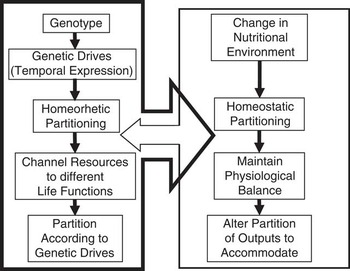
It is worth noting that these two modelling approaches are associated with two different conceptual views of genetically driven trajectories. The bottom-up approach considers the trajectory to be the consequence of underlying homeorhetic changes, that is, the coordinated changes in hormonal profiles (and other endocrine aspects such as receptor affinities, etc.) observed to occur as animals move from one physiological state to another (e.g. onset of lactation). The top-down approach considers the trajectory to have the status of being a goal the animal is programmed to achieve, that is, the trajectory is goal-driven, or teleonomic (Monod, Reference Monod1970). In this view, it is the trajectories that directly affect the fitness of the animal and are thus the object of selection. Although the approaches differ in their conceptual basis, they both recognize nutrient partitioning as being subject to two distinct processes: genetically driven control and homeostatic regulation, as shown in Figure 1. Much of the challenge in predicting the partition of nutrients relates to coupling these two aspects and the effects of genotype thereon.
A schematic representation of the main challenge for improving prediction of nutrient partition: that is, to incorporate partition according to genetic drives in models that partition nutrients to maintain physiological balance. The reverse arrow represents the fact that the nutritional environment can affect gene expression and thus genetically driven partition.

Bottom-up approaches: modelling homeorhetic trajectories
The bottom-up approach seeks to set rules of functioning at the level of metabolic regulators in order to give rise to performance trajectories at the animal level. This approach is invariably the one taken in mechanistic metabolic models. One of the first examples of this approach in dairy cows is the mammary gland model of Neal and Thornley (Reference Neal and Thornley1983), which was used by Baldwin et al. (Reference Baldwin, France, Beever, Gill and Thornley1987) to extend their metabolic model of the dairy cow, Molly, to be able to simulate different stages of lactation. In the mammary gland model of Neal and Thornley, the milk production potential of the cow was made a function of mammary cell number, which is in turn a function of time from calving (via the intermediate of a theoretical lactation hormone). This provided the metabolic model Molly with a homeorhetic trajectory for milk production, that is, a demand function that changed with days from calving, independent of nutrient supply. Subsequently, this homeorhetic trajectory for milk production was refined by developing increasingly sophisticated descriptions of mammary cell proliferation and decline (Dijkstra et al., Reference Dijkstra, France, Dhanoa, Maas, Hanigan, Rook and Beever1997; Pollott, Reference Pollott2000; Vetharaniam et al., Reference Vetharaniam, Davis, Upsdell, Kolver and Pleasants2003b). Although these mammary gland models incorporate progressively more mechanistic descriptions of mammary cell numbers and function, it is noteworthy that the factor driving these models ultimately remains time from calving rather than any innate genetic driver.
It is also noteworthy that this homeorhetic trajectory for milk did not differentiate between milk components. In the majority of mechanistic metabolic models (Danfær, Reference Danfær1990; Baldwin, Reference Baldwin1995; Martin and Sauvant, Reference Martin and Sauvant2007), lactational profiles of potential milk fat, protein and lactose are directly linked to the milk production potential or mammary cell number trajectory and rely on nutrient supply-driven partition to generate differences in milk composition. This has been shown to be less than satisfactory and led to modifications in the representation of the potential milk composition profiles with, for example, a dissociation of milk lactose production from milk fat and protein production (Hanigan et al., Reference Hanigan, Rius, Kolver and Palliser2007). This adaptation, where the maximum velocity of lactose synthesis was made a function of days in milk and the maximum velocities of milk fat and protein production remained functions of active mammary cell numbers, substantially improved the ability of Molly to predict milk composition relative to stage of lactation. However, prediction errors with respect to stage of lactation remained for milk fat (Hanigan et al., Reference Hanigan, Rius, Kolver and Palliser2007).
In the same way, there have been no explicit homeorhetic trajectories for body reserve usage in the majority of metabolic models, with one exception (Martin and Sauvant, Reference Martin and Sauvant2007). Taking Molly as an example, changes in body lipid reserves are driven by the size of the glucose pool relative to a reference value, with excess glucose favouring lipid accretion and glucose shortage provoking lipolysis (Baldwin, Reference Baldwin1995). The link between relative glucose concentrations and body lipid change is provided by an anabolic and a catabolic signal, ‘meta-hormones’, which broadly represent insulin and glucagon/catecholamines, respectively (Baldwin, Reference Baldwin1995). Although the regulation of lipolysis and lipogenesis via meta-hormones has been elaborated to provide a more sophisticated feedback control (Hanigan et al., Reference Hanigan, Rius, Kolver and Palliser2007 and Reference Hanigan, Palliser and Gregorini2009), there is no explicit trajectory for body reserves in published versions of Molly. Similar trajectories of meta-hormones are found in the model of Danfær (Reference Danfær1990), which uses growth hormone and insulin explicitly to alter nutrient uptake of the mammary gland, muscle and adipose. In this model, these hormones are affected by days in milk, as well as by milk yield and live weight. Via these trajectories, although not made explicit, the model of Danfær contains a homeorhetic control of nutrient partitioning. The model of Sauvant (Reference Sauvant1994) takes the important step of making the homeorhetic control explicit in its architecture and implements this regulation using catabolic and anabolic meta-hormones. This approach was extended by Martin and Sauvant (Reference Martin and Sauvant2007) to specifically include genetically driven changes in body lipid reserves via a catabolism and an anabolism hormone that were linked to give a negative correlation between body lipid mobilization and accretion. The levels of these homeorhetic hormones were explicitly made a function of milk production potential, thus providing genetically driven, homeorhetic trajectories of body reserve usage. Although all these models recognize the need for genetically driven trajectories (either explicitly or implicitly), they do not invoke (physiological state dependent) genetic expression, but instead use time as the driver to generate the homeorhetic trajectories. This may seem like a detail, but studies of growth have shown that relating trajectories to measures of physiological state, for example, degree of maturity, greatly extends the ability of models to accommodate genotype differences (Taylor, Reference Taylor1980; Emmans and Kyriazakis, Reference Emmans and Kyriazakis2001; Doeschl-Wilson et al., Reference Doeschl-Wilson, Knap, Kinghorn and Van der Steen2007).
Top-down approaches: modelling teleonomic trajectories
The top-down approach seeks to set rules of functioning at the animal level in order to drive the partition of nutrients to different physiological processes (maintenance, milk production, etc.); this approach is usually the one taken in nutrient flow models. It makes use of the observed biological phenomena that are described in terms of the evolutionary goals of the animal. This approach explicitly recognizes the notion of genetic drives for life functions; the emergent properties of the myriad underlying mechanisms mediated by gene expression patterns and honed by selection to maximize the probability of transmitting genes to the next generation. Given the perspective that these trajectories are in support of a goal, they are referred to as teleonomic (Monod, Reference Monod1970). The notion of teleonomic trajectories is not new; it is implicit in the idea of potential curves of, for example, growth or lactation, as these imply a genetically driven performance goal. Models that seek to describe potential growth have a long history (see Taylor, Reference Taylor1980; Emmans, Reference Emmans1997), and lactation models explicitly aimed at describing potential have also been proposed (Friggens et al., Reference Friggens, Emmans and Veerkamp1999). Interestingly, the model of Friggens et al. (Reference Friggens, Emmans and Veerkamp1999) based on a heuristic view of milk production turns out to be the same as the model of Dijkstra et al. (Reference Dijkstra, France, Dhanoa, Maas, Hanigan, Rook and Beever1997) derived from a mechanistic view.
The notion of teleonomic trajectories of body reserve change also started to emerge some time ago. Experiments that manipulated body condition score at calving observed trajectories of body condition change in early lactation towards a common, target, condition score (Garnsworthy and Topps, Reference Garnsworthy and Topps1982; Broster and Broster, Reference Broster and Broster1998). This is consistent with the notion of teleonomic trajectories. These observations provided evidence to suggest that in dairy cows, as in other mammals (Pond, Reference Pond1984), body reserve changes are programmed according to reproductive status (Friggens, Reference Friggens2003). These phenomena were subsequently formalized to provide a model for predicting teleonomic trajectories of body lipid change for dairy cows as a function of body lipid at calving, time from calving and time from (subsequent) start of pregnancy (Friggens et al., Reference Friggens, Ingvartsen and Emmans2004).
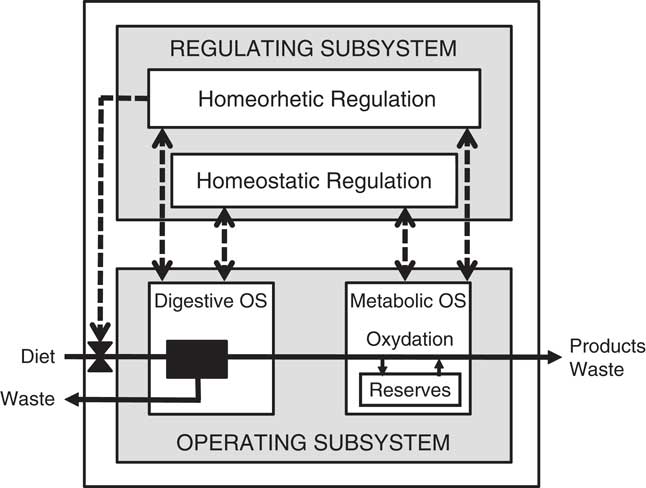
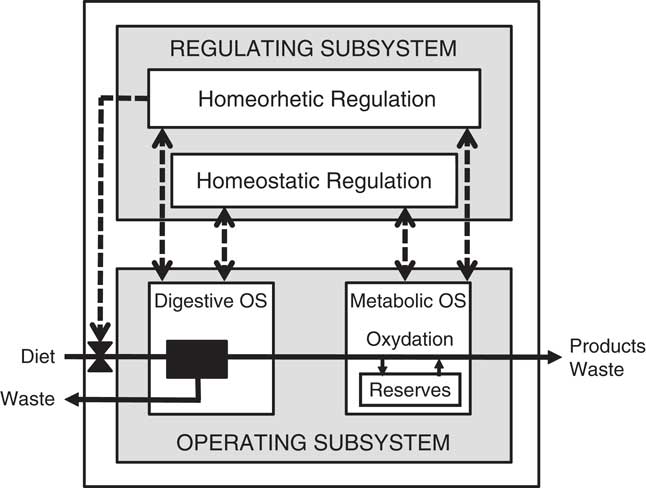
When the notion of teleonomic trajectories is extended to consider more than just one life function, for example, growth and lactation or lactation and subsequent pregnancy, then the need to attribute relative priorities to the different functions becomes evident (Hammond, Reference Hammond1944). Indeed, the genetically driven changes in nutrient partitioning as the animal progresses through different physiological states are the manifestation of the changing priorities of the animal. Not only does consideration of relative priorities provide functional explanations for phenomena such as the decline in fertility with increasing milk production (Friggens et al., Reference Friggens, Disenhaus and Petit2010), but it also provides the animal component of a framework for predicting nutrient partition. This was recognized by Sauvant (Reference Sauvant1994) who proposed a model architecture based on the coupling of a regulating sub-model providing teleonomic drives to govern the work of an operating sub-model (Figure 2), and recently developed into a teleonomic model of nutrient partitioning by Martin and Sauvant (Reference Martin and Sauvant2010a and Reference Martin and Sauvant2010b).
A schematic representation of the animal as a regulated system. Redrawn from Sauvant (Reference Sauvant1994).
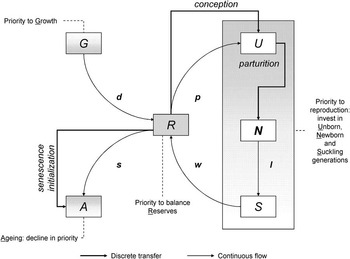
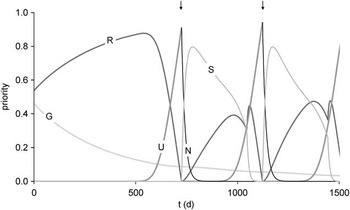
In this model, the regulating sub-model describes the dynamic of the relative priorities of a female mammal between life functions targeted to growth (G), ageing (A), balance of body reserves (R), nutrient supply to the unborn (U), newborn (N) and suckling (S) calf (Figure 3; Martin and Sauvant, Reference Martin and Sauvant2010a). This dynamic pattern (Figure 4) provides the driver for nutrient partitioning in the operating sub-model. Thus, this model describes changes in BW and composition, foetal growth, milk yield and composition and food intake in dairy cows during growth, over successive reproductive cycles and through ageing. During reproductive cycles, the relative priorities were constructed to ensure the continuity between gestation and lactation, and thus the survival of the current calf, and to reflect the trade-off between the priority to invest in the current reproductive cycle and the priority to start a new reproductive cycle. The elasticity of body reserves is considered to be an integral component of reproductive success: body reserves mobilization at parturition is explicitly considered as a maternal investment to provide nutrients for the calf's requirements, and body reserve reconstitution at the end of a reproductive cycle has the goal of safeguarding the subsequent reproductive cycle. The model was shown to satisfactorily simulate production variables (body, milk, intake) throughout the productive life of the cow, and across cattle genotypes (Martin and Sauvant, Reference Martin and Sauvant2010a).
The conceptual framework for representing animal priorities and the transfers and flow between them in the model of Martin and Sauvant (Reference Martin and Sauvant2010a). The following priorities are represented: growth (G), ageing (A), balance of body reserves (R), ensuring survival of the unborn calf (U), ensuring survival of the newborn calf (N) and ensuring survival of the suckling calf (S). Reproduced with permission.

Trajectories of the priorities for growth (G), balance of body reserves (R), ensuring survival of the unborn calf (U), ensuring survival of the newborn calf (N) and ensuring survival of the suckling calf (S) over 1500 days of life in the model of Martin and Sauvant (Reference Martin and Sauvant2010a). The arrows indicate parturition times of two successive reproductive cycles. Priority for ageing is close to zero at this stage of the lifespan. Reproduced with permission.

There have recently emerged other top-down models that explicitly recognize more than one driving force. The models of Petruzzi and Danfær (Reference Petruzzi and Danfær2004), Bryant et al. (Reference Bryant, Lopez-Villalobos, Holmes, Pryce, Rossi and Macdonald2008), Baudracco et al. (Reference Baudracco, Lopez-Villalobos, Holmes, Comeron, Macdonald and Barry2012) and Brun-Lafleur (Reference Brun-Lafleur2011) all explicitly recognize genetically driven changes in body energy reserves. It can also be argued that the notion has become implicit in recent versions of the Cornell Net Carbohydrate and Protein System (Tylutki et al., Reference Tylutki, Fox, Durbal, Tedeschi, Russell, Van Amburgh, Overton, Chase and Pell2008) and the INRA Fill Unit System (Faverdin et al., Reference Faverdin, Delaby and Delagarde2007), as both recognize the value of adjusting intake predictions for a lactational trajectory of body reserve usage, as well as a lactation curve of milk production. In most of these models, and indeed in common with the homeorhetic trajectories in metabolic models, the driving force in these models remains time from a given reproductive event (conception, calving) rather than any innate genetic driver, with the exception being the incorporation of scaling to mature size to drive growth components of the model of Martin and Sauvant (Reference Martin and Sauvant2010a).
The integration of teleonomic arguments to model nutrient partitioning has the advantage of being easier to link with evolutionary goals and thus set a high level of regulation coordinating all functions. It is nevertheless merely a way to describe simply the emergent properties of the myriad physiological changes driven by the underlying dynamics of gene expression as the animal progresses through life.
The challenge of incorporating genetic information on nutrient partitioning
There is now considerable evidence that genotype affects nutrient partitioning. In recent years, a significant number of breed, strain and selection line comparisons have shown clear differences in patterns of milk production and body reserve usage (Horan et al., Reference Horan, Mee, O'Connor, Rath and Dillon2005; Dillon et al., Reference Dillon, Berry, Evans, Buckley and Horan2006; Roche et al., Reference Roche, Berry and Kolver2006; Yan et al., Reference Yan, Mayne, Keady and Agnew2006; Cutullic et al., Reference Cutullic, Delaby, Michel and Disenhaus2009; Delaby et al., Reference Delaby, Faverdin, Michel, Disenhaus and Peyraud2009; Olson et al., Reference Olson, Cassell and Hanigan2010). Underlying these differences in performance are different patterns of endocrine profiles (Drackley et al., Reference Drackley, Overton and Douglas2001; Gong et al., Reference Gong, Lee, Garnsworthy and Webb2002; Lucy et al., Reference Lucy, Verkerk, Whyte, Macdonald, Burton, Cursons, Roche and Holmes2009). Clearly, these differences are underpinned by differences in gene expression and enzyme profiles (Loor et al., Reference Loor, Dann, Janovick Guretzky, Everts, Oliveira, Green, Litherland, Rodriguez-Zas, Lewin and Drackley2006; Sumner-Thomson et al., Reference Sumner-Thomson, Vierck and McNamara2011).
The depth and breadth of this information can leave us in no doubt that genotype plays a major role in determining the partition of nutrients, and consequently that any model to predict nutrient partitioning that does not allow for different genotypes will inevitably be of limited generality. Given this, it might be supposed that most models of nutrient partitioning accommodate genotype. This is not the case, there are actually very few models that attempt to do this (McNamara and Baldwin, Reference McNamara and Baldwin2000; Bryant et al., Reference Bryant, López-Villalobos, Holmes and Pryce2005). There are two reasons for this, the first being that until recently the focus of attempts to predict nutrient partitioning was related to the removal of constraints in nutrient supply by an increment in feed allowance (or a change in feed composition). This is by and large the so-called ‘push’ situation where performance is limited by nutrient intake (as it is assumed that the cow will ingest the extra nutrient allocation), and consequently genotype was seen as being less important (by nutritionists and physiologists). Indeed, the majority of partition models do not consider intake modulation to be a possible response to a nutritional imbalance but instead use intake as an input. In the context of genetically driven partition, ignoring possible intake responses seems likely to be an incomplete description of the system (see the section ‘Genetic effects on homeostatic capacity’).
The second reason for the limited number of models that truly accommodate genotype is related to the difficulty of obtaining operational descriptions of genotype with respect to nutrient partitioning. Again, this may seem surprising given the dramatic increase in our ability to characterize genotypes at the various molecular levels (genome, transcriptome, proteome, etc.) and the richness of information now accruing on dairy cows (Rhoads et al., Reference Rhoads, Sampson, Lucy, Spain, Spiers, Tempelman and Coussens2005; Sumner and McNamara, Reference Sumner and McNamara2007; Loor, Reference Loor2010). This information should ultimately form the basis of a bottom-up approach to defining partition genotypes and incorporation of these in the above-mentioned mechanistic models. However, if we consider existing metabolic models that deal with subclasses of lipids, carbohydrates and proteins (e.g. Baldwin, Reference Baldwin1995; Martin and Sauvant, Reference Martin and Sauvant2007), we rapidly have tens of metabolites, created, converted and combined by hundreds of enzymes and co-factors that are generated by expression of thousands of genes, not to mention hormonal control and organ/tissue-specific expression profiles. Describing the interplay of all these elements is a daunting task.
Progress can be made by using bioinformatic methods and systems biology to identify gene networks associated with specific physiological entities (Seo and Lewin, Reference Seo and Lewin2009; Loor, Reference Loor2010). It has been shown, within very limited cases, that metabolic networks and their controller genes can not only be identified, but also be made quantitative (Goelzer et al., Reference Goelzer, Brikci, Martin-Verstraete, Noirot, Bessières, Aymerich and Fromion2008). Interestingly, even at this sub-cellular level, a systemic approach was needed (and not just a bioinformatic one) in order to simplify (by identifying auto-regulating and controller nodes) and structure the network in functional terms (Goelzer et al., Reference Goelzer, Brikci, Martin-Verstraete, Noirot, Bessières, Aymerich and Fromion2008). The necessity of this has been demonstrated by Lemosquet et al. (Reference Lemosquet, Abdou Arbi, Siegel, Guinard-Flament, Van Milgen and Bourdon2010) who showed that even with simplified systems of, for example, metabolic reaction mechanisms, there are potentially infinite numbers of combinations of the different components that result in the same net outcome unless assumptions are made about the optimizing criteria. Thus, although the bottom-up view of nutrient partitioning is probably closest to the reality of biological functioning and is clearly worth pursuing, it currently presents considerable challenges with respect to the integration of molecular genotypes, and alternative approaches need to be considered to allow us to move forward with respect to incorporating genetic effects on nutrient partitioning.
The work of Lemosquet et al. (Reference Lemosquet, Abdou Arbi, Siegel, Guinard-Flament, Van Milgen and Bourdon2010) makes a very important point; many different variants of the metabolic machinery can function adequately, and distinguishing between them, that is, selecting the most successful variant, cannot be done without having defined the criteria for success or fitness at the level of the metabolic machinery. In other words, predicting the partition of nutrients according to genotype requires that differences in genotype be described in terms that link nutrient partitioning to the fitness of the whole system. Although common in the ecological context (Yearsley et al., Reference Yearsley, Tolkamp and Illius2001), the notion of nutritional models incorporating some description of fitness as an optimizing criterion is rare in the domain of livestock science. A notable exception is the work of Tolkamp and Ketelaars (Reference Tolkamp and Ketelaars1992) that proposed that the growing animal seeks to optimize efficiency. In this context, the top-down approach to predicting the partition of nutrients is closer to providing operational descriptions of genotype with respect to nutrient partitioning, because this teleonomic approach usually invokes evolutionary fitness goals and these models seek to link such goals to physiological descriptions of nutrient flows.
Within the top-down approach to predicting nutrient partition, it has recently been shown that at the conceptual level it is relatively easy to incorporate genotype. Martin and Sauvant (Reference Martin and Sauvant2010a) built in simple genetic parameters to their model of relative priorities and showed that by modifying these they could simulate potential performance trajectories for milk production and body reserves of cows of high and low genetic merit. With respect to milk production, there are a number of models that were conceived to achieve this (Neal and Thornley, Reference Neal and Thornley1983; Østergaard et al., Reference Østergaard, Sørensen and Kristensen2000; Vetharaniam et al., Reference Vetharaniam, Davis, Upsdell, Kolver and Pleasants2003b), and McNamara and Baldwin (Reference McNamara and Baldwin2000) showed in principle how Molly could accommodate different genotypes by adjusting milk fat and lactose synthesis rates. However, there are far fewer models that explicitly incorporate genotype effects on multiple functions or nutrient partitioning (Bryant et al., Reference Bryant, Lopez-Villalobos, Holmes, Pryce, Rossi and Macdonald2008; Martin and Sauvant, Reference Martin and Sauvant2010a). Although it is relatively easy to incorporate genotype at the conceptual level, this does not necessarily facilitate the task of obtaining operational descriptions of genotype with respect to nutrient partitioning. A key question is: how can we link the concepts to measures in the field?
Genetic evaluations based on test-day measures of milk production (usually monthly visits to a participating farm) have long been used to calculate breeding values for milk production, and have in the last decade or so been extended to include other measurements such as body condition score (Berry et al., Reference Berry, Buckley, Dillon, Evans, Rath and Veerkamp2002). These provide estimates of the proportion of the observed phenotypic variation in milk yield and body condition score that can be attributed to genotype, and with the application of random regression techniques have been extended to provide lactational profiles for different genotypes (Veerkamp and Goddard, Reference Veerkamp and Goddard1998; Coffey et al., Reference Coffey, Emmans and Brotherstone2001 and Reference Coffey, Simm, Hill and Brotherstone2003; Berry et al., Reference Berry, Veerkamp and Dillon2006). It is important to note that these are genetically driven trajectories under average feeding conditions; they are not true genetic potential trajectories. This is because the statistical models that derive them adjust for differences between farms to reflect the average across the population. Therefore, if, on average across the population, all cows are not fed to meet their potential at one stage of lactation, then this bias will appear in the genotype lactation curves.
Nonetheless, it seems reasonable to assume that these genotype curves reflect potential within current feeding systems, and making this assumption allows for the integration of genotype information into nutrient partitioning models (Brun-Lafleur, Reference Brun-Lafleur2011). In the lactation model of Brun-Lafleur et al. (Reference Brun-Lafleur2011), genetic information was incorporated using a part of the French genetic test-day model (Leclerc et al., Reference Leclerc, Duclos, Barbat, Druet and Ducrocq2008) to simulate the expected value of milk yield under average feeding conditions. This expected value depends on the cow's characteristics (breed, lactation number, lactation and pregnancy stages) adjusted for factors such as age and month at calving, and length of the dry period. Using this expected value together with the nutritional situation of the cow (energy and protein supplies available for lactation), the model calculates actual milk yield and composition. The results obtained were sufficiently accurate to permit this approach to form the basis of a herd-level model (Brun-Lafleur, Reference Brun-Lafleur2011). They also provide proof-of-principal for deriving operational estimates of genotype-specific potential yields by extending this approach (see also Bryant et al., Reference Bryant, Lopez-Villalobos, Holmes, Pryce, Pitman and Davis2007).
Although this has not yet been explicitly done for teleonomic trajectories of nutrient partitioning, the possibility exists to do so, especially for energy partition. Genotype lactation curves for body condition and body energy content (Banos et al., Reference Banos, Brotherstone and Coffey2005; Banos and Coffey, Reference Banos and Coffey2010) are curves of cumulative body energy change. With the caveat that they reflect average feeding conditions, these curves can be seen as providing quantitative measures of differences between genotypes in energy partitioning. Thus, it seems likely that in the near future prediction of nutrient partitioning trajectories in the dairy cow will be able to incorporate operational descriptions of genotype differences. However, this is only one step towards full incorporation of genotype. Studies that show genotype–environment interactions (Bryant et al., Reference Bryant, Lopez-Villalobos, Pryce, Holmes and Johnson2006; Beerda et al., Reference Beerda, Ouweltjes, Šebek, Windig and Veerkamp2007) indicate that there is a genetic component to the capacity of the animal to cope with nutritional ‘challenges’. Thus, any model that wishes to fully predict genotype and environmental effects on nutrient partitioning needs to incorporate genetic effects on homeostatic capacity.
The link between homeostatic capacity, genetically driven trajectories and genotype
An ability to respond to perturbations via homeostatic response mechanisms to regain a state of physiological balance is essential to the survival of the animal. It is a well-studied property that has been adequately recreated in metabolic models (e.g. Martin and Sauvant, Reference Martin and Sauvant2007). We also know that there are limits to an animal's capacity to maintain homeostasis, and that in the case of the modern dairy cow unfavourable nutritional environments around parturition can give rise to metabolic disease pathologies (Ingvartsen, Reference Ingvartsen2006). However, what has been less well studied is the link between homeostatic capacity, genetically driven trajectories and genotype, especially in the context of nutrient partitioning. Is the homeostatic capacity of the dairy cow the same throughout lactation? Is the homeostatic capacity of the dairy cow affected by genotype?
There is mounting evidence that reliance on body reserves is increased and that coping ability, or robustness, of dairy cows is reduced by selection for increased milk production. In a breed × feeding comparison, it was found that the Holstein breed lost more body condition, and was thinner at the nadir of the condition score curve than the Normande breed regardless of the feeding regime. The difference in body condition score loss between high and low feeding regimes was also greater for Holstein cows (Delaby et al., Reference Delaby, Faverdin, Michel, Disenhaus and Peyraud2009). Similarly, significant differences in nutrient partitioning were found in a trial comparing two New Zealand strains (1970 and 1990 genetics) and a North American (1990) strain of Holstein–Friesian (Lucy et al., Reference Lucy, Verkerk, Whyte, Macdonald, Burton, Cursons, Roche and Holmes2009). In this study, the North American strain produced more milk and mobilized more body reserves than the New Zealand 90 strain, which performed better than the New Zealand 70 strain. This study also showed that these differences in nutrient partitioning were underpinned by a far greater uncoupling of the somatotropic axis (Growth harmone IGF-1) in the North American strain compared with the New Zealand 70 strain with the New Zealand 90 intermediate. An increase in feed allowance had no effect on the milk production of the North American strain in early lactation, whereas it provoked an increased milk production in the New Zealand 70 strain (Grala et al., Reference Grala, Lucy, Phyn, Sheahan, Lee and Roche2011).
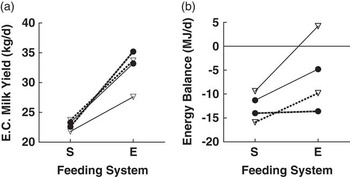
These results, suggesting that increased selection for milk production is reducing the ‘room to manoeuvre’, are also confirmed by a study of the effects of feed quality and milking frequency on cows that differed in genetic merit (Beerda et al., Reference Beerda, Ouweltjes, Šebek, Windig and Veerkamp2007). In this study, a group of high genetic merit for milk production (H) and a group of low genetic merit (L) cows were used. The effect of a nutritional challenge on these two genetic groups was evaluated by comparing performance on an energy-dense total mixed ration (E) relative to a silage-rich total mixed ration (S). The response to changes in milking frequency was also evaluated by comparing 2× with 3× daily milking, on both feeds. As expected, H cows produced more milk than L cows on 2× milking. Further, on 2× milking, the decrease in energy-corrected milk yield associated with diet S was greater in H cows. On the basis of this evidence, it is tempting to conclude that the milk production of H cows is more sensitive to a challenge than that of L cows. However, if one compares 2× and 3× milking, on feed E, the opposite result is obtained, the milk production of low genetic merit cows is more sensitive to the milking frequency challenge than that of high genetic merit cows. Clearly, not all challenges to milk production are the same. Biologically speaking, the milking frequency challenge is affecting the ‘pull’ on milk production, that is, mimicking the effect of an additional suckling load, and impinging on the mechanisms by which the cow adjusts her investment in the current calf. Whereas the dietary challenge is affecting the ‘push’ aspect of milk production, imposing limits on the nutrient flows from the gastrointestinal tract to the mammary gland. When all treatment combinations are considered, this push/pull dichotomy becomes more clear (Figure 5). All groups respond positively to an increase in dietary energy push, but those with an additional pull, that is, increased genetic merit or milking frequency, respond more. However, it should be noted that the effects of genetic merit and milking frequency are not additive for energy-corrected milk yield. With respect to energy balance, low merit cows have a greater capacity to respond to a challenge, although they generally mobilize less on a given treatment. The finding that selecting cows for a specific production trait, that is, creating specialist animals, decreases their robustness is supported by studies in other species (Reznick et al., Reference Reznick, Nunney and Tessier2000; Theilgaard et al., Reference Theilgaard, Sánchez, Pascual, Berg, Friggens and Baselga2007) and also by simulation studies (van der Waaij, Reference van der Waaij2004). Thus, and contrary to some reports (Collier et al., Reference Collier, Baumgard, Lock and Bauman2005), continued selection for increased milk production is not without cost (see also Friggens et al., Reference Friggens, Disenhaus and Petit2010).
The effect of genotype (high v. low index for milk production) and milking frequency (2× v. 3× daily) on responses to the energy density of the ration (rich in silage, S, v. rich in energy concentrates, E). High index is indicated by solid circles and low index is indicated by open triangles. 2× daily milking is indicated by solid lines and 3× daily milking is indicated by stippled lines. Energy corrected milk yield is shown in (a) and energy balance is shown in (b). Drawn from the results of Beerda et al. (Reference Beerda, Ouweltjes, Šebek, Windig and Veerkamp2007)

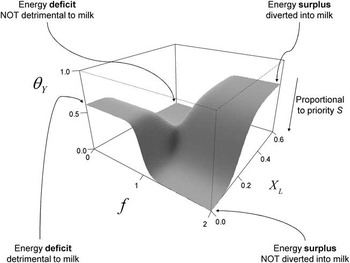
At present, information concerning genotype and stage of lactation effects on homeostatic capacity has not been explicitly included in metabolic models that predict nutrient partition. Although the model of Vetharaniam et al. (Reference Vetharaniam, Davis, Soboleva, Shorten and Wake2003a) successfully modelled the effects of milking frequency and energy supply on mammary gland cell populations and milk producing ability, this was more in terms of environmental factors affecting the homeorhetic trajectory of active mammary cell numbers, and not the homeostatic capacity of the mammary gland. However, if one considers that partitioning to and from adipose tissue is a key part of the homeostatic response to nutritional perturbations, then there are models that modulate the ease of mobilization of body lipid according to stage of lactation. In the model of Martin and Sauvant (Reference Martin and Sauvant2007), the sensitivity of body lipid anabolism and catabolism to the size of the adipose tissue was made a function of the ‘mobilization hormone’, which itself decays as a function of days from calving. Thus, it can be argued that the homeostatic capacity of body lipid reserves changes with the stage of lactation. The idea that homeostatic capacity changes according to the physiological state of the animal was formalized in the model of Martin and Sauvant (Reference Martin and Sauvant2010b). In this model, the partition of energy towards milk production is not only a function of actual intake relative to required intake, but also a function of the size of body lipid reserves, and these functions are modulated by the priority accorded to lactation (Figure 6). This effectively means that the extent to which different life functions are defended against nutritional perturbations is proportional to the relative importance of that life function at that time.
The surface response of the function (θ Y) modulating milk yield according to relative feeding (f) and body reserves (X L) levels in the model of Martin and Sauvant (Reference Martin and Sauvant2010b). f is the ratio of actual to required energy intake in MJ/MJ and X L is the ratio of labile to non-labile body mass in kg/kg. S is the priority for ensuring survival of the suckling calf. Reproduced with permission.

Interestingly, in both of the above models, these adaptations of nutrient partitioning are also made a function of the size of the body lipid reserves (Martin and Sauvant, Reference Martin and Sauvant2007 and Reference Martin and Sauvant2010b). This feature was also implemented in recent versions of Molly (Hanigan et al., Reference Hanigan, Rius, Kolver and Palliser2007), where the lactation hormone that drives milk production was made sensitive to body adipose mass (relative to a reference value equivalent to a condition score of 3), and is found in other models (Brun-Lafleur, Reference Brun-Lafleur2011). This device can be interpreted in two ways: at the pragmatic level, it provides a stabilizing factor within metabolic or nutrient flow models. It has long been known that small systematic errors in the prediction of energy flows through such models often accumulate to give unrealistic estimates of change in body lipid reserves over longer time periods such as the whole lactation (McNamara, Reference McNamara2004). Thus, providing a feedback from the size of body lipid reserves to adjust partition of energy towards milk (Hanigan et al., Reference Hanigan, Rius, Kolver and Palliser2007) avoids this accumulation of errors in body fat. In those models that predict intake, adjusting intake according to the size of body lipid reserves has the same effect (Martin and Sauvant, Reference Martin and Sauvant2010b; Brun-Lafleur, Reference Brun-Lafleur2011).
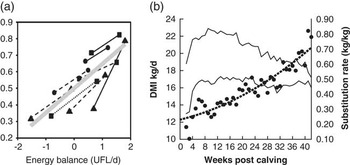
In addition to the pragmatic interpretation, there is a plausible biological explanation centred around the theory of lipostatic regulation of energy flows (Kennedy, Reference Kennedy1953 and Reference Kennedy1967). This theory, based on evidence that animals modulated intake to defend a set point level of body lipid, was to a large extent substantiated by the discovery of the adiposity signal leptin, although this is only part of the regulatory system (Faverdin and Bareille, Reference Faverdin and Bareille1999; Chilliard et al., Reference Chilliard, Ferlay, Faulconnier, Bonnet, Rouel and Bocquier2000). The lipostatic theory implies that one goal of the animal is to acquire a target level of body reserves and Kennedy (Reference Kennedy1967) clearly recognized that this target level would vary according to physiological state. In this context, the finding that leptin also impacts on reproduction (Hoggard et al., Reference Hoggard, Hunter, Trayhurn, Williams and Mercer1998) is not surprising. Although this explanation for the use of body lipid amount as a regulator in models that predict partition does not per se provide information useful for adjusting homeostatic capacity with respect to genotype and physiological state, it does emphasize the importance of recognizing a teleonomic trajectory of body reserves. It also highlights a frequently overlooked aspect of nutrient partition, intake modulation in accordance with genetically driven trajectories. There is good evidence that the down regulation of intake in early lactation is at least partly a modulation to accommodate genetically driven body mobilization (Bareille et al., Reference Bareille, Faverdin and Hay1997; Faverdin and Bareille, Reference Faverdin and Bareille1999; Friggens et al., Reference Friggens, Berg, Theilgaard, Korsgaard, Ingvartsen, Løvendahl and Jensen2007a). Further, in feeding systems where concentrates are allocated separately from roughage, there are clear effects of genotype and lactation stage on the substitution rate, that is, the extent to which roughage intake decreases per unit increase in concentrate feed allowance. The substitution rate increases with stage of lactation, that is, as the proportion of the additional energy supply being used by the mammary gland decreases (Figure 7). This strong negative correlation between substitution rate and response in milk output (Faverdin et al., Reference Faverdin, Dulphy, Coulon, Verite, Garel, Rouel and Marquis1991) is also observed between Holstein strains with different genetic merit (Horan et al., Reference Horan, Faverdin, Delaby, Rath and Dillon2006). Results of this kind clearly indicate that nutrient partitioning should not be considered independently of nutrient intake responses.
Two examples of animal determinants of substation rate. Panel (a) shows the relationship between substitution rate and the energy balance of the cow. Any two points connected by a line are averages from measurements made on the same cows in different periods. The concentrates used were cereals (squares), beet pulp (circles) and wheat bran (triangles). The forages used were maize silage (solid lines), grass silage (stippled lines) and hay (dotted line). The thick line shows the general relation redrawn from data of Faverdin et al. (Reference Faverdin, Dulphy, Coulon, Verite, Garel, Rouel and Marquis1991). Panel (b) shows substitution rate (solid circles) relative to weeks post-calving calculated from the differences in intake (solid lines) between two feeds that differed only in their concentrate content. The thick stippled line shows the trend in substitution rate with time redrawn from data of Friggens et al. (Reference Friggens, Emmans, Kyriazakis, Oldham and Lewis1998).

With respect to the effects of physiological state on homeostatic capacity, new information is beginning to emerge from very recent studies that have carried out nutritional challenges at different stages of lactation in dairy cows (Bjerre-Harpøth et al., Reference Bjerre-Harpøth, Friggens, Thorup, Larsen, Ingvartsen and Moyes2012) and in goats (Schmidely et al., Reference Schmidely, Duvaux-Ponter, Laporte-Broux, Tessier and Friggens2011). In both species, it appears that milk yield responses to a short period of underfeeding are close to being a constant proportion of milk yield immediately before the challenge, with no additional effect of stage of lactation. If shown to apply across a wider range of circumstances, these results suggest that a simple way of modelling homeostatic capacity as a function of lactation stage and genotype may be to express it as a proportion of potential. These experimental observations fit well with the approaches taken in some recent empirical models that predict the consequences of nutritional changes as marginal responses (Brun-Lafleur et al., Reference Brun-Lafleur, Delaby, Husson and Faverdin2010; Maxin, Reference Maxin2011). The adjustment for differences in initial performance implies that using marginal responses allows both of these models to show robust performance with respect to predicting milk yield and composition. It also seems likely that predictions are further improved by expressing them in proportional terms (Brun-Lafleur, Reference Brun-Lafleur2011), although these preliminary findings should be treated with caution until confirmed by other studies.
Conclusions and perspectives
In the last 10 years or so, there has been a growing recognition of the need to incorporate in nutritional models the innate driving forces that alter nutrient partitioning according to physiological state, the genetically driven trajectories. At the same time, modellers started to extend their models to begin to incorporate genetic effects on these trajectories, and on the homeostatic capacity of the animal. This has involved consideration of concepts such as teleonomy and homeorhesis, as well as homeostasis, to develop priorities and potentials for different life functions. The result has been the extension of a number of existing models to better accommodate these animal factors, and the recent emergence of new models that are capable of predicting the partition of nutrients throughout lactation for cows of differing milk production potentials. For the most part, these models remain research models, although substantial progress has been made towards developing models that can be applied in the field. In this context, there is a need to extend work on making nutrient partitioning models stochastic (Brun-Lafleur, Reference Brun-Lafleur2011), the benefits of stochastic models for simulating management strategies at herd level are well recognized (Østergaard et al., Reference Østergaard, Sørensen and Kristensen2000).
These developments have greatly extended the generality of nutrient partitioning models with respect to the type of animal and its physiological state. However, these models remain very largely focussed on predicting partition between productive outputs and body reserves. Relatively little attention has been paid to the possibility of partitioning between nutrient classes within a given output. Meta-analysis of milk component responses to intra-experiment changes in metabolizable energy supply found different forms of response between milk fat and milk protein, and thus different partitioning rules for these different components (Sauvant et al., Reference Sauvant, Martin and Mertens2009). This suggests that improved descriptions of partition will need to accommodate the different nutrient classes.
Further, the challenge of linking prediction of nutrient partitioning to its consequences on health, reproduction and longevity, although widely recognized, is only now beginning to be addressed. This is an important perspective for future work on nutrient partitioning. The challenge lies in matching the levels of detail of description of nutrient partitioning and, for example, reproductive function models to permit a coherent linkage of the two. This also requires that the control system (genetic drives) be designed to encompass both modules. At least with respect to reproduction, it seems clear that there is a sufficient understanding of the biological linkages and sufficient data for this perspective to be realized in the foreseeable future. The task will be more difficult with respect to health, and especially longevity.
Another major perspective is that of incorporating increasingly detailed descriptions of genotypes via genomics, and of the downstream metabolic machinery via gene expression, proteomic and metabolomic information. Ultimately, this should allow a much finer grain of description of genetic and environmental effects on metabolic pathways, and thus on nutrient partitioning. However, as indicated above, this remains a daunting task for a number of reasons. With respect to the applicability of this approach, there are serious methodological hurdles to be cleared before most omic type information becomes affordable and routinely available. The exception is genomic characterization, which is rapidly becoming available. Because the genome is constant across tissues and stages of life (within a given animal), it does not need to be repeatedly measured to achieve an adequate characterization. Although genome-wide association studies have frequently shown that they do not explain the majority of the variation in whole-animal phenotypes, the genomic approach still offers the possibility of significantly improving our ability to describe genetic effects on nutrient partitioning (Pryce et al., Reference Pryce, Bolormaa, Chamberlain, Bowman, Savin, Goddard and Hayes2010). Beyond this, the major challenge lies in achieving a vertical integration from this ‘atomized’ level of description of the animal to achieve biologically meaningful aggregate phenotypic descriptions. The danger is that even if we have all the omic information, it will still be too complex for us to hold in our minds. Thus, it is likely that we will have to make use of a systemic approach, and the notion of emergent properties, as a way to summarize the complexity at the levels of organization that are not our specific focus and develop suites of models each with their own focus. If this is done in a structured way, it should allow models at different levels to be coupled in useful and logical ways (Lavelle et al., Reference Lavelle, Berry, Beslon, Ginelli, Giavitto, Kapoula, Le Bivic, Peyrieras, Radulescu, Six, Thomas-Vaslin and Bourgine2008).