There is an expansive literature examining the association between childhood maltreatment (CM) and disordered gambling (DG) in adulthood, with well-established findings that CM experiences, such as sexual abuse, physical abuse, and neglect, are associated with later DG (Black, Shaw, McCormick, & Allen, Reference Black, Shaw, McCormick and Allen2012; Edwards, Holden, Felitti, & Anda, Reference Edwards, Holden, Felitti and Anda2003; Felsher, Derevensky, & Gupta, Reference Felsher, Derevensky and Gupta2009; Hodgins et al., Reference Hodgins, Schopflocher, el-Guebaly, Casey, Smith, Williams and Wood2010; Lane et al., Reference Lane, Sacco, Downton, Ludeman, Levy and Tracy2016; Petry & Steinberg, Reference Petry and Steinberg2005; Poole, Kim, Dobson, & Hodgins, Reference Poole, Kim, Dobson and Hodgins2017; Shultz, Shaw, McCormick, Allen, & Black, Reference Shultz, Shaw, McCormick, Allen and Black2016). This association has been shown to hold across gender (Andronicos et al., Reference Andronicos, Beauchamp, DiMambro, Robert, Besson and Séguin2015; Hodgins et al., Reference Hodgins, Schopflocher, el-Guebaly, Casey, Smith, Williams and Wood2010; Nixon et al., Reference Nixon, Evans, Grant Kalischuk, Solowoniuk, McCallum and Hagen2012; Roberts et al., Reference Roberts, Sharman, Coid, Murphy, Bowden-Jones, Cowlishaw and Landon2017; Wenzel & Dahl, Reference Wenzel and Dahl2008) and culture (Dion, Cantinotti, Ross, & Collin-Vezina, Reference Dion, Cantinotti, Ross and Collin-Vezina2015; Dion, Collin-Vézina, De La Sablonnière, Philippe-Labbé, & Giffard, Reference Dion, Collin-Vézina, De La Sablonnière, Philippe-Labbé and Giffard2009; Larsen, Curtis, & Bjerregaard, Reference Larsen, Curtis and Bjerregaard2013; Peltzer et al., Reference Peltzer, Mabilu, Mathoho, Nekhwevha, Sikhwivhilu and Sinthumule2006; Roberts et al., Reference Roberts, Sharman, Coid, Murphy, Bowden-Jones, Cowlishaw and Landon2017; Sharma & Sacco, Reference Sharma and Sacco2015). While a number of studies have applied twin data to examine the etiological mechanisms of DG (Davis, Slutske, Martin, Agrawal, & Lynskey, Reference Davis, Slutske, Martin, Agrawal and Lynskey2019; Eisen et al., Reference Eisen, Lin, Lyons, Scherrer, Griffith, True and Tsuang1998; Slutske, Reference Slutske, Heinz, Romanczul-Seiferth and Potenza2019; Slutske, Zhu, Meier, & Martin, Reference Slutske, Zhu, Meier and Martin2010), almost none have leveraged the strengths of a discordant twin design to identify a potentially causal role of CM in the development of DG.
Discordant twin designs permit isolation of the effect of an exposure of interest on a theoretically associated outcome, as they leverage the nature of twin relations to control for genetic and other familial confounds, thereby providing a more stringent test of causality (McGue, Osler, & Christensen, Reference McGue, Osler and Christensen2010). Because monozygotic (MZ) twins share their genes and familial environment, any differences between them can be inferred to be a quasi-causal result of unique environmental factors (e.g. an exposure that only one co-twin received); because dizygotic (DZ) twins share, on average, half of their genes and a familial environment, comparing DZ twins to MZ twins provides a test of genetic confounding of the effect of an exposure on an outcome. Put simply, twins discordant for a particular exposure provide a natural experiment in which the unexposed twin serves as a case–control for the exposed co-twin, approximating the latter's outcome in the absence of exposure. Though much research has used genetically-informed approaches to elucidate the role of CM in the development of psychopathology (e.g. Bornovalova et al., Reference Bornovalova, Huibregtse, Hicks, Keyes, McGue and Iacono2013; Richmond-Rakerd et al., Reference Richmond-Rakerd, Trull, Gizer, McLaughlin, Scheiderer, Nelson and Statham2019; Rosenström et al., Reference Rosenström, Czajkowski, Ystrom, Krueger, Aggen, Gillespie and Torvik2019; Schaefer et al., Reference Schaefer, Moffitt, Arseneault, Danese, Fisher, Houts and Caspi2018), only one study to date has used the discordant twin design to examine the association of CM and DG in adulthood (Scherrer et al., Reference Scherrer, Xian, Kapp, Waterman, Shah, Volberg and Eisen2007). This study operationalized CM as an experience of molestation, physical abuse, and/or serious neglect. While models that approximated effects in unrelated individuals (‘individual-level models’) revealed an association between CM and DG, the discordant twin (‘co-twin control’) models showed that twins endorsing these forms of CM were no more or less likely to report DG symptoms than their unaffected co-twins. Such findings indicate that familial factors (genes, rearing environment), rather than causal effects of CM, accounted for the association between CM and DG that was observed in the individual-level models. Despite its many important strengths, this study's sample was comprised exclusively of male veteran twin pairs (Henderson et al., Reference Henderson, Eisen, Goldberg, True, Barnes and Vitek1990), likely limiting its generalizability to both women and civilian populations. Rates of childhood abuse are substantially higher among women (Briere & Elliott, Reference Briere and Elliott2003; Dunne, Purdie, Cook, Boyle, & Najman, Reference Dunne, Purdie, Cook, Boyle and Najman2003; Stoltenborgh, Van Ijzendoorn, Euser, & Bakermans-Kranenburg, Reference Stoltenborgh, Van Ijzendoorn, Euser and Bakermans-Kranenburg2011) and women comprise a notable minority of problem gamblers (Welte, Barnes, Wieczorek, Tidwell, & Parker, Reference Welte, Barnes, Wieczorek, Tidwell and Parker2001); as such, it is critical to include this group to obtain a more complete picture of the nature of the relationship between CM and DG.
Present study
The extant literature on the role of maltreatment in development of later psychiatric and psychosocial problems points toward genetic and shared environmental, but not quasi-causal, effects of CM (e.g. Berenz et al., Reference Berenz, Amstadter, Aggen, Knudsen, Reichborn-Kjennerud, Gardner and Kendler2013; Forsman and Långström, Reference Forsman and Långström2012; Scherrer et al., Reference Scherrer, Xian, Kapp, Waterman, Shah, Volberg and Eisen2007; Young-Wolff, Kendler, Ericson, & Prescott, Reference Young-Wolff, Kendler, Ericson and Prescott2011). However, evidence for this pattern in the etiology of DG is nearly non-existent; the single study that has been conducted provides only a piece of a larger puzzle. As such, the potential causal influence of CM on the development of DG in adulthood remains in question. Elucidating the mechanisms of DG is important in developing and implementing relevant and effective interventions and treatment approaches. For example, should CM play a causal role in DG, trauma-based therapies may be an effective approach by which to treat and/or prevent DG; conversely, if this is not the case, a therapeutic focus on trauma may have an iatrogenic effect. The present study sought to utilize the discordant twin design in a mixed-sex sample of community-based adults to disentangle the potential causal influence of CM on later DG. It was hypothesized that, in line with previous literature, CM would be associated with DG, but this association would be driven solely by familial, rather than causal, factors.
Methods
Participants and procedure
Participants were 1875 complete twin pairs (MZ pair N = 867; DZ pair N = 1008; total participant N = 3750) from the Australian Twin Registry Cohort II [58% female (male N = 1562, female N = 2188)]. Respondents’ ancestral origins were primarily from the UK (81%), Ireland (26%), and Germany (13%), with 0.37% of respondents reporting indigenous Australian ancestry via at least one grandparent. Thirty-six percent of the sample completed high school or less, 29% completed technical college, and 34% attained an undergraduate or more advanced degree.Footnote †Footnote 1
Participants completed two structured psychiatric interviews based on the Australian version of the Semi-Structured Assessment for the Genetics of Alcoholism (Bucholz et al., Reference Bucholz, Cadoret, Cloninger, Dinwiddie, Hesselbrock, Nurnberger and Schuckit1994) via telephone. The first interview (‘Wave I’) was conducted in 1996–2000 [M age = 29.86 (s.d. = 2.48), range = 23–36; participation rate = 84%] with a re-interview of a subset of participants 4 years later to establish the reliability of the measures. The second interview (‘Wave II’) was conducted in 2004–2007 [M age = 37.60 (s.d. = 2.31), range = 30–43; participation rate = 80%], with another re-interview of a subset of participants approximately 3 months later to establish the reliability of the measures.Footnote 2 Informed consent was obtained from all participants and the study was approved by the Institutional Review Boards at the University of Missouri, Washington University-St. Louis, and the Queensland Institute of Medical Research.
Measures
Wave I: 1996–2000 interview
Childhood maltreatment
Participants were provided with a respondent booklet containing a numbered list of traumatic experiences. Participants were asked to refer to the list and respond in a yes/no fashion to the question ‘Did event number X ever happen to you?’ These queries included the experience of rape (‘You were raped [someone had sexual intercourse with you when you did not want to, by threatening you or using some degree of force]’), sexual molestation (‘You were sexually molested [someone touched you or felt your genitals when you did not want them to]’), physical abuse (‘You were physically abused as a child’), serious neglect (‘You were seriously neglected as a child’), and being threatened with a weapon, held captive, or kidnapped (‘You were threatened with a weapon, held captive, or kidnapped’). For experiences endorsed, respondents were asked how old they were the first time such an experience occurred. CM was coded positively for those events occurring prior to age 18. Experiences were summed to create a cumulative maltreatment score (possible range = 0–5). Retrospective reports of CM were reasonably reliable (γ = 0.76, 95% CI 0.54–0.97) among the 137 participants who provided data at both the Wave I interview and the associated re-interview.
Childhood socioeconomic status
Participants were queried regarding their family's relative financial stability compared to the average family in the community (‘better off’, ‘about average’, or ‘worse off’) from when they were aged 6–13.
Conduct disorder symptoms
Participants were administered a DSM-IV diagnostic assessment of conduct disorder. Items queried behaviors that occurred prior to age 18. Endorsed symptoms were summed to create a cumulative conduct disorder symptom score (possible range = 0–15).
Childhood depression
Participants were administered a DSM-IV assessment of major depressive episodes (MDEs), which queried their most severe period of depression and its age of onset. Participants meeting criteria for MDE during this period were asked if they had ever experienced other MDEs, and, if so, whether their most severe episode was also their first. For those respondents whose most severe episode was not their first, age of onset of their first MDE was queried. Participants reporting that their age of onset for MDE was prior to age 18 were considered to have childhood depression.
Wave II: 2004–2007 interview
Disordered gambling
Lifetime and past year DG were assessed using the National Opinion Research Center DSM-IV Screen for Gambling Problems (NORC; Gerstein et al., Reference Gerstein, Volberg, Toce, Harwood, Johnson, Buie and Engelman1999) and the 20-item South Oaks Gambling Screen (SOGS; Lesieur & Blume, Reference Lesieur and Blume1987). The nine DG symptoms retained in the DSM-5, as assessed by the NORC, and the items from the SOGS were summed to form a cumulative DG outcome variable (possible range = 0–29; Slutske, Piasecki, Deutsch, Statham, & Martin, Reference Slutske, Piasecki, Deutsch, Statham and Martin2019). Past studies have found a single-factor model to provide an excellent fit to this series of indicators (Slutske, Deutsch, Statham, & Martin, Reference Slutske, Deutsch, Statham and Martin2015), as well as complete overlap in familial sources of variation in liability to DG as assessed by these two measures (Slutske, Zhu, Meier, & Martin, Reference Slutske, Zhu, Meier and Martin2011). The internal consistency of this cumulative DG variable was good for both lifetime (α = 0.89) and past year (α = 0.84) measures, as was test-retest reliability for both the lifetime (γ = 0.85, 95% CI 0.79–0.91) and past year (γ = 0.87, 95% CI 0.81–0.94) measures among the 130 participants who provided data at both the Wave II interview and the associated re-interview.
Attention-deficit/hyperactivity disorder (ADHD)
Participants were administered a DSM-IV diagnostic assessment of ADHD. Items queried behaviors that occurred from ages 6–12. Endorsed symptoms were summed to create a cumulative ADHD symptom score (possible range = 0–18).
Adult antisocial behavior
Participants were queried regarding the frequency of engagement in a series of 17 antisocial behaviors (e.g. taking advantage of others without remorse, stealing or destroying property, physically harming others on purpose) since age 18. These behaviors were coded to reflect the seven DSM-IV symptoms of antisocial personality disorder (ASPD). Symptoms were summed to create a cumulative approximate adult antisocial behavior score (possible range = 0–7).
Alcohol use disorder (AUD)
Lifetime and past year symptoms of alcohol abuse and dependence were assessed using the World Health Organization Composite International Diagnostic Interview (Kessler, Andrews, Mroczek, Ustun, & Wittchen, Reference Kessler, Andrews, Mroczek, Ustun and Wittchen1998; World Health Organization, 1992). This interview included all DSM-IV symptoms as well as the craving criterion that was added to the DSM-5. Symptoms were coded so as to approximate DSM-5 criteria for AUD, such that abuse and dependence items were summed with the inclusion of the craving criterion and the exclusion of the legal problems criterion (possible range = 0–11).
Analytic plan
Analyses were conducted using SAS version 9.4 (SAS Inc., 2014). To examine the extent of twin concordance for CM across zygosity groups, κ coefficients were obtained within PROC FREQ. These omnibus tests of twin similarity were followed with biometric modeling applied to CM and DG. These analyses partitioned the variation in liability into additive genetic, common environmental, and unique environmental influences. Models were fitted directly to the raw twin data by the method of robust weighted least squares; bias-corrected bootstrapped confidence intervals were estimated. Thresholds (prevalences) were allowed to differ across men and women. Sex differences in the proportion of additive genetic, common environmental, and unique environmental influence were tested by constraining parameters to be equal across men and women; significant deterioration of model fit under these constraints would indicate the presence of sex differences. These analyses were conducted in Mplus Version 8 (Muthén & Muthén, Reference Muthén and Muthén2017).
To examine the effect of exposure to CM on DG, two-level generalized linear mixed models were fit using PROC GLIMMIX. Generalized linear mixed models are a statistical procedure used for the analysis of clustered data with non-normally distributed outcome variables (Hedeker, Reference Hedeker, Everitt and Howell2005). Twin data are clustered, with individual twins (level 1) nested within twin pairs (level 2). Random intercept models were used to estimate level 1 and level 2 variances. A negative binomial distribution and log link function were used due to the positive skewness of the DG symptom variable (59% and 82% of respondents reported zero lifetime and past year symptoms, respectively). Coefficients from the multilevel models were exponentiated to produce incidence rate ratios (IRRs; Slutske et al., Reference Slutske, Piasecki, Deutsch, Statham and Martin2019). Two sets of models were run to predict (1) lifetime and (2) past year DG symptoms. The former has the advantage of a greater number of participants endorsing symptoms and a greater number of symptoms endorsed, providing increased precision of estimates, whereas the latter has the advantage of perfectly clean temporal separation of CM and gambling behavior.
First, models were fit at the individual level to examine an overall effect of CM on later DG. These models accounted for the clustering of twin pair data so as to approximate independent (i.e. non-familial) data. Base models were fit with zygosity and sex as covariates. A sex by CM interaction was then added to the model to test for sex differences; if significant, the interaction term was retained in the model. A fully adjusted model was subsequently fit including zygosity, sex, educational attainment, ADHD, conduct disorder, childhood depression, adult antisocial behavior, and AUD as covariates.
Next, co-twin control models were run to examine quasi-causal (i.e. exposure) and familial (i.e. genetic and shared environmental) effects of CM on DG. As described above, such discordant twin designs model each individual's co-twin as their own control for an exposure variable of interest, thereby controlling for the potential confounding factors of genes (completely for MZ twins and partially for DZ twins) and familial environment (completely for both MZ and DZ twins). The CM predictor variable was group-mean centered to test within-pair (i.e. comparison of twin against co-twin) and between-pair (i.e. comparison of twin pair average against other twin pairs) effects. The former indexes quasi-causal effects of the exposure variable and the latter indexes familial effects of genes and shared environment associated with the exposure (Slutske et al., Reference Slutske, Deutsch, Richmond-Rakerd, Chernyavskiy, Statham and Martin2014, Reference Slutske, Piasecki, Deutsch, Statham and Martin2019). A base model including within-pair CM, between-pair CM, sex, and zygosity was fit to the data, followed by a base model with a sex by within-pair CM interaction term and a zygosity by within-pair CM interaction term included. Significant interactions were carried forward to the fully adjusted model; a significant zygosity by predictor interaction would indicate the presence of genetic confounding. A fully adjusted co-twin control model was then fit, including zygosity, sex, educational attainment, ADHD, conduct disorder, childhood depression, adult antisocial behavior, and AUD as covariates. Models were run first using data from both MZ and DZ pairs (‘MZ-DZ models’), and subsequently in MZ pairs only (‘MZ-only models’); MZ-DZ models have the benefit of more statistical power due to a larger sample, while MZ-only models provide the most stringent test of causality due to complete control of genetic confounds.
Results
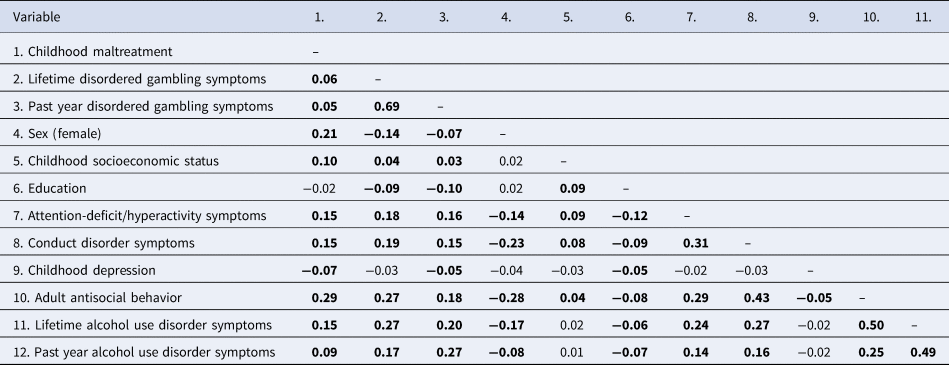
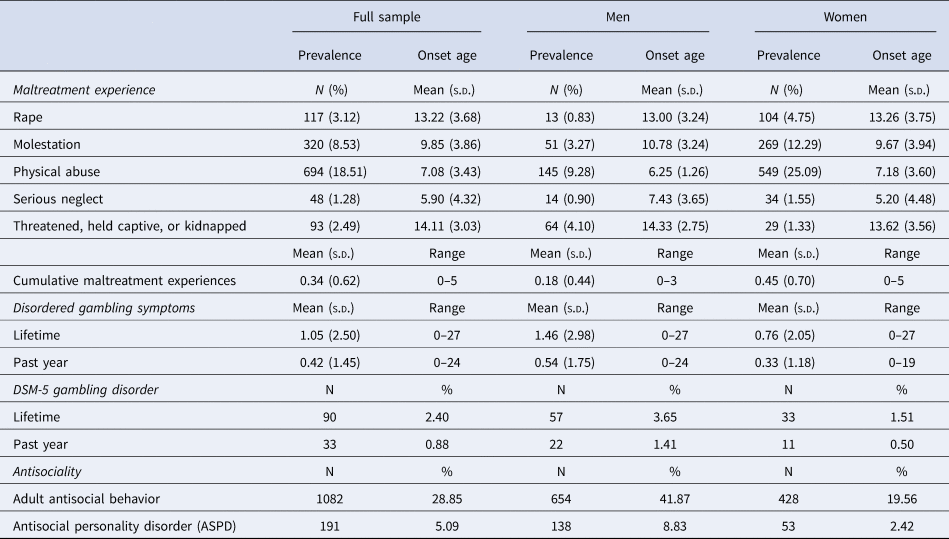
Correlations between all variables are presented in Table 1.Footnote 3 Conduct disorder and adult antisocial behavior were most strongly correlated with CM; adult antisocial behavior and AUD symptoms were most strongly correlated with DG. CM was more prevalent among women (35.44%, N = 775) than among men (16.23%, N = 253), whereas the average number of DG symptoms was greater among men than among women (Table 2). The average age of first experience across CM types ranged from 5 to 14 years (Table 2), whereas the mean age of first gambling experience was approximately 18 years (Slutske et al., Reference Slutske, Deutsch, Statham and Martin2015). This establishes a general trend of CM's temporal precedence such that it typically precedes the onset of gambling behavior, providing additional confidence in the determination of the presence or absence of causality.
Correlations between study variables

Note: Pearson correlations are presented for continuous variables and Phi coefficients are presented for dichotomous variables; bold font indicates statistical significance (p < 0.05).
Descriptive statistics of childhood maltreatment experiences, disordered gambling symptoms, and gambling and antisocial behavior disorders
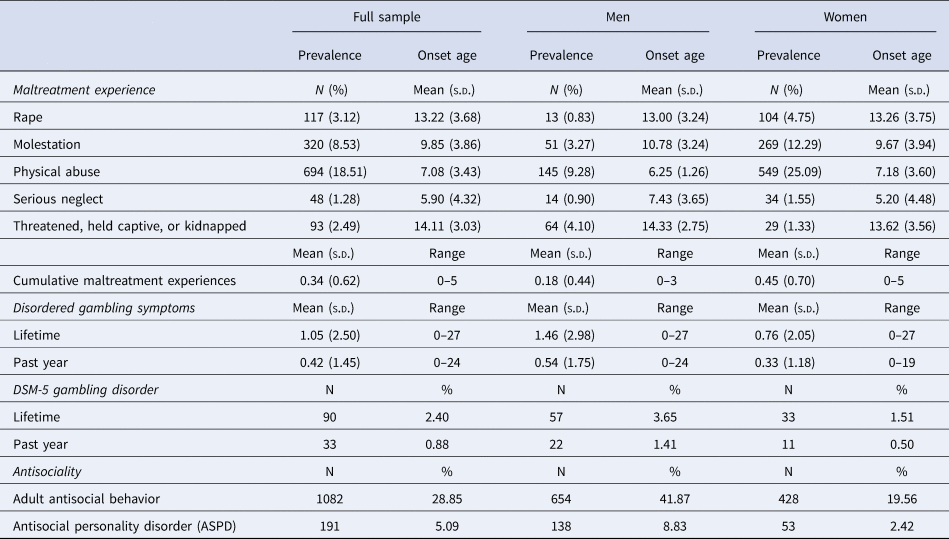
Note: Disordered gambling symptoms include DSM and SOGS criteria; adult antisocial behavior = 3 or more ASPD symptoms; ASPD = 3 or more ASPD symptoms and conduct disorder onset prior to age 15.
Twin similarity and biometric modeling
Seven hundred and seventy-six pairs were discordant for CM; 530 of these pairs were fully discordant (i.e. one twin reported at least one CM experience and their co-twin reported none), and the remaining 246 were discordant for cumulative number of CM experiences but concordant for having experienced any CM. MZ pairs [κ = 0.26 (men)−0.30 (women)] were more similar than DZ pairs [κ = 0.06 (men)−0.20 (women)], indicating the presence of genetic influences.Footnote 4 Biometric models revealed that CM was primarily attributable to unique environmental factors (55%) and, to a lesser degree, additive genetic (38%) and shared environmental (7%) factors. Lifetime DG was primarily attributable to additive genetic factors (56%) and, to a lesser degree, unique environmental factors (44%); conversely, past year DG was primarily attributable to unique environmental factors (56%) and, to a lesser degree, additive genetic (34%) factors.Footnote 5 There was no evidence for sex differences in parameter estimates.
Models predicting disordered gamblingFootnote 6
Lifetime disordered gambling
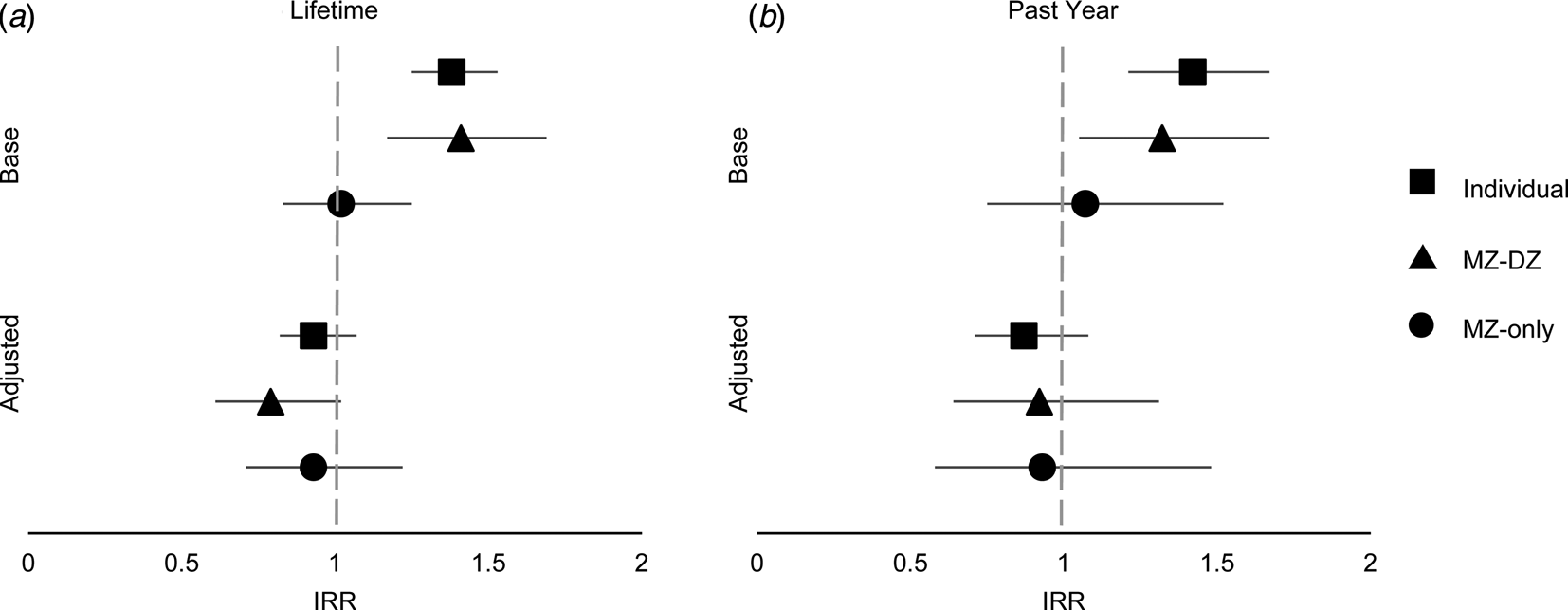
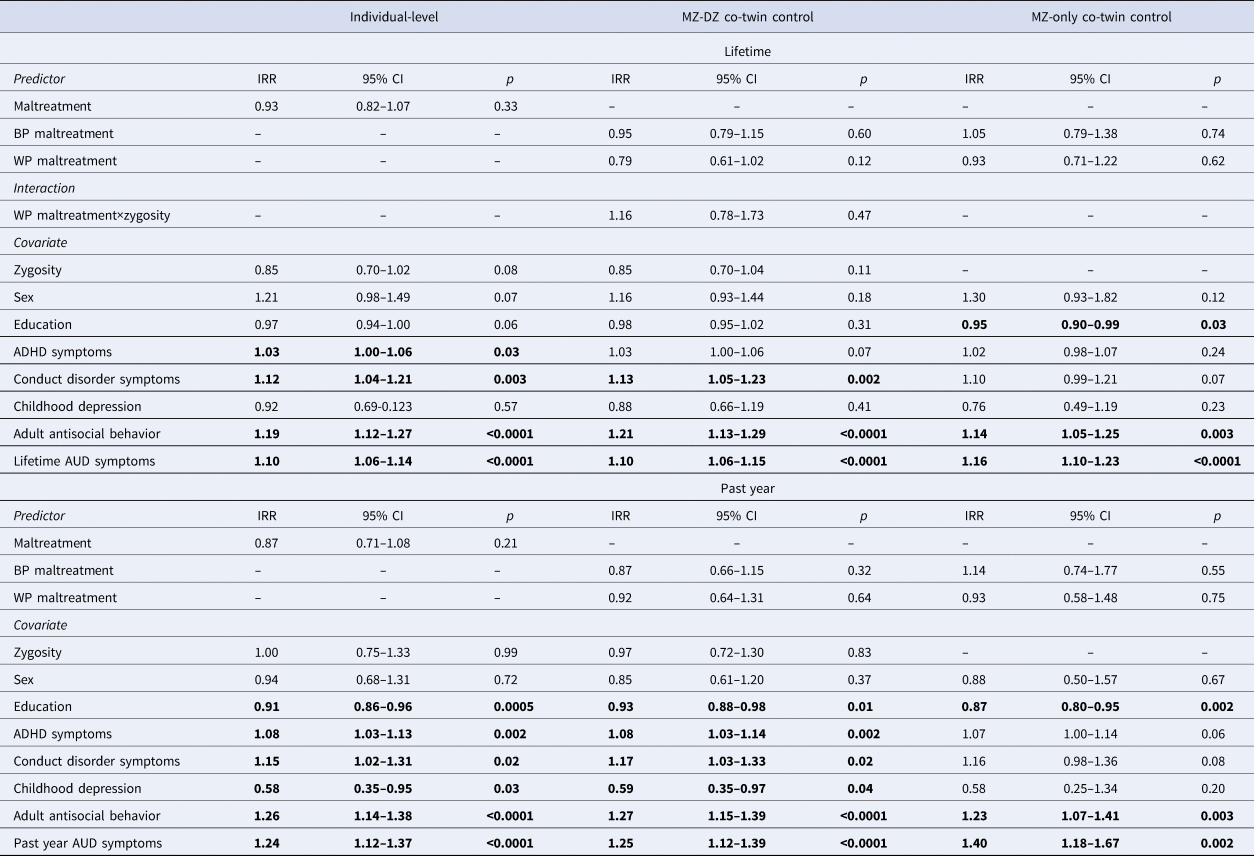
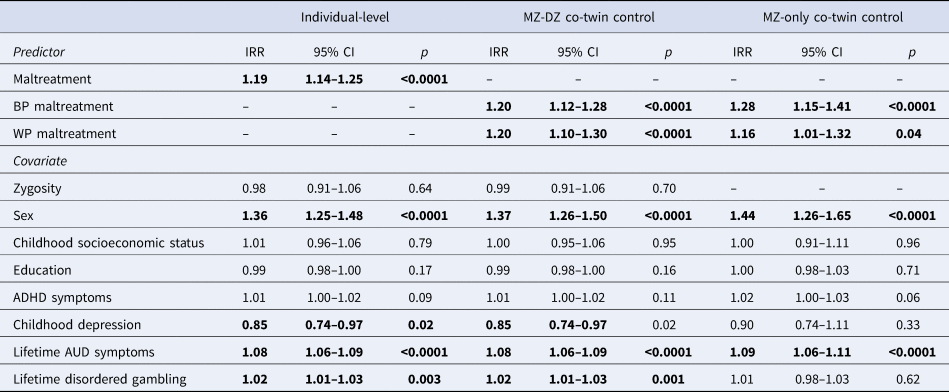
In the base individual-level model, CM significantly predicted DG (IRR = 1.38, 95% CI 1.25–1.53, p < 0.0001); the sex by CM interaction was non-significant (p = 0.87). The effect of CM on DG was rendered non-significant after adjusting for covariates; rather, adult antisocial behavior emerged as a robust predictor (Table 3). In the base co-twin control MZ-DZ model, both quasi-causal (IRR = 1.41, 95% CI 1.17–1.69, p = 0.02) and familial (IRR = 1.46, 95% CI 1.25–1.69, p < 0.0001) effects of CM were significant, as was the zygosity by within-pair interaction (IRR = 0.72, 95% CI 0.54–0.98, p = 0.04); the sex by within-pair CM interaction was non-significant (p = 0.68). All effects of CM, including the CM by zygosity interaction, were rendered non-significant in the fully adjusted model, although adult antisocial behavior again emerged as a robust predictor (Table 3). In the base MZ-only model, familial effects of CM predicted DG (IRR = 1.60, 95% CI 1.27–2.00, p < 0.0001), but quasi-causal effects did not (IRR = 1.02, 95% CI 0.83–1.25, p = 0.87); the sex by within-pair CM interaction was non-significant (p = 0.55). In the fully adjusted model, CM did not predict DG; only adult antisocial behavior and lifetime AUD symptoms remained highly significant (Table 3). A plot of IRRs for base and fully adjusted models is available in Fig. 1 (left panel).
Forest plot of incidence rate ratios (IRRs) for childhood maltreatment predicting lifetime and past year disordered gambling. A predictor is significant if its confidence interval does not pass through the vertical line denoting an IRR of 1.00; effects for co-twin control models are quasi-causal (within-pair) estimates; MZ, monozygotic twins; DZ, dizygotic twins.

Incidence rate ratios (IRRs) for fully adjusted models of lifetime and past year disordered gambling symptoms
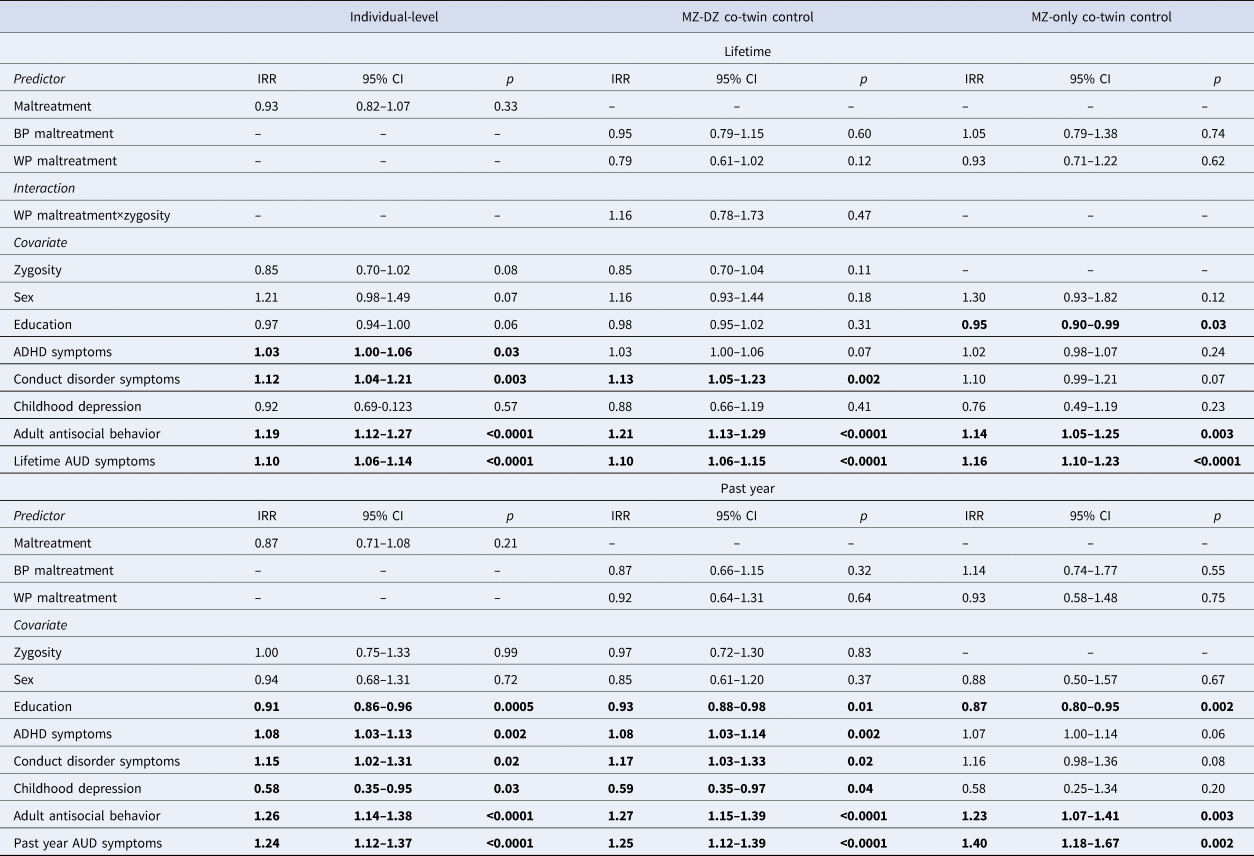
CI, confidence interval; MZ, monozygotic twins; DZ, dizygotic twins; BP, between-pair; WP, within-pair; ADHD, attention-deficit/hyperactivity disorder; AUD, alcohol use disorder. Bold indicates significance, p<.05.
Note: Zygosity by predictor interaction included when significant in base model; sex by predictor interactions were non-significant in all base models.
Past year disordered gambling
In the base individual-level model, CM significantly predicted past year DG (IRR = 1.42, 95% CI 1.21–1.67, p < 0.0001), but was rendered non-significant in the fully adjusted model (Table 3); the sex by CM interaction was non-significant (p = 0.72). In the base co-twin control MZ-DZ model, both quasi-causal (IRR = 1.32, 95% CI 1.05–1.67, p = 0.02) and familial (IRR = 1.55, 95% CI 1.35–1.95, p = 0.0002) effects of CM were significant; the sex and zygosity by CM interactions were not (p = 0.58 and 0.17, respectively). These CM effects were also rendered non-significant in the fully adjusted model, although the effects of adult antisocial behavior once again appeared notable (Table 3). In the base MZ-only model, familial effects of CM predicted DG (IRR = 1.92, 95% CI 1.35–2.73, p = 0.0003), but quasi-causal effects did not (IRR = 1.07, 95% CI 0.75–1.52, p = 0.72); the sex by within-pair CM interaction was non-significant (p = 0.88). These CM effects were once again rendered non-significant in the fully adjusted model. Past year AUD, adult antisocial behavior, and educational attainment appeared to be the primary predictors of past year DG (Table 3). A plot of IRRs for base and fully adjusted models is available in Fig. 1 (right panel).
Post-hoc analyses: adult antisocial behavior
Analytic approach
Because the entry of covariates into the models predicting DG eliminated the otherwise robust effect of CM, a stepwise approach to covariate entry was undertaken as a means of determining which effect or effects were responsible for this pattern. This process revealed that adult antisocial behavior was the only covariate for which entry at the first step (i.e. added to the base model including CM, zygosity, and sex) rendered CM non-significant; that is, adult antisocial behavior alone completely diminished the effect of CM on DG, indicating that CM may indirectly influence DG via adult antisocial behavior. There is a large literature linking CM to adult antisocial behavior (e.g. Afifi et al., Reference Afifi, Mather, Boman, Fleisher, Enns, MacMillan and Sareen2011; Luntz & Widom, Reference Luntz and Widom1994), but the causality of this association is unclear (Forsman & Långström, Reference Forsman and Långström2012). Thus, we applied the same method used in the primary analyses described above to predict adult antisocial behavior from CM. Most covariates were retained from the original models for the sake of theoretical consistency, though childhood socioeconomic status was added (Farrington, Reference Farrington2005) and conduct disorder was removed; given that adult antisociality is by definition etiologically entangled with conduct disorder, including it in the model was unlikely to provide meaningful information (Meehl, Reference Meehl1971). Because CM necessarily occurred prior to age 18 and adult antisocial behavior at age 18 or later, temporal precedence was once again established. In light of past studies on CM and antisociality, it was expected that the effect of CM on adult antisocial behavior would be familial, rather than quasi-causal (Forsman & Långström, Reference Forsman and Långström2012).
Results
In the base individual-level model, CM predicted adult antisocial behavior (IRR = 1.34, 95% CI 1.29–1.39, p < 0.0001); the sex by CM interaction was non-significant (p = 0.08). The association of CM and adult antisocial behavior held after adjusting for covariates (Table 4). In the base co-twin control MZ-DZ model, both quasi-causal (IRR = 1.32, 95% CI 1.23–1.41, p < 0.0001) and familial (IRR = 1.36, 95% CI 1.29–1.44, p < 0.0001) effects of CM were significant; the sex and zygosity by within-pair CM interactions were not (p = 0.21 and 0.28, respectively). The CM effects remained significant after adjusting for covariates (Table 4). In the base MZ-only model, both quasi-causal (IRR = 1.24, 95% CI 1.11–1.38, p = 0.0001) and familial (IRR = 1.43, 95% CI 1.31–1.57, p < 0.0001) effects of CM were significant; the sex by within-pair CM interaction was not (p = 0.24). As expected, the familial effect of CM remained highly significant in the fully adjusted model; unexpectedly, the within-pair effect of CM also remained significant, albeit marginally. Sex was the most consistent and robust predictor of adult antisocial behavior, with men being at increased risk (Table 4).
Incidence rate ratios (IRRs) for fully adjusted models of adult antisocial behavior
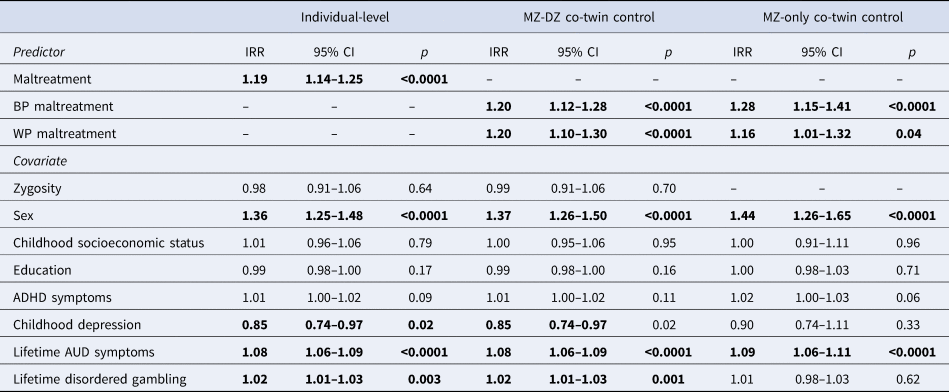
CI, confidence interval; MZ, monozygotic twins; DZ, dizygotic twins; BP, between-pair; WP, within-pair; ADHD, attention-deficit/hyperactivity disorder.
Note: Zygosity and sex by predictor interactions were non-significant in all base models.
Discussion
Historically, Australia has some of the highest rates of gambling in the world (The Economist online, 2017). CM, particularly sexual abuse, has also been identified as a significant problem in Australia (O'Donnell, Scott, & Stanley, Reference O'Donnell, Scott and Stanley2008; Stoltenborgh et al., Reference Stoltenborgh, Van Ijzendoorn, Euser and Bakermans-Kranenburg2011). Though the rates of maltreatment in the present sample are lower than those identified in other studies of the Australian population (Dunne et al., Reference Dunne, Purdie, Cook, Boyle and Najman2003; Moore et al., Reference Moore, Scott, Ferrari, Mills, Dunne, Erskine and McCarthy2015), the sample presented here is particularly helpful in clarifying the nature of the association between CM and DG that has been repeatedly identified in past studies. The present study also extends these findings to women; perhaps surprisingly, there did not appear to be sex differences in the association between CM and DG. The results of this study align with existing twin research on CM and DG, which has also supported the role of familial, but not causal, influences of CM (Scherrer et al., Reference Scherrer, Xian, Kapp, Waterman, Shah, Volberg and Eisen2007). These results are also consistent with twin research on the relationship between CM and other forms of psychopathology (Bornovalova et al., Reference Bornovalova, Huibregtse, Hicks, Keyes, McGue and Iacono2013; Forsman & Långström, Reference Forsman and Långström2012), indicating that children who experience maltreatment may also be those more likely to develop later pathology due to genetic vulnerability and/or shared family environmental stressors that themselves are also associated with CM.
While there is a strong relationship between CM and DG, evidence suggests that other psychiatric disorders, such as ASPD, may contribute to this association (Scherrer et al., Reference Scherrer, Xian, Kapp, Waterman, Shah, Volberg and Eisen2007). A similar pattern was found in the present sample, in that the effect of CM on DG appeared to be primarily accounted for by adult antisocial behavior. However, the potential effect of adult antisocial behavior on DG was seemingly confounded by familial factors, as evidenced by the reduction of its effect across the MZ-DZ and MZ-only models. Similarly, adult antisocial behavior was predicted primarily by genetic and shared family environmental effects of CM. Of relevance, children of parents with ASPD are more likely to both be maltreated and develop ASPD in adulthood (Adshead, Reference Adshead2015), and, for this reason, it has been postulated that CM is a marker for genetic risk for behaviors such as antisociality rather than a causal mechanism in its manifestation (i.e. passive gene–environment correlation; Jaffee and Price, Reference Jaffee and Price2007). This exemplifies how the aggregate influence of genes and rearing environment may create selection effects that place particular children at higher risk for maltreatment; these same factors may foster the development of chronic psychopathology, such as personality disorder, in adulthood, which can in turn enhance the risk for addictive behaviors such as DG (Afifi et al., Reference Afifi, Mather, Boman, Fleisher, Enns, MacMillan and Sareen2011; Luntz & Widom, Reference Luntz and Widom1994; Scherrer et al., Reference Scherrer, Xian, Kapp, Waterman, Shah, Volberg and Eisen2007). It should be noted that the similarity in magnitude of the within-pair effect of CM on adult antisocial behavior across the MZ-DZ and MZ-only models indicates that there is a possibility that the marginal significance in the MZ-only model is reflective of low statistical power rather than a truly marginal effect. We hesitate to draw definitive conclusions regarding this finding due to (1) the relatively small magnitude of the effect, and (2) its general inconsistency with the extant literature, though this finding perhaps reflects a need for further research in this area.
Limitations
A number of limitations to this study should be noted. First, it is unclear how findings from this sample of Australian adults will generalize to other populations. Second, CM was assessed via retrospective self-report when the participants were approximately 30 years of age. Compared to prospective assessments, such retrospective self-reports may overestimate the influence of CM on psychiatric symptoms in adulthood (Newbury et al., Reference Newbury, Arseneault, Moffitt, Caspi, Danese, Baldwin and Fisher2018; Reuben et al., Reference Reuben, Moffitt, Caspi, Belsky, Harrington, Schroeder and Danese2016); perhaps this is because individuals who have experienced problems in adulthood may look to their childhood for potential explanations. The application of direction-of-causation modeling might have assisted in adjudicating between different interpretations of the cross-sectional relations between CM, DG, and antisocial behavior (Duffy & Martin, Reference Duffy and Martin1994; Heath et al., Reference Heath, Kessler, Neale, Hewitt, Eaves and Kendler1993). Third, most participants who endorsed DG symptoms reported only subclinical levels of DG, potentially limiting our ability to detect effects of CM on DG. Fourth, the MZ-only models may have been underpowered to detect effects, as zygosity-limited models necessarily reduce the sample size; this issue appeared most notable in the MZ-only model predicting adult antisocial behavior, in which estimates were similar to those in the individual-level and MZ-DZ models but with increased error of estimation. Finally, it is possible that social desirability influenced participant responding. Despite these limitations, the present study presents compelling findings from a powerful genetically-informed design and, for the first time, extends twin research on CM and DG to include women and civilian respondents.
Conclusions
Identifying causal mechanisms of DG is a critical component of early prevention. CM does not appear to play a causal role in the development of DG in adulthood, despite being associated with a litany of factors that increase the risk for such outcomes. An important first step in minimizing the impact of DG may be to focus prevention on malleable familial factors and to provide preventative mental health care to at-risk individuals, particularly males with lower levels of educational attainment (Forsman & Långström, Reference Forsman and Långström2012). Needless to say, maltreatment itself is a critical point of prevention that needs and deserves the full attention of public health efforts regardless of its relationship to DG. Further work is needed to identify the actual causal mechanisms of DG.
Supplementary material
The supplementary material for this article can be found at https://doi.org/10.1017/S0033291720002743.
Financial support
This work was supported by the National Institute on Alcohol Abuse and Alcoholism (GFD, grant number T32AA013526; Andrew C. Heath, grant number R01AA07728, R37AA07728), the National Institute of Mental Health (WSS, grant number R01MH66206), and the International Center for Responsible Gaming (WSS, Centers of Excellence in Gambling Research grant).
Conflict of interest
The authors declare no conflict of interest.