INTRODUCTION
The deployment of artificial reefs in marine environments can significantly alter the macrobenthos in the adjacent sediment due to variations in the local current regime (Boaventura et al., Reference Boaventura, Moura, Leitão, Carvalho, Cúrdia, Pereira, Fonseca, Santos and Monteiro2006). These changes may alter the sedimentation processes, resulting in variable deposition rates, particle size (Danovaro et al., Reference Danovaro, Gambi, Mazzola and Mirto2002) and amount of organic matter in the sediment (Posey & Ambrose, Reference Posey and Ambrose1994). According to Guiral et al. (Reference Guiral, Gourbalt and Helleouet1995) and Danovaro et al. (Reference Danovaro, Gambi, Mazzola and Mirto2002), the presence of artificial reef modules raises a decrease in the current velocity around the structures allowing the deposition of more fine material, including organic particles, which can interfere in the structure of macrobenthos community. In addition to physical factors, the effects of fish predation may promote a trophic halo, reducing the abundance of these preys near the artificial structures (Posey & Ambrose, Reference Posey and Ambrose1994; Barros et al., Reference Barros, Underwood and Archambault2004; Lorenzi & Borzone, Reference Lorenzi and Borzone2009).
Studies on artificial reefs in Brazil are still scarce when compared to Japan, Europe and the United States, especially those regarding the community in unconsolidated substrate. Among these, Lorenzi & Borzone (Reference Lorenzi and Borzone2009) investigated the macrobenthos after the installation of artificial reefs on the southern coast of Brazil. More recently, Zalmon et al. (Reference Zalmon, Boina and Almeida2012) evaluated the radius of influence of a reef complex on the macrobenthos also on the north coast of Rio de Janeiro and concluded that the maximum distance of 300 m was still under the artificial structures influence. In this same area, Zalmon et al. (Reference Zalmon, Novelli, Gomes and Faria2002) analysed the potential attraction of artificial reefs on the fish community, and recorded two to three times higher density and biomass values than in control areas 500 m away. It is suggested that the predator–prey relationship between fish and macrobenthos is potentially enhanced in the area under the influence of artificial reefs, and shows the importance of the associated benthic community on the trophic relationships in this environment.
The aim of the present study was to evaluate the spatial effect of an artificial reef complex on the macrobenthic composition and structure on the north coast of Rio de Janeiro associated with the sediment characteristics and bottom currents. We expect that the reef structures contribute to a decrease in the bottom current velocity around the reefs, and consequently with major changes in the particle size characteristics and nutrient enrichment in the sediment. This will influence the macrobenthos composition, and favouring it on richness, diversity and abundance in relation to nearby areas without the artificial structures.
MATERIALS AND METHODS
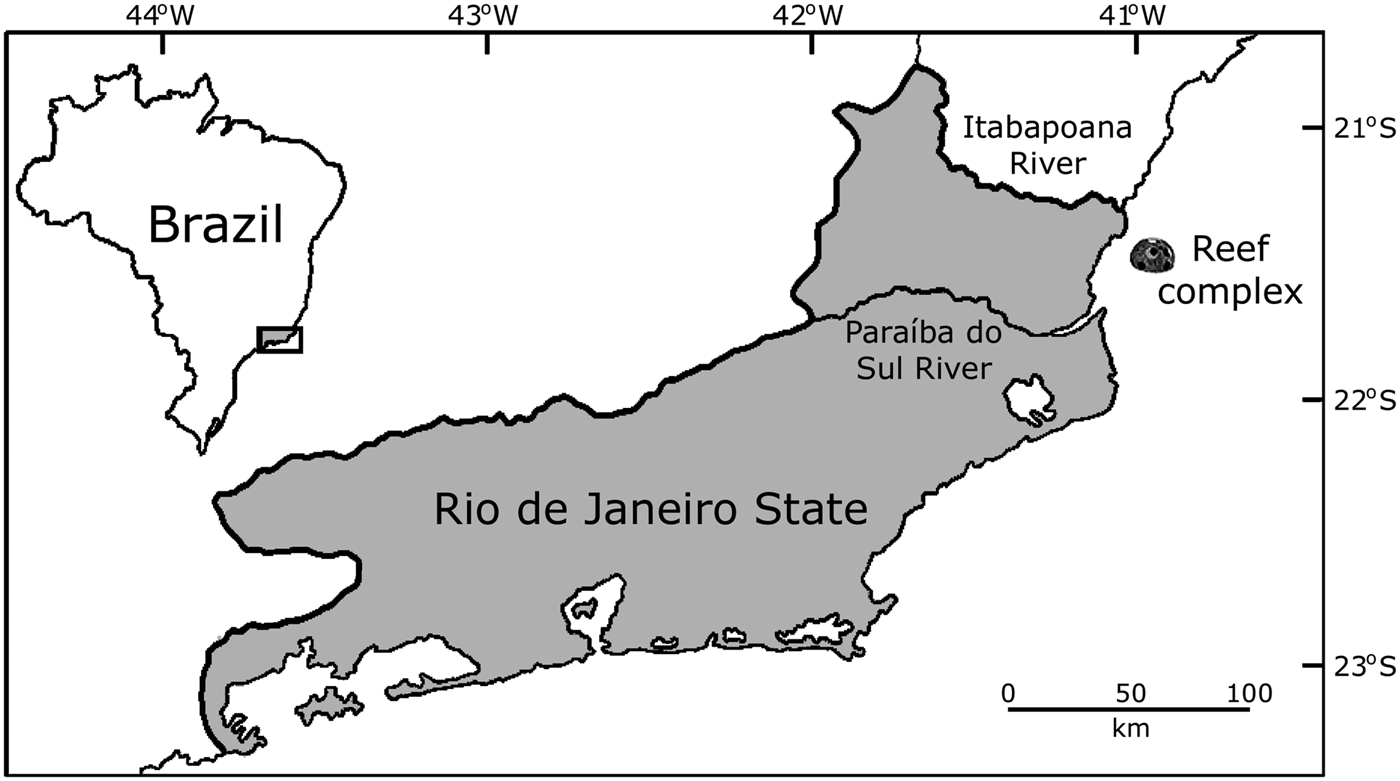
The study area is located on the north coast of Rio de Janeiro State between the mouth of the Paraiba do Sul River (to the south; basin drainage 55,400 km2) and the Itabapoana River (to the north; basin drainage 3780 km2) (Souza et al., Reference Souza, Knoppers, Balzer and Leipe2003). The sampling area is located at 25 km equidistant from the rivers (Figure 1). The Paraíba do Sul River (PSR) exerts the major influence on the area due to the higher outflow (mean discharge 760 m3.s−1) than the Itabapoana River (mean discharge 45 m3.s−1) (Reis et al., Reference Reis, Guimarães, Barreto Neto and Bringhenti2008; Ovalle et al., Reference Ovalle, Silva, Rezende, Gatts, Suzuki and Figueiredo2013). The annual sediment discharge from PSR is 0.8 to 2.0 ton.y−1, while the Itabapoana represents 1% of the total amount; the same trend can be considered for nutrients like dissolved nitrogen, phosphorus, silicate and metals (Carvalho et al., Reference Carvalho, Salomão, Molisani, Rezende and Lacerda2002; Souza et al., Reference Souza, Knoppers, Balzer and Leipe2003). During the summer months (rainy period), most of the continental shelf ~35 km distant from the shore is covered by a turbid and estuarine plume which can spread over 15 km north from the PSR mouth (Souza et al., Reference Souza, Godoy, Godoy, Moreira, Carvalho, Salomão and Rezende2010; Figueiredo et al., Reference Figueiredo, Ovalle, Rezende and Martinelli2011). The north coast of Rio de Janeiro is naturally depleted of rock substratum or other hard substrates, being covered by extensive sandy beaches with variable amounts of mud and calcareous nodules (i.e. rhodolites; Zalmon et al., Reference Zalmon, Novelli, Gomes and Faria2002).
Geographical location of the north coast of Rio de Janeiro (south-east Brazil), where the experimental reef complex was deployed.

In January 2002, 36 concrete reefballs (~1.0 m3; 0.5 t) were deployed 6 km from Guaxindiba beach (21°29′S 4°00′W), 9 m deep (Figure 1). The modules were arranged in 12 groups of 3 units, 100 m from each other, and covering about 60,000 m2.
The sampling surveys took place in April (end of rainy season) and October 2010 (end of dry season) in the artificial reefs (ARs) and two control areas (CN, control north; CS, control south) located 500 m from the reefs. Sediment samples were collected by SCUBA diving using a corer of 15 cm diameter from nine randomly chosen modules (1 m distant) in each area and period, and also in the control areas (CAs) with a minimum distance of 50 m between samples. The distance from the controls to the reef complex was based on the results of Zalmon et al. (Reference Zalmon, Boina and Almeida2012), which showed the radius of action of up to 300 m from the reef structures.
Average monthly flow of the PSR in the region was obtained from the National Water Agency (www.ana.gov.br). The average current velocity was determined at five different points in the vicinity of the reef itself and in the CAs within three days prior to each collection survey with a General Oceanics 2135 Electronic Flowmeter Display at 0.5 m from the bottom.
Sediment samples were washed and sieved with a mesh of 0.5 mm to separate the macrobenthos. Identification keys followed Rios (Reference Rios1994) and Amaral & Nonato (Reference Amaral and Nonato1996). Grain size distribution was determined by the particle analyser by laser diffraction (Shimadzu Model SALD-3101) in several fractions as Wentworth scale (Suguio, Reference Suguio1973). Geochemical analysis of the sediments included total carbonate by acid treatment using 1 g of dry sediment with 20 ml of HCl 1,0M overnight and total organic carbon by CHN analyser after removing carbonate with HCl vapour (Hedges & Stern, Reference Hedges and Stern1984); the reactive organic carbon was determined in HCl 1.0 M solution used for total carbonate extraction using a Total Carbon Analyser—CPH Shimadzu and to determine dissolved organic carbon and reactive phosphorus with an ICP Varian 720-OES in the same solution.
Spatial variations (AR versus CAs) in the structure and composition of macrobenthic community were evaluated through species richness, abundance and Shannon diversity (Zar, Reference Zar1984). The structure indicators data were tested using analysis of variance (ANOVA) and an a posteriori Tukey test to identify those differences. In order to homogenize the variances, the abundance data were log (x + 1) transformed.
The association pattern similarity of the macrobenthos in the ARs and CAs was evaluated by a cluster analysis (UPGMA—Bray–Curtis coefficient) followed by the permutation test ANOSIM (one-way) to check the significance of differences between groups and by the calculation of the percentage of similarity within and between groups (SIMPER) to identify the species that contributed most to each one. All analyses of variance and multivariate analyses were done with Primer 6.0. The species distribution in the study areas (ARs and CAs) in each period (April 2010 and October 2010) and the relationship with the sediment characteristics (total carbonate content, organic carbon, total phosphorus and nitrogen and grain size) and current velocity were analysed by canonical correspondence analysis (CCA), using the software FITOPAC 2.1. The species included in the CCA corresponded to those that totalled 70% of abundance. The significance of canonical axes and the variables were determined by a Monte Carlo test (Ter Braak, Reference Ter Braak1986).
RESULTS
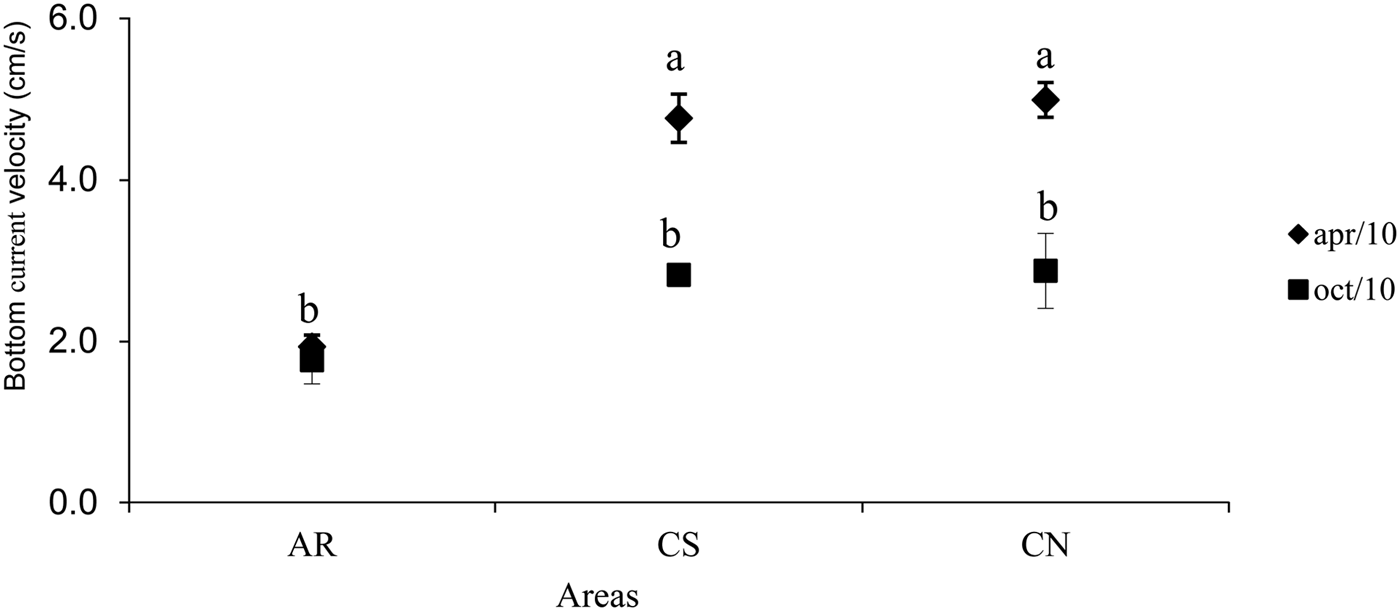
The PSR flow was higher from January–April and November–December 2010 (mean = 1292 m3.s−1) in relation to May–October (mean = 345 m3.s−1), and was directly associated with the rainy and dry seasons, respectively. The bottom current velocity measured in both CAs and surveys was significantly higher compared to the ARs results (P = 0.009) (Figure 2).
Mean values ± standard error of bottom current velocity in the three studied areas (AR, artificial reef; CS, control south; CN, control north) in April 2010 and October 2010 (N = five samples in each area and survey). Different letters indicate significant differences between areas (analysis of variance followed by Tukey test, P < 0.05).

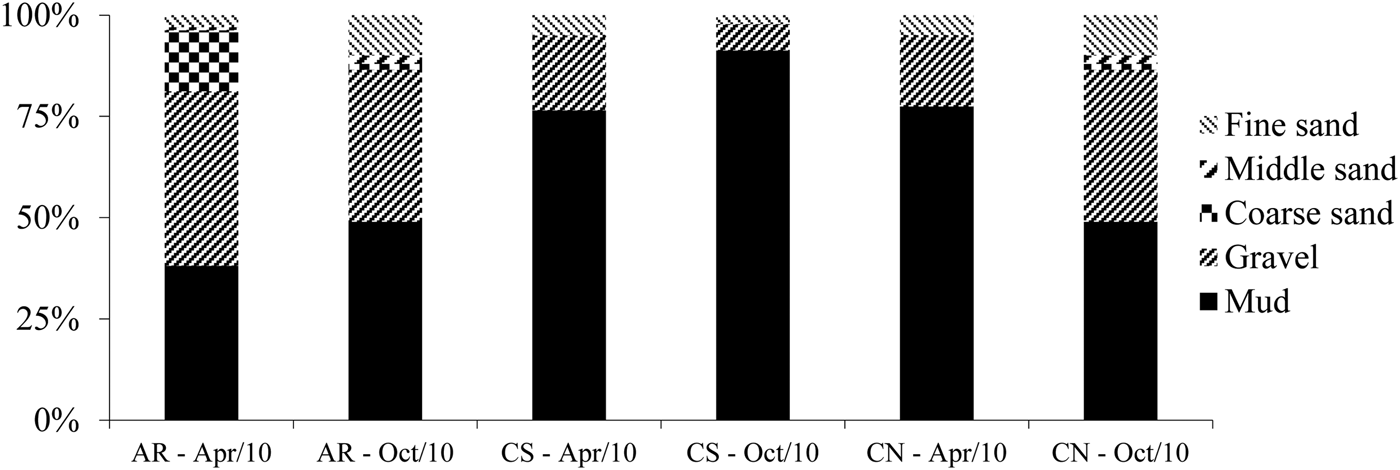
The sediment was more heterogeneous in the ARs and consisted of gravel, mud and sand, during April and October 2010. At the CAs, mud was the main constituent of the sediment with no temporal differences (Figure 3).
Granulometric composition near the artificial reef complex and control areas in April and October 2010 (N = nine samples in each area and survey).

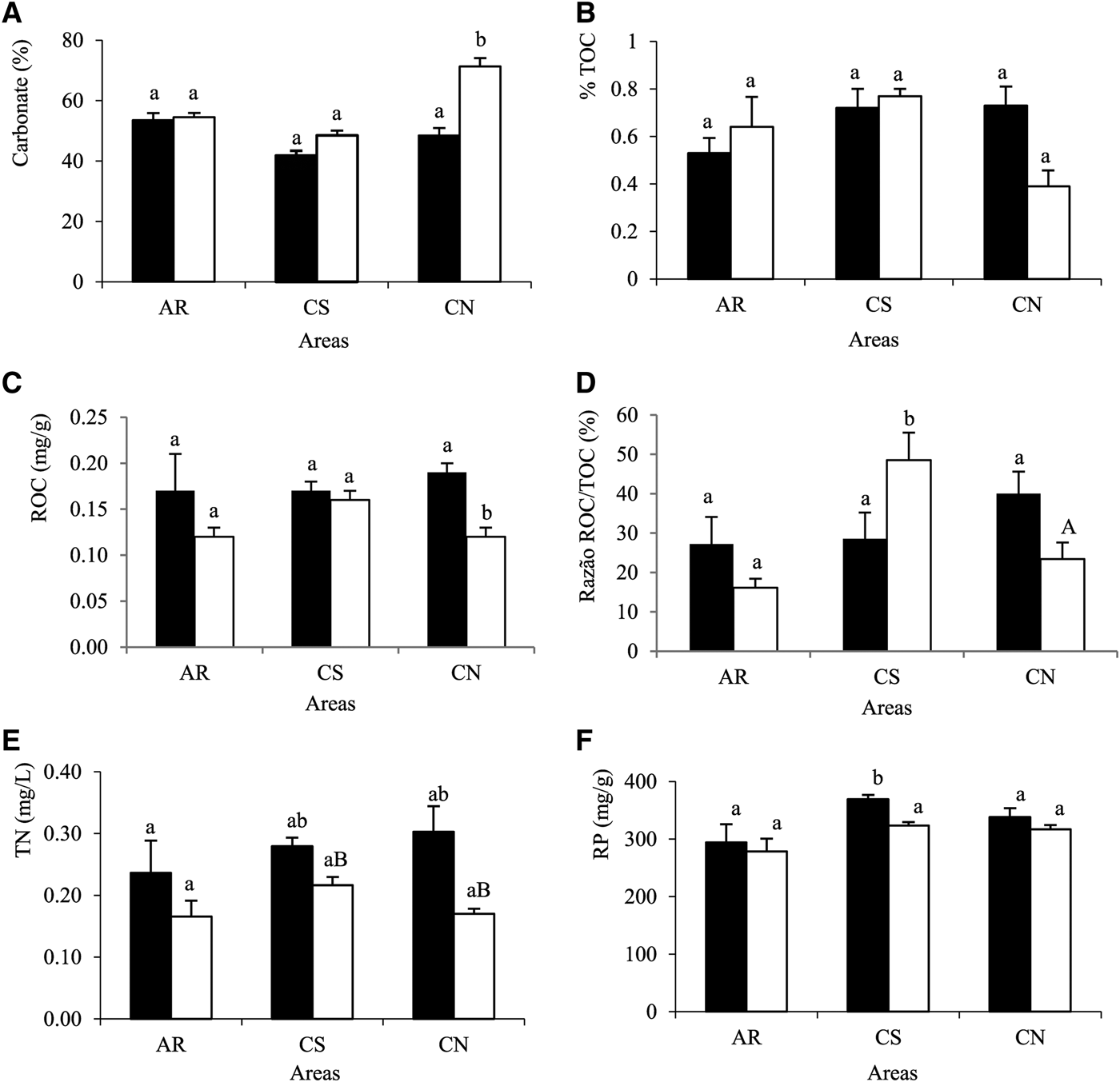
The mean percentage of carbonate was between 40 and 70%, higher in October and significantly higher in the CN samples (Figure 4A). The organic carbon (OC) values ranged between 0.39 and 0.77%, lower in ARs (April) and CN (October) but with no significant spatial differences (Figure 4B). The average concentrations of reactive organic carbon (ROC) were lower in October, 0.12 mg/g at ARs and CN and 0.16 mg/g in CS, and in April ranged from 0.17 (AR and CS) to 0.19 mg/g (CN) (Figure 4C). Significant spatial differences were recorded between ARs and CS in October (P = 0.04). The ratio ROC/OC was higher in both control areas (CS = 0.49 in October—dry period and CN = 0.40 in April—rainy period). Lower values were registered in ARs on both surveys (Figura 4D). Higher mean values of total nitrogen (TN) occurred in April in all three areas (ARs = 0.24 mg/l, CS = 0.28 mg/l and CN = 0.30 mg/l) without significant spatial differences (Figure 4E). The mean concentrations of reactive phosphorus were higher in October, ranging from 294 mg/g in the ARs to 369 mg/g in the CS (Figure 4F) with significantly higher values in the latter (CS versus ARs, P = 0.003; CS versus CN, P = 0.01) in October.
Mean values ± standard error of percentage of carbonate (A), total organic carbon (B), reactive organic carbon (C), ratio of reactive organic carbon and total organic carbon (D), total nitrogen (E) and reactive phosphorus (F) on the sediment at the three sampling areas (AR, artificial reef; CS, control south; CN, control north) in April and October 2010 (N = nine samples in each area and survey). Different letters indicate significant differences between areas (analysis of variance followed by Tukey test, P < 0.05).

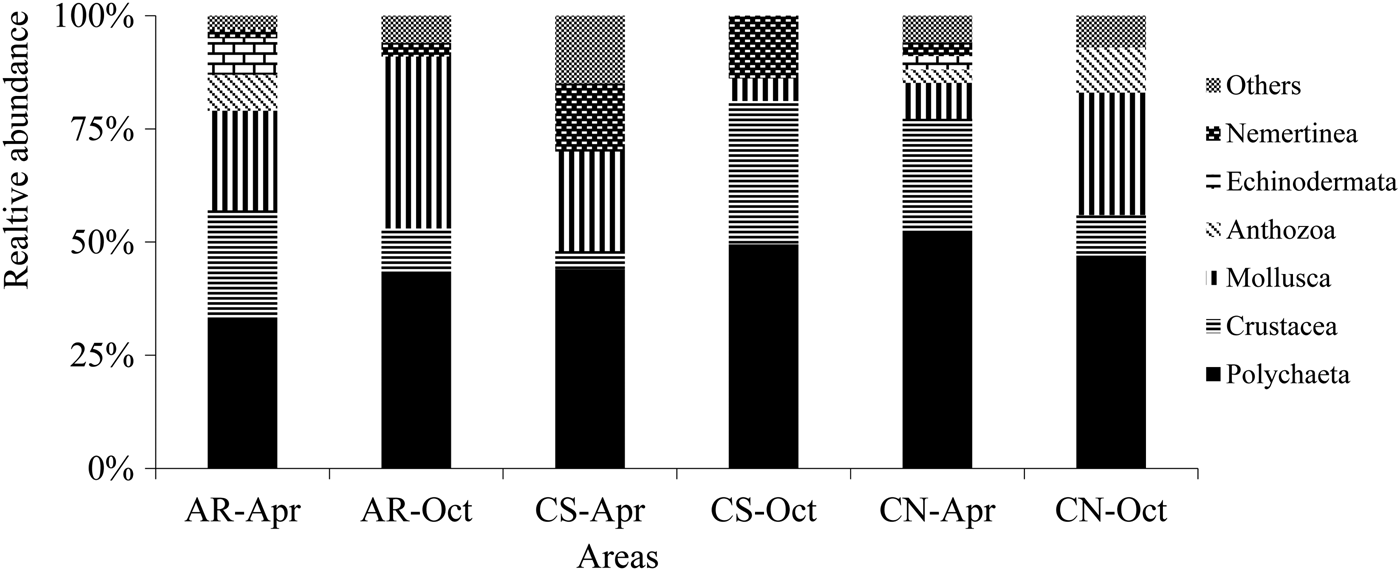
The macrobenthos in the reef area (ARs) and both CAs were composed of Annelida, Mollusca, Crustacea, Echinodermata, Cnidaria, Nemertinea, Sipuncula, Priapulida, Echiura and Platyhelminthes. The relative abundance of Polychaeta was highest in both surveys at the three sampling areas (April: ARs = 33%, CS = 44% and CN = 53%; October: ARs = 43%, CS = 50% and CN = 47%) (Figure 5). The other taxonomic groups differed between areas, with higher relative abundance of Crustacea in ARs and CN and Mollusca in CS in April. In October, Mollusca was more abundant in ARs and CN and Crustacea in CS. Sipuncula, Oligochaeta, Echiura and Turbellaria were included in the category ‘Other', having <15% of the total (Figure 5).
Relative abundance of the taxonomic groups at the three sampling areas (AR, CS and CN) in April (Apr) and October (Oct) 2010 (N = nine samples in each area and survey).

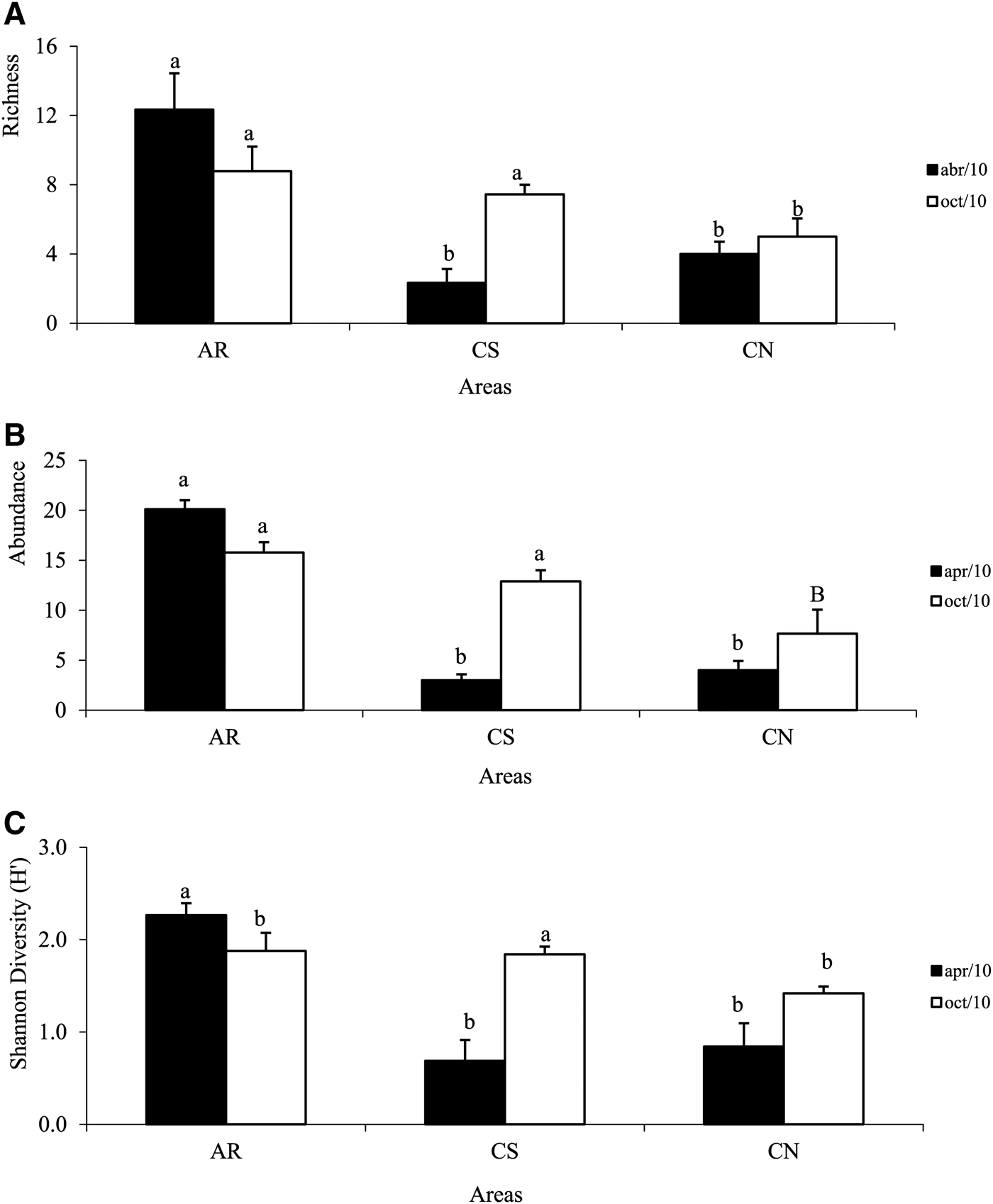
Indicators of community structure showed the same pattern in both surveys with significantly higher mean values of richness, diversity and number of individuals in the ARs (Figure 6A–C).
Mean values ± standard error of richness (A), number of individuals (B) and Shannon diversity (C) at the three sampling areas (AR, CS and CN) in April and October 2010 (N = nine samples in each area and survey). Different letters indicate significant differences between areas (analysis of variance followed by Tukey test, P < 0.05).

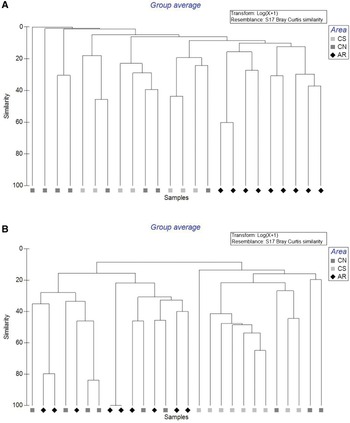
Cluster analysis of the macrobenthos in April 2010 included all samples of ARs in one group (Figure 7A), significantly different from CAs (ANOSIM: P = 0.006, r = 0.255), which showed a lower similarity among sites (Figure 7A). The dissimilarity between the macrobenthos of the ARs and CAs was greater than 90% and the taxa that contributed most to this value were the molluscs Crassinella martinicensis (Orbigny, 1853) and Corbula lyoni (Pilsbry, 1897), and the polychaete Goniadides carolinae (Day, 1973). In October 2010, samples of CS were included in a group significantly different from the macrobenthos of ARs and CN (ANOSIM: P < 0.001, r = 0.422) that had a greater similarity to each other (Figure 7B). The dissimilarity of 90% between CS in relation to AR and CN was due primarily to Crassinella martinicensis, Nemertinea and the polychaetes Syllis sp. and Lumbrineris sp.
Cluster analysis (UPGMA) of the macrobenthic community at the three sampling areas (AR, CS and CN) in April (A) and October (B) 2010 (N = nine samples in each area and survey).

The CCA in April 2010 had an explanatory power of 18% (Figure 8A), and showed the ARs apart from the CAs. Samples from the ARs were strongly related to lower current velocity, more sandy sediment including coarse and medium sand, gravel and carbonate, and were associated with five polychaetes, the molluscs Corbula lyoni and Crassinella martinicensis, Ostracoda, Ophiuroidea and Anthozoa (Figure 8A). The CAs were related to higher current velocities, muddy sediment, organic carbon and total nitrogen, reactive phosphorus and ROC/OC ratio, and were associated with nine polychaetes, the mollusc Corbula caribaea (d'Orbigny, 1853), Nemertinea, the crustaceans Iridopagurus violaceus (Saint Laurent-Dechancé, 1966), Amphitoidae and Tanaidacea (Figure 8A).
Canonical correspondence analysis including macrobenthic dominant species (70% of the total abundance) at each sampling area (AR, CS and CN) and the environmental parameters: coarse sand (AG), medium sand (AM), fine sand (AF), mud, gravel (CASC), carbonate (CARB), phosphorus (P), total organic carbon (TOC), dissolved organic carbon (DOC) and current velocity (CORR) in April (A) and October (B) 2010.

Considering the survey in October 2010, the CCA had an explanatory power around 55% with axis 1 being significant. The CS area showed a higher association of the samples correlated with the highest current velocity, organic carbon content, phosphorus and mud and were associated with five polychaetes, Nemertinea and crustaceans Melitidae and Cumacea. At CN, fine sand, gravel and carbonate were correlated with the molluscs Crassinella martinicensis, Corbula caribaea and Ischnochiton dorsuosus (Haddon, 1886) (Figure 8B). The ARs showed the highest correlation of the medium and coarse sand fractions of the sediment with the polychaetes Gymnonereis sp., Exogone sp. and Syllis sp., anthozoans and the gastropod Crassispira cubana (Melvill, 1923) (Figure 8B).
DISCUSSION
The predominant taxonomic group was Polychaeta (45%), a result in corroboration with other studies on artificial reefs (Fukunaga & Bailey-Brock, Reference Fukunaga and Bailey-Brock2008). Molluscs, crustaceans and anthozoans, taxa commonly found in reef environments (Ambrose & Anderson, Reference Ambrose and Anderson1990; Fabi et al., Reference Fabi, Luccarini, Psnfili, Solustri and Spagnolo2002), also showed a high abundance. The community descriptors such as richness, abundance and species diversity varied spatially, with significantly higher values in the ARs in both surveys, reinforcing the influence of artificial structures on the macrobenthos. The spatial variation significance recorded mainly in the rainy season at the ARs and in the dry season at the CS demonstrates the importance of using more than one control area.
According to Danovaro et al. (Reference Danovaro, Gambi, Mazzola and Mirto2002), factors contributing most to possible impacts of artificial reefs on the adjacent macrobenthos are related to hydrodynamic processes and physical characteristics of the substrate, and also to changes in the distribution and composition of food resources due to the placement of the artificial structures. Although commonly associated with the local hydrodynamic processes, the physical characteristics of the substrate in the three areas did not have a direct relation to current velocity. While the sediment near the ARs was primarily gravel, mud and sand, in the CAs it was predominantly mud, which is commonly associated with lower current velocities (Guiral et al., Reference Guiral, Gourbalt and Helleouet1995; Danovaro et al., Reference Danovaro, Gambi, Mazzola and Mirto2002). However, mud packages are commonly found in this whole region, which is strongly influenced by the PRS (Figueiredo et al., Reference Figueiredo, Ovalle, Rezende and Martinelli2011). Lower current velocities were recorded in the ARs and a more heterogeneous grain size distribution, which was reflected in the benthic assemblages being more abundant, diverse and rich, as noted by Gray (Reference Gray1981) and Levinton (Reference Levinton1995).
Differences in texture associated with artificial reefs, with a coarser fraction nearer the artificial structures were also reported by Ambrose & Anderson (Reference Ambrose and Anderson1990) and Barros et al. (Reference Barros, Underwood and Lindegarth2001). The greater heterogeneity of the sediment in the vicinity of the reef modules, with high concentrations of gravel and mud results from the abundance of shellfish and molluscs in the ARs compared to CAs, and are associated with the epibenthic community that establishes on the reef modules, as observed by Zalmon & Gomes (Reference Zalmon and Gomes2003) and Krohling et al. (Reference Krohling, Brotto and Zalmon2006). The molluscs Crassinella martinicensis, Crassinella marplatensis (Castellanos, 1970) and Corbula lyoni were the species that contributed most to the dissimilarity between the ARs and CAs in the rainy season. They also contributed to the input of gravel to the sediment of this area by the remains of their shells. Likewise, the higher values of carbonate measured in the ARs in both surveys (April and October) were probably due to greater abundance of molluscs. These data corroborate Barros et al. (Reference Barros, Underwood and Lindegarth2001), who observed that the artificial reef acts as a source of calcium carbonate due to the presence of associated shellfish.
The main physical effect of the artificial structures was reflected in different hydrodynamic conditions with significantly lower bottom current velocities, mainly in April. It is widely documented that the presence of artificial structures tends to promote a significant decrease in the current velocity since the reef area functions as a physical barrier (Guiral et al., Reference Guiral, Gourbalt and Helleouet1995; Donavaro et al., 2002), and creates a favourable environment for recruiting benthic organisms (Posey & Ambrose, Reference Posey and Ambrose1994; Connell & Glasby, Reference Connell and Glasby2001), which results in higher values of species richness and abundance in ARs.
Some authors concluded that the influence of artificial reefs is limited to a small area around them. Davis et al. (Reference Davis, Vanblaricom and Dayton1982) only found noticeable physical effects in areas immediately adjacent to the artificial structures and proposed that the macrobenthos was less sensitive to the impacts of artificial reefs than the epibenthic community due to their life history (i.e. high rate of recruitment), which explained the effects at small spatial scales adjacent to artificial reefs in southern California. Zalmon et al. (Reference Zalmon, Boina and Almeida2012) studied the macrobenthos at distances of 0, 5, 25, 50, 100 and 300 m from this reef complex on the north coast of the State of Rio de Janeiro and suggested that its influence was rapidly dissipated, mainly due to the strong local marine currents, which were around 4–5 m/s.
A temporal variation in taxonomic composition was evident in the three areas (AR, CS and CN), and demonstrates the importance of repeated sampling at different times of year. In this study the seasonal variability is related to the PSR flow, mainly during the rainy season, when the material exportation is higher to the coastal region (Godoy et al., Reference Godoy, Almeida and Zalmon2002; Souza et al., Reference Souza, Godoy, Godoy, Moreira, Carvalho, Salomão and Rezende2010; Figueiredo et al., Reference Figueiredo, Ovalle, Rezende and Martinelli2011). It is worth noting that the ARs act as a system with particular conditions due to the physical influence of the modules, because regardless of the seasonal effect of the PSR in the region, the structure and composition of the macrobenthos in this area were significantly different from the CAs. The influence of the PSR is highlighted when we compare the macrobenthos in the two surveys and notice that in October, when the river flow is lower, there were no significant spatial differences between ARs and the CAs. However, the ARs still had higher richness, abundance and diversity of macrobenthos in this period, confirming its influence on the community structure.
Svane & Petersen (Reference Svane and Petersen2001) suggested that artificial reefs influence the surrounding environment mainly due to predation by the ichthyofauna on the benthic invertebrates. Other studies at these ARs demonstrated their potential attraction on fish populations (Brotto et al., Reference Brotto, Krohling and Zalmon2006; Brotto & Zalmon, Reference Brotto and Zalmon2007). Zalmon et al. (Reference Zalmon, Novelli, Gomes and Faria2002) found values two to three times higher of fish density and biomass in relation to areas 500 m distant. Santos et al. (Reference Santos, Brotto and Zalmon2010) also found significantly higher values of fish biomass in areas up to 50 m from these reefs. Because of this potential attraction for fish, macrobenthos may have lower levels of richness and abundance in the vicinity of artificial reefs, as was verified by Davis et al. (Reference Davis, Vanblaricom and Dayton1982) in two artificial reefs in La Jolla, California. In our study, the higher fish abundance in the reef complex compared to CAs did not result in a decline of the associated macrobenthos, suggesting that the reef is used for other purposes, such as shelter (D'Itri, Reference D'Itri1986; Gomes et al., Reference Gomes, Novelli, Faria and Zalmon2001; Zalmon et al., Reference Zalmon, Novelli, Gomes and Faria2002), nursery and reproduction (Bohnsack et al., Reference Bohnsack, Harper, McClellan and Hulsbeck1994; Fagundes Netto & Zalmon, Reference Fagundes Netto and Zalmon2011). It is also worth considering that predation by fish in this system can act as a secondary factor, i.e. its pressure might be not sufficient for the depletion of the macrobenthos community. Ambrose & Anderson (Reference Ambrose and Anderson1990) suggest that the reasons explaining why reef areas with high fish density do not influence the macrobenthos are not clear and that its effects are minimized in these environments as a result of physical changes promoted by the reef in the sediment considering that the benthic community has the ability to quickly recover after a disturbance (Davis et al., Reference Davis, Vanblaricom and Dayton1982).
The other geochemical parameters of the sediment (organic carbon, carbonate, and, total nitrogen and reactive phosphorus) did not differ significantly among areas (AR, CS and CN), and do not explain the observed spatial variations in richness, abundance and diversity of macrobenthos. The ROC/OC ratio is reflecting the available fraction of organic matter for macrobenthic species and the lower values are expressing the consumption of this material by benthic organisms. Temporal differences in the concentrations of reactive phosphorus and total nitrogen, and reactive organic carbon were significant only in the CAs, suggesting that the effect of artificial structures surpasses the environmental factors directly related to the PSR flow and its input of nutrients to the adjacent coastal region (Godoy et al., Reference Godoy, Almeida and Zalmon2002; Souza et al., Reference Souza, Godoy, Godoy, Moreira, Carvalho, Salomão and Rezende2010).
The deployment of artificial reefs on the northern coast of Rio de Janeiro State contributed mainly to major changes in sediment granulometry, due to increased organic detritus in the reef area and also in the local hydrodynamic conditions, resulting in lower bottom current velocities, which in turn influenced positively the structure and composition of the associated macrobenthos.
In summary, the major impact of the artificial structures on the macrobenthos was evidenced by a lower bottom current velocity that reflected in a greater heterogeneity of the sediment (gravel, mud and sand) in the artificial reef area in relation to the control sites, resulting in greater richness, abundance and species diversity of the associated macrobenthos. The structure and composition of the macrobenthos in the sampling areas reflected the influence of the ARs on the community structure in both surveys, confirming the effect of the experimental treatment.
ACKNOWLEDGEMENTS
This work was funded by Brazilian Research Foundations—FAPERJ (E26/110.437/2010) and CNPq (470997/2010-9). We are grateful to Dr B.P. Masi for diving assistance. C.E. Rezende is supported by Conselho Nacional de Desenvolvimento Científico e Tecnológico—CNPq (304.615/2010-2 and INCT Material Transfer at the Continent-Ocean Interface 573.601/08-9).