Introduction
The UK head and neck cancer guidelinesReference Clarke, Radford, Coffey and Stewart1 recommend offering primary surgical voice restoration (at the time of laryngectomy) to all patients and to consider incorporating oesophageal voice and electrolarynx into rehabilitation of communication. Speech-language therapy professional policy advises that surgical voice restoration suitability discussions should be multidisciplinary team based, and surgical voice restoration should not be discounted without full discussion with the patient and carer taking place.2 However, limited research exists to enable clinicians to help patients weigh up potential risks, benefits and commitments in order to make an informed choice about surgical voice restoration.Reference Lewin, Baumgart, Barrow and Hutcheson3–Reference Elliot4 Even uneventful surgical voice restoration obligates patients to lifelong, unplanned hospital visits when valve mechanisms fail at the end of their lifespan. Complications, including those requiring urgent hospital assistance, are relatively common. Investigation of this attendance burden for patients is important because concerns about urgent surgical voice restoration service provision were raised by the National Association of Laryngectomy Clubs and led to a survey of English surgical voice restoration units.Reference Bradley, Counter, Hurren and Cocks5 Previous studiesReference Lewin, Baumgart, Barrow and Hutcheson3,Reference Petersen, Lansaat, Timmermans, van der Noort, Hilgers and van den Brekel6–Reference Starmer, Ishman, Flint, Bhatti, Richmon and Koch8 looking at the profile of planned and unplanned visits and the reasons for these have been restricted in scope, methods and generalisability across settings. All recommend further investigation.
Furthermore, the issue of costs of valves and related items and estimated costs to services of supporting surgical voice restoration have also received limited attention.Reference Owen and Paleri9–Reference Miller10 Such factors are important for the commissioning of adequate staffing and procurement of equipment to meet this need.
We report comprehensive data for all total laryngectomy patient attendances linked to surgical voice restoration over 36 months at one UK regional head and neck cancer unit. This article focuses on attendances for valve-related issues and usage to address the following questions. (1) How many valve changes were necessary over the three-year study period? (2) What were the reasons for valve changes? (3) What number of urgent and elective appointments were required? (4) What valves and modifications were required? (5) What was the total cost of valves over the three-year study period? (6) What speech-language therapy resources were required to meet this need?
Materials and methods
Ethics
The South East Scotland Research Ethics Service advised that this project was classified as service evaluation; therefore, ethical review to conduct this study was not required. The Caldicott Guardian at NHS Lothian gave approval for use of the database and specified an information governance protocol.
Participants
All patients in the study were cared for by the South East of Scotland surgical service for head and neck cancer network serving a population of 1.4 million across 4 health administrations. The study followed 2 groups of patients over a 36-month period: (1) all existing surgical voice restoration patients already on the current caseload at the start of the study period and (2) all new surgical voice restoration patients during the study period. These are referred to as ‘existing’ and ‘new’ to differentiate the two groups.
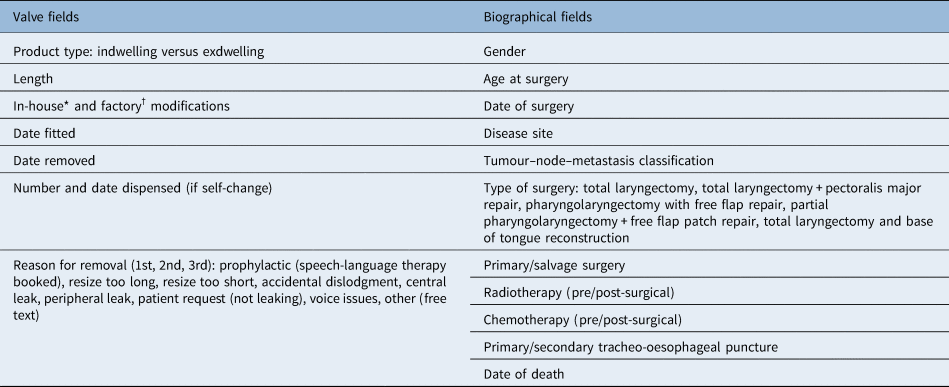
This study reported data for all total laryngectomy patient attendances linked to surgical voice restoration over 36 months at one UK head and neck cancer unit. A dedicated database and data entry form captured all valve changes. Fields included prosthesis use and biographical data (Table 1). Definitions of the reasons for change were pre-agreed between speech-language therapy team members with training provided (by KM) to facilitate consensus implementation.
Database fields

*Additional large oesophageal flange glued to the existing valve flange or an additional large flange on the tracheal side either loose or glued; †Provox XtraflangeTM
Every surgical voice restoration related attendance was documented in the database by the speech-language therapist immediately after contact, with the exception of self (patient)-led valve changes. These were entered retrospectively from speech-language therapy case notes. Any patients who died during the 36-month collection period were retained in the study. Biographical data were imported from information routinely collected by surgeons. Some patients underwent surgery prior to the initiation of this ENT protocol (n = 21). For these cases, biographical data were inputted retrospectively from speech-language therapy notes.
Model of service delivery
Four specialist speech-language therapists provide all surgical voice restoration troubleshooting services to all South East of Scotland unit patients (round trip of up to 200 miles, 6 hours return drive). Some distant patients are transferred to local services for simple routine valve changes with return to the regional service if required. Twenty-eight elective and urgent appointments are provided Monday to Friday, with unused slots reallocated to other head and neck oncology in- or out-patients. Two urgent daily slots are always retained for patients to book by telephone; walk-in requests are discouraged. Consultant surgeon advice is available via telephone or after speech-language therapy triage via the joint ENT and speech-language therapy monthly surgical voice restoration clinic; there are two videofluoroscopy (with or without botulinum toxin) slots per week and fibre-optic endoscopic evaluation of swallowing (available as needed) to support complex patients.
Patients receive counselling about the implications of surgical voice restoration from the speech-language therapist and surgeon and are offered primary surgical voice restoration unless listed for pharyngectomy (total or partial) with free flap reconstruction or if judged unable to self-manage a prosthesis because of cognitive, mental health, alcohol or physical impairments. Pectoralis major flaps (routinely used in post-chemoradiotherapy salvage surgery) do not preclude primary surgical voice restoration. Secondary surgical voice restoration is considered at three months post-surgery or post-adjuvant radiotherapy for those capable of valve care with confirmed voicing on videofluoroscopic air insufflation test. Patients and carers must demonstrate adequate competence in assessing and managing central leak and valve dislodgement following a training programme and generally self-manage outside speech-language therapy hours.
Nurses and doctors on the ENT ward provide a limited evening or weekend service, following speech-language therapy designed algorithms until troubleshooting is available on the speech-language therapists’ next working day. The algorithm for extruded valves is to fit a catheter into the tracheo-oesophageal puncture and discharge home whereas valve leakage involves placing a nasogastric tube and admitting the patient to hospital or (if feasible) temporarily plugging the valve lumen and discharging the patient home.
Prophylactic valve changes are offered for those living at a distance or lacking transport, who are less compliant with valve leakage, or deemed at risk of aspiration pneumonia requiring hospital admission. Speech-language therapists initiate contact (telephone or letter) if patients have not attended for 12 months, but if they do not respond to the request to attend, the valve remains in situ until they present.
Valve selection and protocols
Primary surgical voice restoration involves initial voice prosthesis placement 24 to 48 hours after resumption of oral diet. Exdwelling Blom-Singer valves are fitted whenever possible depending on an open tract voicing assessment (Duckbill voice prosthesis if no strain, 16Fr low pressure voice prosthesis if strain is present). Blom-Singer Classic indwelling 16Fr valves are rarely required but are fitted if there is a risk of extrusion or not managing an exdwelling prosthesis. Patients are supported to retain the exdwelling valve and self-change whenever possible. These valves are continued if exdwelling valve lifespan is more than four weeks or indwelling valve lifespan is more than six weeks with consistent, unstrained voicing.
The protocol for changing valve type is as follows. (1) When there is effort for voice, the protocol is to change a Duckbill to a low pressure voice prosthesis. (2) When there is an early central leak unrelated to candida or spontaneous opening, the protocol is to fit a Provox® NiDTM, Blom-Singer® Dual ValveTM or Provox® VegaTM. (3) When there is accidental extrusion, the protocol is to switch to an indwelling valve with or without a large oesophageal flange in-house custom modification. (4) When there is a peripheral leak, the protocol is to change length if appropriate or otherwise to fit a large oesophageal flange (if Blom-Singer) or a loose tracheal washer alone (if Provox). If this does not resolve the issue, the protocol is to fit a large oesophageal Blom-Singer flange with a tracheal washer, and if this fails the protocol is to arrange tracheo-oesophageal puncture augmentation. (5) When candida is unresponsive to medication or there is patient non-compliance, the protocol is to fit a Blom-Singer Dual Valve.
Number and reasons for valve changes
Details of the number of valve changes per person per year during the first 12 months (for new patients) and for subsequent years (new and existing patients) was derived from the database. Time that each prosthesis was in situ and descriptive statistics regarding the number of attendances against each reason for valve change were also calculated. Total number of attendances was calculated for those classed as elective (prophylactic or patient request) or urgent (all other reasons to attend).
Cost of resources
Consumables
Costs of all out-patient valves fitted (not purchased as stock) were calculated using Severn Healthcare's catalogue (October 2019) and Atos Medical's UK price list (2019). In-house custom valve modifications were calculated from the cost of silicone sheet and adhesive used. As few units undertake in-house custom modification, we calculated an alternative costing of purchasing factory customised valves. The first valve fitting as an in-patient was added as an exdwelling Blom-Singer low pressure voice prosthesis.
Speech and language therapy
We counted the total number of surgical voice restoration related attendances over the 36-month period and whether these were urgent or elective (as outlined above). Speech-language therapy time to modify a voice prosthesis in-house was estimated as 15 minutes per prosthesis.
Results
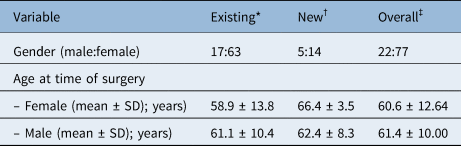
Ninety-nine cases met inclusion criteria for the study (Table 2). Eighty existing surgical voice restoration patients entered when they attended their first out-patient surgical voice restoration intervention after 1 August 2015. Nineteen new surgical voice restoration patients entered the caseload during the 36-month timeframe and joined the database at their first out-patient intervention.
Gender distribution and age at surgery for subgroups and overall

*n = 80; †n = 19; ‡n = 99. SD = standard deviation
There was no statistically significant difference between the proportion of men versus women in the existing versus new groups, nor any significant gender differences by age at surgery (p = 0.76), distribution of tumour-stage (p = 0.92), node-stage (p = 0.54), site of surgery (p = 0.34), salvage versus primary surgery (p = 0.79) or type of operation (p = 0.98). Subsequent analyses therefore treated females and males as a single group.
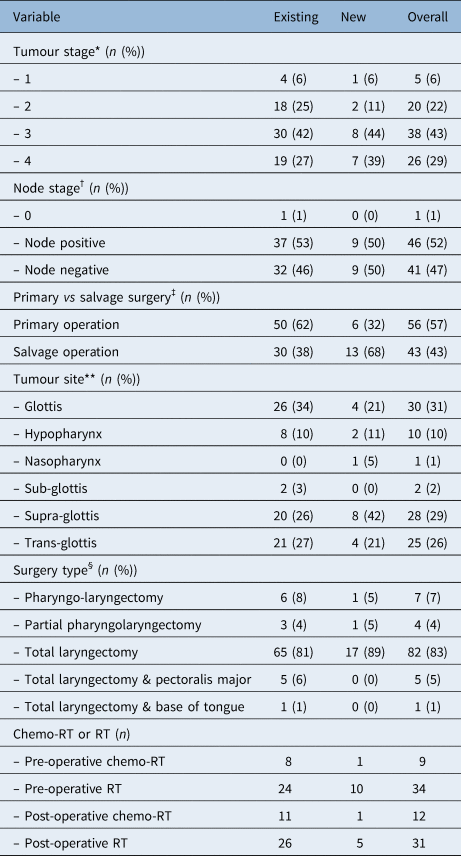
The existing group had mean age of 67.98 years (standard deviation (SD), 11.08 years) at the start of the study, and the new group had a mean age of 63.47 years (SD, 7.45 years), a statistically non-significant difference. The existing group had a mean age of 7.22 years (SD, 6.34 years; median, 5 years; interquartile range, 2–12) post-surgery. During the study period, 20 individuals died in the existing group, and three died in the new group (proportion difference was non-significant; p = 0.55). The people who died were older (mean, 68.87 years; SD, 11.75 years) than the survivors (mean, 66.56; SD, 10.24) but not statistically significantly. The data for deceased patients is included in analyses below unless explicitly stated that it is omitted. Table 3 summarises the main demographic and medical characteristics.
Summary of medical characteristics of participants

*Existing n = 71; new n = 18; overall n = 89; †existing n = 70; new n = 18; overall n = 88; ‡existing n = 80; new n = 19; overall n = 99; **existing n = 77; new n = 19; overall n = 96; §existing n = 80; new n = 19; overall n = 99. n = number of cases in group for which data was available. RT = radiotherapy
Comparing the existing versus new groups, there were no statistically significant differences between them by profile of tumour site, surgery type, tumour stage or node stage at operation. There was no significant difference in the proportion receiving pre- versus post-operative radiotherapy or chemoradiotherapy. There was a significantly higher proportion in the new group receiving secondary operations (chi square, 4.78 (1); p = 0.03).
Valve changes
For the cohort (n = 99), there were 970 valve changes over the 3 years (existing n = 797, new n = 173). This represented a mean of 323.3 changes per annum or 3.32 changes per person per year for the existing group and 3.03 for the new cases. When adjusted for deceased cases, the mean total changes per survivor during the study was 11.00 (SD, 7.54; median, 9; interquartile range, 11; range, 1–31) or 3.66 per annum.
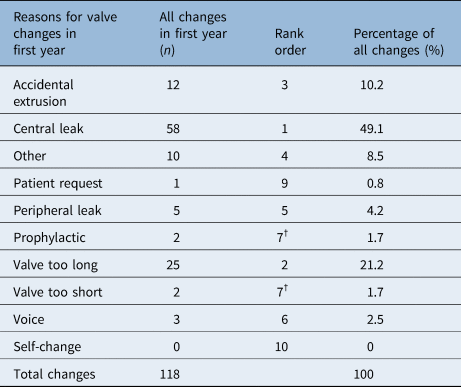
During the 12 months after their first valve fitting there were 118 changes in the new group with a mean of 6.21 per person (SD, 2.97; median, 6; interquartile range, 4–8; range, 1–12), not counting the first post-operative in-patient fitting. The time an individual waited from fitting of the initial valve on the ward until the first out-patient change was a mean of 41.53 days (SD, 43.19; median, 35; interquartile range, 13–54; range, 0–193). As the large SDs, interquartile ranges and ranges illustrate, there was considerable inter- and intra-individual variation in the number of changes necessary during a given period and the corresponding times in situ. Changes were seldom spread evenly across time for any individual. Comments on this follow below.
We examined the data for associations of demographic and medical variables with the number of valve changes required. Although node and tumour stage were unsurprisingly strongly correlated with the need for a primary rather than secondary operation and need for pre- and post-operative chemoradiotherapy (all p = <0.001), they did not relate significantly to change totals. The relationship between total valve changes required and node stage (Spearman's r, 0.198; p = 0.066) and pre-operative chemo-radiotherapy (Spearman's r, 0.189; p = 0.062) approached significance. No other variables showed associations even approaching significance.
Time in situ
The mean time in situ for a valve from the first out-patient fitting across the whole cohort across the study period was 102.3 days (SD, 81.82; median, 75; interquartile range, 46–131 days). The existing group showed longer mean times between changes (mean, 109.96; SD, 86.14; median, 83; interquartile range, 91; range, 1–518 days) than the new group (mean, 66.02; SD, 47.37; median, 52; interquartile range, 47; range, 25–239 days; Mann–Whitney less than 0.001). A factor in this may be the significantly shorter (Mann–Whitney less than 0.001) mean minimum days in situ for the new group (mean, 13.63; SD, 16.08; existing mean, 51.89; SD 69.02 days), reflecting more frequent changes necessary in the early post-operative phase. Groups did not vary statistically significantly on mean maximum days in situ (existing mean, 199.80; SD, 131.30; new mean, 150.95; SD, 98.4 days).
This difference is emphasised if one looks at the mean time in situ for each valve during the first 12 months post-operation for the new group. Including patients who died (n = 3), during this time there was a mean of 42.17 days in situ (SD, 23.31; median, 36; interquartile range, 34–52; range, 0–115 days). Excluding people who died, the mean was 44.52 days (SD, 22.78; median, 37; interquartile range, 34–54; range, 19–115 days).
There was no statistically significant trend for gaps between changes to become systematically longer or shorter, even though over the study as a whole at a group level, the significant differences between the existing and new groups for time in situ suggests an overall trend to more prolonged periods between changes as time progresses.
The lack of systematic trends for time in situ over time appears linked to the massive inter- and intra-individual variation for time between changes (range, 1–518 days), reflected also in the large SDs and interquartile ranges. Examination of individual cases illustrates that the pattern of time in situ could be highly variable. Periods of relative stability might be followed by a time of frequent changes (see below).
Reasons for valve changes
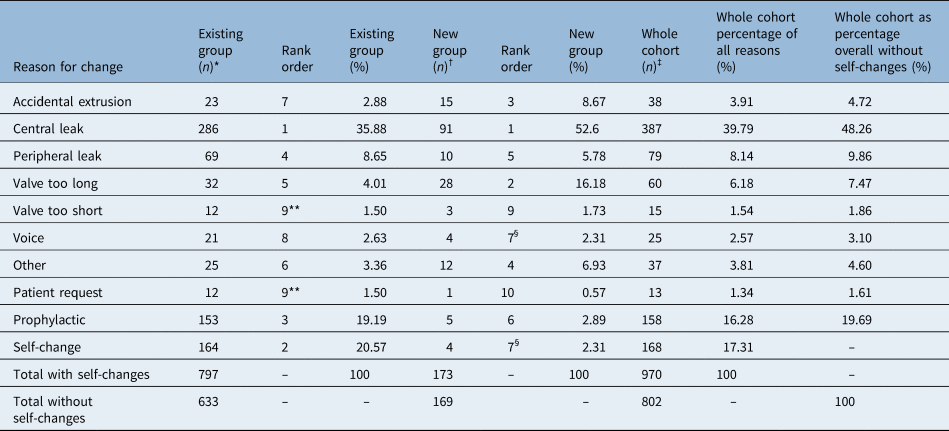
Table 4 details the reasons for valve changes for all changes recorded across the two groups while in the study.
Primary reasons for valve change across all procedures during duration of study for the existing and new groups separately and for the cohort overall

*n = 80; †n = 19; ‡n = 99; **joint 9th rank; §joint 7th rank. Figures represent absolute numbers as well as total for each reason as a percentage of all changes.
In order to examine whether the relative frequency of reasons for change was similar across groups, correlations between the rank-order of reasons for change between groups were analysed. There was no significant correlation between the subgroups when all variables were entered as raw totals. This applied whether self-changes were included or not (with self-changes Spearman's r was 0.588, p = 0.074; without self-changes Spearman's r was 643, p = 0.062).
Correlations between reasons for change across groups based on proportion of each change expressed as a percentage of all changes showed no significant association if self-changes were included (Spearman's r was 0.573; p = 0.083). When they were excluded, the association between rank orders was statistically significant (Spearman's r was 0.711; p = 0.032) suggesting a main difference between the groups concerned the higher number of self-change procedures in the existing group (rank order in existing group 2 of 10, new group 7 of 10).
In addition to primary reasons for changes, there were on occasions secondary reasons. Two were related to dislodgement, 11 to secondary peripheral leak and 37 to miscellaneous reasons. These did not significantly alter the rank order or relative proportions of reasons for change. Furthermore, 26 washer modifications, 38 large oesophageal flange modifications and 3 Provox® XtraflangeTM modifications were necessary.
In order to look for a possible difference in profile of reasons for change early post-operation versus later, the pattern of changes for the new group during their first 12 months post-surgery was compared with the profile of the existing group. Table 5 displays the reasons for the 118 changes in the new group during their first 12 months post-operatively. Spearman's rank order correlation based on percentages showed no significant correlation between reasons with self-changes included (Spearman's r, 0.253; p = 0.48) or without self-changes (Spearman's r, 0.576; p = 0.10).
Reasons for valve changes during first 12 months after operation for the prospectively followed group*

*n = 19; †joint 7th rank
Tables 4 and 5 give summaries for the different reasons across all cases over the whole study. Examination of specific reasons for change and how these applied to individual cases disclosed marked patterns of variability of profile. For example, peripheral leak represents a prominent reason for change. However, for 74 people this was not a reason for change. If one excludes those where peripheral leak happened only once, there were only 10 cases where peripheral leak featured. For some of these cases, management of the problem was by a valve change and for others by valve extras. Furthermore, change frequency (time in situ) in such cases could reflect a period of frequent changes until the problem was settled followed by longer periods in situ once fixed (discussed below). Elective attendances (prophylactic or patient request reasons for change) accounted for 21.3 per cent of all appointments for the whole cohort, but this varied from 1.77 per cent of those in the first 12 months of surgical voice restoration compared with 26 per cent for the existing cohort with established surgical voice restoration.
Valve costs to service
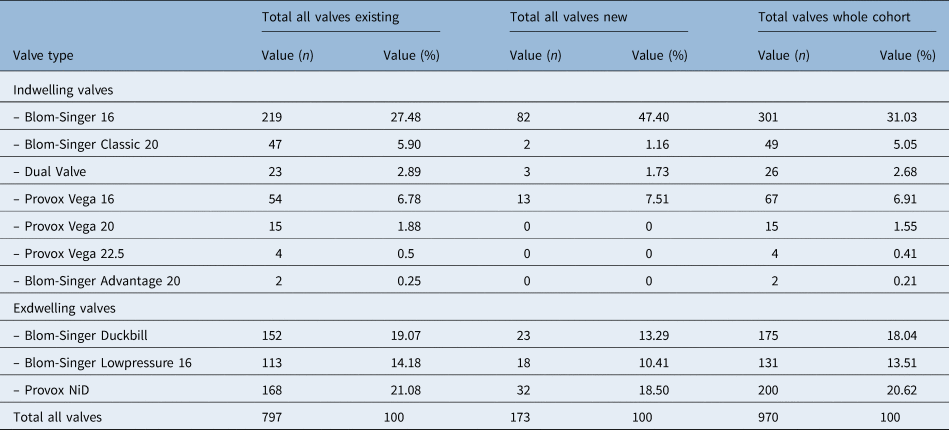
In order to calculate costs, the type of valve inserted at each change was charted. Table 6 details valves employed by the service and their relative proportions across groups. The correlation of frequency of use of the different valves across subgroups was strongly significant (Spearman's r, 0.976; p < 0.001).
Raw totals for different valves by groups and as percentage of all valves per group and for the whole cohort

Overall there was no significant difference in the proportion of indwelling versus exdwelling valves fitted during the study period (n = 464 vs n = 506; binomial exact, p = 0.188 two tailed). Within the existing group, exdwelling valves were proportionately more common (binomial exact, p = 0.01 two tailed); the difference within the new group was borderline significant (binomial exact, p = 0.05 two tailed). Chi-square indicated significantly different proportions of indwelling versus exdwelling valves across the subgroups (chi-square, 7.91(1); p = 0.005). Binomial testing showed a non-significant difference for indwelling valves (binomial exact p = 0.43, two tailed) but a highly significant difference for exdwelling valves across groups (binomial exact p = 0.001, two tailed).
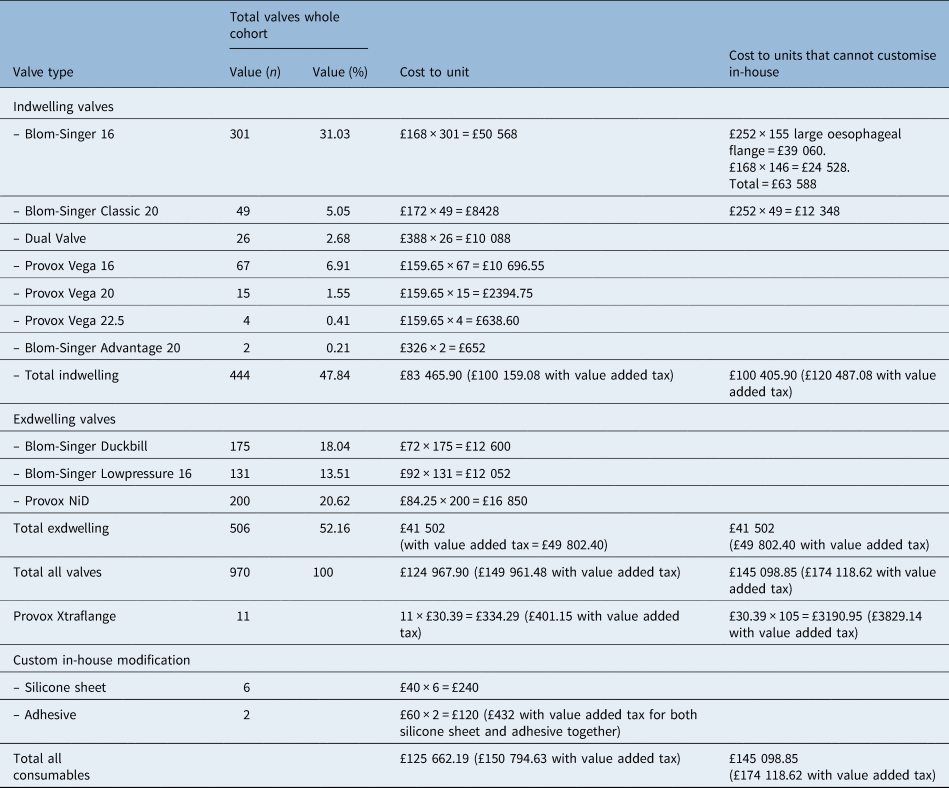
Table 7 details the costs to the service. Over 36-months, the total cost of valves purchased, including value added tax at 20 per cent, was £149 961.48 (mean per annum, £49 987.16) of which £100 159.08 was indwelling (n = 444) and £49 802.40 was exdwelling (n = 506).
Total expenditure in relation to valve type and other consumables

Forty-three patients required a modified valve (range, 1–33 placements). The additional expenditure was 11 Provox Xtraflanges (£401.15) (range, 1–6 per person), 94 in-house tracheal washers (range, 1–11 per person) and 204 in-house large oesophageal flange modifications (range, 1–22 per person). The combined cost of valves and all modifications gave a total consumable expenditure of £125 662.19 (£150 794.63 with value added tax). For units that are unable to custom-modify their own valves and must purchase these from the factory, the equivalent calculation is represented by £145 098.85 (£174 118.62 with value added tax). The addition of 19 low pressure exdwelling valves to represent the cost of the first placed in-patient valve for the new patients, not recorded on the out-patient database, gives an additional (£1748 or £2097.60 with value added tax), giving a final figure of £127 410.19 (£152 892.23 with value added tax) for this unit or £146 846.85 (£176 216.22 with value added tax).
Speech and language therapy resources
A total of 802 speech-language therapy appointments were required to meet the surgical voice restoration troubleshooting out-patient requirements of the whole cohort; of these, 171 (21.3 per cent) were elective and 631 (78.7 per cent) were urgent. A total of 298 in-house modifications were carried out requiring approximately 15 minutes each or 74.5 hours in total over the 3-year period.
Discussion
This study aimed to provide new information that can be used in counselling patients who are considering surgical voice restoration and to inform service delivery and commissioning of staff and voice prosthesis resources. Although many studies have investigated the perspective of complication rates,Reference Chakravaty, McMurran, Banigo, Shakeel and Ah-See11 no study to date before this current study has captured every reason for surgical voice restoration related out-patient attendance with prospectively collected data from a consecutive series of patients. Furthermore, this investigation is the first to report on a service delivery model that includes both a comprehensive prophylactic change option to pre-empt valve leakage and self-changeable valves. Such information would allow patients to make a more informed decision about consenting to surgical voice restoration and how this may impact on their life in terms of pre-planned versus urgent attendances from lifelong hospital attendances for valve troubleshooting (e.g. because of leakage through or around the valve or accidental displacement into the airway). Allowing patients to gauge the commitment of travel burden and cost is pertinent when some UK patients could travel in excess of 50 miles to access valve services.Reference Bradley, Counter, Hurren and Cocks5
Comparing the findings of this investigation to previous studies is difficult because of methodological differences. Previous studies have been designed to focus on the lifespan of the valve.Reference Lewin, Baumgart, Barrow and Hutcheson3,Reference Petersen, Lansaat, Timmermans, van der Noort, Hilgers and van den Brekel6–Reference Starmer, Ishman, Flint, Bhatti, Richmon and Koch8 These cannot inform patient attendance burden or annual costing of prostheses as they discounted attendances when the valve mechanism was still intactReference Kress, Schäfer, Schwerdtfeger and Rösler7 or omitted oedema reduction related size changes occurring within the first 90 daysReference Lewin, Baumgart, Barrow and Hutcheson3 or 6 monthsReference Starmer, Ishman, Flint, Bhatti, Richmon and Koch8. Further exclusions in previous research include replacements undertaken at other unitsReference Lewin, Baumgart, Barrow and Hutcheson3 or for valves that are rarely used, ‘fitted for developmental study purposes’ or removed immediately when incorrectly sized.Reference Petersen, Lansaat, Timmermans, van der Noort, Hilgers and van den Brekel6 A focus on total group mean and median valve life allows outliers with very frequent valve change attendances to be masked by long valve life individuals.Reference Lewin, Baumgart, Barrow and Hutcheson3,Reference Kress, Schäfer, Schwerdtfeger and Rösler7
Recent research has largely relied upon retrospective analysis of hospital recordsReference Lewin, Baumgart, Barrow and Hutcheson3,Reference Petersen, Lansaat, Timmermans, van der Noort, Hilgers and van den Brekel6,Reference Starmer, Ishman, Flint, Bhatti, Richmon and Koch8 or has not specified how data were collectedReference Kress, Schäfer, Schwerdtfeger and Rösler7,Reference Mayo-Yáñez, Cabo-Varela, Dovalo-Carballo, Calvo-Henríquez, Martínez-Morán and Herranz González-Botas12–Reference Krishnamurthy and Khwajamohiuddin14 and whether all data were analysed. Consistent data collection of consecutive patients in clinical practice is essential, but challenging, as observed in a study where 12 per cent of valve replacements had no reason for exchange documented.Reference Petersen, Lansaat, Timmermans, van der Noort, Hilgers and van den Brekel6
The differences in methodology and service models in previous studies outlined above require certain provisos when we compare our findings of valve life. Our overall (whole cohort) mean valve lifespan of 102 days (median, 75; range, 1–518 days) represents 3.66 valve changes per year. We anticipated reduced mean and median valve lifespan compared with previous studies not reporting on: (1) self-change valvesReference Petersen, Lansaat, Timmermans, van der Noort, Hilgers and van den Brekel6-Reference Kress, Schäfer, Schwerdtfeger and Rösler7,Reference Krishnamurthy and Khwajamohiuddin14 as exdwelling valves have reported shorter lifespanReference Lewin, Baumgart, Barrow and Hutcheson3 or (2) pre-emptive valve changes before leakage occurs.Reference Kress, Schäfer, Schwerdtfeger and Rösler7,Reference Mayo-Yáñez, Cabo-Varela, Dovalo-Carballo, Calvo-Henríquez, Martínez-Morán and Herranz González-Botas12,Reference Krishnamurthy and Khwajamohiuddin14
Despite our wide-ranging prophylactic and patient-initiated hospital changes (21.32 per cent of attendances) where the valve was not leaking and also patient self-changes (17 per cent of total valves used), our results compare favourably to previous large-scale studies. Kress et al.Reference Kress, Schäfer, Schwerdtfeger and Rösler7 reported a mean of 108 days (median, 74 days) while excluding all length change, tracheo-oesophageal puncture related issues and extrusions, and Petersen et al.Reference Petersen, Lansaat, Timmermans, van der Noort, Hilgers and van den Brekel6 reported only the median of 70 days (excluded medical files that were incomplete or missing, removed for research purposes, had rarely used valves and if immediate sizing error was noted). Lewin et al.Reference Lewin, Baumgart, Barrow and Hutcheson3 included both exdwelling valves and patient requested pre-emptive valve changes and reported a mean of 86 days (median, 61; range, 1–816 days) but with several data exclusions (early oedema related, once recurrence confirmed, fitted at other units, removed for tracheo-oesophageal puncture injection).
• Larger scale studies have demonstrated median tracheoesophageal valve lifespan of 61–74 days
• Information about the number and type of attendances for surgical voice restoration is currently limited
• Patients can expect unpredictably spaced, unplanned hospital attendance for surgical voice restoration that will be more frequent in the first 12 months
• No profile predicts those at risk of more frequent attendance
• Units should design troubleshooting services around unpredictability of patients presenting for assistance
• Prophylactic and self-change valves did not reduce median valve lifespans compared with similar overseas units not offering these options
Some studies have reported much longer valve duration, which may potentially relate to methodological differences. A small-scale studyReference Hancock, Lawson and Ward15 noted a mean of 207 days (median, 222), but patients were recruited via a previous study and consequently were not consecutive and were all more than three-months post-surgery and without tracheo-oesophageal puncture problems. Two studies that did not include how data were collectedReference Yenigun, Eren, Ozkul, Tugrul and Meric13–Reference Krishnamurthy and Khwajamohiuddin14 reported means of 17 months (range, 1–36 months) and 16 months (range, 1–42 months). Given the reported absence of intact details of surgical voice restoration interventions in medical notes on retrospective analysis,Reference Petersen, Lansaat, Timmermans, van der Noort, Hilgers and van den Brekel6 the lack of transparency could be potentially relevant.
Further discussion is warranted around applying our findings on frequency of attendance to clinical practice. Although our overall mean was 3.66 valve changes per year, we found large inter- and intra-individual variation. The upper range of 31 total valve changes over the 36-month study period, together with the finding that interventions occurred at irregular intervals, offers a different perspective on how this may impact patients in terms of time, cost and planning travel to the unit and for those who commission surgical voice restoration troubleshooting appointments.
A further key finding was that no definite patient profile emerged that predicted those at risk of more frequent interventions. The only variables to approach significance regarding more frequent valve changes were node stage and pre-operative chemoradiotherapy (p < 0.066 and p < 0.062, respectively; i.e. more extensive cancer and salvage laryngectomy after chemoradiotherapy showed a trend towards more frequent valve changes). Previous studies similarly reported that valve lifespan is unrelated to extent of surgery,Reference Lewin, Baumgart, Barrow and Hutcheson3,Reference Petersen, Lansaat, Timmermans, van der Noort, Hilgers and van den Brekel6,Reference Krishnamurthy and Khwajamohiuddin14 but our findings contradict investigations reporting shortened valve life is significantly related to salvage procedureReference Petersen, Lansaat, Timmermans, van der Noort, Hilgers and van den Brekel6 or more specifically salvage after chemoradiotherapy compared with radiotherapy alone.Reference Starmer, Ishman, Flint, Bhatti, Richmon and Koch8 The effect of radiotherapy can be difficult to investigate statistically because of the infrequency of non-irradiation.Reference Petersen, Lansaat, Timmermans, van der Noort, Hilgers and van den Brekel6 However, the large cohort in the study by Lewin et al.Reference Lewin, Baumgart, Barrow and Hutcheson3 showed valve life was significantly reduced by radiotherapy although the authors questioned whether the short reduction (seven days) had clinical relevance.
Analysis of patient surgical voice restoration attendance patterns (i.e. the first 12-months post-surgical voice restoration compared with subsequent years and urgent vs elective appointments) have not previously been reported in the literature. Our findings demonstrated that during the first year most patients should expect to attend every 5 weeks with a mean of 42 days and median of 36 days, but a wide range (0–115 days) suggests visits may be spaced unevenly. This contrasts to significantly less frequent attendance in our longer-standing patients who required an intervention every 109.96 days (mean) with the median and range (83 and 1–518 days, respectively) again indicating continuing unpredictability with wide variation even when surgical voice restoration is well-established. Furthermore, patients should expect urgent (i.e. unplanned appointments) in the first 12 months given our finding that just 1.77 per cent of attendances in this period were elective compared with 26 per cent in the group with established surgical voice restoration.
When considering the reasons patients presented for surgical voice restoration troubleshooting, central leakage through the valve was the key reason for valve change in both new and existing groups. The new users' next most frequent reasons for change were the valve being too long or displacing accidentally. For the existing group, it related to self-change or prophylactic change at the hospital, indicating that with time tracheo-oesophageal puncture oedema had stabilised, pre-emptive attendances could be initiated and patients had begun to self-change in their own home. Peripheral leak accounted for 10 per cent of attendances in established patients and less than 5 per cent in the first year of surgical voice restoration, similar to previous studies where it was reported as a reason for change in 9 per centReference Petersen, Lansaat, Timmermans, van der Noort, Hilgers and van den Brekel6 and 13 per centReference Op de Coul, Hilgers, Balm, Tan, van den Hoogen and van Tinteren16 of cohorts. We found 10 of 99 in our cohort experienced peripheral leak on more than one occasion, and our data indicated a pattern of frequent changes for this type of leakage, but once a solution was found patients had longer gaps between their attendances. This suggests the modified flange valves typically employed to manage peripheral leak were successfully managing the issue. This database was not designed to investigate treatment outcomes, but more detailed investigation of this issue is planned in a subsequent paper.
A final, crucial factor to consider when reporting valve life relates to how quickly patients present for assistance, but factors motivating rapid or tardy attendance are poorly understood. One study stated patients appeared tolerant of minor leaks and reluctant for valve changes,Reference Krishnamurthy and Khwajamohiuddin14 another that some discontinued surgical voice restoration because of socioeconomic necessity.Reference Yenigun, Eren, Ozkul, Tugrul and Meric13 Neither stipulated the costs or travel involved. A recent investigation reported a significant correlation between longer driving time to access surgical voice restoration troubleshooting and longer valve lifespan despite a median travel time of only 26 minutes in their cohort.Reference Petersen, Lansaat, Timmermans, van der Noort, Hilgers and van den Brekel6 Petersen et al.Reference Petersen, Lansaat, Timmermans, van der Noort, Hilgers and van den Brekel6 recommended further research but conjectured delaying visits because of ‘travel burden’ could be a factor in longer valve lifespans reported in an Australian studyReference Hancock, Lawson and Ward15 where larger distances are inherent in the country's healthcare delivery. Petersen et al.Reference Petersen, Lansaat, Timmermans, van der Noort, Hilgers and van den Brekel6 also proposed socio-economic burden may explain exceedingly long valve life noted in some studiesReference Yenigun, Eren, Ozkul, Tugrul and Meric13–Reference Krishnamurthy and Khwajamohiuddin14 compared with services where patients are fully reimbursed.
Initiating studies of patient perspectives is warranted because cost, access to public transport, availability of appointments at peak and off-peak traffic times or for different socio-economic populations in more outlying areas may be more relevant in influencing patient promptness in accessing assistance than concern about time in the car. Little is known about the morbidity of surgical voice restoration as a result of aspiration pneumonia or hospitalisation because of lack of provision or patients delaying assistance. A survey of English surgical voice restoration unitsReference Bradley, Counter, Hurren and Cocks5 reported one-third of respondents expressed dissatisfaction with their unit's provision. Although this was solely from the perspective of speech-language therapists, the impetus for this research arose from the national patient support group raising concerns about urgent surgical voice restoration service provision. Patients need transparency about how their unit will support them when they require urgent surgical voice restoration assistance in order to make an informed choice about accepting the commitments unique to this form of communication rehabilitation.
Our investigation was conducted in a fee-free healthcare system with free public transport to hospital for those aged 65 years or older or on low income and hospital transport for those with mobility issues. Furthermore, the service model includes urgent and elective appointments pre-booked via telephone and includes later slots to allow travel from further afield with extra capacity built in to account for variation in demand. We find patients tend to limit themselves to the weekday service and avoid the limited provision available by nurses and medical staff at weekends or bank holidays.
The final research aims of this study related to staffing resources and costs of consumables (Table 7). The mean cost per annum was calculated for this study as a unit that can modify valves in-house plus an additional calculation that can be used by units that would need to purchase factory-modified valves. Cost comparisons with other units are not possible because this is the first comprehensive study. However, this provides an indication of the cost per year for a caseload of approximately 100 patients with this specified service delivery model. Provox® Activalves® (£1136 plus value added tax per unit), which have enhanced valve life were not used during the study period but have since been initiated for a limited number of patients. Petersen et al.Reference Petersen, Lansaat, Timmermans, van der Noort, Hilgers and van den Brekel6 reported over 25 per cent of patients fitted with this prosthesis subsequently developed tracheo-oesophageal puncture hypertrophy or infection. They suggested short device life may be a sign of this co-morbidity. The patients who frequently changed valves in our study did not appear to have this type of issue. Lewin et al.Reference Lewin, Baumgart, Barrow and Hutcheson3 reported Activalves had the greatest longevity but queried whether they may be less accessible to patients (USA based) because of the expense. More research is required to determine the cost and attendance reduction benefits and the issue of tracheo-oesophageal puncture complications.
In terms of staffing resources, 802 speech-language therapy appointments (a mean of 267 per annum) were needed with 21.3 per cent being pre-booked to pre-empt leakage. The benefits of planning transport and reducing the risk of aspiration pneumonia for identified patients with this protocol do not seem to reduce mean valve lifespan when compared with similar units.Reference Lewin, Baumgart, Barrow and Hutcheson3,Reference Petersen, Lansaat, Timmermans, van der Noort, Hilgers and van den Brekel6–Reference Kress, Schäfer, Schwerdtfeger and Rösler7 The appointments we provided exceeded those utilised, and we conclude this practice is warranted because of our finding that patients require urgent appointments in an irregular and unpredictable pattern. The exact length of appointments was not recorded but can be 1–2 hours for complex cases (30 minutes is allocated). Future investigation is needed to examine the exact resource requirement and should include aspects not included in this study (e.g. in-patient speech-language therapy, other surgical voice restoration and stoma products, non-surgical voice restoration communication and swallowing therapy appointments).
Since this study was conducted, several key advantages of our unit's model of service delivery have assisted us in managing valve changes during the coronavirus disease 2019 (Covid-19) pandemic. The pre-booking system allows patients to wait outside, with staff ready to escort them into a special room where this aerosol generating procedure can be managed more safely. Furthermore, the prophylactic valve changes permit patients to plan journeys and thus avoid using public transport. Lastly, as one in five valve changes take place within the patient's home, the risk of patients or staff contracting the virus is reduced for a significant proportion of the caseload. Further research is needed to ascertain how and whether more patients can learn to self-change their voice prosthesis.
Conclusion
This is the first comprehensive data concerning the mean, median and range of valve changes that patients can expect in the first year of surgical voice restoration in relation to subsequent years. Our findings suggest that patients should be aware that attendances will be more frequent in the first 12 months, but unpredictability of appointments is the norm and likely to persist indefinitely. This will allow patients to judge if the enhanced communication afforded by surgical voice restoration warrants this commitment. Our model of service delivery aims to offset this attendance burden via prophylactic valve changes and self-change options whenever appropriate. Despite this practice our mean and median valve lifespans appear comparable with similar units with no or less comprehensive employment of these options. Cost considerations during the Covid-19 pandemic take lower priority given valve changes involve risk to patients and staff, but planned attendance is easier to manage and self-change at home is safest for all parties. Further studies should investigate how protocols of valve selection and service delivery influence patient satisfaction and behaviour in seeking prompt assistance. Studies also need to include risk management as delays in valve changes can result in aspiration pneumonia with the additional new threat of managing issues relating to Covid-19.
Acknowledgements
The authors thank Nadine Hare, Katherine Toft, Emma Mcleod and Joe Lynch, St John's Hospital, Livingston, NHS Lothian, Scotland, UK. Small grants to fund data analysis were received by Kirsty McLachlan from the charity ‘One Voice for All’ (charity number: 273635) and Anne Hurren from the Centre for Psychological Research (PsyCen) at Leeds Beckett University. These small grants were not allocated a grant number.
Competing interests
None declared