Most current mainstream clinical research, diagnostic evaluation, and treatment focus on specific psychiatric disorders defined primarily by manifest symptoms within the atheoretical categorical system of the American Psychiatric Association's Diagnostic and Statistical Manual of Mental Disorders (DSM). However, clinicians and clinical investigators increasingly recognize the need for a developmental life span perspective on disrupted psychological functioning. Concern about the high comorbidity among disorders and the untenable distinction between Axis I and Axis II disorders (Luyten & Blatt, Reference Luyten and Blatt2007) has led some investigators to consider a more person-centered approach as an alternative to the symptom-centered approach of DSM (e.g., Blatt, Reference Blatt2008), a life span developmental approach (e.g., Cicchetti, Reference Cicchetti1984; Cicchetti & Sroufe, Reference Cicchetti and Sroufe1976; Fischer et al., Reference Fischer, Ayoub, Singh, Noam, Maraganore and Raya1997; Loevinger, Reference Loevinger1976; Sroufe, Reference Sroufe1997) focused on the interpersonal dynamics and life experiences that contribute to adaptive and maladaptive psychological functioning (Luyten, Vliegen, Van Houdenhove, & Blatt, in press) in children, adolescents, and adults. More specifically, increasing concern about complex issues of multifinality and equifinality (Cicchetti & Rogosch, Reference Cicchetti and Rogosch1996)—similar symptoms can emerge from different etiological pathways (equifinality) and, depending on a variety of factors and circumstances, can be expressed in different disorders (multifinality)—creates problems for diagnostic systems, such as DSM-IV (American Psychiatric Association, 1994), that categorize disorders based primarily on their manifest symptoms (Luyten et al., in press).
The limitations of descriptive classification systems such as DSM-IV not only seriously restrict understanding of psychological disturbances in adults but are also even more apparent when considering disorders in children and adolescents (Sroufe, Reference Sroufe1997). Most psychological disturbances crystallize in organized form primarily only in mid- to late adolescence, and most children and adolescents with emotional and behavioral problems present with an admixture of various symptoms and conditions, not with discrete disorders (Hudziak, Achenbach, Althoff, & Pin, Reference Hudziak, Achenbach, Althoff and Pine2007; Lahey et al., Reference Lahey, Rathouz, Van Hulle, Urbano, Krueger and Applegate2008). Even more so than with adults, the categorical symptom structure of DSM is inappropriate for children (Lahey et al., Reference Lahey, Rathouz, Van Hulle, Urbano, Krueger and Applegate2008). In addition, most DSM categories are not developmentally sensitive (Hudziak et al., Reference Hudziak, Achenbach, Althoff and Pine2007; Lahey et al., Reference Lahey, Rathouz, Van Hulle, Urbano, Krueger and Applegate2008). Thus, mental disorders in children would be more effectively viewed from a developmental perspective as disruptions of normal development that can eventuate in well-defined disorders beginning in adolescence and young adulthood (Sroufe, Reference Sroufe1997).
Problems with multifinality and equifinality can be reduced considerably in a diagnostic system that defines disorders from a developmental perspective: a system that establishes normative developmental baselines and pathways that facilitate the understanding of disorders as disruptions of these normal developmental processes (e.g., Fischer et al., Reference Fischer, Ayoub, Singh, Noam, Maraganore and Raya1997; Sroufe, Reference Sroufe1997). We review research evidence suggesting that such an approach more effectively differentiates among various disorders and has important implications for understanding the etiology of disorders and for designing intervention and research in children, adolescents, as well as adults. In particular, much of contemporary research using disorder-centered diagnoses typically involves post hoc searching for specific genetic, biological, psychological, and social factors associated with disorders defined in a clinical context. These reconstructive post hoc efforts sometimes resemble the proverbial seeking for the needle in the haystack, because the diagnostic distinctions used in these research efforts are plagued by issues of equifinality and multifinality.
In contrast, a developmental approach to psychological development and psychopathology can provide a prospective longitudinal approach to the investigation of the interaction of biological, psychological and social factors that contribute to various forms of psychopathology that can occur as variations and disruptions of well-specified normal psychological and biological development (Cicchetti & Gunnar, Reference Cicchetti and Gunnar2008; Sroufe, Reference Sroufe1997). Rather than seeking to refine the somewhat fuzzy diagnostic categories of DSM, a more productive alternative is to consider how early developmental disruptions can lead to different forms of psychological disturbance across the life span. A longitudinal developmental approach to personality development and psychopathology that specifies well-established developmental pathways from infancy to adulthood (Blatt, Reference Blatt2008; Charney et al., Reference Charney, Barlow, Botteron, Cohen, Goldman, Gur, Kupfer, First and Reigier2002) has considerable potential for developing a more coherent and comprehensive diagnostic system (see also Fischer et al., Reference Fischer, Ayoub, Singh, Noam, Maraganore and Raya1997; Sroufe, Reference Sroufe1997). Moreover, we believe that this approach has the potential to contribute to a fuller understanding of the complex recursive interactions among life experiences, biological systems, and the development of meaning structures (e.g., concepts of self and others) central to adaptive and maladaptive psychological development (Cicchetti & Gunnar, Reference Cicchetti and Gunnar2008; Luyten, Corveleyn, & Blatt, Reference Luyten, Corveleyn, Blatt, Corveleyn, Luyten and Blatt2005).
We believe that the two polarities model of personality development, personality organization, and psychopathology proposed by Blatt and colleagues (Blatt, Reference Blatt2006, Reference Blatt2008; Blatt & Blass, Reference Blatt and Blass1990, Reference Blatt, Blass, Noam and Fischer1996; Blatt & Luyten, in press; Blatt & Shichman, Reference Blatt and Shichman1983) provides such a developmental perspective that facilitates the understanding of pathways in adaptive and maladaptive psychological development across the life span.
First, we summarize the two polarities model and review empirical evidence supporting this model in adults. Second, we review empirical evidence supporting the two polarities model in adolescents and children. Third, we propose guidelines for future research and discuss the implications of this model for prevention and intervention.
Relatedness and Self-Definition as Basic Dimensions in Personality Development
Consistent with the call for a developmental perspective on psychopathology (e.g., Cicchetti & Gunnar, Reference Cicchetti and Gunnar2008; Fischer et al., Reference Fischer, Ayoub, Singh, Noam, Maraganore and Raya1997; Loevinger, Reference Loevinger1976; Sroufe, Reference Sroufe1997) to identify the laws that govern both normal and disrupted psychological development, Blatt (Reference Blatt2006, Reference Blatt2008) and colleagues (Blatt & Blass, Reference Blatt and Blass1990, Reference Blatt, Blass, Noam and Fischer1996; Blatt & Shichman, Reference Blatt and Shichman1983) proposed a “two polarities” or “two configurational” model in which processes of interpersonal relatedness and self-definition (or attachment and separation) are fundamental psychological dimensions for understanding personality development, variations in normal personality organization, and concepts of psychopathology, as well as processes of therapeutic change. The identification of relatedness and self-definition as two basic psychological dimensions in personality development is consistent with a wide range of personality theories, from psychoanalytic to empirically derived formulations (see Blatt, Reference Blatt2008, for a detailed discussion).
Blatt and colleagues (e.g., Blatt, Reference Blatt1974, Reference Blatt, Lipsitt and Mitnick1991, Reference Blatt2008; Blatt & Blass, Reference Blatt and Blass1990, Reference Blatt, Blass, Noam and Fischer1996; Blatt & Shichman, Reference Blatt and Shichman1983) elaborated the theoretical implications of these fundamental dimensions in personality development and organization by proposing that personality development evolves, from infancy to senescence, through a complex dialectic transaction between these two fundamental psychological dimensions, between the development of increasingly mature, intimate, mutually satisfying, reciprocal, interpersonal relationships and the development of an increasingly differentiated, integrated, realistic, essentially positive sense of self or identity. These two fundamental developmental processes evolve through a life-long, complex, synergistic, hierarchical, dialectic transaction such that progress in one developmental line usually facilitates progress in the other. An increasingly differentiated, integrated, and mature sense of self emerges out of constructive interpersonal relationships and, conversely, the continued development of increasingly mature interpersonal relationships is contingent on the development of a more differentiated and integrated self-definition and identity. Meaningful and satisfying relationships contribute to the evolving concept of self, and a revised sense of self leads, in turn, to a capacity for more mature levels of interpersonal relatedness. Thus, the two personality dimensions of relatedness and self-definition develop through the life cycle, each influencing the shape and meaning given to psychological experiences (Blatt, Reference Blatt2006, Reference Blatt2008). The specification of this normal synergistic developmental process provides a basis for identifying adaptive and maladaptive variations of this fundamental developmental process.
Relatedness and Self-Definition in Personality Organization
Well-functioning personality organization involves an integration or balance in the development of interpersonal relatedness and of self-definition. Each individual, however, even within the normal range, places a somewhat greater emphasis on one or the other of these dimensions. Some individuals, more often women, tend to place somewhat greater emphasis on relatedness (an anaclitic personality organization), whereas other individuals, more often men, place somewhat greater emphasis on self-definition (an introjective personality organization). Blatt (Reference Blatt1974) and Blatt and Shichman (Reference Blatt and Shichman1983) used the term anaclitic for the personality organization focused predominantly on interpersonal relatedness, a term taken by Freud (Reference Freud and Strachey1905/1963, Reference Freud and Strachey1917/1957) from the Greek anklitas (to rest or lean on) to characterize all interpersonal relationships that derive from dependency experienced in the context of the mother–child relationship (Laplanche & Pontalis, Reference Laplanche, Pontalis and Micholson-Smith1974; Webster, Reference Webster1966). The term introjective refers to a personality organization primarily focused on self-definition, a term used by Freud (Reference Freud and Strachey1930/1961) to describe the processes whereby values, patterns of culture, motives, and restraints are assimilated into the self (e.g., made subjective), consciously or unconsciously, as guiding personal principles through learning and socialization (Webster, Reference Webster1966).
This relative emphasis on interpersonal relatedness and self-definition delineates two basic personality or character styles, each with a particular experiential mode; preferred forms of cognition, defense, and adaptation; unique qualities of interpersonal relatedness; and specific forms of object and self-representation (Blatt, Reference Blatt2006, Reference Blatt2008; Luyten, Blatt, & Corveleyn, Reference Luyten, Blatt, Corveleyn, Corveleyn, Luyten and Blatt2005b). Thought processes in the anaclitic personality style are more figurative and focused primarily on affects and visual images, characterized by simultaneous rather than sequential processing and an emphasis on the reconciliation and synthesis of elements into an integrated cohesion rather than a critical analysis of separate elements and details (Szumotalska, Reference Szumotalska1992). The anaclitic personality style is characterized by a predominant tendency to seek fusion, harmony, integration, and synthesis. The focus is upon personal experiences: on meanings, feelings, affects, and emotional reactions. These individuals are primarily field dependent (Witkin, Reference Witkin1965), and very aware of and influenced by environmental factors. Thought processes in the introjective personality style, in contrast, are much more literal, sequential, linguistic, and critical. Concerns are focused on action, overt behavior, manifest form, logic, consistency, and causality. These individuals tend to place emphasis on analysis rather than on synthesis, on the critical dissection of details and part properties rather than on achieving a total integration and an overall gestalt (Szumotalska, Reference Szumotalska1992). These individuals are predominantly field independent (Witkin, Reference Witkin1965); their experiences and judgments are primarily influenced by internal rather than environmental factors.
Extensive research demonstrates the validity of the distinction of anaclitic and introjective personality styles in nonclinical samples (see summaries in Blatt, Reference Blatt2004, Reference Blatt2008; Blatt & Zuroff, Reference Blatt and Zuroff1992; Luyten et al., Reference Luyten, Blatt, Corveleyn, Corveleyn, Luyten and Blatt2005b; Zuroff, Mongrain, & Santor, Reference Zuroff, Mongrain and Santor2004).
Relatedness and Self-Definition in Psychopathology
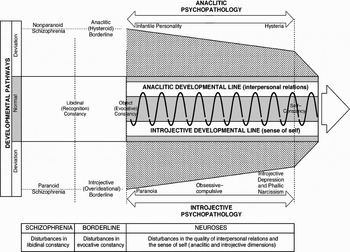
Biological predispositions and severely disruptive environmental events can interact in complex ways to distort this integrated synergistic developmental process (see also Cicchetti & Gunnar, Reference Cicchetti and Gunnar2008) and lead to a defensive and exaggerated emphasis on one developmental dimension at the expense of the other. These deviations can be relatively mild in normal character variations, as discussed above, but these deviations can also be quite extreme. The more extensive the deviation, the greater the exaggerated emphasis on one developmental line at the expense of the other, and the greater the possibility of psychopathology. Severe disruptions of the synergistic dialectic developmental process at different points in development can lead to the various forms of psychopathology described in DSM Axis I and Axis II, from schizophrenia and depression to personality disorders. The nature of this distorted one-sided emphasis identifies two primary configurations of psychopathology. Anaclitic forms of psychopathology (e.g., undifferentiated schizophrenia, abandonment depression, and the borderline, dependent, and histrionic personality disorders) all involve, at different developmental levels, a distorted one-sided emphasis on interpersonal relatedness. Introjective forms of psychopathology (e.g., paranoid schizophrenia and the paranoid, obsessive–compulsive, self-critical depressive, and narcissistic personality disorders), in contrast, are characterized, at different developmental levels, by a distorted and one-sided emphasis on self-definition (Blatt, Reference Blatt2006, Reference Blatt2008; Blatt & Shichman, Reference Blatt and Shichman1983).Footnote 1
Again, considerable research evidence (e.g., Blatt, Reference Blatt2004, Reference Blatt2006, Reference Blatt2008; Blatt & Zuroff, Reference Blatt and Zuroff1992) supports the validity of this distinction of two primary configurations of psychopathology. Anaclitic and introjective patients have very different early and later life experiences and different concerns and preoccupations (e.g., Blatt & Homann, Reference Blatt and Homann1992; Blatt & Zuroff, Reference Blatt and Zuroff1992) and respond differentially to different types of therapeutic interventions (e.g., Blatt, Reference Blatt1992; Blatt, Besser, & Ford, Reference Blatt, Besser and Ford2007; Blatt & Ford, Reference Blatt and Ford1994; Blatt & Shahar, Reference Blatt and Shahar2004a, Reference Blatt and Shahar2004b; Blatt & Zuroff, Reference Blatt and Zuroff1992; Fertuck, Bucci, Blatt, & Ford, Reference Fertuck, Bucci, Blatt and Ford2004). In addition, considerable research (e.g., Blatt, Reference Blatt2004, Reference Blatt2008) supports the identification of two primary configurations of psychopathology in which various disorders are expressions of an exaggerated preoccupation, at various developmental levels, with issues of interpersonal relatedness at the expense of the development of the self (anaclitic or relatedness disorders) or, conversely, an exaggerated preoccupation with issues of self-definition or identity at the expense of the development of a capacity for interpersonal relatedness (introjective or self-definitional disorders).
Investigators from different theoretical orientations (e.g., Arieti & Bemporad, Reference Arieti and Bemporad1978, Reference Arieti and Bemporad1980; Beck, Reference Beck, Clayton and Barrett1983; Blatt, Reference Blatt1974, Reference Blatt1998, Reference Blatt2004; Bowlby, Reference Bowlby1988a, Reference Bowlby1988b), for example, have identified two fundamental dimensions in depression (Blatt & Maroudas, Reference Blatt and Maroudas1992): an anaclitic dimension centered on feelings of loneliness, abandonment, and neglect, and an introjective dimension focused on issues of self-worth and feelings of failure and guilt. Extensive empirical investigations (see summaries in Blatt, Reference Blatt2004; Blatt & Zuroff, Reference Blatt and Zuroff1992; Luyten, Corveleyn, et al., Reference Luyten, Corveleyn, Blatt, Corveleyn, Luyten and Blatt2005) have consistently indicated differences in the current and early life experiences of these two types of depressed individuals (Blatt & Homann, Reference Blatt and Homann1992) as well as major differences in basic character style, relational and attachment style (Luyten et al., Reference Luyten, Blatt, Corveleyn, Corveleyn, Luyten and Blatt2005b), and clinical expression of depression (Blatt, Reference Blatt1974, Reference Blatt1998, Reference Blatt2004; Blatt & Zuroff, Reference Blatt and Zuroff2005), as well as therapeutic response (Blatt, Reference Blatt2004, Reference Blatt2008; Blatt & Zuroff, Reference Blatt and Zuroff2005). These differences can also be found in postpartum depression (Besser, Vliegen, Luyten & Blatt, Reference Besser, Vliegen, Luyten and Blatt2008), suggesting that it is more productive to focus on underlying personality dynamics as the basis for the classification of depression than on manifest symptoms.
The differentiation between individuals preoccupied with issues of relatedness and with issues of self-definition has also enabled investigators to identify an empirically derived, replicated taxonomy for the diversity of personality disorders described in DSM Axis II. Systematic empirical investigation with both inpatients and outpatients found that various Axis II personality disorders are meaningfully, and in theoretically expected ways, organized into two primary configurations: one organized around issues of relatedness and the other around issues of self-definition (for reviews, see Blatt, Reference Blatt2004, Reference Blatt2008). Congruent with theoretical assumptions, these studies have generally found that individuals with a dependent, histrionic, or borderline personality disorder have significantly greater concern with issues of interpersonal relatedness than with issues of self-definition, whereas individuals with a paranoid, schizoid, schizotypic, antisocial, narcissistic, avoidant, obsessive–compulsive or self-defeating personality disorder usually have significantly greater preoccupation with issues of self-definition than with issues of interpersonal relatedness. These findings are supported further by attachment research showing that personality disorders can be similarly organized in two-dimensional space defined by attachment anxiety reflecting anaclitic concerns, and by attachment avoidance reflecting introjective issues (Meyer & Pilkonis, Reference Meyer, Pilkonis, Lenzenweger and Clarkin2005). In addition, several studies have provided evidence for a distinction between an anaclitic versus an introjective type of borderline personality disorder (Blatt & Auerbach, Reference Blatt and Auerbach1988; Levy, Edell, McGlashan et al., Reference Levy, Edell and McGlashan2007; Westen et al., Reference Westen, Moses, Silk, Lohr, Cohen and Segal1992; Wixom, Ludolph, & Westen, Reference Wixom, Ludolph and Westen1993).
As illustrated in Figure 1, the formulation of two configurations of psychopathology provides a theoretical model for conceptualizing different forms of psychopathology as deviations from normal personality development as well as specifying the relationship among different types of disorders.
A model of normal and psychopathological development.

A developmental perspective in psychiatric classification
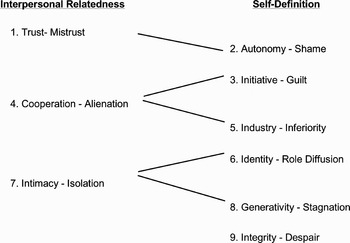
Although the two polarities model was initially developed to understand personality development and psychopathology in adults, it evolved into a more comprehensive, life span developmental approach. Unlike some other developmental psychopathology models that are often based on general developmental principles and are often relatively theory free (e.g., Fischer et al., Reference Fischer, Ayoub, Singh, Noam, Maraganore and Raya1997; Sroufe, Reference Sroufe1997), Blatt and colleagues (e.g., Blatt & Blass, Reference Blatt and Blass1990, Reference Blatt, Blass, Noam and Fischer1996; Blatt & Shichman, Reference Blatt and Shichman1983) extended Erikson's (e.g., Reference Erikson1950) epigenetic psychosocial model to illustrate how the two fundamental developmental dimensions of interpersonal relatedness and self-definition evolve and are eventually integrated in a mature self-identity: a self in relation with others. An expanded model of Erikson's epigenetic model of psychosocial development, presented in Figure 2, illustrates this dialectic synergistic developmental sequence.Footnote 2
The dialectic interaction of interpersonal relatedness and self-definition implicit in in Erikson's psychosocial model.

Personality development throughout life, from infancy to senescence, proceeds through a hierarchical series of synergistic dialectical interactions between two fundamental developmental processes: between the development of the self and the development of a capacity for interpersonal relatedness. Progress in each of these two dimensions facilitates the development of the other. Throughout life, meaningful interpersonal experiences contribute to a fuller articulation, differentiation, and integration of the sense of self that, in turn, facilitates the establishment of more mature forms of interpersonal relatedness. Although the relative balance between these two developmental dimensions and the specific life experiences that contribute to the development of a sense of self and the capacity for interpersonal relatedness varies across individuals and across cultures, these two fundamental dimensions essentially evolve through a basic synergistic developmental process.
The dialectic extension of Erikson's formulations defines one developmental dimension (self-definition or individuality) as evolving from early experiences of separation and autonomy from the primary caregiver, to a capacity to initiate activity first in opposition to the other and later proactively, to industry with sustained goal-directed activity that has direction and purpose, to the emergence of individuality and a “self-identity.” The addition of an intermediate stage of cooperation to the Erikson model defines phases in the development of interpersonal relatedness that evolve from the sharing of affective experiences between mother and infant (e.g., Beebe & Lachmann, Reference Beebe and Lachman1988; Stern, Reference Stern1985) with a concomitant sense of basic trust (e.g., Erikson, Reference Erikson1950), to a capacity for cooperation and collaboration with parents and peers, to the evolution of a close friendship with a same-sex chum (Sullivan, Reference Sullivan1953), to the development of mutual, reciprocal, enduring intimacy. Thus, the articulation of the processes of interpersonal relatedness and self-definition enable us to identify two fundamental developmental pathways (e.g., Fischer et al., Reference Fischer, Ayoub, Singh, Noam, Maraganore and Raya1997; Sroufe, Reference Sroufe1997) that are essential in both normal and disrupted psychological development.
Although this broadened Eriksonian model may still be too sketchy to capture fully the details of the infinitely complex processes of human psychological development, it does articulate the reciprocal development of two dimensions throughout life, from infancy through the early developmental years until adolescence,Footnote 3 at which time the developmental task is to integrate these two developmental dimensions of relatedness and self-definition (or attachment–separation or communion–agency) into the comprehensive structure Erikson called “self-identity” (Blatt & Blass, Reference Blatt and Blass1990, Reference Blatt, Blass, Noam and Fischer1996) or a self in relation to others (Blatt, Reference Blatt2006, Reference Blatt2008). Hence, adolescence is a crucial time for a synthesis that can result in the formation of a consolidated identity or the emergence of many forms of psychopathology, particularly personality disorders that are characterized by failures to integrate these two fundamental developmental processes.
The Two-Configurations Model in Childhood and Adolescence
The implications of the two configurations or two polarities model of personality development and psychopathology has until recently not been explored as extensively in children and adolescents as it has been in adults, but an emerging body of research provides strong support for the value of the two polarities model for understanding both normal and deviant psychological development in childhood and adolescence. In this section, we review this evidence and discuss the two polarities model in relation to the classification of psychopathology in childhood and adolescence, its links with research on the internalizing–externalizing distinction and with attachment research, as well as its importance for research including the role of biological factors in child development.
The two polarities model and internalizing and externalizing problems in adolescence
One of the theoretical frameworks that have emerged over the last several decades as a developmentally based classification system of psychopathology is the internalization–externalization distinction (Krueger, Markon, Patrick, Benning, & Kramer, Reference Krueger, Markon, Patrick, Benning and Kramer2007; Lahey et al., Reference Lahey, Rathouz, Van Hulle, Urbano, Krueger and Applegate2008). Yet, this distinction is plagued by a high comorbidity between internalizing and externalizing problems (Krueger et al., Reference Krueger, Markon, Patrick, Benning and Kramer2007; Lahey et al., Reference Lahey, Rathouz, Van Hulle, Urbano, Krueger and Applegate2008), a vexing problem it shares with the DSM system (for a fuller discussion, see Luyten & Blatt, Reference Luyten and Blatt2007). The two polarities model, in contrast, enables investigators to understand more fully the relationship between internalizing and externalizing problems and their links to dysphoric experiences (Soenens, Vansteenkiste, & Luyten, in press) in that the differential vulnerability to the two types of dysphoria (anaclitic and introjective) may partially explain the associations in adolescents between depression and the frequently dichotomized internalizing and externalizing disorders (Achenbach & Edelbrock, Reference Achenbach and Edelbrock1983).
In community-based adolescents, depressive symptoms correlate significantly with both internalizing and externalizing disorders (Colton, Gore, & Aseline, Reference Colton, Gore, Aseltine, Colton and Gore1991; Horowitz & White, Reference Horwitz and White1987; Krueger et al., Reference Krueger, Markon, Patrick, Benning and Kramer2007; Lahey et al., Reference Lahey, Rathouz, Van Hulle, Urbano, Krueger and Applegate2008; Reinherz, Frost, Stewart-Berghaver, Moeykens, & Holmes, Reference Reinherz, Frost, Stewart-Berghauer, Pakiz, Kennedy and Schille1990; Reinherz et al., Reference Reinherz, Stewart-Berghaver, Pakiz, Frost, Moeykens and Holmes1989), as well as with specific problem behaviors including conduct disorder (Cole & Carpentieri, Reference Cole and Carpentieri1990; Kovacs, Paulouska, Gatsonis, & Richard, Reference Kovacs, Paulouskas, Gatsonis, Richards, Cicchetti and Rosen-Schneider1988), suicidal feelings and behaviors (Robbins & Alessi, Reference Robbins and Alessi1985), school problems including dropout (McGrath, Keita, Strickland, & Russo, Reference McGrath, Keita, Strickland and Russo1990), eating disorders (McGrath et al., Reference McGrath, Keita, Strickland and Russo1990), premarital pregnancy (Yamaguchi & Kendal, Reference Yamaguchi and Kendal1987), and illicit drug use (Kandel, Kessler, & Margulies, Reference Kandel, Kessler and Margulies1978; Newcombe & Bentler, Reference Newcomb and Bentler1988). Females consistently show more internalizing disorders and males more externalizing disorders (Krueger et al., Reference Krueger, Markon, Patrick, Benning and Kramer2007).
However, there appears to be a differential relationship between the two types of depression (anaclitic and introjective) and internalizing and externalizing behavior problems. A dependent or loneliness (anaclitic) type of depression appears to be a primary issue in internalizing problems including somatic concerns, especially in females (e.g., Besser et al., 2008; Blatt et al., Reference Blatt, Quinlan, Chevron, McDonald and Zuroff1982; Luyten et al., Reference Luyten and Blatt2007). Self-critical (introjective) dysphoria appears to be a primary issue in externalizing problems like delinquency and aggression, especially in males. In community samples of adolescents, anaclitic dysphoria and interpersonal stress tend to lead to internalizing problems, whereas self-critical dysphoria threats to competence tend to lead to externalizing problems (e.g., Blatt, Reference Blatt, Lipsitt and Mitnick1991; Leadbeater et al., Reference Leadbeater and Linares1999). In particular, anaclitic concerns, as assessed on the Depressive Experiences Questionnaire (DEQ; Blatt, D'Afflitti, & Quinlan, Reference Blatt, D'Afflitti and Quinlan1976, Reference Blatt, D'Afflitti and Quinlan1979) had strong relationships with a number of the internalizing scales of the Youth Self-Report (Achenbach & Edelbrock, Reference Achenbach and Edelbrock1983, Reference Achenbach and Edelbrock1987), including feeling unpopular in females and males and with identity/suicide and somatic concerns in males, but they did not predict specific types of externalizing behaviors (delinquency, aggression, or the externalizing factor). Introjective concerns on the DEQ, in contrast, predicted these externalizing behaviors (except for delinquency in females). These relationships between self-reported internalizing and externalizing problem behaviors and different types of dysphoria persisted even after the contribution of the basic level of depression, as measured with the Community Epidemiological Survey for Depression (Radloff, Reference Radloff1977), was removed statistically in multiple regression analysis (Blatt, Hart, Quinlan, Leadbeater, & Auerbach, Reference Blatt, Hart, Quinlan, Leadbeater and Auerbach1993).
Thus, individuals with high levels of interpersonal concerns about abandonment or loss of support of others do not usually get involved in externalizing behaviors that could alienate others. In contrast, individuals with high levels of self-critical concerns become involved in angry and disruptive behavior, which both defies authority and at the same time invites the criticism and punishment they consciously and unconsciously believe they deserve (Blatt, Reference Blatt, Lipsitt and Mitnick1991; Blatt et al., Reference Blatt, Cornell and Eshkol1993; Leadbeater et al., Reference Leadbeater and Linares1999). Thus, disruptive behavior in adolescence often appears to be an expression of the particular type of underlying despair and depression.
The differentiation of the two types of dysphoria provides a basis for appreciating some of the factors that can lead some adolescents to become involved in particular forms of disruptive behavior. In particular, the significant relationships between dependent and self-critical dysphoria and self-reports of a wide variety of problem behaviors in high school students suggest that dysphoria and behavioral disorders are closely intertwined, and that involvement in particular types of problematic behavior may be an expression of different types of dysphoria. Several other problem areas, such as attention disturbances, were, however, significantly correlated with both anaclitic and introjective dysphoric concerns. These findings suggest a hierarchical view of psychopathology in which a number of disordered behavioral expressions (e.g., substance abuse, antisocial behavior) can be subsumed within the anaclitic and introjective configurations of psychopathology (Blatt, Reference Blatt2008; Luyten & Blatt, Reference Luyten and Blatt2009).
Although these correlational data are intriguing and suggestive, they did not indicate the casual directions of these relationships or the possible influence of other, unmeasured, variables. The highly significant relationships between measures of dysphoria and tendencies toward disruptive behavior in a community sample of adolescents, however, suggest that dysphoric experiences may be the cause, rather than the consequences, of disruptive behavior. Blatt and colleagues examined the possible causal relationships among the two types of dysphoria and problem behaviors in a community sample of female and male adolescents in a longitudinal design that assessed these personality dimensions prior to the onset of many of these behavior disturbances (Leadbeater, Kuperminc, Blatt, & Hertzog, Reference Leadbeater, Kuperminc, Blatt and Hertzog1999). In line with theoretical expectations, in a sample of 460 early adolescent boys and girls (ages 11 to 13) in an urban middle school, they found that introjective vulnerability predicted both internalizing problems and externalizing problems. Anaclitic vulnerability, in turn, predicted increases in internalizing problems.
Leadbeater et al. (Reference Leadbeater, Kuperminc, Blatt and Hertzog1999) also found that the quality of the relationship that adolescents had with their parents and peers influenced the adjustment of girls, having both direct and indirect effects. Positive relationships with parents directly predicted lower levels of both internalizing and externalizing problems in girls. Girls' positive relationships with parents were also associated with fewer stressful life events and less introjective vulnerability. Good peer relations also predicted less self-critical vulnerability in girls. For boys, positive relationships with parents were associated with less introjective vulnerability, and fewer stressful life events but, paradoxically, with a higher level of anaclitic vulnerability. These results indicate that advances in understanding causal directions of multivariate relationships among individual vulnerabilities, potentiating factors, and psychological disturbances depend on developing theoretical models that clearly specify the relationships among these variables.
The articulation of anaclitic and introjective personality organization provides fuller understanding of some of the motivational factors in internalizing and externalizing behavior patterns. Disruptive behavior can result from disturbances in either of these two personality styles, but the specific form of the disruptive behavior will differ because of differences in the nature of the adolescents' preoccupations. Even when the manifest form and expression of the disruptive behavior is similar, the behavior may have different meanings for the individual. Thus, disruptive behavior appears to be, in part, a defense against experiences of dysphoria associated with either loss and neglect or feelings of inadequacy and failure. This clarification of the causal relationships between adolescent dysphoric experiences and the tendencies toward problem behavior could provide the basis for the early identification of adolescents at risk and for the development of more effective community-based intervention strategies before adolescents become involved in serious disruptive behavior.
These findings are consistent with longitudinal research that indicates relationships among environmental events like a loss of self-esteem (e.g., via failure) and dysfunctional interpersonal relationships (e.g., loss or rejection) in the development and persistence of both internalizing and externalizing disorders (Compas, Reference Compas1987; Compas, Slavin, Wagner, & Vannatta, Reference Compas, Slavin, Wagner and Vannata1986; Elliott, Huizinga, & Menard, Reference Elliott, Huizinga and Menard1989; Jessor & Jessor, Reference Jessor and Jessor1977, Loeber, Reference Loeber, Lahey and Kazdin1988, Reference Loeber1990; Luthar, Reference Luthar1991; Robins & Rutter, Reference Robins and Rutter1990). Positive interpersonal relations and competence in several domains (e.g., academics, sports, and community involvement) protect against the development of depression and a wide range of disruptive behavior (e.g., Achenbach, Reference Achenbach1991; Dishion, Patterson, Stoolmiller, & Skinner, Reference Dishion, Patterson, Stoolmiller and Skinner1991; Leadbeater, Hellner, Allen, & Aber, Reference Leadbeater, Hellner, Allen and Aber1989; Luthar, Reference Luthar1991; Masten et al., Reference Masten, Garmezy, Tellegen, Pellegrini, Larkin and Larsen1988; Rutter, Reference Rutter, Kent and Rolfe1979). The interaction of impaired competence and/or disrupted relationships contribute to depression that in turn augments feelings of loneliness and failure (Cicchetti & Aber, Reference Cicchetti, Aber and Lipsett1986; Cicchetti & Schneider-Rosen, Reference Cicchetti1984; Cicchetti, Toth, & Bush, Reference Cicchetti, Toth, Bush, Lahey and Kazdin1988; Cole, Reference Cole1991; Cole & Zahn-Waxler, Reference Cole, Zahn-Waxler, Cicchetti and Toth1992; Cummings & Cicchetti, Reference Cummings, Cicchetti, Greenberg, Cicchetti and Cummings1990). Longitudinal research suggests that relationships between depressive symptoms and stressful life events may be reciprocal in adolescents: symptoms not only result from but also predict the occurrence of stressful events (Compas, Reference Compas1987; Leadbeater & Linares, Reference Leadbeater and Linares1992; Swearingen & Cohen, Reference Swearingen and Cohen1985). These findings are consistent with an “action theory” (e.g., Shahar, Reference Shahar2006) or “dynamic interactionism” (Luyten, Blatt, & Corveleyn, Reference Luyten, Blatt, Corveleyn, Corveleyn, Luyten and Blatt2005a; Zuroff et al., Reference Zuroff, Mongrain and Santor2004) perspective in which individuals construct or select environmental conditions that are congruent with their vulnerabilities and preoccupations.
The intergenerational transmission of depression in adolescence
Studies based on the two polarities model have also addressed the intergenerational transmission of introjective and anaclitic vulnerabilities in adolescence, and their role in explaining vulnerability for depression. As discussed above, painful experiences of neglect and deprivation and severely critical judgmental parental standards result in two types of depression (Blatt & Homann, Reference Blatt and Homann1992) and in different disruptive behavioral expressions. In this context, much interest has been expressed in the concept of psychological control and parental styles characterized by the often unconscious use of insidious and manipulative tactics such as guilt induction, shaming, and love withdrawal (Barber & Harmon, Reference Barber, Harmon and Barber2002). In a series of studies, Soenens and colleagues (Reference Soenens, Elliot, Goossens, Vansteenkiste, Luyten and Duriez2005) found that the use of psychological control mediated the relationship between introjective traits in parents and adolescents. Moreover, adolescent's introjective traits mediated the relationship between parent's psychological control and depression in their adolescent offspring.
Based on these studies, Soenens et al. (in press) suggested that there may be two types of psychological control, one type revolving around issues of relatedness, the other around issues of autonomy. The first type, called dependency-oriented psychological control, involves a parental attitude that fosters feelings of dependency and separation anxiety, and limits strivings for independency and separateness, typically observed in so-called enmeshed families (Barber & Harmon, Reference Barber, Harmon and Barber2002; Manzi, Vignoles, Regalia, & Scabini, Reference Manzi, Vignoles, Regalia and Scabini2006). The second type, achievement-oriented psychological control, leads to a preoccupation with issues of achievement, perfectionism, and control. In a series of three studies with adolescents, Soenens et al. (in press) found that dependency-oriented and achievement-oriented psychological control, in theoretically expected ways, were differentially related to anaclitic and introjective vulnerabilities in adolescents which, in turn, were related to increased vulnerability for depressive symptoms. These studies demonstrate that the distinction between two domain-specific expressions of parental psychological control based on the two polarities model allows for a more detailed analysis of psychological processes involved in disrupted parenting, the intergenerational transmission of anaclitic and introjective issues, as well as the intergenerational transmission of depression (see also Besser & Priel, Reference Besser and Priel2005; Frost, Lahart, & Rosenblate, Reference Frost, Lahart and Rosenblatt1991).
The two polarities model in childhood: Links with attachment theory
Recent research (e.g., Beebe et al., Reference Beebe, Jaffe, Buck, Chen, Cohen and Blatt2007; Feldman & Blatt, Reference Feldman, Blatt, Masling and Bornstein1996) demonstrates that a balance of attachment and separation in mother–infant interaction is an antecedent of the coordinated early development of relatedness and of self-definition. These findings are consistent with findings in attachment research that a secure attachment pattern in the second year of life evolves from the capacity to establish affective bonds and to tolerate and benefit from separation (Luyten & Blatt, Reference Luyten and Blatt2009; Sibley, Reference Sibley2006). Secure attachment involves an integration and coordination of relatedness and self-definition that contribute to the development of mature levels of interpersonal relatedness and an essentially positive, realistic, differentiated, and integrated identity—the ability to both love and work (Hazan & Shaver, Reference Hazan and Shaver1990; Mikulincer & Shaver, Reference Mikulincer and Shaver2007). Disruptions of the balanced and synergistic development of attachment and separation, however, can result in anxious and avoidant attachment patterns, as expressed in anxious resistant or enmeshed–preoccupiedFootnote 4 versus dismissing avoidant attachment patterns that have been identified in early childhood based on Ainsworth's Strange Situation and in adolescents and adults through the Adult Attachment Interview (George, Kaplan, & Main, Reference George, Kaplan and Main1996), as well as through various self-report measures (Mikulincer & Shaver, Reference Mikulincer and Shaver2007).
Results from these investigations indicate that types of insecure attachment, across a wide range of ages, can be conceptualized in terms of the two basic underlying dimensions of anxiety and avoidance: dimensions consistent with formulations of interpersonal relatedness and self-definition as fundamental coordinates in personality development, personality organization, and psychopathology (Blatt, Reference Blatt2008; Blatt & Blass, Reference Blatt, Blass, Noam and Fischer1996; Luyten & Blatt, Reference Luyten and Blatt2009). Anxious–resistant attachment involves an intense preoccupation with maintaining contact with the need-gratifying figure, and is accompanied by considerable anxiety in response to separation and loss. Avoidant attachment involves intense efforts at maintaining aloofness and detachment in defensive expressions of exaggerated autonomy and independence. Congruent with these assumptions, Besser and Priel (Reference Besser and Priel2005) found that these attachment and personality patterns are transmitted across at least three generations of women: from grandmother, to mother, to daughter (see also Frost et al., Reference Frost, Lahart and Rosenblatt1991).
In addition to the ambivalent or resistant and the avoidant type of insecure attachment, Main, Kaplan, and Cassidy (Reference Main, Kaplan and Cassidy1985) identified another, somewhat less frequent, “disorganized” or “disoriented” type of attachment in which the infant or child appears to lack any clearly defined means of coping with separation and instead seems to blend contradictory features of several strategies (e.g., strong proximity seeking followed by intense avoidance), or appears dazed and disoriented when reunited with the caregivers. Disorganization is evident in disordered temporal sequences; incomplete or undirected movements; or confusion, apprehension, and depression. Lyons-Ruth and colleagues (e.g., Lyons-Ruth, Reference Lyons-Ruth2001; Lyons-Ruth, Zeanah, & Benoit, Reference Lyons-Ruth, Zeanah, Benoit, Mash and Barkley2003) distinguished two types of disorganized infants they labeled as disorganized–approach and disorganized–avoidant and speculated that these patterns are the precursors of punitive and caregiving stances that disorganized children use to establish control of others and eventually become consolidated into “hostile” and “helpless” parental caregiving styles. These two subtypes of disorganized attachment, as well as the seeking or avoiding interpersonal contact as the fundamental dimension in the two major types of insecure attachment, parallel the two basic dimensions of a preoccupation with relatedness in anaclitic organization and with interpersonal isolation in introjective personality organization (Blatt, Reference Blatt2004).
Two polarities of experience and the role of nature versus nurture in childhood development
Sroufe (Reference Sroufe1997) stressed the importance of longitudinal research on early patterns of adaptation that begin prior to the onset of difficulties as a way of understanding the interactions of factors in the causal mechanisms in the processes of adaptation. For instance, Gunnar and Quevedo (Reference Gunnar and Quevedo2007) noted that individual differences in the social regulation of neurobiological reactions to stress in mother–infant interactions can provide a lens for examining the impact and management of stress throughout development. Rather than post hoc searches for specific genetic and neurobiological markers of particular psychiatric diseases or disorders seen in the clinical context, an approach plagued by complex issues of the equifinality and multifinality of symptoms and of etiological pathways, the developmental approach to personality development and psychopathology has considerable promise, but will require extensive, long-term, longitudinal developmental research.
A recent study by Beebe and colleagues (Reference Beebe, Jaffe, Buck, Chen, Cohen and Blatt2007) illustrates how mother's personality organization around issues of interpersonal relatedness and self-definition influence the infant's development of self- and interactive regulation as early as 4 months of age, and how these findings can contribute to more extensive research designs. Using the DEQ (Blatt et al., Reference Blatt, D'Afflitti and Quinlan1976, Reference Blatt, D'Afflitti and Quinlan1979), Beebe and colleagues conducted a 6 weeks postdelivery assessment of anaclitic and introjective personality dimensions in a sample of primiparious mothers of a healthy first-born child in an ethnically diverse, low-risk sample of well-educated women. Using well-established split-screen analyses of mother–infant interaction, Beebe and colleagues (Reference Beebe, Jaffe, Buck, Chen, Cohen and Blatt2007) found that both elevated anaclitic and introjective traits in mothers 6 weeks postpartum significantly predicted lower infant self-regulation at 4 months of age. Yet, these two dimensions predicted very different patterns of mother–infant interactive regulation at 4 months.
More anaclitic mothers had heightened facial and vocal coordination with their infants: an “attentional vigilance” that was accompanied by heightened emotional activation of the infants. Infants of these mothers showed a similar emotional vigilance and an intense reactivity to shifts in mother's affective states. This heightened vigilance and dyadic symmetry of mother and infant indicates excessive maternal concern about the infant's availability that limited the infant's individuation and affect regulation. In contrast, more introjective mothers had difficulty sharing their infant's attentional focus and emotional variations. These mothers appeared to try to compensate for their disengagement with their infants by touching their infants more frequently, a more neutral type of engagement than sharing facial expressions, voice quality, or visual gaze. In response to the disengagement of introjective mothers, their infants seemed to disengage from their mother by withdrawing vocal quality coordination. This distancing and disengagement in introjective mothers and in their infants appear to be the precursors of dismissive insecure attachment. The intense involvement of anaclitic mothers and their infants, in contrast, appear to be the precursors of preoccupied or anxious–ambivalent insecure attachment.
It remains for subsequent research to examine the relationship of these interpersonal interactive patterns observed at 4 months of age and attachment patterns observed in the second year of life and to the later development of anaclitic and introjective forms of personality organization and psychopathology. Moreover, it also remains for future research to examine the role of genetic and neurobiological factors of mother and infant in these early interpersonal interactive patterns as well as the impact of the development of these interactive patterns on the infant's subsequent neurobiological development (Cichetti & Gunnar, Reference Cicchetti and Gunnar2008). However, the study by Beebe and colleagues (Reference Beebe, Jaffe, Buck, Chen, Cohen and Blatt2007) demonstrates the potential of studying early interactions between nature and nurture based on a developmental approach such as the two polarities model.
Implications for a Developmentally Informed Classification System of Mental Disorders
These views of psychopathology as disruptions of normal psychological development across the life span differ markedly from the symptom-based formulations of the American Psychiatric Association's DSM (Blatt & Luyten, in press). The identification of commonalities across normal and disrupted psychological development across the life span suggests that various forms of psychopathology are not separate independent diseases that derive from presumed, but often as yet undocumented, specific biological and genetic disturbances (see also Fischer et al., Reference Fischer, Ayoub, Singh, Noam, Maraganore and Raya1997; Sroufe, Reference Sroufe1997), as implied in most psychiatrically informed diagnostic manuals. Rather, research deriving from this unifying theoretical model indicates that most forms of psychopathology are the consequence of severe disruptions of basic developmental psychological processes.
The differentiation between anaclitic and introjective configurations of psychopathology is based on dynamic considerations, including differences in primary motivational focus (libidinal versus aggressive), types of defensive organization (avoidant versus counteractive), and predominant character style (emphasis on an interpersonal vs. self-orientation, on affects vs. cognition), and developmental factors/history. The anaclitic and introjective configurations of personality development and psychopathology thus provide a comprehensive theoretical structure for identifying fundamental similarities among many forms of psychopathology and for maintaining conceptual continuity across processes of psychological development, normal variations in character or personality organization, and different forms of psychological disturbance. Even further, continuity is maintained among various disorders within the anaclitic and introjective configurations so pathways of potential regression and progression and the nature of therapeutic change can be more fully understood (see clinical examples in Blatt, Auerbach, & Behrends, Reference Blatt, Auerbach, Behrends, Slade, Jurist and Bergner2008; Blatt et al., Reference Blatt, Besser and Ford2007; Blatt & Ford, Reference Blatt and Ford1994).
Congruent with these assumptions, findings of a number of studies suggest that the differentiation between DSM Axis I and Axis II is arbitrary and unproductive (e.g., Blatt et al., Reference Blatt, Besser and Ford2007; Blatt & Ford, Reference Blatt and Ford1994; Blatt & Levy, Reference Blatt, Levy and Barron1998; Krueger et al., Reference Krueger, Watson and Barlow2005; Kupfer, First, & Reiger, Reference Kupfer, First, Reiger, Kupfer, First and Reiger2002; Westen, Novotny, & Thompson-Brenner, Reference Westen, Novotny and Thompson-Brenner2004). Personality factors are inherent in Axis I disorders such as in unipolar (Beck, Reference Beck, Clayton and Barrett1983; Blatt, Reference Blatt2004; Blatt et al., Reference Blatt, D'Afflitti and Quinlan1976, Reference Blatt, Quinlan, Chevron, McDonald and Zuroff1982; Luyten & Blatt, in press) and bipolar (Lam, Wright, & Smith, Reference Lam, Wright and Smith2004) depression, eating disorders (Thompson-Brenner & Westen, Reference Thompson-Brenner and Westen2005), anxiety disorders, and even in severe psychopathology, such as psychotic disorders (Shahar et al., Reference Shahar, Trower, Iqbal, Birchwood, Davidson and Chadwick2004; Tsuang, Stoen, Tarbox, & Faraone, Reference Tsuang, Stone, Tarbox, Faraone and Grispini2003), as well as in the clinical course of neoplastic immunological and cardiovascular disease (e.g., Blatt, Cornell, & Eshkol, Reference Blatt, Cornell and Eshkol1993; Helgeson, Reference Helgeson1994). In addition, evidence increasingly suggests that categorical symptom-based diagnostic distinctions limit clinical practice and research (Luyten & Blatt, Reference Luyten and Blatt2009). Psychopathological disorders are therefore best understood as a continuum from normality to subclinical pathology to manifest clinical disorders (Blatt, Reference Blatt1974, Reference Blatt2004; Blatt & Shichman, Reference Blatt and Shichman1983; Luyten & Blatt, Reference Luyten and Blatt2007; Tsuang et al., Reference Tsuang, Stone, Tarbox, Faraone and Grispini2003) that derive from disruptions of normal psychological development. Hence, as noted by Sroufe (Reference Sroufe1997, p. 266) and others (e.g., Cicchetti, Reference Cicchetti, Schneider-Rosen, Cicchetti and Schneider-Rosen1984; Cicchetti & Sroufe, Reference Cicchetti and Sroufe1976; Loevinger, Reference Loevinger1976), “the same basic laws that govern normal development govern the pathological as well.”
The formulations of two primary configurations of psychopathology thus not only provides a theoretical model for integrating clinical disorders in DSM Axis I with the personality disorders of Axis II, but it also suggests the possibility of identifying a hierarchical organization in which many symptom-based disorders can be subsumed within one of several major clinical disorders (Blatt, Reference Blatt2004; Krueger et al., 2005; Watson, Reference Watson2005). The primary advantages of these formulations of psychopathology are that they identify continuities among processes in personality development, normal variations in personality organization, and various forms of psychopathology that avoid many of the pitfalls that have been discussed in frequent contemporary criticisms of the DSM approach to the diagnosis of psychopathology including the problematic issue of extensive comorbidity (e.g., Blatt & Levy, Reference Blatt, Levy and Barron1998; Luyten & Blatt, Reference Luyten and Blatt2007; Luyten, Blatt, Van Houdenhove, & Corveleyn, Reference Luyten, Blatt, van Houdenhove and Corveleyn2006; Widiger & Trull, Reference Widiger and Trull2007).
These formulations of the two configurations model allow us to understand the relationships among different disorders as various levels of psychopathology within the anaclitic or the introjective configuration, thus defining different points of organization in the two developmental dimensions along which patients can progress or regress. Various forms of psychopathology are no longer seen as isolated, independent diseases. However, congruent with the developmental principles of equifinality and multifinality, different types of psychopathology can now be considered as interrelated modes of (mal)adaptation to difficult early and later life experiences in interaction with biological endowment: modes of adaptation organized at different developmental levels within two basic configurations (see also Cicchetti & Gunnar, Reference Cicchetti and Gunnar2008; Fischer et al., Reference Fischer, Ayoub, Singh, Noam, Maraganore and Raya1997; Sroufe, Reference Sroufe1997). In this view, psychopathological disorders are compensatory exaggerations and distortions in response to severe disruptions of the reciprocally balanced, normal, synergistic dialectic development of interpersonal relatedness and self-definition. Severe disruptions of this developmental process result in exaggerated attempts to achieve equilibrium either through an intense distorted preoccupation, at different developmental levels, with the quality of interpersonal relatedness or exaggerated defensive efforts, at different developmental levels, to try to consolidate and stabilize the sense of self.
Psychopathological disorders within the anaclitic configuration are interrelated and therefore show high comorbidity because they share a preoccupation with intense struggles to establish satisfying interpersonal relations with feelings of trust, intimacy, cooperation, and mutuality at different levels of development. Because of an exaggerated emphasis upon interpersonal relatedness, the self is defined primarily in terms of quality of interpersonal experiences. Psychopathological disorders within the introjective configuration, in contrast, are interrelated in their focus on struggles to achieve and maintain a sense of self-definition with feelings of separateness, autonomy, control, self-worth, and identity at different developmental levels. Because of an exaggerated emphasis on attempts to establish and maintain a sense of self-definition, the development of interpersonal relatedness is neglected and feelings of dependency are defended against, often resulting in a denial or defensive avoidance of interpersonal relatedness. The primary preoccupation in these disorders, at different developmental levels, with self-definition thus shapes and distorts the quality of interpersonal experiences.
Implications for Intervention and Prevention
These formulations have important implications for intervention because they indicate, for instance, that disruptive behavior in many symptom-based disorders, including conduct and antisocial disorders, are frequently defensive and distorted attempts to establish some form of interpersonal relatedness or some sense of self-worth (Blatt & Shichman, Reference Blatt, Shichman, Tuttman, Kaye and Zimmerman1981). These are issues that should be a central focus of treatment in addition to the more manifest symptomatic expressions (Blatt & Luyten, in press; Blatt & Shichman, Reference Blatt, Shichman, Tuttman, Kaye and Zimmerman1981).
Moreover, research evidence in adults indicates that patients with anaclitic and introjective features respond differently to different forms of psychotherapy and change in different, although equally desirable, ways (e.g., Blatt, Reference Blatt1992; Blatt et al., Reference Blatt, Besser and Ford2007; Blatt & Ford, Reference Blatt and Ford1994; Blatt & Shahar, 2004b; Fertuck et al., Reference Fertuck, Bucci, Blatt and Ford2004). In particular, anaclitic patients appear to respond primarily to the supportive dimensions, whereas introjective patients appear to respond primarily to the interpretative dimensions of the therapeutic process. In addition, patients appear to change in dimensions most salient to their basic personality organization. Anaclitic patients change primarily in the quality of their interpersonal relationships, whereas introjective patients show primarily symptom reduction and changes in the efficiency of their cognitive functioning (Blatt & Ford, Reference Blatt and Ford1994). In more disturbed inpatients, for example, thought disorder in anaclitic patients is reduced primarily in forms of thought disorder (contaminations and confabulations) that express boundary disturbances involving merger or fusion of independent thoughts or concepts, whereas thought disorder is reduced in introjective patients in thought-disordered responses (fabulized combinations) that involve referential thinking (Blatt et al., Reference Blatt, Besser and Ford2007).
The fundamental synergistic developmental interaction of processes of interpersonal relatedness and self-definition in normal psychological development may also occur in processes of therapeutic change and indicate a “final common developmental pathway” through which effective treatments exert their effects. Cicchetti and Gunnar (Reference Cicchetti and Gunnar2008), for instance, stress the value of studying the interaction of biological, psychological, and environmental factors in response to different types of interventions as a further way of understanding developmental processes. Based on the views expressed in this paper, we propose that all effective interventions may act through experiences of engagement and disengagement, of attachment and separation, of gratifying involvement with others and experiences of incompatibility with aspects of that involvement in the treatment process, as it does throughout life (Behrends & Blatt, Reference Behrends and Blatt1985). Hence, sustained and consolidated progress in psychotherapy may involve the reactivation of the normal synergistic developmental process in which interpersonal experiences in the therapeutic relationship contribute to revisions in the sense of self that lead to more mature expressions of interpersonal relatedness, that in turn, contribute to further refinements in the sense of self (Blatt, Reference Blatt, Sledge and Hershen2002). Findings by Safran and Muran (Reference Safran and Muran2000) in the study of the repair of ruptures to the therapeutic alliance provide empirical support for this view of the reactivation of the normal synergistic developmental process in the later phases of the treatment process (Blatt, Zuroff, Hawley, & Auerbach, in press).
Safran and Muran (Reference Safran and Muran2000) discuss the resolution or repair of ruptures in the therapeutic alliance and distinguish two types of ruptures: withdrawal and confrontation (or complaints). Withdrawal ruptures include denial, minimal response, shifting the topic, intellectualization, storytelling, and extensive talking about others. Confrontation ruptures include attacks on the therapist as a person or on his or her competence, irritation about the activities or parameters of the therapy, the lack of therapeutic progress, or dissatisfaction about being in therapy. Although both types of ruptures may occur in both types of patients, but with different meaning, withdrawal from interpersonal contact with the therapist would be more typical for interpersonally oriented anaclitic patients, whereas confrontation would be more characteristic of self-oriented introjective patients.
Safran and Muran (Reference Safran and Muran2000) found that empathic statements by the therapist to withdrawal ruptures evoke experiences of disavowed unmet needs for nurturance that underlie the extensive interpersonal demands of the patient. The direct expression of these intense needs for nurturance is, according to Safran and Muran (Reference Safran and Muran2000, p. 154), “an important act of self-assertion” because it enables the patient “to begin to take responsibility for . . . (these) demands, rather than expressing them indirectly.” Thus, the resolution of withdrawal ruptures involves an assertive, agentic expression of disavowed needs for nurturance. The resolution of confrontational ruptures, in contrast, involve the exploration of the “construal of the futility of the situation . . . and the underlying feelings of desperation” and how these explorations lead to the emergence of underlying “fears of abandonment . . . and access to feelings of vulnerability and the need for nurturance” (Safran & Muran Reference Safran and Muran2000, p. 174). The resolution of confrontational ruptures, typical of self-oriented introjective patients, leads to the emergence of underlying anaclitic qualities and an interest in interpersonal relatedness (anaclitic issues), feelings that are defended against in introjective individuals. In contrast, the resolution of withdrawal ruptures, typical of the more passive dependent interpersonally oriented anaclitic patients, lead to the emergence of self-assertive (introjective) activity. Thus, therapeutic progress involves the emergence of the other voice.
The reactivation of this normal synergistic developmental process in treatment results in modifications and revisions in the representation of self and significant others (Blatt & Behrends, Reference Blatt and Behrends1987; Blatt, Stayner, Auerbach, & Behrends, Reference Blatt, Stayner, Auerbach and Behrends1996). Sequential experiences of engagement and disengagement in the treatment process result in the reduction and revision of distorted, impaired, possibly pathological, representations of self and significant others, and to the development of new, revised, more articulated, differentiated, and integrated representations of self, of others, and of their actual and potential relationships (e.g., Blatt et al., Reference Blatt, Stayner, Auerbach and Behrends1996; Blatt, Auerbach, & Behrends, Reference Blatt, Auerbach, Behrends, Slade, Jurist and Bergner2008; Diamond, Kaslow, Coonerty, & Blatt, Reference Diamond, Kaslow, Coonerty and Blatt1990; Gruen & Blatt, Reference Gruen and Blatt1990; Harpaz-Rotem & Blatt, Reference Harpaz-Rotem and Blatt2005, Reference Harpaz-Rotem and Blatt2009). Activation of distorted representations of self and of significant others in the treatment process provides the patient and the therapist the opportunity to observe, understand and revise distorted interpersonal representations and to establish more adaptive schemas. These revised internalizations are expressed behaviorally and psychologically in more mature levels of self-definition and of interpersonal relatedness, and in symptom reduction and the development of enhanced adaptive capacities. This capacity to observe and understand is a metacapacity for mentalization that some investigators (e.g., Fonagy & Bateman, Reference Fonagy and Bateman2006) consider a universal mutative factor in treatment. In some patients (children, adolescents, and adults), this capacity has to be stimulated and created, whereas in less disturbed patients, this capacity is more or less present, and it is mainly the content of the representations that has to be addressed (Fonagy, Moran, Edgcumbe, Kennedy, & Target, Reference Fonagy, Moran, Edgcumbe, Kennedy and Target1993).
From this perspective, change in representational structures in the therapeutic process is similar in fundamental ways to the processes of normal psychological development. These changes include differentiated and integrated representations of self and others: changes that indicate a well-established capacity for mentalization that is necessary for understanding interpersonal relationships and to effectively navigate the social world. The systematic study of these revisions in mental representations or cognitive–affective schemas of self and of others can provide a method for assessing the extent and nature of therapeutic change: the reparative interpersonal therapeutic process in which individuals are able to move toward more mature levels of self-definition and more mature levels of interpersonal relatedness with a capacity to find personal satisfaction in mutually enhancing and facilitating interpersonal relationships (e.g., Blatt, Auerbach, & Aryan, Reference Blatt, Auerbach, Aryan, Bornstein and Masling1998; Blatt et al., Reference Blatt, Stayner, Auerbach and Behrends1996; Calabrese, Farber, & Westen, Reference Calabrese, Farber and Westen2005; Eklund & Nilsson, Reference Eklund and Nilsson1999; Phillips, Wenneberg, Werbart, & Schubert, Reference Philips, Wennberg, Werbert and Schubert2006; Piper, Joyce, McCullum, Azim, & Ogrodriczuk, Reference Piper, Joyce, McCullum, Azim and Ogrodniczuk2002). This focus on changes in mental representation of self and of others in the treatment process also provides a powerful links between treatment research and the newly emerging field of social cognitive neuroscience (e.g., Lieberman, Reference Lieberman2007) that seeks to use neuroscience research tools to examine social processes including the understanding of oneself and others and the “processes that occur at the interface of self and others” (Lieberman, Reference Lieberman2007, p. 259).
As noted, these assumptions have considerable empirical support in studies of the treatment process in adults, but remain to be investigated in the treatment of children and adolescents. However, these findings suggest that, just like in adults (Luyten & Blatt, Reference Luyten and Blatt2007; Luyten et al., 2006), the development of different treatments for different disorders in childhood and adolescence may be partly misguided. It may be more fruitful to identify disruptions in central development areas, such as disruptions in the capacity for relatedness (attachment) and self-definition (autonomy), which are involved in spectra of disorders, and to translate this knowledge into age-sensitive treatment principles, strategies and techniques. Thus, the aim of treatment is not just to reduce symptoms or improve interpersonal functioning but to enable individuals to resume normal development. This implies that outcome studies should include age-sensitive measures of specific developmental tasks and capacities that assess the extent to which treatment has brought individuals closer to normative developmental trajectories (Luyten et al., Reference Luyten, Viegen, Van Houdenhove and Blatt2009).
Conclusions
The two polarities or two configurational model is a dynamic structural developmental approach to personality development and psychopathology, which is as Fonagy (Reference Fonagy and Blatt2008, p. xi) notes, the “first genuinely psychodynamic developmental psychopathology.” It is a model of personality and psychopathology supported by extensive research in which personality organization provides the basis for understanding the motivational organization and dynamic factors that contribute to a wide range of symptomatic expressions of fundamental psychological disturbances.
This developmental model of normal and disrupted personality development is supported by over three decades of research. Furthermore, this model contributes to the development of a more etiologically based classification model rooted in developmental principles. In addition, this model helps inform research on the interaction between biological and psychosocial factors involved in normal and disrupted child development, and may contribute to a truly developmental approach to classification, research, and intervention and prevention of maladaptive psychological processes across the life span.