Introduction
In a report published by the United Nations,1 a sobering picture of the implications of population ageing was presented, including profound projections of the impact of age-related diseases. As the twenty-first century began, the world population included approximately 600 million older people (65+ years) and by mid-century that number is expected to rise to some two billion, a tripling of this age group in 50 years.
The health of older people deteriorates with increasing age,Reference Spiers, Matthews and Jagger2–Reference McMunn, Nazroo and Breeze4 inducing greater demand for healthcare as numbers of the oldest-old grow. The potential support ratio (PSR), the number of people aged 15–64 years per one older person, measures the dependency burden of older people on potential workers. Between 1950 and 2000, the PSR fell from twelve to nine, and is projected to fall to four by mid-century, representing significant implications for society in general and healthcare and social security systems in particular.1, Reference Wan, Sengupta, Velkoff and DeBarross5 Adding to the strain placed on assisted-living resources, data indicate that obesity and diabetes are risk factors for nursing-home admission later in life.Reference Valiyeva, Russell, Miller and Safford6
Countries with higher per capita incomes in particular face additional challenges relative to lower participation rates of older workersReference Ross and Wu7–Reference Shkolnikov, Scholz, Jdanov, Stegmann and von Gaudecker9 in combination with a higher prevalence of chronic diseases, such as type 2 diabetes mellitus (T2DM) and other metabolic abnormalities, cancer, physical disabilities and urinary incontinence.Reference Villareal, Apovian, Kushner and Klein10 Excessive hospitalizations due to poorly controlled blood glucose are a well-documented example.Reference Kim11, Reference Kim and Boye12 In the US, the prevalence rates of T2DM in the elderly population increased from 12.0 to 14.1% between 1988 and 2004, with elderly African Americans and Mexican Americans significantly more likely than whites to have T2DM.Reference Suh, Kim, Choi and Plauschinat13 While the overall rates are significantly lower, data from other developed countries supports an increase in prevalence of both frank and undetected T2DM with age.Reference Lipscombe and Hux14–Reference Dankner, Geulayov, Olmer and Kaplan17 Specifically, T2DM is increasing in frequency to a greater extent in women than men, as women older than 65 years are typically the fastest growing segment of the populationReference Sowers18 in developed countries.
Although typically the rates of obesity are thought to peak in those aged 55–64 years, the value of these observational data has been called into question, driven by difficulties in comparison due to methodology, threshold values and potential bias due to premature mortality and shorter life expectancy of the obese, aged population.Reference Heiat, Vaccarino and Krumholz19 Despite these shortcomings, it is clear that the problem is vast and widespread. For example, Denny et al.Reference Denny20 found that 19% of men and 21% of women in the UK aged 75 years and over were obese. In the US the prevalence of overweight and obesity in the older population (aged 60+ years) was 32.0% (in 2000) and expected to rise to 37.4% by 2010, reflective of an increase from 14.6 million to 20.9 million individuals.Reference Kennedy, Malabu, Kazi and Shahsidhar21 Furthermore, a Mexican National Health Survey found that the oldest age group (60–69 years) had lower body mass index (BMI) yet a markedly higher waist circumference compared with the younger groups (aged 40–59 years).Reference Sanchez-Castillo, Velasquez-Monroy and Lara-Esqueda22 In that cohort, comorbidities associated with obesity rose markedly with age; about 16% of those over 50 years had T2DM and about 45% had hypertension. Similarly, a Spanish study of individuals aged 60+ years found rates of central obesity to be 48.4% in men and 78.4% in women.Reference Gutiérrez-Fisac, López, Banegas, Graciani and Rodríguez-Artalejo23 Other European countries have experienced obesity rates in older age groups of 32 and 33% in men and women, respectively in FinlandReference Lahti-Koski, Vartiainen, Männistö and Pietinen24 and 22 and 41.7% in men and women, respectively in Italy.Reference Barbagallo, Cavera and Sapienza25 Asian populations too are showing comparable trends; Huang et al.Reference Huang, Lee and Lee26 reported the prevalence of obesity to be 29.0% in men and 36.8% in women by obesity criteria for Asians (BMI = 25 kg/m2) in a Taiwanese Elderly Nutrition Health Survey 1999–2000.
In contemplation of future burden, another important, although somewhat controversial,Reference Darsow, Kendall and Maggs27 consideration is the cluster of risk factors commonly associated with diabetes and obesity that are in turn associated with an increased risk of cardiovascular disease – the metabolic syndrome. The metabolic syndrome is a cluster of metabolic risk factors (namely: impaired fasting glucose and/or impaired glucose tolerance, hypertension, hyperlipidaemia, central obesity or visceral adiposity, hypertension and/or renal failure) connected to insulin resistance.Reference Sierra-Johnson, Johnson, Allison, Bailey, Schwartz and Turner28 Prevalence of the metabolic syndrome in older adults is causing increased concern due to its interplay between T2DM and obesity and associated morbidity and mortality.
It is clear that within the older population cohort of society, a wave of metabolic-based morbidity and mortality is upon us, and that this ‘epidemic’ is pervasive. The current literature clearly indicates that this burden has been on the horizon for some time, yet to date a broadly applicable and effective solution has not been forthcoming. We see prevention and early intervention as key. In this paper, a call to action, we discuss the prevailing comorbidities associated with T2DM and obesity in the older population and the resultant impact on patients to provide perspective in the complicated nature of these diseases. Then we present strategies shown to be effective in prevention and treatment of T2DM and obesity – not surprisingly, these strategies focus on tried and true practices of diet, exercise and weight loss. Finally, we discuss several important considerations to bear in mind when designing prevention and treatment for older adults and areas for improvement in our care of this special population.
PubMed, Medline and CINAHL databases were used to obtain publications in the English language identified by the keywords aged, elderly, type 2 diabetes, obesity, and metabolic syndrome. We focused on publications in the last five years, 2004–2009, to ensure current information was included.
Comorbidities and quality-of-life impact
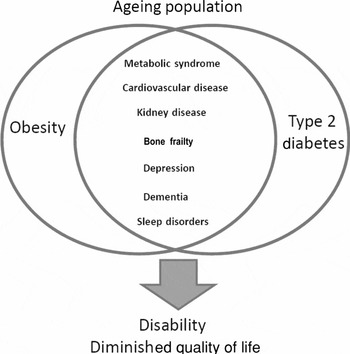
Numerous comorbidities are associated with T2DM, and when clumped together they advance the risks of morbidity, mortality, disability and diminished quality of life (Figure 1). In this section we will review the comorbidities associated with T2DM and obesity in older adults that gained prominence in the literature. We also review the disability and quality-of-life impacts associated with T2DM and obesity. Much attention in this section is given to metabolic syndrome, as this is an important and complex topic with many interrelationships with diabetes and obesity.
Comorbid conditions associated with type 2 diabetes mellitus and obesity in older adults and its impact on patients.

Obesity and T2DM
The convergence of obesity and T2DM in the older population is associated with increased risk of overall mortality and a myriad of comorbidities. In a collaborative analysis of 57 prospective studies with a collective study population of more than 900,000 subjects, it was found that each 5 kg/m2 increase in BMI was associated with 30% higher mortality in those aged 70–79 years.29 An inverse association was found between BMI and mortality among elderly men with a history of cardiovascular disease in a Sweden-based cohort study.Reference Nyholm, Merlo, Rastam and Lindblad30 However, more consistent with the literature, the relationship between BMI and all-cause mortality in older individuals tends to follow a ‘U’-shaped pattern with highest risk among underweight and obese individuals.Reference McTigue, Hess and Ziouras31
Combining overweight and obesity with T2DM significantly compounds the risk of all-cause mortality, as does the presence of the metabolic syndrome in older populations.Reference Batty, Kivimaki, Smith, Marmot and Shipley32, Reference Hillier, Rizzo and Pedula33 Comorbidities common in obesity and T2DM range from the relatively minor (e.g. sleep disorders) to severe (e.g. congestive heart failure). The presence of obesity in the older population goes hand in hand with greater risk of T2DM. In a cohort study of more than 73,000 older men and women, significant associations between obesity and a long list of ailments including knee replacement, congestive heart failure, hypertension and fatigue were found. However, the strongest association was with T2DM.Reference Patterson, Frank, Kristal and White34 Consistent with the strong association between obesity and T2DM, measures of obesity such as BMI and waist-to-hip ratio are associated with incidence of T2DM in older men and women.Reference Noale, Maggi and Marzari35
Metabolic syndrome
The metabolic syndrome comprises a cluster of risk factors for cardiovascular disease including central obesity, dyslipidaemia, raised blood pressure and glucose intolerance. Even though the metabolic syndrome started as a concept, now it is used as a tool for clinicians to detect subjects with the cluster phenomenon ultimately leading to cardiovascular disease. The metabolic syndrome is associated with significantly elevated risk for development of coronary heart disease (CHD), atherosclerosis, T2DM and some common cancers. Insulin resistance in skeletal muscle, adipose tissue and the liver are of central importance for the development of the hyperinsulinaemia and glucose intolerance associated with the syndrome. The risk factors appear to be influenced by both genetic and environmental factors, although the mechanisms leading to the development of the clustering risk factor phenomenon are poorly understood. Insulin resistance is believed to be the shared pathophysiological disturbance of the metabolic syndrome.Reference Sierra-Johnson, Johnson, Allison, Bailey, Schwartz and Turner28 Having this cluster phenomenon increases cardiovascular risk, leading eventually to cardiovascular death.
There are several definitions of the metabolic syndrome as offered by the World Health Organization, International Diabetes Federation and the National Cholesterol Education Program-Adult Treatment Panel III (ATP III). The ATP III definition36 is the most current and widely used to identify the metabolic syndrome and is described here as an example definition. The ATP III definition involves any combination of three of the following factors: abdominal obesity (waist circumference men/women) >102/88 cm, triglycerides (mg/dl) ≥ 150, HDL cholesterol (mg/dl men/women) <40/50, blood pressure (mmHg) ≥ 130/ ≥ 85, and fasting glucose (mg/dl) ≥ 110.Reference de Simone, Devereux and Chinali37 The ATP III definition does not require presence of T2DM or a measure of insulin resistance, which are potential limitations for this definition. A unified definition is warranted as the differences affect the reliability of interpretations made from scientific studies of the metabolic syndrome. For example, a Swedish cohort of elderly subjects (45% of men and 30% of women) met the criteria for the metabolic syndrome by any definition, but only 17% of men and 9% of women met the criteria of all three definitions.Reference Carlsson, Wändell, Halldin, de Faire and Hellénius38
A review of the available literature seems to show no controversy on the notion that the metabolic syndrome is an increasing health problem in the Western world. One of the latest estimates from the National Health Nutrition and Examination Survey (NHANES) 1999–2002 reported prevalence of 34.6% of the adult US population having the metabolic syndrome using the updated ATP III definition, and 39.1% when using the IDF definition.Reference Ford39 However, in adults aged 60–70 years, the US rate of the metabolic syndrome was estimated to be higher at 43.5%.Reference Yaffe, Weston, Blackwell and Krueger40 Furthermore, the ongoing obesity epidemic, coupled with a rise in other metabolic risk factors, is rapidly affecting metabolic syndrome prevalence. In a recent representative Swedish cohort of 60-year-old subjects, the prevalence was 24% in men and 19% women, which could be explained by the fact that the authors did not use the updated ATP definition and excluded all subjects with diabetes and cardiovascular disease.Reference Halldin, Rosell, De Faire and Hellenius41 A recent review of eight prospective studies and seven cross-sectional studies reported that prevalence of metabolic syndrome in an elderly population varied from 11 to 43% (median 21%) according to the WHO, and 23 to 55% (median 31%) according to the ATP III definition. Obesity and hypertension were the most prevalent individual components in this population.Reference Denys, Cankurtaran, Janssens and Petrovic42
Bone frailty and fractures
Obesity in older populations has been associated with bone frailty.Reference Blaum, Xue, Michelon, Semba and Fried43 This may be due to the condition of sarcopenia, which involves muscle loss coupled with fat gain and accompanies ageing.Reference Kennedy, Malabu, Kazi and Shahsidhar21 T2DM has been associated with risk of bone fracture,Reference Epstein and Leroith44 particularly hip fracture in women.Reference Janghorbani, Feskanich, Willett and Hu45 This increased risk of fracture in T2DM may be due to disease complications, such as neuropathy and retinopathy, which could add to the risk of falling and impair bone healing.Reference Epstein and Leroith44
Cardiovascular disease
Older age is an independent risk factor for deaths due to cardiovascular diseaseReference Klieman, Hyde and Berra46 and risk recurrent cardiovascular disease events such as myocardial infarction.Reference Giorda, Avogaro and Maggini47 It has been estimated that 84% of CHD mortality occurs in people aged 65 and older.Reference Klieman, Hyde and Berra46 The presence of T2DM in older age compounds the cardiovascular mortality risk and prevalence of hypertension, especially in women.Reference Sowers18 Based on 1999–2004 NHANES data of older patients with T2DM, 20.7% of older patients had CHD and 20.2% had prior myocardial infarction.Reference Suh, Kim, Choi and Plauschinat13 Patients with T2DM have a rate of first myocardial infarction greater than the rate of second myocardial infarction in non-diabetic patients with a prior myocardial infarction. Because of such cardiovascular risks, the ATP III has designated T2DM as a CHD equivalent.Reference Whelan and Roy48
Obesity, higher BMI and other anthropometric measures, such as waist circumference, have also been found to be associated with risk of cardiovascular disease and cardiovascular risk factors, such as hypertension and dyslipidaemia.Reference Wannamethee, Shaper, Whincup and Walker49 A France-based study estimated a 20% increased odds of CHD for every 5 kg/m2 increase in BMI.Reference Hillier, Fosse, Balkau, Simon, Eschwege and Fagot-Campagna50 After 20 years of follow-up in the British Regional Heart Study, BMI was found to be the strongest predictor of metabolic syndrome in older men.Reference Wannamethee, Shaper and Whincup51 The odds of acquiring various risk factors such as hypertension and dyslipidaemia increased with incremental BMI increases in older people.Reference Huang, Lee and Lee26, Reference Ridderstrale, Gudbjornsdottir, Eliasson, Nilsson and Cederholm52, Reference Devroey, De Swaef, Coigniez, Vandevoorde, Kartounian and Betz53
Insulin resistance has been shown to be associated with congestive heart failure (CHF),Reference Ingelsson, Sundstrom, Arnlov, Zethelius and Lind54 and the metabolic syndrome is associated with a 2.29- to 2.59-fold greater risk incidence of fatal and non-fatal cardiovascular events among older people.Reference de Simone, Devereux and Chinali37 Furthermore, T2DM, obesity and the metabolic syndrome are associated with greater risk of stroke in older people. The incidence of stroke is up to three times higher among diabetes patients and the clinical outcomes of stroke are poorer, particularly for female diabetes patients.Reference Sowers18 The presence of the metabolic syndrome in older populations is associated with incident stroke.Reference Wang, Ruotsalainen, Moilanen, Lepisto, Laakso and Kuusisto55, Reference Milionis, Rizos, Goudevenos, Seferiadis, Mikhailidis and Elisaf56 Lacunar stroke (stroke related to microvascular disease) has been found to be the most common stroke subtype in older patients with and without the metabolic syndrome.Reference Shah, Ghosh and Collier57
Kidney disease
Diabetic nephropathy is the leading cause of end-stage renal disease in the US. Based on NHANES 1999–2004 data, 31.5% of older patients had chronic renal insufficiency.Reference Suh, Kim, Choi and Plauschinat13 The prevalence and incidence of end-stage renal disease doubled in the 1994–2004 timeframe and is expected to double again in the next five to ten years as the ageing population increases.Reference Sowers18 Furthermore, overweight and obesity were found to be associated with incident chronic kidney disease after adjusting for age, sex and race.Reference Kramer, Luke, Bidani, Cao, Cooper and McGee58
Dementia
A link between obesity and T2DM and the risk of dementia appears to be emerging. BMI has been shown to be 3.6 times higher among those who developed Alzheimer's disease compared with those who did not.Reference Ryan59 In particular, abdominal obesity as measured by saggital abdominal diameter was associated with dementia risk,Reference Whitmer, Gustafson, Barrett-Connor, Haan, Gunderson and Yaffe60 although this association has been found in men and not women.Reference Kanaya, Lindquist and Harris61, Reference Elias, Elias, Sullivan, Wolf and D'Agostino62 Diabetes and the metabolic syndrome have been shown to be associated with cognitive decline.Reference Yaffe, Weston, Blackwell and Krueger40, Reference Xiong, Plassman, Helms and Steffens63, Reference Van Den Berg, Dekker and Nijpels64 Poor glycaemic control, as measured by HbA1c levels, was predicted by measures of cognitive functioning in one study after controlling for covariates such as age, sex, BMI and education.Reference Munshi, Grande and Hayes65 Contrary to other studies, Atti et al. found that older, overweight individuals had a lower risk of developing dementia compared with those classified as normal weight.Reference Atti, Palmer, Volpato, Winblad, De Ronchi and Fratiglioni66
Depression
Consistent with younger adult populations, diabetes is associated with higher prevalence of depression in older peopleReference Fitten, Ortiz and Fairbanks67 and in particular is associated with poorer glycaemic control.Reference Palinkas, Lee and Barrett-Connor68, Reference Munshi69 Interestingly, a China-based study found an inverse relationship between depressive symptoms and increases in BMI categories, after controlling for confounding in elderly people.Reference Ho, Niti, Kua and Ng70 However, depression risk more likely follows the BMI U-shaped curve as seen with mortality risk, with highest depression risk among underweight and obese individuals.
Sleeping disorders
According to a 2003 National Sleep Foundation Survey, diabetes and obesity are associated with sleep problems such as insomnia and daytime sleepiness in older adults.Reference Foley, Ancoli-Israel, Britz and Walsh71 The study authors suggested that sleep problems are secondary to diabetes and obesity comorbidities and not to ageing. T2DM has been associated with sleep-disordered breathing in menReference Tuomilehto, Peltonen and Partinen72 and short (≤ 6 h) or long (≥ 8 h) sleep duration in women.Reference Tuomilehto, Peltonen and Partinen73
Disability and diminished quality of life
T2DM, obesity and their associated comorbidities have a tremendous impact on patients who are sometimes overlooked by the ‘hard outcomes.’ It is important to acknowledge that T2DM and obesity have been associated with disability and diminished quality of life in the older population. Obesity in ageing involves a convergence of increasing fat mass, decreasing muscle mass (i.e. sarcopenia) and altered distribution of fat where fat accumulates around the abdomen, which predisposes to disability. Obesity and diabetes together have been significantly associated with lower levels of physical functioning and decreased quality of life.Reference Rejeski, Lang and Neiberg74, Reference Banegas, Lopez-Garcia and Graciani75 Diabetes independent of obesity is associated with increased motor disability, decreased performance in walking and gait, which predisposes older people to falls and decline in activities of daily living.Reference Bourdel-Marchasson, Helmer, Fagot-Campagna, Dehail and Joseph76 Overweight and obesity independent of diabetes has been shown to be associated with decline in activities of daily living,Reference Wannamethee, Shaper, Whincup and Walker49, Reference Baumgartner, Wayne, Waters, Janssen, Gallagher and Morley77, Reference Larrieu, Peres and Letenneur78 incident mobility limitationReference Houston, Ding and Nicklas79 and chronic painReference McCarthy, Bigal, Katz, Derby and Lipton80 compared with those with lower weight. Insulin resistance, a component of the metabolic syndrome, has been associated with decreased quality of life.Reference Schlotz, Ambery and Syddall81
Treatment and prevention
Interventions involving diet, exercise and weight loss can be used to both prevent and treat T2DM and obesity in the older population. Although diet, exercise and weight-loss interventions raise concerns applicable to ageing that must be managed, generally these interventions are well tolerated and improve health in older adults.
Diet
Dietary interventions are fundamental in preventing or treating T2DM and/or obesity. Based on a review by Everitt et al.,Reference Everitt, Hilmer and Brand-Miller82 diets that emphasize high fibre and whole grains with low glycaemic index are associated with lower risk of T2DM and improved insulin sensitivity. In a study of insulin-treated veterans with T2DM, Murata et al.Reference Murata, Shah, Duckworth, Wendel, Mohler and Hoffman83 reported that subjects who adhered the least to ADA dietary recommendations had the poorest metabolic control compared with those who were better adherers. There were significant differences in terms of HbA1c, total cholesterol, serum triglycerides and BMI between the groups classified as ‘low’ adherers compared with ‘intermediate’ adherers. Interestingly, one study found an association between eating meals irregularly and presence of metabolic syndrome components.Reference Sierra-Johnson, Unden and Linestrand84 Some practical dietary advice is offered here to help thwart the development of T2DM and its associated cardiovascular risk factors (adapted from Denny, 2008):Reference Denny20
1 Eat plenty of foods rich in starch and fibre, such as bread, rice, pasta, cereals, potatoes, vegetables, beans, lentils, peas, oats and fruit.
2 Cut down on salt in the diet by limiting manufactured foods that are high in salt and limit salt intake in seasoning foods.
3 Eat foods rich in potassium, such as bananas, tomatoes and avocados.
Exercise
Relatively healthy older adults who are at increased risk of cardiovascular disease are likely to benefit from diagnosis of obesity and initiation of lifestyle interventions.Reference McTigue, Hess and Ziouras31 In older people, exercise and physical activity have been shown to lower the risk for metabolic syndrome,Reference Halldin, Rosell, De Faire and Hellenius41, Reference Haslam85 lower blood pressureReference Haslam85, Reference Reeder, Chad and Harrison86 and reduce the incidence of diabetes and cardiovascular disease mortality among people with diabetes.Reference Haslam85 The American Geriatrics Society recommends a goal for most patients of 30–45 minutes of aerobic activity three or more times a week.Reference Grant and Meigs87 Physical activity improves insulin resistance largely by increasing rate of glucose uptake in skeletal muscle, where skeletal muscle has a metabolic rate about eight times higher than other lean body tissues.Reference Kennedy, Malabu, Kazi and Shahsidhar21, Reference Grant and Meigs87 Mere physical activity is better than nothing but exercise is ideal for significant health improvements. According to the Health, Ageing and Body Composition study, adults between the ages of 70 and 79 who participated in higher intensity exercise, such as jogging, swimming or aerobic dance, had better physical functioning than those who were only physically active.Reference Brach, Simonsick, Kritchevsky, Yaffe and Newman88 Ideal exercise programmes target the major muscle groups of the body and emphasize endurance activity for lower limbs and resistance exercise for upper limbs.Reference Kennedy, Malabu, Kazi and Shahsidhar21
Weight loss
The combination of dietary and exercise interventions aids in weight loss. Weight loss in older, obese adults helps reduce diabetes and metabolic syndrome-related morbidity and mortality. Weight patterns in adulthood are predictors of diabetes and metabolic syndrome onset later in life. Data from the Glasgow Alumni and British Women's Heart and Health studies indicate that being overweight in young and later adulthood were associated with a three and a half- to fourfold increased risk of T2DM.Reference Jeffreys, Lawlor and Galobardes89 Wannamethee and colleaguesReference Wannamethee, Shaper and Whincup51 assessed the impact of modifiable risk factors on the risk of developing metabolic syndrome in older men based on the British Regional Heart Study. The study found that taking up physical activity and losing weight in the previous three years of follow-up were associated with reduction in risk of metabolic syndrome. Benefits of 10% weight loss in older individuals may include a 20% reduction in premature mortality, 30% reduction in diabetes-related deaths, 10 mmHg reduction in systolic and diastolic blood pressure, 50% reduction in fasting glucose and 10% reduction in total cholesterol.Reference Haslam85 Weight loss in older obese adults has also shown to improve pancreatic functionReference Villareal, Shah, Banks, Sinacore and Klein90 and decrease the prevalence of metabolic syndrome.Reference Villareal, Miller, Banks, Fontana, Sinacore and Klein91 When designing a weight-loss programme, it is important to incorporate exercise coupled with resistance training, as resistance training helps attenuate loss of lean body massReference Dunstan, Daly and Owen92, Reference Frimel, Sinacore and Villareal93 and bone mineral density.Reference Daly, Dunstan, Owen, Jolley, Shaw and Zimmet94
Diet, exercise and weight loss – ‘before you begin’
We recommend three focus areas to address before starting a weight-loss programme involving a diet and exercise programme in older adults with T2DM and/or obesity:
1 Evaluate cardiovascular status. Changes in cardiovascular status are common with ageing and therefore a comprehensive physical examination, review of medications being taken and overall health status evaluation should be undertaken before beginning any exercise programme.Reference Klieman, Hyde and Berra46
2 Monitor bone density. A randomized, controlled trial study by Villareal and colleaguesReference Villareal, Banks, Patterson, Polonsky and Klein95 assessed the impact of exercise and weight loss in obese, frail, older adults and found that bone mass decreased significantly in the exercise and weight-loss group compared with the control group. This suggests a need to monitor bone mineral density in obese, older people and consider additional therapeutic interventions to reduce the risk of bone loss. In a review of counselling-based interventions with calorie restriction, the inclusion of moderate physical activity may have contributed to reduced risk of bone loss.Reference McTigue, Hess and Ziouras31
3 Teach proper foot care. Neuropathy is the most commonly experienced long-term complication of T2DM. It has been found that the incidence of new foot ulceration is >2% for people with diabetes and as high as 7.2% among those with neuropathy.Reference Bowman96 Before encouraging patients to be physically active, it is important to engage patients in proper foot care to prevent foot ulceration and further disability.
Other treatment considerations
Older adults are increasingly utilizing pharmacological treatment with oral antihyperglycaemic agents and with good results in terms of glycaemic control. Use of oral antihyperglycaemic agents increased from 42.3 to 58%, and the use of oral antihyperglycaemic agents in combination with insulin increased from 2.2 to 8.9% in the T2DM population aged 65 years or more, based on NHANES 1988–1994 and NHANES 1999–2004 data. The mean HbA1c levels significantly decreased from 7.6 to 7.1% in this time period.Reference Suh, Kim, Choi and Plauschinat13 However, when considering pharmacological treatment options, it is important to weigh the benefits of intensive glycaemic control against the risks.
T2DM medication usage is the primary cause of hypoglycaemia, a potentially serious adverse event involving decreased blood glucose concentrations.Reference Amiel, Dixon, Mann and Jameson97 Hypoglycaemia is a major concern among users of sulphonylureas, a class of commonly prescribed oral antihyperglycaemic drugs. Sulphonylurea users aged 70 years or more have been estimated to be more than three times as likely to suffer a hypoglycaemic event compared with non-users of the drug class.Reference Bodmer, Meier, Krahenbuhl, Jick and Meier98 Older age is a factor associated with increased risks of hypoglycaemia and decreased subjective awareness of hypoglycaemia symptoms, which typically include co-ordination problems, blurred or double vision and slurred speech.Reference Munshi69, Reference Amiel, Dixon, Mann and Jameson97 Perhaps due to impaired ability to respond hormonally to hypoglycaemia, elevate glucose levels and activate hyperadrenergic warning signals, older individuals are more likely to experience this ‘hypoglycaemia unawareness,’ which is especially dangerous at night during sleep.Reference Rizvi99
Hypoglycaemia and its association with dementia is a rising area of concern. Hypoglycaemia incidence has been 50% higher in geriatric patients with documented cognitive dysfunction compared with patients with less cognitive dysfunction.Reference Munshi69 In a recently published cohort study of older T2DM patients, it was found that patients with single or multiple episodes of severe hypoglycaemia had a graded increase in the risk of incident dementia – with an adjusted hazard ratio of 2.60 in patients with three or more episodes of hypoglycaemia compared to patients with no episodes of hypoglycaemia.Reference Whitmer, Karter, Yaffe, Quesenberry and Selby100 While most hypoglycaemia episodes are not severe, severe hypoglycaemia can result in permanent neurological damage including neural cell death, which may accelerate the process of dementia.Reference Whitmer, Karter, Yaffe, Quesenberry and Selby100 Because of hypoglycaemia risk, it may be less reasonable to set tight glycaemic target goals in older adults with diabetes-related complications, life-limiting comorbidities or cognitive impairment. These patients may be more likely to benefit from reduced risk of microvascular complications.Reference Klieman, Hyde and Berra46 For geriatric diabetes patients with shorter life expectancies (<5 years), therapeutic interventions may be best suited to focus on control of cardiovascular risk.Reference Marquess101
Bariatric surgery may be a treatment consideration despite conflicting evidence on survival rates in older adults. A study by Perry et al.Reference Perry, Hutter, Smith, Newhouse and McNeil102 compared survival rates and the presence of comorbid conditions between morbidly obese subjects who underwent bariatric surgery and those who did not. The 30-day post-surgery mortality was 1.55% for the group aged 65 years and older compared with 0.53% for the non-surgical group. However, this survival disadvantage in the surgical group was overcome at 11 months of follow-up with significant improvements in comorbidity rates for diabetes, hypertension, hyperlipidaemia and coronary heart disease.
Opportunities for improvement
Several opportunities for improvement in the treatment and prevention of obesity and T2DM in older adults emerged in the literature.
Obesity assessment
Because of the risks for developing T2DM that obesity presents, properly diagnosing obesity is critical in the physician–patient interaction so that it can be treated. A study by Tai-SealeReference Tai-Seale, Tai-Seale and Zhang103 analysed video recordings of elderly patients’ visits with their health care providers and found that of the visits with visibly obese patients, only 32.86% involved discussions related to weight. If the topic of weight was discussed, the average time spent discussing the subject was less than two minutes in duration. When assessing an older patient for obesity, focusing on measures of abdominal adiposity may be most efficient. Older age groups tend to have lower BMI but increased waist circumference compared with younger groups,Reference Sanchez-Castillo, Velasquez-Monroy and Lara-Esqueda22 due to the shifting distribution of body fat. Abdominal obesity is associated with myocardial infarction,Reference Nicklas, Penninx and Cesari104 inflammation,Reference Sowers18, Reference Kennedy, Malabu, Kazi and Shahsidhar21 hypertension, dyslipidaemia, endothelial function,Reference Sowers18 insulin resistance,Reference Wannamethee, Shaper, Morris and Whincup105 and hyperglycaemic relapse.Reference Blaha, Gebretsadik, Shintani and Elasy106 Waist circumference is a measure of abdominal obesity more strongly associated with risk factors such as presence of the metabolic syndromeReference Wannamethee, Shaper, Morris and Whincup105 and cardiovascular risk factorsReference Huang, Lee and Lee26 compared with waist-to-hip ratio and BMI, respectively.
Patient adherence to medication and guidelines
A Germany-based study by Raum and colleaguesReference Raum, Lietzau, Stegmaier, Brenner and Rothenbacher107 found that in older people with T2DM, 86% received anti-hypertensive pharmacotherapy, yet only 7.5% had blood pressure under 130/80 mmHg as recommended by the American Heart Association and American Diabetes Association. This demonstrates a gap between scientific recommendations and management of cardiovascular risk factors, perhaps due to issues with patient medication adherence. Doucet et al.Reference Doucet, Druesne and Capet108 reported in a France-based study of elderly patients with diabetes that 49% of patients did not know which of their prescription medications were for diabetes treatment, only 25% of patients had been informed about diabetes and 20% said they were not following their prescribed diet. An Australia-based study of older adults with and without diabetes by Barclay and colleaguesReference Barclay, Brand-Miller and Mitchell109 found that individuals with diabetes were eating more protein and fat and less carbohydrates and fibre than recommended for optimal diabetes management. Less than 5% of those with diabetes were meeting the dietary guidelines for fibre. This suggests that more emphasis on increasing dietary fibre is necessary and that sugar-intake reductions should not be made at the expense of other dietary goals.
Patient self-care
T2DM management requires patients to be primarily responsible for their own care. To that end, there are a variety of psychosocial interventions created for diabetes care in older populations, such as case management, education and/or training, exercise, goal setting, support groups and telehealth. Several studies on the efficacy of psychosocial interventions have reported improved health outcomes, such as reduction in HbA1c. However, behavioural research and psychosocial interventions remain an area in need of further research.Reference DeCoster110
Designing self-management programmes to overcome cognitive impairment is important to older age groups. Cognitive dysfunction presents in almost twice as many patients older than 70 years of age with diabetes than those without and has been associated with poorer glycaemic control.Reference Munshi69 A study by Vedhara and colleaguesReference Vedhara, Wadsworth and Norman111 studied the effects of memory cues on habitual prospective memory, a type of memory that may be relevant to medication adherence, in older adults with T2DM. The study found that habitual prospective memory performance was optimal for the group that received both visual and auditory memory cues as opposed to those groups receiving only visual or auditory cues. Knowledge like this may help inform medication adherence interventions. Diabetes self-management teaching programmes that focus less on theoretical disease knowledge and more on practice of insulin injection and training in case of hypoglycaemia with a focus on repetition of these topics have shown better treatment satisfaction among elderly patients with impaired cognitive function.Reference Braun, Muller, Muller, Leppert and Schiel112 Finally, finding ways to manage the time requirements needed for effective self-care is important as the time required to follow the ADA's T2DM self-care recommendations may take four hours per day for older adults and may also require caregiver help.Reference Russell, Suh and Safford113
Conclusions
The prevalence of T2DM and obesity will continue to rise with our increasingly ageing population. To prevent and treat the many associated comorbidities and quality of life impacts, a call to action is necessary. Although there is no silver bullet, we know that dietary, exercise and weight-loss intervention strategies are vastly effective. However, in order for these strategies to work, time and effort is required by both patient and physician. If all parties responsible in patient care take action, a change in lifestyle can lead to longer, healthier lives in older adults.
Conflicts of interest
All the authors are full-time employees of Eli Lilly and Company, maker of several diabetes products.
Acknowledgements
The authors would like to sincerely thank Karen Shields for her editorial assistance.