Introduction
Stress is a nonspecific response of a body to adverse stimuli, whereas any agent that produces stress is known as a stressor (Selye, Reference SELYE1976). Therefore, any type of stress exhibits a biological response or reaction to stimuli that adversely affect normal physiological homeostasis. Several environmental factors, such as thermal irradiation, air temperature, sunlight, humidity, and movement can cause this imbalance (Lara and Rostagno, Reference LARA and ROSTAGNO2013). Heat stress in birds results in reduced feed intake and ultimately reducing growth performance. Therefore, it has been an area of interest among poultry producers and the scientific community for several decades, especially in tropical, sub-tropical and arid parts of the world (Akbarian et al., Reference AKBARIAN, MICHIELS, DEGROOTE, MAJDEDDIN, GOLIAN and DE SMET2016). A number of physiological consequences associated with heat stress include decline in feed intake, rise in body temperature, variable blood pH due to electrolyte imbalances, suppressed immunity, alteration of reproductive and endocrine functions, less energy available for cells, imbalances in digestibility and metabolism of several nutrients, disturbed gut microflora and intestinal mucosa, and upregulated circulatory corticosterone and cortisol levels (Lara and Rostagno, Reference LARA and ROSTAGNO2013; Renaudeau et al., Reference RENAUDEAU, COLLIN, YAHAV, DE BASILIO, GOURDINE and COLLIER2012; Syafwan et al., Reference SYAFWAN, KWAKKEL and VERSTEGEN2011; Yahav, Reference YAHAV2009).
Recently, several studies revealed that heat stress induces oxidative stress, and suppresses host anti-oxidant defence systems (Sahin et al., Reference SAHIN, ONDERCI, SAHIN, GURSU and KUCUK2003; Sahin, Reference SAHIN2015). Heat stress decreases antioxidant status, which is one of the most important physiological changes in response to high ambient temperature in poultry birds that increases oxidative stress and immune suppression (Altan et al., Reference ALTAN, PABUCCUOGLU, ALTAN, KONYALIOGLU and BAYRAKTAR2003; Sahin et al., Reference SAHIN, ONDERCI, SAHIN, GURSU and KUCUK2003; Lin et al., Reference LIN, DECUYPERE and BUYSE2006; Sahin, Reference SAHIN2015). Increased levels of metabolites and radicals including nitrogen/reactive, oxygen/chlorine species, collectively known as reactive oxygen species (ROS) under stress poses serious physiological challenge as these substances are extremely reactive and can alter cellular constituents, like lipids, proteins, and nucleic acids to induce oxidative stress (Halliwell and Whiteman, Reference HALLIWELL and WHITEMAN2004; Davies, Reference DAVIES1995).
Recently, use of herbal plants and their phytochemicals have gained popularity in the poultry industry to manage heat stress and improve the performance of poultry birds (Saeed et al., Reference SAEED, BALOCH, WANG, SOOMRO, BALOCH, BUX, ARIAN, FARAZ and ZAKRIYA2015; Reference SAEED, ABD EL-HACK, ALAGAWANY, ARAIN, ARIF, MIRZA, NAVEED, CHAO, SARWAR, SAYAB and DHAMA2017a; Reference SAEED, ABD ELHACK, ARIF, ELHINDAWY, ATTIA, MAHROSE, BASHIR, SIYAL, ARAIN and FAZLANI2017b; Reference SAEED, ARAIN, ARIF, LAGAWANY, ABD EL-HACK, KAKAR, MANZOOR, ERDENEE and CHAO2017c; Reference SAEED, BABAZADEH, ARIF, ARAIN, BHUTTO, SHAR, KAKAR, ANZOOR and CHAO2017d; Reference SAEED, NAVEED, ARAIN, ARIF, EL-HACK, ALAGAWANY, SIYAL, SOOMRO and SUN2017e; Reference SAEED, XU, REHMAN, ARAIN, SOOMRO, ABD EL-HACK, BHUTTO, ABBASI, DHAMA, SARWAR and CHAO2017f; Dhama et al., Reference DHAMA, LATHEEF, MANI, SAMAD, KARTHIK, TIWARI, KHAN, ALAGAWANY, FARAG, ALAM, LAUDADIO and TUFARELLI2015). Lycopene is a predominant carotenoid pigment which is universally found in fruits and vegetables, with tomatoes and their products being key sources. Lycopene is one of the carotenoids belonging to a family of compounds that are only found in microorganisms and plants. It has great potential to maintain oxidative balance in host body through many activities, including scavenging reactive oxygen species (ROS) or upregulating production of antioxidant enzymes, such as superoxide dismutase (SOD), glutathione peroxidase (GSH-Px) and catalase (CAT) (Martinez et al., Reference MARTINEZ, RODRIGUEZ-GIRONES, BARBOSA and COSTAS2008; Blokhina et al., Reference BLOKHINA, VIROLAINEN and FAGERSTEDT2003).
The health promoting and antioxidant potentials of lycopene have been known since the late 1950s (Lingen et al., Reference LINGEN, ERNSTER and LINDBERG1959; Lauretani et al., Reference LAURETANI, SEMBA, DAYHOFF-BRANNIGAN, CORSI, DI IORIO, BUIATTI, BANDINELLI, GURALNIK and FERRUCCI2008). Because lycopene contains a high amount of conjugated dienes, it has a scavenging ability which is twice than α-tocopherol and ten times higher than β-carotene (Palozza et al., Reference PALOZZA, CATALANO, SIMONE and CITTADINI2012a). A study conducted by Sahin et al. (Reference SAHIN, ORHAN, TUZCU, SAHIN and KUCUK2008) revealed that lycopene-rich tomato powder significantly improved feed intake, weight gain, and decreased concentration of malondialdehyde (MDA) in muscles, liver, and serum of Japanese quail reared under heat stress. Sahin et al. (Reference SAHIN, ONDERCI, SAHIN, GURSU, GURSU and KUCUK2006a; Reference SAHIN, SAHIN, ONDERCI, KARATEPE, SMITH and KUCUK2006b) reported similar effects of dietary lycopene on antioxidant status and growth performance in heat stressed Japanese quails. Similarly, in broilers under heat stress, dietary inclusion of lycopene-enriched tomato by-product at a level of 5% in feed improved overall growth performance and, even at lower levels (1%), enhanced total antioxidant capacity and lowered MDA level (Selim et al., Reference SELIM, YOUSSEF, ABDEL-SALAM and NADA2013).
A few studies have reported that heat stress reduces production of antibodies and relative weight of lymphoid organs (Lara and Rostagno Reference LARA and ROSTAGNO2013; Habibian et al., Reference HABIBIAN, GHAZI, MOEINI and ABDOLMOHAMMADI2014). However, there is limited literature is available on immunomodulatory effects of tomato-derived lycopene in heat stressed birds, although broilers fed tomato puree have shown improved antibodies titre against infectious bronchitis virus (IBV) and Newcastle disease virus (NDV) in heat stressed conditions (Selim et al., Reference SELIM, YOUSSEF, ABDEL-SALAM and NADA2013). The aim of this review is to highlight the importance of lycopene and its enrich by-products as a potent treatment of heat stress for poultry.
History, chemical structure and various sources of lycopene
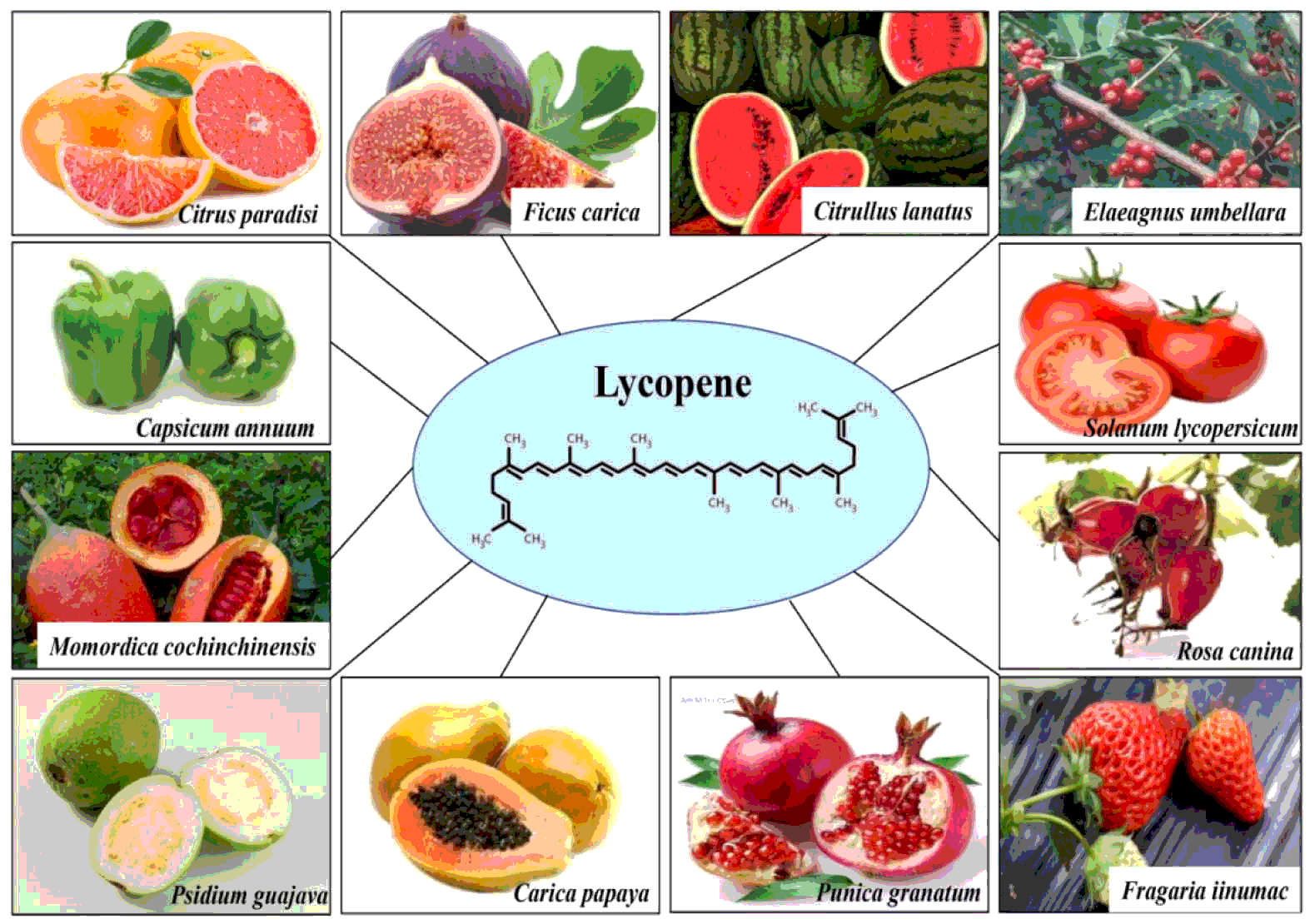
Lycopene is a carotenoid extensively distributed in nature. Millared first time isolated it in 1876 and named it ‘soanorubin’, while Schunk in 1903 again isolated it in pure form and renamed it as lycopene (Vogele, Reference VOGELE1937). Tomatoes, particularly deep red varieties, and their by-products are richest sources of lycopene, although a few other fruits also contain lycopene, such as guava, papaya, apricots, pink grapefruit and watermelon, as listed in Figure 1 (Tanaka et al., Reference TANAKA, SHNIMIZU and MORIWAKI2012). Lycopene is a dark red colour pigment and waxy in nature and it melts at 168°C whereby it changes into a crystal form.
Lycopene exists in ripe tomatoes as elongated needle-like crystals, with a molecular formula of C40H56. Basically, it is an open chain polyene containing 13 double bonds ( Figure 1 ). Usually, lycopene is longer than other carotenoids and has no vitamin A-like activity because of its symmetrical planarity (Srivastava and Srivastava, Reference SRIVASTAVA and SRIVASTAVA2015).
Chemical structure and various source of lycopene.

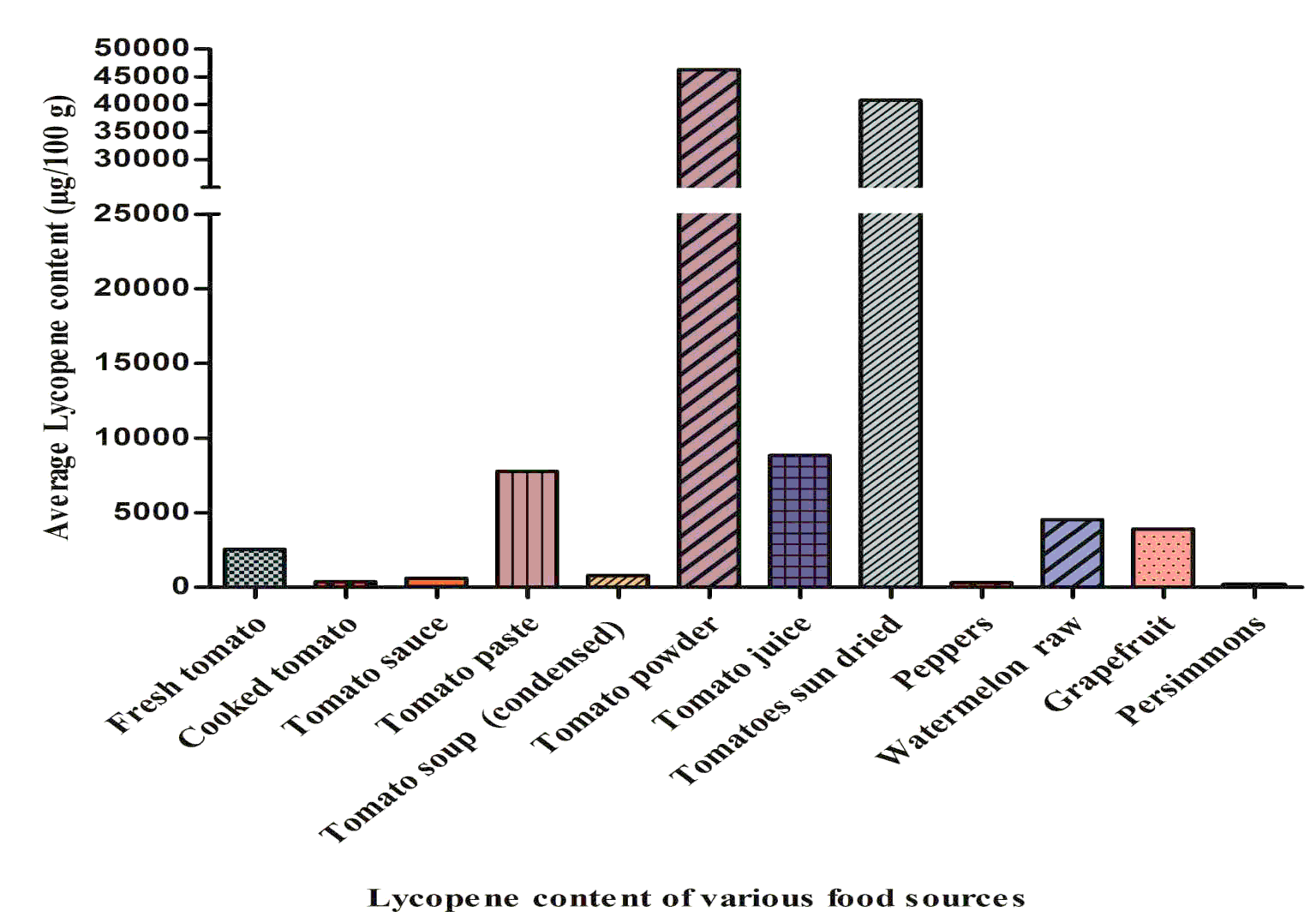
More than 700 carotenoids have been discovered so far, among which only 50 are metabolisable in animals and lycopene is one of them (Srivastava and Srivastava, Reference SRIVASTAVA and SRIVASTAVA2015). The concentration of lycopene in various fruits and vegetables is shown in Figure 2 (Rao and Agarwal, Reference RAO and AGARWAL1999; Anon, 2012).
Lycopene content in various food sources.

Effect of heat stress on immune response
Immune modulation is mediated through a complex system that involves endocrine, nervous and immune systems. Recently several published studies have evaluated responses under heat stress in poultry and suggested that heat stress suppresses immunity and overall production performance (Bartlett and Smith, Reference BARTLETT and SMITH2003; Niu et al., Reference NIU, LIU, YAN and LI2009; Ghazi et al., Reference GHAZI, HABIBIAN, MOEINI and ABDOLMOHAMMADI2012). Liver weight decreased when laying hens were exposed to chronic heat stress (Felvergant et al., Reference FELVERGANT, MACK, DENNIS, EICHER and CHENG2012), and Bartlett and Smith, (Reference BARTLETT and SMITH2003) reported that immune biomarkers such as antibodies, IgG and IgM were downregulated in heat stressed broilers. Aengwanich, (Reference AENGWANICH2010) observed a decline in weight of immune organs, especially the bursa of Fabricius, with decreased numbers of circulating lymphocytes in bursal regions in broilers under heat stress. Normally metabolic attempts to maintain thermal homeostasis under high ambient temperatures produces excessive ROS, and so the birds undergo oxidative stress physiologically, producing antioxidant enzymes and heat shock proteins (HSP) to ameliorate adverse effects of ROS (Droge, Reference DROGE2002). The elevated levels of HSP70 have been seen in laying hens and broilers under heat stress (Marketon and Glaser, Reference MARKETON and GLASER2008; Gu et al., Reference GU, HAO and WANG2012).
Oxidative stress and lycopene
Lycopene protects cells and tissue damage caused by ROS (Palozza et al., Reference PALOZZA, PARRONE, SIMONE and CATALANO2011) and has been ranked as more potent in this activity compared to other carotenoids such as α-tocopherol, ß-cryptoxanthin, β-carotene, lutein and zeaxanthin (Heber and Lu, Reference HEBER and LU2002). The most important biological role of lycopene is to protect DNA damage from oxidative stress by oxygen-quenching and inhibiting mutation that can cause chronic diseases (Goralczyk and Siler, Reference GORALCZYK and SILER2003). Because of the elongated structure and conjugated double bonds, lycopene is considered as the strongest free radical and single oxygen scavenger among 600 naturally occurring carotenoids (Van Breemen and Pajkovic, Reference VAN BREEMEN and PAJKOVIC2008).
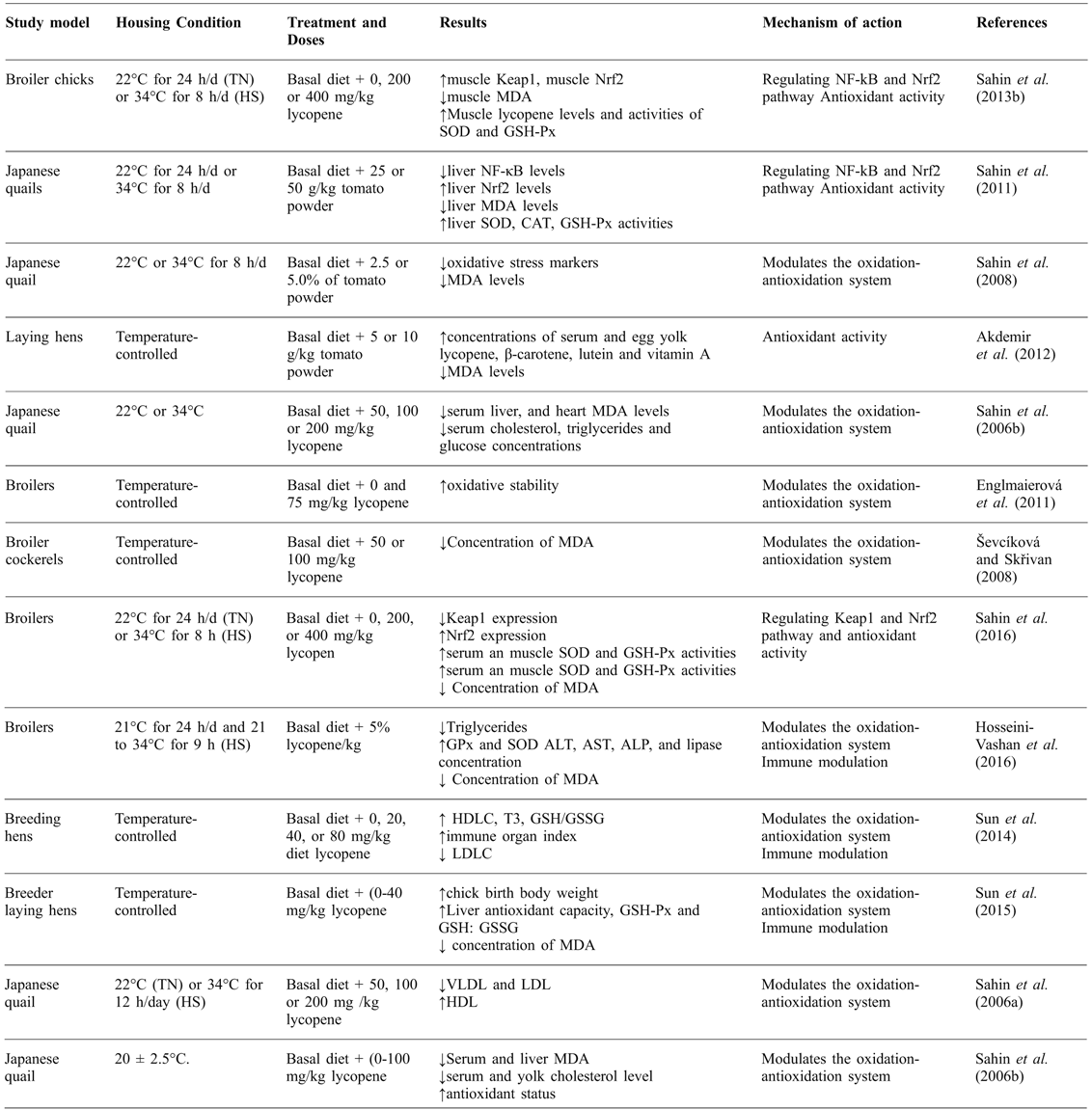
Lycopene mediates cell growth regulation, immune response, and modulation of phase I and II detoxifying enzymes and gene transcription (Palozza et al., Reference PALOZZA, CATALANO, SIMONE, MELE and CITTADINI2012b). It triggers production of cellular enzymes, for example, glutathione S-transferase (GST), SOD, and quinone reductase through the activation of so-called antioxidant response element (ARE) (Van Breemen and Pajkovic, Reference VAN BREEMEN and PAJKOVIC2008; Sahin et al., Reference SAHIN, ORHAN, AKDEMIR, TUZCU, ALI and SAHIN2011; Reference SAHIN, ORHAN, TUZCU and SAHIN2013b). Many studies have demonstrated that lycopene is a potent antioxidant agent to ameliorate adverse effects of heat stress through several mechanisms ( Table 1 ).
A summary of studies with lycopene on heat stress related cellular activities in various poultry species.

↑: increase, ↓: decrease, TN: thermo-neutral, HS: heat stress, MDA: malondialdehyde, SOD: Superoxide dismutase, ALT: Alanine transaminase, AST: Aspartate transaminase, ALP: Alkaline phosphatase, HDLC: high density lipoprotein cholesterol, T3: triiodothyronine, GSH/GSSG: reduced glutathione to oxidised glutathione ratio, VLDL: Very-low-density lipoprotein, LDL: low-density lipoprotein, HDL: high -density lipoprotein.
Several enzymes such as NQO1, GST, HO-1 and SOD are considered as antioxidant and detoxifying enzymes also known as phase II cytoprotective enzymes. The promoter regions of inducible genes encoding phase II enzymes contain ARE, which after binding with Nrf2, leads to increased expression of these genes. Lycopene interrupts binding of Nrf2/Keapl liberating Nrf2 which then transported to the nucleus and upregulate phase II enzymes expression in heat stressed birds. Expression of NFκB is upregulated while expression of Nrf2 is downregulated in birds under heat stress ( Figure 3 ). In recent years, several studies have proved that dietary lycopene predominantly work as an anti-stress agent by triggering Nrf2/ARE transcription systems to alleviate oxidative stress and maintain health in poultry ( Table 1 and Figure 3 ). Treatment with lycopene rich tomato powder downregulated activity and levels of NF-κB and correlated proteins inhibiting inflammation in broilers exposed to heat stress (Sahin et al., Reference SAHIN, ORHAN, AKDEMIR, TUZCU, ALI and SAHIN2011).
Regulation of NF-kB and Nrf2 signalling pathways by lycopene in heat-stressed poultry.

Antioxidant effects of lycopene in broilers
Excessive heat causes oxidative stress in broilers which is a key factor that contributes to decrease production performance and increase risk of pathological disorders (Mujahid et al., Reference MUJAHID, YOSHIKI, AKIBA and TOYOMIZU2005; Reference MUJAHID, AKIBA and TOYOMIZU2007). Soybean and maize-based ingredients are generally used in diet formulations, and these ingredients do not contain sufficient antioxidants required to mitigate heat stress and oxidative stress. Therefore, dietary supplementation of antioxidants like lycopene from alternative sources is often needed to ameliorate oxidative stress. Studies in broilers showed that lycopene effectively enhanced levels of antioxidant enzymes (SOD, GSH-Px) and significantly decreased MDA concentration in muscles and serum. It modulated stress-related nuclear transcription factors in broilers exposed to heat (Leal et al., Reference LEAL, SHIMADA, RUIZ and GONZALEZ DE MEJIA1999; Sahin et al., Reference SAHIN, ORHAN, AKDEMIR, TUZCU, ALI and SAHIN2011; Reference SAHIN, ORHAN, TUZCU, SAHIN, HAYIRLI, BILGILI and KUCUK2016). Dietary supplementation of dried tomato pomace at the level of 5% enhanced growth performance, decreased HDL cholesterol and triglycerides levels in broilers exposed to higher thermal temperature, and activities of SOD and GPx improved while MDA concentration decreased (Hosseini-Vashan et al., Reference HOSSEINI-VASHAN, GOLIAN and YAGHOBFAR2016). It has been reported that antioxidants derived from natural sources quench free radicals, improve antioxidant enzyme activities and reduce lipid peroxidation of AAPH-challenged broiler chicken erythrocyte cells (Zhang et al., Reference ZHANG, HOU, AHMAD, ZHANG, ZHANG and WANG2014). In addition, lycopene supplementation reduced cholesterol level in broiler meat (Englmaierová et al., 2011).
Antioxidant effects of lycopene in layers
The adverse effects of high ambient temperature on the performance of laying hens have been well documented which include deterioration of feed intake, egg quality, egg production, egg weight and shell quality (Deaton et al., Reference DEATON, REECE, MCNAUGHTON and LOTT1981; Marsden and Morris, Reference MARSDEN and MORRIS1987). Heat stress decreases the immunity status of birds through disruption of synthesis of antibodies, ultimately increasing risk of diseases incidence leading to morbidity and mortality losses (Zulkifli et al., Reference ZULKIFLI, DUNNINGTON, GROSS and SIEGEL1994). Many studies have been conducted on the effects of antioxidants like lycopene in layers and revealed that dietary inclusion of pure lycopene or tomato powder not only improved oxidative status of laying birds but also vitamin levels in circulating blood and egg yolk (Karadas et al., Reference KARADAS, GRAMMENIDIS, SURAI, ACAMOVIC and SPARKS2006; Sahin et al., Reference SAHIN, OZERCAN, ONDERCI, SAHIN, KHACHIK, SEREN and KUCUK2007; Olson et al., Reference OLSON, WARD and KOUTSOS2008; Akdemir et al., Reference AKDEMIR, ORHAN, SAHIN, SAHIN and HAYIRLI2012). Moreover, it was observed that dietary supplementation of tomato powder effectively transferred carotenoid contents to egg yolk, which improved egg oxidative stability and yolk colour (Akdemir et al., Reference AKDEMIR, ORHAN, SAHIN, SAHIN and HAYIRLI2012). Similarly, in ovo inclusion of lycopene in hatching eggs, improved day-old chick weight as well as organ weight index, while dietary supplementation changed blood HDL cholesterol level and intestinal mucosal development (Sun et al., Reference SUN, CHEN, WANG, MA, XIE, GAO, CHEN, ZHANG and BI2015). Studies have demonstrated that dietary lycopene is a potent antioxidant for enhancing the antioxidant defence in LPS-induced oxidative stressed in laying hens and can improve egg quality and yolk colour (Yannakopoulos et al., Reference YANNAKOPOULOS, TSERVENI-GOUSI and CHRISTAKI1992; Dotas et al., Reference DOTAS, ZAMANIDIS and BALIOS1999; Sun et al., Reference SUN, MA, ZHANG, SU, XIE, GAO, ZHU, SHU and BI2014).
Antioxidant effects of lycopene in quail
Japanese quail (Coturnix coturnix Japonica) are commonly used as a suitable and effective research model for other avian species (Minvielle, Reference MINVIELLE2009; Ono et al., 2009). Early studies evaluated antioxidant effects of lycopene in Japanese quails, which revealed that lycopene enriched tomato powder mitigated heat stress through a reduction of MDA concentration in blood and liver (Sahin et al., Reference SAHIN, ORHAN, TUZCU, SAHIN and KUCUK2008). The concentration of MDA in liver, serum, and heart linearly decreased in quails with increasing dietary lycopene supplementation (Sahin et al., Reference SAHIN, SAHIN, ONDERCI, KARATEPE, SMITH and KUCUK2006b; Reference SAHIN, SAHIN, ONDERCI, KARATEPE, SMITH and KUCUK2006c). Dietary supplementation linearly improved oxidative stress markers such as Keap1expresion and Nrf2 expressions (Sahin et al., Reference SAHIN, ORHAN, SMITH and SAHIN2013a). Additionally, a negative correlation was found between liver MDA level and activities of antioxidant enzymes (Sahin et al., Reference SAHIN, ORHAN, TUZCU and SAHIN2013b). Lycopene supplementation at the level of 200 mg/kg ameliorated impairments induced by heat stress and minimised the negative impact of stress in Japanese quail reared under high ambient temperatures (Sahin et al., Reference SAHIN, SAHIN, ONDERCI, KARATEPE, SMITH and KUCUK2006c).
Conclusions
The poultry industry is facing numbers of challenges, especially in tropical and subtropical countries, to prevent oxidative stress-related issues posed by heat stress in a competitive price and quality consumer market. Lycopene is one of the powerful promising natural antioxidants that can mitigate adverse effects of heat stress. Several in vitro, animal, and human studies have shown that lycopene induces anti-stress activities through many ways including quenching of ROS, induction of phase II cytoprotective enzymes and inhibition of several signalling pathways. Current studies reviewed have shown that lycopene possesses anti-stress properties however, further research on a molecular basis are needed to find out the molecular mechanism in various poultry models to validate the usefulness of lycopene as a potent antioxidant agent.
Conflict of interests
There were no conflicts of interests.
Acknowledgment
All the authors of the manuscript thank and acknowledge their respective Universities and Institutes.