Introduction
The Risk-Reduction Framework is provided for use in describing the processes and structuring the evaluations of interventions directed at mitigating the risks that a hazard will produce a disaster or to facilitate recovery from a disaster. Risk is the likelihood that something will happen and the likely consequences that would result if it did occur.Reference Birnbaum, Daily, O’Rourke and Loretti 1 Risk is a status or condition. Risk-reduction consists of interventions (actions) directed at decreasing a risk. In terms of a disaster, risk-reduction interventions may be directed at decreasing any of the risks in the Risk Cascade.Reference Birnbaum, Daily, O’Rourke and Loretti 1 , Reference Birnbaum, Loretti and Daily 2 Therefore, risk-reduction interventions seek to mitigate the risk that a hazard will produce an event (hazard mitigation) or to build resilience to an event by decreasing the risks that: (1) an event will result in a disaster; (2) the damages sustained from one event will result in another event; and/or (3) the responses to the compromised function will be inadequate to prevent further damages or return the functions of an affected community to their respective pre-event levels. Capacity building consists of interventions that increase resilience (absorbing and/or buffering and/or response capacities), and thus, decrease vulnerability to a future event or facilitate recovery of essential functions to their respective pre-event state.
Resilience is the ability of a system, community, or society exposed to an event to resist, absorb, accommodate to, and recover from the effects of the event in a timely and efficient manner.Reference Birnbaum, Loretti and Daily 2 In terms of an emergency or a disaster, resilience is comprised of the absorbing, buffering, and response capacities of a community or any, some, or all of its components (Societal Systems).Reference Birnbaum, Daily, O’Rourke and Loretti 1 Vulnerability is the degree to which people, property, resources, systems, and cultural, economic, environmental, and social activities are susceptible to harm, degradation, or destruction on being exposed to a hostile agent or factor; 3 (p156) a capacity leading to a higher risk due to the combined effect of susceptibility and differences in exposure. Vulnerability reflects the absorbing, buffering, and response capacities. Increases in resilience decrease vulnerability.
Risk management is the coordination of activities to direct and control risks associated with a given hazard or set of hazards.Reference Birnbaum, Daily, O’Rourke and Loretti 1 Risk management contributes to the “demonstrable achievement of objectives and improvement in performance in human health, safety, security, legal and regulatory compliance, public acceptance, environmental protection, product quality, project management, efficiency in operations, governance, and reputation.”Reference Birnbaum, Daily, O’Rourke and Loretti 1 Risk management is part of decision making (including setting priorities) and explicitly addresses uncertainty; it is systematic, structured, timely, based on available information, and is dynamic, iterative, and responsive to change. 4 Risk management includes interventions provided before, during, and/or following the materialization of a hazard into an event.
Preparedness
Preparedness was defined in the Guidelines as “the aggregate of all measures taken by humans before the event; to be prepared for an event.” 3 (p156) However, much has occurred since this definition was published in 2003. In the World Health Organization’s (WHO; Geneva, Switzerland) Expert Consultation on Preparedness convened in February 2006, “preparedness” was defined as “activities and measures taken in advance of an event to ensure an effective response to the impact of hazards, including the issuance of timely and effective warnings.” 4 It was agreed, conceptually, that preparedness is part of development, and that preparedness is an “ongoing process.” Also, it was pointed out that some confusion existed as to the inclusiveness of the term “preparedness,” and it was suggested that the terms “readiness” or “protection” should be used instead of preparedness. 4 The current definition of preparedness by the United Nations (UN) International Strategy for Disaster Reduction (UN-ISDR; Geneva, Switzerland) is “the capacities and knowledge developed by governments, professional response organizations, communities, and individuals to anticipate and respond effectively to the impact of likely, imminent, or current hazard events or conditions.” 5 This definition may contribute further confusion to the meaning of “preparedness.” The UN-ISDR adds that:
Preparedness action is carried out within the context of disaster risk management and should be based on a sound analysis of disaster risks and be well linked to early warning systems. It includes contingency planning, stockpiling of equipment and supplies, emergency services and stand-by arrangements, communications, information management and coordination arrangements, personnel training, community drills, and exercises. 5
The Inter-Agency Standing Committee (IASC; Geneva, Switzerland) echoes the UN-ISDR definition and refers to its preparedness measures and the Hyogo Framework for Action. 4 A report commissioned by the UN Food and Agricultural Organization (Rome, Italy) and written by Development Initiatives for the IASC states that:
The aim of emergency preparedness is to strengthen local, national, and global capacity to minimize loss of life and livelihoods, to ensure effective response, to enable rapid recovery, and to increase resilience to all hazards (including conflict and epidemics). This entails readiness measures (risk assessment, contingency planning, stockpiling of equipment and supplies, training, community drills and exercises, and institutional preparedness [coordination arrangements, early warning systems, public education]) supported by legal and budgetary frameworks. 6
Lastly, during discussions of the Global Health Cluster in December 2012, it became clear that the partners preferred considering preparedness as readiness to respond to the damages created by an event.Reference Kellett and Sweeney 7
A state is defined as the particular condition that someone or something is in at a specific time; condition, position, shape, situation, or circumstance. 8 Status is the relative social, professional, or other standing of someone or something; the official classification given to a person, country, or organization, determining their rights or responsibilities. 9 Resilience, preparedness, capacity, damage, and needs are states, and each has a status. Risk reduction, risk management, and capacity building are actions and are not states. Actions that augment preparedness consist of capacity-building interventions; capacity building and preparedness are not synonymous. Preparedness is equivalent to the response capacity—it does not include the absorbing capacity or buffering capacity. The related term “readiness” (being ready) describes the ability to quickly and appropriately respond when required. 10 However, “readiness” has not been accepted as a better term than “preparedness.” Throughout this paper, the use of “preparedness” will be limited to the state of readiness to respond to the structural and functional damages created by an event.
In contrast to the narrow focus of the term “preparedness,” resilience refers to the ability of a system, community, or society exposed to events to resist, absorb, accommodate to, and recover from the effects of an event in a timely and efficient manner, including the preservation and restoration of its essential basic structures and functions.Reference Pickett 11 With respect to potential hazards/events, the resilience of a community is determined by the degree to which the community has the necessary resources and is capable of organizing itself both prior to and during times of need. In terms of an emergency or disaster, resilience is comprised of the absorbing, buffering, and response capacities of a community. 12 Thus, resilience has a broader scope than preparedness, and its use avoids the conundrum associated with the use of “preparedness.” However, like preparedness, resilience is a state and not an action or set of interventions; it is the state achieved by capacity-building actions. Resilience describes the status of the community, while capacity building comprises the actions taken to augment the community’s level of resilience.
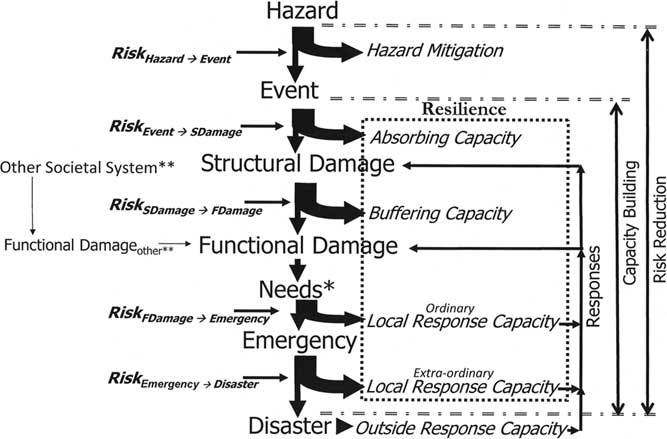
Resilience to an event can be increased by interventions (actions) that increase the absorbing, buffering, and/or response capacities of a community-at-risk (ie, capacity building). Such interventions are part of risk reduction. However, risk reduction includes not only the absorbing, buffering, and response capacities, but also interventions directed at mitigating the likelihood of a hazard producing an event (hazard mitigation). More specific to health, resilience includes all planning and resources that are devoted to preventing deaths and morbidity, and thus, to the alleviation of human suffering. It consists of measures that an institution, community, locale, county, province, state, country, and/or region, at a particular time, use to combat the potential deleterious effects of existing hazards. It includes the policies adopted and actions taken before an event occurs that: (1) limit the structural damage caused by an event (absorbing capacity); (2) minimize the functional damage (dysfunction) resulting from the damaged structures (buffering capacity), and hence, the needs that could result from the damage; and (3) improve the readiness and ability to respond (relief and/or recovery) to the needs (response capacity) (Figure IX-1).
Conceptual Framework Including Risks and Responses (FDamage=Functional Damage; SDamage=Structural Damage). *Needs identification is not part of resilience.

If the resilience of a community or any of its components (Societal Systems) is adequate, an event will not cause a disaster for that community or the Societal System being considered—a disaster is evidence of a failure of resilience to mitigate the consequences of an event. The greater the resilience, the lower will be the vulnerability to the event. Resilience is enhanced by capacity-building (risk-reducing) interventions that prepare a community-at-risk to cope with an event, should one occur. Thus, capacity building/risk reduction is an integral part of risk management.
In order to be able to critically evaluate and identify successful capacity-building measures, it is necessary to understand the processes used to develop and implement them. All capacity-building interventions are undertaken for the purpose of changing the ability of the community to deal with the consequences of an event. Each capacity-building intervention is directed toward one particular capacity (ie, absorbing, buffering, or response) with the objective of achieving some improvement in resilience (outcome); decrease a risk in the Risk Cascade. Capacity-building interventions that succeed, as well as those that fail to produce the desired effects, or possibly even damage some component of the community, also must be examined using the Disaster Logic Model 12 to evaluate the outcomes, impacts, costs, and the processes involved in order to determine what did or did not go well and why. Only in this way can the repetition of ineffective or deleterious capacity-building interventions be prevented.
As with relief and recovery interventions/responses,Reference Birnbaum, O’Rourke and Daily 13 capacity-building interventions must be directed at a specific need or a defined set of needs of the Societal System(s) being considered. What are the major hazards in the area? What are the main factors contributing to the risk of the hazards becoming manifest as an event and to the potential consequences of the event? What are the major shortfalls in the existing absorbing, buffering, and response capacities (ie, what are the major determinants of the community’s vulnerability)?Reference Birnbaum, O’Rourke and Daily 13 What are the objectives of the interventions provided to achieve the goal(s)?Reference Birnbaum, O’Rourke, Daily and Loretti 14 What element(s) of resilience should be addressed? What is needed to enhance resilience of the community or the Societal System-at-risk, and what benefits and other effects may result from the implementation of such measures? What are the associated costs (material, human, economic, opportunity, environmental, cultural, or political)?Reference Birnbaum, O’Rourke, Daily and Loretti 14 Which changes will provide the greatest return for the investment? How does the selected intervention compare with other options? What is the likelihood of the damages created by the primary event producing a secondary event?
Risk-Reduction Framework
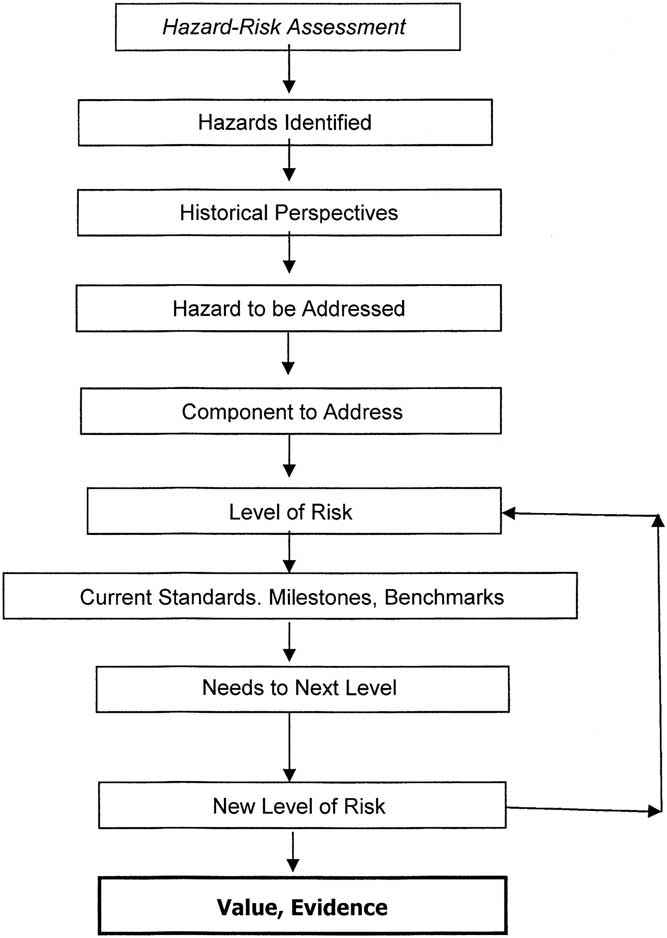
Just as all relief and recovery responses to an event are interventions, all actions to decrease any of the risks outlined in the preceding paperReference Birnbaum, Daily, O’Rourke and Loretti 1 are interventions. And, just as the processes involved in relief and recovery responses/interventions comprise a transformation process, so do the processes involved in reducing risks. If the processes used to select and implement such interventions are not understood, it is difficult to determine where changes should be made to enhance their efficacy, effectiveness, cost-effectiveness, needs-effectiveness, cost-benefits, and so on. The Risk-Reduction Framework is diagrammed in Figure IX-2, and outlines the steps/benchmarks involved in the design and implementation of all risk-reducing measures. The Risk-Reduction Framework is based on the Disaster Logic Model 12 and describes the sequence of steps involved in the process of undertaking measures to decrease the likelihood of a hazard manifesting as an event, or to increase a community’s resilience to an event related to a hazard. The structure of the proposed Risk-Reduction Framework provides an implementation process as well as an evaluation tool for risk-reducing interventions. The Disaster Logic Model used in this Framework is described in detail in another paper in this series. 12
The Risk-Reduction Framework.
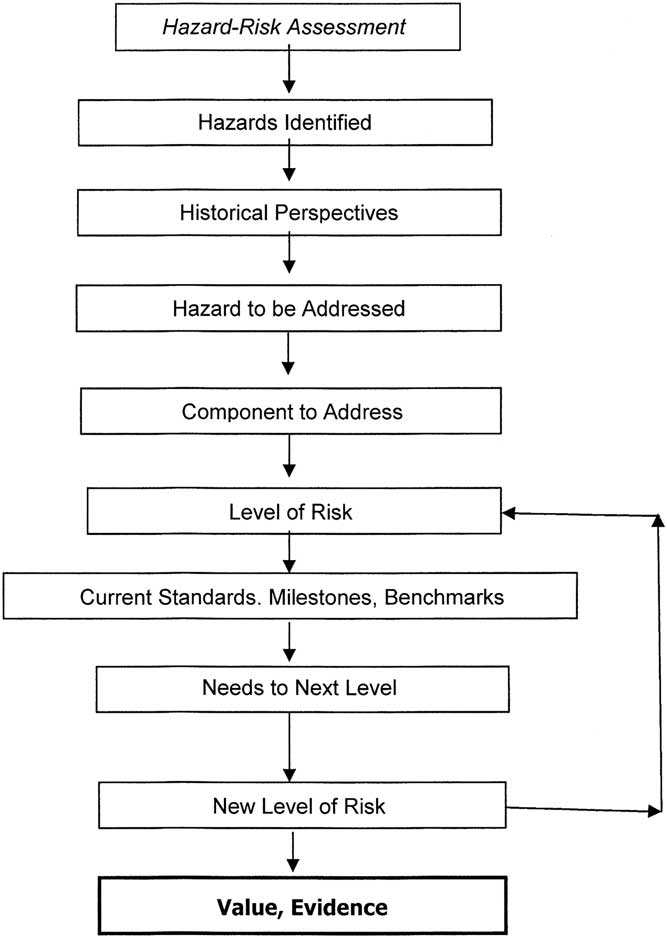
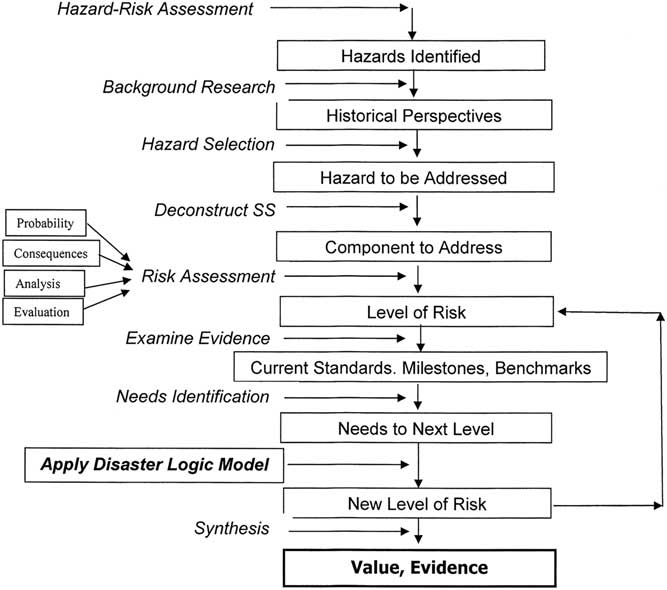
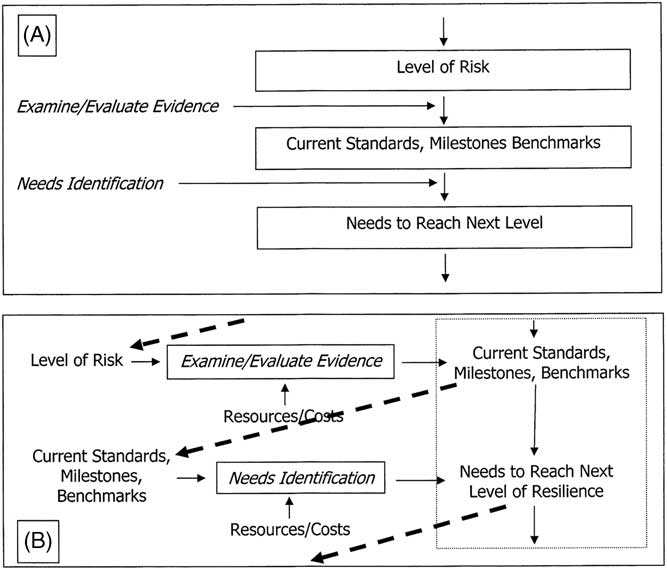
Figure IX-3 incorporates the processes required to move sequentially from one stage of the Risk-Reduction Framework to the next; these processes have been appended to the Framework. Increased resilience should decrease the risk that an event related to a specific hazard will result in a disaster in terms of both the probabilities of occurrence and consequences.Reference Birnbaum, O’Rourke, Daily and Loretti 14 Capacity-building interventions are designed to decrease the risk (likelihood and impact) of the consequences that will result from an event.
The Risk-Reduction Framework (right) with Processes Added (left). Abbreviation: SS, Societal System(s).

Discussion of each of the steps outlined in Figure IX-3 follows. Although the discussion is directed toward the Medical Care and the Public Health Societal Systems, it also is applicable specifically to those Systems upon which the Medical Care and Public Health Societal Systems are dependent.
The first three steps in the Risk-Reduction Framework relate to the Risk Assessments described in the paper on Risk, Risk Reduction, Risk Management, and Capacity Building in this series.Reference Birnbaum, Daily, O’Rourke and Loretti 1 Each of the steps is a production function and the evaluations follow the structure provided in the Disaster Logic Model. 12 Each of these steps carries a risk that the assessments may be incorrect or inappropriate. Process evaluations of each step can be performed following the structure provided in the Disaster Logic Model. 12
Hazard and Risk Assessments (Risk Identification)
Risk identification is the process of finding/identifying hazards, recognizing and describing the risks that the identified hazard will produce an event, and recognizing that the event may cause structural and functional damages in the Societal System(s) for which the assessments are being conducted. According to the International Standards Organization (Geneva, Switzerland), risk identification includes identifying the “sources of risk, areas of impacts, and events (including changes in circumstances), their causes, and potential consequences.”Reference Birnbaum, O’Rourke, Daily and Loretti 14 The aim of risk identification is “to generate a comprehensive list of risks based on those events that might create, enhance, prevent, degrade, accelerate, or delay the achievement of objectives.”Reference Birnbaum, O’Rourke, Daily and Loretti 14
For a capacity-building action to be effective, it must address the potential consequences of a possible event related to a hazard(s) to which the community is at risk. Therefore, hazard/risk identification is an essential, initial task for determining which options could provide ways to increase the level of resilience to an event related to a specific hazard or set of hazards. Before deciding and planning any capacity-building intervention, it’s necessary to determine: (1) the risk factors that increase the probability that an event related to the hazard will occur; and (2) the resulting event that will cause structural damage and undermine the operations (functions) of the Societal Systems (consequences). Once the risk factors have been identified, the processes of strategic planning, setting goals and objectives to attain the goals, selecting interventions, operational planning, implementation, and identifying the effects of the intervention basically are the same as those discussed in the Relief/Recovery Framework paper in this series.Reference Birnbaum, O’Rourke and Daily 13
Some risk-reduction interventions will benefit a given community regardless of the type of hazard (ie, all hazards), and some interventions will be effective only for events caused by specific hazards (eg, levees for flood control). However, a comprehensive risk-reduction plan for a community requires: (1) knowledge of the hazards that exist within the area; (2) factors that increase the likelihood (probability) that they will become an event; (3) the likely consequences of the event for the community; and (4) the likely mechanisms that will cause damages (changes) to its environment and/or Societal Systems. Not all hazards can be assigned a numeric probability for becoming an event, and currently, in most instances, a “high,” “medium,” “low,” “minimal,” or “remote” likelihood may be as specific as can be determined. But the existence of this hazard, and some expression of the likelihood that it will produce an event with consequences on a community-at-risk, must be part of the community’s pre-event inventory database and should inform resource allocation. 15 For example, if a hazard has a minimal likelihood of manifesting as an event, but the consequences of that event would be catastrophic, considerable resources may be committed to capacity-building activities in order to be able to cope with an event that relates to that hazard.
The mechanisms involved in conducting hazard and risk assessments are beyond the scope of this document. Briefly, the required information includes the possibility for: (1) eliminating the hazard (only human-made hazards); (2) modifying the hazard; and/or (3) modifying the risk that a hazard will become an event (hazard mitigation; see discussion of hazards and risks in previous papers in this series).Reference Birnbaum, Daily, O’Rourke and Loretti 1 , Reference Birnbaum, Loretti and Daily 2 , 12 , Reference Birnbaum, O’Rourke and Daily 13
Historical Perspective and Risk Analysis
Background research is required to gain a historical perspective for the community-at-risk and to predict the levels of risks and the probable consequences if the hazard manifests as an event. Risk analysis is the process used to gain an understanding of the nature of an identified hazard and to estimate the respective levels of the risks inherent in the hazard, and those for each of the risks specified in the cascade from the hazard to a disaster for the Societal System(s) being considered;Reference Birnbaum, Daily, O’Rourke and Loretti 1 “Risk analysis involves consideration of the causes and sources of the risk, their positive and negative consequences, and the likelihood that those consequences can occur. Factors that affect consequences and likelihood should be identified.”Reference Birnbaum, Daily, O’Rourke and Loretti 1 , Reference Birnbaum, O’Rourke, Daily and Loretti 14
The analysis must establish criteria/indicators against which the relative risks can be evaluated. The criteria used in the analyses must be based on needs, goals, objectives, and context. The analysis involves the synthesis of historical information, properties of the hazard, and the nature of the changes in the type, rate, and amount of energy that likely will be released, the setting, the estimated resilience of the community, anticipated damage to structures, current levels of function, identification of the potential needs of stakeholders (population-at-risk, potential responders), theoretical analyses, and the opinions and assumptions of experts.
A review of the epidemiology and evidence from studies of past events associated with the hazard being considered in the area-at-risk, their type and magnitude, and the amounts of structural and functional damages that resulted from them is important for gaining the perspective required for selecting and/or developing interventions to augment the resilience for the event related to the hazard. Which measures previously undertaken to augment resilience were effective or ineffective in mitigating the structural and functional damages produced by a prior event? This historical information (epidemiology) should be part of a static database or a repository of interventions evaluated. 15 Often, given this information, it is possible to predict, with some certainty, the likelihood of a similar event occurring in the same area in a specific timeframe, and to project the types, amount, and severity of the damages that are likely to result.
Thus, the epidemiology of the structural and functional damages and the responses to the needs that were created by the same or similar events in other areas provides important information for predicting what to expect. For example, what factors contributed to the building collapses associated with the Bam Earthquake (6.6 on the Richter scale) in Iran in 2003, and what capacity-building interventions prevented this same level of damage from the earthquake in Seattle (Washington, USA) in 2001 (6.8 on the Richter scale)? Such information should influence the selection of capacity-building measures (risk reduction) in other areas. What was the incidence of diarrhea following the Bam Earthquake, or following the 2004 earthquake and tsunami that devastated parts of South East Asia? How did the respective levels of resilience (absorbing capacities, buffering capacities, and/or response capacities) differ? What secondary events were caused by the damages from the primary event? Lessons learned (epidemiological differences and vulnerability) from past events, or comparing the amounts of damage and dysfunction between similar events, as well as capacity-building measures undertaken that augmented the absorbing, buffering, and/or response capacities can be applied to other communities to enhance their level of resilience.
Hazard(s) Selection (Risk Evaluation)
Risk evaluation is the process by which the levels of risk are judged to be acceptable or tolerable: does living with exposure to the hazard constitute an acceptable risk given the alternatives?Reference Birnbaum, O’Rourke, Daily and Loretti 14 Generally, this judgment is accomplished by comparing the results of the risk analysis with the risk criteria defined above. This process often requires the weighting of many hazards and risks to which a population/community may be exposed, as well as the perceived severity of the consequences. Risk perception is a subjective judgment about the acceptableness of risk.Reference Birnbaum, Daily, O’Rourke and Loretti 1 , Reference Birnbaum, O’Rourke, Daily and Loretti 14
Once the hazards and the risk factors for an event have been identified, and the historical perspectives and predictions have been researched, the hazard to be addressed by risk-reduction/capacity-building interventions is chosen (Figure IX-3). The criteria used to select the hazard relate to: (1) the relative risk that the hazard will evolve into an event; (2) the vulnerability of the community-at-risk to such an event, including the potential severity of the functional damages that could occur and the nature and the impact of the dysfunction that likely would result; (3) the perceived existing level of resilience to such an event; (4) the type and/or amount of available resources (ie, goods, services, and cash) and the capability to transform them into functions; and other factors external to the transformation process (intervention), such as the: (5) setting; (6) culture; (7) public perceptions; (8) media involvement; (9) political environment/agenda/pressure; (10) ease of implementation of the intervention; and/or (11) greatest return for the investment.
Relative Risk
Relative risk is the likelihood that a given hazard may evolve into an event and the likely consequences of the event should one occur. The relative risk weighs heavily on the decision as to whether to address the hazard; the greater the likelihood (risk) that an event will occur within the timeframe being considered, and will cause serious consequences to the population-at-risk, the more compelling the need to augment resilience to an event related to that hazard. For example, it is more likely that Florida (USA) will choose to address a hurricane/tropical cyclone than an earthquake,Reference Arnold, Levine and Manmatha 16 and it is more likely that Turkey, which rests on top of two faults, will address an earthquake rather than for a hurricane.Reference Meng and Vipulandanda 17
Vulnerability of the Community-at-risk
The vulnerability of a particular community refers to its risk for harm and relates directly to its absorbing, buffering, and response capacities for an event. It is likely that the population living and working in coastal areas of Indonesia will prepare for a tsunami as their society has learned that it has little protection against such an event;Reference Kurczy 18 the risk for another tsunami is low, but the consequences if a tsunami occurs is great and the risks posed by the potential consequences (vulnerability) will be addressed. Interventions are likely to be selected that reduce vulnerability (eg, preparing hospitals for the evacuation/transfer of patients who are unable to protect themselves or to move to higher ground and posting evacuation route signs at appropriate locations). Determining the vulnerability of a community-at-risk for a known hazard includes estimating the: (a) amount and severity of the damage that could occur; and (b) nature and impact of the dysfunctions likely to result from the structural damage related to an event.
Amount and Severity of Potential Damage
The greater the vulnerability, the more likely a structure/person will sustain structural damage from an event; the less the absorbing capacity, the greater will be the damage sustained. Those structures that have a low absorbing capacity for the anticipated types and scale of event(s) have a higher risk to sustain damage and are likely to receive more attention than are those with a high absorbing capacity for the changes in the amount and rate of energy released from a hazard(s). Capacity building focuses on decreasing the vulnerability of the community for an event for which it is at risk.
Nature and Impact of the Likely Dysfunctions
Damage that has the propensity to render facilities/persons dysfunctional have a higher likelihood of being addressed than those that do not. For example, the loss of electrical power in a medical facility could cause increased mortality and morbidity. Thus, interventions to increase the buffering capacity in the form of providing generators and/or other backup systems may have a higher priority than those that do not buffer the loss of this function.
Perceived Level of Existing Resilience
If managers perceive that they already have achieved a standard for resilience to an event from a specific hazard, there is no need for the investment of additional resources. Current investments already may be at or beyond the point of diminishing return (ie, the point at which increasing resources produce minimal or no change in function). Thus, hospitals that are built to withstand earthquakes of a given magnitude are unlikely to invest in further structural modifications (absorbing capacity) to increase resilience, but may prefer to invest in backup electrical power generation (buffering capacity), or in additional stockpiles of essential supplies (response capacity).Reference Birnbaum, Daily, O’Rourke and Loretti 1 , Reference Birnbaum, Loretti and Daily 2
Type and/or Amount of Available Resources
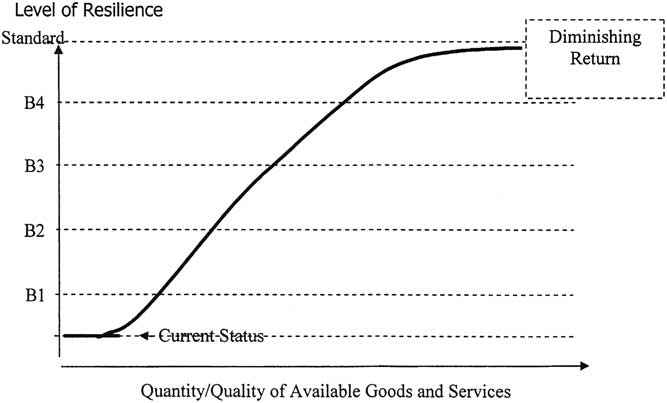
When the available goods and/or services may be inadequate to meet the needs during surge activities (conditional/situational needs), capacity-building interventions such as stockpiling reserve supplies (response capacity) or assuring that personnel will report to work (buffering capacity) are undertaken. When the amount and nature of such supplies are deemed adequate to meet the anticipated surge, it is unlikely that further measures will be taken to increase inventories or arrange for supplemental personnel and/or equipment (Figure IX-4).
Smoothed Relationship between the Quantity/Quality of Available Goods and Services and the Respective Resilience Benchmarks (B) and Standard.

External Factors
Factors not related directly to the intervention may have an impact on the selection of the intervention and on its effects. 12 These include the: (1) setting; (2) culture; (3) public perceptions; (4) media involvement; (5) political environment/will/pressure; (6) ease of implementation; and (7) return on investment.
Setting
Of the many external factors that influence the selection of interventions for risk reduction, the setting plays a major role. Does the hazard involve a rural or urban community? What is the geography/topography/access? What are the endemic diseases? What is the typical health and nutritional status of the population-at-risk? What is the population density and demographics? What are the types of constructions and building codes? Is there civil strife? Are there internally displaced persons, and if so, where are they? Is the location safe for humanitarian workers?
Culture
The customs, religion, diet, leadership, languages, and restrictions influence the selection of an intervention, as well as its probable impact.
Public Perceptions
When the public perceives that it is not at risk for an event caused by a hazard, it is not likely to support the use of resources to cope with such an event. Conversely, when the public perceives that it is at high risk for an event (eg, a terrorist attack), it is more likely to want its government to invest in keeping them safe from terrorist activities.
Media Involvement
The media serve as the eyes and ears of the community, and often are the source for public and government perceptions of needs related to a hazard. On the other hand, the media may contribute to fears and have perpetuated myths about the likelihood of infectious disease outbreaks following cyclones and earthquakes and the dangers posed by dead bodies. 19 , Reference de Ville de Goyet 20
Political Environment/Will/Pressure
Politics play an important role in determining which risk-reducing interventions will be approved. Since it is not easy to define the impact of measures taken to augment resilience until the next event occurs, it is difficult to convince politicians that limited available resources should be invested in interventions to augment resilience. Capacity building to increase resilience may not garner votes — the public may be unable to see the effects of capacity building. Politicians tend to invest in projects for which the results are demonstrable and are in-line with the current political environment.
Ease of Implementation
Interventions that are easy to implement are more likely to be chosen than those that are more complex; this will influence the selection of which hazard(s) and components of vulnerability to address. Gathering medical supplies and equipment (buffering capacity) is easier than re-enforcing a hospital’s physical structure (increasing its absorbing capacity) against earthquakes.
Return on Investment
Selecting interventions to address most of the hazards and risk factors at the lowest possible cost is prudent, especially when budgets are limited. For example, should investments be directed at education and training of the public or responders, or in the purchase of drugs for stockpiling? Interventions may be selected on the belief that they provide the best cost-benefit to the community-at-risk.
Each of the above external factors must be integrated into decisions that ultimately will result in selecting which needs will be addressed to provide the greatest amount of protection to the community for the investment. It may be prudent to implement capacity building for resilience to many possible events rather than for only one, especially when the risks may not be great for an event to occur from any specific hazard. Addressing all hazards rather than a specific hazard is a more efficient direction in which to proceed when resources are limited.
Societal System Selection
Generally, it is not possible or prudent to address multiple Societal Systems (or their components) with one intervention. Consequently, the Societal Systems may compete for resources required to implement risk-reduction. Selecting a Societal System or a component within the Societal System is difficult at best. The selection of the Societal System that is likely to provide the greatest degree of risk reduction for the community-at-risk may be selected using the same factors/variables as outlined in the selection of the hazard to be addressed. For example, in the setting of limited resources and a high risk for an earthquake and low risk for flooding, would the limited available resources likely be invested in adding absorbing capacity for the earthquake in the hospital in favor of providing stockpiles of fuel for the Logistics and Transport Societal System? Thus, selection depends on the perceived relative value and urgency of the anticipated event and the damage likely to occur, as well as the anticipated/predicted benefits, costs, and the politics of the situation.
Once a Societal System is selected, the component(s) of the Societal System selected that is/are likely to create the best return (greatest decrease in risk for the investment) must be defined. This requires that the Societal System be deconstructed into its component functional units followed by predicting the component(s) most likely to improve resilience for that Societal System.
The remaining elements of risk assessment, as described in the Risk Management Section of another paper in this series, are used to define the levels of risk for the Societal System selected (or its selected components).Reference Birnbaum, Daily, O’Rourke and Loretti 1 This process involves estimating the risks associated with an event of a specific type and magnitude and projecting what the consequences of the occurrence would be at each level of the Risk Cascade (risk analysis).Reference Birnbaum, Daily, O’Rourke and Loretti 1 The defined risks are weighted to determine their relative importance and acceptance by the community. The level of risk then is used as the baseline level of risk against which changes in levels of risk related to the intervention will be judged.
Selection of Indicators of Function
Assessments for the identification of needs, as well as for the evaluation of the effectiveness, efficiency, outcome, impact, benefits, other effects, and costs of any risk-reducing intervention, require use of the most appropriate indicators. The indicators used should facilitate defining the status, function, outcomes, effects, costs, and the impact(s) of the intervention(s) selected. Selected indicator(s) may be quantitative and/or qualitative; indicators that reflect the functional status of the Societal Systems are most important. The indicators proposed by the Sphere ProjectReference Alexander 21 and/or by the Global Health Cluster may be useful. 22 – 24 As a general rule, the more refined the objective(s) (targets) of the interventions, the easier it is to identify the most appropriate indicators of function.
Identify Existing Resilience Standards, Milestones, and Benchmarks
Any existing standards of levels of function for the functions that the risk-reduction intervention will address must be identified. The terms “benchmarks,” “milestones,” and “standards” have been used interchangeably. A standard is a quality or measure serving as a basis, example, or principle to which others conform or should conform; the degree of excellence required for a particular purpose; 25 an acknowledged measure of comparison for quantitative or qualitative value; a criterion.Reference Thompson 26 Standards are based on the results of research and evaluations (evidence), and constitute the basis for the science of the health aspects of disasters. A standard should be considered as the ideal status or condition that can be achieved for the function selected. A benchmark is a point of reference.Reference Pickett 27 Benchmarks are defined points of reference that can be attained along the path towards achieving a given standard. A milestone is a significant event or stage in life/history/project.Reference Thompson 28 For the purposes of this discussion, milestones are more inclusive than are benchmarks; milestones often consist of several benchmarks. Therefore, milestones are major steps on the way to achieving a standard, and benchmarks are steps on the way to attaining a milestone.
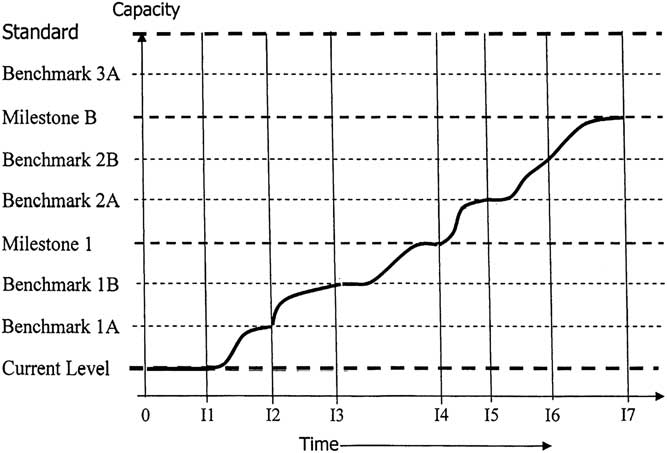
Benchmarks, milestones, and standards all must use the same indicator(s) of function. Interventions may be aimed at increasing the community’s current capacity to cope at a defined standard of function, or the capacity to cope with an event could be achieved in incremental steps using defined benchmarks and milestones that ultimately will move the community from its current level of resilience (capacity) along the way to achieving the standard (Figure IX-5).
Hypothetical Example of the Multiple Steps Required to Elevate the Capacity of a Societal System or its Components to an Established Standard. Numerous benchmarks and milestones can be achieved on the way to attaining the standard.

An example of an existing resilience standard is the Sphere Project’s recommendation of the availability of a minimum of 2.5-3.0 liters/person/day of potable water for every person in an area-at risk.Reference Alexander 21 If the anticipated water supply level is likely to provide only 1.0 liter/person/day for the population-at-risk, the community must intervene to assure that the critical level of supply of 2.5-3.0 liters water/person/day can be met. Limited resources within the community may prevent the immediate achievement of this standard, but certain benchmarks and milestones along the way to reaching this standard may be achievable.
Following the 2004 earthquake and tsunami in South East Asia, the Ministries of Health of the impacted countries identified 12 benchmarks for “preparedness” defined by consensus achieved at a meeting convened by the South East Asia Regional Office (SEARO; New Delhi, India) of WHO. As noted in the publication of these standards (initially termed “benchmarks”), each of the affected countries was at a different level with regard to each of the standards.Reference Thompson 29
Identify Current Status of Resilience
Identification of the current state of resilience and estimation of the levels of risks of the Societal System, or of its components, being considered is the first step in the Disaster Logic Model. 12 In order to assess the existing capacity to prevent, cope with, and respond to the structural and functional damages that may result from an event, knowledge of the current baseline state of resilience for each of the Societal Systems and Coordination and Control is essential. The assessments that constitute a status inventory of the resilience for an event caused by a specific hazard include the existing absorbing capacities, buffering capacities, and the perceived/known ability of the affected community-at-risk to respond (response capacity) to the needs caused by an event. This inventory is part of the pre-event status assessment.
Ideally, the level of resilience of a Societal System(s) of a community would be compared with the standard(s). However, as noted, to date, such standards for health have not been codified or universally endorsed, nor are there are any generally accepted benchmarks and milestones toward reaching the standards, if they have been established. The difficulties of this task are compounded by the fact that some elements of resilience are specific for events caused by specific types of hazards. For example, the levees within the city of New Orleans (Louisiana USA) are manifestations of its level of resilience (absorbing capacity) for a storm surge. They were designed to meet a specific level of rainfall and storm surge that could be expected from a Category 3 hurricane; the risk that a Category 4 or 5 hurricane would strike the areas was considered to be remote.Reference Arnold, Levine and Manmatha 16 , Reference Meng and Vipulandanda 17
When assessing the existing levels of resilience and levels of risks for an event related to a selected hazard, it is essential that each of the modifiable elements of resilience, and the levels of risks for the event and its possible consequences, be evaluated (ie, the absorbing capacity, the buffering capacity, and the response capacity of the Societal System(s) of the community being assessed).
Absorbing Capacity
The absorbing capacity is the ability to limit the amount of structural damage that results from the changes in the magnitude of the kinetic energy of an event. 3 (p145) Any action undertaken to increase or maintain the absorbing capacity (ie, to decrease the amount of structural damage) is intended to contribute to the resilience of the community for an event related to the hazard. Estimations of the overall absorbing capacity of a Societal System of a community to withstand the effects of an event are determined by the characteristics of: (1) the natural environment; (2) the human-built environment; and (3) living beings, by their performance documented in existing studies of the epidemiology associated with previous events or exercises.
Natural Environment
The absorbing capacity of the natural environment consists of all the natural components within a community that either can augment or attenuate the damages due to potentially destructive energy. Examples include sea grasses and shallow water that absorb some of the energy of a tsunami;Reference Kurczy 18 , 30 forested hillsides that help the ground to absorb water; the composition of the ground surrounding the epicenter of an earthquake; and wetlands that are able to contain high volumes of water without flooding. Human actions can modify the natural environment, and consequently, its absorbing capacity. Examples of such interferences include deforestation, desertification, as well as changes in shorelines and the elements that naturally serve to protect the shores. These factors may have positive or negative effects and should be reflected in the damage probability equation (risk that an event will cause damage). 3 (p61) Thus, environmental interventions may increase or attenuate the absorbing capacity of an area to the event for which it is at risk.
Human-built Environment
The built environment consists of all of the structures built through human activities. For each construction, an inventory of its respective abilities to absorb changes (increases or decreases) in the kinetic energy of a likely event is essential. Those structures that have not been designed specifically to withstand the expected type and magnitude of energy released by a specific hazard are vulnerable to damages from an event. This has been demonstrated repeatedly following earthquakes in ArmeniaReference Kohl, O’Rourke, Schmidman, Dopkin and Birnbaum 31 - Reference Safar 33 and Athens (Greece)Reference Pretto, Ricci and Klain 34 as structures built using concrete blocks or adobe collapsed. In contrast, those structures built with materials capable of withstanding such forces did not collapse from an earthquake of similar magnitude in Seattle in 2001.Reference Foumelis, Parcharidis, Lagios and Voulgaris 35 Constructions that are designed to withstand specific events of a given magnitude generally hold up very well for the events for which they were designed, but may be highly vulnerable to events for which they were not designed. For example, homes built on stilts to withstand tsunamis or storm surges are vulnerable to damage from earthquakes. Human-made structures can be designed and built to absorb most of the energy to which they may be subjected.
Of substantial concern to the medical community is whether the medical facilities in an area will have sufficient absorbing capacity to withstand the energy of an event caused by hazards specific to the area. The Pan-American Health Organization (PAHO; American Regional Office of the WHO; Washington, DC USA) has invested substantial efforts to assure that hospitals are “safe” (ie, that the medical facilities will be damaged minimally by an event, and thus, will be able to continue to provide essential health services). 36 , 37 The creation of “Safe Hospitals” was the 2008-2009 objective of the UNISDR 38 and was the objective of the World Health Day 2009. 39
Living Beings
Generally, living beings are highly vulnerable to the transfer of energy to which they are subjected during an event. The best protection from possible injury for human beings is to get out of harm’s way (ie, evacuating from an area of potential danger; avoiding exposure to the forces of the event by moving to a safe place). Immunizations increase the absorbing capacity of living beings to avoid damage from a biological agent. Vulnerable populations, such as children and the elderly, may require additional protective measures to prevent damage from exposure. Similar protective measures can be taken for livestock and pets. However, some interventions that increase the absorbing capacity for one event may increase vulnerability to other events. For example, wearing bullet-proof vests may limit mobility, and thus, the ability to reduce exposure to another event; shelters may provide protection from an event, while increasing the exposure to biological agents.
Buffering Capacity
The buffering capacity decreases the risk for the development of functional damage from the structural damage. It consists of the ability of the community or its components to continue to function despite the structural damage sustained from an event to the Societal System being evaluated or to other Societal Systems upon which the Societal System is dependent. 3 (p146) The buffering capacity of the Societal System must be able to buffer the functional damage from sub-systems or other Societal Systems. Backup systems for essential functions comprise part of the buffering capacity. Such systems can be established ad-hoc or may be a historically imbedded part of the community/society. In some societies, rural areas may have a greater buffering capacity than do urban areas (eg, access to alternative sources of energy, water, supplies, or human waste disposal). The use of backup systems may be accompanied by an element of inconvenience, but the inconvenience is not sufficient to affect function. The buffering capacity also includes those functions that do not require repair/replacement, either because the function can be omitted with little or no disturbance to essential functions, or because alternative or backup systems exist that can provide all or part of the function.
Response Capacity
The response capacity of a community and any of its Societal Systems consists of all the preparations made to respond to the functional damages and corresponding needs, and/or conditional (situational; surge) requirements that may derive from the structural damages caused by an event. It includes all of the education and training of the responders, exercises, caches of equipment and supplies, response plans, surge capacity plans of health facilities, and so on. Generally, the response capacity increases as the scale of the area increases; the national government has a larger response capacity than does a community. The more developed the response capacity, the less likely that an emergency will evolve into a disaster (ie, that outside assistance will be needed). Following the 2004 earthquake and tsunami, Thailand and India had greater response capacities than did Indonesia, and therefore, did not request outside assistance for support of relief activities for their Medical and Public Health Societal Systems.Reference Kurczy 18 Lastly, it is noted that the capacity to recover to pre-event levels of function is a component of the response capacity.
Disaster Response Plans
One important aspect of the response capacity of any community, including each of its Societal Systems, is its Disaster Response Plan(s) (DRP). While it is beyond the scope of this discussion to provide instructions on the creation of DRPs, outlines/templates for response plans are available. 40 , 41 Disaster Response Plans contain Strategic Plans and generic Operational Plans that define the methods and resources to be used during a crisis. Disaster Response Plans should be comprehensive and address all of the possible hazards for which the population is at risk. Thus, there should be generic plans for all possible events, as well as hazard/event-specific plans. Disaster Response Plans should outline all of the interventions that may be involved in responding to an event, for one or more of the Societal Systems. The plans must be exercised frequently to: (1) determine whether they are practical; (2) familiarize responders and community with the mechanics of the plan; (3) identify the respective roles of possible responders; (4) identify ways in which the planned responses can be improved; (5) identify the additional supplies, equipment, and/or personnel that must be obtained; and (6) determine arrangements that must be made, including memoranda of understanding (MOUs) and contracts with other administrative structures.
Disaster Response Plans must address (partial list): (1) Coordination and Control; (2) stockpiles of supplies; (3) surge capacities of hospitals and other medical facilities (conditional/situational responses); (4) education and training of personnel; (5) completed MOUs and contracts with other organizations to provide personnel, equipment, and/or supplies (goods and services); (6) special response units (eg, Disaster Medical Assistance Teams, Medical Reserve Corps, and Red Cross volunteers [IFRC; Geneva, Switzerland]); (7) notification procedures including early warning systems; (8) Civil Defense or Citizens Emergency Response Teams; (9) home/family-level plans and supplies; (10) designating and equipping shelters; (11) development and exercise of family, area, and regional evacuation plans; (12) capacities of available laboratories; (13) alternative sources of electrical power (generators); and (14) tested and adequate communications and information systems.
Training and Experience
The experience and training of all personnel involved in disaster planning, including the staff of Coordination and Control, are components of the response capacity, and therefore, the community’s resilience. Experience may be gained through table-top, limited-scale, and/or full-scale exercises and/or through operations during actual events.
Individual citizens of a community require education and training about the local DRP, how to protect themselves and their families, and other ways to increase their resilience. The education and information provided should include supplies to have on hand, where, when, and how to evacuate or shelter-in-place, and realistic expectations during and following an event (eg, recognizing that public services [Emergency Medical Services, fire brigades, and police] may not be able to assist in such circumstances). 42
Community Responses
The first level of response to an event occurs at the family and workplace levels. 43 As has been demonstrated following Hurricane Katrina (Gulf Coast, USA; 2005) and the earthquake and tsunami in South East Asia (2004), 44 it is unlikely that the government will be able to rescue all of the victims of an event that has caused massive numbers of casualties. Therefore, citizens must be responsible for protecting the individuals, their families, and employers must be prepared to protect their employees. 45 The primary response mechanisms are delineated within the community’s DRPs. 45 The resilience of communities was emphasized during the Global Platform for Disaster Risk Reduction. 43 When the affected communities cannot cope with the ensuing decrease(s) in levels of function(s) and the needs created, the next hierarchical level of government supplements the response capacities of the communities, and so on upward through the hierarchy of government. Each successive level of government should have greater available response capabilities.
Available Resources
Resources must be identified and their accessibility known. This includes cash, stocks of equipment and supplies, as well as personnel competent to use them appropriately (convert the resources to needed functions). Such reserves should be part of a static resource database that includes the mechanics of how to access what is needed. A reserve of cash set aside for possible/probable disasters (an emergency relief fund) has great advantage over other resources in that it permits the affected community to purchase the goods and services as needed. This was recognized by the affected South East Asia countries following the 2004 earthquake and tsunami; the tsunami-affected countries have established an Emergency Relief Fund, 44 which made cash available to the Myanmar government following the cyclone of 2008. Caches of supplies, availability of cash, and lists of equipment all should be included in the DRP.
Community/Societal Profile
A pre-event inventory should identify the societal profile of an area, country, or region. Based on this profile, a community can decide how to best utilize its available resources to reduce the risk of sustaining structural and functional damages should a hazard manifest as an event. Using the societal profile also helps to identify a threshold above which any investment in capacity building would be wasteful (ie, the point of diminishing return; Figure IX-4). This same information is useful in strategic planning directed at restoring the community to its pre-event status. A profile of the community-at-risk also is useful when ascertaining the vulnerability of the community.
Needs Identification
Identification of the needs from the assessments of the current status is the second step in the Disaster Logic Model. 12 With regard to resilience, needs represent the additional goods, and/or services, and/or infrastructure, and/or personnel required to meet the differences between the current state of resilience and some benchmark, milestone, or standard for the level of resilience being sought. Therefore, the needs for capacity building consist of the additional goods, services, infrastructure, personnel, and the process(es) required to increase the absorbing, and/or buffering, and/or response capacities of a community to cope with the next anticipated event. These processes are described briefly as each is open for evaluation.
Assessments provide information on the current state of resilience. The data/information acquired from these assessments must be compared with what is required to maintain functions; the deficit between these two states indicates the additional goods, services, infrastructure, and personnel needed for capacity building to reach the desired level of resilience for the hazard(s) being addressed. Resilience needs always are expressed in terms of the goods, services, infrastructure, personnel, and other resources required to augment the capacity(ies) to increase resilience. As the amount of the available goods and services related to the resilience to the hazard(s) being considered increases, the level of resilience should increase (Figures IX-4 and IX-5) until the sought benchmark, milestone, or the standard is attained. The precise relationship between the available goods and services for building the capacity for the Societal System(s) being considered and the level of resilience that results likely varies for different hazards and settings/circumstances. During the SEARO Bangkok (Thailand) meeting mentioned previously, each country defined its current level of resilience relative to each of the 12 “standards.” 45 India and Thailand were at optimal levels of resilience for some of the standards—both countries had a legal framework and a national DRP codified. However, the levels of perceived resilience varied substantially between countries relative to the “standards” they had established during the meeting. Furthermore, for the most part, none of the countries had sufficient resources to rapidly raise their levels of resilience to meet all of the standards they had established. 46
Following an analysis of the current state of resilience, decisions must be made regarding the next most appropriate standard or benchmark to be achieved in order to reach a higher state of resilience in one or more of the Societal Systems. At the second meeting of the earthquake/tsunami-affected countries convened by SEARO in Bali (Indonesia) in 2006, each of the affected countries reported on the progress made towards achieving the standards in their respective country since the meeting in 2005; each country reported that it had attained better resilience to cope with the next anticipated event. 46 This was exemplified by the apparent improvement in the management of the disaster related to the Yogyakarta earthquake in Indonesia in 2005 in which the Indonesian government limited the influx of outside assistance and established Rules of Engagement.Reference Thompson 29
Determining benchmarks, milestones, and standards for resilience relative to a given hazard or set of hazards requires expertise. This expertise may not be available within the community-at-risk, and it may be necessary to import persons, or send persons from within the community elsewhere, to become educated and trained for the task. Once the benchmarks or standards have been defined, the differences between the benchmarks/standards and the current status can be identified and a list of needs developed. Standards, milestones, and benchmarks are levels of resilience and needs are the goods and/or services and/or other resources and process required to attain and/or maintain the level of resilience being sought.
Identification of Needs
Identifying the resilience needs is the second step in the Disaster Logic Model. 12 Needs for capacity building are identified and plans are developed in terms of the goods, services, infrastructure, personnel, and other resources, and process(es) required to limit or prevent future structural damage and/or deterioration in the level of functioning (functional damage) of the Societal System(s). This requires integration of the data obtained from assessments and the synthesis with other information and previous knowledge and experience. The inputs used in this process include information from assessment(s) of: (1) anticipated structural damage; (2) anticipated functional damage; (3) current status; (4) existing standards, milestones, and/or benchmarks; (5) demands; (6) ability to respond; (7) inventories; and (8) surges of required functions. All of these inputs are integrated with information maintained in a static database of existing goods, services, and other resources that also includes: (9) culture; (10) climate; (11) geography; (12) costs; and (13) politics. In terms of the Disaster Logic Model, needs are assumptions based on synthesis and analysis of available data/information and experience.
Anticipated Structural Damage
Key to the consideration of anticipated structural damage is the magnitude of the event for which the community should be prepared to cope; should it be resilient to a 6.0, 7.0, 8.0, 8.5, or 9.0 earthquake, or a Category 3, 4, or 5 tropical cyclone (hurricane)? Such determinations are based on evidence obtained from past events (epidemiology) as well as information from experts. Of concern is the potential damage to personnel and infrastructure required to provide health services. Capacity-building needs may involve strategies to attenuate the anticipated damages to essential personnel.
Anticipated Functional Damage (Changes in Functions)
Generally, the most important factors to be considered in predicting the needs based on the hazard, risk assessments, and history are the anticipated changes in the functional state of the Societal System(s) being considered. Compromised levels of function(s) of a Societal System may endanger people, and always require resources to restore the compromised functions.
Current Status
The current status of resilience includes the capacities required to support that particular level of resilience and includes the process required to convert available goods, services, and other resources into enhanced resilience. Clearly, the current status must serve as a point of reference and be incorporated into the identification of needs.
Benchmark, Milestone, or Standard
As noted above, the standard and/or benchmark and/or milestones for the level of resilience that is being sought must be identified and integrated into the process.
Demands
It can be anticipated that the affected population generally will demand improvements in some level of resilience whether they are needed or not. Thus, while the demands of the population must be considered, they must be verified before they are recognized as needs and translated into interventions. 47
Ability to Respond
The ability to respond is a function of the response capacity of the Societal Systems of the community-at-risk and combines available and accessible resources with existing DRPs, as well as the systems required to mobilize, deploy, and use them.
Inventories
Capacity-building and risk-reduction interventions require additional resources (goods, services, infrastructure, personnel, and other resources [including funding]), as well as precise inventories of the goods, services, and other resources that will be required. Resources that are available and accessible must be subtracted from the overall projected requirements to attain the standard or reach the next higher level of resilience.
Anticipated Surges
History is useful in helping a community prepare to cope with sudden increases in burdens (required functions). Such sudden increases in required functions have been called conditional/situational changes.Reference Rubin, Heuvelmans, Tomic-Cica and Birnbaum 48 The surge capacity of hospitals is an example of a conditional capability. The capacity of medical care facilities to meet the increase in patient burdens (surge capacity) is dependent upon the ability of many of the other Societal Systems to provide the necessary materials, services, and personnel. Not involving the other Systems upon which the Medical Care System is dependent dooms the Medical Care System to failure in meeting the demands for health services.
Other factors that must be considered in capacity-building needs are part of the static, pre-event database for the areas. These include culture, climate, geography, economy, and politics. Each of these factors must be integrated into the process of identifying needs for capacity-building interventions directed at increasing the levels of resilience. Identifying such needs involves the synthesis of many factors.
The identification of the needs to build capacities does not automatically result in action(s). Once the needs have been identified, the processes used for strategic planning, selection of intervention(s), operational planning, implementation, assessments of effectiveness, outcomes, impacts, costs, and feedback follow the same steps as provided in the Relief/Recovery Framework.Reference Birnbaum, O’Rourke and Daily 13
Strategic Planning (Disaster Logic Model)
Once the list of resilience needs has been defined using the processes outlined, the requirements to move to a higher level of resilience become part of the strategic planning process in which goals and priorities for the interventions are determined. It would be rare that all of the needs required to augment the level of resilience of each of the Societal Systems for a hazard(s) could or should be addressed simultaneously, unless the resources available are abundant.
As noted in the Relief-Recovery Framework paper in this series,Reference Birnbaum, O’Rourke and Daily 13 strategic planning is a production process. In order to identify possible critical points of success and/or failure in the process, the planning process has been deconstructed into its components. It is a process that integrates the defined needs with: (1) the existing DRP; (2) any current interventions that are underway or planned; (3) the available resources to meet the needs; (4) the history and experience of the community and the planners; (5) potential threats to the population-at-risk; and (6) external factors (ie, the culture; climate; geography; characteristics of the population; economy; and safety of all involved). The resulting Strategic Plan provides strategies including the goods and services required for the transformation process and to sustain the new level of resilience, and timelines to enhance the levels of resilience for a specific community.
Goals and Objectives
Strategic Plans are based on the anticipated achievement of the goals and objectives for interventions that should meet the identified needs. Goals and objectives are components of any Strategic Plan. As noted in the accompanying paper outlining the Disaster Logic Model, 12 goals typically are expressed in broad terms of what is to be accomplished through some project or program. Goals are broad, overarching, general, and often abstract (non-specific). In contrast, an objective is a clear, measurable attainment accomplished by certain actions. Objectives are narrow, precise, tangible, and concrete. 49 - Reference Smith 51 Interventions are selected based on their likelihood of achieving the objective that supports the goal identified in the Strategic Plan, and also consist of assumptions that the intervention will be successful in meeting the defined objective and will contribute to the overarching goal. The goals outlined in the Strategic Plan will vary for different communities depending upon the hazards to which they are at risk, the risks, timeframes, and the level of development and characteristics of the community.
Priorities
Strategic Plans must place the defined needs and possible interventions, as well as the goal, objectives, and milestones and benchmarks, into respective priority lists for consideration. Prioritizing the levels of resilience to be achieved and the interventions required to move the community towards them, given the available resources, is essential and is a responsibility of disaster management (Coordination and Control). Priority lists should be flexible, working documents that can accommodate unforeseen circumstances. Priorities must address the functions that are most important to the community, combined with those functions that are more vulnerable than others. When considering the vulnerability of functions, dependencies between the Societal Systems must be considered; vulnerability varies for different hazards. Other external factors also may dictate a shift of priorities depending on issues such as seasonal variations, culture, terrain, accessibility, and security. The processes used for determining priorities may be facilitated by using the generic guidelines as outlined in Relief/Recovery Framework paper in this series.Reference Birnbaum, O’Rourke and Daily 13
Timelines
All plans and interventions must have specified timelines for completion. A timeline is a type of objective. The timelines should be congruent with the interventions provided in the Strategic Plan. Evaluations of timelines include efficiency. Interventions should not be allowed to continue indefinitely. Respective timelines must be negotiated between Coordination and Control and the provider(s) of the intervention. Thus, monitoring of an intervention must include not only its relationship to achieving the designated objective(s), but also to meeting its agreed timelines.
Practicality
A plan must be feasible, realistic, and focus on what actually can be accomplished. Plans that appear to be excellent on paper may never be implemented because they are impossible to implement—they require unavailable resources, or are not possible given the environment, culture, weather, terrain, etc. Each of the factors described above determines whether the Strategic Plan actually can be implemented and when it is likely to produce the outcomes for which it has been devised with as few unwanted effects as possible.
Sustainability
In terms of resilience and capacity building, it is essential that the progress achieved towards reaching any standard of resilience is sustainable. Thus, a requirement for any Strategic Plan must include mechanisms for sustaining the augmented level of resilience. Progress raises the expectations of the community-at-risk; transient progress may leave the community worse off than it was before the intervention was implemented.
The integrative process used for the development of a Strategic Plan requires expertise and experience that can be gathered from internal and/or external resources. The Strategic Plan for the augmentation of resilience through capacity-building interventions may involve any one or combination of the Societal Systems. The Strategic Plan that results must be directed at the overall enhancement of the level of resilience for a specific event or, better yet, all of the events that could obtain from any/all of the hazards for which the population is at risk (“all-hazards”).
Lastly, all Strategic Plans have political and environmental implications. This requires that lobbying, groundwork, and education of the stakeholders be part of the planning process. Unfortunately, it often takes a catastrophic event to prompt the allocation of resources for capacity building. Crises, especially when poorly managed, usually create a limited window of opportunity to garner such resources. Resources can be obtained from governmental and non-governmental agencies and other donors. Many non-governmental organizations and parts of the private sector are willing to participate in well-developed and conceived capacity-building activities. 43 However, all such efforts must be coordinated by the most appropriate Coordination and Control entity.
Selection of an Intervention (Disaster Logic Model)
Selecting an intervention is the next step in the Disaster Logic Model. 12 As with the strategic planning process, the process used for selecting the interventions that most likely will achieve the objectives, and at least part of the goal, requires the synthesis of many factors. The process used in selecting interventions is identical to the process of selecting interventions for relief and recovery responses. In selecting appropriate interventions, it must be recognized that all interventions carry a risk that they will not meet the objectives for which they were selected. The likely consequences of this possibility must be integrated into the selection process. All possible consequences cannot be anticipated.
In some settings, the possible interventional options may be apparent, such as those available within the governmental unit or within agencies already involved in similar projects. Capacity-building measures generally are more gradual than those interventions that must be implemented rapidly during the Relief-Recovery phase of a sudden-onset, high-intensity event. Generally, there is sufficient time for the responsible Coordination and Control entity to issue a request for proposals (RFP) that delineates the overarching goal for the project and the generic objectives being sought. Such RFPs generally are competitive and must include a proposed budget for the project. The selection of the “best” option is based on complex considerations.
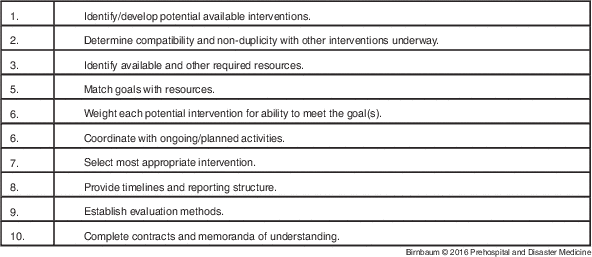
The objectives of each intervention under consideration must be consistent with those identified in the Strategic Plan, or as noted in the RFP. Each potential intervention must be matched with the available resources and considerations of probable costs and practicality. If the available resources are not adequate to implement the intervention, the possibility of obtaining the additional resources must be investigated. The possible impacts of each intervention on other sub-functions of a Societal System, or on other Systems, also must be considered, and if appropriate, collaborative arrangements must be completed. Each intervention option must be coordinated with other selected interventions or those interventions that already are underway. Given all of these considerations, the most appropriate intervention(s) is selected, timeframes are established (Table IX-1), and the process used is open for evaluation.
Steps Used in the Selection of Interventions to Meet the Needs for Capacity Building

Options and Costs
Following the definition of the needs required to meet the designated resilience level, all of the possible interventions that could be implemented to meet the specific need are explored for the Societal System(s) being considered. In addition, the probable costs (financial, personnel, goods and services, environmental, opportunity, or political) that will be incurred from implementation must be estimated. Proposals for interventions from potential providers should be solicited and evaluated by Coordination and Control.
The potential costs for each of the proposed interventions must be part of the response (bid) to the RFP, but also estimated by Coordination and Control prior to implementation. This entails determining current market prices for the goods and services that will be involved in the capacity-building intervention. Cost estimations must include the personnel costs, as well as those likely to be consumed, to sustain the new state of resilience and support the ongoing financial and opportunity costs. The probable costs associated with a proposed intervention play an important role in the formulation of Operational Plans.
Available Resources
Identification of options and available resources generally are conducted simultaneously (ie, while options are being identified); the resources that can be invested in augmenting resilience must be defined. The key word for all resource identification is “available.” The available resources may be qualified personnel, goods, and/or services. Ideally, the resources required should be part of a process that establishes the resources that will be available. Many components of the Societal Systems of the affected community are competing for the same resources, and each believes its project is more important than any of the others.
Before attempting to gather the necessary resources, how and where they can be accessed must be known. Some organizations have lists of personnel willing to be part of the response capacity (ie, willing to be involved or deployed), as needed. However, the same person(s) may be listed for many organizations. This information must be available before attempts are undertaken to obtain the resources necessary to accomplish the intervention. Some of the resources provided by donors have limitations placed on their use; they may be “directed” (ie, only can be used to achieve specific benchmarks). Restricted donations may be aimed at meeting the needs of the donor organization rather than the community-at-risk.
Discussions are underway addressing the development of a Registry of organizations and individuals that have specific expertise for given tasks. The existence and use of a Registry will facilitate the selection of interventions and providers. It is not known where and who should develop, implement, and maintain such a Registry.
Operational Planning (Disaster Logic Model)
Once an intervention is selected, the project will be tasked, contracted, and/or assigned to an agency or organization. Depending on the situation, Coordination and Control develops a plan to provide the intervention, and then tasks an organization, or the organization assigned is tasked, to produce an Operational Plan for that intervention. Thereafter, the assigned provider implements the project.
The following factors must be considered when undertaking operational planning for a selected intervention: (1) assure that the project selected is likely to contribute to the goal and meet the assigned objectives; (2) complete contracts and MOUs; (3) match objectives with required resources; (4) identify resources required; (5) assure that the committed financial resources in the form of cash or grants are available; (6) coordinate with ongoing/planned activities and assure compatibility with other interventions; (7) consider the possibility of new options; (8) provide timelines and reporting structure; and (9) establish evaluation methods, unless provided by the Coordination and Control Center. Consideration of these factors help to assure that the intervention selected will most likely meet the defined objectives of the plan in a most cost-effective manner that produces the greatest augmentation in the resilience of the population-at-risk, will produce the fewest negative effects, can be sustained by the community-at-risk, and is practical. Details for each of these factors are provided in the Relief/Recovery Interventions Framework paper in this series.Reference Birnbaum, O’Rourke and Daily 13 Although there are similarities with operational planning for relief and recovery interventions, there are differences between operational planning for capacity building of resilience and for immediate relief responses to a sudden-onset, high-intensity event.
Implementation (Disaster Logic Model)
As noted in the Relief/Recovery Intervention Framework,Reference Birnbaum, O’Rourke and Daily 13 once an intervention has been selected for implementation, the intervention becomes a project. Implementation is the process of putting a decision or plan into effect; execution; to make something that has been officially decided start to happen or be used (to carry out);Reference Schuman, Lewis and Ritchie 52 to put (a decision, plan, or agreement) into effect. 53 Implementation consists of the process from initiation of the project through its completion. The specific mechanisms involved in implementing the selected intervention will differ by area and culture. Capacity-building interventions are implemented by the provider according to priorities and available resources. The process used for implementing an intervention also is a production process based on the Disaster Logic Model. 12
A project consists of many more steps than simply initiating the intervention. As noted in the Relief/Recovery Framework,Reference Birnbaum, O’Rourke and Daily 13 these tasks include (but are not limited to, nor listed in order of importance or priority): (1) assignment of roles and responsibilities; (2) identification of resources; (3) identification of funding source and acquisition of the necessary funds; (4) organization of resources; (5) briefing, education, and training of personnel; (6) warehousing contracts; (7) safety of personnel; (8) insurance agreements; (9) coordination with other projects/actors; (10) coordination with other Societal Systems (role of Coordination and Control); (11) agreement on layout and content of standardized progress reports; (12) reporting of the start of implementation of interventions; (13) implementation of intervention(s); (14) standardized progress reports; (15) project completion; (16) final report submission including evaluation of the outcome, other effects, costs, impact, and benefits; (17) transition of authority, if necessary; and (18) staff retention or employment of new staff to sustain the new level of resilience.Reference Birnbaum, O’Rourke and Daily 13
All interventions implemented require the objectives to be defined during the planning phase. The anticipated effects of each of these interventions must be assessed relative to these pre-established objectives and to the overarching goal identified in the Strategic Plan.
Each intervention is a production process and must be conducted using all of the criteria previously discussed. As with interventions for disaster relief/recovery assessing any changes in resilience requires the use of specific indicators. The indicators used must be selected before the implementation of any intervention, must be assessed at specified intervals or benchmarks during the intervention, and must be documented in progress reports.
Implementing an intervention is a complex process. Implementation plans should be part of the agency’s proposal for selection to meet the goal and objectives outlined in the Strategic Plan/RFP.
Operational Plans must include the end-points for each intervention and designate how, when, and if an intervention or set of interventions should end. The conclusion of an intervention may relate to: (1) attainment of the objectives of the intervention(s); (2) exhaustion of available resources; (3) exceeding the agreed timeline; (4) unwanted effects outweighing the desired effects; (5) changed goals; (6) objective(s) are not attainable with the current intervention; and/or (7) another project has attained the objective(s). The project also may be terminated because: (1) the timeline has been exceeded; (2) resources (personnel, supplies, and/or equipment) are not available; (3) the goals and/or objectives are not attainable through the current intervention; (4) duplication of efforts; (5) Coordination and Control requests termination of the efforts; and/or (6) other factors. Exit and/or sustainability strategies should be part of the Operational Plan.
When an intervention has reached a successful conclusion in establishing a new, augmented level of resilience, mechanisms must be instituted to sustain this new level of resilience. The temporary establishment of a new level of resilience is inappropriate; improvements attained must be sustained. Consequently, Strategic and Operational Plans must include a section describing maintenance efforts, and, if appropriate, the transition of authority. The agency/authority responsible for maintaining the level of resilience at the new level may not be the same agency that was responsible for augmenting the resilience. Sustaining this new level of resilience may require the investment of additional resources.
Assessments of Effects and Process (Disaster Logic Model)
No intervention is complete without documenting all of the effects resulting from implementation of the intervention. Assessments of the effects (outputs) use the indicators outlined above to define the effects, outcome, and impacts of the intervention. This process is akin to the Results section of a scientific paper. The assessments only include what resulted from implementation of the intervention (project)—the findings; only the facts.
Changes in the current resilience status associated with the intervention must be assessed and related to the objectives of the intervention to determine the outcome(s). However, effects not related to the objectives also must be accounted. The assessments also should include a description of the processes used for the intervention, including identification of critical points of success and of failure within the processes. Describing the effects of an intervention does not include implications, evaluations (ie, definition of worth), or a synthesis of the findings. Discussion of why the intervention did not contribute to the goal is not part of the effects (outputs).
Since the principal reason for providing the intervention is to augment the level of resilience, the intervention should produce a lower risk. Documenting the effects/impacts of interventions that affect resilience is more difficult than those that relate to relief/recovery responses. Improved resilience cannot be truly determined until the next event happens, through the use of drills and exercises, or by comparing the epidemiology associated with other events (and exercises) and their consequences. Therein lies a major problem for capacity building—the inability to demonstrate that the community is better off because the intervention was implemented. This generates some doubts and may result in an inability to obtain resources required to attain the next benchmark, milestone, and/or standard.
Synthesis
Data collected by assessments have little meaning by themselves—the findings noted above must be synthesized into useful information. 54 Perhaps, a better descriptor of the process would be “Putting It Together.” The processes used in this last step of evaluation are akin to the development of the Discussion section of a scientific paper. The results of the assessments are synthesized together with what already is known from the science and other experiences to address the questions: “So what?” and “Why?” 54 The outputs from this process should contribute to information that can be used to further augment the resilience of a community-at-risk for a hazard creating a disaster.
Some of the data should be synthesized into derived variables such as: effectiveness in contributing to achieving the stated objectives and contributing to the goal; the efficacy of the intervention for meeting the defined needs or similar needs; efficiencies (the time and type and amount of resources consumed); cost-effectiveness; needs-effectiveness; cost-benefit; and the apparent reasons the intervention did or did not contribute to achieving the goal. Was the goal unrealistic? Were the data acquired appropriate for the synthesis? Did the indicators used reflect what was required for the analysis? Was the selection of recipients flawed? Was the cold chain broken rendering a vaccine ineffective? How did the immunized population compare with those who did not receive the vaccine? What does this intervention contribute to the science of disaster health and management? How can the process be improved, or should the intervention be abandoned, and why? What elements of the project fostered its success, and which of the processes could be improved? What resources are required to sustain the new level of resilience?
The synthesis process requires expertise and access to relevant information. The current knowledge of the areas (Societal System(s)) for which the intervention was recruited is essential. This facilitates comparisons with the results of similar interventions in similar or dissimilar settings/circumstances. It may be necessary to study the epidemiology of a future event or exercise to document the effectiveness of the change in the resilience obtained from the intervention. The processes used for the synthesis also can be analyzed using the Disaster Logic Model. 12
Feedback
The intervention(s) provided should have changed the community’s current level of resilience. This new level of resilience to a specific hazard, or all hazards, establishes a new threshold that becomes part of the current status (level of risk) for those Societal Systems affected by the intervention.
The above discussion outlines some of the tasks (processes) that must be accomplished in order to deliver capacity-building interventions and augment the level of resilience. Implementation plans should be part of the proposal by the agency for selection to meet the goal outlined in the Strategic Plan. All interventions delivered, and the processes used to implement them, should be evaluated and the critical points for success and/or failure of the process to implement the intervention must be identified. Such information should be used to enhance the processes that went well and modify those that could be improved for the next time the intervention is considered and implemented. These findings should be disseminated widely so that other organizations and agencies may improve their performance.
Coordination and Control and Capacity Building
At all levels, those responsible for Coordination and Control (disaster management) must be involved in the planning and in the implementation of capacity-building measures, including identifying priorities. As noted, persons staffing Coordination and Control Centers are selected because they have experience in performing such tasks, have been educated and trained specifically to perform in such roles, and/or have special expertise that supplements the expertise of the team. Without the input from such persons, plans are likely to fall short of what is required when an event occurs. This requires that Coordination and Control be a permanent entity and should not become operational only in times of crisis; the staff should continuously monitor processes and projects related to capacity building to augment the resilience of a community-at-risk for a disaster. Coordination and Control is responsible for the organization, implementation, and critique of table-top, limited, and full-scale exercises/drills, and the modifications of the DRP.
Evaluating Capacity Building and Resilience Interventions
During or following an event, identifying those resilience improvements that could have reduced the damage and dysfunction sustained by the community is of paramount importance in coping with future events. Inadequacies in resilience that led to the structural and functional damages (as determined from studies of epidemiology) must be analyzed in order to evaluate how the community could better cope with the next event.
Unlike evaluations of the effects of an intervention provided during an emergency or disaster, it is difficult to judge the effectiveness of interventions aimed at augmenting resilience. The absence of a disease outbreak may be the result of an increased absorbing capacity of the population-at-risk achieved by mass vaccinations, or it may be due to the elimination or modification of the hazard.
Much of the attention that has been paid to risk reduction has focused on the ability to respond to an event and has ignored other aspects of resilience, such as augmentation of the community’s absorbing and buffering capacities. Almost all of the limited evaluations performed to date have concentrated on the analyses of the responses to the damage and dysfunction. But, equally, and perhaps even more important, is understanding what damage could have been prevented or how the community could have been better able to cope with the structural and functional damages that resulted. Clearly the floods in New Orleans that followed Hurricane Katrina (2005) could have been prevented if the absorbing capacity of the levees had been more robust. The evacuation of the residents before the hurricane that impacted New Orleans could have been better had the appropriate absorbing capacity in the form of available evacuation transportation been planned and implemented before the hurricane made land fall. Full-scale or table-top exercises provide opportunities to evaluate the levels of resilience prospectively.
Hazard Mitigation
Risk reduction includes hazard-mitigation interventions as well as capacity-building interventions. Capacity-building interventions are used to decrease the risks that an event will produce a disaster through augmenting resilience, while hazard-mitigation interventions are implemented to decrease the risk that a hazard will result in a destructive event. Although the foregoing discussion applied primarily to capacity building, all of the elements discussed above also apply to the evaluation of hazard-mitigation interventions. Hazard-mitigation interventions also can be evaluated using the Disaster Logic Model. 12
Analyses within the Risk-Reduction Framework
As noted, the implementation of risk-reduction interventions consists of a series of steps. Each of these steps is a production function (Figure IX-6), and therefore, each step can be evaluated using the Disaster Logic Model.Reference Birnbaum, O’Rourke and Daily 13 Each has a current state, a transformation process, uses resources, and has at least one effect (output).
Illustration of Processes (Production Function) Used to Derive Current Standards, Milestones, and Benchmarks and Determine the Needs (Goods, Services, and Other Resources) to Reach a New Level of Resilience. A: A section of the Risk-Reduction Framework (right) and Processes Used (left, italics). B: Processes Used to Reach Next Level of Resilience in Framework (dotted box encloses above section (A) of Framework). The current standards, milestones, and benchmarks are transformed from the available evidence (examination/evaluation of the evidence). Moving from each step in the Risk-Reduction Framework to the next step is a Production Function (transformation current standards, milestones, and benchmarks into needs) and is open for evaluation using the Disaster Logic Model. All Production Functions (transformation processes) consume resources.

Summary
A disaster is a failure of resilience for an event. Measures to increase the absorbing, buffering, and/or response capacities of a community, or of any of its components, can increase resilience and prevent an event from evolving into a disaster. However, resilience is difficult to assess and often requires the occurrence of another event or exercise/simulation to demonstrate the efficacy of the capacity-building measures taken. Currently, standards for resilience are elusive, as are the benchmarks and milestones to be obtained to reach a given standard of resilience. Although much work remains, use of the Disaster Logic Model and the Risk-Reduction Framework should aid in both implementing and evaluating interventions undertaken to move a community toward optimal resilience that will minimize the destruction, pain, and suffering associated with the events related to any hazard.