Introduction
In the past few decades, many traditional nursing homes have attempted to transform themselves from a model driven by clinical and medical concerns with hospital-like environments to be more homelike and more focused on quality of life. Central concerns driving these changes have included the lack of privacy, choice, autonomy, and generally poor quality of life in nursing homes. Thus, delivery of person-centered care is emerging as an essential aspect in long-term care settings to cope with these issues (Li and Porock, Reference Li and Porock2014). Person-centered care is endorsed by many private and public international organizations. Although a standardized definition of person-centered care does not exist, core elements of person-centered care include offering and respecting choices, utilizing a person's biography and past life to individualize the care, supporting the person's rights, values, and beliefs, maximizing individual potential, and engaging the person in shared decision-making (Edvardsson et al., Reference Edvardsson, Sandman and Rasmussen2008a).
With increasing recognition of the importance of person-centered care for nursing home residents, many pertinent research studies have been conducted on new approaches such as new person-centered care models (e.g. Eden Alternative and the Green House nursing home model). A recent review reported that person-centered care models have had significantly beneficial effects on residents’ quality of life and psychological outcomes such as a decrease in depressed symptoms, and lower levels of loneliness, helplessness, and boredom (Li and Porock, Reference Li and Porock2014). In particular, person-centered care has emerged as a response to calls for enhanced nursing home residents’ quality of life. Quality of life has been a representative outcome measure to examine the effects of person-centered care models and interventions in nursing home studies. However, because quality of life is a multi-dimensional construct that captures functional, social, psychological, and environmental aspects of life, quality of life measurements consist of many items, and several domains of quality of life overlap with core components of the person-centered care concept. For instance, comfort, privacy, autonomy, dignity, meaningful activities, relationships, safety/security, and spiritual well-being are major domains of quality of life measures as well as the person-centered care concept in nursing home research (Kane et al., Reference Kane2003; Burack et al., Reference Burack, Weiner, Reinhardt and Annunziato2012). To lessen the burden for frail nursing home residents, simple and overall quality of life measures have been developed, and are represented by subjective (psychological) well-being, an important dimension of quality of life in many nursing home studies (Gerritsen et al., Reference Gerritsen, Steverink, Ooms, de Vet and Ribbe2007).
Subjective well-being consists of two broad aspects, an affective component (positive and negative affect) and cognitive component (life satisfaction) (Pavot and Diener, Reference Pavot, Diener and Diener2009). Life satisfaction is a judgmental process in which individuals assess their positions in life or quality of life compared to their own standards, expectations, and criteria (Shin and Johnson, Reference Shin and Johnson1978). Since older adults have their own unique criteria for a good life, a global judgment of life satisfaction may be useful to assess residents’ psychological outcomes by allowing individuals to prioritize domains of their lives based on their own values, goals, and concerns. A recent national-level, cluster-randomized controlled trial in Sweden identified that new national fundamental values for the care of older adults had a significant effect on life satisfaction (Roos et al., Reference Roos, Silén, Skytt and Engström2016). These values focus on ensuring that residents are treated with dignity and with a sense of well-being in long-term care facilities, which is very similar to the core components of person-centered care.
Although person-centered care is widely promoted in long-term care settings with the directive to enhance residents’ quality of life and psychological outcomes, few studies have examined the effects of person-centered care on nursing home relocation and adjustment. The transition to a nursing home may be an emotional and stressful event for older adults and family members (Cheek et al., Reference Cheek, Ballantyne, Byers and Quan2007; Ellis, Reference Ellis2010). Many newly admitted nursing home residents experience a lack of control over their lives and a dramatic loss of previous relationships with friends and family; thus, moving into a nursing home is perceived as a disruptive experience for new nursing home residents (Kiely and Flacker, Reference Kiely and Flacker2003). Residents who transition well into nursing homes are more stable, feel at home, and express a sense of well-being; however, many negative consequences, including higher levels of depression, anxiety, and loneliness, and more frequent insomnia and suicide attempts due to the maladaptation to nursing homes have been identified in many studies (Ellis, Reference Ellis2010).
Nursing home transition is a very individual experience, but the ultimate goal of the transition is to have a meaningful life while living with other people (staff and other residents) in the new environment. A recent systematic literature review reveals general recommendations to improve residents’ adjustment to long-term care settings, such as facilitating social connections with others, building relationships with residents by providing them with interaction opportunities, implementing a personalized care plan, promoting engagement in meaningful activities, and preservation of purposeful roles (Brownie et al., Reference Brownie, Horstmanshof and Garbutt2014). In particular, nursing staff can play a role in improving the relocation of older adults to nursing homes by engaging a newly admitted resident in the new environment such as welcoming and encouraging participation in activities (Ellie and Rawson, Reference Ellie and Rawson2015). Providing a person-centered approach was also identified as being important to understand the new resident as a whole person and to identify his or her specific needs (Ellie and Rawson, Reference Ellie and Rawson2015), which is fundamental information to support new residents’ adjustment to their new life environment. Delivering personalized/individualized care in everyday practice and modifying environments to enhance person-centeredness in a facility have been known to facilitate residents’ positive adjustment and meet their individual needs and values (Heliker and Scholler-Jaquish, Reference Heliker and Scholler-Jaquish2006; Walker et al., Reference Walker, Curry and Hogstel2007; Ellis, Reference Ellis2010). Moreover, adaptation and coping efforts can mitigate the negative impact of life circumstances or events on subjective well-being including life satisfaction (Pavot and Diener, Reference Pavot, Diener and Diener2009) and adjustment or adaptation is the decreased responsiveness to repeated or continued stimuli, which helps residents’ acceptance of living in a nursing home and increases their life satisfaction (Dahlan et al., Reference Dahlan, Nicole and Maciver2010). If individuals adjust to the external good or bad conditions at least to some degree, they do not remain in the same state but try to restructure their thoughts about the stimulus and its impact on their lives. Thus, those who are in the adjustment process learn how to cope with the events or circumstances and adjust their life goals accordingly. Although studies have been examined each relationship (e.g. “person-centered care and nursing home adjustment” and “nursing home adjustment and life satisfaction”), few studies have examined the overall relationships among person-centered care, nursing home adjustment, and life satisfaction for nursing home residents. In particular, the mediating role of nursing home adjustment on the relationship between person-centered care and life satisfaction has not been studied in previous research. Moreover, person-centered care and nursing home adjustment concepts consist of several sub-domains. Thus, deeper exploration using sub-domains may provide more detailed information and mechanisms because very little is known about how person-centered care influences life satisfaction among nursing home residents.
This study was designed to examine the relationship between person-centered care and nursing home residents’ adjustment. Beyond adopting a specific person-centered nursing home model or intervention, many nursing homes attempt to change their environments to be more person-centered in a variety of ways. Thus, this study captures how residents perceive their environment as being person-centered and uses that perception as a measure of the levels of person-centered care provided in nursing homes. In addition, given that nursing home adjustment is an intermediate outcome that influences psychological outcomes, we examined the indirect relationship between person-centered care and life satisfaction as mediated by nursing home adjustment. The primary aims of this study were to examine (1) whether a perceived person-centered nursing home environment has a direct relationship between nursing home adjustment and life satisfaction, and (2) whether a perceived person-centered nursing home environment has an indirect relationship with life satisfaction through improved nursing home adjustment. The secondary aim of this study was to explore which specific sub-domains of a perceived person-centered nursing home environment and nursing home adjustment have direct and/or indirect relationships with nursing home residents’ life satisfaction.
Methods
Study participants
This is a descriptive cross-sectional survey study. Convenience sampling was used to recruit nursing home residents. The inclusion criteria were residents who were (1) able to read and speak English and (2) physically, mentally, and cognitively able to respond to the questionnaires. Since nurse managers are well aware of all residents’ clinical status, including both physical and cognitive functions in a nursing home, we requested that the nurse managers identify potential eligible residents for this study. Then, a research team member approached those residents who could potentially interview with the research team, and provided residents with information about the study. Informed consent was obtained from the residents who agreed to participate in the study.
The sample size estimation was based on the recommendation of a sample to a parameter ratio of 10:1 to test the mediating effect using structural equation modeling and path analysis (Kline, Reference Kline2010). Since the second primary aim of this study was to examine the mediating effect of nursing home adjustment on the relationship between a person-centered environment and life satisfaction controlling for five covariates (i.e. the total number of parameters to be estimated is 13), the minimum sample size was calculated as 130. Considering that the secondary aim was to examine multiple mediating effects using five sub-domains of nursing home adjustment, the target sample size was determined to be over 200 (Kline, Reference Kline2010). A total of 205 nursing home residents from six nursing homes in the Midwestern US were recruited based on the nurse managers’ screening. Among them, 203 residents agreed and two declined to participate in the study (one was out of the facility for a family visit and the other declined to participate in the research study). Data collection was conducted from November 2013 to May 2014. However, only 193 surveys were included in the data analysis after excluding questionnaires with incomplete data. This study was approved by the Health Science Institute Review Board of the University of Wisconsin-Madison.
Measures
Person-centered care
Person-centered care was measured by the Person-centered Care Climate Questionnaires-Patient (PCQ-P). The PCQ-P was developed by a group of researchers in Sweden to measure the care environment that supports residents’ personhood in health-care settings (Edvardsson et al., Reference Edvardsson, Winblad and Sandman2008b). The PCQ-P has three dimensions of climate: “safety” (staff who are approachable, competent and respond quickly, and a well-organized, clean physical environment [e.g. I feel safe.]); “everydayness” (experiences of a deinstitutionalized environment that feels familiar, every day and homelike [e.g. People talk about everyday life and not just illness.]); and “hospitality” (an environment that is welcoming, offer the best care, and is characterized by generosity [e.g. I feel welcome.]) (Edvardsson et al., Reference Edvardsson, Winblad and Sandman2008b). The English version of the PCQ-P consists of 17 items with a six-point Likert scale (score range: 17–102). High PCQ-P scores indicate a more person-centered nursing home environment (Yoon et al., Reference Yoon, Roberts, Grau and Edvardsson2015b). The PCQ-P is a reliable and valid tool to directly measure a perceived person-centered nursing home environment in the USA Specifically, the PCQ-P has shown satisfactory internal consistency reliability (a = 0.89), and satisfactory construct validity as evidenced by a significantly higher mean PCQ-P score from residents in higher quality nursing homes. Factor analysis demonstrated that the PCQ-P had three factors (hospitality, safety, and everydayness) in US nursing home residents (Yoon et al., Reference Yoon, Roberts, Grau and Edvardsson2015b).
Nursing home adjustment
Level of nursing home adjustment was measured using the nursing home adjustment scale (NHAS). The NHAS consists of 23 items with a five-point Likert scale (score range: 23–115), with higher scores indicating better adjustment (Lee et al., Reference Lee, Yoon and Bowers2015) There are five sub-domains: “emotional distress” (experiencing emotional distress after relocation to a facility [e.g. I get upset about little things.]), “difficulty fitting in” (experiencing difficulties in engaging in facility's daily routines [e.g. I think about my previous home and it makes me sad.]), “relationship development” (building up new relationships with staff and residents [e.g. I want to make friends here.]), “acceptance of the new residence” (accepting the life in this facility [e.g. I want to have a good life here.]), and “depressed mood” (experiencing depressed mood while living in a facility [e.g. I shed tears for no reason.]) (Lee et al., Reference Lee, Yoon and Bowers2015). Given that several negative items were reversely coded in the NHAS, higher scores of each sub-domain should be considered as the reverse. For instance, higher scores of the sub-domain “depressed mood” means lower levels of depressed mood. The psychometric properties in previous studies indicated the following: (1) criterion validity using the geriatric depression scale (GDS) indicated satisfaction (−0.69), (2) the internal consistency of the scale was 0.83, and (3) the coefficients of the five subscales ranged from 0.42 to 0.83 in the original scale (Lee, Reference Lee2007; Lee et al., Reference Lee, Yoon and Bowers2015).
Life satisfaction
As a dependent variable, life satisfaction was measured using the satisfaction with life scale (SWLS) for convergent validation of the NHAS with life satisfaction. Life satisfaction refers to “a judgmental process, in which individuals assess the quality of their lives on the basis of their own unique set of criteria” (Shin and Johnson, Reference Shin and Johnson1978). Life satisfaction is a cognitive component of subjective well-being, and has a long-term component (e.g. personality), a moderate-term component (e.g. current life events), and a short-term component (e.g. current mood or immediately salient life circumstances) (Pavor and Diener, Reference Pavot, Diener and Diener2009). The SWLS was developed to assess an individual's global judgment of life satisfaction, which is based on the comparison of life circumstances and the individual's standards (Pavor and Diener, Reference Pavot, Diener and Diener2009). The SWLS consists of five items with a seven-point scale. The total scores range from 5 to 35 with higher scores indicating the perception that life is going well (Diener et al., Reference Diener, Emmons, Larsen and Griffin1985). The SWLS has been used with many populations across settings and countries with good psychometric properties (Corrigan et al., Reference Corrigan, Kolakowsky-Hayner, Wright, Bellon and Carufel2013). The three major measurements, including person-centered care, nursing home adjustment, and life satisfaction were measured on six-, seven-, and five-point Likert scales. The research staff asked each question in two steps: (1) Agree/Disagree or Agree/Disagree/Neither, and (2) the strength of the answer. For instance, a resident was asked first “Are you satisfied with your life?” in the SWLS measure. If he/she responded “Yes,” then the research staff asked another question about the strength of the answer “How much are you satisfied with your life, from one (slightly) to three (strongly)?”
Covariates
To control for the dependent variables in the path analysis model, age, sex (male vs. female), length of stay (months), and activities of daily living (ADL) function were collected to describe sample characteristics. A three-point Likert scale was used to measure the level of ADL independence in four late-loss ADL function items (bed mobility, transfer, eating, and toilet use) (Morris et al., Reference Morris, Fries and Morris1999). The total scores range from 4 to 12, with higher scores indicating greater ADL function dependence. All questionnaires, including demographic information, were completed based on residents’ self-reports.
Analysis
To describe the sample characteristics, descriptive statistics, particularly mean, and standard deviation for continuous variables, and frequency, and percentage for dichotomous variables were used. Correlation analysis was used to explore relationships among the three main variables: person-centered care, nursing home adjustment, and life satisfaction. For the primary aim of the study, a path model using the total scores of the three main variables was estimated to examine whether person-centered nursing home environments directly influences life satisfaction (PCQ-P → SWLS), and indirectly influence life satisfaction through improved nursing home adjustment (PCQ-P → NHAS → SWLS). Indirect effects were calculated as the product of the direct effect from person-centered care to nursing home adjustment (PCQ-P → NHAS) and the direct effect from nursing home adjustment to life satisfaction (NHAS → SWLS). The Sobel test was used to examine the statistical significance of the indirect effect. For the secondary aim of this study, identifying specific sub-domains of a person-centered care environment and nursing home adjustment influencing the level of life satisfaction, a multiple mediation analysis using sub-domains of PCQ-P and NHAS was employed. Path analysis is an alternative approach to Baron and Kenny's traditional method for testing mediating effects. Currently, path analysis or structural equation modeling is widely used to examine the mediating effect due to better power and more accurate Type I error rates (Krause et al., Reference Krause, Serlin, Ward, Rony, Ezenwa and Naab2010). Maximum likelihood estimation with robust standard errors was used in the modeling process considering several missing data cases and non-normal distribution of the main endogenous variables. Since individual residents were nested within a nursing home, the second-level (i.e. nursing home) variances were controlled for in the path models. Descriptive analyses were completed using IBM SPSS version 19.0, and path models were estimated using Mplus version 7.0.
Results
Sample characteristics
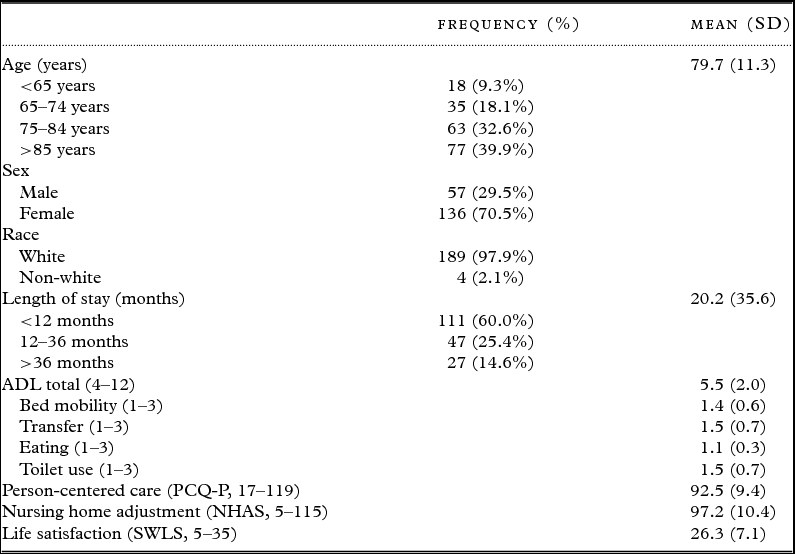
Table 1 shows the study participants’ demographic and health information. The mean age of the 193 participants was 79.7 years (SD = 11.3). The vast majority of the participants were white (98%) and women (70.5%). The mean length of stay was 20 months (SD = 35.6), although 60% of the participants had stayed less than 12 months. The mean ADL function score was 5.5 out of 12, indicating moderate levels of independence of ADL function. In addition, the Cronbach's α of the three main variables, PCQ-P, NHAS, and life satisfaction, were 0.89, 0.77, and 0.80, respectively, in this study. The Cronbach's α values of the sub-domains of PCQ-P and NHAS ranged from 0.5 to 0.9 in this study.
Sample characteristics (n = 193)

Note. SD = standard deviation; ADL = activities of daily living; The ADL total is the sum of four items (bed mobility, transfer, eating, and toilet use), and higher scores of ADL indicate more dependent status of ADL; PCQ-P = person-centered climate questionnaire – patient version; NHAS = nursing home adjustment scale; SWLS = satisfaction with life scale; Higher scores of PCQ-P, NHAS, and SWLS indicate higher levels of person-centered climate, nursing home adjustment, and life satisfaction. There were missing values for the length of stay (n = 8). ADL (n = 1), person-centered climate (n = 4), nursing home adjustment (n = 2), and life satisfaction (n = 1).
Results of the primary aims
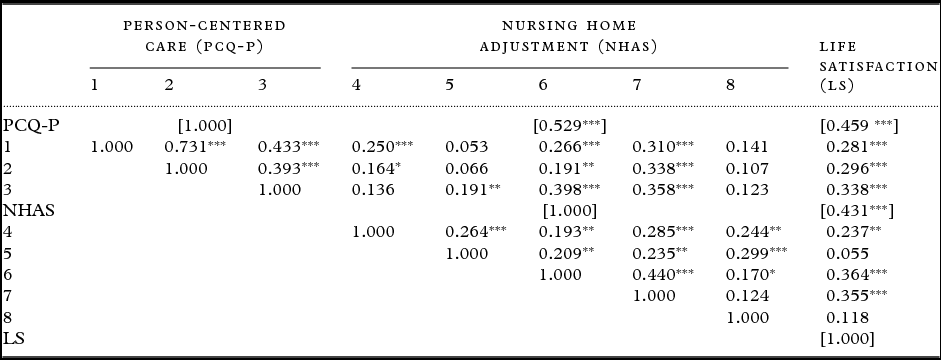
Table 2 indicates the preliminary exploration of correlations among the three main variables, including person-centered care, nursing home adjustment, and life satisfaction for nursing home residents. There were moderate levels of correlations indicating whether residents who perceived a person-centered climate in nursing homes were likely to experience better nursing home adjustment and were more satisfied with their lives in the nursing home (r = 0.529 and r = 0.459, respectively).
Correlations among person-centered care, nursing home adjustment, and life satisfaction (n = 193)

Note. PAC-Q: Person-centered climate questionnaire-patient version; NHAS: Nursing home adjustment scale; LS: Life satisfaction; 1 (hospitality), 2 (safety), 3 (everydayness), 4 (relocation distress), 5 (difficulty fitting in), 6 (relationship development), 7 (acceptance of the new residence), 8 (depressed mood); p values are significance test results of correlation coefficients from correlation analysis based on T distribution; *p < 0.05, **p < 0.01, ***p < 0.001.
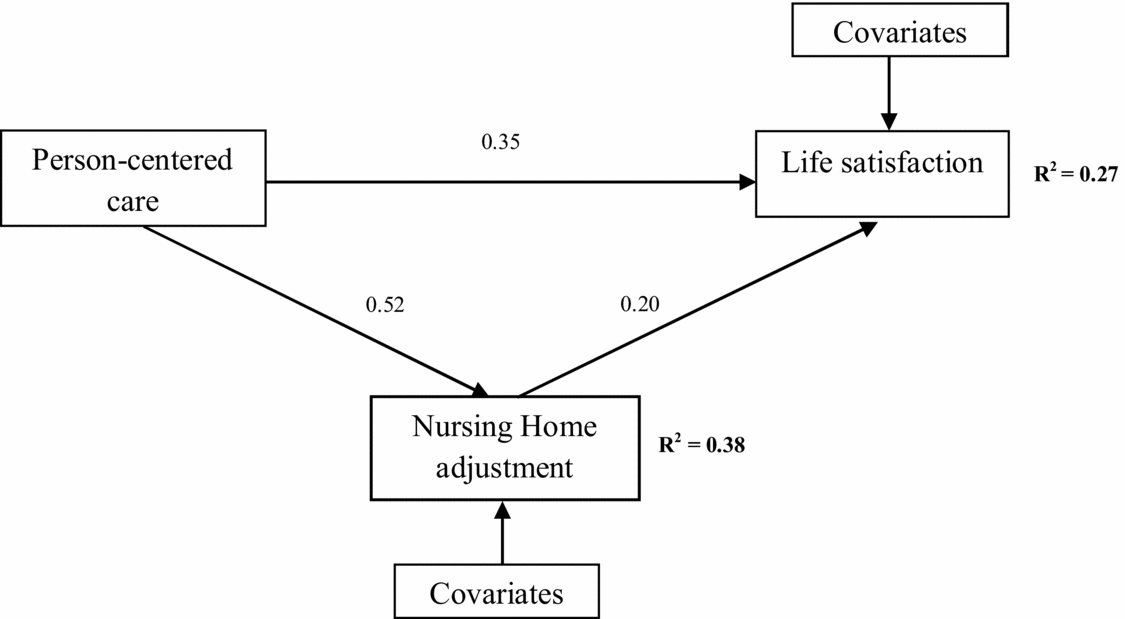
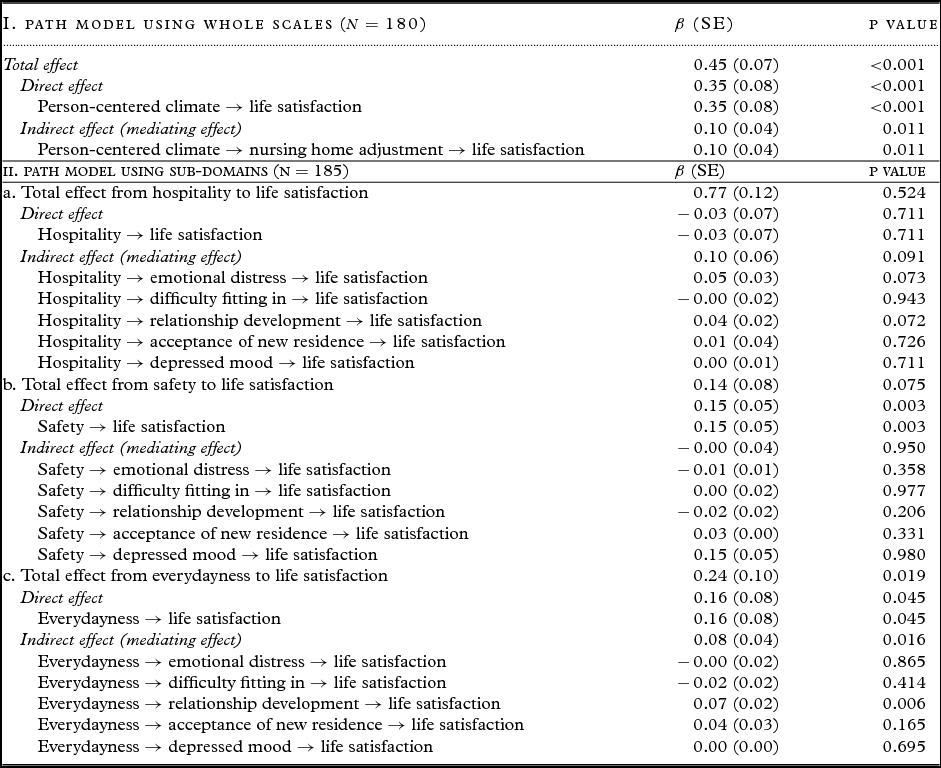
Figure 1 and the top of Table 3 include the results of the primary aim, using total scores of the three main variables to examine the direct and/or indirect relationships between person-centered care and life satisfaction through nursing home adjustment in the path model. A person-centered care environment had a significant, positive, direct relationship with residents’ life satisfaction (β = 0.35, p value < 0.001). This relationship was also mediated by improved nursing home adjustment (β = 0.10, p value = 0.011). This path model shows a good model fit (CFI = 0.999, RMSEA = 0.021), and explained 27% and 38% of the variance of life satisfaction and nursing home adjustment, respectively.
Path model using total scores of PCQ-P and NHAS. Bold solid lines indicate significant mediating roles on the relationship between person-centered care and life satisfaction. Values are standardized coefficients; Covariates (age, sex, length of stay, and ADL function) for life satisfaction and length of stay for nursing home adjustment were included in the path model. Only length of stay was significant on nursing home adjustment (β = 0.295, p < 0.001), but the other covariates were not statistically significant on nursing home adjustment and life satisfaction; Model fit indices: X 2 = 233.274 (df = 11, p < 0.001), CFI = 0.999, RMSEA = 0.021.

Results of path models

Note. SE = standard error; All coefficients are standardized; p values are significance test results of regression coefficients from path analysis based on T distribution.
Results of the secondary aim
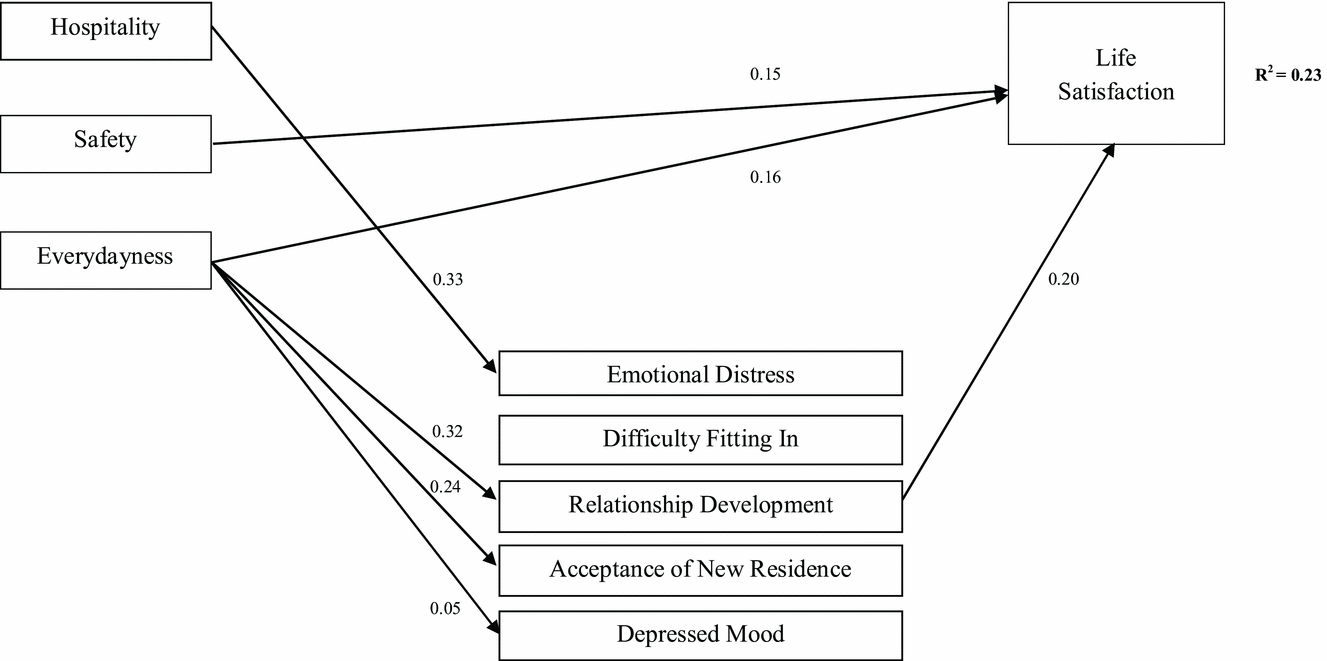
Figure 2 and the bottom section of Table 3 show the results of the secondary aim, which is an in-depth exploration using sub-domains of person-centered care and nursing home adjustment and how they were associated with life satisfaction in the multiple mediation path model. The sub-domains of person-centered care that directly related to the level of life satisfaction included “safety” and “everydayness” (β = 0.15, β = 0.16, respectively). The positive relationship between “everydayness” and life satisfaction was also mediated by the “relationship development” among the five sub-domains of nursing home adjustment (β = 0.07, p value = 0.006). In addition, “everydayness” was significantly related to the three sub-domains of nursing home adjustment: better “acceptance of the new residence” (β = 0.24, p value < 0.001), and lower “depressed mood” (β = 0.05, p value = 0.04). “Hospitality” was significantly associated with the “emotional distress” domain of nursing home adjustment (β = 0.33, p value < 0.001). A covariate, length of stay, was significantly related to all five subdomains of NHAS, indicating that residents who stayed longer reported more positive scores in the five sub-domains of NHAS. Compared to the first model, this second model using sub-domains did not show a good model fit (CFI = 0.870, RMSEA = 0.093).
Path model using sub-domains of PCQ-P and NHAS. Solid lines indicate significant paths and insignificant paths are not shown. Values are standardized coefficients; Given that length of stay (LOS) was significant in the first path model as a covariate, LOS was controlled for in the five sub-domains of nursing home adjustment (LOS was significantly related to the five sub-domains in this model, which was not shown in Figure); Model fit indices: X 2 = 28.751 (df = 11, p = 0.0025), CFI = 0.870, RMSEA = 0.093.

Discussion
This study found that a more person-centered care climate directly influenced residents’ nursing home adjustment and life satisfaction. This study further discovered a partial mediating effect of nursing home adjustment on the overall relationship between person-centered care and nursing home residents’ life adjustment. The indirect effects were relatively small (β = 0.10) compared to the direct path from person-centered care to life satisfaction (β = 0.35) among the total effects (β = 0.45) in the first model. Compared to the direct effect (78%), the indirect effect through nursing home adjustment (22%) seems relatively unimportant. However, it is a partial mechanism through which a person-centered climate in nursing homes influences residents’ higher life satisfaction by incorporating nursing home adjustment as a partial mediator, which is newly identified in this study.
The result of the first study aim that person-centered care was positively related to residents’ better life satisfaction is generally consistent with the current knowledge about the beneficial effects of person-centered care on residents’ care outcomes particularly related to their psychological well-being (Brownie et al., Reference Brownie, Horstmanshof and Garbutt2014; Li and Porock, Reference Li and Porock2014). Life satisfaction is a cognitive component of a person's subjective well-being, so it is a conscious cognitive judgment of one's life, based on the person’s own perception (Pavot and Diener, Reference Pavot, Diener and Diener2009). Supporting individualized and tailored care based on respecting the person's values and choices is the essential component of person-centered care (Edvardsson et al., Reference Edvardsson, Winblad and Sandman2008b). Residents who responded that their living environment was more person-centered were more likely to feel that the current place was their home where they could maximize their individual decision making and engage in a variety of activities, even everyday activities. They could also express their need for both medical and social needs based on their close relationships with the care staff in the facility. Thus, residents who experienced more person-centered care were more satisfied with their lives in the current place, because they may have perceived that there was smaller gap between their current judgment about their lives and their own unique set of criteria. In addition, the second path analysis specifically indicated that the “safety” component of person-centered care was directly associated with higher levels of life satisfaction. A concept of “safety” in person-centered care usually refers to the extent to which the staff is approachable and competent, and that the facility has a well-organized, neat, and clean environment (Edvardsson et al., Reference Edvardsson, Winblad and Sandman2008b). Therefore, ensuring residents’ safety within their living environment is very important to improve life satisfaction, because preventing avoidable negative events or emergency situations is critical for residents who primarily experience general functional decline and have symptom fluctuation during their stays.
This study found that person-centered care was also positively related to residents’ adjustment, which, in turn, improves life satisfaction among nursing home residents. Residents who perceived that the current place was more person-centered experienced better nursing home adjustment, which may imply that nursing homes that provide more person-centered care support residents’ decreased emotional reactions and their life goals were adjusted. A safe and comfortable environment with competent and approachable staff may cognitively help residents assess their environment to be more home-like, which can increase their life satisfaction during their stay. In particular, “relationship development” has played a mediator role on the relationship between “everydayness” of the person-centered care and residents’ life satisfaction. Getting to know residents is essential for staff to support residents’ life history and autonomy and provide more individualized care (Koren, Reference Koren2010). Establishing a meaningful relationship happens by sharing stories and keeping track of events in individuals’ lives, including residents and staff. Based on a deeper understanding, staff are likely to introduce a resident to the other residents who have common interests so they can develop new relationships while in the new nursing home. Developing new relationships in a living environment seems to be an essential component for residents to adjust to that new environment.
Of special interest in the current study is that the “everydayness” component of the person-centered climate concept was significantly related to the three sub-domains of nursing home adjustment including better relationship development, more acceptance of the new residence, and lower depressed mood. “Everydayness” means residents experience a home-like environment and feel relaxed. Examples of everydayness of a person-centered care climate include the presence of personal possessions (e.g. photos) and everyday objects (e.g. flowers or paintings), and an atmosphere in which people can talk about everyday life and not just about their illnesses (Edvardsson et al., Reference Edvardsson, Winblad and Sandman2008b). The normalization of the nursing home environment and activities has been an important component of the nursing home culture change movement in the USA (Koren, Reference Koren2010). Internationally, newly developed person-centered models have emphasized individualized care within a more homelike environment. For instance, Green House nursing homes in the USA and small-scale nursing homes for older adults with dementia in the Netherlands and Sweden have attempted to redesign the physical environment to be small-scale and home-like and to encourage residents to perform normal, everyday life activities based on individual function and preferences instead of group-based structured activities (Verbeek et al., Reference Verbeek, van Rossum, Zwakhalen, Kempen and Hamers2009). These new nursing home models that have emphasized individualized care and normalized activities have reported higher levels of social engagement compared to traditional nursing homes (Yoon et al., Reference Yoon, Brown, Bowers, Sharkey and Horn2015a). Thus, enhanced social engagement for residents through personalized care based on respecting each individual's autonomy and preferences might help residents feel like the environment is more homelike so that they can develop new relationships, accept the new residence, and experience less depressive symptoms.
Among the three components of person-centered care, “hospitality” (which refers to feeling welcome and experiencing generosity in the care environment), was significantly related to lower emotional distress in nursing home adjustment. Most older adults, who relocate to a nursing home experience some type of emotional reaction, including feeling overwhelmed, angry, and sad after nursing home relocation (Brandburg, Reference Brandburg2007; Lee et al., Reference Lee, Yoon and Bowers2015). In particular, residents in the early relocation phase reported the highest levels of emotional distress. The emotional distress symptoms did not disappear, but remained to some degree regardless of the length of stay (Yu et al., Reference Yu, Yoon and Grau2016). A supportive staff attitude and tangible support were significantly associated with less psychological distress for the nursing home residents at week one post-relocation (Keister, Reference Keister2006). The delivery of person-centered care depends on the knowledge and attitudes of frontline staff to develop resident-centered relationships, skills in interacting with residents, and personal qualities such as empathy and kindness (Li and Porock, Reference Li and Porock2014). If residents perceive that they are surrounded by caring people in a person-centered environment, they may adjust better to the new environment and, in particular, they may experience less negative emotional distress. This environment should include staff who are supportive, have positive attitudes, help residents feel welcome, and where residents can easily talk to staff about their feelings and experiences and ask for a little extra help from the staff.
Implications
Nursing home transition is a very individual experience, but the ultimate goal of the transition is to have a meaningful life while living with other people (staff and other residents) in the new environment. Thus, researchers and practitioners in long-term care settings need to pay more attention to developing concrete guidelines and recommendations to significantly improve residents’ transition and adjustment in practice by incorporating core elements of person-centered care. Specifically, the staff needs to take an active role in facilitating residents’ social connections with family, other residents, and staff because the capacity of residents to make new relationships and redefine previous relationships is an important determinant in resident adjustment to their new environment (Lee, Reference Lee2001). Nursing home staff also need more training to better detect and manage residents’ relocation anxiety and distress (Keister, Reference Keister2006; Komatsu et al., Reference Komatsu, Hamahata and Magilvy2007). During the care processes, an individualized care plan should be implemented based on understanding the resident's socio-cultural experiences and cultural heritage (Komatsu et al., Reference Komatsu, Hamahata and Magilvy2007). In addition, residents need to be more engaged in meaningful activities and preservation.
Limitations
Although this is the first study to examine the relationship between person-centered care and psychological well-being by incorporating nursing home adjustment as a potential mediator, several limitations should be acknowledged. The first limitation is the cross-sectional survey study design, which only allows for detecting temporal relationships not interpreting causal relationships. Although person-centered care was hypothesized as one of the structural and organizational components that sequentially influences care processes and outcomes in this study, other designs such as a quasi-experimental design are needed to establish causal relationships between person-centered care and psychological outcomes. Second, a larger scale study considering the diversity of the participants is also needed to obtain more relevant detailed findings on the mechanism of the relationships among the three variables. In particular, the lack of diversity in terms of geography and race/ethnicity in this study does not guarantee the representativeness of nursing home residents in the USA. Depending on the socio-cultural background and personal characteristics (e.g. coping skills), older adults may also experience different adjustment processes when relocating to a nursing home and have different levels of life satisfaction. For instance, Lee (Reference Lee2001) found that Chinese older adults did not regard a lack of privacy and autonomy as important so communal living was a very important factor for them (Lee, Reference Lee2001). Thus, a large-scale study taking into account race/ethnicity is needed. Third, since this survey study collected data based on residents’ self-reports, only cognitively intact nursing home residents were included in this study. In addition, only residents who were recommended by a nurse manager throughout the pre-screening inclusion criteria stage were approached by the research team to ask about their potential study participations. Since nurse managers identified eligible participants in this study, thorough evaluations of cognitive function and comorbidities were not performed. Thus, we could not provide information on the cognitive function and comorbidities including depression of the participants, which is a limitation of this study. This is an effective strategy to improve recruiting old and fragile residents in nursing home settings, but it may have caused sampling bias in this study. Regarding the statistical aspect, many hypothesis tests using multiple mediation analysis were concurrently conducted in the second model to examine the secondary study aim, which may increase the probability of Type 1 error and the Sobel's test was used in the mediation analysis, so the results may be tentative. The study findings should be interpreted with caution.
Conclusion
This study demonstrated that there were direct and indirect relationships among perceived person-centered environment, nursing home adjustment, and life satisfaction for nursing home residents. The residents who perceived that their nursing homes were more person-centered reported higher levels of life satisfaction, and this relationship was partially mediated through higher levels of adjustment to nursing homes. Specifically, the safety domain of a perceived person-centered environment was related to higher life satisfaction. Emphasizing everydayness for residents in the nursing home was related to higher levels of life satisfaction, which was partially mediated by improved relationship development of nursing home adjustment. The findings of this study provide new evidence by examining the positive association of person-centered care with nursing home adjustment. This study may provide insights into the relationship between person-centered care and psychological outcomes by incorporating the concept of nursing home adjustment as a mediator in the conceptual model and breaking down the major concepts into sub-domains in the analytic model.
Conflict of interest
None.
Acknowledgments
This research was supported by a grant from the Research Award (2013–2014) from the School of Nursing, University of Wisconsin-Madison, where the PI (JY Yoon) previously worked. The funding source had no role in the study design, data collection and analysis, interpretation of the data, writing the manuscript, or the decision to submit the manuscript for publication. The author especially thanks geriatric nurse practitioner Bruce Grau and the undergraduate nursing students for data collection and the older adults who participated in this study.