





Introduction
After the conflict between Russia and Ukraine began on February 24, 2022, millions crossed the Ukrainian border to escape the hostilities. The global number of Ukrainian refugees is 5,374,780, with 65,450 in Hungary (UNHCR, 2025). Refugees from Ukraine are experiencing both physical and psychological adversities associated with displacement (Moise et al., Reference Moise, Dennison and Kriesi2024). Humanitarian organizations responded immediately to their arrival, supporting social cohesion by linking refugees to local communities and activities (Carlsen et al., Reference Carlsen, Doerr and Toubøl2022; Kende et al., Reference Kende, Lantos, Belinszky, Csaba and Lukács2017; Meijeren et al., Reference Meijeren, Lubbers and Scheepers2023; Meijeren et al., Reference Meijeren, Lubbers and Scheepers2024). Effective communication in emergency crisis situations is crucial (e.g., Greussing & Boomgaarden, Reference Greussing and Boomgaarden2017; Maestri & Monforte, Reference Maestri and Monforte2020; Nolte & Martin, Reference Nolte and Martin2021; Simsa et al., Reference Simsa, Rameder, Aghamanoukjan and Totter2019; therefore, it is important to investigate the motivations of potential volunteers and to determine where they seek information during emergency crisis situations.
Previous research suggests that addressing volunteers’ motivations may increase involvement, and effective communication about the volunteering opportunities can play an important role in mobilizing volunteers (Bekkers & Wiepking, Reference Bekkers and Wiepking2011; Clary et al., Reference Clary, Snyder, Ridge, Miene and Haugen1994; Meijeren et al., Reference Meijeren, Lubbers and Scheepers2024). However, in crisis contexts, it remains unclear whether these motivations relate to how volunteers obtain information about volunteering opportunities. Rather than assuming a relationship between primary volunteer motivations and sources of volunteering information, this study investigates volunteer motivations and information sources as two related but distinct aspects of crisis volunteering.
Because information sources play a role in volunteer engagement (Omoto & Snyder, Reference Omoto and Snyder2002), this study examines how volunteers learned about volunteering opportunities in an emergency situation, with particular attention to the role of tie strength (Marsden & Campbell, Reference Marsden and Campbell1984) in crisis contexts. Tie strength indicates the closeness and frequency of relationships and can range from weak to strong (Marsden & Campbell, Reference Marsden and Campbell1984). The examination of information sources focuses on their role in relation to tie strength, which has been identified as a research gap.
Qualitative research methodology was employed by conducting 25 in-depth interviews with Hungarian volunteers, both formal and informal, assisting Ukrainian refugees in Hungary. According to Kentmen-Cin (Reference Kentmen-Cin2025), public support for refugees fluctuates over time, and views toward refugees are influenced by perceptions of the particular refugee crisis and the parties involved (Moise et al., Reference Moise, Dennison and Kriesi2024). Given the distinctiveness of the Hungarian context, characterized by limited immigration and governmental anti-migrant rhetoric that has cultivated adverse perceptions of refugees, examining volunteering offers valuable insights into how crisis situations shape volunteer motivations and information access patterns.
This study’s novelty lies in addressing research gaps by offering insights into volunteers’ motivations and information sources for volunteer opportunities during humanitarian crisis emergencies while emphasizing the importance of tie strength. This study is innovative as it illustrates the emergence of urgent crisis volunteering in contexts where assistance for refugees is influenced by conflict proximity, cultural connections, the urgency of conflict, and the unique position of Ukrainians in Hungarian public discourse.
Given that the motivations of volunteers in crisis are a critical aspect of research it is important to investigate a Hungarian sample in its specific context, so the main research questions guiding this study are as follows:
RQ1: What are the primary motivations for individuals to engage in immediate crisis response volunteering during war-related emergencies regarding Ukrainian refugees in Hungary?
Given the multitude of sources via which volunteers can learn about participation opportunities, it is essential to identify the most prominent sources. Therefore, the second research question of our study is as follows:
RQ2: What were the main sources of recruitment information for immediate crisis response volunteering in support of Ukrainian refugees in Hungary?
Theoretical background
Volunteering during crises
Volunteer work is generally understood as an activity carried out freely and without financial compensation, typically aimed at benefiting the common good (Güntert et al., Reference Güntert, Wehner, Mieg, Güntert, Wehner and Mieg2022; Nichol et al., Reference Nichol, Wilson, Rodrigues and Haighton2024). This includes formal volunteering (e.g., volunteering at an organization), as well as flexible and informal forms of engagement (e.g., individual helping activities). Research on volunteering, in crisis contexts, has grown significantly during the past decade. Studies have investigated various aspects of crisis volunteering, including organizational aspects, coordination, and volunteer experiences (e.g., Carlsen et al., Reference Carlsen, Doerr and Toubøl2022; Domaradzki, Reference Domaradzki2022; Simsa et al., Reference Simsa, Rameder, Aghamanoukjan and Totter2019), but only a few studies focus on the recent Ukrainian refugee crisis (e.g., Chudzicka-Czupała et al., Reference Chudzicka-Czupała, Chiang, Tan, Hapon, Żywiołek-Szeja, Karamushka, Paliga, Dubniak, McIntyre and Ho2023; Nowakowska et al., Reference Nowakowska, Duda, Ellena, Poli Martinelli, Szulawski and Pozzi2025; Sengupta et al., Reference Sengupta, Verghese and Rys2023).
Prior research has highlighted the importance of understanding volunteer motivations in crisis contexts, as these motivations may differ from those observed in non-crisis situations (e.g., Grönlund, Reference Grönlund2011; Meijeren et al., Reference Meijeren, Lubbers and Scheepers2024; Sengupta et al., Reference Sengupta, Verghese and Rys2023). Engagement in crisis volunteering is often influenced by the importance of value- and identity-driven motivations (Grönlund, Reference Grönlund2011), a strong moral and social justice orientation along with emotional factors (Meijeren et al., Reference Meijeren, Lubbers and Scheepers2024), and a dominance of intrinsic, normative-focused involvement driven by the urgency of the crisis (Sengupta et al., Reference Sengupta, Verghese and Rys2023). Within the broader field of crisis volunteering, understanding individual volunteer motivations is particularly important.
Volunteer motivations during crisis
Volunteers possess personal motivations for engaging in volunteer activities that shape their participation (Aslan & Tuncay, Reference Aslan and Tuncay2024; Bekkers & Wiepking, Reference Bekkers and Wiepking2011; Meijeren et al., Reference Meijeren, Lubbers and Scheepers2024). Drawing on functional theory (e.g., Katz, Reference Katz1960; Smith et al., Reference Smith, Bruner and White1956), volunteering can be understood as serving multiple psychological functions, which have been conceptualized as six motivational dimensions (Clary et al., Reference Clary, Snyder, Ridge, Copeland, Stukas, Haugen and Miene1998). These motivational categories are values (volunteering to express personal values, such as altruism), understanding (volunteering to acquire new knowledge about the world), enhancement (volunteering to improve self-esteem and foster psychological growth), career (volunteering to obtain career-related experience), social (volunteering to strengthen social and peer relationships), and protective motivation (volunteering to reduce negative emotions, such as guilt).
The Volunteer Functions Inventory (VFI) (Clary et al., Reference Clary, Snyder, Ridge, Copeland, Stukas, Haugen and Miene1998) has been extensively utilized to assess volunteering motivations, and scholars are also adapting it for crisis-related scenarios, such as refugee assistance. Meijeren et al. (Reference Meijeren, Lubbers and Scheepers2024) assert that research still lacks a comprehensive overview providing a thorough examination of the motivations for helping refugees and whether they align with motivations previously recognized as pertinent to volunteering in general. They conducted focus groups in order to extend the VFI framework to include specific aspects of refugee-related volunteering, and their results indicated that volunteering was highly motivated by humanitarianism, social justice, alongside skill enhancement. They found support for the earlier suggested extension of the VFI: the inclusion of the social justice function (Jiranek et al., Reference Jiranek, Kals, Humm, Strubel and Wehner2013). Their findings also expanded existing analysis on volunteer motivations by identifying other areas to explore; pragmatism, emotional factors, exposure to controversial media messages, and search for meaningful roles. In contrast to Meijeren et al. (Reference Meijeren, Lubbers and Scheepers2024), who concentrated on the motives of volunteers offering regular support and working under the auspices of involved organizations, our study examines spontaneous helpers, many of whom are unaffiliated with any organization, during a severe crisis.
There is a limited number of studies examining the motivations of volunteers aiding Ukrainian refugees (e.g., Chudzicka-Czupała et al., Reference Chudzicka-Czupała, Chiang, Tan, Hapon, Żywiołek-Szeja, Karamushka, Paliga, Dubniak, McIntyre and Ho2023; Domaradzki, Reference Domaradzki2022; Sengupta et al., Reference Sengupta, Verghese and Rys2023). Domaradzki (Reference Domaradzki2022) identified that altruistic motivations predominated among volunteers addressing the Ukrainian refugee crisis, characterized by a desire to assist others, contribute to the community, and engage in a significant cause. The research conducted by Chudzicka-Czupała et al. (Reference Chudzicka-Czupała, Chiang, Tan, Hapon, Żywiołek-Szeja, Karamushka, Paliga, Dubniak, McIntyre and Ho2023) revealed that the values, understanding, and enhancement motives received the highest ratings among Ukrainian and Polish volunteers helping Ukrainian refugees, with the values motive being the most prominent in both groups, despite notable differences between the nationalities of the volunteers. Sengupta et al. (Reference Sengupta, Verghese and Rys2023) aimed to understand the motivators for young people volunteering for Ukrainian refugees in Poland, revealing a predominance of hedonic motivators (such as the joy of enriching personal experiences, ideological beliefs, achieving change, personal satisfaction, and self-actualization), followed by normative motivators (e.g., societal contribution, national pride), then eudaimonic motivators (leadership and networking opportunities, and the enhancement of personal capital), and finally personal motivators (volunteering due to connections with family and friends in Ukraine).
While understanding volunteer motivations is essential for explaining participation in crisis contexts, it is equally important to examine how individuals become aware of volunteering opportunities.
Sources of information regarding volunteering opportunities
Volunteering opportunities can be communicated through three primary channels: interpersonal networks (e.g., friends, family, social connections), organizational communication (e.g., nonprofit and volunteer organizations), and third-party intermediaries (e.g., employers or community institutions). As a form of interpersonal communication, word-of-mouth (WOM) has been shown to enhance volunteer involvement (Hibbert et al., Reference Hibbert, Piacentini and Dajani2003). Wisner et al. (Reference Wisner, Stringfellow, Youngdahl and Parker2005) defined volunteer WOM as recommending the organization and volunteer activities to others. WOM and its digital form, electronic word-of-mouth (eWOM), exhibit strong influence, since individuals willingly disseminate information regarding opportunities to help without expecting anything in return (Killian et al., Reference Killian, Fahy, O’Loughlin, Plewa and Conduit2016). If the organization is enhancing volunteer relationships via peer interactions, it increases the probability of volunteering and the dissemination of positive WOM (Lee et al., Reference Lee, Kim and Koo2016). Social media platforms facilitate communication, enabling individuals to connect with previously unknown others, thereby influencing their social relationships and ties (Haythornthwaite, Reference Haythornthwaite2002). In crisis volunteering contexts, WOM and eWOM may have increased importance as opportunities are often shared through social contacts, online communities, and peer-to-peer sharing rather than through centralized communication.
From a social network perspective, the structure of relationships through which information flows is also important. Tie strength refers to the closeness and frequency of interactions between individuals, and ranges from weak to strong (Burt, Reference Burt2003; Granovetter, Reference Granovetter1973; Marsden & Campbell, Reference Marsden and Campbell1984). Individuals with strong societal ties typically exhibit intimacy, characterized by overlapping social circles and engaged in reciprocal and highly supportive discourse, while weak ties are defined as infrequent information sources that can provide new information (Gilbert & Karahalios, Reference Gilbert and Karahalios2009). While strong ties are often associated with trust and reinforcement (Frenzen & Nakamoto, Reference Frenzen and Nakamoto1993; Levin & Cross, Reference Levin and Cross2004; Shen et al., Reference Shen, Chiou, Hsiao, Wang and Li2016), weak ties may facilitate the rapid diffusion of timely information across wider networks (Gilbert & Karahalios, Reference Gilbert and Karahalios2009). According to Tezcan (Reference Tezcan2025), strong ties create an information bubble characterized by uniform norms and perspectives, while weak ties complement them by enabling access to novel information and different points of view.
Previous studies highlighted that social ties function as bridges to new opportunities (Bian et al., Reference Bian, Huang and Zhang2015; Kim & Fernandez, Reference Kim and Fernandez2017; Song et al., Reference Song, Zhang, Pettis and Rainock2026), which becomes particularly important in crisis contexts, where volunteers rely on rapidly circulating information to identify opportunities to provide aid. The closeness of relationships has been studied concerning the role of strong ties like family and friends in hosting migrants (Birger et al., Reference Birger, Tarshish and Nouman2024), but weak ties have rarely been studied, especially regarding information related to refugee assistance opportunities. In our study, strong ties refer to close and frequent personal relationships such as family and close friends, while weak ties include more distant and less frequent contacts, such as acquaintances or individuals contacted solely through online platforms.
Regarding information dissemination by voluntary organizations, Clary et al. (Reference Clary, Snyder, Ridge, Copeland, Stukas, Haugen and Miene1998) found that volunteering advertisements tend to be more persuasive when they focus on volunteers’ motivational functions. Volunteers exposed to advertisements highlighting their motivations have a greater willingness to volunteer compared to those seeing alternative messages, with a heightened level of persuasion (Clary et al., Reference Clary, Snyder, Ridge, Miene and Haugen1994). In alignment with Clary et al. (Reference Clary, Snyder, Ridge, Miene and Haugen1994), Jedicke et al. (Reference Jedicke, Olk, Zogaj, Tscheulin and Lindenmeier2024) identified various volunteer segments with different motivations and proposed focused strategies tailored to each segment for nonprofit organizations.
Information about volunteering opportunities can originate from a third party, such as the individuals’ employer. According to Rodell et al. (Reference Rodell, Breitsohl, Schröder and Keating2016), employee volunteering is defined as “employed individuals dedicating time to a scheduled activity for an external non-profit or charitable group or organization” (p. 3). Corporate volunteering initiatives serve as both a means of engagement and a source of information that promotes greater community participation. This study does not primarily focus on employee volunteering; however, it demonstrates that formal institutions can serve as information intermediaries in crisis.
While motivations explain why individuals engage in volunteering, information sources shape how individuals become aware of the volunteering opportunities. Prior research suggests that volunteer motivations are relevant for understanding engagement, and that communication plays an important role in volunteer mobilization (Clary et al., Reference Clary, Snyder, Ridge, Miene and Haugen1994). However, in crisis contexts, where rapid mobilization and information dissemination are critical, it remains unclear whether different motivations are associated with different information channels. In crises, individuals may rely on easily accessible and rapidly disseminated information regardless of their motivations. Therefore, examining motivations and information sources provides a more comprehensive view of volunteering in crisis situations. On this basis, this study addresses volunteer motivations and information sources as two related but analytically distinct aspects of crisis volunteering.
The specific context of the current study—Hungary
Our interviews were conducted from April to September 2022. According to official statistics, by June 2022, 1,312,550 individuals had migrated from Ukraine to Hungary (UNHCR, 2022). The socio-political factors make Hungary a distinctive setting for analyzing crisis-related volunteerism and attitudes toward refugees. To contextualize the current study, it is essential to understand the specific background of Hungary, as our research provides empirical insights into this distinct political and societal context.
Hungary, a postsocialist country in Central Europe, has remained isolated for decades, with limited immigration, resulting in increased ethnic homogeneity. The main immigration groups are ethnic Hungarians from nearby countries, followed by Chinese (Malota et al., Reference Malota, Bogáromi and László2024). Over the past two decades, Hungary has experienced a markedly exclusionary political environment, characterized by the ruling Orbán government’s recurrent exploitation of anti-migrant and anti-refugee sentiments, particularly leveraging the 2016 refugee crisis to propagate the narrative of refugees as an existential threat to Hungarian and European identity (Pepinsky et al., Reference Pepinsky, Reiff and Szabó2024). According to the election results on April 12, 2026. The centre-right opposition Tisza party defeated Fidesz, ending Orbán Viktor’s 16-year reign.
Migrants were pejoratively labeled as “migráncsok,” a narrative bolstered by the government through the installation of 1,025 street billboards aimed at refugees, proclaiming “If you come to Hungary, respect our culture,” “do not take away our jobs,” and “respect our laws” (Nagy, Reference Nagy2016). The government also used authoritarian strategies to restrict the civic space in Hungary by financial surveillance of non-governmental organizations (Nagy, Reference Nagy2017).
The Századvég Europe Project was initiated during the European migration wave, focusing on a comparative analysis of migration issues and the perceptions held by populations across various European countries. During the initial phase of the 2016 survey, 84% of Hungarians were either somewhat or very concerned regarding the issue of illegal immigration into their nation (Századvég, 2016). The European Social Survey in 2022 also indicated that Hungary exhibits the lowest levels of support for migration among the 21 European countries surveyed, with similarly low levels observed in certain other Eastern European nations (ESS, 2022). Concurrently, the European Commission (2022) survey regarding the “EU’s response to the war in Ukraine,” conducted in mid-April 2022 across 27 Member States (with 26,066 EU citizens interviewed online), reveals a notable level of solidarity, as 48 percent of Hungarians fully support the EU’s initiative to “welcome individuals fleeing the war,” albeit this figure is below the EU average of 55 percent.
Pepinsky et al. (Reference Pepinsky, Reiff and Szabó2024) illustrated through their survey data on refugee opinions from April and November 2022, in comparison to prior years, that the Ukrainian refugee crisis generated a notable increase in tolerance, transforming public sentiment toward refugees in a country characterized by pervasive anti-immigrant rhetoric. This was explained by the conflict proximity and the distinguishing characteristic of the 2022 refugee crisis that the refugees were predominantly white European Christians displaced from their homeland due to conflict. Comparative analyses of Kentmen-Cin (Reference Kentmen-Cin2025) also indicated that Ukrainian refugees typically experienced a more positive public welcome than other populations, e.g. Syrians. This disparity has been ascribed to the perceived proximity and spillover risk of the war conflict, along with similar cultural values with Western nations. These results are in line with prior research indicating that who the asylum seekers are is essential in influencing public willingness in host countries to accept them and in shaping refugee policies that generate popular support (Letki et al., Reference Letki, Walentek, Dinesen and Liebe2025).
In the aftermath of the 2022 Hungarian elections, the discourse evolved as the prime minister highlighted Hungary’s dedication to aiding Ukrainian refugees, accentuating the racial, religious, and cultural distinctions between refugees from European and non-European nations (Pepinsky et al., Reference Pepinsky, Reiff and Szabó2024). The emphasis on the ethnic Hungarian minority living in Transcarpathia has also become a significant focal point in regional politics. Moreover, several governmental decisions have been taken in order to help the transit process (Erőss, Reference Erőss2022; Kyriazi, Reference Kyriazi2022; Zakariás et al., Reference Zakariás, Feischmidt, Gerő, Morauszki, Zentai and Zsigmond2023) e.g. by providing free public transportation in Budapest for refugees from Ukraine. As a result, in Hungary, the narratives of refugees from neighboring countries did not endure the typical characterization of “migrants,” resulting in more hospitable and helpful attitudes. Zakariás et al. (Reference Zakariás, Feischmidt, Gerő, Morauszki, Zentai and Zsigmond2023) report that 40% of respondents had actively aided Ukrainian refugees at least once during the survey period (June, 2022, N = 1,000). The majority of individuals contributed through material and financial donations (about 23% of respondents in each instance), whereas 8% engaged in voluntary activity. The percentage of respondents who assisted with accommodation was minimal (2%), as was the percentage who supplied employment (4%) or offered assistance in other capacities (4%).
Method
To answer the research questions, this study employed a qualitative methodology to better understand how volunteers accessed information and what motivated their engagement in volunteering with Ukrainian refugees. Twenty-five semi-structured in-depth interviews were conducted to gain an understanding of the participants’ motives and to document their volunteering experiences. To address the study’s research questions and its dual focus, the choice of approach was determined by the purpose of each analytical domain (Elo & Kyngäs, Reference Elo and Kyngäs2008).
Our study employed thematic analysis with a deductive approach to analyze motivations grounded in theoretical frameworks. Functional theory (Clary et al., Reference Clary, Snyder, Ridge, Copeland, Stukas, Haugen and Miene1998) served as the theoretical basis for the deductive analysis of volunteer motivations, with the structure of analysis being operationalized on the basis of this prior theoretical knowledge (Elo & Kyngäs, Reference Elo and Kyngäs2008). The six motivational functions of functional theory (Clary et al., Reference Clary, Snyder, Ridge, Copeland, Stukas, Haugen and Miene1998) defined categories, thus drawing on an existing theoretical framework.
Information sources for volunteering opportunities have been explored through an inductive approach. This facilitates the emergence of patterns from the data in instances when prior research on the phenomena is lacking or when it is fragmented (Elo & Kyngäs, Reference Elo and Kyngäs2008).
Sample and data collection
Purposive sampling was employed to gather in-depth interviews with volunteers assisting Ukrainian refugees in Hungary. The participants were recruited using online and offline sources, resulting in a heterogeneous sample. Online, individuals were approached via social media platforms and relevant volunteer networks where calls for participation were posted. Given that most refugees seeking assistance were located in the capital city, characterized by high internet penetration, sampling through online channels is improbable to have introduced substantial bias. Offline recruitment occurred at refugee centers, where volunteers were directly invited to participate in the study. The limitation of our purposive sampling is that only members of the social media groups and those present in the refugee facilities (e.g., railway station) may be surveyed from the population. The criteria for eligibility were their engagement in aiding Ukrainian refugees in Hungary during the 2022 refugee crisis. Among the interviewees there were both formal and informal volunteers. No particular time commitment for volunteering was required due to the varying durations of the activities.
All interviews were conducted by the authors who had previous experience in qualitative research. The interview guide was pre-tested through two preliminary interviews, which were not included in the final sample. Based on these pilot interviews, the guide was fine-tuned to improve clarity and relevance of the questions. All participants were asked about their motives for volunteering, the information sources through which they learned about volunteer opportunities, their demographics, and their previous volunteering experience. A total of 27 interviews were conducted. Following the exclusion of two incomplete interviews, which hindered the interpretability and comparability of the data due to absent replies on key aspects, 25 semi-structured interviews served as the primary data source for developing volunteer profiles.
Interviews were conducted at least 2 months after the onset of the refugee crisis, specifically between April and September 2022, to provide participants adequate time to process the events and their volunteer experiences, as well as provide enough time for activities to unfold. The study was conducted on a voluntary basis, and no incentives were provided. Individuals were interviewed both in person and through Teams. Participants provided consent prior to the interviews, and their data were anonymized. Transcripts of the 40–60-minute interviews in Hungarian were produced.
Analysis and coding categories
The 25 interviews were transcribed in Hungarian, resulting in 227 single-spaced pages of interview material. The analysis began with familiarization with the data. Both researchers read the transcripts in full to gain an overall understanding of the data and to be able to identify relevant materials for the analyses. The analytical process was iterative, with the two researchers repeatedly returning to the transcripts, codes, and categories during the analysis to ensure that the interpretations remained grounded in the original interview data (Fereday & Muir-Cochrane, Reference Fereday and Muir-Cochrane2006).
The coding was conducted manually using spreadsheets and in the original language of the interviews (Hungarian). Sentences or paragraphs were used as coding units, depending on the amount of context required to capture their meaning (Elo & Kyngäs, Reference Elo and Kyngäs2008). The relevant coding units were then assigned descriptive codes. We analyzed the interview transcripts and noted all signs of motivations and information sources of volunteering opportunities. Given that the interviews were conducted in Hungarian, a translation-backtranslation procedure was applied to all quoted excerpts to ensure accuracy.
To enhance consistency in the analysis, the authors independently coded the transcripts, then met to discuss their coding in order to identify differences and establish an agreement on how to apply the codes. The initial agreement percentage was 73.91%, calculated using the approach proposed by Miles and Huberman (Reference Miles and Huberman1994). Disputed coding decisions were resolved during three rounds of conversations. Contested codes were resolved by comparing the data unit to other units assigned to the same codes, ultimately selecting the one demonstrating the highest degree of similarity. By including this phase of informal intercoder comparison and discussion, revising the coded units and resolving discrepancies through discussion to obtain consensus on all codes, we maintained consistency and reliability in the analysis (Guest et al., Reference Guest, MacQueen and Namey2012; O’Connor & Joffe, Reference O’Connor and Joffe2020).
For the analysis of volunteer motivations, a deductive coding approach was applied, where the categorization was guided by an existing framework (Elo & Kyngäs, Reference Elo and Kyngäs2008). We first identified the paragraphs relating to volunteer motivations, then we coded all motivations, followed by categorizing them according to Clary et al.’s (Reference Clary, Snyder, Ridge, Copeland, Stukas, Haugen and Miene1998) six motivational functions serving as prior coding categories. Codes indicative of the values motivation encompassed helping as a core value (e.g., “natural to help,” “aiding selflessly,” “helping minorities”). Protective motivation manifested in various forms, including coping with intense negative emotions (e.g., “I was devastated,” “I was scared”). The understanding motivation appeared as an interest in the process of crisis (e.g., “experiencing new things,” “curiosity”). Codes reflecting the career motivation included task fulfillment (e.g., “volunteering as part of the job,” “language proficiency,” “prior experience”). Codes concerning social motivation encompassed the development of personal relationships (e.g., “conversation with sister,” “being part of the helpers,” “family relevance”). The enhancement function was also included as prior category, although it was not identified in the interviews. Motivations were further categorized into primary and secondary types, with primary motivations explicitly mentioned as a central reason for volunteering by interviewees. All identified motivational codes could be assigned to one of the six prior motivational categories.
For the analysis of information sources, an inductive coding approach was applied, where categories were developed from the data rather than an existing framework (Elo & Kyngäs, Reference Elo and Kyngäs2008). The researchers first identified the paragraphs in which participants described how they had learned about volunteering opportunities and assigned descriptive codes reflecting them. Similar codes were then compared and grouped into broader categories. For example, codes such as “post in helping Facebook groups” and “Facebook post in help (Ukraine, Carpathian)” were categorized into “Facebook groups dedicated to helping Ukrainian refugees,” which was then included in the theme of “Self-organized Facebook groups.” Only after the categories had been developed inductively, the WOM and social network perspectives were used to interpret the inductively developed categories.
Sample characteristics
Twenty-five in-depth interviews were conducted with participants aged 20–65, 16 participants were female, and 9 of them were male. Most of the volunteers had been engaged in other volunteer activities before aiding the Ukrainian refugees. Table A1 in the Appendix describes the interviewed volunteers along various aspects: gender, age, volunteer activities, and motivations. Numbers were used to keep participants anonymous.
Findings
The findings are presented below in relation to the study’s two focal aspects: volunteer motivations and information sources.
Motivations for helping the Ukrainian refugees
The aim of the research was to identify the underlying motives of volunteering to aid in a refugee crisis specifically within the context of the Ukrainian refugee situation. Values mean that the volunteer takes part in the activity to act according to important values such as humanitarianism and altruism (Clary & Snyder, Reference Clary and Snyder1999). Among the motivations connected to the values three subcategories could be identified. Some just wanted to help people because it was natural; they did not consider acting differently. Others wanted to do as much as they could to reduce the trauma that the crisis caused to refugees, while others felt to take responsibility in helping as citizens.
This is how it is; this is what you do [helping] when you can do it, and we can do it. (22.)
I just wanted these women, children, men, to be hurt as little as possible. (17.)
I felt that I had to take social responsibility and the best way to do that was to apply for a volunteer opportunity. (18.)
The other dominant motivation among the interviewed volunteers was protective motivation, which means taking part in the volunteering activity to reduce one’s negative feelings, such as guilt (Clary & Snyder, Reference Clary and Snyder1999) and related to which three different categories could be identified. Volunteers sought to assist the refugees directly to witness the outcomes of their aid firsthand. Other volunteers were profoundly affected by the Ukrainian refugee crisis and its proximity, which motivated them to engage in volunteer activities to reduce their guilt and unpleasant emotions. The final significant aspect of protective motivation stems from the proximity of the events: volunteers engaged due to their ability to empathize with the refugees’ situations, identifying with them, and expecting analogous support from others in similar situations.
We wanted to help in a way that was really first-hand and to see the results. (5.)
The war that has broken out has shaken us deeply, and we are turning these negative energies to help, not to fear. (9.)
I would also expect that if [something similar happens], I would also be welcomed somewhere where there is no war, and I can live in peace. (15.)
Understanding motivation means that the volunteer is open and eager to learn new things about the world (Clary & Snyder, Reference Clary and Snyder1999). Volunteers were interested in understanding the processes and coordination involved in situations such as the Ukrainian refugee crisis.
Basically, gaining new experience and curiosity was a big motivation. Obviously, there’s a lot of fake news these days, and it was exciting to see that a situation actually looks like. (3.)
Career motivation refers to the necessity of acquiring experience that will facilitate advancement in one’s career (Clary & Snyder, Reference Clary and Snyder1999). There were volunteers whose activities were part of some kind of contractual job that required these activities to fulfill their duties.
This [the volunteering task] was part of the job of managing an office, but we were all happy to take part and take on this task. (4.)
Social motivation involves the possibility of strengthening the volunteer’s relationships and social network by taking part in the activity (Clary & Snyder, Reference Clary and Snyder1999). Volunteers regarded interactions with others as highly significant and participated in the volunteer activity due to the group they aspired to join, which volunteered there and extended an invitation to them.
He [my mentor] always invited us to go with him, and then for a day or two I was in Berehovo at the Maltese charity in Berehovo district. (11.)
The enhancement motivation, which presents the need for the volunteer’s development and enhancing self-esteem (Clary & Snyder, Reference Clary and Snyder1999) was not mentioned by any of the interviewed volunteers.
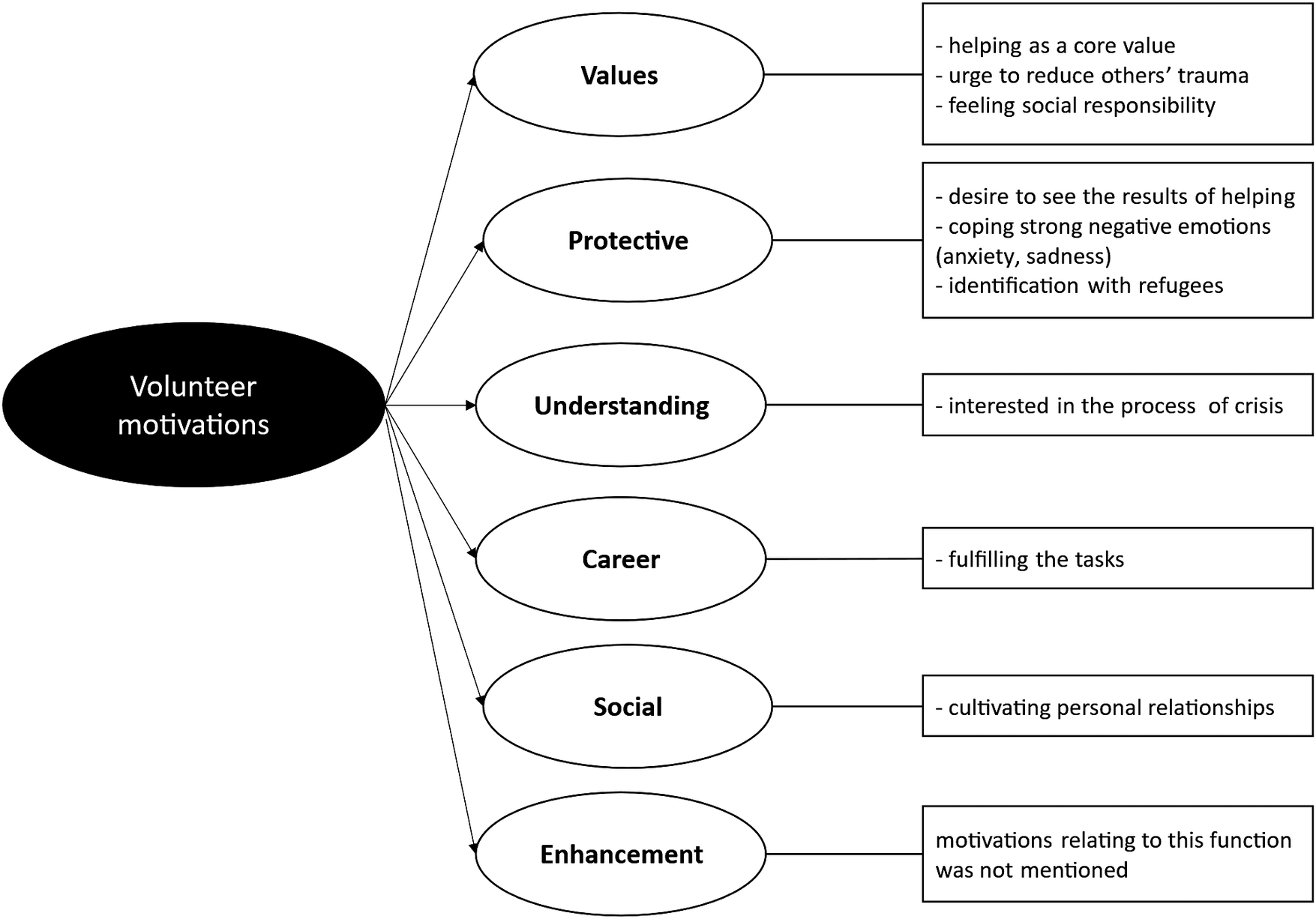
Figure 1 summarizes the results of the deductive analysis of volunteer motivations, along with the motivation categories and the associated codes. The findings of this study build on the functional approach of volunteering by Clary and Snyder (Reference Clary and Snyder1999), and multiple motivational functions were identified among volunteers aiding Ukrainian refugees. However, due to the context of crisis, some motivations were found to be more prominent than others.
Thematic map of volunteer motivations.

Fig. 1 Long description
A horizontal flowchart originates from a black oval on the left labeled Volunteer motivations. Six arrows branch out to a vertical column of white ovals, each connected to a rectangular text box on the far right. From top to bottom, the categories and their descriptions are:
* Values: helping as a core value, urge to reduce others’ trauma, and feeling social responsibility.
* Protective: desire to see the results of helping, coping strong negative emotions anxiety, sadness, and identification with refugees.
* Understanding: interested in the process of crisis.
* Career: fulfilling the tasks.
* Social: cultivating personal relationships.
* Enhancement: motivations relating to this function was not mentioned.
Five of Clary and Snyder’s (Reference Clary and Snyder1999) volunteer motivation categories were identified among respondents engaged in volunteer activities during the Ukrainian refugee crisis. Values and protective motives emerged as the most prevalent, each comprising three subcategories, whereas enhancing motivation was absent.
Sources of information about volunteering opportunities
Beyond motivations, the analysis also examined how volunteers accessed information about volunteering opportunities. The volunteers were inquired about the sources of information on volunteer activities associated with Ukrainian refugees. Five primary sources of information were found during the analysis: self-organized Facebook groups, friends and relatives, aid organizations, workplace, and other sources (TV and railway station).
Facebook groups emerged as the primary source of information for supporting Ukrainian refugees through voluntary efforts. Multiple participants identified self-organized Facebook groups as their source of information for the volunteering activity. Given the growing importance of the internet and social media platforms, it is unsurprising that during emergencies such as this, attention on social media shifted to the Ukrainian refugee crisis, leading to the emergence of support groups. The majority of individuals in these Facebook groups were previously unacquainted, indicating that in emergencies, eWOM is more prevalent among weak ties than strong ones. This could have happened because the information about the volunteering opportunities in the group posted by strangers was found to be authentic and was not questioned.
There was a [Facebook group named] group help (Ukraine, Carpathian) and it’s a public group [that I was not a member of] and it just popped up to me on Facebook and I could see that refugees and volunteers were coming in all the time. There are a lot of volunteers on these platforms, they are all trying to help. I didn’t even second-guess the content they’ve posted, we all tried to help the refugees. (7.)
And when we read this news, we simply looked at each other and there was no question of us giving them this humanitarian aid, even though it was posted by a stranger. (22.)
Friends and family as strong ties of the volunteers were found to be the second most important source of information. With the pervasiveness of digitization in daily life, it is unsurprising that the majority of information from friends and family is transmitted through social media, leading to widespread reliance on eWOM. It may serve as a resource for identifying volunteering opportunities and could facilitate assistance to refugees by disseminating information about those in need on social media platforms. An individual obtained information regarding volunteer activities from his mother, who had sourced it from a Facebook community dedicated to assisting Ukrainian refugees.
We saw a message through a Facebook post of our friend that some people [refugees] were looking for accommodation in the Győr area, but our friend lives in Germany, and he didn’t know these people directly, but he asked for help through his own contacts. (14.)
In addition to self-organized Facebook groups and personal recommendations, the official channels of aid organizations were recognized as sources of information regarding volunteering opportunities. Multiple volunteers were previously engaged with the Maltese Charity Service and received information regarding volunteering possibilities from them. A respondent had previously enrolled in the Migration Aid phone number database and received information about help from them. The social media platforms of organizations like Budapest Bike Maffia and Amnesty International were actively endorsing volunteer activities. Both charitable groups and churches engaged their followers in diverse activities to assist those in need.
On the social media pages of Amnesty International and the Budapest Bike Maffia, you could find information about what to bring, when to bring it, what do they need and what they don’t need. (17.)
The interviewees highlighted the role of the workplace in this context. The corporation, if directly engaged in Ukraine, advocated for actions to assist employees and raised awareness of support for the subsidiary. The workplace provided employee volunteering options that facilitated assistance to refugees by collaborating with a charitable group offering organized volunteer activities. If a company did not actively facilitate volunteer opportunities, employees could disseminate information about charitable groups’ activities to their colleagues.
For us, when the war broke out, the company started an initiative to try to help Ukrainian refugees, and because of the size of our office we were able to adapt it, to turn our basement into a temporary shelter, there was a possibility there. (4.)
The opportunity came up practically through my employer, Vodafone, to set up a stand at the Eastern [railway] station where we would give SIM cards and provide services to the arriving refugees to help them to communicate. (18.)
Other information sources comprised television and the railway station, as the on-the-spot information hub. Volunteers acquired knowledge about the comprehensive refugee crisis through traditional media, which included the advertisement of volunteering opportunities (e.g., needed help in transportation) on television news, emphasizing the demand for volunteers at various locations, such as railway stations.
The majority of Ukrainian refugees reached Hungary via train at the Eastern Railway Station. During the initial phase of the refugee crisis, it was established as the primary gathering point, serving as a hub for humanitarian organizations along with facilitating spontaneous information exchange between refugees and aid workers. According to one of the interviews, an individual lacking knowledge of how to assist could inquire there about available volunteer activities and could contact the refugees to provide aid. This underscored the importance of physical locations not merely as access points but as informal yet efficient sources of information and volunteer mobilization.
I just went to the station and was there, then I got information from the Facebook group. (10.)
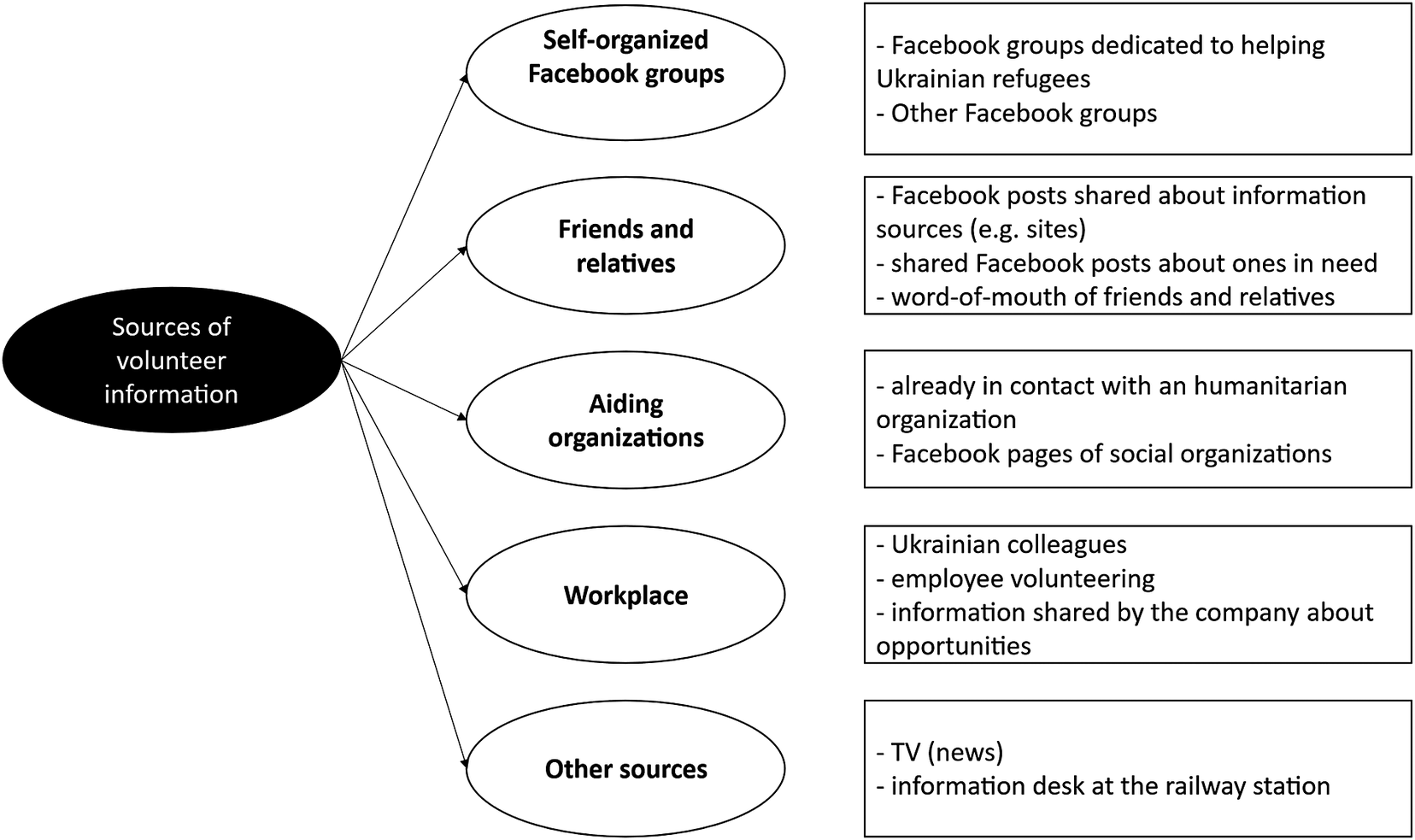
Figure 2 summarizes the results of the inductive analysis of information sources, where the first column displays the recognized sources of information, while the subsequent column specifies the codes associated with the category.
Thematic map of volunteer information sources.

Fig. 2 Long description
A horizontal flow diagram begins on the left with a black oval labeled Sources of volunteer information. Five arrows radiate from this central node to five white ovals arranged vertically. Each white oval is paired with a rectangular box to its right containing bulleted details.
* The first oval is Self-organized Facebook groups. Its box lists: Facebook groups dedicated to helping Ukrainian refugees; Other Facebook groups.
* The second oval is Friends and relatives. Its box lists: Facebook posts shared about information sources e.g. sites; shared Facebook posts about ones in need; word-of-mouth of friends and relatives.
* The third oval is Aiding organizations. Its box lists: already in contact with an humanitarian organization; Facebook pages of social organizations.
* The fourth oval is Workplace. Its box lists: Ukrainian colleagues; employee volunteering; information shared by the company about opportunities.
* The fifth oval is Other sources. Its box lists: T V news; information desk at the railway station.
The findings indicate that people, groups, and enterprises have a pivotal role in disseminating volunteering opportunities during critical situations such as the Ukrainian refugee crisis. Both WOM and eWOM emerged as the predominant sources of information, confirming the findings of Hibbert et al. (Reference Hibbert, Piacentini and Dajani2003), which suggest that WOM serves as an effective communication channel for volunteer recruitment.
Discussion
Building on the findings, this section interprets the results in relation to existing literature. This study examined volunteers’ motivations and the information sources through which they became aware of volunteering opportunities during the Ukrainian refugee crisis in Hungary. The findings demonstrate the rise of immediate crisis volunteering under circumstances where aid for refugees is related to a specific context: the Hungarian public discourse.
Motivations for helping the Ukrainian refugees
Previous research indicated the existence of the motivational functions of values, protective, understanding, career, social and enhancement motivations (Bekkers & Wiepking, Reference Bekkers and Wiepking2011; Clary & Snyder, Reference Clary and Snyder1999). However, our findings indicate the dominance of values and protective motivations among the Ukrainian refugee crisis volunteers. Values motivations were emphasized during the interviews to a great extent, with three distinguished categories: helping as a core value, urge to reduce others’ trauma, and feeling social responsibility. Values motivation appears in performed acts on important values (e.g., Anderson & Moore, Reference Anderson and Moore1978; Sengupta et al., Reference Sengupta, Verghese and Rys2023; Shantz et al., Reference Shantz, Saksida and Alfes2014), which supports our findings. The protective motivations were appearing as the following: the desire to see the results of helping, coping with strong negative emotions (anxiety, sadness), and identification with refugees. These findings align with research conducted on crisis and disaster volunteering, as it emphasizes the importance of moral and emotional aspects of volunteers (Simsa et al., Reference Simsa, Rameder, Aghamanoukjan and Totter2019).
Understanding, career, and social motivations were present in participants’ answers but played a marginal role, mostly as secondary motivations. Most notably, the enhancement motivation function was not present in our study. While self-development has been identified in other studies in volunteering with refugees (e.g., Chudzicka-Czupała et al., Reference Chudzicka-Czupała, Chiang, Tan, Hapon, Żywiołek-Szeja, Karamushka, Paliga, Dubniak, McIntyre and Ho2023), it did not emerge among the volunteering motivations of individuals aiding Ukrainian refugees in our study carried out in the initial phase of the crisis. In a crisis, individuals may prioritize helping those in need over self-interested motivations, such as enhancing self-esteem or achieving psychological growth through volunteer activities.
Our findings suggest that in a crisis situation where there is urgency, values and protective motivations become more dominant for volunteers instead of focusing on self-development. This highlights the need for a contextualized interpretation of volunteer motivation theories. The emerging pattern can be explained by the specific characteristics of crisis situations, which are typically described by urgency, emotional intensity, and moral salience. In such contexts, individuals are less driven by long-term benefits of volunteering and may be driven more by immediate emotional reactions and perceived moral obligations. The geographical proximity of the Ukrainian refugee crisis, along with its psychological and historical relevance in Hungary, may have further intensified these empathic responses, reinforcing value- and protection-based motivations. In particular, this proximity, combined with the perceived similarity between locals and the Ukrainian refugee population (many of whom are members of the ethnic Hungarian minority residing in Transcarpathia), may have strengthened identification with them, making helping more immediate and personally relevant. This may also distinguish the Ukrainian refugee crisis from other refugee contexts, where greater perceived social or cultural distance can reduce identification and influence motivational structures. The significance of values and protective motivations may indicate not just the importance of volunteering during a crisis but also the perception of this refugee group in Hungary.
These findings can also be contextualized considering recent extensions of the functional theory. In line with Meijeren et al. (Reference Meijeren, Lubbers and Scheepers2024), motivations related to humanitarian values and emotional engagement were particularly prominent in our study. The identified subcategories (e.g., helping as a core value, reducing others’ trauma, and coping with negative emotions) reflect the emotional factors and context-specific motivations highlighted in prior research. However, in contrast to Meijeren et al. (Reference Meijeren, Lubbers and Scheepers2024), motivations related to self-development and skill enhancement did not emerge, suggesting that in acute crisis situations, emotionally driven and value-based motivations may dominate over self-oriented ones.
Sources of volunteer information
In addition to identifying the motivational dynamics, our study examines how volunteers acquired information about volunteering opportunities in an emergency situation such as the Ukrainian refugee crisis. Previous studies emphasized the central role of WOM communication in volunteer recruitment (Hibbert et al., Reference Hibbert, Piacentini and Dajani2003), focusing on the role of strong ties in disseminating information.
Our results partially support the findings of Hibbert et al. (Reference Hibbert, Piacentini and Dajani2003), as both WOM and eWOM were found to be important sources of information. However, our research identified the dominant role of self-organized Facebook groups consisting of weak ties, which challenges the traditionally assumed importance of strong ties in information transmission (Frenzen & Nakamoto, Reference Frenzen and Nakamoto1993; Shan & King, Reference Shan and King2015). While source credibility is most important in most eWOM communication (Moradi & Zihagh, Reference Moradi and Zihagh2022), due to the urgency and the contextuality (Ajrouch et al., Reference Ajrouch, Antonucci and Webster2016; Steffes & Burgee, Reference Steffes and Burgee2009), specialized information (e.g., how and where to help) (Constant et al., Reference Constant, Sproull and Kiesler1996) shared by unfamiliar individuals was perceived as authentic and trustworthy. This can be explained by the immediacy of crisis situations, where the speed and accessibility of information may outweigh the need for established trust. In such contexts, individuals may rely on any available information about volunteering opportunities shared within broader networks, even when its source is unfamiliar. The perceived urgency of the situation may reduce the need for verification, increasing the acceptance and importance of volunteering-related information from weak ties.
Strong ties were identified as secondary information sources, often reinforcing information obtained through weak tie networks. Volunteers frequently discovered valuable information and volunteering opportunities through Facebook posts from friends and relatives that shared recruitment messages or links to useful websites. Formal volunteer organizations and workplaces also played a role in transmitting information about volunteering opportunities in their network, but they were less dominant during the initial phase of the Ukrainian refugee crisis. This may be linked to the specific dynamics of the Ukrainian refugee crisis, particularly in its early phase, which was characterized by rapid and largely decentralized responses. In the absence of fully coordinated institutional communication, volunteers relied on spontaneously emerging online communities, where information about volunteering opportunities could be shared and accessed in real time. This may also reflect the specifics of the Hungarian context, as organizations—within a partially decentralized support framework—frequently depended on flexible and informal channels. Consequently, the prevalence of weak-tie eWOM may be explained not only by its immediacy but also by the fact that crisis volunteering emerged through flexible, informal, and accessible channels in this context.
The relationship between motives and sources of information about volunteering opportunities was examined, revealing that the main pattern is the predominance of weak-tie eWOM as an information source across all motivation categories, hence underlining its importance. The findings indicate no meaningful relationship between motivations and information sources: while motivations varied, information sources did not differ across motivational groups. This suggests that in crisis situations, the relationship between motivations and sources of information about volunteering opportunities may be weaker than expected. Regardless of their motivations, volunteers appear to rely on the same easily accessible channels through which volunteering opportunities are communicated, indicating that situational urgency overrides individual motivational aspects. Based on this, besides relying on motivation-based communication strategies, organizations may benefit from focusing on coordination mechanisms, clear task allocation, and establishing accessible entry points for volunteers.
Theoretical contribution
Based on the findings and their interpretation, this study contributes to existing theories in several ways. First, it provides insight into motivations for volunteering and sources of volunteering information in crisis situations. The investigation revealed that the values and protective motivations identified by Clary and Snyder (Reference Clary and Snyder1999) were predominant, while enhancement motivation was absent. While Meijeren et al. (Reference Meijeren, Lubbers and Scheepers2024) extended the VFI framework (Clary & Snyder, Reference Clary and Snyder1999), our study refines it by demonstrating that enhancement motivation may become less salient in acute crisis contexts. This suggests that self-related motives—such as self-esteem or personal growth—may become less salient in acute crisis contexts, thus requiring a contextualized application of the functional approach. Our study extends the literature not only by confirming the existence of these motivations but also by highlighting that in a crisis situation, moral and emotional motivations appear to be the most prominent, while other motivational factors play a more limited role. Our findings add to previous theories by demonstrating that the applicability of specific VFI dimensions may vary across volunteering contexts, indicating that self-oriented motivational functions are context-dependent rather than universal.
In addition, our results reveal the key role and impact of weak ties (e.g., members of Facebook groups) as information sources during a crisis. This contributes to research on WOM and social networks (e.g., Frenzen & Nakamoto, Reference Frenzen and Nakamoto1993) by suggesting that in emergency volunteering, weak-tie eWOM from unfamiliar individuals can serve as an important, credible, and mobilizing source of information. Rather than confirming the presumed dominance of strong ties, our results point to a pattern in which weak ties become particularly salient in immediate crisis contexts. Overall, our findings contribute by showing that in crisis contexts, the assumed relationship between volunteer motivations and information dissemination channels may be weaker than expected. Our data indicate a more notable rise of values and protective motivations, as well as an increased emphasis on weak-tie eWOM, compared to findings from other nations (Meijeren et al., Reference Meijeren, Lubbers and Scheepers2024; Sengupta et al., Reference Sengupta, Verghese and Rys2023), likely due to the severe crisis situation and the distinctive Hungarian socio-political context.
Managerial implications
In addition to theoretical contributions, the findings also have practical implications for nonprofit organizations, which often face recruitment challenges (Hager & Brudney, Reference Hager and Brudney2011). Our findings offer insights for improving volunteer mobilization in emergency crisis situations. Our findings suggest that in crisis situations, organizations should not rely only on motivation-based communication strategies. Instead, ensuring rapid, accessible, and widely disseminated information may be more critical for volunteer mobilization. Communication during emergencies should prioritize clarity, speed, and accessibility rather than assuming different motivational groups require different communication channels.
While value-driven and protective motivations were prominent among volunteers, our findings do not allow conclusions regarding the effectiveness of specific message contents. These findings are more useful for understanding volunteer engagement in crisis situations. The strong presence of protective motivations suggests that volunteers participate not only to help others but also to cope with negative emotions provoked by crises. Providing opportunities for reflection, emotional support, and visible feedback on the outcomes of helping can meet volunteers’ psychological needs and can reduce emotional exhaustion and withdrawal.
From a managerial perspective, the role of eWOM as the main information source suggests that a shift from conventional, centralized communication toward decentralized, digital dissemination of information is important during emergencies. Timely, transparent, and easily shareable online messages can circulate rapidly across networks. Utilizing weak-tie networks by sharing opportunities through open digital platforms, such as Facebook groups, is crucial, and communication methods extending outside established volunteer networks can be useful in emergency crisis situations.
Beyond effective communication, organizations may benefit from focusing on maintaining a higher level of coordination and developing protocols for similar scenarios for seamless operation in emergency situations. Many aspects—such as motivation, engagement, recognition, and retention strategies—can influence individuals to start or continue volunteering. Besides managing volunteer experience and satisfaction (Wymer & Najev Čačija, Reference Wymer and Najev Čačija2025), transparent operation, quality volunteer management, and suitable work conditions (Meijeren et al., Reference Meijeren, Ellemers and Lubbers2026) were also found to be important. As previous research (Nowakowska et al., Reference Nowakowska, Duda, Ellena, Poli Martinelli, Szulawski and Pozzi2025) suggests, there is a clear lack or underdevelopment of formal retention strategies and structured support systems. Enhancing these organizational aspects can foster volunteer retention and operational resilience, providing a desirable addition to a communication-focused approach.
Limitations and future research directions
Despite these contributions, the study has several limitations that should be acknowledged. A purposive sampling technique was employed to select the interviewees among Hungarian individuals who assisted Ukrainian refugees, which may be a limitation of our research. Another limitation of our findings is the specific context of public and political opinion on Ukrainian refugees in Hungary during the crisis, as attitudes toward refugee groups may vary based on their cultural proximity and framing. A deductive approach was used in the analysis of volunteer motivations, based on the categories of functional theory, which may have limited the emergence of context-specific motivations. While this approach ensured theoretical consistency and comparability, a more inductive approach could have allowed a more in-depth exploration of motivational patterns in a crisis context. Furthermore, although the VFI was originally developed for formal volunteering, it has also been applied in informal contexts. This supports its relevance as a guiding analytical framework, provided its limitations are acknowledged, particularly its ability to capture the unique, often situational motivations present in informal volunteering.
As a future research direction, it is important to undertake quantitative research to accurately delineate the motives of volunteers and their respective proportions supplemented with the emerged motivational aspects of Meijeren et al. (Reference Meijeren, Lubbers and Scheepers2024). Second, conducting longitudinal research can track participants over time, revealing motivational changes following involvement in a crisis situation. Third, conducting similar research in other countries may help clarify how cultural and political contexts shape volunteer motivations and sources of volunteer opportunities in emergency situations. Fourth, the importance of weak ties in crisis situations could also be investigated further by identifying and ranking the perceived authenticity of information coming from different sources to find out which sources are viewed as more authentic. Moreover, the ethical implications of volunteering justify additional investigation, particularly regarding the interaction between collective and self-interest. Finally, future research could examine how message content relates to volunteer motivations in order to better understand whether any meaningful relationship exists between communication content and motivational profiles.
Conclusion
In conclusion, this study demonstrates that crisis volunteering is a context-dependent form of civic engagement, shaped not only by individual motivations but also by the broader social and political environment in which helping takes place. The Hungarian context is particularly illustrative in this regard, as volunteering for Ukrainian refugees emerged within a context previously characterized by strong anti-migration sentiment. Our findings suggest that crisis situations may influence which motivational functions of volunteering become salient, with values and protective motivations being prominent, while motivations related to self-development were notably absent.
The study shows that understanding crisis volunteering requires attention not only to why individuals are willing to help but also to how this willingness leads to participating in crisis volunteering. Informal digital networks may also play an important role in this process by connecting potential volunteers with opportunities to help.
Our findings point to a broader understanding of crisis volunteering as a socially embedded process: people’s willingness to help, the functions they seek to fulfil, and the ways they access opportunities can all be shaped by the surrounding context and environment. For volunteer organizations, this underscores the importance of designing context-sensitive recruitment strategies that recognize both the motivations of crisis volunteers and the informal networks through which volunteering opportunities spread.
Supplementary material
The supplementary material for this article can be found at http://doi.org/10.1017/S0957876526000823.
Funding statement
No funds, grants, or other support was received.
Competing interests
The authors declare no conflict of interest.
Ethical standards
The authors complied with ethical standards, and this study is based on the ethical guidelines of Corvinus University Ethical Review Committee.
Appendix
Interviewee profiles: gender, age, type of activity, and motivations

Table A1. Long description
The table consists of 25 rows of data with 9 columns. The columns are: No., Gender, Age, Volunteer activity, and five sub-columns under Motivation: V (Values), P (Protective), U (Understanding), C (Career), and S (Social). A bold checkmark indicates a primary motivation, while a light checkmark indicates a secondary motivation.
* 1: Female, 24, Hosting. Primary: V. Secondary: S.
* 2: Male, 20, Coordination. Primary: V.
* 3: Male, 33, Helping children and logistics. Primary: U. Secondary: C.
* 4: Female, 27, Coordination. Primary: C.
* 5: Female, 23, Hosting and helping with donations. Primary: V and P. Secondary: S.
* 6: Female, 55, Hosting and logistics. Primary: V and P. Secondary: S.
* 7: Female, 52, Hosting and helping children. Primary: P. Secondary: S.
* 8: Female, 32, Helping with donations, hosting, and food distribution. Primary: V. Secondary: C.
* 9: Female, 43, Logistics, helping children, and helping with donations. Primary: P. Secondary: V.
* 10: Female, 61, Translating, food distribution, and hosting. Primary: V and C.
* 11: Male, 22, Food distribution and coordination. Primary: S. Secondary: V.
* 12: Female, 31, Logistics, hosting, and helping with children. Primary: P. Secondary: U.
* 13: Male, 61, Hosting and helping with children. Primary: P. Secondary: V.
* 14: Male, 49, Hosting. Primary: V and P.
* 15: Male, 22, Hosting. Primary: P. Secondary: S.
* 16: Female, 47, Helping with donations, coordination, and hosting. Primary: V. Secondary: S.
* 17: Female, 23, Helping with donations and hosting. Primary: V. Secondary: P.
* 18: Male, 24, SIM card distribution. Primary: V. Secondary: S.
* 19: Female, 51, Food distribution, cleaning shelters, and helping with donations. Primary: P.
* 20: Male, 26, Coordination and cleaning shelters. Primary: P. Secondary: C.
* 21: Female, 65, Hosting and helping with donations. Primary: P. Secondary: V.
* 22: Female, 53, Helping with donations, food distribution, and hosting. Primary: V and P. Secondary: S.
* 23: Female, 21, Hosting and helping at shelters. Primary: V.
* 24: Male, 22, Coordination. Primary: P. Secondary: S.
* 25: Female, 31, Hosting and helping at shelters. Primary: V.
Source: own editing.
Note: Motivations listed above are values (V), protective (P), understanding (U), career (C), and social (S). ✔: primary motivation, ✓ secondary motivation.


 Open access

