Introduction
Moderate to severe traumatic brain injury (TBI) is the most significant cause of disability in young adults and affects a growing proportion of older people (Corrigan, Selassie, & Orman, Reference Corrigan, Selassie and Orman2010; Harvey & Close, Reference Harvey and Close2012; Langlois, Rutland-Brown, & Wald, Reference Langlois, Rutland-Brown and Wald2006). It creates a major financial burden for the affected individual and society at large (Finkelstein, Corso, & Miller, Reference Finkelstein, Corso and Miller2006; Max, MacKenzie, & Rice, Reference Max, MacKenzie and Rice1991). Cognitive impairments are frequently associated with TBI across various domains including, most commonly, attention, speed of processing, memory, communication, social cognition, and executive functions (Ponsford, Sloan, & Snow, Reference Ponsford, Sloan and Snow2012). These impairments can impact functional independence in daily activities and capacity for participation in employment, study, social, and leisure activities (Ponsford, Downing et al., Reference Ponsford, Downing, Olver, Ponsford, Acher, Carty and Spitz2014; Sherer et al., Reference Sherer, Sander, Nick, High, Malec and Rosenthal2002; Spitz, Ponsford, Rudzki, & Maller, Reference Spitz, Ponsford, Rudzki and Maller2012). For most individuals with moderate to severe TBI, cognitive impairments affect the quality of life more than physical impairments (Khan, Baguley, & Cameron, Reference Khan, Baguley and Cameron2003). Therefore, cognitive rehabilitation represents a vital aspect of rehabilitation following TBI (Rees, Marshall, Hartridge, Mackie, & Weiser, Reference Rees, Marshall, Hartridge, Mackie and Weiser2007).
Cognitive rehabilitation can be provided by therapists from various disciplines, including neuropsychologists, speech pathologists, and occupational therapists (Mazmanian, Kreutzer, Devany, & Martin, Reference Mazmanian, Kreutzer, Devany and Martin1993). A range of interventions for cognitive impairment following TBI have been documented. These may be generally classified as restorative or compensatory (Ponsford et al., Reference Ponsford, Sloan and Snow2012). Restorative approaches are designed to restore impaired functions. These approaches include computerised or paper and pencil retraining (e.g., Attention Process Training) (Sohlberg & Mateer, Reference Sohlberg and Mateer1987), training in understanding the facial expression of emotions, (McDonald et al., Reference McDonald, Togher, Tate, Randall, English and Gowland2013; Radice-Neumann, Zupan, Tomita, & Willer, Reference Radice-Neumann, Zupan, Tomita and Willer2009), or repeated practice of specific tasks related to certain activities, such as driving, (Kewman et al., Reference Kewman, Seigerman, Kintner, Chu, Henson and Reeder1985), ranging from abstract tasks to everyday activities. Compensatory approaches aim to develop strategies or use residual strengths to minimize the functional impact of impairments. They might involve the use of internal strategies such as visual imagery or verbal mnemonics to enhance recall, (Twum & Parente, Reference Twum and Parente1994) self-instructional approaches to guide executive prospective memory (Shum, Fleming, Gill, Gullo, & Strong, Reference Shum, Fleming, Gill, Gullo and Strong2011), or the planning and implementation of strategies for attaining goals (Levine et al., Reference Levine, Schweizer, O'Connor, Turner, Gillingham, Stuss and Robertson2011). Alternatively, training may be provided in the use of external aids, including diaries, paging devices, mobile/smart phones, and Google calendar (Sohlberg et al., Reference Sohlberg, Kennedy, Avery, Coelho, Turkstra, Ylvisaker and Yorkston2007). Errorless learning, spaced retrieval, and vanishing cues techniques have all been shown to be effective methods of skills training in individuals with TBI (Ehlhardt et al., Reference Ehlhardt, Sohlberg, Kennedy, Coelho, Ylvisaker, Turkstra and Yorkston2008). Changes may be made to the environment to minimise the impact of impairments, such as removing distractions, modifying work tasks, or training close others to facilitate communication (Togher et al., Reference Togher, Wiseman-Hakes, Douglas, Stergiou-Kita, Ponsford, Teasell and Panel2014).
Several evidence-based reviews have evaluated the strength of evidence in support of these various approaches to rehabilitation (Cicerone et al., Reference Cicerone, Dahlberg, Kalmar, Langenbahn, Malec, Bergquist and Morse2000; Cicerone et al., Reference Cicerone, Dahlberg, Malec, Langenbahn, Felicetti, Kneipp and Catanese2005; Cicerone et al., Reference Cicerone, Langenbahn, Braden, Malec, Kalmar, Fraas and Ashman2011; Rees et al., Reference Rees, Marshall, Hartridge, Mackie and Weiser2007). In 2014, the INCOG clinical practice guidelines (CPGs) were developed and published, providing evidence-informed recommendations for cognitive rehabilitation in the domains of post-traumatic amnesia, attention, memory, executive function, and cognitive communication post-TBI, based on the systematic review of previous guidelines as well as primary studies to that time and international expert consensus (Bayley et al., Reference Bayley, Tate, Douglas, Turkstra, Ponsford, Stergiou-Kita and Panel2014; Bragge et al., Reference Bragge, Pattuwage, Marshall, Pitt, Piccenna, Stergiou-Kita and Bayley2014; Ponsford, Bayley et al., Reference Ponsford, Bayley, Wiseman-Hakes, Togher, Velikonja, McIntyre and Panel2014; Ponsford, Janzen et al., Reference Ponsford, Janzen, McIntyre, Bayley, Velikonja, Tate and Panel2014; Tate et al., Reference Tate, Kennedy, Ponsford, Douglas, Velikonja, Bayley and Stergiou-Kita2014; Togher et al., Reference Togher, Wiseman-Hakes, Douglas, Stergiou-Kita, Ponsford, Teasell and Panel2014; Velikonja et al., Reference Velikonja, Tate, Ponsford, McIntyre, Janzen, Bayley and Panel2014).
Previous reviews of CPGs in neurotrauma have demonstrated that many do not provide adequate tools for guideline implementation or audit criteria to establish whether recommendations are reflected in clinical practice (Pattuwage et al., Reference Pattuwage, Olver, Martin, Lai, Piccenna, Gruen and Bragge2017; Tavender et al., Reference Tavender, Bosch, Green, O'Connor, Pitt, Phillips and Gruen2011). Therefore, in the INCOG CPGs, a clinical algorithm was developed for each domain to help clinicians decide to whom the recommendations applied, and audit criteria were also provided alongside the recommendations.
It remains unclear, however, whether clinicians make the use of these guidelines in clinical practice. Indeed, no known studies have explored the current practice of cognitive rehabilitation by therapists working with individuals with TBI across Australia. A recent study by Pagan et al. (Reference Pagan, Ownsworth, McDonald, Fleming, Honan and Togher2015) examined clinicians’ experiences in TBI rehabilitation, focusing on the scope of practice, perceived barriers, confidence levels, and areas for professional development. However, this study did not specifically explore approaches to cognitive rehabilitation. Therefore, the current study aimed to report on current cognitive rehabilitation practices through a survey of therapists engaged in the rehabilitation of individuals with TBI across Australia. Specifically, we aimed to identify and describe current approaches to cognitive rehabilitation in Australia, including what resources were utilised to guide cognitive rehabilitation and what areas of cognitive rehabilitation were easiest or more challenging. We also aimed to identify what factors help and/or hinder the practice of cognitive rehabilitation in Australia.
Method
Design
The current study consisted of a questionnaire that was released online. The web-based survey comprised 25 items including multiple choice questions, rating scales, yes/no responses, and open-ended text boxes. Questions were related to the following four sections: (a) basic demographic information; (b) current practice of cognitive rehabilitation; (c) resources used to inform TBI cognitive rehabilitation; and (d) reflections on cognitive rehabilitation (see supplementary material). The survey was released to participants on Qualtrics between April 2014 and September 2016.
For the purposes of the survey, the following definition of cognitive rehabilitation was provided: Cognitive rehabilitation is used to rehabilitate thinking skills – attention, executive function, cognitive communication, and memory – impaired by a brain injury. The goal of cognitive rehabilitation is to enhance activity and participation in patients with cognitive impairments as a result of brain damage or disease. It may include interventions that aim to lessen impairments, or interventions that aim to lessen the disabling impact of those impairments, including assistive technology and compensatory strategies that may allow the individual with cognitive impairment to accomplish important life activities and more fully participate in society (Institute of Medicine, 2011). TBI was defined as “a form of acquired brain injury (that) occurs when a sudden trauma causes damage to the brain. The damage can be focal - confined to one area of the brain - or diffuse - involving more than one area of the brain. TBI can result from a closed head injury or a penetrating head injury” (National Institute of Neurological Disorders and Stroke, 2013).
Participants
Eligible participants included clinical neuropsychologists, occupational therapists, speech pathologists, rehabilitation physicians, and other allied health therapists who were employed in TBI rehabilitation settings in Australia and involved in providing cognitive rehabilitation therapy to patients following moderate to severe TBI.
The invitation to participate and survey link were distributed together via email in two ways: (1) to allied health managers within TBI rehabilitation hospital departments who then forwarded the survey to eligible staff/therapists for completion and (2) to societies/associations whose members might work with individuals with TBI (e.g., Australasian Occupational Therapy Association, Australian Psychological Society (APS) College of Clinical Neuropsychologists; Speech Pathology Australia; and Australasian Society for the Study of Brain Impairment). The study was approved by the human research and ethics committee at Epworth Healthcare (Reference number LR134-13), as well as local ethics committees of other rehabilitation sites where required. Participant consent was implied by the commencement of the anonymous online survey.
Data Analysis
The Qualtrics data were downloaded and collated into an SPSS database from which data were visually screened for valid responses and skipped items. Completion rate included those who completed at least one question in Section A, and at least one question in any other section. Descriptive statistics were utilised to describe participant demographics. Similarly, items that contained rating scales or multiple choice options were analysed by attributing numbers to anchor points (e.g., 0 = less than one a month, and 4 = more than once a week).
Responses to open-ended questions were imported into Nvivo v11, and coded by authors MD and JP using a six-phase thematic approach (Braun & Clarke, Reference Braun and Clarke2006). This includes (1) data familiarization, by repeated transcript readings; (2) data organization, by allocating data into codes using Nvivo software (v11; QSR International Pty Ltd, 2014); (3) deriving initial themes, by organising codes that represent the research aims; (4) theme review, by checking for relevance of coded extracts; (5) refining/defining themes; and (6) extracting examples to represent each theme.
Results
Participant Demographics
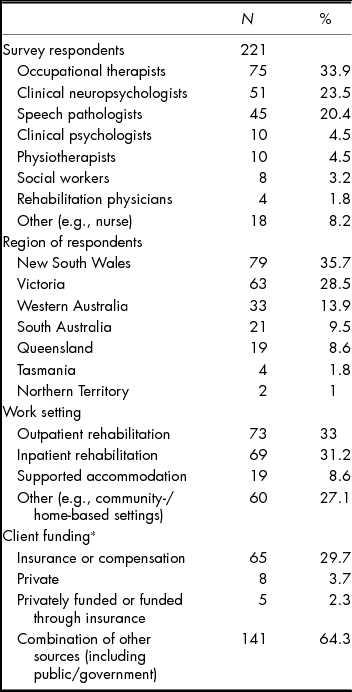
Of the 297 people who commenced the survey, 100% completed at least one question in Section A (demographics), 74.4% (n = 221) completed at least one question in Section B, 64% (n = 190) completed at least one question in Section C, and 58.2% (n = 173) completed at least one question in Section D. Of the 297 respondents, 76 only completed Section A, and thus were excluded from further analyses. Therefore, the overall completion rate for at least one question in each section was 74.4%. Table 1 describes participant characteristics of the 221 respondents who completed some or all of the questions in Sections B, C and D. Whilst a broad range of disciplines, settings and all Australian states were represented, respondents were predominantly occupational therapists, clinical neuropsychologists, and speech pathologists, working in inpatient and outpatient settings in NSW and Victoria.
Respondent Characteristics

*Missing for two respondents.
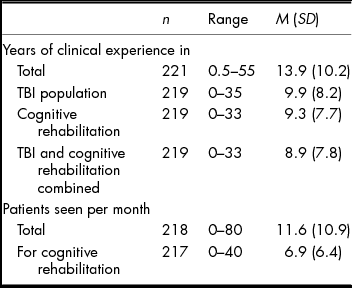
Just over half of respondents were employed in a full-time capacity (54%) at the time of survey completion, and they indicated that they had been in their current employment setting for an average of 6.5 ± 6.2 years (Range: 0–30 years). Table 2 displays the reported durations of clinical experiences among respondents. Respondents had an average 9 years’ clinical experience in TBI cognitive rehabilitation. They saw approximately 11 patients with TBI per month and, on average, provided cognitive rehabilitation to half of them.
Duration of Clinical Experience Among Survey Respondents

Current Practice of Cognitive Rehabilitation
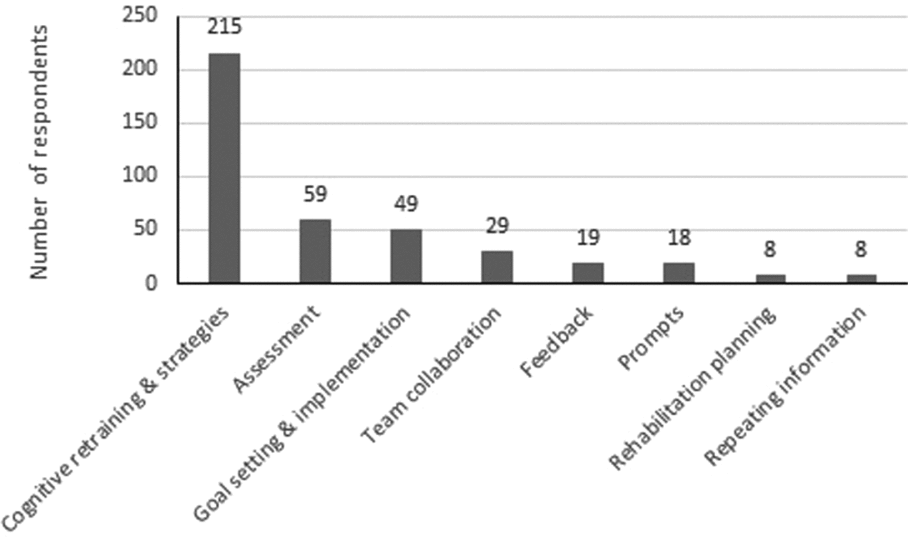
Respondents were asked to describe what cognitive rehabilitation involved in their day-to-day practice, and to provide examples of common strategies employed when designing and implementing cognitive rehabilitation. Delivery of cognitive retraining, provision of strategies, and cognitive assessment were the most commonly reported processes in day-to-day cognitive rehabilitation (see Figure 1).
Processes identified by respondents as used in “cognitive rehabilitation” in day-to-day practice.
Note: categories generated from open-text survey.

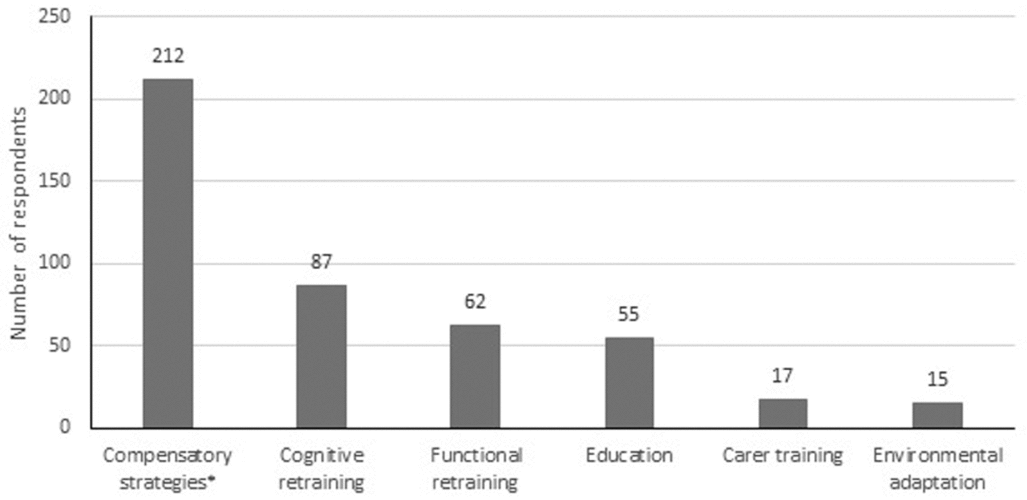
Approaches to cognitive intervention were also identified (see Figure 2), with compensatory strategies, cognitive retraining, functional retraining, and education being the most commonly reported by respondents.
Approaches to intervention in the day-to-day practice of cognitive rehabilitation identified by respondents.
Note: * indicates references of their use, either generally or in relation to specific strategy; categories generated from open-text survey.

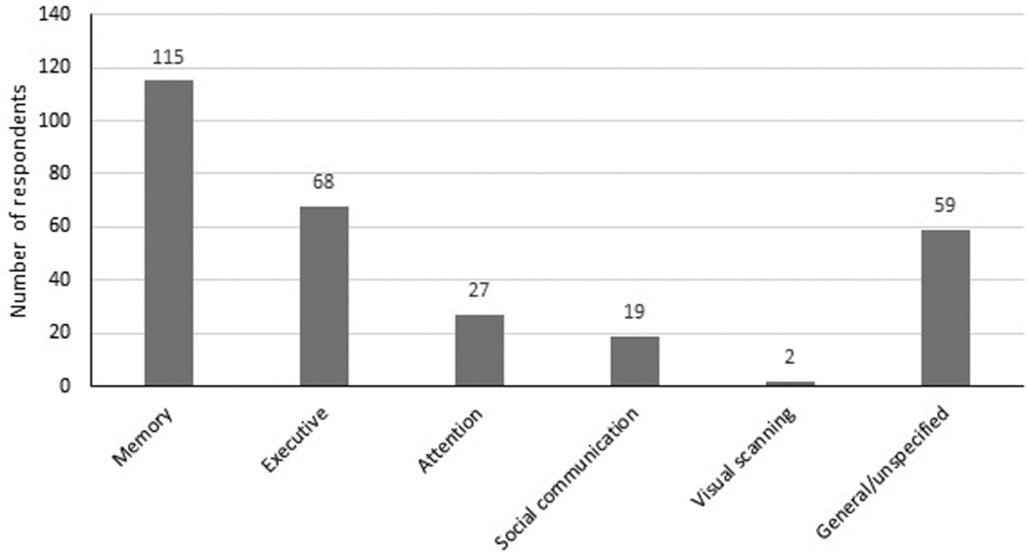
The domains in which therapists indicated cognitive retraining and strategies were delivered are shown in Figure 3.
Domains in which cognitive retraining and strategies were delivered.
Note: categories generated from open-text survey.

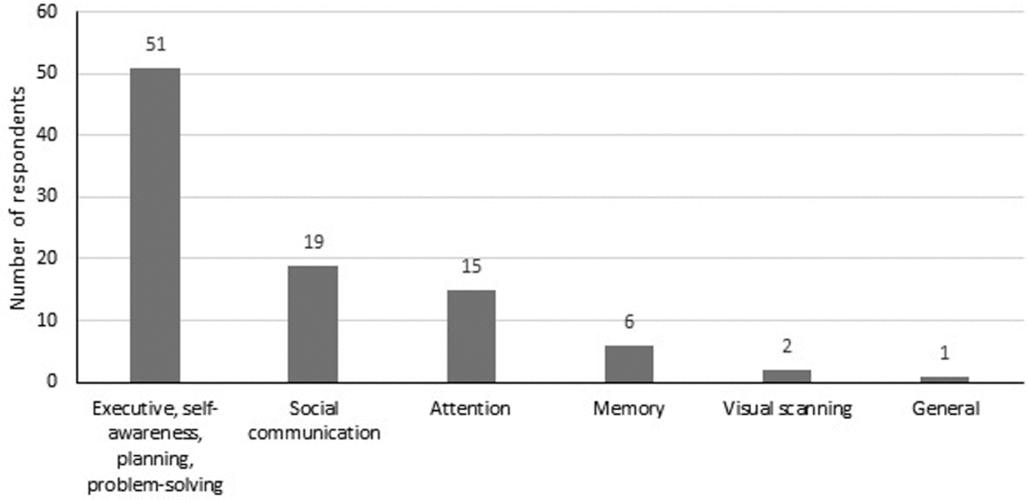
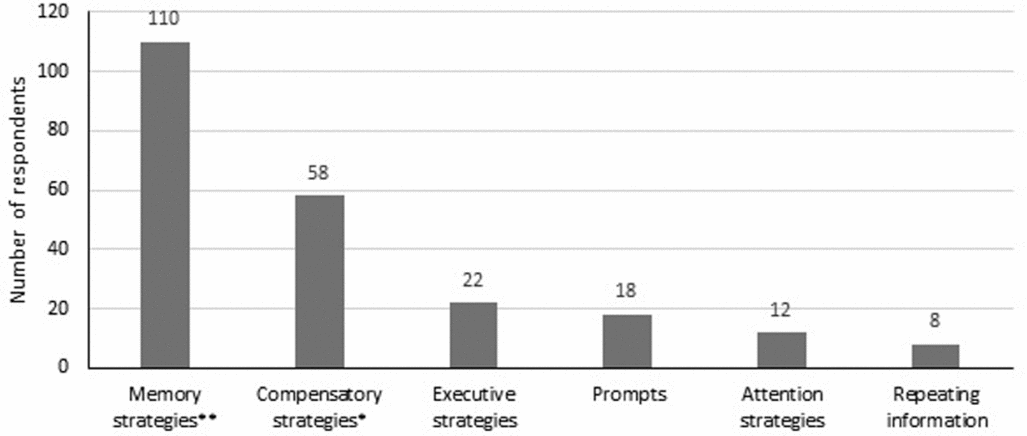
Both re-training and compensatory approaches were identified by clinicians. The areas in which cognitive retraining were delivered are provided in Figure 4, while the domains of compensatory strategies are shown in Figure 5.
Identified focus areas of cognitive retraining.
Note: categories generated from open-text survey.

Compensatory strategies used by respondents in day-to-day cognitive rehabilitation practice.
Note: * indicates general/unspecified compensatory strategies; ** includes internal, external and unspecified strategies; categories generated from open-text survey.

Compensatory strategies related mostly to memory, including general memory strategies, followed by diary use/notebooks, and smartphone use (see Figure 5). Others included prompts, repeating information, or to-do lists. Just over 10% of therapists reported using errorless learning as a means of training skills. In the realm of executive function, compensatory strategies reported included both internal strategies (stop-think-do; n = 6) and the use of external aids such as to-do lists (n = 5). On specific questioning regarding the types of cognitive rehabilitation strategies used (i.e., external, internal, and/or other), 92.2% indicated that they used external aids (e.g., those requiring input from close-other or case workers, electronic prompters, etc.), 94% indicated that they used internal aids (e.g., those requiring the client to initiate, such as diary/phone use, attention strategies, etc.), and 14.7% indicated they used other strategies (e.g., education; note, more than one option could be selected).
The most frequently identified method of assessing the effectiveness of cognitive rehabilitation provided was the attainment of functional goals (identified by 87.3% of participants) followed by the use of self-report measures (86.4%), objective measures (46.4%), or other measures (19.5%; e.g., reports from team members, family or friends, and functional observation). Respondents reportedly documented the assessment, implementation, and outcomes of cognitive rehabilitation in reports (73.4%), and medical files (72.9%), followed by client resources (39.9%), departmental files (22.9%), and other ways (18.8%; e.g., rehabilitation plans, client notes, video, and photo; note: more than one option could be selected).
Resources for Cognitive Rehabilitation
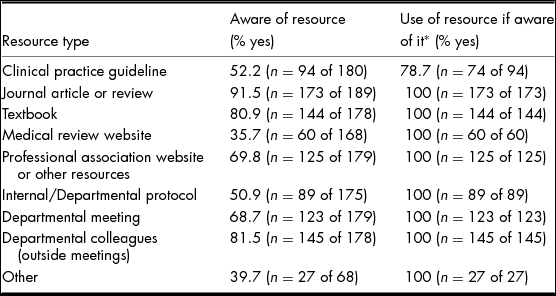
The percentages of respondents who were aware of resources that informed them about TBI cognitive rehabilitation practices are provided in Table 3. Percentages are also given for those who use the resource, if they were aware of it. Only 52% indicated they were aware of cognitive rehabilitation guidelines, and of these 94 respondents, approximately 80% indicated that they use them. The resources for which respondents were most commonly aware were journal articles or reviews, departmental colleagues, and textbooks. All of these resources were used by respondents if they were aware of them. Of those who indicated they used the resources listed in Table 3, 17% use internal/departmental protocols more than once a week, and 16.5% use departmental meetings more than once a week. There were 65.5% who used medical review websites less than once a month.
Resources Used for Cognitive Rehabilitation by Respondents

*The percentages in this column were computed based on those who had indicated they were aware of the resource, and then whether they use that resource. For example, 94 respondents indicated they were aware of CPGs, and of these, 74 indicated that they used them (therefore, 74 of 94 equals 78.7%).
Reflections on Cognitive Rehabilitation
Factors that helped rehabilitation
Three themes were identified by respondents as helping achieve optimal cognitive rehabilitation outcomes: (1) client factors; (2) rehabilitation setting and process factors; and (3) rehabilitation therapist factors.
The most common specified client factor identified as aiding rehabilitation by 42.5% of respondents related to having social and family support: “. . .a supportive family who can reinforce the strategies in the home and community environments. . . (R34)”. This was then followed by client participation, motivation, and engagement (21.7%): “the clients . . . willingness to apply themselves to their rehabilitation goals (R4)”, and “(clients being) motivated to reduce the functional impact of their cognitive behavioural impairments (R37)”. Awareness and insight into their difficulties was also reported (20.8%): “a client who has insight and adequate cognitive capacity to take on, retain and then implement strategies (R7)”, and “when a client has insight (hence is keen to engage) (R4)”.
The most common rehabilitation setting factor identified as aiding rehabilitation in 89% of cases was team collaboration: “. . .consistency in approaches from the multidisciplinary team involved - and good communication between them (R11)”, and “the multidisciplinary team working together to assist the client with achieving their therapy goals (R15)”. Having defined goals that were appropriate was also commonly reported (19.5%): “clear, measureable, functional, and meaningful goals (R5)”, and “clearly defined goals in order to establish when outcomes have been reached (R36)”. Some respondents (6.8%) stated that having enough time to treat the patient was also important, as was having appropriate resources available.
The most common rehabilitation therapist factors identified as aiding cognitive rehabilitation included having skilled staff (15%): “having staff with relevant experience to draw from (R12)” and “clinician competence (and) flexibility to tailor intervention (R30)”. Having regular client contact was also identified by a small group of respondents (8.6%) as well as having regular updates (3.6%): “regular client contact until gains are consolidated (R2)”, and “regular case update and consultation with client and treating team members (R1)”. Having staff who provided regular feedback to clients was seen as important by some (3.6%).
Factors hindering rehabilitation
Four themes were identified by respondents as hindering the achievement of optimal cognitive rehabilitation outcomes: (1) client-related factors; (2) therapist-related factors; (3) service-related factors; and (4) non-client-related factors.
Of client-related factors, the most commonly reported factor was the lack of insight or awareness by the individual with the TBI of their cognitive difficulties: “lack of insight in the client/others, therefore poorer ability to implement and follow through independently (R40)” and “reduced insight = unwillingness to engage with strategies (R4)”. This was followed by having a limited support network in terms of family, friends or carers, who could reinforce strategies at home, or on a daily basis: “families unable or unwilling to reinforce strategies at home (R23)”. The existence of external or other issues was also commonly identified as hindering cognitive rehabilitation, such as drug and/or alcohol issues. Also, greater injury severity and higher levels of cognitive difficulties were identified as impediments. Presence of mental health issues was seen as a problem, including “depression (R1)”, “stress (R4)”, “mood disturbance (R6)”, and “anxiety (R18)”. Client non-participation, non-compliance, and motivation were also factors that were identified: “poor attendance to therapy sessions (R5)” and “client not engaged in therapy (R9)”.
Of therapist-related factors, the most commonly reported factor hindering the achievement of optimal cognitive rehabilitation was time pressure, with therapists not having enough time to spend with the TBI patient: “focus on neuropsychological assessment, without additional time to undertake intensive cognitive rehabilitation (R2)”, “lack of time in inpatient setting to provide ongoing rehabilitation when other (e.g., physical, functional) goals have been achieved (R25)”, “lack of time to facilitate the intensity required to “optimise” outcomes (R5)”, and “ability to follow up over a prolonged period which is required (R8)”. Staff availability was also a problem, where having limited or stretched staff impacted the provision of adequate cognitive rehabilitation or even any rehabilitation at all: “more staff better outcomes! (R1)” and “low full-time equivalent (FTE) = not as much time to do interventions and assess their efficacy as I would like or as the clients need (R9)”. Where staff were available, their inexperience, lack of skills, or limited knowledge regarding cognitive rehabilitation practices were believed to impact outcomes. Lack of team collaboration was identified as a problem, as was the lack of communication between the team, the client, the family, and external support structures. For treatment that did occur, if it was not consistent, then it was identified as a problem: “inconsistent approach and follow through of strategies and training (R5)”, and “inconsistency in interdisciplinary and transdisciplinary teamwork (R8)”.
Of service-related factors, the most commonly reported factor that hindered the achievement of optimal cognitive rehabilitation was the lack of community services or appropriate resources for individuals with TBI: “no experienced community services to handover to (R4)”. The distance from services was important, as were the rehabilitation environment and organizational structure: “environment setup at times distracting for clients (R1)”, and “larger organisational structures not supportive of a holistic approach to care and rehabilitation (R1)”. Early rehabilitation transfer was an issue (especially, if the patient was still in post-traumatic amnesia (PTA)), as was early discharge as not enough rehabilitation could be provided. Limited therapy access and lack of treatment options were also identified.
Finally, of non-client-related factors identified, as hindering the achievement of optimal cognitive rehabilitation, the most common was the lack of funding or financial pressures. Other non-client-related issues included a lack of understanding the injury or therapy required, and poor attitudes by family or other staff members.
Ranking cognitive domains by the ease of therapy provision
Respondents ranked memory (32.4%) and PTA (31.4%) as the easiest areas in which to provide cognitive rehabilitation. The reasons given included the following: more resources, aids, and technology available for improving memory, as well as strategies and goals that can be easily measured: “memory is easiest as most people understand what this is and the importance of this. Memory aids are also generally more easily available (i.e., mobile phones or diaries). They are easy to use and more people are familiar with them. Memory is also a cognitive deficit which is most understood by the wider community. People are more likely to assist implementing strategies for a deficit which is easily understood (R57)”. PTA management was considered relatively straightforward as PTA protocols were well defined: “PTA has a structured assessment and management process with clear guidelines about expected performance (R64)”.
Respondents ranked executive functioning (29.4%) as the hardest area of therapy provision, particularly since this related to insight: “deficits with executive function can impact on a client's level of insight. Without this, it is very hard to engage the client in rehab (R37)”. Furthermore, executive functioning was seen as complex, with specific deficits being difficult to determine: “lack of formal assessment options in some populations and difficulty differentially diagnosing EF deficits from attention and memory deficits and/or behavioural or mental health issues (R30)” and “executive function very broad and encompasses many things- not always easy to pin down which area needs addressing, self-awareness often huge issue and not easily remedied (R41)”.
Access to health professionals by other health professionals and patients
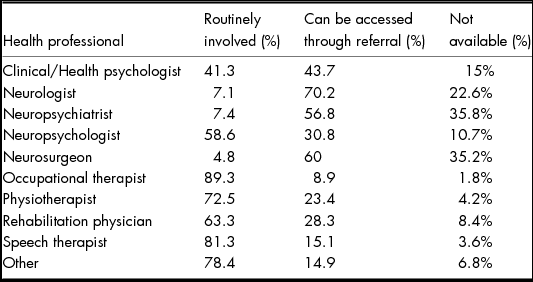
The percentages of health professionals accessible at respondents’ health settings are provided in Table 4. Other health professionals identified as routinely involved in delivering cognitive rehabilitation in respondents’ health settings included nurses, social workers, case managers, and rehabilitation therapists, followed by allied health assistants, vocational coordinators, attendant care workers, exercise physiologists, recreational officers, and counsellors.
Rates of Access to Various Health Professionals in Respondents’ Health Settings

Discussion
Cognitive rehabilitation practices by therapists working with individuals with TBI across Australia were examined in the current survey. Cognitive rehabilitation was most commonly delivered by occupational therapists, speech pathologists and physiotherapists, and, to a lesser extent, neuropsychologists working in inpatient or outpatient settings. Day-to-day cognitive rehabilitation largely involved retraining and compensatory strategies. The most frequently targeted cognitive function was memory, followed by executive functioning. For memory, internal and external compensatory strategies were generally applied, with retraining approaches infrequently used. This is consistent with recommendations made in the guideline by Velikonja et al. (Reference Velikonja, Tate, Ponsford, McIntyre, Janzen, Bayley and Panel2014). In contrast, for executive functioning, retraining methods were more commonly utilized. This is consistent with recommendations by Tate et al. (Reference Tate, Kennedy, Ponsford, Douglas, Velikonja, Bayley and Stergiou-Kita2014), which indicated strongest evidence for the use of metacognitive training strategies in individuals who have awareness of the need to use a strategy, and can identify contexts in which the strategy should be used. Respondents ranked executive functioning as being the most challenging area in which to provide cognitive rehabilitation, largely due to the presence of limited insight/awareness impacting the willingness to engage in rehabilitation. Whilst awareness appears to be important for metacognitive strategy use, alternative approaches to managing executive dysfunction such as task and environmental modification may need to be used more frequently.
Attention training or compensatory strategies were less frequently applied which is a concern, given that these problems occur with a high frequency following TBI. In their guideline for treating attentional problems after TBI, Ponsford, Bayley et al. (Reference Ponsford, Bayley, Wiseman-Hakes, Togher, Velikonja, McIntyre and Panel2014) concluded that evidence in support of most interventions was not strong. It is recommended that assessment and intervention be conducted in the context of the individual's daily life. Making adjustments to the environment and tasks undertaken by the injured individual may also be important, as is addressing fatigue, sleep–wake disturbances, pain, medication effects, and anxiety and depression. There would appear to be a need to encourage and upskill therapists to address attentional problems following TBI. In other respects, it appears that therapists reported practices were at least partly consistent with the guidelines for cognitive rehabilitation recently published by the INCOG expert panel (Bayley et al., Reference Bayley, Tate, Douglas, Turkstra, Ponsford, Stergiou-Kita and Panel2014).
Other documented approaches to cognitive rehabilitation did include functional retraining, education, carer training, and environmental adaptation, although the last two of these were reportedly used relatively infrequently. It is unclear whether these are used infrequently or clinicians did not identify these as cognitive rehabilitation practices. Environmental adaptations are one of the only methods suitable for addressing cognitive limitations in individuals with severe cognitive impairment, who lack awareness or the capacity to learn or to modify their own behaviour. Clinicians in this study highlighted poor self-awareness and motivation as key impediments to the delivery of cognitive rehabilitation, which supports a need for conduct of research evaluating the efficacy and optimal methods of delivering such interventions and, in turn, the encouragement of clinicians to utilise evidence-based approaches. Other practices identified as part of the cognitive rehabilitation process by some clinicians included assessment, goal setting and implementation, team collaboration, feedback, and rehabilitation planning. Given the importance placed by clinicians on these processes, the relatively low frequency with which they were reported is a concern, but it may simply reflect that they did not consider these explicit cognitive rehabilitation processes.
Effectiveness of the cognitive rehabilitation delivered was generally measured by the attainment of functional goals and client- or close-other self-reports, and to a lesser extent, objective measures. Whilst it could be argued that the use of objective outcome measures is desirable, the focus on functional goals reflects the focus of the therapists on the daily life of the participant rather than performance on an abstract cognitive measure. This should not be discouraged.
Only about half the sample were aware of clinical practice guidelines, with most relying on journal articles, textbooks, or departmental colleagues for their knowledge. Guidelines arguably represent the most robust and up-to-date evidence resources available to guide practice. This suggests that more systematic efforts are needed to disseminate awareness of these resources, through professional organisations, training programmes, and websites such as PsycBITE and SpeechBITE.
Notwithstanding this, the guidelines currently have significant limitations, due to the small number of high-quality studies underpinning them. The INCOG guidelines incorporated expert consensus into the recommendations and development of Audit tools, for example, by placing emphasis on the need to embed interventions in the individual's daily life and focus on tasks of relevance to them. However, the analysis of qualitative data from the current study identified numerous other factors which are important in the success of cognitive rehabilitation. Of the identified client factors, social/family support was seen as very important, followed by client motivation and engagement in the rehabilitation, as well as awareness/insight of limitations/dysfunctions. This is consistent with outcome studies identifying the importance of social and family support in optimising rehabilitation outcomes (Sander et al., Reference Sander, Caroselli, High, Becker, Neese and Scheibel2002). Self-awareness has also been identified as an impediment to progress in rehabilitation in recent studies (Ponsford et al., Reference Ponsford, Sloan and Snow2012; Tate et al., Reference Tate, Kennedy, Ponsford, Douglas, Velikonja, Bayley and Stergiou-Kita2014). Mental health issues and severe injury were seen as client barriers to the success of cognitive rehabilitation. Once again these factors have been associated with poorer rehabilitation outcomes following TBI more broadly (Schonberger, Ponsford, Olver, Ponsford, & Wirtz, Reference Schonberger, Ponsford, Olver, Ponsford and Wirtz2011; Sherer et al., Reference Sherer, Sander, Nick, High, Malec and Rosenthal2002). Of the rehabilitation factors identified, team collaboration was identified as important by 89% of participants, followed by having written goals. Of the therapist factors identified, skilled staff, regular client contact, and funding and service availability were seen as important to achieving an optimal cognitive rehabilitation outcome. These factors may be key mediators of the success of cognitive rehabilitation, but their role has never been explicitly evaluated and they are therefore not mentioned in existing guidelines. It would seem that there is a need for two-way communication between clinicians and the experts in the guideline development process. Clinician input is needed to inform research studies identifying the factors that facilitate or hinder cognitive rehabilitation and, in turn, to inform the development of future updates to the guidelines.
This study had certain limitations. First, the survey was based upon self-report, rather than an audit of patient files, and survey findings should be interpreted in this context. Second, the responses were from a range of clinicians employed in the health care system in various parts of Australia and may not reflect the practice of cognitive rehabilitation in other countries. However, they could serve as a basis for comparison with practice in other countries. Third, the clinicians in the study were largely working with adults – only eight respondents indicated that their patients were children. Cognitive impairments in children with a TBI may require somewhat different approaches from those for adults (Slomine & Locascio, Reference Slomine and Locascio2009). Further research on cognitive rehabilitation practices in children is needed.
Overall, the current study has shown that predominantly memory and executive functioning are addressed in current cognitive rehabilitation practices in individuals with TBI in Australia. Both compensatory strategies and retraining methods were utilized in both of these domains. Client self-awareness is seen as important to their success. There was relatively less focus on attentional problems, despite their high frequency and the existence of evidence-based guidelines. Given the high value placed on team collaboration, goal setting, and family involvement, the roles of these aspects need greater focus in future cognitive rehabilitation studies and, in turn, future guideline modifications. There is a tremendous need to take existing research findings into implementation studies that can shed light on the factors that determine the feasibility of implementing research findings. Clinicians need to be more actively involved in informing these processes. The study has thereby highlighted some areas to be addressed in order to improve cognitive rehabilitation delivery and positively influence cognitive outcome following TBI.
Conflicts of Interest
All authors have no conflicts of interest to disclose.
Acknowledgement
This study was supported by a grant received from the National Trauma Research Institute, Centre of Excellence in Traumatic Brain Injury Research (CETBIR).
Ethical Standards
All authors assert that all procedures contributing to this work comply with the ethical standards of the relevant national and institutional committees on human experimentation and with the Helsinki Declaration of 1975, as revised in 2008.
Supplementary material
To view supplementary material for this article, please visit https://doi.org/10.1017/BrImp.2018.12