Double outlet right ventricle refers to a type of CHD in which the two major arteries originate entirely or mostly from the morphologic right ventricle, and the incidence is about 1–3% of CHD. It is an embryonic developmental malformation of the truncus conus. Reference Shoujun1 Double outlet right ventricle was defined by the International Association of Thoracic Surgeons and the European Society of Thoracic and Cardiovascular Surgery in 2000 as all of one aorta and more than 50% of the ostia of the other aorta originating from the morphologically right ventricle (50% rule). Reference Walters, Mavroudis, Tchervenkov, Jacobs, Lacour-Gayet and Jacobs2 At present, the most commonly used surgical classification methods in the diagnosis and treatment of double outlet right ventricle are formulated by the International Association of Thoracic Surgeons and the European Association of Thoracic and Cardiovascular Surgery, Reference Walters, Mavroudis, Tchervenkov, Jacobs, Lacour-Gayet and Jacobs2 and are divided into four types: (1) double outlet right ventricle, ventricular septal defect type: subaortic ventricular septal defect; (2) double outlet right ventricle, Fallot type: subaortic or subaortic and subpulmonary ventricular septal defect combined with right ventricular outflow tract stenosis; (3) double outlet right ventricle, TGA type(Taussig–Bing malformation): subpulmonary ventricular septal defect, can be combined with right ventricular outflow tract stenosis; (4) double outlet right ventricle, ncVSD type: the minimum distance from the edge of the ventricular septal defect to the two meniscus rings is greater than the diameter of aortic valve annulus. Reference Lacour-Gayet, Maruszewski, Mavroudis, Jacobs and Elliott3 The goal of surgical treatment of double outlet right ventricle is an anatomical correction, defined as connecting the left ventricle to the aorta, the right ventricle to the pulmonary artery, and closing the ventricular septal defect. Reference Mavroudis, Backer and Idriss4 In recent years, with the improvement of surgical diagnosis and treatment techniques, the prognosis of such children has been significantly improved. However, for developing countries, the mortality and morbidity of children with double outlet right ventricle are still not optimistic due to the limitations of the regional economy and medical level.
This study retrospectively analysed the clinical data and late follow-up results of double outlet right ventricle children with biventricular anatomical repair in a single institution in the past 12 years, to explore the early and long-term prognosis of such children in a single institution in developing countries and to determine risk factors for their mortality and intervention. It provides new ideas for future early intervention and helps to reduce the incidence of adverse reactions in such children in our hospital.
Materials and methods
Patients
The Institutional Committee on Clinical Investigation of our hospital approved this protocol with a waiver of informed consent. We collected the clinical data and outpatient telephone follow-up results of 110 patients who underwent biventricular repair in our Hospital from January 2009 to December 2021. Fourteen patients with ectopic visceral syndrome, inconsistent atrioventricular connection, ventricular dysplasia, or severe atrioventricular valve straddle were excluded, and a total of 96 patients were included. All patients were diagnosed by pre-operative echocardiography and cardiovascular angiography or contrast-enhanced CT. Late mortality, morbidity, and intervention were obtained through outpatient electronic medical record systems and telephone follow-up. Follow-up by telephone or outpatient clinic was performed every 3 months post-operatively. All clinical records were recorded by the same cardiac surgeon.
Definition
Early mortality was defined as death that occurred during hospitalisation. Late mortality was defined as death that occurred after discharge from the hospital. Late intervention was defined as reoperation or catheter intervention that occurred after discharge from the hospital. Moderate or above pulmonary hypertension refers to mean pulmonary arterial pressure exceeding 40 mmHg, and intraventricular tunnel obstruction (including degree and transvalvular gradient) was assessed by echocardiography. Left ventricular outflow tract obstruction was defined as the pressure gradient from the left ventricle to the aorta detected by post-operative ultrasound exceeding 20 mmHg. If the pressure gradient exceeded 50 mmHg, reoperation was performed to relieve the obstruction. Right ventricular outflow tract obstruction was defined as a right ventricle to pulmonary artery pressure gradient greater than 30 mmHg detected by post-operative ultrasound.
Surgical technique
Three surgical strategies were used: (1) intraventricular baffle repair, IVR(Unless otherwise specified in this article, IVR refers to intraventricular baffle repair from ventricular septal defect to the aorta); (2) IVR with right ventricular outflow tract reconstruction, including IVR with right ventricular outflow tract reconstruction patch enlargement and Rastelli procedures, IVR-RVOT; and (3) IVR with arterial switch operation, IVR-ASO. All operations were performed under general anaesthesia with hypothermic cardiopulmonary bypass, median incision, intraoperative cannulation via superior and inferior caval vein, routine perfusion of cold high potassium cardioplegia, and ice chips to cool the heart surface. IVR was performed in 60 patients with ventricular septal defect type double outlet right ventricle; IVR-RVOT was performed in 28 patients with Fallot type double outlet right ventricle, two patients with ventricular septal defect type double outlet right ventricle, and two patients with ncVSD type double outlet right ventricle. Rastelli procedure(IVR to pulmonary artery+ Place an extracardiac duct from the right ventricle to the aorta) was performed in one patient with Taussig–Bing type double outlet right ventricle when the aortic valve stenosis that was considered could not be enlarged. IVR to pulmonary artery + arterial switch operation was performed in two patients with Taussig–Bing type double outlet right ventricle and one patient with ncVSD type double outlet right ventricle.
Concomitant surgical procedures were reported: ventricular septal defect enlargement in five patients, complete atrioventricular septal defect repair in one patient, PTAPVC repair in one patient, COA repair in four patients, chordae mobilisation in one patient, subaortic diaphragm resection in one patient, left apical diverticulum resection in one patient, and cor triatriatum repair in one patient.
Statistical analysis
Median (min, max) or mean ± standard deviation was used to describe continuous variables, and the Wilcoxon–Mann–Whitney U-test or t-test was used to compare differences between groups. Descriptive statistics for categorical variables were reported as frequency /percentage and were compared using the Pearson chi-square or Fisher’s exact test. Multivariate analysis was performed using logistic regression model. Survival analysis was performed using the Kaplan–Meier method, and the log-rank test was used for comparison between groups. Receiver operating curve analysis was used to study the ability of significant parameters to predict early death and late death. SPSS 22.0 statistical software was used to analyse the data.
Results
Baseline characteristics
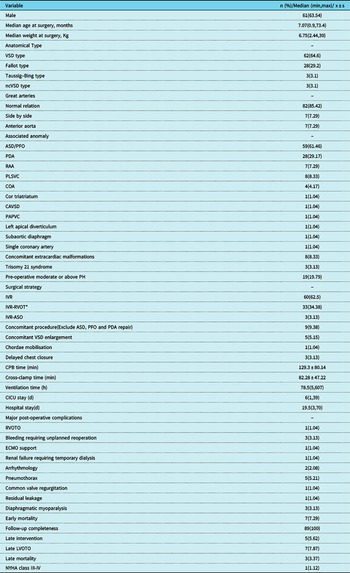
Among the 96 patients, 61 (63.54%) were male and 35 (36.46%) were female. The median surgical weight was 6.75 (2.44,30) kg, the median surgical age was 7.07 (0.9,73.4) months. Ventricular septal defect type, Fallot type, Taussig–Bing type, and ncVSD type had 62 (64.6%), 28 (29.2%), 3 (3.1%), and three (3.1%) patients, respectively. Ninety-six patients completed biventricular repair. The average CBP time was 129.3 ± 80.14 min, and the average cross-clamp time was 82.28 ± 47.22 min. Post-operative chest closure was delayed in three cases. The median post-operative stay in CICU was 6 (1,39) days, and the median duration of ventilation was 78.5 (5,607) hours. The general clinical data of the patients are shown in Table 1.
Demographic and clinical information of the 96 patients with double outlet right ventricle

Abbreviations: ASD, atrial septal defect; CAVSD, complete atrioventricular septal defect; CICU, cardiac intensive care unit; COA, coarctation of the aorta; PDA, patent ductus arteriosus; PFO, patent foramen ovale; PH, pulmonary hypertension; VSD, ventricular septal defect; RAA, right aortic arch; PLSVC, persistent left superior caval vein; PAPVC, partial anomalous pulmonary venous connection; RVOTO: right ventricular outflow tract obstruction.
* IVR-RVOT include Rastelli procedure.
Early outcomes
In this cohort, 16 patients occurred with 18 major post-operative complications and six early reoperations. Five (5.21%) cases were combined with pneumothorax. Three (3.13%) cases were combined with diaphragmatic paralysis, of which two underwent diaphragmatic folds. Eight of eight were combined with both pneumothorax and diaphragmatic paralysis. One (1.04%) patient with Fallot type who underwent the Rastelli procedure for the first time underwent valved tube replacement for right ventricular outflow tract obstruction caused by vegetation formation 30 days after the operation. Bleeding requiring unplanned reoperation occurred in 3 (3.13%) cases. One patient was weaned successfully with ECMO support due to difficulty in weaning during the operation. Renal failure requiring temporary dialysis occurred in one (1.04%) case. Arrhythmia occurred in two (2.08%) cases, one case of supraventricular tachycardia, and one case of third-degree atrioventricular block. Common valve regurgitation and residual leakage occurred in one (1.04%) case, respectively.
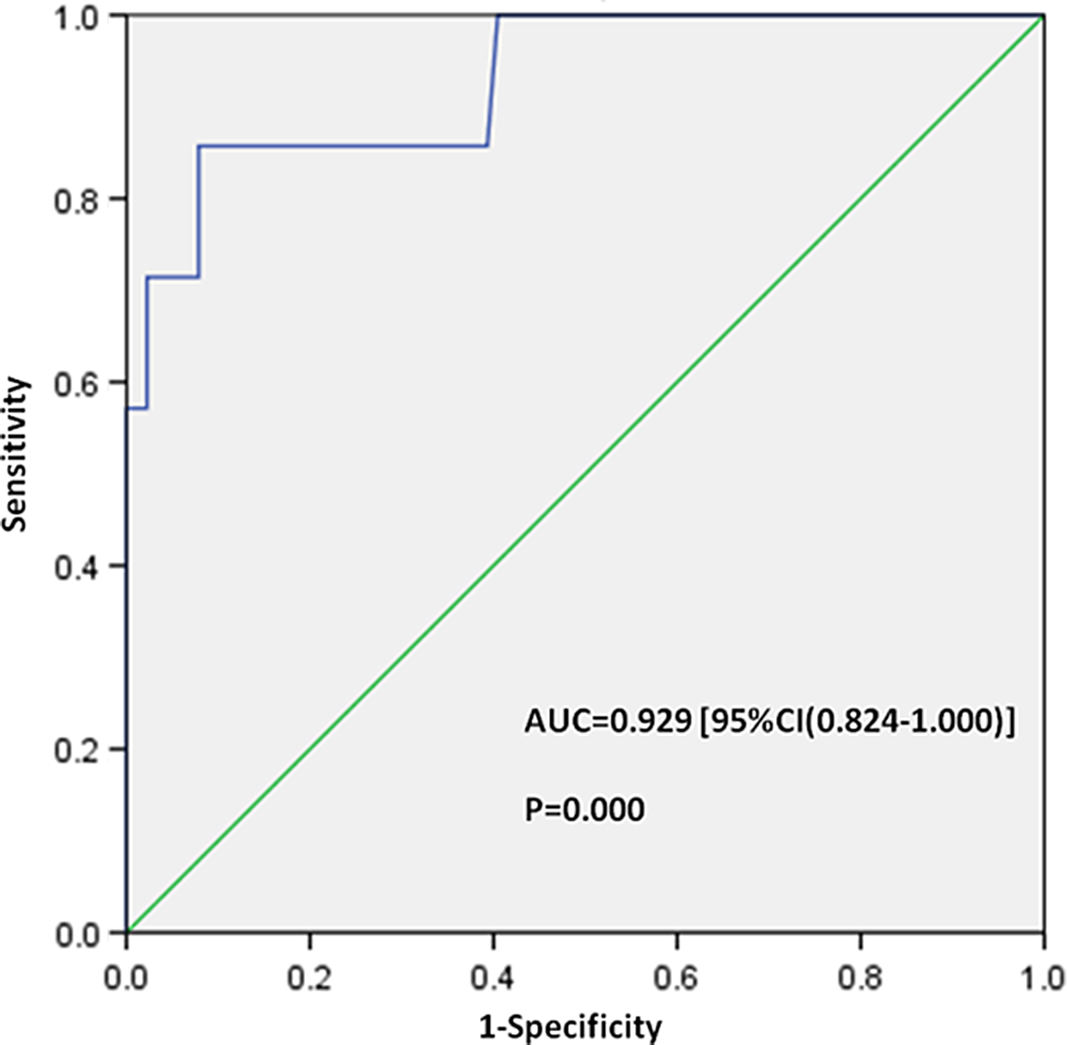
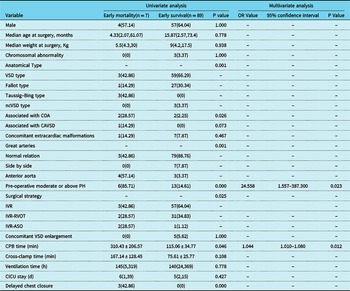
Early mortality occurred in seven(7.29) patients, four patients died of low cardiac output syndrome, one patient died of pulmonary hypertensive crisis, and two patients died of multiple organ failure. Univariate analysis indicated Taussig–Bing type (p = 0.001), associated with coarctation of the aorta (p = 0.026), anterior aorta (p = 0.001), pre-operative moderate or above pulmonary hypertension (p = 0.000), IVR-ASO (p = 0.025), prolonged cardiopulmonary bypass (p = 0.046), and delayed chest closure (p = 0.000) were risk factors for early mortality (Table 2). We found that pre-operative moderate or above pulmonary hypertension (OR = 24.558; p = 0.023) and prolonged CBP time (OR = 1.044; p = 0.012) were independent risk factors for early mortality in double outlet right ventricle patients by logistic multivariate regression (Table 2). Receiver operating curve showed that the cut-off value of CBP time in our centre for predicting early mortality was 170.5 min (AUC = 0.929; p = 0.000), the sensitivity was 86%, and the specificity was 92% (Fig 1).
Receiver operating curve shows the predictive ability of CPB time for early mortality.

Univariate and multivariate analysis of risk factors for early post-operative mortality [n(%)/Median (min,max)/x±s]

Late outcome
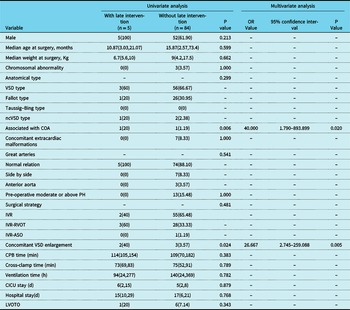
Of the 96 patients, seven died in hospital, 89 were discharged successfully and completed long-term follow-up through outpatient review or telephone consultation. The median follow-up time was 109.2 (75.2, 113.5) months. Late left ventricular outflow tract obstruction occurred in seven (7.87%) patients after operation, including four children with ventricular septal defect type, 2 children with Fallot type, and 1 child with ncVSD type. Only the child with ncVSD type whose LVOT pressure gradient exceeded 50 mmHg reached the indication for intervention and underwent intracardiac barrier replacement. The remaining six cases did not reach the indication for intervention and are still being followed up. Late intervention was performed in five patients who were male, and the median reoperation time was 6 (0.33, 36) months. One child with ventricular septal defect type who underwent IVR + RVOT + coarctation of the aorta repair in the primary operation of pre-operative coarctation of the aorta underwent re-examination 2 years after the operation and underwent aortic balloon dilatation due to anastomotic restenosis technique. One child with ventricular septal defect type double outlet right ventricle who underwent primary IVR underwent intracardiac barrier replacement because of residual leakage 2 years after the operation. One child with ventricular septal defect type double outlet right ventricle received primary IVR + RVOT and was readmitted 10 days after discharge for thoracotomy and pericardial effusion drainage. One child with ncVSD type double outlet right ventricle who underwent primary IVR underwent intracardiac barrier replacement and pacemaker implantation for left ventricular outflow tract obstruction and third-degree atrioventricular block 3 years after the operation. One child with Fallot type who underwent primary IVR + RVOT underwent pacemaker implantation for third-degree atrioventricular block 6 months after the operation. Univariate analysis showed that, compared with the non-late intervention group, the late intervention group was more likely to be associated coarctation of the aorta (20 versus 1.19%; p = 0.006) and concomitant ventricular septal defect enlargement (40 versus 3.57%; p = 0.024) (Table 3). Logistic multivariate regression indicated that associated coarctation of the aorta (OR = 40; p = 0.020) and concomitant ventricular septal defect enlargement (OR = 26.667; p = 0.005) were independent risk factors for late intervention (Table 3).
Univariate and multivariate analysis of risk factors for late intervention [n (%)/Median (min,max)/x±s]

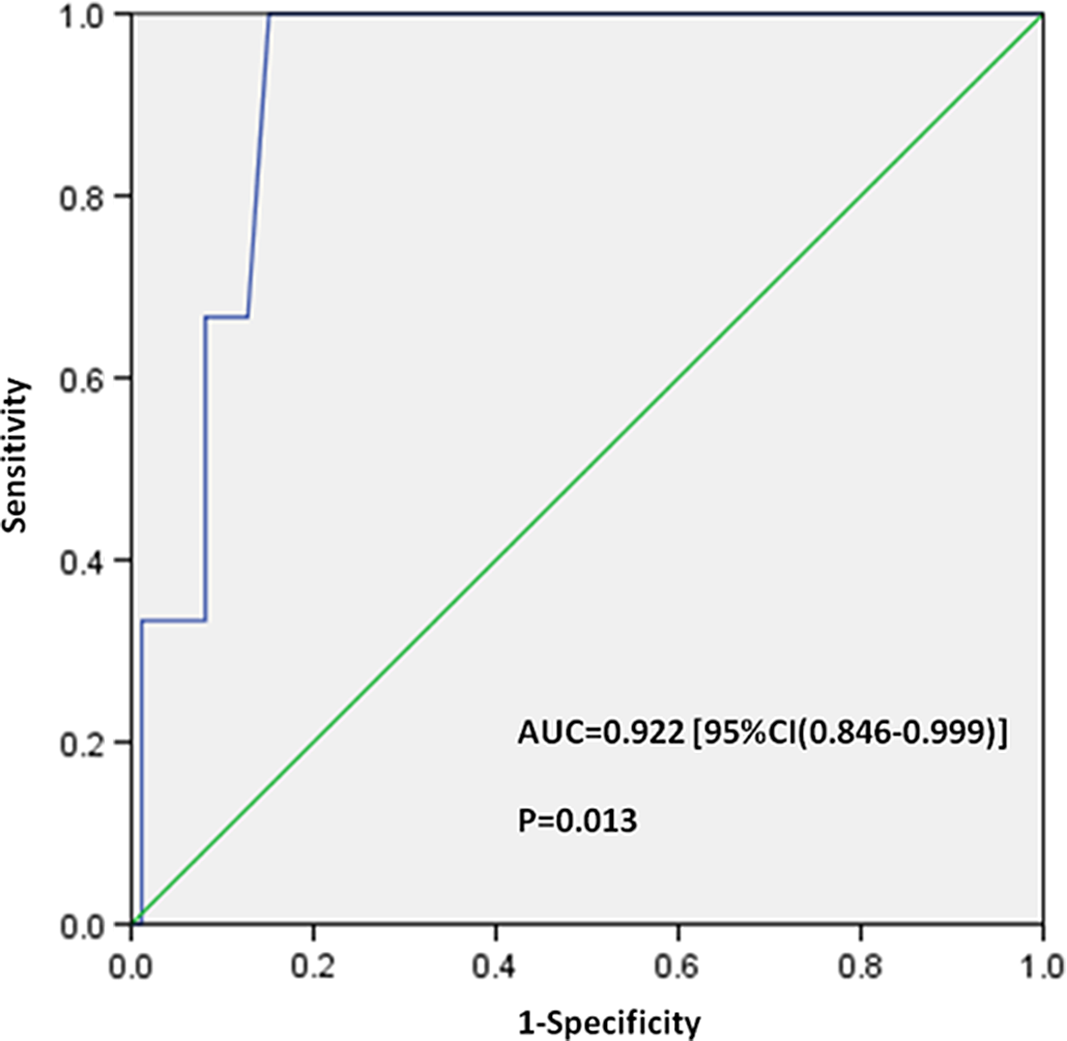
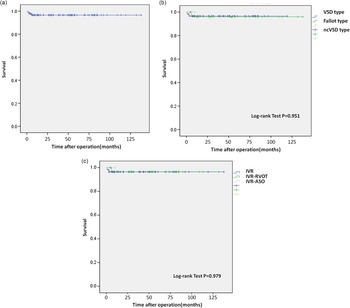
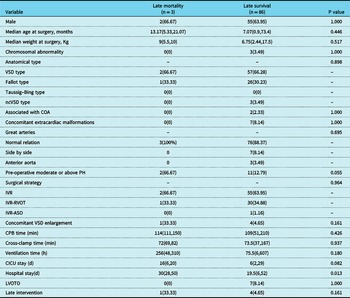
By the end of follow-up, three patients had late death. The overall late estimated survival rates at 1 month, 3 months, 6 months, and 10 years were 98.8%, 97.7%, 96.5%, and 96.5% respectively. (Fig 3A). One patient died of pulmonary hypertension crisis 2 days after discharge, 1 patient died of heart failure 3 months after the operation, and the last patient died of malignant arrhythmia 6 months after the operation. Univariate analysis showed that the late mortality group had a longer CICU stay [16(6,20) days versus 6(2,29) days; p = 0.082] and hospital stay [30(28,50) days versus 19.5(6,52) days; p = 0.013]. Secondly, the late mortality group tended to have moderate or higher pulmonary hypertension before surgery (66.67 versus 12.79%; p = 0.055), although the difference was not statistically significant (Table 4). Receiver operating curve showed that the cut-off value of hospital stay for predicting late mortality was 27.5 days (AUC = 0.922; p = 0.013), the sensitivity was 99%, and the specificity was 85% (Fig 2). We found that late death mainly occurred within 1 year after the operation, and patients with more than 1 year could obtain a stable long-term survival rate. No difference was found in mortality rate among the Fallot type, the ventricular septal defect type, and the Fallot type (log-rank test p = 0.951)(Fig 3B). In addition, we found that no difference was found in mortality rate among the IVR, the IVR + RVOT, and the IVR + ASO (log-rank test p = 0.979) (Fig 3C). At the last follow-up, 84 patients survived, of which only 1 patient was classified as NYHA class III-IV, and the rest were NYHA class I-II.
Receiver operating curve shows the predictive ability of Hospital stays for late mortality.

( a ) Kaplan–Meier estimates for overall survival for all patients. ( b ) Comparison of the late survival rate by anatomical type. ( c ) Comparison of the late survival rate by surgical strategy.

Univariate analysis for late mortality[n (%)/Median (min,max)/x±s](n = 89)

Late intervention
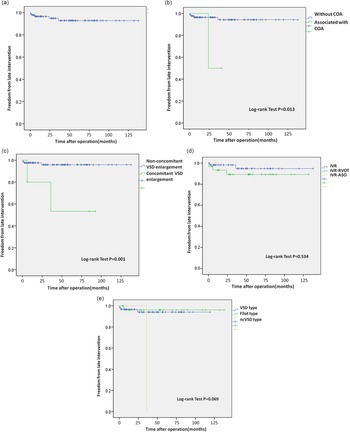
Five patients in this cohort underwent late intervention after the operation. The subsequent rate of freedom from late intervention was confined to the third post-operative year [n = 5, 92.8% (95%CI, 86.53–99.07%), the rate of freedom from late intervention at 3 and 10 years](Fig 4A). Compared with the rate freedom from late intervention between the coarctation of the aorta group and without coarctation of the aorta group, there is a significant difference(log-rank test p = 0.013)(Fig 4B). The 3-year freedom from late intervention in the two groups was 94.3 and 50%, respectively. Compared with the rate of freedom from late intervention between the concomitant ventricular septal defect enlargement group and the non-concomitant ventricular septal defect enlargement group, there is a significant difference (log-rank test p = 0.001) (Fig 4C). The 3-year freedom from late intervention in the two groups was 95.8 and 53.3%, respectively. No significant statistical difference was found in the freedom from late intervention according to the three surgical strategies. (log-rank test p = 0.534)(Fig 4D). No significant statistical difference was found in the rate of freedom from late intervention according to double outlet right ventricle type, (log-rank test p = 0.069) (Fig 4E).
( a ) Kaplan–Meier estimates for overall freedom from late intervention. ( b ) Comparison of freedom from late intervention between the COA group and without COA group. ( c ) Comparison of freedom from late intervention between the concomitant VSD enlargement group and the non-concomitant VSD enlargement group. ( d ) Comparison of freedom from late intervention by surgical strategy. ( e ) Comparison of freedom from late intervention by anatomical type.

Late left ventricular outflow tract obstruction
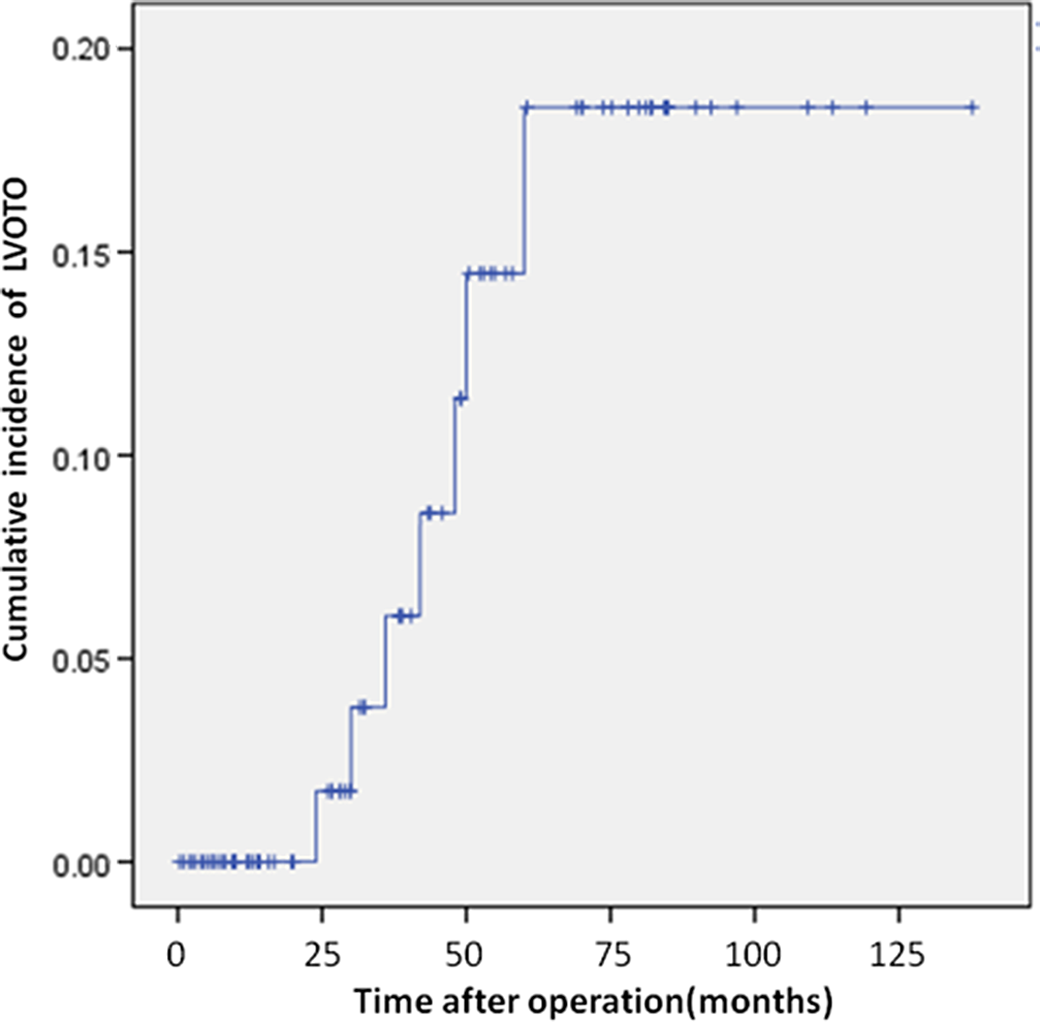
Late left ventricular outflow tract obstruction occurred in seven hospital survivors, with a median time delay of 42(24,60) months. The cumulative incidence rate of late left ventricular outflow tract obstruction at 5 years was 16.9% (95% CI, 5.14- 28.66%) (Fig 5). No mortality occurred for seven patients with late left ventricular outflow tract obstruction. One patient with the concurrent third-degree atrioventricular block underwent intracardiac barrier replacement and pacemaker implantation 3 years later, and the patient is still being followed up.
Cumulative incidence of late left ventricular outflow tract obstruction for all patients.

Discussion
Biventricular repair of ncVSD type double outlet right ventricle is highly challenging, and the choice of surgical technique is mainly based on the specific anatomical type. In this study, three patients with ncVSD type. One patient with ventricular septal defect close to the pulmonary artery underwent IVR to pulmonary artery + arterial switch operation, and the remaining two patients with ventricular septal defect close to the aorta underwent IVR. During the follow-up period, all patients survived, and only one patient (33.3%) developed late left ventricular outflow tract obstruction. In patients without pulmonary valve stenosis undergoing biventricular correction, for patients with ventricular septal defect closer to the aortic valve, when establishing a ventricular septal defect-aortic tunnel, the anterior tricuspid commissure, subvalvular chordae, or papillary muscles may hinder the establishment of the tunnel. Appropriate techniques such as the transfer of the papillary conus muscle of the tricuspid valve, the transfer of the chordae under the anterior junction of the tricuspid valve, and the folding of the anterior junction of the tricuspid valve can effectively avoid the influence of the structure of the tricuspid valve on the intraventricular tunnel to ensure the short-term and long-term patency of the intraventricular tunnel. Reference Li, Ma and Hu5 One patient with ncVSD type in this cohort underwent intraoperative chordal transfer technique, and this patient did not develop late left ventricular outflow tract obstruction during follow-up. Ting Lu et al. Reference Lu, Li and Hu6 retrospectively analysed 31 patients with ncVSD type who underwent an intraventricular cannula. One patient each had early and late mortality with a mortality rate of 6.5%, and one patient (3.2%) developed left ventricular outflow tract obstruction. They believe that it is relatively safe and reliable to achieve biventricular correction by establishing an intracardiac conduit for patients over 2 years old with ncVSD type. Zhang Benqing et al. Reference Benqing, Kai and Liu Rui7 retrospectively analysed the clinical data of 162 children with ncVSD double outlet right ventricle who received biventricular correction from 2005 to 2019 in Fuwai Hospital, and 9 children died early in the whole group who received biventricular correction (5.6%), six patients (3.7%) had early intraventricular tunnel obstruction, and after (7.5 ± 7.0) years of follow-up, eight patients (4.9%) had late death. The mortality rate and late left ventricular outflow tract obstruction of this group of children in this cohort were different from those of previous studies, considering that there were fewer children of this type in this cohort.
In recent years, with the creation of new surgical methods, and the formulation of the expert consensus on double outlet right ventricle treatment in our country, the treatment of double outlet right ventricle in my country has become more standardised, and the effect of biventricular corrective surgery has been significantly improved. Reference Benqing and Ma Kai8 Shoujun Li et al. Reference Li, Ma and Hu9 retrospectively analysed 380 patients with double outlet right ventricle who underwent dual-chamber repair in Fuwai Hospital from January 2005 to December 2012. There were 17 (4.5%) early deaths and 7 (2.1%) late deaths. The results were slightly lower than the 7.29 and 3.37% of this study. In 2011, Yu Jiangen et al. Reference Jiangen, Baiping and Lianglong10 reported the effect of double outlet right ventricle treatment in Children’s Hospital Affiliated to Zhejiang University based on STS-EACTS classification. Among 118 patients with surgical repair of double outlet right ventricle, nine patients (7.6%) died in hospital, and there were no late death patients. The mortality rate is basically the same as our centre.
Risk factors for early death, late death, and intervention in patients with double outlet right ventricle with biventricular repair are currently unclear, and opinions vary from institution to institution. Olivier Villemain et al. Reference Villemain, Belli and Ladouceur11 proposed that independent risk factors for reoperation were concurrent other operations and prolonged CBP time. Risk factors for death were a restrictive ventricular septal defect, mitral valve cleft, and associated coronary anomalies. Li Shoujun et al. Reference Li, Ma and Hu9 suggested that pre-operative pulmonary hypertension was the only risk factor for early mortality. The Boston Children’s Hospital team identified the presence of multiple ventricular septal defects and patient weight below the median as almost significant risk factors for early death. Patients with non-committed ventricular septal defects were at significantly higher risk for reoperation during the study period. Reference Tchervenkov, Marelli, Beland, Gibbons, Paquet and Dobell12 Xie Yewei et al. Reference Yewei, Rufang and Shen13 proposed that high-risk factors for biventricular correction include age at surgery, unbalanced development of left, and right ventricles, morphology and development of the mitral valve. Risk factor analysis showed that young age, low body weight, small left ventricle, and mitral regurgitation were high-risk factors for post-operative mortality. In this study, we considered that pre-operative combined with moderate or higher PH and prolonged CBP time were independent risk factors for early death. Prolonged hospital stay was an independent risk factor for late mortality. Associated with coarctation of the aorta and concomitant ventricular septal defect enlargement were independent risk factors for late intervention. Prolonged CBP time means prolonged intraoperative myocardial ischaemia, and post-operative ischaemia-reperfusion leads to the release of a large number of inflammatory factors, which aggravates myocardial cell damage and affects the recovery of post-operative cardiac function. The existing literature has identified pre-operative pulmonary hypertension as a risk factor for early mortality. Therefore, patients with pre-operative pulmonary hypertension are strongly recommended pre-operative oral medications and post-operative oral medications to lower pulmonary arterial pressure. This was the cause of death due to early pulmonary hypertension crisis in one case and late pulmonary arterial crisis in one case after the operation. In children who underwent coarctation of the aorta correction during the operation, because the arterial blood vessels could not regenerate, the anastomotic tissue was prone to restenosis with age and often needed late intervention. In this cohort, five patients underwent intraoperative ventricular septal defect expansion, one patient underwent pacemaker implantation for third-degree atrioventricular block 6 months after the operation and died of post-operative cardiac arrest due to malignant arrhythmia. One patient underwent intracardiac barrier replacement and pacemaker implantation for third-degree atrioventricular block and left ventricular outflow tract obstruction 3 years after the operation and is still being followed up. The other three patients had a good prognosis without late intervention or complications.
Limitations
This study confirms the safety and efficacy of a management strategy that selects an appropriate surgical plan based on specific anatomical types in double outlet right ventricle correction. However, due to the limited number of cases, there are still some limitations. In the future, we will include more cases and strive to carry out multi-centre research.
Conclusions
Selection of appropriate surgical techniques based on different anatomical types often results in similar late outcomes. We should timely intervention in patients with coarctation of the aorta and pay attention to the occurrence of left ventricular outflow tract obstruction during follow-up. For patients with concomitant ventricular septal defect enlargement during the operation, it is necessary to fully expand and avoid damage to the conduction bundle.
Data availability statement
The data that support the findings of this study are available from the first author upon reasonable request.
Acknowledgements
We acknowledge the roles of our colleagues, perfusionists, nurses, and others involved in the care of the study participants.
Financial support
This research received no specific grant from any funding agency, commercial or not-for-profit sectors.
Author contributions
Zhangwei Wang performed the data collection, statistical analysis, and article drafting. Zhiqiang Li made critical revisions of this article and participated in the design of this study. All authors read and approved the final manuscript.
Conflicts of interest
None.
Ethical standards
All procedures performed in studies involving human participants were in accordance with the ethical standards of the institutional and national research committee and with the 1964 Helsinki Declaration and its later amendments or comparable ethical standards. The consideration was retrospective, and informed consent was waived.