Introduction
A cornerstone in disaster medical resource management is priority setting (triage) in order to identify patients in greatest need of medical treatment and transport.Reference Rådestad, Lennquist Montán, Rüter, Castrén, Svensson, Gryth and Fossum 1 , Reference Auf der Heide 2 Disaster triage is as a dynamic process requiring repeated assessment of patients’ medical conditions and needs. This process begins at the scene of the incident and continues through the transportation phase and into the receiving hospital.Reference Auf der Heide 2 An essential part of the initial assessment is to tag (attaching the triage tag) each patient so that the patient’s priority will be recognizable visually. With support of the triage tags and written documentation, medical personnel are able to effectively provide continual assessment of signs and treatment of each injured patient. Studies on the topic of triage often address how well triage systems can be applied or modified in the context of specific scenarios.Reference Auf der Heide 2 - Reference Kilner, Brace, Cooke, Stallard, Bleetman and Perkins 5 Several studies bear witness to the problem of evaluating triage systems due to missing data or that patient tagging has not been done at all.Reference Cone, Serra and Kurland 6 - Reference Postma, Winkelhagen, Bloemers, Heetveld, Bijlsma and Goslings 12 Although the concept of triage is described in textbooks and regularly practiced and taught in training and education courses, there are few reports providing data from real-world practice.Reference Challen and Walter 7 , Reference Cryer, Hiatt and Eckstein 13 - Reference Risavi, Terell, Lee and Holsten 15 In spite of what is being taught and read in textbooks, the actual tagging of patients is a process that often is overlooked. However, triage, as such, is certainly performed since patients are transported according to triage principles, but triage tagging and documentation are seldom performed. Moreover, the ability to apply triage training to real incidents, and the rate of deterioration of these skills over time, are both unknown.Reference Kilner, Brace, Cooke, Stallard, Bleetman and Perkins 5 During disaster triage, focus changes from the routine of doing the best for each individual patient to doing the greatest good for the greatest number in order to optimize overall patient outcome (morbidity and mortality).Reference Rådestad, Lennquist Montán, Rüter, Castrén, Svensson, Gryth and Fossum 1 , Reference Auf der Heide 2 Although the Emergency Medical Services (EMS) personnel are familiar with evaluating ill and injured patients in their daily work, mass-casualty incidents (MCIs) remain a challenge due to their complexity and that work is performed under great pressure.Reference Auf der Heide 2 , Reference Carresi 10 , Reference Garner 14
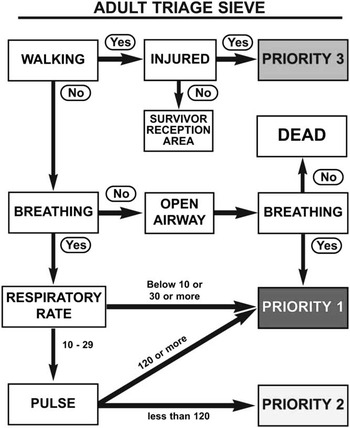
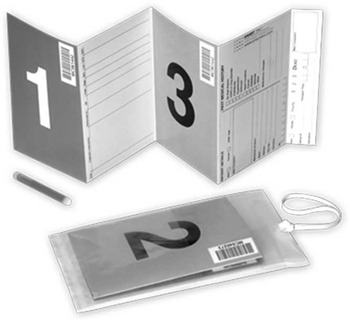
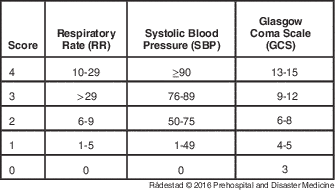
Sweden has no national standard triage system in the prehospital care setting, but several regions use the “Sieve” and “Sort” method, as described in the Major Incident Medical Management and Support course (MIMMS)Reference Arbon, Zeitz, Ranse, Wren, Elliott and Driscoll 16 (Figure 1 and Table 1). In 2008, the triage tool SMART Tag (TSG Associates; Halifax, England) was incorporated in the EMS in the Stockholm County Council (SCC) region, SwedenReference Mackway-Jones 17 (Figure 2). In connection with the mandatory education and training sessions, according to the MIMMS-concept on how to use the SMART Tag, ambulance crews and medical teams answered a questionnaire regarding how they actually used triage tags in day-to-day practice. 18 The questionnaire was based on a study performed in 2007.Reference Challen and Walter 7 The results revealed that relatively few had ever used triage tags in real incidents (9.0%; n=409), which was similar to the results of the study by Nilsson et al (10.0%; n=196).Reference Challen and Walter 7 Although triage decisions are made in the daily routine management of severely injured patients, the use of triage tags, per se, is rare. Sweden has a relatively low incidence of severe multiple-trauma events,Reference Rådestad 19 which may well influence whether or not ambulance personnel are able to maintain their skills in disaster triage.
Algorithm Illustrating the Triage Sieve. Note: Used with permission from TSG Associates.

SMART Tag. Note: Used with permission from TSG Associates.

Triage Sort is Intended for Secondary Triage Based on Revised Trauma Score. Adding the values from respiratory rate, systolic blood pressure, and Glasgow Coma Scale gives a scoring point as a base for the priority category: 12 point=Priority 3, 11 point=Priority 2, 10 point or less=Priority 1. Used with permission from TSG Associates (after Champion et al, 1989).

In order to optimize medical resource management to provide the best possible patient outcome, it is vital that there is a system that is accepted by the personnel and applicable in all conceivable situations. If the purpose of using the tags has been missed, which at present does seem to be the case, it needs to be understood why. The aim of this study was to explore ambulance personnel attitude towards, and experiences of, practicing triage tagging during day-to-day management of trauma patients, as well as in major incidents (MIs).
Definitions
The following are definitions of terms used throughout the study:
-
∙ Ambulance crew: all ambulances in Sweden have a crew of two, of which at least one is a registered nurse, which is required for the medical treatment.Reference Abelsson and Lindwall 20 The other member of the crew is either a registered nurse or an emergency medical technician (EMT).
-
∙ Ambulance nurse (AN): a registered nurse with a one-year postgraduate university education in prehospital care.Reference Abelsson and Lindwall 20
-
∙ Attitude: an expression that reflects feelings towards a particular object (attitude object) that varies from positive to negative as good-bad or pleasant-unpleasant;Reference Wireklint Sundstrom and Dahlberg 21 a person’s opinion of something. The attitude a person has motivates and guides the way he/she acts.
-
∙ Disaster triage: a decision process outside the “routine” daily experience of EMS providers and concerns MCIs.Reference Auf der Heide 2
-
∙ Experience: procedural knowledge and skill obtained by practical experience of the procedure.Reference Ajzen 22
-
∙ Field triage : a decision process based on guidelines that identify trauma patients with injury severity that justifies access of trauma team resuscitation. 23
-
∙ Level I trauma center: a hospital that is specially prepared to perform emergency surgery on patients with severe injuries. 23
-
∙ Major incident (MI): according to MIMMS, “An event that, owing to the number, severity, type, or location of live casualties, requires special arrangements to be made by the health care services.”Reference Arbon, Zeitz, Ranse, Wren, Elliott and Driscoll 16
-
∙ Trauma patient: patient with single or multiple severe injuries, identified by field triage, that require access to trauma team resuscitation. 23
Methods
A mixed method design, combining qualitative and quantitative methods, was used. Researching data from diverse sources can provide a deeper insight and interpretation of the phenomenon studied. For this reason, mixed methods often have a broader focus than designs using only one method.Reference Rehn, Eken, Krüger, Steen, Skaga and Lossius 24 , Reference Patton 25 The first part of the study was conducted as a pre- and post-intervention survey. Two identical attitude surveys were conducted, before and after implementing the routine assignment of triage category and application of triage tags by ambulance crews in day-to-day field triage. The question explored was: “Is it likely that systems not used in everyday practice will be used during a major incident?” The second part comprised focus group interviews (FGIs) in order to provide a deeper insight into the attitudes towards, and experience of, the use of triage tags. A FGI is a group interview of a limited group of people on a specific topic; the group is usually homogenous (eg, similar background).Reference Rehn, Eken, Krüger, Steen, Skaga and Lossius 24 Unlike in-depth, person-to-person interviews, the advantage of FGI is the interaction process that reveals hidden attitudes and disagreements about the topics introduced.Reference Sandelowski 26 A semi-structured interview guide was developed to ensure that the same questions were used in all FGIs.Reference Rehn, Eken, Krüger, Steen, Skaga and Lossius 24
Study Setting
The SCC is a metropolitan region with approximately 2,000,000 inhabitants. There are seven emergency hospitals in this region, and one of these is a Level 1 trauma center. The core of the ambulance service is carried out by road ambulances and helicopters, and is provided by the regional health care service and is government funded.Reference Carey and Smith 27 Different entrepreneurs run the ambulances, all operating 24 hours a day. However, all guidelines and protocols are the same within the region. The ambulance stations are situated in the city center as well as peripherally at ambulance stations or rescue stations. All EMS are alerted by the emergency medical communication center.
Each year, approximately 1,500 trauma patients are referred to the trauma center by helicopter or ambulance, thereby often bypassing non-trauma center facilities. This trauma transfer is one of the key components of disaster response.Reference Langhelle, Lossius and Sifvast 28 The idea behind the intervention was to practice practical application of field triage in the process of determining correct treatment level for all severely injured patients (ie, should the patient be transported to a trauma center or to an emergency hospital; Figure 3). All ambulance personnel were instructed by their employers to use the triage tool SMART Tag on all adult trauma patients referred to the Level 1 trauma center. This implied that ANs first decided need for trauma center admission, and afterwards, were supposed to use the SMART Tag (ie, they had to use standard triage criteria and afterwards fit them to the tag).
Flowchart Stockholm County Council (SCC).

Study Participants and Data Collection
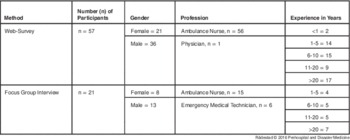
Participants in the study were recruited from ambulance personnel in the SCC region and were asked to participate via their employers. All participants were educated in the field of prehospital care and had gained the mandatory training and practice sessions on how to use the triage tool SMART Tag. They came from both central and peripheral areas of Stockholm. Most of the participants were male. Those who responded to the survey and attended the FGIs were both new recruits and personnel with many years of experience in prehospital care (Table 2). General information about the study was sent via email, as well as being on each ambulance provider’s homepage.
Demographic Data of Pre- and Post-intervention Surveys and Focus Group Interviews

First Part: Pre- and Post-intervention Surveys
Ambulance nurses and physicians were invited to participate in the pre- (n=376) and post (n=362) intervention surveys. The attitude questionnaire was developed by the author, assisted by three co-authors, and by an external expert from Statistics Sweden (Stockholm, Sweden). For validation, the instrument was pilot tested on ten ANs, all with knowledge and experience of field triage and SMART Tag. Minor modifications were made to the questionnaire based on their feedback. The participants were asked to respond to statements regarding the use of triage tags by scoring on a Likert scale. In addition, a few open-ended questions provided the possibility for respondents to add information that could have been missed (Appendix 1; available online only). The survey distribution was done online by IBM SPSS Dimension net survey, version 5.0 (IBM Corporation; Armonk, New York USA). The survey was available on a web site and accessible for four weeks before (pre-survey) the intervention and for four weeks after (post-survey). Three reminders were sent to non-responders.
Second Part: Focus Group Study
Focus group members were recruited from ANs and EMTs employed by the ambulance services in SCC (n=21; Table 2). The participants were selected on a purposeful sampling strategy as outlined by PattonReference Rehn, Eken, Krüger, Steen, Skaga and Lossius 24 and were provided with written information by e-mail. The interview guide was based on the results from the pre- and post-intervention surveys. The questions addressed the participants’ attitudes regarding tagging and documentation and their experience with triage tags in MIs. Minor modifications of the questions were made after a pilot interview of one nurse with knowledge and experience of field triage in the prehospital setting. Seven main areas were explored to guide each session: (1) education; (2) utilization; (3) decision making; (4) routine; (5) knowledge and skill; (6) experience; and (7) documentation. Three sessions were held. In the first and second sessions, eight participants attended, in the third session, five attended. The focus group sessions were carried out over a three-week period in 2012. Each session lasted approximately one hour. Before the FGI took place, the participants were informed verbally and written consent was obtained before interviews started. All group sessions were performed by the same moderator and were held at the work places of the participants. All interviews were recorded and transcribed verbatim. In all, 75 pages of transcript notes were written. Two research authors took part: one as a moderator and one as an observer. The participants were encouraged to speak freely, and the moderator asked follow-up questions when necessary.
Data Analysis
First Part: Pre- and Post–intervention Surveys
In the pre-survey, 163 of 376 (43%) participants answered the questionnaire and in the post-survey, 88 of 362 (24%). Participants who actively responded both times (n=57/n=57) were included in the study. Data were extracted from the survey site IBM SPSS Dimension net survey, version 5.0 into IBM SPSS statistics version 21 (IBM Corporation; Armonk, New York USA) to analyze the findings. The data were analyzed by a Wilcoxon matched pairs statistical test used to compare the pre- and post-questionnaire data (two groups of data from the same participants). A P value of less than .05 was considered significant.
Second Part: Content Analysis of Focus Group Sessions
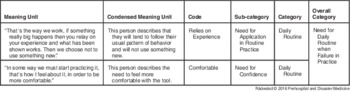
All focus group sessions started with an opening question to engage the participants: “Please tell me about your thoughts on the field triage system and triage tags used in SCC.” The moderator encouraged and stimulated conversation, based on the interview guide, and when necessary, asked the participants for clarification. Data were analyzed using qualitative content analysis, a method for systematically analyzing verbal communication.Reference Rehn, Eken, Krüger, Steen, Skaga and Lossius 24 , Reference Epley, Stewart and Love 29 In content analysis, interpretation is crucial, and it can vary in depth and level of abstraction referred to as visible (manifest) or underlying (latent) meaning of the text.Reference Epley, Stewart and Love 29 Data were analyzed in seven steps: (1) the text was read by two authors, several times, in order to capture an overall impression of the text, and this was done independently of each other; (2) meaning units were extracted (words or statements that correlated to the aim of the study) and studied; (3) the meaning units were condensed (in an effort to preserve the core); (4) the condensed meaning units were labelled with a code; (5) by continuously comparing the codes for similarities and differences, sub-categories emerged; (6) the sub-categories were discussed several times, between four of the researchers, before reaching agreement on categorization; and (7) finally, four categories were grouped into one overall category. The various codes in step four were compared independently between the first and second author and discussed before reaching agreement on sub-categories and categories. Examples of the steps mentioned above are shown in Table 3.
Example of Condensation and Abstraction, Using Content Analysis

Ethical Consideration
Informed consent was obtained from all the participants in the study. Before starting the FGIs, the participants were informed about the method used for data collection and confidentiality, where upon they provided written consent. The decision of the Ethics Committee at the Karolinska Institutet in Stockholm was that approval by an ethics committee was not necessary since the study did not involve patient data (reg.no. 2011/502-31).
Results
In general, the participants had a vast experience of the EMS (Table 2). The new tagging strategy lasted from April through December 2010. During the intervention period, 1,171 trauma patients were registered in the trauma register at the SCC Trauma Centre. Used number of SMART Tag was 183 (15.6 %).
First Part: Pre- and Post–intervention Surveys
The results revealed three differences: firstly, after the intervention, ambulance personnel were more prone to use tags in minor accidents with only a few patients to triage (n=12/n=57 in the pre-survey and n=26/n=57 in the post-survey); secondly, after the intervention, the participants consider the sort scoring system to be more valuable (n=32/n=57 in the pre-survey and n=37/n=57 in the post-survey); and thirdly, the system was considered to be more time consuming after the intervention (n=16/n=57 in the pre-survey and n=25/n=57 in the post-survey).The participants did believe in the usefulness of field triage, but the low application of triage tags indicated that tags were not used frequently. The participants expressed the view that infrequent use of triage tags in daily practice made it hard to become familiar with and see the benefit of using tags. Despite a standardized simple triage algorithm and a card that combined priority selection (triage tag) and documentation, the participants felt uncomfortable with the triage system in the real-world practice.
Second Part: Focus Group Study
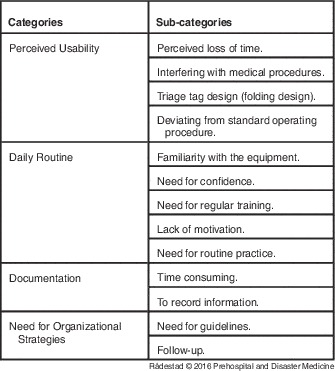
Ambulance personnel’s attitudes towards, and experience of, practicing triage tagging in day-to-day work, as well as in MIs, were classified into 13 sub-categories and four categories (Table 4), which contributed to one overall category defined as “Need for Daily Routine when Failure in Practice.” Selected quotations from the FGI transcripts reflected the results seen in the context of MIs. The individual number of the participant is indicated within brackets.
Categories and Sub-categories

Perceived Usability
In this category, the participants described how they used theory and experience in their assessment of critically injured patients and severity of injuries. Experienced ambulance personnel were less likely to use the triage tool. They felt that the triage tag was too detailed and that recording information on triage tags interfered with medical care of the injured.
Perceived Loss of Time
The participants believed that immediate access to extra resources in an urban area determined to what extent the triage cards would be used. According to the participants, experienced ambulance personnel did not necessarily see the system as a help, and furthermore, were less willing to use them at all. They relied more on experience and their own know-how when assessing a patient:
“…you don’t always have time to fill-in the parameters that provide the basis for evaluating the patient as red. Perhaps it is in my mind that he is red…” (Participant 6)
Interfering with Medical Procedures
The participants felt that they already had lot of actions/interventions that must be performed when caring for the severely injured. The stress and lack of time in this situation, as well as the possible initial lack of resources, lead to the recording of information on triage cards being perceived as taking time from assessment and care of the patient:
“…there is no time for these things; you are primarily focused on the patient…” (Participant 8)
Triage Tag Design (Folding Design)
With regard to the limited amount of treatment that was performed on the scene in a MI, the participants expressed that the triage tool was too detailed and not so easy to fill in:
“…it is so detailed that it becomes messy in a stressful situation. When you are in a hurry you want to be able to quickly assess what is written…with this, it takes time and you have to search…” (Participant 10)
Deviating from Standard Operating Procedure
Participants highlighted the problem of applying a system that was rarely used in daily practice. In a stressful situation, one relies on what is proven and familiar. The use of triage tags deviated from standard operating procedure. In a MI characterized by stress and lack of time, the triage tags were seldom used:
“…this is how we function, when something really big happens, you rely on experience and what we know will work, in that situation we do not want to take out something new for the first time…” (Participant 3)
Daily Routine
This category included the issue of familiarity. Some of the concerns expressed by the participants included the relatively low incidence of severe trauma cases and infrequency of MIs. Not being sufficiently familiar with the triage tool was considered a weakness and a reason for the low use. They emphasized the importance of being familiar with the triage tag and of using tags in daily practice.
Familiar with the Equipment
The participants understood the benefits of the triage system but expressed multiple reasons why the tags were not used in daily practice. One of reasons was that MIs are rare, but they also admitted that it might be their own choice not to use the tag when they could have done so. Lack of accessibility because of where the triage tags were stored in the ambulance, combined with forgetfulness, were also mentioned as reasons contributing to why the triage tags were not used to their fullest extent:
“…it is by pure forgetfulness; you do not consider them because they are so seldomly used …” (Participant 8)
Need for Confidence
The participants highlighted the importance of feeling confident and secure in using the tags in prehospital care. For the system to be used more frequently, the participants believed that triage tags should also be applied in minor incidents, such as motor vehicle accidents:
“…2-3 injured or more when you sort, that is as soon as the sorting starts and it will when two patients are injured…” (Participant 18)
Need for Regular Training
Due to the lack of regular training in using the triage tags and due to the low frequency of MIs, the participants expressed discomfort with the tool, despite their theoretical knowledge of the system:
“…in a way we must train more, my feeling is that this is need in order to be more familiar… I don’t follow the protocol to the last word, but I have a fairly good hunch so to say…” (Participant 5)
Lack of Motivation
The participants expressed lack of motivation to use the triage tags, since they did not see the benefit of recording and felt that the tag process takes precious time from patient care. Several participants expressed their frustration that emergency department personnel rarely listen to their reports, or read the records. Furthermore, the participants named the existence of conservatism within the group, which made them reluctant to use new things:
“…in a way this will take effort and energy from patient care, using a paper tag that we later have no use for…” (Participant 16)
Need for Routine Practice
The participants expressed the fact that they had only a limited amount of training, which made them feel insecure in using the triage system. The participants suggested a means of training that incorporates the triage tags in their daily routine:
“…the only way for us to practice is to use it in our daily work. There is no time to practice as often as we should when it comes to things we seldom do…” (Participant 1)
Documentation
The participants perceived documentation of information and observations on the tags as time consuming, affecting the assessment, and affecting the treatment of the patient. Yet they were aware that documentation was essential for systematic reassessment.
Time Consuming
Major incidents are rare in the SCC region; therefore, experience of field triage of severely injured patients is limited. According to the participants, this was one of the reasons why the tags were used seldomly, incorrectly, or not at all. Care of the patient is the first priority; the structured recording of information is performed if there is enough time to do so:
“…the result ends up being that you only put on the color tag, and neglect to write anything down because you are managing the patient instead…” (Participant 20)
To Record Information
The participants highlighted the importance of quality assurance of reports when transferring a patient to another ambulance crew, medical team, or personnel at the emergency department. By continuously recording assessments, the risk for information getting lost is minimized when reporting the patient. Contributing factors to a lack of recording included too much information to fill in, time consuming, and also forgetfulness:
“…it comprises too much considering the time framework in which we must act, there is a lot of information requested…” (Participant 20)
Opinions were also raised regarding the fact that recording in MIs should be similar to the documentation used in everyday health care, which means that communication language in the prehospital care should be the same as in the emergency department.
Need for Organizational Strategies
Based on the participants’ comments, the absence of clear guidelines seemed to contribute to uncertainty in the use of the tags because the system was not used regularly enough.
Need for Guidelines
According to the participants, the low incidence of MIs in Sweden puts specific demands on the maintenance of knowledge and skills of the triage system. The participants expressed their opinions regarding the need for clear guidelines on when the triage tags should be used:
“…managing the system and all changes and the way people handle things takes time. Compulsory system? Well then it should be used to a larger extent to become a familiar procedure in all accidents.” (Participant 20)
The participants expressed that they have many tasks to perform during a MI and that there is a lack in the routine of working with standardized protocols. On the other hand, the participants believed that the triage system was a necessary tool in mass-casualty situations. The participants felt that the tool should be used more frequently in their daily practice, for instance, standard use in traffic accidents involving two or more injured, if they are to be able to perform accurate triage during MIs:
“…in order to become familiar, we have to use it in small incidents too, and then it must be compulsory or otherwise we won’t use it.” (Participant 14)
Follow-up
According to the participants, all ambulance entrepreneurs must have the same approach in the application of the triage system, and that it was a task of the medical incident commander on the scene to order it. At the local level, the participants believed that there ought to be persons responsible who can follow-up the regular use of the tool:
“…in order for this to be used in preexisting conditions, the medical commander must issue guidelines because it is in the vehicles but not in the mind of the ambulance crew”. (Participant 3)
Discussion
This study contributes to the knowledge concerning a relatively unexplored area of field triage. Compared to field triage, disaster triage requires an entirely different approach to assessment and care, due to restriction of medical resources.Reference Rådestad, Lennquist Montán, Rüter, Castrén, Svensson, Gryth and Fossum 1 The importance of field triage and effective communication of patient priority cannot be emphasized enough. Essential for trauma care is a field triage system that identifies trauma patients with injury severity that justifies/mandates access to trauma team resuscitation. 23 Yet, triage systems can encounter many problems if EMS providers don’t use triage tags and record initial assessment or run out of triage tags in MIs. The lack of continuous assessment and recording secondary triage information results in difficulty in determining the accuracy of the field triage. Imprecise field triage (ie, over-triage and under- triage) has been described previously by Rehn et al. 23 Triage tags are included in the ambulance and medical team equipment and, according to guidelines, should be used in MIs and disasters. There are a several studies that have shown poor use of triage tags,Reference Challen and Walter 7 - Reference Aylwin, König and Brennan 11 but there are few studies that have investigated the reasons behind this. Despite the low rate response, the findings from the pre- and post-intervention surveys showed that ambulance crews became more prone to using tags in situations where there were several patients to triage after the intervention. They also stated that the simple triage algorithm felt more valuable and provided support in their triage decisions. Arbon et al.Reference Risavi, Terell, Lee and Holsten 15 describe minimal use of triage tools in a focus group study and in-depth interviews among ambulance paramedics. The ambulance paramedics use triage tools as a basis for their practice rather than strict usage. This is in line with the findings in the present study. However, the FGIs were based on results from the surveys in order to raise the validity considering the low response rate. Clarification of a phenomenon using mixed method design could be considered as helpful in cases like this. The FGIs revealed that experienced ambulance personnel rely more on their own experience, knowledge, and know-how when assessing patients.
Sweden has a relatively low incidence of severe multiple-trauma incidents. This, according to Abelsson et al,Reference Rådestad 19 contributes to the difficulty in maintaining and increasing skills in rapid assessment of severely injured patients at the scene of a MI. Triage assessment of vital signs is a prerequisite if one is to identify patients rapidly requiring immediate attention. Participants expressed that they didn’t feel comfortable in using the triage system. This indicates that there is uncertainty regarding triage accuracy in stressful situations. Long periods without practice of specific knowledge and performance skills are emphasized in the literature as a cause of vulnerability in emergency response and triage accuracy.Reference Auf der Heide 2 , Reference Graneheim and Lundman 30 This study suggests that too few exercises and infrequent use of triage tags in daily practice makes it more difficult to get an experience of them and possibly see the benefit of using the tags. This concurs with Abelsson et al.’sReference Rådestad 19 description that the continuous practice and use of equipment sharpens and maintains skills. Furthermore, Risavi et al,Reference Garner 14 in a study on skill retention among prehospital personnel, showed that skill deterioration is associated with infrequent use of triage systems. This phenomenon is salient since trainees may experience long periods without training or use, but they still are expected to perform with high levels of skill in MIs.Reference Garner 14 The findings in the present study reveal difficulties in maintaining skills since MIs are infrequent. The level of training, length of time required for personnel to perform triage, and the extent to which personnel follow triage methods are, according to Risavi et al,Reference Garner 14 important considerations. In Sweden, each county council is responsible for organizing training and exercises for all personnel involved in disaster preparedness.
The goal of field triage is to ensure that critically injured patients are evacuated to a health care facility that provides the appropriate level of care.Reference Perry and Lindell 31 Despite the fact that triage decisions, per se, are always performed, there are few reports on how these decisions are communicated within the system (ie, the actual use of triage tags in real incidents).Reference Challen and Walter 7 The findings of this study indicate that a gap exists between what is practiced in education and training courses and what is practiced in real-life triage. This is in line with previous studies.Reference Challen and Walter 7 , Reference Risavi, Terell, Lee and Holsten 15 However, field triage is not designed as a disaster or MI triage tool. Disaster triage is outside the “routine” daily experience of EMS providers and concerns mass-casualty triage. The focus changes from routine field triage of doing the best for each individual, to disaster triage of doing the greatest good for the greatest number of patients.Reference Rådestad, Lennquist Montán, Rüter, Castrén, Svensson, Gryth and Fossum 1 Triage performed by trained, experienced personnel working in their everyday environment has been shown to improve accurate triage decisions.Reference Carresi 10 The fewer resources that are available at the scene of a disaster or MI, the more important the triage method and the tagging of patients become. Despite a standardized system based on simple triage algorithms, the participants in this study felt uncomfortable with the triage tool in practice.
Written triage documentation in the field usually is sparse and often is lacking.Reference Cryer, Hiatt and Eckstein 13 - Reference Risavi, Terell, Lee and Holsten 15 Very few of the ambulance personnel in this study wrote patient details. Lack of time was a common explanation, or they simply gave no priority to that kind of task. The assessment of actual performance of triage and care is difficult since this is a balance between efficient life-saving treatment and documentation.Reference Zoraster, Chidester and Koenig 32 However, if patient documentation is limited to triage tags, no central patient-related information is available, and paper-based tags are not directly visible to the incident officers. Real-time information is critical for the medical commander at a MI, who must coordinate up-to-date information on the number of patients and their needs with resources available, and the capacity of the receiving health care facilities. If the situation allows documentation, then existing ambulance reports should be used to ensure familiarity and avoidance of tags containing information that is considered to be of less relevance in daily use. 23 However, documentation in the field must be improved so that retrospective analyses of triage decisions and quality and accuracy of treatment can be carried out objectively by researchers. The participants also mentioned that most receiving facilities ignore or discard the triage tags or do not keep the tags on the patient. This leads to a lack of motivation to use the tags. This topic is also addressed in the studies of Zoraster et alReference Perry and Lindell 31 and Cryer et alReference Postma, Winkelhagen, Bloemers, Heetveld, Bijlsma and Goslings 12 on patient misdistribution in MCIs.
FrykbergReference Auf der Heide 2 and ZorasterReference Perry and Lindell 31 have shown that several deficits in medical response exist in stressful situations, such as risk for: inaccurate triage, record keeping, and possibly also losing track of patients. Furthermore, the accuracy of triage decisions and its impact on patient outcome is highlighted as a key element in follow-up analyses from which crucial lessons can be learned on how to improve decision making during care of patients at MIs in the future.Reference Auf der Heide 2
Since MIs are uncommon and stressful, ambulance crews involved tend to follow their usual pattern of behavior.Reference Cryer, Hiatt and Eckstein 13 The use of paper triage tags deviates from familiar routines, and due to lack of time in these situations, the participants highlighted the need for simplified triage methods and equipment. They described not being sufficiently familiar with the triage tool as a deficiency and a contributing factor to the low usage. They understood, however, the benefit of accurate triage decisions and argued that the application of the triage algorithm and color coding in the primary survey makes it easier and more secure when you have something you can rely on. Being comfortable with the triage tool may increase confidence and further secure the accuracy of triage decisions, resulting in full utilization of the tool. The need for a simplified triage system at MIs is highlighted by Aylwin et al.Reference Carresi 10 If the issue of familiarity is to be considered, given the infrequency of MIs, one option would be to use the system more often in regular use. Major incidents require systems that allow providers to follow their daily pattern of behavior, the “Need for daily routine.”
This study also reveals the need for follow-up of field and disaster triage compliance according to guidelines. Prehospital duties are based on protocols and guidelines, but there is evidence that compliance with guidelines is sometimes poor in the prehospital setting.Reference Lennquist, Dobson and Lennquist 33 The reason for this, however, has rarely been investigated. Over the past year, the SCC has implemented a rapid emergency triage and treatment system (RETTS); this is a protocol used in prehospital and hospital emergency care to enable early identification of the severely ill patient.Reference Hagiwara, Suserud, Jonsson and Henricson 34 The participants expressed some concern about the use of two systems and the risk for mixing them up. Emergency services confront RETTS on a daily basis and the real challenge is to apply the disaster triage tool at MIs.
Findings in this study indicate that the participants perceived the triage system to be more time consuming after the intervention. Participants described the tag folding design as troublesome. Even if they gave the impression that the tag was simple to use, some issues are highlighted that should be taken into consideration. This issue was addressed in the study by Field et alReference Field and Norton 35 where participants ranked different triage tools after using them in triage exercises. The SMART Tag tool was preferred as it had the algorithm built in, it was easy to change priority, and the standardized color tags had room to add information. However, the time to completion, compared with other triage tools, was longer, which is in line with the participants’ impression in this study.
This study raises many questions, some which have been addressed in other studies.Reference Postma, Winkelhagen, Bloemers, Heetveld, Bijlsma and Goslings 12 , Reference Garner 14 , Reference Perry and Lindell 31 , Reference Field and Norton 35 Triage is vital for improving care in MIs. The challenge for the future is not only to validate triage systems, but also to focus on the importance of real-time information (situational awareness) so that health care facilities can respond effectively based on the rapid estimate of the number of patients and their triage categories. In management systems, situational awareness is often achieved manually through paper-based tracking systems and radio communication. Currently, technology provides the opportunity to develop creative solutions. It is common today, for example, for the ambulance personnel to have guidelines in their own Smartphone.Reference Lennquist, Dobson and Lennquist 33 There is ongoing development of information technology that is likely to improve the quality of patient clinical information and tracking in the disaster setting.Reference Field and Norton 35 , Reference Jokela 36 New techniques for automatically spreading information among all involved personnel, to save time and resources, enhance situational awareness, patient care, and improves outcome. If triage has been an issue for the past 200 years, and there is still no report stating the benefit of the use of triage tagging, perhaps it is time to challenge the whole idea. Future research may lead to new ways of addressing this issue.
Limitations
The fact that the first author has considerable experience in field triage could be considered a strength regarding the development of the questionnaire and interview guide. On the other hand, it is possible that it introduced bias by influencing the selection and design of questions.
To minimize these problems, pilot studies were performed. Even if the research worker intended to be as neutral as possible, consideration must be given to the researcher’s pre-conceptions. The first author, with experience and skills on the topic, served as the focus group moderator, and that may have imposed certain bias that reflected desired outcomes. Data collection and the process of analysis were conducted and described carefully in order to make it possible for the reader to follow each step. The trustworthiness of this study is strengthened by comparison of the findings by two of the authors. One disadvantage of this study is the low response rate in the pre- and post-intervention surveys. The web-based survey met some technical errors in connection with distribution which might have influenced the response rate negatively. Another speculation is that participants may have dropped out because of the time interval between the two surveys and the fact that data collection took place during a major reorganization of the ambulance services.
Another possible limitation was the poor adherence to the intervention, which may also be related to a reorganization process. It is also possible that ambulance personnel who did not respond to the invitation to answer the web-survey were less enthusiastic about the topic being studied. The validity of the results can be questioned with regard to the low response rate; however, this must be assessed in relation to analysis of reasons for this, as discussed above. This also has bearing on the generalization of the results from the survey and therefore conclusions must be drawn with caution. However, the selected participants did all represent persons with a prehospital responsibility to perform triage according to the implemented protocol. Nevertheless, as in most surveys with low response rate, there is always a risk for selection bias.
Several attempts were made to hold more focus groups sessions, but it was not possible to recruit more participants. The proportion of men and women among the participants in the survey (63.2 % vs 36.8 %) and FGIs (61% vs 39%) was unbalanced. The gender difference, however, mirrors the actual distribution of the sexes in the ambulance services. To enhance transferability (external validity), the sample, study design, and the process of the content analysis were described carefully. The trustworthiness of this study is also strengthened by the use of a pilot test and by comparing findings from the content analyses by the first and second authors.
Conclusion
Ambulance personnel use the triage tool as a basis for their practice rather than strictly adhering to its use. They fully understand the benefit of accurate triage decisions, and also accept that the use of a triage algorithm and color coded tags in the primary survey is intended to make it easier and more secure to perform triage. However, infrequent exercises and use of triage tags in daily practice makes the ambulance personnel unsure how to use them in a stressful MI and will probably avoid using them.
Acknowledgements
This study was supported by grants from the SCC. The authors wish to express their gratitude to all ambulance personnel that responded to the pre- and post-intervention surveys and agreed to take part in the FGIs. Without those results, the present study would not have been completed. Authors also want to thanks trauma registry nurses Lisbeth Bergendal and Lena Jansson for their contributions to collect the triage tags at the trauma center.
Supplementary material
To view supplementary material for this article, please visit http://dx.doi.org/10.1017/S1049023X16000480