INTRODUCTION
The wedge clam Donax trunculus (Linnaeus, 1758) is a filter-feeding bivalve widely distributed in North-east Atlantic waters, the Mediterranean Sea and the Black Sea, inhabiting highly energetic environments on sandy beaches at depths ranging between 0 and 6 m. Donax trunculus is an important commercial species mostly caught by authorized fishermen using individual hand dredges in shallow waters throughout the littoral of Huelva. However, easy access to beaches facilitates illegal fishing with a significant number of catches not included in the official statistics.
Reproductive timing is the temporal pattern of reproduction over a lifetime and the spawning frequency within a reproductive cycle, both of which are characteristics or species traits (Lowerre-Barbieri et al., Reference Lowerre-Barbieri, Ganias, Saborido-Rey, Murua and Hunter2011). One of the most-studied reproductive timing characteristics in commercial marine species is sexual maturity. Size at first maturity (SL50) has been estimated twice in D. trunculus in the Mediterranean Sea based on macroscopic characteristics or tissue smears. Möueza & Frenkiel-Renault (Reference Möueza and Frenkiel-Renault1973) estimated a SL50 of 16 mm on the coast of Algeria, while Ramón (Reference Ramón1993) defined a lower SL50 (12.5 mm) in the Gulf of Valencia. On the Atlantic coast Gaspar et al. (Reference Gaspar, Ferreira and Monteiro1999) concluded that all specimens greater than 13 mm were sexually ripe, but SL50 was not provided. This parameter is key in determining the minimum catch size, the fraction of the breeding population not available to fisheries and population fecundity estimations. However, an accurate estimation of this parameter using histology was not performed.
Reproductive characteristics such as the spawning seasonality of D. trunculus have been addressed by several authors along its distribution range (Ansell & Lagardère, Reference Ansell and Lagardére1980; Ramón, Reference Ramón1993; Deval, Reference Deval2009). A wide reproductive period was suggested in nearby areas such as the Mediterranean littoral of Andalusia and the Algarve coast by means of histological techniques. In addition, biological and physiological variability between populations were revealed in relation to geographic or environmental factors (Tirado & Salas, Reference Tirado and Salas1998; Gaspar et al., Reference Gaspar, Ferreira and Monteiro1999).
The lack of literature on bivalves, not only in relation to fecundity but also in-depth analysis of variability in reproductive timing, reveals the difficulty of calculating total fecundity, probably due to their extended spawning seasonality and indeterminate fecundity. This complexity led our group to estimate partial fecundity in a previous study with the bivalve Chamelea gallina (Delgado et al., Reference Delgado, Silva and Juárez2013). With regard to D. trunculus, Tirado & Salas (Reference Tirado and Salas1998) made a first estimation of fecundity using image analysis techniques in the littoral of Málaga but the influence of shell length was not modelled. Size, as well as timing characteristics, could play a role in equilibrium-based population dynamics or reproductive success, and consequently, for decision-making in fishery management.
This study aimed to augment existing knowledge of the reproductive characteristics of D. trunculus with regard to fisheries management decisions. For this reason the influence of shell size and variations in the timing of partial fecundity of D. trunculus were analysed. In addition, the consequences of two different scenarios of population size structure on the reproductive output were also simulated. To correctly meet these objectives two reproductive timing characteristics were studied: size at first maturity and the reproductive cycle using physiological and quantitative indices based on histology and image analysis techniques.
MATERIALS AND METHODS
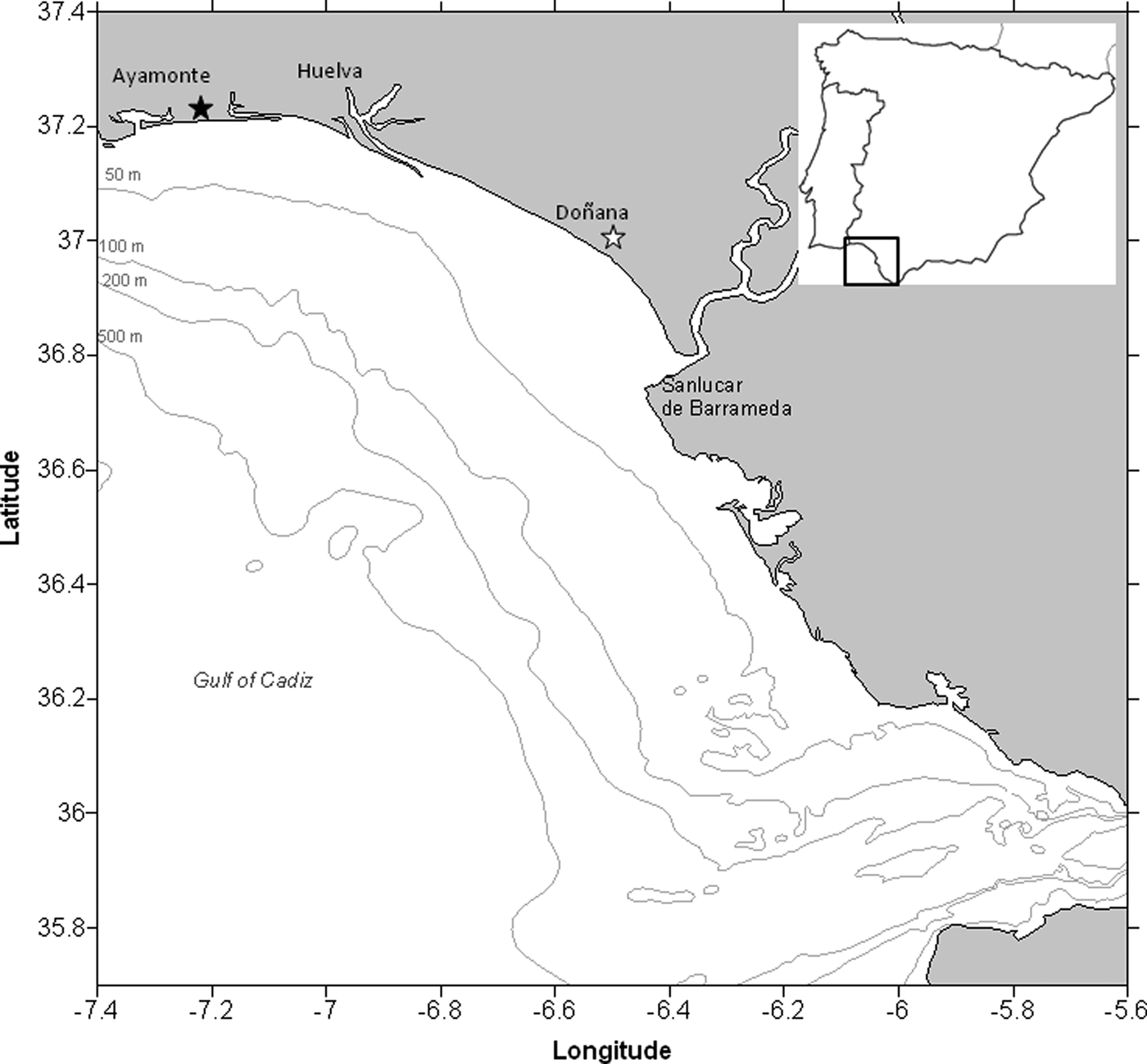
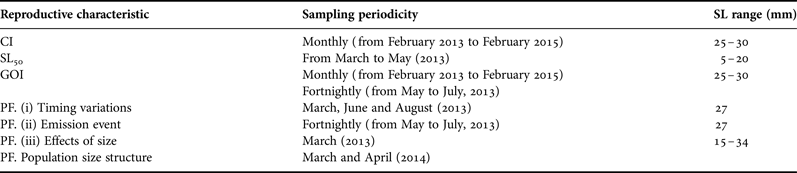
A natural population of Donax trunculus along the Doñana beach in the littoral of Huelva (Figure 1) was monitored over 2 years (February 2013–February 2015). Samples were collected on a monthly basis to determine a condition index and for histological examination. Sampling efforts were intensified during the final months of the reproductive period in 2013 (May–July) and carried out on a fortnightly basis. Additional samplings were collected to complete several tasks described below. The sampling periodicity of the study is displayed on Table 1.
Map representing the littoral of Huelva in the Gulf of Cadiz (SW Spain).  Isla Canela beach;
 Doñana beach.

Summary of the sampling strategy used during the study period (February 2013–February 2015).

SL, Shell Length; CI, Condition Index; SL50, Size at first maturity; GOI, Gonadal Occupation Index; PF, Partial Fecundity.
Condition index
Each sample consisted of 30 individuals of sizes between 25 and 30 mm shell length (SL). The adductor muscles of each individual were cut and the clams placed on their ventral surface, allowing them to drain for 5 min. The soft tissues and valves were separated and dried at 80°C for 72 h (or until constant weight) and then weighed to obtain the soft-tissue and valves dry weights. The condition index (%) was determined following the expression of Walne (Reference Walne1976):
 $${\rm CI} = \hbox{Soft tissue dry weight/Valves dry weight} $$
Size at first maturity (SL50) and at sexual differentiation
To determine the size at first maturity (SL50), additional and specific samplings were carried out within the period of high reproductive activity, specifically from March to May 2013, to collect individuals within a wide SL range (5–20 mm), and to study 10 individuals per size class (SL classes of 1 mm). Four individuals were added from the smallest classes (2 individuals of 5 mm SL and 2 individuals of 6 mm) to ensure histological interpretations of gonadal development. Individual SL was measured, a piece of visceral mass was taken from each individual and a conventional histology protocol was followed: tissues were fixed in formaldehyde (4%), dehydrated and subsequently embedded in hydroxyethylmethacrylate (Technovit 7100). Sections of 3 µm were prepared and stained following the Harris haematoxylin and eosin protocol (Bancroft & Stevens, 1996). Identification of the gametogenic stages in D. trunculus was achieved by observing the histological preparations under light microscope (Nikon Eclipse 90i, 20×) and using a scale proposed by Delgado et al. (Reference Delgado, Silva and Juárez2013): Stage 1 (sexual rest or indeterminate), stage 2 (initiation of gametogenesis), stage 3 (advanced gametogenesis), stage 4 (reproduction period) and stage 5 (spent). Since one peculiarity observed in the gametogenic cycle of D. trunculus is the coexistence of two or more stages in the same gonad, stage assignation was carried out using the most representative stage. A total of 61 males, 59 females, 43 indeterminate and 1 hermaphroditic individuals served to estimate SL50. We considered individuals in stages 3 or 4 to be physiologically mature. The proportion of mature individuals in each SL class was fitted to the logistic model by a non-linear modelling procedure:
 $$Pi = 1/(1 + e^{ - (a + b{\rm SLi})} )$$
where Pi is the relative frequency of mature individuals; SLi is the size class; a and b are the regression constants; and SL50 = −a/b
Reproductive cycle: gonadal occupation index
The gonadal occupation index (GOI) was only calculated for females. Each month 30 females within the size range 25–30 mm SL (5 individuals per size class) were analysed. Each individual was measured (SL), a piece of visceral mass was taken from each individual and the above-mentioned histology protocol was followed. For each specimen, sections were viewed under light microscope and nine fields of vision of the gonad were chosen at random, corresponding to three different depths in the body of the clam. These images were taken and digitized using a Nikon DXM 1200C digital camera. The image analysis software NIS-Elements AR 3.2 was used to estimate the gonadal occupation index, as a quantitative indicator of the degree of gonadal development, and defined as follows by Delgado & Pérez-Camacho (Reference Delgado and Pérez-Camacho2003):
 $$\eqalign{{\rm GOI} & = (\hbox{area occupied by oocytes/area of the field analysed}) \cr & \quad \times 100}$$
The presence of a trematode-like parasite (Bacciger bacciger) was detected from histological observations of the visceral mass tissue. Since acute infection led to gonadal destruction in some cases, prevalence information is important in the estimation of the reproductive output of D. trunculus population. Prevalence was estimated as the proportion of the population (sample) found to be infected.
Partial fecundity
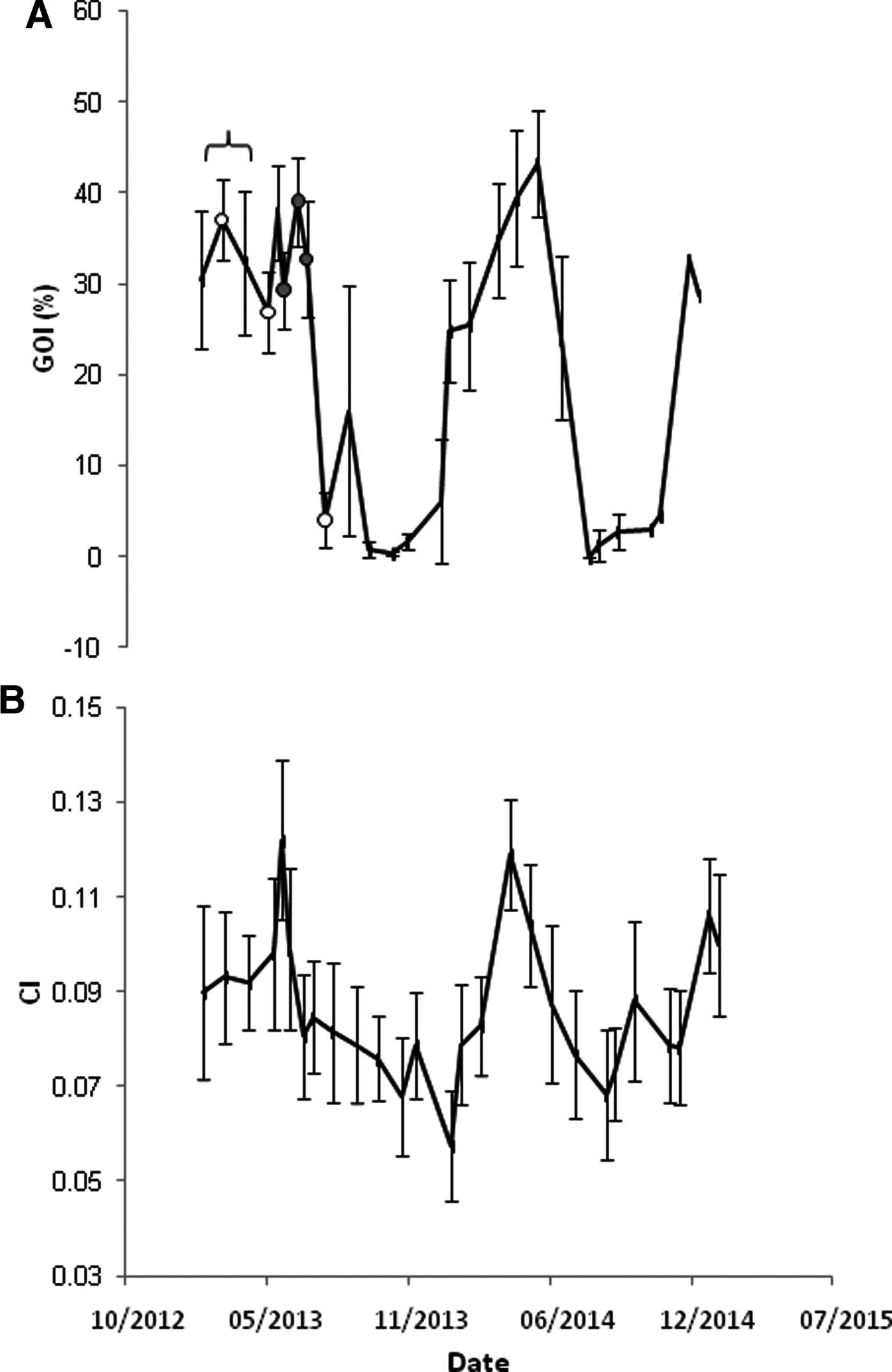
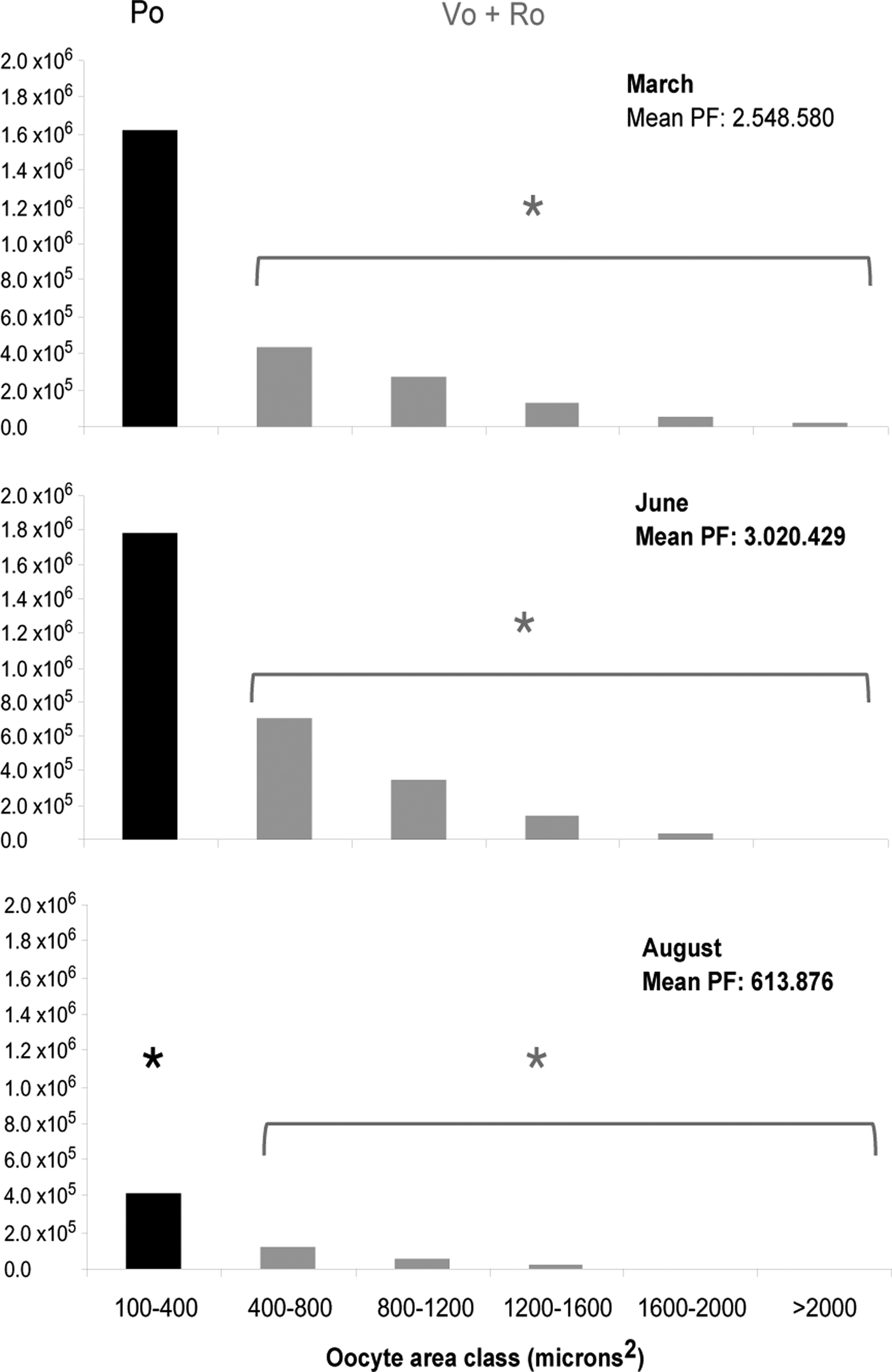
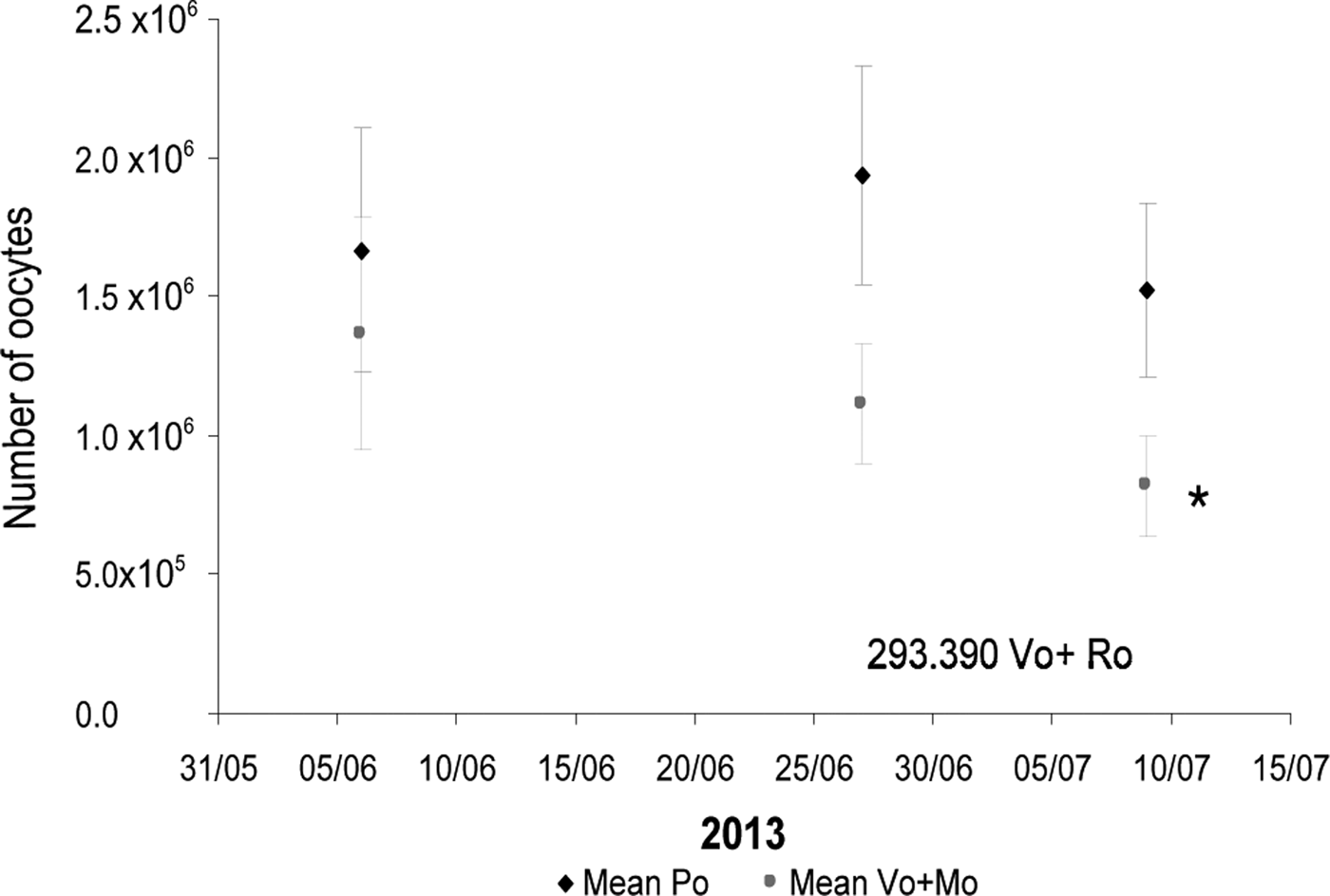
Additional and specific samplings of macroscopically ripe females were also performed over the reproduction period (February–July 2013) to estimate partial fecundity (PF) and to meet three different objectives by means of three different monitoring tasks: (i) Samples (10 females of a fixed size, 27 mm) were collected in March, June and August 2013 to study variations in fecundity throughout the reproduction period. (ii) Samples (10 females of a fixed size, 27 mm) were taken on a fortnightly basis from June to July to quantify an event of gamete emission at the end of the reproduction period. (iii) 40 females within a SL range (15–34 mm; 2 females/size class; SL classes of 1 mm), which considered the above estimation of SL50, were collected in March 2013 to analyse the influence of size (SL) on fecundity. This sampling strategy is displayed over Figure 2A and Table 1.
Monthly changes on: A. Gonadal occupation index of females (GOI, %) of D. trunculus in the littoral of Huelva throughout the study period. PF sampling strategy is represented over GOI data to analyse: (i) Timing variations on PF (white circles), (ii) Detection of a gamete emission event (grey circles), (iii) Effects of size on PF (brackets). B. Condition index (CI).

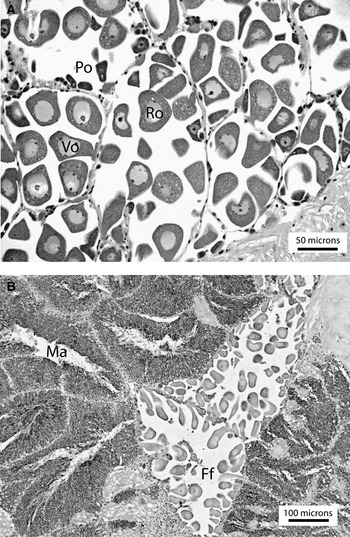
In all cases the estimation of fecundity was carried out using histological and image analysis methods (Image analysis software NIS-Elements AR 3.2). The area of the total visceral mass, gonadal area and volume (Gv), total volume of the gonad occupied by oocytes and volume of oocytes, were estimated following the procedure explained by Delgado et al. (Reference Delgado, Silva and Juárez2013). In addition, the area of 500 oocytes classified from its morphological characteristics was measured. This information allowed separate quantifying of previtellogenic oocytes (Po; 100–400 µm2) and vitellogenic and ripe oocytes (Vo + Ro; >400 µm2) (Figure 3A). From all these parameters partial fecundity (PF, number of oocytes) was estimated as described by Delgado et al. (Reference Delgado, Silva and Juárez2013).
A. Oocyte typology in the female gonad of D. trunculus. Po: Previtellogenic oocyte; Vo: Vitellogenic oocyte; Ro: Ripe oocyte. B. Detail of the gonad of a hermaphroditic individual of D. trunculus of 28.5 mm SL. Ma: Male acini; Ff: Female follicle.

Partial fecundity and population size structure
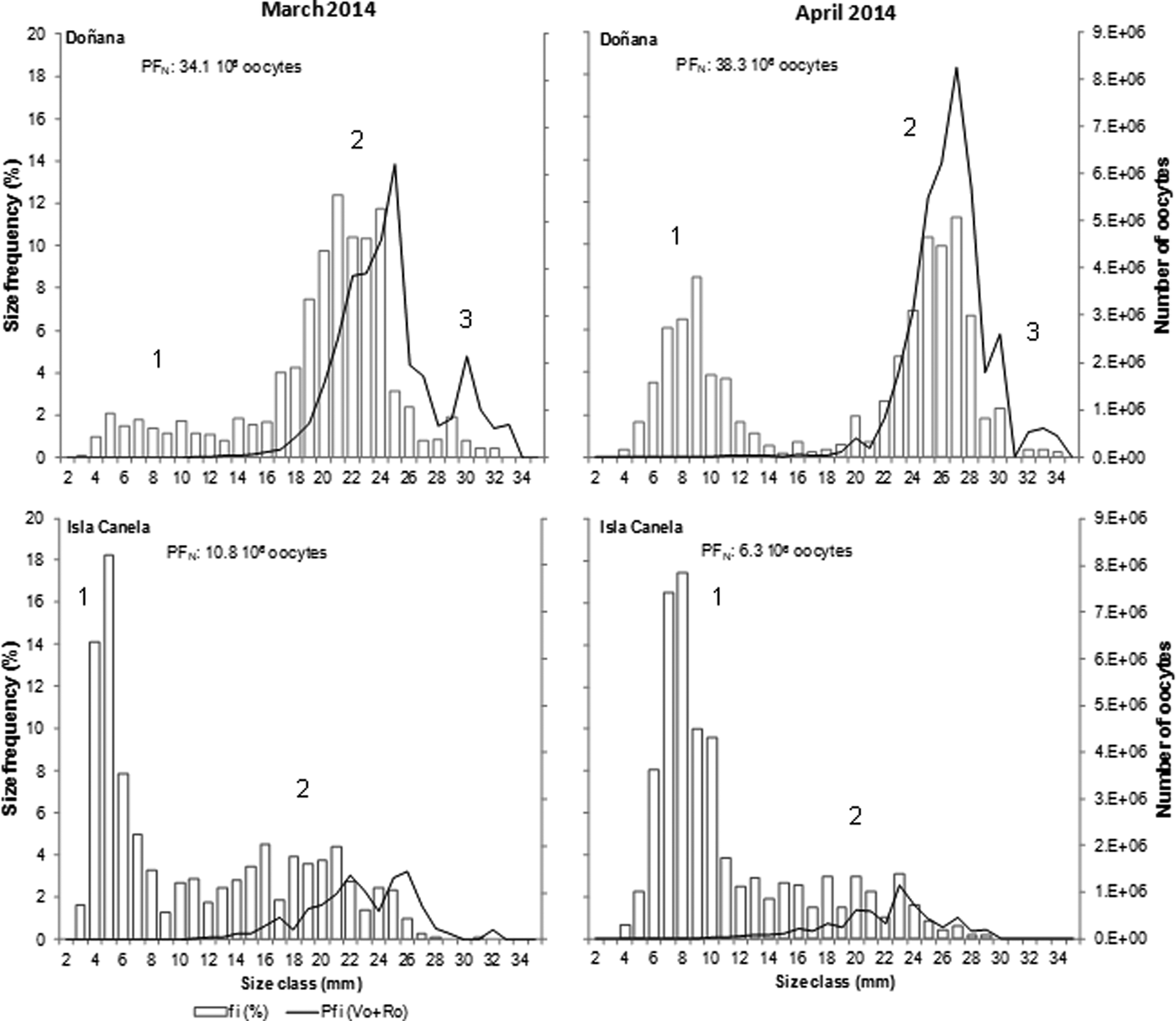
A comparative simulation of partial fecundity from a hypothetical population of 200 clams (sex ratio 1:1; 100 females) was performed to test its dependence on the size frequency distribution. Additional samples from two beaches under different levels of anthropogenic pressure (fishing and tourism) in the littoral of Huelva were collected (Figure 1): Doñana beach (belonging to the protected area of Doñana National Park (Site of Community Importance; low level) and Isla Canela beach (tourist destination; high level) (Delgado & Silva, Reference Delgado and Silva2015). Sampling was conducted during low tides (semidiurnal tide) at the time of a high proportion of ripe clams during 2014 (March and April) to set the size (SL) frequency distribution (Table 1). At each beach clams were extracted by means of a hand dredge similar to that used by local fishermen but incorporating a smaller mesh size bag (3 × 3 mm). Individuals were sorted into SL classes of 1 mm. The partial fecundity of the population (PFN: total number of oocyte from all females) was estimated as follows:
 $${\rm PF}_{\rm N} = \sum {\,fi\;pi\;pfi} $$
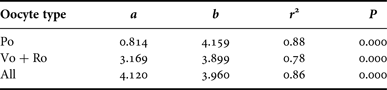
where fi is the frequency of individuals of size class i, pi is the proportion of ripe individuals of size class i (from SL50 curve) and pfi is the partial fecundity of size class i (following the regression model for Vo + Ro in Table 4).
Statistical analysis
Prior to analysis, data were examined for normality (Kolmogorov–Smirnov test). Simple regression models were used to examine the relationship between partial fecundity (PF) and shell length (SL) (minimum significance level of P < 0.05); t-tests and ANOVA were performed to compare GOI, CI or PF monthly data for a minimum significance level of 95%. For multiple comparisons the least significant difference (LSD) method was used. Parameters expressed as percentages were modified by angular transformation (arcsin√%). Bartlett's test was used to guarantee the homogeneity of the variances. The Mann–Whitney and Kruskal–Wallis tests were used when the homogeneity of the variances could not be ensured in sample comparisons. These statistical analyses were performed according to the methods described by Snedecor & Cochran (Reference Snedecor and Cochran1980) and using R statistical software (R Core Team, 2015).
RESULTS
Condition index
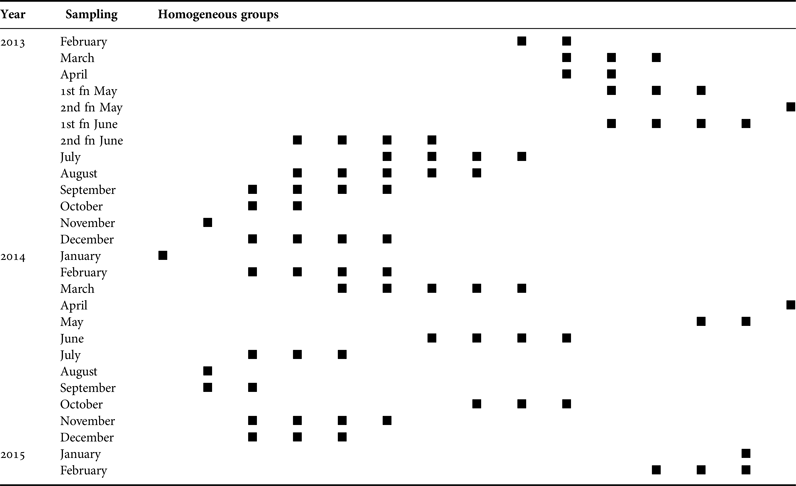
The condition index provided not only reproductive, but also physiological information. Figure 2B shows the variation of the condition index (CI) throughout the study period. There were significant differences between months (ANOVA, P = 0.000). Maximum values of CI were observed in May 2013 (0.122) and April 2014 (0.119). From that point a continuing decrease was noted throughout summer and autumn (values around 0.080) and the lowest values were recorded in November 2013 or August 2014 (0.068). It must also be highlighted that the minimum of the monthly series (January 2014; 0.057) contrasted with a high value in the following year (January 2015; 0.106), determining an interannual gap. These results were statistically confirmed by homogeneous groups resulting from LSD test (Table 2).
Results of multiple statistical comparison of condition index (LSD test).

Size at first maturity and at sexual differentiation
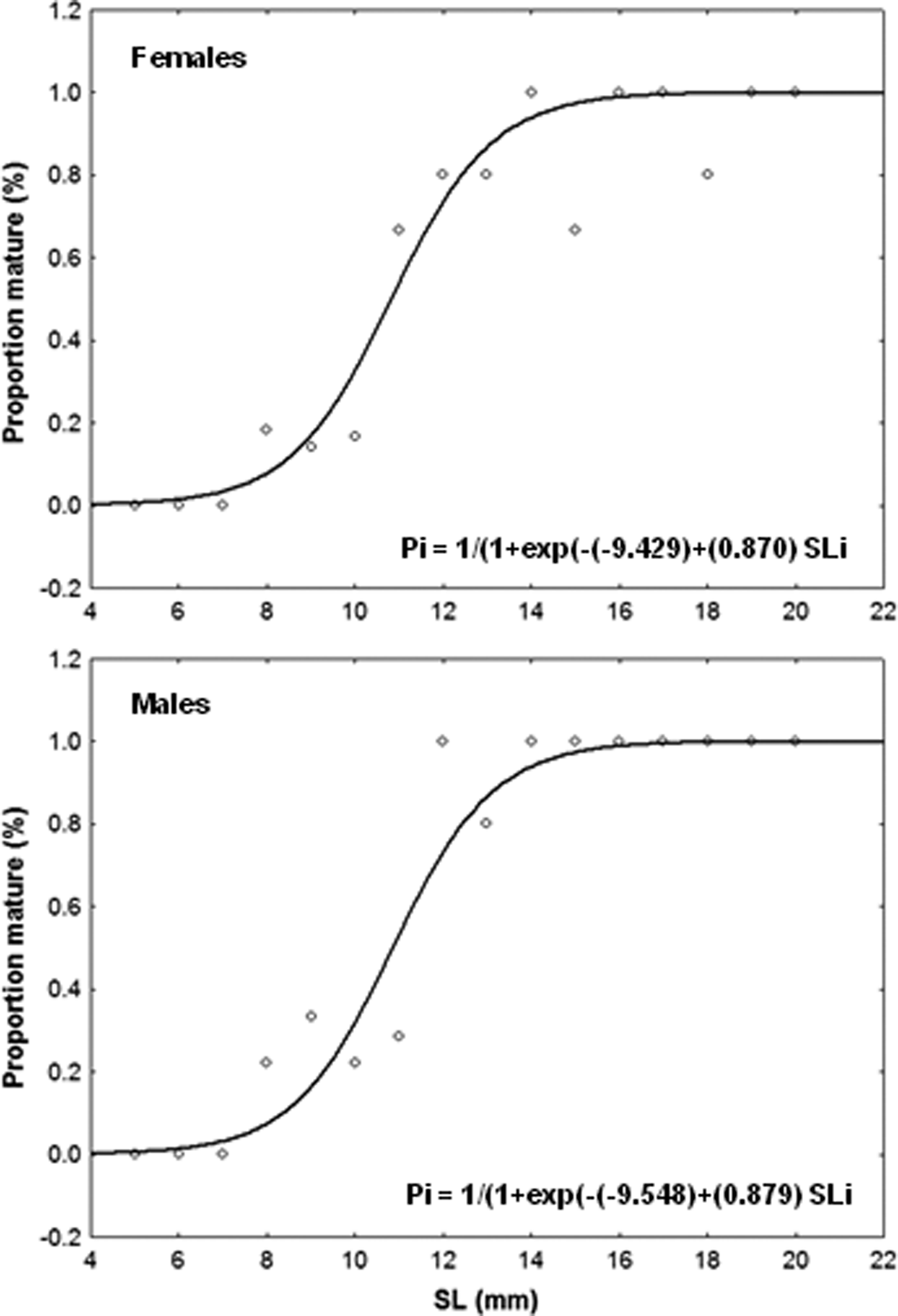
Figure 4 shows the maturity logistic curves. The estimated SL50 was 10.83 mm SL for females and 10.86 mm SL for males. Additional information about the size at sexual differentiation was also obtained. In general terms, sex was distinguishable from 7 mm, though a male of 6 mm SL could be identified. In all these cases gonads were immature. We observed two clams of 9 mm SL in stage 3 (active gametogenesis), and from 10 mm SL evidence of partial emissions was detected. Above 16 mm SL, most of the sampled clams were sexually differentiated and physiologically mature.
Logistic models indicating size at first maturity in females and males of D. trunculus, fitted by non-linear regression. Pi: Relative frequency of mature individuals; SLi: Size classes.

Reproductive cycle: gonadal occupation index
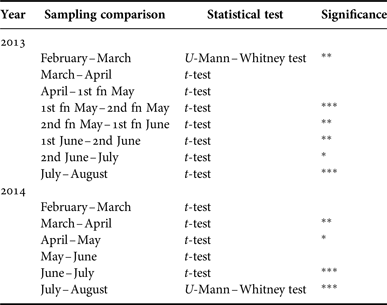
Figure 2A presents the monthly variation of the gonadal occupation index (GOI) throughout the study. GOI remained at above 24% between February and July 2013 and 2014 which confirmed these months as the reproductive period over the year. The maximum values (>35%) were recorded in March 2013, May and June 2013 and 2014. During the reproductive period values varied slightly around these levels. Histological observations and statistically significant differences detected on GOI between correlative samplings throughout this reproductive period (Table 3) suggested the existence of a continuous process of partial emissions followed by oocyte regenerations.
Statistical comparison by pairs between consecutive months of GOI throughout the reproductive period and the beginning of the rest period of D. trunculus (February–August).

fn, fortnight. Level of significance: *P < 0.05, **P < 0.01, ***P < 0.001.
GOI dropped in both years from June to July and showed values of nearly 4% in August 2013 and 0% in August 2014. This month marked the end of the spawning and reproductive period. Between August and December GOI data were kept low (0–6%) in line with a rest period at the end of the summer–start of the autumn and the initiation of gametogenesis at the end of the autumn–start of the winter. These data were consistent with the histological observations. Data from January showed that the reproductive period started earlier in 2015 than in 2014 and an interannual gap remained obvious (GOI January 2014 < GOI January 2015; t-test, P = 0.00). It is interesting to note that values in January 2015 were similar to GOI values in April 2014 or 2013 revealing an early high reproductive development degree in 2015 (ANOVA, P > 0.05).
Standard deviation denoted a lower inter-individual asynchrony on gonadal development during sexual rest months, and a higher level of asynchrony at the initiation of gametogenesis or at the end of the reproductive period, reflecting the coexistence of clams with different degrees of gametogenic development (Figure 2A).
Two hermaphroditic individuals of 28.5 and 25.4 mm were collected in July 2013 and 2014, respectively. Both clams were in stage 4 of maturity and ripe male acinii and female follicles coexisted (Figure 3B).
Parasitism
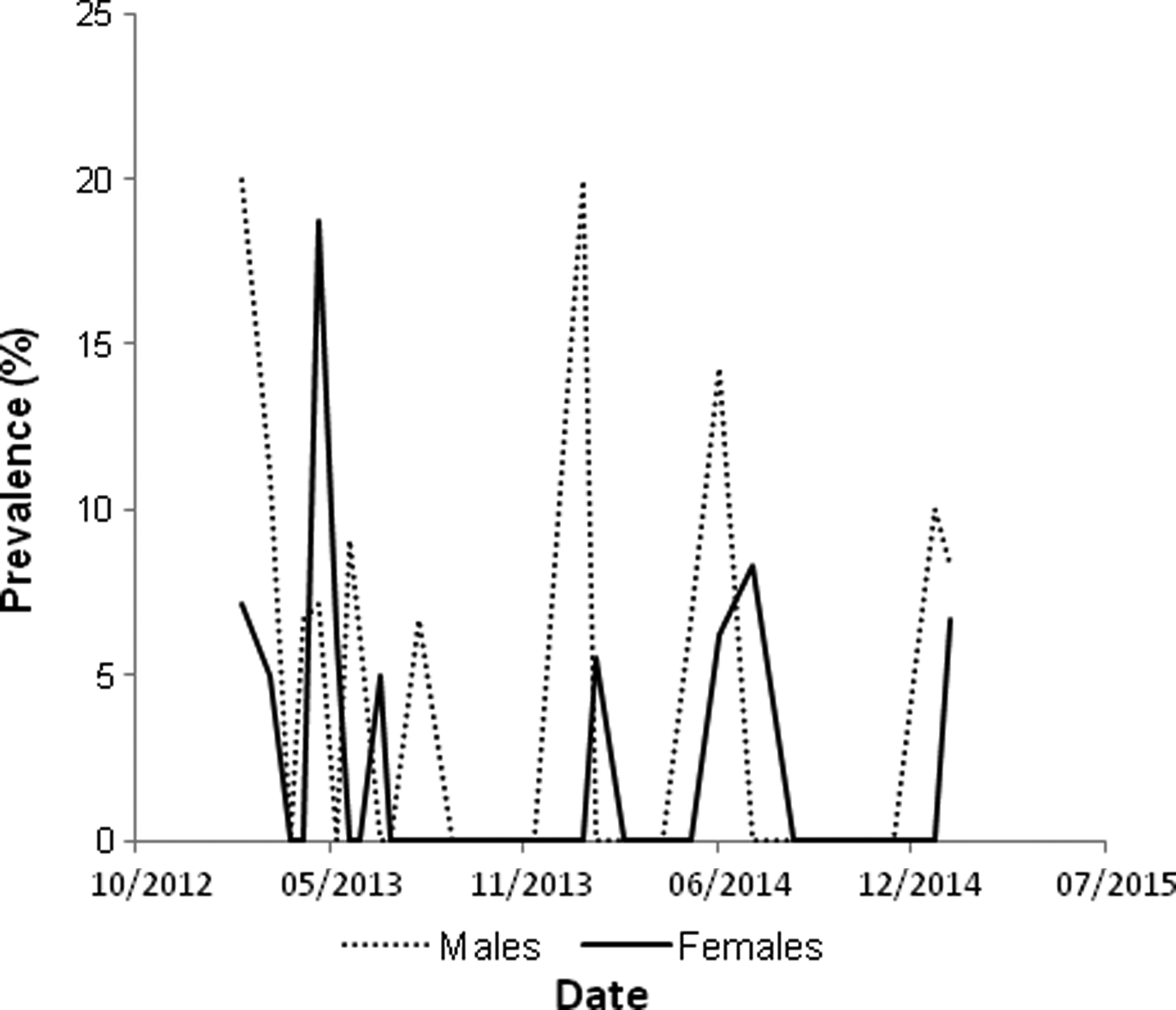
Sporocysts and developing cercaria of a digenetic trematode-like parasite (Bacciger bacciger) were detected in the gonadal tissue of Donax trunculus of the littoral of Huelva. Prevalence data are shown in Figure 5 where some seasonality was observed. The highest levels of prevalence were observed at the beginning of the reproductive period (January–February) and at the end of spring (May–June) with values of around 15–20%. During the rest of the year prevalence varied between 0 and 3%, particularly in summer. Regarding differences between sexes, males generally seemed to present slightly higher levels of prevalence.
Monthly changes on prevalence of trematode parasites on D. trunculus throughout the study period in the littoral of Huelva.

Partial fecundity variations throughout the reproductive period
It was clearly evident that oocyte development was asynchronous with no modal oocyte or synchronous batch development. In the case of Po, the number of oocytes in June showed similar values to March, and differences were only statistically different between August and the previous months ((March = June) > August; ANOVA, P = 0.00; LSD test), suggesting a constant supply of oocytes until the end of the reproductive period. However, the intensity of the reproductive activity showed some differences over time, specifically Vo + Ro oocytes which increased throughout the reproductive period and underwent a sharp decline between June and August 2013 (Figure 6). There were significant differences between the three months for Vo + Ro (ANOVA, P = 0.00; LSD test).
Variation on mean partial fecundity (PF) and by oocyte type throughout the reproductive period in 2013. Po: Previtellogenic oocytes; Vo + Ro: Vitellogenic and ripe oocytes. *Significant differences (P < 0.05).

The fortnightly monitoring carried out at the end of the reproductive period (June–July) allowed us to quantify a significant mean drop of 293.390 Vo + Ro per female (27 mm SL) between the second half of June and the first half of July 2013 (ANOVA, P < 0.05; LSD test) (Figure 7), which suggested an oocyte evacuation.
Fortnightly monitoring on mean partial fecundity by oocyte type at the end of the reproductive period in 2013. Po: Previtellogenic oocytes; Vo + Ro: Vitellogenic and ripe oocytes. *Significant differences (P < 0.05).

Partial fecundity variations related to shell length and population size structure
Gonadal volume (Gv) ranged between 3.2 and 192.29 mm3 and was significantly and positively related to SL (Gv = 10.51 SL–165.83; r 2 = 0.80; P < 0.001), while the percentage of visceral mass occupied by gonad remained constant (P > 0.05). PF varied between 159.147 and 3453.044 oocyte/female where the percentage of previtellogenic oocyte (Po) fluctuated between 48.22–78.17% and the percentage of vitellogenic and ripe oocytes (Vo + Ro) was 21.83–51.78%. Table 4 displays different relationships between the number of oocytes in the gonad and SL depending on the type of oocytes. All models were statistically significant and explained more than 75% of the observed variability. The best fit corresponded to Po and when considering all oocyte types.
Relationship between partial fecundity (PF, number of oocytes) by oocyte type and shell length (SL, mm) by means of regression models (No = a*SLb).

Po, Previtellogenic oocytes; Vo + Ro: Vitellogenic and ripe oocytes.
The population size structure from Doñana beach (low level of anthropogenic pressure) and Isla Canela beach (high level) is shown in Figure 8. The size frequency distribution is well structured in Doñana and three modes (age classes) were observed. In contrast, the size frequency distribution in Isla Canela is mainly composed of lower size classes. The simulated overall oocyte output is also represented in this figure and ranged between 34–38 million on Doñana beach and varied between 6–10 million on Isla Canela beach for a theoretical assumption of 100 females. These data reflect how differences in these population size structures during the reproductive period could affect its total oocyte output.
Size frequency distribution (%) on Doñana beach and Isla Canela beach in March and April 2014, and simulation of oocyte output for a hypothetical population of 200 individuals (sex ratio 1:1; 100 females). fi: frequency of individuals of size class i; Pfi: partial fecundity of size class i; PFN: partial fecundity of the population. 1, 2 and 3: Modes identified on size frequency distributions.

DISCUSSION
Reproductive timing characteristics of D. trunculus in the littoral of Huelva
Size at first maturity (SL50) is a key indicator in identifying the spawning-capable clam fraction, fecundity of the population not harvested by fishing as well as the state of the fishery. On the coast of Huelva this parameter was estimated by means of histological procedures, its value being 10.83 and 10.86 mm SL for females and males of Donax trunculus, respectively. The wide ranges of shell length used in the present study (5–20 mm) also allowed for an estimate of size at sexual differentiation of 7 mm, while only individuals from 9 mm were physiologically mature. This first estimation of SL50 in Atlantic waters was considerably lower than the value obtained in the Argelian coast (16 mm; Möueza & Frenkiel, Reference Möueza and Frenkiel-Renault1973) or in the Gulf of Valencia (12.5 mm; Ramón, Reference Ramón1993). However, the geographic origin (Mediterranean Sea), size range of samples (>10 mm SL) or methodological aspects (reproductive assignation by means of smears or gonadal macroscopic characteristics) used by those authors could explain the differences in the estimation. In addition, marine populations undergo changes relative to abundance or demographic characteristics as a consequence of environmental or anthropogenic factors and some biological parameters such as size at first maturity can vary causing organisms to adapt to different situations (Van der Kraak & Pankhurst, Reference Van der Kraak, Pankhurst, Woods and McDonald1997; Tobin & Wright, Reference Tobin and Wright2011).
The quantitative monitoring and histological observations of the gametogenic cycle of D. trunculus in the littoral of Huelva showed that it started at the end of autumn (November–December). The reproductive period began in February and carried on throughout spring and the beginning of summer (July). During this period the value of gonadal occupation index (GOI) remained high but some oscillations were recorded in relation to a consecutive and simultaneous process of oocyte emissions and regenerations. This prolonged spawning period is probably directly linked to the typical environmental conditions of temperate latitudes, as described histologically by Tirado & Salas (Reference Tirado and Salas1998) in Mediterranean waters. The sexual rest period began in September and finished in October followed by the new gametogenic cycle. In general, no great differences on spawning seasonality were found between Atlantic populations (Gaspar et al., Reference Gaspar, Ferreira and Monteiro1999; present study) but they were worthy of consideration when compared with Mediterranean areas (Tirado & Salas, Reference Tirado and Salas1998; Deval, Reference Deval2009). On the other hand, the observed interannual difference on CI and GOI data (i.e. the beginning of the reproductive period was clearly earlier in January 2015 compared with 2014) revealed a certain level of ecological plasticity probably related to the prevailing environmental conditions as has been defined for other venerids (Navarro et al., Reference Navarro, Iglesias and Larrañaga1989).
Physiological information (CI results) classifies D. trunculus as an opportunistic species in which growth and reproductive activities are restricted to the favourable environmental conditions of the spring-summer season in the littoral of Huelva (Delgado et al., Reference Delgado, Silva and Juárez2013). In that period, gonadal development (high levels of GOI) tended to overlap temporarily with the increase of energetic reserves (CI) as described by Beukema & De Bruin (Reference Beukema and de Bruin1977) during spring and concerning Macoma balthica. Whereas in autumn neither reproductive activity nor an energetic accumulation process were clearly observed.
Variations of partial fecundity: influence of timing, size and parasitism
With regard to timing variations on partial fecundity (PF), similar levels with no modal oocyte or synchronous batch development were observed throughout the reproduction period. It is worth noting that a slight increase in the number of Vo + Ro from March to June parallel to an almost constant presence of Po, and a significant drop of both types of oocytes at the final stage of the reproduction period (August) occurred when the last emission events took place. These features, and the aforementioned GOI pattern, confirm two complementary and simultaneous processes: a continuous emission of oocyte (alternative presence/absence of Vo + Ro in the lumen of follicles) and a high oocyte regeneration ability (constant presence of Po). This continuous oocyte recruitment (from Po to Vo + Ro) increases their fecundity and their ability to spawn over an extended time period (from February to July) providing a greater number of reproductive opportunities, which have the potential to increase seed recruitment (James et al., Reference James, Pitchford and Brindley2003). However, this characteristic makes it difficult to determine total fecundity and leads us to consider this species as an indeterminate species in terms of fecundity. In these cases only the putative number of oocytes released in a single partial spawning event (PF) can be measured, but not the spawning frequency (number of spawning events within the reproductive period) and, consequently, the number of eggs released by one female over the whole reproductive period. It is significant that in this study period, a specific emission of ~300.000 oocytes over 15 days corresponded to a drop of 8% in GOI.
In a previous study authored by Tirado & Salas (Reference Tirado and Salas1998), a total number of oocytes ranging between 33,245 and 641,000 for females of 18–36 mm SL of D. trunculus in Mediterranean waters was reported. In the present study the PF was calculated as an initial estimation of its reproductive output in the Gulf of Cadiz, and indicated a higher oocyte production (159,147–3,453,044; 15–34 mm SL). These differences between studies are acceptable since methodological procedures varied. Tirado & Salas (Reference Tirado and Salas1998) only performed measurements of mature oocytes, while in this study measurements from the whole oocyte typology were performed. Similarity on gonadal volume range data from both studies (17–235 mm3 (Tirado & Salas, Reference Tirado and Salas1998); 3.2–192.3 mm3 (present study)) supports this point. In addition, the present study established a clear and direct relationship between PF and size (SL) for each type and for all types of oocyctes. Regarding potentially emitted oocytes in a short-term period (Vo + Ro), differences of one or two orders of magnitude between small and large individuals were obvious (e.g. a clam of 20 mm could produce around 200,000 oocytes while a clam of 30 mm could produce one million oocytes). In that regard minimum landing size is 25 mm for the Spanish area of the Gulf of Cadiz and modifications of management measures related to this parameter should be treated cautiously since its change could reduce the reproductive output of the population and, consequently, could affect future recruitments.
The population size structure reflected the known situations of low and high levels of anthropogenic pressure in the littoral of Huelva. Doñana beach belongs to the Natural Park of Doñana, one of the most important protected natural areas of Europe where only authorized fishermen and few tourists have access. In that beach area the population is well structured and recruits and adults (spawners) are well represented. However, Isla Canela beach is heavily influenced by authorized and unauthorized fishermen and tourists from the nearby urbanizations (Delgado & Silva, Reference Delgado and Silva2015). This population is mostly represented by recruits and the presence of adults is relatively low. The influence of human activities and the urbanization of coastal areas on the presence and abundance of several bivalve populations has been reported (Marcomini et al., Reference Marcomini, Penchaszadeh, López and Luzzatto2002; Dadon, Reference Dadon2005). Herrmann et al. (Reference Herrmann, Carstensen, Fischer, Laudien, Penchaszadeh and Arntz2009) related an abrupt decrease of a non-commercially exploited Donacidae population (D. hanleyanus) to mass tourism and the intensive trampling of Argentinean beaches. On Isla Canela beach, tourism not only impacts through the disturbance of the intertidal areas by trampling but also by illegal hand-fishing this valuable seafood. These differences in population structure during the reproductive period have clear consequences on its potential oocyte production. Although food availability, grain size, beach slope or wave regime could also affect reproduction (Delgado & Pérez-Camacho, Reference Delgado and Pérez-Camacho2003; Herrmann et al., Reference Herrmann, Barreira, Arntz, Laudien and Penchaszadeh2010), the simulation of the reproductive output suggested that the population of the beach with the highest level of human pressure (Isla Canela beach) potentially produces 84% less oocytes than a beach with a lower level of disturbance (Doñana beach).
Bacciger bacciger (Fellodistomidae) seems to be the most prevalent trematode parasite of the Donacidae family in European waters and some authors have already reported its presence in D. trunculus (Ramón et al., Reference Ramón, Gracenea and González-Moreno1999; Ramadan & Ahmad, Reference Ramadan and Ahmad2010). This parasite is one of the ecological factors that can control the abundance of D. trunculus populations and appears as a possible discriminating factor between sites (de Montaudouin et al., Reference de Montaudouin, Bazairi, Ait Milk and González2014). The present study represents the second reference to the presence of trematode-like B. bacciger in D. trunculus in an Atlantic population. This probable endemic pathology in the littoral of Huelva reached prevalence levels of around 15–20% during the reproductive period, and this must be taken into account when estimating the fecundity of the population since its ability to castrate could clearly reduce PF. In this sense, the aforementioned simulations to test the influence of population size structure on reproductive output should incorporate this kind of correction.
These findings also act as a warning with regard to future management measures involving changes in minimum catch size (25 mm) although this is far removed from the present estimation of the size at first maturity (10.8 mm). Our results also highlighted how beach areas that support high levels of anthropogenic pressure could compromise future recruitments and species abundance. Further research should explore the interaction of environmental, pathological and anthropogenic variables on interannual differences in abundance and spawning, in order to determine their consequences on recruitment and the potential implications in a scenario of environmental changes.
ACKNOWLEDGEMENTS
We would like to thank Elena Martínez, Luis Salguero and Lidia Quesada for their technical support in carrying out the histological and image analysis tasks. We would also like to thank our colleagues at IEO (Centre of Cadiz), especially Miguel Cojan, José Fernández and Alejandro Terrón from AGAPA, and Juan Pedro Ojeda and Rafael Donato for collaborating in the biological sampling and the sample analysis. We are grateful to the forest ranger team of the Doñana national park and Doñana Biological Station (EBD-CSIC). We thank L. Crewdson for checking English grammar. Finally, we thank two anonymous reviewers for their comments and suggestions that improved this manuscript.
FINANCIAL SUPPORT
This study was carried out under the project ‘Estudio integral en zonas de protección pesquera y marisquera y otras áreas marinas protegidas del litoral andaluz. Análisis y seguimiento de los recursos y actividades pesqueras de chirla y coquina en zonas de influencia de las reservas de pesca y marisqueras del litoral andaluz: Análisis de parámetros biológicos de la población de coquina (Donax trunculus)’ funded by the Consejería de Agricultura y Pesca (Junta de Andalucía – European Fisheries Fund).