INTRODUCTION
In recent decades, methodological advances in radiocarbon (14C) measurements and their statistical interpretation have led to a profound change in our perception of the chronology of past societies (e.g. Buck et al. Reference Buck, Kenworthy, Litton and Smith1991; Bronk Ramsey Reference Bronk Ramsey1995, Reference Bronk Ramsey2013; Bayliss Reference Bayliss2009; Scarre Reference Scarre2010; Whittle et al. Reference Whittle, Healy and Bayliss2011). These developments have provided a great opportunity to create a refined chronological framework that could be considered a critical issue, particularly in the study of the megalithic phenomenon, which is characterized by long periods of use in many cases (Whittle et al. Reference Whittle, Bayliss and Healy2008, Reference Whittle, Healy and Bayliss2011; Scarre Reference Scarre2010).
The Iberian Peninsula has not benefited from these improvements, at least not in the same way as other European regions. Only a few graves have been dated with the aim of confirming a broad cultural framework for this phenomenon. Radiocarbon chronology was not an important concern until very recently. This is the case of southeastern Iberia, where the lack of 14C dates—only 10 by 2012—has been one of the main factors hindering a better understanding of this phenomenon (Aranda Jiménez Reference Aranda Jiménez2013). Our current research is aimed at contributing to changing this situation with new insights into the chronology and temporality of these megalithic monuments (Aranda Jiménez and Lozano Medina Reference Aranda Jiménez and Lozano Medina2014, Reference Aranda Jiménez and Lozano Medina2017; Aranda Jiménez et al. Reference Aranda Jiménez, Lozano Medina, Díaz-Zorita Bonilla, Sánchez Romero and Escudero Carrillo2017a; Lozano Medina and Aranda Jiménez Reference Lozano Medina and Aranda Jiménez2017).
This paper is specifically aimed at discussing the 14C dates obtained for the necropolis of Panoria (Darro, Granada) (Benavides et al. Reference Benavides López, Aranda Jiménez, Sánchez Romero, Alarcón García, Fernández Martín, Lozano Medina and Esquivel Guerrero2016; Aranda Jiménez et al. Reference Aranda Jiménez, Lozano and Pérez Valera2017b). In the following pages, a new chronological series will be analyzed in a Bayesian framework and the social and cultural implications of these results will be discussed in the context of the megalithic societies of the region.
ARCHAEOLOGICAL BACKGROUND: THE PANORIA NECROPOLIS
This megalithic necropolis is located in the foothills of the mountain of the same name, at the easternmost end of the Sierra Harana in the present-day province of Granada. Discovered in 2012, it is the latest addition to the known megalithic cemeteries spread across the Guadix Basin. This region stands out as one of the most important megalithic concentrations in Western Europe (Leisner and Leisner Reference Leisner and Leisner1943). Archaeological fieldwork since the end of the 19th century has led to the discovery of more than 400 megalithic tombs in several dozen necropolises. Despite a long research tradition (Siret Reference Siret1891 [2001], Reference Siret1908; Leisner and Leisner Reference Leisner and Leisner1943; García Sánchez and Spahni Reference García Sánchez and Spahni1959; Ferrer Reference Ferrer1976; Ferrer et al. Reference Ferrer, Marques Melero and Baldomero1988), chrono-typological concerns have been the main avenue for exploring this phenomenon. Little attention has been paid to other cultural aspects, which have been poorly investigated or completely unnoticed. This is the case of the 14C chronology. It is very surprising that the 14C dates of this paper are the first reported measurements known in the region.
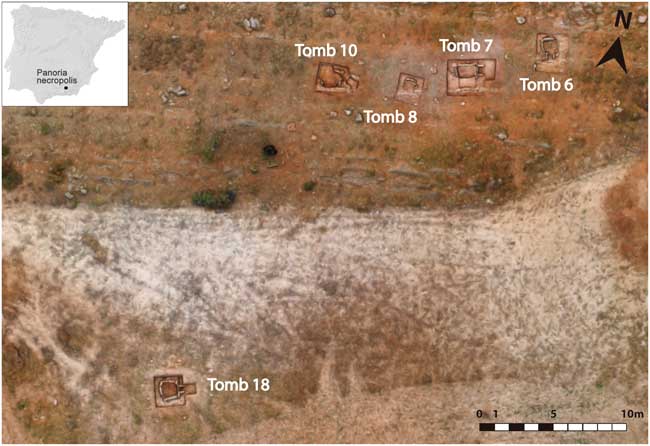
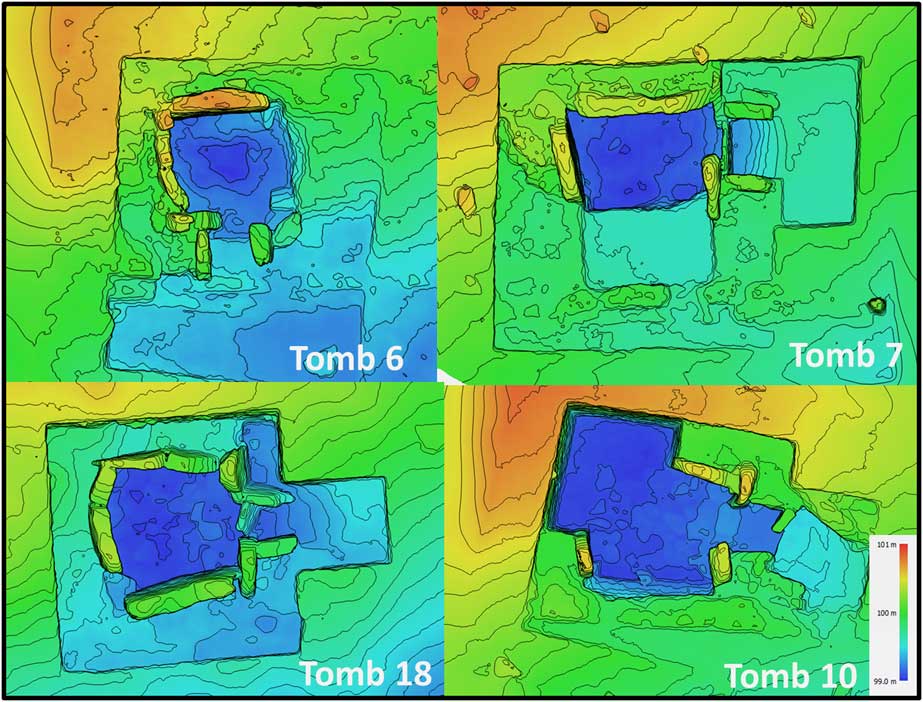
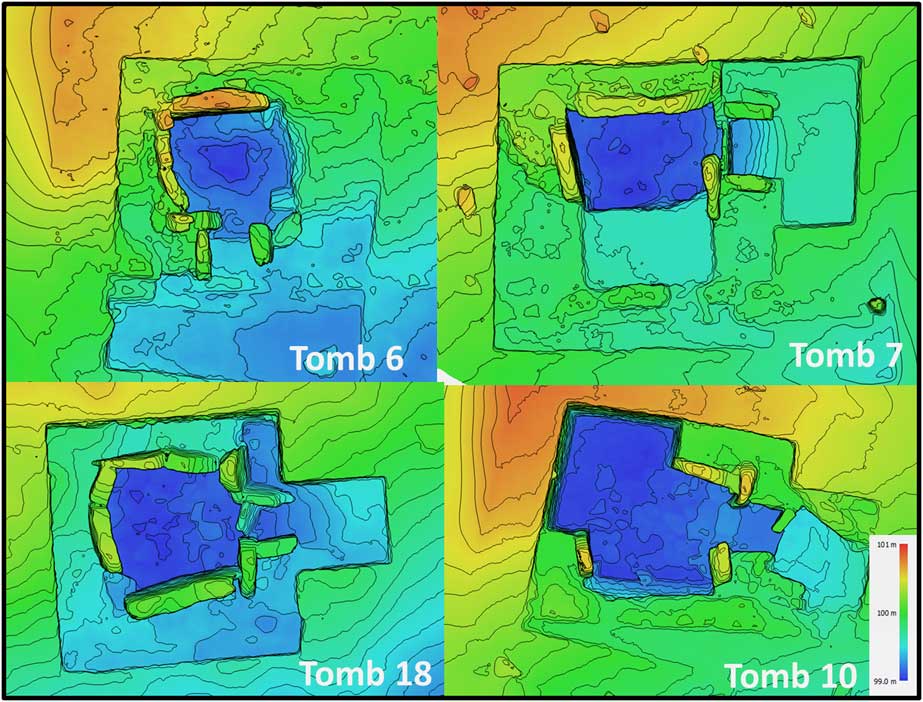
The Panoria necropolis occupies a strategic position overlooking most of the Guadix Basin. Intensive surveys have found 19 dolmens that consist of small tombs with polygonal, rectangular and trapezoidal chambers—normally between 1.10 and 1.60 m in length—and short passages (Figure 1). Four of these megalithic tombs (Figure 2), plus a stone cist, were excavated between February and June 2015 (Tombs 6, 7, 8, 10, and 18)Footnote 1 . The excavation process confirmed that all the tombs were at least partially affected by human activities of uncertain origin; for instance, only Tomb 18 retained all its uprights. As expected, only small and fragmented human bones, mixed with the sedimentary deposits that filled the funerary chambers, were documented. In two cases, Tombs 7 and 18, a few anthropological remains—mainly large bones—were found in primary position above well-preserved paved floors.
Orthophotography with the location of the 5 excavated tombs at Panoria necropolis.

Digital elevation model with contour lines at 5-cm intervals of megalithic Tombs 6, 7, 18, and 10.
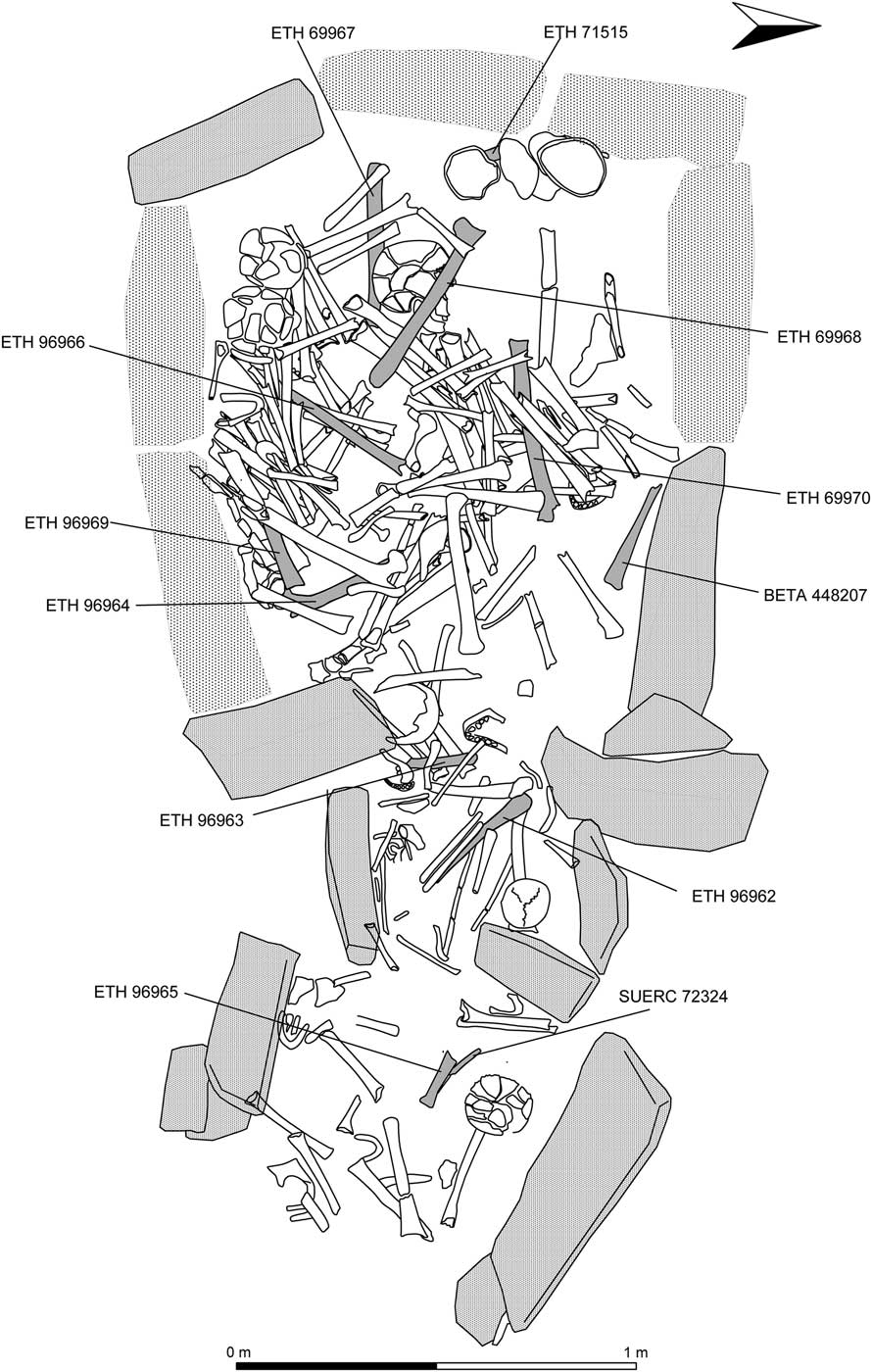
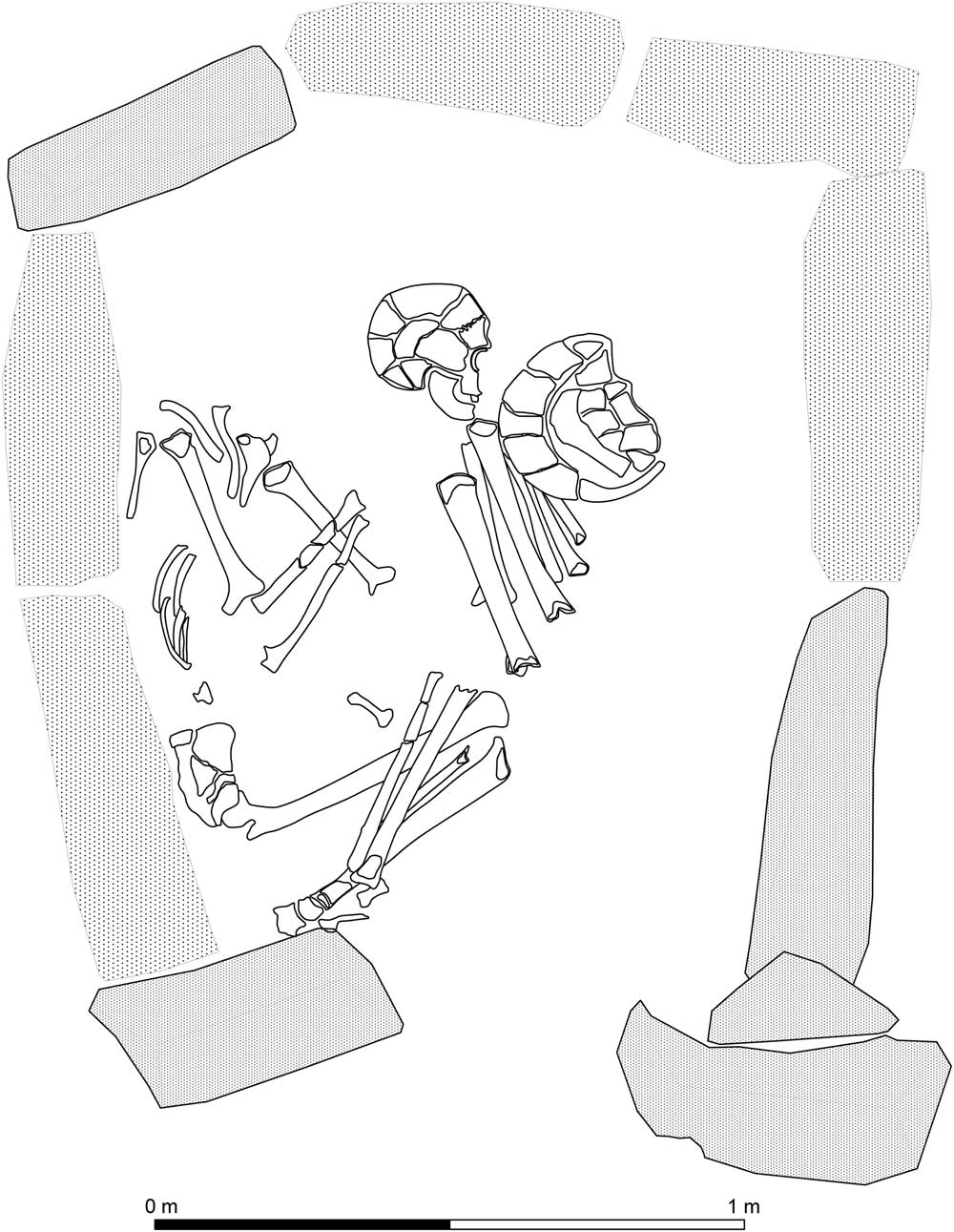
Unexpectedly, in Tomb 10 an anthropological deposit was found in a remarkable state of conservation that does not seem to have been affected by post-depositional disturbances (Figure 3). The mortuary remains found in the chamber and passage consisted of a mass of stratified, mixed human bones that were found piled on top of each other, overlapping in many cases. Although most of the skeletal remains were scattered, in a few cases complete individuals or specific anatomical parts appeared in an articulated or semi-articulated position (Figure 4). Therefore, it seems that the ritual behavior consisted of primary depositions that were disturbed by later activities. These were mainly subsequent burials, but there were also horizontal and vertical displacements as a result of factors such as gravity and voids created by the decomposition of soft tissue.
Anthropological remains from Tomb 10 with the identification of the dated bones.

Two partially articulated bodies found in Tomb 10.

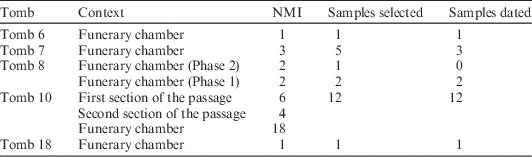
According to the anthropological study, the minimum number of individuals (MNI) identified in the five excavated tombs was 37 (Table 1). All the anatomical parts are represented in the skeletal collection, and the main taphonomic processes identified include weathering, bone fracturing and, roots, and rodent marks. The bone remains belong to men, women, and children of all ages, although most fit into the adult range. Sex or age differences do not appear to have been a determining factor in these funerary practices.
The NMI identified at the Panoria necropolis and the number of individuals sampled and dated.

MATERIAL AND METHODS
The 14C dating plan was based on two main criteria: (1) we focused on anthropological remains, as they are short-lived samples and the most representative finds of the different ritual practices and depositional events that took place in each tomb; and (2) we decided to date the minimum number of individuals as the best way of ensuring that no individual was dated twiceFootnote 2 .
As stated above, the MNI in the five excavated tombs was 37, although they were not uniformly distributed (Table 1). Tomb 10 concentrates an MNI of 28, which was calculated on the basis of the teeth. In this case, the samples to be dated were selected according to two more specific criteria. Firstly, a new MNI based on bones and not teeth was established to include the articulated individuals in the 14C series. This kind of sample is especially suitable for dating, as they are primary contexts in which the contemporaneity between the date obtained and the act of deposition can be guaranteed. Secondly, to recalculate the MNI, all the skeletal remains were considered as a single group because the mass of bone remains was spread out as a compact deposit through the chamber and passage. This option seemed to be the most appropriate to avoid potential duplicate dates. According to these criteria, the MNI calculated and selected for dating was 12.
In the other tombs, the remains of the funerary activities were affected by later human disturbance to a greater or lesser extent. Tomb 6 was completely plundered and only very few fragments of human bone were preserved. The MNI identified by the anthropological study was one for this tomb. Tombs 7 and 18 give a slightly different picture as they had not been completely looted. In these cases, the samples for 14C measurement were selected from those bone remains located in primary position to ensure that the dates were clearly from their funerary use. The MNI for these tombs was three and one, respectively.
Finally, Tomb 8 preserved two depositional phases of anthropological remains. The earliest or Phase 1 consisted of a few fragments of large bone preserved below different stone slabs that had fallen onto the paved floor of the funerary chamber. The second phase comprises a small pit filled with bone remains that was dug into the sedimentary deposits inside the cist. From an MNI of four, only three samples were selected for 14C dating, as one sample from Phase 2 presented unsuitable properties that anticipated few possibilities of dating.
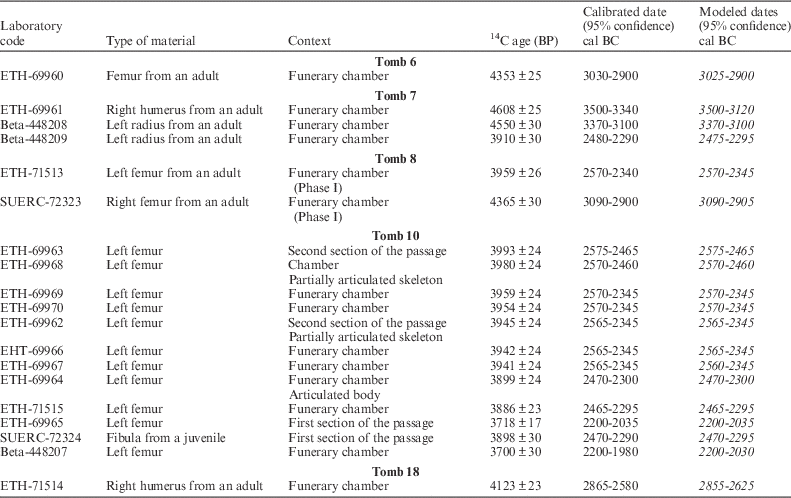
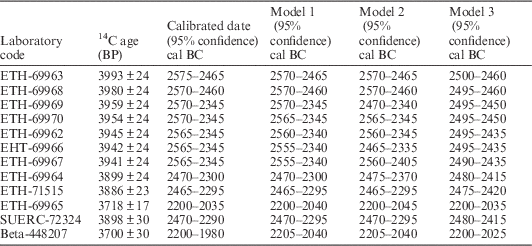
As a result, 22 samples were selected at different stages and 19 were successfully dated (Table 2). Unfortunately, the only sample from the second phase of Tomb 8 could not be dated due to poorly preserved collagen. In the case of Tomb 7, the first sampling based on three right humeri only provided one 14C date. In a second attempt, the best option was to sample two left radii, accepting the risk that one of the radii could belong to the same individual already dated. After the measurements were obtained, this possibility appeared unlikely, as the calibrated ranges at 95% of probability only overlap by a very few years. The 14C measurements were carried out in three different labs: Beta Analytic Ltd. (Beta) (USA)Footnote 3 , the Swiss Federal Institute of Technology (ETH) (Switzerland)Footnote 4 and the Scottish Universities Environmental Research Centre (SUERC)Footnote 5 (Scotland). All samples were measured using accelerator mass spectrometry (AMS). 14C dates were calibrated using the internationally agreed atmospheric curve, IntCal13 (Reimer et al. Reference Reimer, Bard, Bayliss, Beck, Blackwell, Bronk Ramsey, Grootes, Guilderson, Haflidason and Hajdas2013), and the OxCal v4.2 computer program (Bronk Ramsey Reference Bronk Ramsey2001, Reference Bronk Ramsey2009). Calibrated ranges were obtained using the probability method (Stuiver and Reimer Reference Stuiver and Reimer1993) and the endpoints were rounded out by 10 yr when the error was greater than or equal to 25 yr and by 5 yr when the error was less than 25 yr (Stuiver and Polach Reference Stuiver and Polach1977; Millard Reference Millard2014).
Radiocarbon dates from the Panoria necropolis.

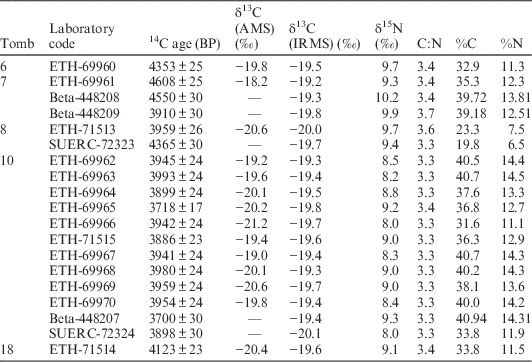
The quality of the bone collagen can be checked in Table 3. The δ13C values and C:N ratios of all samples are adequate according to Van Klinken (Reference Van Klinken1999) (δ13C –19 to –22‰) and DeNiro (Reference DeNiro1985) (C:N 2.9-3.6). Only Beta-448209 displays a C:N ratio slightly out of this range (3.7). However, its %C, %N and δ13C values suggest that this measurement can be considered as accurate. ETH-71513 and SUERC-72323 also present low values of %C and %N, although they are well within the limits considered acceptable (17–53% at 2 σ) by Van Klinken (Reference Van Klinken1999). The new 14C series provided a coherent sequence of accurate dates in which the results from the different labs were very well integrated. To analyze this chronological data, different Bayesian models were built using the OxCal program v4.2 (Bronk Ramsey Reference Bronk Ramsey2001, Reference Bronk Ramsey2009).
Quality markers of the bone collagen and δ13C and δ15N isotope values from the 14C dating series.

Handling anthropological remains for dating entails a very important concern if we really want to base our assessments on solid foundations. It is crucial to ensure that the carbon in the sampled bones was in equilibrium with the atmosphere. Bone collagen from omnivores such as humans may derive from a diet based on marine and freshwater resources, which means that 14C measurements could be strongly influenced by the reservoir effect (Stuiver and Braziunas Reference Stuiver and Braziunas1993; Lanting and van der Plicht Reference Lanting and Van der Plicht1998; Cook et al. Reference Cook, Bonsall, Hedges, Mcsweeney, Boroneanț and Pettitt2001). In these cases, the carbon is not in equilibrium with the atmosphere, presenting an earlier date than any contemporaneous terrestrial organism. Although the distance of the Panoria necropolis from the sea (over 130 km) presumably precludes the consumption of significant amounts of marine resources, the appearance of seashells as grave goods suggests that seafood consumption cannot be ruled out. The consumption of appreciable quantities of freshwater fish and waterfowl also seems very unlikely, taking into account the absence of wetlands in the region and that most of the watercourses are highly seasonal. Nevertheless, to explore the potential dietary reservoir effect in the human bones, all the samples selected to be dated were also chosen for δ13C and δ15N stable isotope analysis.
RESULTS AND DISCUSSION
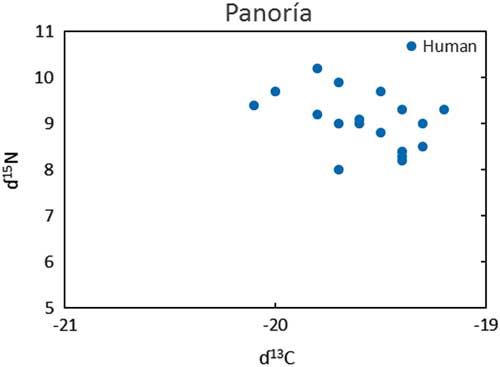
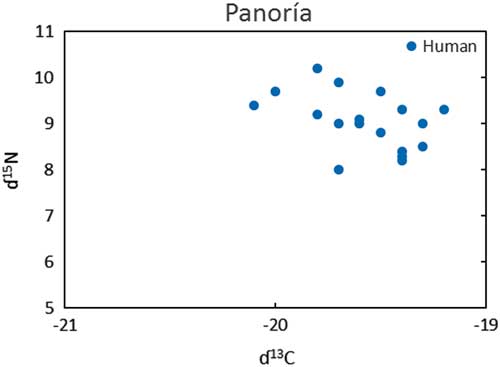
According to isotopic analysis, the δ13C values obtained for the human samples (n=19) range from –19.2‰ to –20.1‰, and for the δ15N from 8‰ to 10.2‰ (Table 3 and Figure 5). The mean for δ13C is –19.6‰ ± 0.25 (1σ), while for δ15N is 9.0‰ ± 0.6 (1σ). These figures reveal that the δ13C values are quite homogeneous (>1‰ range) in comparison with the δ15N that show a range of <2.5‰. According to the isotopic results for carbon (δ13C lower than –19‰) and nitrogen (δ15N between 8 and 10.5‰), all the human individuals consumed proteins originating from a C3 food web, essentially composed of herbivoresFootnote 6 . Those values represent a terrestrial C3 ecosystem and are consistent with the expectations for late prehistoric societies in Iberia (Díaz-Zorita Bonilla Reference Díaz-Zorita Bonilla2017; Fontanals et al. Reference Fontanals-Coll, Subirá, Díaz-Zorita Bonilla and Gibaja2017). As a result, the population buried in this necropolis has not been significantly influenced by any aquatic reservoir effect, and thus the 14C dates from the human bone samples can be considered as accurate estimations. The absence of marine and freshwater resource consumption at Panoria is consistent with the available archaeological evidence and the few paleodiet studies that have been carried out for the megalithic societies of southern Iberia. This is the case of necropolises such as Los Millares (Waterman et al. Reference Waterman, Beck, Thomas and Tykot2017), El Barranquete (Díaz-Zorita Bonilla et al. forthcoming), and Montelirio (Bayliss et al. Reference Bayliss, Beavan, Bronk Ramsey, Delgado-Huertas, Díaz-Zorita Bonilla, Dunbar, Fernández-Flores, García Sanjuán, Hamilton, Mora-González and Whittle2016).
δ13C and δ15N results for the 19 individuals sampled for 14C dating.
The 14C series for the Panoria necropolis consists of 19 dates that represent a significant improvement for a region with no previously known dates. Nevertheless, the conditions are far from ideal, with several limitations that affect the degree of resolution that can be achieved with a Bayesian modeling. As noted above, the MNI is the criterion used to select the datable samples. Because most of the tombs were affected by human actions of an undetermined nature, the MNI is very low, except for Tomb 10. The lack of available samples to date other important events, such as the construction, abandonment or total or partial rebuilding of the tombs, can be also considered a major drawback. Unlike in other megalithic tombs in south-eastern Iberia, no evidence of other kinds of ritual activity, such as the deposition of faunal remains or the use of fire inside the funerary chambers, has been found. Despite these limitations, Bayesian analysis is definitely still the best option for building a detailed and more precise chronological framework.
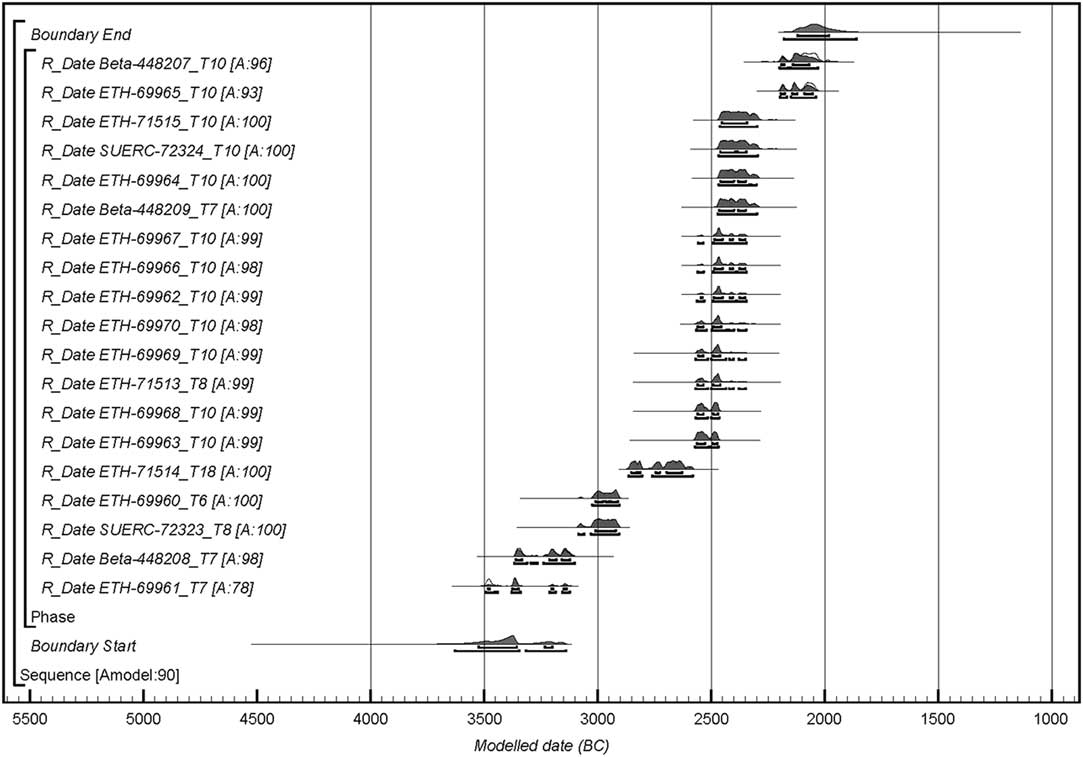
A first Bayesian model was built taking into consideration all the dates in just one phase of continuous activity that present a good index of agreement (Amodel = 90%)Footnote 7 . According to this model (Figure 6 and Table 2), the earliest bodies deposited in this necropolis were placed there between 3525 and 3195 cal BC (68% probability; boundary start) and the last between 2125 and 1980 cal BC (68% probability; boundary end), which implies a very long period of use, between 1055 and 1410 calendar years (68% probability span). Ritual activity, therefore, began in the Late Neolithic and ended in the transition between the Copper and Bronze Ages, at a time when major cultural changes were taking place in the Guadix Basin with the appearance of the so-called Argaric Culture (Aranda Jiménez et al. Reference Aranda Jiménez, Montón-Subias and Sánchez Romero2015). Nevertheless, most of the interments are concentrated in a short period during the Late Copper Age, although such intensity must be related to the specific biography of Tomb 10 and cannot be considered a general trend in the necropolis. In fact, other tombs, such as 7 and 8, present a different scenario with dates chronologically distanced from each other. This could suggest a long period of funerary activity or, alternatively, different periods of use separated by chronological hiatuses.
Probability distribution of dates from the Panoria necropolis. Each date shows two distributions: the one in light grey represents the 14C calibration and the other in dark grey indicates the result of the Bayesian model (posterior density estimates). Distributions other than those relating to particular dates correspond to aspects of the model. The square brackets down the left-hand side and the OxCal keywords define the overall model exactly.

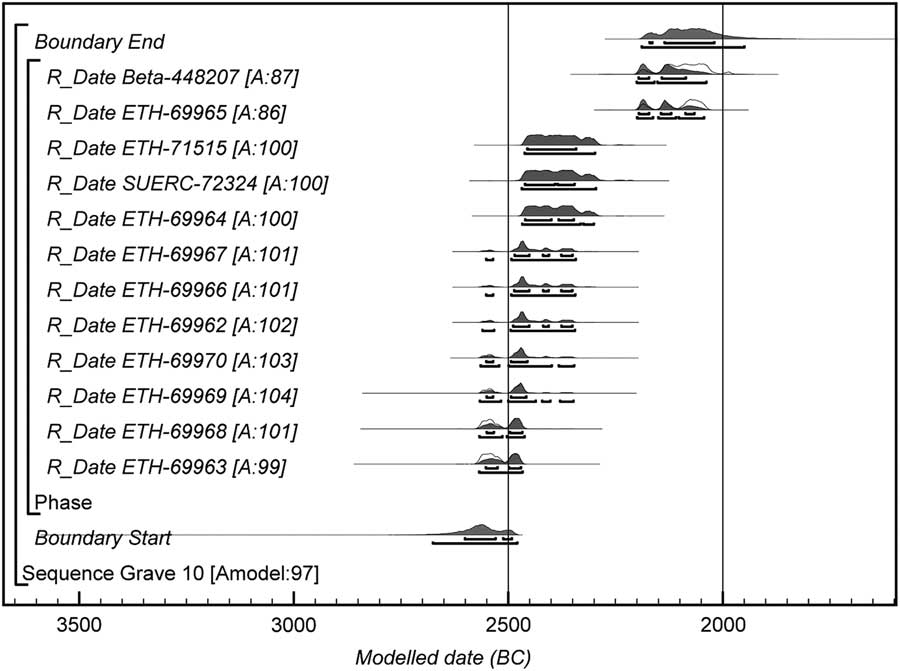
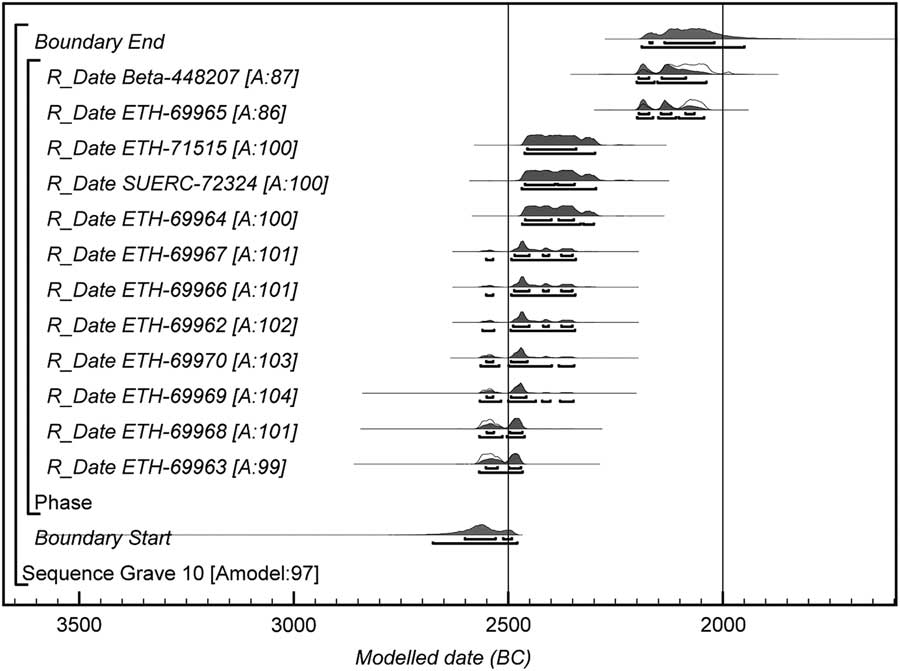
Different Bayesian models were built specifically for Tomb 10. Its 14C series with 12 dates could be considered representative of funerary practices. In a first model (Figure 7 and Table 4), all dates were included in a single phase of continuous activity (Amodel = 97%). The earliest mortuary depositions began in 2680–2475 cal BC (95% of probability), probably in 2605–2490 cal BC (68% of probability), and ended in 2190–1950 cal BC (95% of probability), possibly in 2175–2020 cal BC (68% of probability). The dates were concentrated in what appear to be two phases of activity separated by a chronological hiatus of 175–330 yr (68% of probability difference). The first group, in which most of the dates are clustered, is statistically consistent if the most recent date in the series is not considered (T’=12.7; T’ (5%) = 15.5) and the second set of dates clearly passes the contemporaneity test (T’=0.3; T’ (5%) = 3.8) (Ward and Wilson Reference Ward and Wilson1978). It appears that in this tomb there were two short periods of anthropological depositions.
Probability distribution of dates from Tomb 10, first Bayesian modeling. The format is identical to that in Figure 6.
Modeled dates from Tomb 10.

In a second model, the stratigraphic relationship between samples was used as helpful prior information. As stated above, the anthropological remains appear as a single deposit of bones piled on top of each other and spread out over the chamber and passage. Nevertheless, in four cases among the dated bones it was possible to establish relationships of anteriority and posteriorityFootnote 8 . Sample ETH-69967 (2565–2345 cal BC; 95% probability) was found below the articulated body to which the date ETH-69964 belongs (2470–2300 cal BC; 95% probability). Above this individual, samples of two more people were dated (ETH-69969, 2570–2345 cal BC, 95% probability, and ETH-69966, 2565–2345 cal BC, 95% probability). All the dates are very similar, three have the same interval of probability and the fourth shares most of its probability distribution. Nevertheless, the Bayesian model that incorporates this stratigraphic information shows a poor overall agreement (Amodel = 50%) and also fails in the individual agreement of different dates, mainly ETH-69969 and ETH-69966, which means the model does not conform to the relative sequence of information. It appears that the manipulation and displacement of bones during the ritual use of the tomb could explain this relationship between the articulated body ETH-69964 and the two dated samples (ETH-69969 and ETH-69966) found above it.
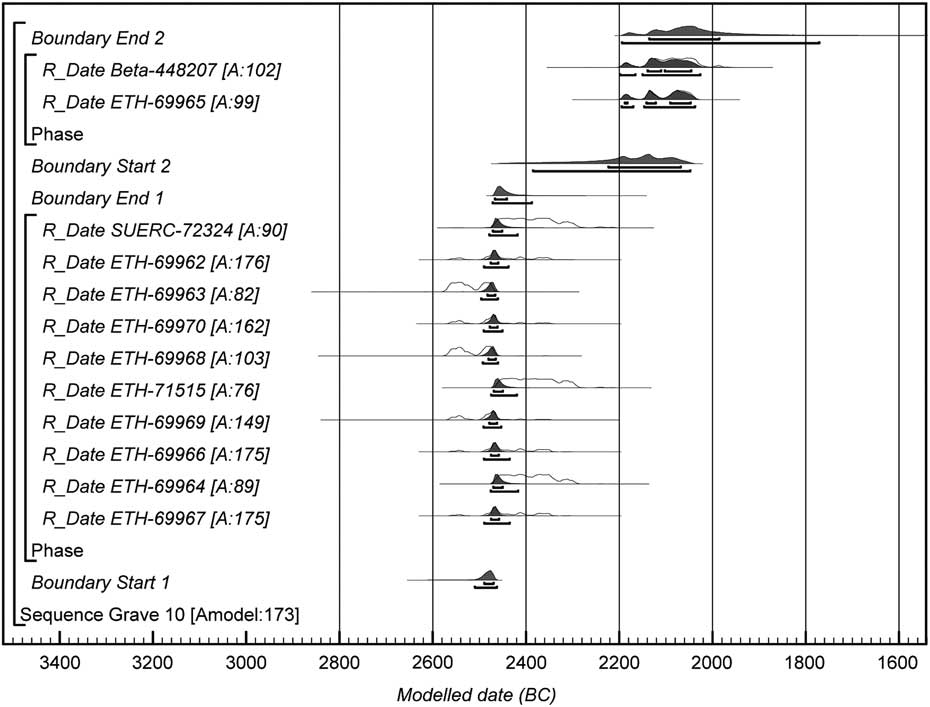
We further explored the chronology of this tomb by modeling the 14C series according to the two phases of funerary activity identified in previous models. This option is also supported by the stratigraphic position of the two most recent dates. Beta-448207 belongs to a sample located on the top of the chamber funerary deposit and ETH-69965 was found in the first section of the passage, next to the entrance. Both samples are indeed consistent with the latest funerary depositions that occurred in the tomb. The new model shows good overall (Amodel = 173%) and individual agreements (Figure 8). In the first phase, the mortuary activity began in 2510–2460 cal BC (95% of probability_boundary start) and ended in 2475–2385 cal BC (95% of probability_boundary end), which, in calendar years, represents a very short period of use, between 0 and 90 yr (95% probability span), or more likely between 0 and 40 yr (68% probability). If we assume a figure of 25 yr for each generation, this would indicate that only one or two generations would have been buried during this phase. Although all the people buried could have died at the same time, based on these intervals, this possibility seems to be unlikely as, together with articulated or partially articulated bodies, most of the bone remains were found scattered as a result of subsequent burials.
Probability distribution of dates from Tomb 10, third Bayesian modeling. The format is identical to that in Figure 6.
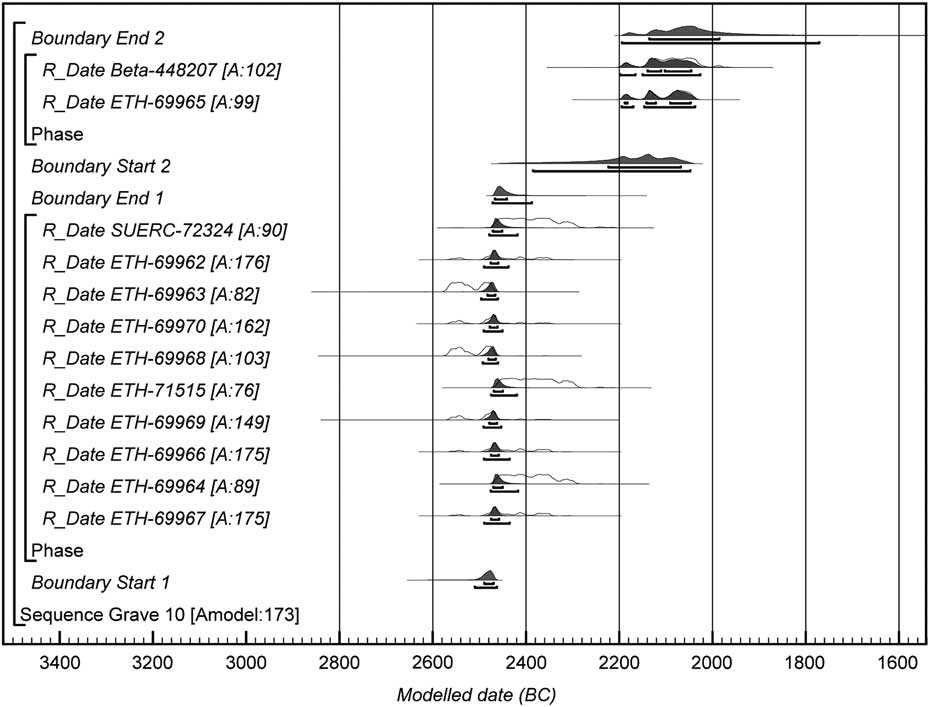
After a chronological hiatus (210–380 yr at 68% probability), the tomb was reused. During this second phase, the funerary activity began in 2225–2065 cal BC (68% probability boundary start) and ended between 2140 and 1985 cal BC (68% probability boundary end). Although this is also a short period of use, the limited number of measurements available prevents any conclusion being drawn. If we assume that mortuary activity began just after the construction of the tomb, we must conclude that it was built in the first years of the second half of the third millennium and was in use over a few decades. Two or three centuries later, the tomb was reused, coinciding chronologically with the appearance of the Early Bronze Age societies in the Guadix Basin.
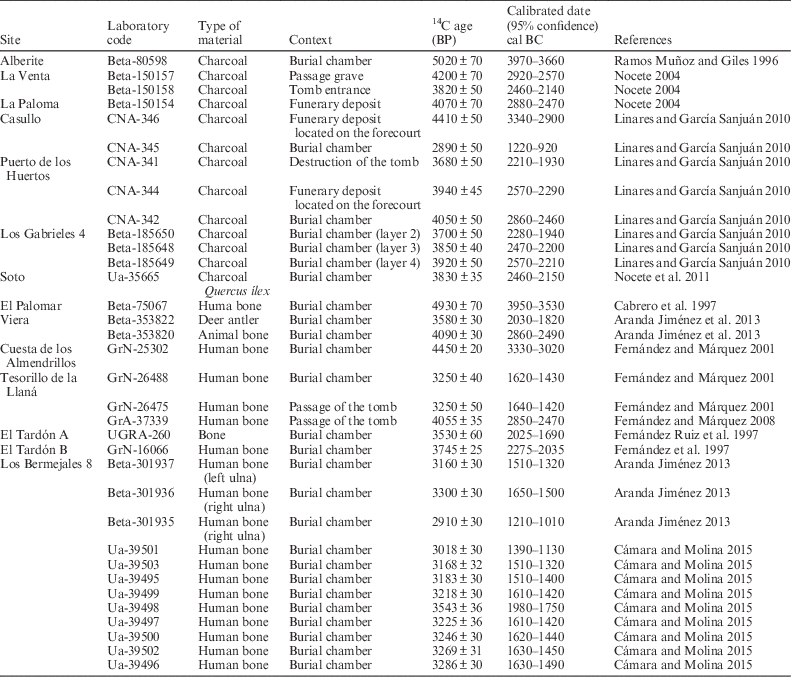
The Panoria 14C series has also been analyzed from a comparative perspective to explore how it fits into the regional sequence. All the dates from orthostatic tombs in southern Spain have been compiled, except those with a standard deviation ≥100 yr and those related to events preceding the construction and use of the megalithic tombs. As a result, 34 dates were available: 21 obtained from bone (18 of them from human bone) and 13 from charcoal (Table 5). This 14C series has several drawbacks: (1) the so-called “old wood” effect on charcoal (Waterbolk Reference Waterbolk1971; Bowman Reference Bowman1990) and the reservoir effect on human bones (Stuiver and Braziunas Reference Stuiver and Braziunas1993) have not been taken into account, which means that the 14C measurements could be earlier than the death of the organism; (2) most of the samples come from uncertain contexts that make a proper critical analysis impossible; (3) 12 dates (35%) come from a single tomb; and (4) it is not known whether the same individual was dated more than once in those tombs with two or more dates. All these limitations and uncertainties mean that this 14C series must be approached with caution.
14C dates from the orthostatic tombs in southern Spain.

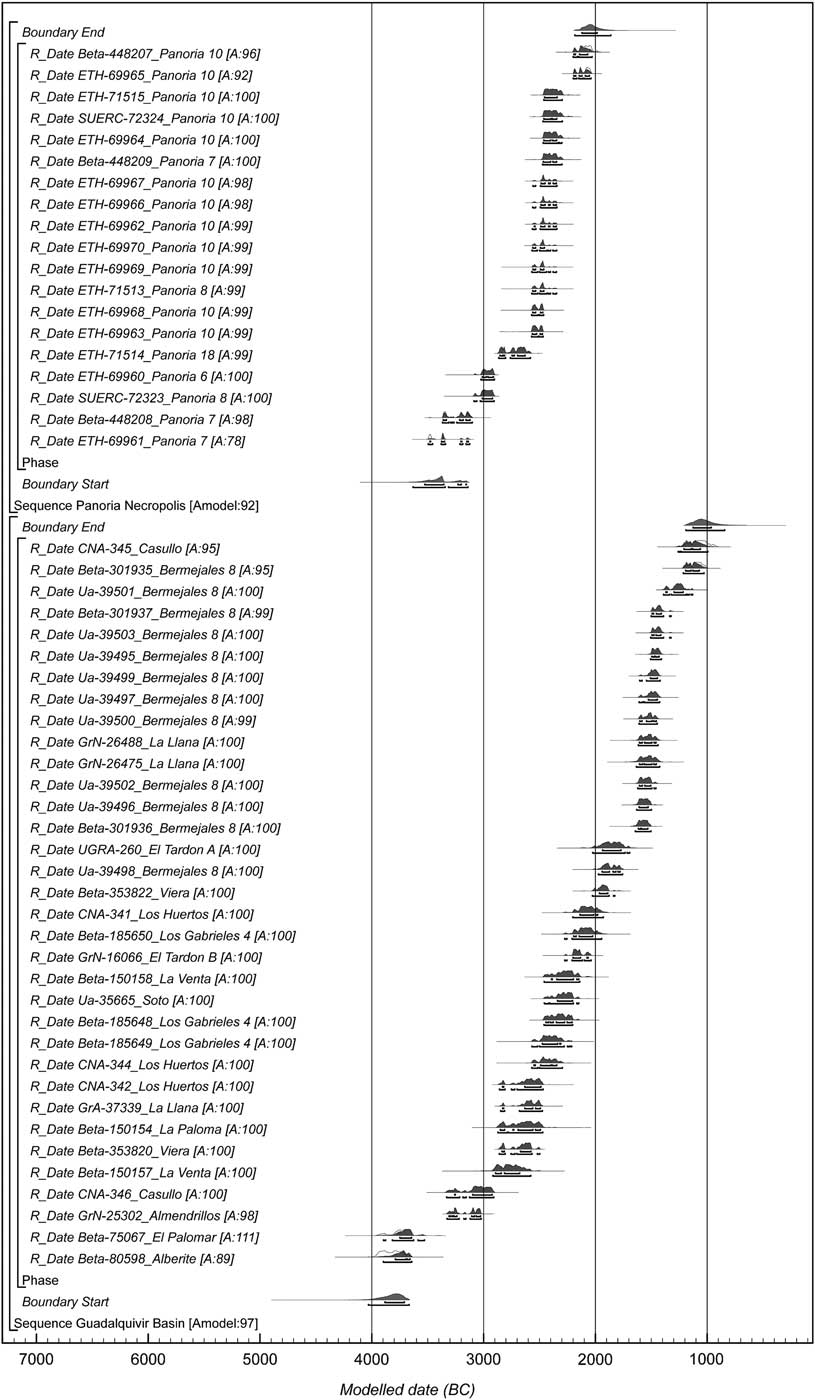
The comparison with the Panoria series shows that in both cases funerary activity began in the Neolithic period, although a little earlier in the case of the general series (3884–3710 cal BC at 68% probability) than in that of Panoria (3525–3195 cal BC at 68% probability) (Figure 9). However, the intensification of mortuary activity coincides in both series, as most of the dates are concentrated in the Copper Age (ca. 3200–2100 cal BC). This intensification occurred in a context of increasing social complexity characterized by important cultural innovations in southern Iberia, such as a remarkable population growth and aggregation, the intensification of agriculture, the development of copper metallurgy, and the appearance of a new and more complex type of megalithic tombs known as a tholos.
Relationship between the Bayesian models of the Panoria necropolis and the 14C dates available for the orthostatic tombs in southern Spain.
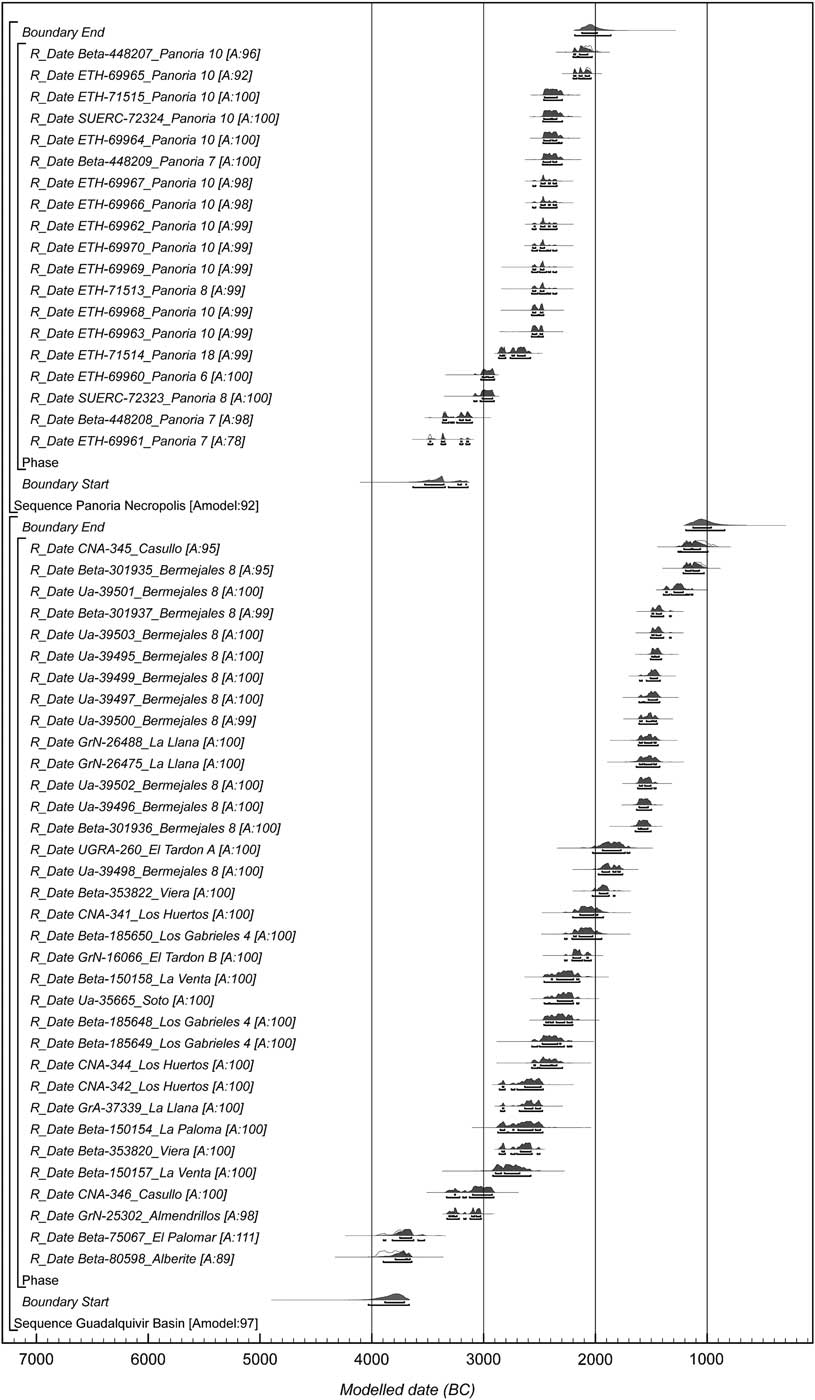
The main difference between the two series is the importance attained by the continuity of ritual practices during the Bronze Age, which is missing in the Panoria necropolis. In fact, the general 14C series ended between 1127 and 965 cal BC (68% probability), with many dates belonging to the Bronze Age. Conversely, the Panoria 14C series ended between 2125 and 1980 cal BC (68% probability) at a time when the Bronze Age societies appeared in the Guadix Basin. Nevertheless, the absence of anthropological depositions during the Bronze Age must be considered an artifact of the Panoria necropolis series. In most of the Guadix Basin necropolises it is very usual to find grave goods that belong typologically to the Bronze Age (Leisner and Leisner Reference Leisner and Leisner1943; García Sánchez and Spahni Reference García Sánchez and Spahni1959; Ferrer Palma et al. Reference Ferrer, Marques Melero and Baldomero1988; Lorrio Alvarado Reference Lorrio Alvarado2008).
CONCLUSIONS
The Panoria necropolis offered an excellent opportunity to explore the temporality of this kind of megalithic monument. For the first time in southeastern Iberia, this widespread type of megalithic burial has been dated with 14C. Although the chronological series obtained can be considered a remarkable improvement, we are still far from fully understanding the chronological sequence of these ritual practices. Therefore, the following cultural assessments must be considered as a first approach.
The Panoria necropolis 14C series shows a long period of use that began in the Late Neolithic, reached its most intensive ritual activity during the Copper Age, and ended at the same time as the Bronze Age societies appeared in the Guadix Basin. Nevertheless, throughout this period tombs seem to have been built at different times and used on different temporal scales and with different intensity. If we assume that mortuary activity began just after their construction, Tomb 10 was probably built in the first years of the 25th century cal BC (2490–2470 cal BC at 68% probability_boundary start Model 3), which means roughly one thousand years after the first interments in Tomb 7 (ETH-69961, 3500–3340 cal BC at 95% probability) and hundreds of years after the earliest burials in Tombs 6 (ETH-69960, 3030–2900 cal BC at 95% probability) and 8 (SUERC-72323, 3090–2900 cal BC at 95% probability). The sequence of construction at the Panoria necropolis appears to have lasted from the mid-4th to the mid-3rd millennium.
Tomb 10 also challenges the notion that the megalithic monuments remained in use over a span of centuries and contain long sequences of mortuary depositions. This tomb was only in use for a few decades, between 0 and 40 yr (68% of probability), which would have involved no more than two generations. After a chronological hiatus of two or three centuries, the tomb was reused for a very short period. Even the large gaps between the dates of Tombs 7 and 8 would suggest their reuse by unrelated people, rather than continual use over long periods. The Panoria cemetery was in use for more than a millennium, with the burials being made at different times during that period. Its configuration as a necropolis seems to be more the result of an aggregation of tombs than the ritual place of different social units that would have coexisted in the same settlement or region, as is normally assumed.
ACKNOWLEDGMENTS
This paper was written as part of the following research projects: “Everything Has Its Own Time. The Chronology and Temporality of the Megalithic Societies in South-Eastern Iberia” sponsored by the BBVA Foundation (Grants for Researchers and Cultural Creators 2015), and “Innovation, Continuity and Hybridisation. The Copper and Bronze Age Societies in the Southern Iberian Peninsula” (HAR2013-42865-P) funded by the Spanish Ministry of Economy and Competitiveness.