


In November of 1906, the 3-year-old American Political Science Association, boasting a membership of “nearly four hundred” (Shaw 1907, 185), launched a journal devoted to scholarship, reviews, and news of the profession.1
For descriptions of political science in the U.S. prior to the establishment of the Review, see, for example, Collini, Winch, and Burrow 1983; Lepawsky 1964; and Somit and Tanenhaus 1967. In establishing a journal, the new professional association was following a path typical of such organizations (Hudson and Hudson 2005).
The new journal catered “in some degree” to each of its three main groups of subscribers: “professors and teachers,” “lawyers, businessmen, etc.,” and a mélange of others, including students, research bureau workers, and public officials (Gaus 1934, 729, 732). Over time, the challenges of editing the Review changed as its core constituency, academicians, grew more numerous and as more of them came to regard themselves as producers as well as consumers of research.2
Active engagement in research was not a widely diffused norm for faculty members in the early days of American political science. Even by mid-century, in a survey of the chairs of political science departments “believed to be in a position that would enable them particularly to emphasize research,” almost one in five denied that any research at all was being conducted in their department (Hawley and Dexter 1952, 470).
For Ogg, having to decide which submissions to publish added significantly to the burdens of office, which already included “us[ing] his editorial pencil vigorously in connection with the articles both long and short; in addition, he prepared the news and notes, assigned the book reviews, read the printer's proof, and solicited advertisements from various publishers” (Zink 1950, 257). Systematic peer review was not instituted until the editorship of Austin Ranney (1966–69).
The current issue completes the Review's first century of existence. During that century, the Review changed in many ways. Among other things, its editors came and went, each with his or her particular policies, procedures, and points of emphasis, and its original portfolio was reduced by two-thirds when news of the profession was transferred to PS: Political Science & Politics (founded in 1968) and reviews were moved to Perspectives on Politics (founded in 2003). More broadly, political science itself changed on a scale that was nothing short of remarkable. The profession grew dramatically, and the disciplinary infrastructure developed in ways unimagined by the Review's founding generation. The APSA now claims 15,000 members; national political science associations are operating in every part of the world; departments with dozens of faculty members have become commonplace; political science instruction has been mandated by state legislatures or constitutions; annual APSA meetings attract thousands of attendees; regional associations are thriving; public and private sources provide tens of millions of dollars in research support each year; large-scale collaborative data collection and archiving operations are ongoing, and more are in the works; special institutes are offering advanced training in research methods; and the supply of professional journals is constantly expanding.
Although some regard the articles that have been published in the Review as a “timely indicator of the flow of intellectual currents in the discipline” (Hajjar, Bowman, and Richard 1975, 361), I doubt that the contents of the Review constitute a representative cross-section of the research that political scientists have produced as the discipline has evolved, or even of their “best” work. For one thing, much leading research has appeared in books, not in journals. For another, just as in its early years the Review was not considered the discipline's top journal, even now it is not so regarded in some parts of the discipline.4
See, for example, Garand and Giles 2003. For example, in a recent survey of scholars in international relations, the Review ranked only sixth (behind International Organization, International Studies Quarterly, International Security, World Politics, and Foreign Affairs) as a journal that publishes “articles that have the greatest impact on the way international relations scholars think about their subject and their work” (Peterson and Tierney with Maliniak 2005, 22).
Rather than seeing the Review as a faithful reflection of the discipline, then, I liken it to a funhouse mirror that reshapes the images that parade before it and thereby transforms them, individually and collectively, into something new and different. Though obviously hyperbolic, James Davis's claim that “If the major journals and publishers were to announce they favored articles in rhyming couplets, the journals would look like poetry anthologies within 18 months” (1994, 194) contains more than a kernel of truth. Much like course syllabi, textbooks, and organized sections, journals simultaneously reflect and construct fields of study,5
Here I am borrowing terminology that Schwartz-Shea and Yanow use to describe the functions of methodology texts (2002, 458).
The rare Review article that was comprehensible, George Carey once complained, was “trivial or just plain boring” (1972, 51). Such criticism lives on in Giovanni Sartori's contention that “American-type political science is going nowhere…. [R]ead, to believe, the illegible and/or massively irrelevant American Political Science Review” (2004, 786).
DISCIPLINARY FRAGMENTATION AS LEITMOTIF
My interpretation of the coevolution of political science and the Review is set within the broad and recurring theme of disciplinary fragmentation. By one account, the intellectual core of American political science shifted from the state in the early years to groups and behavior in the period prior to World War II, then to a pluralist-inspired focus on stability in the post-war era, and finally to a seemingly endless array of topics in the final decades of the twentieth century (Berndtson 1987, 55–56).7
Such periodizations should be taken with a grain of salt. For example, in 1925 Charles Merriam distinguished four “chief lines of development of the study of political processes: 1. The a priori and deductive method, down to 1850. 2. The historical and comparative method, 1850–1900. 3. The present tendency toward observation, survey, measurement, 1900–. 4. The beginnings of the psychological treatment of politics” (p. 132). Considering Merriam's periodization, James Farr commented wryly that “Proceeding in reverse temporal order, we have a bare dawn, 25 years, 50 years, and 22 centuries” (1988a, p. 1179).
Disciplinary fragmentation continued apace after mid-century, as political science “shattered into a multitude of methodological and substantive pieces,” the “overriding consequence” of which was “a deep sense of loss of purpose and direction” (Easton 1997, 17). “On reviewing the history of American political science,” Timothy Kaufman-Osborn comments, “one might well conclude that the only concern that has truly unified this enterprise over the course of its first century is the question of whether political science is or is not a discipline” (2006, 42).
The reigning metaphorical expression of disciplinary fragmentation is Gabriel Almond's image of the “separate tables” at which political scientists of different methodological and ideological persuasions sit (1988). Other images abound—“a widespread skirmish line of small and brave platoons” (Herring 1953, 1970), a loosely linked chain of islands, keys, and mainland (Shepsle in Monroe et al. 1990, 41), and even a “dim sum brunch” (Grofman 1997, 79–80). Each of these images conveys the same underlying point: that political science is held together less by intellectual coherence than by institutional inertia.
With disciplinary fragmentation as the context, I take the publication of the Review's centennial issue as an occasion, first, to take stock of the research that it published over the past century, and, second, to ponder the past, present, and future of the discipline and its leading journal. My purpose, in part, is to describe the development of scholarship in political science, as reflected in the pages of the Review. Past issues of the Review provide a treasure trove of data about how the scholarly work of political science evolved over the century. Of course, the Review served, and continues to serve, not only as a repository of research but also as a scholarly trend-setter and arbiter of standards. Accordingly, in the latter parts of this article, I take a more evaluative tack by assessing the directions in which the discipline in general and the Review in particular have been heading and by considering their ongoing viability as they enter a period marked by numerous and potentially momentous changes.
TAKING STOCK
The raw material for this inventory consists of every research article that the Review published from the first issue of its initial volume through the third issue of its hundredth volume. I have categorized each article according to the primary subfield of political science in which it was situated, its primary purpose; its primary method, its primary data source, its primary subject matter, and the number and identity of the nations on which it focused.8
A complete set of coding categories is available on request.
Some clarifications are in order about what is included here and what is not, that is, about what I mean by “every research article that the Review has published.” Not included are book reviews, news and notes of the profession, communications to and from the editor, exchanges between critics and authors, symposium articles, and annual addresses by APSA presidents. Also excluded are the updates on current legislative and constitutional developments that appeared in early volumes of the Review, articles printed in sections of the journal explicitly designated for a specific subfield rather than for general readers,9
The great majority of articles designated for a specific subfield were factual reports on recent events, detailing, for example, the outcome of an election in a certain locale or the provisions of a newly passed law.
By comparison, King (1991) counted 2,529 Review articles over a shorter period (1906–1988), and Miller, Tien, and Peebler (1996) counted 3,756 from 1906 through 1994. Obviously, my exclusionary rules were more stringent than the ones applied in those studies. Although they are hardly problem-free, I consider the criteria summarized above preferable to the ones employed by King and Miller, Tien, and Peebler.
The Analytical Agenda
Perhaps the most basic question about the research articles that have been published in the Review is what they were supposed to accomplish. To address that question, I fitted each article into one of several mutually exclusive categories according to what I took to be its primary purpose: consideration of normative issues; policy prescription or criticism; presentation of empirical results; formal modeling; conceptualization or theory-building; inventory, survey, or criticism of prior work; and consideration of methodological issues11
I also created composite categories (e.g., “policy prescription or criticism and presentation of empirical results”) for articles in which more than a single purpose stood out. Except for those in the two composite categories shown in Table 1, such articles were rare.

Normative Theory
In every decade save two—the first one, when the Review was still dominated by fact-filled reports, and the seventh one, when the discipline was experiencing massive theoretical and methodological ferment—at least one Review article in six was devoted primarily to philosophical issues. Likewise, in no decade save one—the fourth one, when the Review took a pronounced but temporary turn in this direction—did the ratio rise far above one in six.
Within this flow of normative theory articles, the currents shifted over time. Although it might be assumed that ancient political thought has always been a prime emphasis area for the Review, Plato, Aristotle, and the other ancients did not make their first appearance until 1950, and it was not until the Review's eighth decade that their return engagements became more than occasional. In the last three decades, due mainly to the efforts of followers of Leo Strauss, they were much more frequent visitors, populating approximately one out of every six political theory articles. Yoked in an odd tandem with articles featuring high-tech statistical or mathematical models, Straussian work was so well represented in the Review as to invite suspicion that the discipline's flagship journal had been hijacked by a Greek letter conspiracy of two factions whose approaches to scholarship could hardly have been less similar.
Notwithstanding the latter-day emphasis on the ancients, over the course of the century the typical normative essay in the Review focused on Machiavelli, Hobbes, Rousseau, Tocqueville, and other modern thinkers. By contrast, American political thought was the subject of just 9% of the Review's normative theory articles, less than half the total for continental theory (20%). Twentieth-century political thought (Rawlsian, communitarian, and so on) accounted for another 14% overall, but 25% over the last three decades. Meanwhile, several emergent movements in contemporary political thought (e.g., critical theory and feminist theory) achieved no more than token exposure in the Review, collectively accounting for just two articles.
Prescription
During the Review's first century, few articles—just 4% in all—were significantly or even primarily devoted to policy advocacy or criticism. Concealed within that low overall proportion, however, was considerable change in the prescriptive component of the research agenda.
Prescription was not the norm in the Review during its early years, but neither was it rare. “Good government”-oriented reformism and the championing of direct democracy devices were regular features of Review articles, usually as applied to state and local government. Through the end of World War II, 10% to 20% of Review articles contained an explicitly prescriptive element, often in combination with the presentation of empirical findings. That element was particularly pronounced during and immediately after the Depression and World Wars I and II, when the nation's energies were harnessed to economic recovery, the war effort, and the shaping of the postwar order (see, e.g., Friedrich 1947, Somit and Tanenhaus 1967). Much of what appeared in the Review in those years was devoted, at least in part, to advancing recommendations for the reconfiguration of institutions, processes, and policies. Soon, though, as the profession, like the nation at large, turned toward “normalcy,” the prescriptive emphasis faded. Political science qua science gained momentum and “a sizable segment of the profession [began] seriously to reflect on the possible incompatibility between the scientific pursuit of knowledge and participation in programmatic and applied policy undertakings” (Somit and Tanenhaus 1967, 5). By the early 1960s, prescription had almost entirely vanished from the Review. If “speaking truth to power” and contributing directly to public dialogue about the merits and demerits of various courses of action were still numbered among the functions of the profession, one would not have known it from leafing through its leading journal.
Empirical Research
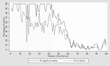
Since its inception, the Review has served mainly as a forum for reporting empirical findings, a purpose of almost two out of every three articles. Much of the early empirical research that appeared in the Review took the form of densely descriptive reports on particular people, places, processes, events, or institutions, which were treated as innately interesting rather than as “cases” of broader phenomena, for example, an article in the first volume of the Review titled “The Recent Controversy as to the British Jurisdiction Over Foreign Fishermen More than Three Miles from Shore: Mortensen v. Peters” (Gregory 1907). Today, the great majority of these analyses would be castigated as pedestrian exercises in barefoot empiricism. Even so, over time the broader approach of which they were a primitive form evolved into a richly contextual mode of analysis, eclectic in its use of source materials, which has been embraced by scholars of various theoretical and methodological persuasions in such varied guises as “thick description,” “process tracing,” “analytic narratives,” and “disciplined configurative analyses.” What I refer to as the “narrative” mode of empirical analysis (Büthe 2002) rapidly fell out of favor after exercising a virtual monopoly over empirical work during the Review's first five decades (whether by itself or in combination with policy prescription or criticism; see Figure 1). It has not disappeared entirely from the pages of the Review (see, e.g., Elman 2004), but it was displaced long ago as the dominant analytic mode in the Review.

Narrative Analyses, By Volume of the Review.
There is no mystery about what supplanted it. One of the most controversial developments in political science research over the past century was the rise of quantitative analysis, a staple ingredient of the “behavioral” approach.12
Perhaps surprisingly, based on his analysis of papers presented at the annual APSA meetings, Grant (2005) concludes that the “hard” or “scientific” versus “soft” or “interpretive” split is only the secondary cleavage line within the discipline; he assigns the place of primacy to distinctions based on different substantive foci (see Cappel and Guterbock 1992 for similar evidence concerning sociology). On the other hand, Garand reaches the opposite conclusion in his analysis of political scientists' assessments of scholarly journals.
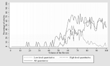
Figure 2 documents the dramatic upsurge of quantitative research during the last half of the century.13
For similar documentation of portions of this trend, see, for example, Hutter 1972, King 1991, Patterson, Adolino, and McGuire 1989, and Somit and Tanenhaus 1967.

Quantitative Analyses, By Volume of the Review.
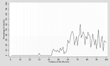
Abetting the growth of quantification was the development of survey research as a data collection tool (Converse 1987). (See Figure 3, which plots the annual proportion of empirically oriented Review articles based on survey data.) By no mere coincidence, the takeoff periods for survey research and quantitative analysis coincided—a temporal convergence that yielded a massive body of research.

Survey-Based Analyses, By Volume of the Review.
Quantification spread unevenly to the various parts of the discipline. The American politics subfield was the leading edge of the discipline's embrace of statistics (as it was of the behavioral movement more broadly). For the Review, the trend line for quantitative research in American politics followed the classic pattern for the diffusion of innovations: a long period of inactivity leading into an explosive burst culminating in very widespread (in this case, nearly universal) adoption (Hamblin and Miller 1976). By contrast, the trend lines for quantification in international and comparative politics did not turn decisively upward until well after the takeoff point in American politics (a decade later in international politics, two decades later in comparative politics). Nor did the proportion of quantitative Review articles in comparative or international politics scale the heights that it reached in American politics. Even so, what may be most noteworthy about the trends in comparative and international politics is not that they fell short of their counterpart in American politics, but that they rose as high as they did; that, at least, is the conclusion that follows from comparing the Review's comparative and international politics offerings with those in other major journals.14
For example, during the 1990s only 1 in 20 of the Review's international politics articles was case-study-based, as compared to more than 4 out of 10 in other political science journals (Bennett, Barth, and Rutherford 2003, 376). Similarly, during the mid-1980s the proportion of quantitative articles in the Review outran the proportion in Comparative Politics by almost 3 to 1 (Patterson, Adolino, and McGuire, 1989, 872).
Formal Modeling
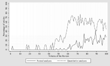
Second only to quantification as a major analytical and methodological development of recent decades, and arguably even more controversial, has been formal modeling. The arrival of formal analyses in the pages of the Review—at first on a very limited basis but later with increasing regularity—occurred about two decades after the rapid diffusion of quantitative research (see Figure 4). During that period, formal work grew from “no more than the idea of a lone intellectual, William Riker,” into “a dominant force within political science” (Amadae and Bueno de Mesquita 1999, 269–71). Strikingly, 42% of the articles in the Review's 89th volume featured formal models—an extraordinary showing for a new mode of analysis, command of which was still confined to a tiny percentage of political scientists.

Formal and Quantitative Analyses, By Volume of the Review.
In the Review, formal modeling made greater inroads in international politics than in any other subfield. During the Review's two most recent decades, 45% of its international politics articles presented formal analyses. The predominance of quantification and formal modeling left little room for doubt that the Review's comparative and international politics offerings constituted an unrepresentative slice, analytically and methodologically, of the research agendas pursued by scholars in those fields. It should thus occasion no great surprise that much of the acute dissatisfaction with—indeed, alienation from—the Review that surfaced during the second half of the century was voiced by specialists in comparative and international politics, who expressed disinterest in or even hostility toward the types of research that the Review was publishing in their fields.
Other Analytic Pursuits
Only in the three decades immediately following World War II did the primary purpose of at least 1 Review article in 10 fall into a category other than the ones just considered, and even in those decades the proportion of articles devoted to other pursuits never rose above 1 in 6. Essays devoted to conceptualization and theory building, stock-taking exercises such as survey-critiques of prior research, and considerations of methodological issues rarely made their way into the Review, whether due to authors' reluctance to write and submit such papers, reviewers' disinclination to recommend them for publication, or editors' unwillingness to publish them.15
Formal modeling, which is shown in Table 1 as a separate activity, could instead have been subsumed within the “conceptualization and theory building” category. Hence, I use “conceptualization and theory building” as shorthand for “conceptualization and theory building exclusive of formal modeling.”
The Geographic Landscape
Embodying the first word of its name, the Review's main attraction during its early years was American politics—the subject of 59% of all its “landed” articles during its first decade and 65% during its second.16
Of the 2,628 articles considered here, 1,684 focused on at least one nation—the main exceptions being political theory and international relations articles; the percentages given in this section are for these articles rather than the full set of 2,628. For each such “landed” article (a term I use to distinguish research with clear geographic referents from what Richard Rose [1991] called “landless” research), I recorded the total number and identities of nations that were considered, the latter up to a maximum of five.
During the twentieth century, the world's political landscape was transformed as the sun set on colonial empires, scores of new nation-states emerged, and rising world powers displaced fading ones. Based on these changes, political scientists might have been expected to broaden their horizons by studying political institutions and developments in a wider variety of locales rather than confining themselves to the familiar territory of the United States and Western Europe.
The Review's geographical emphases did change over time, but not toward greater diversity. To be sure, by the end of the century the nations of Western Europe no longer commanded the attention that they once did: their share of Review articles had fallen into single digits. It was the United States, however, that picked up the slack, not Third World nations or the emerging democracies of Central and Eastern Europe. Obviously, then, the long-standing American dominance of the Review's pages, indicative of Americans' endless fascination with all things American, showed no signs of abating—if anything, the opposite. Even Britain, which ranked second over the entire century, was featured in just 96 articles, nowhere near the United States' 1,108. The implication is that political scientists seeking learned analyses of politics virtually anywhere other than the United States would have looked in vain to their discipline's flagship journal. During the Review's first century, China and India, the world's most populous nations, were the subjects of about one Review article apiece every 5 or 6 years. Even the United States' nearest neighbors, Canada (18) and Mexico (12), received scant coverage.17
Lest the home-country focus of the Review be attributed to a peculiarly American strain of parochialism, it is worth noting that European political science journals display the same tendency (Norris 1997, Pfotenhauer 1972).
In these studies, cross-national comparisons were the exception, for attention centered on politics in a single country in 91% of articles in which nations were the units of analysis. Toward the end of the Review's first century, multicountry studies did become somewhat more common, but “large-n” cross-national analyses (defined here, arbitrarily but minimally, as those focusing on more than five nations) still amounted to just 11% of the total during the two most recent decades. In 72% of single-country studies, the country in question was the United States, and almost every time it appeared (98%), it was in isolation from any other country. Within the “comparative politics” research literature as traditionally delineated in the United States (i.e., studies in which the United States either was absent or was not the lone nation analyzed),18
Whether this traditional delineation is intellectually defensible is another matter. It is hard to understand why an analysis of, say, legislative decision making in Italy should be categorized as “comparative,” but an otherwise-identical analysis of legislative decision making in the United States, should not be.
The Substantive Agenda
During its first four decades, the Review published research that focused almost exclusively on formal institutions and the policies that emanated from them. The individual citizen as a political actor was virtually ignored. Following World War II, widespread dissatisfaction with the lingering formal-legal cast of political science research and with the then-dominant institutional approach, along with the advent of systematic opinion polling and the development of the National Election Studies and the Inter-University Consortium for Political and Social Research, helped fuel the “behavioral revolution.” As behavioralism took hold, the percentage of Review articles devoted to political attitudes and behavior shot up in both American and comparative politics. During each of the last four decades, analyses of political attitudes and behavior and the closely related topics of elections and voting jointly accounted for roughly half of the Review's American politics offerings and approximately 40% in comparative politics.
The entry of research on political attitudes and behavior into the race for space in the Review undermined the near-monopoly that research on formal institutions and processes had held within the American and comparative politics subfields. The portion of the Review devoted to topics like courts and the law, executive branch politics and administration, and state and local politics shrank, and so, during the Review's middle years, did research on parties and interest groups. In comparative politics, research on formal institutions and processes was dethroned not only by studies of political attitudes and behavior but also by a new body of research on societal modernization, political development, and political instability. Although such research had scarcely existed during the Review's first five decades, it accounted for roughly one out of every five comparative politics articles from the mid-1950s onward.
The Review's international politics offerings also underwent major changes of emphasis. From the earliest days until the late 1980s, foreign policy and policymaking, whether in the United States or elsewhere, topped the list of featured international attractions, generally by a wide margin. Thereafter, the focus shifted away from foreign policy-focused research. Another casualty, albeit a much earlier one, was international law, which after vying for supremacy in the early years soon virtually vanished from view. As these traditional topics faded, new ones emerged. International political economy gained considerable momentum and during the last two decades became the focus of almost one international relations article in five. More importantly, research on international conflict burst onto the scene in the late 1970s and—buoyed by a seemingly infinite variety of empirical tests of the “democratic peace” thesis—maintained its dominance throughout the ensuing decades.
Clearly, then, certain topics held political scientists' attention throughout the century, while others rose and fell as new issues came to the fore in the real world of politics and as intellectual currents shifted and scholarly fashions changed.20
For a dual case study of peaks and valleys in political science research emphases, see Peng 1994.
LOOKING BACKWARD: PROGRESS?
Some critics have charged that the research agenda discernable in the Review and other leading journals betrays “an implicit and often explicit acceptance of the presumed benign and beneficial qualities of our politico-economic system at home and abroad, an acceptance which puts a foreclosure on important kinds of empirical investigations or which treats such investigations as excursions into ideology and departures from science” (Parenti 1983, 193). This ostensible orientation, as manifested, for example, in an overemphasis on elections and voting and a neglect of protests, strikes, riots, and political violence (Schwartz 1974, 103–4), has profoundly frustrated many of those who see political scientists as having a professional obligation to speak in their research to the great political issues of the day: “In a time of revolutionary destruction and technological anarchy,” one critic lamented, “we heard about ‘incrementalism.’ In a time of the manipulation of mass publics we heard about ‘democratic stability.’ In a time of great wealth and great poverty we heard about ‘deterrence’” (Lipsitz, 1972, 172). The research that has been certified by its appearance in the Review as the best that the discipline has to offer has struck many as little more than sterile academic exercises. Such dissatisfaction peaked during the 1970s,21
It bears emphasis, though, that complaints about the “sterility” of political science were in evidence long before the 1970s. In the early 1950s, for example, Alfred Cobban charged that “Mostly, what is called political science … seems to be a device, invented by university teachers, for avoiding that dangerous subject politics, without achieving science. In the last resort, political science … leaves us … to drift: we have a magnificent technical equipment for going somewhere, without anywhere to go” (1953, 335).
Unsurprisingly, the multifaceted lack of consensus within political science extends to disagreement about where the discipline is going. The course that the discipline has traced lies not only in the discipline itself but also in the eye of the teller of disciplinary history. As Andrew Abbott has said, in the histories of academic disciplines “some see immanent trajectories, others see local practices. Some see political determination, others see internal competition” (2001, 3)—to which I would add that some see progress, others see decline. John Dryzek and Stephen Leonard distinguish between “whigs,” who view disciplinary history teleologically, as “culminating in some correct current understanding or, more usually, some bright imminent future,” and “skeptics,” who find little worth salvaging in contemporary political science, which they see as headed in exactly the wrong direction (1988, 38; see also Farr et al. 1990). Though useful as a first approximation, the whigs-versus-skeptics distinction places in sharply opposed camps perspectives that are both overlapping and extremely diverse. For example, the ranks of “skeptics” are populated by a “motley crew” of “traditional institutionalists, natural rightists, Weberian interpretivists, humanists of various sorts, some Marxists, historical sociologists, and so on,” as well as scientific revisionists (Easton 1997, 16)—“an ill-matched lot who generally find each other's work irrelevant, incomprehensible, and/or distasteful, assuming they bother to read it at all” (Grofman 1997, 74–75).
In formulating my own answer to the question of where political science is going, I will begin by referring back to the research that appeared in the Review during the past century, though I must again caution that the Review is better seen as a funhouse mirror of the discipline than as a direct reflection of it. If we understand “evolution” in a minimal sense as referring to a process whereby an entity changes into a different form, then certain evolutionary patterns stand out. From the very outset, political science in the United States was overwhelmingly empirical and parochial, and in recent decades these tendencies have shown no signs of abating. Over the years, some topics that once ranked high on political scientists' research agendas have fallen by the wayside, some new ones have emerged, some old ones have maintained their traditional places of primacy, and some historically neglected ones have continued to be overlooked. The ways in which research is conducted and reported have changed, too, with legalistic delineations of formal institutions giving way first to fact-filled descriptions of particular events or to impressionistic accounts intermixed with prescription and later to statistical treatments of behavioral data and formal models of generic processes. In short, much has changed and much has not, differentiating the political science of the early twenty-first century in some important ways but not in others from the political science of the early twentieth century.
If, however, we understand “evolution” to refer to “betterment” rather than just change, to “progress” rather than simply a “progression,” then where political science has been and where it is going become matters of heated debate.
For some, the movement is obviously downward. Conspicuous among these, but by no means alone, are Straussians, joined by many on the left who agree with them that political science has gone astray, albeit for entirely different ideological, epistemological, and methodological reasons. For leftist critics, mainstream political science since World War II has degenerated into stasis-reinforcing political irrelevancy. Thus, when Theodore Lowi rhapsodizes about “the golden age” of political science,” he is referring to the 1930s and 1940s rather than the last few decades: “Works of political science of the 1930s and 1940s were magnificent,” Lowi proclaims, “in their ability to describe a complex political whole; thorough, honest, and imaginative in their use of statistics to describe a dynamic reality; and powerful and cogent in pointing out flaws and departures from U.S. ideals” (1992, 2). By contrast, Lowi despairs of the current state of the discipline, its vision foreshortened and its productive energy squandered in an ill-considered rush toward scientism (see also, e.g., Ricci 1984).
A different, but equally skeptical, interpretation of where political science is going rejects the notion that political science has fallen, but only because it denies that it ever rose high enough to make a fall possible. That is the thrust of Charles Lindblom's (1997) contention that after getting off to a weak, ineffectual start, political science never rose above its humble beginnings. The same point underlies Jorgen Rasmussen's argument that the very idea of progress is illusory in political science. Research in political science, Rasmussen argues,
… must be regarded as a track meet, never as a cross-country run. For were one to make the latter fatal error in perception, he would chase the leaders of the profession over hill and dale from one new approach and conceptual framework to another, never managing to catch them, always among the also-rans. But once one perceives that the track meet is the more accurate image, he can jog in place with equanimity as the leaders in the race disappear from sight around the first turn, knowing full well that in due time they will come thundering around the turn behind him and, as they lap him, he will be among the vanguard. (1972, 72)
The notions that political science is regressing or is at least failing to make significant progress do not exhaust the range of answers to the question of where it is going, for an array of rather more whiggish interpretations also vie for consideration. It is common, for example, for leaders of certain disciplinary approaches to celebrate what they see as the triumphal march of their own preferred perspective. For instance, V. O. Key, a prime mover of the behavioral revolution, perceived the discipline as turning away from fragmentation and toward “an intellectual unification of all its elements” (1958, 964). Naturally, Key saw behavioralism as the unifying force, just as Warren Miller did when he concluded that the trend he perceived “away from the specialization and compartmentalization of intellectual activities that has characterized political science” had “been made possible largely because of the development of new methods of social research” (1981, 9–10).22
Behavioralists are not alone in equating the advance of their own preferred approach with the progress of the discipline. For similar statements by advocates of rational choice and humanistic approaches, see Riker 1990 and Bluhm et al. 1985.
Surveying the evolution of the discipline, Robert Goodin and Hans-Dieter Klingemann (1996) detect trends in the direction of intellectual integration (“an increasing openness to and curiosity about what is happening in adjacent subdisciplines” and “an increasingly shared overarching intellectual agenda”), maturation (“a growing capacity to see things from the other's point of view”), and order (“an ever more highly-differentiated set of ordered propositions about the empirical world”). However, although Goodin and Klingemann perceive growing engagement across previously disparate subfields, many others, as noted above, decry the growing intellectual balkanization of a discipline that has become so defined by its specialized and often isolated subfields as to imperil any sense of shared disciplinarity. Moreover, Goodin and Klingemann's warm-and-fuzzy image of an increased empathic capacity among adherents of different approaches to political science seems oddly out of touch with the experience of a discipline wracked by periodic culture wars (as manifested in the Caucus for a New Political Science of the 1960s and 1970s and the Perestroika movement of the last few years) and otherwise characterized by something closer to an armed truce—an agreement to disagree—among true believers of different disciplinary creeds than to an active, congenial engagement in a joint enterprise.23
In fairness, the Caucus has remained “on the margin of the discipline” (Ruget 2002, 475), and the Perestroika movement was not yet on the horizon when Goodin and Klingemann issued their sunny forecast. Moreover, they themselves voiced doubts about the ultimate payoff of the progress that they perceived—about “whether we know more, or less, now that we have carved the world up into increasingly smaller pieces. More is not necessarily better. … Niche theorizing and boutique marketing could well prove a serious hindrance to genuine understanding in political science …” (Goodin and Klingemann 1996, 14). In the end, they concluded, it was unclear whether the discipline was moving toward integration or fragmentation, empathy or antipathy, order or triviality.
So, again, is political science becoming better than it was? My answer, to paraphrase former President Clinton, is that it depends on what the meaning of the word “was” is. If the standard of comparison is political science as it was practiced during the first half of the twentieth century (the Review's first five decades or so), then research in political science is far superior now. Although I share Lowi's regard for some of the research that political scientists produced during the 1930s and 1940s, the great majority of the research of that era was hyperfactual, non- or even antitheoretical, unsystematic, and of little lasting value.24
Or, to borrow the bill of particulars for which Roy Macridis (1968, 79) indicted the subdiscipline of comparative politics during the era that Lowi considers the “golden age”: “parochial, monographic, descriptive, bound to the West …, excessively formalistic and legalistic, and insensitive to theory-building and theory-testing.”
On the other hand, if the baseline is political science as it was practiced four decades ago, in the mid-1960s, then I am less sanguine. Of course, there have been many important improvements since then, especially in the methodological quality of political science research. Without in any way denying these advances, I would opt for the period from the late 1950s though 1970 or so as the one in which political science research was most ambitious, innovative, stimulating, and important—certainly more than it is today. To see why, let me momentarily turn away from the Review and toward what Goodin and Klingemann identify as the 15 canonical political science works of the late 1950s through the 1960s: Almond and Verba's Civic Culture; Campbell, Converse, Miller, and Stokes's American Voter, Dahl's Who Governs?; Dahrendorf's Class and Class Conflict in Industrial Society; Deutsch's Nerves of Government, Downs's Economic Theory of Democracy, Easton's Systems Analysis of Political Life, Huntington's Political Order in Changing Societies, Key's Responsible Electorate, Lane's Political Ideology, Lindblom's Intelligence of Democracy, Lipset's Political Man, Moore's Social Origins of Dictatorship and Democracy, Neustadt's Presidential Power, and Olson's Logic of Collective Action (Goodin and Klingemann, 1996, 15). Now, bearing that impressive roster in mind, consider the eleven “instant classics” that Goodin and Klingemann (1996, 16–17) single out for the succeeding scholarly generation: Allison's Essence of Decision, Axelrod's Evolution of Co-operation, Barnes, Kaase, et al.'s Political Action, Inglehart's Silent Revolution, King, Keohane, and Verba's Designing Social Inquiry, March and Olsen's Rediscovering Institutions, Ostrom's Governing the Commons, Putnam's Making Democracy Work, Skocpol's States and Social Revolution, and Verba and Nie's Participation in America (Goodin and Klingemann, 1996, 16–17). With all due respect to the entries on the second list and indeed with genuine admiration for them, and in full recognition of the frailties of such lists and the subjectivity of such comparisons, I hereby register my sense that the second list pales in relation to the first one. Whereas the works on the first list can reasonably be considered “the common currency of the profession, the lingua franca of our shared discipline and the touchstones for further contributions to it” (Goodin and Klingemann, 15), those on the second list seem to me to be smaller, in the dual sense that they are fewer in number (which itself is telling, for it suggests that genuinely canonical work is getting harder to find) and that, overall, they lack the ambition and intellectual scope of those on the first list. Those differences explain my preference for the research that political scientists produced during the 1960s.25
Ira Katznelson (2005) marks the end of political science's golden age a few years before I would; he argues that the “all too brief moment when political thought, comparative politics, American political studies, international relations, and policy analysis were cross-hatched” by their mutual concern with the most vexing and important political questions had faded by the mid-1960s.
Those who do not share my perspective may wish to dismiss it as a combination of Luddism and sheer cussedness. In response, I would note, first, that my sense of the trajectory of political science fits comfortably into accounts of broader trends in the social sciences. For example, Deutsch, Platt, and Senghaas (1971, 456) concluded that particular social science fields have passed through “great periods” of five- to fifteen-year duration and speculated that the 1955–1965 decade may well have been such a period. Similarly, Daniel Bell depicted the social sciences from 1945 to 1970 as seeming
… to be on the verge of presenting a set of comprehensive paradigms which would not only provide coherent theoretical schemas to order the bodies of human knowledge but would also provide reliable guides to social policy and planning through the new research techniques and the adoption of mathematical and quantitative modes that hitherto had been associated largely with the physical sciences…. Most of these promises … have gone unrealized. … In the 1970s the social sciences … retreated to more mundane, more empirical, and ‘smaller,’ more manageable problems of research. (1982, 55–56)
Looking back on the American politics subfield during the 1960s, Heinz Eulau recalled that “It was as if a coin had been dropped into the slot machine and the jackpot had been hit.” Studies “distinguished by the remarkable quality of the research and thought that had gone into them came tumbling off the presses.” Later research displayed “less of an innovative or landmark character …”; rather, it “deepened and extended the research enterprise and in doing so essentially elaborated and revised the themes that had been introduced earlier” (1976, 123, 138). That description rings true to me as it applies to political science in general, not just to the American politics subfield.
What about the following generation of research? In the mid-1980s (the heart of the period covered by Goodin and Klingemann's [1996] second list), the Carnegie Foundation surveyed approximately 3,000 faculty members in research-oriented colleges and universities nationwide. These interviewees were asked to respond to the statements that “Exciting developments are taking place in my field” and “The new developments in my field are not very interesting to me.” Across the 32 disciplines and interdisciplinary research areas that were represented, political scientists finished dead last in the enthusiasm they expressed for current developments in their field; only sociologists came close to matching political scientists' sense of ennui (Hargens and Kelly-Wilson 1994). Nor does that disconcerting datum exhaust the available evidence. During the same period, the American Council of Learned Societies surveyed scholars in the humanities and social sciences. Across the seven disciplines that were surveyed, agreement that “When I look at a new issue of my discipline's major journal, I rarely find an article that interests me” was aligned as follows: linguistics, 19%; classics, 23%; philosophy, 23%, history, 29%; literature, 37%; sociology, 41%; and political science, 43% (Morton and Price 1989, 67).26
Unforunately, comparable data from earlier (or, for that matter, later periods) are unavailable. However, in their 1963 survey of political scientists, Somit and Tanenhaus found that agreement outweighed disagreement by a ratio of roughly 2-1/2 to 1 with the statement that “The articles currently being published in the APSR are of a generally better quality than those published before World War II” (1964, 14–15). This does not mean that most political scientists were happy about the then-current state of their discipline (and other data presented by Somit and Tanenhaus indicate that they were not), but at least the research arc of the discipline was widely seen as headed upwards.
Although I have invoked Kuhn's (1970) well-known “normal science” terminology, the same point was anticipated decades earlier by sociologist William Fielding Ogburn: “[A] young science is supposed to be speculative, theoretical, concerned with concepts, exploration, and abundantly intellectual…. Later as some of this preliminary work reaches a point where there is much waste in dialectic or where diminishing returns set in, then verification is stressed. The emphasis then is on checking the speculations and hypotheses. The search is for more exactness, and for greater reliability of the supposed knowledge. The checking is not so much by criticism and debate as by evidence and data. Intellectual processes are more disciplined by the restrictions called for in verification. There are many individuals who … miss the discussion, the exploring, the debate about concepts, the apparent lack of appreciation of values, and particularly the unrestricted play of ideas which characterized the earlier phase” (1934, 262) Speaking for those individuals, sociologist Harvey Molotch has lamented that “With successive iterations through the journals, veins of scholarship lose whatever practical or theoretical thrust they might once have had. Besides Type I and Type II error, there is Type III error: nobody cares about the null hypothesis anyway” (1994, 226).
LOOKING FORWARD: SOME MISGIVINGS
Some recent developments within the discipline, including the rise of the “new institutionalism,” the commingling of comparative and international political economy, and the growing attention to developing systematic methods for qualitative research and to testing the empirical implications of formal models, are helping to forge and sustain new communities of interest, cross-cutting traditional intra- and interdisciplinary alignments. In light of these positive developments, it would be inaccurate to diagnose the discipline as intellectually moribund. Realistically, though, it would also be inaccurate to portray the last few decades as a period of major new conceptual, theoretical, or analytical advances. I think James Farr's sense that the discipline has been “marking time” (1995, 220) for several years captures the situation nicely.
As political science marks time, other developments are unfolding in ways that seem likely to exacerbate its fragmentation. During the last two decades, more and more of its intellectual and organizational life has come to revolve around its subfields and organized sections (Losco 1998). This devolution has pushed political science even further in the direction of being a federation of loosely linked specialties. Meanwhile, at journals whose stated mission is to publish research of interest to a discipline-wide audience, a new organizational model has been emerging. Among the new model's key elements are the active participation of an editorial board composed of members who represent particular constituencies; the appointment of associate editors from designated subfields who engage in everything from long-term policy guidance to day-to-day involvement in the review process; and/or the splitting of editorships into two-, three-, or even four-headed co-editorships, with subdivided labor and decision-making authority. The potential strengths of this new model are undeniable; among other things, it can open up a process that used to be shrouded in secrecy and impervious to effective oversight and it can enhance expertise at all stages of the process. If this model works as it is supposed to, then the work that gets published should, in the aggregate, be both better and more diverse than that which survived under the old model. However, I would caution that the new model is no cure-all and could even backfire insofar as disciplinary fragmentation is concerned. As political scientists, we should not need to be reminded that procedures designed to represent particular interests may well produce outcomes whose benefits are highly particularized. The emerging organizational model makes it more likely that a given paper will be selected for publication because it passes muster among a narrow range of specialists rather than because it is considered to be of potentially great interest and importance to a broad range of readers. Thus, the end product may be a wider array of narrower articles—greater diversity at the price of even greater fragmentation.
Complementing these developments and in some ways inextricably tied to them has been the explosion of niche-oriented journals. In the not-so-distant past, the Review by itself claimed a goodly share of political scientists' total research output and a very sizable share of their peak research output. In the late 1960s, a census of “journals in the United States which publish scholarly articles (broadly defined) of interest to substantial numbers of political scientists” counted only 23, some of them marginal (“Report of the Committee on Journals, American Political Science Association” 1968, 30). Times have changed. Among other things, the sheer number of political scientists has mushroomed; more colleges and universities have made promotion and tenure contingent on publication; publishers have found it lucrative to expand their list of journals; and, of course, scholarly specialization has proceeded apace. As subfield journals have proliferated, more of the research action has shifted away from the Review and other general-readership journals. To be sure, the Review has not relinquished its long-standing position as the discipline's most visible, influential, and prestigious journal (Laponce 1980, Somit and Tanenhaus 1964), the one to which political scientists turn first to keep abreast of emerging trends in the discipline and the one where they would most like their own work to appear (Garand and Giles 2003; Patterson and Smithey 1990). Still, to a far greater extent than was true in the past, political scientists are now “narrowcasting” rather than “broadcasting” their research; that is, they are writing for and are being read by highly specialized audiences rather than by mixed audiences of a few specialists and many nonspecialists. The proliferation of niche journals, including some very high-quality ones, is thereby further accelerating the narrowing of research in political science.
For these and other reasons, journals that claim the entire discipline as their jurisdiction are looking more and more like an endangered species, potential victims of the seemingly inexorable drive in the direction of specialization. Having said that, I must immediately add that the threat facing such journals also derives from broader societal forces that call into question the viability of all journals, not just general-readership ones. Traditional “paper” journals are, among other things, “costly and cumbersome. Many articles in them are unread—certainly by five years after publication, probably by only two or three” (Abbott 1999, 189). Micheal Giles foresees a time when, rather than submitting their papers to journals, political scientists will simply post them on a Web server that archives every submission that meets minimal professional standards. The potential liberation from the expense, space restrictions, and selectivity of paper journals conjures up visions of the democratization and unification of scholarship, with new information flowing freely and rapidly through and across disciplines. Unfortunately, such visions may well prove chimerical. Giles argues that a more likely scenario is one in which the “cyberspace model” actually “add[s] to the centrifugal forces already at work within the discipline.” Whereas “for general journals there is currently at least some incentive for the editor to consider the broad nature of the audience in making decisions,” under the cyberspace model there is no incentive to restrict electronic archives to papers that will appeal to a general audience (1996, 623). Perhaps even more importantly, for scholars the problem of sorting through all the archived papers is likely to be resolved in ways that produce even greater fragmentation:
With printed journals, scholars are forced to peruse at least a table of contents and to encounter the presence of research outside of their narrow current interest. They may even be seduced by an intriguing title to read at the margins, if not outside of their field. This will not be the case when articles rather than journals become the unit of communication and search programs focus the scholar through tightly constructed Boolean queries on research directly relevant to their current research interests and nothing more. Absent some incentive to read outside of their field or to make connections to broader streams of current scholarship, researchers will direct their attention to pursuing more narrow topics in greater depth and thoroughness. (Giles 1996, 623–24)
Perhaps such concerns are exaggerated. For one thing, the developments about which I have misgivings may turn out, on balance, to be beneficial. There are early indications, for example, that the JSTOR electronic archive of journal articles has enabled more extensive literature searches than were conducted when articles were accessible only in hard copy (Guthrie 2000). For another, these developments may have less dramatic consequences, positive or negative, than I anticipate. The persistence of deeply entrenched norms and practices, such as basing hiring, compensation, promotion, and tenure decisions on research “productivity” as it has traditionally been defined (i.e., according to placement of articles in leading journals and books with top university presses) is likely to slow the pace of some of these developments and buffer many of their effects.28
Thus Andrew Abbott refers to “the tail of tenure wag[ging] the dog of journals” (1999, 192). For an especially sharply worded expression of this point, see Luke 1999.
Nonetheless, as new technological and organizational approaches to organizing, facilitating, and publishing research become available, we need to be careful what we wish for and adopt. By printing, cheek by jowl, leading research from different parts of the discipline, traditional, paper-based, general-readership journals like the Review can help sustain the sense and the reality of the breadth of the discipline and can thereby help combat the insularity that is borne by over-specialization. My concern is that the growing dominance of organized sections within the profession, the proliferation of subfield-specific journals, the increasing reliance on keyword searches of electronically archived papers as a means of keeping abreast of intellectual developments, and a host of other recent developments are inadvertently pushing political science in exactly the opposite direction, overwhelming prior sources of disciplinary cohesion and thus further splintering a discipline that was never unified in the first place.
During its first century of existence, the Review, whatever its faults and shortcomings, brought an element of cohesion to political science by demarcating a common—if constantly changing and highly contested—set of core research concerns and approaches. This is what Katznelson and Milner (2002, 3) meant when they referred to the Review as having provided a “center of gravity” for political science. I do not intend my misgivings about the future of scholarly journals in general and of general-disciplinary journals in particular to be interpreted as forecasting the imminent demise of the Review. The proliferation of niche journals, the advent of electronic archives of research papers, the narrowing focus of search strategies, and other recent trends do not necessarily sound a death knell for journals like the Review. Clearly, though, the future of scholarly journals is highly uncertain. All the more uncertain is the future of journals like the Review, which have served, however imperfectly, as communication conduits among scholars with widely varying research orientations, outlooks, and interests. Lacking such a center of gravity, a discipline whose identity has from the very outset been unsettled would come to resemble all the more an array of free-floating peripheries surrounding a vacant core.
Thanks for their valuable comments are due to Michael Brintnall, Christopher Deering, Robert Goodin, George Klosko, Howard Reiter, Israel Waismel-Manor, and especially Jane Junn and to Lan Chu for research assistance.




Comments
No Comments have been published for this article.