Health care organizations in the past several years have devoted a substantial level of effort and resources to the development, adoption, and implementation of clinical practice guidelines (CPGs). The primary goal of CPGs has been to improve clinical outcomes, and the literature suggests that the use of guidelines is helping make progress toward that end (27;47;70). For example, Grimshaw and Russell (27) found that, of fifty-nine rigorous scientific studies reviewed, all but four studies “detected significant change in the process of care in the direction proposed by the guidelines.” Similarly, nine of the eleven studies on patient outcomes found significant improvement. A secondary and often implicit goal of CPGs has been to improve the management of medical-care resources. For example, the Practice Guideline Study Committee of the Institute of Medicine (IOM) identified six criteria for guideline development, two of which were directly related to cost: cost per person of managing the problem and potential of a guideline or assessment to reduce costs (38). In addition, many of the medical societies that create clinical practice guidelines have emphasized the role of guidelines in controlling medical-care costs (3).
The potential contribution of clinical practice guidelines to the management of health care costs is particularly relevant today, as the resurgence in health expenditure inflation has markedly increased pressure on payers and providers to seek new ways to control cost inflation while maintaining the gains in quality and safety achieved during the past decade. The literature on the cost effects of clinical practice guidelines, however, is relatively underdeveloped, focusing chiefly on the primary clinical effects of a guideline, such as changes in lengths of stay or the substitution of one intervention for another (28). But as clinical practice becomes increasingly managed and integrated, the economic effects of process changes in general and CPGs in particular are likely to extend to other components of the care process. In addition to the direct clinical effects of CPGs, adoption and implementation are likely to result in changes in many of the organizational structures and routines that support clinical decision making, including human resources, information systems, and other aspects of clinical management.
The overall objective of this article is to review the theoretical and conceptual dimensions of how the implementation of CPGs—a component of health care process innovation—is likely to affect treatment costs. An important limitation of the extant literature on the cost effects of CPGs is that the main focus has been the effect of CPGs on clinical adaptation; that is, changes in the clinical process attributable to the CPG intervention. We submit that the process innovation aspects of CPGs require changes in both clinical and organizational dimensions. Thus, an accurate assessment of the economic and cost effects of clinical practice guidelines should include consideration of clinical and organizational effects.
To put forth a framework that includes organizational dimensions, we conducted an extensive review of the literature on the effects of clinical practice guidelines. We queried MEDLINE, PubMed, Cochrane Database of Systematic Reviews, ABI/INFORM Global, Academic Search Elite, EBSCOhost, and EconLit with the following search terms: clinical practice guidelines, effects of clinical practice guidelines, and economic/cost effects of clinical practice guidelines. We conducted separate queries of the same databases using search terms related to process change, including health care business process reengineering, total quality management, change initiatives, and evidence-based management. The searches identified several key review articles on the clinical effectiveness of various clinical practice guidelines. Those reviews form the basis for our review of clinical effects, but we also supplement that discussion with additional literature that confirmed, updated, or added to the findings of the key review articles. The primary goals of our review of the literature were to (i) assess the overall findings related to the potential economic and cost effects of clinical practice guidelines, and (ii) assess the extent to which studies take into consideration clinical and organizational effects.
To summarize, our review of the literature identified four primary clinical effects of guidelines on costs: substitution, appropriate utilization, length of stay, and prevention. We also found, consistent with our hypothesis, that many researchers observed important organizational changes concurrent with clinical changes. However, even in cases where organizational effects were observed, researchers typically did not attempt to include those effects in their economic evaluations. Our review identified five organizational factors that are likely to affect the relationship between CPGs and total treatment costs: implementation, coordination of care, learning-by-doing, human resource management, and information management. The following section defines clinical practice guidelines and briefly reviews the literature on the economic effects of guidelines associated with changes in clinical practice. A discussion of the economic effects of guidelines associated with organizational changes follows.
BACKGROUND
Clinical practice guidelines have been defined by the IOM as “systematically developed statements to assist practitioner and patient decisions about appropriate health care for specific clinical circumstances” (37). The wide range of initiatives that can be classified as clinical practice guidelines complicates the task of reaching any general conclusions about the effects of guidelines. To address this issue, several researchers have put forth guideline classification schemes, with groupings generally corresponding to similarities in guideline objectives. Rolnick and O'Connor (66), for example, suggest that the majority of guidelines fall into one of four clinical domains: preventive care, chronic disease care, acute care, and symptom-driven care.
At a sufficient level of abstraction, clinical practice guidelines can be considered an integral part of innovation and adaptation of health-processes. Process innovation consists of a family of adaptive strategies that encompass “the envisioning of new work strategies, the actual process design activity, and the implementation of change in all its complex technological, human, and organizational dimensions” (17). Process innovations aimed chiefly at improving quality often have a close secondary goal of decreasing operating costs; for example, according to Hackman and Wageman (31), “the costs of poor quality (such as inspection, rework, lost customers, and so on) are far greater than the costs of developing processes that produce high-quality products and services.” Process innovation typically cuts across multiple departments and multiple service and product lines. This finding is particularly relevant in the case of large-scale process change referred to variously as total quality management, continuous quality improvement, or business process reengineering (31;80).
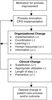
To capture the total cost effects of practice guidelines, each element of process innovation should be considered (Figure 1). Once a health care facility has identified a need for process improvement, the process of implementation is one that involves changes in coordination, human resources, and information management. Guideline implementation costs are likely to be offset to some degree by gains from organizational learning and related effects, and there are likely to be ongoing savings as the organization applies modified production processes, learns, and masters the improved processes. As the organization makes these changes, the clinical effects of CPGs are attained. These effects include substitution, appropriate utilization, changes in length of stay, and prevention. Accordingly, guidelines are likely to involve simultaneous adaptation in both the structure of the adopting organization and the process of clinical decision making therein. Both of these factors—organizational and clinical adaptation—are likely to affect the costs of providing care.

The economic effects of clinical practice guidelines (CPG). Source: Authors' review of the literature. (+) indicates that the hypothesized effect on costs is positive; (−) indicates that the hypothesized effect on costs is negative.
Clinical adaptation is the most commonly reported economic effect of guidelines. Adaptation in clinical decision making is analogous to what the IOM refers to as changes in “microsystems of care” (39). Microsystems are the “small units of work that actually give the care that the patient experiences” (4). The IOM report identified several areas in which the effectiveness of microsystems of care can be enhanced through redesign. Many of the microsystem redesign efforts identified by the IOM report—including improvements in consumer focus, information sharing, evidence-based decision making, and economic efficiency—have also been identified as explicit goals of clinical practice guidelines.
The most commonly reported cost effect of CPGs pertains to clinical standardization. In most cases, practice guidelines are designed to move care toward standardization by combining elements of evidence-based medicine and cost-effectiveness analysis. Evidence-based medicine refers to treatment decisions guided by prevailing biomedical and scientific knowledge. Cost-effectiveness analyses allow distinctions to be made among prevailing treatment options according to costs per added benefit (i.e., value). Clinical standardization is a goal of all four types of practice guidelines.
Several studies have found that, in general, clinical standardization results in decreased treatment costs. The most-common cost-reducing standardization effect identified in the literature is the substitution of one treatment protocol for a different (guideline-recommended) treatment protocol, where the guideline intervention is either less expensive, more effective, or both (19;36;54;56;60;61;63;64). The next most commonly cited effect of standardization is reducing the rate of inappropriate inpatient hospital admissions, typically by substituting outpatient services for inpatient services (11;58). Finally, clinical standardization often results in reductions in length of inpatient stays, due either to explicit length of stay targets specified by the guideline or more-effective treatment during the stay (9;14;78).
Although standardization is often touted as a cost-saving tool, it does not always result in lower costs. For example, Suarez-Almazor et al. (71) found that low back pain guidelines led to a threefold increase in lumbar radiography, compared with a standard care that infrequently included imaging procedures of the lower back. Similarly, Browman (8) reported that an oncology guideline initiative resulted in a $16 million expenditure increase attributable to higher utilization of new cancer drugs. Hu et al. found that, for hip fracture patients at high risk for pressure ulcers, guideline implementation costs and current practice costs were nearly equal overall (36). However, treatment of paraplegic patients was associated with a 19 percent lower implementation cost, and treatment in intensive-care units and skilled nursing facilities (relative to acute care) was associated with 22–24 percent higher implementation costs, relative to non-guideline practice (36).
An important aspect of clinical standardization is the application of evidence-based medicine to the management of chronic diseases. Some have argued that, for certain kinds of chronic conditions and behavioral risk factors, societal cost-effectiveness is maximized when prevention is a priority (52). Smoking cessation guidelines, for example, consistently have been shown to lower treatment costs. Cromwell et al. found that, in general, the cost per life-year saved and the cost per quality-adjusted life-year decreased as the adoption and intensity of smoking cessation guidelines adherence increased. Furthermore, the number of people quitting smoking increased as the intensity of the smoking-cessation intervention increased (15).
Whereas it is generally assumed that many prevention guidelines exhibit cost-saving properties, there is inconsistent evidence to support such a claim. Some types of preventive care results in cost savings for individual patients but not larger populations of patients (24), and the cost-effectiveness ratios of many preventive interventions have been found to be extraordinarily high (41;74). Similarly, increased utilization of screening may lead to increased diagnostic discovery, thereby increasing the probability of future medical-care utilization. This sequence of events may be relevant particularly in cases where there is no clear benefit to screening (51;55).
ORGANIZATIONAL ADAPTATION
Organizational adaptation refers to changes in “the functioning of the organizations that house or otherwise support microsystems” (4). Identifying best practices is a central organizational goal of clinical practice guidelines, analogous to the “evidence-based management” increasingly common in business administration (20;45;77). We submit that the adoption and implementation of clinical practice guidelines potentially have several important secondary organization-level economic effects. These effects have been largely ignored in economic assessments of guidelines. Moreover, it is possible, in some cases, that organization-level economic effects outweigh clinical-level economic effects. We propose a simple framework that considers the secondary economic effects related to implementation, coordination, learning, human resource management, and information management (Figure 1).
Implementation
The first component is straightforward: organizations incur non-trivial implementation costs as clinical practice guidelines are adopted and diffused. Implementation costs can be substantial and non-recoverable due to rigid pricing mechanisms and imprecise linkages between price and quality (23;29;68). From a societal perspective, the operating costs of guideline implementation also must take into account the fixed costs of guideline development, dissemination, and maintenance across institutions (23;47).
Coordination and Learning
One of the most direct linkages between CPGs and business process reengineering is the role of coordination. Guidelines have the potential to reduce treatment variation, which can lead to two different kinds of managerial efficiencies. Reduction in treatment variation is likely to lead to improvements in coordination of inventory and supply chain management, utilization of shared resources, and coordination and integration with pharmacy services (e.g., 6;35). Clinical standardization is also likely to enhance the learning process. Learning occurs as the experience of production in one time period influences the production in a later time period; that is, the production process is assumed to have some degree of flexibility and can change over the relevant range of production (26;53;59). The implication is that the costs of producing the first batch of output are greater than the costs of the producing a subsequent batch, due to the learning that occurred during the production of the first batch. Assuming that experiences of producing the first batch can be applied to the second batch (and other subsequent batches), the average costs of production are expected to decline as output increases. Clinical standardization allows health care organizations to focus on a limited range of production processes, which are likely to enhance the learning process by ensuring that decision-making situations are repeated in sufficiently large numbers (69;72;73).
Human Resource Management
Guidelines are also likely to affect costs by potentially creating incentives to improve human resource management and employee productivity. Human resources are essential to successful organizational learning and adaptation (79). The linkage between employee management and CPGs has three components: routines, decentralization, and identity.
First, CPGs provide a codified set of routines (57). Process innovations and change initiatives generally seek to differentiate between routines performed solely because “they have always been done that way” and those performed because they are the most efficient relative to other feasible alternatives.
Second, process innovation recognizes the value of decentralizing the decision-making process, allowing key decision making to migrate to the most appropriate level (80). CPGs have the potential to empower caregivers at all levels to make treatment decisions provided that guideline protocol is followed within an acceptable range of variation (32;44;75). Moreover, guidelines potentially provide greater clarity to the division of tasks, in addition to providing tangible goals for those tasks. Role clarification has the potential to improve the coordination and scheduling of human resources and to more effectively use knowledge, skills, and training (46;65). Role clarification is likely to offer decision-making assistance to clinical managers faced with having to make frequent resource allocation decisions (2;65). Decentralization does not necessarily suggest diminished control. Decentralization allows decision making to occur at the optimal level, in effect triaging decision making to eliminate bottlenecks and other obstacles. Decentralization is feasible when decision criteria have been codified; hence, decentralization may be accompanied by increased bureaucratic controls.
Third, guidelines have the potential to encourage employees to internalize the overall objectives of the organization, thereby increasing the degree to which employees identify with the organization. Employees who have higher levels of identity with the organization, in some cases, may exert greater effort on the job, which in turn has the potential to lower production costs (1). CPGs offer discrete performance targets (e.g., number of diabetics receiving a foot exam), and the attainment of these goals has the potential to increase employee pride and motivation (50), as has been found to be the case with related change initiatives (1).
Information Management
As CPGs diffuse among providers, it is likely that the demand for information systems to implement guidelines will grow. Consequently, CPGs may have the indirect effect of initially raising the costs of information management, but then lowering the costs of information management as systems improve and are applied to broader ranges of patients. The health industry trade press is replete with examples of provider investment in information and information technology that can be traced, in part, to health care organizations' decisions to adopt and implement clinical protocols, guidelines, and evidence-based medicine (13;18;22;40;48;49;75).
To effectively implement CPGs, particularly those aimed at chronic disease management, detailed information must be maintained on patients, treatments, staffing, inventories, and resource use. It is also likely that the ability of the health care organization to take advantage of economies from learning will depend on the ability of the firm to process information during the production process and then apply that information appropriately (30). Such information is most useful if it is available at the time that it is needed, as patients are undergoing treatment and as clinical decisions need to be made (42). For example, the use of automated decision support tools for immunization increased appropriate use and decreased inappropriate use of several vaccines (21). Similarly, Casalino et al. (12) found that, among several key factors, clinical information technology was the variable most strongly associated with greater use of care management processes, of which CPGs are part. Hence, there is a bilateral relationship between guidelines and information. Guidelines to some extent may foster greater investment in and use of information and information technology, and implementation of CPGs is enhanced through the application of automated management information systems.
DISCUSSION
Analyses of cost effects of CPGs are likely to be more accurate if they take into account the effects of concomitant organizational effects. Our review of the theory and published evidence identified five organizational factors relevant to the assessment of the effect of CPGs on the costs of care: implementation, coordination, learning, human resource management, and information management (Figure 1). The hypothesized direction of the effects of clinical and organizational factors is mixed. The net effect of CPGs on costs in organizational dimensions will depend on whether the cost-reducing properties of coordination and learning and human resource management offset potential cost increases due to implementation and information management. Studies of the cost effects of CPGs should attempt, to the extent possible, to measure the effects of each of these organizational factors.
In the course of reviewing the literature, we observed five important methodological and measurement issues in studies of guidelines and costs: heterogeneity in guideline composition, potential endogeneity of guideline adoption, insufficiently long study time frames, measurement problems, and difficulty assessing guideline adherence. In addition, as we have argued here, a common limitation is lack of identification of concomitant organizational effects. Each of these limitations is likely to impact the relationship between CPG implementation and costs.
Perhaps the most challenging aspect of the literature review was the “apples and oranges” problem: what appears to be a trend for one type of guideline does not necessarily hold true for a different guideline, even if guidelines address similar issues (e.g., evidence-based substitution). Hence, an alternate review strategy would have been to limit the review to, for example, all cost studies of the same set of diabetes guidelines. Unfortunately, we were not able to find more than one or two cost-related articles pertaining to the exact same set of guidelines.
Second, the potential endogeneity of guideline adoption is a problem in many studies of the cost effects of guidelines. Adoption of CPGs may be a function of financial performance. Efficient firms may be more likely to adopt because they have innovative management, whereas inefficient firms also may be more likely to adopt because they would have the most to gain. In either case, the adoption of CPGs is endogenous to financial performance. The problem of endogeneity can be mitigated through the use of a two-stage instrumental variable modeling of adoption (stage one) and the effect of adoption on financial performance (stage two). We were unable to identify any study that explicitly acknowledged this problem.
Another persistent issue throughout the literature is the issue of time frame. Most studies reviewed do not consider the cumulative costs or savings over time of future medical interventions attributable to guideline adherence. Discovery associated with screening- and population-based disease management has the potential to decrease or increase costs. However, it is not clear from the literature whether a sufficiently long time frame would reveal whether discovery costs are offset or augmented by future treatment costs. In cases where CPGs result in increased resource use, it is often the case that improved outcomes, over a sufficiently long period of time, may result in net savings and improved economic efficiency. There is relatively little literature directly supporting this conjecture. An additional problem associated with time frame is that process change is expected to have a lagged effect on financial performance. This effect may be less important in studies where the primary outcome is changes in utilization rates from one period to the next but may be more of a problem in studies attempting to measure organizational spillovers from adoption.
In addition to observed methodological issues, studies of the effect of practice guidelines on costs are likely to face several important measurement issues. These issues include imprecise measures of processes (i.e., difficulty in some cases in determining the extent to which practice guidelines had been followed), difficulty measuring outcomes, and difficulty accounting for differences in the patient population under study (e.g., age, sex, socioeconomic status, and comorbidities).
Finally, health care firms' reporting of guideline adoption may suggest operationally different actions (10;76). Given the relatively large menu of activities falling under the process change umbrella, measurement of the existence and intensity of process change is often a judgment call on the part of the researcher. The degree of guideline adherence is directly measurable in some studies, either through examination of medical records, administrative data, or direct survey of practitioners. However, in many cases the direct measurement of guideline adherence is difficult (33;43).
One of the chief reasons for the difficulty in assessing adherence is the wide variety of factors associated with adherence. For example, demonstrating the linkage between organizational adaptation and clinical adaptation, Vaughn et al. (76) found that adherence to alcohol, depression, and tobacco screening guidelines in the Veterans Administration health system varied according to mission, capacity, degree of professionalism, and patient population characteristics. Physician and hospital adherence to guidelines also depends on the quality of evidence of the guideline, the strength of the evidence used in formulating the guideline, the attitudes of providers as to the usefulness and relevance of the guideline, and patient acceptance of the guideline (5;8;10;25;33;43;66;67;76).
Provider adherence has also been shown to depend on financial incentives (16;25;34), as well as other external incentives, such as performance reports to outside organizations and patient satisfaction reports (12). Physicians reimbursed on a fee-for-service basis (or a fee schedule where administered prices are higher than average costs) face financial incentives to adhere to CPGs aimed at increasing the volume and intensity of billable services. In contrast, physicians reimbursed on a capitated basis (or a fee schedule where administered prices are lower than average costs) face financial incentives to adhere to guidelines aimed at decreasing the volume and intensity of billable services (66). Malpractice litigation has also affected physician adherence as some malpractice insurers have required physicians to comply with guidelines (7). Finally, patient adherence to guidelines—a key component in assessing the costs and benefits of guidelines—has been shown to vary by age, race, education, comorbidities, and income (62;76).
CONCLUSIONS
Clinical practice guidelines have the potential to improve economic efficiency by reducing treatment and operational costs while improving outcomes. Most of the studies we reviewed found a cost-reducing guideline effect. However, most studies fail to adequately address key issues concerning study design (mainly perspective and time frame) and related organizational adaptation attributable to guideline adoption and adherence. In addition, there appears to be large variation in the magnitude of cost effects according to the content and design of the guideline in question, thereby limiting the extent to which broad generalizations can be made. Our review represents an initial step in conceptualizing these issues. Clearly, more work needs to be done to improve methods to calculate the economic impact of innovations in the process of care.
CONTACT INFORMATION
John E. Schneider, PhD (john-schneider@uiowa.edu), Assistant Professor, Department of Health Management and Policy, College of Public Health, University of Iowa, 200 Hawkins Drive, E204 GH, Iowa City, IA 52242; Core Investigator, Center for Research in the Implementation of Innovative Strategies in Practice (CRIISP), Veterans Administration Medical Center, Iowa City, IA 52246
N. Andrew Peterson, PhD (andrew-peterson@uiowa.edu), Assistant Professor, Department of Community and Behavioral Health, College of Public Health, University of Iowa, 200 Hawkins Drive, E238 GH; Director for Research & Deputy Director, Iowa Prevention Research Center, University of Iowa, 1215 Westlawn Building, Iowa City, IA 52242
Thomas E. Vaughn, PhD (tom-vaughn@uiowa.edu), Associate Professor, Department of Health Management and Policy, College of Public Health, University of Iowa, 200 Hawkins Drive, E230 GH, Iowa City, IA 52242; Senior Scientist, Center for Research in the Implementation of Innovative Strategies in Practice (CRIISP), Veterans Administration Medical Center, Iowa City, IA 52246
Eric N. Mooss, MHA (emooss@alegent.org), Operations Director, Radiation Oncology, Alegent Health, 7500 Mercy Road, Omaha, NE 68124
Bradley N. Doebbeling, MD, MSc (bdoebbel@iupui.edu), Director, Indiana University Center for Health Services and Outcomes Research, Professor of Health Services Research, Indiana University; Director, Health Services Research & Development, Roudebush VA Center on Implementing Evidence-Based Practice, Indianapolis, IN 46202
Dr. Schneider is supported by a Merit Review Entry Program Award (MRP 020111) and an Investigator Initiated Award (IIR 020111) from the Health Services Research and Development Service, Veterans Health Administration, Department of Veterans Affairs. Dr. Doebbeling was supported by Investigator Initiated Research grants (IIR 020111, CPI 99126, and CPI 01141), an Epidemiology Merit Review, and a Health Services Research and Development Center Grant (HFP 04-148) from the Veterans Health Administration, Department of Veterans Affairs. Dr. Doebbeling was also supported by a National Institutes of Health K-award (K30 HL04117-01A1). Very helpful comments on this manuscript were provided by Marcia Ward, Gary Rosenthal, Stephen Flach, and Valerie Foreman. We also like thank Kyle Kingsley and Bobbi Buckner for excellent research assistance. The views expressed in this article are those of the author(s) and do not necessarily represent the views of the funding agencies and affiliated institutions.