The current way of organizing and working together in organizations is undergoing continual change. Organizations face challenges and difficulties to which they must adapt in order to be competitive, particularly when facing the current recession, new technology improvements, merges and differences that come with a global market, and changes in both customer and employee needs and values (Rodríguez-Carvajal, Moreno-Jiménez, de Rivas-Hermosilla, Álvarez-Bejarano, & Sanz-Vergel, Reference Rodríguez-Carvajal, Moreno-Jiménez, de Rivas-Hermosilla, Álvarez-Bejarano and Vergel2010). At the same time, there is an increasing demand for a more ethical people-centered management (van Dierendonck, Reference van Dierendonck2011), a management that can combine the constant demand for efficiency and efficacy with a moral focus. Within this context, leadership has been pinpointed as a key factor to achieving committed workers as well as prosperous organizations (Luthans, Reference Luthans2002; van Dierendonck, Reference van Dierendonck2011).
In this line, servant leadership (SL) may play an important contribution in achieving those goals. At this respect, SL has been proposed as a leadership style specifically focused on people and their development (Greenleaf, Reference Greenleaf1977). Greenleaf described a servant leader as follows: “The servant-leader is servant first. It begins with the natural feeling that one wants to serve. Then conscious choice brings one to aspire to lead.” (Spears, 1998, p. 1). Therefore, a servant leader is one who is mainly concerned about his followers (Greenleaf, Reference Greenleaf1977). In contrast to other leadership theories as for example transformational leadership, inspiring leadership or Level 5 leadership, SL makes explicit the moral and social concerns and it sets first followers´ needs even over organizational goals (Hunter et al., Reference Hunter, Neubert, Perry, Witt, Penney and Weinberger2013, van Dierendonck, Reference van Dierendonck2011). In its application, this leadership has been observed to be related to effective performance, organizational citizenship behavior, job satisfaction, commitment and the appearance of organizational trust climate, among others (e.g. Hunter et al., Reference Hunter, Neubert, Perry, Witt, Penney and Weinberger2013; van Dierendonck, 2010, for a review).
Based on its value, the global context brings also the challenge of studying SL within a cross-cultural setting so that attention for possible culture differences should be brought to the front (Mooij & Hofstede, Reference Mooij and Hofstede2010). Recently, Mittal and Dorfman (Reference Mittal and Dorfman2012) conducted the first study that made a comprehensive empirical examination of servant leadership dimensions across cultures. A major implication of their study is that servant leadership was viewed as being very important for effective leadership across all the 59 studied societies that included Anglo, Confucian Asia, Eastern Europe, Germanic Europe, Latin America, Latin Europe, Middle East, Nordic Europe, Southern Asia, Sub-Saharan Africa cultures. Considering that the Spanish language is the second most spoken one in the world, and the notable growth of Latin American countries, the aim of the present study is to increase the knowledge about the SL and possible cultural nuances in three Spanish speaking countries. In doing so, we adapted and validated the Servant Leadership Survey (SLS, Van Dierendonck & Nuijten, Reference van Dierendonck and Nuijten2011), in three different Spanish samples: Spain, Mexico and Argentina. The reliability and factorial validity of the instrument were studied by means of confirmatory factor analysis. To show the equivalence of the SLS version in all three countries we run measurement invariance analysis considering in any case the cultural differences between the countries. Finally, convergent validity was also studied through Pearson correlations between SLS, role stress and organizational identification in Spain and Mexico.
Why a Servant Leader?
A recent review by Avolio and his colleagues (Avolio, Walumbwa, & Weber, Reference Avolio, Walumbwa and Weber2009) showed that research into leadership has changed its focus from the leader himself to a wider context which includes followers, colleagues, supervisors, the work environment and even the culture of the organization itself. However, it turns out interesting that over more than thirty years ago, Greenleaf (Reference Greenleaf1977) already developed the concept of servant leadership that primarily focuses on followers and the social context. Servant leadership theory adds this human and social component, placing the emphasis on the employees and their well-being (van Dierendonck, Reference van Dierendonck2011) more than on organizational profits. As such it is not surprising that recent studies have stressed its potential for a more ethical approach, highly demanded in the labor context on present-day organizations (i.e. Parris & Peachey, Reference Parris and Peachey2013). That’s why, the first measurement instruments became available recently (see van Dierendonck, Reference van Dierendonck2011, for an overview). In our research, we focus on the SLS developed by van Dierendonck and Nuijten (Reference van Dierendonck and Nuijten2011), which incorporates 30 items divided over eight factors. These eight factors are: empowerment, accountability, standing back, humility, authenticity, courage, forgiveness (acceptance of others) and stewardship.
Empowerment is one of the central criteria of SL and refers to the ability of the leader to develop in his employees a proactive and confident attitude which affords them a greater sense of power and control (Laub, Reference Laub1999). Accountability is about not only encouraging employees and giving them a sense of competence, but also explicitly making them responsible for their results. This guarantees that followers know what is expected of them and, at the same time, demonstrate confidence of the leader in them. Along the same lines, another of the main characteristics is the ability to stand back, awarding priority to the interests and achievements of others, remaining in the background when a task has been performed successfully. Related to this is the characteristic of humility which represents the ability to value with the appropriate perspective, one’s own talents and achievements (Patterson, Reference Patterson2003), realizing that no-one is infallible and we all make mistakes. On the other hand, a servant leader also shows authenticity, consistently expressing to others his feelings and thoughts (Harter, Reference Harter, Snyder and Lopez2002) in such a way that his role as a professional is not above whom he is as a person (Halpin & Croft, Reference Halpin, Croft and Halpin1966). Likewise, courage or daring to take risks and try out new ways of solving old problems is one of the characteristics of the servant leader, and is, moreover, essential for innovation and creativity. Forgiveness refers to the ability of the leader to empathize with his employees and understand their circumstances (George, Reference George2000), to be able to forgive their disputes and mistakes, thereby creating an atmosphere of confidence (Ferch, Reference Ferch2005). Finally, another of the significant characteristics is the desire to accept responsibility for where the institution itself is heading, to care for it, to demonstrate loyalty and team work, being careful to serve and assist instead of taking control and looking out for one’s own interests (Spears, Reference Spears1995). This characteristic is known as stewardship.
Research so far showed that the SLS has good factorial validity and internal consistency. Conceptually, it is a measure that comes closer to van Dierendonck’s (2011) theory of SL behavior. The SLS was developed and validated with a sample of 1,571 people from eight different samples, from two different countries (The Netherlands and the United Kingdom) and from a variety of labor environments. The combination of exploratory and confirmatory factor analyses resulted with eight measurement dimensions. Recently, the factorial validity of this measure has also been validated within an Italian sample of 808 employees (Bobbio, van Dierendonck & Manganelli, Reference Bobbio, Van Dierendonck and Manganelli2012).
In the same line, it is expected that the factorial structure of the SLS will be replicated in each of the Spanish-speaking countries with appropriate reliability indices (hypothesis 1). Furthermore, our aim is to show the equivalence of SLS factor structure in the three countries through measurement invariance analysis, in order to ensure that differences in mean values were not due to instrument bias (Byrne, Reference Byrne2010). When conducting cross-cultural studies, it is essential to first demonstrate the measurement equivalence of questionnaires (Vandenberg & Lance, Reference Vandenberg and Lance2000), before assuming that variables of interest have similar meaning and thus that they are comparable across cultures (Karahanna, Evaristo, & Srite, Reference Karahanna, Evaristo and Srite2002). Based on the encouraging results in previous samples and across three different languages, we expect that this scale will be metrically and conceptually equivalent for the Spanish language version with samples from three culturally different countries (hypothesis 2).
Even though an ethic leader is a principle viewed similarly around the world, cultural nuances lead to differences in the endorsement of that principle across cultures (Hanges, Lord, & Dickson, Reference Hanges, Lord and Dickson2000). The growth of Latin American economies and the Spanish language as the second most spoken one in the world is remarkable. However, previous cross-cultural leadership research has provided limited information about Latin American leadership (Littrell & Barba, Reference Littrell and Barba2013). Moreover, some “world-wide studies” assume Latin American and Latin European societies are comparable, not adding in its analysis one of the two groups of countries (i.e. Alas, Reference Alas2006). Thus, more cross-cultural studies into not only potential similarities but also the specificity of each culture of measures developed in Anglo-Saxon context are needed (Schaffer & Riordan, Reference Schaffer and Riordan2003). Concerning SL, prior studies show the existence of the SL construct in other countries and its importance (v.g. Mittal & Dorfman, Reference Mittal and Dorfman2012; van Dierendonck & Nuijten, Reference van Dierendonck and Nuijten2011). Regarding potential cultural differences, recent studies show that some characteristics of SL may be differentially valued across cultures (Dickson, Castaño, Magomaeva, & Hartog, Reference Dickson, Castaño, Magomaeva and Hartog2012; Mittal & Dorfman, Reference Mittal and Dorfman2012).
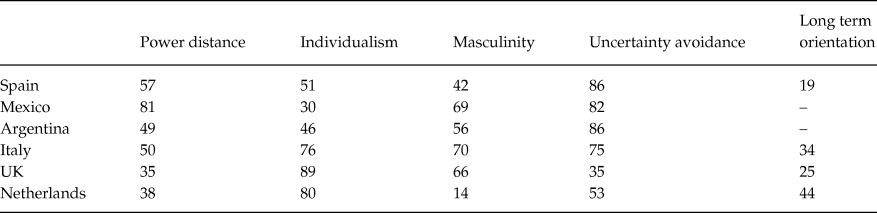
If we take a look to the Global Leadership and Organizational Behavior Effectiveness (GLOBE) study, the countries of this study and in previous SL studies can be categorized in clusters which share cultural values (Dickson et al., Reference Dickson, Castaño, Magomaeva and Hartog2012; Mittal & Dorfman, Reference Mittal and Dorfman2012). Specifically, Spain and Italy belong to Latin European cluster, Argentina and Mexico are considered Latin American, the UK is considered Anglo and the Netherlands belongs to Germanic Europe cluster (Mittal & Dorfman, Reference Mittal and Dorfman2012). These clusters have been studied in its relationship with six leadership dimensions: Charismatic/value-based, Participative, Team-oriented, Human-oriented, Autonomous and Self-protective (Dorfman, Javidan, Hanges, Dastmalchian, & House, Reference Dorfman, Javidan, Hanges, Dastmalchian and House2012). Given the special focus of SL on workers in order to promote their autonomy, to empower them with a standing back attitude (van Dierendonck, Reference van Dierendonck2011), this kind of leadership may endorse better in clusters which leadership expectancies are primordially participative and non-self-protective ones. In one hand, Latin American and Latin European clusters are quite similar in these GLOBE leader characteristics (Javidan, Dorfman, Sully de Luque, & House, Reference Javidan, Dorfman, de Luque and House2006). Leaders from these countries are expected to have medium levels of participative and self-protective characteristics, whereas in Anglo and Germanic clusters the levels of self-protective are low with high levels of participative attributes (Javidan et al., Reference Javidan, Dorfman, de Luque and House2006). Accordingly, a previous study with an Italian sample showed lower SL scores than in the UK and The Netherlands (Bobbio et al., Reference Bobbio, Van Dierendonck and Manganelli2012). On the other hand, Hofstede´s dimensions also show similarities and differences between the three countries in our study, and between these countries and the UK, the Netherlands and Italy (see Table 1) (Hofstede, Reference Hofstede2009). Hofstede (Reference Hofstede2001) describes five dimensions: power distance, individualism, masculinity, uncertainty avoidance, and long term orientation. Specifically, power distance and uncertainty avoidance have been prior related to SL (Mittal & Dorfman, Reference Mittal and Dorfman2012). As regards culture differences in Spanish speaking countries, power distance has observed to be negatively related to SL characteristics (Mittal & Dorfman, Reference Mittal and Dorfman2012). For this reason, Spain and Mexico whose scores on power distance (see Table 1) are high (Hofstede, Reference Hofstede2009) might endorse less SL. However in Argentina the score is in a middle rank position (Hofstede, Reference Hofstede2009) so we expect more similar SLS scores between Spain and Mexico samples than with Argentina ones (hypothesis 3).
Hofstede´s cultural dimensions for Spain, Mexico, Argentina, Italy, UK and the Netherlands

As regards similarities, the three Spanish speaking countries present similar scores in uncertainty avoidance with a great concern for changing ambiguous and undefined situations (Hofstede, Reference Hofstede2009). In this line, uncertainty avoidance has observed to be negatively related to egalitarianism and empowering SL attributes (Mittal & Dorfman, Reference Mittal and Dorfman2012). Based on GLOBE differences in participative and self-protective characteristics, and lower level of uncertainty avoidance in Argentina, Spain, and Mexico, it is expected that the global score of SLS in the three Spanish-speaking communities will also be lower than in the UK and the Netherlands (hypothesis 4).
Finally, convergent validity was also analyzed. In previous studies carried out with other measures, SL has been observed to be positively related to positive attitudes of followers as job satisfaction (Jaramillo, Grisaffe, Chonko, & Roberts, Reference Jaramillo, Grisaffe, Chonko and Roberts2009; West, Bocarnea, & Maranon, Reference West, Bocarnea and Maranon2009) and organizational commitment (Jaramillo et al., Reference Jaramillo, Grisaffe, Chonko and Roberts2009; West et al., Reference West, Bocarnea and Maranon2009). For this reason, we expect that a worker whose leader is closer to a servant leader behavior shows higher levels of organizational identification (hypothesis 5). Furthermore, in the relationship of SL with the perceived organizational context, job stress has been shown as negatively related to SL (Jaramillo et al., Reference Jaramillo, Grisaffe, Chonko and Roberts2009) while role clarity was positively related to SL (West et al., Reference West, Bocarnea and Maranon2009). Therefore, we also expect role stress (both role conflict and role ambiguity dimensions) to be negatively related to SL (hypothesis 6).
In summary, given the importance of the concept and the need to measure it in the international organizational context, this paper aims to validate the SLS in Spanish-speaking communities in order to implement the latest advances in organizational psychology in the organizations of these countries.
Method
Participants and procedure
A total of 638 people, employees between the ages of 18 and 65, participated voluntarily in the study. The participants came from three different Spanish-speaking countries: Spain (N = 263), Mexico (N= 217) and Argentina (N = 158). The sample in Spain was made up of 125 men and 138 women with an average age of 32.54 (SD = 8.49), 84 men and 133 women in Mexico with an average age of 36.17 (SD = 9.27), and 103 men and 55 women in Argentina with an average age of 34.23 (SD = 7.42). In all three countries, participants were contacted by email since they came from many different cities and work-settings. The inclusion criteria were frequent contact and interaction with a supervisor. In the Spanish sample, most of the workers had a male supervisor (71%), as did the Mexican sample (66.8%). There is no data about supervisors’ gender for the Argentinean sample. Participation was totally anonymous and voluntary.
Measurements
Servant Leader Survey (SLS)
Cross-cultural adaptation aim is to produce content equivalency between source and target measures (Beaton, Bombardier, Guillemin, & Ferraz, Reference Beaton, Bombardier, Guillemin and Ferraz2000). In this sense, shared and differential aspects of culture between countries must be taken into account (Schaffer & Riordan, Reference Schaffer and Riordan2003). As it is recommended for back-translation (Beaton et al., Reference Beaton, Bombardier, Guillemin and Ferraz2000), in a first step two bilingual co-workers translated all the SLS items developed by van Dierendonck and Nuijten (Reference van Dierendonck and Nuijten2011). Then, another bilingual expert translated the Spanish version back into English. Finally, the author of this latter version compared it to the original. There were not big differences between the English and Spanish version and they were resolved by discussion so that a final Spanish version was agreed upon. Also, language cultural specificity between Spain, Mexico and Argentina was taken into account. Following Schaffer and Riordan (Reference Schaffer and Riordan2003) recommendations, we checked face validity of the Spanish adaptation across Latin cultures. Thus, four areas of equivalence for the Spanish version were discussed (semantic, idiomatic, experiential and conceptual; Beaton et al., Reference Beaton, Bombardier, Guillemin and Ferraz2000) and some semantic differences were encountered. For example, the translation of the English words “take risks” (item 8), “credits” (item 19) and “chasing recognition” (item 27) is different across countries (asumir riesgos / tomar riesgos; elogios / créditos; buscar reconocimiento / perseguir reconocimiento, respectively). The experts agreed upon the words which may be understood in all countries.
The survey consists of eight scales of thirty Likert items ranging from 1 (Never) to 6 (Always). All the items were formulated positively except for the dimension of Forgiveness (acceptance of others). Examples of items for the different dimensions are: “My supervisor finds it easier to rejoice in the good performance of a colleague than his/her own” (standing back); “My supervisor maintains a hard attitude towards people who have offended him/her at work” (forgiveness-reversed); “My supervisor takes risks even when he/she is not sure of support from his/her own supervisor” (courage); “Through my supervisor I have been able to develop further” (empowerment); “My supervisor holds me and my colleagues responsible for the way we set about the work” (accountability); “My supervisor shows his/her limitations and weaknesses” (authenticity); “My supervisor learns from criticism” (humility); “My manager works from a long-term vision” (stewardship).
Role Stress
Role stress was assessed by Rizzo, House, and Lirtzman’s (Reference Rizzo, House and Lirtzman1970) instrument which measures two dimensions, role conflict (6 items, i.e. “I work on unnecessary things”) and role ambiguity (8 items, i.e. “I know exactly what is expected of me”). The answers were collected in a Likert-type scale ranging from 1 (Totally false) to 7 (Totally true). Internal consistency values of role conflict and role ambiguity were both high in Spain (α = .85, α = .87) and Mexico (α = .84, α = .89).
Organizational identification
It was measured through the Mael and Ashforth’s questionnaire (Reference Mael and Ashforth1992). This test comprises 6 items (i.e. “When someone criticizes my company, it feels like a personal insult”) in 4-point Likert scale ranging from 1 (Totally disagree) to 4 (Totally agree). The internal consistency was high both in Spain (α = .91) and Mexico (α = .86).
Statistical analyses
In order to test factorial validity, we followed the procedure described by the original authors of the SLS (van Dierendonck & Nuijten, Reference van Dierendonck and Nuijten2011). Thus, we used confirmatory factor analysis (CFA) using the method of maximum likelihood estimations. The fit indices studied were both absolute and relative ones, as recommended by authors Hu and Bentler (Reference Hu and Bentler1999). The indices used were Chi squared (χ2), Incremental Fit Index (IFI), Comparative Fit Index (CFI), Tucker-Lewis Index (TLI), Standardized Root Mean Square Residual (SRMR), Root Mean Squared Error of Approximation (RMSEA) and the Akaike Information Criterion (AIC). A value of χ2/df lower than 3.00, as well as IFI, CFI, TLI values equal to or above .90, and SRMR and RMSEA values lower than .08 indicate a good fit (Hu & Bentler, 1999). Likewise, when comparing between models, lower AIC values indicate a greater level of fit. As it has been done by the original authors (van Dierendonck & Nuijten, Reference van Dierendonck and Nuijten2011) and latter adaptations (Bobbio et al., Reference Bobbio, Van Dierendonck and Manganelli2012), different models were tested according to the theoretical background. Thus, first a confirmatory factor analysis of the model was carried out with a single factor where all the items were loaded. Secondly, a confirmatory factor analysis of the eight factor model was analyzed. Finally a third analysis was performed where a second order factor was added to the eight factor model.
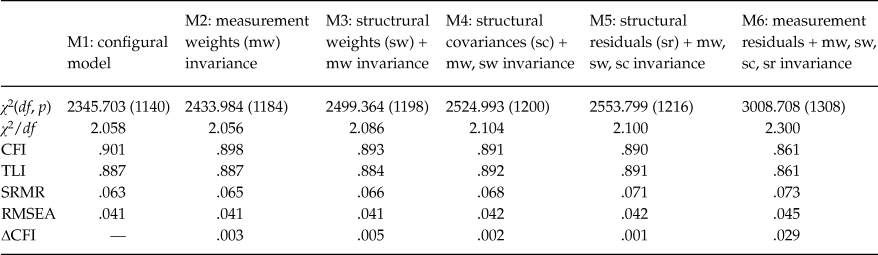
Before proceeding to test for invariance, the model fit for separate samples for Spain, Mexico and Argentina and the pooled sample was tested (Byrne, Reference Byrne2010; Teo, Lee, Chai, Luan, & Wong, Reference Teo, Lee, Chai and Wong2009). Afterwards, various tests of invariance were performed. In order to assess measurement invariance, multi-group confirmatory factor analyses (MGCFA) were run with AMOS 20.0. In this procedure, nested models were organized hierarchically by levels of restriction (Byrne, Reference Byrne2010) throughout six nested models. Every nested model was tested using maximum likelihood and based on a covariance matrix (Byrne, Reference Byrne2010; Teo et al., Reference Teo, Lee, Chai and Wong2009). All models were tested with respect to the configural model (M1). In the configural model, the pooled sample model was now simultaneously tested in the three separate samples with each parameter unconstrained (Byrne, Reference Byrne2010; Quiñones-García, Rodríguez-Carvajal, Clarke, & Moreno-Jiménez, Reference Quiñones-García, Rodríguez-Carvajal, Clarke and Moreno-Jiménez2013). Then, the rest of the invariance models were tested with respect to the configural model. First, we ensured that the factor loadings were equivalent (M2). Next, we tested that the structural composition of the loads was the same (M3). Following this, the same structure of variance and covariance was fixed between factors (M4). Next, the residual structure was fixed for the three groups (M5). Finally the same loadings for all the measurement errors were constrained across samples (M6). If Δχ2 was statistically significant, the null hypothesis that the models in all three countries were equivalent was rejected. However, since the differences in Chi-square are very sensitive to sample size, Cheung and Rensvold (Reference Cheung and Rensvold2002) provided evidence that ΔCFI was not prone to these problems. On the basis of extensive simulations they also determined that a ΔCFI value higher than .01 was indicative of a significant drop in fit.
Results
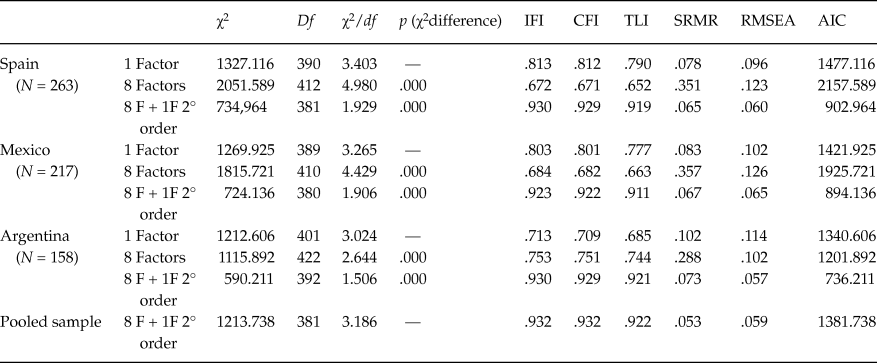
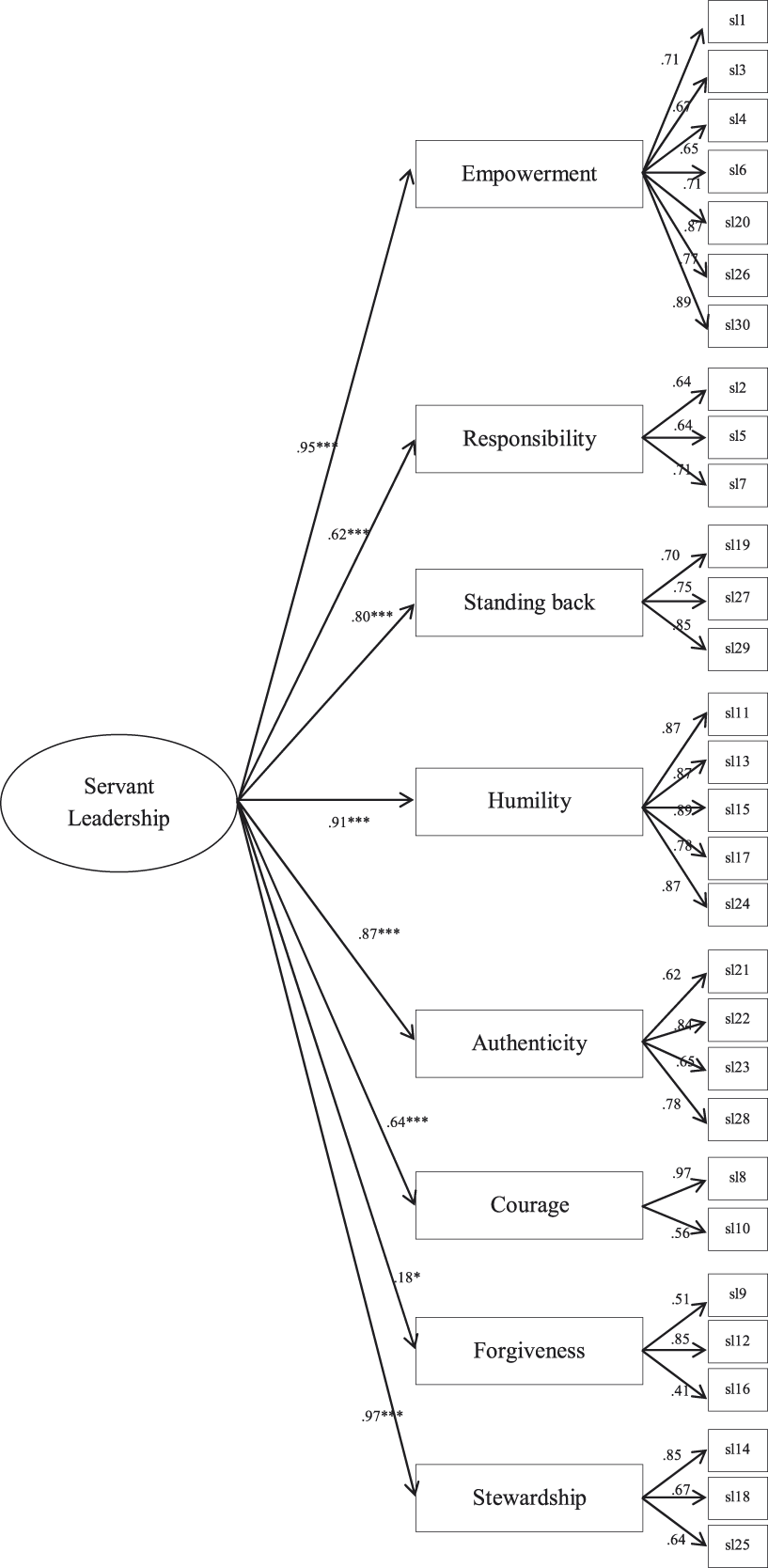
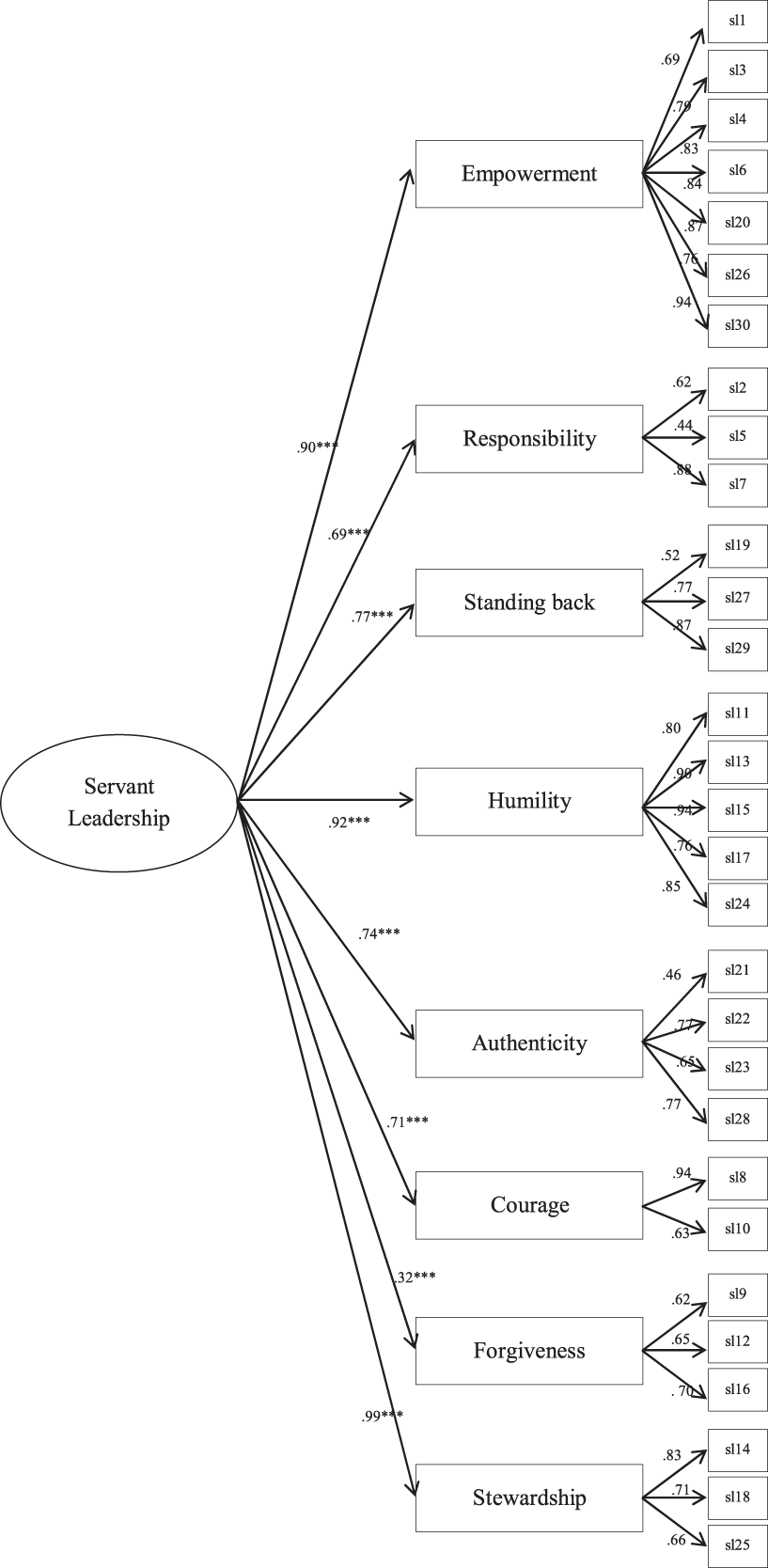
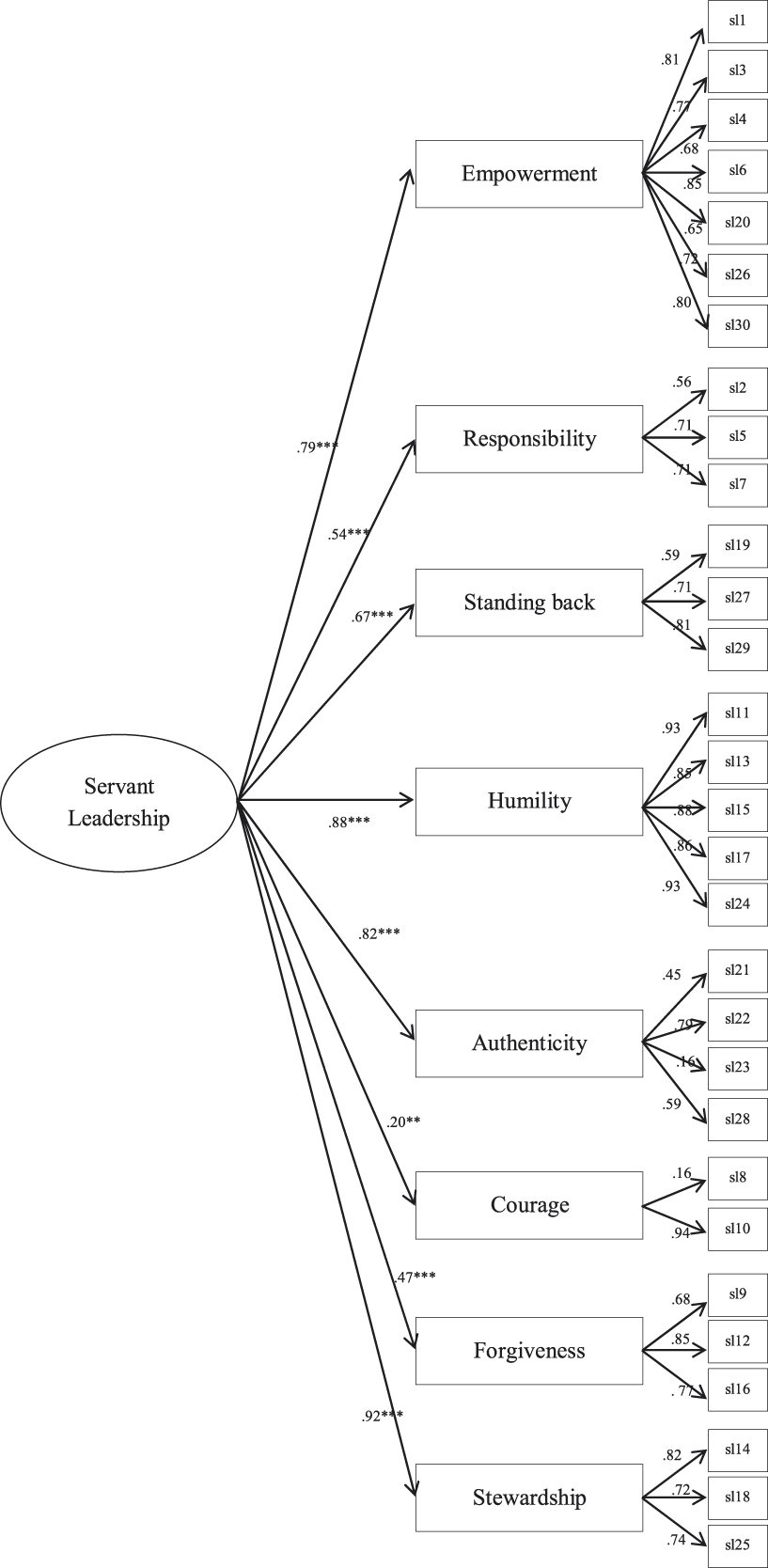
As shown in Table 2, the eight factor model with a second order factor was the best fit for all samples (hypothesis 1). The goodness of fit of this model was quite good in all three countries so it was established as the baseline model (Byrne, Reference Byrne2010). The diagrams of this model in Spain, Mexico and Argentina (see Figures 1, 2 & 3 respectively) showed that the strongest indicators of SL (with factor loadings equal or greater than .80) were for Spain: Empowerment, Standing back, Humility, Authenticity and Stewardship; for Mexico: Empowerment, Humility and Stewardship; and for Argentina: Humility, Authenticity and Stewardship. The lower factor loading dimensions were Forgiveness for Spain and Mexico, and Courage for Argentina.
Confirmatory factor analysis: goodness of fit statistics

Note: Df: Degree of freedom; IFI: Incremental fit Index; TLI: Tucker Lewis Coefficient; SRMR: Standardized Root mean Square Residual; RMSEA: Root Mean Square Error of Approximation.
Spain.

Mexico.

Argentine.

In order to check the second hypothesis, the pooled sample model was tested. The fit indices showed good adjustment to the data (see table 2). Afterwards, MGCFA was carried out to compare the fit of the model in all three countries simultaneously. As shown in Table 3, we can observe that the decrease of CFI in absolute terms between models M1 and M2 (ΔCFI =.003), and M2 and M3 (ΔCFI = .005) was less than .01. Therefore the null hypothesis of equivalence between the two models was maintained. Thus, the factor loadings did not differ both in measurement and in structure models across countries. In the following model, M4, the variances and co-variances of the eight factors were fixed. In this step, the CFI difference was not relevant either (ΔCFI = .002), so the factors had the same relative significance between them and followed the same relational pattern. Finally, in models M5 and M6, the structural residual invariance and the residual measurement were also fixed. The decrease obtained between models M4 and M5 allowed the structural residual invariance to be maintained (ΔCFI = .001). However, the difference between models M5 and M6 (ΔCFI = .029) did not guarantee the structural residual measurement.
Fit indices of the different models of multi-group confirmatory analysis (Spain (N = 263), Mexico (N = 217) and Argentina (N = 158)

Note: Df: Degree of freedom; IFI: Incremental fit Index; TLI: Tucker Lewis Coefficient; SRMR: Standardized Root mean Square Residual; RMSEA: Root Mean Square Error of Approximation.
The reliability analysis showed adequate internal consistency. Just one dimension per country had a reliability bellow .70: Forgiveness for Spain and Mexico (α = .61 and α = .69, respectively), and Courage for Argentina (courage: α = .64). Total reliability was .94 for Spain, .94 for Mexico, and for Argentina .93.
As regards hypothesis 3, it was observed that the Argentina SL scores (M = 4.46, SD = .74) were higher than Spain (M = 3.74, SD = .97) and Mexico (M = 3.85, SD = 1.01) with t = 8.10, p < .001 and t = 6.55, p < .001, respectively. No differences were found between the SL levels for Spain and Mexico (t = 1.19, ns).
In order to check the hypothesis 4, we found no difference in SL scores between Spain and Italy (M = 3.68, SD = 1.25) (data from Bobbio et al., Reference Bobbio, Van Dierendonck and Manganelli2012) nor between Spain and the United Kingdom (M = 3.73, SD = 1.04) (data from van Dierendonck & Nuijten, Reference van Dierendonck and Nuijten2011) as indicated by the t = .81, ns and t = .11, ns analyses, respectively. However, in the Netherlands (data from van Dierendonck & Nuijten, Reference van Dierendonck and Nuijten2011) we found a greater SL score than Spain (M = 4.10, SD = 1.04; t = 5.37, p < .001). As regards Mexican data, SL score was lower than the Netherlands (t = 3.33, p < .001) and higher than Italy (t = 2.08, p < .05). No differences were found with the United Kingdom (t = 1.25, ns). Argentina got higher SL scores than Italy, the United Kingdom and the Netherlands (t = 10.61, p < .001; t = 8.23, p < .001 and t = 5.44, p < .001, respectively).
Finally, we also studied convergent validity of the construct (hypothesis 5 and 6). Self-rated role stress and organizational identification of employees in Spain and Mexico were analyzed (no data available about Argentina). In the Spanish sample, SL showed a significant and negative correlation with role stress (r = –.51, p < .001), and both role conflict (r = –.37, p < .001) and role ambiguity dimensions (r = –.47, p < .001). Oppositely, SL had a significant positive correlation with organizational identification (r = .42, p < .001). In Mexico, SL was also significantly and positively related to organizational identification (r = .24, p = .001) and negatively to role stress (r = –.57, p < .001) and its two dimensions, role conflict (r = –.54, p < .001) and role ambiguity (r = –.39, p < .001).
Discussion
The main objective of this paper was to study the validity and reliability of the Spanish version of the Servant Leadership Survey developed by van Dierendonck and Nuijten (Reference van Dierendonck and Nuijten2011) in three Spanish-speaking countries. Independent CFA for each country sample and pooled sample corroborated the eight factor structure with one second order factor (hypothesis 1). Likewise, MGCFA also showed the model equivalence across the countries including structural residual invariance (hypothesis 2). Therefore these results support the multi-dimensional nature of the construct with a second order factor of SL. The factor loadings of the dimensions were also good, with the exception of Forgiveness, which was relatively low in Spain and Mexico. However, Courage was the dimension with the lowest factor loading in Argentina. Interestingly, Forgiveness was also the lowest factor loading in the recent Italian SLS validation (Bobbio et al., Reference Bobbio, Van Dierendonck and Manganelli2012) and in van Dierendonck and Nuitjen’s (Reference van Dierendonck and Nuijten2011) original study for the Dutch sample. Since five of seven countries showed this pattern with Forgiveness, we might consider this dimension for reviewing. In spite of this, the eight-dimensional model of the SLS was confirmed for the Spanish language context above instrument bias. Since measurement equivalence was demonstrated, future SL researchers can assume that significant differences in prevalence or in relationships between independent and dependent variables may be the result of true differences across cultures (van de Vijer & Leung, Reference van de Vijer and Leung1997).
As regards culture differences among Spanish speaking countries (hypothesis 3), Argentina showed remarkable high level on SL score. In this country we have to consider the relatively low scores in power distance and medium levels on masculinity (Hofstede, Reference Hofstede2009). One could argue that perhaps it might be the combination of both cultural dimensions that benefit the expression of the servant leader. Low power distance with medium levels of masculinity might reduce competition between colleagues and might promote egalitarianism which has been related to SL (Mittal & Dorfman, Reference Mittal and Dorfman2012). In addition, these characteristics might enhance the more ethical and safe environment that SL promotes (van Dierendonck, Reference van Dierendonck2011).
Concerning Latin culture similarities (hypothesis 4), as expected Mexico and Spain showed SL lower scores than the Netherlands. However, no significant differences were found with the UK. Recently, Mittal and Dorfman (Reference Mittal and Dorfman2012) report no significant differences between the clusters considered in the present study. However, the Nordic and Germanic clusters stand out by the highest scores in one of the servant leader attributes, egalitarianism, across all the 59 studied societies (Mittal & Dorfman, Reference Mittal and Dorfman2012). Furthermore, the Germanic cluster show the highest cluster score for participative dimension (Javidan et al., Reference Javidan, Dorfman, de Luque and House2006) related to several SL attributes as empowerment, autonomy and accountability. Thus, a servant leader may be better endorsed in the Germanic cluster since it is expected that the leader became noticeable because of its capacities to be focus on people.
It is also important to highlight the expected cross-cultural convergent validity of SL in both Spain and Mexico (hypothesis 5 & 6). There results strengths the nomological network of SL across countries. In this respect, the SLS in the Spanish-speaker populations may be an important tool to measure SL impact on organizational settings.
Some limitations should also be taken into account, for example, the fact that the procedure for data collection in Spain and Mexico happened via the “snowball” technique and that in Argentina the participants all came from the same company. As such one should be careful with generalizing our results given that the samples cannot be considered representative of the population in the countries studied. Nevertheless, the results overall are promising and due to the variety of the jobs, ages, etc., we can consider that it does have good external validity. Nevertheless, it might be useful for future research, to carry out larger SL cross-cultural studies as well as further SL longitudinal studies between and within same organizational cultures.
In conclusion, this paper provides the first Spanish Servant Leadership Survey. Thus, it enables the study of SL in Spanish-speaking countries which is of key importance given the relevance of the Latin market in the international economic scene. Besides, the cross-cultural analyses conducted provide a framework in which organizations could implement leadership programs across cultures, and they could also prepare leaders for expatriate assignments or multicultural teams. Since leadership expectancies are important to leadership efficiency (Dorfman et al., Reference Dorfman, Javidan, Hanges, Dastmalchian and House2012), the differences encountered between countries highlight the need to take into account the culture specificity in their application. Specifically, egalitarianism and the promotion of leader abilities linked to social aspects (trust, employees’ encouragement, etc.) may help to a better implementation of SL. In addition, the adaptation and validation of the scale has shown that SL occurs in Latin countries and may help them to promote desirable outcomes. We hope that with the availability of this measure, it will encourage more SL research and application within Spanish speaking countries.
Spanish version of the Servant Leadership Questionnaire.
1. Mi jefe me da la autoridad que necesito para tomar decisiones que faciliten mi trabajo.
2. Mi jefe me hace responsable del trabajo que llevo a cabo.
3. Mi jefe me da la oportunidad de resolver los problemas por mí mismo en vez de decirme directamente lo que debo hacer.
4. Mi jefe me da la información que necesito para poder hacer bien mi trabajo.
5. Para mi jefe, soy responsable de mi rendimiento.
6. Mi jefe me da bastantes oportunidades para desarrollar nuevas habilidades.
7. Mi jefe nos hace a mí y a mis compañeros responsables de cómo organizamos nuestro trabajo.
8. Mi jefe asume riesgos si es necesario para hacer lo que considera que debe hacerse.
9. Mi jefe critica a las personas por los errores que han cometido en su trabajo (r).
10. Mi jefe asume riesgos incluso cuando no está seguro de si cuenta con el apoyo de su supervisor.
11. Mi jefe aprende de las diferentes visiones y opiniones de los demás.
12. Mi jefe mantiene una actitud dura hacia aquellas personas que le han ofendido en el trabajo (r).
13. Mi jefe intenta aprender de las críticas que le hace su superior.
14. Mi jefe enfatiza la importancia de prestar atención al aspecto positivo de las cosas.
15. Mi jefe aprende de la crítica.
16. A mi jefe le cuesta dejar pasar cosas que fueron mal en el pasado (r).
17. Mi jefe admite sus errores ante su superior.
18. Mi jefe trabaja con una perspectiva a largo plazo.
19. Mi jefe trabaja entre bastidores y deja que otros se lleven los elogios.
20. Mi jefe me anima a hacer uso de mis habilidades y conocimientos.
21. Mi jefe muestra sus limitaciones y debilidades.
22. Mi jefe se conmueve con las cosas que pasan a su alrededor.
23. Mi jefe está dispuesto a expresar sus sentimientos incluso aunque conduzcan a consecuencias indeseables.
24. Si la gente expresa una crítica abiertamente, mi jefe intenta aprender de ella.
25. Mi jefe enfatiza la responsabilidad social de nuestro trabajo.
26. Mi jefe me ayuda a desarrollarme más como profesional.
27. Mi jefe no busca ningún reconocimiento o recompensa en las cosas que hace para los demás.
28. Mi jefe muestra sus verdaderos sentimientos a sus empleados.
29. Mi jefe parece disfrutar los éxitos de sus colegas más que los propios.
30. Mi jefe anima a su equipo a desarrollar nuevas ideas.
Dimensiones:
Empoderamiento: ítems 1, 3, 4, 6, 20, 26 y 30.
Responsabilizar: ítems 2, 5 y 7.
Coraje: ítems 8 y 10.
Aceptación interpersonal: ítems 9, 12 y 16.
Humildad: ítems 11, 13, 15, 17 y 24.
Responsabilidad social: ítems 14, 18 y 25.
Ceder méritos: ítems 19, 27 y 29.
Autenticidad: ítems 21, 22, 23 y 28.