Introduction
Entomopathogenic nematodes (EPN) belonging to the families Heterorhabditidae and Steinernematidae are obligate parasites of insects, mutualistically associated with bacteria of genera Photorhabdus spp. for heterorhabditids and Xenorhabdus spp. for steinernematids. They possess many qualities that make them excellent biological control agents. Therefore, their economic importance is increasing. Steinernematids have a worldwide distribution, and so far, more than 100 species have been described, identified on all continents except Antarctica, and this number is growing every year. They have been used successfully for the management of economically important insect pests (Hominick Reference Hominick and Gaugler2002; Půža Reference Půža and Lugtenberg2015).
The steinernematid nematodes collected within the present study possess infective larvae with two horn-like structures on the labial region, which is a typical trait of species of the “bicornutum” group. Presently, this group includes 12 described species: S. riobrave Cabanillas, Poinar and Raulston Reference Cabanillas, Poinar and Raulston1994 (from Texas, USA); S. bicornutum Tallósi Peters and Ehlers Reference Tallósi, Peters and Ehlers1995 (from Yugoslavia); S. abbasi Elawad, Ahmad and Reid Reference Elawad, Ahmed and Reid1997 (from Oman); S. ceratophorum Jian, Reid and Hunt Reference Jian, Reid and Hunt1997 (from Northeast China); S. pakistanense Shahina, Anis, Reid, Rowe and Maqbool Reference Shahina, Anis, Reid, Rowe and Maqbool2001 (from Pakistan); S. yirgalemense Nguyen, Tesfamariam, Gozel, Gaugler and Adams Reference Nguyen, Tesfamariam, Gozel, Gaugler and Adams2004 (from Ethiopia); S. bifurcatum Fayyaz, Yan, Qui, Han, Gulsher, Khanum and Javed Reference Fayyaz, Yan, Qiu, Han, Gulsher, Khanum and Javed2014 (from Pakistan); S. papillatum San-Blas, Portillo, Nermut′, Půža and Morales-Montero Reference San-Blas, Portillo, Nermut′, Půža and Morales-Montero2015 (from Venezuela); S. biddulphi Çimen, Půža, Nermut′, Hatting, Ramakuwela and Hazir Reference Cimen, Půža, Nermut′, Hatting, Ramakuwela and Hazir2016 (from South Africa); S. goweni San-Blas, Morales-Montero, Portillo, Nermut′ and Půža Reference San-Blas, Morales-Montero, Portillo, Nermut′ and Půža2016 (from Zulia State, Venezuela); S. ralatorei Grifaldo-Alcantara, Alatorre-Rosas, Segura-León and Hernandez-Rosas Reference Grifaldo-Alcantara, Alatorre-Rosas, Segura-León and Hernandez-Rosas2017 (from a sugarcane area in Mexico), and S. kandii Godjo, Afouda, Baimey, Couvreur, Zadji, Houssou, Bert, Willems and Decraemer Reference Godjo, Afouda, Baimey, Couvreur, Zadji, Houssou, Wimbert and Decraemer2019 (from northern Benin).
In 2021 a survey was conducted in Chhattisgarh, India to determine the occurrence and distribution of EPN. The survey resulted in the recovery of three isolates of EPN, with only one undescribed Steinernema species detected from the rhizosphere of a Sal (Shorea robusta) plantation. Morphological, morphometric, and molecular data prove that Steinernema type strain NBAIRS80 isolated in the present study is a new species. The new species is described herein as S. shori n. sp. This will be the third Steinernema species described from India; previously, S. indicum Patil, Linga, Mhatre, Gowda, Rangasamy and Půža Reference Patil, Linga, Mhatre, Gowda, Rangasamy and Půža2023 and S. anantnagense Bhat, Machado, Abolafia, Askary, Půža, Ruiz-Cuenca, Ameen, Rana, Sayed and Al-Shuraym Reference Bhat, Machado, Abolafia, Askary, Půža, Ruiz-Cuenca, Ameen, Rana, Sayed and Al-Shuraym2023 have been described from India.
Materials and methods
Nematode isolation and rearing
Soil samples were collected during October 2021 from a Sal (Shorea robusta) plantation at Jagdalpur (19°5′8′′N, 81°57′35′′E) city of the Bastar district in Chhattisgarh state, India. Each sample contained 5–10 subsamples, which were randomly taken at least 8–10 m apart, from the surface to a depth of 15 cm. The subsamples were pooled and placed in a plastic bag, mixed, and transported to the laboratory (Bedding & Akhurst Reference Bedding and Akhurst1975). The soil type was sandy clay loam. Five last instar Galleria mellonella (L.) larvae were placed in a 500 ml plastic container and then filled with moistened soil from each sample. Galleria larval mortality was recorded on a daily basis. Dead larvae were placed into White traps (White Reference White1927), and infective juveniles were collected and used to infect live G. mellonella larvae to confirm Koch’s postulates (Kaya & Stock Reference Kaya, Stock and Lacey1997). For taxonomic studies, 30 G. mellonella were exposed to infective juveniles (IJ) (200 IJ per G. mellonella) of nematodes in a 9.0 cm diameter Petri dish lined with a moistened filter paper and kept in the dark at 28 ± 2°C. First- and second-generation adult nematodes were obtained at 3 and 6 days, respectively, after the death of Galleria larvae by dissecting the G. mellonella cadavers in Ringer’s solution. Infective juveniles were obtained upon emergence from the cadavers 8 days after the death of Galleria larvae.
Differential interference contrast microscopy
For light microscopy, the specimens of different stages were heat-killed, fixed in formaldehyde-glycerine fixative (Hooper Reference Hooper and Southey1970) for 24 h and then transferred to glycerine-alcohol (5 parts glycerine: 95 parts 30% alcohol; Seinhorst Reference Seinhorst1959) for slow dehydration in a desiccator. Dehydrated specimens were mounted in anhydrous glycerine on glass slides using the wax ring method (De Maeseneer & D’Herde Reference De Maeseneer and D’ Herde1963). Morphometric analysis of the nematode specimens was done for 20 individuals of the adult stages of both generations and IJs, using a Carl Zeiss Axio imager Z2 microscope fitted with DIC optics (Jena, Germany), a digital camera (Zeiss Axiocam 503 colour camera), and the image analysing software Zen 2 Blue edition.
Scanning electron microscopy (SEM)
Adults of both generations were dissected from G. mellonella larvae in Ringer’s solution (pH 7.3). They were rinsed three times for 3 min in Ringer’s solution. All the nematodes were heat-killed and then fixed in 4% formalin buffered with 0.1 M phosphate buffer at pH 7.2 for 24 h at 4–6°C. They were post-fixed with a 2% osmium tetroxide solution for 12 h at 25°C and then dehydrated at 15 min intervals through 20%, 30%, 50%, 70%, 90%, 95%, and 100% ethanol. They were then critical point-dried with liquid CO2, mounted on SEM stubs, and coated with gold (Nguyen & Smart Reference Nguyen and Smart1995, Reference Nguyen and Smart1997). The mounts were examined with a Carl Zeiss EVO-18 scanning electron microscope (Jena, Germany).
Molecular characterization
DNA was extracted from single female. Each female was transferred into a sterile Eppendorf tube (1.5 ml) with 20 μl of extraction buffer (17.7 μl of ddH2O, 2 μl of 10 × PCR buffer, 0.2 μl of 1% Tween, and 0.1 μl of proteinase K (20 mg/ml). Buffer and nematode were frozen at −20°C for 20 min and then immediately incubated at 65°C for 1 h, followed by 5 min at 95°C. The lysates were cooled on ice, centrifuged (2 min, 9000 g), and 1 μl of supernatant was used for PCR. Primers were synthesised by Bioserve Biotechnologies Pvt. Ltd (Telangana, India). A fragment of rDNA containing the internal transcribed spacer regions (ITS1, 5.8S, ITS2) was amplified using primers 18S: 5′-TTGATTACGTCCCTGCCCTTT- 3′ (forward) and 28S: 5′-TTTCACTCGCCGTTACTAAGG-3′ (reverse) (Vrain et al. Reference Vrain, Wakarchuk, Levesque and Hamilton1992). The other fragment containing D2–D3 expansion segments of the 28S rDNA gene was amplified using primers D2F: 5′-CCTTAGTAACGGCGAGTGAAA-3′ (forward) and 536: 5′-CAGCTAT CCTGAGGAAAC-3′ (reverse) (Nguyen Reference Nguyen, Nguyen and Hunt2007), and the cytochrome oxidase I (COI) was amplified using primers COIF1: 5′-CCTACTATGATTGGTGGTTTTGGTAATTG-3′ (forward) and COIR2: 5′-GTAGCAGCAGTAAAATAAGCACG-3′ (reverse) (Kanzaki & Futai Reference Kanzaki and Futai2002). PCR reactions consisted of 1 μl of genomic DNA, 15.25 μl of EmeraldAmp GT PCR master mix (Takara Bio, Shiga, Japan), 0.75 μl of both forward and reverse primers, and 7.25 μl of dH2O. The PCR profiles were used as follows for ITS: 1 cycle of 95°C for 5 min followed by 35 cycles of 94°C for 60 s, 55.4°C for 30 s, 72°C for 60 s, and a final extension at 72°C for 10 min; for 28S rDNA: 1 cycle of 95°C for 5 min followed by 35 cycles of 94°C for 60 s, 50°C for 30 s, 72°C for 60 s, and a final extension at 72°C for 10 min; and for COI: 1 cycle of 95°C for 5 min followed by 35 cycles of 94°C for 60 s, 50°C for 30 s, 72°C for 60 s, and a final extension at 72°C for 10 min. PCR was followed by electrophoresis (120 min 70 V) of 2 μl of PCR product in a 1% TAE-buffered agarose gel stained with ethidium bromide (10 μl ETB per 100 ml of gel). The PCR products were sequenced by Eurofins Genomics (Karnataka, India). The PCR products were sequenced and deposited in GenBank with accession numbers OR194554 (ITS sequences), OR194555 (28S sequence), and OR187856 (COI sequence).
Entomopathogenic bacteria isolation and molecular characterization
The bacteria were obtained from the haemolymph of G. mellonella 1 day after infection with Steinernema sp. type strain NBAIRS80 by using the method of Akhurst (Reference Akhurst1980). The haemolymph was streaked on nutrient agar supplemented with 0.004% (w/v) triphenyltetrazolium chloride and 0.0025% (w/v) bromothymol blue (NBTA medium) and left 2 days at 28°C (Akhurst Reference Akhurst1980). Single colonies were transferred with a sterile toothpick to YS broth (Akhurst Reference Akhurst1980) and cultivated on an orbital shaker (180 rpm) at 25°C. Bacterial DNA was extracted from a two-day-old culture using a DNeasy Blood and Tissue Kit (Qiagen, Hilden, Germany) according to the manufacturer’s instructions. 16S RNA was amplified using primers fD1: 5′-GAGTTTGATCCTGGCTCA-3′ (forward), and rP2: 5′-ACGGCTACCTTGTTACGACTT-3′ (reverse) (Weisburg et al. Reference Weisburg, Barns, Pelletier and Lane1991). Recombinase A gene (recA) was amplified using primers RecA1F: 5′-GCTATTGATGAAAATAAACA-3′ (forward) and RecA2R: 5′-RATTTTRTCWCCRTTRTAGCT-3′ (reverse) (Tailliez et al. Reference Tailliez, Laroui, Ginibre, Paule, Pagès and Boemare2010). Gyrase B gene (gyrB) was amplified using primers 1200F gyrB: 5′- GATAACTCTTATAAAGTTTCCG-3′ (forward) and 1200R gyrB: 5′- CGGGTTGTATTCGTCACGGCC-3′ (reverse) (Tailliez et al. Reference Tailliez, Laroui, Ginibre, Paule, Pagès and Boemare2010). PCR reactions consisted of 1 μl of genomic DNA, 15.25 μl of EmeraldAmp GT PCR master mix (Takara Bio, Shiga, Japan), 0.75 μl of both forward and reverse primers, and 7.25 μl of dH2O. The PCR profiles were used as follows for 16S: 1 cycle of 94°C for 1 min followed by 33 cycles of 94°C for 60 s, 55°C for 60 s, 72°C for 2 min, and a final extension at 72°C for 3 min, recA: 1 cycle at 94°C for 2 min followed by 35 cycles at 94°C for 30 s, 49.5°C for 35 s, 72°C for 60 s, and a final extension at 72°C for 2 min, and for gyrB: 1 cycle at 94°C for 2 min followed by 35 cycles at 94°C for 30 s, 56.5°C for 35 s, 72°C for 60 s, and a final extension at 72°C for 2 min. The PCR products were sequenced by HiMedia (HigenoMB, Mumbai, India). The PCR products were sequenced and deposited in GenBank under the following accession numbers OR187299 (16S sequence), OR232178 (recA sequence), and OR232179 (gyrB sequence).
Phylogenetic analysis
The newly obtained ribosomal DNA sequences of the ITS and D2–D3 regions of 28S were deposited in the GenBank (Altschul et al. Reference Altschul, Madden, Schäffer, Zhang, Miller and Lipman1997) (Table S1). The sequences were edited and compared with those present in GenBank by means of a Basic Local Alignment Search Tool (BLAST) from the National Center for Biotechnology Information (NCBI). An alignment of the samples with sequences of species of the “bicornutum” group was produced for each amplified DNA region using default ClustalW parameters in MEGA 7.0 (Kumar et al. Reference Kumar, Stecher and Tamura2016) and optimised manually in BioEdit (Hall Reference Hall1999). Pairwise distances were computed using MEGA 7.0 (Kumar et al. Reference Kumar, Stecher and Tamura2016).
Phylogenetic trees were obtained by the Minimum Evolution method (Rzhetsky & Nei Reference Rzhetsky and Nei1992) in MEGA 7.0 (Kumar et al. Reference Kumar, Stecher and Tamura2016). Steinernema nepalense Khatri-Chhetri, Waeyenberge, Spiridonov, Manandhar and Moens, Reference Khatri-Chhetri, Waeyenberge, Spiridonov, Manadhar and Moens2011 and S. scapterisci Nguyen and Smart Reference Nguyen and Smart1990 were used as outgroup taxa. The Minimum Evolution tree was searched using the Close-Neighbour-Interchange (CNI) algorithm (Nei & Kumar Reference Nei and Kumar2000). The neighbour-joining algorithm (Saitou & Nei Reference Saitou and Nei1987) was used to generate the initial tree. Evolutionary distances were computed using the p-distance method (Nei & Kumar Reference Nei and Kumar2000) and are expressed as the number of base differences per site.
Results
Description of Steinernema shori n. sp. (Figures 1–3)
Measurements
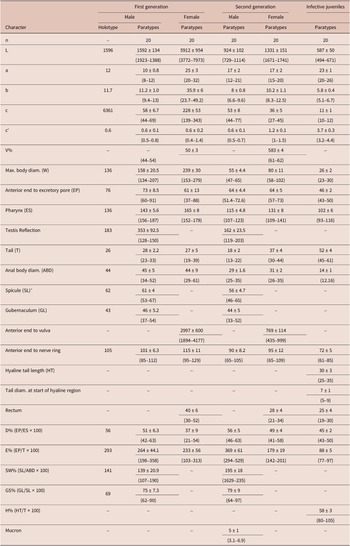
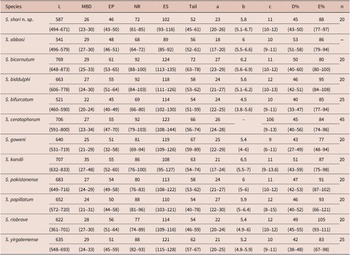
The dimensions of the holotype and paratype specimens are provided in Table 1.
Description
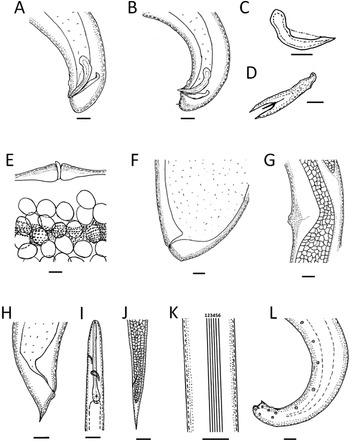
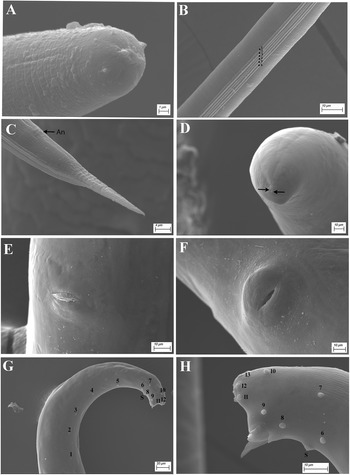
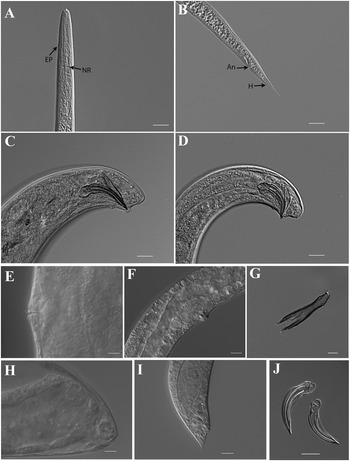
Infective juvenile. Body slender, tapering gradually from base of pharynx to anterior end and from anus to terminus. Average body length 587 μm (Table 1), second stage cuticle sheath present after emergence from the host. Body almost straight or slightly bow shaped when heat-killed. Labial region smooth, continuous with body. Exsheathed IJ with two horn-like structures on labial region, very distinct by light microscopy and SEM, four distinct cephalic papillae and a pair of pore-like amphidial apertures located laterally (Figure 2a). Cuticle with prominent striations (distinct under SEM) ca 2 μm wide at mid-body. Deirids not observed. Hemizonid visible, located just posterior to the nerve ring. Stoma closed, pharynx corpus slender, cylindrical, isthmus distinct, surrounded by nerve ring (Figure 3a). Excretory pore located anterior to midpharynx (D% = 45) (Table 1). Cardia present (Figure 3a). Bacterial vesicle usually not well seen. Rectum long, anus distinct. Lateral fields consisting of six ridges in mid-body region (i.e. seven lines) (Figure 2b). Lateral field beginning anteriorly with a cuticular depression (line) on the 1st annulus; at 17th annulus, two ridges appearing and changing to six ridges (seven lines) at excretory pore level. Close to anus, lateral field reducing to two ridges extending almost to tail tip (Figure 2c). Formula of lateral field: 2, 6, 2. Rectum long, anus distinct (Figure 3b). Tail conoid with pointed terminus. Hyaline portion occupying 58% of tail length (Figure 3b). Phasmids clearly visible only in SEM.
Morphometrics of Steinernema shori n. sp. All measurements are in μm and in the form: mean ± s.d. (range)

* Measuring along the chord
Steinernema shori n. sp. line drawings. First-generation male: (a) tail with spicules; Second-generation male: (b) tail with spicules and mucron; (c) spicule; (d) gubernaculum. First-generation female: (e) vulval region; (f) tail. Second-generation female: (g) vulval region; (h) tail. Third-stage infective juvenile: (i) anterior region with excretory pore and nerve ring; (j) tail with anus and hyaline region; (k) lateral field with ridges numbered from 1 to 6. First-generation male: (l) tail with arrangement of genital papillae. Scale bar: (a–c, e–j, l) 20 μm; (d, k) 10 μm.

Steinernema shori n. sp. SEM photographs. Infective juvenile: (a) head region showing two horn-like structures; (b) lateral field in mid-body (ridges numbered 1–6); (c) tail region with anus (An). First-generation female: (d) tail showing two minute projections (arrows); (e–f) vulval variation. First-generation male: (g) tail with genital papillae (numbered) and a single midventral papilla; (h) tail with part of genital papillae (numbered), spicules.

Steinernema shori n. sp. LM photographs. Infective juvenile: (a) excretory pore (EP) and nerve ring (NR); (b) tail with anus (AN) and hyaline region (H). First-generation male: (c) tail with spicules and gubernaculum. Second-generation male: (d) tail with spicules, gubernaculum and mucron. First-generation female: (e) vulval region. Second-generation female: (f) vulval region. First-generation male: (g) gubernaculum. First-generation female: (h) tail region. Second-generation female: (h) tail with postanal swelling. First-generation male: (j) spicules. Scale bars: (a–f) 20 μm; (g) 10 μm; (h–j) 20 μm.

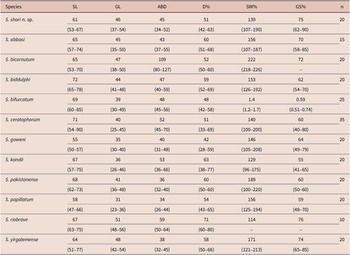
First-generation male. Body curved ventrally posteriorly, C- or J-shaped when heat-relaxed (Figure 1l). Cuticle smooth under light microscopy (Figures 3c, d), but with faint transverse striations visible under SEM (Figure 2h). Head round and continuous with body. Face with six labial and four cephalic papillae. Amphidial apertures visible with SEM, located posterior to lateral labial papillae. Stoma shallow, narrow, and usually cuticularized. Pharynx with cylindrical procorpus and slightly swollen metacorpus. Nerve ring usually surrounding isthmus or anterior part of basal bulb. Cardia prominent. Excretory pore located anterior to nerve ring (ca 51% of distance from anterior body end to base of pharynx) (Table 1). Testis monorchic, reflexed, consisting of germinal growth zone leading to seminal vesicle. Spicules paired (Figure 3j), curved, golden-brown in colour, ca 61 μm long, spicule tip sharp. Manubrium of spicule, usually elongate (manubrium length/manubrium width of 1.1:1). Calomus distinct, but short. Lamina with two internal ribs, well curved. Velum extending from calomus almost to the end of lamina. Gubernaculum arcuate, ca 75% of spicule length, boat-shaped in lateral view, swollen at middle, with prominent narrow neck (Figure 3g). Gubernaculum wings well divided and cuneus pointed (Figure 3g). Tail short and rounded, mucron absent (Figure 3c). Twenty-seven genital papillae comprising 13 pairs and a single midventral papilla located just anterior to cloacal aperatrure. Paired papillae arranged as follows: five pairs subventral precloacal, one pair lateral precloacal, two pairs adcloacal subventral, and five pairs postcloacal (two pair subdorsal and three pairs subventral terminal) (Figures 2g, h).
Second-generation male. General morphology similar to that of first-generation male, but smaller body and tail with a well-developed mucron (Figures 3d and Table 1).
First-generation female. Body usually C-shaped, variable in length and usually coiled on heat relaxation. Head rounded or slightly truncated, bearing six labial and four cephalic papillae, continuous with body contour. Mouth opening circular to slightly triangular. Stoma shallow, subtriangular anteriorly; triradiate internally. Stoma short triangular, ca 6–8 μm long and 12–19 μm wide. Excretory pore located anterior to nerve ring at about mid-point of pharynx. Cardia prominent. Gonads amphidelphic, reflexed, always containing many eggs. Vulva opening at mid-body, slightly asymmetrical and in form of a transverse slit, protruding ca 20 μm from body contour (Figure 2f), Small epiptygma rarely observed (Figure 3e). Vagina short, leading into paired uteri. Rectum narrow, anal opening distinct. Postanal swelling not observed in most of the mature females (Figure 3h). Lateral field and phasmids not observed. Tail of mature females obese, tail conoid to dome-shaped, bearing two minute projections (Figures 2d and 3h).
Second-generation female. Similar to the first generation in general morphology, but most of the morphometric measurements smaller; for example, body diameter is substantially lower than that of the first-generation females (Table 1). Vulval opening slightly posterior to mid-body (Figure 3f). Tail conical, longer than anal body diameter, with a pointed tip and without mucron. Postanal swelling distinct (Figure 3i).
Taxonomic summary
Type material. Holotype, first-generation male; paratype, infective juveniles, males, and females of first and second generations were mounted on glass slides and deposited at the EPN repository in the laboratory of entomopathogenic nematodes, division of germplasm collection and characterization, Indian Council of Agricultural Research (ICAR)-National Bureau Agricultural Insect Resources, Bengaluru, Karnataka, India.
Type host. The natural host is unknown.
Type locality. Steinernema shori n. sp. was recovered by baiting with G. mellonella larvae from soil samples collected from the rhizosphere of a Sal (Shorea robusta) plantation in Jagdalpur city (19°5′8′′N, 81°57′35′′E), Bastar District, Chhattisgarh state, India.
Etymology. The specific epithet refers to the Shorea.
Diagnosis and relationships
Steinernema shori n. sp. belongs to the “bicornutum” group because of the presence of the horn-like structures on the IJ labial region, and the new species is characterized by combination of the morphological and morphometric traits of infective juveniles and adults (Table 1). Infective juvenile is characterised by a small body length of 587 μm (494–671 μm), the position of the excretory pore at 46 μm (43–50 μm), and distance from anterior end to the nerve ring of 72 μm (61–85 μm). Excretory pore located anterior to midpharynx (D% = 45) (Table 1). Hyaline layer occupies approximately half of tail length, lateral fields with six ridges in mid-body region forming the formula 2, 6, 2 (Figure 2b). Male spicules moderately curved, with a sharp tip, golden brown in colour, manubrium elongate with a length to width ratio of 1.1:1. First-generation males lacking a mucron on the tail tip while second-generation males bearing a 5 μm (3.1–6.9 μm) mucron on the tail tip. The first-generation males are characterised by very short spicules of 61 μm (53–67 μm) in length (Table 1). Genital papillae with 13 pairs and a single midventral papilla located just anterior to cloacal aperatrure (Figures 2g, h). Both first- and second-generation females possess a moderately protruding vulva but postanal swelling observed only in second-generation females (Figure 3i).
Steinernema shori n. sp. can be distinguished from other Steinernema species by means of a combination of morphological and morphometric characteristics of males and infective juveniles. Based on these data, S. shori n. sp. belongs to the “bicornutum” clade within the Steinernematidae family. In the diagnosis, special emphasis will be given to the representatives of “bicornutum” clade that are phylogenetically closest relatives of S. shori n. sp., namely S. abbasi Elawad, Ahmad and Reid; S. biddulphi Çimen, Půža, Nermut′, Hatting, Ramakuwela and Hazir; S. bifurcatum Fayyaz, Yan, Qui, Han, Gulsher, Khanum and Javed; S. kandii Godjo, Afouda, Baimey, Couvreur, Zadji, Houssou, Bert, Willems and Decraemer; S. pakistanense Shahina, Anis, Reid, Rowe and Maqbool; and S. yirgalemense Nguyen, Tesfamariam, Gozel, Gaugler and Adams.
The first-generation males of S. shori n. sp. can be distinguished from all species from the “bicornutum” group by the presence of a total of 27 genital papillae in all individuals. Other species have a total of 23 or 25 papillae, with the exception of S. abbasi and S. goweni, where both males with 25 and 27 papillae are present. The first-generation males of S. shori n. sp. can be further distinguished from other species based on D% = 51 μm (42–63 μm), which is higher in comparison to S. bifurcatum 48 μm (42–58 μm), but lower in comparison with S. abbasi 60 μm (51–68 μm), S. biddulphi 59 μm (52–69 μm), S. kandii 63 μm (38–77 μm), S. pakistanense 60 μm (50–60 μm), and S. yirgalemense 58 μm (50–66 μm). The SW% ratio of S. shori n. sp. of 139 μm (107–190 μm) is higher in comparison to S. kandii 129 μm (96–175 μm) and lower than that of S. abbasi 156 μm (107–187 μm) and S. yirgalemense 171 μm (121–213 μm). The GS% ratio of S. shori n. sp. of 75 μm (62–90 μm) is higher in comparison to S. abbasi 70 μm (58–85 μm), S. biddulphi 62 μm (54–70 μm), S. kandii 55 μm (41–65 μm), S. pakistanense 60 μm (50–60 μm), and S. yirgalemense 74 μm (65–85 μm). Furthermore, first generation-males of S. shori n. sp. differ from those of S. abbasi, S. biddulphi, S. bifurcatum, S. kandii, S. pakistanense, and S. yirgalemense in possessing shorter spicules length of 61 μm (53–67 μm) (Table 3).
Infective juveniles (IJ) of S. shori n. sp. with a body length of 587 μm (494–671 μm), are longer those of S. abbasi and S. bifurcatum with lengths of 541 μm (510–620 μm) and 521 μm (460–590 μm), respectively, and smaller than those of S. kandii with length of 707 μm (632–833 μm), S. pakistanense (683 μm (649–716 μm)), and S. yirgalemense (635 μm (548–693 μm)). The IJs of S. shori n. sp. differ from those of S. abbasi, S. biddulphi, S. kandii, S. pakistanense, and S. yirgalemense in possessing shorter distance from anterior end to excretory pore at 46 μm (43–50 μm). The b ratio of S. shori n. sp. of 5.8 μm (5.1–6.7 μm) is greater in comparison to S. yirgalemense 5.2 μm (4.8–5.9 μm) and c ratio 11 μm (10–12 μm), which is also greater in comparison to S. yirgalemense 10 μm (9–11 μm). The IJs of S. shori n. sp. can also be distinguished from other closely related species of “bicornutum” group based on the D% of IJs of S. shori n. sp., which is also higher than in S. bifurcatum and S. yirgalemense (45 μm (43–50 μm) vs 40 μm (33–47 μm) and 42 μm (38–48 μm), respectively. The IJs of S. shori n. sp. can be distinguished from S. biddulphi, S. kandii, and S. yirgalemense by the distance from anterior end to nerve ring of 72 μm (61–85 μm) vs 92 μm (84–103 μm), 86 μm (76–100 μm), and 88 μm (82–93 μm), respectively. The esophagus of S. shori n. sp. IJs of 102 μm (93–116 μm) is longer than that of S. abbasi 89 μm (85–92 μm) yet shorter than in S. biddulphi and S. yirgalemense, with esophagus lengths of 118 μm (111–126 μm) and 121 μm (115–128 μm), respectively (Table 2).
Comparison of morphometrics of infective juveniles of Steinernema shori n. sp. with other members of bicornutum-group. All data are in μm and in the form: mean (range). Abbreviations as defined in Table 1

– Data not available.
Comparison of morphometrics of first-generation males of Steinernema shori n. sp. with other members of bicornutum-group. All the measurements are in μm and in the form: mean (range). Abbreviations as defined in Table 1

– Data not available.
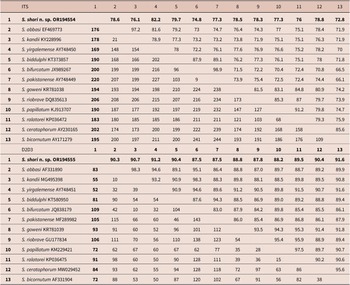
Number of base differences (below diagonal) and pairwise nucleotide similarities (above diagonal) of the ITS and D2–D3 segments of the rDNA among species of the “bicornutum” group. Data for Steinernema shori n. sp. in bold

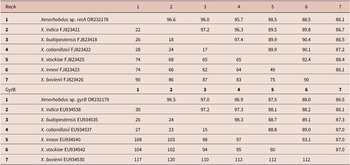
Number of base differences (below diagonal) and pairwise nucleotide similarities (above diagonal) of the recA and gyrB genes of Xenorhabdus sp. NBAIRS80 and related Xenorhabdus species

Molecular characterization and phylogenetic analysis
Steinernema shori n. sp. is characterized by the sequences of the ITS and D2–D3 regions of the rDNA (Table 4) and mitochondrial COI gene. The sequences of S. shori n. sp. differ substantially from all other species of the “bicornutum” group. The sequences of ITS and D2–D3 regions of S. shori n. sp. are most similar to those of S. yirgalemense with similarities of 82.2% and 91.2%, respectively. Phylogenetic analyses based on the ITS and D2–D3 regions clearly confirm S. shori n. sp. as a member of “bicornutum” group. The ITS tree shows S. shori n. sp. as a sister taxon to the group formed by a pair of S. abbasi and S. kandii and S. yirgalemense with a high bootstrap support (Figure 4). The analysis based on the D2–D3 region of the rDNA places S. shori n. sp. as a sister taxon of the group formed by S. abbasi, S. kandii, S. yirgalemense, S. pakistanense, S. bifurcatum and S. biddulphi (Figure 5). Unfortunately, there are not enough COI sequences of “bicornutum” group members available in the NCBI Genbank database, with the mitochondrion sequence attributed to S. abbasi (NC_039926.1) obviously belonging to S. carpocapsae. Nevertheless, the BLAST search shows that the COI sequence of S. shori n. sp. most resembles to that of S. borjomiense (LT963444) with similarity of 90.88%.
Phylogenetic relationships of Steinernema shori n. sp. and other members of the bicornutum-group of Steinernema based on analysis of ITS rDNA regions. Steinernema nepalense and S. scapterisci were used as outgroup taxa. The percentages of replicate trees in which the associated taxa clustered together in the bootstrap test (10 000 replicates) are shown next to the branches. Branch lengths indicate evolutionary distances and are expressed in the units of number of base differences per site.

Phylogenetic relationships of Steinernema shori n. sp. and other members of the bicornutum-group of Steinernema based on analysis of D2–D3 expansion segments of the 28S rDNA. Steinernema nepalense and S. scapterisci were used as outgroup taxa. The percentages of replicate trees in which the associated taxa clustered together in the bootstrap test (10 000 replicates) are shown next to the branches. Branch lengths indicate evolutionary distances and are expressed in the units of number of base differences per site.

Bacterial symbiont
The sequence analysis of the 16S rDNA, recA, and gyrB genes show that the bacterial symbiont of S. shori n. sp. differs substantially from other Xenorhabdus species (Table 5 and Figure 6) and likely belongs to a new, as yet undescribed Xenorhabdus species. According to the BLAST search, the 16S sequence of Xenorhabdus sp. NBAIRS80 is closest to Xenorhabdus thuongxuanensis, Xenorhabdus budapestensis, and Xenorhabdus indica with similarities of ca 97.5–97.7%. Pairwise distance analysis of the recA and gyrB gene sequences demonstrated that the sequences of bacterial symbiont of S. shori n. sp. are most similar to those of X. indica and X. cabanillasii with similarities of ca 96–97% (Table 5). The phylogenetic tree based on concatenated sequences of the recA and gyrB genes demonstrate that Xenorhabdus sp. from S. shori n. sp. is closely related to X. indica, X. budapestensis, and X. cabanillasii.
Phylogenetic relationships of Xenorhabdus sp. strain NBAIRS80 isolated from Steinernema shori n. sp. and other closely related species of Xenorhabdus, based on the analysis of concatenated recA and gyrB gene sequences. The percentages of replicate trees in which the associated taxa clustered together in the bootstrap test (1000 replicates) are given at each node. Branch lengths indicate evolutionary distances and are expressed in units of number of base differences per site.

Supplementary material
The supplementary material for this article can be found at http://doi.org/10.1017/S0022149X23000536.
Acknowledgements
The authors thank the Director, National Bureau of Agricultural Insect Resources, Bengaluru, for providing the research facilities and the Central Instrumentation Facility (CIF), University of Agricultural Sciences, Bangalore (UASB), GKVK, Bengaluru. We thank the National Higher Education Project (NAHEP) of the Indian Council of Agricultural Research, New Delhi, for supporting the CIF facility and Dr Nataraja Karaba N, Head of the Central Instrumentation Facility, for expert assistance with the analysis.
Financial support
This work was supported by the Indian Council of Agricultural Research (ICAR), New Delhi, ICAR-National Bureau of Agricultural Insect Resources, Bengaluru, Karnataka, and Indira Gandhi Krishi Vishwavidyalaya, Raipur, Chhattisgarh.
Competing interest
None.
Ethical standard
The authors assert that all procedures contributing to this work comply with the ethical standards of the relevant national and institutional guides on the care and use of laboratory animals.