Background
Amgueddfa Cymru – National Museum Wales has photographic collections which number over 600,000 ranging from paper and glass plate negatives to various methods of print, dating from the 1850s to present day. Photography in the museum is not held in a designated ‘photography’ department; it consists of items across all its collections, from art and botany to industrial history. They are stored throughout the museum's sites and throughout the various departments that form the museumFootnote 1. The way in which they are stored and numbered also varies between departments; some photographic collections are accessioned, some are part of archives and some are ‘just there’.Footnote 2
In 2011, the Esmée Fairbairn Foundation made a substantial gift to the museum in order to make a ‘step change’ to the historic photographic collections via a three-year project entitled Natural Images. The project started in earnest in 2012 and ended in 2015. The aim of the project was to digitize and research the finest photographic examples from the museum's collections and make them accessible to the public through exhibitions and an online database. A small project team was formed, made up of a project manager & lead curator; research officer (author of this essay); scanning officer; assistant conservation officer and a part time image licensing officer.
This article will look at the project process and examine the difficulties posed by collating metadata from a myriad of sources. The term ‘re-discovering’ has been used loosely as some collections digitized through the project were well known, while others had been sitting in drawers and cupboards for decades.
Photography at the Museum
The technical and material range of historic photography in the collections varies considerably. The museum holds examples of most photographic media, from calotypes, daguerreotypes and glass plate negatives to prints and film. Some were taken by well-known photographers and others were taken by amateurs. In the collections is a first edition of ‘The Pencil of Nature’, the first commercially published book to include photographic illustrations, by William Henry Fox Talbot, often referred to as the ‘inventor’ of modern photography. We are also fortunate to hold a large collection of photographs and associated equipment by the Welsh pioneer, John Dillwyn Llewelyn. This includes some of the earliest images taken in Wales in the 1850s. John Dillwyn Llewelyn was connected to William Henry Fox Talbot through his marriage to Fox Talbot's cousin, Emma. The two men wrote to each other about their photographic experiments and during the 1850s, the Dillwyn Llewelyn family became the focal point within Wales for a burgeoning interest in the new medium. Many members of the immediate family were enthusiastic photographers together with associates of the family such as Christopher Rice Mansel Talbot and Calvert Richard Jones, collections of whose photographs the museum also holds.
The varied ways in which departments have collected photography are determined by their purpose for collecting. For example, the archaeology department has a vast collection of excavation negatives, many taken by the museum's archaeologists, which date back to the 1900s. As these negatives support the excavation and are collected as evidence, they have been archived as supporting material rather than as objects in their own right. However, negatives and photographs acquired in the art department have been collected from a different viewpoint. They are accessioned and categorized as pieces of fine art. Even though photography has only been collected as art relatively recently, the museum has amassed fine examples from Angus McBean to Keith Arnatt and is continuing to collect in this field. Our social history and industrial history departments actively collect photography to reflect life in Wales and have built up a rich treasure trove of accessioned photographic media. This difference of purpose between departments has meant that there was, until the project, no holistic view of photography. The status of photography in other departments varies considerably; most photographs are in archives of some kind, but some have no numbers. As discussed in Uncertain images: museums and the work of photographs: ‘Indeed, many photographs are outside the patterns of intentional collection, but gather almost unnoticed through the day-to-day practice of institutions.’Footnote 3
John Dillwyn Llewelyn with his calotype camera, outside his home at Penllergare, Swansea, 1853. Courtesy of Amgueddfa Cymru – National Museum Wales.

Overview of the Project
The project began with a scoping study of the photographic collections; this was the first proper integrated evaluation of the collections and involved curatorial departments providing information on the quantity, media, condition and status of documentation relating to their photography collections. The task of the museum-wide project group, led by the project manager and lead curator was to choose a cross section of collections for digitization, bearing in mind that digitizing them would have several beneficial outcomes. It would not only be of huge interest for public engagement, preservation, exhibitions and displays, but also for commercial purposes. The work of the project group was overseen by a steering group whose role was to monitor progress against the project objectives. A strong link with the European Centre for Photographic Research at the University of South Wales was formed to provide expertise and to co-organize an accompanying series of research lectures.
Following the scoping study, collections selected for inclusion were researched, conserved and digitized. Conservation was largely undertaken at the museum's collections centre by the assistant conservation officer who managed the workflow and the documentation of treatment. Scanning took place in the project team's office by a designated scanning officer. To ensure the consistency of scans, an identical scanner to that of the photography department was procured. It was decided that two files would be produced for each photographic object. One would be a high resolution TIFF, unaltered so that all the details of the object would be retained. A JPEG copy was produced from the TIFF for uploading onto the website and public dissemination. The contrast levels of this version would be slightly altered, but it was decided that all the details of the original should be retained: this meant that surface scratches would still be visible. The job of the research officer and project curator was to collate all existing metadata and research the collections alongside the relevant curator.
The overall ambition of the project was to enhance knowledge and understanding of the historic photography collections held at the museum so that they were accessible to both internal and external users. Improving the standard of care and providing a platform for the continued development of photographic collections as a user-resource was paramount to its success.
Selecting collections
Prior to the project, digitizing photographs at the museum was mostly re-active: collections were scanned for publication, research and exhibitions. There were some exceptions, but mostly each photograph was digitized for a specific purpose/use. The historic photography project changed this approach. During its lifespan, collections were digitized out of the usual pattern and whole collections could be digitized instead of piecemeal. Collections that had sat undisturbed could now be brought to the public's attention and looked at in a new light.
Collections were selected for digitization by the project group using a ‘Selection criteria form’ created by the senior conservator of archives. The form was split into three sections covering the description of the proposed material; selection criteria for digitization; and general considerations. It provided a framework for departments when considering collections to be brought forward and ensured that there was a cross section of photographic media at the end of the project. The aim was to move away from the ‘just thereness’ of photographic collections and move towards a cohesive overview of what the museum holds and provide a legacy for future digitization and collecting. Curators could use the form to assess their photographic holdings and prioritize based on whether there was a demonstrated or potential demand for the collections and whether the selected material would serve the museum's public service and research needs. Curators were also asked to consider copyright restrictions, existing metadata, condition, aesthetic quality and any current restrictions to access. In total, there were 17 questions relating to why the material should be selected.
The proposals were circulated to project group members for discussion at the monthly meetings where they were either approved or rejected by the group. In most cases they were approved as the curators had already rigorously applied the criteria to the collection. Reasons for rejection centred on complicated copyright issues that became apparent once research had been undertaken. There were also instances where some collections had already been digitized but had not been recorded on the department's system.
One of the outcomes of this inter-departmental collaboration was that curators had the chance to learn about collections from other departments and to make new connections. Negatives and prints of the same collection were found in two different departments; both unaware that the other existed. We were able to see how the prints and negatives had deteriorated in different ways. The prints had been mounted to backing board, which had led to foxing. The negatives, largely in a good condition, had undergone silver mirroring and some had broken. The negatives revealed details that were lost in the prints and vice versa. The process enhanced the collective knowledge of the museum's photographic material and pushed it one step closer to a more uniform collections strategy.
By the end of the project, 50 separate collections had been put forward; the number in each collection varied from two to 500. Of those, 41 collections were approved for digitization; these were mainly from negatives, but also included some prints.
Dealing with Metadata
Photography material often sits lower in the hierarchy of collections and so metadata associated with it is often scantly recorded and on different platforms.Footnote 4 Departmental collection data is recorded on a selection of Excel spreadsheets, Word documents, FileMaker Pro databases and on the museum's Micromusée Collection Management System (CMS). The challenge was to retrieve all the data so that it fit neatly into one system. As the museum was (and still is) working towards a centralized digital asset library that will draw data from various sources, it was decided that data mined during the project would be saved into one spreadsheet, which would then be ingested into the core database. Information on this spreadsheet would also be used to upload onto the museum's website. This system was not ideal as straightforward exports of data were not possible. Instead data had to be copied and pasted. As discussed in Linked data for libraries, archives and museums: ‘The implementation of successive technologies over decades has scattered the metadata of our libraries, archives and museums across multiple databases, spreadsheet and even unstructured word processing documents.’Footnote 5 When systems do not ‘talk’ to each other and when information is contained in many different sources, difficulties arise in saving the information in one place. Using one Excel spreadsheet to hold all the project data was cumbersome and error prone. Had there been a suitable database in place that could have held the data in a more accessible way, less time would have been spent on this lengthy process; but a lesson was learned for future digitization projects.
The amount of metadata varied between collections, but it was important that some already existed to provide context for the collection. The job of the project team was to retrieve the information – sometimes in written form – and ensure that it provided enough interpretation for public engagement through the museum's website. With some of the collections, further research was required by the project team and curators. The retrieval and creation of metadata was time consuming and, perhaps, an additional question regarding the accessibility of metadata should have been added to the selection criteria form so that this could have been addressed at an earlier stage.
Case Study: Notable Trees of Wales and England
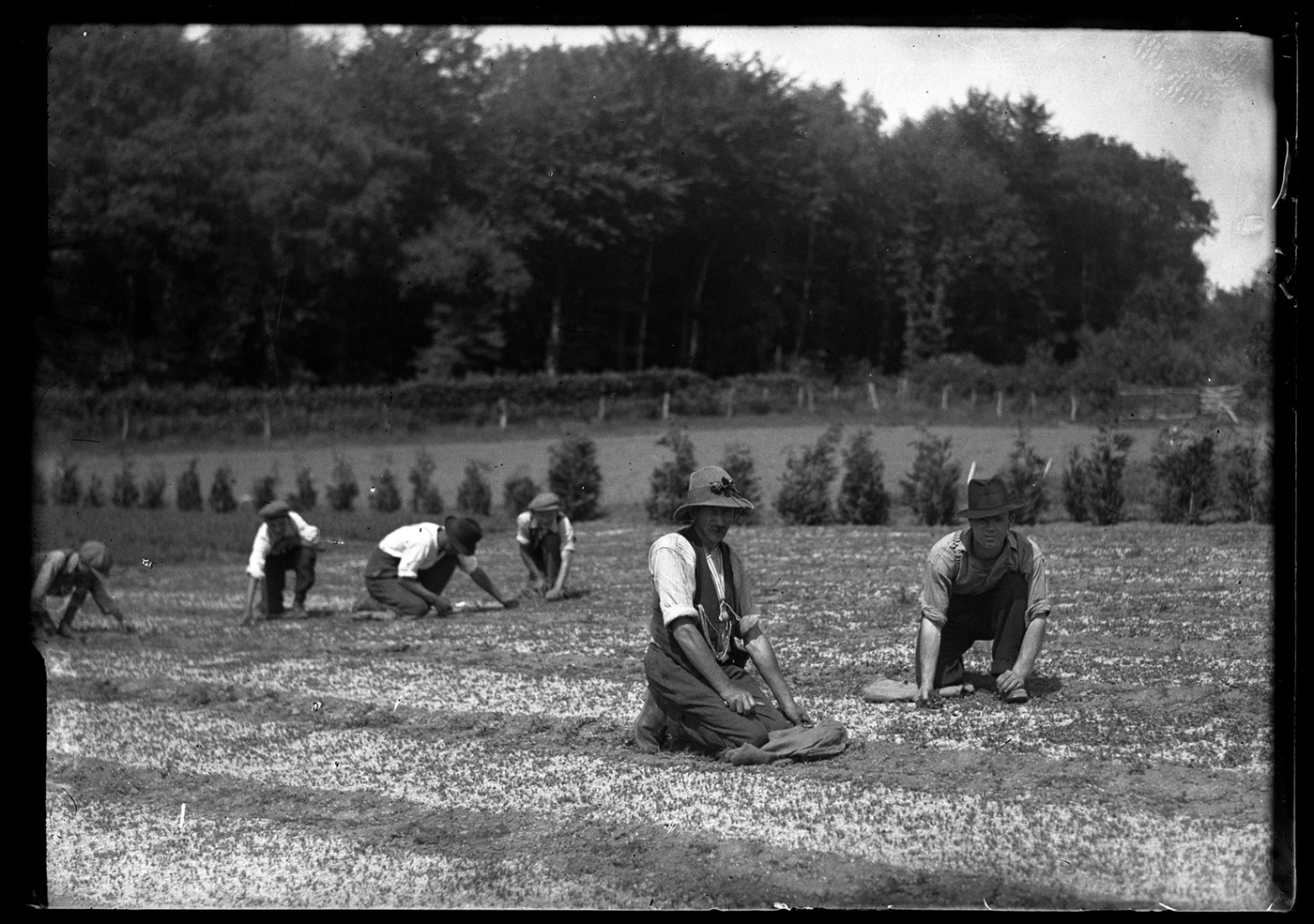
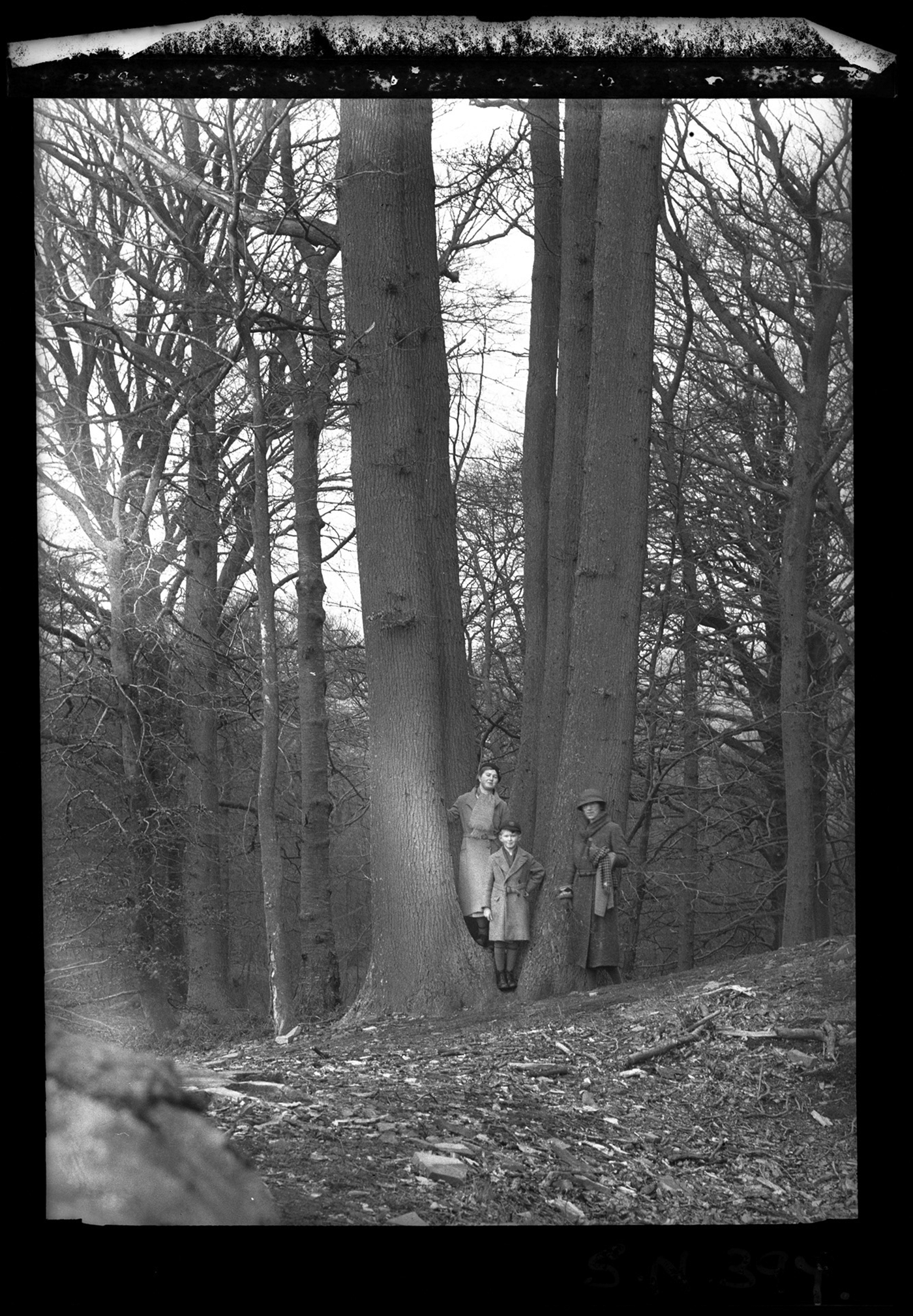
The museum owns a collection of glass plate negatives and lantern slides of historical images of trees from around the UK, dating from 1890 to the mid-1930s. The collection was submitted as a candidate for digitization so that images could be compared to modern day examples of the same trees which, in some cases, are still alive today. The collection holds very important data about the size and height of the tree at the time the photograph was taken, and also provides information relating to the type of habitat. As this type of information is rarely recorded, digitization of the negatives meant that it could be shared more easily and would be valuable to not only the museum's own botanical records, but to tree hunters and other institutions. The collection met all the selection criteria for digitization and was passed by the project group. It was noted that there was sufficient documentation available for good metadata but that further research would be beneficial.
To engage with potential users of the tree photographs the research officer and botanical conservator attended an ancient tree hunt to meet with organizations and individuals. The aim was to gather knowledge and provide information on the forthcoming digitization and potential research of the collection. Networking at these events enabled us to begin a dialogue with tree specialists with the potential for further collaboration.
Men weeding Norway Spruce seedlings, Fairoak nursery, Monmouthshire, 1934, photograph by H.A. Hyde. Courtesy of Amgueddfa Cymru – National Museum Wales.
Five stemmed pedunculate oak tree with three figures, Ruperra, 1935, photograph by H.A. Hyde. Courtesy of Amgueddfa Cymru – National Museum Wales.
The collection had been documented on the museum's CMS database with varying amounts of metadata. On the surface, the collection looked straightforward. However, as we found on numerous occasions during the project, there were discrepancies and numbering issues. At some point in the past, lantern slides had been created from some of the negatives and the same accession number as the negative had been added to the lantern slide. On other occasions, negatives and duplicate lantern slides were found with an additional ‘a’ and ‘b’ after the alpha numeric accession. In some cases only the lantern slide was found. When looking at collections decades on, it is difficult to ascertain whether the lantern slide is the original object, or whether there is also a negative. Original accession registers often had to be consulted to ensure that the correct number was used. The information on the CMS was incomplete and, as the collection had been added to the database sporadically, data was often captured in different metadata fields, causing problems when exporting it. Creating a manageable list took time, but the result was a cohesive interpretable collection of tree images. It is a resource that would not have been available without digitization.
Dissemination
The culmination of the project was a three month exhibition held at National Museum Cardiff beginning in January 2015 entitled ‘Historic Photography Uncovered’, which showcased a selection of the material that had been documented and digitized as part of the project. Presented in three sections, the first covered early photography in Wales, exploring the familial links between Henry Fox Talbot and John Dillwyn Llewelyn and his family. The central area showed a cross section of collections and included supporting objects. The final section explained the evolution of photographic processes, focusing on the role of silver chemistry. Both originals and digitized prints from negatives were included together with photographic equipment and image projections. There were also two terminals containing a database of images produced by the project. Accompanying the exhibition was a series of talks and photography-based family workshops where adults and children could have a go at creating their own images using historic photographic processes and to learn more about the history of the medium.
An exhibition was also held at Oriel y Parc, Pembrokeshire, a partnership between the museum and the Pembrokeshire Coast National Park Authority. The exhibition, which opened in October 2014, focused on photographs of the Pembrokeshire landscape and work by the artists Graham Sutherland and Edward Morland Lewis, who both worked in Wales. A smaller exhibition was held at the National Slate Museum, Llanberis, concentrating on images relevant to the slate industry.
A simple online database was designed by the project team and the museum's new media department.Footnote 6 As time did not permit for all the collections to be uploaded prior to the project's end date, it contains highlights of the collection. With all digitization projects there is a risk that once the project ends, any associated data often ends with it. Fortunately, as the storage of digitized assets is currently being addressed at the museum, the digital files will be ingested into the new system.
Throughout the project, team members participated in conservation conferences, programmes of formal and informal talks and social media posts. A series of research lectures delivered by international experts was also organized in conjunction with the European Centre for Photographic Research at the University of South Wales. Topics varied from Victorian women's albums and scrapbooks to photographs from company archives. Audiences were drawn from the higher and further education sectors, photography specialists and people with a general interest in the subject. The partnership with the university increased the awareness of the photographic collections at the museum and brought valuable additional expertise. This approach to dissemination enabled formerly inaccessible collections to be seen by a wide range of people through different avenues.
Screenshot of Historic Photography database. Courtesy of Amgueddfa Cymru – National Museum Wales.
Conclusion
When the project ended in April 2015, 10,000 images had been digitized and headway had been made into an important collection that had, until then, not been looked at as a whole. The project shed light on collections hidden for years and provided a platform for them to be shared by the public. The collective approach to looking at the museum's existing collections has now provided a foundation for future acquisitions and development strategies for photography. It has highlighted how scattered and incomplete metadata is the biggest barrier to opening up these collections. It has also focused attention on the need for more purpose built storage facilities and the need to re-look at preservation techniques. The museum has a larger bank of images to use in exhibitions and publications, and the presence of an online database has given easy access to external users and increased commercial interest. The potential of the museum's historic photography collections has certainly been exposed and the need for further dissemination through displays and research initiatives is clear from the public interest the lectures and the exhibitions received. The recent decision to create a gallery dedicated to photography at National Museum Cardiff will address this need and encourage future collecting initiatives. Three years is not enough time to fully appreciate and address the needs of photography in the museum, but the project did achieve the ‘step change’ that was desperately needed and provided a legacy to ensure that photography collections are no longer ‘just there’.