It is now a received idea in anthropology and other empirical social sciences that gender is constructed at the convergence and through the mutual interaction of multiple social, cultural, political, and economic dynamics that vary across time and space and that operate on many different scales. In turn, gender informs a host of other ways in which people locate themselves in society and culture. At the same time, the historical contingency of gender means that the dynamics that shape gender, such as sexuality, reproduction, kinship, alliance, the economy, politics, and morality, can assume different levels of importance in different social and historical contexts. For example, if we believe Michel Foucault (Reference Foucault and Hurley1990), the transformation of alliance into sexuality over the course of the nineteenth century in Western societies realigned the relative importance of these two categories, and therefore the constitution of gender.
In the last few decades, one transformation that has affected the very constitution of personhood in all its manifestations, including gender, is the emergence of new forms of regulatory regimes that are commonly described as “neoliberal.” At the macro level, neoliberalism is classically described as being founded on principles of “deregulation, privatization, and withdrawal of the state from many areas of social provision” (Harvey Reference Harvey2005: 3), at least where the state was involved in provisioning for the citizenry in the first place. More precisely, neoliberalism involves forms of regulation that are different from those extant in late capitalism, particularly by the state, which must intervene to ensure that aspects of life that were hitherto not regulated by the market (e.g., education, healthcare, the environment) become so. At the same time, in contrast to classical economic liberalism, which rests on a faith in the power of laissez-faire policies, neoliberalism must be actively constructed (Mirowski Reference Mirowski, Mirowski and Plehwe2009: 434–45). The classic example is the structural adjustment programs that international bodies such as the World Bank and IMF impose on countries in the Global South.
Neoliberalism comes in many shapes and configurations (Ferguson Reference Ferguson2010), but one feature that all its incarnations share is that they have fundamentally transformed people's lives. As a particular style of governmentality, which thus defines conditions of possibility for acting and thinking (Foucault Reference Foucault, Burchell, Gordon and Miller1991), neoliberalism is predicated on the insecurity and precarity of the individual subject (Bourdieu Reference Bourdieu and Wacquant2003: 29). The neoliberal subject is a self-reliant, sovereign, and entrepreneurial entity who must navigate networks of interpersonal connections, and on whose shoulders rests the responsibility of both success and failure (Gershon Reference Gershon2011; Gershon and Alexy Reference Gershon and Alexy2011; McGuigan Reference McGuigan2014; Rose and Miller Reference Rose and Miller2008). The mutual interaction of neoliberalism's macroscopic manifestations, such as its transformation of economic structures, and its microscopic manifestations, such as its effects on minds and bodies, figures prominently in the analysis we will develop here. The practices of the people we worked with in various ethnographic contexts echo a theoretical construct of the neoliberal subject, albeit in different configurations. People evaluate their own and each other's actions and dispositions in reference to the ideals of neoliberalism.
Here we focus on how the gendering of men has been reconfigured in these transformations. Of course, masculinity comes in many different forms and gender inequalities are not a matter of just men dominating women, but also of structures of domination within genders. This is the basic insight underlying sociologist R. W. Connell's influential concept of “hegemonic masculinity” (Connell Reference Connell1995), which rests on “the combination of the plurality of masculinities and the hierarchy of masculinities” (Connell and Messerschmidt Reference Connell and Messerschmidt2005: 846). We agree with the uncontroversial recognition that masculinity is diverse; where we part company with Connell is in the claim that masculinities are organized in clearly identifiable hierarchies, with a “hegemonic” masculinity dominating women and other men with the “complicity” of other masculinities.
What we will argue instead is that forms of masculinity that appear to be dominant in certain ways are in fact precarious in other ways, and that forms of masculinity that are not particularly impressive at first glance (e.g., in their assertion of power) can fare better than more prominent forms of masculinity in other realms, such as economic success, an insight that echoes what many ethnographies have documented without making its implications for the theory of hegemonic masculinity explicit (Alter Reference Alter1992; Cornwall and Lindisfarne Reference Cornwall and Lindisfarne1994; Gutmann Reference Gutmann1997; Reference Gutmann2007; Inhorn and Wentzell Reference Inhorn and Wentzell2011; King and Stone Reference King and Stone2010). Furthermore, different idealized forms of masculinity may operate at the same time in the same society, as has been historically the case in China, for example, where the masculine ideals were organized in terms of a dyad between cultural attainment (wen) and martial prowess (wu), neither of which was considered categorically superior to the other (Louie Reference Louie2014).
If this is the case, then, the label “hegemonic” is inappropriate. In Antonio Gramsci's writings, hegemony is embedded in institutions of civil society such as the mass media, the educational system, the family, and the church, and works in tandem with the coercive power of state institutions (Crehan Reference Crehan2002: 165–77). In this respect, our analysis returns to Gramsci's original formulation of the workings of hegemony as the power exerted by institutions that, on the surface, have little to do with political power yet work together with it, although the institutions in question are today of a different quality from those that Gramsci was concerned with. No particular masculinity emerges as hegemonic; rather it is the institutions of the neoliberal order that are hegemonic. Here we will explore how neoliberalism produces new forms of masculinity in different societies and in different institutions and explain how these new forms are embedded in particular characteristics of the neoliberal moment.
The difference in approaches is based on different understandings of the concept of masculinity. While Connell, and the many other social scientists who have since adopted uncritically the hegemonic masculinity model, see masculinity as a coherent entity, albeit a plural one, we view masculinity as a production emerging out of the social, economic, and ideological dynamics that are woven into it. To capture these dynamics, we develop an approach to masculinity as embedded in socio-economic contexts; scalar, in that masculinity is informed by the global, the local, and their complex intersections; relational, for being constructed in the interstices of people and projects; and temporally situated.
One institution that is deeply entangled in the production of masculinity is professional sport. In most societies of the world, sport as we have known it since the middle of the nineteenth century has traditionally been primarily a male preserve, one in which men compete, socialize, and bond with one another, and exclude others, primarily women.Footnote 1 Masculinity became ingrained in sport as it emerged in all-boys’ schools and became associated with such homosocial institutions as the military and men's clubs.
In the late nineteenth and early twentieth centuries, sport became a jealously guarded gendered field in the urban centers of Western societies, in which men could engage in ritualized forms of physical violence, which, according to accounts inspired by Norbert Elias (Dunning Reference Dunning, Elias and Dunning1986), the nuclearization of the family and the increasing importance of middle-class white-collar labor had rendered largely unacceptable. But sports in many other cultural contexts with different histories are also deeply engrained in a masculinist and patriarchal ideology.Footnote 2 On the global scene, the gendered nature of sport is often naturalized by appeals to conservative gender ideologies and enforced by institutional forms of exclusion (Besnier, Brownell, and Carter Reference Besnier, Brownell and Carter2017: 127–57). For example, from their invention in 1896 until the 1960s, modern Olympic Games excluded women or relegated them to marginal sports like figure skating or golf.Footnote 3 Despite considerable change, women athletes to this day are featured on prime-time television only during international championships and the Olympic Games. Marketed as men's culture and as a hypermasculine spectacle for global consumption (Burstyn Reference Burstyn1999), sport in its industrial forms epitomize masculinity.
While men have long jealously defended it as a male preserve in most societies, for most of its history sport has been only one of many areas where men have enacted their masculinity, one of the pieces on the checkerboard of domains in which men asserted themselves as men and maintained gender hierarchies. Until recently, for those who expressed an interest in it as either an active participant or spectator, sport was play, albeit serious. For the very few who excelled in it and sought to pursue it as a breadwinning mechanism, it represented a form of blue-collar labor that could bring a certain amount of glory, if not material returns, as long as the body's vigor lasted.
In the last two decades of the last millennium, things changed. In many regions of the Global South (as well as in many underprivileged areas in the Global North), sport has become increasingly important in defining masculinity, eclipsing other domains. It has become a focus of sustained attention, a way of enacting productive masculinity that competes with other gendered forms. Sport careers, which often require migrating to the Global North, have become highly desirable as a way out of poverty. While very few actually succeed in effectively harnessing sport as a way to reclaim both masculinity and economic productivity, in some societies of the Global South almost every boy or young man is dragged into the same regime of hope, even those who, for many different structural reasons, have no chance of succeeding.
These changes have taken place against the background of the radical restructuring of economic and social life in the Global South since the 1980s. For many young men, other than the privileged, access to hitherto dependable ways of defining and showcasing masculinity, such as marriage, reproduction, politics, exchange, or economic productivity, has been destabilized by the economic downturns and pauperization that have accompanied global neoliberal politics, such as structural adjustment and austerity measures (Cole and Durham Reference Cole, Durham, Cole and Durham2007; Di Nunzio Reference Di Nunzio2017; Mains Reference Mains2007; Weiss Reference Weiss2009). Of all social groups, young men in many societies have been most affected by the new labor conditions that the neoliberal turn has created (Cornwall Reference Cornwall, Cornwall, Karioris and Lindisfarne2016; Perry Reference Perry2005; Yang Reference Yang2010).Footnote 4
Young men find themselves unable to provide for families and communities, as is expected of them. At the same time, many long for the attractions of global belonging, consumer goods, and freedom from gerontocratic and patronage-driven socio-economic orders (Comaroff and Comaroff Reference Comaroff and Comaroff2000; Ferguson Reference Ferguson1999). They bring upon themselves the opprobrium of members of older generations, who find it more expedient to blame the deterioration of society on young men's laziness, lack of cooperation, and bad manners than on structural factors. In many societies, “waiting” or “boredom” is the dreaded fate of young men (Jeffrey Reference Jeffrey2010; Masquelier Reference Masquelier2013; O'Neill Reference O'Neill2014; Schielke Reference Schielke2008), as is immobility in contexts where migrating is a sine qua non for achieving adulthood. In response, they develop entrepreneurial livelihood strategies, including petty trade, informal work, and scamming (Comaroff and Comaroff Reference Comaroff and Comaroff2000; Newell Reference Newell2012; Ndjio Reference Ndjio2008). Sport figures among these strategies, but it occupies a particularly privileged place because of its glamour, celebration of masculinity, potential as a conduit to mobility, and promises of millennial returns.
It is the entanglements of the personal experience of gender with the worldwide neoliberal turn via the business of labor and leisure that we seek to unravel here in a comparison of three ethnographies of sport in the Global South. The first concerns association football (hereafter “football”) in Anglophone Southwest Cameroon, where Uroš Kovač conducted a year of fieldwork, supplemented by brief research sojourns among Cameroonian migrant footballers in Eastern Europe. The second subproject, conducted primarily by Daniel Guinness since 2009, focuses on Fijian rugby union (hereafter “rugby”) players in various locations, including Fiji, Australia, New Zealand, and France. The focus of the third subproject is “traditional” wrestling in Dakar, Senegal, based on Mark Hann's year-long fieldwork, which also concerned football in the same location. The subprojects were carried out collaboratively and comparatively under the umbrella of European Research Council-funded GLOBALSPORT project (2012–2017), which Niko Besnier directed, and were inspired by previous research conducted among Tongan rugby players in Japan by Besnier, who also took part in the Fiji fieldwork. The project identified masculinity, mobility, and precarity as overarching themes in understanding how the sport industries are shaping lives in the Global South. Each researcher then focused on how the specificities of their respective field site configured these themes. The team then compared these specificities and noticed striking similarities in otherwise dramatically divergent contexts (Besnier and Guinness Reference Besnier, Guinness, Lowe and Schneggn.d.).
The three cases focus on different kinds of sport, the first being the most globalized of all sports, the second global but with a more restricted distribution, and the third a sport of great national importance but no significant transnational visibility. The first two are the context of significant transnational migration, while the third involves rural-urban migrations within the confines of the nation-state. In all three countries, sport has been shaped by colonialism and its civilizing mission, but has also undergone major transformations and today is the object of considerable passion. Sport in all three cases is embedded in the dynamics of neoliberalism, though on different scales and in different time frames.
THE GLOBAL BUSINESS OF SPORT IN THE NEOLIBERAL MOMENT
Starting in the 1980s, the global business of sport underwent radical transformations, associated with its increasing mediatization, corporatization, and commoditization, processes that are deeply anchored in neoliberal ideologies of deregulation and free enterprise (e.g., Andrews and Silk Reference Andrews and Silk2012; Miller et al. Reference Miller, Lawrence, McKay and Rowe1999; Scherer and Jackson Reference Scherer and Jackson2010). While until then many sport clubs in the Global North were financed and managed by local elites, they were now being turned into corporations, branded for mass appeal, run by men in suits descended from elsewhere, and in some recent examples owned by oligarchs and tycoons. With these changes came a vertiginous increase in top-level athletes’ salaries and transfer fees in the most popular sports, and the gradual merging of sport as entertainment and sport as labor.
Television and corporate sponsorship have played a pivotal role in these transformations (Boyle and Haynes Reference Boyle and Haynes2009). In most of the world, from the early 1980s, neoliberal policies led to the deregulation of television broadcasting, creating cutthroat competition among privately owned channels, especially pay-TV platforms. This gave increasing visibility on television screens to programming that was (theoretically) cheapest to produce, including reality shows and sport, but also brought a dramatic increase in the rights that channels were willing to pay to broadcast major sporting events.
The most ubiquitous global sport, football, is a prime illustration of how the neoliberal reform of television has played a crucial role in globalizing and commercializing sport. In 1992, for example, Rupert Murdoch's BSkyB signed exclusive rights with the then-newly formed English Premier League for £304M, renewed for the 2016–17 season for £5.14B (Gibson Reference Gibson2015), cementing its control of the market and spearheading a new era in which the sport governing bodies, teams, and clubs became subservient to the interests of television corporations. FIFA (Fédération internationale de football association), the sport's world governing body, also profited greatly from television rights (Alegi Reference Alegi2010: 105). The corruption scandals that finally erupted in 2015–16 were precisely the outcome of the paradoxes inherent in a supra-national entity with powers and budgets that rival those of a major state being run as a business by a tight-knit group of elderly men. The infusion of television into football also led to sponsorship deals, as the multinational companies recognized the huge exposure potential of being associated with elite football (Law, Harvey, and Kemp Reference Law, Harvey and Kemp2002; Williams Reference Williams1994).
Another key change took place in the 1990s: the advent of satellite broadcasting enabled TV coverage to reach the remotest corners of the world. In sub-Saharan Africa, for example, television-set ownership grew exponentially and was no longer the privilege of urban elites (Akyeampong and Ambler Reference Akyeampong and Ambler2002: 15). Transnational television broadcasting blossomed, breaking down governmental monopolies and boosting the number of entertainment and sports programs at the expense of news and educational programs. Everywhere, satellite television broadcasts of sport events have seeped deeply into the everyday lives of ordinary people. For example, in rural Fiji, where rugby is the dominant sport, boys today pepper their talk with expressions they hear during the rugby games they watch on television, such as “slow motion” and “instant replay” (Brison Reference Brison2007: 126). While Besnier conducted fieldwork among Tongan migrant rugby players and their families in Japan (Besnier Reference Besnier2012), a routine Sunday after-church activity was watching on satellite television rugby games taking place in Australia featuring teams staffed by many Tongans and other Pacific Islanders.
The spread of satellite TV provided a new way in which sport became a single global system, but also one that accentuated global inequalities. Satellite broadcasting enabled some players, clubs, and competitions to gain followers around the world, creating a new global marketplace where local sports teams were in an unequal competition with well-resourced clubs of international visibility. For example, many football fans in Africa have shifted their attention from local football stadiums to matches in the English Premier League and other prestigious European competitions, which they watch in bars equipped with televisions sets. European football was already well known on the continent, but satellite television now offered fans a chance to view African elite footballers playing in Europe. For many spectators, European football has become more attractive than local competitions (Akindes Reference Akindes2011; Hann Reference Hann2017).
Corporate sponsors and television networks now dictate the organization of sporting events. For example, the World Cup football finals in Mexico in 1986 and the United States in 1994 saw many matches played during the hottest time of the day in order to provide prime-time live football on European television, despite the discomfort this timing created for players. Television has even forced changes in the rulebooks of some sports, transforming sporting events into television events (Barnett Reference Barnett1990; Whannel Reference Whannel1992). In the digital age, the value of live sports allows television to remain a key player in the media landscape, as sporting events capture particular audiences (largely young men) that are valuable to sponsors as potential consumers. These dynamics have deepened even further the interdependence of sponsors, television broadcasters, and sports administrators.
Competition for the public's attention has resulted in a shift to the “spectacular” in elite sport. For example, sport has become entangled with other forms of entertainment such as halftime shows featuring pop stars and rapid-fire highlight clips in television ads (figure 1). In contact sports such as rugby and American football, there are now more high-impact action and crowd-pleasing, photogenic violent offensive strategies, with now well-documented and well-publicized consequences for the players’ health (e.g., Garraway et al. Reference Garraway, Lee, Hutton, Russell and Macleod2000).
A “Super” rugby match in Buenos Aires in 2017, featuring mascots and cheerleaders, as well as fireworks, elements of the spectacular that have recently emerged in Argentine rugby, which was previously a bastion of high-class indifference for such crowd-pleasing displays. (Photo by Sebastián Fuentes.)

NEOLIBERAL BIOPOWER: THE ATHLETE'S BODY
Athletes have also been repackaged in this neoliberal world, starting with their bodies. For example, professional rugby players’ average body mass index (BMI) between 1975 and 2000 increased three times more than over the seventy-five years before (Olds Reference Olds2001), and the weight, height, and the BMI of elite French rugby players all increased significantly between 1998 and 2008 (Sedeaud et al. Reference Sedeaud, Vidalin, Tafflet, Marc and Toussaint2013). These effects are the product of a complex array of factors, including the increasing surveillance over athletes’ diets, exercise regimes, and other minute aspects of their everyday lives, as well as sport recruiters’ increasingly global searches for talent, which has widened the pool of potential recruits, as we will discuss presently.
Sports and professional sport franchises compete not only by pursuing players with exceptional physical attributes to win games and attract fans, but also by demanding more of them, and neoliberal sport governance has fundamentally altered what it means to be an elite athlete. A few individuals earn extraordinarily high salaries, while the majority of athletes have to content themselves with precarious employment for low or no wages (Besnier and Brownell Reference Besnier and Brownell2012). Perhaps more so than in other industries, the bodily capital and “soft skills” of athletes do not easily transfer to other forms of work, meaning that many former athletes, who often lack educational capital, suffer a dramatic decrease in socio-economic status and wellbeing in their post-professional lives (Kanemasu and Molnar Reference Kanemasu and Molnar2014).
Succeeding in the neoliberal labor market requires flexibility to pursue work opportunities as they arise and being able to adapt one's very being to these opportunities (Duchêne and Heller Reference Duchêne and Heller2012; Gershon Reference Gershon2011; Reference Gershon2017; Gershon and Alexy Reference Gershon and Alexy2011; Urciuoli Reference Urciuoli2008). In the professional sport labor market, workers must radically change their bodies, their prime asset, and how they use them, as well as their eating and sleeping patterns, and how and when they socialize. Becoming a professional athlete quickly dissolves the distinctions between work, private life, and the self. The fact that athletes are in the limelight, adulated by fans, media, and friends, masks the symbolic and embodied violence inherent to the profession, evident in the disposability of workers, the effects of labor on their bodies, and their abbreviated careers. At the top, high salaries and fame go hand-in-hand with invasive surveillance, perhaps most obviously in the intense monitoring and harsh sanctions for the use of performance-enhancing drugs, including substances that others may use legally (Henne Reference Henne2015).
In professional rugby, for example, athletes today are subject to the daily scrutiny of their bodies by their employers in ways that were not present before the 1990s (Guinness Reference Guinness2014). In one typical professional club in Australia in which Daniel Guinness was both an athlete and an ethnographer, the first formal engagement for newly contracted players is a series of medical screenings. A physiotherapist tests joints for weaknesses and muscles for flexibility. The physician examines blood work and medical histories for signs of underlying problems. These tests mark the first moment in an ongoing medicalization of the players’ bodies and rationalization of this medicalization. Every morning, players must weigh in, drop off a urine sample, and report pain, tiredness, and sleeping problems. They ingest things they do not know the contents of and are told to play (or not) regardless of their own self-awareness. The constant monitoring of the players’ bodies ensures that they comply with their coaches’ projects.
Young and ambitious players accept this authority and internalize its biopower through the training regime and its biomedical foundation, which instill in them a neoliberal spirit of entrepreneurship through which they interpret success and failure as the product of dedication and talent or lack thereof, under the guise of “professionalism.” Athletes embody this professionalism in all moments of their lives, whether at work or not. Thus emerges the paradox of elite sportsmen being adulated as the embodiment of masculine prowess while at the same time being expected to be docile and compliant workers if they want to keep their jobs.Footnote 5 While the techniques of body surveillance are most intense in professional clubs, the practices and approaches that characterize professional sports are also found at various locations within the global sports industry, circulating along with coaches, training methods, and mobile professional athletes.
ATHLETE MIGRATIONS
Another effect of the neoliberalization of the sport industries has been a dramatic rise in athletes’ geographical mobility. While elite athletes have been professional nomads since modern sports were invented in the mid-nineteenth century, until the 1990s their mobility was largely confined to exchanges between neighboring countries (McGovern Reference McGovern2002; Taylor Reference Taylor2006), and playing for the same team during one's entire career was not unusual. At the turn of the millennium, these patterns took on an entirely new shape (Carter Reference Carter2008; Klein Reference Klein2014; Lanfranchi and Taylor Reference Lanfranchi and Taylor2001). As typical neoliberal workers (Gershon Reference Gershon2017), today's athletes are expected to be flexible and mobile. The corporatization of sport has raised the stakes of hiring athletes, and recruiters were now going further afield into more “risky” territory in the Global South in search of talent, a project that is often fueled by explicitly racialized discourses about bodies’ qualities, of which we heard many examples in our interactions with coaches, recruiters, managers, and other decision-makers.
At the same time, deregulated and privatized satellite television carries glamorous sport images to global audiences. For example, television coverage of the African Cup of Nations has led to its football players being exposed to foreign coaches, scouts, and agents looking for the next prodigious athlete. For less wealthy clubs in the Global North, the possibility of recruiting a promising young player who could be trained at little expense and “sold” at considerable profit represents a way to generate income (football clubs charge a “transfer fee” when a player moves to another club). At the same time, international legal developments such as the Bosman Ruling (1995), which lifted restrictions on athletes’ mobility within the European Union, and the Cotonou Agreement (2000, revised in 2010), signed by the EU and countries in West Africa, the Caribbean, and the Pacific, eased the transnational mobility of skilled workers, at least in theory. Thus the corporatization of sport, the scramble for cheap talent, the deregulation of labor markets, and the global reach of satellite television together have converged in the making of “imaginaries of exile” (Piot Reference Piot2010: 4) through sport in the Global South.
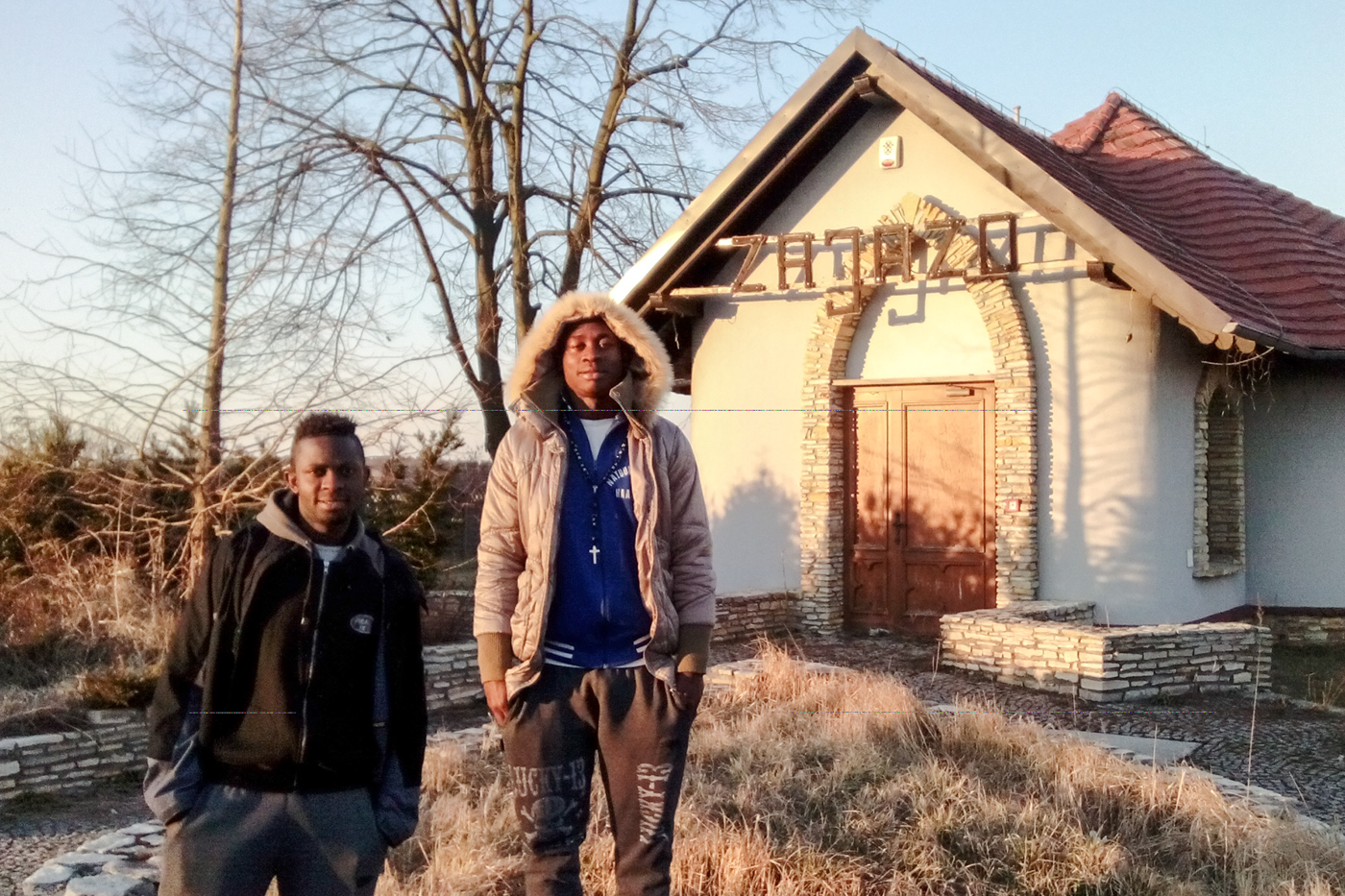
In European leagues, the number of players from African countries rose from 350 to around one thousand between 1996 and 2000 (Alegi Reference Alegi2010: 98). By 2003, footballers from Africa comprised almost one-fifth of all foreign players in EU clubs (Poli Reference Poli2006: 398). But these numbers only include players who have been officially recruited from clubs in Africa and not those who have advanced through other channels, such as the many young men who have been migrating unofficially in hope of landing a contract in lower-level leagues, often on the European periphery (Banaś Reference Banaś2016; see figure 2). The Paris-based NGO Culture foot solidaire estimates that in France alone there are seven thousand undocumented migrants from African countries who originally migrated to play football, but were either scammed or failed to land a contract (Esson Reference Esson2015b: 513).
Two Cameroonian football players in front of the abandoned tavern that they share as living quarters with three Brazilians while playing for a fourth-division club, Southern Poland, winter 2015. (Photo by Paweł Banaś.)
With these developments came nationalist anxieties that these bodies’ athletic prowess provokes in post-industrial countries, which are regularly documented in the press in the form of stories about spectators throwing bananas at racialized athletes and managers and club owners shooting their mouths off about the unfortunate preponderance of non-white athletes in sport squads. These anxieties are also evident in the protectionist regulations that national and supranational bodies governing sports continue to implement to control the influx of non-local athletes. For example, the English Premier League requires teams to include at least eight “homegrown” players, while France's Ligue nationale de rugby stipulates that at least 40 percent of the players in the country's elite squads must have spent three years in a French sport academy before they turned twenty-one (a requirement that is being further strengthened at the time of writing). These regulations give rise to complex strategies of citizenship swapping and naturalization fast-tracking (Besnier, Brownell, and Carter Reference Besnier, Brownell and Carter2017: 219–22), as well as recruitment of increasingly younger players in the Global South to feed them through the academy system so they qualify as “local.” The resulting tug-of-war involving state laws, sport governing bodies, teams and clubs, and players illustrates the well-documented fact that the hegemony of neoliberalism is never absolute (Mirowski Reference Mirowski, Mirowski and Plehwe2009).
Athletes’ migratory trajectories are often complex and unpredictable. For example, while rugby players from Fiji, Tonga, and Samoa all aspire to play in the top leagues of the powerhouses of the sport (New Zealand, Australia, England, France), Japan is in fact the first (and often only) migratory destination for many, despite the low profiles of the sport in Japan and Japan in the rugby world (Besnier Reference Besnier2012). Pacific Island players are also found in such locations as Romania and Sri Lanka, on the margins of the sport. In football, the prime European leagues rarely buy players directly from African clubs; instead, many players move to lower-division clubs in Europe, where many remain for the duration of their careers, or along circuitous transnational trajectories. This illustrates a recent development in the transnational migration of athletes, wherein their mobility is no longer confined to predictable colonial routes, but encompasses the entire planet.
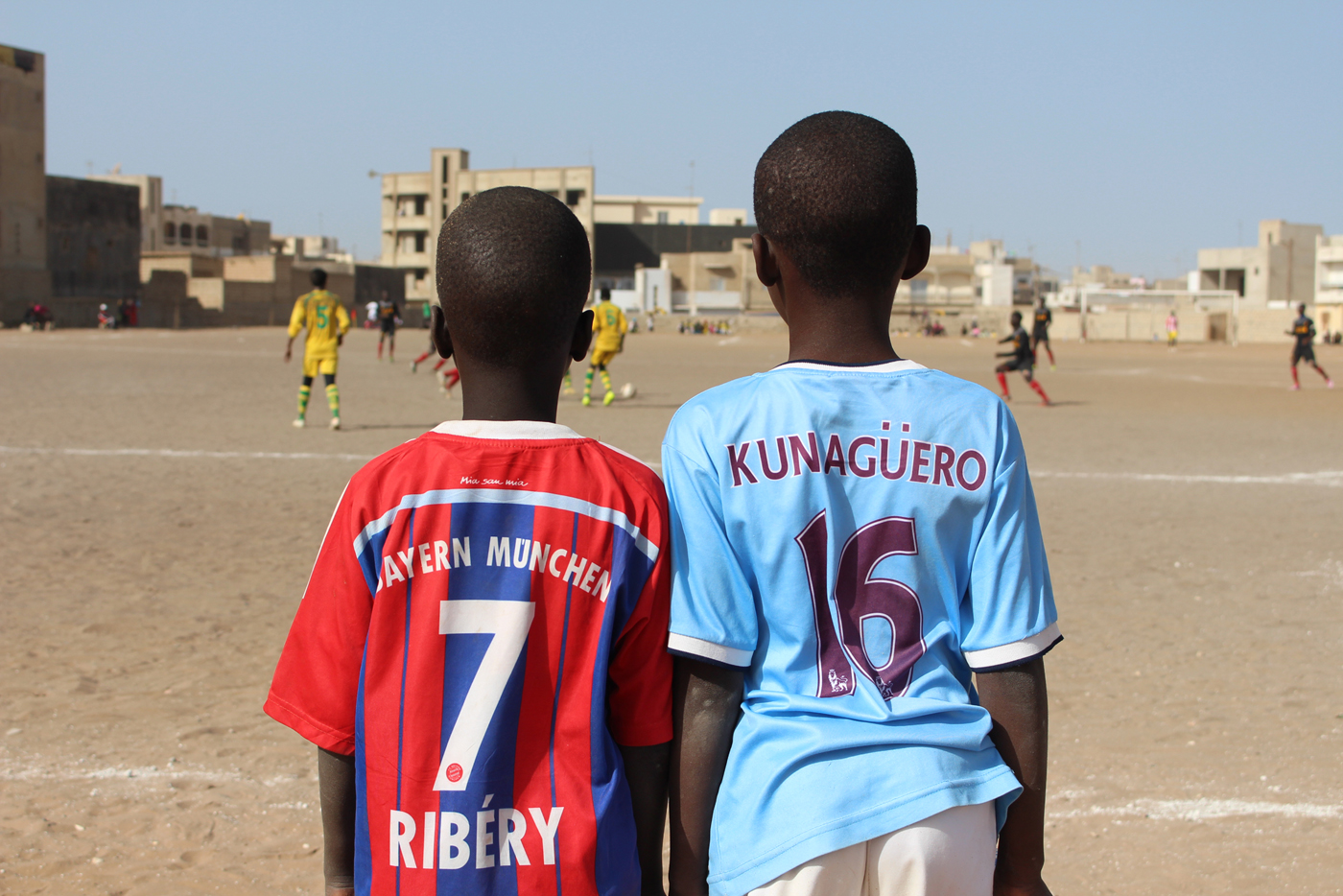
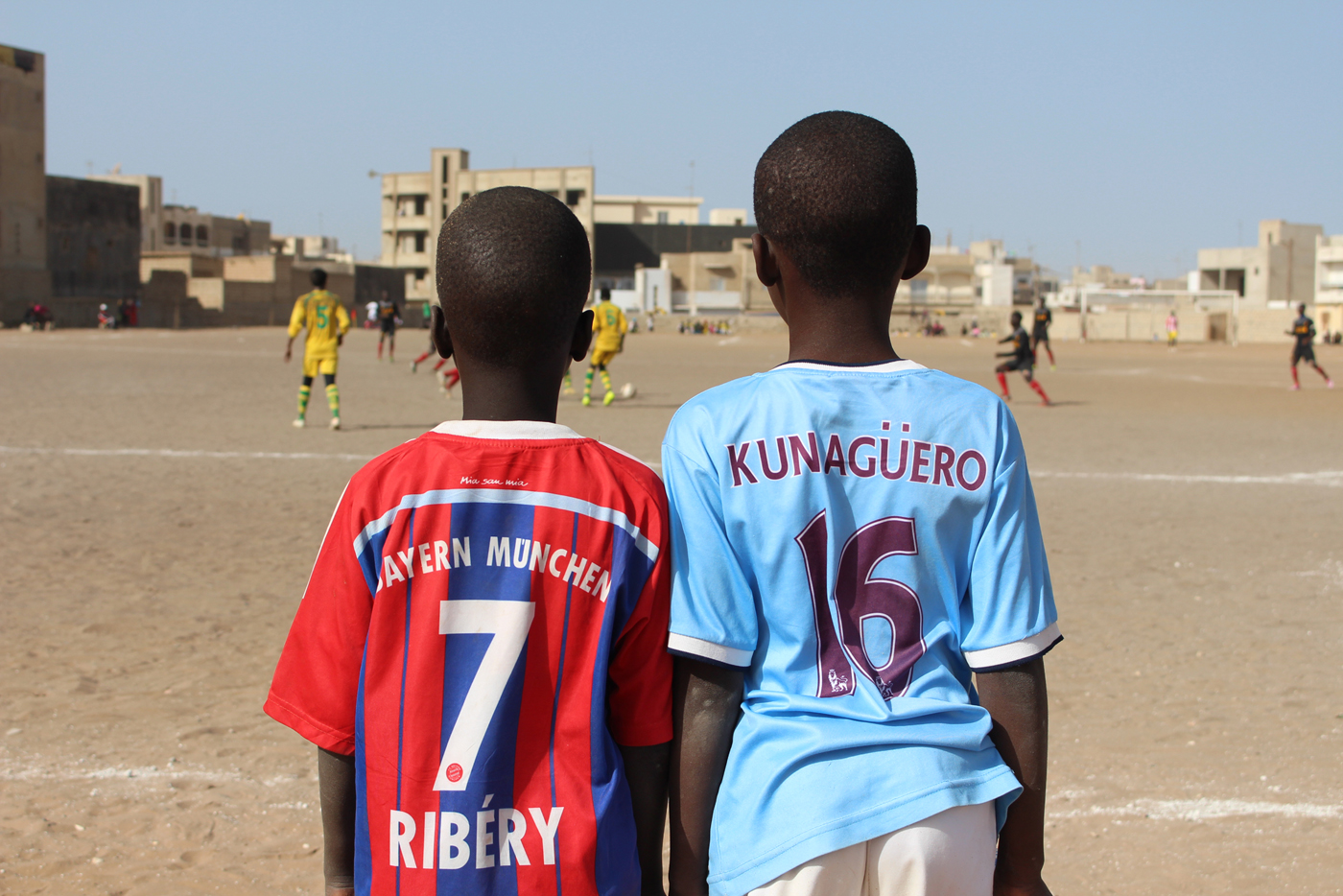
It is in this context that sport, precisely the domain that young men both perform and consume in most societies of the world, represents at once hope for survival, a spectacular form of participation in the production of global images of male success, and the resolution of the contradiction between local exclusion and global inclusion (Comaroff and Comaroff Reference Comaroff and Comaroff2000). They can do this by wearing the right brand of sneakers, adulating the same sport stars as do other youth elsewhere, or aspiring to become a world-class athlete in the sport industries of the Global North, which requires migrating (figure 3). Sport thus acquires enormous importance in the hopes for the future harbored by boys and young men, and those who surround them.Footnote 6
Boys wearing shirts of European football clubs, Dakar, April 2015. (Photo by Mark Hann.)
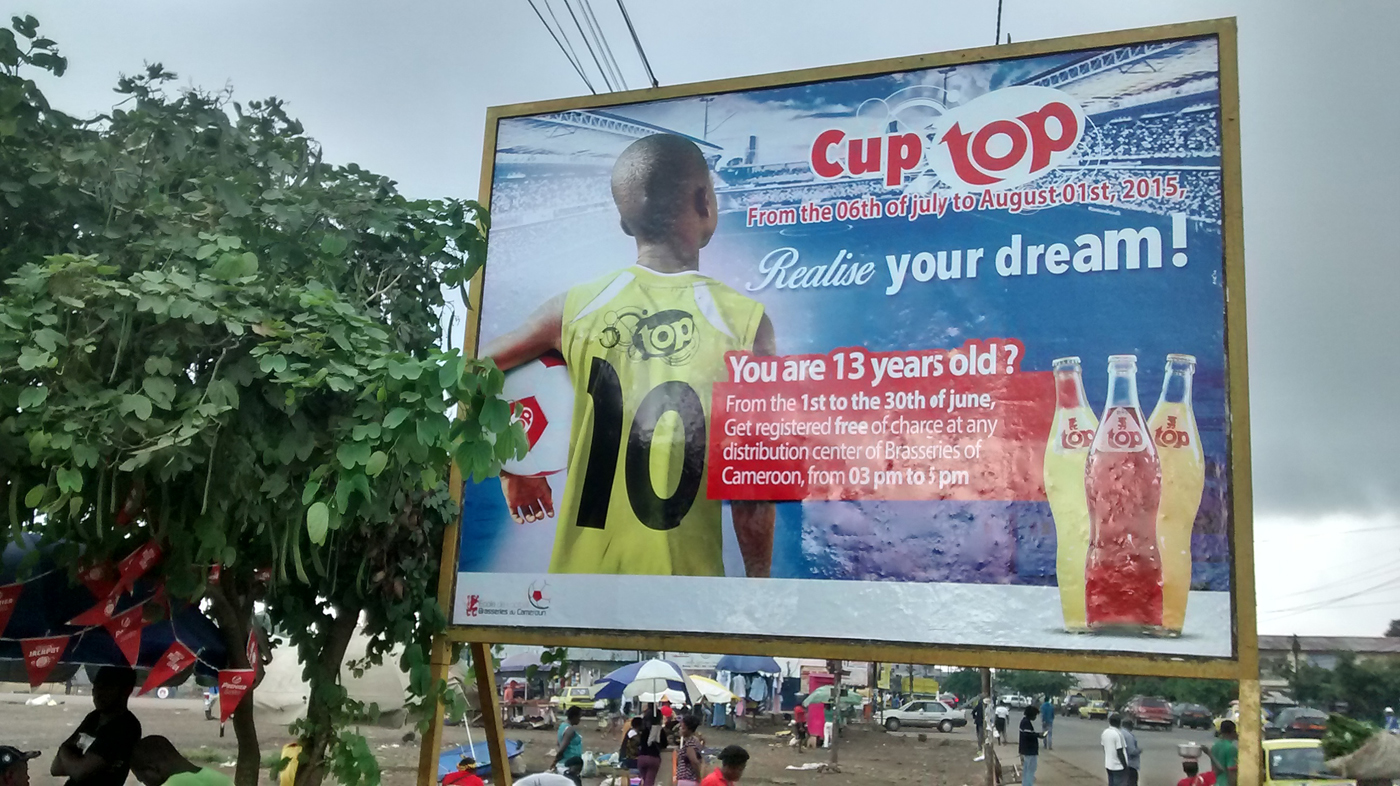
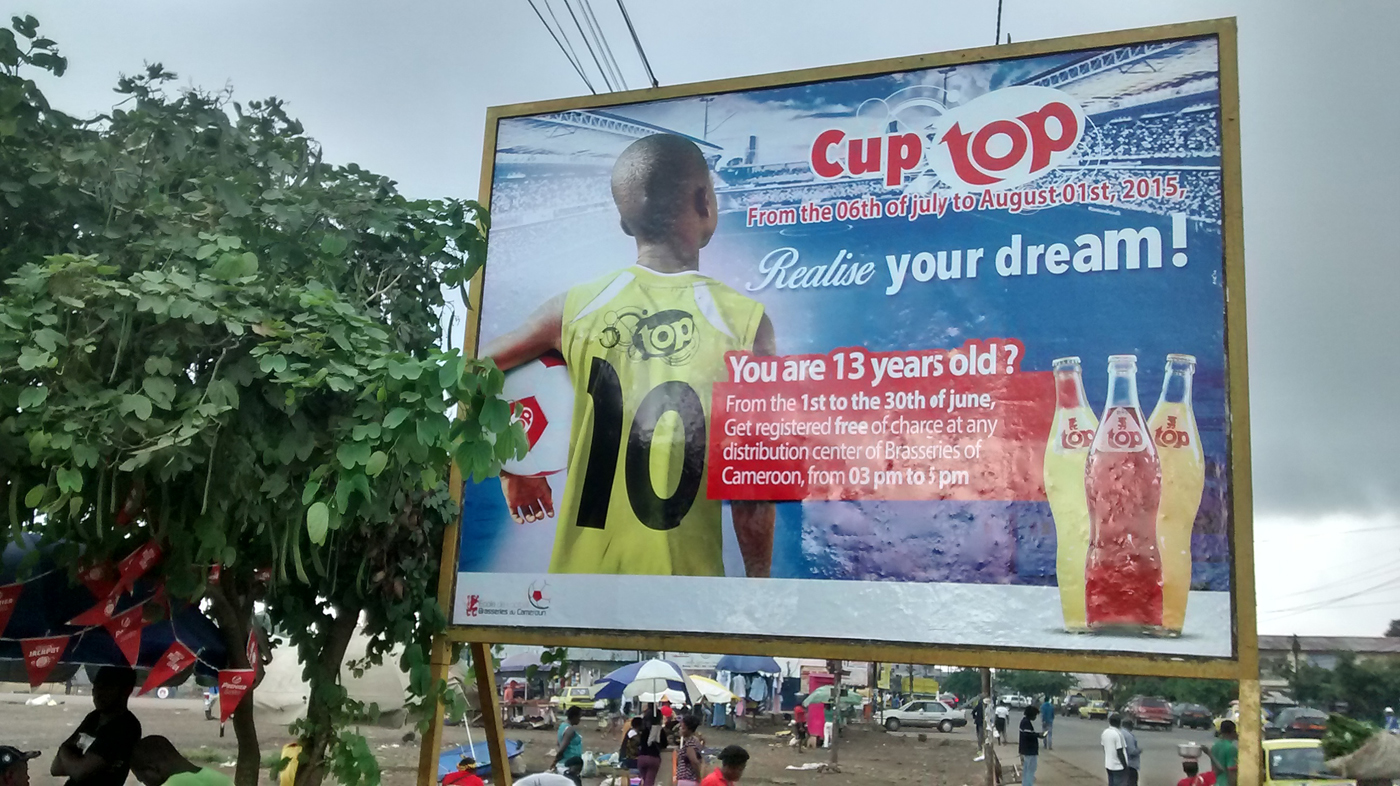
One the most visible manifestations of these dynamics are sport academies that have emerged over the last two decades throughout the Global South (figure 4). Boys flock to them in preference to formal schooling, which has proved increasingly useless in neoliberalized economies. In Ghana, for example, where these academies are ubiquitous, education was in the heady years of independence touted as key to national development and individual success. Decades later, global economic transformations and national policies downsized the public sector, which until then had been a primary source of employment. Education lost its prestige and usefulness, and the country became bloated with unemployed youth. At the same time, changing gender relations, the emergence of a migratory disposition (also the result of the crumbling economy), and the adulation of a masculinity associated with the wealth and prestige of migrant football players all contributed to youth gravitating towards football academies. These institutions, which have experienced a remarkable efflorescence, range from well-funded training centers established by major European clubs and designed to triage young hopefuls and nurture the most talented for export, to fly-by-night outfits that exploit youthful enthusiasm and offer little in return (Darby, Akindes, and Kirwin Reference Darby, Akindes and Kirwin2007; Esson Reference Esson2013; Reference Esson2015a).
A billboard in downtown Buea announces the beginning of the selection process for the most prominent football academy in Cameroon, June 2015. (Photo by Uroš Kovač.)
The imagination of young men hoping to make it in global sports is fraught with the tension between the possibility of migratory athletic success and its probability. While athletic migrants at first glance appear to occupy a different category from other labor migrants, they are subject to the same punitive laws governing travel, residence permits, and work visas, which render their migratory trajectory just as unpredictable and uncertain. Clubs and other athlete employers can be ruthlessly selective in their international recruitment and retention strategies, and they largely see athletes as disposable commodities. The brevity of youthful, masculine vigor, the specter of injury, and the capricious nature of corporate interests mean that all athletes have very short work lives. But for migrant athletes the problems these dynamics create are even more severe because of their precarious belonging, dependence on work contracts for legal residence, and vulnerability to racism and xenophobia. Many also field burdensome demands from relatives back home that can quickly drain away whatever earnings they have managed to secure.
“USELESS MEN” AND PENTECOSTAL MORALITY IN CAMEROON
Young footballers in Cameroon vividly illustrate many of these dynamics, which are embedded in a larger political economic context that has transformed life in the country. Cameroon, a country of twenty-three million people, gained independence from Britain and France in 1961. Until the mid-1980s, its economy, based on the export of cocoa, coffee, bananas, and palm oil, and after its discovery in 1977, crude oil, was considered one of the most successful in Africa. It was organized in public enterprises that also functioned as instruments of political patronage. In the early 1980s, a sharp drop in world commodity prices sent the economy into a downward spiral. The state borrowed from the International Monetary Fund (IMF) and the World Bank and, in 1988–1989, reluctantly implemented a structural adjustment program, which dismantled the public sector, dissolved or privatized the public enterprises, and liberalized trade and markets.
As in the rest of Africa (e.g., Ferguson Reference Ferguson1999), neoliberal reforms failed to deliver on their promises of prosperity and the dissolution of the political elites’ control of the economy. Employment opportunities disappeared, and the exalted figure of the fonctionnaire, who uses school qualifications to make a career in the public service, was no longer a viable model of success for young Cameroonian men without connections to the political elite (Geschiere Reference Geschiere2013: 56).
In the wake of these developments, young men started developing new livelihood strategies. Particularly in large cities, some worked as motorbike-taxi drivers (Cameroonian Pidgin English, bendskin), which offered a reasonable income (Konings Reference Konings2011), while others engaged in fraud and swindling, which made a few wealthy (Ndjio Reference Ndjio2008). These ventures provided young men with new masculine role models outside of the purview of the state in the context of uncertainty. But perhaps the most striking strategy was migrating to the Global North. While there is a long history of migration within Cameroon, with roots in the colonial redistribution of labor (Geschiere Reference Geschiere2009: 41–42; Konings Reference Konings, de Bruijn, van Dijk and Foeken2001), the latest incarnation was called bushfalling, a recent Pidgin term that refers to moving abroad, earning money and sending it back home (Alpes Reference Alpes2012; Nyamnjoh Reference Nyamnjoh2011). Europe (waytman kontri), the United Arab Emirates, and China are the most desirable destinations.
Young men in Cameroon strive to avoid being identified as “useless men,” a damning label that marks the failure to provide for one's kin or an unwillingness to at least demonstrate the intent to do so. As in other parts of the world (Vigh Reference Vigh, Cole and Groes2016), it is particularly men who fear being labeled “useless,” while expectations of women revolve around marriage and the household. While they may attain local masculine notoriety through their football skills, conspicuousness in the town's nightlife, and sexual prowess, young men will ultimately be evaluated in terms of what they provide. By migrating, men attempt to become a “somebody” and achieve the status of “big man” (see also Fioratta Reference Fioratta2015; Kleinman Reference Kleinman, Cole and Groes2016; Melly Reference Melly2011). Yet mobility alone does not guarantee an escape from uselessness; the migrant who returns empty-handed or who cannot return to waytman kontri is just as useless as the non-starter.
With the expansion of the transnational football market, for young men the sport has become a novel, and the most desirable, way to migrate. Family elders often initially oppose their aspirations to pursue a football career since they view the sport as a street activity that marks young men as “useless.” However, once they start seeing material returns, many end up supporting the young men's aspirations. Aspiring football migrants distinguish themselves from bushfallers, contrasting their own high aspirations and sense of purpose, invoking images of sacrifice and struggle, with the economic desperation of the bushfaller. They address each other with the flattering term “pro” or “professional,” which anticipates future success and status, even though these may never materialize. While the transnational sport market in places like Cameroon provides new opportunities for young men to succeed, it also brings them new ways to fail.
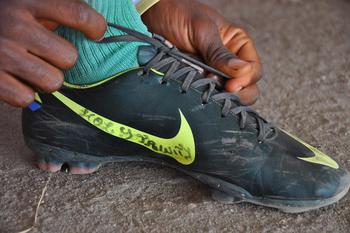
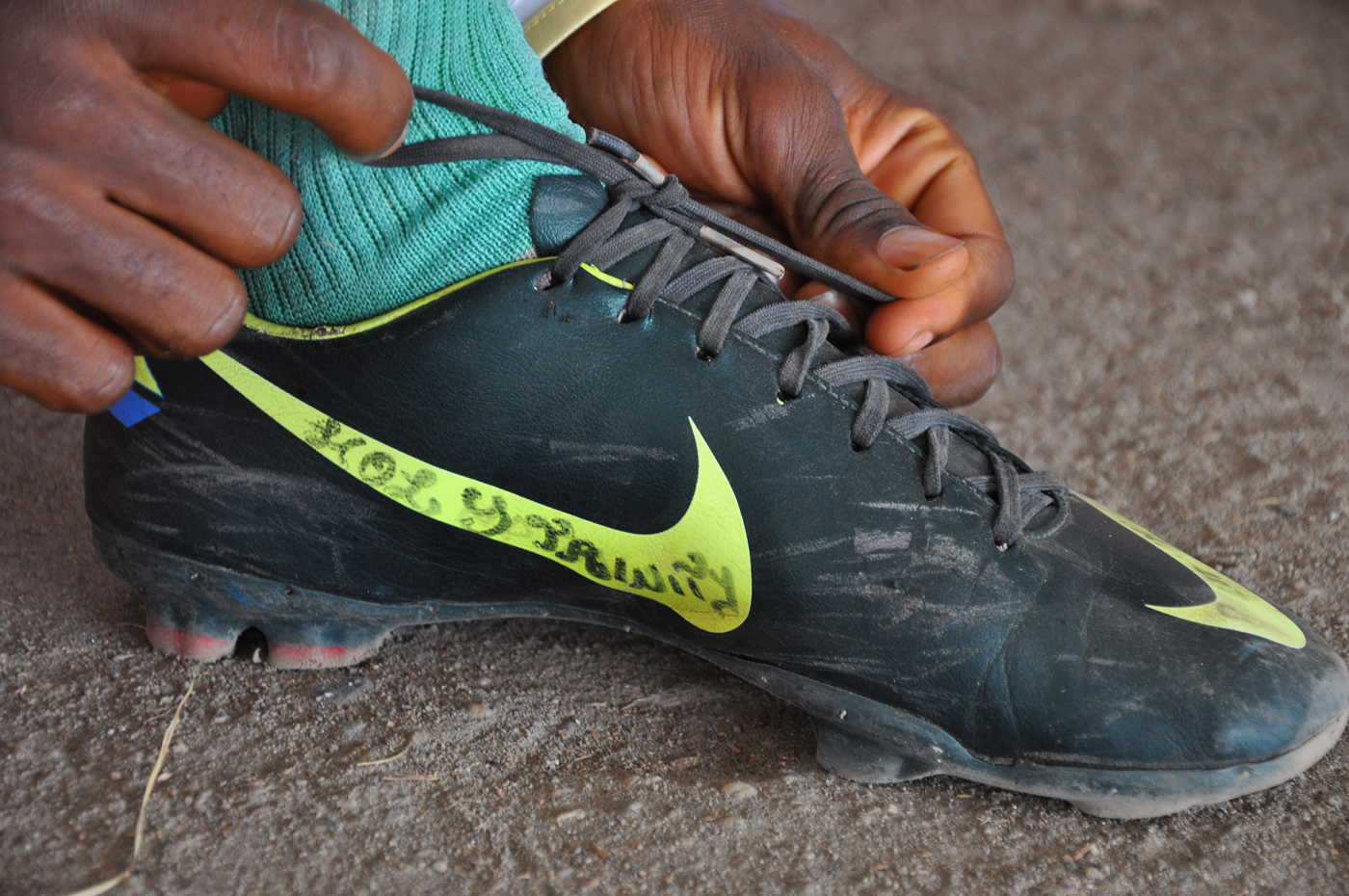
Many aspiring footballers join one of the numerous Pentecostal Christian churches that have become prominent in the Cameroonian landscape, as elsewhere in West Africa and the rest of the world (Akoko Reference Akoko2007; Marshall Reference Marshall2009; Meyer Reference Meyer1999; figure 5). Many of these churches celebrate the accumulation of material wealth and preach that one can attain financial success despite being poor. Pentecostal Christianity allows the young men to orient themselves to the cosmopolitan future that they yearn for. Through Pentecostalism, they cultivate a masculinity that contrasts with both an “urban” masculinity based on conspicuous nightlife and sexual prowess, and a “traditional” one associated with village men who have several wives, father many children, are embedded in traditional structures of exchange, and attain “big man” status in regulatory societies based on ancestral traditions.
An inscription on a footballer's boot reads “Holy Trinity,” Buea, Cameroon, December 2014. (Photo by Uroš Kovač.)
Footballers adopt Pentecostal images of themselves as “humble,” “focused,” and God-fearing. They view humility as not only the basis of Pentecostal religiosity but also a key to success in the transnational football industries. Indeed, sport managers sometimes select young Pentecostals for trials overseas over other footballers with superior skills. The managers, who are not necessarily Pentecostal themselves, recognize that the kind of masculinity that Pentecostal teachings promote, away from alcohol, gambling, nightlife, and promiscuity (Newell Reference Newell2005: 310; Pfeiffer, Gimbel-Sherr, and Augusto Reference Pfeiffer, Gimbel-Sherr and Augusto2007: 696; Pype Reference Pype2012), resembles the disciplining regimes that football clubs demand of young recruits. In both Pentecostalism and football, the body figures prominently in disciplining regimes.
Following the word of God and the moral and body regimes of Pentecostal churches do not guarantee mobility or football success. The uncertainty suffuses footballers’ interactions with pastors, fellow congregants, and the Holy Spirit: will they be selected among the many, can they persevere despite hardships, and can they overcome the disadvantages of poverty and marginality? But faith offers the footballers a way of dealing with the “cruel optimism” (Berlant Reference Berlant2011) that transnational professional football produces and feeds on. The Pentecostal emphasis on self-discipline, humility, and faith that God provides for the faithful, but also on the danger of backsliding into sin, gives young players tools to deal with the millenarian promises, temptations, and opportunities to fail that are part-and-parcel of sport careers. Pentecostal morality is thus a form of self-making that prepares one for participation in the neoliberal economy.
With the expansion of the transnational market in football players, football in Cameroon has become a pivotal site for the emergence of a new masculinity, negotiated between different forms, and hence relational. This masculinity is not only constructed in the local context, but also infused with insights operating on different scales: the players who negotiate their relationship with their managers, the managers who act as gatekeepers and mediators between the global and the local, and the global football industry itself. It is temporally situated, particularly in light of Pentecostalism's orientation to the future, and it disrupts any attempt to identify any particular masculinity as “hegemonic.”
RUGBY DREAMS IN FIJI
As in Cameroon, in Fiji, a nation of eight hundred thousand people in the Western Pacific, the lives of many indigenous young men have become precarious since the 1980s. Increasing poverty and violence, a succession of political crises, and the emergence of unemployment as a new social category have all contributed to the kind of marginalization familiar from many other parts of the Global South. Also familiar are local discourses that seek to explain these dynamics: Christian churches, NGOs, the state, and the middle classes are often heard attributing the plight of youth to dysfunctional families, out-of-wedlock pregnancies, and the breakdown of traditional authority.
During the colonial period (1874–1970), the economy was based on sugar. To cultivate the sugarcane, the British colonial administration brought indentured laborers from South Asia in the late nineteenth and early twentieth centuries. Their descendants, together with those of merchants who migrated freely in the first part of the twentieth century, are now the second largest ethnic group in Fiji, the Indo-Fijians. During the colonial era, Indo-Fijians and indigenous Fijians, or i-Taukei, were kept largely separate and confined to distinct economic pursuits, a division of labor that largely remains in place to this day: i-Taukei dominate the military, the police force, and the public service, while many others lead rural lives grounded in the ownership of the land, most of which is legally inalienable; Indo-Fijians either cultivate leased land or are involved in commerce and industry in the urban centers, where some have become very successful.
Post-independence Fiji enjoyed a decade of political stability and economic growth buoyed by subsidized sugar prices and import substitutions. However, global economic changes in the early 1980s and a succession of military coups beginning in 1987, generally understood as rooted in inter-ethnic tensions, undermined the economy and stimulated Indo-Fijians to emigrate. Between 1987 and 1992, an interim government voluntarily implemented structural adjustment policies, which the IMF and the World Bank had recommended in other countries (Akram-Lodhi Reference Akram-Lodhi1996). Concurrently, people migrated in increasing numbers from rural areas to urban centers, creating a periurban underclass largely made up of i-Taukei.
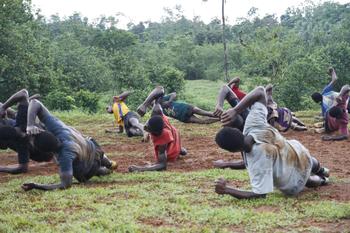
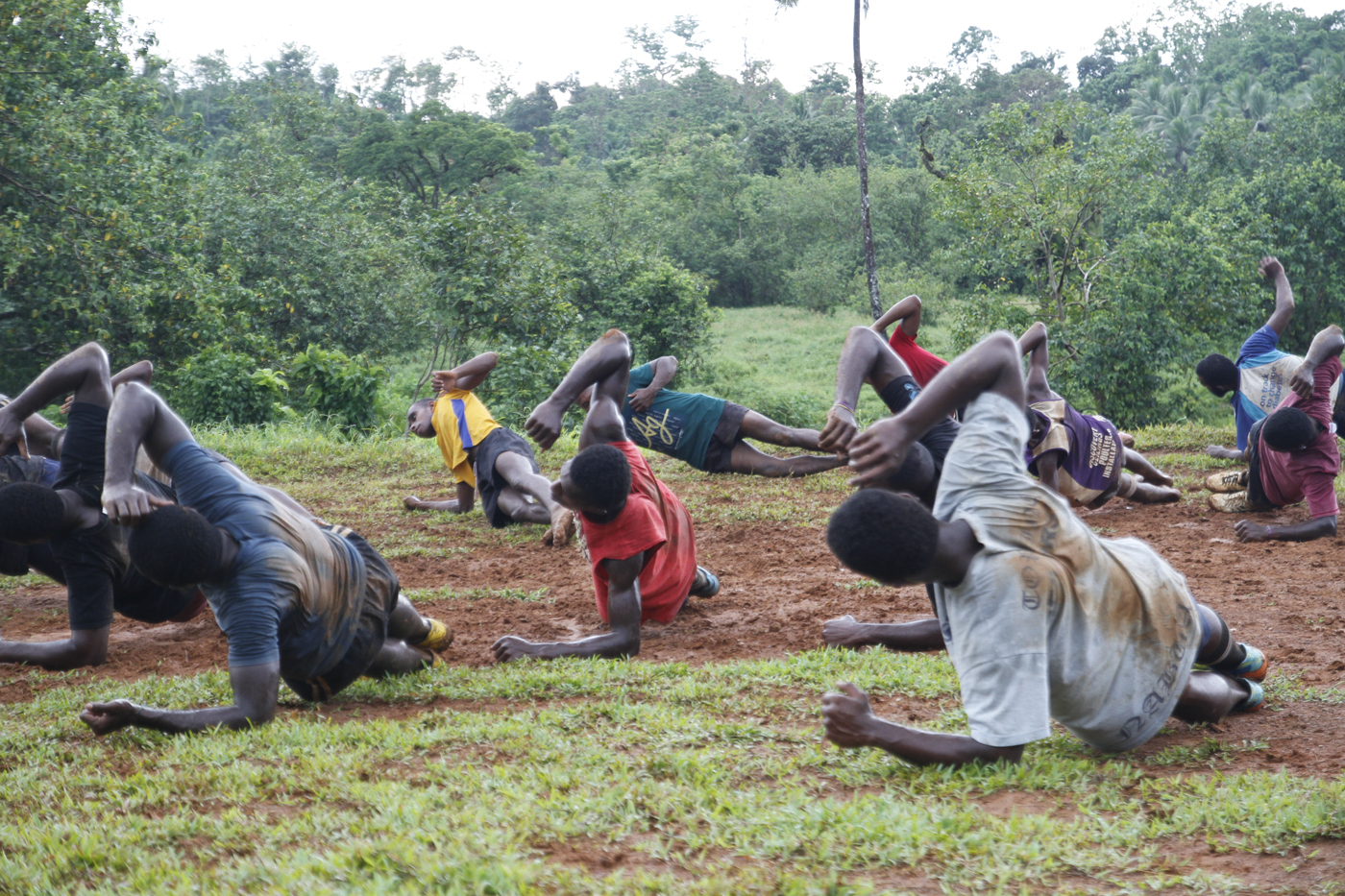
One of the most important means available to young i-Taukei men to both demonstrate their masculinity and redeem themselves as useful citizens is playing rugby. As in other parts of the British sphere of influence in the region, the sport was introduced to the colony in the early twentieth century through schools designed to educate children of elites and later trickled down the social hierarchy through the army and police. Today, rugby is a national passion, an important context of male socialization in villages and towns, and the embodiment of values characteristic of youthful i-Taukei masculinity, including toughness, controlled aggression, communalism, and allegiance to the team and all it represents (figure 6). While its historical roots lie elsewhere, the sport has been redefined as anchored in both a timeless local history, in which young men were the bati (literally, “teeth”) of the village, warriors in charge of defending it and its chiefly structure, and in the colonial past.
Training on a daily basis, members of a rugby team in a remote village buy into the dream of an overseas rugby contract, the likelihood of which is extremely low, Naitasiri Province, Fiji, 2016. (Photo by Niko Besnier.)
Colonial authorities constructed indigenous Fijians, like the Nepali Gurkhas and the Punjabi Sikhs (Enloe Reference Enloe2014; Streets Reference Streets2004), as a “martial race,” perfectly suited for recruitment into the armed services, who showed loyalty to a colonialism that they never experienced as particularly problematic (Howard Reference Howard2004: 141–45); in fact, Britain's ruling aristocracy was an inspiration for the construction of the rank-based structure of present-day Fijian society. These dynamics continue to this day, as i-Taukei enthusiastically join the national armed forces and many are seconded to United Nations peacekeeping forces or special units in the British military (Teaiwa Reference Teaiwa2005). Since the 1990s, indigenous Fijians have also maintained a visible presence in the global private security industry (Amar Reference Amar2012: 42–44; Kanemasu and Molnar Reference Kanemasu and Molnar2017).
Among i-Taukei, rugby and the masculinity it embodies are deeply enmeshed with the rank-based and Christianity-infused social organization, as well as the political structure of the state, the state's institutions of legitimate violence, and the churches, among which the Methodist church is dominant. For example, village rugby teams mobilize many of the same practices as do church and chieftainship; the Fiji Rugby Union plays an important political role in the country; and employment in state institutions like the armed forces, the police, prisons, and the fire department makes it possible to play rugby at a high level. In the last few decades, the relationship between rugby and the mainstream churches has been somewhat complicated by the rise of Pentecostalism, which competes with the older churches and is particularly visible in rugby. Pentecostals regard rugby talent as a blessing, understand rugby as a way to praise God, and promote moral and bodily discipline that resemble those that Cameroonian Pentecostal footballers practice.
I-Taukei see the values that are constitutive of Fijian rugby, such as a powerful muscularity, uncompromising devotion to the Christian God, and the subservience of the individual to the group, as universal features of masculinity. This is given a particular boost by the belief of many rugby enthusiasts around the world that the sport transcends all differences and creates commonalities, those of the “great global rugby family,” which makes the sport quite distinct from other sports. This conflation of local indigenous manifestations of masculinity with an allegedly universal definition bestows legitimacy onto the former in powerful ways, while in practice there are significant differences between rugby in Fiji and rugby elsewhere.
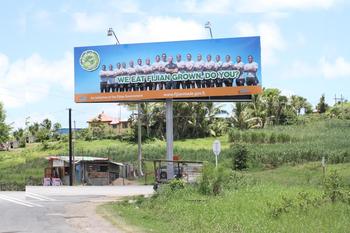
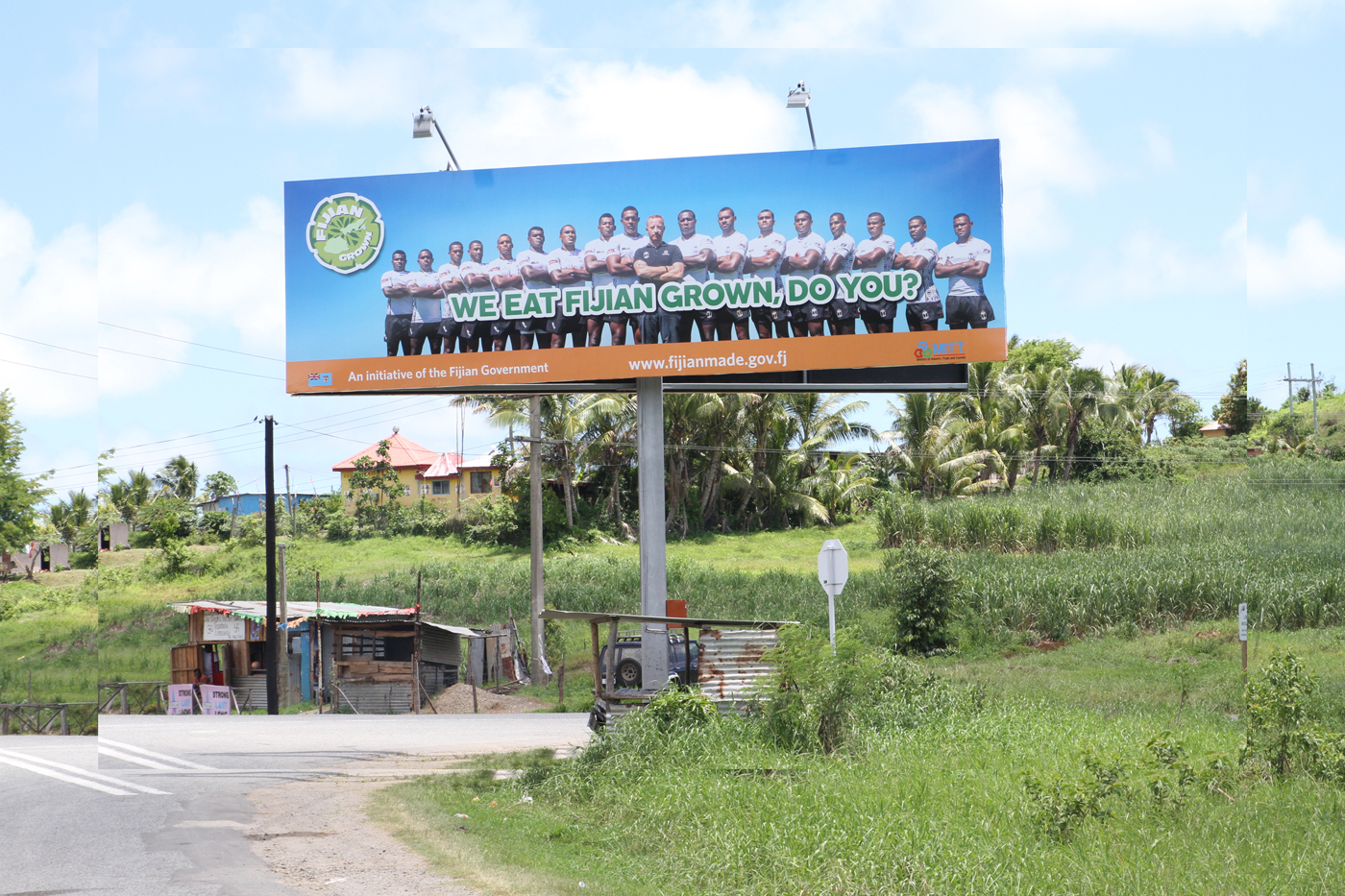
In Fiji, rugby is equated with the nation and the state, as was attested by the aftermaths of the gold medal that the national team won in the rugby sevens at the Rio de Janeiro Olympics: a national day was declared, the players were given a hero's welcome, a $7 legal tender bill displaying the national team was issued, and a chiefly title was conferred onto the British coach (figure 7). But the nation here is complex. When indigenous Fijians realized in the late 1980s and early 1990s that they could transform their rugby passion into waged work around the world, right as world rugby was professionalizing and becoming increasingly corporatized and thus in need of cheap but talented labor, they began to emigrate, following the example of Tongans migrating to Japanese rugby (Besnier Reference Besnier2012).
Billboard by the main highway between Nadi and Suva, Fiji, features the national 7s rugby team, 2016. (Photo by Niko Besnier.)
Today, indigenous Fijians have a visible presence throughout the rugby world and playing rugby locally is primarily oriented toward the possibility of contracting with an overseas team. But in contrast to commentators who elsewhere lament the “brawn drain” constituted by talented athletes leaving their poorer home countries to play in wealthier countries, most Fijians do not find their rugby players’ emigration particularly problematic: extended families frequently house and feed young men during the many years of training, while villages sometimes collect money to help young men pay for airfares to overseas tournaments; men send back all-important remittances to families; and indigenous Fijian players in the rugby teams of industrial countries demonstrate to the rest of the world the talent and power of the Fijian nation. They do so by emphasizing their extraordinary brawn, images of sporting power that they co-construct with their audiences, including global spectators, the media, fellow players, and agents, managers, and other club officials in the rugby industry. Thus the nation is enacted through sport through a globalized nationalism that rests on the performance of a powerful masculinity widely exoticized in the world sport (Guinness and Besnier Reference Guinness and Besnier2016).
While rugby is equated with the nation, the sport is played almost exclusively by i-Taukei men. Thus the nation with which the sport is coterminous is largely indigenous. Indo-Fijians are welcomed as spectators and sponsors of rugby, but hardly ever as players in this important theater of the nation (unless they are issued of mixed-ethnicity families). Considerable naturalizing rationalization goes on to explain why Indo-Fijians do not play rugby: it is said they lack the physicality, the power, and the flair required to play the sport, but also the communal orientation, the Christian values, and the warrior heritage. These naturalizing arguments ignore that the great “natural” strength, muscularity, and height of Fijian rugby players are characteristics of those who are relatively well fed. Multiple forms of social difference operating in the country are ideologically reduced to ethnic differences between two groups, and rugby plays an important role in performatively enacting these dynamics. The Fijian nation is thus built on an indigenous masculinity through, on the one hand, its global visibility and, on the other, the marginalization of countertypes, such as Indo-Fijians and women (whose important roles we are not developing here).
In Fiji, masculinity emerges through global structures of the sport industry, which have been coopted to authenticate local politics, and it is thus scalar, embedded, and relational. The mutually reinforcing roles of timelessness and colonial history mean that masculinity is the product of different but mutually reinforcing temporalities. At the same time, the power of this masculinity is predicated on emigrations and thus on physical absence from the country, and most rugby players are unable to convert their masculinity into political or social power. Those who return to village life, often with their resources depleted by kinship obligations, cut a rather sorry figure. While seemingly powerful, i-Taukei rugby is in fact anything but hegemonic.
WRESTLING WITH HOPE IN SENEGAL
Comparable themes emerge in a very different part of the world, namely urban Senegal, where one finds not just one sport onto which all attentions are focused, but two: football and wrestling (Wolof, làmb). Football as it is played in this country of sixteen million inhabitants echoes many of the features of its practice elsewhere in Africa, and it is embedded in structures extant the world over. In contrast, wrestling, which exists in many different styles, has deep historical roots in Senegal and surrounding areas.
But here again sport operates within a specific political economic context with a long history. During the French colonial period from the end of the nineteenth century until independence in 1960, the administration heavily encouraged the cultivation of groundnuts as an export cash crop, displacing the small-scale farming of native varieties of rice and other subsistence crops. In addition, the deforestation and environmental degradation caused by groundnut monoculture exacerbated the ravages caused by the Sahel drought, ongoing since the 1960s, and rural to urban migration intensified (Cissé et al. Reference Cissé, Malicki, Barbier and Maiga2010). As global markets became more competitive and groundnut prices plummeted in the 1970s, agriculture became increasingly unattractive as a livelihood strategy.
The imposition of structural reforms as conditions for loans from the World Bank and the International Monetary Fund further altered the country's economic landscape, as farming became less and less viable to all but the wealthiest landowners (Oya Reference Oya2001) and shifts in the gendered division of labor led to what has been described as a “crisis of masculinity” (Perry Reference Perry2002; Reference Perry2005). Transnational migration emerged as one potential solution to this crisis, with successive waves of Senegalese men seeking to fulfill their roles as providers through trading and other economic activities in the countries of the Global North (e.g., Diouf and Rendall Reference Diouf and Rendall2000; Riccio Reference Riccio2001; Stoller Reference Stoller1996). Like migrant Fijian rugby players, the Senegalese transnational migrant became a new figure of success whose masculinity was produced through his physical absence (Melly Reference Melly2011).
However, there are other figures of success that are not predicated on absence (Havard Reference Havard2001). Particularly visible among these is the wrestler. Wrestling, in particular the variant with punches (lutte avec frappe), has experienced exponential growth since the 1990s with the emergence of television coverage and a daily newspaper devoted exclusively to the sport, to the extent that it now rivals football in popularity (figure 8). While women generally do not wrestle (with some notable exceptions such as the Olympic wrestler Isabelle Sambou), many are avid consumers of the sport and its celebrity culture. Frustrated by the lack of opportunities available in other sectors, young male school dropouts in impoverished neighborhoods increasingly see wrestling as an economically viable career path. Many dream of becoming the next wrestling star, top wrestlers are hailed as national heroes, and stadiums are filled to the brim when combats are held.
Zoss, a well-known wrestling champion, faces the press ahead of an important combat, Dakar, Senegal, 2015. (Photo by Mark Hann.)

Yet all but the most successful wrestlers must supplement their activity with other livelihood strategies. Some practice a trade, although they often foreground their wrestling identity above all else. Others translate their body capital into social capital to secure employment or at least sustain themselves as coaches, security guards, and bodyguards who form an intimidating muscle-bound presence around local politicians. Many end up in the informal economy and in some cases in crime, the latter being an often-evoked but unfair stereotype of wrestlers.
The wrestler's overdeveloped muscularity of today contrasts with the man-in-the-street physicality of wrestlers of yesteryears (Chevé et al. Reference Chevé, Wane, Barthélémy, Kane and Sow2014). At wrestling events, hierarchies of value have historically shifted from being based on technique to being based on physicality; today, skinnier and less experienced competitors wrestle as opening acts for combats between much heavier and better paid wrestlers. The increasing emphasis on a muscular physique goes hand-in-hand with the boom in bodybuilding culture that Dakar has experienced since the 1990s (figure 9).
A wrestler training at a local gym for his next fight, Dakar, Senegal, 2015. (Photo by Mark Hann.)

Unlike football, which is oriented towards migration to European leagues, wrestling is bounded by the nation. Fame and success in wrestling are achieved in Dakar and are not dependent on participation in international competition. While some Senegalese wrestlers do participate in African championships, in the Olympic Games (in the freestyle discipline), and in rare cases mixed martial arts competitions in Japan, such activities are considerably less prestigious and lucrative than those that take place in the national arena.
Despite the national orientation of the sport, the masculinities it produces are nonetheless grounded in global as well as local economic and social conditions. Contemporary wrestlers are heavily implicated in transnational mobility. Those who have wealthy sponsors train in European countries or the United States, whose consulates are known to look favorably upon their visa applications, in contrast to those of ordinary citizens. The ability to complete one's training abroad confers an aura of prestige and professionalism, since training conditions are thought to be better outside Senegal. Rumors abound that certain wrestlers use trips overseas to dabble in illegal doping, which is said to further contribute to their formidable physicality.
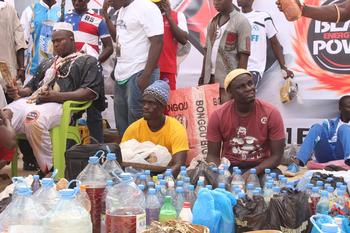
One particularity of Senegalese wrestling is its dual status as both a rapidly professionalizing commercial sport and a practice venerated as cultural heritage. Many wrestlers are very urban in outlook, but belong to families that have migrated from rural to urban Senegal, many in the context of the Sahel drought. Wrestlers combine the punishing training regimes of competitive sport with a commitment to honoring ethnic customs and the complex magico-religious practice (Wolof, xarfaxufa) associated with the sport (Hann Reference Hann2016). They spend vast sums of money on the services of marabouts, who prescribe ritual practices and substances designed to both win in combat and protect against other wrestlers’ mystical attacks. Although increasingly condemned by proponents of Islamic orthodoxies, these practices combine animist and Islamic elements that are ostentatiously displayed in the wrestling arena, as wrestlers pour holy water over themselves, wear amulets and Koranic writing, and release doves into the air. Wrestlers also frequently emphasize their affiliation with the Sufi brotherhoods that dominate the religious landscape. The cultivation of devout and moral masculinity is central to a wrestler's public image, and they frequently wear Islamic dress, participate in pilgrimages and other religious ceremonies, and affirm the importance of a pious way of life to a successful wrestling career (figure 10).
Modou Lô, one of Senegal's most famous wrestlers (seated in the plastic chair on the left) with his arsenal of mystical items, Dakar, Senegal, 2015. (Photo by Mark Hann.)
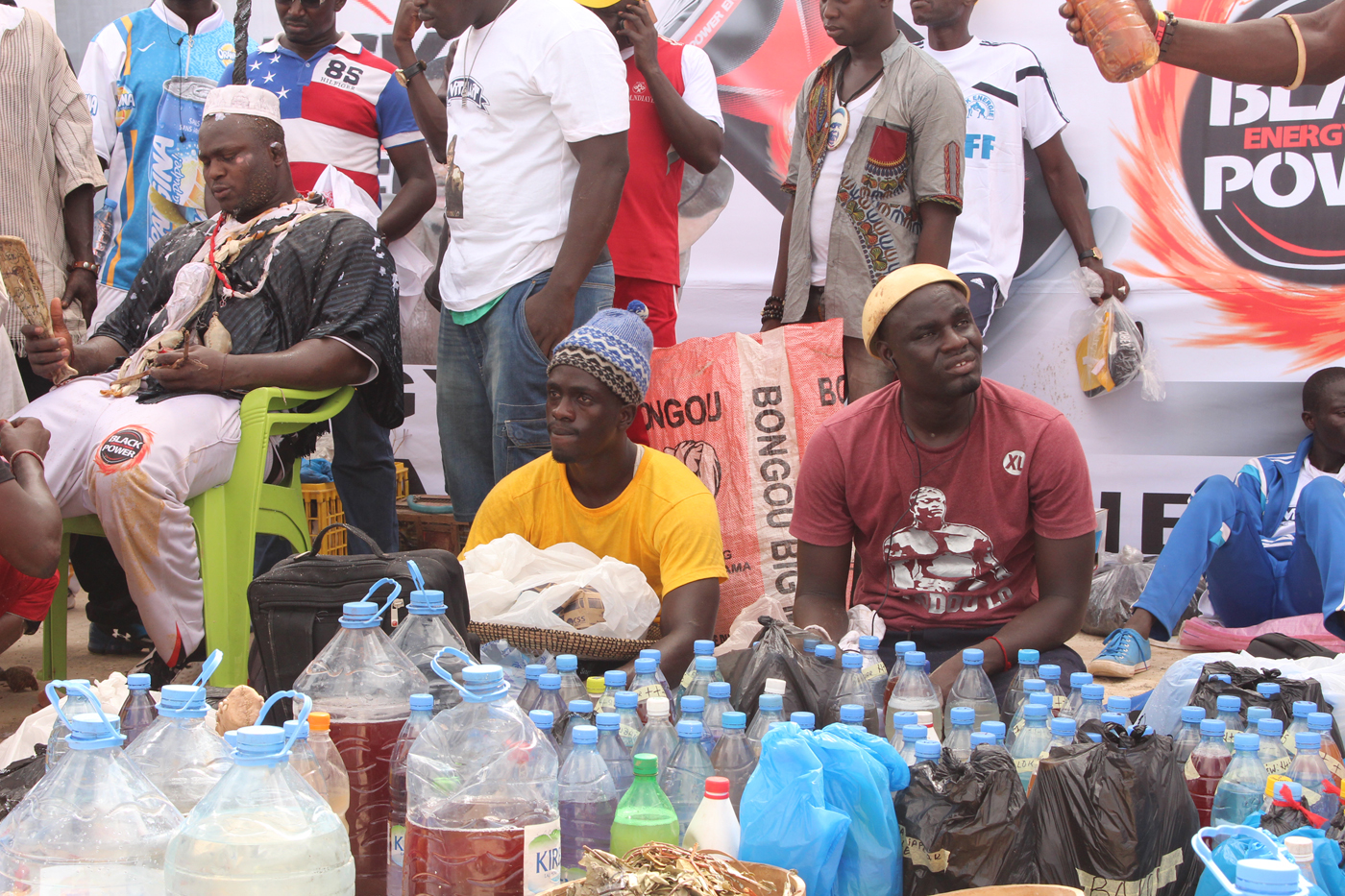
Wrestling is sometimes evoked as having no beginning and no end—Senegalese have always wrestled, and always will. Yet, the sport and its athletes have undergone major transformations in recent years. The influx of sponsorship money, the mediatization of the sport, and new regimes of masculine body culture have reconfigured wrestlers into entrepreneurs of the self, who draw on both techniques of global neoliberalized sport and local practices constructed as traditional and religious. In a context of scarce economic opportunities, young men who pursue masculine success through wrestling perform an imagined ancestral past, but also present themselves as entrepreneurial, self-reliant, and purposeful, images that strongly resemble the neoliberal self in contemporary capitalist contexts. While the wrestlers’ intimidating physicality could easily lead one to label the masculinity they embody as hegemonic, their lives as athletes and social beings are far too complex for this label to be analytically useful.
THE PRODUCTION OF NEOLIBERAL MASCULINITY THROUGH SPORT
In Cameroon, Fiji, and Senegal, underprivileged youth no longer have ready access to the ways in which their fathers and forefathers asserted and reproduced masculinity. As agriculture became de-valorized, education no longer led to the promise of employment, the definition of work was narrowed down to wage labor, and national economies became increasingly subservient to global forces, much of the “traditional” armature of gendered adulthood is now beyond the reach of new generations of men. In all three contexts, the hope of success in sport increasingly fills the gap left by the evacuation of other possibilities and, at least for young men whose lives are not buoyed by the advantages of birth, masculinity is not about reproducing old values. Instead, it is about the possibility of participating in a global system of mobility, work, and glory that may resurrect one's ability to provide for others. Yet the probability of this taking place is, for most, very slim. It also exacerbates the tension between the physical performance of masculinity through sporting prowess and masculinity imagined as the fulfillment of social expectations.
Despite the gap between the possibility and probability of success, young men struggle to become the kinds of neoliberal subjects that the global sport industries require: hard working despite the uncertainty about the results of hard work; self-improving even though improvement guarantees nothing; and being responsible for one's destiny, including both successes and failures. Literally and figuratively, sport teaches people to fail. The contradiction inherent in elite sport is that it showcases strength and mastery of the world around oneself, but it also injects the athlete's very self with enormous fragility, in the form of injury, short employment contracts, the inability to plan beyond the immediate future, and the discrepancy between the possibility and the probability of a successful career. Neoliberalism makes the present and the long-term future clear, but the immediate future is not (Guyer Reference Guyer2007).
One can thus read in Fijian players’ insistence on the warrior roots of rugby and the display (and marketing) of themselves in all their formidable virility (predicated on the marginalization of the Indo-Fijian minority) an affirmation of confidence in the face of unsettling uncertainty. We can also read young athletes’ mobilization of the tools that are most readily available locally, including Pentecostal Christianity in Cameroon and Fiji and syncretic Islam and maraboutic practices in Senegal, as ways of coping with this paradox. Even though these practices exist in very different contexts and very different configurations, they have in common that they are all attempts to harness an uncertain future for which the neoliberal subject is ultimately responsible.
In all three cases, sport emerges as a triage mechanism that sorts different forms of masculinity. It has of course always been the case everywhere that some forms of masculinity are given greater value than others, and in fact several alternative systems of valorization operate alongside sport in all three contexts. Sport is powerful because it is embedded in the structures and ideologies of neoliberalism on a global scale. This contrasts with the plurality of factors that fulfilled that role prior to the emergence of sport as a vision of the future for young men in many locations of the Global South.
What is particularly striking is that the triangular relationship among neoliberalism, sport, and masculinity operates on multiple scales and multiple fronts. The transformation of sport clubs into corporate entities; new scouting activities in the Global South; the deregulation of television channels; the penetration of satellite television into the remotest corners of the world, carrying images of sport success; the collapse of national economies in the Global South and its consequences for livelihoods; the effects of structural adjustment on state structures; and the emergence of new understandings of the future all articulate with the same neoliberal ideology and all converge to produce the transformations of masculinity that we have documented, yet these dynamics operate in different spheres (economic, social, cultural, political) and on different scales (local, national, regional, global). While everyone's lives are constructed in the interface of the global and the local, precarious lives in the Global South are particularly vulnerable to forces on different scales.
The materials we have presented illustrate that masculinity exists in multiple forms, but they do not lend themselves to analysis in terms of a “hegemonic” model. The multi-layered and contradictory effects of elite sport demonstrate that the image of the professional athlete, which appears at first glance as the quintessential exemplar of hegemonic masculinity, is anything but hegemonic when viewed in all its complexity. Instead, forms of masculinity that may appear powerful on the surface are in reality deeply precarious; forms of masculinity that foreground meekness, obedience, and flexibility may fare much better than others in the sport labor market; and fields of power that operate in the neoliberal moment are far too complex and heterogeneous for any one masculinity to be viewed as the ideational scaffolding of material power (which is how hegemony was originally theorized). The neoliberal masculinities we have analyzed here are embedded in contemporary economic and social structures; they are scalar, in the sense that they are the product of global and local forces, and reproduce these forces; they are relational, in the sense that they locate men in relations of sameness and otherness; and they are temporally situated, in that they are produced by history, but also capture how people imagine the future and its role in the present. While we have focused on the workings of masculinity at a particular moment in time and for specific groups, the analytic steps that we have outlined are applicable to other temporal and spatial contexts.
The three situations present different configurations, particularly with respect to the role that migrations play in the definition of the future, which are essential in Fijian rugby and Cameroonian football, but not in Senegalese wrestling. The sports are thus involved in different investments in local symbolic economies, although they all demonstrate in strikingly convergent ways the limitations of this investment. Fijian rugby athletes find that their traditional “war dances” that enchant crowds in the Global North are useful marketing devices, but only up to a point because it can easily relegate them to the savage slot (Guinness and Besnier Reference Guinness and Besnier2016). Young footballers in Cameroon, along with their Pentecostal co-congregationalists, categorically reject traditional forms of patronage and moralities that characterize village life. And while Senegalese wrestlers are heavily dependent on the very visible display of magical paraphernalia and other “traditional” practices, they also assert that simply relying on one's marabout's powers will get one nowhere in the arena—to make it, one must work, and work hard.
Athletes in all three situations are deeply entangled in flows of ideas about what the future means and how to reconfigure the self in order to harness it. The magnet of neoliberalism is powerful in drawing people's attention all over the world.