Propionic acidemia (OMIM #606054) is a rare autosomal recessive inborn error of metabolism. Propionic acidemia caused by biallelic pathogenic variants of the PCCA (OMIM #232050) or PCCB (OMIM #232000) genes that encode the enzyme propionyl-CoA carboxylase (PCC, EC 6.4.1.3) which catalyses the reversible biotin-dependent conversion of propionyl-CoA (coenzyme A) to methylmalonyl-CoA. Propionic acidemia is relatively common in the Middle East with an estimated prevalence of 1:2000 compared to 1:250,000 in Europe. Reference Zayed1 Clinical manifestations include recurrent vomiting, poor feeding, metabolic acidosis, and if left untreated, it progresses to encephalopathy, coma, or even death. Long-term complications encompass developmental delay, hyperammonemia, dilated cardiomyopathy, bone marrow suppression, and metabolic stroke. Dilated cardiomyopathy is one of the leading causes of morbidity and mortality for patients with propionic acidemia. Liver transplantation has been used for patient with frequent metabolic decompensations and was shown to be beneficial in propionic acidemia-related dilated cardiomyopathy. Reference Zhou, Jiang, Wu, Kong, Sun and Zhu2 However, progression of cardiomyopathy, or, in rare cases, new-onset dilated cardiomyopathy in the immediate post liver transplant period are now considered well-known complications. Interestingly, Berry et al reported the first case of recurrent dilated cardiomyopathy 3 years after liver transplant. Reference Berry, Blume and Wessel3 We report a case of recurrent dilated cardiomyopathy in propionic acidemia, 6 years after liver transplant.
Case report
A 14-year-old boy with propionic acidemia detected through newborn screening and confirmed by both biochemical and molecular testing [he has a homozygous pathogenic variant (c.877 G>A p.D293N) in PCCB gene]. He is part of twins. Parents are consanguineous; he has one older brother diagnosed with Velocardiofacial syndrome. His twin brother is healthy.
The patient was kept on low-protein diet, in addition to L-carnitine, carglumic acid, and biotin supplementation. He needed multiple hospital admissions with metabolic decompensations. Clinical status was stable during most of the admissions with mild metabolic acidosis. The patient clinical course had been stable with normal growth and development till around 2 years of age when he had a severe metabolic decompensation. After that episode, his growth parameters were not satisfying, and decision was to insert a G-tube for overnight feeding. At the age of 4 years, he had excellent clinical and biochemical control with particularly good school performance. Growth parameters normalised.
At age of 8 years, the patient was admitted to the Pediatric Intensive Care Unit with presumed acute myocarditis secondary to Rhinovirus infection. Echocardiography revealed moderate mitral regurgitation, dilated left ventricle with severely depressed left ventricle systolic function. The patient recovered over few days, but his cardiac function did not improve at all, and he was discharged home on anti-failure medications. The patient had been followed up with multiple specialties. Over the following few months, he continued to have episodes of metabolic acidosis, and his cardiac function did not improve. He was receiving multiple medications: carglumic acid, L-carnitine, metronidazole for 7 days a month, Thiamine, Riboflavin, Co-Enzyme Q10, and Biotin. Multidisciplinary team decision was to refer the patient for liver transplant to improve metabolic and cardiac status. At 8 8/12 years of age, he underwent liver transplant (living doner) at Hillman Center for Pediatric Transplantation, at Children’s Hospital of Pittsburgh. It was complicated with hepatic artery thrombosis and necrosis of the liver segment, Cytomegalovirus reactivation, intraabdominal infection, and respiratory failure (needing tracheostomy). He was kept in the ICU for 6 months following the transplant. He had lost his speech and motor skills, and he developed focal seizures which were well controlled with Levetiracetam. After his stormy ICU stay, the patient recovered gradually with extensive rehabilitation programme. Fortunately, he regained his speech and motor function. From metabolic standpoint, he was kept on L carnitine and his Ammonia levels have all been normal. For immunosuppression, he has been on tacrolimus, for which blood drug level is being checked. However, he was not kept on a special diet.
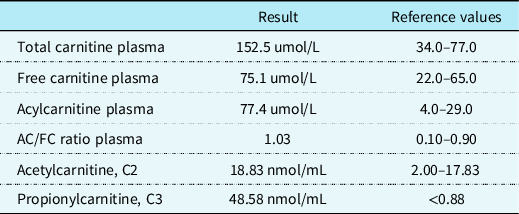
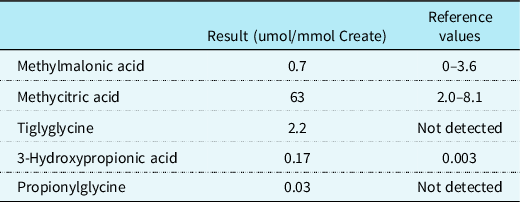
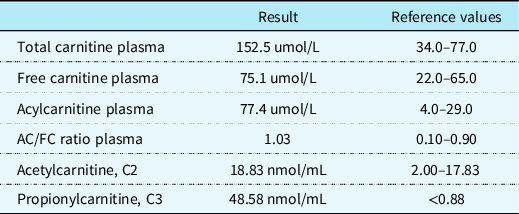
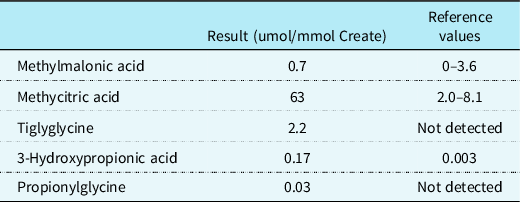
Follow-up with metabolic, cardiology, Gastroenterology, and neurology had been re-established in Qatar. The patient has been compliant with home medications and scheduled follow up. First liver ultrasound post-transplant showed no focal abnormality. Transthoracic echocardiography was done at the age of 9 years (almost 16 months post-transplant) which showed near-normal left ventricle dimension with normal ejection fraction (Table 1 summarises left ventricle dimensions and ejection fractions before and after liver transplantation in addition to pre- and post-COVID-19 infection). Between the age of 9 and 12 years (4 years post-transplant), all transthoracic echocardiography showed mild mitral regurgitation, mildly dilated left ventricle with mildly depressed to normal left ventricle systolic function Table 1. He was kept on anti-failure medications (Carvedilol and Enalapril), and clinically he was doing daily activities independently and doing light exercise NYHA class I. No history of frequent hospital admissions secondary to heart failure or metabolic decompensation. However, during COVID-19 pandemic, the patient did not attend cardiology clinic. Then, at the age of 14 years, the patient tested positive for COVID-19, with mild symptoms, which were managed in the outpatient setting. When seen in cardiology clinic at 14 4/12 years of age (almost 4 months after COVID-19 infection), no complaints were raised by the patient or his parents. However, transthoracic echocardiography showed moderately dilated left ventricle (left ventricle internal diameter-diastole 65 mm Z-score +4.0) with moderately depressed left ventricle systolic function; ejection fraction of 45% by Simpson’s method. Carvedilol dose was optimized, with plan for follow-up in 4–6 months. However, the patient needed two admissions to cardiac ICU for acute decompensated heart failure within 4 weeks period. Transthoracic echocardiography showed severely dilated left ventricle with severe systolic dysfunction. Patient’s symptoms improved with IV furosemide and IV milrinone, with no notable changes in transthoracic echocardiography findings. Hospital course was complicated with acute kidney injury, which recovered gradually. Cardiac MRI did not show any evidence of myocarditis. A trial of Entresto (sacubitril-valsartan) was not tolerated (hypotension and worsening kidney function). His transthoracic echocardiography remained concerning (severe left ventricle dilation, LVEDD more than 70 mm, and severe left ventricle systolic dysfunction, ejection fraction around 35%). During this course, there was no significant metabolic acidosis. Liver enzymes, albumin, and coagulation profile were with normal limits. Highest measured NT-pro BNP reached 603 pg/l (1 month after admission) trended down to 232 pg/l before transfer. Plasma amino acids, acylcarnitine profile, and urine organic acids were typical for propionic acidemia (summarized in Tables 2 and 3). The patient was dependent on diuretics and milrinone with signs and symptoms of heart failure even at rest (NYHA IV). We kept the patient monitored in cardiac ICU, till we managed to refer him for heart transplant in the United States. Just before this report submission, the patient has received cardiac transplant in the United States and now is recovering with stable clinical status.
Left ventricle measurements before and after liver transplantation, before and after COVID-19 infection and before heart transplantation.

EF = ejection fraction; LVIDd = left ventricle internal diameter during diastole; LVIDs = left ventricle internal diameter during systole.
Plasma amino acids and acylcarnitine profile.
Urine organic acids.
Discussion
Propionic acidemia is considered a severe form of inborn error of metabolism. There is abnormal activity of propionyl-Co A carboxylase in the liver and multiple other organs. This enzyme plays a crucial role in providing the mitochondrial respiratory chain with the main substrates. Reference Romano, Valayannopoulos and Touati5 This multimeric, biotin-dependent enzyme is encoded by the PCCA (OMIM: 232000) and PCCB (OMIM: 32050) genes. Propionic acidemia is relatively common in the Middle East with prevalence approximately 1:2000 and most cases are secondary to a PCCB gene mutation. Reference Shchelochkov, Carrillo, Venditti, Adam, Ardinger, Pagon, Wallace, Bean, Mirzaa and Amemiya6 Current management of propionic acidemia targets three main points: implementing protein restricted diet to reduce propionyl CoA production, nighttime feeding to avoid risk of fasting, and pharmacological therapy (carnitine and carglumic acid) and use of antibiotics to reduce propionate-producing flora. Reference Romano, Valayannopoulos and Touati5 Unfortunately, a lot of patients will continue to have metabolic decompensation, in addition to other complications involving multiple organ system, and outcome is generally poor. Liver transplantation can be offered as an alternative long-term management to prevent recurrent metabolic decompensations and improve the quality of life. However, careful evaluation of the patient’s clinical condition and the effect of medical treatment are crucial factors to weigh the advantages versus the disadvantages and long-term complications of liver transplant giving propionic acidemia is a multiorgan disease. Heart disease in propionic acidemia manifests as dilated cardiomyopathy and was first reported by Massoud and Leonard Reference Massoud and Leonard7 in a series of 19 paediatric patients. Hypokinetic-dilated cardiomyopathy, defined as fractional shortening of less than 28% and left ventricle end diastolic diameter Z score >+2, was evident in six cases, one of whom also had a prolonged QT. Kovacevic et al published a longitudinal observational monocentric study of 18 Pa patients over a 28-year period. Reference Kovacevic, Garbade, Hoffmann, Gorenflo, Kölker and Staufner8 In this study, patients were categorized into “early” or “late-onset” (propionic acidemia symptoms within 28 days, or after 28 days of life). Most patients (82%) had an early-onset form of propionic acidemia, and full-blown cardiomyopathy was seen in seven patients (39%), all of whom were from the early-onset cohort. One interesting finding in this study is that diastolic dysfunction, with normal systolic function, preceded deterioration of systolic function. This finding may have a role in predicting dilated cardiomyopathy in patient with propionic acidemia.
Underlying pathophysiology for propionic acidemia-induced dilated cardiomyopathy is likely secondary to propionate and its metabolites, as opposed to an effect due to acid–base disturbances. Reference Romano, Valayannopoulos and Touati5 Romano and colleagues reported 26 patients with propionic acidemia, 6 (23%) of them had hypokinetic-dilated cardiomyopathy with a mean age of the onset of 7 years. Reference Romano, Valayannopoulos and Touati5 In their data analysis, they noticed that dilated cardiomyopathy developed without any relation to the clinical presentation. Moreover, they checked enzymatic activity in patients with and without dilated cardiomyopathy. Interestingly, there was no correlation between enzyme activity and development of heart disease. In this regard, there are few proposed theories to which investigators attributed poor correlation between propionic acidemia-related dilated cardiomyopathy and clinical and laboratory findings. First theory proposing that metabolites derived from propionyl CoA (e.g., methylcitrate, methylmalonyl-CoA, etc.) are potent inhibitors of Krebs cycle enzymes. Reference Mirandola, Melo, Schuck, Ferreira, Wajner and Castilho9 Another theory claimed the level of toxic metabolites in urine are not good surrogates of level of metabolites in affected tissues. Reference Morath, Okun and Müller10
In 1991, a 2-year-old child with propionic acidemia underwent first liver transplantation. Since then, liver transplantation has been proposed as promising therapeutic choice for patient with severe form of the disease (frequent metabolic decompensations, or cardiomyopathy) which is not responding to conventional conservative management. Reference Zhou, Jiang and Wu11 We know now that liver transplantation is effective in improving clinical outcome in propionic acidemia and to largely eliminate ketolactic-acidosis crises. Reference Vara, Turner and Mundy12,Reference Critelli, McKiernan and Vockley13 It should be noted, however, that propionate metabolites can remain elevated post-transplantation. Reference Kasahara, Sakamoto and Kanazawa14 A recently published study reviewed 373 patients with propionic acidemia. Liver transplantation was effective in reversing baseline dilated cardiomyopathy in about 50% of patients. Reference Yap, Vara and Morais15 On the other hand, there have been several reports about newly developed or relapsing dilated cardiomyopathy in the peri-liver transplant period. Reference Charbit-Henrion, Lacaille and McKiernan4
Up to our knowledge, there has been one reported case of dilated cardiomyopathy recurring 3 years after liver transplantation. Reference Berry, Blume and Wessel3 In our patient, diagnosis of dilated cardiomyopathy was at age of 8 years, the age at which most propionic acidemia-related dilated cardiomyopathy manifest. After liver transplantation, left ventricle size and systolic function almost normalised Table 1, with no cardiovascular complaints for almost 6 years. One thing that we can think of as a precipitating factor for recurrence of dilated cardiomyopathy is the documented mild COVID-19 infection. However, left ventricle dimensions were gradually increasing along with mild deterioration in left ventricle function, even before COVID-19 infection. Also, our patient was not following any protein-restricted diet, which could be a background for silent accumulation of toxic metabolites.
Conclusion
Propionic acidemia is a rare, inborn error of metabolism with generally poor outcome. We reported first case from Middle East with infantile onset propionic acidemia whose dilated cardiomyopathy relapses 6 years after liver transplantation. Liver transplantation has provided acceptable symptoms control, and a period of “disease remission” for a good percentage of patients. We still have a lot to learn about pathophysiology of propionic acidemia-related dilated cardiomyopathy and recurrence of dilated cardiomyopathy post-liver transplantation.
Acknowledgements
We would like to thank all subspecialties at Sidra Medicine for the outstanding care provided to our patient, especially cardiac intensive care team.
Financial support
This research received no specific grant from any funding agency, commercial or not-for-profit sectors.
Conflicts of interest
None.
Ethical standards
This article does not contain any studies with human participants or animals performed by any of the authors.