What is known on this subject?
-
Prenatal diagnosis and planned peripartum care for critical CHDs is feasible in resource-limited settings.
-
The improved pre-operative status after prenatal diagnosis permits earlier surgery and is associated with improved surgical outcomes.
What this study adds?
-
Prenatal diagnosis and planned delivery of neonates with critical CHD is associated with significantly lower costs of cardiac care.
-
The dual benefit of improved clinical outcomes along with cost savings should encourage policymakers for developing more prenatal cardiac services in resource-limited settings.
CHDs constitute one of the most common forms of birth defects in infants with a reported prevalence of 6–8 per 1000 live births. Reference Van Der Linde, Konings and Slager1 CHDs are an important cause of infant mortality in most parts of the world, especially in high- and middle-income countries. Reference Zimmerman, Smith, Sable, Zheleva, Martin and for Kassebaum N.J.2 In particular, neonates and young infants with critical CHD are vulnerable to life-threatening complications. Reference Gilboa, Salemi, Nembhard, Fixler and Correa3 With advances in surgical techniques and peri-operative management, outcomes after neonatal heart surgery have significantly improved in the last few decades. Reference Villafane and Lantin-Hermoso4 However, these improved outcomes have been associated with significant increase in resource utilisation and costs of hospital care. Reference Musa, Hjortdal and Zheleva5 The economic burden involved in the care of critical CHD in the neonate can pose significant challenges to patients as well as healthcare systems, especially those in resource-limited settings. Reference Kumar and Shrivastava6 Recent studies have identified length of ICU and hospital stay, especially in pre-operative period as potentially modifiable variables impacting costs. Reference Raj, Paul and Sudhakar7 The pre-operative ICU stay is dependent on the clinical status of the neonate at admission (8,9).
Several studies have shown the feasibility of prenatal detection of major CHDs by implementing protocol-based fetal heart screening in populations. Reference Everwijn, van Nisselrooij and Rozendaal10,Reference Hunter, Heads, Wyllie and Robson11 Prenatal diagnosis of critical CHDs provides the option of planned delivery in a tertiary cardiac facility and expedited cardiac care. Reference Simpson12 Studies have reported the beneficial impact of such a strategy on pre-operative status and surgical outcomes in neonates with critical CHD. Reference Holland, Myers and Woods13–Reference Cloete, Bloomfield, Sadler, de Laat, Finucane and Gentles16 This is particularly significant in resource-limited settings having significant logistic hurdles in early diagnosis, timely referral and safe transport of neonates with critical CHD to a cardiac facility. Reference Karmegaraj, Kappanayil and Kumar17 We have previously reported the beneficial impact of prenatal diagnosis on the pre-operative clinical status in neonates with critical CHD in a resource-limited setting. Reference Vijayaraghavan, Sudhakar, Sundaram, Kumar and Vaidyanathan18 This can facilitate earlier surgical correction and faster post-operative recovery, thus reducing the length of hospital and ICU stay. While a few reports from high-income countries have shown the beneficial impact of prenatal diagnosis in reducing costs of in-hospital care, the impact on outcomes and costs maybe particularly relevant for resource-limited settings. Reference Gupta, Mowitz, Lopez-Colon, Nixon, Vyas and Co-Vu19
This prospective single-centre study from Kerala examines the impact of prenatal diagnosis and planned peripartum care on the costs of care in neonates undergoing cardiac surgical or catheter-based interventions for critical CHD.
Material and methods
Study setting and design
This was a prospective study (October 2019–October 2020) conducted in a tertiary care paediatric cardiac centre in Kerala, South India. About 20% of heart surgeries and catheter interventions are performed in neonates (<30 days) at our centre. A dedicated fetal cardiology division was added to the existing paediatric cardiac services in 2008. A regional network for prenatal diagnosis, referral, counselling by a fetal cardiologist and planned peripartum care was established since 2011. Reference Changlani, Jose, Sudhakar, Rojal, Kunjikutty and Vaidyanathan20 About 90% of neonates undergoing cardiac procedures were funded through Rashtriya Bal Swasthya Karyakram, a national childhood disease and disabilities screening and intervention programme for India. 21 This was implemented in Kerala through the CHD-focused Hridyam For Little Hearts programme (https://hridyam.kerala.gov.in/). 22 Some patients received funding support through the hospital charity services or through other non-government agencies.
Inclusion and exclusion criteria
All consecutive neonates (<30 days) undergoing surgery or catheter-based interventions for CHD during the study period were included. Pre-term babies (<35 weeks) were excluded; data of patients who expired in the post-procedure period were censored from the final analysis for comparison of costs.
Data collection
Demographic details collected included age and weight at admission, sex, birth order, age, occupation and educational status of parents, annual family income, type of family and number of family members. The socio-economic status was determined using the Modified Kuppuswamy scale and was classified into 4 groups – upper, upper-middle, lower-middle, and lower. Reference Sharma23 Clinical details were collected from hospital records and included cardiac diagnosis, details of pre-operative stay (pre-operative ICU admission, ventilation and sepsis), type of procedure (surgery or catheter-based intervention), intra-operative details and post-operative data (post-operative mortality, duration of ventilation, ICU and hospital stay, re-intubation and sepsis). Cardiac diagnosis for patients undergoing surgery was sub-classified as per the modified Risk assessment in Congenital heart surgery-1 criteria. Reference Jenkins24
Cost analysis
The cost analysis was done under 3 headings – total, direct, and indirect costs. Direct costs were recorded from hospital records and included costs of pharmacy, materials, services (surgery or catheter interventions, consultation, nursing), laboratory tests, bed charges, and other miscellaneous expenses. For prenatal cases, the costs and travel expenses incurred for fetal echocardiography were obtained. For neonates delivered in other hospitals and transported to our centre, the costs incurred in local hospital and transportation expenses were collected from the caregivers. Indirect costs were collected from the caregivers and included food, travel and accommodation expenses, loss of salary by work absenteeism, and other miscellaneous expenses.
Outcome analysis
The patients were divided into 2 study groups –prenatal diagnosis and planned peripartum care in our centre (Prenatal Group) and those who were delivered in other hospitals and transported to our centre (Post-natal Group). Comparison of total, direct, and indirect costs was done between the two groups. The health expenses to annual family income ratio were also computed and were compared between the 2 groups. For neonates undergoing surgical procedures, an analysis of all factors (study group, socio-economic status, cardiac diagnosis as per Risk assessment in Congenital heart surgery-1-1 category, pre-operative, intra-operative and post-operative variables and length of hospital stay) impacting costs was undertaken using a multivariate logistic regression model.
The study protocol was approved by the Institutional Ethics Committee (Ref: ECASM-AIMS-2021-200).
Statistical analysis
For categorical variables, we presented proportions while the continuous variables were reported as median with interquartile range. Since the variables affecting costs were skewed, they were log-transformed to meet the normality assumptions required by statistical tests. The relationship between study group, re-intubation, social-economic status, and pre-operative ventilation with costs was evaluated using the ordinary least square linear regression model, adjusting for potential confounding variables. The resulting parameter estimates were then back-transformed to their original scale to facilitate the interpretation of the results. The back-transformed parameters were interpreted as “median ratio” [a]. The cut-off point for statistical significance was set at an α-level of 5%. The 95% confidence intervals were also reported. Independent sample t-test was used to compare the variables affecting costs among dichotomous risk factors. One-way ANOVA with post hoc Bonferroni correction was used to compare the costs by socio-economic class and Risk assessment in Congenital heart surgery category. Pearson’s correlation was used to find the correlation between the continuous variables with the total costs. The statistical analysis was done using SPSS version 20.
Results
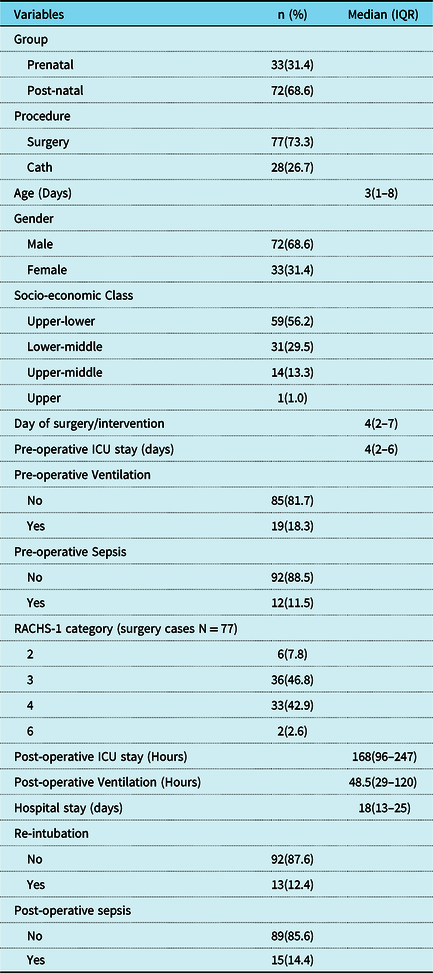
Baseline characteristics of the study patients are summarised in Table 1. A total of 111 cases were eligible during the study period; 6 (5.4%) died in the post-procedure period and hence were excluded from further analysis. The remaining 105 patients formed the study cohort; 77 (73.3%) underwent surgical procedures while the rest (n = 28; 26.7%) required catheter-based interventions. Median age at admission was 3 days (IQR 1–8 days); 72 (68.6%) of patients were male. Prenatal group included 33 neonates (31.4%); rest (n = 72 (68.6%) were in post-natal group. The most common socio-economic category was upper-lower (n = 59; 56.2%). The baseline characteristics and peri-operative details are summarised in Table 1.
Baseline characteristics of study patients (N = 105)

Comparison of costs between study groups
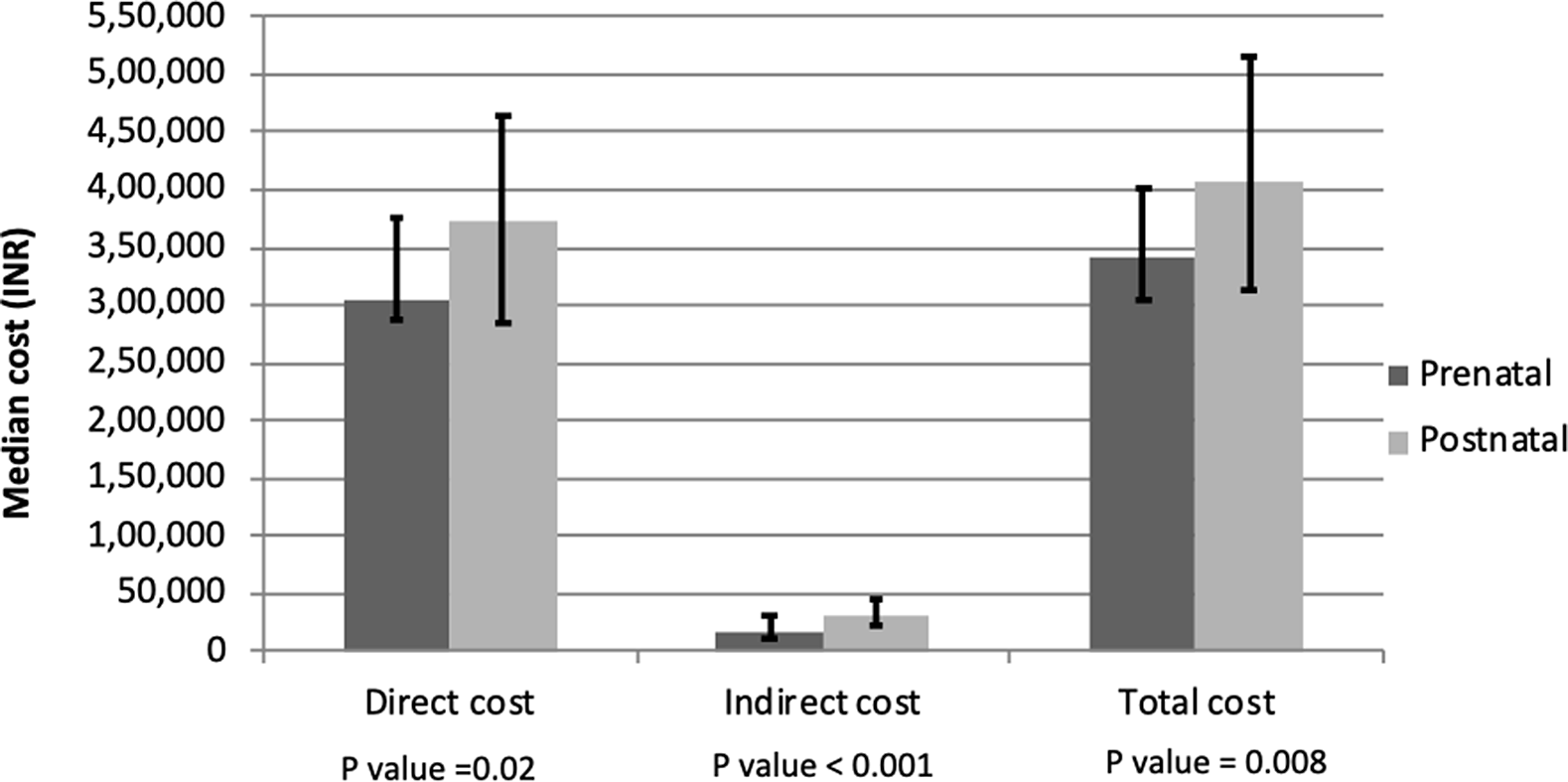
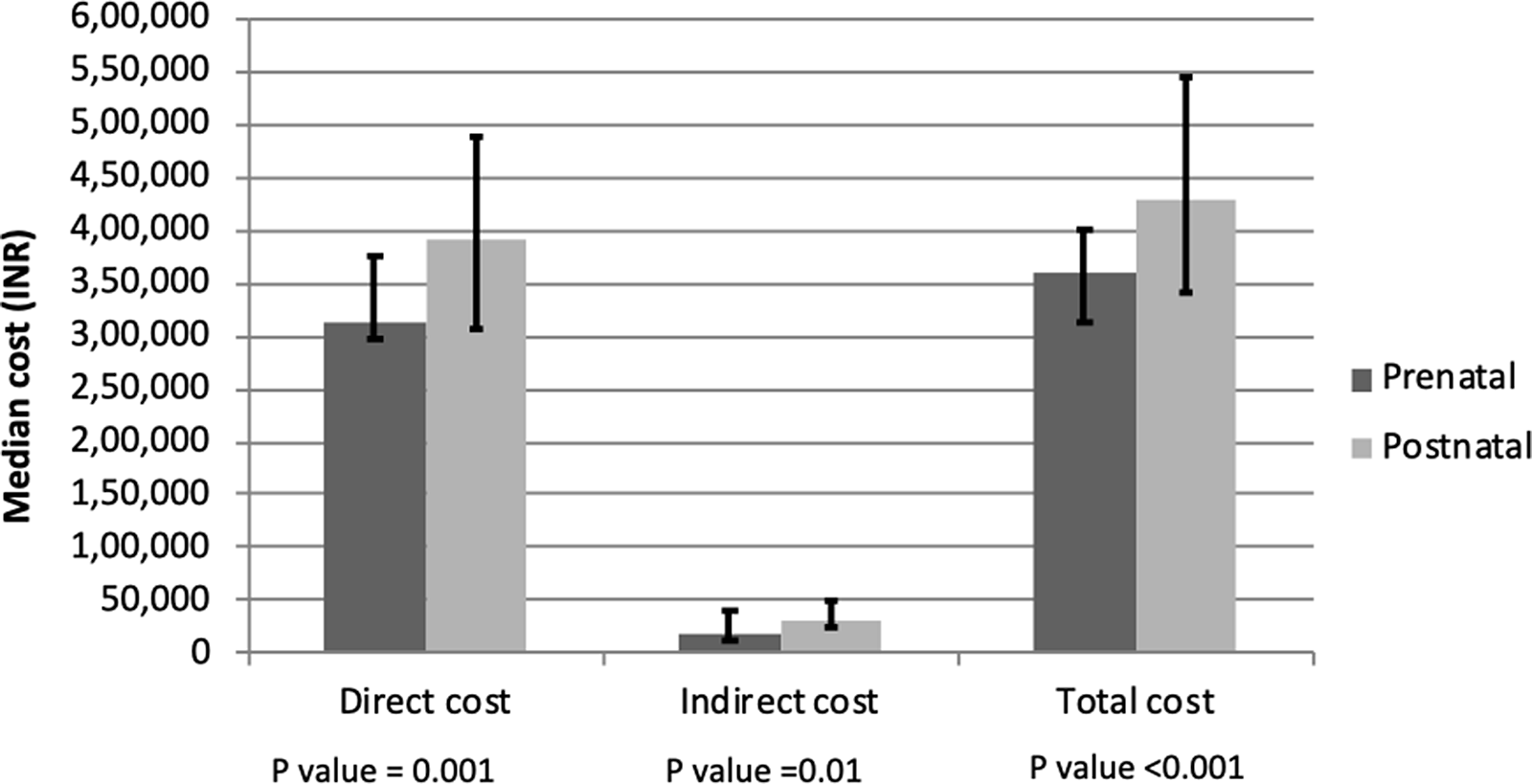
There was a statistically significant difference in total, direct, and indirect costs between the study groups. Prenatal group had a significantly lower costs in all 3 categories compared to the post-natal group. The difference in costs between the 2 groups was observed for the overall treatment group as well as those undergoing surgical procedures. These results are summarised in Figures 1 (whole group) and 2 (surgical patients).
Comparison of costs between prenatal and post-natal groups– analysis of the whole group (N = 105).

Comparison of total costs
For the whole group, the prenatal group incurred a total cost of 16.2% lower than post-natal (p = 0.008). For those undergoing surgery, the total costs were lower by 16.1% for the prenatal group (p < 0.001).
Comparison of direct costs
For direct costs, prenatal group had a 18% lower cost compared to the post-natal (p = 0.02). This difference in direct costs was even more significant in patients undergoing surgery (20.4% lower in prenatal group; p = 0.001).
Comparison of indirect costs
The indirect costs were also significantly lower in the prenatal group; both for the whole group (44.7% lower; p < 0.001) as well as those undergoing surgery (45.3% lower; p = 0.01).
Health expenses to income ratio
There was no significant difference between the annual family income between prenatal
(Median 180,000 Indian rupees (IQR 120,000–360,000) and post-natal groups (Median 144,000 Indian rupees (IQR 84,000–240,000); p = 0.128)). The health expenses to income ratio was significantly lower in prenatal group (2.04 (1.03–2.66) versus post-natal:2.58 (1.55–5.63), p = 0.01). This difference was more significant in patients undergoing surgical procedures (1.58 (1.03–2.66) vs. post-natal: 2.99 (1.91–6.02); p = 0.002).
Comparison of costs between the socio-economic categories
There was a significantly higher costs for patients in the upper-middle and upper socio-economic categories compared to the lower categories. This difference was particularly significant for the indirect costs’ category (whole group 185% higher; surgery group 207% higher). For the whole group, the direct (33%) and the total costs (35%) were also higher in the upper socio-economic groups. However, for the surgical group there was no significant difference in the direct costs, though the total costs (21.6%) were higher in the upper socio-economic groups. These results are summarised in Supplementary Table 1.
Analysis of factors impacting costs
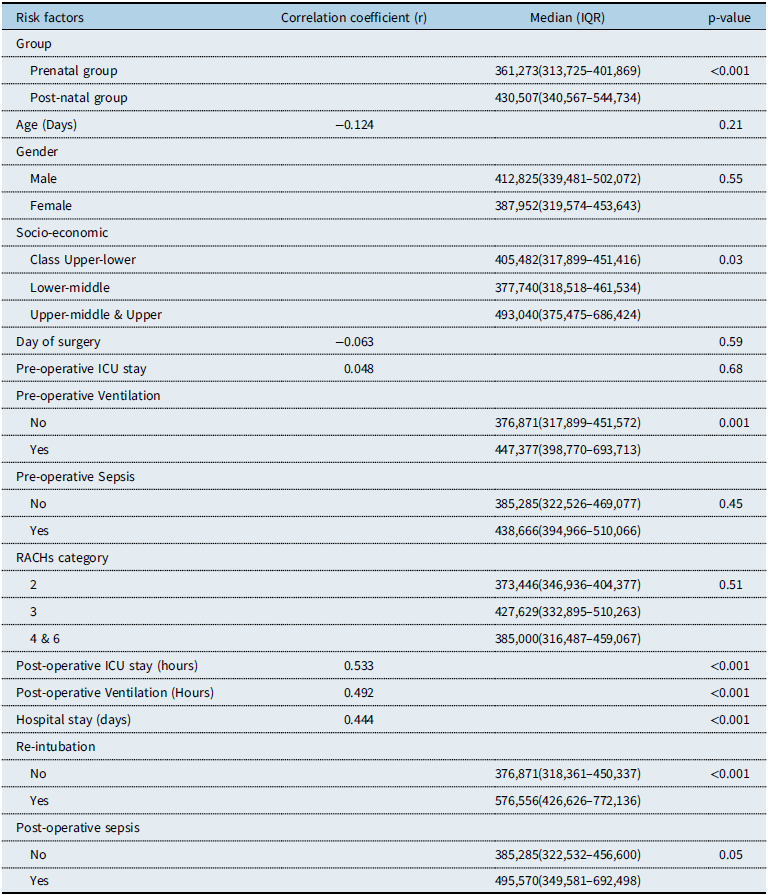
This analysis was done in patients undergoing surgical procedures (n = 77; 73.3%). On univariate analysis, the study group, socio-economic class, pre-operative ventilation, post-operative recovery times (duration of ventilation, ICU, and hospital stays), re-intubation, and post-operative sepsis emerged as significant factors which impacted costs. Factors like age at admission, sex, day of surgery, pre-operative ICU admission or sepsis, and cardiac diagnosis by Risk assessment in Congenital heart surgery-1 category did not impact costs. These results are summarised in Table 2.
Univariate analysis of factors impacting total costs in patients undergoing surgical procedures (n = 77)

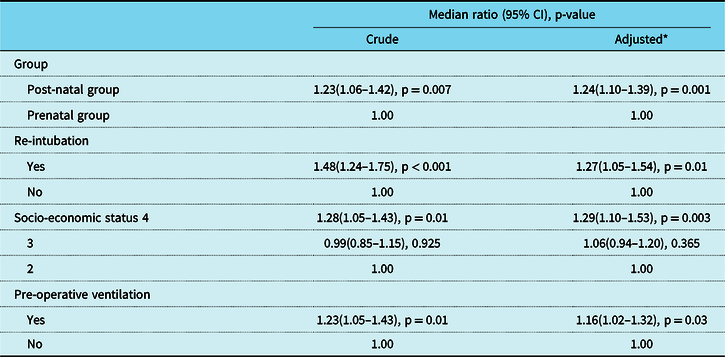
On multivariate analysis, the prenatal group had a significantly lower costs compared to the post-natal group (Adjusted odds ratio 1.24 (1.1–1.39); p = 0.001). Re-intubation in post-operative period, higher socio-economic status of family, and pre-operative ventilation were the other significant factors associated with higher costs. These results are summarised in Table 3.
Multivariate analysis of factors impacting total costs in patients undergoing surgery (N = 77)

* Adjusted by Duration of hospital stay, Post-operative ICU hours and Post-op sepsis.
Discussion
Several studies have reported improved clinical outcomes with prenatal diagnosis in neonates with critical CHD. Reference Simpson12–Reference Cloete, Bloomfield, Sadler, de Laat, Finucane and Gentles16 However, few studies have reported the potential impact of prenatal diagnosis on the costs of neonatal cardiac care. Reference Gupta, Mowitz, Lopez-Colon, Nixon, Vyas and Co-Vu19 In this study, we report significantly lower costs for neonatal cardiac care following prenatal diagnosis and planned peripartum care (Fig 1). This difference was more pronounced in neonates undergoing cardiac surgical procedures (Fig 2). In addition to absolute costs, the health expenses to income ratio (a measure of the burden on individual families) were significantly lower in the prenatal group. Prenatal diagnosis emerged as the only modifiable variable affecting costs in neonates undergoing surgical procedures on multivariate analysis (Table 3).
Comparison of costs between prenatal and post-natal groups– analysis of the patients undergoing surgery (N = 77).

Raj et al analysed factors impacting costs of CHD surgery in resource-limited settings and identified the length of ICU and hospital stay as potentially modifiable factors impacting costs. Reference Raj, Paul and Sudhakar7 Studies from resource-limited settings highlight the inherent difficulties in transporting critically sick neonates with CHD to the cardiac centre, often resulting in a sub-optimal clinical status on arrival. Reference Karmegaraj, Kappanayil and Kumar17 This impacts peri-operative outcomes and length of hospital stay in infants undergoing CHD surgery (8,9). Prenatal diagnosis overcomes most of these logistic barriers and ensures that the pre-operative care is optimised prior to surgery. Studies from resource-limited settings have shown the benefits of prenatal diagnosis on the transport stability scores and pre-operative status in neonates with critical CHD. Reference Vijayaraghavan, Sudhakar, Sundaram, Kumar and Vaidyanathan18 In a recent study, we reported that prenatally diagnosed cases with transposition of the great arteries with intact ventricular septum (a critical CHD which is correctable by a single-stage surgery with excellent long-term outcomes) underwent earlier surgical correction with improved outcomes compared with those diagnosed after birth. Reference Kunde, Thomas, Sudhakar, Kunjikutty, Kumar and Vaidyanathan25 The improved pre-operative status permits earlier surgery, thereby reducing the length of ICU and hospital stay, and directly impacting the costs.
In this study, prenatal diagnosis emerged as the only modifiable factor affecting costs in neonates undergoing CHD surgery (Table 3). The relatively lower number of patients in the prenatal group is indicative of the fact that only a smaller proportion of neonates receiving cardiac care had a prenatal diagnosis. The need for pre-operative ventilation, another factor impacting costs, may also be reduced by prenatal diagnosis due to the lower clinical instability in this group. Reference Vijayaraghavan, Sudhakar, Sundaram, Kumar and Vaidyanathan18 The linear correlation between socio-economic class and costs observed in this study has been reported before. Reference Raj, Paul and Sudhakar7 This is likely to be due to the higher indirect costs in the higher socio-economic groups (hospital room category, accommodation outside hospital, and economic loss due to loss of job days). Direct costs which reflect the actual hospitalisation expenses were not significantly different between the socio-economic groups (Supplementary Table 1).
These results can have significant implications for paediatric cardiac programmes globally, especially those in resource-limited settings. Reference Kumar and Shrivastava6 Efforts towards improving outcomes after neonatal cardiac surgery have been associated with a proportionate increase in the costs of in-hospital care. Reference Musa, Hjortdal and Zheleva5 As more low-and-middle-income countries consider including paediatric cardiac care in universal health coverage programmes, strategies to optimise costs of care along with improving treatment outcomes can influence policymakers’ decisions (5–7). A strength of this programme was the state government implementation of a fetal screening training programme since 2017 to improve the skills of obstetricians and radiologists. 22 Prenatal screening of the fetal heart should be made an integral part of the mid-trimester anomaly scan, which is recommended as a part of standard obstetric care in most countries. Reference Carvalho, Allan and Chaoui26 Though conducting fetal echocardiograms for all pregnancies is not cost-effective, screening and referral of cases which fail screening for expert evaluation and counselling is feasible. Reference Roberts, Henderson, Mugford, Bricker, Neilson and Garcia27–Reference Evans, Castillo and Rollins29 Paediatric cardiac programmes should consider adding a prenatal diagnosis service for providing a detailed counselling and facilitating planned peripartum care. Reference Changlani, Jose, Sudhakar, Rojal, Kunjikutty and Vaidyanathan20,Reference Donofrio, Moon-Grady and Hornberger30 As CHD’s contribution to infant mortality grows, even in low-income and especially in middle-income countries, fetal heart screening can evolve into a major healthcare intervention in addressing Target 3 of Sustainable Development Goals , which is reduction of preventable deaths of newborns and children under 5 years of age (2,30). Sustainable Development Goals 3 is part of the 2030 Agenda for Sustainable Development adopted by all United Nations Member States in 2015. We believe that the global commitment to reduce newborn mortality cannot be achieved unless deaths from CHD are prevented and that can only be achieved if individual countries make national commitments with matching investments. Reference Zimmerman, Smith, Sable, Zheleva, Martin and for Kassebaum N.J.2
The study has limitations in that it describes a single-centre experience, and the results could have been influenced by the centre expertise on procedural timing and outcomes, as well as the availability of a dedicated fetal cardiology specialist. The actual costs involved in the development and maintenance of the prenatal service were not analysed in this study. Availability of dedicated fetal cardiology specialists, a system for community-level fetal heart screening with referral of suspected cases for expert evaluation and availability of a multi-disciplinary team for providing comprehensive diagnosis, counselling, and planned peripartum care are barriers which may limit the generalisability of our results to other centres in low-resource settings. The economic implications of universal fetal heart screening for all pregnancies, accuracy of the screening in the population, and cost implications of missed diagnoses were not evaluated in this study.
In conclusion, prenatal diagnosis and planned peripartum care of critical CHD is feasible in resource-limited settings and is associated with significantly lower costs of neonatal cardiac care. The dual benefit of improved clinical outcomes and lower costs of cardiac care should encourage policymakers in resource-limited settings towards developing more prenatal cardiac services.
Supplementary material
To view supplementary material for this article, please visit https://doi.org/10.1017/S104795112100487X
Acknowledgements
None.
Financial support
The authors have no financial sources relevant to this article to disclose.
Potential conflicts of interest
The authors have no conflicts of interest relevant to this article to disclose.
Ethical standards
The study protocol was approved by the Institutional Ethics Committee (Ref: ECASM-AIMS-2021-200) .
Author contribution
Balu Vaidyanathan conceptualised and designed the study, carried out the data analysis, drafted and edited initial manuscript, reviewed and revised the final manuscript and shall act as the guarantor and corresponding author for the manuscript. Karthika Rani and Farooq Kunde conceptualised and designed the study, collected and analysed the data, and reviewed the manuscript. Stephy Thomas collected the data, carried out the initial analysis, and reviewed the manuscript. Abish Sudhakar designed the data collection instruments, collected data, carried out the initial analyses, and reviewed and revised the manuscript. Raman Krishna Kumar and Bistra Zheleva analysed the data, reviewed the initial manuscript, and revised the manuscript in its final format. All authors approved the final manuscript as submitted and agree to be accountable for all aspects of the work.