Introduction
Elder neglect is defined as ‘intentional or unintentional withholding of food, medication or other necessities that result in the older person's failure to thrive’ (Levine Reference Levine2003: 38). Other definitions portray elder neglect as an omission or inadequate care on the part of the designated care-giver in the context of a trustful relationship (Aravanis et al. Reference Aravanis, Adelman, Breckman, Fulmer, Holder, Lachs, O'Brien and Sanders1993; National Research Council Reference Bonnie and Wallace2003). Elder neglect is a highly prevalent type of elder mistreatment affecting as many as 20 per cent of all dependent older adults according to a recent systematic review (Cooper, Selwood and Livingston Reference Cooper, Selwood and Livingston2008). It is also the most common type of elder mistreatment reported to adult protection agencies (Fulmer et al. Reference Fulmer, Paveza, VandeWeerd, Fairchild, Guadagno, Bolton-Blatt and Norman2005; Tatara Reference Tatara1994).
The detrimental effects of elder neglect are well documented. It has been shown to be associated with a higher risk for hospitalisation (DePalma et al. Reference DePalma, Xu, Covinsky, Craig, Stallard, Thomas and Sands2013), deteriorated mental and physical health of the older adult (Blazer, Sachs-Ericsson and Hybels Reference Blazer, Sachs-Ericsson and Hybels2007; Dong Reference Dong2005; Otero et al. Reference Otero, de Yebenes, Rodriguez-Laso and Zunzunegui2003) and even increased mortality (Blazer, Sachs-Ericsson and Hybels Reference Blazer, Sachs-Ericsson and Hybels2005). Given the high prevalence and the negative consequences of elder neglect, there is a need for research on the context in which elder neglect takes place as well as on the aetiology of elder neglect.
There is a growing body of literature arguing for the importance of conducting dyadic research in the field of care-giving (Lyons and Sayer Reference Lyons and Sayer2005; Lyons et al. Reference Lyons, Zarit, Sayer and Whitlatch2002). This stems from the notion that the sum is greater than its parts and in order to understand the care-giving experience fully, one has to jointly take into consideration both the care-giver and the care recipient.
The present study examines both care-givers' and care recipients' characteristics as potential predictors of elder neglect, using a triadic model of care which takes into account the various stakeholders involved in the home care arrangement: the older care recipient, his or her family member, and a home care worker. In order to explain the phenomenon of elder neglect, the study integrates two prominent models: the risk and vulnerability model for elder neglect (Fulmer et al. Reference Fulmer, Paveza, VandeWeerd, Fairchild, Guadagno, Bolton-Blatt and Norman2005; Rose and Killien Reference Rose and Killien1983) and the care-giver stress model (Lawton et al. Reference Lawton, Moss, Kleban, Glicksman and Rovine1991; Lazarus and Folkman Reference Lazarus and Folkman1984; Pearlin et al. Reference Pearlin, Mullan, Semple and Skaff1990; Yates, Tennstedt and Chang Reference Yates, Tennstedt and Chang1999).
The risk and vulnerability model suggests that both care-givers' characteristics and care recipients' characteristics are related to elder neglect (Fulmer et al. Reference Fulmer, Paveza, VandeWeerd, Fairchild, Guadagno, Bolton-Blatt and Norman2005; Rose and Killien Reference Rose and Killien1983). Risk factors for elder neglect are considered to fall within the care-giver's environment and include the care-giver's characteristics, such as burnout, depression or loneliness. The care recipient's characteristics, such as deteriorated cognitive and functional levels or isolation are considered as vulnerability factors. In support of this model, a dyadic study identified several risk and vulnerability factors for elder neglect. Among the risk factors are the functional status of the care-giver, certain personality characteristics of the care-giver and the care-giver's exposure to childhood trauma. The cognitive, functional and emotional status of the care recipient, the availability of social support, exposure to childhood trauma and certain personality characteristics were identified as potential vulnerability factors to elder neglect (Fulmer et al. Reference Fulmer, Paveza, VandeWeerd, Fairchild, Guadagno, Bolton-Blatt and Norman2005). A different study, employing a triadic perspective, including a care recipient, a home care worker and a family member, identified the family member's dissatisfaction with the relationship with the older adult as a consistent risk factor and lower financial status of the older care recipient as a consistent vulnerability factor for elder neglect (Ayalon Reference Ayalon2011).
The care-giver stress model is a different model that takes the care-giver's and the care recipient's characteristics into consideration (Lawton et al. Reference Lawton, Moss, Kleban, Glicksman and Rovine1991; Lazarus and Folkman Reference Lazarus and Folkman1984; Pearlin et al. Reference Pearlin, Mullan, Semple and Skaff1990; Yates, Tennstedt and Chang Reference Yates, Tennstedt and Chang1999). The model views the care recipient's characteristics, such as the inability to perform activities of daily living (ADL) or instrumental activities of daily living (IADL) and the presence of neuropsychiatric symptoms (NPSY) as primary stressors, which in turn impact the care-giver's primary appraisal of the situation in the form of informal care (i.e. unpaid by family or friends) provided to the older care recipient. This, in turn, impacts the care-giver's secondary appraisal, in the form of burden and distress associated with care-giving. The model further delineates some of the negative emotional consequences associated with care-giving, such as lower levels of quality of life, wellbeing and subjective health, and higher levels of loneliness or depression reported by the care-giver (Ayalon and Green Reference Ayalon and Green2013; Chappell and Reid Reference Chappell and Reid2002; Son et al. Reference Son, Erno, Shea, Femia, Zarit and Parris Stephens2007; Yates, Tennstedt and Chang Reference Yates, Tennstedt and Chang1999).
The advantage of the care-giver stress model is that it provides a sequential model that integrates the characteristics of the older care recipient and the family care-giver. This model, however, does not evaluate elder neglect as an outcome, but is rather focused on the emotional state of the care-giver as its main outcome. Although the risk and vulnerability model evaluates elder neglect as an outcome, it does not offer a sequential model, but rather views the various characteristics of the care-giver and the care recipient as directly related to elder neglect. Moreover, because much of the care currently provided to older adults involves a combination of formal (paid) and informal sources of care (Ayalon et al. Reference Ayalon, Halevy-Levin, Ben-Yizhak and Friedman2013; Litwin and Attias-Donfut Reference Litwin and Attias-Donfut2009), a dyadic perspective that considers only the family care-giver and the care recipient is not always applicable. In an attempt to integrate these two models and to account for the triadic nature of many of the care-giving systems currently in place, the present study evaluates both care-givers' and care recipients' characteristics in relation to elder neglect.
The intersection of formal and informal home care in Israel
In 1988, Israel enacted the Long-Term Care Community Law (LTCCL) in order to maintain older adults in their homes for as long as possible, by providing partial support to family care-givers (Iecovich Reference Iecovich2012). Currently, about 17 per cent of older Israelis are supported by the LTCCL. About 70 per cent of these older adults use the support of the LTCCL in the form of home care services (National Insurance Institute of Israel (NIII) 2011). There are currently two types of home care services available for older Israelis: (a) live-out home care services, which are provided for only several hours per week by Israeli home care workers and (b) migrant live-in home care services, which are provided around the clock by temporary migrant workers from the Far East or Eastern Europe. Thus far, the LTCCL has been highly effective in maintaining older adults in their home as only about 3 per cent of older Israelis live in institutions (Brodsky, Snoor and Beer Reference Brodsky, Snoor and Beer2011).
The LTCCL covers up to 22 hours of home care services per week for those care recipients who rely on Israeli workers and up to 18 hours of home care services per week for those who rely on migrant home care workers (NIII 2011). The difference in governmental coverage is fuelled by the desire to encourage older adults to rely on live-out Israeli home care workers, rather than on live-in migrant home care workers. Both types of home care services consist of the provision of personal care to the older care recipient and assistance with light household chores. Eligibility for home care services is a function of age, financial status and functional impairment. Only the most impaired older adults (score over 4.5 on the dependency test conducted by the NIII or score over 4 and live alone/over the age of 90) are entitled to have a live-in migrant home care worker.
Although the LTCCL provides a relatively generous support to older community-dwelling Israelis, past research has shown that as many as 28 per cent of older home care recipients in Israel report neglect (Ayalon Reference Ayalon2011). These prevalence rates are consistent with a national Israeli survey of community-dwelling older adults (Lowenstein et al. Reference Lowenstein, Eisikovits, Band-Winterstein and Enosh2009). Nevertheless, several characteristics of the home care arrangement potentially put older care recipients at a heightened risk for elder mistreatment, including elder neglect. Among these are the facts that home care takes place behind closed doors with very limited supervision. There is a considerable reason to believe that all stakeholders involved in this care-giving arrangement experience high levels of loneliness (Ayalon, Shiovitz-Ezra and Palgi Reference Ayalon, Shiovitz-Ezra and Palgi2012). Given past research that has documented a relationship between loneliness and elder mistreatment in general (Dong et al. Reference Dong, Simon, Gorbien, Percak and Golden2007), this may put older home care recipients at a great risk and vulnerability for elder neglect. In addition, because one of the eligibility criteria for home care in Israel concerns the older adult's impaired functional status, older home care recipients might be particularly vulnerable to elder mistreatment, as many of them suffer from substantial functional and cognitive declines (Ayalon Reference Ayalon2011), which were identified as vulnerability factors for elder neglect in past research (Fulmer et al. Reference Fulmer, Paveza, VandeWeerd, Fairchild, Guadagno, Bolton-Blatt and Norman2005). The age and cultural gaps between the older adult and the home care worker (in the case of live-in migrant workers) might pose additional risks for elder mistreatment (Ayalon Reference Ayalon2011). Finally, the high levels of interdependence between older adults and their home care workers serve as additional risk and vulnerability factors. This might be particularly pronounced in the case of live-in migrant home care workers who depend on the older adult not only for maintaining their job, but also as a means to ensure their stay in the country (Ayalon Reference Ayalon2011).
The present study
The present study integrates the risk and vulnerability model of elder neglect and the care-giving stress model by examining both care-givers' and care recipients' outcomes using a triadic model of care which takes into account the various members involved in the home care arrangement. As previously suggested by Kenny (Reference Kenny1996), non-independence in dyadic studies (or triadic in the present study) might take three potential paths: (a) partner effect, when a characteristic of one partner directly influences the other partner (e.g. the care-giver's burden has a direct path to the care recipient's neglect); (b) mutual influence, when one member's score causes the other partner's score and vice versa (e.g. family care-giver's burden has a direct path to home care worker's burden and vice versa); and (c) common fate, when both members are exposed to the same common causal factor (e.g. poor functional status is directly associated with the family care-giver's and the home care worker's burden) (Kenny Reference Kenny1996). The present study follows this conceptual framework by examining a triadic model of non-independence in the home care setting.
The proposed conceptual model suggests that primary stressors or sources of vulnerability in the form of the care recipient's functioning, such as functional impairment or NPSY, are directly related to the amount of informal support provided by family members and the type of formal support provided by the home care worker (live-in migrant versus live-out Israeli) (i.e. primary appraisal). These, in return, are associated with the burden experienced by family members and home care workers (i.e. secondary appraisal) (Yates, Tennstedt and Chang Reference Yates, Tennstedt and Chang1999). The secondary appraisals serve as risk factors, which are directly related to the level of neglect experienced by the older care recipient (Fulmer et al. Reference Fulmer, Paveza, VandeWeerd, Fairchild, Guadagno, Bolton-Blatt and Norman2005). Figure 1 outlines the conceptual model.
The conceptual model. Demographic characteristics were included in the model but are not presented in the figure as they are not central to the model. In addition to indirect effects, direct effects from: (a) the primary stressors (activities of daily living/instrumental activities of daily living (ADL/IADL) impairment and neuropsychiatric symptoms (NPSY) to the secondary appraisals (burden) and the care recipient's neglect and (b) the primary appraisals (informal assistance and type of home care) to the care recipient's neglect were estimated. Indicators provided by the same member of the care-giving unit (e.g. burden and neglect reported by the home care worker) were allowed to correlate in order to control for common-method variance, not captured by the latent constructs.

Methods
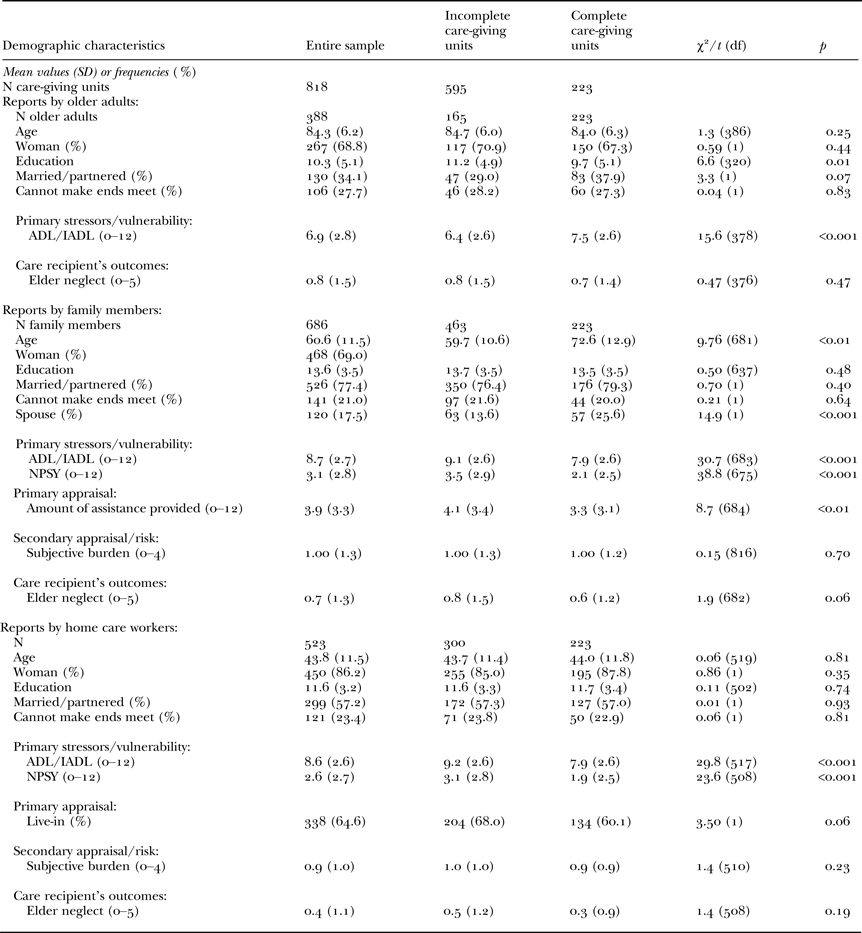
The study was funded by the NIII and approved by the ethics committee of the principal investigator's university. A random stratified sample of older adults over the age of 70 who live in the centre of Israel was drawn from the national pool of 15,564 older adults who receive financial assistance from the NIII under the LTCCL in the designated geographical area. Eligibility criteria for inclusion were: care recipient is over the age of 70, lives in the centre of Israel, speaks Hebrew or Russian, and meets the eligibility criteria for employing a migrant home care worker (as only the most impaired older adults are eligible to employ a migrant home care worker). Older care recipients with severe cognitive impairments per the reports of the family care-giver were excluded. However, their family members and home care workers were allowed to participate in the study. Corresponding primary family care-givers based on the records of the NIII or based on the reports of the care recipient were invited to participate, provided they spoke Hebrew or Russian. Home care workers who spoke Hebrew, English or Russian were also eligible to participate in the study. To account for the fact that many older care recipients may suffer from milder forms of cognitive impairments, all interviews were conducted by trained interviewers, using a face-to-face format. There was an explicit attempt to conduct the interviews separately, without the presence of other members of the care-giving unit during interview. The final sample consisted of 686 family members, 388 older adults and 523 home care workers (818 care-giving units, 49.4% response rate per care-giving unit; 336 dyads, 223 triads). See Table 1 for demographic characteristics of the sample.
Sample characteristics
Notes: Of the 818 care-giving units, 223 complete care-giving units and 335 dyads (e.g. only two members of the same care-giving unit were interviewed: 66 units consisted of a family member and an older care recipient, 190 units consisted of a family member and a home care worker, and 79 units consisted of an older care recipient and a home care worker) were interviewed. A total of 260 care-giving units had only one person interviewed (in 21 units only an older care recipient was interviewed, in 209 units only a family member was interviewed and in 29 units only a home care worker was interviewed). df: degrees of freedom. SD: standard deviation. ADL/IADL: activities of daily living/instrumental activities of daily living. NPSY: impairment and neuropsychiatric symptoms.
Missing data
The NIII does not have complete data concerning the characteristics of family care-givers or home care workers. Hence, only care recipients' characteristics of those who participated in the study versus those who did not participate were compared. Among older adults who agreed to participate, there were more men (31.6%) than among those who did not agree to participate (22.6%) (χ2 = 7.33, p < 0.001). Consistently, the percentage of family members who were the relatives of older men was higher among those who agreed to participate (33.2%) than among those who did not participate (24.7%) (χ2 = 9.06, p < 0.001).
Differences between the characteristics of stakeholders in units in which only one or two members from the same care-giving unit completed the survey (i.e. incomplete care-giving units) and the characteristics of members in units in which all three members completed the survey (i.e. complete care-giving units) are detailed in Table 1.
Given the large percentage of missing data at the level of the care-giving unit, analysis relied on the 223 complete care-giving units. However, when data are not missing completely at random (as is most often the case), ignoring available information by limiting the analysis to complete units results in biased estimates that cannot be generalisable to the entire population from which families were sampled (Acock Reference Acock2005; Blozis et al. Reference Blozis, Ge, Xu, Natsuaki, Shaw, Neiderhiser, Scaramella, Leve and Reiss2013; Schafer and Graham Reference Schafer and Graham2002). Therefore, an additional sensitivity analysis consisted of the entire sample (818 care-giving units), using multiple imputation to account for missing values (Asparouhov and Muthen Reference Asparouhov and Muthén2010). Multiple imputation analysis creates multiple data-sets, in which the missing observations are imputed based on information from observed variables. This allows for the inclusion of variables not included in the analysis, but potentially correlated with the variables of interest or with the reasons for missing data (i.e. auxiliary variables) in the imputation process. Analysis is performed on each imputed data-set separately and pooled together at the final stage. Results from this analysis are noted briefly.
Measures
Care recipients' outcomes. Elder neglect: Neglect was assessed on a six-item scale used in previous studies in Israel (Ayalon Reference Ayalon2011; Lowenstein et al. Reference Lowenstein, Eisikovits, Band-Winterstein and Enosh2009). Items on the scale address both needs for services as well as needs for assistance in ADL or IADL. The original scale was built based on a review of the literature, expert panel discussions and preliminary piloting of the measure with ten older adults (Eisikovits, Winterstein and Lowenstein Reference Eisikovits, Winterstein and Lowenstein2004). It was subsequently administered to 1,045 community-dwelling older adults as part of a national survey of elder mistreatment. In preparation for use with older home care recipients, their family members and their home care workers, several steps were taken. First, interviews with the involved parties concerning issues of elder abuse and neglect were conducted and major themes that emerged in the interviews were examined against the existing measure (Ayalon Reference Ayalon2009; Ayalon, Kaniel and Rosenberg Reference Ayalon, Kaniel and Rosenberg2008). An additional item concerning unmet needs for supervision was added based on findings from qualitative research with older adults and their family members (Ayalon Reference Ayalon2011). The revised measure was administered to a convenience sample of family members, older adults and home care workers. The measure demonstrated adequate concurrent validity by its association with older adults' lower financial status and lower satisfaction with the relationship with the older adult (Ayalon Reference Ayalon2011). Measurement invariance across the three groups of members was established, with five of the seven items which were deemed as adequate indicators of the overall construct (Ayalon Reference Ayalon2014). Responses to the items were dichotomised to represent whether or not a particular type of neglect took place over the past year. The range of the entire scale was 0–5, with a higher score representing greater neglect. In the present study, all three members completed the measure in relation to the older care recipient's state. Cronbach's alpha in the present study was 0.83 for family members, 0.91 for home care workers and 0.89 for older adults. See the Appendix for further information on this measure.
The content of the neglect scale overlaps with other scales currently in use worldwide. Similar to the present scale, most scales currently in use address ADL and IADL unmet needs (Choi and McDougall Reference Choi and McDougall2009; DeLiema et al. Reference DeLiema, Gassoumis, Homeier and Wilber2012; DePalma et al. Reference DePalma, Xu, Covinsky, Craig, Stallard, Thomas and Sands2013; Desai, Lentzner and Weeks Reference Desai, Lentzner and Weeks2001; Elderly Crime Victims Resource Center, Lifespan of Greater Rochester and Weill Cornell Medical Centre 2011; Gaugler et al. Reference Gaugler, Kane, Kane and Newcomer2005; LaPlante et al. Reference LaPlante, Kaye, Kang and Harrington2004; Lowenstein et al. Reference Lowenstein, Eisikovits, Band-Winterstein and Enosh2009; Quail, Wolfson and Lippman Reference Quail, Wolfson and Lippman2011). Some scales also address needs for services (Casado, van Vulpen and Davis Reference Casado, van Vulpen and Davis2011; Giraldo-Rodríguez and Rosas-Carrasco Reference Giraldo-Rodríguez and Rosas-Carrasco2013) and safety or housing needs (Blazer, |Sachs-Ericsson and Hybels Reference Blazer, Sachs-Ericsson and Hybels2005, Reference Blazer, Sachs-Ericsson and Hybels2007; Post et al. Reference Post, Page, Conner, Prokhorov, Fang and Biroscak2010). In addition, consistent with the present study, many studies have relied on a dichotomous measure of neglect (Blazer, |Sachs-Ericsson and Hybels Reference Blazer, Sachs-Ericsson and Hybels2005, Reference Blazer, Sachs-Ericsson and Hybels2007; Casado, van Vulpen and Davis Reference Casado, van Vulpen and Davis2011; Choi and McDougall Reference Choi and McDougall2009; DeLiema et al. Reference DeLiema, Gassoumis, Homeier and Wilber2012; DePalma et al. Reference DePalma, Xu, Covinsky, Craig, Stallard, Thomas and Sands2013; Desai, Lentzner and Weeks Reference Desai, Lentzner and Weeks2001; Giraldo-Rodríguez and Rosas-Carrasco Reference Giraldo-Rodríguez and Rosas-Carrasco2013; LaPlante et al. Reference LaPlante, Kaye, Kang and Harrington2004; Post et al. Reference Post, Page, Conner, Prokhorov, Fang and Biroscak2010; Quail, Wolfson and Lippman Reference Quail, Wolfson and Lippman2011; Vlachantoni et al. Reference Vlachantoni, Shaw, Willis, Evandrou, Falkingham and Luff2011). Although some studies have assessed current neglect (Blazer, |Sachs-Ericsson and Hybels Reference Blazer, Sachs-Ericsson and Hybels2005, Reference Blazer, Sachs-Ericsson and Hybels2007; Choi and McDougall Reference Choi and McDougall2009), others assessed neglect over a period of one month (Desai, Lentzner and Weeks Reference Desai, Lentzner and Weeks2001; Post et al. Reference Post, Page, Conner, Prokhorov, Fang and Biroscak2010), three months (Lowenstein et al. Reference Lowenstein, Eisikovits, Band-Winterstein and Enosh2009), six months (Lowenstein et al. Reference Lowenstein, Eisikovits, Band-Winterstein and Enosh2009) or a year (Elderly Crime Victims Resource Center, Lifespan of Greater Rochester and Weill Cornell Medical Centre 2011; Giraldo-Rodríguez and Rosas-Carrasco Reference Giraldo-Rodríguez and Rosas-Carrasco2013).
Secondary appraisal/risk factors. Burden: Care-giving burden associated with assisting the care recipient with ADLs and IADLs was measured using 12 items. Each item was ranked on a scale ranging between 0 (no burden) and 4 (high levels of burden) (Cohen et al. Reference Cohen, Levin, Gagin and Friedman2007). The range of the entire measure was 0–4, with a higher score indicating greater subjective burden. Both family members and home care workers completed this measure. Cronbach's alpha in the present study was 0.98 for family members and 0.99 for home care workers.
Primary appraisal. Type of worker: Live-in (1) versus live-out (0) home care use was determined based on self-report.
Informal care: Whether or not the family member provided ADL/IADL assistance to the care recipient was assessed on a 12-item scale (1 = yes, 0 = no). The range of the entire scale was 0–12, with a higher score indicating greater informal assistance (Cohen et al. Reference Cohen, Levin, Gagin and Friedman2007). Cronbach's alpha was 0.93.
Primary stressors/vulnerability factors. Functional status: Functional status was evaluated in terms of the care recipient's ability to perform six ADLs (e.g. eating, dressing; Katz et al. Reference Katz, Downs, Cash and Grotz1970) and six IADLs (e.g. preparing a meal, managing finances; Lawton and Brody Reference Lawton and Brody1969). The sum of impaired activities was calculated to reflect overall ADL/IADL impairment. The range was 0–12, with a higher score indicating greater impairment. All three members completed this measure in relation to the older care recipient's state. Cronbach's alpha was 0.82 for family members, 0.77 for home care workers and 0.76 for older adults.
NPSY: The measure was developed to assess NPSY in a variety of neurologic disorders. It includes 12 items, ten behavioural and two neurodegenerative. Respondents were asked to indicate whether or not a symptom was present (Cummings Reference Cummings1997). A summary of all symptoms present was calculated, producing a range from 0 to 12. Family members and home care workers completed this measure in relation to the older care recipient's state. Cronbach's alpha in the present study was 0.81 for family members and 0.80 for home care workers.
Demographic characteristics. Age, gender, financial status (cannot make ends meet (0) versus enough, comfortable or excellent (1)), marital status (married (1) versus not married (0)) and the relationship to the care recipient (spouse (1) or other (0)) were gathered based on self-report.
Analysis
Descriptive statistics were estimated. To determine agreement between the three members of the care-giving unit with regard to neglect of the older care recipient, kappa statistics were calculated. The kappa statistic examines the degree of agreement beyond chance. A kappa statistic of 1 indicates a perfect agreement, whereas 0 indicated the agreement expected by chance alone (Cohen Reference Cohen1960). Next, the theoretical model was evaluated, using structural equation modelling (SEM) with Mplus (Muthén and Muthén Reference Muthén and Muthén1998–2011). SEM allows the testing of more than one equation simultaneously and the relationships between parameters in different equations are specified. When observations are non-independent, there is a need to address the triad as the unit of analysis. N represents the number of care-giving units and responses from the various stakeholders are entered on the same row, with each variable being placed three times on a single row in the data-set, once for each type of member of the care-giving unit (e.g. the ages of the care recipient, the family care-giver and the migrant home care worker are indicated on a single row as three different variables) (Cook and Kenny Reference Cook and Kenny2005).
In analysing the data, the present study combined two models of interdependence in interpersonal relations: (a) the actor–partner interdependence model (APIM) and (b) the common fate model (CFM). The components of the APIM include actor effects and partner effects. An actor effect measures how much a characteristic of one person impacts a different characteristic of the same person (e.g. a direct path from the family member's informal care to family member's burden). A partner effect measures how much one person's characteristic impacts another person's characteristic (e.g. a direct path from the family member's informal care to the home care worker's burden). Correlations between the independent predictors are estimated in order to assess actor effects while controlling for partner effects and vice versa. The unexplained variances in the dependent variables are also correlated in order to control for additional sources of non-independence (Kenny, Kashy and Cook Reference Kenny, Kashy, Cook, Kenny, Kashy and Cook2006). Primary and secondary appraisals were modelled as personal variables in an APIM.
To account for the fact that all members in the care-giving unit are exposed to the same causal factor (e.g. the care recipient's ADL/IADL impairment and NPSY) and that the care recipient's outcomes (e.g. neglect) were estimated by all three members of the care-giving unit, the CFM was used in combination with the APIM. The constructs of ADL/IADL impairment, NPSY and elder neglect were modelled as latent dyadic (in the case of NPSY) or triadic constructs (in the case of ADL/IADL impairment and elder neglect) common to the three stakeholders. Stakeholders' reports (e.g. family members, home care workers and older adults) were used as observed indicators. The advantages of the CFM over direct calculation of a mean score is that the CFM allows for measurement errors and for the estimation of covariances between the error terms (Ledermann and Macho Reference Ledermann and Macho2009). This accounts for the fact that when the same method is used for data collection and only a single informant is assessed, the relationship between variables might stem from the common method used, rather than reflect a true association between the constructs (Lorenz et al. Reference Lorenz, Conger, Simon, Whitbeck and Elder1991). The measurement models of the three constructs examined in this study were each calculated separately at first in order to evaluate their adequacy.
As part of the model, potential indirect effects (mediation) of the primary stressors and primary appraisals were examined. For the mediational model, a bootstrapping procedure was used in order to obtain estimates and confidence intervals around the indirect effects. This approach obtains more precise estimates and can assess indirect effects of multiple mediators simultaneously (Preacher, Zyphur and Zhang Reference Preacher, Zyphur and Zhang2010).
Weighted least square mean variance estimation was used. The following goodness-of-fit statistics are reported: χ2 statistic, Comparative Fit Index (CFI) and Root Mean Squared Error of Approximation (RMSEA) (Hu and Bentler Reference Hu and Bentler1999; Raykov, Tomer and Nesselroade Reference Raykov, Tomer and Nesselroade1991). Non-significant χ2, CFI that exceeds 0.95 (Hu and Bentler Reference Hu, Bentler and Hoyle1995) and RMSEA below 0.08 (Musil, Jones and Warner Reference Musil, Jones and Warner1998) are indicative of acceptable model fit. The significant level criterion for all statistical tests was set at 0.05.
Results
Table 1 presents the characteristics of the sample. The majority of the sample were women. Most family members and home care workers were married, but only a little over a third of the older adults were married. Overall, 31.5 per cent of the older adults, 18 per cent of the workers and 32.3 per cent of the family members reported at least one type of elder neglect. On a scale of 0–5, the average number of neglect items endorsed was less than 1 for all three members of the care-giving unit.
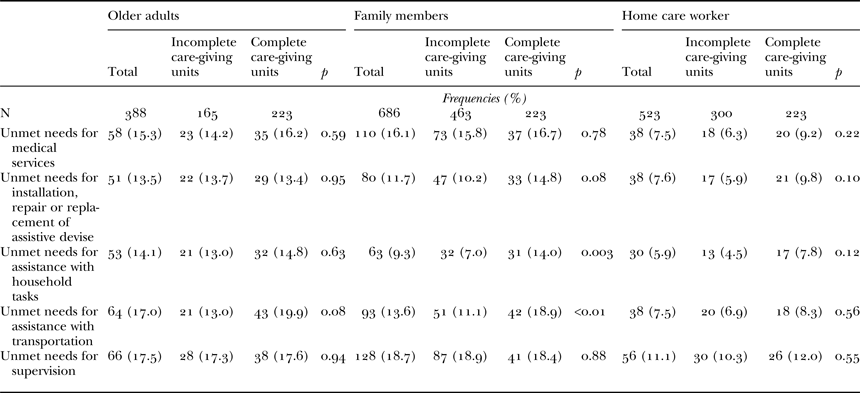
Table 2 presents the responses to each of the five items. Unmet need for supervision was the most frequently endorsed item by all three members of the care-giving unit. As for the agreement among the three members with regard to neglect, kappa for older adults versus workers was 0.33, for older adults versus family members was 0.45 m and for workers versus family members was 0.34. This suggests a fair to moderate agreement between raters (Cohen Reference Cohen1960).
Neglect reported by members of the care-giving unit on each of the five neglect items
Note: For each stakeholder, t-test and chi-square analyses were conducted to compare differences between the characteristics of the particular members in the complete care-giving units versus incomplete care-giving units samples.
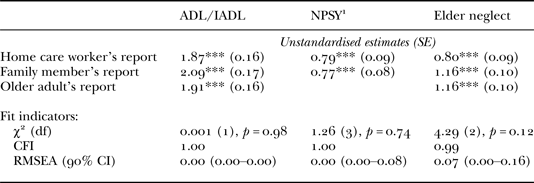
Table 3 presents the loadings and standard errors of the three constructs (e.g. ADL/IADL impairment, NPSY and elder neglect). All indicators significantly loaded on their respective construct and the measurement models provided adequate fits to the data.
The measurement models
Notes: 1Because two indicators provide an unstable factor solution, the overall measure of impairment and neuropsychiatric symptoms (NPSY) was parcelled to represent a sum of the first six items and the latter six items for home care workers and family members, respectively. Confirmatory factor analysis was conducted for each construct separately. ADL/IADL: activities of daily living/instrumental activities of daily living. SE: standard error. CFI: Comparative Fit Index. RMSEA: Root Mean Squared Error of Approximation. df: degrees of freedom. CI: confidence interval.
Significance level: ***p < 0.001.
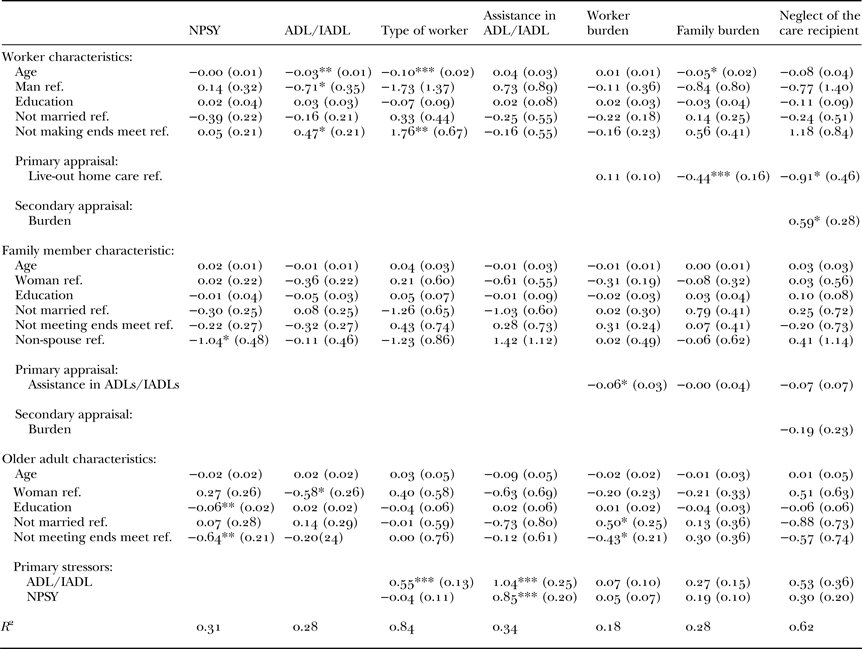
Table 4 and Figure 2 present the model obtained. The proposed model provided a reasonable fit to the data: χ2 (df) = 145.8 (123), p = 0.08, RMSEA (90% confidence interval) = 0.04 (0.00–0.06), CFI = 0.91. As for the primary stressors, higher levels of NPSY and ADL/IADL impairment were associated with greater informal assistance in ADL/IADL. In addition, higher levels of ADL/IADL impairment were associated with a greater likelihood of reliance on a live-in migrant home care worker compared with a live-out Israeli home care worker.
The measurement and path model combined. Demographic characteristics were included in the model but are not presented in the figure as they are not central to the model. Indicators provided by the same member of the care-giving unit were allowed to correlate in order to control for common-method variance, not captured by the latent constructs.
The path model
Notes: Secondary appraisals were allowed to correlate. Primary appraisals were allowed to correlate. Primary stressors were allowed to correlate. Indicators provided by the same member of the care-giving unit were allowed to correlate in order to control for common-method variance, not captured by the latent constructs. ADL/IADL: activities of daily living/instrumental activities of daily living. NPSY: impairment and neuropsychiatric symptoms. ref.: reference category.
Significance levels: *p < 0.05, **p < 0.01, ***p < 0.001.
As for the primary appraisal, there was a significant inverse direct path from assistance in ADL/IADL to worker burden, indicating that as the amount of informal assistance increases, the burden of the home care worker decreased. Type of home care had inverse direct paths to neglect and to family members' burden. Compared with having a live-out home care worker, having a live-in migrant home care worker was associated with lower levels of elder neglect and lower levels of burden reported by family members.
Secondary appraisal in the form of the home care worker's burden had a direct path to elder neglect, with higher levels of burden reported by the home care worker being related to higher levels of elder neglect. Additional demographic variables of significant direct paths are listed in Table 4. There were no significant indirect paths. Using multiple imputation, results remained consistent, with a few additional significant paths, likely due to the larger sample size.
Discussion
The present study provides a unique perspective on elder neglect by integrating two prominent models in the care-giving literature: the dyadic model of elder neglect (Fulmer et al. Reference Fulmer, Paveza, VandeWeerd, Fairchild, Guadagno, Bolton-Blatt and Norman2005; Rose and Killien Reference Rose and Killien1983) and the care-giving stress model (Chappell and Reid Reference Chappell and Reid2002; Son et al. Reference Son, Erno, Shea, Femia, Zarit and Parris Stephens2007; Yates, Tennstedt and Chang Reference Yates, Tennstedt and Chang1999). An advantage of the present study is the focus on the triadic care-giving arrangement (formal and informal care) that often evolves when the older adult ages in his or her community.
The finding that about one-third of all family members and older adults reported at least one type of elder neglect is consistent with past research (Ayalon Reference Ayalon2011; Lowenstein et al. Reference Lowenstein, Eisikovits, Band-Winterstein and Enosh2009). This attests to the fact that even under a relatively generous welfare system which provides home care services to older adults, many older adults still do not get all their basic needs met.
A substantial finding concerns the role of home care services in the quality of care provided to older home care recipients. The present study demonstrates the beneficial direct effects of live-in migrant home care on the care provided to older adults as well as on the level of burden of family members. Having a live-in migrant home care worker was directly related to lower levels of elder neglect as well as to lower levels of burden reported by family members. The present findings are consistent with past research which has shown that both older care recipients (Iecovich Reference Iecovich2007) and family members are more satisfied with live-in migrant home care than with live-out Israeli home care and that family care-givers who rely on live-in migrant home care workers report better wellbeing (Ayalon and Green Reference Ayalon and Green2013). Given the fact that currently, all live-in home care in Israel is provided by migrants, it is impossible to tell whether the findings reflect differences in the amount of care provided to the older adult (round the clock versus several hours per week) or the type of home care worker (migrant versus Israeli).
The family member's burden had no association with elder neglect, whereas the worker's burden was directly related to elder neglect. This is inconsistent with past research, which found family care-giver burden to be directly related to elder maltreatment (Lee and Kolomer Reference Lee and Kolomer2005). Potentially, once formal assistance in the form of home care services is available, the burden experienced by family members is of a lesser importance compared with the burden experienced by home care workers, who tend to provide a substantial amount of the care. Hence, the findings further emphasise the important role of home care workers in the lives of older care recipients and family members alike.
The study points to the interdependence between family care-givers and paid home care workers by demonstrating an inverse path from the amount of informal assistance provided by the family member to the level of burden reported by the home care worker. Consistently, a significant path was evident from the type of paid home care to the level of burden reported by family members, with those who rely on migrant live-in home care reporting lower levels of burden. Hence, this study clearly demonstrates the delicate balance of sharing the burden between informal and formal sources of care.
Finally, as predicted by the care-giving stress model (Yates, Tennstedt and Chang Reference Yates, Tennstedt and Chang1999) and the common fate model (Kenny Reference Kenny1996), the primary stressors were directly related to the amount of care provided. Higher levels of ADL/IADL impairment and NPSY were directly related to more informal hours of care. In addition, older adults with greater ADL/IADL impairments were more likely to rely on live-in home care services, which represent a more intense level of care.
Despite its strengths, several limitations should be acknowledged. First, although the study relied on a representative sample of older home care recipients, it was limited to a particular geographic area due to its relatively small sample size. Second, although the response rate obtained in this study is consistent with the response rates reported in other academic studies (Baruch Reference Baruch1999), there is a large percentage of missing data at the care-giving unit level. Nonetheless, a sensitivity analysis using the entire sample resulted in comparable findings. Third, other than the Neuropsychiatric Inventory Questionnaire (NPI-Q), which provides rough estimates on neuropsychiatric symptoms associated with a variety of neurological conditions, there was no direct measurement of cognitive functioning. Given the highly vulnerable nature of this population and the fact that many older adults were excluded from the study due to severe cognitive impairment, a more sensitive assessment of cognitive functioning is desired.
The study has several strengths that outweigh its limitations. The study provides a comprehensive model which clearly demonstrates the interdependency that evolves in the care-giving arrangement. The findings call for the important role of formal home care by demonstrating a potentially protective effect for live-in migrant home care on elder neglect and family care-givers' burden. The study also emphasises the shared burden between formal and informal care providers.
Acknowledgements
This work was supported by the NationalInsurance Institute of Israel. The study was approved by the ethics committeeof the Principal Investigator's university. There are no conflicts of interest.
Appendix: The neglect scale
These questions are about the older adult you have been taking care of. Please indicate how frequently has the older adult needed the following services and did not receive them in the past year?1