




No CrossRef data available.
Group Homes for Children and Young People: The Problem Not the Solution
Published online by Cambridge University Press: 01 February 2018
Abstract
In every state and territory in Australia, child welfare departments, under various names, maintain or, alternatively, fund group homes for children and young people in the non-government sector. Increasingly, these group homes offer only four places with no integrated treatment or educational services. In that respect they can best be viewed as providing care and accommodation only. Since 2010, following the release of a definition of therapeutic residential care by the National Therapeutic Residential Care Work Group, there has been debate about how to make group homes therapeutic. In 2017, as part of a wider reform effort, New South Wales renamed all their out-of-home care (foster care and residential care) as intensive therapeutic care and ceased using the term residential. The net result is that the group homes in New South Wales will from now on be referred to as intensive therapeutic care homes. This article raises questions about the utility of this renaming and explores whether or not group homes can be therapeutic given the characteristics of the population of children and young people they accommodate, their small size, the staffing complement and the limited job satisfaction with high staff turnover as a consequence of this smallness. All of these factors lead to the well-documented, anti-therapeutic instability of the group home life space.
Information
- Type
- Opinion
- Information
- Copyright
- Copyright © The Author(s) 2018
References
Ainsworth, F. (1999). Social injustice for ‘at risk’ adolescents and their families. Children Australia, 24
(1), 14–18.Google Scholar
Ainsworth, F. (2017). For the few not the many: An Australian perspective on the use of therapeutic residential care for children and young people. Residential Treatment for Children and Youth, 34
(2), 325–338.CrossRefGoogle Scholar
Ainsworth, F., & Hansen, P. (2008). Programs for high needs children and young people. Group homes are not enough. Children Australia, 33
(2), 41–47.CrossRefGoogle Scholar
Ainsworth, F., & Hansen, P. (2014). Family foster care: Can it survive the evidence?
Children Australia, 39
(2), 87–92.CrossRefGoogle Scholar
Ainsworth, F., & Hansen, P. (2015). Therapeutic residential care: Different population, different purpose, different costs. Children Australia, 40
(4), 342–347.Google Scholar
Australian Institute of Health and Welfare (AIHW) (2016). Child protection Australia 2014–15. Canberra: AIHW.Google Scholar
Australian Institute of Health and Welfare (AIHW) (2017). Child protection Australia 2015–16. Canberra: AIHW.Google Scholar
Barton, S., Gonzales, R., & Tomlinson, P. (2012). Therapeutic residential care for children and young people: An attachment and trauma-informed model of practice. London: Jessica Kingsley.Google Scholar
Berridge, D., Biehal, N., & Henry, L. (2012). Living in children's residential homes. Research report RR201. London: Department of Education.Google Scholar
Californian State Legislature (CSL) (n.d.). AB409 (2015); AB1997 (2016). CA: Sacramento.Google Scholar
Cameron, C., & Moss, P. (2011). Social pedagogy and working with children and young people. London: Jessica Kingsley.Google Scholar
Children's Bureau (2015). A national look at the use of congregate care in child welfare. Washington DC: US Department of Health and Human Services, Administration for Children and Families.Google Scholar
Curtis Report (1946). Report into disturbances at Carlton Approved School. London: Her Majesty's Stationery Office.Google Scholar
Eurochild (2010). Children in alternative care. National surveys. Brussels: Eurochild.Google Scholar
Find and Connect (FC) (2017). Family group homes. Retrieved from https://www.findandconnect.gov.au/ref/vic/biogs/E000350b.htm
Google Scholar
Ford, J., Gonzales, R., & Schoeder, C. (n.d.). From politics to practice: Reforming residential care in California and the field. San Francisco, CA: California Alliance.Google Scholar
Goffman, E. (1961). Asylums: Essays on the social situation of mental patients and other inmates. New York: Doubleday.Google Scholar
Granic, I., & Patterson, G. R. (2006). Towards a comprehensive model of antisocial development: A dynamic systems approach. Psychological Review, 113
(1), 101–131.Google Scholar
Grietens, H. (2015). A European perspective on the context and content for social pedagogy in therapeutic residential care. In Whittaker, J. K., del Valle, J. F. & Holmes, L. (Eds.), Therapeutic residential care with children and youth: Developing evidenced based international practice (pp. 288–298). London: Jessica Kingsley.Google Scholar
Johnstone, P. (2017 March). Emerging trends and issues in the NSW Children's Court. Presentation at the Association of Children's Welfare Agencies, Sydney.Google Scholar
NSW Family and Community Services (FaCS) (2017). Appendix 5: Service Overview – Intensive Therapeutic Care (ITC) (pp. 5–6). Sydney.Google Scholar
Ofsted report (2017). Children's social care data in England in 2017: Main findings. Retrieved from https://www.gov.uk
Google Scholar
Pecora, P. J., & English, D. J. (2016). Element of effective practice for children and youth served by therapeutic residential treatment and group care. Seattle, WA: Casey Family Programs.Google Scholar
Polsky, H. W. (1962). Cottage Six: The social system of delinquent boys in residential treatment. New York: Russell Sage.Google Scholar
Queensland Government (2013). Report of the Child Protection Committee of Inquiry. Brisbane: Queensland Government.Google Scholar
Roberts, J. (19 July 2016). California's continuum of reform: Will it produce as promised?
San Francisco, CA: The Chronicle of Social Change.Google Scholar
Scull, A. (1977). Decarceration: Community treatment and the deviant. A radical view. Englewood Cliffs, NJ: Prentice-Hall.Google Scholar
Shemmings, D., & Shemmings, Y. (2011). Understanding disorganised attachment. London: Jessica Kingsley.Google Scholar
Trevithick, P. (2000). Social group work: A practice handbook.
Philadelphia: Open University Press.Google Scholar
Trieschman, A. E., Whittaker, J. K., & Brendtro, L. K. (1969). The other 23 hours. Chicago: Aldine.Google Scholar
Usher, J. (1992). Review of substitute care services in NSW. Sydney: Department of Community Services.Google Scholar
Verso Consulting (June 2016). Therapeutic residential care system development: Evidence guide. Melbourne: Verso Consulting.Google Scholar
Victorian Auditor-General's report (2014). Residential care services for children. Melbourne.Google Scholar
Wilson, K. (30 December 2017). Group homes for foster children on way out in California. VC Star. Retrieved from http://www.vcstar.com
Google Scholar
Wolfensberger, W. (1972). Normalization: The principles of normalisation in human services. Toronto: National Institute on Mental Retardation.Google Scholar

TABLE 1 Number of children and young people in residential care at June 30 2017 by state and territory (estimate).
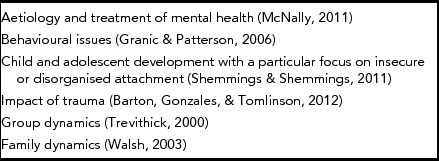
TABLE 2 Required knowledge base for TRC staff.
 You have
Access
- 4
- Cited by
The Use of Residential Care
The Australian Institute of Health and Welfare (AIHW) reports that at 30 June 2016, there were 46,448 children in out-of-home care (OOHC) (AIHW, 2017, p. 47, Table 5.1). Nationally, around 1 in 20 children in OOHC were living in residential care. Of the children in residential care in 2016, 82% were aged 10 years and over (AIHW, 2017, p. 51).
The definitions used by AIHW are as follows:
Residential care: Placement in a residential building whose purpose is to provide placements for children and where there are paid staff.
Family group homes: Homes for children provided by a department or community sector agency which have live-in, non-salaried care givers who are reimbursed and/or subsidised for providing care (AIHW, 2017, p. 47).
In previous years, AIHW has provided an actual figure of the number of children in residential placements, whereas in the 2017 report this is not the case. Instead, the data is presented in bar chart form (AIHW, 2017, p. 50, Figure 5.3), which does not allow the actual number of children in residential care by state and territory to be easily established. What is reported is that in Queensland (QLD) 7% of children in OOHC are in residential care with percentages reported for South Australia (SA) as 15% and in the Northern Territory (NT) as 11% (AIHW, 2017, p. 40). There are no percentages reported for Western Australia, Victoria, Tasmania, New South Wales (NSW) or the Australian Capital Territory.
What can be calculated using Table 5.2 of the 2017 AIHW report, which gives figures for total number of children in care for each state and territory, is the number of children in residential placements for QLD, SA, and the NT. In QLD the number of children in OOHC is given as 8670, and 7% of that figure is 606. In SA, where the number of children in OOHC is 3243, 15% or 486 children are said to be in residential care. In the NT, where 1032 children are in OOHC, 11% or 113 children are indicated to be in residential care (AIHW, 2017, p. 52) (see Table 1).
Number of children and young people in residential care at June 30 2017 by state and territory (estimate).
Source: AIHW (2017, Table 5.2).
A national figure can also be calculated using the number of children in OOHC at 30 June 2016 (which was 46,448) and the reported figure of around 1 in 20 children living in residential care (AIHW, 2017, p. 49). This calculates to a figure of 2322 children living in residential care. In the previous 2016 AIHW report, the actual figure was 2632 (AIHW, 2016), which suggests that the above calculations are relatively accurate.
Added to this information is data that shows that in NSW there are 26 non-government (NGO) providers of residential services that, in July 2016, provided placements for 670 children and young people (NSW FaCS, 2017, pp. 5–6). In QLD, there are 109 facilities (Queensland Government, 2013), and in Victoria 40 service providers maintain 191 residential facilities (VA-G, 2014). All of these facilities are likely to offer no more than six places with four places increasingly becoming the norm. Remarkably, in NSW in 2016, the average stay of a child or young person in residential care was in excess of 3 years (NSW FaCS, 2017, pp. 5–6). Similar data for other states and territories is not readily available.
Deinstitionalisation, Normalisation and Group Homes
Group homes have been a feature of child welfare services since at least 1946 following a report in England into disturbances at Carlton Approved School (Curtis Report, 1946). This report urged the move away from institutional care and the establishment of smaller accommodation structures such as family group homes. Family group homes, as the name suggests, were community-based houses where a married couple looked after up to six young people.
The pioneer in Victoria of group homes was Dr Phyllis Tewsley who, in the 1950s, was the Superintendent of Turana, an Assessment Centre in Melbourne. By the 1960s, both the government and the NGO sectors had established numerous family group homes in Victoria (FC, 2017). Similar developments took place in other states and territories.
Also during the 1960s, the disability field under the influence of normalisation theory (Wolfensberger, Reference Wolfensberger1972) established group homes for adults that were staffed with rostered disability staff rather than by a married couple, and proliferated as large disability institutions were closed. Today, group homes are the mainstay of accommodation for disabled people in Australia (NSW FaCS, 2017). Running almost in parallel to the normalisation movement in disability was the similar process of deinstitutionalisation in the mental health and correctional systems (Scull, Reference Scull1977) that started in the US but travelled apace to other Anglophone countries. This movement was influenced by two notable publications: Goffman's Asylums—a series of essays on the social situation of mental patients and other inmates—that was published in 1961 (Goffman, Reference Goffman1961), and Kelsey's (Reference Kelsey1962) novel One Flew Over the Cuckoo's Nest, which was set in an Oregon psychiatric hospital and made into a film released in 1976. The film added drama to the deinstitutionalisation efforts.
Both the deinstitutionalisation and the normalisation movements had a major impact on child welfare services (Ainsworth, Reference Ainsworth1999). Schools for adjudicated delinquents or large congregate childcare facilities were fairly rapidly closed, often as a result of government reports as in NSW (Usher, Reference Usher1992).
By the 1970s and early 1980s, the enthusiasm for family group homes began to wane as married women entered the wider workforce and it became more difficult to recruit married couples to act as houseparents in family group homes. In the 1980s, there was also a shift away from using residential care as a substitute for parental care towards family-based care, namely foster care. It was claimed that foster care was a more appropriate way of looking after disadvantaged children and young people, and less expensive than residential care. It was an argument that was more than welcomed, not necessarily because of the professional views about the best way to look after disadvantaged young people but because at that point in time all state and territory governments were looking for ways to reduce child welfare expenditures.
The demise of family group homes as the mainstay of residential services did not completely end the role of residential care as a means of accommodating disadvantaged children and young people. The main response was to alter the staffing requirements for group homes by employing care staff on a rostered basis, much as now. More often this was a service response to the complex emotional and behavioural problems of a predominately adolescent population for whom family-based foster care is neither appropriate nor effective (Ainsworth & Hansen, Reference Ainsworth and Hansen2014).
In the United States, where the term ‘congregate care’ is common, such placements are widely used as a first placement for children or young people when they enter care (Children's Bureau, 2015). Reform moves to limit the use of group homes in this way in the United States are, however, well advanced (Roberts, Reference Roberts2016; Wilson, Reference Wilson2017).
Recent Californian legislation (CSL, n.d.; AB409 (2015); AB1997 (2016)) aims to achieve this end by phasing out group homes in favour of short-term residential treatment programs with a legislated treatment period of no more than 6 months (Ford, Gonzales, & Schroeder, n.d.; Roberts, Reference Roberts2016; Wilson, Reference Wilson2017). But as one commentator indicated ‘there is no model to follow as no one has done it as yet’ (Wilson, Reference Wilson2017), and the same can be said for intensive therapeutic care homes (ITCH) in NSW.
Group Homes, Education and the Law
Recently, it was reported that 60% of children and young people placed in group homes in NSW, all of which are in the NGO sector, are not attending school. Furthermore, 40% of children and young people in OOHC (foster care, kinship care or residential care) who enter the criminal jurisdiction of the Children's Court are not attending school, either due to truancy, suspension, expulsion or other reasons (Johnstone, Reference Johnstone2017). Given that school attendance until the age of 16 years is compulsory in NSW, this information raises serious questions about the management of OOHC services, especially group homes and the young people placed in what is now, but not necessarily realistically termed, ‘therapeutic care’ (NSW FaCS, 2017).
What Can Group Homes Provide?
In NSW, the group home population primarily consists of male and female adolescents who display a range of emotional and behavioural problems, and who invariably have experienced a number of failed foster-care placements (Ainsworth & Hansen, Reference Ainsworth and Hansen2015). The question is, can a four or six place group home provide more than care and accommodation? Given that the recommended group home staff will, in NSW at least, be graduates (without a specified disciplinary background), will they want to work on a rostered basis with limited career prospects and the likelihood of a high turnover of staff? These conditions mitigate against building staff knowledge and skills and the possibility that group homes may be able to provide the required level of therapeutic care.
The knowledge base and skills in interacting therapeutically with young people who display difficult behaviours are not acquired quickly or easily. The knowledge needed includes child and adolescent development, and theories in regard to attachment and trauma, group and family dynamics and behavioural and mental health issues (Ainsworth, Reference Ainsworth2017). The interactional skills, in turn, require a significant period of supervised professional practice before they reach maturity (see Table 2).
Required knowledge base for TRC staff.
Source: Ainsworth (Reference Ainsworth2017).
Yet, these essential requirements are unlikely to be present given the work conditions of the group home workforce in NSW. Nor is adding a part-time therapeutic specialist to a staff team, as recently proposed (Verso Consulting, 2016), likely to have much impact given that such a person will not be present in the group home at critical times such as getting up in a morning, meal times and going to bed at night time.
The Therapeutic Milieu
Residential care is not simply a platform to which various individual treatment modalities can be anchored (Pecora & English, Reference Pecora and English2016). Before any gain can be made by a child from an individual treatment hour, the environment in which the child lives must be stable, warm and nurturing, to allow the child to engage in treatment or social learning or other functions. Without the existence of a living environment that displays these attributes, the individual treatment hour is unlikely to result in any gains for a child or positively contribute to the aim of therapeutic residential care (TRC), namely behaviour change. Polsky's seminal 1962 text ‘Cottage Six’ confirms this old but often ignored truth (Polsky, Reference Polsky1962). This study showed that the culture of a cottage (read group home – italics added) was more powerful in maintaining delinquent behaviours than was the treatment hour in changing these behaviours. Soon after, in 1969, a profoundly important text titled The Other 23 Hours (Trieschman, Whittaker, & Brendtro, Reference Trieschman, Whittaker and Brendtro1969) set out the case for regarding the treatment hour as an adjunct to the powerful 24/7 therapeutic milieu when treating children with emotional and behavioural difficulties. Social pedagogues in Europe also embrace ‘daily life as the primary context of change’ and adopt a ‘lifeworld orientation’ and, in that sense, social pedagogy confirms the importance of ‘the other 23 hours’ (Grietens, Reference Grietens, Whittaker, del Valle and Holmes2015). This use of everyday life events as the means for achieving behaviour change is also in keeping with the model of attachment and trauma-informed residential practice as utilised in Melbourne by the Lighthouse Foundation (Barton, Gonzales, & Tomlinson, Reference Barton, Gonzales and Tomlinson2012).
Conclusion
Australia's preoccupation with group homes with only four or six places is out of line with other Western type countries. In England, in a study of 16 children's homes, 11 had 3–6 places and 5 had 7–9 places (Berridge, Biehal, & Henry, Reference Berridge, Biehal and Henry2012). More recently, in a 2017 government Ofsted report, 251 of the 2060 children's homes in England had between 7 and 10+ places (Ofsted Report, 2017). The difference, however, is that English children's homes, unlike ITCH in NSW, do not claim to offer therapeutic care or treatment. The focus is on accommodation and care pending either a new foster-care or family/kinship placement. In Western Europe and the Nordic countries, group homes for children and young people are often larger with 12–20 places not uncommon (Eurochild, 2010). They are also staffed by degree level qualified social pedagogues. Social pedagogy stands as an academic and practice discipline separate from social work or education (Cameron & Moss, Reference Cameron and Moss2011; Grietens, Reference Grietens, Whittaker, del Valle and Holmes2015).
Interestingly, there are no empirical studies to indicate that having only 4–6 places in a group home produces better outcomes for children and young people than the larger homes in Europe. On the contrary, it can be argued that the larger homes, by virtue of size, permit the full-time employment of therapeutic specialists such as clinical and counselling psychologists, and qualified direct care persons such as social pedagogues for the benefit of children. Small is not always beautiful, and small group homes are a problem not the solution. They are, given their design and staffing complement, most unlikely to be able to deliver services of sufficient power, intensity and duration (Ainsworth & Hansen, Reference Ainsworth and Hansen2008) to meet the therapeutic needs of young people with serious emotional and behavioural issues. It is time to rethink our approach to therapeutic care.
Note Added in Proof
Dr Frank Ainsworth is a Guardian ad Litem who regularly appears in Children's Courts throughout NSW. Dr Patricia Hansen is a solicitor who practices in the NSW Children's Court.