


Introduction
Most people will experience guilt at some stage of their lives as it is considered a key element of the human moral and social experience (Malti, Reference Malti2016). Guilt involves ‘moral transgressions (real or imagined) in which people believe that their action (or inaction) contributed to negative outcomes’ (Tilghman-Osborne et al., Reference Tilghman-Osborne, Cole and Felton2010, p.546). Guilt can involve both affective and cognitive processes (Hoffman, Reference Hoffman1982). Although conceptually linked, guilt differs from shame, as guilt relates to the evaluation of behaviours rather than global appraisals of self-worth (Wilson et al., Reference Wilson, Droždek and Turkovic2006). Malti (Reference Malti2016) distinguishes between more adaptive ‘moral’ guilt and more maladaptive ‘neurotic’ guilt. Adaptive guilt can be related to personality development and empathy (Lutwak et al., Reference Lutwak, Panish, Ferrari and Razzino2001; Tangney, Reference Tangney1990). However, maladaptive guilt is considered an emotional over-reaction, as it is neither the result of real damage or real wrongdoing. Maladaptive guilt can be associated with psychopathology, including anxiety and depression (Tilghman-Osborne et al., Reference Tilghman-Osborne, Cole and Felton2010).
The ways in which people cope with guilt are likely to dictate the amount of distress experienced. Coping dimensions can be applied to the experience of guilt, including problem-focused coping (PFC), which modifies the problem source; emotion-focused coping (EFC), which manages the emotional response; and dysfunctional coping (DC), which is more harmful (Carver et al., Reference Carver, Scheier and Weintraub1989; Lazarus and Folkman, 1984). PFC strategies have been related to lower levels of general psychological distress (Aldao et al., Reference Aldao, Nolen-Hoeksema and Schweizer2010; Meyer, Reference Meyer2001). Adaptive coping in the context of guilt includes PFC strategies such as seeking instrumental support and problem-solving (Thoits, Reference Thoits1995). Reparation, a PFC strategy that may be unique to guilt, involves channelling guilt into positive behaviour (Fontaine et al., Reference Fontaine, Luyten, De Boeck, Corveleyn, Fernandez, Herrera, Ittzés and Tomcsányi2006). Conversely, some guilt-related coping strategies may be maladaptive. Self-punishment has been linked to increased psychopathology (Chapman et al., Reference Chapman, Gratz and Brown2006; Wells and Carter, Reference Wells and Carter2009), particularly where compensation for past wrongdoings is impossible (Nelissen and Zeelenberg, Reference Nelissen and Zeelenberg2009). Avoidance strategies have been shown to mediate the relationship between guilt and psychopathology and increase distress (Aldao et al., Reference Aldao, Nolen-Hoeksema and Schweizer2010; Held et al., Reference Held, Owens, Schumm, Chard and Hansel2011; Warda and Bryant, Reference Warda and Bryant1998). Research regarding the use of religious coping methods, such as confession and spiritual guidance, has produced mixed findings in terms of whether or not they alleviate guilt and distress (Ano and Vasconcelles, Reference Ano and Vasconcelles2005; Koenig et al., Reference Koenig, McCullough and Larson2001; Pargament, Reference Pargament1997).
A guilt coping measure, the Guilt Management Scale (GMS), was developed for two reasons: (1) no valid measure of coping with guilt exists; and (2) without a measure of coping directly tailored to guilt, important clinical information may be lost during a clinical assessment that would otherwise assist in the formulation and treatment of guilt-related distress. Current measures, such as the Guilt and Shame Proneness scale (GASP: Cohen et al., Reference Cohen, Wolf, Panter and Insko2011) and the Situational Guilt Scale (Klass, Reference Klass1987), assess guilt severity or proneness to guilt rather than how people manage their guilt. Due to the lack of appropriate measures, we currently have limited understanding of how coping mediates the relationship between significant events and guilt. Coping measures, although numerous, are more general and not specific to guilt. Focusing specifically on guilt coping is essential given its profound impact on cognition and behaviour, in the sense that it can lead to extreme rumination, self-loathing and excessive efforts to ‘put things right’.
Once validated, the GMS could inform psychological formulations regarding the maintenance of guilt-related distress, and therefore help target therapy by maximizing helpful and minimizing harmful ways of coping with guilt. It could also be used as an outcome measure to assess changes in guilt management following treatment.
This paper describes two studies validating the GMS. In Study 1, we describe item development, principal component analysis (PCA), internal consistency, test–retest reliability, and concurrent and construct validity with conceptually relevant measures in a large non-clinical sample. In Study 2, we assess the internal reliability and concurrent and construct validity of the GMS in a clinical sample, using the same measures as Study 1.
Given that the GMS was a newly developed tool and the proposed analysis was exploratory, there were no a priori hypotheses about the types of items that would be grouped together or any model that might develop. For this reason, we did not group guilt coping a priori into PFC, EFC or DC. However, on the basis of previous literature, it was possible to generate some general hypotheses. We predicted that the GMS subscale structure would comprise empirically distinct coping strategies that would be significantly related to theoretically concurrent subscales on the Brief-COPE (Carver, Reference Carver1997) and Thought Control Questionnaire (TCQ; Wells and Davies, Reference Wells and Davies1994). Additionally, for construct validity, we hypothesized that the GMS subscales would correlate in theoretically meaningful ways with state guilt on the Guilt Inventory (GI; Jones et al., Reference Jones, Schratter and Kugler2000) and a measure of psychological distress (CORE-10; Connell and Barkham, Reference Connell and Barkham2007). More specifically, we hypothesized that coping strategies that are generally considered to be more maladaptive (e.g. self-punishment, worry) would be related to higher levels of guilt and distress and that coping strategies that are generally considered to be more adaptive (e.g. reparation, seeking social support) would correlate with lower levels of guilt and distress. Given previous mixed findings, there were no specific hypotheses about the use of religious coping. In terms of reliability, we predicted that GMS subscale scores would be internally consistent and relatively stable over a 2-week period.
Method
STUDY 1
Item development
The target construct for the GMS was conceptualized on the basis of clinical experience and a literature review. Initially, a pool of items was developed comprising coping strategies that seemed to help or hinder people who were dealing with guilt in clinical practice. This item pool included mindfulness coping, as this appeared to be a helpful strategy for coping with guilt, although we recognized that people might not naturally use mindfulness strategies, unless they had been previously taught them. The items were then expanded by conducting a literature review of different guilt measures and papers describing methods of coping with guilt or related experiences (Silfver, Reference Silfver2007; Jones et al., Reference Jones, Schratter and Kugler2000; Tangney et al., Reference Tangney, Stuewig and Mashek2007; Tharaldsen and Bru, Reference Tharaldsen and Bru2012; Wells and Davies, 2004). The item generation process resulted in a list of 26 distinct coping strategies, when redundant and overlapping items were removed.
We also used the literature review to derive a definition of guilt to assist people completing the measure in recognizing guilt and distinguishing it from other related emotions such as shame (see full version of the GMS measure in Appendix 1). The definition makes it clear that guilt is related to behaviours or actions, rather than the more global analysis of self-worth that defines shame.
Content and face validity
To assess content validity, four internationally renowned guilt experts and six lay persons were contacted via e-mail, informed of the objectives of the GMS and asked to rate the relevance of the items to the conceptual framework using a 4-point Likert scale. They were also asked to add any missing guilt-related coping strategies. This consultation exercise was deemed sufficient as consultation with five or more individuals is recommended in order to assess content validity (Haynes et al., Reference Haynes, Richard and Kubany1995). All items were rated >80 on the Content Validity Index (CVI; Lynn, Reference Lynn1986) and thus were retained. Written feedback from experts suggested a number of new strategies (i.e. confession, relaxation and rationalization) that led to the addition of six items to the pool.
Face validity checks were undertaken to establish the extent to which the GMS is usable and acceptable to the intended target audience (De Von et al., Reference De Von, Block, Moyle-Wright, Ernst, Hayden and Lazzara2007). Two researchers attended a NHS Mental Health Trust service user group, who were commissioned by a local mental health service to provide consultation on a whole range of aspects of service design and delivery. Four services users took part in a focus group and gave qualitative feedback regarding the likelihood that the target audience would be able to respond to the questions, the readability and clarity of language used, and the layout and style (De Von et al., Reference De Von, Block, Moyle-Wright, Ernst, Hayden and Lazzara2007). Following this consultation exercise, changes were made to the order and wording of items, along with changes to the instructions.
Response format
The GMS asks respondents to rate how much they use each coping strategy in relation to current guilty thoughts on a 4-point Likert scale ranging from 1 (never) to 4 (almost always).
Participants
Study 1 consisted of 339 participants including 258 undergraduates, 61 postgraduates and 15 staff members (two not stated). A total of 85.5% of the sample were women, with a mean age of 22.7 years (SD = 5.76; range 18–59). Seventy-nine per cent were White British, 6.5% Asian, 5.6% White other, 3.6% White mixed, 1.5% Black African/Caribbean and 1.5% were other (2.3% not stated).
Procedure
A University advertisement signposted individuals to an online survey where they completed a consent form, demographic questions and a battery of validated questionnaires. Individuals were offered course credits or a prize draw for their participation.
After the initial survey (Time 1), 50 randomly selected participants were asked to complete the GMS again 2 weeks later (Time 2).
Measures
The online survey included the 32-item GMS and the following measures:
Guilt Inventory (GI; Jones et al., Reference Jones, Schratter and Kugler2000). The 10-item State Guilt subscale has good discriminant and convergent validity, high internal consistency and acceptable test re–test reliability (Jones et al., Reference Jones, Schratter and Kugler2000; Kugler and Jones, Reference Kugler and Jones1992).
Clinical Outcomes in Routine Evaluation-10 (CORE-10; Connell and Barkham, Reference Connell and Barkham2007). The CORE-10 is a brief psychological screening tool that assesses specific emotional problems, life and social functioning and risk to self. Internal consistency for the CORE-10 in the present study was excellent, with an alpha value of 0.87
Brief-Coping Orientation to Problems Experienced (Brief-COPE; Carver, Reference Carver1997). The Brief-COPE is a 28-item measure of coping, consisting of 14 subscales, including EFC (emotional support, positive reframing, religion, humour and acceptance), PFC (active, planning and instrumental support) and DC (behavioural disengagement, venting, self-blame, substance use, self-distraction and denial). The Brief-COPE has reported high internal consistencies, test–retest reliability and concurrent validity (Cooper et al., Reference Cooper, Katona and Livingston2008; Yusoff et al., Reference Yusoff, Low and Yip2010).
Thought Control Questionnaire (TCQ; Wells and Davies, Reference Wells and Davies1994). The TCQ is a 30-item measure of strategies used to control unwanted thoughts and consists of five subscales: Distraction, Worry, Social Control, Punishment and Reappraisal. The TCQ has a stable factor structure, with acceptable to good internal consistency and reliability (Reynolds and Wells, Reference Reynolds and Wells1999; Wells and Davies, Reference Wells and Davies1994).
Data analysis
We conducted a PCA on the 32-item GMS using SPSS version 20. The question of whether or not to carry out an EFA or a PCA is summarized by Fabrigar et al. (Reference Fabrigar, Wegener, MacCallum and Strahan1999). EFA provides a summary of the data based on underlying correlations between factors, whilst PCA is primarily aimed at data reduction. Although the two types of analysis have different functions, they probably produce the same, or very similar, results. A PCA was chosen in this case as it is considered as good, or even superior, to EFA in terms of its simplicity and ability to avoid certain errors (i.e. Heywood cases) (Velicer and Jackson, Reference Velicer and Jackson1990). The analysis was run using Kaiser's (Reference Kaiser1974) criterion, to retain subscales with an eigenvalue greater than 1, and then re-run specifying the number of subscales suggested by the scree plot (Cattell, Reference Cattell1966; Stevens, Reference Stevens1992).
Fabrigar et al. (Reference Fabrigar, Wegener, MacCallum and Strahan1999) also discuss the uses of differing types of rotations in psychological research. Orthogonal rotation is used when factors are assumed to be uncorrelated and the Varimax rotation method is very frequently used. This rotational procedure maximizes the loading on each variable and minimizes the loading on other factors, whilst keeping the factors independent (Field, Reference Field2005). In contrast, oblique rotations allow factors to be correlated and there is no frequently used version. Some authors prefer orthogonal rotation for its simplicity and clarity, however others argue it may be too simplistic (Fabrigar et al., Reference Fabrigar, Wegener, MacCallum and Strahan1999). Both types of rotation were run with the data in our analysis, but the orthogonal rotation was favoured as the subscales were not expected to correlate and it gave more interpretable results.
Following the PCA, we conducted internal reliability and validity analyses of the GMS subscale structure. Internal consistency was examined by computing Cronbach's coefficient alpha for each subscale. For concurrent and construct validity analyses, Spearman's non-parametric correlations were used due to skewed data (and unsuccessful transformation) (indicated in Table 2). To minimize the risk of Type I errors only correlations at a more conservative ≤0.01 alpha were interpreted. Test–retest reliability of the GMS subscales were computed on a subset of the sample using intra-class correlation coefficients (ICCs) to determine its stability over a 2-week time interval.
Results
Preliminary analyses
A total of 295 out of 339 participants were available for PCA following listwise deletion of missing data. This sample size meets the recommendation of 5–10 participants per scale item for the analysis to be undertaken reliably (Floyd and Widaman, Reference Floyd and Widaman1995). The Kaiser-Meyer-Olkin (KMO) sampling adequacy statistic was 0.77, above the advised 0.5, indicating that the patterns of correlations were relatively compact and that the analysis should yield distinct and reliable subscales. Batlett's test (Reference Batlett1950) was significant [χ2 (496, n = 295) = 3263.68, p <. 001], providing further evidence that the correlation matrix was suitable for PCA.
Principal component analysis
An initial exploratory PCA that was carried out on the 32-item GMS extracted eight factors meeting Kaiser's criterion of retaining factors with eigenvalues greater than 1.0 (Field, Reference Field2005). Visual examination of a scree plot suggested that there were two to eight factors. Thus, PCA was re-run a number of times, specifying two to eight factors to find the most theoretically interpretable solution.
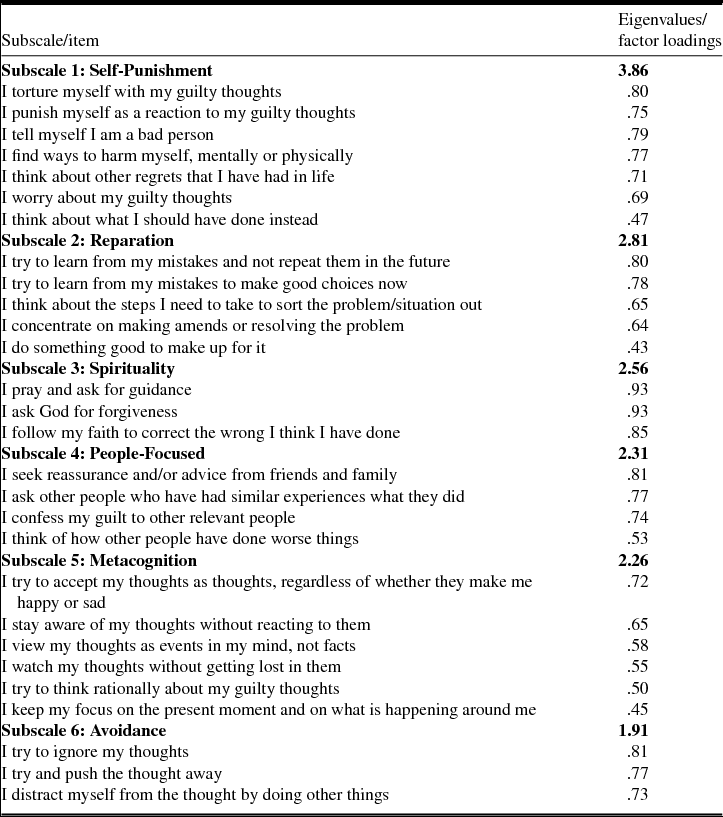
A forced six-factor solution with Varimax rotation was considered the most statistically and conceptually appropriate interpretation. Items were eliminated from the rotated component matrix when the factor loading was less than 0.4, which was considered an acceptable criterion for cross loading (Field, Reference Field2005), in line with Stevens' (Reference Stevens1992) guideline which states that a statistically acceptable loading for 200–300 participants is 0.29–0.38. The following four items were deleted as they had a loading of less than 0.4; ‘I use alcohol/drugs to block out the thoughts’, ‘I think about something positive instead’, ‘I use relaxation/meditation to cope with my guilt thoughts’ and ‘I think about why it is not reasonable for me to having guilty thoughts.’ A final PCA on the remaining 28 items yielded a six-subscale solution accounting for 56.14% of the total variance. The loadings and eigenvalues for the six GMS subscales are presented in Table 1.
Factor loadings and eigenvalues of the final six subscale solution for the 28-item GMS

The final version of the GMS consisted of six subscales:
(1) ‘Self-Punishment’ (13.80% of variance): seven items representing self-destructive coping responses to guilty thoughts including self-harm, self-criticism, self-blame, rumination and worry.
(2) ‘Reparation’ (10.04% of the variance): five items reflecting motivation towards reparation and making amends to counteract guilty thoughts including planning or taking direct action to rectify the guilt and learning from past experiences.
(3) ‘Spirituality’ (9.15% of the variance): three items focusing on spiritual and/or religious coping including seeking forgiveness, guidance and expiation.
(4) ‘People-Focused’ (8.26% of the variance): four items referring to the use of others to cope with guilt including seeking support, comparing self to others and finding out how others manage thoughts.
(5) ‘Metacognition’ (8.06% of the variance): six items involving being mindful, rationalization and acceptance coping strategies.
(6) ‘Avoidance’ (6.83% of the variance): items representing avoidance strategies including ignoring thoughts, distraction and thought suppression.
Descriptive statistics and internal consistencies
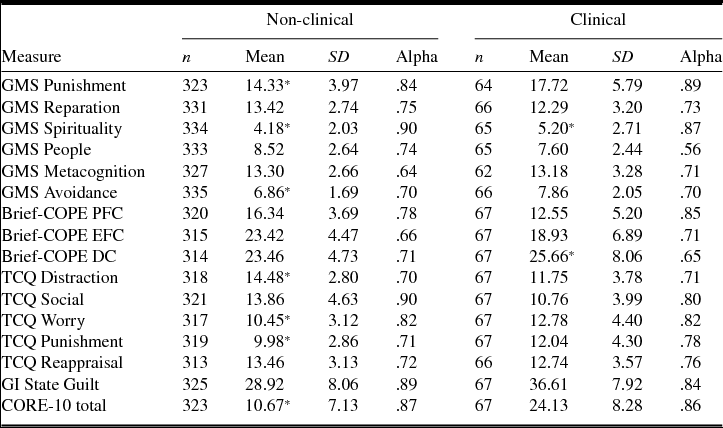
Table 2 presents descriptive statistics and alpha reliabilities for the GMS subscales and the additional measures. Chronbach's alpha ranged from 0.64 to 0.90 for the subscales, indicating reasonable to excellent internal reliability.
Descriptive statistics and alpha reliabilities for the GMS Subscales, Brief-COPE, TCQ, GI and CORE-10 in a clinical and non-clinical sample

*Skewness > 3.29; Punishment, Self-Punishment; People, People-Focused; Brief-COPE, Brief-Coping Orientations to Problems Experienced; PFC, Problem-Focused Coping; EFC, Emotion-Focused Coping; DC, Dysfunctional Coping; TCQ, Thought Control Questionnaire; TCQ Social, Social Control; GI, Guilt Inventory; CORE-10, Clinical Outcomes in Routine Evaluation.
Test–retest reliability
ICCs demonstrated stability of the subscales over a 2-week interval for the majority of subscales: Self-Punishment (ICC = 0.83, n = 28, 95% confidence interval = 0.66 to 0.92, p < .001); Spirituality (ICC = 0.84, n = 46, 95% confidence interval = 0.72 to 0.91, p < .001); People-Focused (ICC = 0.80, n = 35, 95% confidence interval = 0.64 to 0.89, p < .001); and Metacognition (ICC = 0.65, n = 32, 95% confidence interval = 0.40 to 0.81, p < .001). Poor test–retest reliability was found for Reparation (ICC = 0.34, n = 27, 95% confidence interval = –0.04 to 0.63, p = 0.040) and Avoidance (ICC = 0.35, n = 36, 95% confidence interval = 0.03 to 0.61, p = 0.016).
Concurrent and construct validity
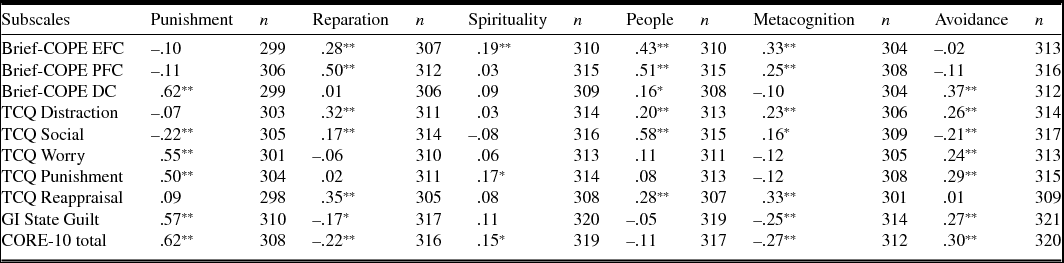
To determine concurrent validity, we explored correlations between the GMS subscales and theoretically related concepts on the Brief-COPE and TCQ. As detailed in Table 3, GMS subscales correlated in theoretically coherent ways with subscales on these measures. In relation to construct validity, the following hypotheses were developed once the GMS subscale structure was established:
(1) Higher levels of Self-Punishment and Avoidance coping would be significantly correlated to higher levels of distress (CORE-10) and guilt (GI).
(2) Higher levels of Reparation, People Focused and Metacognition coping would be significantly correlated to lower levels of distress (CORE-10) and guilt (GI).
(3) No hypotheses were made about the Spirituality subscale.
Spearman's correlations between the GMS subscales and Brief-COPE, TCQ, GI and CORE-10 in a non-clinical sample

*p < .01, **p ≤ .001. Punishment, Self-Punishment; People, People-Focused; Brief-COPE, Brief-Coping Orientations to Problems Experienced; PFC, Problem-Focused Coping; EFC, Emotion-Focused Coping; DC, Dysfunctional Coping; TCQ, Thought Control Questionnaire; TCQ Social, Social Control; GI, Guilt Inventory; CORE-10, Clinical Outcomes in Routine Evaluation.
Consistent with predictions, Self-Punishment and Avoidance were significantly correlated with higher levels of guilt and distress, and Reparation and Metacognition were significantly correlated with lower levels of guilt and distress. Interestingly, Spirituality was related to higher levels of psychological distress, but was not significantly related to guilt. People-Focused coping did not significantly correlate with guilt or distress. See Table 3 for Spearman's correlations between the GMS subscales and the validated measures in the non-clinical sample.
STUDY 2
Participants
Sixty-seven participants were recruited from outpatient clinical psychology services using poster adverts. Only those attending for initial assessment, rather than ongoing therapy, were approached. Inclusion criteria were: (a) aged ≥ 18 years; (b) English literate and (c) able to give informed consent. Exclusion criteria were: (a) organic cognitive impairment; (b) receiving support from a drug and/or alcohol team; and (c) current suicidal ideation. The reason for referral was accessed from clinical records with the participant's permission. The patient sample was 61.2% female, with a mean age of 39.9 years (SD = 11.56; range = 20–73). The majority (92.5%) were White British, followed by 3% White other, 3% Asian and 1.5% Black African and White mixed. Of these patients, 62.5% were single, 70.8% were unemployed and the mean age at which they left education was 18 years (SD = 4.52, n = 64). A total of 31.7% were referred for depression and anxiety, 25% anxiety, 18.3% depression, and 25% had ‘other’ problems, such as anger, psychosis and low self-esteem.
Procedure
Eligible patients were approached by the researcher or a clinician at their assessment appointment and receptive people were given a Participant Information Sheet. Participants provided written consent and were given a battery of paper-based questionnaires to complete and return via post. Participants were prompted by telephone if the questionnaires were not returned.
Measures
Participants completed the same battery of questionnaires used in Study 1.
Data analysis
This study used the same internal reliability and validity analyses as Study 1. Spearman's non-parametric correlations were used due to skewed data for some scores (indicated in Table 2) and to ensure consistency and ease of interpretation across the two studies. Again, a conservative ≤0.01 alpha was used due to the multiple correlations conducted.
Results
Descriptive statistics and internal consistencies
Table 2 shows the clinical group's descriptive statistics, coefficient alphas for the GMS subscales and additional measures. Cronbach's alpha ranged from good to excellent (α = 0.70–0.89) for all subscales apart from People-Focused coping, which had a lower alpha of 0.56.
Concurrent and construct validity
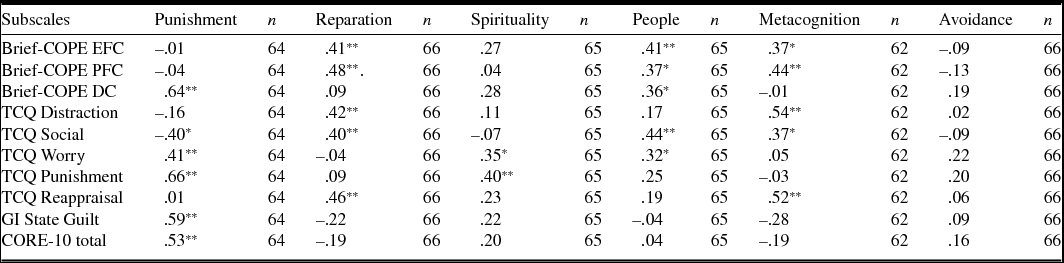
In terms of concurrent validity, the correlations between the GMS subscales and theoretically similar subscales on the Brief-COPE and TCQ are given in Table 4. In terms of construct validity, and in line with our hypotheses, Self-Punishment was associated with greater guilt and distress. However, Avoidance, Reparation, People-Focused, Metacognition and Spirituality were not significantly related to distress or level of guilt in the clinical sample and on the whole, effect sizes were small.
Spearman's correlations between the GMS subscales and Brief-COPE, TCQ, GI and CORE-10 in a clinical sample

*p < .01, **p ≤ .001. Punishment, Self-Punishment; People, People-Focused; Brief-COPE, Brief-Coping Orientations to Problems Experienced; PFC, Problem-Focused Coping; EFC, Emotion-Focused Coping; DC, Dysfunctional Coping; TCQ, Thought Control Questionnaire; TCQ Social, Social Control; GI, Guilt Inventory; CORE-10, Clinical Outcomes in Routine Evaluation
Discussion
This study provides some preliminary evidence for the reliability and validity of the GMS in non-clinical samples, but more research, with a larger sample size, is needed to establish reliability and validity in clinical samples. The PCA revealed six theoretically distinct subscales of coping with guilty thoughts: Self-Punishment, Reparation, Spirituality, People-Focused, Metacognition and Avoidance. Test–retest reliability of the GMS subscales, aside from Avoidance and Reparation, was confirmed in the non-clinical sample. In both samples, internal reliability was found to be reasonable to excellent for all GMS subscales, apart from People-Focused in the clinical sample. Potentially maladaptive coping strategies (i.e. Self-Punishment and Avoidance) were associated with higher levels of guilt and distress in the non-clinical sample, although only Self-Punishment was correlated with guilt and distress in the clinical sample. Additionally, supposedly more adaptive ways of coping (i.e. Reparation and Metacognition) were related to less guilt and distress in the non-clinical sample. Across the two samples, GMS subscales correlated in meaningful ways to conceptually related subscales on established measures of coping and thought control.
In support of construct validity, greater use of GMS Self-Punishment (both samples) and Avoidance (non-clinical sample only) related to higher levels of guilt and psychological distress. These findings are consistent with the abundance of research demonstrating the harmful effects of self-punishment (Chapman et al., Reference Chapman, Gratz and Brown2006; Reynolds and Wells, Reference Reynolds and Wells1999; Wells and Carter, Reference Wells and Carter2009; Wells and Davies, Reference Wells and Davies1994), particularly in relation to guilt (Nelissen and Zeelenberg, Reference Nelissen and Zeelenberg2009). In addition to the more obvious methods of self-harm and self-criticism, GMS Self-Punishment includes focusing on guilty thoughts by using worry and rumination, which are commonly associated with psychological distress (e.g. Calmes and Roberts, Reference Calmes and Roberts2007; Nolen-Hoeksema et al., Reference Nolen-Hoeksema, Stice, Wade and Bohon2007; Roussis and Wells, Reference Roussis and Wells2008). The fact that self-punishment was correlated with distress highlights the clinical utility of this measure, as identifying reliance on this strategy to cope with guilt may be helpful in terms of targeting therapy.
The results in the non-clinical sample also support previous research which indicates that avoidant strategies lead to increased distress (Aldao et al., Reference Aldao, Nolen-Hoeksema and Schweizer2010; Held et al., Reference Held, Owens, Schumm, Chard and Hansel2011; Warda and Bryant, Reference Warda and Bryant1998). However, this association was not replicated in the clinical sample and effect sizes were small, perhaps because the GMS Avoidance subscale included strategies that could be considered both adaptive and maladaptive. For example, avoidance in the form of thought suppression is widely recognized as maladaptive (Marcks and Woods, Reference Marcks and Woods2005; Salkovskis and Campbell, Reference Salkovskis and Campbell1994), but distraction has been associated with a reduction in symptoms (Broderick, Reference Broderick2005; Nolen-Hoeksema and Morrow, Reference Nolen-Hoeksema and Morrow1993; Reynolds and Wells, Reference Reynolds and Wells1999; Wells and Davies, Reference Wells and Davies1994). Distraction techniques could be argued to be adaptive in some instances because they provide relief from negative thinking and space for more effective coping in the short term (Wells and Matthews, Reference Wells and Matthews1994).
The present findings suggest that more adaptive ways of coping with guilty thoughts can have favourable effects on the level of guilt and distress experienced. In line with our hypotheses, GMS Reparation and Metacognition were related to lower levels of guilt and distress in the non-clinical sample. The association between lower levels of distress and Metacogniton is line with the copious research that indicates mindful and acceptance-based approaches reduce affective symptoms when applied to negative thoughts (Aldao et al., Reference Aldao, Nolen-Hoeksema and Schweizer2010; Broderick, Reference Broderick2005; Marcks and Woods, Reference Marcks and Woods2005). Indeed, a meta-analysis found metacognitive therapy to be superior in treating anxiety and depression compared with CBT and waiting-list controls, which highlights the beneficial role of metacognition and associated coping strategies in the reduction of psychological distress (Normann et al., Reference Normann, Emmerik and Morina2014). Although learning to use metacognitive techniques would usually be part of a psychological intervention, the principles of this approach are becoming more commonplace in society with the increased use of yoga and mindfulness apps, etc. However, it should be highlighted that these results could alternatively be explained by the fact that people only use metacognitive approaches, and find them helpful, if the levels of guilt are not severe or intense.
The association between lower levels of distress and GMS Reparation (e.g. planning, taking direct action to rectify guilty thoughts) in the non-clinical sample is also in accordance with research demonstrating the advantages of problem-focused methods for psychological wellbeing (Aldao et al., Reference Aldao, Nolen-Hoeksema and Schweizer2010; Meyer, Reference Meyer2001).
GMS Spirituality was significantly related to higher levels of psychological distress, but not guilt, in the non-clinical sample. This finding was not replicated in the clinical sample and effect sizes were small, perhaps because higher levels of distress in clinical samples are likely to be influenced by a larger range of factors. This observation contradicts previous research showing that positive spiritual (or religiosity) coping serves to reduce emotional distress (Koenig et al., Reference Koenig, McCullough and Larson2001; Pargament, Reference Pargament1997). However, the association may not be so straightforward and arguably it is the relationship that a person has with their religion (i.e. institutional participation versus ideology versus personal devotion) that is important in terms of their psychological adjustment (Hackney and Sanders, Reference Hackney and Sanders2003). Our findings suggest that religious coping may exacerbate distress. However, that is not to say certain forms of religious coping do not ameliorate specific types of distress. Attempting to reduce religious coping within therapy would probably be inappropriate and culturally insensitive.
The non-significant results observed for GMS People-Focused in both samples suggest that using others as a means to cope with guilty thoughts is not related to the levels of guilt or distress experienced. The fact that this subscale also had the lowest levels of internal consistency (alpha = 0.56) suggests it is not entirely coherent and may consist of coping responses that are not necessarily as conceptually related, compared with items within other GMS subscales. The People-Focused subscale included strategies that involved using others to cope, such as confession and seeking advice. Seeking social support is generally regarded as a positive coping response (Thoits, Reference Thoits1995). However, GMS People-Focused includes seeking emotional support and reassurance from others which may be unhelpful when used excessively (Meyer, Reference Meyer2001). The fact that people may use others in varying ways to manage their guilt might explain the variability in item responses comprising this subscale. For example, an individual may often call on other people for advice but seldom confess their guilt to them. The continued inclusion of the People-Focused subscale will depend on the results of a larger replication study.
The GMS correlated in theoretically meaningful ways with established measures of coping with stress and control of unwanted thoughts, providing evidence for its concurrent validity. For example, GMS Self-Punishment was positively related to TCQ Worry and Punishment and Brief-COPE DC in both samples. However, multiple significant correlations were observed which made the results difficult to interpret. This finding might be explained by the fact that the TCQ and Brief-COPE include items that are conceptually similar to GMS items, but located within conceptually different subscales. Additionally, some of the observed correlations between the measures were not predicted. For example, People-Focused was understandably related to Brief-COPE EFC and TCQ Social Control, but was also related to TCQ Distraction and Worry and Brief-COPE DC, in both samples. This finding may be due to the fact that coping styles are not mutually exclusive and may co-occur and vary within an individual. For example, a person may ask others for advice at times, but also revert to worrying at other times.
Most of the GMS subscales demonstrated acceptable levels of stability over time in the non-clinical sample, which potentially gives the GMS more credibility in terms of measuring outcomes. Avoidance and Reparation were less stable over the 2-week period, which might indicate that the use of these coping strategies was more variable. Arguably, coping with guilt is a fluid process that is sensitive to the changing demands and resources of the environment and thus it is expected to vary over time (Lazarus and Folkman, 1984).
Limitations and further research
This is the first study to validate a measure of coping with guilt but there are a number of limitations that must be taken into account when interpreting the findings. One could argue that the coping strategies detailed in the GMS could be used to manage an array of negative events, rather than just guilt per se. We acknowledge that certain strategies could be applied to different cognitive experiences, but items generated for the GMS were determined by the lead author's (K.M.) direct clinical experience of observing the ways in which patients attempt to cope with pathological guilty thoughts.
We did not control for variables generally known to influence the relationship between coping and distress, such as locus of control (Thoits, Reference Thoits1995). We did not control for age and gender, although these may be theoretically important confounds, as they were not found to be significantly correlated to the GMS subscales in our samples. Collecting information on religious grouping would have also been useful because some religious groups (i.e. Catholics) have demonstrated greater guilt compared with non-religious groups (Walinga et al., Reference Walinga, Corveleyn and van Saane2005).
The self-report measures may have been influenced by reporting bias. For the non-clinical sample, the anonymity of internet research may have reduced social desirability bias (Kraut et al., Reference Kraut, Olson, Banaji, Bruckman, Cohen and Couper2004). However, the participants were self-selecting, which may have resulted in a bias towards certain sample characteristics. It is also possible that in completing the measure, participants were not answering questions in relation to guilt. For example, people may have been confusing the two closely related emotions of shame and guilt. To avoid this problem, we gave participants a clear definition of guilt based on the definition of Tilghman-Osborne et al. (Reference Tilghman-Osborne, Cole and Felton2010). There are numerous definitions of guilt that could have been used, but we chose one that was simple and versatile enough to be accessible to services users. Arguably, we could have avoided the possibility of participants confusing emotions further by using scenario-based questions such as those used in the Test of Self-Conscious Affect (Tangney et al., Reference Tangney, Wagner and Gramzow1989). However, we were concerned that using scenarios may have resulted in people giving the answer they thought was ‘right’ rather than describe what they would actually do.
The way in which participants interpreted instructions may also vary, leading to the potential for conceptual confounding. For example, guilty thoughts might refer to either feeling bad about what has or has not been done, but also feeling guilty about the actual thought, such as swearing in one's thoughts. However, it is hoped that providing the definition of guilty thoughts and that the fact it relates to action (or inaction) would prevent this misunderstanding.
There was significant overlap between the GMS, the TCQ and the Brief-COPE. Subscales in these measures were conceptually relevant to the GMS and therefore appropriate for investigating concurrent validity. Whilst an overlap in subscale content was acknowledged, the correlations were not so strong that the GMS could be considered redundant. Additionally using these related questionnaires, purely in the context of coping with guilt, would be a misuse of the measures.
There are some groups of coping strategies that were not represented in the GMS, evidently not put forward in the development stages or by other experts in the field. These include asking for forgiveness for others (not God) and self-defence. Miceli and Castelfranchi (Reference Miceli and Castelfranchi1998) highlight several forms of self-defence (i.e. ‘It wasn't me’, ‘I didn't want it to happen’ and ‘I couldn't avoid it’) as ways of coping with guilt. Although these were not specific subscales in the GMS, there were elements of these coping strategies present in some items. For example, one item focused on asking God for forgiveness and others focused on justifying actions based on what other people have done (i.e. ‘I think of how other people have done worse things’), which could be considered a form of self-defence. That said, these are important strategies that could be considered in future versions of the GMS
The non-clinical sample was biased towards young, highly educated female respondents and was therefore not representative of the general population. Furthermore, the GMS was validated in a primarily White British population, although it should be acknowledged that guilt may be qualitatively different across cultures and there may be cross-cultural variation in the consequences of guilt (Wong and Tsai, Reference Wong, Tsai, Tracey, Robins and Tangney2007).
In terms of future research, the clinical sample was small, which reduced statistical power and the feasibility to perform a confirmatory analysis. Therefore a confirmatory factor analysis of the GMS should be undertaken in a much larger clinical sample. Clinical and non-clinical samples would also ideally be matched for various criteria, such as age and gender, so that more meaningful comparisons could be made between coping in clinical versus non-clinical groups. Future research may also explore if coping with guilt varies as a function of clinical presentation; for example, is guilt coping fundamentally different in people with depression or obsessive compulsive disorder (OCD)? Finally, the stability of the GMS subscales should be considered over longer periods of time.
Concluding remarks
To conclude, this study provides early findings for the validity and reliability of an innovative measure of coping with guilt-related thoughts within non-clinical samples. Following development and validation in clinical samples, the GMS could be used to assess guilt-related coping strategies in research and clinical settings and to inform clinical formulations and intervention aimed at relieving the destructive distress that can be caused by guilt.
Ethics statement: All procedures performed in studies involving human participants were in accordance with the ethical standards of the institutional and/or national research committee. Informed consent was obtained from all individual participants included in the study.
Conflicts of interest: All authors state that they have no conflicts of interest with respect to this publication.
Funding: This research received no specific grant from any funding agency, commercial or not-for-profit sectors.
Supplementary material
To view supplementary material for this article, please visit https://doi.org/10.1017/S1352465818000292




Comments
No Comments have been published for this article.