Introduction
Chronic rhinosinusitis is a common condition, estimated to affect between 5 and 15 per cent of the general population.Reference Fokkens, Lund, Mullol, Bachert, Alobid and Baroody 1 , Reference Avila, Akdis, Hellings and Agache 2 Symptoms experienced include a combination of nasal congestion, nasal discharge, facial pressure and/or loss of smell.Reference Fokkens, Lund, Mullol, Bachert, Alobid and Baroody 1 , Reference Harvey, Akdis, Hellings and Agache 3 While the cause of these symptoms is multifactorial, the underlying pathological basis relates to inflammation of the nose and paranasal sinuses.Reference Stevens, Schleimer, Akdis, Hellings and Agache 4 As such, a mainstay of treatment for this condition is the use of topical intranasal steroids.Reference Suh and Kennedy 5 , Reference Pujols, López-Chacón, Roca-Ferrer, Akdis, Hellings and Agache 6
If first-line medical management fails, surgical intervention may be necessary.Reference Suh and Kennedy 5 , Reference Van Zele, Akdis, Hellings and Agache 7 However, surgical intervention alone is seldom curative and ongoing steroid treatment is often recommended.Reference Suh and Kennedy 5 – Reference Van Zele, Akdis, Hellings and Agache 7 In the post-operative period, the use of intranasal steroids are considered a safe and effective treatment option for achieving better long-term control of chronic rhinosinusitis symptoms and for prolonging the benefits of surgery.Reference Suh and Kennedy 5 – Reference Fandino, Macdonald, Lee and Witterick 8
The delivery of intranasal corticosteroids via nasal irrigation solutions represents one modality of steroid administration used following functional endoscopic sinus surgery (FESS) for chronic rhinosinusitis.Reference Suh and Kennedy 5 , Reference Snidvongs, Kalish, Sacks, Sivasubramaniam, Cope and Harvey 9 This offers the advantage of high-volume medication delivery, leading to greater penetration of steroids into the nasal passages and sinuses than achieved by aerosol sprays.Reference Snidvongs, Kalish, Sacks, Sivasubramaniam, Cope and Harvey 9 , Reference Jang, Lachanas, Segel and Kountakis 10 This is appealing as it provides more extensive anti-inflammatory coverage to the sinonasal mucosa.Reference Snidvongs, Kalish, Sacks, Sivasubramaniam, Cope and Harvey 9 To prepare the nasal irrigation solutions, steroid creams are often added to a set volume of saline and administered via a squeeze bottle. The administration of intranasal steroid formulations in this manner is widespread amongst otolaryngologists and represents an off-label use of these medications. As a result, there is a paucity of safety information about this therapeutic intervention. To date, most research in this area has focused on the steroid budesonide and its impact on adrenal function.Reference Bhalla, Payton and Wright 11 , Reference Sachanandani, Piccirillo, Kramper, Thawley and Vlahiotis 12
Nasal irrigation using betamethasone is also in common practice, but has not attracted the same safety assessments as budesonide. Moreover, while betamethasone has been shown to be efficacious in the post-FESS population,Reference Snidvongs, Pratt, Chin, Sacks, Earls and Harvey 13 safety concerns have been raised regarding its use intranasally. These concerns mainly stem from previous case reports on clinically significant absorption arising from the use of betamethasone nasal drops.Reference Findlay, Macdonald, Wallace, Geddes and Donaldson 14 – Reference Malozowski, Purucker and Worobec 16 Subsequent studies suggested that this form of betamethasone administration is associated with adverse health effects.Reference Gazis, Homer, Henson, Page and Jones 17 , Reference Fowler, Gazis, Page and Jones 18 These primarily concern systemic absorption significant enough to disrupt the hypothalamic–pituitary–adrenal axis, leading to the suppression of endogenous cortisol production.Reference Gazis, Homer, Henson, Page and Jones 17 , Reference Fowler, Gazis, Page and Jones 18
As the use of steroid nasal irrigations is becoming increasingly widespread, this study aimed to determine if topical betamethasone nasal irrigation leads to endogenous cortisol level suppression following FESS for chronic rhinosinusitis. To our knowledge, this is the first study to evaluate the effect of this modality of betamethasone administration on endogenous cortisol levels in this patient population. We also aimed to assess the clinical efficacy of this treatment using the 22-item Sino-Nasal Outcome Test (SNOT-22).
Materials and methods
Design
This was an open label study conducted, through the Department of Otolaryngology, Head and Neck Surgery, at a tertiary level hospital, in patients who had previously undergone FESS for chronic rhinosinusitis. Study participants had their cortisol levels assessed prior to the initiation of betamethasone nasal irrigation and again after six weeks of daily nasal steroid treatment. Each participant also completed the SNOT-22 questionnaire pre- and post-intervention.
Study participants
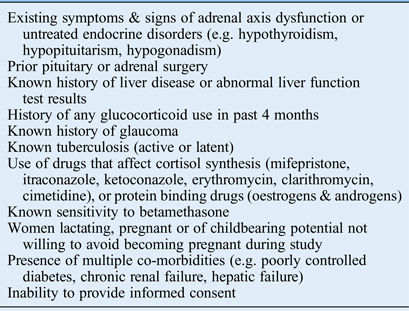
Potential participants were identified through the hospital-based operating theatre management system. They were considered for inclusion if they had previously undergone FESS for chronic rhinosinusitis and were aged 18 years or more. Recruitment was performed by contacting each potential participant by telephone and screening for exclusion criteria. Potential participants were excluded if they met any of the criteria listed in Appendix I. Importantly, potential participants who had used any form of steroid treatment in the past four months were excluded from the study.
Eligible participants were invited to attend the out-patients department, where they were provided with verbal and written information about the study. The off-label nature of the treatment was explained at this review. Written consent was obtained from each participant prior to enrolment in the trial. Approval for the study was gained through the Human Research Ethics Committee of the Gold Coast Hospital and Health Service. At review, a focused history and examination, including nasoendoscopy, were performed.
Drug administration
Each participant was provided with a six-week supply of betamethasone cream and nasal wash equipment, which included a commercially available squeeze bottle and sachets for reconstitution to saline (FLO CRS; ENT Technologies, Hawthorn East, Victoria, Australia). They each received verbal and written instructions on how to use these for nasal irrigation. Participants were instructed to draw 1 ml of 0.5 mg/g betamethasone cream into a syringe and add this to 200 ml normal saline, and to irrigate each nostril with 100 ml of this solution once daily for six weeks.
The steroid dose used was reflective of practice within our local otolaryngological community, where approximately 2 cm of betamethasone cream is added to nasal irrigation solutions. This equates to roughly 1 ml (0.5 mg) of betamethasone cream. Based on the work of Harvey et al.,Reference Harvey, Debnath, Srubiski, Bleier and Schlosser 19 the maximum residual dose within the nose was calculated to be 0.025 mg when using a 200 ml solution, which is 128 times below what is considered safe for this drug. 20
Study participants were contacted at weeks one, three and six to ensure compliance with the treatment regimen and to monitor for adverse effects.
Measurements
Primary outcome
To determine the safety of betamethasone nasal irrigation, the impact of this intervention on endogenous cortisol levels was assessed. The suppression of cortisol levels from baseline was the main outcome of interest and was evaluated by measuring the change between pre- and post-intervention morning serum and 24-hour urinary free cortisol levels. Each participant had these markers assessed the day prior to starting betamethasone nasal irrigation and again after six weeks of continuous use, with repeat testing taking place on the same day that treatment ceased. Renal and liver function were also assessed at baseline to exclude occult renal or hepatic disease.
Specimen collection was standardised by using hospital phlebotomists for blood sampling, and by providing each participant with verbal and written instructions on the correct technique for 24-hour urine collection. All specimens were collected at the hospital's pathology centre and sent for processing at a centralised laboratory. The 24-hour urinary free cortisol samples were processed using the method of liquid chromatography linked to tandem mass spectrometry.
Secondary outcome
Treatment efficacy was evaluated using the SNOT-22 questionnaire, which was completed by each participant at the pre- and post-intervention clinic visits. This validated, disease-specific, health-related quality-of-life instrument comprises 22 items, which are ranked in terms of severity, from 0 to 5.Reference Hopkins, Gillett, Slack, Lund and Browne 21 , Reference Rudmik, Soler, Mace, DeConde, Schlosser and Smith 22 This gives an overall score range of between 0 and 110, with higher total scores indicating greater symptom severity.Reference Hopkins, Gillett, Slack, Lund and Browne 21 , Reference Rudmik, Soler, Mace, DeConde, Schlosser and Smith 22
The difference between total pre- and post-intervention scores, and calculation of the effect size, were used to assess the clinical response to treatment. The effect size was categorised as: small (more than 0.2), moderate (more than 0.5) or large (more than 0.8).Reference Hopkins, Gillett, Slack, Lund and Browne 21 The minimal clinical important difference, defined as the lowest degree of change in score required for a participant to perceive a benefit from treatment, was also evaluated, and was considered present if there was a reduction of nine or more points from the overall pre-intervention score.Reference Hopkins, Gillett, Slack, Lund and Browne 21 , Reference Rudmik, Soler, Mace, DeConde, Schlosser and Smith 22
Data analysis
The potential differences between pre- and post-intervention results for serum cortisol and SNOT-22 scores were assessed using paired t-tests; the 24-hour urinary free cortisol results were analysed using the Wilcoxon signed-rank test. Measurement of effect size for the change in SNOT-22 results was performed by calculating the difference in the mean scores divided by the baseline standard deviation (SD). For all variables, a sample size of 25 was calculated to be adequate to provide 80 per cent power at the 5 per cent significance level. Statistical analysis was performed using SPSS Statistics software (version 22; IBM, Armonk, New York, USA).
Results
A total of 40 participants were recruited, of whom 30 (16 females and 14 males; mean age (±SD) = 53.9 ± 15.6 years) completed all requirements and were included in the data analysis. All participants had normal renal and liver function at baseline; thus, no exclusions were made post-enrolment because of abnormal laboratory test results.
Reasons for participant discontinuation included: exclusion because of protocol violation associated with incorrect pathology collection (n = 3), loss to follow up or participants uncontactable (n = 5), and self-reported adverse effects from nasal irrigation (n = 2). The two participants that exited the study because of adverse effects primarily reported nasal irritation and headache associated with steroid irrigation. Multiple participants complained of low-grade irritation, which either resolved with repeat exposure or was tolerable. One participant suffered from low-grade epistaxis on commencing betamethasone douches, but this was self-limiting and resolved by week three.
The measures of endogenous cortisol levels at baseline and after six weeks of betamethasone nasal irrigation are shown in Table I. There was no difference between pre- and post-intervention morning serum cortisol levels (p = 0.28). The results for 24-hour urinary free cortisol differed however, with a statistically significant reduction in post-intervention levels (p = 0.025).
Pre- and post-intervention differences in cortisol markers and urinary creatinine

*n = 30; † n = 30. SD = standard deviation; h = hours
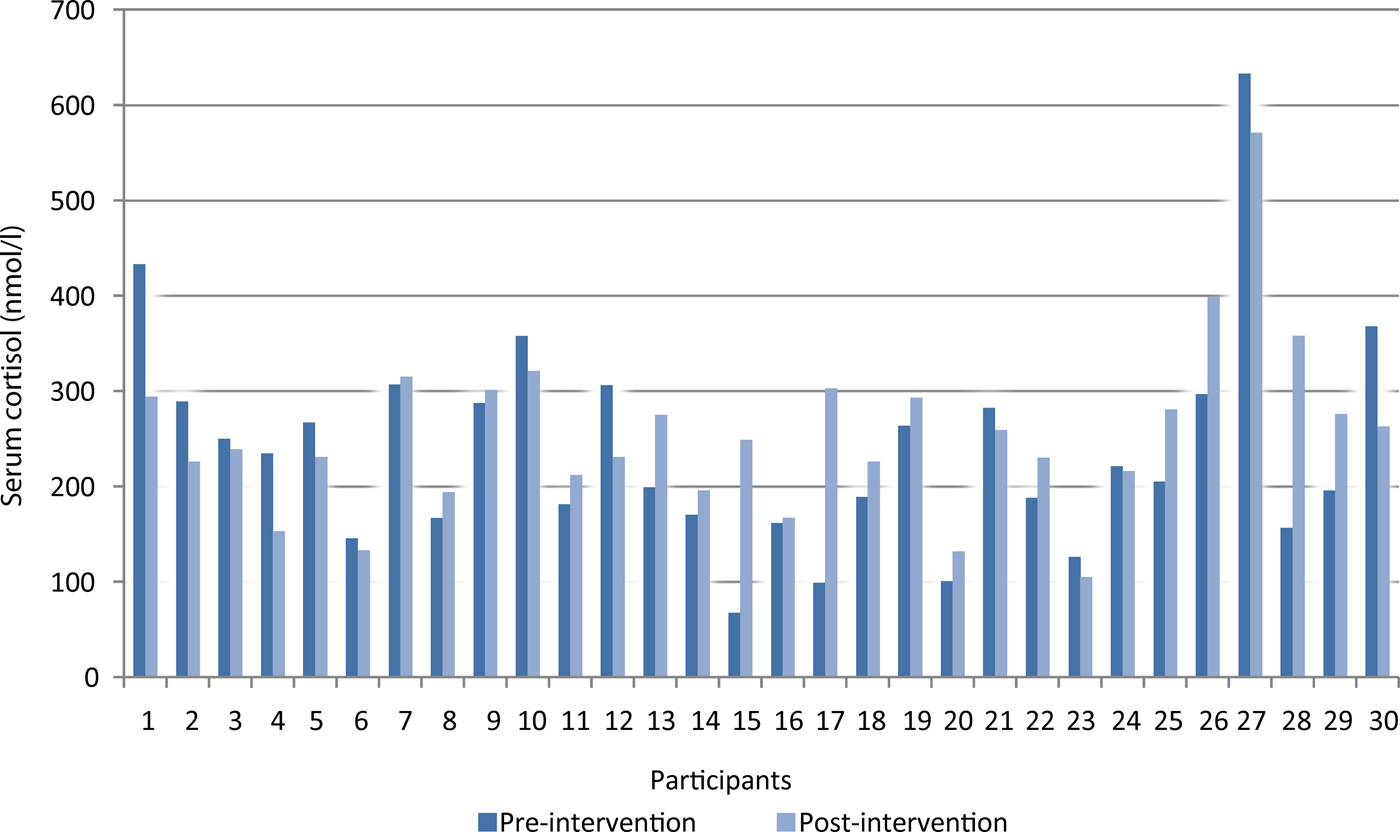
Four participants had pre-intervention morning serum cortisol levels that fell below the lower end of the reference range of 140–640 nmol/l. On post-intervention testing, these results were within the normal reference range for two of the participants and again below the reference range for the other two (Figure 1). The highly variable results observed on individual measures of morning serum cortisol are consistent with the ultradian or burst-like secretion that commonly affects plasma levels, and is reflective of normal adrenal physiology rather than a suppressive effect from exogenous steroid treatment.Reference Henley and Lightman 23
Individual pre- and post-intervention serum cortisol levels. Morning serum cortisol levels were unchanged (p = 0.28). Normal reference range = 140–640 nmol/l.

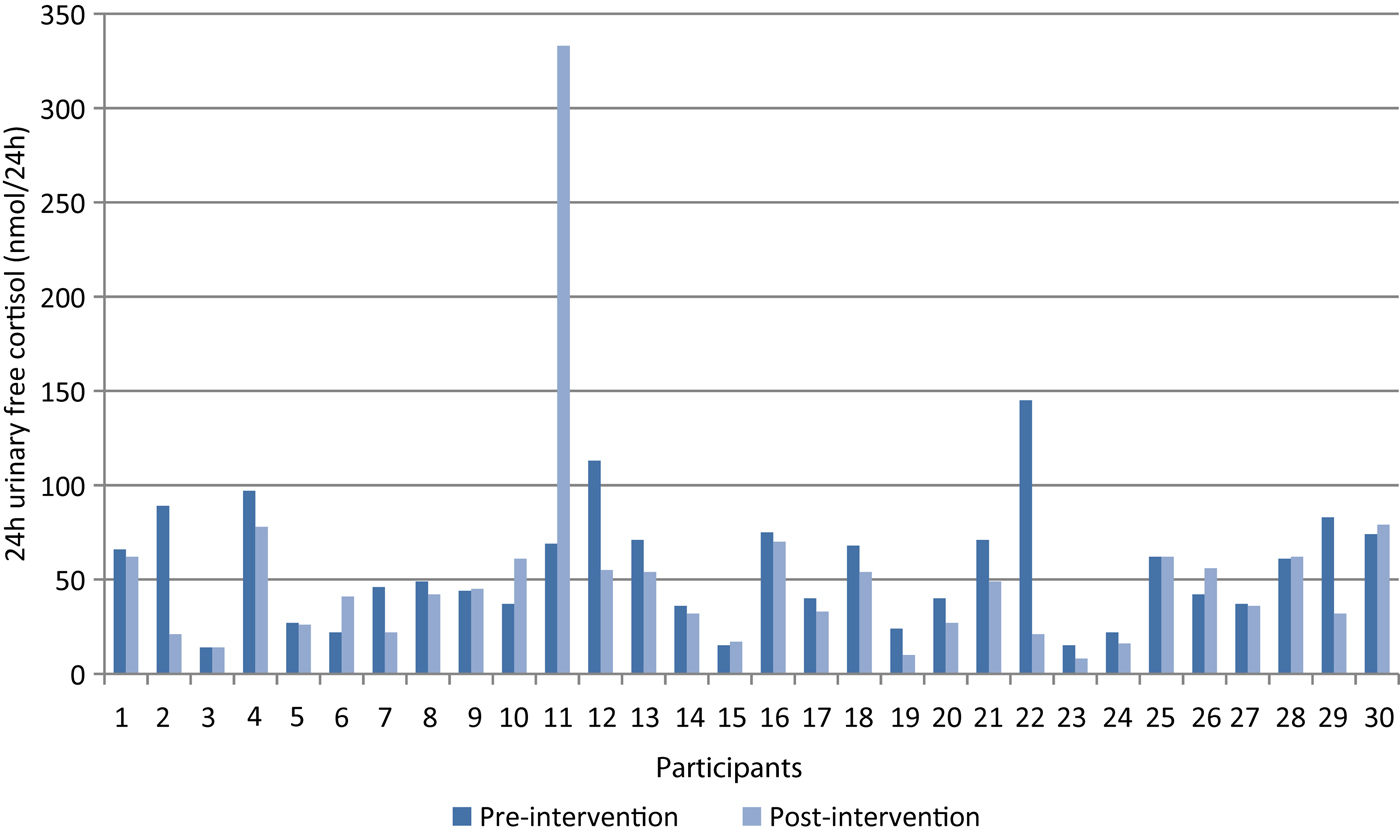
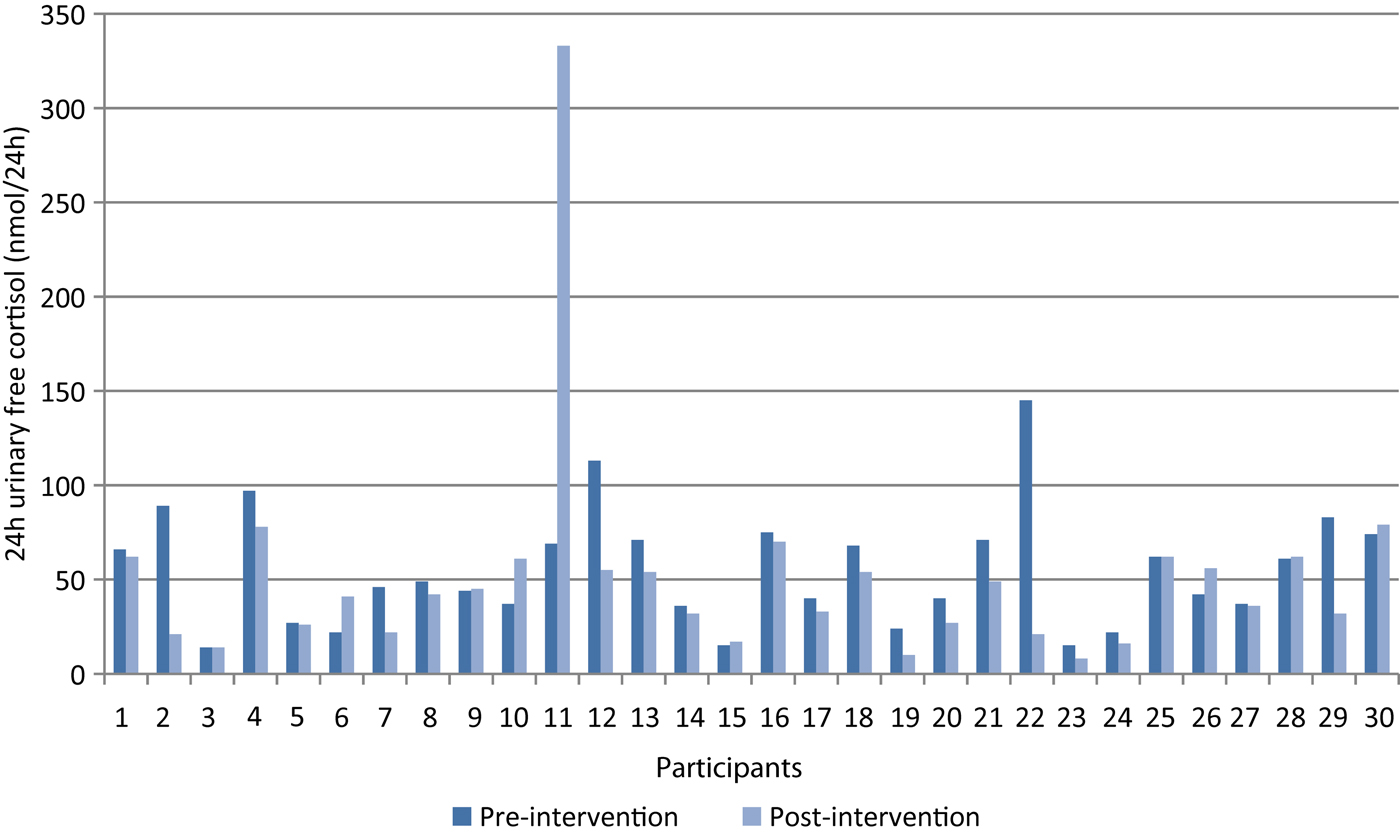
Importantly, 24-hour urinary free cortisol was within the normal reference range of 10–150 nmol per 24 hours on all occasions for these four participants, except for the post-intervention result of one participant, which fell below the lower cut off at 8 nmol per 24 hours (Figure 2). In consultation with the endocrine department, this individual variation below the reference range for 24-hour urinary free cortisol was not considered to represent adrenal suppression. Additionally, there was one participant who had a post-intervention 24-hour urinary free cortisol level significantly above the higher end of the reference range at 333 nmol per 24 hours. This participant was referred to the endocrine department for follow up, and was subsequently found to have normal 24-hour urinary free cortisol excretion.
Individual pre- and post-intervention 24-hour urinary free cortisol levels. There was a statistically significant reduction in 24-hour urinary free cortisol (p = 0.025). Reference range = 10–150 nmol per 24 hours. H = hours
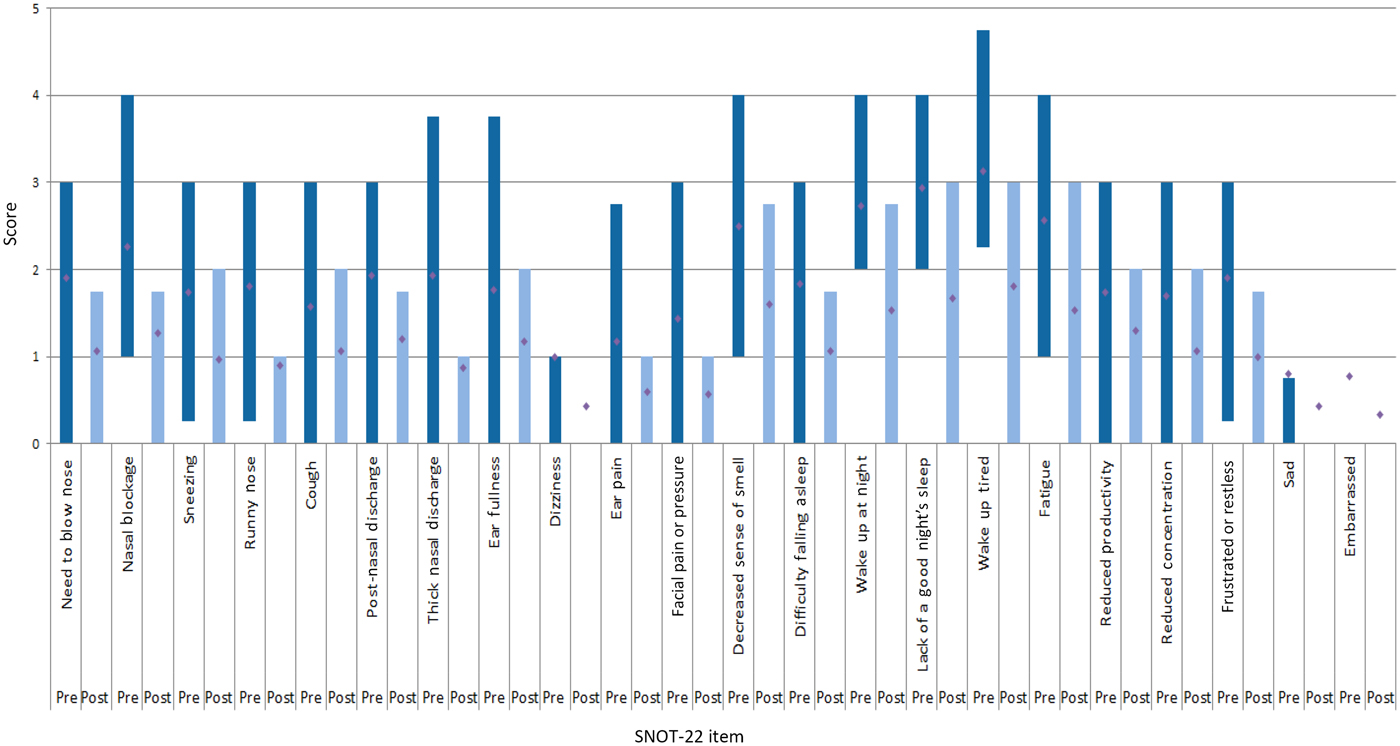
There was a statistically significant (p < 0.001) reduction in SNOT-22 scores post-intervention, signifying improvement in overall symptomatology. The mean (± SD) pre-intervention SNOT-22 score was 41.13 ± 21.94, while the mean (± SD) post-intervention score was 23.4 ± 18.17. Average pre- and post-intervention responses by item are shown in Figure 3.
Medians (diamonds) and interquartile ranges (bars) for individual 22-item Sino-Nasal Outcome Test (SNOT-22) questionnaire responses pre- and post-intervention (n = 30).

The overall effect size was 0.8, which is considered large. The minimal clinical important difference, which is the smallest change in score required for a patient to identify an improvement in symptoms,Reference Hopkins, Gillett, Slack, Lund and Browne 21 was achieved by 63 per cent of participants.
Discussion
In evaluating basal hypothalamic–pituitary–adrenal axis function, the measurement of serum and 24-hour urinary free cortisol levels is considered standard for assessing systemic exposure to exogenously administered steroids.Reference Fan, Ma, Pippins, Limb, Xu and Sahajwalla 24 In our study, we observed that 24-hour urinary free cortisol was statistically significantly decreased, yet serum cortisol levels remained unchanged across the cohort. As 24-hour urinary free cortisol levels are a more sensitive marker of basal hypothalamic–pituitary–adrenal axis activity than single measures of morning serum cortisol, this finding suggests a level of systemic absorption of betamethasone great enough to cause mild suppression of adrenal function.Reference Fan, Ma, Pippins, Limb, Xu and Sahajwalla 24 , Reference Lipworth and Seckl 25 However, statistically significant suppression of cortisol does not necessarily correlate with clinically meaningful adrenal suppression.Reference Lipworth and Seckl 25 This is because the above tests simply detect endogenous adrenocortical activity and act as a marker for the potential systemic activity of exogenous steroids.Reference Lipworth and Seckl 25
To further assess the clinical relevance of systemically bioavailable exogenous steroids, stimulation tests are required, such as the low-dose adrenocorticotropic hormone (ACTH) test.Reference Fan, Ma, Pippins, Limb, Xu and Sahajwalla 24 , Reference Lipworth and Seckl 25 Dynamic stimulation tests mimic the physiological adrenal response to stress.Reference Lipworth and Seckl 25 This allows for the detection of evolving or partial adrenal suppression when an exogenous steroid is found to be systemically active by way of screening tests such as serum and 24-hour urinary free cortisol.Reference Fan, Ma, Pippins, Limb, Xu and Sahajwalla 24 , Reference Lipworth and Seckl 25 This approach was used by Wilson et al., who found that despite the suppression of overnight urinary cortisol levels with intranasal fluticasone, there was no blunting of the adrenal response as determined using the low-dose ACTH test.Reference Wilson, McFarlane and Lipworth 26 Similar results have not been found for betamethasone when using low-dose ACTH tests however, with previous studies showing hypothalamic–pituitary–adrenal axis suppression with the use of betamethasone nasal drops.Reference Gazis, Homer, Henson, Page and Jones 17 , Reference Fowler, Gazis, Page and Jones 18 It is a notable limitation of our study that we were unable to assess physiological adrenal reserve using such dynamic tests. While we consider it unlikely that the level of suppression observed would lead to adverse health effects, the lack of assessment of adrenal reserve makes further comment more difficult.
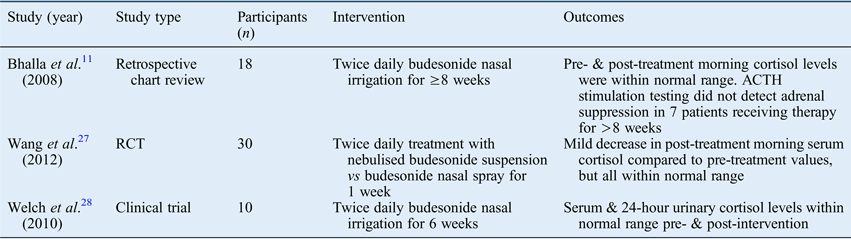
From a clinical standpoint, it is interesting to note that all values for post-intervention 24-hour urinary free cortisol remained above the lower end of the reference range for all but one participant (Figure 2). Similar results have been found with the use of intranasal budesonide (Table II).Reference Bhalla, Payton and Wright 11 , Reference Wang, Lou, Lou and Zhang 27 , Reference Welch, Thaler, Doghramji, Palmer and Chiu 28 Specifically, for the post-FESS population, Welch et al. highlighted this through assessment of serum and 24-hour urinary free cortisol levels in patients using budesonide nasal irrigation.Reference Welch, Thaler, Doghramji, Palmer and Chiu 28 That study showed no suppression of cortisol below the lower reference range for both markers.Reference Welch, Thaler, Doghramji, Palmer and Chiu 28 The finding in the present study that the majority of participants had normal post-intervention 24-hour urinary free cortisol levels is clinically useful given that it is these individual results which are used to guide ongoing medical management.
Studies demonstrating lack of adrenal suppression with intranasal budesonide use

ACTH = adrenocorticotropic hormone; RCT = randomised controlled trial
Given the long-term management approach required in patients with chronic rhinosinusitis, it is necessary to avoid protracted exposure to steroid treatments that may lead to adverse health effects. At the same time, it is important that the treatment recommended is effective. For both of these reasons, the use of intranasal steroids is an attractive choice of treatment, as it avoids the systemic side effects associated with oral steroid use and provides a more effective result than nasal irrigation with saline alone.Reference Fandino, Macdonald, Lee and Witterick 8 Indeed, there is a substantial evidence base for intranasal steroid use as a safe and effective treatment modality in chronic rhinosinusitis,Reference Fandino, Macdonald, Lee and Witterick 8 , Reference Sachanandani, Piccirillo, Kramper, Thawley and Vlahiotis 12 , Reference Snidvongs, Pratt, Chin, Sacks, Earls and Harvey 13 and our results add to this, with the majority of participants showing a significant improvement in SNOT-22 scores. The clinical relevance of the decrease in post-intervention 24-hour urinary free cortisol observed in our cohort is considered negligible, and cannot be relied upon as a true reflection of adrenal suppression without dynamic stimulation tests.
-
• Steroid nasal irrigation is an effective treatment for chronic rhinosinusitis patients following functional endoscopic sinus surgery
-
• Despite widespread use, safety evidence for steroid nasal irrigation is limited
-
• This study demonstrates that betamethasone nasal irrigation is unlikely to cause clinically significant adrenal suppression
-
• Furthermore, this treatment provides satisfactory symptom improvement in chronic rhinosinusitis patients
There are notable limitations within our study that affect the external validity of the results. The lack of evaluation of adrenal reserve has been discussed. The use of a comparison group would have strengthened this study and allowed for more robust conclusions. Without a comparison group, we cannot confidently infer that the decrease in 24-hour urinary free cortisol levels was entirely due to the use of betamethasone. It is interesting that there was a non-significant tendency for a reduction in urinary creatinine levels (Table I). This may go some way in explaining the statistically significant reduction in 24-hour urinary free cortisol if the participant's overall collected volume of urine was lower post-intervention. Measurement of serum betamethasone via mass spectroscopy would have been advantageous in redressing the shortcoming of not having a comparison group, but was unavailable for use in this study.
The sample size was considered adequate for the proposed objectives of the study. Indeed, we completed the study with a sufficient number of participants to satisfy our initial power calculations. Treatment duration, at six weeks, was also considered appropriate, and is in keeping with previous guidance on the timeframe necessary for the evaluation of hypothalamic–pituitary–adrenal axis disruption.Reference Fan, Ma, Pippins, Limb, Xu and Sahajwalla 24
Future research is required to definitively address the safety of betamethasone nasal irrigation in patients post-FESS. Such future investigations would likely take the form of a randomised, placebo-controlled trial that incorporates hypothalamic–pituitary–adrenal axis stimulation tests in order to conclusively ascertain the impact of this commonly used steroid formulation on adrenal function.
Conclusion
The daily use of a 200 ml nasal irrigation solution containing 0.5 mg of betamethasone is associated with normal morning serum cortisol levels and changes in 24-hour urinary free cortisol levels that are unlikely to be indicative of adrenal suppression. Observed decreases in SNOT-22 scores indicate that this treatment is beneficial in improving overall symptomatology. As such, betamethasone nasal irrigation continues to be a safe and effective therapy to recommend in the chronic rhinosinusitis population post-FESS.
Acknowledgements
We would like to acknowledge Dr Michelle Carty (Griffith University, Gold Coast, Australia), for her assistance with statistical analysis, and Dr Katherine English (Department of Endocrinology, Gold Coast University Hospital, Southport, Australia), for her invaluable advice on the interpretation of cortisol results. We also acknowledge ENT Technologies for their in-kind support of this study. This work was supported by University of Queensland Strategic Funding.