


Anarchy is in many ways the core concept of social-scientific International Relations (IR).Footnote 1 Not only does it structure its central discourse about the recurrence of war and the conditions of peace; it also demarcates an academic field whose claim to be a distinct branch of scholarship rests on the assumption that anarchy reigns among states that know no world government above them. International anarchy is often associated with (neo)realist international thought, but the first authors to elaborate on it were liberal progressives. Goldsworthy Lowes Dickinson, one of the early advocates of a League of Nations, made the notion of international anarchy prominent during the First World War. ‘While this anarchy continues,’ he wrote, ‘the struggle between States will tend to assume a certain stereotyped form. One will endeavour to acquire supremacy over the others for motives at once of security and of domination, the others will combine to defeat it, and history will turn upon the two poles of empire and the balance of power.’Footnote 2
In his seminal historiography of IR discourses, Brian C. Schmidt traced the transmutations of the anarchy theme over time and suggested an intimate connection between international anarchy and state sovereignty. ‘Sovereignty and anarchy were the two constituent principles in terms of which the field of International Relations originally took form.’Footnote 3 This account, which is widely shared in IR, has two implications. First, the emergence of anarchy went hand in hand with the emergence of the territorial state in modern Europe. In fact, the first historical chapter of Schmidt’s book is called ‘The theoretical discourse of the state.’ Second, since sovereignty is a legal concept, IR as a social science supposedly branched off from law. Schmidt’s analytical focus on the anarchy/sovereignty binary implies that the social-scientific analysis of war and peace was an offshoot of debates in the academic field and terminology of international law. His account of IR’s formative years before 1914 is indeed skewed toward discourses of international law. Of the 22 scholars whose writings Schmidt considers for the period from 1850 to 1914, 14 were trained jurists who wrote on international or constitutional legal questions; the remainder were, in the main, historians.Footnote 4 Schmidt’s account of IR’s origins is also centered on English-language literature, especially North-American scholarship. The Swiss jurist Johann Caspar Bluntschli is the only scholar considered in Schmidt’s two chapters on the formative period who did not write in English.Footnote 5
What we present in this article is a revision of that account. We do not argue that Schmidt’s historical narrative centered on North America is flawed, but rather that it is incomplete. We show that another discourse about the perils of international anarchy, the causes of war and the possibility of a lasting peace had formed in continental Europe between 1880 and 1914. Two decades before Dickinson identified international anarchy as the root cause of war, the term ‘anarchie internationale’ existed already in French, and ‘internationale Anarchie’ in German. Both languages, especially French, were widely used in academic conversations about international relations and law at the time.Footnote 6 Even more interesting than the fact that scholars and publicists wrote about international anarchy already before 1900 is the intellectual context in which that particular discourse unfolded. It was not a discourse on sovereign rule within the state and anarchy beyond but a controversy over the presumed laws and dynamics of social evolution. Charles Darwin and Herbert Spencer, not Jean Bodin or Hugo Grotius, were the central points of reference; and the academic midwife that brought this particular discourse of anarchy to life was not international law but sociology, itself still an infant science.
As we will show below, the social-scientific discourse of anarchy was initially structured around two different interpretations of what the theory of evolution implied for relations among states. The apologists of war, often polemically called Social Darwinists, conceived of international relations as an agonistic struggle among states, civilizations or races for hegemony and physical survival. Arguing from that premise, they naturalized political violence, war and imperialism. Their opponents were ‘organicists’ who imagined human societies as ever more complex structures based on internal functional differentiation, like organs of a human body. In that perspective, the process of evolution was leading to ever more complex forms of social organization. The evolutionary advantage of humankind as a species caught in a struggle with other forms of life was its superior ability to maintain cooperation. Applying such ideas to the international arena, organicists accepted that international relations were marked by anarchy but argued that this was a temporary phenomenon, an anachronism which could be overcome by means of organization. This debate over the implications of evolution was not merely an academic one but had a political dimension. Militarists and imperialists drew on the motif of an existential struggle imposed by nature to justify their political views and projects. Pacifists enlisted arguments about the benefits of cooperation to demonstrate that the dynamics of evolution were on their side and international organization was a viable project.
In this article, we reconstruct how a social-scientific debate about the perils of anarchy and the possibility of international organization (in the singular) emerged at the fin de siècle and solidified in the years before the First World War. We thus contribute to the study of the ‘lost generation’ of early IR scholarship from the end of the 19th century.Footnote 7 The aim of this discussion is not just historiographical, in the sense of providing a richer account of the intellectual debates and climate of a bygone era. We also seek to show the relevance of evolutionary social theory to present-day discussions about the possibility of order and progress in international relations. It has permeated social-scientific IR theory over time, and especially realism shows an affinity to evolutionary theorizing. To be sure, we are not the first scholars to uncover the links between social-scientific IR and evolutionary theory more broadly. Jennifer Sterling-Folker and others have explored them already.Footnote 8 What we show here is that the intellectual heritage of Lamarck, Darwin and Spencer has accompanied social-scientific IR from the outset and that the discourse of anarchy, as well as the one on international organization, are imbued with it.
The link between evolutionary theorizing and IR has also been highlighted by the revisionist literature on the historical origins of disciplinary IR. Revisionists questioned the historical centrality of the discourse of anarchy that presumes the existence of sovereign states. What they showed instead was that many debates about international relations in the late 19th and early 20th century revolved around issues of imperialism, colonialism and civilization.Footnote 9 Robert Vitalis highlighted how deeply imbued these debates were with conceptions of race and racial hierarchy grounded in evolutionary theory, in particular Darwinism and Lamarckism.Footnote 10 What we crucially add in this article is that not only were debates about empire, race and colonialism profoundly influenced by evolutionary thinking but also the incipient discourse on international anarchy and cooperation.
In the next section, we set the historical scene and engage with the intellectual centrality that theories of evolution had in the second half of the 19th century. In section three, we then zoom in on the application of evolutionary thinking to the field of IR. We begin with the organicists and show how they turned to Spencerian evolutionary thinking in their explicit critique of Social Darwinism. The key figure here was the Russian-French sociologist Jacques Novicow, whose ideas were picked up and propagated further by the Austrian journalist and peace activist Alfred H. Fried. Unlike other important European pacifists, such as Bertha von Suttner, whose arguments were mainly moral, Novicow and Fried tried to ground their peace advocacy in the natural sciences. We show in section four how the resort to biology enabled pacifists to counter the claim that they were woolly-headed sentimentalists who ignored the harsh reality of international politics.
Pitching theorists of inevitable war and conflict under anarchy against proponents of international organization and law, the discursive constellation around 1900 resembled what has been called the First Great Debate of IR. Unlike the First Great Debate, which was more of a post-hoc invention,Footnote 11 that controversy between social Darwinists and scientific pacifists actually did take place in newspapers and scientific journals, and it was an eminently political one. Interwar IR scholars such as E. H. Carr were still familiar with scientific pacifism, but it got out of sight despite the efforts of historians to recover these ideas.Footnote 12 Even if Novicow’s and Fried’s work was forgotten in IR, the theory of evolution was not. Section five shows how it appears both on the realist and the progressivist side of IR theorizing until the present day.Footnote 13 Realists draw on classic Darwinian analogies with iron laws of nature governing state behavior through competition, selection, and elimination. Progressives are more attracted to Lamarckian and Spencerian speculations about learning and adaptation that open up avenues to overcome the perils of anarchy. These contending interpretations of evolution are thus surprisingly timeless, as we show in the last section, at the core of the controversy between Kenneth N. Waltz and Alexander Wendt over the implications of international anarchy. We conclude that in IR the nexus between the idea of international anarchy and evolutionary thought is much older and much closer than is commonly acknowledged.
Evolutionary theory in 19th-century social thought
In the second half of the 19th century, evolutionary vocabularies and figures of thought came to permeate virtually all branches of science, including the study of social and cultural phenomena. Accordingly, historians of science consider the Darwinian Revolution one of the pivotal moments in scientific history, akin to the Copernican Revolution.Footnote 14 Such a comparison combines the significance of the findings themselves with the monumentality of the shift to a ‘new’ science at a time when widely held doctrines had ruled for centuries. Today, the theory of evolution is strongly linked with Charles Darwin’s name. However, while being perhaps the most defining figure of the leading 19th-century scientific episteme, he was hardly the pioneer of evolutionary thinking. In his day, the anglophone scientific discourse was marked by the theories of English economist and demographer Thomas Malthus, initially presented in his book An Essay on the Principle of Population (1798).Footnote 15 Darwin’s natura non facit saltum emerged in the ambit of ‘Malthusian leaven,’ as Pyotr Kropotkin dubbed it,Footnote 16 and Darwin himself acknowledged the influence of Malthus’s Essay upon the development of his own thinking on natural selection.Footnote 17 Malthus did not speak explicitly about ‘evolution’ but about a ‘struggle for existence.’Footnote 18 Malthus suggested that human populations grew exponentially while food supply grew only linearly, leading to conflict over the ever-depleting resources needed for survival. His thesis was widely accepted (despite a lack of compelling empirical evidence) and served as a theoretical explanation of poverty as the product of natural forces rather than social organization. Malthus was also of the view that the natural tendency to population growth could be managed, and the struggle thus mitigated, through appropriate public policies.
Given that Darwin was primarily a biologist, he initially limited his theory of evolution in On the Origin of Species (1859) to plants and animals. Only years later, in his book The Descent of Man and Selection in Relation to Sex (1871), he also discussed selection in the context of human societies, but cautioned that selection did not follow the same path among humans as in the kingdom of plants and animals.Footnote 19 Darwin not only wrote about competition. He also observed that during human evolution, mutual help as well as the phenomenon of assistance (cooperation) provided humans with the possibility to control nature for ‘the best chances of life and propagation.’ He made a distinction in this respect between ‘barbarian’ races, where these instincts were not fully developed, and ‘civilized’ races, which had them. These concepts, however, made up but a very modest portion of Darwin’s theoretical legacy.Footnote 20 His main focus remained on the laws of nature, founded on the interaction between competition and struggle.
Darwin’s own writing moved between biology and human society, between competition and cooperation. His figurative language ranged from ‘struggle for existence,’ ‘economy of nature’ to ‘the branching tree of life.‘Footnote 21 Darwin’s metaphorical vocabulary was deliberate and sufficiently flexible to generate divergent readings.Footnote 22 Thus, the interpretations of Darwin’s theory of evolution were not always distortions imposed from outside, for they often developed from ambiguities already present within Darwin’s terminology. This became particularly clear when the concept of ‘natural selection’ was remodeled into the famous ‘survival of the fittest’ for the fifth edition of On the Origin in 1869. That phrase was coined not by Darwin, but by another influential English intellectual, the philosopher and early sociologist Herbert Spencer (1820–903), upon reading Darwin’s opus magnum. Footnote 23
Spencer had held evolutionary ideas before encountering Darwin’s and had applied them to politics and society.Footnote 24 His evolutionary thinking was indirectly influenced by Lamarck’s theory of acquired characteristics. Long before Darwin presented his evolutionary biology based on the idea of spontaneous and random mutations, Jean-Baptiste Lamarck (1744–1829) had suggested that organisms could pass on traits acquired during their lifetime to their offspring. Characteristics that were strengthened by repeated use would be inherited. In the field of biology, Lamarckian ideas about acquired traits were largely dismissed after the discovery that genes and their mutations shaped the characteristics of organisms (which seemed to confirm Darwin’s theory). Still, we need to consider how popular they were throughout the 19th century. What attracted especially social and political theorists to Lamarckism was that it left room for a certain malleability of evolutionary processes, which remained accessible to planful human intervention. The application of Lamarck’s biological ideas to politics flourished at the dawn of the 20th century.Footnote 25
According to Spencer, competition induced human beings to adapt themselves actively to their environments, improving their mental and physical skills. These skills would be inherited by their descendants. While Darwinian natural selection is a process beyond anyone’s control, Spencer maintained that the human struggle for existence was conscious and thus also malleable.Footnote 26 He therefore was more optimistic than Darwin that humans could leave this struggle behind through civilizational progress. ‘Spencer predicted a coming age in which competition between humans would no longer be necessary. Darwin, however, maintained that human competition would continue in perpetuity.’Footnote 27
In his later works, Spencer drew an analogy between human societies and biological organisms, underlining similarities in their structures and stages of development. His evolutionary theory proposed that civilizations advance through a process of differentiation and integration. In The Study of Sociology (1873), Spencer argued for establishing sociology as a distinct scientific field, applying his broader evolutionary theories to societal development.Footnote 28 The analogy between society and a biological organism was central to Spencer’s theory. It suggested further analogies between growth, differentiation, and development of interdependent parts of an organism and the way societies evolve through increasing complexity and specialization of their structures and institutions. Spencer stressed that both in a physical organism and in human societies, coordination among the parts was crucial to maintain stability and survival.Footnote 29 He, however, also acknowledged the limits of such direct analogy, maintaining that individuals in society retain independence, unlike cells in an organism. Spencer became the unofficial leader of a group of early sociologists calling themselves ‘organicists.’ René Worms, Paul de Lilienfeld, Jacques Novicow and others were among the followers who took up Spencer’s suggestion to apply evolutionary thinking and biological analogies to the study of human societies.
At the turn of the century, the ambiguity of Darwin’s language continued fostering competing readings. One of the most systematic challenges to the dominant interpretation of Darwinism came from Pyotr Kropotkin (1842–921), Russian geographer and theorist of anarcho-communism. Kropotkin set out to question Darwin’s ‘struggle for existence,’ reconstructing the concept from within. Influenced by the Russian zoologist Karl Kessler (1815–81), who argued that mutual help within a species holds far greater significance for survival than interspecies struggle,Footnote 30 Pyotr Kropotkin developed his own interpretation. Working on his reading of Darwinian theory, he entered into a direct polemic with an English naturalist, ‘Darwin’s Bulldog’ Thomas Henry Huxley, whose 1888 essay The Struggle for Existence in Human Societies had reduced Darwinism to a Hobbesian bellum omnium contra omnes (‘war of all against all’).Footnote 31
Crucially, Kropotkin’s quarrel was with Huxley’s Darwin, not Darwin himself. He charged Huxley with appropriating Darwin’s terminology while abandoning his core ideas. The attack was pointed and public as Kropotkin published his counter-argument as a series of articles between 1890 and 1896 in the same journal, The Nineteenth Century. Footnote 32 In 1902, the articles were gathered into a book titled Mutual Aid: A Factor of Evolution (Kropotkin Reference Kropotkin1922 [1902]). The book’s opening made the position of Kropotkin toward Darwin explicit: where Darwin had begun with ‘When on board H.M.S. ‘Beagle,’ as naturalist, I was much struck with certain facts in the distribution of the inhabitants of South America,’Footnote 33 Kropotkin echoed him with the phrase ‘Two aspects of animal life impressed me most during the journeys which I made in my youth in Eastern Siberia and Northern Manchuria,’Footnote 34 thus positioning himself within the Darwinian tradition.Footnote 35
Drawing on empirical data gathered during his Siberian expeditions of the 1860s, Kropotkin argued that sociality and cooperation, phenomena he dubbed ‘mutual aid’ [entraide], constitute a natural law and a primary evolutionary factor. According to Kropotkin, the higher a species stands on the evolutionary ladder, the more pronounced the propensity for cooperation among its members. He acknowledged that struggle permeates both biological and social life, and held that social struggle could serve as a driving force of progress through the formation of new forms of association. Cooperation, in his framework, was conflict’s most evolutionarily productive outcome.
Lamarckism, Darwinism, and even Malthusianism were all competing and, in a way, related evolutionary theories that shaped Europe’s intellectual landscape in the 19th century. Their application in the growing field of social sciences reflected deeper cultural anxieties about progress, national identity, and social reform. Spencer’s Lamarckism manifested itself as a reassuring belief in the plasticity of life and society. Darwinian tenets, in contrast, seemed more pessimistic in their biological determinism, though as Kropotkin’s example shows, that determinism was never the only reading available. They informed a scientific and political position that became known as ‘Social Darwinism’ and was utilized since the late 19th century to ‘naturalize a world of brutal competition and hierarchies of race, gender, and class.’Footnote 36 In the next section we will turn to one particular aspect of this legacy, the propagation of war as a feature of social relations held to be natural, inevitable and beneficial to the progress of humankind.
Social Darwinism versus organicist sociology
Social Darwinism has never been a term used by the proponents of such ideas but by their critics. One of the earliest critics was the Russian sociologist and pacifist Jacques Novicow, who associated Social Darwinism with militarism, imperialism and war.Footnote 37 In this section we examine his pioneering critique and then show how he developed his alternative, organicist adaptation of evolutionary thinking. As Jacques Novicow [Yakov Aleksandrovich Novikov] (1849–912) is an almost forgotten figure, he needs some introduction. Novicow came from a family of industrialists who owned a rope factory in Odesa on the Black Sea coast of the Russian Empire. He managed his family business but also travelled widely across Europe, most often to France, where he became known between 1880 and his death in 1912 as a sociologist and a pacifist. Politically, he was a liberal who defended free trade but also universal suffrage and women’s rights.Footnote 38 He also intervened in contemporary debates about the imminent decline of the white race, ridiculing biologistic conceptions of race and related stereotypes.Footnote 39 A prolific author, Novicow published more than 20 books as well as numerous essays and articles, mostly in French. Although widely regarded as a respectable Franco-Russian sociologist, he was essentially an autodidact.Footnote 40 Novicow contributed regularly to the Revue internationale de sociologie [International Review of Sociology],Footnote 41 founded in 1893 by his fellow organicist and friend René Worms. Encouraged by the success of the Revue, they set up the Institut International de Sociologie [International Institute of Sociology] a year later, and Novicow became one of its vice presidents. Next to these academic activities, Novicow was an active member and an ‘ardent apostle’Footnote 42 of the European peace movement. He travelled to numerous peace conferences and joined the Central Committee of the Bureau International de la Paix,Footnote 43 which he also supported through donations.Footnote 44 His academic theorizing needs to be seen in the light of this political activism, and this is particularly true for his critique of Social Darwinism.
Novicow defined Social Darwinism as ‘any doctrine which considers collective homicide as the cause of human progress’ and called the proponents of this theory ‘advocates of war.’Footnote 45 Despite the polemical tone, Jacques Novicow appreciated the outreach to the natural sciences and recognized how this had facilitated the success of Social Darwinism.Footnote 46 That doctrine gained prestige precisely because it had assumed a properly scientific way of arguing. In the second half of the 19th century, Darwin’s name had become associated with biology itself, and biology the star discipline. What is more, theoretical debate about social Darwinism and its many forms unfolded against the backdrop of continuous warfare in the age of imperialism. From the Franco-Prussian War (1870–1) to the Second Boer War (1899–902) and the Russo-Japanese War (1904–5), a transnational cohort of academics and publicists legitimized violence and bloodshed. For example, in 1891 the US admiral Stephen Bleecker Luce (1827–917) published his essay ‘The Benefits of War’ in the North American Review. Footnote 47 In France, Henri Bonnal (1844–917), a general and military historian, published three volumes on the ‘spirit of modern warfare.’Footnote 48 In Germany, Ferdinand Kattenbusch (1851–935), a Protestant theologian and professor, wrote on The Moral Right of War [Das sittliche Recht des Krieges, 1906].Footnote 49
The Dutch sociologist Sebald Rudolf Steinmetz in 1907 published The Philosophy of War [Die Philosophie des Krieges], a book that attracted Novicow’s particular attention because it was written by a colleague.Footnote 50 Undoubtedly a Social Darwinist in Novicow’s understanding, Steinmetz studied the mutual influence of war on history, politics, economics, morality, and culture, arriving at a classic apology for war. Steinmetz lamented that attention was often paid only to the negative aspects of war, completely ignoring the positive ones. Philosophy, in his opinion, should not succumb to such ‘sentimentalism’ and consider war objectively instead. Steinmetz emphasizes the ‘essential and eternal function of war’ as a key lever in the development of human society.Footnote 51 War to him was the main source of human progress since without wars, modern states would not have arisen. He also believed that war was the highest form of mobilization of all the forces of society, necessary for a full-fledged social life.
In the crosshairs of Novicow’s polemics against Social Darwinism were also theorists of race struggle, such as Ludwig Gumplowicz, a professor at the University of Graz, Austria, and author of The Struggle of the Races [Der Rassenkampf, 1885]. Gumplowicz argued that the human species had a polygenetic origin, with each race coming from a separate trunk. Additionally, Gumplowicz believed that antagonism and hatred had always existed between human races, and would continue to divide them until the end of time. He concluded that the eternal struggle of races was the law of history.Footnote 52 For Novicow, Gumplowicz was a ‘theorist of brute force,’ who associated biological ‘struggle’ with physical violence, as if ‘the only struggle known to humankind aims at conquering neighboring lands, and the sole method of struggle is slaughter on the battlefield.’Footnote 53
While Novicow agreed on the indisputability of Darwin’s genius, he strongly maintained that social facts were not identical to biological ones. A direct application of Darwin’s principles to human societies would thus be erroneous. Humans, unlike animals, had economic, political, and intellectual needs, in addition to physiological ones. He held that Social Darwinism was not a straightforward extension of Darwin’s theory. Instead, it represented a biology-inspired evolutionary framework in which organized violence was linked to social progress. Darwin’s ideas furnished a justificatory idiom to militarists and imperialists who were able to couch their aggressive and expansionist policies in a language of natural necessity. His case in point was German chancellor Otto von Bismarck, who ‘constantly put in practice an ‘agonistic’ conception of existence.’Footnote 54
Rejecting the claim that war drives progress by encouraging associations, Novicow argued that war bred dictatorship, degraded quality of life, and obstructed progress. War morally corrupted societies, enabling theft, looting, and violations of conscience, while encouraging a distorted view of armed conflicts as tonifying and morally uplifting.Footnote 55 Novicow challenged the notion that war ‘selects the fittest individuals,’ asserting that it achieved the opposite by destroying the strongest in the trenches. Rather than advancing humanity, war impeded development. Over and above that, Novicow viewed war as economically wasteful and inefficient. His political liberalism clearly transpires here. He argued that obtaining resources through conflict requires far more effort and expense than peaceful production. The resources spent on weaponry and the time lost in combat, he explained, would always pale in comparison to the prosperity created by peaceful labor. ‘War has never created wealth with ‘the least amount of labor and effort,’ but has always diminished human prosperity. Wealth lies not in the possession of resources but in adapting our planet to meet human needs.’Footnote 56 Echoing the ‘natural selection’ tenet of Darwinism, he concluded that ‘[w]ar is a form of negative selection, destroying the more civilized and sparing the less civilized; it consistently slows intellectual progress and fosters intellectual stagnation.’Footnote 57
Novicow’s own evolutionary social theory also emanated from a notion of struggle. However, his conception encompassed a broad spectrum of struggle types, linking them to human needs in intellectual, moral, political, and economic realms co-existing in the name of progress. What he tried to show was that struggle could be pacified. He sketched the contours of his own evolutionary approach in his 1886 book La politique internationale. Footnote 58 Here, Novicow recognized explicitly that there was anarchy (anarchie) in international affairs, but he did not stipulate that international relations were a separate realm in which entirely different laws prevailed forever.
He describes the state of international anarchy in broadly Hobbesian terms as a state of war. Under conditions of anarchy, states adopted the stance of wild animals ready to devour each other. They did not recognize any rule limiting their conduct, no common interest, and did what they pleased, or found expedient to defend their territories. ‘In short, this is a wild anarchy without brakes, permanent hostility interrupted by armistices, in one word: armed peace [ la paix armée ].’Footnote 59 This definition of anarchy as armed peace resembles Thomas Hobbes’s famous account of the international state of war, which was not permanent battle but the ‘disposition’ to go to war anytime.Footnote 60 Given that Hobbes’s conception of the state of nature is a standard reference in IR, we may well argue that Novicow was working with a ‘classical’ conception of anarchy. Like Hobbes, he also insists that justice and morality have no conceptual place in the international sphere.Footnote 61
Under conditions of anarchy, politicians were striving to maintain a balance of power [système d’equilibre international]. Novicow’s account of balancing dynamics is a familiar one: as soon as one state becomes too powerful, others will build an alliance to keep the accumulation of power in check.Footnote 62 This kind of balancing is the only form of cooperation among states that works reliably under anarchy. Yet Novicow, unlike 20th-century realists, historicized the balance of power, defining it as la politique ancienne, the old way of doing international politics in early modern Europe. Like international anarchy, the balance of power was a temporal phenomenon, transitory and malleable. To understand the idea of temporality, we need to consider how Novicow’s conception of international anarchy is embedded in his general sociology of struggles among individuals and social groups. It is already present in La politique internationale but was elaborated further about 10 years later in his most extensive statement on the subject, Les luttes entre sociétés humaines et leurs phases successives [The struggles between human societies and their succeeding phases, 1893].Footnote 63
For Novicow, the dynamics of social evolution were essentially the same within and among societies. In the state, social institutions were like organs that performed a specific function for their societies and for the individuals populating them.Footnote 64 By analogy, in the international sphere, states performed an organic function to humanity as a whole. Novicow conceived the evolution of the human species as a sequence of struggles among individuals, groups and states – a competition that was as natural as it was inevitable. Those struggles took place in different domains: physiological, economic, political, and spiritual. Yet there was a secular change in the nature of struggle over time. As evolution progressed, the mode of competition shifted from physical fighting to intellectual contest.Footnote 65 Modern nations, Novicow argued, were still caught in the eternal dynamics of competition, but those now played out essentially as a struggle for progress and social welfare. Therefore, violent fighting over territory was an anachronism, a relic of the past, even a relapse into animalism.Footnote 66
The key problem with international relations was that doctrines and practices of power politics were out of tune with the real needs of modern individuals and societies but still widely believed in. For about three centuries, Novicow argued, maintaining the balance of power had been the dominant practice of international politics under conditions of anarchy.Footnote 67 However, in the 19th century, balancing and power politics had become an anachronism that was no longer appropriate for the relations among mature industrialized nations.Footnote 68 War among such highly connected and collaborating societies became evolutionarily dysfunctional.Footnote 69 Not national aggrandizement, but the joint management of global problems was the challenge that evolution now posed. There is a marked shift here from raison d’état to a cosmopolitan, liberal point of view, looking at international relations from the standpoint of the individual human being, its needs, and interests.Footnote 70 On the other hand, his conception of humankind as a global organism suggested struggles between humanity as a species and the forces of nature. Social Darwinists ‘fancy that man’s one enemy is man. That is not so. Man has other infinitely more dangerous and crueler enemies. These are climatic conditions and certain animal and vegetable species.’Footnote 71 In particular, he cited adaptation to adverse climatic conditions and the fight against infectious diseases as common tasks of humankind.
That outdated notions of power politics were able to persist was the fault of the ruling intellectual elites, which, according to Novicow’s organicist conception, formed the ‘brain’ of society.Footnote 72 The required adaptation to changing environmental conditions that evolution demanded had not worked in the transition to the modern industrial state. Such misunderstandings trapped modern nations in a foolish contest over territory. Yet the hope that territorial conquest would pay off for the victors remained an illusion. Ill-advised and lacking in social-scientific training as they were, elites clung to the idea that international relations were governed by a combination of virtue and chance in a perennial contest over land.Footnote 73 In his later works, Novicow invented a neologism to describe such misconceptions, a mental illness that he called ‘kilométrite’ – a pathological fixation of politicians on the geographical extension of their state’s territory.Footnote 74 It seems that Novicow did not have a linear or deterministic conception of evolution in which one stage neatly followed the other. Rather, the old and new ways of human conduct coexisted for lengthy periods of transition. When exactly humankind would make the next step remained contingent.
Since outmoded ideas of statecraft, not the perils of anarchy, were responsible for the recurrence of international war, the best remedy was a new way of thinking. In that respect, the new science of sociology could be instrumental, Novicow thought. Sociologists would not just discover the laws of society, both at the national and international level, but also formulate programmatic solutions. First of all, a re-education of the elites was in order as aristocracies had to unlearn their traditional dedication to the military and to what today we might call geopolitical thinking. In institutional terms, Novicow suggested a European federation of states, with a view to a universal federation encompassing the globe.Footnote 75 He also discussed the role of existing international organizations and public unions as pioneers of international cooperation but did not attach particular importance to them.Footnote 76 His ambition was much larger: the abolition of national sovereignty and, in Europe, the formation of a transnational federation.
With his stage model of social struggles, Novicow tried to reconcile the tenets of evolutionary biology with ideals of pacifism and cosmopolitanism. During his involvement with the European peace movement, Novicow gathered the support and friendship of prominent colleagues such as Alfred Hermann Fried and Paul d’Estournelles de Constant. Fried especially was full of praise for Novicow and saw in him, as he stated in an obituary, the ‘trailblazer of scientific pacifism.’Footnote 77 Novicow’s doctrine condemning the irrationality of war from both the economic and political point of view was also shared explicitly by other European pacifists, notably Frédéric Passy and Gaston Moch.Footnote 78
In the end, however, it was the English writer Norman Angell who came closest to Novicow’s line of argument, at least as far as the economic irrationality of war was concerned. In his Great Illusion, first published in 1910 and a huge success, Angell pointed out the ‘economic futility of war’ and ‘the political suicide’ that it represented.Footnote 79 The parallels with Novicow’s works are striking. Both even cited very concrete examples of German investments in Britain that would be harmed if Germany were to invade and occupy the British Isles. This led to charges of plagiarism against Norman Angell.Footnote 80 In his defense, Angell insisted that he had been unaware of Novicow’s work and that the similarities were incidental.Footnote 81 It is not to be decided here if Angell was guilty of plagiarism or not. What this episode shows is how central Novicow’s arguments were to the ‘scientific pacifism’ as it emerged at the end of the 19th century. This scientific turn of peace advocacy will be the focus of the next section.
Scientific pacifism, anarchy and international organization
As stated above, Jacques Novicow is an almost forgotten figure today. This contrasts with the reception of his ideas and his prominence in the European peace movement during his lifetime.Footnote 82 Novicow’s sociological approach demonstrably left its mark on the work of fellow peace activists.Footnote 83 Contemporary critics of pacifism equally took issue with his arguments.Footnote 84 The relevance of his conception of an international as anarchy becomes visible, in particular, in the works of the Austrian journalist Alfred Hermann Fried (1864–921), who adopted Novicow’s notion of the international as a sphere of anarchy, along with the evolutionary approach and the organicist metaphors.
Fried was one of the leading exponents of the European peace movement between the 1890s and his death in 1921. Of humble origin and limited formal education, he found wider recognition beyond the circles of peace activists when he received the Nobel Peace Prize, shared with Tobias Asser, in 1911.Footnote 85 Like Novicow, Fried was a free spirit and a widely-read autodidact. He was drawn into the peace movement initially by Bertha von Suttner, with whom he maintained a lifelong friendship.Footnote 86 Together with von Suttner, Fried in 1892 founded the Deutsche Friedensgesellschaft [German Peace Society] and the journal Die Waffen Nieder!, which took its name from von Suttner’s bestselling book and became a forum for European peace activists. Bertha von Suttner’s (Reference von Suttner1889) novel Die Waffen Nieder! [Lay down your arms!], was the ‘principal ideological document of the German peace movement until after the turn of the century.’Footnote 87 Her book was not only a bestseller in the German-speaking world but also translated into 20 languages. As a book of fiction written for a general audience, it appealed to readers’ moral feelings and indignation about the scandal of war. It thus exemplifies a strategy of arguing for peace that is grounded in moral, ethical, or religious reasoning. In the 1880s, this was certainly an important and maybe even the default line of argument among the friends of the peace [Friedensfreunde], as pacifists were usually called before 1900.
Fried, however, became convinced that traditional appeals to morals, religious or humanist sentiment would not be sufficient to stem the tide of militarism and increasing international tension. In 1899, Die Waffen nieder! was replaced with a new weekly that Fried edited, the Friedens-Warte, which still exists today. Novicow also contributed to it with some regularity.Footnote 88 Novicow’s project of a more systematic, scientific grounding of ‘peace propaganda,’ as it was called at the time, had formed over the 1890s and Fried translated five of Novicow’s books into German.Footnote 89 He found in Novicow’s writings ‘a scientific and scholarly basis for antiwar activism.’Footnote 90 Yet he also picked up ideas from other members of the European peace movement in a rather eclectic fashion; in particular, Fried engaged with Gaston Moch’s proposals for military reform and Ivan Bloch’s deliberations on the changing nature of warfare in the industrial age.Footnote 91 He also drew on Eugen Schlief’s ideas about the formation of an international society of states, a Staatenvergesellschaftung. Footnote 92 The science of peace that Fried wanted to promote had to pinpoint the causal dynamics that led to war and to suggest political strategies against it. He also hoped that a scientifically grounded argument would help deflect charges against the peace movement as being sentimental, utopian, and oblivious of the facts of international life. Even if other members of the European movement also contributed to the scientification of pacifist thinking, Fried is usually credited with this development more than anybody else.Footnote 93
Between 1900 and the First World War, Fried’s writings focused on the idea of international organization through law, arbitration and the creation of permanent international institutions. The framing of the international realm as anarchy, which Fried adopted from Novicow, was central to his project of scientific pacifism. In 1905, Fried sketched its contours in a contribution to the Friedens-Warte, which formed the basis of his book Die Grundlagen des revolutionären Pacifismus [Foundations of revolutionary pacifism], first published in 1908.Footnote 94 Fried here distinguished two strands of pacifist thought, which he characterized as ‘reformist’ and ‘revolutionary.’Footnote 95 Reformist pacifism tried to avert war when it was imminent through mediation, negotiation and compromise, or to limit its adverse effects when it broke out. Yet by doing so, the reformists failed to address the condition of international anarchy that allowed war to recur.
Revolutionary pacifism, by contrast, was a more radical program that tackled chiefly the problem of international anarchy. Fried called it revolutionary because it aimed to completely alter the character of the international system and its modus operandi. However, the label ‘revolutionary’ inevitably led to confusion and unintended associations with socialism, so that Fried switched to ursächlicher Pazifismus [causally oriented pacifism] in the second edition of the book.Footnote 96 In a way, ursächlich went straight to the heart of the matter. Fighting international anarchy as the root cause of war was logically prior to curing the symptom of excessive violence; but also prior to any discussion of concrete mechanisms of conflict resolution that members of the peace movement also suggested, such as compulsory arbitration.Footnote 97 ‘Revolutionary pacifism turns against the cause of wars. Through the elimination of that cause, that is, through the construction of an order of international cohabitation among peoples instead of international anarchy, it not just aims to replace the consequence of war with another consequence, but to give new content to the state of affairs known as peace in the current constitution of the world.’Footnote 98
Yet Fried was quick to assert that the end of international anarchy would not imply the end of competition or struggle among states. This, again, was a prominent idea in Novicow’s theory of social evolution that understands struggle among social groups as being constant, as we have seen above. Fried applied it here in a narrower fashion to states and argued that even under the new, post-anarchical order ‘their conflicts will not be over.’ Because they will live, and to live means to struggle; they will struggle even more intensely, but their conflicts will no longer be born from anarchy and marked by the unreason of a revolt against nature; they will contain the spirit of order, of the normal, of reason, and therefore they will be resolvable not through animal-like use of force but following the principles of reason through law.’Footnote 99
Fried not only adopted Novicow’s theorizing about anarchy and social struggle but also his evolutionary terminology and metaphors. According to Fried, international organization would lead to the emergence of a new, transnational organism. Interlinked through a global division of labor, the ‘organs’ of the world, the distinct peoples [Völker], were in the process of morphing into ‘a new and higher organism’ of transnational dimensions.Footnote 100 This new transnational organism, Fried argued, was already in the making, and he gathered empirical evidence to support his thesis.Footnote 101 Governments, however, clung to ideas of anarchy and belligerence that were hopelessly anachronistic as they ignored the trend toward higher forms of organization – in doing so they acted widernatürlich, against nature.Footnote 102 He thus tried to reject claims, as Novicow did, that there was a constant, natural inclination of humankind toward violent conflict. It was anarchy, not human nature, that caused wars, and with time that anarchy would be overcome, provided that state leaders learned their lesson and embarked on international organization. To underline the paramount importance of ‘organizing the world,’ the Friedens-Warte as of 1906 featured a programmatic frontispiece that is reproduced below in Figure 1.
Frontispiece of Alfred Fried’s journal Die Friedens-Warte in its first version, Vol. 8/1 (January 1906).

In an editorial below this new frontispiece, Fried explained the rationale for adopting the slogan Organisiert die Welt! [Organize the world!] and the imagery of the indented wheels, which he hoped would become the new symbol of the international peace movement. ‘This demonstrates cooperation toward a common goal, showing the part in relation to the whole, the whole in relation to the part, and the calm, secure continuation through o r g a n i z a t i o n,’ he wrote.Footnote 103 The organicist idea of a body constituted of distinct organs working together in harmony appears here in a distinctly technical, modernist rendition.
A theoretical problem for Fried’s scientific pacifism was how to reconcile the claim about a quasi-natural, evolutionary trend toward higher forms of organization with his calls for political activism. After all, his scientific theorizing was supposed to inspire and direct the activities of the European peace movement. Yet if the trend toward international organization was natural, why spend so much time and energy on advocating for it? Fried argued that by spreading scientific knowledge about the real causes of war, the pacifist movement would just work in the direction of the natural development away from international anarchy and toward international organization, which was already underway.Footnote 104 The dissemination of the pacifist message would accelerate it and avert unnecessary suffering and bloodshed.
Evolutionary arguments and analogies with biology thus permeate also Fried’s writings. As evolutionism was a general trend of the time, we cannot be certain that Fried took all his evolutionary ideas and metaphors directly from Novicow.Footnote 105 In his writings, Fried did not always attribute ideas to individuals (neither did Novicow), and he was certainly eclectic when absorbing and recombining ideas from various sources. What we can safely say is that these two exponents of the European peace movement developed an evolutionary language, underpinned by biological concepts and terminology, and a conception of the international as the realm of anarchy – but an anarchy that progress would be able to overcome eventually. By fostering cooperation and convincing individuals of its advantages, the pacifist movement was on nature’s side, helping to overcome international anarchy and transforming the world into a social organism of higher complexity and civilizational value.
This teleological view of a natural evolution toward forms of international organization did not convince all of Fried’s critics, however, including some friendly ones.Footnote 106 It is unsurprising that Novicow’s and Fried’s scientific pacifism triggered polemics from the nationalist and militarist right. During the nationalist furor of the First World War, Fried became such a hated public figure in Vienna that he emigrated to Switzerland. Yet also within the European peace movement not everyone was happy with the turn to ‘scientific’ ways of arguing and evolutionist analogies with biology. In Germany, the eminent pacifist Ludwig Quidde criticized Fried’s efforts at a science of pacifism, warning that there was no natural, evolutionary tendency toward peace and international organization but that there was always an individual ethical choice to be made.Footnote 107 Thus, the scientific variant of pacifism that Novicow and Fried promoted certainly was an important trend in the first two decades of the 20th century, but it was hardly the only game in town.
Anarchy versus organization: the 20th-century legacy
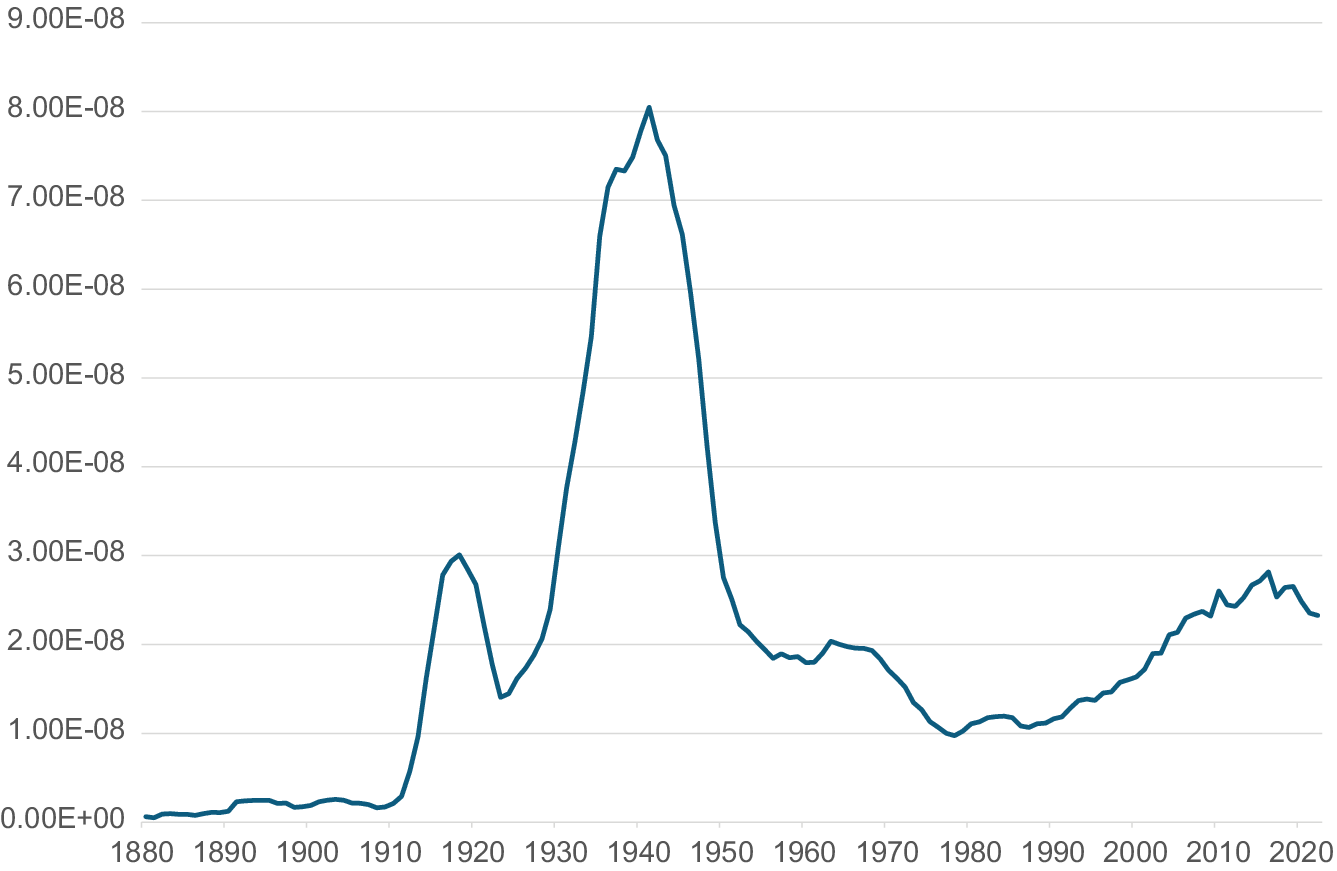
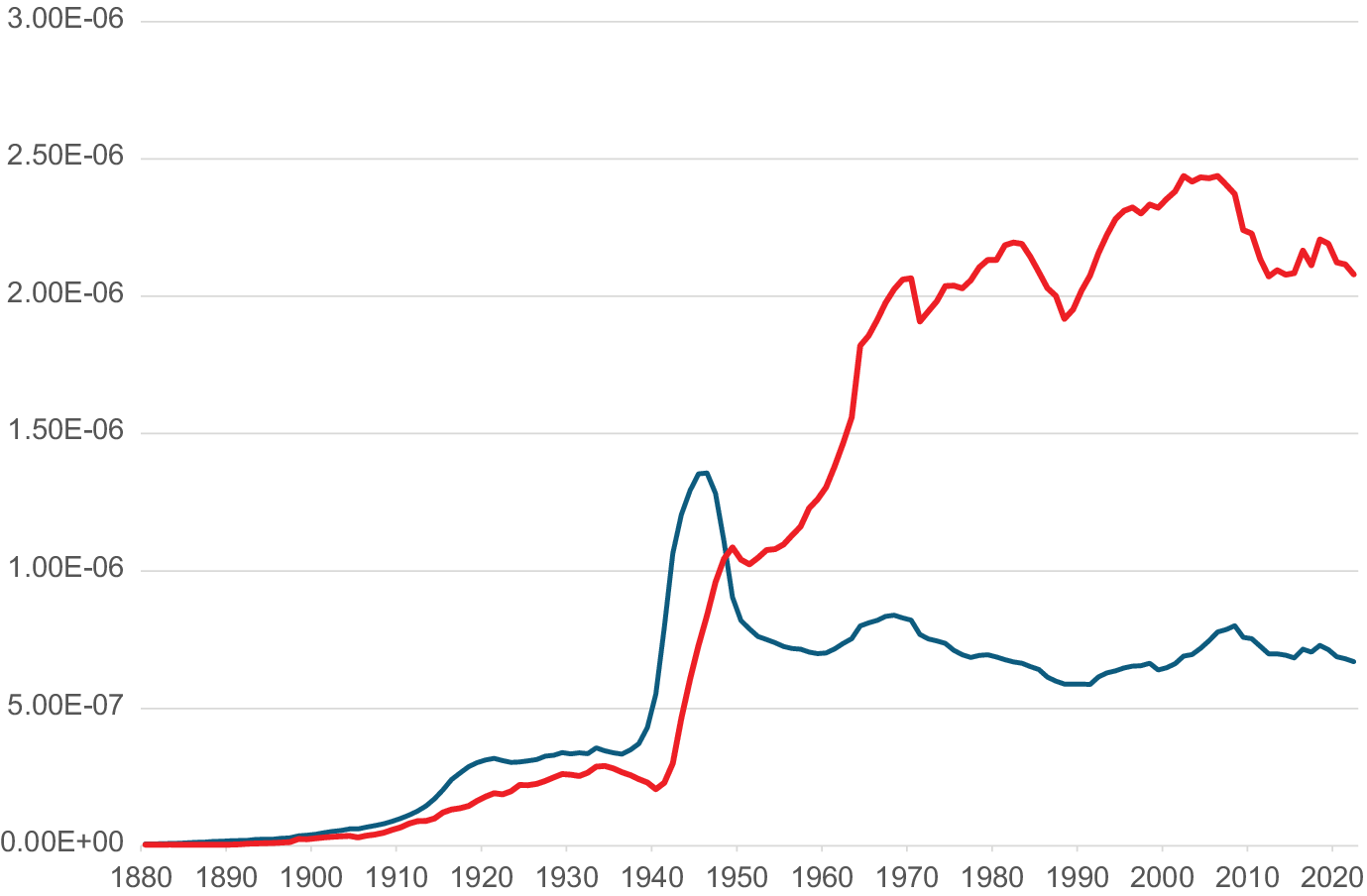
The reception of Novicow’s and Fried’s writings petered out in the interwar years as the study of international relations took a more realist turn, again accepting violence and warfare as deeply rooted in human nature and/or the dynamics of the international system.Footnote 108 In sociology, analogies with biology and evolutionary theory fell out of favor in that period. Their longer-lasting influence thus is to be found in terms and concepts. This is true for international anarchy and for its remedy, international organization. It should be recalled that the term ‘international organization’ is younger than the institutions that we associate with it today. In the 19th century, such institutions were known as international bureaus or public unions. Figure 2 shows the career of the term ‘international anarchy’ in English language books between 1880 and 2022; Figure 3 shows ‘international organization’ in the singular (blue line) and ‘international organizations’ in the plural (red line).
Google Ngram, frequency of ‘international anarchy’ in English language books, 1880–2022, as a percentage of total word count.

Figure 2. Long description
The horizontal X axis represents years from 1880 to 2020 in 10 year increments. The vertical Y axis represents the percentage of total word count, ranging from 0.00 E plus 00 to 9.00 E minus 08.
* From 1880 to 1910, the frequency remains near zero.
* A sharp increase begins around 1914, peaking at approximately 3.00 E minus 08 in 1919, followed by a sharp decline to 1.40 E minus 08 by 1924.
* A massive surge begins in the late 1920s, reaching the highest peak of 8.00 E minus 08 around 1942.
* A steep decline follows through the late 1940s and 1950s, leveling off near 2.00 E minus 08.
* The frequency dips to a local minimum of 1.00 E minus 08 around 1978.
* From 1980 to 2018, there is a steady upward trend with minor fluctuations, peaking again near 2.80 E minus 08 before a slight downturn at the end of the timeline in 2022.
Google Ngram, frequency of ‘international organization’ or ‘international organisation’ (blue) and ‘international organizations’ or ‘international organisations’ (red) in English language books, 1880–2022, as a percentage of total word count.

Figure 3. Long description
The horizontal X-axis represents years from 1880 to 2020 in 10-year increments. The vertical Y-axis represents percentage frequency using scientific notation from 0.00E+00 to 3.00E-06.
* The blue line represents the singular forms international organization or international organisation. It remains near zero until 1910, rises to a sharp peak of approximately 1.35E-06 around 1945, then drops and stabilizes between 0.50E-07 and 0.80E-07 for the remainder of the period.
* The red line represents the plural forms international organizations or international organisations. It follows a similar low trajectory as the blue line until 1940. After 1945, it rises sharply, overtaking the singular form. It continues a volatile upward trend, peaking at approximately 2.45E-06 around 2008, before showing a slight decline toward 2022.
Figure 2 shows that ‘international anarchy,’ after very slow beginnings, was discussed intensely during the two world wars. The data here represent all books published, not just scientific IR literature. Figure 3 shows that, in the beginning, ‘international organization’ or ‘international organisation’ (blue line) was used predominantly in the singular, where it refers chiefly to the activity of organizing, as Novicow and Fried used it. This changed with the great move to formal international institutions after the Second World War, when the plural forms (red line) take off.
Of course, it is impossible to infer from general changes in language use to the intellectual influence of two individuals. However, there is evidence to suggest that at least with regard to international organization, Fried and Novicow had some influence. The author of the first American textbook on international organization, Pitman B. Potter, noted in 1922 that the term ‘international organization’ had become commonly used only in the preceding two decades.Footnote 109 Figure 3 above confirms Potter’s hunch. There is almost no trace of the term before 1900. In a later inquiry into the origins of the term international organization, Potter could trace it back to the Scottish jurist James Lorimer, who used it in the 1870s but noted that it did not catch on at that point in time. It became used frequently, he observed, thanks to Fried’s journal Die Friedens-Warte.Footnote 110 Many of its contributors used the term, in particular Fried’s fellow pacifist and international lawyer Walther Schücking (1875–935), who was to become Germany’s only judge at the League-era Permanent Court of International Justice. Around 1909 he published in various versions an essay called Die Organisation der Welt [The organization of the world].Footnote 111
Schücking adopted Fried’s term international organization,Footnote 112 adding ‘de-organization’ as its conceptual counterpart, in a historical narrative subsuming all efforts at creating political order that stretched beyond the confines of one territorially delimited polity. The link to biology or evolutionary theory is not visible any more in Schücking’s work, metaphors aside. What becomes apparent instead is the practical usefulness of an abstract umbrella concept of ‘international organization’ to capture various manifestations of cooperation, from ancient cosmopolitanism to the creation of international tribunals and administrative bodies. While it would be overblown to claim that Novicow’s and Fried’s organicism established the concept of international organization, Fried’s Friedens-Warte greatly helped to diffuse the term, along with the term international anarchy, among students of international affairs. Even pacifism’s outspoken critics cited these terms, as did the German nationalist Karl von Stengel, who, however, preferred to put ‘Anarchie’ in inverted commas.Footnote 113
The anarchy/organization dichotomy resonated well with international lawyers on both sides of the Atlantic, and it easily connected with the discourse of sovereignty. In the United States, David Jayne Hill conceptualized ‘perpetual anarchy in the realm of international relations’ as a direct consequence of sovereign statehood and ‘organization,’ the spread of law, as a remedy.Footnote 114 This proliferation of organization discourse in the field of law is where our historical account and Brian Schmidt’s actually meet and intersect. It demonstrates that the anarchy/sovereignty dichotomy and the anarchy/organization dichotomy were able to co-exist peacefully. This is not least because they do not address the same question. The anarchy/sovereignty dichotomy is retrospective, a story of origins. The historical bifurcation between domestic hierarchy and international anarchy in a system of sovereign states left a regulatory void. The theory of international organization is forward-looking, offering an avenue to overcome the perils of anarchy and to fill that regulatory void with international organization and international law. We can quote Schmidt’s analysis of Hill’s theory to that end. ‘Hill believed that modern ‘civilized’ nations, especially the United States, had reached a point of historical evolution in which the juristic basis of the state had been realized internally. The most glaring problem that remained was to extend these same juristic principles to the realm of inter-state relations. This was the task of world organization….’Footnote 115 For many jurists, such as Hill, world organization essentially meant juridification. Spencer’s view of societies as increasingly complex organisms disappears here. The organicist legacy did survive, however, in social scientific and technocratic approaches to international organization that rely heavily on functional specialization and expert institutions to manage world-societal complexity.Footnote 116 Interwar IR functionalists, such as David Mitrany, did not refer explicitly to Spencer or other 19th-century theorists anymore, but they remained faithful to his take on organization.Footnote 117
In the field of social-scientific IR, evolutionary social theory remained a prominent point of reference over the entire 20th century, especially with regard to the implications of international anarchy. ‘Big picture’ theories of IR have been especially prone to evolutionary reasoning.Footnote 118 The works of George Modelski, and more recently of Shiping Tang and Bradley Thayer, are emblematic in this regard. They all address great processes of historical change, and they all make strong claims as to the scientific nature of their approaches.Footnote 119 Most notably, the late 20th-century controversy between Kenneth Waltz and Alexander Wendt over the consequences of international anarchy, an epochal debate of disciplinary IR, was one about the dynamics of evolution.Footnote 120 Waltz’s and Wendt’s intellectual projects were sweepingly ambitious. Both sought to establish a general and ‘state-systemic’ theory of international politics. Waltz proposed a materialist theory situated at the systemic level that took the eternal, quasi-natural presence of anarchy as a premise. It is so well-known that it does not need much elaboration here.Footnote 121 With Waltz, international anarchy became for IR a scientific term controlled by an explicit and often-cited definition.Footnote 122 By calling anarchy the ‘ordering principle’ of the international system, opposed to hierarchy within the state, Waltz essentially restricted the everyday use of the word anarchy, excluding disorder and chaos as features.Footnote 123 Anarchy as non-hierarchy was eternal, and it conditioned the behavior of states, leading to predictably similar outcomes over time.
In direct response to Waltz’s theory, Wendt suggested a social-constructivist alternative that allowed for changes in state behavior to result from prolonged interactions and learning. Wendt recognized that both accounts were essentially theories of evolution. He associated Waltz’s neorealism with a materialist, Darwinian idea of natural selection and survival of the fittest.Footnote 124 In his Theory of International Politics, Waltz did not cite Darwin directly. Yet his argument about the effects that international anarchy has on states is an evolutionary one, couched in evolutionary terminology. Anarchy here is a mechanism of selection that rewards certain types of state behavior and punishes others. States that fail to adapt will perish. Against that view, Wendt posited his own vision of the evolution of the international system, ‘a Lamarckian process in which the sharing of ideas is central.’Footnote 125 Over time, this process can lead to different ‘cultures of anarchy’ and show the way out of the Hobbesian state of war – an ‘evolution of cooperation’ through sustained interaction and changing perceptions.
We can easily relate this IR controversy of the late 20th century back to the debates over the consequences of anarchy that took place almost a hundred years earlier. On the realist side, drawing directly on Darwin and natural selection, we have a reading of evolution that naturalizes the eternal return of political violence and war in an environment that does not provide for hierarchical control of state power. States that prepare for war, if only to deter aggression from others, do what nature commands. On the progressive side, which owes more to Lamarck and Spencer than to Darwin, we find evolution as a process open to conscious human interference, learning, and changing perceptions of the world.
Yet we should also recognize some differences. Waltz explicitly rejects ‘Social Darwinism,’ which he associates with the idea that competition invigorates states.Footnote 126 He does not name any author in that context, but it is clear that as a defensive realist, Waltz was opposed to the expansionist and imperialist policies that many Social Darwinists promoted around 1900. For Waltz, security-seeking, not reckless aggrandizement at all costs, is the behavior that natural selection rewards under anarchy.Footnote 127 The conclusion that the historical Darwinists drew from the struggle of states was closer to what today’s ‘offensive realists’ would suggest – a natural tendency of states to expand their power and territory whenever the occasion arises.Footnote 128 It should be noted, of course, that 20th-century IR realists did not celebrate any uplifting effects of war on individuals or nations, as militarists around 1900 had done. They rather tended to adopt a ‘tragic’ view on warfare as a cruel practice forced upon states by the dark sides and inner contradictions of human nature, the limitations of political leadership and/or the eternally anarchic structure of the international system.Footnote 129
There are also notable differences between Wendt’s sociological account of progress under anarchy and the one that the scientific pacifists defended. Wendt’s account is state-centric as the units winnowed by evolution are states or other territorial entities, quite like in Waltz, even if evolution is not a process of natural selection, but of cultural selection. Wendt’s malleable cultures of anarchy come about through the interaction of states and their mutual perceptions of Self and Other.Footnote 130 Systemic change here springs from a sequence of interactions that are unplanned and contingent. Wendt is far more analytical than programmatic, and this seems reflected in his choice of Lamarck, whose famous giraffes did not strategically grow their necks – it just happened to them. Novicow and Fried, in contrast, drew their inspiration from Spencer, who was adamant about the prospects of planful political change. For them, international organization as the primary pathway to peace was not a spontaneous process, but a conscious political project of enlightened, transnationally connected elites. In the field of IR theory, that strategy for change through organization was appropriated by theorists of managed interdependence, the (neo)functionalists and liberal institutionalists.Footnote 131 This shows that in IR, as elsewhere, evolutionary theorizing can lend itself to very different conclusions and policy proposals. Much will depend on additional assumptions that authors make about human nature, the nature of the state, and the possibility of changing international political processes effectively. There is no compelling evolutionary line of argument that leads from the diagnosis of international anarchy to a prediction of its consequences.
Conclusion
In this article, we argued that it is time to rethink the origins of IR as a social science, along with its central discourse of anarchy. The discourse of anarchy has been as much a debate about the dynamics and laws of evolution as one about the effects of sovereignty. What our research crucially adds to the state of the art is a new perspective on the formative years of IR. Evolutionary sociology stood right at the cradle of IR as a theory-driven, social-scientific endeavor. Already around 1900, there was a structured and systematic debate in Europe about the pitfalls of international anarchy and the prospects of cooperation, imbued with evolutionary thinking. We reconstructed this controversy between authors often polemically called Social Darwinists and proponents of a ‘scientific pacifism,’ in particular Jacques Novicow and Alfred H. Fried. Social Darwinists cited theories of evolution to portray international relations as an agonistic struggle among states, civilizations or races. Arguing from that premise, they naturalized political violence, war and imperialism. The pacifists cited evolutionary theory to show that evolution rewarded cooperation in a struggle against the forces of nature. Progress was possible, and anarchy a temporal condition to be overcome.
So far, the historiography of IR has largely ignored this debate, along with the pacifist origins of thinking about the dynamics of international politics, nurturing the stereotype that pacifists were well-meaning but woolly-headed sentimentalists unable to grasp a realistic picture of international relations. That Novicow and Fried (among others) were acutely aware of the ‘international anarchy’ that allowed for war to occur should put that prejudice to rest. What they tried to show, quite like Wendt in more recent years, was that international anarchy could be culturally transformed and that it was possible to envisage pathways of progress. Novicow’s three-stage model of international struggle, from physical violence to economic and intellectual competition, clearly bears some resemblance to Wendt’s three ‘cultures of anarchy.’
Even if Novicow’s and Fried’s writings were forgotten rather quickly, their organicist ideas lived on in the concept of ‘international organization’ that gained so much prominence in political science and law as an antidote to international anarchy. The controversy over the implications of international anarchy that unfolded from roughly 1880 until the First World War anticipated themes from IR’s debate of the interwar years about the prospects of international cooperation. Over the 20th century, many IR realists adopted the naturalizing position on anarchy as the inevitable and immutable background condition of international politics. Progressive IR scholars continued to highlight the possibilities of a conscious and skillful ‘organization’ of international relations.
We offer two conclusions. First, in structuring the central debate of social-scientific IR, the anarchy/organization dichotomy that Novicow and Fried popularized was historically at least as central as the anarchy/sovereignty dichotomy. Those two conceptualizations were not incompatible but rather congenial. It is not surprising that progressive international lawyers were drawn to the concept of international organization because it suggested the promotion of international law, courts and adjudication. Second, we argue that the extent to which evolutionary thought influenced IR, especially in the moments when it aspired to be ‘proper science,’ is still underestimated. It is not by accident that evolutionary theory is being re-proposed regularly by scholars who make strong claims about the scientific nature of their treatments. Realists tend to side with Darwin and progressivists with Lamarck or Spencer. The two schools differ in their predictions about the chances of overcoming international anarchy, which pertains to levels of analysis at which evolutionary theorizing is deployed. Darwinists are pessimistic, while followers of Lamarck and Spencer see the possibility.
In addition, we should notice that these theories conceptualize the units caught in the dynamics of evolution differently. Darwinists tend to argue that individuals or states are caught in an evolutionary struggle. This lends itself to a realist framing of anarchy, but as we have seen, Alexander Wendt also adopts it in his actor-level sociology of state interactions. Alternatively, it is possible to imagine humankind as a species caught in a struggle with the forces of nature. This is how evolutionary arguments reappear in the context of the ecological challenge that humankind is facing in an age of global pandemics, environmental degradation, and, in particular, anthropogenic climate change. It is worth recalling that pandemics and climate change were among the examples that Novicow cited to illustrate his claim that humankind had to cooperate to fight hostile forces of nature. This threat to the survival of homo sapiens, tangible and existential as it is, reinstated imagery of a species caught in the struggle with the forces of nature and under pressure to adapt to them.
Regarding the influence of evolutionary theory on IR, there are intriguing avenues for future research. For one, arguments from evolutionary biology are also paramount in geopolitical approaches that took off in the same formative period as social-scientific IR. At the time, geopolitical thinking often relied on the ‘organic theory of the state’ developed by Friedrich Ratzel and Rudolf Kjellén, which was formulated under the impression of Darwin’s theory of evolution. The implications of that theory and related concepts such as ‘Lebensraum’ for international politics have gained considerable attention in recent years.Footnote 132 However, possible intersections of the organic theory of the state with canonical realist thought in IR would deserve further exploration. Second, our article only touched upon the issue of race and racism. As we mentioned above, evolutionary thinking prepared the ground for notions of racial hierarchy and the justification of exploitative imperialism. More indirectly, it also influenced early theories of international organization when authors such as Paul Reinsch extrapolated from previous studies of colonial administration.Footnote 133 The trading zones between Spencerian meliorism, conceptions of the ‘White Man’s Burden’ and (post-)colonial practices of externally imposed ‘development’ would also deserve a more profound discussion than we were able to offer in the framework of this article.
Competing interests
The authors declare none.


 Open access

