1 Introduction
Nearly one third of the patients with epilepsy continue to have seizures despite optimal medication management [Reference Ramgopal38]. According to the World Health Organization (WHO) [52], epilepsy affects approximately 50 million individuals worldwide, rendering it one of the most prevalent neurological disorders on a global scale. Seizures result from abnormal discharges originating in a cluster of brain cells [Reference Cogan, Birjandtalab, Nourani, Harvey and Nagaraddi13, Reference Gentiletti, Suffczynski, Gnatkovsky and de Curtis19]. These discharges can originate in various regions of the brain, leading to a spectrum of seizure manifestations, ranging from momentary lapses of consciousness or muscle reflexes to prolonged and intense convulsive episodes.
Individuals with epilepsy often experience a heightened prevalence of physical issues such as seizure-related fractures and abrasions [Reference Thurman45]. Additionally, a greater proportion of individuals with epilepsy also grapple with psychological disorders, including anxiety and depression [Reference Schabert, Stern, Ferrari, Wade, Willke and Hasser41]. Furthermore, there exists substantial evidence indicating that individuals with uncontrolled epilepsy over an extended period face an elevated risk of enduring memory impairment, depression, anxiety, suicide and other psychiatric conditions [Reference Ott, Siddarth, Gurbani, Koh, Tournay, Donald Shields and Caplan35]. Despite the existence of certain clinical treatments, a longitudinal study spanning over 20 years on idiopathic generalized epilepsies (IGEs) revealed that individuals with epilepsy still report a diminished quality of life [Reference Camfield and Camfield9], primarily attributed to the unpredictability of seizures and their adverse consequences. Consequently, the development of early warning systems for epilepsy holds paramount significance in addressing these challenges.
Electroencephalography (EEG) serves as a highly effective diagnostic instrument for investigating the functional intricacies of the brain during epileptic seizures. Extensive research has been dedicated to the prediction and treatment of epilepsy through the use of EEG [Reference Adeli, Zhou and Dadmehr1, Reference Birjandtalab, Heydarzadeh and Nourani8, Reference Cao, Guo, Yu and Yu10, Reference Hussein, Palangi, Ward and Wang25, Reference San-Segundo, Gil-Martín, D’Haro-Enríquez and Pardo40, Reference Sharan and Berkovsky44, Reference Yang, Ding, Zhou and Yang53]. EEG signals, characterized by their non-Gaussian and nonsmooth properties, are instrumental in quantifying electrical brain activity. This, in turn, aids in diagnosing various types of brain disorders, so the analysis of EEG measurements plays a key role in distinguishing between normal and aberrant brain function. Throughout the past century, researchers have grappled with the challenges inherent in epilepsy detection and prediction. Given that EEG signals represent a key resource for monitoring brain activity preceding, during and following epileptic seizures, epileptic seizure prediction research has primarily centred on the analysis of EEG recordings.
Deep learning architectures have found applications across various medical domains, including clinical imaging [Reference Lee, Jun, Cho, Lee, Kim, Seo and Kim29], genomics and proteomics [Reference Asgari and Mofrad2], and disease prediction [Reference Khan, Marcuse, Fields, Swann and Yener26]. Notably, deep learning algorithms have demonstrated their efficacy in discerning intricate patterns within high-dimensional data, particularly in the context of EEG data classification [Reference Avola, Cascio, Cinque, Fagioli, Marini, Pannone, Sclaroff, Distante, Leo, Farinella and Tombari4, Reference Kim, Youn and Paik27, Reference Roy, Banville, Albuquerque, Gramfort, Falk and Faubert39]. In particular, to introduce a universally applicable method for all patients, Truong et al. [Reference Truong, Nguyen, Kuhlmann, Bonyadi, Yang and Kavehei47] propose a prediction approach based on convolutional neural networks (CNNs). Their methodology involved the transformation of raw EEG data into a two-dimensional matrix through a short-term Fourier transform (STFT). Subsequently, this image is input into a CNN to facilitate feature extraction and classification of pre-ictal and inter-ictal states. Generally speaking, CNN-based architectures remain standard for EEG processing, in particular for epileptic seizure detection, to this day [Reference Ein Shoka, Dessouky, El-Sayed and El-Din Hemdan15, Reference Gao, Gao, Chen, Liu and Zhang18, Reference Gramacki and Gramacki20].
It is important to note that the vast majority of high-performance seizure prediction algorithms operate in a fully supervised setting, training exclusively on labelled data. Nevertheless, it is essential to recognize that the process of labelling seizure data is manual and costly, it requires the expertise of a neurologist and consumes substantial resources. To address this challenge, Truong et al. [Reference Truong, Kuhlmann, Bonyadi, Querlioz, Zhou and Kavehei46] employ a generative adversarial network (GAN) for unsupervised training. They feed STFT spectrograms of EEG data into the GAN and use trained discriminators as features for seizure prediction. This unsupervised training approach is particularly valuable as it not only enables real-time predictions using EEG recordings, but also eliminates the need for manual feature extraction. In a different approach, Tsiouris et al. [Reference Tsiouris48] employ long short-term memory (LSTM) recurrent networks for seizure prediction. They conduct a comparative assessment of various LSTM architectures using randomly selected input segment sizes ranging from 5 to 50 seconds. Their evaluation encompasses three distinct LSTM architectures, each using feature vectors derived from EEG segments as input. These feature vectors contain a diverse array of attributes, incorporating temporal and frequency domain characteristics, as well as local and global metrics derived from graph theory. LSTMs, and RNNs in general, are another common way to process EEG data due to their sequential nature [Reference Mir, Anjum and Shahab32], and generative adversarial networks have been used many times for synthetic data generation [Reference Nikolenko34], including synthetic EEG generation [Reference Habashi, Azab, Eldawlatly and Aly22, Reference Hartmann, Schirrmeister and Ball23].
While the above research has demonstrated effectiveness in predicting seizures, applications of deep learning for early seizure warning still encounter several challenges since EEG data have high frequency, high dimension and come under the influence of complex noise distributions.
The first challenge revolves around the high cost of accurate and reliable labels. Precise labelling of epileptic seizure and nonseizure EEG data is of fundamental importance for model training, but the process of labelling EEG data necessitates the expertise of physicians and can be a time- and resource-intensive endeavour. For example, a recent work [Reference Gramacki and Gramacki20] presents a new CNN-based architecture based on a dataset of only 79 EEG recordings labelled by three experts. Furthermore, labels produced by physicians may not always be correct. EEG data labelling by physicians often rely on their individual experiences, and it is not uncommon for different physicians to assign different labels to the same dataset.
The second challenge is that the prediction for the onset of seizures under ambiguous states between resting and seizure states is difficult, especially for long-term prediction tasks. Additionally, epileptic seizures can be regarded as sudden and infrequent transitions in brain dynamics, making it challenging to capture these rare events in time.
In this work, we present a new framework tackling the above issues to make early warnings for epileptic seizures. In response to the first and second challenges, we have implemented enhancements to the method of meta label correction [Reference Zheng, Awadallah and Dumais57]. This refinement enables the training of a primary model capable of providing highly accurate predicted labels even when supplied with a limited quantity of clean data. As for the third challenge, we develop the capability to predict early warning signals of critical transitions via tipping point detection.
To summarize, we develop a new method to detect the early warning signals integrating both data-driven models and the tipping dynamics. Our key contributions in this work are as follows.
-
• Meta labelling: we split the original data into a clean part and a noisy part, and subsequently integrate meta-learning into conventional methods to optimize both labelled information from clean data and the complex feature patterns from noisy data with automatically generated labels.
-
• Real data experiments: our experiments conducted on real-world EEG data obtained from epilepsy patients reveal a substantial enhancement in predicted accuracy; we additionally report a series of experiments conducted with various input and output window sizes.
-
• Tipping point indicator: we find that the predicted probability obtained by the meta learning framework can serve as an effective early warning indicator for tipping phenomena; our study illustrates that meta learning can capture some patterns between rest states and seizure states that a single backbone model could not.
2 Meta labelling and tipping phenomena
2.1 Meta label correction
High-quality labels are crucial for enhancing the training performance of neural networks. Following the assumptions of [Reference Charikar, Steinhardt and Valiant12, Reference Veit, Alldrin, Chechik, Krasin, Gupta and Belongie49, Reference Wei, Gao, Chen and Duan51], we assume that labels with noise can be categorized into two distinct groups: one dataset with clean or trusted labels and other datasets with noisy or weak labels. In many cases, the dataset with clean labels is smaller than those with noisy labels, primarily due to the limited availability of clean labels and the associated high cost of labelling. Direct training on these smaller clean datasets can result in suboptimal performance, with a pronounced risk of overfitting. Similarly, training exclusively on noisy datasets—or a mix of both clean and noisy datasets—may also yield unsatisfactory outcomes, as large-scale models can inadvertently fit and memorize the noise [Reference Zhang, Bengio, Hardt and Recht56].
Our objective is to identify precursor features that contribute to seizures, enabling us to distinguish data oscillations caused by other behaviours. For epileptic patients, seizures often last only 30 seconds to 2 minutes, which makes seizure data scarce compared with nonseizure data and leads to data imbalance issues. Moreover, accurate labelling of seizure and nonseizure data serves as the foundation for model training, a process typically requiring the expertise of a physician and demanding substantial time and effort. Yang et al. propose the MMLC method to handle financial data with partial feature information and poor label quality [Reference Yang, Gao, Wei, Dai, Fang and Duan54]. Here, we have far more clean data than noisy data. Our dataset is partitioned into two subsets: a smaller dataset with potentially noisy or no labels during the period when seizures are possible, and a larger dataset with clean and reliable labels during nonseizure period or post-ictal period when the seizures have concluded.
Our aim is to employ clean data to facilitate the labelling of noisy data. Unlike conventional label generation methods, our approach relies on making label judgments for the data based on their predicted time domain, obviating the need to directly obtain labels for the noisy data. This concept operates with a two-layer optimization paradigm. Initially, we employ a meta model to predict labels for the noisy data and subsequently refine our meta model using clean data. The main network uses these corrected labels to classify noisy data.
2.2 Early warning indicators
Under long-term noise disturbances, a dynamical system may experience enormous fluctuations, which could lead to transitions between metastable states [Reference Gao, Duan, Kan and Cheng17, Reference Guo, Gao, Zhang, Han and Duan21]. Sudden transitions between alternative states are a ubiquitous phenomenon within complex systems, spanning a wide spectrum of domains ranging from cellular regulatory networks to neural processes and ecological systems [Reference Ashwin and Zaikin3, Reference Scheffer43]. Numerous instances of abrupt regime shifts have been observed in diverse research fields, including collapses of ecosystems [Reference Hirota, Holmgren, Van Nes and Scheffer24, Reference Wang, Dearing, Langdon, Zhang, Yang, Dakos and Scheffer50], abrupt climate shifts [Reference Drijfhout, Bathiany, Beaulieu, Brovkin, Claussen, Huntingford, Scheffer, Sgubin and Swingedouw14, Reference Lenton, Livina, Dakos, van Nes and Scheffer30] and onset of certain disease states such as atrial fibrillation [Reference Quail, Shrier and Glass37] or epileptic seizures [Reference Meisel and Kuehn31]. Warning signals for impending critical transitions are highly desirable, owing to the formidable challenges associated with restoring a system to its prior state subsequent to the occurrence of such transitions [Reference Folke, Carpenter, Walker, Scheffer, Elmqvist, Gunderson and Holling16, Reference Scheffer, Carpenter, Foley, Folke and Walker42]. Lade and Gross [Reference Lade and Gross28] introduced a method for the identification of early warning signals, offering a comprehensive integration of diverse information sources and data within the context of a generalized model framework. Proverbio et al. [Reference Proverbio, Skupin and Gonçalves36] undertook a systematic exploration of the characteristics and effectiveness of dynamical early warning signals across various conditions of system deterioration.
An increase in the variance within the pattern of fluctuations [Reference Carpenter and Brock11] represents a plausible outcome of critical slowing down when a system approaches a critical transition. This phenomenon can be rigorously demonstrated through formal mathematical representations [Reference Biggs, Carpenter and Brock7] and intuitively grasped. As the eigenvalue of the system approaches zero, the influence of perturbations becomes increasingly enduring, resulting in an amplified accumulation effect that subsequently augments the variance of the system’s state variable. In principle, one might anticipate that critical slowing down could impair the system’s capacity to trace these fluctuations, potentially leading to an opposite effect on the variance [Reference Berglund and Gentz5, Reference Berglund and Gentz6]. Nevertheless, investigations into mathematical models consistently reveal that an elevation in variance typically emerges and becomes discernible well in advance of the occurrence of a critical transition [Reference Carpenter and Brock11]. Neubert and Caswell [Reference Neubert and Caswell33] introduced a pair of quantitative metrics for characterizing transient dynamics, namely reactivity and the amplification envelope. These metrics can be computed by using the Jacobian matrix in the vicinity of a stable equilibrium. Reactivity offers an estimation of the system’s susceptibility to immediate perturbation-induced growth, while the maximum amplification quantifies the highest magnitude that a perturbation can transiently achieve relative to the system’s equilibrium.
In this work, one of our goals is to extract fluctuation patterns from data via the meta learning network as an early warning indicator for state transitions in EEG time series signals.
3 Our method
3.1 Automatic label optimization through meta learning
The meta-model comprises two neural networks: a meta network and a main network. The meta network’s objective is to enhance label accuracy for noisy data, while the main network’s role is to achieve correct classification. We denote the parameters of the meta network, considered as meta-knowledge, as
 $\boldsymbol {\alpha }$
, denoting the meta network as
 $g_{\boldsymbol {\alpha }}(X', Y')$
. Conversely, the main network’s parameters are denoted as
 $\boldsymbol {\omega }$
, and it computes the function
 $f_{\boldsymbol {\omega }}(X', y_c)$
, where
 $y_c$
represents the outcome obtained from the meta network.
The training process is illustrated in Figure 1. The data we feed into the meta network are divided into two parts. One part is the historical data
 $X'$
, input as a time window of length
 $h\in \mathbb {R}^+$
, that is,
 $X'$
represents the EEG time series from time t to
 $t+h$
. The other part is the known data
 $Y'$
, and its time window size is denoted as
 $m\in \mathbb {R}^+$
, that is,
 $Y'$
represents the EEG time series from time
 $t+h$
to time
 $t+h+m$
; both
 $X'$
and
 $Y'$
are sequential in time. The meta network learns the label
 $y_c$
of data
 $Y'$
, where
 $y_c\in \{0,1\}$
. If the pattern of
 $Y'$
indicates that the patient had seizures during this time period, the meta network should output
 $y_c=1$
; otherwise, it should output
 $y_c=0$
. As for the main network, its objective is to learn the label of the next (unknown) EEG signal window Y of the current time series data X, that is, the main network does not know the sequential data Y and is supposed to predict the label of unknown Y with known data X. This approach enables us to extract additional information about the prediction horizon and historical data without being influenced by noisy labels. We have already mentioned that labels given manually by experts can be subjective and are certainly expensive; our approach can avoid this problem by generating noisy data labels.
The framework of meta label generation model.

In every batch, we obtain both noisy and clean sample data. We initially input the noisy samples, along with their corresponding
 $(X', Y')$
pairs, into the meta network to derive accurate labels. Subsequently, the noisy data
 $X'$
are used as input for the current task’s classifier to generate the corresponding predicted labels. We update the main network classifier’s parameters based on the loss between the corrected and predicted labels. Following this, the clean data pair
 $(X, y)$
is introduced to the new classifier, and the classification loss is computed to facilitate the meta network’s update.
The bilevel optimization of our model can be formulated as follows:
 $$ \begin{align*} \min_{\boldsymbol{\alpha}}\ \ & \mathbb{E}_{(X,y)\in D}\mathcal{L}_D(f_{\boldsymbol{\omega}^*_{\boldsymbol{\alpha}}}(X),y)\quad\text{where}\\ \boldsymbol{\omega}^*_{\boldsymbol{\alpha}} &=\arg\,\min\limits_{\boldsymbol{\omega}}\mathbb{E}_{(X',Y')\in D'}[\mathcal{L}_{D'}(f_{\boldsymbol{\omega}}(X'),g_{\boldsymbol{\alpha}}(X',Y'))], \end{align*} $$
and where the loss function is defined as
 $$ \begin{align*}\mathcal{L}(a,b)=\frac{1}{N}\sum_{i=1}^N (b_i\ln{(a_i)}+(1-b_i)\ln{(1-a_i)}),\end{align*} $$
that is, the cross entropy loss for
 $a, b\in \mathbb {R}^{N\times 2}$
. Our algorithm is shown in Algorithm 1.

Updating the meta model presents a formidable challenge, as the resulting loss function does not explicitly feature
 $\alpha $
. Consequently, we have to compute
 $\partial \boldsymbol {\omega }^*_{\boldsymbol {\alpha }}/\partial \boldsymbol {\alpha }$
, which involves second-order gradient computations. Several different methods exist for this purpose. To circumvent resource-intensive demands, we employ the Taylor expansion method, as detailed by Zheng et al. [Reference Zheng, Awadallah and Dumais57], to compute the Hessian matrix
 $({\partial ^2}/{\partial \boldsymbol {\omega }^2}) \mathcal {L}_{D^{\prime }}(\boldsymbol {\alpha }, \boldsymbol {\omega })$
.
Denote the meta loss as
 $$ \begin{align*}\mathcal{L}_{D}(\boldsymbol{\omega}^*_{\boldsymbol{\alpha}}) \triangleq \mathbb{E}_{(\mathbf{X}, y) \in D} \ell(y, f_{\mathbf{w}^*_{\boldsymbol{\alpha}}}(\mathbf{X})).\end{align*} $$
Then, we have
 $$ \begin{align*} \min _{\boldsymbol{\alpha}} \mathcal{L}_{D}(\mathbf{w}^*_{\boldsymbol{\alpha}}) & \approx \mathcal{L}_{D}(\mathbf{w}^{\prime}_{\boldsymbol{\alpha}}) \\ & =\mathcal{L}_{D}(\boldsymbol{\omega}-\eta \nabla_{\boldsymbol{\omega}} \mathcal{L}_{D^{\prime}}(\boldsymbol{\alpha}, \boldsymbol{\omega})). \end{align*} $$
Subsequently, the update rule for the meta-knowledge
 $\boldsymbol {\alpha }$
can be written as follows:
 $$ \begin{align} \boldsymbol{\alpha}=\boldsymbol{\alpha}-\mu \nabla_{\boldsymbol{\alpha}} \mathcal{L}_{D}(\boldsymbol{\omega}^{\prime}_{\boldsymbol{\alpha}}). \end{align} $$
Then, the meta-parameter gradient is shown as
 $$ \begin{align*} \frac{\partial \mathcal{L}_{D}(\boldsymbol{\omega}^{\prime}_{\boldsymbol{\alpha}})}{\partial \alpha}&= g_{\boldsymbol{\omega}^{\prime}}(I-\eta \nabla_{\boldsymbol{\omega}, \boldsymbol{\omega}} \mathcal{L}_{D^{\prime}}(\boldsymbol{\alpha}, \boldsymbol{\omega})) \frac{g_{\boldsymbol{\omega}^{\top}}}{\|g_{\boldsymbol{\omega}}\|^2} \frac{\partial \mathcal{L}_{D}(\boldsymbol{\omega})}{\partial \boldsymbol{\alpha}} \\ &\quad -\eta \nabla_{\boldsymbol{\alpha}}(\nabla_{\boldsymbol{\omega}}^{\top} \mathcal{L}_{D^{\prime}}(\boldsymbol{\alpha}, \boldsymbol{\omega}) \nabla_{\boldsymbol{\omega}^{\prime}} \mathcal{L}_{D}(\boldsymbol{\omega}^{\prime})). \end{align*} $$
3.2 Early warning probability indicator
The capacity to discern transitions between meta-stable states assumes a crucial role in the prediction and regulation of brain function. In our model, the objective of the main network is to learn the label of the next sequential data Y (unknown) based on the current time series data X, that is, the main network does not know the sequential data Y and should predict the label of unknown Y with known data X. Namely, the output of the main network is the probability of epileptic seizures occurring within the subsequent sequential time period following
 $[t,t+h]$
.
An escalation in the variance within the pattern of fluctuations, as established by Carpenter and Brock [Reference Carpenter and Brock11], can serve as a credible indicator when a system is near a tipping point and is experiencing a critical slowing down. We adopt the value of the main network’s output as an early warning indicator in the context of epilepsy, that is,
 $$ \begin{align} I_{P}=f_{\boldsymbol{\omega}}(X), \end{align} $$
which could be seen as the probability of ictal seizure occurring in the next time window. We conduct experiments in Section 4.2 to compare our early warning indicator
 $I_{P}$
with the variance of time series data.
4 Experiments
4.1 Data processing
The scalp EEG data are recorded via the bipolar montage method [Reference Zaveri, Duckrow and Spencer55], where the voltage of each electrode is linked and compared with neighbouring electrodes to form a chain of electrodes. Figure 2(a) shows a sample of the data, and the red line represents time intervals identified as seizure occurrences by experienced physicians in this case. The horizontal axis represents the time of the test, while the vertical axis corresponds to specific brain regions where electrodes were inserted. Each segment of EEG data was recorded with a 23-channel sampling rate of 256 Hz and recording duration of 1 hour, during which five seizures were recorded for the subject. Our dataset is derived from this EEG data, collected at a frequency of 32 HzFootnote 1 . Due to the high cost of acquiring such data, the size of the sample under examination remains modest. Consequently, the development of an early warning system based on this limited dataset becomes especially challenging. We collected data from five epileptic episodes of an epileptic patient and used four epileptic episodes to generate the training set and the remaining one episode as the test set. Figure 2(a) shows one epileptic episode.
A sample of our EEG data: (a) time series for the electrodes; the red part shows seizure states and the grey part represents rest states; (b) variance of the EEG data.

To establish the benchmark, we employ a sliding window technique, shifting the window left and right with a 0.5-second step. We set the time window of X to encompass 10 seconds, 15 seconds and 20 seconds, aligning precisely with durations of historical data. For Y, however, we have considered time windows spanning 5, 10, 15 and 20 seconds; these windows indicate the length of our prediction horizon.
Our dataset is divided into clean data and noisy data. Noisy data refer to data instances that are especially challenging for labelling due to their inherent complexity and lack of clear, unequivocal categorization. To be precise, we define an indeterminate zone around the clinically established onset time of epilepsy as the demarcation point, that is, we define a time window spanning
 $\pm 10$
seconds around this moment, amounting to 40 samples in every epileptic episode, as noisy data. Then, we expand the time window both forward and backward, collecting 40 clean data samples with labels 0 and 1, respectively, on every side. In instances where the right boundary of the Y-window intersects with this indeterminate, we designate the corresponding window X and Y as noisy data; we denote noisy data as
 $X'$
and
 $Y'$
, and obtain the resulting noisy dataset
 $D'=\{X',Y'\}$
. Noisy data do not have fixed determined labels, and our objective is to assign accurate labels to this data category without relying on expert annotations. In essence, we aim to generate precise labels for this noisy dataset autonomously. The rest of the data, which fall outside the indeterminate zones around onset times, is categorized as clean data. The clean dataset is partitioned into two distinct segments: one segment corresponds to the data obtained during the resting state, with label
 $0$
, and the other segment comprises data recorded during the epileptic state, with label
 $1$
. The clean dataset is denoted as
 $D=\{X,y\}$
, where
 $y\in \{0,1\}$
is the label.
Different electrodes have data with different orders of magnitude, so all data were normalized, and then noisy and clean data were divided according to different tasks. Figure 2(b) shows a sample of the covariance of the EEG data time series, with the red dotted line showing an epileptic seizure in the sample. The figure illustrates how growing variance could be seen as an indicator for an upcoming abrupt transition, which is consistent with [Reference Carpenter and Brock11].
4.2 Experimental results
4.2.1 Performance comparison
To test the performance of our approach, we have conducted experiments with a number of different models. During testing, we rely on the seizure onset moments delineated by physicians. Specifically, if the sample with X-window or Y-window intersects with the ictal moment demarcated by physicians, this sample is assigned with a label
 $y=1$
. Conversely, if neither the X-window nor the Y-window intersect with seizure onset moment identified by the physician, it is labelled by
 $y=0$
. Then accuracy is computed by comparing the model’s output labels with the corresponding ground truth labels y, that is, the number of true positives and true negatives divided by total sample size.
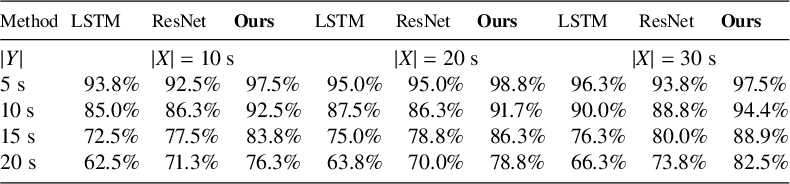
Table 1 provides a comprehensive overview of our classification results, comparing the performance of the baseline LSTM model, the ResNet model and our proposed model. Here, we use LSTM for the meta network and ResNet for the main network. Columns in Table 1 show the length of the input (historical) time window
 $|X|$
, and the rows correspond to different sizes of the prediction horizon
 $|Y|$
. It is clear that as the prediction horizon
 $|Y|$
(shown in the first column) grows, it becomes increasingly difficult to make accurate predictions for all three models. The accuracy of the LSTM model rises significantly as the length of the history duration becomes longer, because longer sequences in the input data contain more information. ResNet, however, has no particularly pronounced dependence on the input time length. Additionally, LSTM shows a very promising predictive ability over short periods of time, but the accuracy decreases rapidly as the prediction horizon length increases. The ResNet model, however, still shows a good degree of adaptation for prediction lengths greater than 10 seconds.
The accuracy of LSTM, ResNet and our method. Columns correspond to the duration of the input data time X (shown in row 2) and rows correspond to different lengths of the prediction window Y.

Throughout all settings, our model shows substantial improvements in prediction accuracy. Naturally, all three models achieve higher accuracy values at shorter prediction ranges, but our model demonstrates excellent results for longer noisy data as well. Our approach reduces the error rate by at least
 $2\times $
in most cases: for 5 seconds prediction horizons our model reduces the error rate from 5–7% to 2–2.5%, for 10 seconds, from 10–15% to 5–8%, and for 15 seconds and 20 seconds the error goes down from 20–30% or higher to 15–25%. These results suggest that our approach based on meta learning can very significantly improve the performance of baseline models in epileptic seizure prediction tasks.
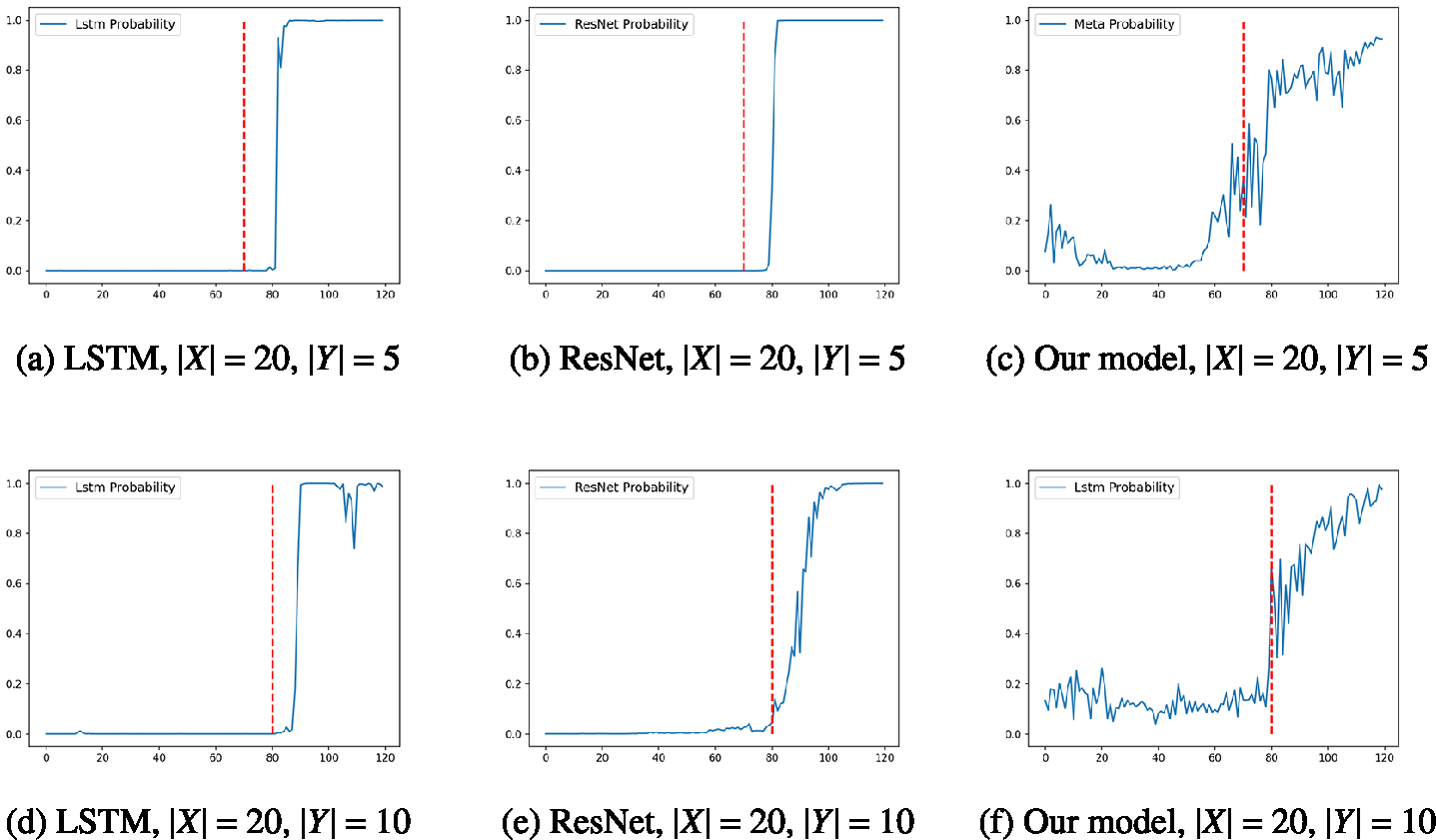
To show the efficiency of our predictions more intuitively, we compare predicted ictal probabilities with the true ictal moment identified by experienced physicians. Figure 3 illustrates the results with input duration
 $|X|=20$
and prediction horizons
 $|Y|=5$
(Figures 3(a), 3(b), 3(c)) and
 $|Y|=10$
(Figures 3(d), 3(e), 3(f)). The horizontal axis shows 120 consecutive time samples with an interval of 0.5 seconds, and the vertical axis represents the output probability of the model. Solid blue lines show the ictal probabilities learned by different models, and red dashed lines represent the true ictal moment. It is clear that for the LSTM model and ResNet model, the predicted onset time is approximately 5 seconds late compared with the real onset time. Both models almost always output probability values of
 $0$
or
 $1$
, with very few moments of output probability between
 $0$
and
 $1$
. This means that these two models can only learn features of clean data, that is, they cannot capture the features of noisy data and make a timely prediction. In contrast, our model has a clear fluctuation that occurs just before and after the onset of the seizure (see the position of the red dashed line in Figures 3(c) and 3(f)), which suggests that our model captures the changes in noisy data adequately.
Predicted ictal probabilities (blue lines) and true ictal onset moments (red dashed lines): (a–c) for
 $|X|=20$
and
 $|Y|=5$
; (d–f) for
 $|X|=20$
and
 $|Y|=10$
.

4.2.2 Early warning prediction
Early warning of epileptic seizures is of paramount importance for individuals with epilepsy. In addition to the accuracy associated with predicted label generation, our research also places a significant emphasis on evaluating the early warning capacity inherent to the model.
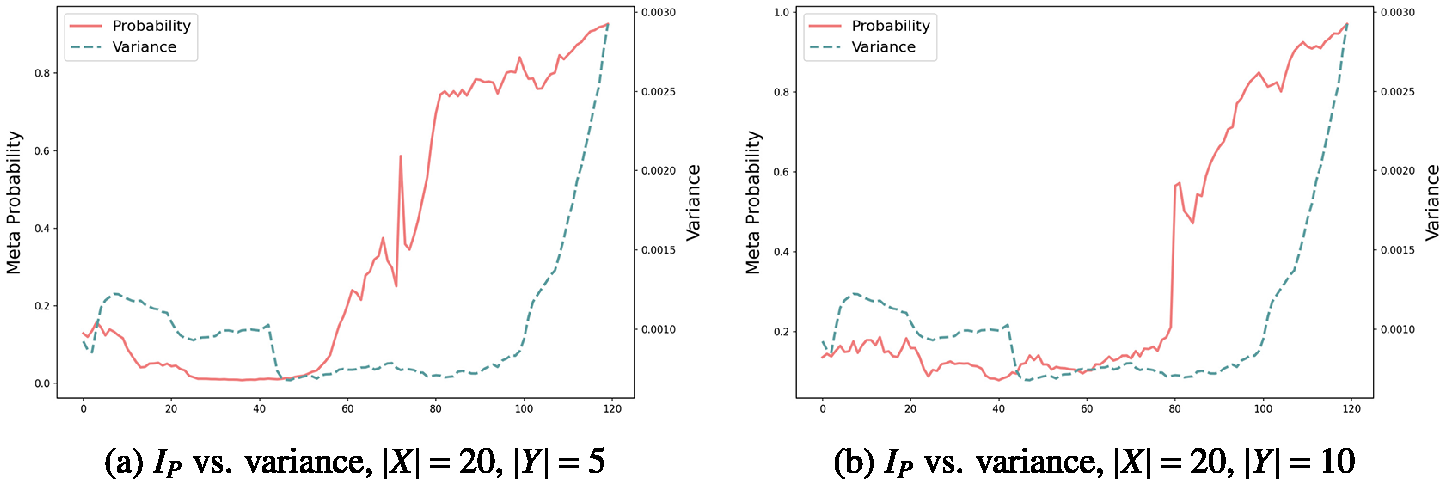
Inspired by [Reference Carpenter and Brock11], we compare the tipping signal in terms of our indicator
 $I_{TP}$
and the variance indicator. Figure 4 shows the variance from Figure 2(b) averaged over a window of
 $0.5$
seconds (dashed blue line) compared with the predicted probability averaged over five experiments (solid red line), which we call the
 $I_P$
indicator. Figure 4 illustrates that there is an earlier tipping point in our indicator
 $I_{P}$
than in the variance indicator on the same data. It is clear that for any given reasonable threshold, our indicator
 $I_{P}$
always gives an earlier warning than the variance indicator, which suggests that our indicator
 $I_{P}$
is an effective early warning signal.
A comparison of the proposed indicator
 $I_{P}$
(red solid line) with the variance indicator (blue dashed line) for EEG data: (a)
 $|X|=20$
,
 $|Y|=5$
; (b)
 $|X|=20$
,
 $Y=10$
.

5 Conclusion
Early warning of epileptic seizures is of paramount significance for individuals afflicted with epilepsy. In this study, we introduce a novel meta-learning framework that can integrate with existing baselines to enhance the predictive capabilities for early ictal signal detection, as evidenced by our results on EEG data obtained from real patients. Our approach amalgamates diverse components (a CNN for the main network and an LSTM for the meta network) to improve prediction accuracy. In addition, we introduce the concept of meta label generation, a method that segregates the original data into clean and noisy segments. This approach leverages the meta label generator to effectively label noisy samples, thereby augmenting the overall data quality.
Biological, physical and social systems frequently exhibit qualitative shifts in their dynamics. The development of early warning signals that aim to anticipate these transitions in advance remains a crucial objective for many problem settings, even beyond epileptic seizure detection. We incorporate tipping dynamics as a pivotal feature extracted from the data. Our study demonstrates that the output probability produced by our proposed meta-network is a highly effective early warning indicator. Our experimental findings show a remarkable improvement in prediction accuracy, particularly in scenarios involving long-term predictions. In total, our method offers a robust and innovative approach to the detection of early warning signals, effectively bridging the gap between data-driven models and tipping dynamics.
Acknowledgements
We would like to thank Luxuan Yang and Yiheng Ding for their helpful discussions. This work was supported by the National Key Research and Development Program of China (No. 2021ZD0201300), the National Natural Science Foundation of China (No. 12141107), the Fundamental Research Funds for the Central Universities (5003011053), the Guangdong-Dongguan Joint Research Grant 2023A151514 0016, and is partly supported by the Guangdong Provincial Key Laboratory of Mathematical and Neural Dynamical Systems.