I
On 30 September 1751, eighteen months after arriving in Jamaica, the Lincolnshire-born slave overseer, Thomas Thistlewood, ‘perceived a small redness’ in his groin ‘but did not regard it’. He had gonorrhoea. That night he had sex with a slave named Dido. The following day, he saw ‘A greater redness, with soreness, and scalding water. About 9 a.m, a running begin, of a yellowish greenish matter.’ On 3 October, he reported: ‘In the night painful erections, and sharp pricking, great torment, forced to get up and walk about’. By 8 October, he had ‘kernels’ which ‘swell on each side,’ along with ‘flying pains &c. Breaking out on the thighs etc. Loathsome linens, &c. &c’. A day later, he called for a doctor, Joseph Horlock. He started a course of treatment for the cure of gonorrhoea on 11 October. Thistlewood also sought to discover which slave woman of the many with whom he had had sex had infected him. He ordered Dido to see Horlock, but despite a thorough examination, she appeared clean. There was ‘little perceptible’ in the slave woman to suggest that she caused Thistlewood's illness.Footnote 1
Thistlewood had ‘the clap’ (gonorrhoea) rather than ‘the pox’ (syphilis). Until the 1770s, however, early modern physicians conflated the two infections, believing that they derived from the same ‘venereal poison’ and they treated both infections in broadly similar ways. Like most medical practitioners of the eighteenth century, Horlock adhered to a humoural-climatic theory of medicine, particularly when treating relatively common ailments like gonorrhoea. According to this theory, the universe comprised four elements, corresponding to blood, phlegm, yellow and black bile in the human body. Good health derived from a balance among these bodily liquids or humours, whereas disease and infection occurred when the humours were imbalanced. To deplete the body of excess humour, physicians favoured drastic treatments, particularly phlebotomy (bleeding), purging, sweating, and vomiting. Like most of his contemporaries, Horlock turned to mercury and other purgatives to force the ‘venereal irritation’ from Thistlewood's body through salivation and perspiration. Prescribing a course of twenty-four purging pills, and dozens of ‘Mercurial Pills’, Horlock expected the mercury to pass through the capillaries (due to its relative density), circulate through the inflamed urethra, and grind up and atomize the ‘poison.’ The toxic metal, moreover, induced a fever (sweating and salivation) that aided the purging process. Although mercury had, in fact, very limited therapeutic value for venereal disease – and large doses caused mercury intoxication – Horlock regarded painful side-effects as proof that the purging process was underway. Thistlewood's recovery was no exception. His treatment lasted for forty-four days, during which Horlock ‘Blooded’ the patient and prescribed ‘papers of Salt and cooling powders, a large gally pot of Electuary [a medicinal paste], a Bottle of Balsam drops etc’ and urged ‘bathing the Penis a long-time in New Milk Night and Morning, rubbing with probes and syringing away about 2 phials of the Injection waters’. The purpose of these infusions and emollients was to ‘temper the humours’ and reduce the inflammation. Thistlewood expressed ‘some doubt’ that the cure was ‘perfect’, but he nevertheless resumed his sexual activities in earnest, having sex with Dido on 22 and 26 November, before turning his attention to the enslaved woman Jenny a week later.Footnote 2
Thomas Thistlewood suffered repeated bouts of gonorrhoea for most of his adult life, which began even before he departed for Jamaica in February 1750. Having had sex on multiple occasions with a number of London prostitutes, and following an affair with both the wife of his Lincolnshire friend, Thomas Toyne, and their servant, Thistlewood arrived in the Caribbean with his own theories on how to treat ‘simple clap’. Ever detailed in his scientific, anthropomorphic, and exotic recordings of his sexual life and the natural world around him, Thistlewood wrote a cure-all for gonorrhoea in February 1749. It included a course of purging pills, to be taken every other day ‘(if your strength will allow it) until the running change both its colour and consistence and appears the same as semen’. To stop the discharge, or gleet, which is commonly associated with chronic gonorrhoea, Thistlewood recommended twenty or thirty doses of Balm Capive (balsam capivi), dropped onto loaf sugar. If this failed, a course of laxatives and a general purging of the body might, Thistlewood hoped, cure the disease and rid the body of infection.Footnote 3
Taking up residence in the western counties of Jamaica, Thistlewood – like many white slaveholders – acquired a mistress from among the slave community. Marina, an enslaved field hand, proved to be the first of several slave mistresses in Thistlewood's life, but he also had sex with a large number of other enslaved women. Already an endemic carrier of bacterial gonococcus, by 1751 Thistlewood had his first bout of venereal disease in Jamaica just weeks after assuming the post of overseer on Egypt plantation. It was, he noted, a ‘rank infection’ and one that required Horlock's attention. This was no simple case, however, for Thistlewood had contracted both gonorrhoea and the chlamydial infection, lymphogranuloma venereum (LGV), the latter presenting with the genital lesions/inguinal buboes or ‘kernels’ he described. Thistlewood clearly engaged in high-risk sexual behaviour and exposed himself (and those he had sex with) to repeated reinfection. In 1751, however, neither Thistlewood nor Horlock wasted much time on causation, focusing instead on remedies. Venereal infections were too frequent in mid-eighteenth-century Anglophone societies to trigger intense medical investigation. Venereal causation, moreover, remained essentially unknown even if physicians such as John Hunter, who travelled to Jamaica, recognized the morphological distinctions between LGV, gonorrhoea, and other sexually transmitted infections. Beyond this, however, ‘we know nothing of the poison itself’, Hunter noted, but ‘only its effect on the human body’. Moreover, white Jamaicans faced far greater epidemiological hazards to their lives than genital ulcers (however ‘rank’), and there was little medical or social stigma attached to sexually transmitted infections. In fact, and as this article makes clear, venereal infection was thoroughly embedded within the prevailing discourse of masculinity and empire. For men like Thistlewood, a bout of gonorrhoea was a painful, but temporary, delay to the daily expressions of his sexualized and racial power. But what began as a commonplace infection appeared, by the late eighteenth century, to be a problematic disease, particularly once diagnoses began to shift away from humoural understandings of infection (where the human body altered as it moved from hot to cold places) to greater pathological observation in the 1780s. Medical theorists concluded that it was not the place that was unhealthy, as climatic theories of medicine suggested, but rather the people and their behavioural choices that induced illness. Such an understanding made venereal disease in the tropics – a disease acquired from unwise and, importantly, immoral behaviour – deeply problematic to British abolitionists. Humanitarians who sought to shift the sexual debate from ‘the Georgian pleasures of procreation’ toward an emphasis on ‘respectability, public character, and civic probity’, accordingly found the sexually wanton Caribbean sugar lords to be degenerate and divorced from new currents of British masculinity favoured by evangelical reformers.Footnote 4
Until the American Revolution, criticism of slaveholders was muted in the imperial metropole. That men (and women) in the tropics exhibited patterns of behaviour, sexual and otherwise, that would not be allowed in polite society in Britain was well understood. Yet the value of slavery to the British empire tempered any desire to reform the overindulgences of West Indian planters. But in the 1780s, anxieties over personal and national identity made transgressive behaviour, at home and in the tropics, particularly alarming. As Dror Wahrman argues, concerns over appropriate conduct and manners multiplied as Britons engaged in a ‘gender panic’ and in ‘cultural revolution.’ What changed, and changed abruptly, in the 1780s were core definitions of identity. The ‘ancient regimes of identity’ characterized by fluidity and playful ambiguity were, Wahrman contends, overthrown by the ‘modern concept of the self’ where individual personality, selfhood, and behavioural choices reflected one's identity and ‘natural’ rights. Abolitionists wove these essentialized ideas of race and identity into the politics of anti-slavery and into a new and more hostile attitude to what British men did outside the metropole. Planter behaviour, including their propensity to engage in non-procreative sex that resulted in disease, was no longer something that happened ‘out there’ but was a sign of a society that had gone seriously astray.Footnote 5
As Sonya Rose argues, anxieties over sexual morality intensified when ‘unity of identity’ became ‘especially important’. It is not accidental therefore that it was only in the 1780s – when British identity underwent internal scrutiny – that the sexuality of West Indians of all kinds, from black women to white men, became subjects of public discourse. A principal strand of abolitionist attacks upon planters in the 1780s was that planters behaved not only sinfully but also in fundamentally un-British ways. At a time when the ideal English gentleman was increasingly portrayed as a happily married man, coming out of church arm in arm with a fecund wife and a host of rosy-cheeked children, the fast-living, sallow-faced, gluttonous West Indian planter whose major vice was illicit sex with allegedly promiscuous black women was the obverse of what an ideal Englishman ought to be.Footnote 6
Gluttony, tropical excess, and deviant sexual behaviour challenged the political, ideological, and gender conventions of late eighteenth-century Britain. The heightened rhetoric devoted to Caribbean planters, and their failure to match established gender norms, reflected anxieties throughout imperial Britain over the lack of fit between theory and practice, with West Indian sexual behaviour being a notable example of depravity. Planters’ sexual behaviour was thus placed at the centre of an Atlantic debate over the moral laxity of slaveholders. In this context, venereal infection emerged as a symptom of colonial excess and its evolution from infection to disease helps us to understand a conundrum of imperial history. Put simply, how did one group – West Indian planters – who had been the most powerful interest group in the British empire at the time of the American Revolution come to become demonized as despotic tyrants and characterized as fundamentally un-British in one short decade, the 1780s, when abolitionism went from being a minority interest to the biggest mainstream protest movement in British society? The medicalization of venereal infection and its transition from a relatively urbane, cosmopolitan affliction to a stigmatized disease explains one – heretofore unstudied – part of West Indian planters’ rapid loss of public esteem. It also adds to our understanding of how changing models of scientific explanation could have highly significant cultural implications, not just for gender and masculinity, but also for national identity and self-definition. This article thus addresses larger questions than just how venereal disease was treated and interpreted in eighteenth-century Jamaica and Britain. It adds to the discussion over gender norms in the imperial state and it opens up a debate about forms of masculinity in British society that have been mostly confined to discussions of manliness in western Europe and North America by placing such debates within a wider geographical gaze. And it considers how the cultural politics of venereal disease mirrored normative definitions of slaveholding power and the humanitarian challenge to it.Footnote 7
II
Thistlewood died before the abolitionist crusade reached its apogee, but for many Caribbean settlers like him in the mid-eighteenth century, the slave economy offered dazzling opportunities. He arrived in Jamaica in 1750 with less than £15, but died in 1786, aged sixty-five, worth over £3,000 sterling. A moderately prosperous planter in sugar-rich Westmoreland Parish, the owner of thirty-four slaves, Thistlewood served as a member of the island's landed gentry, serving as justice and lieutenant of the fort at Savanna-la-Mar. He aped the sexual mores of white slaveholders, both in acquiring mistresses and in having frequent sex with slave women. Between 1751 and 1764, he recorded in his diaries that he had intercourse 1,774 times with 109 black women and two white women, seventy-one of whom he had sex with only once. Thistlewood's predations were designed to convert the institutional dominance of slavery into personal dominance. By targeting slave women for sex, Thistlewood stamped his authority over enslaved families. He belittled enslaved men and women, and converted the bondswoman's body into an object of sexual gratification. The price of sexual promiscuity, however, was uncomfortably high. Venereal infection punctuated Thistlewood's life; he had repeated episodes of gonorrhoea and LGV with a minimum of twenty separate outbreaks in his first fifteen years in the island, or one episode every nine months, representing a rate of re-infection equal to those with multiple sexual partners in modern populations.Footnote 8
Thistlewood brought the sexual climate of eighteenth-century Britain with him to Jamaica. Rakish bucks indulged in conspicuous libertinism in Regency Brighton and London, while many Britons were devoted to a saturnalia of bawdy images, humour, and satire. Believing that it was the senses, rather than the spirit, which motivated behaviour, Georgian Englishmen indulged their ‘natural’ bodily desires. This was expressed in dress, entertainment, voyeuristic humour, and sexuality. The social and sexual construction of the rake, a stock character of British society, mirrored these fundamental assumptions over sexuality and gender roles, at least until the growth in moral humanitarianism in the 1780s. Rakes epitomized, in literature and caricature, an assertive, raw male sexuality, which was demonstrated by their homo-social status as men of honour. Masculinity, in particular, was closely associated with sexual dominance. As Vic Gattrell argues, ‘masculine identity was constructed around what most men, to each other, called fucking. This was what manliness was about, even more than drinking, clubbing, gambling and duelling’. By contrast, femininity rested on a base assumption of female sexual passivity. Rakish behaviour was thus not only ‘natural’, but also accorded with gender conventions of mid-century British society.Footnote 9
Even among middle- and upper-class metropolitan men, heightened libido reflected a man's ‘natural instinct’ which reached fulfilment in sex. Nicolas Venette, a widely read sexual theorist, viewed sex as inherently rational, physical, and phallocentric. As Venette observed in his Tableau d'amour (1712), ‘men according to the Laws of Nature, ought to have the Empire over the Woman’. A healthy libido, he believed, was emblematic of good health while coitus ‘enlivened and strengthened the individual, augmented heat, and dispersed the black and thick splenetic humour’. Other sex and child-birth guides focused on the virility of male-centredness sex. Since women were understood to be cold and moist and men hot and dry, ‘the natural heat which is the cause of Generation’, the sex and pregnancy manual Aristotle's master-piece (1684) observed, ‘is more predominate in men than women’. The act of conception reflected this; semen was the ‘active principle’, the ‘prolific seed’, while the foetus was ‘passive’. These phallocentric ideas contributed more generically to a cult of masculine virility where the proof of ardour lay in bold, assertive masculinity and the commonplace nature of sexual advances.Footnote 10
Although many eighteenth-century Britons increasingly favoured sensibility in human relations and were considerably more reticent about sex than their modern peers, whoring by sexually active males was nevertheless a dominant cultural trope. The fetishistic representations of erotica, whether in magazines, John Cleland's Fanny Hill (1748), the ribald cartoons of Thomas Rowlandson, or the pornographic images in the L'Arétin Français (1787) sustained and contributed to a mid-eighteenth-century lexicon of pornographic sex. Couples were occasionally featured in print rutting al fresco but more commonly semi-clothed and standing or leaning. Although most images focused on consensual sex, the masculinized nature of sexual power remained a central theme, with men dominant and visibly tumescent. By contrast, women appeared as passive, feminized objects who were satisfied by the male sexual organ.Footnote 11
Such phallocentric self-awareness emboldened men to embrace a culture of sexual excess and gendered power based on their understanding of ‘nature’, libertinism, and masculine authority. The relative indifference of British society to rape, and its social acceptance in certain cross-class liaisons, particularly when using force against servants or working-girls, reinforced the overtly misogynistic terms of Georgian masculinity still further. If sex was a natural extension of male authority, venereal infection was its natural, if painful, side-effect. William Hogarth's serialized paintings A rake's progress and its parallel A harlot's progress (1733–4) satirized the inevitability of venereal infection among the wayward rake and common harlot. Syphilis is present and implied in these paintings, suggesting the inevitable circuitry of vice, behaviour, disease, and human decline. Hogarth's gritty satire aside, the prevalence of venereal disease in the capital was so commonplace that anti-venereal pills, potions, and cure-alls were widely advertised in men's magazines and newspapers, and were stocked by shopkeepers and coffee-houses. Most treatments had a limited medicinal effect, but the names were alluring and preyed on syphilitic anxieties and sexual fantasies. Dr Leake's Anti-Venereal Drops, Dr Rock's Royal Patent (featured in Hogarth's Harlot's progess), and handbills promising speedy cures and infallible treatments offered Londoners magical remedies to venereal affliction. As one medical-quack hailed, seven doses of his pills would have ‘Venus Deceiv'd.’Footnote 12
III
But Venus was not so easily deceived in the colonial tropics. Thistlewood's exploits with enslaved women translated the sexual power of mid-eighteenth-century masculinity into imperial and racial control. As Kathleen Wilson has argued, the competitive context of imperialism valorized aggressive masculinity. Britishness was defined by gendered notions of citizenship and power which naturalized imperial authority and marginalized the ‘effeminate’ both within and outside the colonial state. In so doing, normative definitions of class, gender, and nation shaped the imperial project. For British slaveholders, these social constructs helped to define their place as individuals within the polity and as masters on plantations. Foreign conquest, chauvinism, and sexual dominion symbolized assertive British masculinity; effeminacy, by contrast, suggested weakness, cowardice, irrational pity, and a ‘dread of suffering’. Thistlewood's aggressive sexuality reflected the ‘manly’ and culturally privileged characteristics of empire where toughness, fortitude, and courage defined Britishness overseas.Footnote 13
Thistlewood's understanding of sexual disease – and his fortitude when afflicted – also reflected the broader discourse about assertive masculinity. Indeed, in many respects, venereal infections were visual and corporeal evidence of masculinized power; an outward, if painful, demonstration of gender assumptions that reflected male desire and ‘manly’ stoicism. So thoroughly grounded was venereal disease in the day-to-day lives of Thistlewood's slaveholding peers that the topic was frequently canvassed in casual conversation. While doing jury service, Thistlewood discovered that his fellow jurors had each suffered numerous bouts of venereal disease. He wrote on 31 December 1768 that ‘Mr John Panther affirmed when we were confined in the jury room, that he has had the clap 17 times & is under 30 years of age. Billy Hartnole has had it 14 times he says.’ On 10 June 1752, Thistlewood related a discussion he had with George Williams, who lamented the fact that despite having ‘not known above a dozen different Women’ had ‘been Clapp'd three times, and Pox'd once’. Likewise, Thistlewood's employer, the wealthy planter, John Cope, was frequently laid up by bouts of gonorrhoea after opportunistic sexual encounters. So widespread were venereal complaints that Thistlewood recorded the views of Dr James Wedderburn on 17 July 1769, noting that ‘4/5ths die of [it], one way or another’. Wedderburn's estimate was probably a considerable overestimation but that doctors could believe such a claim nevertheless confirms the prevalence of venereal disease among the European population.
Venereal infection united white men in two ways. First, it was, as conversation in the jury room confirmed, a shared life-experience in the tropics. Second, it was an entrée into the world of colonial science. Thistlewood was an amateur scientist, recording each bout of illness. From his first episode of gonorrhoea and lymphogranuloma venereum, Thistlewood devoted considerable attention to his symptoms, also noting relapses and reinfection. He also actively experimented with remedies. After enduring the long and painful treatment prescribed by Horlock in 1751, in his next bout he relied on diarrheal pills that ‘worked me up and down enough’. It was only after the symptoms continued that he turned to a Dr Drummond, who prescribed ‘2 Plaisters to draw them [bubos] to a head’ and ointment. A week later, and after lancing the bubos, Drummond gave him a course of thirty-eight mercurial pills. By 28 August 1752, Thistlewood had finished the pills, but complained of ulcerated gums. He was beginning to suffer from mercury poisoning. Anxious to avoid this oral side-effect and those of purgatives and emetics, Thistlewood was particularly interested in local physician James Wedderburn's opinion of 5 May 1769 that mercury treated by gunwater and used as an injection ‘cures the clap without physic’. He shared that information with his slave Lincoln, who was also a frequent sufferer from the disease. Lincoln affirmed that he had this treatment himself ‘3 or 4 times’ and ‘that he has never known it pox anyone but one negroe who had it in the 5 or 6 months before’. A month later Thistlewood was guided by information he got from a newly translated book on venereal disease by Austrian surgeon, Joseph Jacob Ritter von Plenck, which advocated different ways in which mercury could be given to patients suffering from venereal disease.Footnote 14
IV
Thistlewood evidently disliked their side-effects, but colonial doctors were keen on mercury treatments, in the form of calomel or mercurous chloride. The toxic metal served as a thorough-going purgative. In contrast to Britain, however, where doctors primarily utilized mercury for syphilis, physicians in British India and the West Indies extended the use of mercury to non-venereal diseases, first to inflammatory disease of the liver and eventually to common complaints, such as dysentery and fever where purgatives were deemed necessary. Patients, and some later theoreticians, nevertheless remained unconvinced that mercury was the panacea, particularly for gonorrhoea. The Jamaican historian, Edward Long, was particularly vociferous in condemning doctors' over-zealous employment of mercury to cure venereal disease. He argued that mercurial treatments reduced the body's ability to resist more serious health risks in the tropics. By ‘weakening and relaxing the solids, and in attenuating and dissolving the fluids’, Long reasoned that mercury made the body ‘ill prepared to resist the assault of a putrid fever’. He was right to be concerned, as mercury poisoning considerably debilitated patients. As Thistlewood discovered, taking mercury pills led to ulcerated gums and more serious side-effects. Sensory impairment, skin discoloration, and swelling affected those with mercury poisoning, as did liver and kidney damage. The loss of teeth and hair, cramps, chest pains, excess salivation, and near constant spitting and coughing further and visually marked the mercury-swilling venereal patient. Urging Jamaicans to utilize alternative venereal treatments, Long condemned the ‘noxious effects’ of mercury, particularly when combined with ‘any morbid disposition of the humours, or with a bad air and improper diet, or too violent exercise in the sun’. He also blamed surgeons who were ‘but too fond of prescribing mercurials upon all occasions, without adverting to their fatal operations on some habits’.Footnote 15
Perhaps for this reason, the scientifically literate Thistlewood did not always turn to doctors for medical assistance. A skilled botanist, keenly interested in the medicinal use of plants, he collected medical recipes throughout his time in Jamaica. He took jalap, the dried and powdered root of a plant common in Jamaica, as a purgative and balsam capivi, a mixture of resin and oil derived from copaifera plants in South America and the West Indies. This locally sourced gonorrhoea treatment (particularly for a bleeding urethra) had clearly entered into a transatlantic discourse on venereal disease as Thistlewood had first used it in England in 1749 as part of his cure for a ‘simple clap’. Forty years later, Henry Barham in his Hortus Americanus referred glowingly to the purgative effect of balsam capivi/capaiba, suggesting its use for gonorrhoea, coughs, consumptions, and belly-aches. Another purgative Thistlewood took was lignum vitae, or guaiacum, mixed into a draft of rum, using the bark as a hard resin. The resulting gum was in demand ‘for its virtues in venereal taints, rheumatism and other distemperatures’, Edward Long approvingly observed. ‘A decoction of it has been known to cure the venereal disease, and even the yaws … without the use of mercury.’Footnote 16
Often Thistlewood turned to slaves for advice, notably Mulatto Will, whom he appeared to regard as an equivalent, or certainly as an alternative, to a white doctor. On 4 September 1754, Mulatto Will gave Thistlewood three mercury pills and three doses of jalap. Thistlewood returned several days later for Will's cooling or ‘Spaniard Tea’. He also acquired from the enslaved herbalist an electuary, or paste, on 1 October 1756 made out of rhubarb, balsam capivi, and jalap. He used this in preference to an electuary given to him by Dr William Gorse, which also contained mercury. Significantly, it was Mulatto Will, not Dr Gorse, who received ‘a pistol [a coin] for his trouble’. He also turned to Old Sharper, another herbalist, who treated the enslaved community at Egypt. He regularly received a prepared diet drink from Old Sharper which he downed daily for several months in 1755, reporting that he generally ‘felt better’ after doing so. On 30 March that year, he gave Old Sharper a bottle of dram in recompense.
Medical herbalists like Mulatto Will contributed to a more holistic medical culture than that practised by most colonial doctors. Many of their treatments, however, were analogous to those of their white counterparts. Colonial practitioners used evacuants to rid the body of venereal infection, but they also employed astringents to dry up the urethral discharge of gonorrhoea. Astringents included alum and other metallic salts, the use of vegetables, turpentine, oak bark, Peruvian bark, and sarsaparilla. The treatment recommended by Mulatto Will mixed both medical traditions within one electuary. Rhubarb was an astringent, jalap a purgative (causing nausea and vomit), while balsam capivi was already known to the patient. That Mulatto Will and William Gorse utilized many of the same compounds in their respective electuaries suggests a considerable degree of shared medical knowledge and the cross-fertilization of ideas and practice among slaves, medics, and patients. This ‘biocontact zone’ of local shared practice reflected in microcosm the broader transatlantic interest in colonial botany, and the sourcing and networking of African, European, and Amerindian information on tropical medicines. The ‘bio-prospecting’ of plants and drugs by colonial scientists, medics, and trading companies contributed to a wider discourse of ‘green imperialism’ that linked diverse and complimentary strands of imperial medicine. Like Mullato Will, Thistlewood was part of this Atlantic network. Having already employed the West Indian sourced balsam capivi in 1749, Thistlewood opted for the slave's herbal prescription. It was a sensible choice. As John Hunter observed in 1786 – the year Thistlewood died of old age – mercury had ‘little specific virtue’ and gonorrhoea was ‘as soon curable without mercury as with it’. Hunter's advice came too late to influence the treatments Thistlewood endured during his life, but the Lincolnshire man recognized the dangers of mercury poisoning and elected to avoid them whenever possible.Footnote 17
V
Although the medical knowledge of Mulatto Will, Old Sharper, and Lincoln suggests that syphilis and gonorrhoea were prevalent within the slave community, few doctors concerned themselves with venereal disease among enslaved peoples. In the first instance, it did not kill and was thus not widely recorded. In Grenada in 1817, venereal disease accounted for 0·6 per cent of slave deaths; in Tobago between 1819 and 1821, it caused 0·9 per cent of deaths; in Demerara between 1829 and 1832 it accounted for 1·5 per cent of all deaths; and in Berbice in the same period, 2·5 per cent of all slave deaths could be attributed to venereal disease. Surviving evidence of venereal disease among slaves in Jamaica suggests that the incidence was likewise low. The demographic records of Prospect Estate, a relatively small sugar estate on the margins of Jamaica's plantation sector, shows that only one enslaved person died from syphilis out of sixty-seven slave deaths between 1784 and 1792 while data collected on two very large slaveholdings in the late eighteenth century indicate that 0·5 per cent had venereal disease.Footnote 18
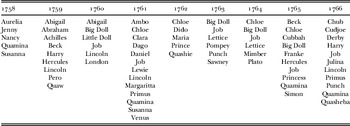
These figures, however, mask the true extent of venereal infection in the slave population. Osteological records from one Barbadian plantation suggest that at least 10 per cent of slave infants were born with congenital syphilis. Given that stillbirth rates of mothers with syphilis were 25 per cent, and that infant mortality rates for persons with congenital syphilis range from 25 to 50 per cent, the actual number of deaths associated with venereal disease may have been considerably higher. On Egypt plantation, outbreaks of the clap, and occasionally the pox, were frequent. Table 1 details the numbers of enslaved people on Egypt (a population of sixty adults, of whom fifty-five were potentially sexually active) who Thistlewood noted as having ‘the clap’. The majority of enslaved adults had at least one bout of venereal disease; twenty-eight females and fifteen males in these nine years were afflicted with gonorrhoea. Of these, thirty-four had an episode of gonorrhoea once; eight had it twice; Big Doll, Quamina, Chloe, and Lincoln had four infections; and Job was a victim five times. By comparison, Thistlewood had eight episodes of venereal disease in this period. How many more enslaved women on Egypt were asymptomatic carriers is open to conjecture, but whether symptomatic or not – between 50 and 80 per cent of women with gonorrhoea show few if any symptoms – those women including Dido (blamed, but found to be ‘clean’ in 1751) were nevertheless tied into an overlapping circuit of infection which kept herbal practitioners busy mixing electuaries for master and slave alike.Footnote 19
Cases of venereal disease among slaves at Egypt estate, 1758–66

Source: Diaries of Thomas Thistlewood, Monson 31/9–17, Lincolnshire Archives.
What killed adult slaves, however, was yaws, an endemic disease closely related to syphilis. Both yaws and syphilis were medically connected with sufficient kinship to allow for considerable cross-immunity after puberty. The immunity acquired from yaws, however, appears to have contributed to a belief among some medics, including Thomas Dancer, that venereal disease in Jamaica was neither especially contagious nor easy to detect, being a relatively mild form of the pathogen. Like Dancer, most colonial doctors were thus uninterested in sexually transmitted disease in black populations. By contrast, they were intensely interested in yaws and in its treatment, both by white doctors and also by black healers. One reason for this interest was that yaws was, by the standards of colonial medicine, a ‘new’ disease. Despite its relative novelty, contemporary writers nevertheless associated yaws with syphilis. William Smith of Nevis, for instance, speculated that the cause of yaws was ultimately syphilis, commenting that ‘French Pox’ tainted the blood, and ‘shared its Corruption, by … breaking out in Yaws or running sores all over’. Griffith Hughes likewise claimed in his 1750 history of Barbados that yaws ‘is thought to be transmitted in an hereditary way from Parents, who have had the Venereal Disease, to their unhappy Children’. The argument fed into long-standing beliefs about the inherently savage and corrupt nature of Africans. For Thomas Trapham, writing in 1679 after eleven years residence in Jamaica, Amerindians and Africans were susceptible to venereal disease because they were ‘animal people’. Their susceptibility arose from bestiality; ‘the unnatural mixture of human with brutal seed’ that had resulted in ‘their infirmity of Body and Mind’.Footnote 20
Such negative and racially based associations lingered. Indeed, many white Jamaicans thought venereal disease was a sign of lax female morals and bestial corruption. Pro-slavery advocates charged that slave women were scheming, highly promiscuous, and – as Henrice Altink writes – ‘deviant and dangerous’. The slaveholding grandee Simon Taylor agreed with this conclusion. He was convinced that venereal disease was rife on his late eighteenth-century estate, all due, he thought to the poor sexual mores of black women ‘whoring about’. In evidence presented before the House of Commons in March 1790, the Jamaican planter John Wedderburn similarly linked sexual misbehaviour and ‘the promiscuous intercourse between the sexes’ in slave populations as a cause of ‘venereal complaints which frequently destroy the constitution’. Others commented more explicitly on the physiological consequences of venereal infection. Writing in 1820, physician James Thomson argued that black women had so few children because the ‘early and unbound indulgence in venereal pleasure [is] a common cause of sterility. The parts are left in so morbid a state as to be unfit for impregnation; the uterine and vaginal vessels are distended, and a perpetual discharge or flux albus, is the consequence.’ Thomson was describing pelvic inflammatory disease (PID), a bacterial infection which infects the uterus (endometritis) and fallopian tubes (salpingitis). In fact, 30 to 40 per cent of women with untreated gonorrhoea or chlamydial cervicitis develop clinical symptoms of acute PID causing high rates of infertility and ectopic pregnancies. Although many structural and epidemiological factors ultimately explain the sustained decline of West Indian slave populations, the prevalence of venereal infection and PID directly contributed to the infertility of slave women and to the high rates of infant mortality throughout Jamaican slave society.Footnote 21
VI
Despite its prevalence and the dangers associated with PID, most writers in mid-eighteenth-century Jamaica remained relatively unconcerned about venereal infection. Dr Patrick Browne did not mention it in his 1756 natural history of Jamaica, nor did James Grainger, Benjamin Moseley, Richard Towne, or James Lind write extensively about it in their treatises on tropical disease. The only doctor to offer detailed comments about venereal disease in Jamaica was John Hunter, but even he diminished its importance, noting that the virulence of the disease derived from men with ‘bad habits’. Hunter's observations, nevertheless, reflected growing late eighteenth-century concerns over the social meaning of venereal disease. They also reflected the widespread medical belief that outer symptoms reflected inner corrupted states. Visibly marked by his pox marks, the syphilitic at home and abroad was increasingly exposed to ridicule as venereal infection (both as a medical and cultural phenomenon) underwent the transition from common pestilence into a disease that afflicted those with ‘bad habits’.Footnote 22
The visibility and medicalization of venereal disease in Britain accelerated in the 1780s when evangelical reformers assumed the moral custodianship of the Lock Asylum in London. Established in 1747 as the first venereal hospital in the capital, the Lock Asylum focused its late eighteenth-century work on treating and reforming female patients who had fallen victim to syphilitic ‘vice’. Tasked with a restorative agenda where women would be purged of their ‘bad habits’ and recast as moral, penitent, and productive wives and daughters, the Lock reform hospital began to treat venereal infection as a social problem and as a specific and demonized ‘disease’ that corrupted young and old alike. Increasingly part of a humanitarian critique of metropolitan society and its wayward character, venereal disease also emerged as a distinct clinical entity in the last quarter of the eighteenth century. The separation of gonorrhoea and syphilis as distinct infections began in the 1770s with the pioneering work of John Hunter and Benjamin Bell, though the two diseases were not precisely classified until Phillippe Ricord did so in 1838. At St George's Hospital in London, where Hunter taught from the 1770s to 1792, medics based diagnosis on systemic topographical anatomy and disease pathology. Although Hunter still understood venereal infection in terms of bodily poisons, research into the anatomy of cardiovascular and neurological systems eroded medics’ confidence in humoural theories. Post-mortem examinations, furthermore, more clearly distinguished disease, but so too did evolutions in clinical practice, including percussion (tapping to determine the condition of internal organs) and auscultation (listening to internal organs for diagnosis). Observational medicine, as practised by increasingly professional and academically trained physicians, reinforced pathological assumptions that diseases were separate, discrete, and that the diseased body was qualitatively distinct from the normal body. Research into venereal disease followed this observational trajectory, experimenting with nitric acid as a replacement for mercury, and distinguishing the separate infections. Following Ricord's interventions, Victorian medics concluded that syphilis was an infectious and specific disease communicated by ‘impure’ sexual intercourse, which underwent three distinct stages. By contrast, gonorrhoea continued to attract relatively limited attention. It was often listed as a ‘contagion’ and understood as a relatively mild and simple disorder.Footnote 23
Tropical medicine similarly utilized observational science, but doctors also considered social and environmental factors to be causatively important in treating fevers. Physicians wedded to Hippocratic principles believed that heat distorted the humours, producing an excess of bile which was commonly associated with disease causation. Hot weather and foul, humid air, they concluded, produced ill-health, fevers, and lassitude. Following humoural medicine, the principal role of medics was to provide advice to newcomers about how to ‘season’ themselves to tropical climates characterized by putrefaction of human and vegetable matter and the rapid physical decay of bodies and landscapes. Given the virulence of tropical infection (notably yellow fever and malaria, both of which particularly afflicted Euro-Americans) and the rate of death which surpassed even that of black Jamaicans, it is hardly surprising that doctors accorded limited attention to venereal infection. Nor did doctors’ lack of attention to the disease matter a great deal to male residents. The life expectancy of white immigrants was thirteen years while most creoles who survived to adulthood could expect to die before reaching forty. Under such circumstances, medical attention necessarily focused on survival and how the air of specific locales transformed bodily character and transported infection.Footnote 24
Not all doctors agreed, however. In the seventeenth century, Hans Sloane dissented from prevailing Hippocratic assumptions. Based on his eighteen-month visit to Jamaica in 1687–8, Sloane was sceptical about the widespread belief in ‘seasoning’ and thought that bodies did not change when moving from one locale to another. He noted that while ‘I was told that the diseases of the place are all different, from what they are in Europe, and to be treated in a differing method’, he ‘never saw a disease in Jamaica which I had not met with in Europe’. Rejecting prevailing climatic-based interpretations, Sloane was more interested in how individual behaviour affected health. It was bad bodies, not poor air, which made people ill. Nor was necessarily it the place that was unhealthy; rather it was the people. Sloane's prescient observations struggled to make way in an eighteenth-century medical climate more concerned with symptoms than causation and wedded to humoural theories of disease. As medical science improved with clinical and pathological observation in the 1780s, Sloane's attention to the role of human agency in ill-health engaged with a growing Enlightenment discourse on the human body and in organisms, where God (or humours) had no role. John Allen of Edinburgh argued forcefully that will was the sole mental faculty causing motion and as such, voluntary choice directed human behaviour. The therapeutic role accorded to human agency translated into heightened anxieties over the ‘bad bodies’ that carried and were infected by venereal disease and the libertine excess that spurred human will in the first place.Footnote 25
The social construction of venereal disease as a symbol of pollution, contamination, and of corrupt sexuality ultimately reached its apogee in the late Victorian era, but even by the end of the eighteenth century, concerns over lewdness, prostitution, and sexual power emerged as evangelical reformers, at the Lock hospitals and elsewhere, began to re-categorize sexual activities and venereal diseases that accompanied them. In this process, the sexual power and authority that was fundamental to eighteenth-century masculinity underwent gradual revision as more extreme phallocentric ideas yielded to the cult of sensibility, which placed a premium on emotion, sensitivity, and ennobling sympathy in human relations. Although the cult of literary sentimentalism peaked in the mid-eighteenth century, the gendered legacies of the movement ensured that a more nurturing and reformist model of masculinity emerged, in stark contrast to the patriarchal and naturalized oppression of Thistlewood's age.Footnote 26
VII
Sexual power and masculine libertinism were exposed in few places more thoroughly than the West Indies. Indeed, if Kathleen Wilson is correct to describe the colonial Caribbean as ‘the secret, underground Self’ of English society, then the region's slaveholders were a source of both ‘recognition as well as disavowal’. As Benedict Anderson, Ian Baucom, and others contend, national identity was as much a product of imagination as territorial space and sovereignty. Although the social construction of Britishness was grounded in armed conflict and imperial expansion, it also remained imaginary and abstract, as colonial Britons increasingly found themselves embedded in empire, defining their own sense of identity in counterpoint to colonial ‘others’. This process of self-reasoning and self-representation made Britons anxious as sexual mores became, Shula Marks observes, ‘permeated by experiences of empire’. For the most part, the marking and ‘othering’ of difference in the empire focused on foreign nationals and racial ‘others’, but by the turn of the nineteenth century, white Jamaicans also seemed increasingly isolated from an evolving sense of a moral, humanitarian Britishness.Footnote 27
Britishness and gender ideology also advanced in ways that are not sufficiently appreciated in a literature where ‘connecting gender history more closely with world history is still obstructed by separate spheres’. The most conspicuous advocates of humanitarian reform and the most determined opponents of West Indian planters were, as Carole Pateman argues, ‘fundamentally, not accidentally, masculinist’. They had firm views about the importance of both marriage as a means of promoting virtue and population growth and also demarcated gender roles, in which men would be softened by females’ superior moral virtue and in which women would fulfil their proper roles as mothers and inculcators of domestic affections under benevolent male protection. Edmund Burke, the foremost ideologue of empire and a fervent believer that empire constituted a moral sphere in which rulers could be held to account, placed enormous importance on British subjects, including Indians and Africans, hewing to a patriarchal ethos if they were to be admitted to civil society. In his Negro Code of 1780, Burke made marriage a precondition of liberty, stressing that the ‘state of matrimony and the Government of family’ best allowed ‘men to a fitness to liberty’.Footnote 28
In short, the domesticated family provided a template and focus for a new British culture based upon bourgeois values and moral improvement. That culture increasingly extended outside Britain to its tropical possessions. To be British was to accept the masculinist views of the humanitarian reformers who were reshaping empire in the 1780s in Ireland, India, Africa, and Australia. West Indian planters failed all tests. They did not create self-sustaining and morally upstanding ‘neo-Britains’ in the tropics. Their proclivity for sexual relationships outside marriage with allegedly promiscuous black women was deeply problematic when they could not develop a settled white community. And they failed to create a settler society exhibiting the same type of protean energy that James Belich describes for other Anglophone societies across the globe. Instead, Jamaica appeared to be falling behind. It was not part of the great ‘divergence’ by which Britain outpaced the rest of the world by 1800. Instead, the ‘old’ sugar colonies (as Jamaica and Barbados were known) were mired in corruption, decay, and inertia. As Ann Stoler has argued, imperial officials became increasingly anxious about the kind of deviant creolized society that the West Indian version of masculine power was producing. They moved to curtail miscegenation and enforce segregation, believing that claims to represent European civilization implied ‘self-restraint, self-discipline, in a managed sexuality’. To a degree that West Indian planters did not appreciate, criticism in the metropole of their immoderate appetites and intemperate behaviours, criticism that owed something to long-standing climatological and environmental assumptions as much as to a new imperial assertiveness, was part of a larger discourse over appropriate gender roles. In this larger debate, as Linda Colley insists, ‘discussion and anxiety over male and female conduct and identity … could be both geographically expansive and geographically capacious, interweaving information and misinformation gleaned from across the world’. The late eighteenth century saw a new climate of moral opinion developing, which was hostile not just to planters and slavery, but to a whole range of degenerate colonial behaviour from irreligiosity to political extremism.Footnote 29
By 1800, Jamaica's image was tarnished. Not only did abolitionists question the long-term viability of chattel bondage, but they increasingly condemned the West Indian planter class for its wanton ways and brutalizing regime. Once accepted as a ‘natural’ extension of masculine sexuality, illicit sex and the taking of enslaved mistresses appeared increasingly unnatural, unhealthy, and deviant. Moreover, the distorted demography of the island where white males outnumbered females by two to one and where children were scarce seemed aberrant to evangelical reformers who eulogized, Catherine Hall observes, the Christian household as a ‘prototype of the family in heaven’. With their lax sexual mores, their nonchalance toward family life and their proclivities to transgress the colour line in lewd sexual encounters, West Indian planters appeared as deviant ‘others’, divorced from the main currents of middle-class metropolitan identity.Footnote 30
Humanitarians furthermore believed that poor housing, poverty, and a lack of education checked individual progress. Unreformed institutional regimes, such as tropical plantations, proved especially problematic as they not only hampered self-improvement and thus undermined the improvement and redemption of civil society, but also rested on the unrestrained power of slave lords. Evangelicals from the 1780s, moreover, preached that heathenism – Susan Thorne writes – ‘was a characteristic feature of entire communities’ and that conversion required systemic reform of collective groups. Non-conformist missions began their work in earnest, evangelizing enslaved people in the colonies, but the evangelical message eroded still further the reputation of slaveholders who practised their own version of heathenism in their social and sexual relations. The pervading sense of anxiety among humanitarians and evangelicals over the institution and culture of slavery spurred British abolition sentiment and the mobilization of popular opinion against chattel bondage. In so doing, reformers focused on sexuality as a ‘site of colonial anxiety’. In particular, they addressed the licentious sexuality and overtly libidinous behaviour of slaveholders, especially in their pursuit of enslaved black concubines. Unrestrained sexuality, moreover, also threatened the imperial project. It undermined early nineteenth-century notions of British moderation and rationality and it permitted problematic sexual relations, liaisons, and offspring. ‘These were not minor considerations’, Phillippa Levine concludes, ‘but central to the functioning of imperial governance.’ Above all, and as later nineteenth-century regulation suggests, British colonial authorities attempted to control sexual liaisons across racial and imperial boundaries and by so doing, ensure that imperial agents remained unsullied by local vice.Footnote 31
Planters could be damned on two additional, though conflicting grounds, both connected to medical understandings of the transmission of disease. The first condemnation derived from the humoural tradition. A common theme was that the hot climate and new manners of living in the West Indies affected the very metabolism of white residents, changing the balance of the humours and altering and deforming personalities. Planters may have been wealthy, but depictions of their wealth were undermined by images of deviancy. Far from celebrating slaveholders' alleged hospitality, humanitarians focused on the decadence, debasement, and corruption of the planter class; they translated luxury as gluttony and abhorred the racial degeneracy and sexual hybridity of white Jamaican culture. ‘In this tropological turn’, Mimi Sheller argues, ‘too much intermingling of moist bodies, too much sweaty self-indulgence, too much blurring of East and West, lead Europeans astray, corrupting their moral compass.’ Heat allegedly increased both licence (liberty and self-assertion) and also licentiousness (pleasure and sensuality). Evidence of this declension narrative, or ‘negative creolization’ to use Susan Scott Parrish's formulation, appeared in print, particularly in John Stedman's account of slaveholding Surinam. As Stedman recounted, the physical decline associated with life in the tropics left him ‘miserable, debilitated’. Local planters had degenerated still further in the tropical climate, their ‘meagre visage’, mahogany coloured skin, scarecrow bodies (seldom weighing more than 8 or 10 stone) visually attesting to their ‘dissipation’ and moral failings. As Stedman observed, planters were petty tyrants; their rule was ‘despotick, absolute and without controlle’, they were idle, hollow men, who drank, smoked, and slept the days away before gorging themselves on their black concubines at night. The construction of a debauched West Indian creole identity proved enduring as an image during the foundational period of British abolitionism. The slaveholders’ swarthy skin bespoke West Indian difference; it gestured toward a personal and collective history of inter-racial sex, while also suggesting an unnatural humoural imbalance associated with physical and moral decline. The assemblage of an anti-Caribbean animus among metropolitan Englishmen enabled them to critique the slaveholder as ‘other’, to distance slaveholding from metropolitan sensibilities, and to portray the planter class as deviant. Although the discourse on venereal infection was not directly part of this discussion, it could be easily fitted into an anti-slavery and anti-Caribbean critique, and employed as evidence of British slaveholding licentiousness in the tropics.Footnote 32
The second condemnation can be traced more directly to new understandings of the transmission of disease. As Felicity Nussbaum notes, the beginnings of the abolitionist campaign coincided with considerable cultural concern over miscegenation and racial mixing. It occurred, moreover, at a time when notions of biological racism were more clearly defined. Concerns over hybridity and mongrelization, initiated in the colonies but becoming a growing concern in late eighteenth-century Britain, worked not just to codify black cultural and physical inferiority but also to de-civilize and feminize those white people who engaged in sexual relations with non-whites. Like their compatriots in observational medicine and the natural sciences, racial theorists speculated about how the specific characteristics of individuals, rather than the characteristics of whole populations, might be transformed, radically and rapidly. Through sexual reproduction, George-Louis Leclerc, Comte de Buffon argued, the characteristics of individuals came to be seen as heritable, alterable, and manipulable rather than fixed, innate, and immutable. The Buffonian Revolution, a shift to an understanding of nature as a dynamic whole that was open to historical change and driven by immanent forces rather than characterized by a static order overseen by divine foresight, offered explanatory possibilities in the West Indies, a region notorious for its race mixing. By exposing their sexual deviancy, however, those explanatory possibilities threatened planters’ self-image and role within the empire.Footnote 33
In the Age of Revolutions, scientists and reformers likewise came to understand that human ‘stock’ just like animal stock could be improved, and improved quickly, over time, as Buffon and his disciples were demonstrating. The human stock could also deteriorate, especially when racially superior white people were placed in over close contact with inferior races and especially when these white people made sexual connections across the racial border. If skin colour was the ontological representation of human difference, then absolute boundaries between white people and black people needed to be created to prevent human stock from being weakened.Footnote 34
What was wrong with these non-British white West Indian people was that they could not limit their sexual attentions to white women, thus ‘improving’ the white population and leading to fecund, self-reproducing populations of white people. Instead, as the ubiquity of venereal complaints indicated, they ‘rioted in goatish embraces’ with black women, becoming infected with the malign characteristics of that inferior race. Venereal infection thus began to be freighted in the late eighteenth-century tropics with an enduring racialized critique of the region's slave lords. Thomas Thistlewood died before this process gained full speed; for him, gonorrhoea was an uncomfortable, if predictable, consequence of assertive masculinity and dominant slaveholding. As this article indicates, however, the transition of the terminology from infection to disease incorporated not just the medicalization of venereal complaint, but it also reflected the increasingly negative social and gendered construction of syphilis and gonorrhoea. Not only did venereal disease (when contracted with colonial slaves rather than with white metropolitan prostitutes) imply moral failing, but it also clashed with humanitarian and imperial concerns. And finally, it coincided with an even larger concern: the problem of population decline and fall. White populations in Britain and North America were expanding rapidly, demonstrating the inherent superiority of the white race. But white populations in the West Indies were not only declining, but also becoming increasingly hybrid, mongrelized, debilitated, and effeminized. By the late eighteenth century, the white West Indian as an invalid was a common stock character, thronging in and despoiling the spa towns of Georgian Britain. Their propensity to be syphilitic and pox-ridden was certain evidence that this was a corrupted class that was not the ornament of the British empire but a walking, disease-ridden reminder of the dangers of race-mixing and the malign impact of the colonial ‘other’ on a robust British public.Footnote 35