

Introduction
Hornbills are a group of large-bodied birds, characterised by predominantly black plumage, prominent and sizable bills, and distinct, loud calls specific to each species (Corlett Reference Corlett2017; Galama et al. Reference Galama, King and Brouwer2002; Poonswad Reference Poonswad2012). Taxonomically, hornbills belong to the family Bucerotidae and are closely related to woodpeckers, kingfishers, and barbets (Jarulis et al. Reference Jarulis, Solihin, Mardiastuti and Prasetyo2018; Viseshakul et al. Reference Viseshakul, Charoennitikul, Kitamura, Kemp, Thong-Aree and Surapunpitak2011). The common name refers to their bills, which generally form a horn-like structure on the upper part, known as the casque (Kemp Reference Kemp1995; Poonswad et al. Reference Poonswad, Kemp and Strange2013).
Hornbills play crucial ecological, socio-cultural, and economical roles. Ecologically, hornbills are effective seed dispersers and indicators of forest ecosystem health (Kinnaird and O’Brien Reference Kinnaird and O’Brien2007; Kitamura Reference Kitamura2011; Naniwadekar et al. Reference Naniwadekar, Rathore, Shukla, Chaplod and Datta2019). Culturally, hornbills are symbols of bravery and respect, particularly on the island of Borneo (Bennett et al. Reference Bennett, Nyaoi and Sompud1997; Franco and Minggu Reference Franco and Minggu2019). The Dayak tribe uses hornbill parts, such as feathers and heads, which are worn by only respected individuals during customary celebrations (Furness Reference Furness1902; Philovenny and Mohd-Azlan Reference Philovenny and Mohd-Azlan2023). This sacred value is rooted in the belief that hornbills embody ancestors who serve as their protectors (Hidayat Reference Hidayat2021; Philovenny and Mohd-Azlan Reference Philovenny and Mohd-Azlan2023). Owing to their unique morphology, charismatic presence, intriguing behaviour, and significant cultural and ecological stories, hornbills are used as flagship species for specialised bird-watching tourism which has been shown to support local economies (Vishwakarma et al. Reference Vishwakarma, Kumar and Krishna2022).
Indonesia is a hot spot for hornbill diversity, harbouring 13 species within its forests (Poonswad et al. Reference Poonswad, Kemp and Strange2013), three of which are endemic. With extensive forest cover in protected and unprotected areas, Indonesia has ample space for conserving its remaining hornbill populations (Jarulis et al. Reference Jarulis, Solihin, Mardiastuti and Prasetyo2018). Additionally, all hornbill species in Indonesia benefit from national protection under regulation number P.106/MENLHK/SETJEN/KUM.1/12/2018. However, Indonesia bears responsibility for contributing to the increasing risk of hornbill species extinction (Phassaraudomsak et al. Reference Phassaraudomsak, Krishnasamy and Chng2019). This is evidenced by the crisis produced by the trade of Helmeted Hornbills Rhinoplax vigil over the past decade, resulting in its International Union for Conservation of Nature (IUCN) threat status increasing from “Near Threatened” to “Critically Endangered” (Beastall et al. Reference Beastall, Shepherd, Hadiprakarsa and Martyr2016; Chng Reference Chng2017). Other species such as the Rhinoceros Hornbill Buceros rhinoceros, Wreathed Hornbill Rhyticeros undulatus, and Black Hornbills Anthracoceros malayanus have also experienced negative shifts in threat status.
While in-depth studies of various hornbill species have been conducted in Indonesia over the past few decades (Ardiantiono et al. Reference Ardiantiono, Karyadi, Hasibuan, Kusara and Arwin2020; Beastall et al. Reference Beastall, Shepherd, Hadiprakarsa and Martyr2016; Cahill and Walker Reference Cahill and Walker2000; Hadiprakarsa and Kinnaird Reference Hadiprakarsa and Kinnaird2004; Hadiprakarsa et al. Reference Hadiprakarsa, Winarni, Kurniawan, Rahmansyah, Kurniawan and Rahman2023; Hatten et al. Reference Hatten, Fitriana, Prigge, Irham, Sutrisno and Abinawanto2023; Kinnaird and O’Brien Reference Kinnaird and O’Brien1999; Kinnaird et al. Reference Kinnaird, O’Brien and Suryadi1996, Reference Kinnaird, Hadiprakarsa and Thiensongrusamee2003; Kurniawan et al. Reference Kurniawan, Rahmansyah, Rahman, Hardiyanti and Putra2024; Marsden and Jones Reference Marsden and Jones1997; Rahayuningsih et al. Reference Rahayuningsih, Kartijono and Retnoningsih2017; Sitompul et al. Reference Sitompul, Kinnaird and O’Brien2004), there is a lack of comprehensive analyses that facilitate identification of research knowledge gaps. Our study aimed to identify those gaps, specifically by species, topics, and provinces that require further investigation. By identifying these knowledge gaps, we hope to highlight the hornbill research needed in Indonesia to contribute to more effective and sustainable conservation strategies and provide guidance for researchers, conservationists, and stakeholders in advancing hornbill conservation.
Methods
Data collection and management
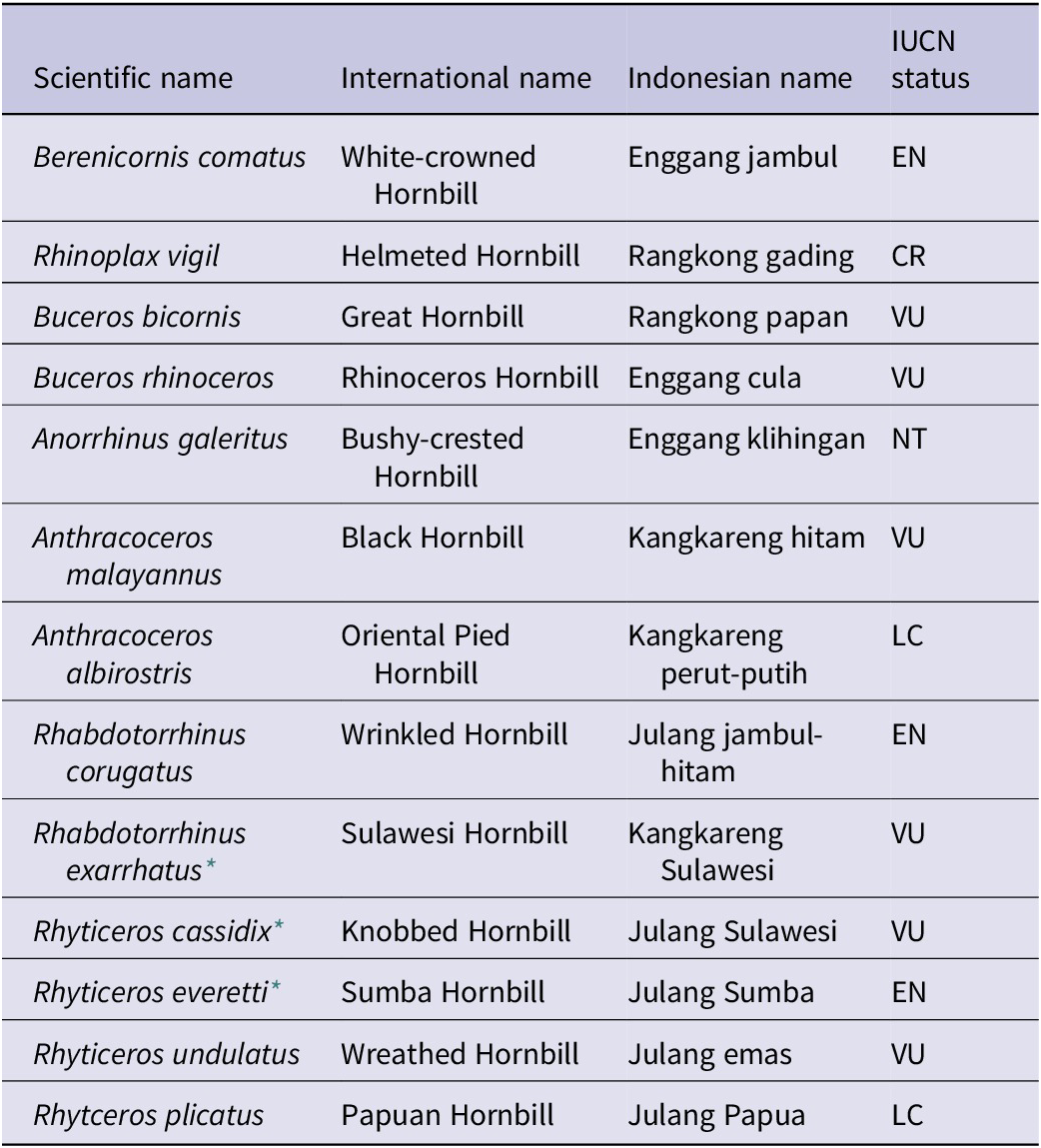
To address gaps in Indonesian hornbill studies, we conducted a systematic review using the methodology recommended by Haddaway and Pullin (Reference Haddaway and Pullin2014). These gaps reflect underexplored or limited research areas (Chingbu et al. Reference Chingbu, Atiku and Du Plessis2023), necessitating further investigation both broadly and for each hornbill species in Indonesia. The review covered studies on all 13 hornbill species in Indonesia (see Table 1) published from 1970 to 2023, spanning 53 years.
Hornbills found in Indonesia with their global Red List IUCN criteria (https://www.iucnredlist.org/): LC = Least Concern, NT = Near Threatened, VU = Vulnerable, EN = Endangered, CR = Critically Endangered

* island endemic species.
We restricted the terminology of publication to scholarly works published in the form of journal articles, conference papers, books, book chapters, and academic writings (theses and dissertations), in Indonesian and English. Exploration of publications on hornbill research in Indonesia was conducted through multiple platforms, including ScienceDirect (https://www.sciencedirect.com/), Google Scholar (https://scholar.google.co.id/), Neliti (https://www.neliti.com/), and ResearchGate (https://www.researchgate.net/). In addition, we used the Google search engine to find theses, dissertations, and other scholarly works that may not be accessible through scientific literature platforms. The publication search used various keywords combinations: “Indonesian Hornbill”, “Rangkong”, “Julang”, “Kangkareng”, “Enggang”, “Buceros”, “Anthracoceros”, “Anorrhinus”, “Rhinoplax”, “Anthracoceros”, “Berenicornis”, “Aceros”, and “Rhabdotorrhinus”. Data management was conducted using Mendeley, chosen for its ability to import extensive data from Google Scholar (Basak Reference Basak2014) and Microsoft Excel, which streamlined the synthesis process. Descriptive statistics provided insights into the evolving research landscape on Indonesian hornbills.
Data analysis: categorisation
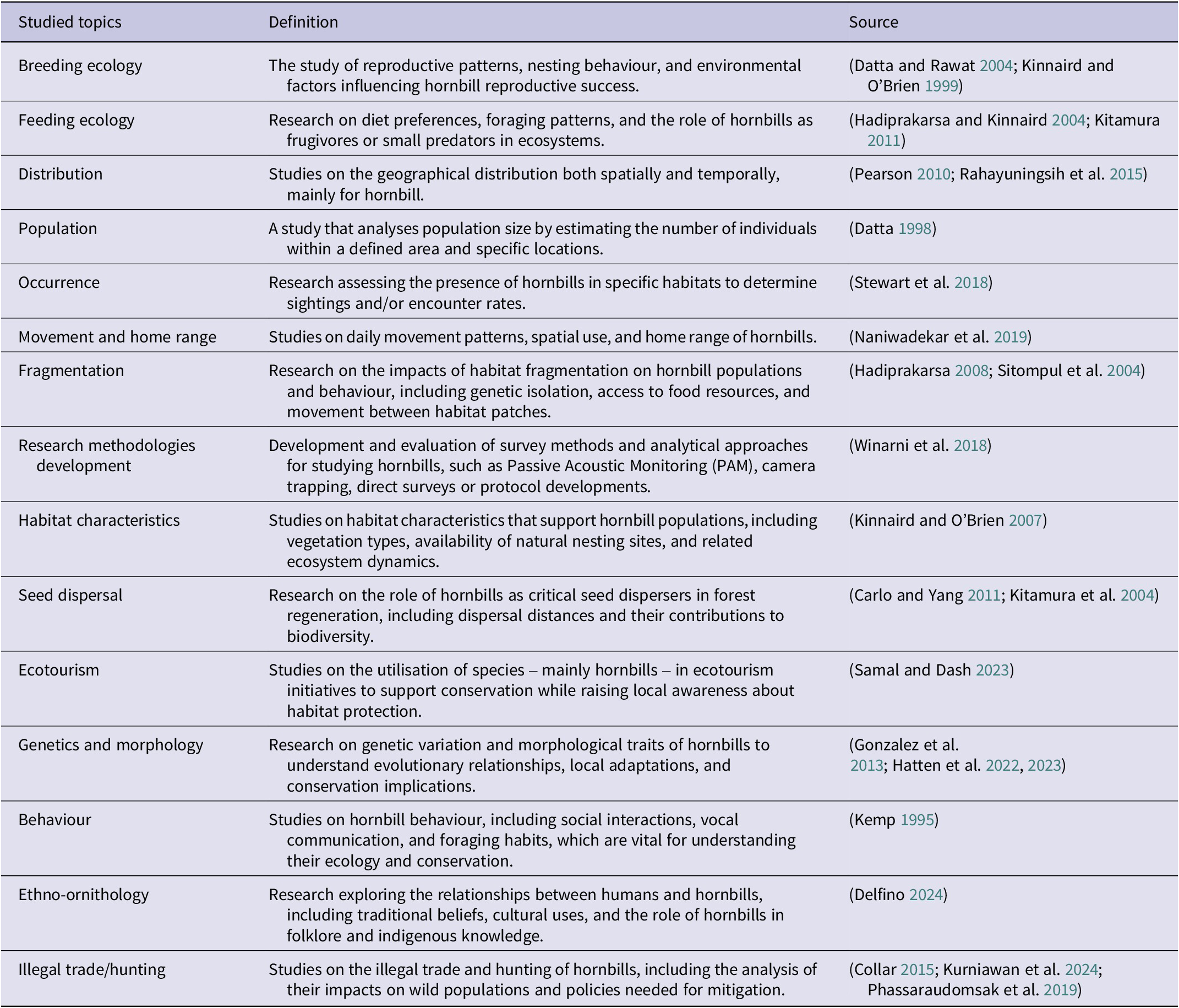
The identified publications were reviewed and categorised based on the publication year, research topic, publication type, research locations (provinces), and the origin of researchers (Indonesian citizens, foreign citizens or collaborations of both). The identified research topics included breeding ecology, feeding ecology, distribution, population dynamics, occurrence, movement and home range, habitat fragmentation and characteristics, research methodologies, seed dispersal, ecotourism, genetics and morphology, behaviour, ethno-ornithology, and illegal trade/hunting (Datta et al. Reference Datta, Jakosalem, Kemp, Lee, Lees and Paguntalan2019; Jain et al. Reference Jain, Lee, Chao, Lees, Orenstein and Strang2018; Poonswad et al. Reference Poonswad, Kemp and Strange2013) (Table 2). Research topics not fitting into these categories were grouped under “other topics”. The resulting publications encompassed all types of research considered in our survey, including books, book sections, academic theses (undergraduate and master’s, and dissertations), peer-reviewed journals, and proceedings.
Definitions of study topics used for categorising scientific publications in this review

Data analysis: publications based on research location
Recommendations for provincial assessments were based on the current distribution of hornbill species from BirdLife’s online data (accessed 25 February 2024) and compared with literature availability and citizen science records from eBird and iNaturalist. We then created a research distribution map to compare the percentage of publications across provinces using QGIS 3.16 (De la Rúa et al. Reference De la Rúa, Bright and Gall-Queguineur2020).
We calculated the number of publications based on research conducted in conservation and non-conservation areas in Indonesia. The term “conservation area” refers to Indonesian Law No. 5 of 1990, which defines it as an area with specific characteristics, whether terrestrial or aquatic, that is protected, managed, and sustainably utilised through a zoning system to ensure the preservation of biodiversity and its ecosystems. The validation of hornbill research locations within conservation areas was conducted by matching the research sites with online data provided by the Directorate General of Natural Resources and Ecosystem Conservation (https://ksdae.menlhk.go.id/kawasan-konservasi.html).
Data analysis: pre- and post-Helmeted Hornbill crisis
We hypothesised that the extensive Helmeted Hornbill poaching in 2013 (Hadiprakarsa et al. Reference Hadiprakarsa, Irawan and Adhiasto2013) raised awareness of conservation issues, leading to increased research efforts in Indonesia. This event, referred to as the “Helmeted Hornbill Crisis” (Collar Reference Collar2015), is believed to have impacted not only the Helmeted Hornbill but also the focus of research on other hornbill species and broader conservation topics. To evaluate this hypothesis, first, we simplified the data by categorising all articles according to hornbill species. Next, we re-grouped the publication years into two categories: pre-crisis, representing 43 years of research from 1970 to 2013, and post-crisis, representing 10 years of research from 2013 to 2023. We then calculated the average number of articles published per year for each species. From these data, we conducted a paired t-test to statistically compare the number of species-specific publications produced pre- and post-crisis with confidence intervals of 95%.
Results
Hornbill research trends in Indonesia
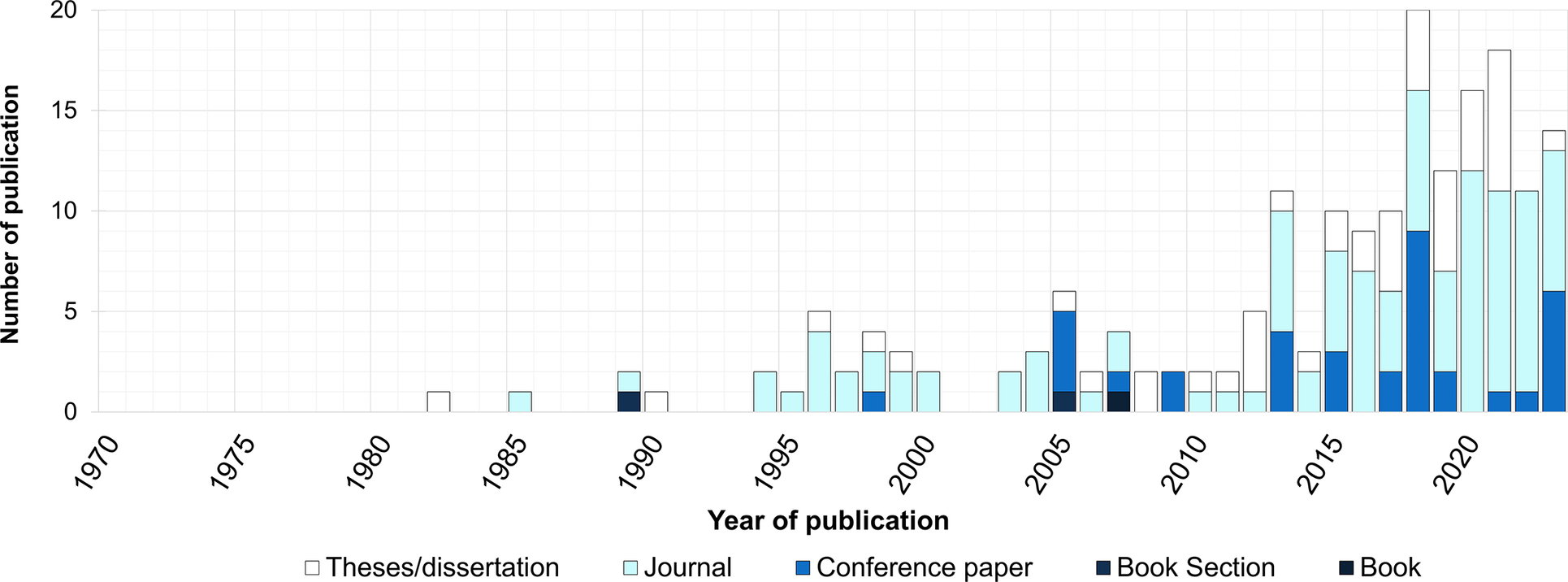
A total of 183 publications was identified, comprising primarily journal articles (56.3%), followed by academic writings (23.5%), conference papers (18.6%), and a small proportion of books and book sections (1.6%). Most of the research (80%) was published by Indonesian researchers, followed by foreign researchers (12%), and the remaining (8%) through collaboration between foreign and Indonesian researchers. A significant number of academic writings contributed substantially to the study, with Indonesian-authored publications in each year after 2009 and a notable increase after 2011. There were no publications from academic writings in 2022, possibly due to the COVID-19 pandemic. The number of hornbill publications fluctuated over the years but showed a general upward trend after 2013, reaching a peak in 2018 with 20 publications (Figure 1).
The literature published on hornbill research in Indonesia from 1970 to 2023 based on the type of publication.

Provinces prioritised for further study
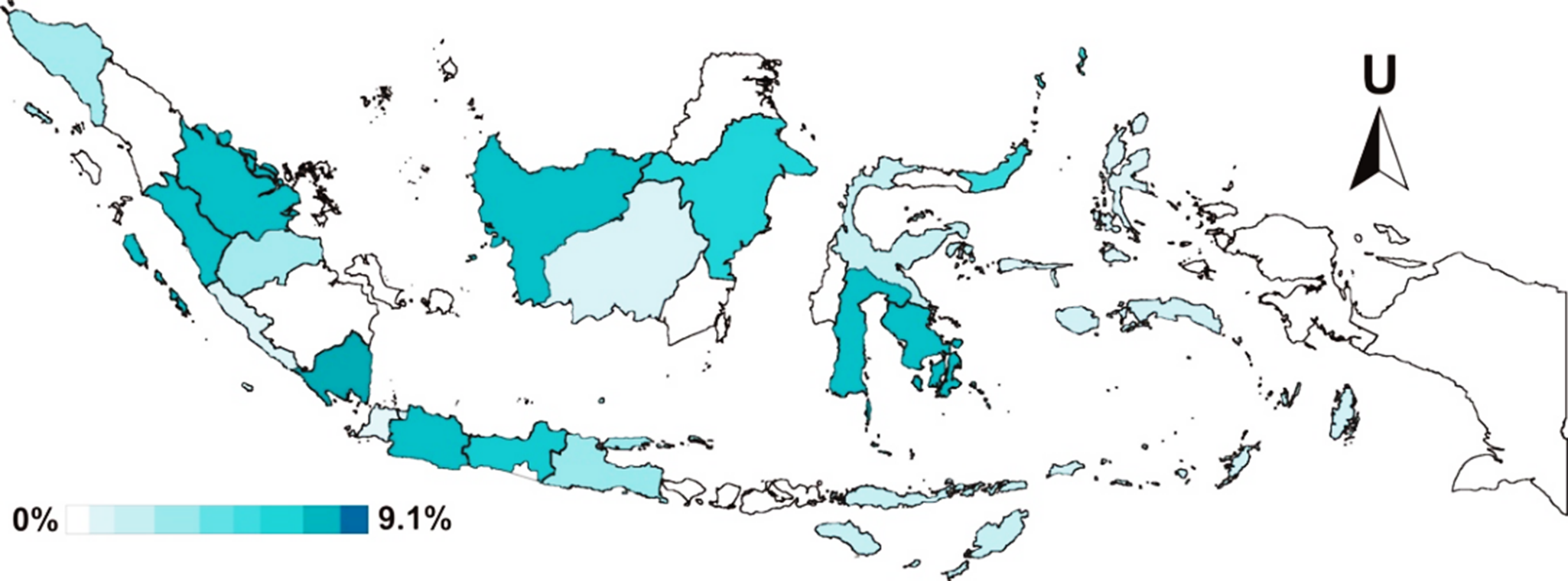
The Special Region of Yogyakarta, the capital city of Jakarta, and West Nusa Tenggara, stood out as the only three Indonesian provinces with no hornbills, while 32 provinces were known to have occupied hornbill habitat. Of all the publications collected, 158 could be linked to the province where the research was conducted (22 of 35 provinces; Figure 2). It is important to acknowledge that this review did not encompass Indonesia’s extensive number of small islands.
Map illustrating the percentage distribution of all hornbill studies by province with increasingly darker shades of blue indicating higher percentages.

Lampung Province emerged as a significant hornbill research location, contributing to at least 9.1% of all publications. Riau, Southeast Sulawesi, South Sulawesi, West Java, and West Kalimantan Provinces collectively accounted for the highest number of publications, each contributing 7.7% of all publications. Central Java followed, with scientific contributions reaching 7.0%. North Sumatra, Riau Islands, Bangka-Belitung Islands, South Kalimantan, Bali, West Sulawesi, Gorontalo, and the two provinces in Indonesian Papua are known to have hornbill populations, but we did not find any hornbill-related publications from these provinces. Of the 158 publications associated with a province, 94% (n = 149) were geographically identifiable, while the remaining 6% lacked specific location data. More than half (55%) of these studies were conducted in non-conservation areas, whereas 43% were in conservation areas. The remaining 2% spanned both conservation and non-conservation areas.
Topics and species for further study
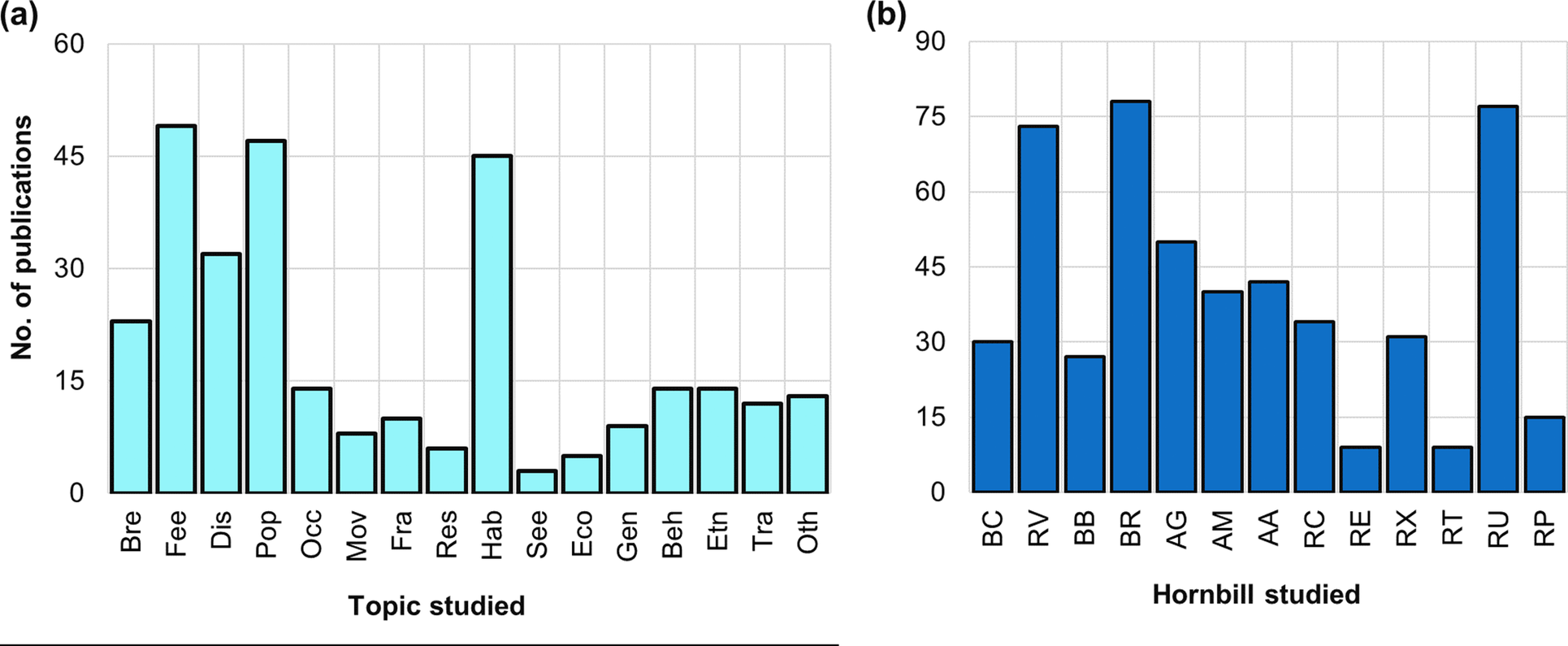
We found variation in both the number of researches conducted by topic and the hornbill species investigated (Figure 3). Some research topics received more attention than others, indicating prioritisation or greater interest in specific areas. Similarly, certain hornbill species were studied more frequently. The most researched subjects included feeding ecology, population dynamics, and habitat characteristics, each with over 40 publications. Distribution and breeding ecology received significant attention, with more than 20 publications each. In contrast, topics such as seed dispersal, ecotourism, research methodology development, movement and home range, and genetics and morphology of hornbills saw slower development and less interest, with no more than eight publications each. We also found publications (n = 13) that were not on topics used in our survey, such as Pradana and Masnuna (Reference Pradana and Masnuna2021), which focused on the development of educational materials about hornbills.
Number of hornbill publications in Indonesia based on: (a) research topics: Bre = breeding ecology; Fee = feeding ecology; Dis = distribution; Pop = population; Occ = occurrence; Mov = movement and home range; Fra = fragmentation; Res = research method; Hab = habitat; See = seed dispersal; Eco = ecotourism; Gen = genetics and morphology; Beh = behaviour, Etn = ethno-ornithology; Tra = illegal trade/hunting; Oth = other topics; (b) species: BC = White-crowned Hornbill; RV = Helmeted Hornbill; BB = Great Hornbill; BR = Rhinoceros Hornbill; AG = Bushy-crested Hornbill; AM = Black Hornbill; AA = Oriental Pied Hornbill; RC = Wrinkled Hornbill; RE = Sulawesi Hornbill; RX = Knobbed Hornbill; RT = Sumba Hornbill; RU = Wreathed Hornbill; RP = Papuan Hornbill.

A total of 179 publications explicitly identified the hornbill species studied. From these publications, Rhinoceros Hornbill (n = 78), Wreathed Hornbill (n = 77), and Helmeted Hornbill (n = 73) received the most attention. On the other hand, Sumba Hornbill (n = 9), Sulawesi Hornbill (n = 9), and Papuan Hornbill (n = 15), were substantially less studied. It is important to note that a single publication may cover multiple hornbill species and/or address more than one research topic.
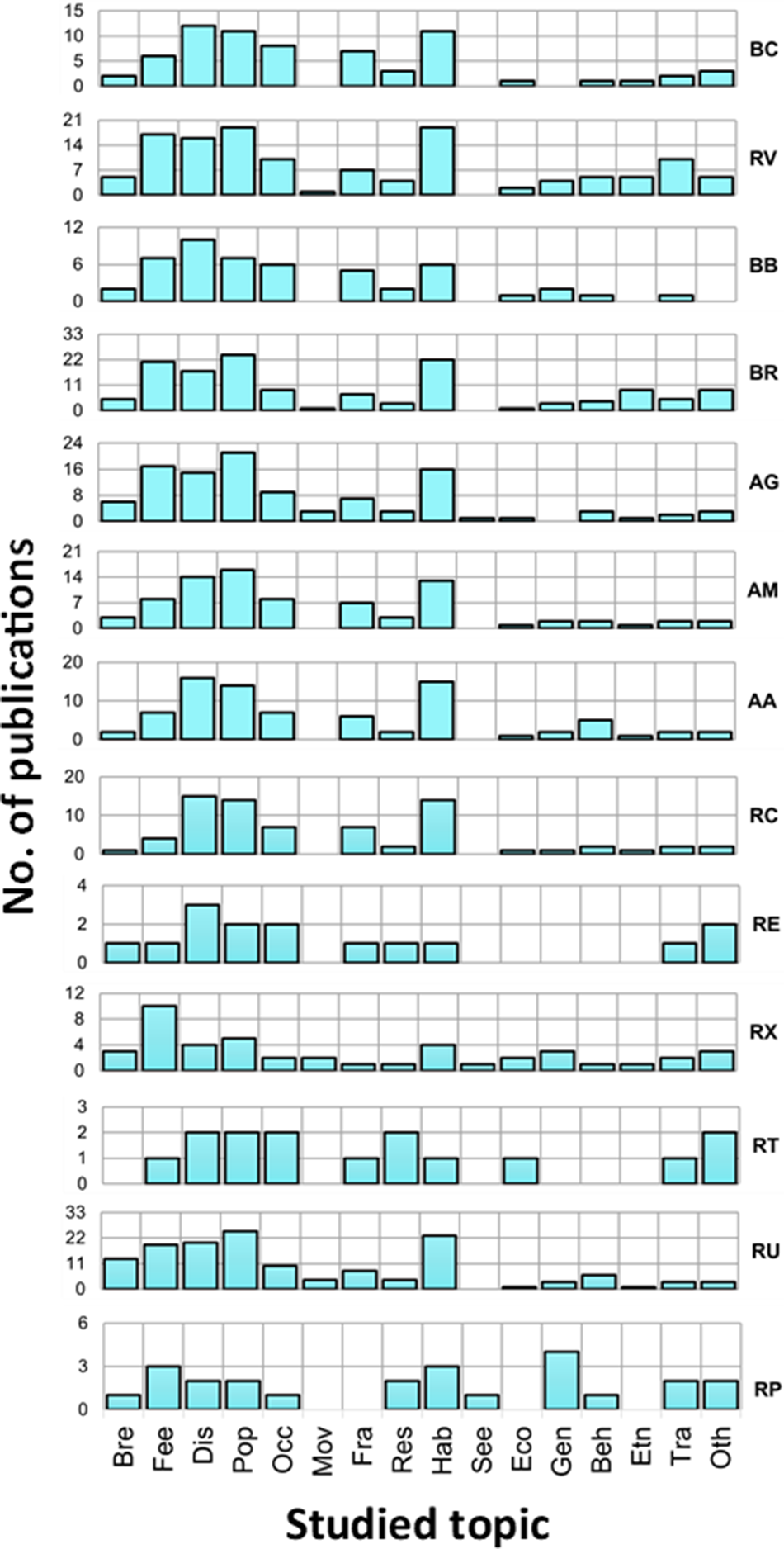
The distribution of topics by hornbill species was highly variable (Figure 4). However, almost all species had yet to be studied across all research topics in this survey, except for the Knobbed Hornbill (n = 45), which had publications covering all topics. While Rhinoceros Hornbill, Wreathed Hornbill, and Helmeted Hornbill, had the highest overall publication counts, there were still gaps in the research topics covered, with some topics having few or no publications. As would be expected, species with fewer total publications showed even greater knowledge gaps, as many topics remained entirely unstudied. For instance, the Sumba Hornbill and Sulawesi Hornbill – both with the lowest publication counts – lacked studies on six research topics, while existing publications covered no more than three titles for any topic.
Coverage of research topics for each hornbill species in Indonesia.

Comparison between research pre- and post-Helmeted Hornbill crisis
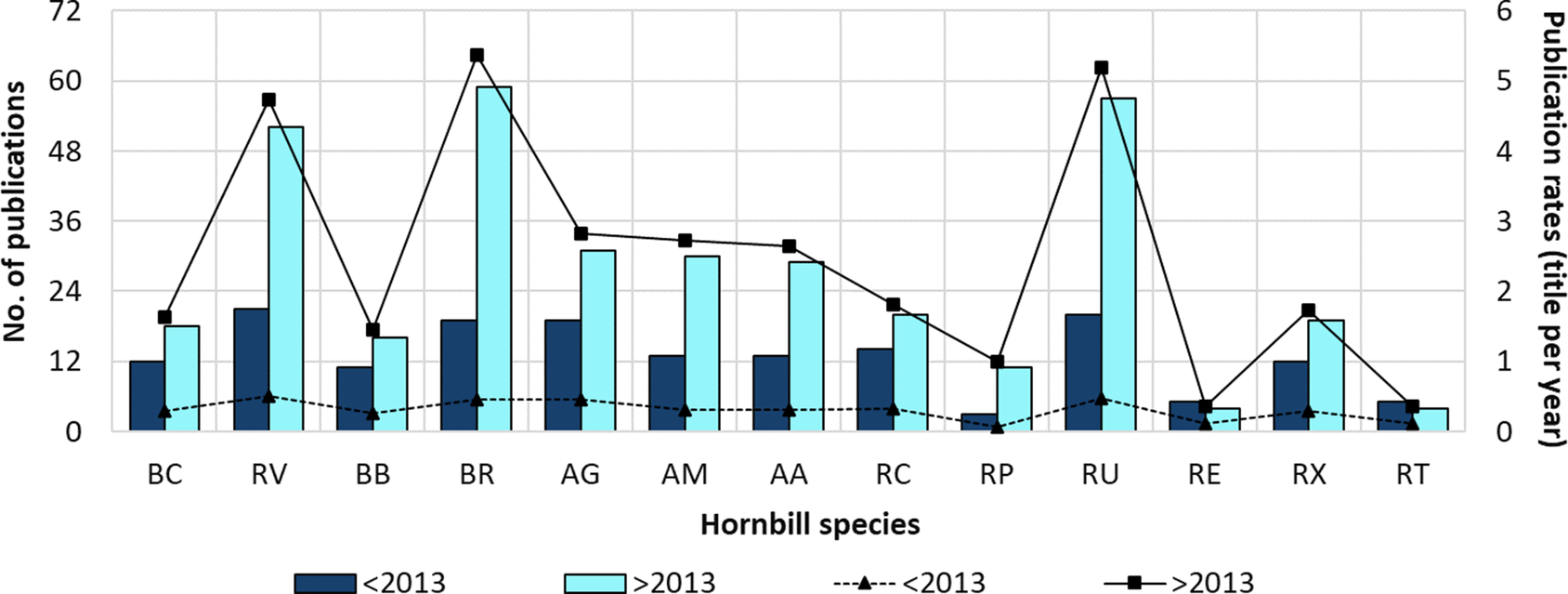
Despite spanning 42 years, publications before 2013 accounted for just 28% of the 183 identified publications, while the decade following 2013 contributed 72%. The average of pre-crisis annual publications rates (±SE) was 0.31 ± 0.03 title per year, while post-crisis publications, although covered by only 11 years, were almost eight times greater with 2.45 ± 0.47 titles per year. Not surprisingly, our paired t-test showed a strong significant difference between the two periods (P = 0.000).
Most species experienced an increase in both the number of publications and average annual publication rate following the crisis (Figure 5). Only the Sumba Hornbill and Sulawesi Hornbill experienced a decline in number of publications post-crisis, while the remaining 11 species showed varying degrees of growth. The Papuan Hornbill exhibited the greatest increase (3.67-fold), followed by the Rhinoceros Hornbill (3.11-fold), Wreathed Hornbill (2.85-fold), and Helmeted Hornbill (2.48-fold).
Number of publications (bar chart) and rate of publication per year (line chart) based on hornbill species in Indonesia, showing the general increase from before (<2023) to after (>2013) the Helmeted Hornbill crisis announcement.

Annual publication rates increased across all species, including the Sulawesi Hornbill and Sumba Hornbill, although their growth was modest (3.1-fold each). The Helmeted Hornbill showed a notable rise (9.5-fold) but was exceeded by the Rhinoceros Hornbill (11.9-fold) and Wreathed Hornbill (10.9-fold). The Papuan Hornbill exhibited the highest proportional increase (14-fold), although this trend reflects a low initial publication rate, rising from three studies before the crisis to 11 afterwards. While the Papuan Hornbill showed the greatest relative increase, its annual publication rate remains lower than that of most other species.
Discussion
This study represents the first comprehensive effort to address knowledge gaps concerning all hornbill species in Indonesia, identifying the most and least frequently studied species, and research topics. Although comprehensive literature reviews on hornbills have been conducted previously, they have not focused on a single country or have been limited to specific species. Similar studies have been undertaken for other taxa or topics, such as pangolins on a global scale (Heighton and Gaubert Reference Heighton and Gaubert2021) and orangutans in Kalimantan (Sherman et al. Reference Sherman, Ancrenaz, Voigt, Oram, Santika and Wich2020). This study also highlights the importance of pioneer research to enhance popularity and awareness, which may stimulate research and increasing publication numbers.
Our data showed fluctuations in the number of publications each year, with a noticeable increase after 2013. Prior to this period, particularly during the first two decades of our investigation (1970–1990), availability of publications on hornbill ecology in Indonesia was highly limited (Kinnaird and O’Brien Reference Kinnaird and O’Brien2007). We found that Leighton’s research on hornbill ecology in Kutai National Park, conducted in the 1970s and first published as a dissertation (Leighton Reference Leighton1982), was the earliest identified study in our data set.
However, the low number of publications before 2013 cannot be attributed solely to a lack of awareness or interest in hornbills. We assumed that factors such as conservation status and species popularity may have influenced the number of publications. Several additional factors including the state of the target species habitat, limited research infrastructure, restricted access to study sites, methodological challenges, and financial constraints may have contributed to gaps in research (Shaw et al. Reference Shaw, Greggor and Plotnik2021). These factors likely interacted, persisted over time, and ultimately influenced the historical trajectory of hornbill research in Indonesia, shaping both the quantity and focus of published studies.
The number of publications, which may be influenced by the natural habits of the target species, can potentially be explained by species with specialised habitat requirements and limited distribution. Although hornbills are known to be shy birds and are specialised forest dwellers, some hornbills require more specific forest conditions or characteristics (Sriprasertsil et al. Reference Sriprasertsil, Da-Ouli, Chootongkhum, Strange, Khamcha and Jinamoy2024). For example, the White-crowned Hornbill, Wrinkled Hornbill, and Black Hornbill (28, 31, and 40 publications, respectively) are adapted to lowland primary evergreen and swamp forests, primarily below 200 m (Poonswad et al. Reference Poonswad, Kemp and Strange2013). These types of habitats are the most threatened forest in Indonesia, particularly in Sumatra and Kalimantan (FWI/GFW 2002), the primary distribution areas for these three hornbill species in the country (Kemp Reference Kemp1995).
The limited number of publications on habitat loss and the difficulty of encounters can be observed in the case of the Great Hornbill (n = 27 studies). This species is relatively difficult to find across its range in Sumatra (Ardiantiono et al. Reference Ardiantiono, Karyadi, Hasibuan, Kusara and Arwin2020; Jarulis et al Reference Jarulis, Solihin, Mardiastuti and Prasetyo2018). On 8 August 2024, we reviewed Great Hornbill sightings on citizen science platforms, iNaturalist and eBird, and found that only 66 out of 21,547 global records originated from Indonesia. Reports on iNaturalist were particularly scarce, with only four sightings, all from Aceh and Riau Provinces. This is unsurprising, as the Great Hornbill is more widespread and common in Thailand and India than in Indonesia (Kemp Reference Kemp1995).
Funding constraints have long posed challenges for biodiversity conservation, particularly for less well-known species (Cosma et al. Reference Cosma, Rimo and Cosma2023; McCarthy et al. Reference McCarthy, Donald, Scharlemann, Buchanan, Balmford and Green2012; Stepping and Meijer Reference Stepping and Meijer2018). The Papuan Hornbill (n = 14 studies), native to eastern Indonesia (Papua, Maluku, and surrounding islands) and Papua New Guinea (Kemp Reference Kemp1995), presents significant accessibility challenges, increasing research costs for transportation, accommodation, and logistics. Notably, the few publications on Papuan Hornbill originate from Maluku, with none from Papua, highlighting these financial and logistical barriers as mentioned by Zen and Yudhistira (Reference Zen and Yudhistira2022). Additionally, hornbill studies often require long-term commitments (Willis and Birks Reference Willis and Birks2006), further increasing costs compared with shorter tourism trips, which are more typical in Papua (Bishop and Van Balen Reference Bishop and Van Balen2023).
We identified several research topics with relatively fewer publications compared with others, namely research development, ecotourism, and seed dispersal. Each of these topics presents significant challenges in implementation. Seed dispersal studies require monitoring plant–animal interactions and a comprehensive understanding of both plant and animal ecology (Beckman and Sullivan Reference Beckman and Sullivan2023). Research on hornbill seed dispersal is particularly demanding due to their extensive home ranges (Poonswad and Tsuji Reference Poonswad and Tsuji1994) and the need for additional data, such as flight routes, diet composition, and seed viability after passing through the digestive tract. Similarly, ecotourism research faces obstacles due to the early stage of sustainable tourism development in many hornbill habitats, along with limited funding and institutional support for interdisciplinary studies integrating ecology, anthropology, and tourism management (Sarinastiti and Wicaksono Reference Sarinastiti and Wicaksono2021). Meanwhile, the complexity of developing new and innovative research methods is often evaluated in comparison to previously established approaches. For example, the effectiveness of nest monitoring using camera traps or passive acoustic monitoring can be assessed by comparing it with conventional observation methods.
Past publications have played a crucial role in raising awareness and increasing species popularity (Altamira and Koestoer Reference Altamira and Koestoer2024; Härtel et al. Reference Härtel, Vanhöfen, Großmann and Randler2024). Several studies have suggested that conservation status and species popularity can drive annual publication rates (Betts et al. Reference Betts, Young, Hilton-Taylor, Hoffmann, Rodríguez and Stuart2020; Correia et al. Reference Correia, Brommer, Haukka, Jonas, Lehikoinen and Mammola2024). While we do not dispute this claim – given that research funding is generally allocated to conservation-priority and threatened species, often determined by widely recognised global assessments such as the IUCN Red List and Convention on International Trade in Endangered Species of Wild Fauna and Flora (CITES) (Betts et al. Reference Betts, Young, Hilton-Taylor, Hoffmann, Rodríguez and Stuart2020) – we emphasise that popularity and changes in conservation status are ultimately rooted in, and driven by, prior scientific publications. This is evident in two hornbill species that have been extensively studied since the early 2000s: the Knobbed Hornbill, which was classified as “Least Concern” before 2010, and the Helmeted Hornbill, which was listed as “Near Threatened” before 2015 (BirdLife International 2020, 2024).
While many other Indonesian endemic hornbill species had limited research coverage, the Knobbed Hornbill had received comparatively greater attention (n = 31 studies) and is the only species for which all research topics have been addressed. Its popularity may have been driven by a series of past studies conducted in Tangkoko by Kinnaird and her colleagues (Kinnaird Reference Kinnaird1998; Kinnaird and O’Brien Reference Kinnaird and O’Brien1996, Reference Kinnaird and O’Brien1999; Kinnaird et al. Reference Kinnaird, O’Brien and Suryadi1996; O’Brien and Kinnaird Reference O’Brien and Kinnaird1996), which marked the beginning of modern hornbill ecology and conservation research following Leighton’s period. Moreover, the species has gained recognition as a flagship attraction in Sulawesi’s birdwatching tourism (Ardi and Suardi Reference Ardi and Suardi2020; Ross and Wall Reference Ross and Wall1999).
Publications on the Helmeted Hornbill, initially focused on its ecology, breeding behaviour, and seed dispersal (Kemp Reference Kemp1995; Kinnaird and O’Brien Reference Kinnaird and O’Brien2007), but conservation attention remained limited while it was classified as “Near Threatened” before 2015 by IUCN. A major shift occurred in early 2013 when extensive poaching for its solid casque, valued as “red ivory”, led to drastic population declines (Beastall et al. Reference Beastall, Shepherd, Hadiprakarsa and Martyr2016; Chng Reference Chng2017; Phassaraudomsak et al. Reference Phassaraudomsak, Krishnasamy and Chng2019). In response, the IUCN upgraded its status to “Critically Endangered” in 2015 (BirdLife International 2020), and CITES listed it under Appendix I, imposing strict trade restrictions. These changes spurred increased research on its trade, population trends, and conservation strategies.
Publications on the hunting of the Helmeted Hornbill appear to have influenced not only awareness of this particular species but also broader research efforts on hornbills in Indonesia. The increase in the annual publication rate for all Indonesian hornbill species suggests that crisis-driven publications can significantly raise researchers’ awareness of other hornbill species. Consequently, subsequent studies have emerged, revealing that not only the Helmeted Hornbill but also other hornbill species face significant threats, including habitat loss and hunting, whether for consumption or trade of their body parts (Kurniawan et al. Reference Kurniawan, Rahmansyah, Rahman, Hardiyanti and Putra2024; Phassaraudomsak et al. Reference Phassaraudomsak, Krishnasamy and Chng2019).
We identified a number of opportunities for hornbill research in Indonesia. For instance, the discovery of the nests in West Kalimantan (Rahmansyah et al. Reference Rahmansyah, Kurniawan, Repormanto and Hadiprakarsa2024; Repormanto et al. Reference Repormanto, Riyandi and Hadiprakarsa2024), Central Java (Rahayuningsih et al. Reference Rahayuningsih, Kartijono and Retnoningsih2017), Sulawesi (Cahill and Walker Reference Cahill and Walker2000; Kinnaird and O’Brien Reference Kinnaird and O’Brien1999), and Sumba (Marsden and Jones Reference Marsden and Jones1997) could provide valuable insights into the limited information available on hornbill nesting behaviour, breeding, and feeding ecology (Poonswad et al. Reference Poonswad, Kemp and Strange2013). The cultural degradation and the use of nearly eight hornbill species for consumption in Kalimantan, as reported by Kurniawan et al. (Reference Kurniawan, Rahmansyah, Rahman, Hardiyanti and Putra2024), warrant further investigation. Although not within the scope of this study, historical manuscripts that describe the culture, particularly among the Dayak people in Kalimantan, such as Furness (Reference Furness1902), can serve as key references to assess the extent of cultural shifts that have occurred.
We acknowledge several limitations of this study: (1) the lack of distinction between theses and scientific journals, despite similarities in research topics and authorship, as in Indonesia, theses are often converted into journal articles; (2) the exclusion of cultural studies from historical manuscripts before 1970, due to limited online access; (3) the omission of data from research reports, owing to the challenges of accessing these publications; (4) the lack of specific details about research locations, with only provincial-level information provided, as not all studies specify exact locations; (5) the absence of verification regarding the accuracy of hornbill species identified in each publication, acknowledging the possibility of errors, albeit at a low level; (6) the potential influence of media and popular writings on the number of studies conducted has yet to be considered.
Conclusions and Recommendations
This study has successfully identified and mapped the distribution of research on hornbills in Indonesia, providing insights into the frequency of studies across species, topics, and geographical regions. The increasing popularity of conservation target species is thought to increase public awareness, which in turn leads to an increase in the amount of scientific literature. The analysis highlights a significant increase in hornbill-related publications after 2013, particularly in response to the Helmeted Hornbill crisis published in 2013, which likely catalysed heightened research interest and conservation efforts. However, the distribution of studies remains uneven, with some species, particularly the Sulawesi Hornbill, Sumba Hornbill, and Papuan Hornbill, receiving significantly less attention. The research also reveals gaps in specific topics such as seed dispersal, ecotourism, movement and home range, research methods development, and genetics and morphology, indicating areas that require further investigation.
Overall, all hornbill species in Indonesia require further study. Greater priority should be given to the three least-studied species, i.e. Sumba Hornbill, Sulawesi Hornbill, and Papuan Hornbill. Future research should also focus on underexplored topics such as seed dispersal, ecotourism, and research development. While all regions are important for study, areas within the hornbills’ range that lack publications, such as North Sumatra, South Kalimantan, and the Papua Islands, require greater attention, both in conservation and non-conservation areas. Enhancing research capacity of national biologists through local and international collaboration, increasing funding, and improving accessibility in remote areas like Papua will support more comprehensive studies. Integrating local cultural practices into conservation efforts, particularly in Kalimantan, and promoting long-term monitoring programmes will further strengthen hornbill conservation in Indonesia. Thailand and India are successful examples that can serve as models for the development of hornbill research and conservation. These countries have conducted more comprehensive and continuous studies on hornbills, leading to better analysis and higher quality publications (Datta Reference Datta1998; Datta and Rawat Reference Datta and Rawat2004; Datta et al. Reference Datta, Naniwadekar, Rao, Sreenivasan and Hiresavi2018; Naniwadekar et al. Reference Naniwadekar, Shukla, Isvaran and Datta2015, Reference Naniwadekar, Rathore, Shukla, Chaplod and Datta2019, Reference Naniwadekar, Mishra, Isvaran and Datta2021, Reference Naniwadekar, Rathore, Shukla and Datta2022; Pawar et al. Reference Pawar, Naniwadekar, Raman and Mudappa2018; Poonswad Reference Poonswad1995, Reference Poonswad2012; Poonswad and Tsuji Reference Poonswad and Tsuji1994; Poonswad et al. Reference Poonswad, Tsuji and Jirawatkavi2004, Reference Poonswad, Sukkasem, Phataramata, Hayeemuida, Plongmai and Chuailua2005, Reference Poonswad, Thiensongrusamee and Mudsri2012, Reference Gonzalez, Sheldon, Collar and Tobias2013).
Acknowledgements
This research was supported by LPDP scholarship (Grant number 0000883/TRP/M/TM-AF-2023). The author thanks the entire Rangkong Indonesia team, especially the field team and communications team for discussions and input during the writing of the paper. Author contributions: F.H.K. conceived and wrote the paper; Y.H. designed the study and supervised the manuscript; A.M. and Y.A.M. reviewed the results and analysis, as well as supervising the whole manuscript.