Introduction
The period of treatment with postoperative adjuvant radiotherapy for breast cancer can be stressful with a decrease in health-related quality of life (Luutonen et al., Reference Luutonen, Sintonen and Stormi2014). A recent systematic review found that women with a history of breast cancers have a greater risk of anxiety, depression, suicide, and neurocognitive and sexual dysfunction than women with no history of cancer (Carreira et al., Reference Carreira, Williams and Müller2018).
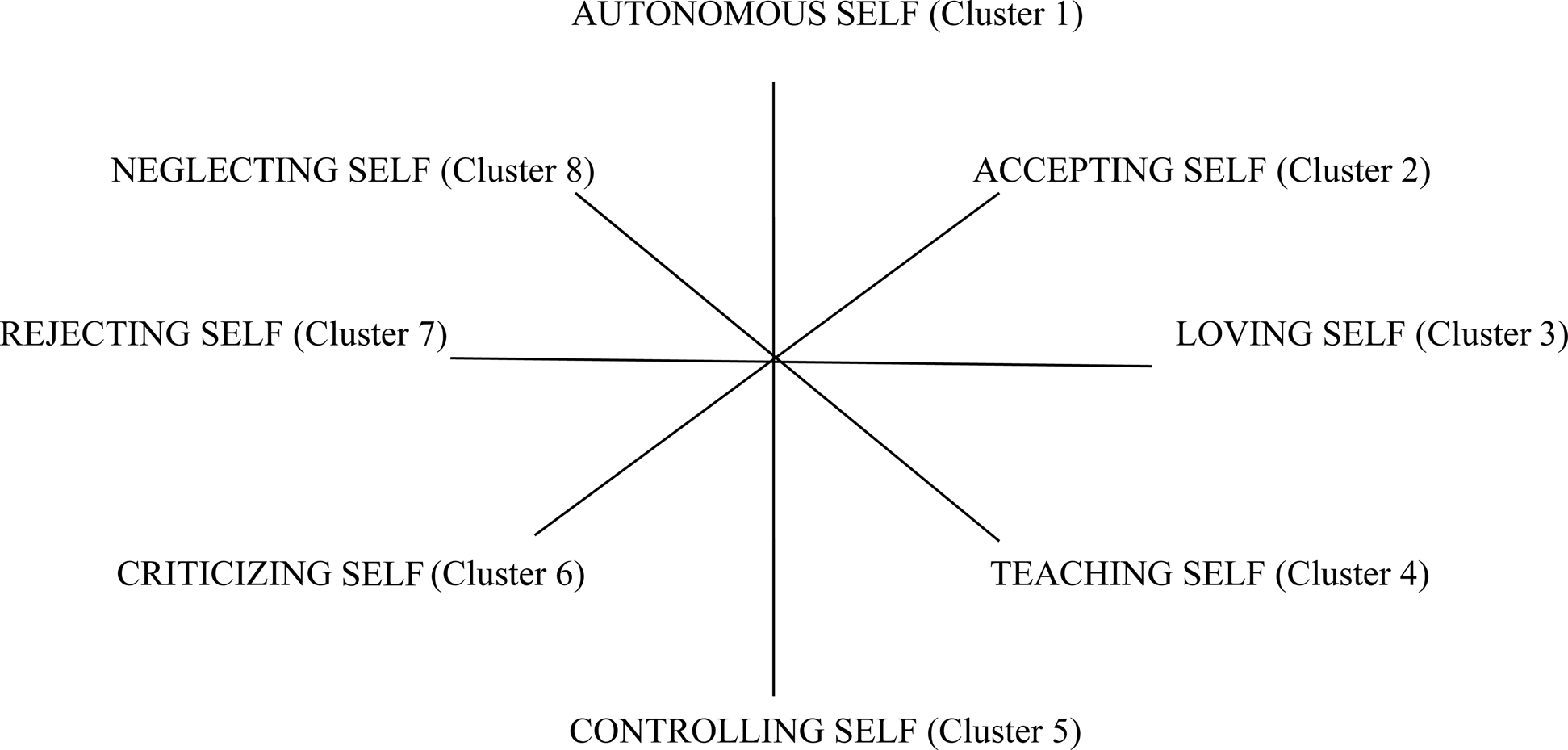
The present RCT 5-year follow-up study originated in three previous reports (Egberg Thyme et al., Reference Egberg Thyme, Sundin and Wiberg2009; Öster et al., Reference Öster, Tavelin and Egberg Thyme2014; Norberg et al., Reference Norberg, Magnusson and Egberg Thyme2015) based on a study of women from 2001 to 2004, then newly diagnosed with nonmetastatic breast cancer. This fourth report presents ratings from the participants’ self-image according to the Structural Analysis of Social Behavior (SASB; Benjamin, Reference Benjamin1974, Reference Benjamin1996) and psychophysical distress/psychic symptoms according to the Symptom Check List (SCL-90Footnote 1; Derogatis et al., Reference Derogatis, Lipman and Covi1973). The background for symptoms is complex. One important factor is self-image, which describes one's personality (Henry et al., Reference Henry, Schacht and Strupp1990). The individual tries to maintain her/his self-image as it gives stability within their personality and in communication and connections with others. The cluster version of the SASB model (Benjamin, Reference Benjamin1974, Reference Benjamin1996, Reference Benjamin2000) regarding self covers a person's self-image or inner feelings of herself/himself in eight dimensions/clusters (Figure 1).
The eight-cluster version of the SASB) (Benjamin, Reference Benjamin1996; Ybrandt and Armelius, Reference Ybrandt and Armelius2009). The SASB model shows positive social behavior toward the self on the right-hand side of the model and negative social behavior on the left-hand side. The basic behavior dimensions in the model are the vertical axis called the Independency axis (from Autonomous self to Controlling self) and the horizontal Affiliation axis (from Rejecting self to Loving self).

Reviews have reported beneficial quantitative results on art-based therapy with cancer patients (e.g., Geue et al., Reference Geue, Goetze and Buttstaedt2010; Wood et al., Reference Wood, Molassiotis and Payne2011; Boehm et al., Reference Boehm, Cramer and Staroszynski2014; Maujean et al., Reference Maujean, Pepping and Kendall2015; Hertrampf and Wärja, Reference Hertrampf and Wärja2017; Tang et al., Reference Tang, Fu and Gau2019). A Canadian review on gender-related experiences of cancer survivors who explored their identities through creative arts reported four transformative moments: (1) fostering reflection after a cancer diagnosis, (2) constructing new narratives of gender post cancer, (3) navigating gender norms in search of support for new identities, and (4) interrogation of perceived gender norms (Saunders et al., Reference Saunders, Hammond and Thomas2019). A study of pre–post art therapy group intervention for cancer patients showed decreasing levels of anxiety, drowsiness, and tiredness post intervention (De Feudis et al., Reference De Feudis, Graziano and Lanciano2019), and Rakici and Karaman (Reference Rakici and Karaman2019) reported how cancer patients benefitted emotionally from art making. These authors regarded art as a human behavior.
The conclusion from reported studies is that art therapy is a psychological intervention that is beneficial in helping cancer survivors deal with the uncertainty of their position. The overall reported findings show improvements in symptoms, such as anxiety, depression, and mood, as well as the quality of life.
Longitudinal qualitative studies of women with breast cancer are rare. Salander et al. (Reference Salander, Lilliehorn and Hamberg2011) followed a group of female breast cancer survivors (n = 39) in their daily life 4.5–5 years post diagnosis. Four different styles of approach appeared in their article based on repeated thematic interviews. The first group of women (n = 8) met life and its changes after diagnosis and treatment in a positive way and made their choices in a more determined way. The second group of women (n = 12) let life carry on as it was before diagnosis. The cancer experience was negative and positive for the third group of women (n = 6), and both these sides were present when the women went on with their lives. The fourth group of women (n = 13), one third of the group, had difficulties owing to side effects and bodily pain that made life hard for them.
At the start of our original study, in 2001–2004, women with breast cancer, registered for five weeks of radiation treatment at a university hospital in the north of Sweden, were invited to take part in a Randomized Controlled Trial (RCT) using art therapy. Forty-two women participated (intervention group n = 20, control group n = 22). The objective was to look for the type of distress induced by the cancer crises. The results are both qualitative and quantitative and are presented in sex publications (Öster et al., Reference Öster, Svensk and Magnusson2006, Reference Öster, Magnusson and Egberg Thyme2007, Reference Öster, Magnusson and Egberg Thyme2008, Reference Öster, Åström and Lindh2009; Egberg Thyme et al., Reference Egberg Thyme, Sundin and Wiberg2009; Svensk et al., Reference Svensk, Öster and Egberg Thyme2009). The conclusions are that the results showed how art therapy stimulated progress in body and mind as described in narratives, and in mental and social health investigations.
Egberg Thyme et al. (Reference Egberg Thyme, Sundin and Wiberg2009) used the SCL-90 (Derogatis et al., Reference Derogatis, Lipman and Covi1973) and the SASB self-rating scale (Benjamin, Reference Benjamin1996) in their study. The results showed that the perceived symptoms of anxiety, depression, and somatic and general symptoms rated according to SCL-90 significantly decreased in the intervention group. They also found that all of the women's perceptions of themselves according to the SASB clusters that fell into the Attachment group (AG) and the Detachment group (DAG) remained unchanged despite diagnoses and treatment.
Aim
The aim of this 5-year follow-up art therapy RCT study was to explore the long-term effects of time-limited art therapy with women with breast cancer during the radiation period in terms of self-reported self-image and self-reported psychophysical distress/psychic symptoms.
Specific research questions
• To what degree has the perceived self-image according to the eight-cluster version of SASB changed or remained the same within and between groups and compared with earlier measurements?
• To what degree have the perceived psychophysical distress/psychic symptoms according to SCL-90, changed or remained the same within and between groups and compared with earlier measurements?
Methods
Context of the study
The women in this 5-year follow-up study originally participated in an RCT study including a five-week art therapy intervention between the years 2001 and 2004 conducted at the Department of Oncology at Umeå University Hospital in northern Sweden (Egberg Thyme et al., Reference Egberg Thyme, Sundin and Wiberg2009). Forty-two women participated and were divided into an intervention group (n = 20) and a control group (n = 22). All participants completed three occasions of measurements, including interviews, within 6 months (Öster et al., Reference Öster, Svensk and Magnusson2006).
Participants and procedure
Thirty-seven women agreed to participate in the present follow-up study in 2009: 18 women from the intervention group and 19 women from the control group. Four women declined participation (two from the intervention group and two from the control group), and one woman in the control group died. The women came from diverse socioeconomic and educational backgrounds and lived in northern Sweden, which is a vast area consisting of Lapland and coastal and rural areas. At the time of the follow-up, the median age was 66.5 years (44–75 years) for the intervention group and 61 years (48–77 years) for the control group.
A written invitation to participate in a follow-up telephone interview was sent to each woman. In addition to the telephone interview, the same self-report inventories as in the original study were distributed. The self-rating questionnaires measured coping resources (CRI; Hammer and Marting, Reference Hammer and Marting1988), quality of life assessments (The WHOQOL Group, 1995; WHOQOL-BREF, Harper and Power, Reference Harper and Power1995; EORTC-QLQ-C30, Aaronson et al., Reference Aaronson, Ahmedzai and Bergman1993), self-image (SASB; Benjamin, Reference Benjamin1974, Reference Benjamin1996), and psychophysical distress/psychic symptoms (SCL-90; Derogatis and Cleary, Reference Derogatis and Cleary1977).
Instruments
The SASB (Benjamin, Reference Benjamin1974, Reference Benjamin1996) is a self-rating scale. The 36 items in the SASB questionnaire are phrased like statements reflecting the subject´s view of herself (female participants) with a focus on self-introjects. In this follow-up study, the same self-rating scale was used as in the original study (Egberg Thyme et al., Reference Egberg Thyme, Sundin and Wiberg2009). In the original study, we used a higher level of abstraction in the analysis of the SASB items. This means that the basic behavior dimensions were grouped together in two groups: AG and DAG (see, e.g., Florsheim et al., Reference Florsheim, Henry, Benjamin and Kaslow1996; Granberg and Armelius, Reference Granberg and Armelius2003). At that time, the SASB was examined in relation to Bowlby's attachment theory and to the basic needs of attachment and exploration proposed by e.g., Henry et al. (Reference Henry, Schacht and Strupp1990). In this follow-up study, we divided the 36 items into eight clusters according to the original analysis of the SASB instrument (Benjamin, Reference Benjamin1974, Reference Benjamin1996) (Figure 1).
The SASB instrument has been used in many studies on patients, e.g., with eating disorders ( Björck et al., Reference Björck, Clinton and Sohlberg2003, Reference Björck, Clinton and Sohlberg2007; Birgegård et al., Reference Birgegård, Björck and Norring2009; Forsén Mantilla et al., Reference Forsén Mantilla, Bergsten and Birgegård2014; Gezelius et al., Reference Gezelius, Wahlund and Carlsson2016) and with personality disorders (Wonderlich and Swift, Reference Wonderlich and Swift1990; Ruiz et al., Reference Ruiz, Pincus and Bedics1999). The SASB rating scales have also been used in psychological intervention studies on depressed women (Egberg Thyme et al., Reference Egberg Thyme, Sundin and Wiberg2009; Isaksson et al., Reference Isaksson, Norlén and Englund2009).
The SCL-90 (Derogatis and Cleary, Reference Derogatis and Cleary1977) assesses psychophysical distress/psychic symptoms in 90 items combined in nine subscales: somatization, interpersonal sensitivity, depression, anxiety, hostility, phobic, paranoid, and psychotic symptoms, and a General Severity Index (GSI). Since 2010, a number of reports using mostly Symptom Check List-90-Revised (SCL-90-R; Derogatis, Reference Derogatis1994) have presented results from studies on the psychophysical distress/psychic symptoms of women with breast cancer (Fafouti et al., Reference Fafouti, Paparrigopoulos and Zervas2010; Pan et al., Reference Pan, Fei and Zhang2013).
The results from previous studies by Armelius (Reference Armelius2001), Fridell et al. (Reference Fridell, Cesarec and Johansson2002), and Armelius and Armelius (Reference Armelius and Armelius2010) are used as external reference groups in this study.
Statistical analysis
Mean and standard deviation were calculated and divided into scales for the SCL-90 and clusters for the SASB, on each of the four occasions for the intervention group and the control group. Differences between the scores and the baseline occasion were calculated (adjusted score), and the two groups were compared on the second, third, and fourth occasions with regard to the adjusted scores using the Mann–Whitney U-test. The adjusted scores were also tested on the second, third, and fourth occasions for each of the two groups using the Wilcoxon signed-rank test. A p-value of less than 0.05 was considered as statistically significant. Missing items were dealt with in accordance with the SCL-90 and SASB manuals. SPSS version 19 was used for data analysis.
Ethical considerations
Ethical approval for this research study was granted by the Ethical Committee at the Medical Faculty, Umeå University (Archive number 09-034M).
Results
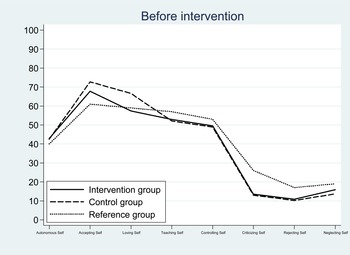
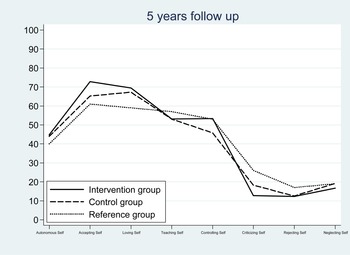
The results for the first research question “To what degree has the perceived self-image, according to the eight-cluster version of SASB, changed or remained the same within and between groups and compared to earlier measurements?” are presented in Figures 2 and 3.
Cluster scores for self-image before intervention for the intervention group and the control group compared with an external reference group (Armelius, Reference Armelius2001).

Cluster scores for self-image after 5 years for the intervention group and the control group compared with an external reference group (Armelius, Reference Armelius2001).

The main finding was that cluster scores for the intervention group and for the control group before intervention and 5 years post intervention had changed places; on the latter occasion, the scores for the women in the intervention group were higher than the previous ones, and the scores for the women in the control group were lower than the previous ones (Figure 3).
The findings on occasion 4 in the 5-year follow-up showed that significant changes remained in the clusters Accepting self (cluster 2) and Loving self (cluster 3) for the intervention group (n = 18).
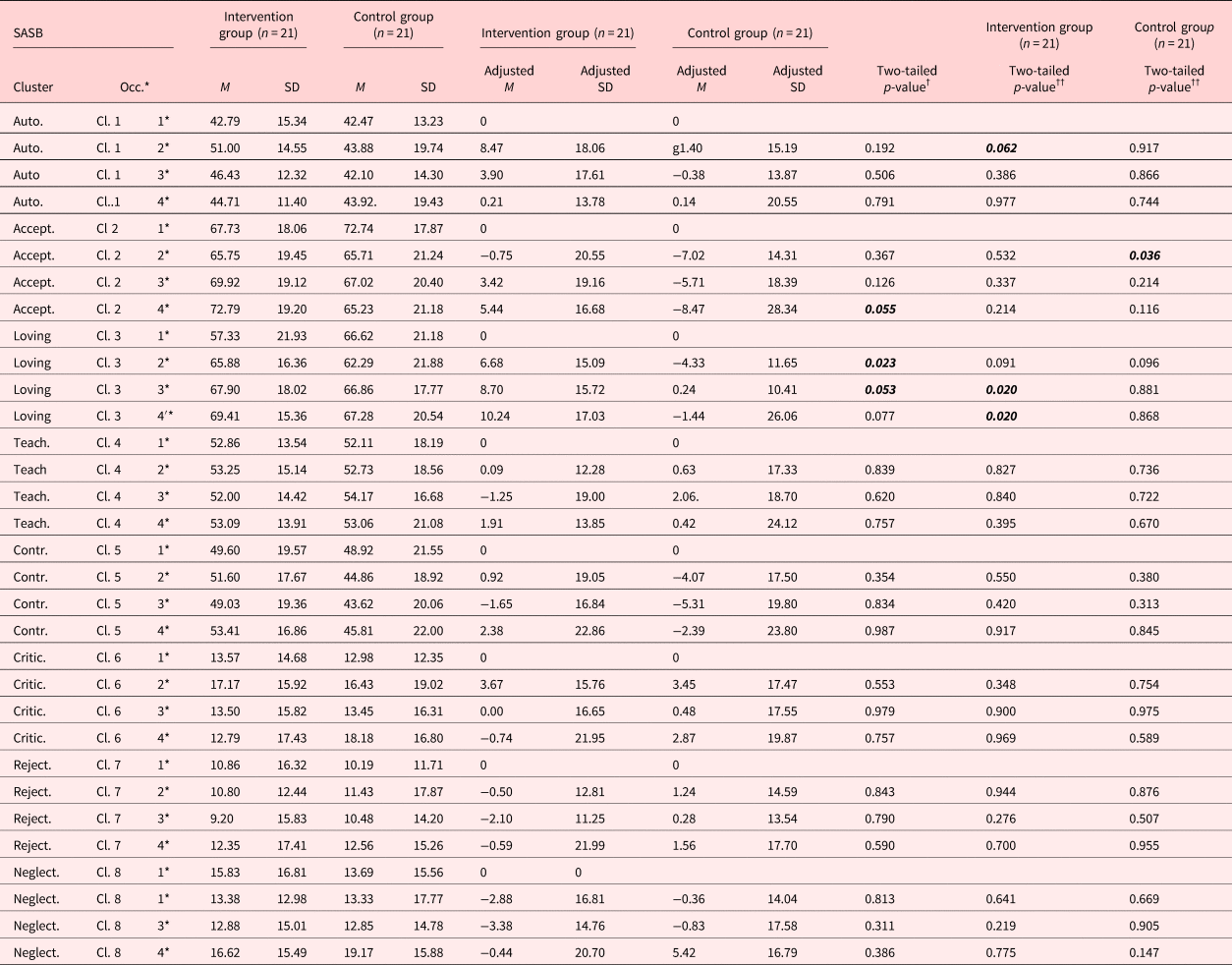
Table 1 illustrates a significant difference (0.036) in Accepting self (cluster 2) in a longitudinal intergroup analysis of the intervention group and the control group on the second occasion post intervention. The women in the control group had lower ratings than previously. On the fourth and final follow-up occasions, a borderline significance appeared (0.055) in favor of the intervention group in the same cluster. In Loving self (cluster 3), a significant difference between groups (0.023) on the second occasion in favor for the intervention group was seen, and on the third occasion, this advantage (0.20) remained, which was also the case on the fourth occasion (0.020).
Mean (M) scores and standard deviations (SD) of the SASB total scores and the scores for the differences compared with the baseline (adjusted scores) for the first, second, third, and fourth occasions* for the intervention and control groups. Comparison of adjusted scores between the intervention and control group (†) and a longitudinal inter-group analysis (††)

Significance and borderline significance in bold italic style
* 1 = before intervention (week 0, before support group participation); 2 = end of intervention (week 5, at the end of support group participation); 3 = at 6 months after the intervention ended, 4 = at 5-year follow-up.
† Comparison intervention group vs. control group, based on the adjusted scores with the nominal face value of 1.
†† Longitudinal intergroup analysis, comparing results on occasions 2, 3, and 4 with baseline (occasion 1).
The second specific research question was “To what degree have the perceived psychophysical distress/psychic symptoms according to SCL-90, changed or remained the same within and between groups and compared to earlier measurements?” The answer to this question is that there were no significant differences between the intervention group and the control group in this follow-up study.
Discussion
The aim of this 5-year RCT follow-up study was to explore the long-term effects of time-limited art therapy on women with breast cancer during the radiation period in terms of self-reported self-image via SASB and self-reported psychophysical distress/psychic symptoms via SCL-90.
In the present follow-up study, we used the eight-cluster version of the SASB model (Benjamin, Reference Benjamin1996), a lower level of abstraction of the SASB model than the model used in the original study (Egberg Thyme et al., Reference Egberg Thyme, Sundin and Wiberg2009). In that study, data analysis was based on a higher level of abstraction of the SASB, which showed that the self-image of all the women in the intervention group and the control group went unaffected through diagnoses and treatments. In this present follow-up study, a reanalysis of the originally SASB data was done and we found that the earlier results were contradicted with the new analysis according to the eight-cluster version of the SASB for all four occasions (Table 1). According to the new data analysis, the self-image of all the participants was affected by the cancer diagnosis. The participants of the intervention group had significantly raised their scores in the SASB in the clusters Autonomous self, Accepting self, and Loving self at 4 months post intervention, and these changes remained significant in the clusters Accepting self and Loving self in the 5-year follow-up study. This means that the art therapy treatment has caused an improvement in the intervention group. These SASB ratings are consistent with the narratives of the women through earlier publications by Öster et al., (Reference Öster, Svensk and Magnusson2006, Reference Öster, Åström and Lindh2009, Reference Öster, Tavelin and Egberg Thyme2014) and Norberg et al. (Reference Norberg, Magnusson and Egberg Thyme2015).
It is important to consider different theoretical approaches to the use of different levels of abstraction when analyzing data. In the original study, Egberg Thyme et al. (Reference Egberg Thyme, Sundin and Wiberg2009) were inspired by the attachment theory and William Henry´s proposal of analyzing the SASB model (Bedics and Henry, Reference Bedics and Henry2005). In the present study, we returned to the original SASB formula according to Benjamin (Reference Benjamin1974, Reference Benjamin1996) and her recommendation to stay narrow and closer to the subjects' original answers in the items. In this 5-year follow-up study, we returned to the psychodynamic theory when we set up hypothesis about how women in the intervention group used their psychic defense mechanism more consciously and flexibly as a consequence of the art therapy. No other circumstances have emerged that contradict this interpretation. Our hypothesis is that the women in the intervention group expressed emotions in both pictures and words and through this process opened up for their “internal life” and a change in the self-image in a positive way. We agree with Granberg and Armelius (Reference Granberg and Armelius2003, p. 228) that the “Self-image is theoretically as well as empirically firmly connected to a person´s well-being/…/a positive self-image is generally associated with better mental health and psychological functioning on various psychological and psychiatric dimensions.”
The analysis of the self-reported manifested psychophysical distress/psychic symptoms measured using SCL-90 confirmed the SASB ratings. The study results showed a significant decrease in depression, anxiety, somatic symptoms, and general symptoms (GSI) according to the SCL-90 (Derogatis et al., Reference Derogatis, Lipman and Covi1973) post intervention and afterwards. The results support the fact that art therapy is beneficial for use against the experienced side effects of breast cancer. Symptoms were fewer as time passed (Öster et al., Reference Öster, Tavelin and Egberg Thyme2014), and the participants' approach to life had been modified according to the psychic dispositions for each individual woman (Norberg et al., Reference Norberg, Magnusson and Egberg Thyme2015). SCL-90 in the present study showed that both groups were in parity with each other and the reference group (Fridell et al., Reference Fridell, Cesarec and Johansson2002).
We generally address symptoms when examining psychic health. In this context, we interpreted our data within a psychodynamic framework and found that the SASB instrument added knowledge about the latent intrapsychic processes related to art therapy. The SASB ratings showed the effect of art therapy on the experiencing Subject, the Self, in growth and development. The participants seemed to have integrated the present crises as well as caught up with earlier crises (cf. Herman, Reference Herman1992) using art therapy. The multiple crises were integrated as associative links in body and mind through the creative work in the art therapy process. This process was done with pictures, words, and reflections together with a therapist. This finding means that when a person is in crisis and turns for help, the motivation to accept help is high (Gillieron, Reference Gillieron1989). We perceived that the therapeutic alliance (Henry et al., Reference Henry, Schacht and Strupp1990; cf. Schaverien, Reference Schaverien1992) had been developing from the beginning in this time-limited art therapy intervention. Czamanski-Cohen et al. (Reference Czamanski-Cohen, Wiley and Sela2019) have reported significant between-group differences in emotional awareness and the acceptance of emotions after an eight-week art therapy intervention. Those authors claimed that emotion processing in art therapy may be the potential mechanism through which women with breast cancer can reduce both depression and somatic symptoms.
The art therapy process following a breast cancer diagnosis changed the women´s experience of body and mind and also dealt with their relationships in the real life. This means that art therapy seemed to address the women both nonverbally and verbally. We contributed with these findings that the women were given an opportunity to reorganize their "self-image". In art therapy, the individual in their own way can constructively alternate between loss-orientation and restoration-orientation in the dual process of coping with bereavement (Schut, Reference Schut1999; Archer, Reference Archer, Stroebe, Hansson, Schut and Stroebe2008).
Time-limited psychodynamic psychotherapy (Mann, Reference Mann1973) inspired us to believe in a limited amount of sessions (Junkert-Tress et al., Reference Junkert-Tress, Schnierda and Hartkamp2001; Egberg-Thyme et al., Reference Egberg Thyme, Sundin and Stahlberg2007). Supported by the changes that remained in two clusters, we found that this therapeutic assumption worked, probably because of the strong motivation of the participants (Gillieron, Reference Gillieron1989) and their hope and knowledge of upcoming follow-up interviews. Henry et al. (Reference Henry, Schacht and Strupp1990) has investigated short-term psychotherapy and considered the importance of the dyadic interpersonal process for the therapeutic outcome. They found a connection between the speech of the therapist and the patient and the patient's therapeutic changes measured using the SASB.
We have described intrapsychic processes measured by the SASB. In search for a deeper understanding, we turn to narratives from Swedish women with a history of breast cancer. Norberg et al. (Reference Norberg, Magnusson and Egberg Thyme2015) analyzed how the group of women from this follow-up described their situation. In that study, they used discourse analysis and found three approaches to life in the long term “the female survivor”, “the “good” woman”, and “the individual response”. Salander et al. (Reference Salander, Lilliehorn and Hamberg2011) also reported from long-term experiences of breast cancer. They used thematic analysis and found four lines of progress: 8 women were positive and made more conscious choices, 12 women lived life as before the cancer diagnosis, 6 women balanced negative and positive experiences and went on as before, and 13 women had side effects and bodily pain. Similarities between these follow-up studies were that all the women expressed their conscious progress, and the authors searched for identifying themes in the narratives. All conclusions in Salander et al. (Reference Salander, Lilliehorn and Hamberg2011) as well as in Norberg et al. (Reference Norberg, Magnusson and Egberg Thyme2015) describe the integration of challenges after a severe illness. In our follow-up study, we assume that the SCL-90 and the SASB ratings would have exposed problems like those in the fourth group in the study of Salander et al. (Reference Salander, Lilliehorn and Hamberg2011). We do not know anything about the four women who dropped out of our study; nevertheless, they were distributed equally in both the intervention and the control groups.
Sherman et al. (Reference Sherman, Rosedale and Haber2012) support our writing about intersecting gendered discourses. They state that breast cancer survivorship is about “Reclaiming life on one's own terms” (Ibid, p. 261) and requires coming to terms with threats and fears. Furthermore, taking an active role in self-healing, and reconciling paradoxes when creating new perspectives moving into a “new normal” (Ibid, p. 264). The participants in our intervention group fully regained their agent self, i.e., the executive function that allows someone to act, which is hypothesized as one effect of successful therapy as described by Adler and Olin (Reference Adler and Olin2012) and Wilhelmsson-Göstas et al. (Reference Wilhelmsson-Göstas, Wiberg and Kjellin2012). These findings are presented from other perspectives in Öster et al. (Reference Öster, Magnusson and Egberg Thyme2007, Reference Öster, Åström and Lindh2009), who used gender theory (Kaschak, Reference Kaschak1992). They found that through subject positions, women participants reconstructed self, body, and their own meaning and challenged dominating discourses on breast cancer. Sherman et al. (Reference Sherman, Rosedale and Haber2012) found another way of describing the developing self in navigating gender norms, and questioning perceived gender norms was crucial in search for support for a new identity.
Conclusions
To the best of our knowledge, the SASB rating scale has not been used in cancer studies previously. The results of the 5-year follow-up study show that the women in the art therapy intervention group had significantly higher ratings on the SASB self-rating scale than the women in the control group. The actual crises were linked to earlier and present experiences, and the art therapy sessions provided a “safe space” (Öster et al., Reference Öster, Åström and Lindh2009) for each woman to work the experiences through. The triangular relationship between the patient, the therapist, and the picture in art therapy (Schaverian, Reference Schaverian, Gilroy and McNielly2000) made it possible to reflect over emotions, memories, and experiences. This led to lasting insights and deeper understanding. The long-term effects of time-limited art therapy are, to our knowledge, not found elsewhere.
The study has a number of limitations. The cultural homogeneity and the small sample size limit the generalizability of the findings. Despite these limitations, this study contributes unique results.
A proposal for future research in art therapy would be to study patients in larger sample sizes of different cultures, ages, and sexes, and with different cancer diagnoses. Long-term follow-up studies are recommendable.
Acknowledgments
We wish to thank all the women who participated in this studyand the Cancer and Traffic Injuries Association (CTRF no. C47421) who funded this study. We also wish to thank Håkan Jonsson, Associate Professor and Statistician, at the Department of Epidemiology and Global Health, Umeå University, Sweden, for his statistical analysis.
Conflict of interest
There are no conflicts of interest in the manuscript.