The World Health Organization (WHO) recognizes violence against women in all its forms as a public health problem (World Health Organization, 1996). Most of the research focuses on explicit violence, concluding that women who suffer it have a higher probability of suffering musculoskeletal disorders and a higher prevalence in relation to different mental health disorders (Ellsberg, et al., Reference Ellsberg, Jansen, Heise, Watts and Garcia-Moreno2008; Observatorio Estatal de Violencia sobre la Mujer, 2007; Pallitto et al., Reference Pallitto, García-Moreno, Jansen, Heise, Ellsberg and Watts2013). However, forms of violence against women significantly exceed situations of explicit violence in intimate relationships. In fact, in recent years there are data that indicate that women suffer from certain health problems that could be based on inequality between men and women (Homan, Reference Homan2019; Lorente Acosta, Reference Lorente Acosta2007; Vives-Cases et al., Reference Vives-Cases, Álvarez-Dardet, Carrasco-Portiño and Torrubiano-Domínguez2007).
At the base of this situation of inequality is the phenomenon of differential socialization (Casado Mejía & García-Carpintero Muñoz, Reference Casado Mejía and García-Carpintero Muñoz2018; Pérez-Viejo & Montalvo Hernández, Reference Pérez-Viejo and Montalvo Hernández2011). The socialization process begins at birth and continues throughout life. In this way, each person internalizes values, attitudes, expectations and behaviors characteristic of the society in which we were born (Bosch et al., Reference Bosch, Ferrer, Ferreiro and Capilla Navarro2013; Spruijt et al., Reference Spruijt, Dekker, Ziermans and Swaab2019). If we relate this socialization process to male and female gender stereotypes, each person assumes what should be the appropriate behavior throughout their lives according to the assigned gender and this will determine the type of relationship they will have with other individuals and with society in general (Ning & Karubi, Reference Ning and Karubi2018; Rocha Sánchez, Reference Rocha Sánchez2009). In this way, men and women assume a gender identity that will be different in both cases. These differences assigned to each person based on biological sex are generating inequalities that are assumed to be "natural" and, therefore, not questioned or discussed (O’Neil & Denke, Reference O’Neil and Denke2016; Pérez-Viejo & Montalvo Hernández, Reference Pérez-Viejo and Montalvo Hernández2011). Hence, from childhood, boys and girls perceive themselves different not only in biological aspects, but also in ways and styles of adaptation to society (Bosch Fiol & Ferrer Pérez, Reference Bosch Fiol and Ferrer Pérez2013; Bosch et al., Reference Bosch, Ferrer, García, Ramis, Mas, Navarro and Torrens2007; Mosteiro García, Reference Mosteiro García2010). Some research shows a relationship, even, between assuming gender roles and sexist behaviors that increase tolerance to explicit violence against women in the couple (García-Díaz et al., Reference García-Díaz, Fernández-Feito, Bringas-Molleda, Rodríguez-Díaz and Lana2020; Kosterina et al., Reference Kosterina, Horne and Lamb2019).
The characteristics socially assigned to each person according to biological sex are called gender norms or mandates (Lagarde, Reference Lagarde2005). Based on the socialization process, women must be feminine and men must be masculine, with the inherent aspects of each condition in order to feel socially integrated (Lagarde, Reference Lagarde1999; Rebollo & Hornillo Gómez, Reference Rebollo and Hornillo Gómez2010). These gender mandates have an impact on mental health, finding that they are more restrictive for girls and this influences emotional aspects (Blum et al., Reference Blum, Mmari and Moreau2017). Furthermore, girls who do not perceive themselves as adapted to the “feminine” gender mandates or norms are more likely to develop affective disorders (Reidy et al., Reference Reidy, Kernsmith, Malone, Vivolo-Kantor and Smith-Darden2018).
Anxiety and depression are the most frequent emotional disturbances in the population worldwide (Lindert et al., Reference Lindert, von Ehrenstein, Grashow, Gal, Braehler and Weisskopf2014; Miguel-Tobal & Cano-Vindel, Reference Miguel-Tobal, Cano-Vindel, Martínez and Chóliz2002), with a higher prevalence in women (Huerta et al., Reference Huerta, Abbing-Karahagopian, Requena, Oliva, Alvarez, Gardarsdottir, Miret, Schneider, Gil, Souverein, De Bruin, Slattery, De Groot, Hesse, Rottenkolber, Schmiedl, Montero, Bate, Ruigomez and de Abajo2016; Linnet et al., Reference Linnet, Gudmundsson, Birgisdottir, Sigurdsson, Johannsson, Tomasdottir and Sigurdsson2016; Matud Aznar, García Pérez, Bethencourt Pérez, & Rodríguez-Wangüemert, Reference Matud Aznar, García Pérez, Bethencourt Pérez and Rodríguez-Wangüemert2017). In general, this fact has been linked to the biological differences between the sexes, influencing, fundamentally, the influence of the endocrine system (Lahera et al., Reference Lahera, Andrade-González, Gasull, Pagés-Lluyot and Roca2019). However, in recent years, it has been suggested that aspects such as gender roles, inequality between men and women and the design of health resources that primarily serve a male standard would be related to this higher prevalence (Consejo General de la Psicología, Reference Psicología2018). Likewise, recent research shows that women who have suffered some form of victimization have a higher prevalence of anxiety, depression and hopelessness depending on compliance with the roles assigned to the female gender (Henderson, Reference Henderson2019). Above all, they show higher levels of physiological anxiety in the form of panic attacks and a greater presence of dysthymia (Trevillion et al., Reference Trevillion, Oram, Feder and Howard2012). The presence of anxiety and stress has also been related to the externalization of emotions according to gender (Panjwani et al., Reference Panjwani, Chaplin, Sinha and Mayes2016).
Some of the norms based on gender roles related to a greater presence of emotional disturbances in women are: Informal care tasks (León-Campos et al., Reference León-Campos, Slachevsky Chonchol and Miranda-Castillo2018; Cheng, Reference Cheng2017; Hojman et al., Reference Hojman, Duarte, Ruiz-Tagle, Budnich, Delgado and Slachevsky2017), the need to maintain a standard of beauty (Aparicio-García et al., Reference Aparicio-García, Fernández-Castilla, Giménez-Páez, Piris-Cava and Fernández-Quijano2018; Castañeda Gallego et al., Reference Castañeda Gallego, Cardona Arango and Cardona Arias2017), the idea of romantic love and need for a stable partner (Bosch et al., Reference Bosch, Ferrer, García, Ramis, Mas, Navarro and Torrens2007) o difficulties in reconciling household chores and career prospects (Cuadrado & Morales, Reference Cuadrado and Morales2007; Simón Rodríguez, Reference Simón Rodríguez2008; Varela, Reference Varela2013). Furthermore, there is a special interest in assessing how motherhood affects female identity and the internalization of norms based on differential socialization (Agudelo Londoño et al., Reference Agudelo Londoño, Bedoya García and Osorio Tamayo2016).
If we considered this greater vulnerability to the presence of emotional disturbances on the part of women in relation to differential socialization, it is important to highlight that, from a social point of view, there are subtle or covert forms of violence that have the characteristic of being assumed as "normal". In other words, they are not questioned because they are part of the culture itself, but they generate very negative consequences for those who suffer them (Benlloch et al., Reference Benlloch, Campos, Sánchez and Bayot2008; Bonino Méndez, Reference Benlloch, Campos, Sánchez and Bayot2008; Bourdieu, Reference Bourdieu2000; Galtung, Reference Galtung2016; Jiménez-Bautista, Reference Jiménez-Bautista2012; Megías Quirós & Ballesteros Guerra, Reference Megías Quirós and Ballesteros Guerra2015). In this sense, we propose, in line with other works (Casado Mejía & García-Carpintero Muñoz, Reference Casado Mejía and García-Carpintero Muñoz2018; Médicos del Mundo, Reference Mundo2018), that differential socialization may be at the base of worse health in women. For this reason, we understand the internalization of norms based on gender roles according to differential socialization as a form of covert social violence. On the other hand, given that there are changes in the perception of the role of women in society, it is expected that young women will be more critical regarding the internalization of the social norms assigned to the female role. However, it is possible that it is not age itself that explains this common variance, but it is mediated by other factors such as maternity or marital status. In this sense, different investigations relate motherhood to the presence of depression and/or anxiety (Serrano-Mata et al., Reference Serrano-Mata, Melgarejo-Gutiérrez, Acosta-Mesa, Campos-Uscanga, Ortega-Herrera, Ehrenzweig-Sánchez and Herrera-Meza2020). Therefore, our objective will be to check the possible relationship between the assumption or internalization of gender norms assigned to women based on differential socialization and the presence of symptoms related to emotional disturbances; in this case, anxiety and depression. In addition, the following specific objectives are proposed: (a) To evaluate whether age may be relationship with the internalization of norms based on gender roles and the presence of emotional disturbances; (b) To evaluate whether the path of other age-related variables such as maternity or change of marital status may be relationship with the internalization of norms based on gender roles and the presence of emotional disturbances, evaluating possible effects of partial or complete moderation on age.
Method
Participants
The sample was composed of 286 women aged 14 to 71 years (M = 35.77, SD = 12.24, and 1 woman did not report their age). The 93% were of Spanish nationality. Regarding the marital status, 26.2% of the women were single without stable couple, 33.6% were single with stable couple, 33.6% were married, 5.6% were divorced, and 1.0% were widowed. Concerning the educational level, 56.6% had completed university studies, 38.5% had secondary level studies, and 4.5% had coursed primary studies. Regarding the employment status, 16.4% of the women were students, 12.2% were students and work at same time, 50.3% were employed, 6.3% were unemployed, 2.80% were retired or pensioner, 6.60% was a housekeeper, and 4.2% were in another situation. The 41.3% of them had children.
Instruments
To assess depression, the Three-dimensional Depression Questionnaire (CTD; Jiménez-García & Miguel-Tobal, Reference Jiménez-García and Miguel-Tobal2003) were used. It consists of 34 items, scored on a 5-point Likert scale ranging from 1 (almost never) to 5 (almost always), that evaluate three types of response (cognitive, physiological, and motor) and suicidal tendency. The Cronbach’s alpha reliability was: Cronbach’s alpha (total) = .96; Cronbach’s alpha (cognitive) = .92; Cronbach’s alpha (physiological) = .87; Cronbach’s alpha (motor) = .87; Cronbach’s alpha (suicidal tendency) = .91.
The Inventory of Anxiety Situations and Responses (ISRA; Miguel-Tobal & Cano- Vindel, Reference Miguel-Tobal and Cano-Vindel1988) were used to assess Anxiety. It consists of 24 items, scored on a 5-point Likert scale ranging from 1 (almost never) to 5 (almost always), which are grouped into three subscales to evaluate Cognitive responses to anxiety and Physiological and Motoric responses to certain situations. The Cronbach’s alpha reliability was: Cronbach’s alpha (total) = .95; Cronbach’s alpha (cognitive) = .92; Cronbach’s alpha (physiological) = .88; Cronbach’s alpha (motor) = .79.
To measure the internalization of gender norms based on differential socialization, we used the Inventory of Covert Social Violence Against Women (IVISEM; Vinagre-González, Aparicio-García, & Alvarado-Izquierdo, Reference Vinagre-González, Aparicio-García and Alvarado-Izquierdoin press). It consists of 35 items, scored on a 5-point Likert scale ranging from 1 (strongly disagree) to 5 (strongly agree), which are grouped into seven subscales to evaluate Maternity, Romantic Love and Partner, Care, Laboral Projection, Attitudes and Submission, Biology, and Neosexism. The Cronbach’s alpha reliability was: Cronbach’s alpha (total) = .84; Cronbach’s alpha (maternity) = .70; Cronbach’s alpha (romantic love and partner) = .54; Cronbach’s alpha (care) = .72; Cronbach’s alpha (laboral projection) = .60; Cronbach’s alpha (attitudes and submission) = .55; Cronbach’s alpha (biology) = .63; Cronbach’s alpha (neosexism) = .79.
Procedure
We used a random sampling procedure of 286 women from a universe of 4,648 who volunteered to participate in a study published on social networks. The survey was included in an online survey (Google Forms, Android version 1.6.292). Participants read a brief instruction describing the research and agreed to participate before answering the survey. Participant in the research was anonymous and voluntary and we asked about “consent to participate”. All procedures performed in this study were in accordance with the ethical standards of the institutional and/or national research committee and with the 1964 Helsinki declaration and its later amendments or comparable ethical standards.
Data Analysis
The sample characteristics were described using means and standard deviations. Structural equation modeling (SEM) was used to test the relationship between IVISEM factors, Anxiety and Depression. We checked two models that added demographic characteristics. For each SEM model tested we assessed (a) overall fit, (b) the significance of individual structural paths and (c) the amount of variability
 $ {R}^2 $
of the latent variables accounted for by observed variables. Model fit was evaluated using goodness-of-fit indices including the chi-square (
 $ {\unicode{x03C7}}^2 $
), root mean square error of approximation (RMSEA) (Steiger, Reference Steiger1980), the comparative fit index (CFI) (Bentler, Reference Bentler1990), the Tucker-Lewis Index (TLI) (Tucker & Lewis, Reference Tucker and Lewis1973) and the standardized root mean residual (SRMR). The following statistical criteria were used to evaluate model fit: RMSEA and SRMR < .08; CFI and TLI > .90 (Kline, Reference Kline2011).
Results
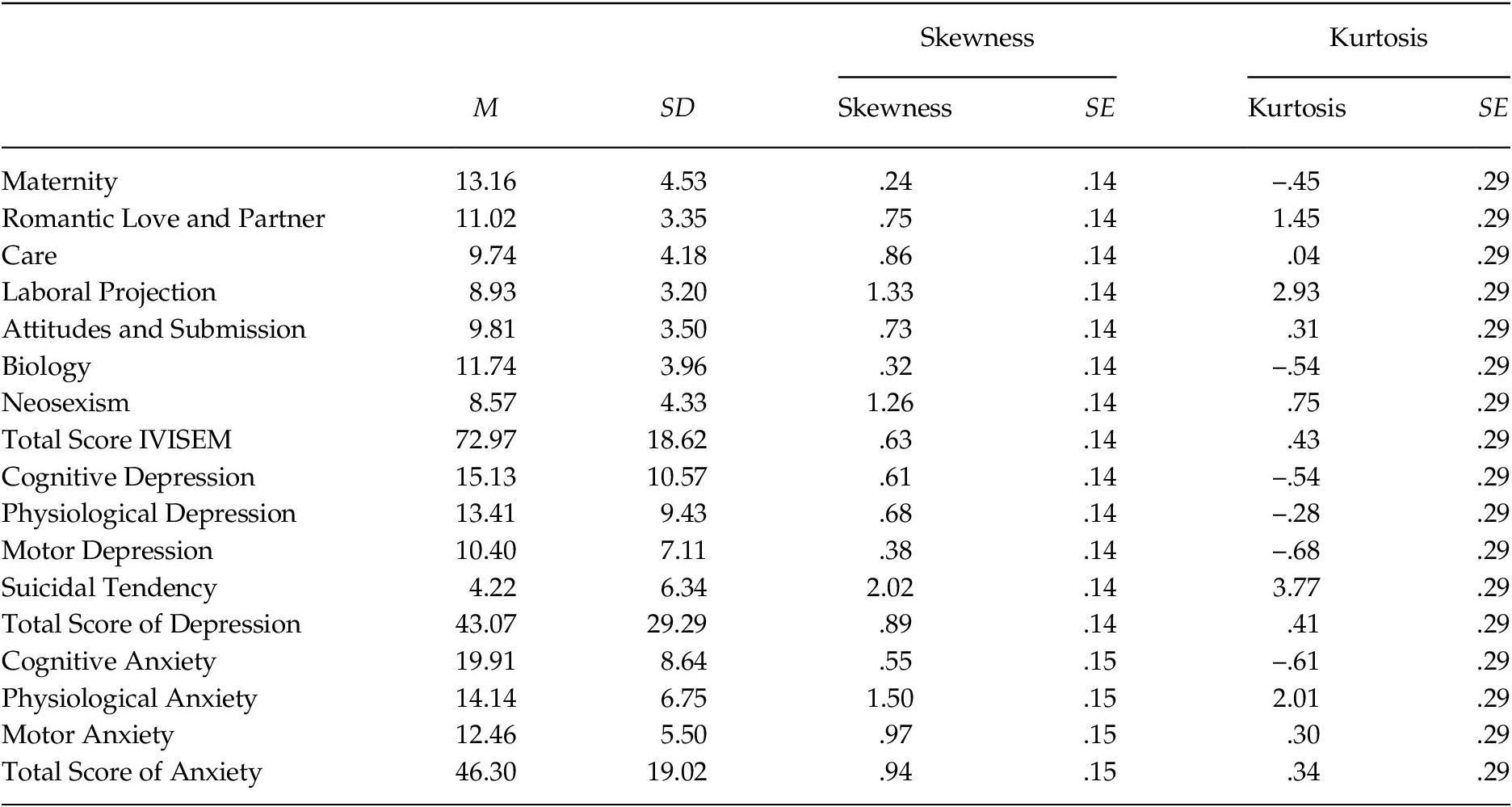
Table 1 presents the characteristics of all variables used in this study.
Descriptive Statistics for Measured Variables

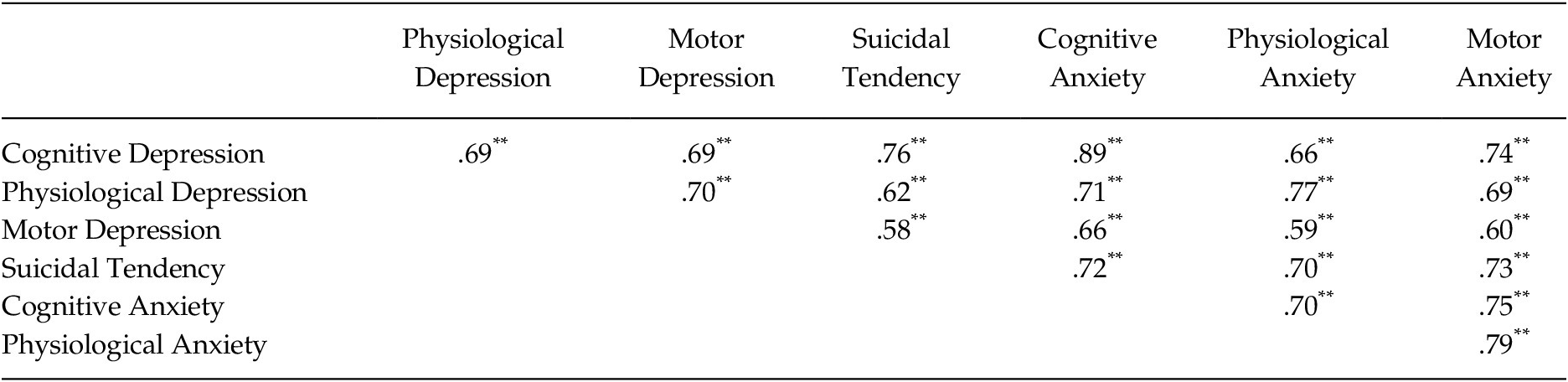
We included the seven health indicators separated (3 of anxiety and 4 of depression) in the SEM Model (see correlations in Table 2).
Correlations between Anxiety and Depression Indicators

Note. ** p < .001.
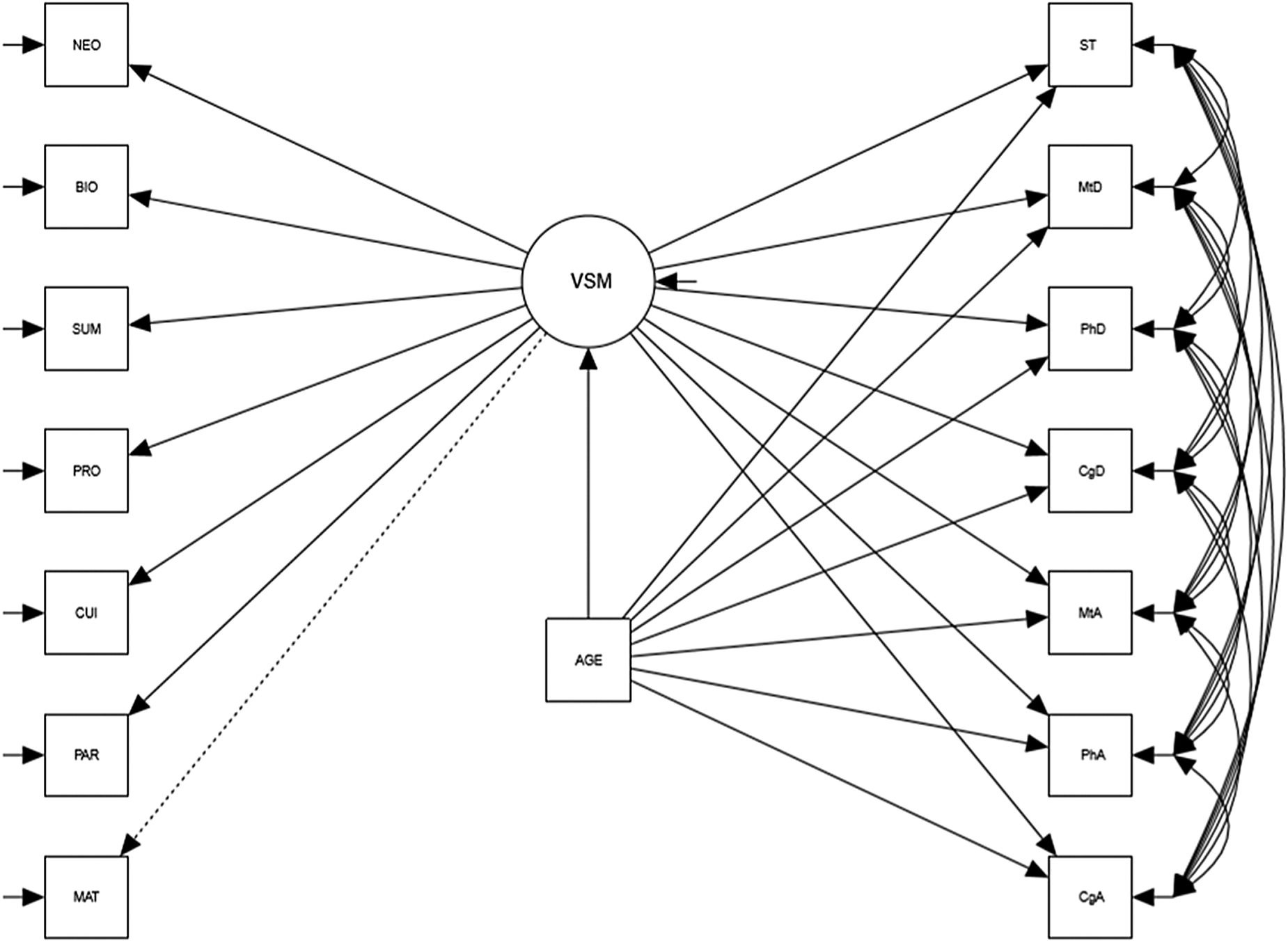
The first model tested the relationship between IVISEM factors and the seven indicators of health, considering the age of the women as a mediator variable (see Figure 1).
Structural Equational Model 1.
Note. MAT = Maternity; PAR = Romantic Love and partner; PRO = Laboral Projection; SUM = Attitudes and Submission; BIO = Biology; NEO = Neosexism; VSM = Total Score of IVISEM; ANS = Anxiety; DPR = Depression; CgA = Cognitive Anxiety; PhA = Physiological Anxiety; MtA = Motor Anxiety; CgD = Cognitive Depression; PhD = Physiological Depression; MtD = Motor Depression; ST = Suicidal Tendency.

The first structural model demonstrated good fit:
 $ {\unicode{x03C7}}^2 $
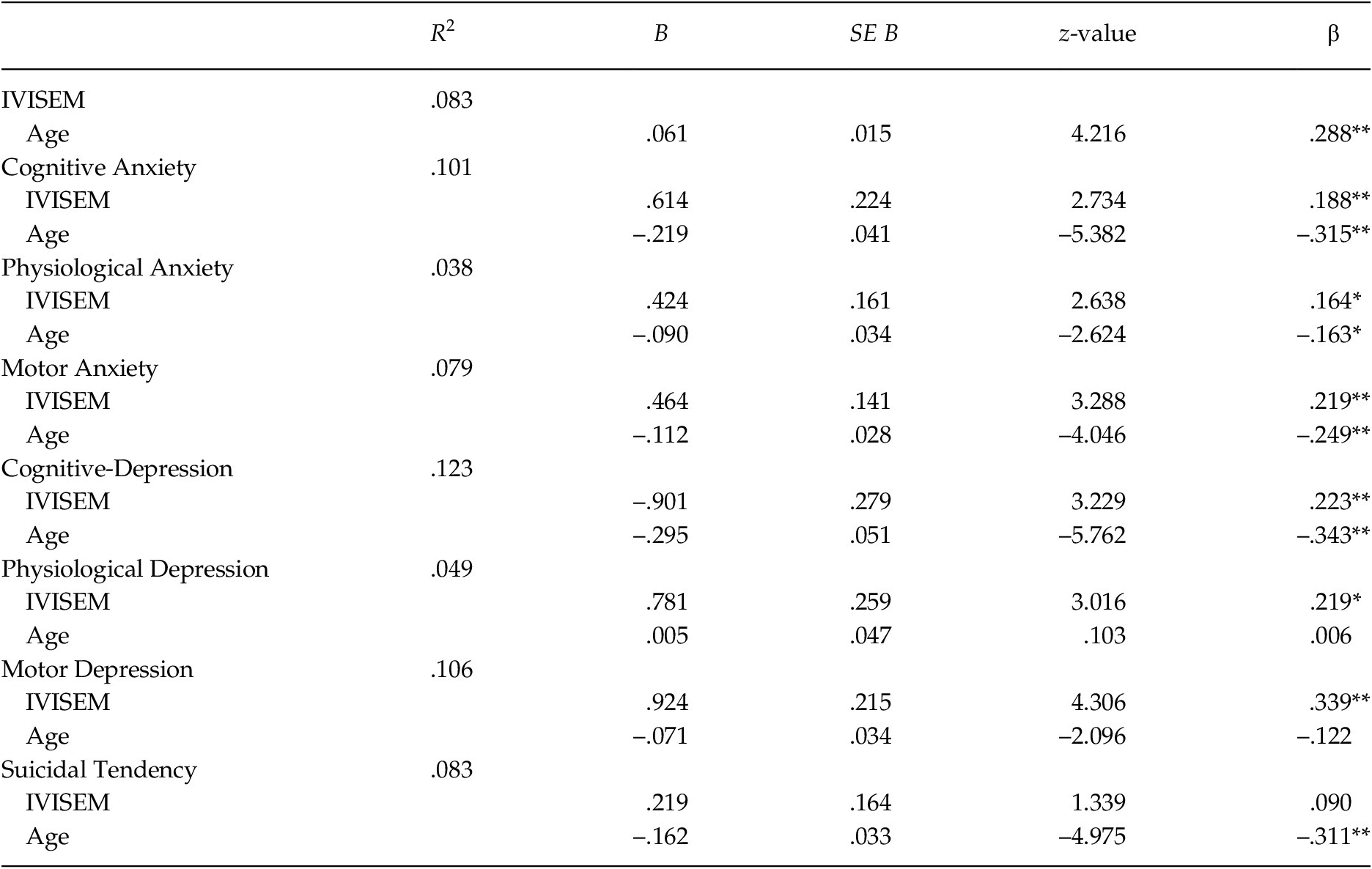
(82) = 113.164, p < .001, RMSEA = .055, 90% CI [.040, .070], SRMR = .054, CFI = .977. The loadings for IVISEM measures were: Neosexism = .43, Romantic Love and Partner = .57, Maternity = .59, Attitudes and Submission = .60, Biology =. 68, Laboral Projection = .70, Care = .78. The regressions coefficients are in Table 3.
Regression Coefficients of Model 1

Note. *p < .01. ** p < .001.
Model 1 indicates that age has a statistically significant path on IVISEM scores, however, the effect size is small (< 0.09). Age has a statistically significant and negative effect on all anxiety variables and for cognitive depression and suicidal tendency. The IVISEM has statistically significant paths on all the variables of anxiety and depression, except for suicidal tendency. The regression model with the largest effect size (explained variance) is that of cognitive depression (direct relationship with IVISEM scores and negative with age (r = –.34). IVISEM has its highest coefficient in the measure of motor depression (r = .34).
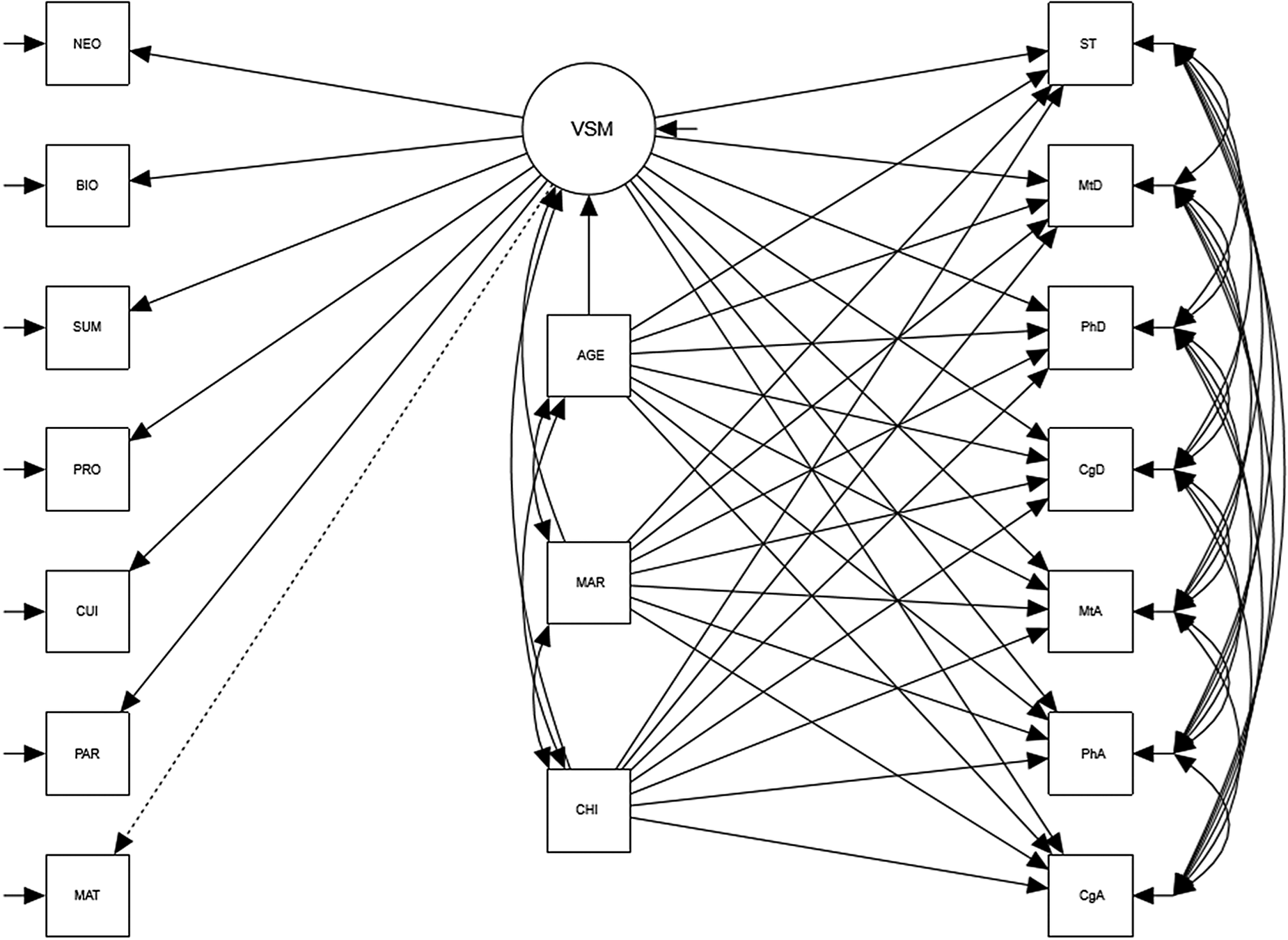
In Model 1, it is observed that age explains part of the variability of both the IVISEM and the health indicators of anxiety and depression. However, since age is related to socially relevant variables such as being a mother or getting married, in order to establish whether or not young women differ in IVISEM scores from older women, it is necessary to control for these sources of variation, assessing whether their inclusion in the model implies a complete or partial moderation in terms of age. To test these hypotheses, a second model was tested in which these moderator variables are included. In the Model 2 (see Figure 2), the variables observed age, children (having or not having children) and married (being or having been married) are included as predictors of the IVISEM score (VSM) for anxiety and depression. The indicators of goodness of fit are as follows:
 $ {\unicode{x03C7}}^2 $
(74) = 130.797, p < .001, RMSEA = .056, 90% CI [.040, .072], SRMR = .053, CFI = .98.
Structural Equational Model 2.
Note. MAT = Maternity; PAR = Romantic Love and partner; PRO = Laboral Projection; SUM = Attitudes and Submission; BIO = Biology; NEO = Neosexism; VSM = Total Score of IVISEM; ANS = Anxiety; DPR = Depression; CgA = Cognitive Anxiety; PhA = Physiological Anxiety; MtA = Motor Anxiety; CgD = Cognitive Depression; PhD = Physiological Depression; MtD = Motor Depression; ST = Suicidal Tendency.

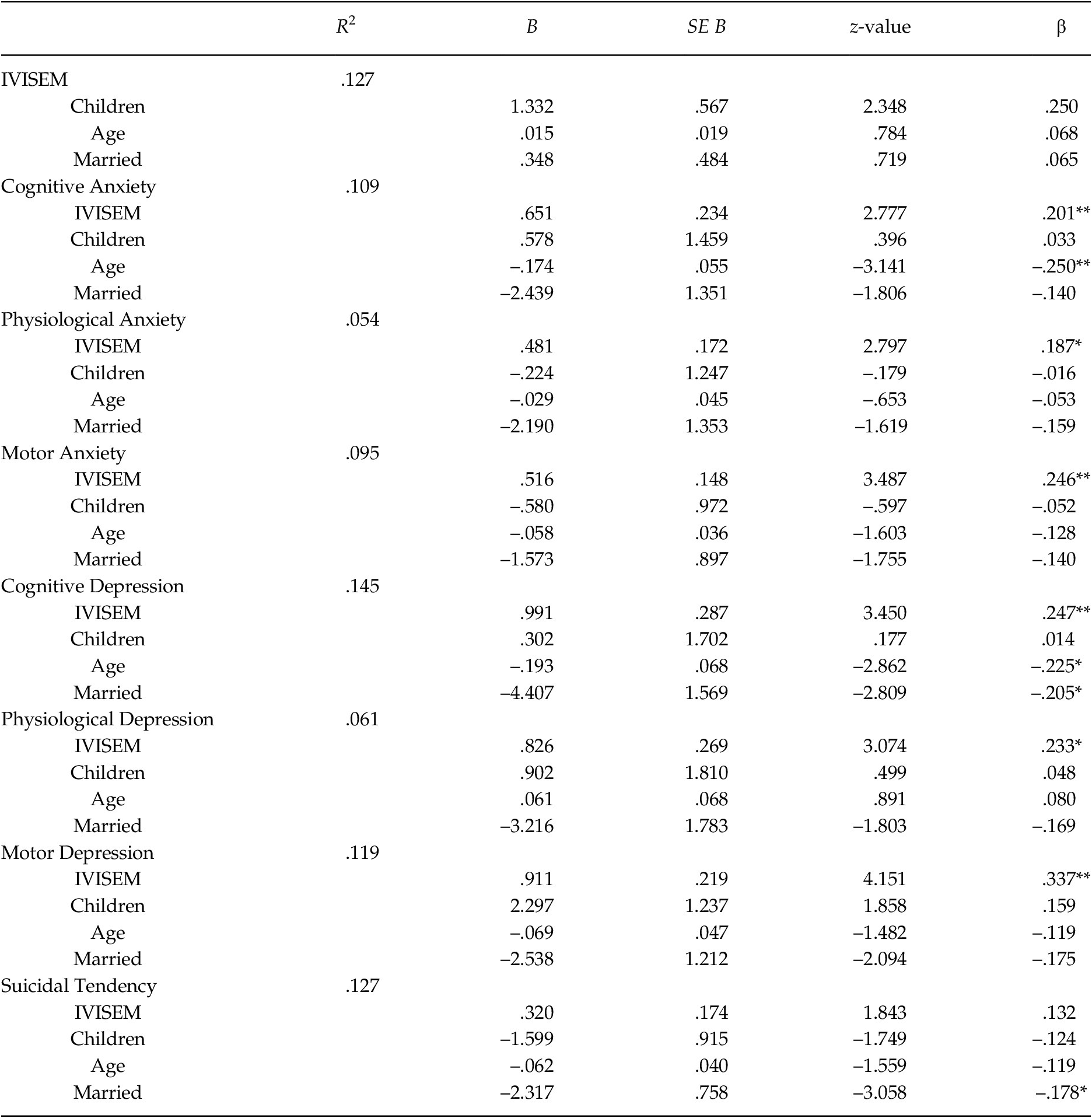
Age and marital status contribute differentially in predicting health variables (see Table 4). Thus, age has a statistically significant path on cognitive measures of anxiety and depression, while marital status affects all variables of depression (marginally in physiological depression).
Regression Coefficients of Model 2

Note. *p < .01. ** p < .001.
IVISEM scores are related to motherhood, the relationship with age and marital status not being significant. And it has a statistically significant relationship with all the variables of anxiety and depression, with greater path for motor depression (r = .337).
If we consider the explanatory power of the regression models, the variables of depression are more predictive than those of anxiety, with cognitive depression being the one with the largest effect size (
 $ {R}^2 $
= .14). The second regression model with the highest explained variance is the suicide tendency model that is negatively related to being married. The third regression model in explanatory capacity is that of cognitive anxiety, which is negatively related to age and positively with IVISEM. Finally, the models with a medium effect size are motor anxiety (
 $ {R}^2 $
= .095) and physiological depression (
 $ {R}^2 $
= .061), where the explanatory variable is the IVISEM score.
Discussion
The aim of fitting SEM was to explain the covariance structure of all included variables in order to understand paths between IVISEM factors, anxiety and depression, considering age, have or not children and civil status as covariables variables.
The internalization of the social norms imposed on women as a form of covert social violence measured by the IVISEM is related to all the health variables measured in this study, in line with other research that found a relationship between some of these norms and a worse women's health (León-Campos et al., Reference León-Campos, Slachevsky Chonchol and Miranda-Castillo2018; Urbiola et al., Reference Urbiola, Estévez, Iruarrizaga and Jauregui2017). Higher IVISEM score is associated with higher presence of depression and anxiety, with greater effect size in cognitive depression.
Regarding the sociodemographic variables measured, older women tend to have higher scores of social covert violence. However, this result disappears when we included have children, when this variable improves the fit of the model. A possible explanation may be that the fact of have children change the social position of women, where the most important thing in the life of these women have the fact of have children. This can lead to conflict between identity as a woman and identity as a mother, so there is a tendency to assume in a more marked or less questioned way the norms based on the role of gender and to increase the social covert violence (Agudelo Londoño et al., Reference Agudelo Londoño, Bedoya García and Osorio Tamayo2016).
Also, younger people have higher levels of depression and anxiety. Other studies have founded similar results (Arrieta Vergara et al., Reference Arrieta Vergara, Díaz Cárdenas and González Martínez2014; Werner-Seidler et al., Reference Werner-Seidler, Perry, Calear, Newby and Christensen2016). However, no significant relationship was found between higher IVISEM scores and the age or marital status of the participants, although these variables contributed to the prediction of health variables. In this sense, older women and those who are married show lower scores in cognitive depression. Similarly, the fact of being a mother, being married and being older, seem to be protective factors in relation to the tendency to suicide. An important fact is that, although motherhood seems to protect against cognitive depression, a positive relationship is observed between being a mother and a higher score between motor depression. Covert social violence was associated with high scores in anxiety and depression, which is consistent with the results of various studies that show that violence against women in all its forms worsens their mental health (Grose et al., Reference Grose, Roof, Semenza, Leroux and Yount2019; Riecher-Rössler, Reference Riecher-Rössler2017).
When making some modification indexes with the second model, it is observed that if the measurement of suicidal tendencies is eliminated, the predictive value of IVISEM improves. Since the sample used is a non-clinical sample, there would be little variability in the scores, so if this variable is eliminated, the explanatory power of the health variables would improve. It would be convenient to carry out studies with clinical samples to evaluate if this observed trend is maintained.
Implications for Interventions
The results obtained in our study show the need to develop prevention and intervention programs with women with a gender perspective. A first implication is that young women are still socialized in a patriarchal model and assume these gender mandates that have been shown not to be adequate for better mental health, therefore, it would be necessary to intervene in the educational field so that women stop assuming these gender mandates. Secondly, since motherhood goes hand in hand with a greater internalization of gender mandates, actions should be promoted from public health institutions to make families aware of the error of perpetuating gender stereotypes that involve covert violence against women. Finally, in mothers with anxious or depressive symptoms, it should be evaluated whether a possible cause is trying to be a good mother, in the sense of strictly adopting gender mandates, and if so, intervening to reduce this source of psychological conflict.
First, the research has been carried out with a non-clinical sample, which is a limitation in the range of health variables since the depressive and anxious symptomatology is mild. It would be necessary to carry out the study with clinical samples to evaluate the impact on women's health of covert violence that implies the internalization of gender norms. A pending question is whether internalization is a matter of age and life stages or whether it is a generational issue. Although the results suggest that changes are more associated with life stages than with age, more research with long-term follow-up studies would be needed. Second, this is a cross-sectional and self-reported by women study. In this type of study, we can only assess the specific moment in which women are at the time of answering the research, but we do not know the causes that make them feel this way, therefore, it would be interesting to analyze these data in longitudinal studies, and also, in follow-ups on clinical samples, as we have previously mentioned. Third, to avoid ethnocentric bias, it should be investigated whether the results observed in this study are generalizable to other languages and cultures. Fourth, we have only considerer some demographical variables in women. In future studies it will be important considerer another, such as work-family conflict or to care of dependent people.