INTRODUCTION
Many young people diagnosed with life-limiting or life-threatening conditions are living longer, resulting in immense challenges for service providers (Together for Short Lives and Marie Curie Cancer Care, 2012; Fraser et al., Reference Fraser, Miller and Hain2012; Together for Short Lives, 2012). The prevalence of life-limiting conditions among under-19s in the United Kingdom in 2010 was 32 in 10,000. The greatest increase in UK numbers was among young people over 19 years of age, estimated to be 34 in 10,000 (Fraser et al., Reference Fraser, Miller and Hain2012). The palliative needs of these young people are unique, often complex, and constantly in flux (Together for Short Lives and Marie Curie Cancer Care, 2012; Brown et al., Reference Brown, Patel and Kaur2013). It is therefore important that care be focused on individual needs. According to Berntsson et al. (Reference Berntsson, Berg and Brydolf2007) this care should enable young people, whenever possible, to make informed choices with respect to their care, including cultural preferences.
BACKGROUND
The 2011 census estimated the black and Asian minority ethnic (BAME) population of England and Wales to be eight million, representing 14.1% of the overall population (Office for National Statistics, 2012). A proportion of BAME people are South Asian (Indian, Pakistani, and Bangladeshi), where consanguinity or intermarriage is particularly common. In these circumstances, there is an enhanced risk of congenital abnormalities and life-threatening or life-limiting conditions owing to parents sharing common genetic material (Manchaiah et al., Reference Manchaiah, Stephens and Meredith2011).
There is a growing body of literature available on children who have life-limiting or life-threatening conditions. However, the literature that captures the voices and experiences of young people from BAME cultures is largely absent, a situation that appears to have remained unchanged since it was highlighted by Butt and Mirza (Reference Butt and Mirza1996) and Shah (Reference Shah1995). Where research has been undertaken, it was primarily focused on young people with cancers from majority rather than minority ethnic groups (Ali et al., Reference Ali, Fazil and Bywaters2001; Together for Short Lives and Marie Curie Cancer Care, 2012; Equalities National Council and Scope, 2012).
Background to Concept Analysis
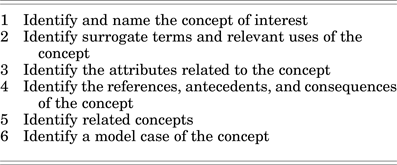
There are a variety of approaches to concept analysis that are largely determined by the aim of the analysis (Rodgers & Knafl, Reference Rodgers and Knafl2000). Walker & Avant's (Reference Walker and Avant2011) approach regards a concept as an “entity” or a “thing” (e.g., a mental image or an idea), regardless of the context or changing circumstances, an approach that was criticized by Baldwin and Rose (Reference Baldwin and Rose2009) as too “simplistic.” According to Rodgers (Reference Rodgers1989), an evolutionary view is needed that acknowledges that concepts are continually subject to change and influenced by “significance,” “use,” and “application” to practice. Her evolutionary approach is based on the philosophy that concepts change or evolve over time and that they are affected by the context in which they are occurring. However, she does not purport to suppose that her model provides a definitive approach to defining a concept. Rather, she recommends that analysis provide an indication about where further development of the concept is needed. Undertaking a concept analysis of the nurse lecturer, Coad (Reference Coad2002) based her framework on Rodgers's (Reference Rodgers1989) model and employed a six-step approach (Table 1).
Coad's (Reference Coad2002) six-step approach

In Wilson's (Reference Wilson1969) view, the principal aim of concept analysis is to provide structure, a clear rationale, and meaning to thinking. Indeed, drawing on the work of Wilson, Coad (Reference Coad2002) cautions that, without a “framework and purposiveness,” thinking might otherwise “meander indefinitely” (p. 102). Our paper, which builds on Coad's adapted framework, aims to clarify the meaning of cultural competency and to identify within the literature how the cultural competency of the palliative care workforce impacts the holistic care of young people with life-limiting or life-threatening conditions from South Asian cultures.
Data Sources
A preliminary search of the literature revealed a large number of synonyms for the terms “culture,” “ethnicity,” “faith,” and “South Asian religion,” which informed our choice of keywords.
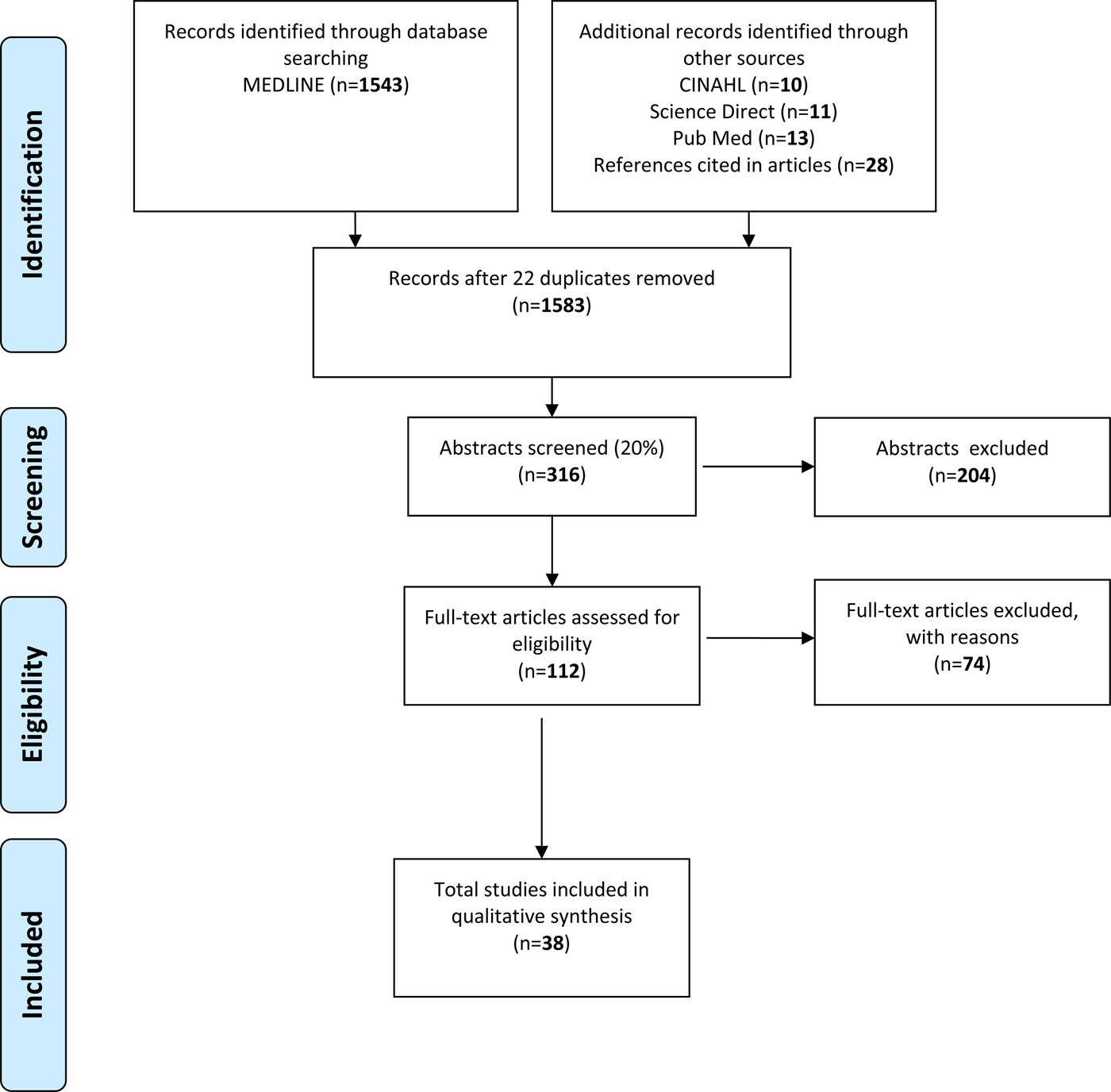
National and international databases were searched, including MEDLINE, Scopus, CINAHL, ScienceDirect, and PubMed. Limiters were set on the keywords included in either the title of the paper or the abstract, and articles were required to be published in the English language between 1990 and 2015. Historical work prior to 1990 was also referred to when appropriate. The MEDLINE search identified 1543 references, most of which were narrative accounts rather than empirical studies. Including the other databases acquired a further 34 references, with a further 28 citations located in article reference lists. A total of 22 duplicate papers were removed, and, as Rodgers (Reference Rodgers1989) suggested, inclusion and exclusion criteria were applied to the total number of papers before finally selecting 20%. Some 38 papers were read and evaluated in their entirety (see Figure 1).
Data search and selection process.

While reading the articles, keywords and themes were highlighted and entered into a matrix. Thematic analysis was undertaken for each column heading. Notes were also made in relation to general findings.
RESULTS
Identify and Name the Concept of Interest—Culturally Competent Care
The focus of this concept analysis on “culturally competent care” was a construct of the terms “culture,” “competency,” and “care.” Therefore, the starting point was (1) an exploration of the meaning(s) attributed to the term “culture” followed by (2) analysis of the construct “culturally competent care.”
The Concept of Culture
The concept of “culture” generally lacks clarity among models and theories of nursing and healthcare according to George (Reference George2011), who maintained that, despite numerous and varying attempts to define “culture,” the task has remained both difficult and challenging for three reasons. First, there are diverse and divergent opinions about the meaning of “culture.” Second, the construct is complex because of its subjective and personal nature. Finally, “culture” and “ethnicity” are often used interchangeably, further complicating a definition—for example, Lubimir & Wen (Reference Lubimir and Wen2011) refer to “ethnic heritage” (p. 239). “Ethnicity” is a fluid term that refers to identity, culture, and belonging as well as to religion, nationality, and geography. Broad categories of ethnic identity employed in surveys often neglect to determine subtle differences between communities, and there is no standard way of defining ethnicity. This may perhaps explain the lack of robust data in relation to the numbers of children and young people with palliative care needs who come from BAME cultures.
Writing from a political point of view, Parekh (Reference Parekh2005) describes culture as “lacking a coherent philosophical statement of its central principles” (p. 46). He goes on to cite Archer (Reference Archer1985): “culture has displayed the weakest development of any key concept” (p. 14). Different disciplines have their own distinct definitions and conceptualizations of culture. The terminology used in the literature to refer to people from BAME groups remains inconsistent (Chand & Thoburn, Reference Chand and Thoburn2010; Brown et al., Reference Brown, Patel and Kaur2013). These terms include: “black families,” “nonwhite families,” “minority ethnic families,” “nonindigenous families,” and “ethnic families,” and, on occasion, various permutations of these terms. Furthermore, there are numerous references in the literature distinguishing people by place of birth or ancestry (such as Indian, Pakistani, and Bangladeshi) and by faith (e.g., Muslim, Hindu, and Sikh). A review of 10 dictionary or thesaurus definitions of the term “culture” in relation to the disciplines of medicine, healthcare, nursing, and social work has revealed that the only common words to all sources were “groups,” “communities,” and “organizations.” While it could be expected that disciplines would place emphasis on concepts that are of particular relevance to their policy and practice, the lack of shared definitions is surprising.
Much of the literature refers to the process of change that occurs when different cultural groups come into continuous contact with a host culture as “acculturation.” Most of the acculturation literature has focused on adults, and there is a scarcity of empirical evidence about how young people from South Asian cultures view their cultural identity (Robinson, Reference Robinson2008). Where research has been undertaken, Robinson (Reference Robinson2008) concluded that most young people from South Asian cultures express a wish to retain their cultural heritage, family cohesion, and language, often in an adapted form.
Culturally Competent Care
No single definition of “culturally competent care” could be found in the literature. Definitions generally refer to knowledge, attitudes, and skills that enable practitioners to comprehend and appreciate cultural differences, and to an ability to provide appropriate healthcare that takes into account and responds to people's attitudes, feelings, cultural beliefs, and circumstances.
Tucker et al. (Reference Tucker, Arthur and Roncoroni2013) describe culture as rooted in an individual's identity and that the construct “culturally competent care” therefore demands a “commitment to preserving the dignity of the client by preserving their culture” (p. 39). Harriss and Salway (Reference Harriss and Salway2009) argue that in BAME communities the immediate family is the primary resource for managing the impact of long-term ill health and disability. Owen and Randhawa (Reference Owen and Randhawa2004), however, caution against stereotyping families and failing to recognize the diversity of family structure within South Asian communities.
Cultural competency is pivotal in reducing health inequalities and improving access to high-quality healthcare that is respectful of and responsive to the unique needs of each patient and their family (Tucker et al., Reference Tucker, Arthur and Roncoroni2013). The literature has increasingly reported a need for healthcare workers to develop care matched to a person's cultural needs (Helman, Reference Helman and Helman2000; Barzansky et al., Reference Barzansky, Jonas and Etzel2000). However, there appears to be an assumption on behalf of many authors that healthcare professionals have a preexisting comprehension of the concept of “cultural care” and that, in practice, they therefore possess the knowledge and skills to build effective relationships with patients (Owen & Randhawa, Reference Owen and Randhawa2004; Beach et al., Reference Beach, Price and Gary2005). However, “cultural competency” surpasses cultural knowledge. It demands that the healthcare system be inclusive of diverse worldviews in developing, implementing, and evaluating healthcare (Johnson et al., Reference Johnson, Vukle and Parker2013).
A number of studies have evaluated tools designed to increase the cultural competency of nurses and health professionals. However, although many of these instruments provide a framework against which the cultural competency of healthcare professionals is evaluated, there remain very few definitions of exactly what is being assessed. According to Kumas-Tan et al. (Reference Kumas-Tan, Beagan and Loppie2007) and Constantine and Ladany (Reference Constantine, Ladany and Ponterotte2001), measures of cultural competence utilized by healthcare professionals largely disregard the “power relations” of social inequality, assuming that the acquisition of knowledge and the development of skills by healthcare professionals will result in positive change in practice and an understanding of cultural behavior. These authors argue that, rather than using knowledge as a benchmark for assessing cultural competence, measures need to be taken to assess the quality of practice, based on how professional skills and attitudes impact the quality of patient experience. Furthermore, they contend that existing measures of professional cultural competence have often been developed by people of white middle-class ethnicity without involving service users.
Fazil and colleagues (Reference Fazil, Wallace and Sing2004) suggest that services should be “family-centered” and also “community-oriented” (p. 396). These authors make a plea for professionals to be recruited from within the communities of the service users in order for them to advocate on their behalf in ways that represent their views and experiences. Where such a model of recruitment is practiced, the numbers of families from South Asian families accessing palliative care services is increasing year by year (Brown, Reference Brown2007; Taylor et al., Reference Taylor, Miller and Joffe2010).
Identify Surrogate Terms and Related Uses of the Concept “Culturally Competent Care”
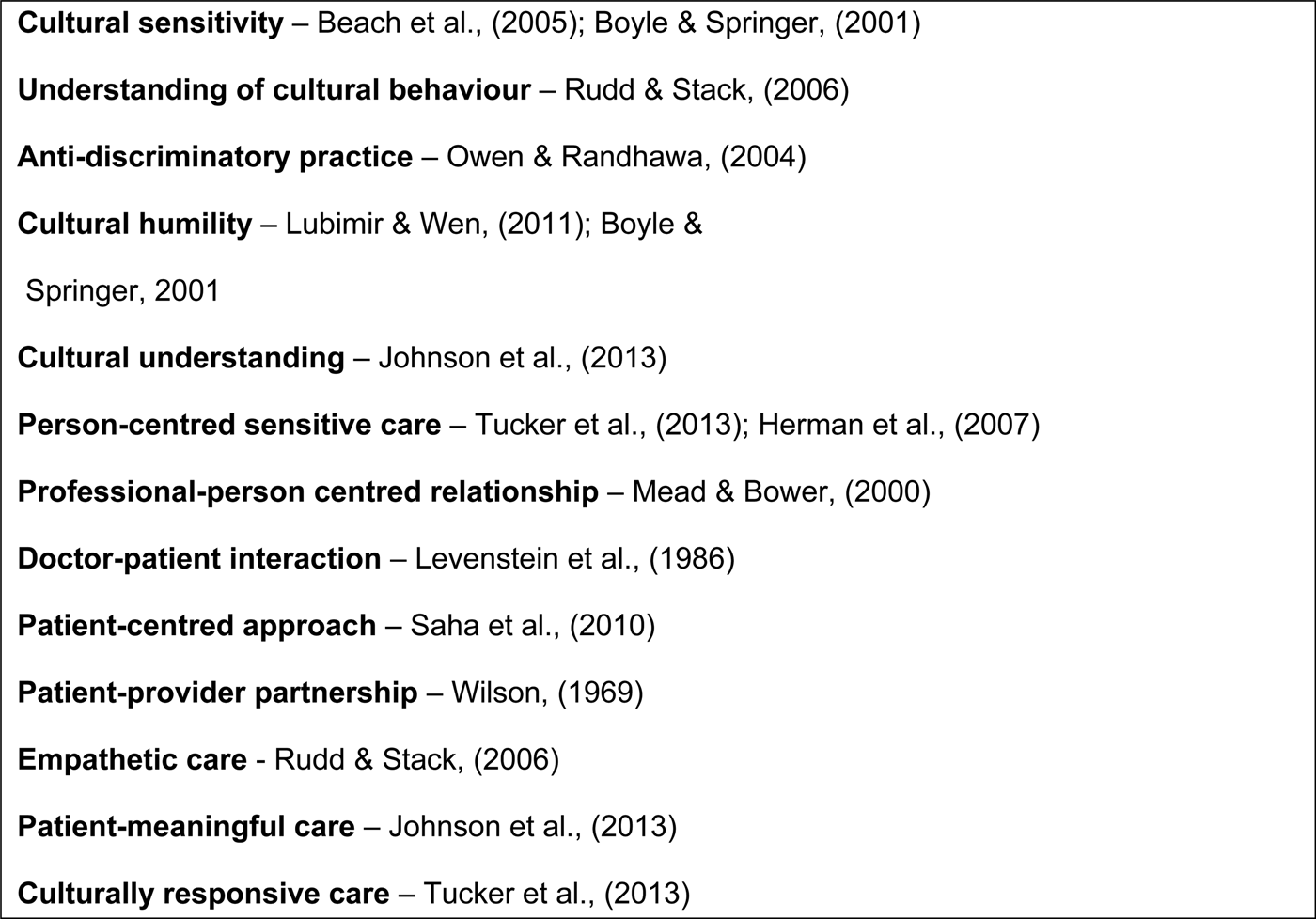
Searching for associated attributes or clusters of characteristics related to a concept has been recognized as a valid and essential undertaking in concept analysis (Rodgers, Reference Rodgers1989). Examples of surrogate terms in the literature in relation to culturally competent care are presented in Figure 2.
Surrogate terms for culturally competent care.

Identify the Attributes Related to the Concept
From an evolutionary point of view, a concept is regarded as an abstraction associated with attributes or distinctive characteristics (Suh, Reference Suh2004). The literature frequently discusses the importance of the professional's attitudes and values in achieving culturally competent care. However, as Taylor (Reference Taylor2003) argued, medical school curricula have traditionally focused on providing information about minority communities, emphasizing “difference” from a stereotypical standpoint, rather than developing skills in communicating with people in order to understand their expressed needs.
The importance of good communication between healthcare professionals and patients is well-documented (Department of Health, 2008; Hutchinson, Reference Hutchinson2011; Street et al., Reference Street, O'Malley and Cooper2011). Chamba and Jones (Reference Chamba, Jones and Gregory2000) argue that effective communication requires “insight into the cultural and service context in which conversations take place” (p. 92). Suh (Reference Suh2004) makes a plea for professionals to demonstrate “openness” to cultural diversity, being nonjudgmental as to “difference,” and communicating “acceptance and respect, examining their own cultural prejudices and bias toward other cultures” (p. 97). Lubimir and Wen (Reference Lubimir and Wen2011) endorse this view, arguing that professionals should adopt attitudes of cultural humility and respect the individual beliefs and needs of service users.
Identify the Antecedents and Consequences of the Concept
Rodgers (Reference Rodgers1989) recommends that the antecedents and consequences of the concept be evaluated. With respect to the antecedent literature, there is evidence of commitment from members of the healthcare workforce to gain sufficient knowledge about cultural practices and religious beliefs so that the needs of people from minority ethnic cultures can be met. This is particularly evident in the grey literature, which focuses on nursing adults with cancer and end-of-life care for elderly patients from the Muslim, Hindu, and Sikh faiths (Together for Short Lives and Marie Curie Cancer Care, 2012). However, it would appear that there is a risk of stereotyping when the professional development of clinical staff and carers neglects to acknowledge the importance of culture in the broader lives of people. Studies that evaluate service users as experts in defining and planning culturally competent care appear to be absent from the literature.
Identify Related Concepts
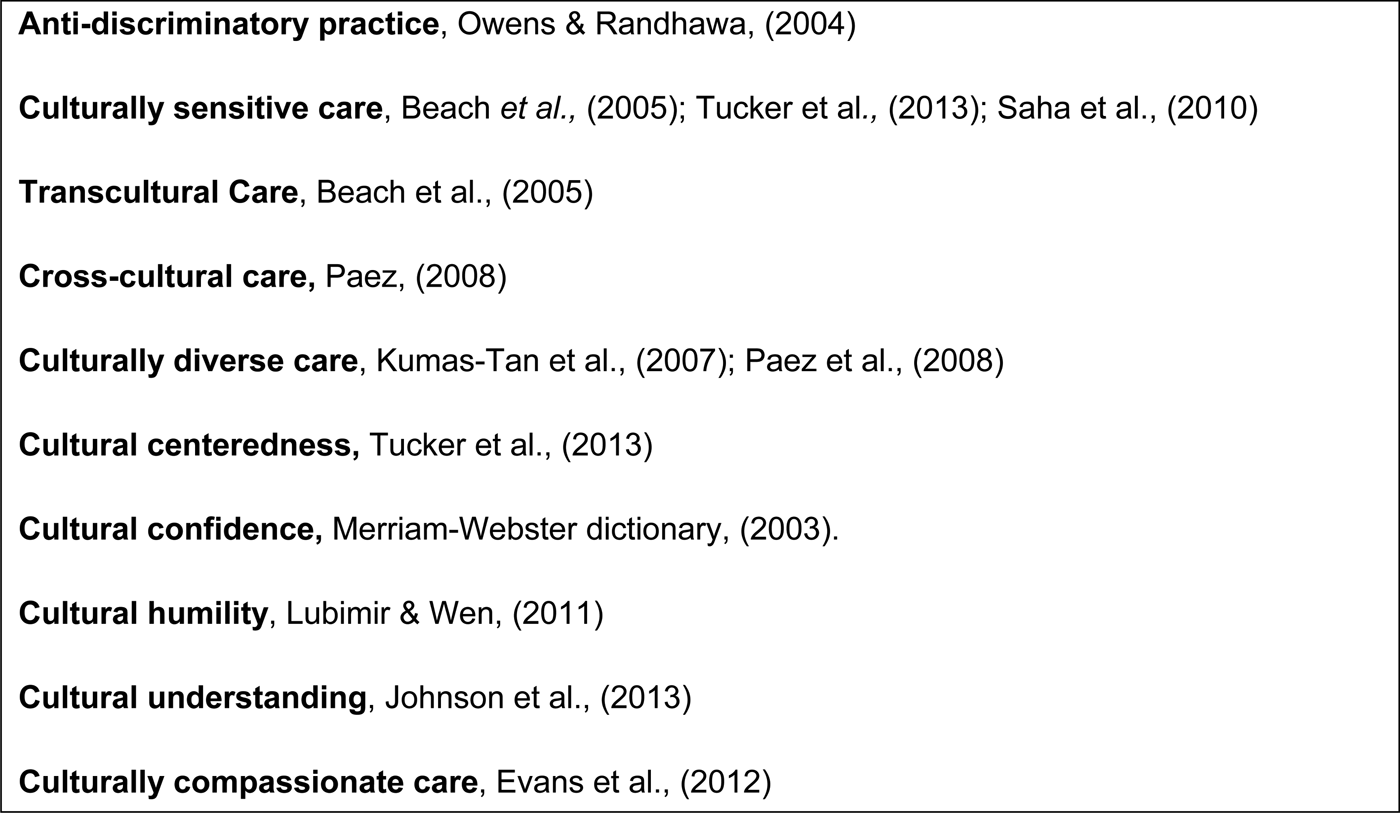
Johnson et al. (Reference Johnson, Vukle and Parker2013) note how the concept of cultural competence relates to the holistic care of patients and their families. Notwithstanding, Paez et al. (Reference Paez, Allen and Carson2008) caution that definitions of cultural competence and how cultural competence is perceived in practice are likely to differ according to the structure of the organizations involved and the services provided. A scrutiny of the literature for this concept analysis has revealed a multiplicity of terminology (Figure 3).
Identified related concepts.

Model Case
Walker and Avant (Reference Walker and Avant2011) define a “model case” as a real-life illustration of the use of a concept that incorporates the attributes of that concept. The same authors advise that a model case should be identified in practice rather than constructed. The model case below provides an example of cultural competency in a pediatric setting.
Rabar was an 18-year-old young man diagnosed with Duchenne muscular dystrophy. He was the eldest child born into a Muslim family and had two younger sisters. Rabar and his family had received support from the organization from the time of his diagnosis, and he had enjoyed short-break care at the organization for a number of years. An advanced care plan had been discussed by staff with Rabar and his family, and his short-stay care plan had been regularly updated at each visit. The young man's condition deteriorated suddenly during a routine short-break stay. The charge nurse informed the family, the head nurse on call, and the medical director that Rabar's condition was giving cause for concern.
Rabar and his parents had previously agreed that they did not want aggressive intervention should his health deteriorate suddenly. The charge nurse checked the record of Rabar's family wishes and aligned the head of his bed with an arrow set into the window sill tiles indicating the southeasterly location of Mecca. She stayed close to Rabar, providing comfort care and reassuring him verbally. The charge nurse phoned the family and transition support worker responsible for Rabar and his family and informed them of the situation. The family and transition support worker met the family when they arrived and reassured Rabar's parents that staff would be at hand to support the family in any way they wanted. Rabar's family stayed with him until after his death. During this time, staff were close at hand but unobtrusive. They were able to answer any questions the family had, provide a copy of the Qur'an and prayer carpets from the religious artifacts cupboard, and offer the family refreshments. After his son's death, staff provided Rabar's father with washing facilities, and the family were given a telephone so that they could speak with relatives and begin to make funeral arrangements.
This model case demonstrates that staff were open to cultural diversity and communicated respect in fulfilling family wishes. They had worked with the young man and with individual family members to help them receive culturally appropriate end-of-life care. There was good dialogue between staff and service users, but the staff respected the family's need for privacy while working effectively in terms of cultural awareness, knowledge, sensitivity, and skills.
DISCUSSION
UK and European Union legislation requires that people receive holistic, culturally appropriate, and sensitive palliative care (Department of Health, 2008; Research Councils UK, 2009; Kofman & Lukes, Reference Kofman and Lukes2012). Undertaking concept analysis has demonstrated that the concept of “culturally competent care” is complex, multifaceted, and often expressed indirectly in the literature, which has resulted in a lack of consensus in relation to the concept. In healthcare practice, culturally competent care has aimed to improve the quality of care (Mead & Bower, Reference Mead and Bower2000; Gregg & Saha, Reference Gregg and Saha2006; Saha et al., Reference Saha, Beach and Cooper2010). Notwithstanding, the literature examined demonstrates an ambiguity in relation to the use of the concept across healthcare settings and various other disciplines. Authors generally refer to the concept of culturally competent care as pivotal to patient care. However, “cultural competence” in the literature is generally regarded as comprising just one aspect of holistic care.
Culturally competent care should include structures and processes designed to enhance the quality of patients' experiences and healthcare outcomes. Although training in cultural competence is a recurrent recommendation in the examined literature, there appears to be little by way of suggestion as to the components of professional training. It has become apparent that healthcare staff and healthcare providers need to develop knowledge and skills that are embedded in their practice. This demands that the concept of cultural care be perceived and understood as universally integral to holistic patient care, irrespective of a person's race or ethnicity.
LIMITATIONS OF THE STUDY
Our paper aimed to clarify the concept of “cultural competency” and the construct of “culturally competent care” in relation to the palliative care needs of young people from South Asian cultures. Notwithstanding, there are some limitations to be noted. First, the relative paucity of literature from a theoretical perspective meant that the majority of the literature reviewed relied upon empirical studies. Second, the attributes or clusters of characteristics used in the examined literature in relation to “culture” and “culturally competent care” are diverse and often used interchangeably, making it difficult to achieve coherence of meaning. Third, palliative care for young people has only emerged as a specialty in recent decades owing to advances in medicine and science, and as children with life-limiting condition survive longer. Therefore, most of the literature reviewed focused on adults with no sound evidence base as to how the cultural needs of young people might be best met.
CONCLUSIONS
Berntsson et al. (Reference Berntsson, Berg and Brydolf2007) reported that there is greater likelihood for young people with long-term illness or disabilities to experience holistic well-being when they are “integrated” into society (p. 424). Young people with life-limiting and life-threatening conditions rely on palliative care services and the palliative care workforce to provide them with care that meets their individual needs and enables them to continue living their lives according to their choice. However, studies that evaluate service users as experts in defining and planning cultural care appear to be absent from the literature. Thus, if Rodgers's (Reference Rodgers1989) model of concept analysis is utilized, it could be argued that, in reality, the antecedents and consequences of culturally competent care, though defined, may not be present in practice and are in fact still evolving.
The literature has revealed that, in spite of acknowledging people's rights to high-quality end-of-life care, members of BAME cultures may be particularly vulnerable to inequality. There is an urgent need to develop a robust tool for assessing cultural competency in practice in order to achieve high-quality holistic palliative care, appropriate to the spiritual, cultural, and religious needs of young people and their families from BAME cultures.