Partial anomalous pulmonary venous connection is a congenital anomaly in which some of the pulmonary veins are connected to the right atrium or to one or more of its venous tributaries. When the right pulmonary veins are connected to the superior caval vein, it is often associated with a sinus venosus atrial septal defect. Reference Herlong, Jaggers and Ungerleider1 There are two particular challenges in surgical treatment: first, creating unobstructed pulmonary and systemic venous return, and second, avoiding arrhythmias. The Warden procedure is a reliable technique in terms of operative mortality. Reference Yong, Griffiths and Robertsond2 It presents better short-term results in terms of sinus dysfunction compared to other techniques such as the double patch technique. Reference Zubritskiy, Naberukhin and Arkhipov3 This technique has safe results in terms of non-obstructive pulmonary venous pathway. Reference Park, Kwak and Lee4 However, outside of the Warden cohort itself, the literature reports few studies evaluating the stability of these outcomes over a long period of time. We reviewed our experience with the Warden procedure in short and middle term. We have therefore chosen to include this cohort in order to re-evaluate these results several years later. In addition, the published cohorts are children or young adolescents. The aim of the study was to evaluate the long-term stability of the excellent short-term results of the Warden procedure in all age groups.
Materials and methods
Patient population
From 1997 to 2017, 73 patients with right partial anomalous pulmonary venous connection repaired with the Warden procedure were identified from our Department of Surgery summary database and included in our retrospective study. All patients operated on during this period have been included. This study was submitted and received a favourable opinion from the Nantes Group for Ethics in Health Care (GNEDS) on January 30, 2020. We received oral consent from all patients.
Surgical technique
Our main approach was the median sternotomy. After examination of the entire heart looking for other associated abnormalities, we released the superior caval vein, and the innominate vein, from all the collaterals (thymus and mammary veins) including the azygos.
The anomalies were approached via a longitudinal atrial incision parallel to the atrioventricular sulcus. The procedure typically required a large atrial septal defect. A large atrial septal defect that was enlarged if necessary. We tunnelled the pulmonary veins at the level of the superior caval vein to the left atrium via the large atrial septal defect, using a bovine pericardial patch (Edwards Lifesciences, Irvine). It was sutured from the anterior margins of the superior caval vein ostium to the inferior margins of the atrial septal defect. The superior caval vein was then bevelled above the abnormal pulmonary veins to keep as much length tissue as possible for the future superior caval vein–right atrium anastomosis. The proximal stump of the superior caval vein was closed with a circular bovine pericardial patch to avoid any pulmonary vein stenosis with a direct suture. Care must be taken not to injure one of these veins or to leave one vein above the superior caval vein incision.
After the amputation of the tip of the right atrium appendage and a wide resection of its trabeculations, the distal stump of the superior caval vein was anastomosed to the right atrium with an absorbable running suture. If necessary, to avoid any tissue tension on this anastomosis, which can lead to a stenosis, an anterior bovine pericardial patch is sutured to enlarge this anastomosis.
Two patients were operated via thoracotomy. Via thoracotomy through fourth intercostal space with the same canulation strategy. The rest of the operation was performed with the same technique described previously.
At trans-esophageal echography control of the superior caval vein–right atrium junction, if a gradient greater than 2 mmHg was found, we systematically decided to redo the anastomosis without aortic cross-clamping. We also checked the absence of residual atrial septal defect.
Follow-up
Data on first hospitalisation were obtained from standard hospitalisation, intensive care hospitalisation and operative reports. All patients received a post-operative trans-thoracic echography in the ICU and before discharge. Follow-up was done every month for the first 3 months and progressively spaced to be carried out annually after the first year. The results of the trans-thoracic echography was found by contacting the cardiologists or the patients directly.
Statistical analysis
Categorical variables are reported as numbers and percentages. Continuous variables are expressed as means and standard deviations, or medians and ranges. The Kaplan–Meier method was used to estimate survival and freedom from reintervention for superior caval vein obstruction. For statistical analysis, GraphPad Prism version 8.3.1 (GraphPad Software, La Jolla, CA, USA) and Microsoft Excel version 16.16.20 (Microsoft Corporation) were used.
Results
Pre-operative data
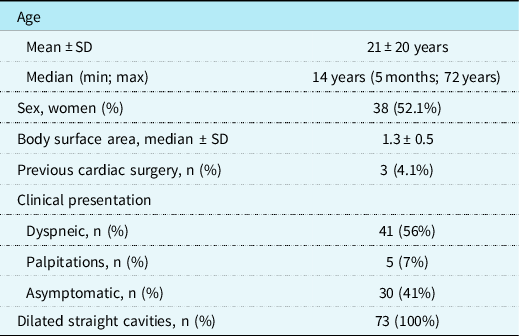
Between 1997 and 2017, 73 patients underwent surgery using the Warden technique. Thirty-eight (52.1%) were women. The mean age at the time of surgery was 21 ± 20 years (median 14 years), range 5 months–72 years. Forty-two (57%) patients were greater than 10 years old. Median weight was 46 kg (range 5–92) and only 3 (4.1%) patients weighed less than 10 kg and 40 (55%) weighed more than 40 kg. Indication for surgery was based on clinical and trans-thoracic echography data (Table 1). All patients were noted to have a severely dilated right chamber in trans-thoracic echography.
Pre-operative data. SD : standard derivation

Three (4.1%) patients had previous cardiac surgery. The first was operated at 3 months of age for an irregular form of tetralogy of Fallot. The patient was re-operated 2 years later for massive pulmonary insufficiency. Pre-operative CT scan eventually demonstrated partial abnormal pulmonary venous return. Surgery consisted of placement of a valved graft in the pulmonary trunk with left pulmonary arterioplasty combined with a Warden procedure. The post-operative course and follow-up were unremarkable other than persistent rhythm disorders (atrial flutter). The second patient had an atrial septal defect closure at the age of 6 years (1960) in another centre where the partial anomalous pulmonary venous connection was neglected. Subsequently, the patient developed symptomatic atrial fibrillation and underwent surgery for partial anomalous pulmonary venous connection at the age of 57 years. The last patient underwent thoracotomy for coarctation in 1992 at the age of 8 years. At that time, trans-thoracic echography was not used, and thus, no cardiac malformations were detected. It was during a follow-up CT scan ordered due to recurrent palpitations which eventually revealed partial anomalous pulmonary venous connection of the upper and middle lobes of the lung. The patient was subsequently operated on at the age of 30.
All patients were in sinus rhythm before surgery, except the patient with the previous atrial septal defect closure, who was in permanent atrial flutter. The patient with a repaired tetralogy of Fallot was in sinus rhythm with first-degree atrioventricular block (PR at 200 ms) associated with right bundle branch block.
Intra-operative data
Seventy-one patients had a complete median sternotomy and two female patients were operated by axillary thoracotomy in the fourth right intercostal space due to aesthetic reasons. They were two girls, 10 and 20 years old, respectively. Cannulation strategies were unchanged. In both thoracotomy cases, the pulmonary veins were implanted in the inferior part of the superior caval vein. The rest of the procedure was identical to the classic sternotomy procedure. The bypass times for these two thoracotomy procedures were 83 and 105 minutes, respectively. The times for aortic clamping were 62 and 68 minutes.
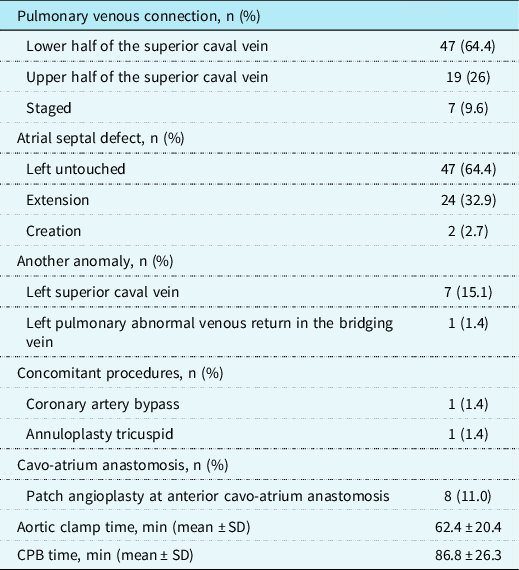
Seventy-one (97.3%) patients had an atrial septal defect (Table 2). Eight (11%) patients had superior caval vein enlargement with a bovine pericardial patch. Systematic trans-esophageal echography control revealed gradients in non-stenotic superior caval vein– right atrium connections (less than 2 mmHg) without flow acceleration. No persistent intracardiac shunt was reported. Two (2.7%) patients underwent concomitant surgery, coronary artery bypass and annuloplasty of the tricuspid.
Intraoperative data. SVC: superior caval vein, SD: standard derivation, CPB: cardiopulmonary bypass

Follow-up
Trans-thoracic echography monitoring in intensive care and before hospital discharge revealed low right ventricular filling pressures, a permeable caval vein with a laminar flow at the ultrasound without turbulence or gradient > 2 mmHg, and the absence of an atrial septal defect.
All patients were asymptomatic at discharge (NYHA class 1). The mean follow-up time was 8 years (± 4.7 years), with a range of 1.4 to 22 years. Twenty-five percent of our cohort had more than 10 years of follow-up. We have five losses to follow-up.
The two patients who underwent thoracotomy had the same result, without any differences.
Mortality—morbidity
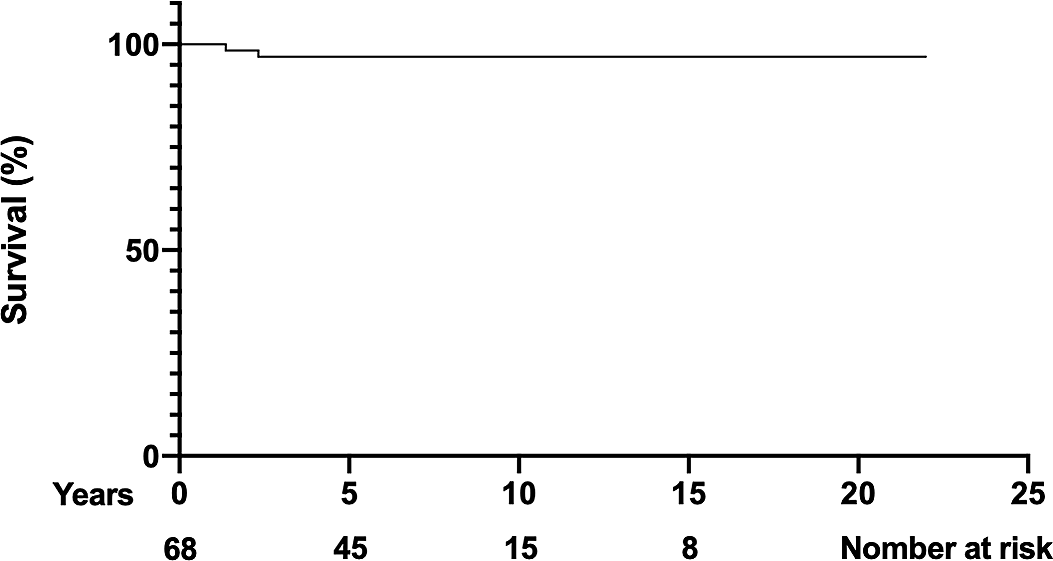
There were two deaths from extracardiac aetiology (Fig 1). Four (5.9%) patients required reoperation for pericardial drainage. No drainage was reported for post-operative bleeding. All four cases were for chylothorax.
The Kaplan–Meier survival curve.

The patient, who underwent tetralogy of Fallot surgery in childhood, had an irregular shape with stenosis of the left pulmonary artery. This was treated during the Warden procedure. For recurrence of pulmonary stenosis, a fourth procedure by angioplasty was performed 1 year after the Warden procedure.
Rhythm disturbance
Eight patients had post-operative rhythm disturbances: four atrial fibrillation, two atrial flutter, one atrial disease (alternating slow and fast atrial fibrillation), and one sinus node dysfunction. These arrhythmias were transient in 3 (4.5%) patients. Two patients had a pacemaker implanted, one for atrial fibrillation, the other for sinus node dysfunction. The one with atrial fibrillation was because he had post-reduction pause. Amiodarone was then discontinued. The patient with sinus node dysfunction regained sinus rhythm (at a follow-up 7 years later).
Venous obstruction
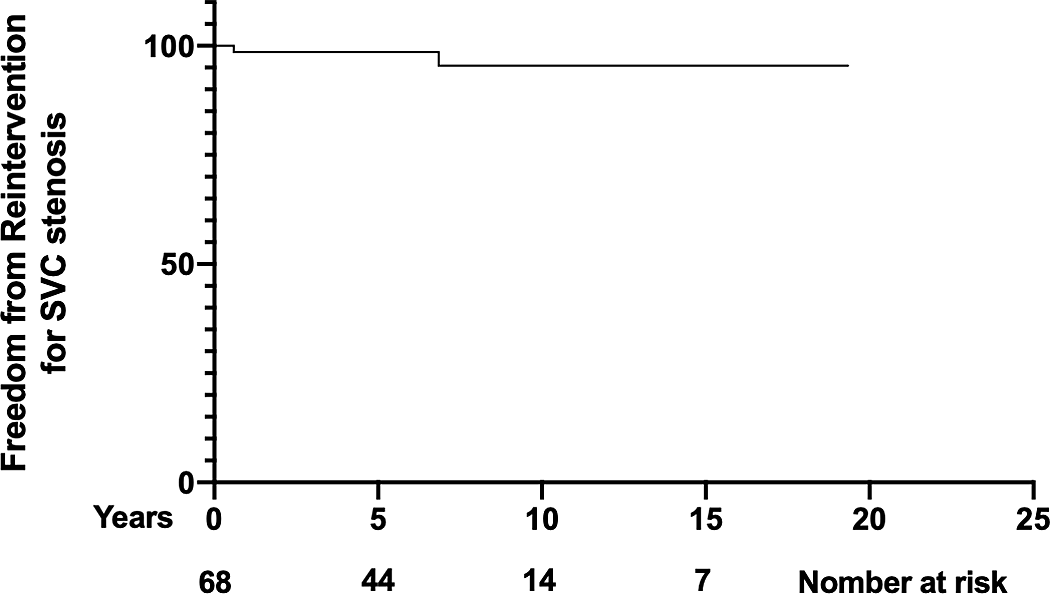
There was no obstruction of the pulmonary veins. Two (2.9%) caval vein stenoses occurred at 7 months and 7 years (Fig 2). The first had cardiac catheterisation and MRI for desaturation, 7 years after surgery. They revealed a narrow stenosis that was treated by angioplasty. In 15 years of follow-up, the patient did not demonstrate recurrence. The second patient showed positional superior caval vein syndrome 7 months after surgery. CT angiography showed focal stenosis of 65%. He was treated by angioplasty with stent implantation, without recurrence.
The Kaplan–Meier freedom from reintervention for the superior caval vein stenosis.

Discussion
A partial anomalous pulmonary venous connection to superior caval vein occurs in about 10% to 15% of all patients with an atrial septal defect. Reference Gustafson, Warden and Murray5 Surgical repair must create unobstructed pulmonary venous outflow, maintain laminar flow in the superior caval vein and respect the sinus node. Several surgical techniques have attempted to meet these requirements. The simple patch technique divides the superior caval vein into two channels, one for systemic and pulmonary venous return. Therefore, this technique has a higher risk of obstructing either pulmonary or systemic venous drainage. Reference Okonta and Sanusi6 The risk of pulmonary venous return obstruction is even higher if the connection is very distal to the superior caval vein–right atrium junction. Reference Hu, Hu and Zhang7 The double patch technique reduces the risk of superior caval vein or pulmonary venous return narrowing, Reference Iyer, Somanrema and Pathak8 but this requires an incision along the superior caval vein–right atrium junction near the sinus node, which contributes to the risk of post-operative arrhythmias. Reference Okonta and Sanusi6
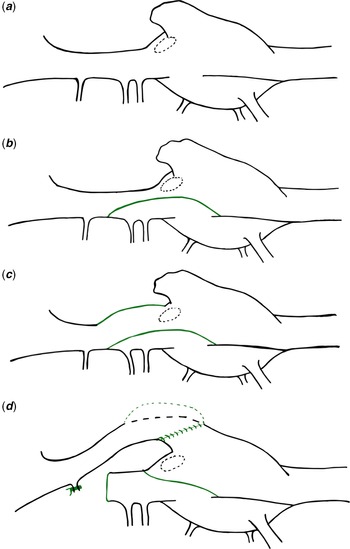
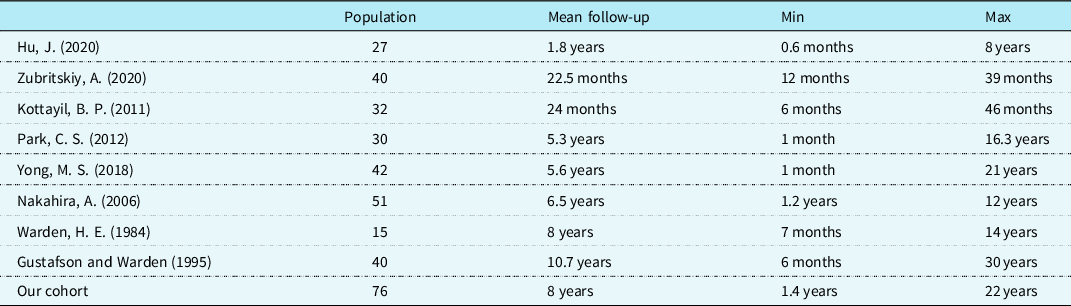
Therefore, another surgical technique is described first by Lewis in 1958 Reference Benvenuto and Lewis9 and then by Warden in 1967. Reference Warden, Gustafson, Tarnay and Neal10 This technique is based on the fact that the superior caval vein can be moved to the right atrium appendages (Fig 3d). Hu et al. Reference Hu, Hu and Zhang7 analysed 78 patients operated with one of these tree techniques. Okonta et al. Reference Okonta and Sanusi6 performed a meta-analysis with 910 patients operated on for partial anomalous pulmonary venous connection. Their results are consistent with the Warden procedure having better outcomes in terms of pulmonary venous return stenosis and sinus dysfunction. The prospective study of 80 patients by Zubritskiy et al. Reference Zubritskiy, Naberukhin and Arkhipov3 compares the double patch technique with the Warden procedure. Their results demonstrate that the Warden procedure is associated with a 6-fold reduction in sinus node dysfunction compared to the double patch technique (27.5% vs 5%, p = 0.01). In our centre, the double patch procedures were more commonly performed before 2007. But since 2007, we have been systematically using the Warden procedure to correct right partial anomalous pulmonary venous connection for the reasons already mentioned. We systematically chose this technique, independently of the anatomy, the position of the pulmonary veins and the age of the patient, in order to dispense with a suture line in the superior caval vein–right atrium junction so as not to undamaged the sinus node. However, most studies investigated the Warden procedure in the short or middle term. Only Warden’s cohorts have long-term results (Table 3). We have a mean follow-up of 8 years with a maximum of 22 years and 25% of our cohort has a follow-up of more than 10 years. Our cohort also has the distinction of being largely adolescents and adults. Fifty-seven percent of the patients are older than 10 years and 55% weigh more than 40 kg.
Partial anomalous pulmonary venous connection with right pulmonary veins connected to the superior caval vein and atrial septal defect. A: Without correction. B: Sigle patch technique. C: Double patch technique. D. Warden technique.

Duration of follow-ups found in the literature

For an adult with anomalous pulmonary venous connections, a surgical repair is recommended when patient had symptomatic, or right ventricular enlargement is present with a net left-to-right shunt (Qp/Qs ≥1.5). Reference Zubritskiy, Arkhipov and Khapaev11 In children, if possible, we wait for an age of > 1 year and a weight of > 10 kg, so that the surgery is better tolerated. For the patients in our study, partial anomalous pulmonary venous connection was described by CT or angiography. Today, MRI is more easily available and is the examination of choice to describe this malformation, even if it is sometimes difficult to perform, especially in very young children.
Warden and his team first described his anterograde lateral thoracotomy technique for 10 of the 15 patients in his cohort. Reference Warden, Gustafson, Tarnay and Neal10 We are attracted by the aesthetic advantage. On the other hand, we have a great habit of performing axillary thoracotomies in our centre. Since 1997, we have performed all surgical closure of atrial septal defect in women by axillary thoracotomy at the fourth or fifth intercostal space They report no short-term complications. However, the brachiocephalic vein and left jugular-subclavian junction cannot be fully exposed because the superior caval vein–right atrium anastomosis is more difficult to reach. This leads to a higher risk of tension in the anastomosis with the risk of stenosis. We then stopped performing this procedure by thoracotomy. The aesthetic advantage did not seem sufficient to us to justify the increased risk of stenosis superior caval vein.
None of our patients suffered from pulmonary venous stenosis. This excellent result is consistent with what is found in the literature with pulmonary vein stenosis rates between 0 and 1.8%. Reference Zubritskiy, Naberukhin and Arkhipov3,Reference Okonta and Sanusi6,Reference Hu, Hu and Zhang7 In order to maintain the largest possible pulmonary venous drainage channel and thus avoid turbulent flow, which can promote fibrin deposition and ultimately lead to stenosis, our team closes the proximal superior caval vein stump with a pericardial patch and attempts to place the suture as far away from the pulmonary venous ostia as possible. However, our population consists mainly of adolescents and adults. The vessels are therefore of larger calibre and therefore more tolerant of mobilisation and changes in tension during surgery. This partly explains our excellent results in relation to pulmonary vein stenosis.
Two patients (2.9%) had superior caval vein–right atrium anastomotic stenosis at 7 months and 7 years. These two patients required angioplasty. The first patient had previous surgery that complicated the dissection and made the possibility of mobilisation of the superior caval vein less optimal. Therefore, the superior caval vein– right atrium anastomosis was less flexible. An enlargement of the superior caval vein– right atrium connection was performed with a bovine pericardial patch. The other patient had anomalous pulmonary venous return of the entire right lung and the connections were distributed along the superior caval vein. Accordingly, the distal superior caval vein stump was quite small to be connected to the right atrium. Both stenoses could be perfectly treated by angioplasty catheter procedure without the need for reoperation. The results of these procedures with stents are very good, as these patients did not need a new dilatation even 5 and 15 years after angioplasty. This rate is also in line with what can be found in the literature, ranging from 0 to 6.2%. Reference Yong, Griffiths and Robertsond2,Reference Zubritskiy, Naberukhin and Arkhipov3,Reference Okonta and Sanusi6,Reference Hu, Hu and Zhang7 In our cohort, a much lower rate of superior caval vein stenosis was found. To reduce the rate of superior caval vein stenosis as much as possible, we focus on several key points during surgical repair: to remove the right atrium appendage trabeculae as much as possible for reducing the risk of thrombus formation Reference Kottayil, Dharan and Menon12 ; to cut the azygos, thymic and mammary veins for better mobilisation and to apply a pericardial patch if there was insufficient tension on the anastomosis. The risk of superior caval vein–right atrium anastomotic stenosis is higher in young and underweight patients. Reference Park, Kwak and Lee4
Several cases of superior caval vein stenosis requiring reintervention have been reported in the literature. Reference Hu, Hu and Zhang7,Reference Tao, Pan and Lin13 The team of Hu J. reported four reinterventions, two of which were after a Warden procedure. Reference Hu, Hu and Zhang7 Alsoufi B.'s team reported one reintervention for superior caval vein stenosis after Warden procedure. Reference Tao, Pan and Lin13 Although the incidence of superior caval vein stenosis remains significant and is a major problem compared to other techniques, our study demonstrates the very good accessibility and excellent results of percutaneous treatment of this complication. superior caval vein–right atrium anastomosis is located at a distance from vulnerable structures such as the sinus node. This anastomosis is rarely stiffened by the use of a heterologous patch. These two reasons make this anastomosis amenable to percutaneous dilatation and, if necessary, implantation of a stent.
We report a rate of 11.6% immediate post-operative arrhythmias with only 1 (1.4%) sinus dysfunction. In the long term, 7.2% of arrhythmias persisted. The literature reports a long-term arrhythmia rate of 5.5 %. Reference Hu, Hu and Zhang7 The rate of sinus dysfunction varies from 0 to 5 %. Reference Yong, Griffiths and Robertsond2,Reference Zubritskiy, Naberukhin and Arkhipov3,Reference Okonta and Sanusi6 Two patients required pacemaker implantation. The first patient had pre-operative conduction abnormalities, and a combined surgery with tricuspid valvuloplasty. The second had atrial septal defect surgery in infancy and had a pre-operative atrial fibrillation. He had post-operative atrial disease and recovered to sinus rhythm during follow-up. After observation in different cohorts, we found no pacemaker implantation after the Warden procedure. Reference Yong, Griffiths and Robertsond2,Reference Zubritskiy, Naberukhin and Arkhipov3,Reference Gustafson, Warden and Murray5–Reference Hu, Hu and Zhang7 On the other hand, this complication cannot be associated only with the Warden procedure. Indeed, these two patients had risk factors for conduction disturbance in addition to those associated with the Warden procedure (arrhythmias in the pre-operative period, tricuspid valve surgery).
The high rate of post-operative atrial fibrillation is probably also related to the age of our cohort. The work of J. P. Mathew determines the risk of occurrence of atrial fibrillation in post-operative cardiac surgery. While children and adolescents are generally at low risk for atrial fibrillation after surgery, there is a moderate risk of almost 40% in patients over 40 years of age (40% of our cohort) and a high risk of over 50% in patients over 60 years of age (4% of our cohort). Reference Mathew, Fontes and Tudor14
The main limiting factors of our study are its monocentric and retrospective nature. We also lost five participants.
Therefore, the very good results of the Warden procedure observed in the short and medium term remain valid in the long term. These excellent results are especially valid when patients undergo surgery in adolescence and adulthood. The most important explanation is the size of the vessels. The developed vessels make the surgical repair more flexible and limit the stenosis. Our adolescent and adult population shows excellent results in terms of pulmonary stenosis, the serious complication of this procedure. This is why we sometimes delay surgery as much as possible in order to reduce the risk of complications in the pulmonary veins. On the other hand, there is a known increased risk of post-operative arrhythmias such as atrial fibrillation in this population, regardless of surgical technique. This procedure appears to be reliable and reproducible in patients older than 10 years and 40 kg, and therefore can be selected as the first choice for surgical treatment of partial anomalous pulmonary venous connection.
Conclusion
This study confirms the good results of the Warden procedure for right partial anomalous pulmonary venous connection and specifically in adolescents and adults for sinus node dysfunction, pulmonary and caval stenosis. This study improves the stability of these good results over time. Therefore, we recommend this technique for the correction of right partial anomalous pulmonary venous connection in patients older than 10 years.
Acknowledgements
I would like to thank the divisions of cardiology and cardiac surgery at Nantes University Hospital. The cohesive teamwork between these two disciplines fostered a comprehensive approach in the evaluation of our practices. The expertise of our cardiology colleagues was crucial in accurately identifying salient patient pre-operative characteristics that provided context for assessing long-term results. Similarly, the collaboration between different cardiac surgeons permitted a more circumspect evaluation of the complexities and intricacies of the numerous surgical techniques available.
Financial support
This research received no specific grant from any funding agency, commercial or not-for-profit sectors.
Conflicts of interest
None.
Ethical standards
This study was submitted and received a favourable opinion from the Nantes Group for Ethics in Health Care (GNEDS) on January 30, 2020. It is a retrospective, non-interventional, data-driven study. French regulations do not require any additional authorisation. All patients received oral information. We received oral consent from all patients.