

Autism spectrum disorder is marked by difficulties with social interaction, verbal and nonverbal communication, social cognition, empathy, and sharing of affective experiences (American Psychiatric Association, 2013). There is a growing body of research demonstrating the potential effectiveness of social and emotional skills training programs to address these challenges in children and young people on the autism spectrum. Intervention typically involves a mix of didactic instruction, role-play, behaviour modelling, coaching, and socialisation assignments (e.g., Beaumont & Sofronoff, Reference Beaumont and Sofronoff2008; DeRosier, Swick, Davis, McMillen, & Matthews, Reference DeRosier, Swick, Davis, McMillen and Matthews2011; Frankel et al., Reference Frankel, Myatt, Sugar, Whitham, Gorospe and Laugeson2010; Laugeson, Frankel, Gantman, Dillon, & Mogil, Reference Laugeson, Frankel, Gantman, Dillon and Mogil2012; Sofronoff, Silva, & Beaumont, Reference Sofronoff, Silva and Beaumont2017). Positive outcomes include gains in social competence, more satisfying friendships, reduced loneliness, and improved mental health (Gates, Kang, & Lerner, Reference Gates, Kang and Lerner2017; Hotton & Coles, Reference Hotton and Coles2016; Reichow, Steiner, & Volkmar, Reference Reichow, Steiner and Volkmar2012; Rumney & MacMahon, Reference Rumney and MacMahon2017).
Successful programs incorporate a wide range of intervention elements shown to contribute to the success of social skills training, including small-group settings, different methods of delivery, focus on discrete skill areas, opportunities to practise in naturalistic contexts, and implementation of fidelity measures (Bellini & Akullian, Reference Bellini and Akullian2007; DeRosier et al., Reference DeRosier, Swick, Davis, McMillen and Matthews2011; Mandelburg et al., Reference Mandelburg, Laugeson, Cunningham, Ellingsen, Bates and Frankel2014). In addition, there is increasing recognition of the benefits that can arise when parents are actively involved and engaged in the training process. Parents may contribute to treatment efficacy by modelling positive attitudes to the intervention, providing direct instruction and supervision for given tasks, assisting in the development of appropriate peer networks, supporting and reinforcing positive changes, and encouraging the generalisation of skills outside the treatment setting and after the formal intervention has ended (Frankel et al., Reference Frankel, Myatt, Sugar, Whitham, Gorospe and Laugeson2010; Laugeson et al., Reference Laugeson, Frankel, Gantman, Dillon and Mogil2012; Laugeson, Frankel, Mogil, & Dillon, Reference Laugeson, Frankel, Mogil and Dillon2009; Williams White, Keonig, & Scahill, Reference Williams White, Keonig and Scahill2007). Parents may also help sustain the momentum of social skills programs — particularly those carried out in school or community settings — by reinforcing and encouraging each other’s involvement (Hock, Yingling, & Kinsman, Reference Hock, Yingling and Kinsman2015). From a pragmatic point of view, the utilisation of parents in program delivery can reduce demands on psychologists, teachers, and other professionals, and shorten or eliminate waiting times for families wishing to access interventions (Radley, Blake Ford, Battaglia, & McHugh, Reference Radley, Blake Ford, Battaglia and McHugh2014).
Parent involvement in child-directed social skills training can take a variety of forms. At the most basic level, parents may be provided with information about the program and their child’s progress, and/or contribute to data gathering and program evaluation, but have little or no direct input to program delivery (e.g., Herbrecht et al., Reference Herbrecht, Poustka, Birnkammer, Duketis, Schlitt, Schmötzer and Bölte2009; Tse, Strulovitch, Tagalakis, Meng, & Fombonne, Reference Tse, Strulovitch, Tagalakis, Meng and Fombonne2007). A more common approach is for parents to receive specific training to support their child in practising and generalising their newly learned skills outside the formal treatment sessions. Such is the case for the PEERS intervention (Program for the Education and Enrichment of Relational Skills; Laugeson et al., Reference Laugeson, Frankel, Gantman, Dillon and Mogil2012), as well as, for example, the social skills programs devised by Solomon, Ono, Timmer, and Goodlin-Jones (Reference Solomon, Ono, Timmer and Goodlin-Jones2008), Lopata et al. (Reference Lopata, Thomeer, Volker, Toomey, Nida, Lee and Rodgers2010), and Dekker, Nauta, Mulder, Timmerman, and de Bildt (Reference Dekker, Nauta, Mulder, Timmerman and de Bildt2014).
In other cases, parents may be enlisted to social skills programs as ‘co-facilitators’, whereby they are expected to assist their child in the completion of assigned tasks and to oversee certain nondidactic elements of their training, such as play dates with other children. Programs that follow this model include DeRosier et al.’s (Reference DeRosier, Swick, Davis, McMillen and Matthews2011) Social Skills Group Intervention–High Functioning Autism (S.S.GRIN-HFA), Radley et al.’s (Reference Radley, Blake Ford, Battaglia and McHugh2014) Superheroes Social Skills, and the interventions developed by Frankel et al. (Reference Frankel, Myatt, Sugar, Whitham, Gorospe and Laugeson2010) and Deckers, Muris, Roelofs, and Arntz (Reference Deckers, Muris, Roelofs and Arntz2016). This is also the approach adopted in the Secret Agent Society (SAS) social-emotional skills program. All of the programs listed here have been trialled with groups from three individuals to over 100 in randomised control trials, but the majority of all participants were boys. In most cases, the protocol for parental involvement is detailed but no data for actual participation are presented, and the results of parental involvement are described in very general terms.
In addition to providing valuable guidance and support to their children as they undergo social skills training, parents themselves may benefit from involvement in these interventions. Although research in this area is limited, there are suggestions that parents who play an active role in child-directed social skills programs experience gains in self-efficacy (DeRosier et al., Reference DeRosier, Swick, Davis, McMillen and Matthews2011; Karst et al., Reference Karst, Van Hecke, Carson, Stevens, Schohl and Dolan2015; Solomon, Goodlin-Jones, & Anders, Reference Solomon, Goodlin-Jones and Anders2004), emotional wellbeing (Radley et al., Reference Radley, Blake Ford, Battaglia and McHugh2014; Solomon et al., Reference Solomon, Goodlin-Jones and Anders2004), calmness in the home (Karst et al., Reference Karst, Van Hecke, Carson, Stevens, Schohl and Dolan2015), and social connectedness (Jamison & Schuttler, Reference Jamison and Schuttler2017).
Despite these promising findings, overall evidence for the positive impact of parent engagement in relation to child social skills training remains limited. Furthermore, there is a dearth of research on the potential connections between parent engagement and the quality of children’s participation and performance in social skills programs — although, as noted previously, there are many reasons to expect a positive relationship between the two. In addition, little is known about the factors that may enhance or hinder parent engagement in programs of this kind, which overall have been shown to suffer from low uptake, high dropout, and questionable levels of effective implementation (Piotrowska et al., Reference Piotrowska, Tully, Lenroot, Kimonis, Hawes, Moul and Dadds2017).
‘Engagement’, as it relates to parent involvement in child therapeutic interventions, is generally considered to be a multidimensional and dynamic construct covering attitudinal, relational, and behavioural domains (Becker et al., Reference Becker, Lee, Daleiden, Lindsey, Brandt and Chorpita2015; Hock et al., Reference Hock, Yingling and Kinsman2015; King, Currie, & Petersen, Reference King, Currie and Petersen2014). It is influenced by a wide range of contextual factors, including family and child characteristics, family processes, personal and cultural beliefs and practices, and program-related factors (Kimonis, Bagner, Linares, Blake, & Rodriguez, Reference Kimonis, Bagner, Linares, Blake and Rodriguez2014; Nock & Ferriter, Reference Nock and Ferriter2005; Piotrowska et al., Reference Piotrowska, Tully, Lenroot, Kimonis, Hawes, Moul and Dadds2017; Snell-Johns, Mendez, & Smith, Reference Snell-Johns, Mendez and Smith2004).
Following a large-scale review of relevant studies, Piotrowska et al. (Reference Piotrowska, Tully, Lenroot, Kimonis, Hawes, Moul and Dadds2017) proposed four sequential elements to behaviour-based parent engagement in therapeutic programs, conceptualised as the CAPE model: Connect, Attend, Participate, Enact. ‘Connect’ refers to the reach of a program, contact with parents, and their decision to enrol. ‘Attend’ refers to parents’ consistent presence (in person or online) at information and training sessions. ‘Participate’ refers to actions that go beyond formal attendance, such as home assignment completion or active group discussion. Finally, ‘Enact’ refers to sustainable changes to everyday practice based on what has been learnt in the program. The authors of the CAPE model assert that, despite the importance of initially connecting with parents and establishing their attendance at program sessions, it is active participation that is most critical in effecting positive change (i.e., enactment).
The focus of this literature review was to identify a range of different social and emotional skills programs that claimed to include parental involvement. We applied the CAPE model to those programs outlined in the literature review (Deckers et al., Reference Deckers, Muris, Roelofs and Arntz2016; Dekker et al., Reference Dekker, Nauta, Mulder, Timmerman and de Bildt2014; DeRosier et al., Reference DeRosier, Swick, Davis, McMillen and Matthews2011; Frankel et al., Reference Frankel, Myatt, Sugar, Whitham, Gorospe and Laugeson2010; Laugeson et al., Reference Laugeson, Frankel, Gantman, Dillon and Mogil2012; Lopata et al., Reference Lopata, Thomeer, Volker, Toomey, Nida, Lee and Rodgers2010; Radley et al., Reference Radley, Blake Ford, Battaglia and McHugh2014; Solomon et al., Reference Solomon, Ono, Timmer and Goodlin-Jones2008). It is clear that the evidence base is very different, and therefore the level at which we can assess parental engagement is limited. The age range of students involved in the studies is from 5 to 15 years old, with most being clustered around the 8- to 12-year age range, which could be a factor in the level of parental involvement. In addition, as mentioned previously, the numbers of participants range from three individuals to 100 students in a randomised control trial. Of the programs reviewed, all but one (Radley et al., Reference Radley, Blake Ford, Battaglia and McHugh2014) require parents to connect with the program and to attend a range of training sessions. There is no evidence of how many parents attended the required number of sessions for each program. Again, all but one program had some level of parental participation as an element of the program, but data about that participation were not reported as part of the research papers. Only the PEERS program reported on parental enactment that was found to promote generalisation at follow-up (Laugeson et al., Reference Laugeson, Frankel, Gantman, Dillon and Mogil2012). Other research made tentative claims for the benefits of parental engagement and enactment to the generalisation of skills without any specific data (Deckers et al., Reference Deckers, Muris, Roelofs and Arntz2016; DeRosier et al., Reference DeRosier, Swick, Davis, McMillen and Matthews2011; Lopata et al., Reference Lopata, Thomeer, Volker, Toomey, Nida, Lee and Rodgers2010).
It is these gaps in the literature that the present study seeks to address. Drawing on data from the first school-based trial of the SAS social-emotional skills program, our study reviewed outcomes for four designated indicators of parent engagement. We then investigated associations between these indicators and key program outcome measures relating to children’s wellbeing and social skills gains. Second, we reported on qualitative data drawn from the SAS end-of-program survey in which parents, teachers, and program facilitators commented on (among other things) their perceptions of enablers and barriers with respect to parental involvement and engagement in program delivery.
Background to the Present Study
The SAS program (Beaumont, Reference Beaumont2010) is a multimedia cognitive, behavioural, emotional, and social skills intervention designed to suit the specific needs of children on the autism spectrum aged 8 to 12 years who have intellectual abilities in the low average range or above. Delivered by trained facilitators in a group setting, the SAS program aims to teach children to recognise emotions in themselves and others, express feelings in appropriate ways, talk and play with others, and manage challenging scenarios such as asking for help, making mistakes, and being teased or bullied. Training methods include discussion, role-play, and practice using a variety of themed materials. Children are also encouraged to complete weekly ‘home missions’ that involve playing a specially designed computer game and practising learnt skills in everyday contexts.
The main expectations on parents within the school delivery variant of the SAS small-group program are to (a) attend four parent information sessions, (b) oversee and assist their children to complete the weekly ‘home missions’ (including providing rewards for skill use), (c) contribute to filling out a home–school diary to record and reward their child’s progress, and (d) participate in booster phone calls at 3 and 6 months postintervention. Parents are also provided with recommendations on how to continue using and reviewing learned strategies once the formal program delivery has come to a close.
Initial trials of the SAS program in both clinical (Beaumont & Sofronoff, Reference Beaumont and Sofronoff2008)Footnote 1 and community settings (Sofronoff et al., Reference Sofronoff, Silva and Beaumont2017) indicated improvements in children’s social skills, as reported by parents and/or teachers, together with greater gains in knowledge of effective anxiety and anger management strategies. Treatment gains were maintained up to 5 months postintervention. Parent self-efficacy, child behaviour, and child anxiety levels also improved significantly over the course of the program.
The present study is based on the evaluation of the SAS program in a school setting (Einfeld et al., Reference Einfeld, Beaumont, Clark, Clarke, Costley, Gray and Howlin2018; see Method section for details). The trial again yielded positive results on parent-rated measures of social skills, emotion regulation, and social problem-solving, which were maintained at 12-month follow-up. Teachers’ ratings did not show a significant rise at postintervention but did at 12-month follow-up. The aim of the present study was to assess whether the outcomes for participating children were related to their parents’ level of engagement with the SAS program over the course of its delivery.
Based on the data available from Einfeld et al.’s (Reference Einfeld, Beaumont, Clark, Clarke, Costley, Gray and Howlin2018) evaluation of the SAS program, the present study focused primarily on the behavioural indicators of engagement identified in the CAPE model. These include two indicators of parent engagement that can be aligned with ‘Attend’ (proportion of parent information sessions attended; proportion of booster phone calls completed by parent) and two that can be aligned with ‘Participate’ (proportion of home missions completed by child; facilitator ratings of parent support for the program). These indicators, and the child outcome measures with which they are correlated, are detailed further in the following section.
As a secondary focus, this study examined qualitative feedback provided by parents, teachers, and facilitators at the close of the SAS program, providing a preliminary account of factors that may influence parent engagement in the intervention.
Method
The following three subsections (Setting, Participants, and Program Delivery and Data Collection) summarise the delivery of the SAS program as described and evaluated by Einfeld et al. (Reference Einfeld, Beaumont, Clark, Clarke, Costley, Gray and Howlin2018). The final subsection (Measures) describes the specific elements of the data from the Einfeld et al. (Reference Einfeld, Beaumont, Clark, Clarke, Costley, Gray and Howlin2018) study that were employed in the present analysis.
Setting
The SAS program was delivered in 15 autism-specific ‘satellite classes’ operated by Autism Spectrum Australia (Aspect) within the state of New South Wales (NSW), Australia. Aspect satellite classes are hosted within mainstream government and nongovernment primary and secondary schools, and aim to prepare children with autism who are classified as ‘high functioning’ for transition to mainstream education. Students in Aspect classes receive a specialist curriculum based upon the core competencies relevant to autism, including social, communication, sensory, learning, and behavioural needs, which are integrated into the Australian national curriculum.
Participants
A total of 84 Aspect satellite class students (75 male, nine female) and their families were enrolled in the program. The mean age of participating students was 10.7 years (range: 8.2–14.6) and mean full-scale IQ was 91.3 (range: 48–136). The average socioeconomic status rating for participating families was 6.5, close to the average of 6.0 for the state of NSW and Australia as a whole.Footnote 2 Fourteen families withdrew from the program before or during the intervention phase. Seventy students (83% of those initially enrolled) completed the program, but two left their Aspect school prior to the collection of follow-up data, leaving 68 students who completed the intervention and all data collection phases. Their data form the basis of this study.
Informed consent was received from all participating parents and teachers and assent was gained from students. Where parents agreed to take part in the research but teachers did not, then data were collected from parents at home. In addition, head teachers of schools hosting satellite classes were asked for their consent to conduct research on their site.
Program Delivery and Data Collection
The SAS program was delivered in two phases, with 26 students receiving the program in Phase 1 and the remaining 58 students in Phase 2. Assessments were conducted on all students at the point of recruitment to the study, after completion of the program, and 12 months postintervention. Satellite classes were randomly allocated to the intervention or waitlist control group.
Ethical Approval
Ethical approval was gained through the University of Sydney Human Research Ethics Committee, Autism Spectrum Australia Research Approvals Committee, NSW Department of Education (SERAP), and the appropriate Catholic diocese depending on the location of Aspect satellite classes.
Program Content
The SAS program consisted of the following core elements:
Child group sessions (9 × 90 minutes). These sessions were delivered to groups of three to six students by one or two facilitators over a 10- to 13-week period. Each session focuses on developing a particular emotional or social skill through discussion, art, drama, and games. The slight variation in weekly delivery was due to unforeseen incidents in some classes/schools or prearranged school events in some settings. All students took part in the same nine sessions during this period.
Parent information sessions (4 × 2 hours at preintervention, weeks 3–4, weeks 6–7, and postintervention). During these sessions, parents are briefed by the program facilitators on what the children are learning in the program and the content of upcoming home missions. Parents are encouraged to reflect on successes and challenges with regard to their child’s progress and their role in supporting them, with facilitators and other parents helping to troubleshoot any issues that are raised. In most cases, one parent participated in the training (mostly mothers); for some children, both parents were able to attend. A minimum of 50% of parent sessions were randomly videoed and reviewed for fidelity to the intervention (see Einfeld et al., Reference Einfeld, Beaumont, Clark, Clarke, Costley, Gray and Howlin2018, for the full details of interrater reliability).
Home missions (25–30 across the program). For each home mission, the child is required to complete a new stage of the SAS computer game and/or to answer questions regarding their application of a target social-emotional skill. Parents are expected to sit with their child while they play the game, offering praise for their efforts and/or a reward afterwards. Parents are also encouraged to prompt their child to use, on an ongoing basis and with minimal assistance, the target skills associated with a given home mission.
Booster phone calls (3 and 6 months postintervention). The follow-up (booster) phone calls are designed to ‘check in’ with parents regarding their child’s social and emotional progress and challenges, and to use minimal prompts to help parents identify how they can support their child to use their SAS skills to address these issues after weekly program sessions end. The calls are also a reminder for parents to try to schedule regular times (e.g., once every 1 to 2 weeks) to review SAS skills with their child to promote ongoing social-emotional skill development.
Measures
For a full account of the descriptive and outcome measures employed in the original SAS program evaluation, see Einfeld et al. (Reference Einfeld, Beaumont, Clark, Clarke, Costley, Gray and Howlin2018). The following elements of the SAS program data were utilised in the present study.
Parent engagement indicators
1. Proportion of parent information sessions attended. Attendance at the four parent information sessions, although expected and encouraged, was not obligatory. Parents’ willingness to make the time for these sessions can therefore be regarded as an indicator of their engagement with the SAS program.
2. Proportion of booster phone calls completed. Similarly, parents had a choice of whether or not to make themselves available for the 3- and 6-month follow-up phone calls, and this measure therefore provides an indicator of parents’ ongoing engagement with the SAS program after its formal completion.
3. Proportion of home missions completed by child. Because home missions require the active input and support of parents in order to be completed successfully, this measure can be considered a reflection of parent engagement in this core element of the SAS program.
4. Facilitator ratings of parent support. This data item, derived from the postintervention Child Participation Questionnaire, indicates the degree to which program facilitators perceived individual parents (or couples) to have supported their child’s participation in the SAS program, and thus represents a third-party measure of parent engagement.
In addition, this study draws on qualitative data derived from parent, teacher, and facilitator surveys distributed at the completion of formal program delivery. The responses to these surveys were subject to thematic coding under various key headings such as strengths of the SAS program, impact on students, barriers to implementation, and parent involvement and support.
Program outcome measures
1. Child Participation Questionnaire (CPQ; Social Skills Training Institute, n.d.). Completed by program facilitators at the end of the intervention. The questionnaire items used in this analysis were (1) ‘Overall, how well did the child participate in the weekly Secret Agent Society (SAS) Child Group Meetings?’ and (2) ‘Overall, how well did the child complete the weekly home missions for the program?’, with each item scored on a scale from 0 (very poorly) to 5 (very well).
2. James and the Maths Test. A vignette-based task examining children’s knowledge of appropriate anxiety management strategies. The child is asked to suggest strategies that a fictional character (James) can use to cope with his anxiety before a school test. One point is awarded for each suggested strategy that is appropriate in both content and context (e.g., ‘speaking to a teacher’ scores one point, but ‘speaking to parents’ does not).
3. Dylan is Being Teased. A vignette-based task examining children’s knowledge of appropriate anger management strategies. Similar to James and the Maths Test, the child is asked to suggest strategies for a story character (Dylan) who feels angry about being teased at school, with one point awarded for each appropriate strategy named. Both the James and Dylan tests were scored by an experienced evaluator blind to the condition/time point (100% interrater reliability has been achieved on these tests by this researcher).
4. Emotion Regulation and Social Skills Questionnaire (ERSSQ; Beaumont & Sofronoff, Reference Beaumont and Sofronoff2008). A quantitative measure designed to capture the subtle social-emotional challenges of high-functioning children on the autism spectrum. Presented in two formats: one for parents (ERSSQ-P, 27 items) and one for teachers (ERSSQ-T, 25 items). Scores range from 0 to 100, with higher scores reflecting greater levels of social skill and emotion regulation ability.
5. Social Skills Questionnaire (SSQ; Spence, Reference Spence1995). A 30-item quantitative measure examining children’s competence in domains such as emotion regulation, nonverbal communication, interactive play, talking to others, and assertiveness. Likewise presented in two formats: one for parents (SSQ-P) and one for teachers (SSQ-T). Scores range from 0 (poor) to 60 (good). Validation of the ERSSQ-T/P and the SSQ-T/P, including internal consistency, has been reported separately (Butterworth et al., Reference Butterworth, Redoblado Hodge, Sofronoff, Beaumont, Gray, Roberts and Einfeld2014, p. 1540).
Data Analysis
Quantitative
Associations between the parent engagement indicators and child outcome measures were analysed using Pearson correlations. As a number of comparisons were conducted, we report only correlations < .01 as significant. Correlations were also interpreted according to Cohen’s criteria (Reference Cohen1992) as ≥ .30 = medium; ≥ .50 = large. In order to reduce the influence of missing items on overall scores on the ERSSQ-T/P and the SSQ-P/T forms, mean scores were calculated rather than using total scores (Butterworth et al., Reference Butterworth, Redoblado Hodge, Sofronoff, Beaumont, Gray, Roberts and Einfeld2014, p. 1539).
Qualitative
A systematic, thematic line-by-line coding of the data was conducted using NVivo Version 11 (QSR International, 2015). Initial coding was based on the following questions, which formed the framework for analysis:
Parent data analysis:
1. Did parents like the program?
2. What was the impact of the program on their child(ren)?
3. Is the program manageable?
4. What did they like about the program?
5. What didn’t they like about the program?
6. What improvements would they suggest?
Teacher and facilitator data analysis:
1. Did the teachers like the program?
2. What was the impact of the program on their students?
3. What was the impact of the program on their teaching?
4. What did they use/like about the program?
5. What didn’t they use/like about the program?
6. What improvements would they suggest?
Data analysis followed six discrete steps that were based on the widely used qualitative analysis method described by Braun and Clarke (Reference Braun and Clarke2006). Analysis began with an individual analysis of each of the written responses in the dataset to develop a set of codes. Coding was guided by the overarching research questions. All codes were then analysed and brought together into sets of themes. Where codes were used only once, they were discarded and similar codes were brought together under an overarching code. Codes were collated by participant in order to avoid double counting of coding (e.g., one participant makes the same unique statement four times, which may skew data without grouping). To ensure consistency of coding, a subsection of the data was also re-coded. Themes were then analysed to bring out subthemes present in the overarching thematic analysis. Themes were finally brought together in a narrative, and examples of cases and quotations were used to illustrate themes in context.
Results
Parent Engagement: Descriptive Data
Table 1 provides summary descriptive statistics relating to the four parent engagement indicators derived from this study.
Parent Engagement Indicators

a CPQ = Child Participation Questionnaire, completed by SAS program facilitator postintervention.
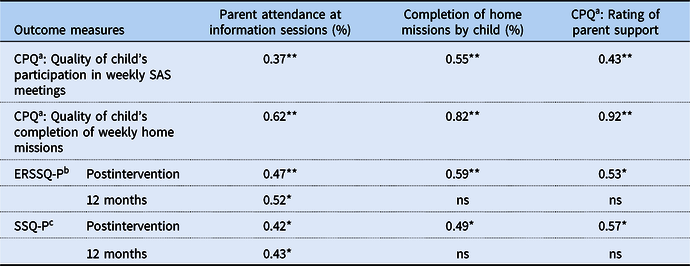
Table 2 provides Pearson correlations between parent engagement indicators and program outcome measures.
Pearson Correlations Between Parent Engagement Indicators and Program Outcome Measures

aCPQ = Child Participation Questionnaire, completed by SAS program facilitator postintervention. bERSSQ = Emotion Regulation and Social Skills Questionnaire (Parent or Teacher). cSSQ = Social Skills Questionnaire (Parent or Teacher).
*p < .05. **p < .01.
There were no significant correlations between ‘completion of booster phone calls’ and any of the program outcome measures. The remaining three engagement indicators (attendance at information sessions; facilitator ratings of parent support and of child’s completion of home missions) all showed significant positive correlations with a number of program outcome measures (see Table 2). Thus there was a significant positive correlation between the proportion of information sessions attended by parents over the course of the program, and the ratings assigned to their children by program facilitators with regard to both the quality of their participation in weekly SAS meetings and the quality of their completion of weekly home missions. In addition, parent attendance at information sessions was positively correlated with children’s scores on the ERSSQ-P postintervention. Correlations between parental attendance and other child measures (ERSSQ at 12-month follow-up; SSQ-P at postintervention and 12-month follow-up) were moderate to large but were below the < .01 level of significance.
There was also a significant positive correlation between the proportion of home missions completed by children over the course of the program and the ratings of program facilitators with regard to both the quality of children’s participation in weekly SAS meetings and the quality of their completion of home missions.
Finally, there was a significant positive correlation between facilitator ratings of parent support and facilitator ratings of the quality of children’s participation in weekly SAS meetings, and the quality of their completion of weekly home missions. There were moderate to large correlations between parent support ratings and children’s scores on both the ERSSQ-P and the SSQ-P at postintervention, but these fell below the p < .01 level of significance.
Correlations between children’s performance on the vignette-type tasks and ratings of parental engagement were largely nonsignificant, although children’s completion rate for home missions was positively correlated with their scores on Dylan is Being Teased.
Qualitative Responses Relating to Parent Engagement
Parents’ views
Parents provided many positive comments relating to their own participation in, and application of, the social and emotional skills training their children had received over the course of the SAS program. These comments often revealed that the program enabled the parents to better work with their children around the development of skills for social situations:
There are a lot of strategies and techniques to use to boost my and my daughter’s ability to deal with social and difficult situations.
[I] feel confident that we both have the ‘correct’ skills to help with future situations.
Understanding that stress affects how she handles situations. This has enabled me to help her handle the stressful situations.
I try to implement the various codes when different situations arise — trying to relax, trying to be friendly. I believe I am making a more conscious effort in that regard.
I am more intentional in helping him to identify emotions and challenging situations by name and then asking him what he can do and that there is a solution.
The most common barrier identified by parents with regard to their engagement in the program was the time commitment required. Over one third (25/68) of parents raised this as an issue, often commenting that they struggled to devote an appropriate amount of time to the program alongside their work or family commitments and the child’s additional extracurricular activities. Similarly, the facilitators, when commenting on parents’ capacity to engage with the program, noted limiting factors relating to the family environment in almost one third (21/68) of cases. These ranged from the presence of a new baby, to shared care with another nonresident parent, to difficulties in the parent–child relationship.
In a minority of cases (13/68), parents attributed their less than optimal experience of the SAS program to their child’s unwillingness to cooperate and engage with the prescribed activities. They commented that this lack of motivation on the part of their child had made it difficult to complete the program.
Just under 10% (6/68) of responding parents expressed the view that the program was confusing for them or their children. Where these comments were elaborated, they tended to refer to the language used in the program materials; the complex emotions, such as anxiety and jealousy, depicted in the program; and the differences between the skills and rewards system built into the program and those already in place in the family.
Other parents suggested that more information or a wider variety of resources could help them further engage with their children in the program. There was little uniformity to the types of extra resources suggested, although a few responses converged around the idea of having more contact time between the parent and the school during the course of the program, perhaps allowing parents to sit in on some of the class sessions, or to have more one-to-one time with the child’s teacher.
Facilitator and teacher views
Both facilitators and teachers identified parents as playing an integral role in the successful completion of home missions, without which the child would miss the opportunity to practise skills learnt during class and be ill-prepared for the next teaching session. Where families had experienced problems completing home missions, this was often perceived to have limited the effective operation of the program and possibly contributed to lack of interest or confusion on the part of the child:
[The student] showed great improvement when SAS was completed at home. This stopped when she changed carers and no further work was done at home.
Student needed input from home. Parents were not willing to sit and provide direction and explanation for weekly home missions.
Parent support in following through with content, and assisting with home missions [was a limiting factor]. I felt that, due to my workload being on class, I couldn’t put as much time and effort into assisting more follow-through on this.
Managing home/school diaries, managing poor parental support and noncompletion of home missions [were limiting factors].
Total lack of commitment from family [was a limiting factor].
Such was the importance attached to parent engagement that two facilitators suggested that students should be excluded from the program if their parents did not provide adequate support.
Discussion
Like many social-emotional training interventions for children on the autism spectrum, the SAS program is designed to be delivered with parents supporting their children to practise and apply newly taught skills. Although previous reports have confirmed the overall efficacy of the SAS program for promoting social and emotional skill development for participating children (Beaumont & Sofronoff, Reference Beaumont and Sofronoff2008; Einfeld et al., Reference Einfeld, Beaumont, Clark, Clarke, Costley, Gray and Howlin2018; Sofronoff et al., Reference Sofronoff, Silva and Beaumont2017), this study is the first to correlate multiple measures of parental engagement (proportion of parent information sessions attended; proportion of booster phone calls completed; proportion of home missions completed by child; facilitator ratings of parent support) with the quality of children’s participation, performance, and skill gains over the course of the intervention. Although other studies have included assessments of parental engagement, the primary measures were of pupil outcomes, and these were not directly linked to parental input.
The key finding of this study is that parent engagement, in its various different facets, was positively associated with the quality of children’s participation in the SAS program as assessed by program facilitators. With reference to the CAPE (Connect, Attend, Participate, Enact) model of parent engagement discussed in the Introduction, both ‘attendance’ and ‘participation’ factors were found to be meaningful in this regard.
First, children whose parents attended a higher proportion of information sessions over the course of the SAS program (Attend) tended to receive higher ratings by the program facilitators for both their contributions during class sessions and for the quality of their completed home missions. Although our data cannot be used to infer causal associations, this finding suggests that attendance at information sessions may have helped to strengthen parents’ role as ‘co-facilitators’ of the program, thus increasing the support they were able to provide to their children. This was borne out by the comments of a number of parents who perceived themselves as working collaboratively with their children to practise and apply the new skills they were learning. The information sessions may also have served to raise parents’ enthusiasm for the program and in turn to model a positive attitude to their children as they took part in the intervention.
Second, children who completed a higher proportion of home missions tended to be assigned higher ratings by the program facilitators for both their contributions during class sessions and for the quality of their completed home missions. This again suggests the potential importance of parents in facilitating, supporting, and rewarding home mission completion (Participate).
Third, there was a significant positive association between facilitators’ ratings of parental support for the SAS program (Participate) and the ratings assigned to the children of these parents with regard to both the quality of their participation in weekly SAS meetings and the quality of their completion of weekly home missions. This finding was corroborated by the qualitative feedback provided by both teachers and facilitators at the conclusion of the program: both groups clearly recognised the importance of parent engagement for the optimal running of the program and expressed frustration when it was absent.
Further, as noted in Table 2, a number of medium to strong correlations were found between these parent engagement indicators and the designated program outcome measures of children’s social and emotional skill gains (specifically the ERSSQ-P and the SSQ-P). However, parent engagement was less consistently associated with performance measures, such as Dylan is Being Teased and James and the Maths Test. In addition, it is notable that only the parent-rated, not the teacher-rated, ERSSQ and SSQ showed any significant correlations with the parent engagement measures. This raises the possibility of a reporting bias, as parents who felt more enthusiastic about the program may have been led to rate their children’s skill gains more highly (and potentially less reliably) than their teacher’s.
The only parent engagement indicator not to show any statistically significant correlations with program outcome measures was the proportion of booster phone calls completed by parents (Attend). In particular, it is notable that children’s 12-month follow-up outcomes were not related to whether or not their parents had participated in these calls in the preceding months. This suggests that although booster phone calls may be helpful as a way of tracking and encouraging the family’s progress with the SAS program, they are not associated with children’s success in applying their skills after the program ends. However, it must also be borne in mind that with only three possible ‘scores’ for this indicator of parent engagement — 0, 1, or 2 phone calls completed — it is not a highly sensitive measure, and thus any conclusions should be regarded with caution.
Implications for Practice
The results of this study illustrate the importance of parental engagement in social skills training programs if learning is to be maintained and generalised. Previous studies have also indicated the importance of involving parents but none have systematically correlated measures of parental engagement with outcomes on child measures. In future school-based social skills programs, it will be important to connect with parents before the program starts so that they feel they are part of the program and can work in partnership with their child and the program facilitators. The expectations on parents need to be manageable in relation to content and time required to complete tasks at home or in the community if their level of cooperation and engagement is to be sustained over the length of the program and after formal sessions have ended.
Limitations and Areas for Further Study
There were some limitations to the parent data from this study primarily due to the focus on the program efficacy in a school setting. First, we lack information on parental characteristics and are thus unable to explore the impact of paternal versus maternal input or the effect of having one or more parents involved. Also, as is apparent from Table 2, there was wide variability in parental engagement measures, and it was not possible, within the design of the study, to examine home factors that may have contributed to this variability. Finally, we were not able to record how individual parents interacted with their children at home, and lack of detail about how home missions were completed is a further limitation in the study.
This preliminary study leaves open many possible avenues for further research, and serves as an endorsement to identify and include measures of parent engagement in future evaluations of social skills training programs. Based on the available data from the primary (school effectiveness) study, we were limited to examining associations between behavioural indicators of engagement. Future studies would benefit from investigation of causal pathways between parental behaviour and child outcomes, as well as greater in-depth scrutiny of the attitudinal and circumstantial factors that may enhance or impede engagement in any given therapy. In addition, and with reference to the CAPE model previously discussed, a more comprehensive study of parent engagement would both begin at an earlier stage of the process — investigating those factors that encourage parents to ‘connect’ with the program before it begins — and extend beyond parents’ formal participation in the program components by including formal follow-up assessments to monitor the extent to which parents continue to ‘enact’ their learning from the program in day-to-day life.
Conclusion
Through this study, we have begun to address a gap in the research literature concerning the role of parents in social skills training for young people with autism. We have done so by operationalising the concept of parent engagement in the context of a specific social skills intervention, the SAS, and by investigating associations between these factors and a range of child outcome measures. On the basis of our current data, we hypothesise that when parents are more strongly committed to attending and participating in their children’s intervention, this has a positive impact on their children’s competence: they perform their homework tasks more satisfactorily and make higher quality contributions during group teaching sessions. Nevertheless, the data also suggest that children’s gains in social and emotional skills (especially as assessed by teachers rather than parents) may be less dependent on parents’ level of engagement. In some respects, this finding may be reassuring, especially in view of the many potential barriers that can limit the capacity of some parents to engage fully in the program. Thus, despite the evident benefits of parent engagement, the facilitator-led aspects of the program may be strong enough in their own right to provide participants, whose parents are less involved, with a good chance of successful outcomes. This finding replicates the outcome in a previous small-group study of the SAS that indicated student gains in social skills were not dependent on parent involvement (Sofronoff et al., Reference Sofronoff, Silva and Beaumont2017).