Childhood overweight and obesity remain major global health problems with long-lasting effects, often due to unhealthy habits formed at a young age and influenced by external factors(Reference Cai, Zhu and Wu1,Reference Tanveer, Hohmann and Roy2) . Obesity in childhood and adolescence has increased significantly worldwide since the 1970s(Reference Mushtaq, Gull and Abdullah3), in both high- and low-income countries(Reference Di Cesare, Sorić and Bovet4,Reference Williams, Ge and Petroski5) . According to the WHO, about 18 % of people between the ages of 5 and 19 years were considered overweight or obese in 2016, with significant regional differences(Reference Hashmi, Soomro and Saleem6,Reference Anam, Akter and Hossain7) . The physical, emotional and psychological development of children and adolescents with obesity is negatively affected by these conditions(Reference Anam, Akter and Hossain7). As it is difficult to change established behavioural habits in adulthood, especially after the age of 35 years, it is important to understand how these behaviours lead to obesity(Reference Han, Yee and Pyo8–Reference Paruthi, Brooks and D’Ambrosio11).
Although insufficient physical activity, poor dietary habits and lack of exercise are established contributors to childhood obesity, evidence on how these factors are perceived by school-aged children and adolescents across socio-economic strata remains limited(Reference Hashmi, Soomro and Saleem6,Reference Wheaton, Jones and Cooper12) . Adequate sleep is critical for physical development, cognitive function and emotional regulation(Reference Anam, Akter and Hossain7,Reference Song, Zhang and Hu13) , with insufficient sleep linked to poorer academic performance and increased psychological problems(Reference Wheaton, Jones and Cooper12–Reference Uddin, Gulzar and Shah15). Poor sleep quality during childhood and adolescence not only elevates obesity risk but also contributes to long-term cardiometabolic complications(Reference Cho, Cho and Hur16–Reference de Lima, Bernardino and Leal19). While lack of exercise and an unhealthy diet are well-known risk factors, sleep is increasingly recognised as a modifiable determinant of obesity(Reference Tanzil and Jamali20–Reference Pandey and Sapkota24). Short sleep duration is strongly associated with obesity, particularly among preschool children and adolescents(25–Reference Li, Lin and Guo28), and both insufficient and excessive sleep have been linked to hyperglycaemia(Reference Tanzil and Jamali20,Reference Keykhaei, Shahraki and Sargolhosseinzadeh29) . Sleep disorders are also correlated with a higher obesity risk(Reference Chen, Liu and Tremblay30–Reference Snell, Adam and Duncan32), and children with obesity often exhibit shorter and irregular sleep patterns(Reference Golley, Maher and Matricciani33–Reference Wu, Liu and Zhang35). Despite these findings, there is limited understanding of how school-aged children and adolescents perceive the roles of sleep, nutrition and physical activity in relation to body weight, particularly within socio-economic contexts. Investigating these perceptions alongside socio-economic status (SES), adherence to sleep schedules, dietary patterns and physical activity is essential for developing culturally tailored interventions to prevent childhood obesity in Pakistan(Reference Uddin, Gulzar and Shah15,25,Reference Tanveer, Cai and Badicu26) .
Childhood and adolescent obesity are a growing public health concern linked to chronic diseases, cognitive impairments and psychological issues such as stress and low self-esteem(Reference Nishide, Yoshihara and Hongou9,Reference Mansoori, Nisar and Shahid27) . Adequate sleep is essential for healthy development, with recommended durations of 10–13 h for 3–5-year-olds, 9–12 h for 6–12-year-olds and 8–10 h for adolescents aged 13–18 years(Reference Paruthi, Brooks and D’Ambrosio11,Reference Hirshkowitz, Whiton and Albert36) . Nevertheless, insufficient sleep is prevalent among Pakistani youth and is associated with an increased risk of obesity, metabolic disturbances, poor dietary habits, reduced physical activity and sedentary behaviours(Reference Tanveer, Hohmann and Roy2,Reference Wheaton, Jones and Cooper12,Reference Reilly, Armstrong and Dorosty37) . Short sleep duration has been linked to obesity, diabetes, mental health issues, attention deficits and impaired academic performance(Reference Reilly, Armstrong and Dorosty37–Reference Li, Wang and Wang40). Sex differences also influence sleep and obesity, shaped by hormonal, behavioural and sociocultural factors(Reference Zhang, Wang and Zhang41,Reference Wu, Gong and Zou42) . Socio-economic factors further modify obesity risk by limiting access to healthy foods and opportunities for physical activity(Reference Miller, Lumeng and LeBourgeois43,Reference Deng, He and He44) . Given these interrelated determinants, this study examines the association between lifestyle behaviours, including sleep, diet, and physical activity, and overweight and obesity among school-aged children and adolescents in Pakistan, and how these associations differ across socio-economic strata(Reference Tanveer, Hohmann and Roy2,Reference Anam, Akter and Hossain7,Reference Uddin, Gulzar and Shah15,Reference Tanveer, Cai and Badicu26,Reference Hirshkowitz, Whiton and Albert36) . By assessing the combined effects of these lifestyle and socio-economic factors, the study addresses a critical gap in population-specific evidence to inform targeted interventions and policy(Reference Tanveer, Hohmann and Roy2,Reference Anam, Akter and Hossain7,Reference Uddin, Gulzar and Shah15,Reference Tanveer, Cai and Badicu26) .
The prevalence of obesity is rising globally(Reference de Lima, Bernardino and Leal19), with Pakistan, a low- to middle-income country, having approximately 54 % of its population under 19 years of age(Reference Tanzil and Jamali20–Reference Khan, Abbas and Ali22). The nation ranks tenth among 188 countries, with nearly 50 % of the population affected by overweight or obesity, facing the dual burden of malnutrition and excessive weight(Reference Williams, Ge and Petroski5,Reference Khan, Abbas and Ali22) . Obesity-related early mortality has increased in both boys and girls(Reference Pandey and Sapkota24), and projections suggest that by 2030, 5·4 million Pakistani school-aged children will be obese(25). Despite these trends, operational strategies to address overweight, obesity and physical inactivity remain limited(Reference Tanveer, Cai and Badicu26). Baseline data on Pakistani children and adolescents are essential due to the scarcity of research(Reference Mansoori, Nisar and Shahid27). Globally, childhood obesity affects about 10 % of school-aged children, of whom 25 % are obese(Reference Li, Lin and Guo28,Reference Kim45) . Early interventions are critical, as paediatric obesity increases the risk of insulin resistance, hypertension, type 2 diabetes and psychosocial problems(Reference Alasqah, Mahmud and East46). Schools are an important setting for prevention, influencing physical activity, dietary habits and attendance patterns, thereby offering an opportunity for targeted interventions(Reference Tanveer, Hohmann and Roy2,Reference Anam, Akter and Hossain7,Reference Paruthi, Brooks and D’Ambrosio11,Reference Uddin, Gulzar and Shah15,Reference Tanveer, Cai and Badicu26) .
This population-based cross-sectional study examined the association between lifestyle behaviours, including sleep, nutrition and physical activity, and overweight and obesity among Pakistani school-aged children and adolescents (9–17 years), considering socio-economic disparities. We assessed adherence to recommended durations of sleep, dietary patterns and physical activity levels across different socio-economic groups and explored sex-specific differences in these associations. Our findings indicate that irregular sleep, low levels of physical activity and unhealthy dietary habits, particularly among higher socio-economic groups, are linked to an increased prevalence of overweight and obesity. These results highlight the interplay between lifestyle behaviours and socio-economic factors and provide evidence to guide targeted interventions, public health policies and preventive strategies for managing obesity in this population.
Materials and methods
Study design and participants
A population-based cross-sectional survey was conducted on school-aged children and adolescents (aged 9–17 years) in seven randomly chosen districts of Punjab, Pakistan, during the summer of 2023. Using a stratified multistage random cluster selection approach, 4200 students from sixty-two different schools were selected. Ninety-two students were removed from the final sample due to insufficient data, leaving 4108 valid responses (97·8 %). Additionally, 3371 parents (82·05 %) completed the questionnaire (online Supplementary Materials), whereas 737 parents either did not respond or provided inadequate information. Each child’s data was linked to their parent’s responses using a unique serial number, resulting in 3371 complete parent–child pairings. Students enrolled in grades 4–12 (aged 9–17 years) from the selected schools were included. Children in grades 1–3 were excluded because they were too young to comprehend the study procedures and unable to complete the questionnaire reliably(Reference Tanveer, Hohmann and Roy2,Reference Uddin, Gulzar and Shah15) (Figure 1).
STROBE flow chart: a participant selection and data collection. SES, socio-economic status.

Figure 1. Long description
The flowchart details the steps involved in selecting participants and collecting data for a study on childhood overweight and obesity. The process begins with the target population of school-aged children aged 9-17 years in Punjab, Pakistan. Initially, 4,200 students from 62 schools (grades 4-12) are selected using stratified multistage random cluster sampling. Exclusions are made for students with incomplete data, resulting in 92 students being removed and 4,108 valid student responses. Parent/Guardian participation involves 3,371 parents completing the questionnaire, with 737 parents not responding or providing incomplete data. This results in 3,371 final parent-child pairings. Inclusion criteria are students enrolled in grades 4-12, parents providing sociodemographic data, and students able to complete questionnaires reliably. Exclusion criteria are children in grades 1-3 and incomplete or missing data for students or parents. Measurements and data collection include anthropometrics (height, weight, BMI), lifestyle behaviors (sleep, physical activity, nutrition), and socio-economic data (parental education, occupation, family SES). Data is linked via unique serial numbers for parent-child pairs.
The Punjab School Education Department provided formal clearance for public school participation, allowing the survey to be conducted. Following in-person inspections, officials from private schools also granted permission. The Punjab School Education Department supplied a list of both urban and rural schools (https://sis.pesrp.edu.pk/?pane=enrollment). Socio-economic gaps were reflected in the minimal fee of 20 PKR (≈ USD 0·07; EUR 0·06) charged by public schools, whereas 10 000 PKR (≈ USD 34; EUR 32) was charged by private schools(Reference Tanveer, Hohmann and Roy2,Reference Hashmi, Soomro and Saleem6,Reference Anam, Akter and Hossain7,Reference Uddin, Gulzar and Shah15,Reference Mushtaq, Gull and Mushtaq23,Reference Tanveer, Cai and Badicu26) . In situations when schools chose not to participate, a substitute institution was selected to guarantee a representative sample. The Education and Rescue-1122 departments also cooperated in the project.
Using Epi Info 6.04d software, the sample size was calculated using data from the US Centers for Disease Control and Prevention (2004), ensuring a 95 % confidence level (1-α), a 5 % estimated prevalence and a ± 1 % margin of error. The study had strong statistical power because the final sample size of 3371 individuals exceeded the minimum of 3246 that was required(Reference Tanveer, Hohmann and Roy2,Reference Hashmi, Soomro and Saleem6,Reference Anam, Akter and Hossain7,Reference Mushtaq, Gull and Mushtaq23,Reference Tanveer, Cai and Badicu26) .
Measurement of weight status
Anthropometric assessments were conducted on scheduled days in classrooms of selected schools by trained experts following standardised procedures to ensure accuracy and consistency. Body weight was measured to the nearest 0·1 kg using a calibrated digital CERTEZA weighing machine, while body height was measured to the nearest 0·5 cm with a SECA stadiometer (https://www.seca.com/patents, accessed 14 February 2023). Measurements were taken in the early morning or early afternoon with students wearing light school uniforms, without shoes or caps, and maintaining an upright standing posture. BMI was calculated as weight in kilograms divided by height in metres squared (kg/m2), and overweight (> +1 sd) and obesity (> +2 sd) were classified according to the 2007 WHO growth reference standards(Reference Tanveer, Hohmann and Roy2,Reference Hashmi, Soomro and Saleem6,Reference Anam, Akter and Hossain7,Reference Mushtaq, Gull and Mushtaq23) . The instruments used are widely recognised for their high reliability and validity in field-based assessments of children and adolescents, thereby supporting the psychometric robustness of the measurements(Reference Tanveer, Hohmann and Roy2,Reference Hashmi, Soomro and Saleem6,Reference Anam, Akter and Hossain7,Reference Mushtaq, Gull and Mushtaq23,Reference Tanveer, Cai and Badicu26) .
Lifestyle behaviours: nutrition, physical activity and sleep duration adherence
In this study, school-aged children and adolescents in Pakistan completed a self-reported questionnaire that was specifically developed for this research based on previously validated instruments used in similar studies(Reference Cai, Zhu and Wu1,Reference Mushtaq, Gull and Abdullah3,Reference Anam, Akter and Hossain7,Reference Uddin, Gulzar and Shah15,Reference Tanveer, Cai and Badicu26,Reference Chen, Liu and Tremblay30,Reference Golley, Maher and Matricciani33,Reference Hirshkowitz, Whiton and Albert36,Reference Kiyani, Kayani and Kayani38) . The questionnaire was originally prepared in English, and for younger students in lower grades, the items were read aloud to ensure understanding. It assessed sleep, physical activity, nutrition-related behaviours and parental sociodemographic factors, with all responses kept confidential.
Sleeping behaviour
The questionnaire included the following questions: (1) ‘From Monday to Friday, what time do you usually go to sleep?’ (reliability coefficient: 0·83)(Reference Chen, Liu and Tremblay30); (2) ‘From Monday to Friday of the previous week, what time did you wake up in the morning?’ (reliability coefficient: 0·73)(Reference Anam, Akter and Hossain7,Reference Štefan, Horvatin and Baić31,Reference Snell, Adam and Duncan32) ; (3) ‘What time do you usually go to bed on Saturday and Sunday nights?’ (reliability coefficient: 0·74)(Reference Anam, Akter and Hossain7,Reference Tanveer, Cai and Badicu26,Reference Golley, Maher and Matricciani33) ; (4) ‘On weekends, particularly Saturday and Sunday, what time do you wake up in the morning?’ (reliability coefficient: 0·83); and (5) ‘Do you have any difficulties sleeping?’ (reliability coefficient: 0·78)(Reference Anam, Akter and Hossain7,Reference Tanveer, Cai and Badicu26) . With an overall reliability coefficient of 0·83, the amount of sleep was determined by subtracting the ‘go to bed’ time from the ‘get up’ time(Reference Anam, Akter and Hossain7,Reference Tanveer, Cai and Badicu26,Reference Golley, Maher and Matricciani33) . Sleep duration was then categorised into three groups according to the WHO, CDC (USA), Canadian, and Chinese 24-Hour Movement Guidelines. For children aged 6–12 years, the categories were (1) 12 h (categorised as ‘long’ sleepers)(Reference Golley, Maher and Matricciani33). For adolescents aged 13–18 years, 10 h was the threshold for ‘long’ sleepers(Reference Anam, Akter and Hossain7,Reference Tanveer, Cai and Badicu26,Reference Golley, Maher and Matricciani33) .
To calculate the average sleep duration, the standard deviation was computed using the formula: ((weekday sd × 5) + (weekend sd × 2))/7. This accounts for the five weekdays and two weekend days, providing an accurate representation of sleep patterns throughout the week(Reference Anam, Akter and Hossain7,Reference Tanveer, Cai and Badicu26) .
Physical activity
Physical activity was assessed with questions including: ‘In the past seven days, on how many days did you engage in at least 60 min of physical activity?’ Response options ranged from 0 to 7 d. This question demonstrated high reliability (0·82)(Reference Uddin, Gulzar and Shah15,Reference Tanveer, Cai and Badicu26) , and the current sample yielded Cronbach’s α = 0·89. Another question asked, ‘During the past week, on how many days did you walk or cycle to school?’ (reliability coefficient: 0·77)(Reference Uddin, Gulzar and Shah15,Reference Tanveer, Cai and Badicu26) .
Nutrition
Nutrition-related behaviours were assessed through: sugar-sweetened beverage consumption: ‘During the past seven days, how many times per day did you drink carbonated soft drinks such as Pepsi, Coca-Cola, 7Up, Sprite, Miranda, Fanta, Dew, or Big Apple?’ (reliability coefficient = 0·78)(Reference Di Cesare, Sorić and Bovet4,Reference Tanveer, Cai and Badicu26) . Fast-food consumption: ‘During the past seven days, on how many days did you eat food from fast-food restaurants such as McDonald’s, KFC, Pizza Hut, Subway, AFC, or Rahat?’ (eeliability coefficient = 0·78)(Reference Mushtaq, Gull and Abdullah3,Reference Di Cesare, Sorić and Bovet4,Reference Tanveer, Cai and Badicu26) .
Assessment of parental sociodemographic information
The parental questionnaire used to assess sociodemographic factors among Pakistani school-aged children and adolescents included the following key items: (1) number of siblings (reliability coefficient = 0·72): This item assessed whether the child had only one sibling or multiple siblings(Reference Cai, Zhu and Wu1,Reference Umer, Kelley and Cottrell10,Reference Tanveer, Cai and Badicu26) . (2) Parental education level (reliability coefficient = 0·78): Respondents indicated their highest level of education, categorised as low education (less than college or university) and high education (college, university or higher)(Reference Cai, Zhu and Wu1,Reference Tanveer, Cai and Badicu26,Reference Hirshkowitz, Whiton and Albert36) . (3) Parental occupation (reliability coefficient = 0·78): This item identified the respondent’s profession, with options including: (1) own company or job and (2) day labourer(Reference Umer, Kelley and Cottrell10,Reference Tanveer, Cai and Badicu26,Reference Hirshkowitz, Whiton and Albert36) . (4) Household income (reliability coefficient = 0·87): Respondents reported their household income in Pakistani rupees, classified into three categories: low SES, middle SES and high SES, based on predefined income ranges(Reference Han, Yee and Pyo8,Reference Tanveer, Cai and Badicu26,Reference Hirshkowitz, Whiton and Albert36) . (5) Family structure (reliability coefficient = 0·81): This question identified whether the child was raised in a nuclear or joint-family household(Reference Cai, Zhu and Wu1,Reference Tanveer, Cai and Badicu26,Reference Hirshkowitz, Whiton and Albert36) .
The reliability coefficients indicate how consistent each item is internally. Previous research by Cai et al. (Reference Cai, Zhu and Wu1), Mushtaq et al. (Reference Mushtaq, Gull and Abdullah3), Chen et al. (Reference Chen, Liu and Tremblay30) and Kiyani et al. (Reference Kiyani, Kayani and Kayani38) served as the model for the questions. The questionnaire also gathered more general socio-economic information, such as the number of children in the family, the occupation (civil servant, private sector employee, business owner and daily labourer), the level of education (illiterate, primary, middle school, secondary, intermediate, graduate and postgraduate) and the living arrangements of the family. Three income levels were identified for each household: low (≤ 90 000 PKR; ≈ 320 USD; ≈ 300 EUR), middle (90 000–300 000 PKR; ≈ 320–1070 USD; ≈ 300–1000 EUR) and high (> 300 000 PKR; > 1070 USD; > 1000 EUR)(Reference Tanveer, Hohmann and Roy2,Reference Hashmi, Soomro and Saleem6,Reference Anam, Akter and Hossain7,Reference Uddin, Gulzar and Shah15,Reference Tanveer, Cai and Badicu26–Reference Li, Lin and Guo28) .
Statistical analysis
To evaluate the data, IBM SPSS version 26 software was utilised. Measurements were taken either late at night or early in the morning to minimise daily variations. Participants with a BMI over +1 sd were classified as overweight, while those with a BMI above +2 sd were classified as obese, according to the WHO’s 2007 Child Growth Reference(Reference Tanveer, Hohmann and Roy2,Reference Anam, Akter and Hossain7) . The age range in the reference tables, from 5 to 19 years, corresponded to the primary, middle, secondary and upper secondary school grade cohorts that were selected(Reference Tanveer, Hohmann and Roy2,Reference Anam, Akter and Hossain7,Reference Uddin, Gulzar and Shah15,Reference Tanveer, Cai and Badicu26) . A frequency distribution analysis was performed to ascertain the prevalence of body weight status. Using bivariate analysis and the χ 2 test, the prevalence of body weight status (the dependent variable) was compared with socio-economic disparities and sleep duration (the independent variables)(Reference Tanveer, Hohmann and Roy2,Reference Hashmi, Soomro and Saleem6,Reference Anam, Akter and Hossain7,Reference Uddin, Gulzar and Shah15,Reference Mushtaq, Gull and Mushtaq23,Reference Tanveer, Cai and Badicu26) . The simultaneous effect of these multiple determinants on the dichotomous outcomes was estimated using logistic regression analysis. The associations between socio-economic inequalities, nutrition, physical activity and sleep duration compliance and overweight/obesity were examined using OR with 95 % CI. The threshold for statistical significance was set at P < 0·05.
Results
Table 1 summarises the demographic and socio-economic characteristics of 4108 Pakistani school-aged children and adolescents (9–17 years) and 3371 parents. BMI increased progressively with educational level, from 17·01 ± 3·35 kg/m2 in primary school to 22·41 ± 4·46 kg/m2 in higher secondary school. Boys predominated in all grades, particularly in secondary school (66·5 %), and most students were Muslim (94·7–98·2 %). Urban residence was more common in lower grades, while rural representation increased in higher secondary school. Public schools were predominant, especially in higher secondary (97·6 %). Among parents, most had two or more children, with joint families more frequent in lower-education groups. Parental occupations were mainly in business or jobs (68·1–74·4 %), and low SES was most prevalent in primary (66·5 %) and middle school (65·9 %). Higher parental education increased with grade level, reaching 45·9 % in higher secondary.
Demographic characteristics of school-aged children and adolescents in Pakistan (aged 9–17 years) and their parents, categorised by educational level (n 4108 for students; n 3371 for parents)

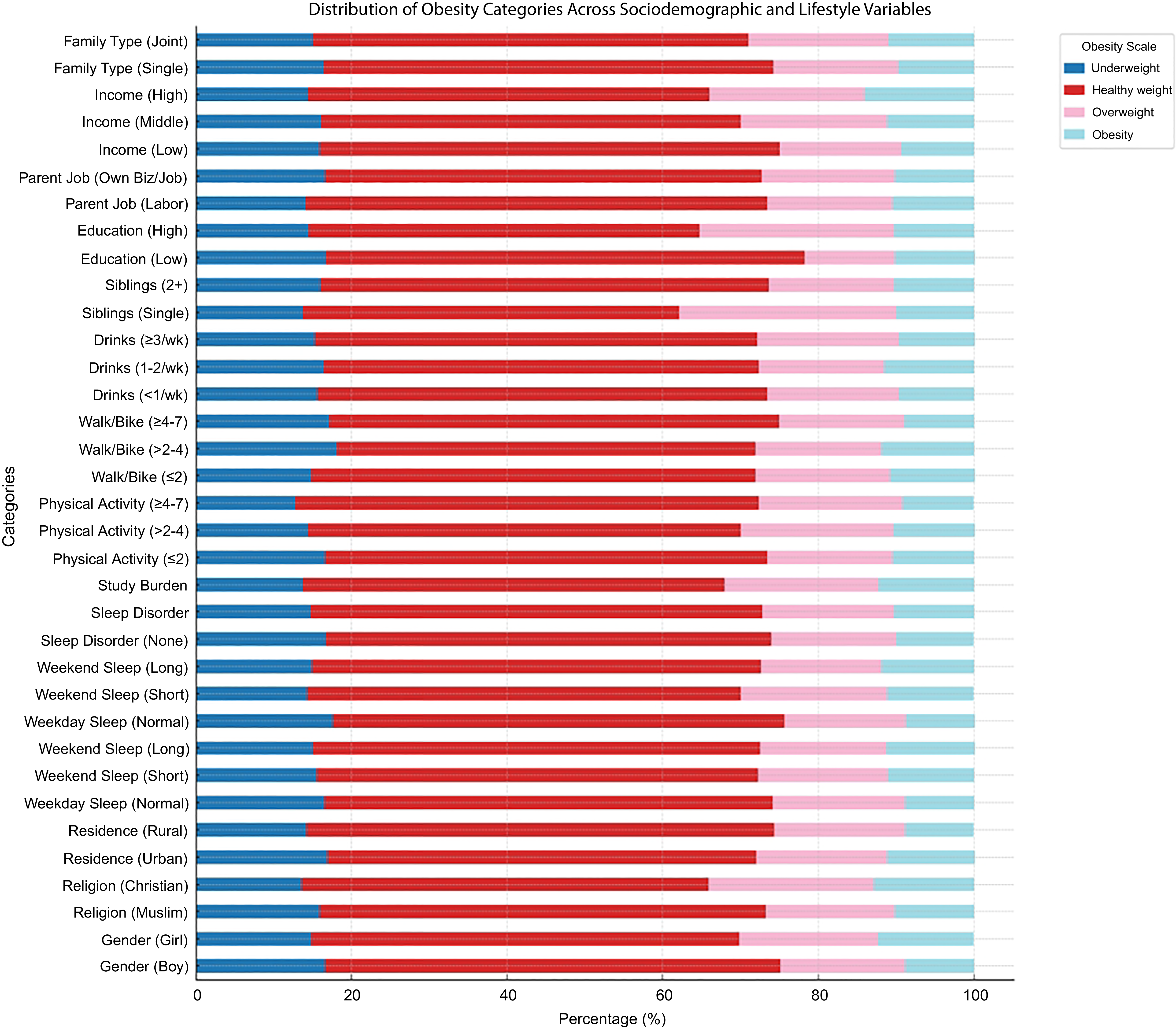
Figure 2 shows variations in weight status across sociodemographic and lifestyle factors. Girls had higher obesity prevalence (12·3 %) than boys (8·9 %), while boys were slightly more likely to maintain a healthy weight. Urban residence, higher parental education and high SES were associated with greater overweight and obesity. Short or long sleep, study-related sleep burden, low physical activity (≤ 2 times/week) and infrequent active commuting increased obesity risk, whereas frequent physical activity (> 4 times/week) was protective. Moderate sugary drink intake (1–2 times/week) and being an only child also increased the likelihood of overweight and obesity. These results highlight the complex interplay of sex, behaviour, environment and socio-economic context in shaping childhood and adolescent weight status.
Assessment of the prevalence and association between socio-economic status and lifestyle behaviours: nutrition, physical activity and sleep duration compliance with guidelines for overweight and obesity.

Figure 2. Long description
A horizontal bar graph compares the percentage distribution of obesity categories across different sociodemographic and lifestyle variables. The bars are grouped and color-coded to represent different obesity scales: underweight in blue, healthy weight in red, overweight in pink, and obesity in light blue. The horizontal axis represents the percentage, ranging from 0 to 100 percent. The vertical axis lists various categories such as family type, income, parent job, education, siblings, drinking frequency, walking/biking frequency, physical activity, study burden, sleep disorder, weekend sleep, weekday sleep, residence, religion, and gender. Each category has multiple bars indicating the distribution of obesity scales within that category. The graph shows variations in the distribution of obesity categories across different sociodemographic and lifestyle variables.
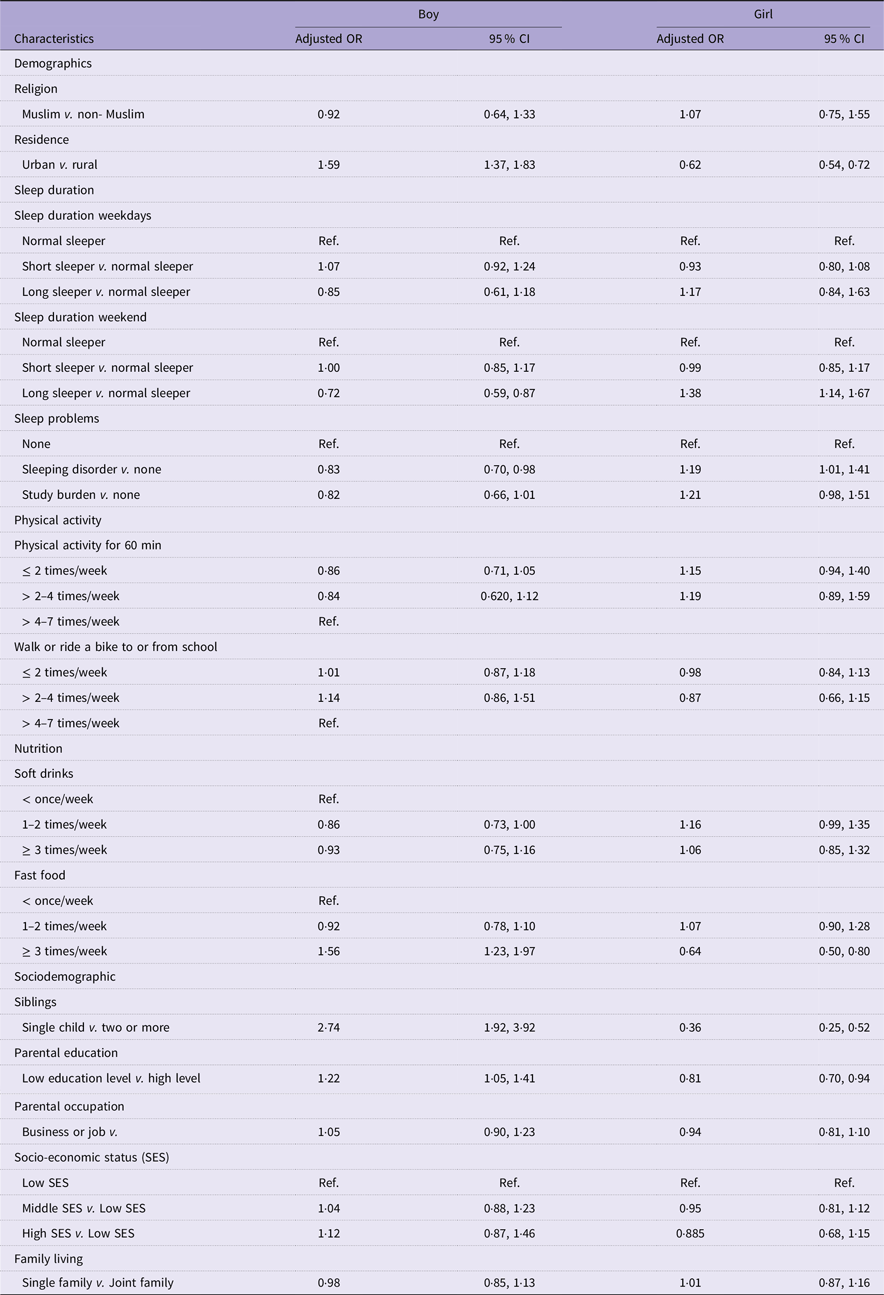
Table 2 presents the regression analysis, which revealed sex-specific associations between lifestyle behaviours, socio-economic factors and obesity risk. Among boys, urban residence (adjusted OR (aOR) 1·37; 95 % CI 1·13, 1·83), being an only child (aOR 2·74; 95 % CI 1·92, 3·92), frequent fast-food consumption (≥ 3 times/week; aOR 1·56; 95 % CI 1·23, 1·97) and lower parental education (aOR 1·22; 95 % CI 1·05, 1·41) were linked to higher obesity odds. In girls, long weekend sleep increased obesity risk (aOR 1·38; 95 % CI 1·14, 1·67), whereas being an only child (aOR 0·36; 95 % CI 0·25, 0·52) and frequent fast-food intake (≥ 3 times/week; aOR 0·64; 95 % CI 0·50, 0·80) were protective. Girls from less educated families were also more likely to maintain a healthy weight (aOR 0·81; 95 % CI 0·70, 0·94). Other lifestyle and socio-economic variables, including overall physical activity, sugary drink consumption, parental occupation, SES and family structure, were not significantly associated with obesity in either sex. These results highlight sex-specific patterns in the effects of lifestyle behaviours and socio-economic disparities on childhood obesity.
Regression analysis of sex differences in individuals with varying lifestyle behaviours: nutrition, physical activity and sleep duration, along with socio-economic status

Table 2. Long description
The table presents a regression analysis of sex-specific associations between lifestyle behaviors, socio-economic factors, and obesity risk. It includes two main columns for boys and girls, each with adjusted odds ratios (OR) and 95% confidence intervals (CI) for various characteristics. The table is divided into several sections: Demographics, Sleep duration, Sleep problems, Physical activity, Nutrition, Sociodemographic, and Family living. Each section lists specific variables and their associated OR and CI values for boys and girls. Notable findings include higher obesity odds for boys living in urban areas, being an only child, frequent fast-food consumption, and lower parental education. For girls, long weekend sleep increases obesity risk, while being an only child and frequent fast-food intake are protective. Girls from less educated families are also more likely to maintain a healthy weight. Other variables such as physical activity, sugary drink consumption, parental occupation, SES, and family structure do not show significant associations with obesity in either sex.
Ref, reference category.
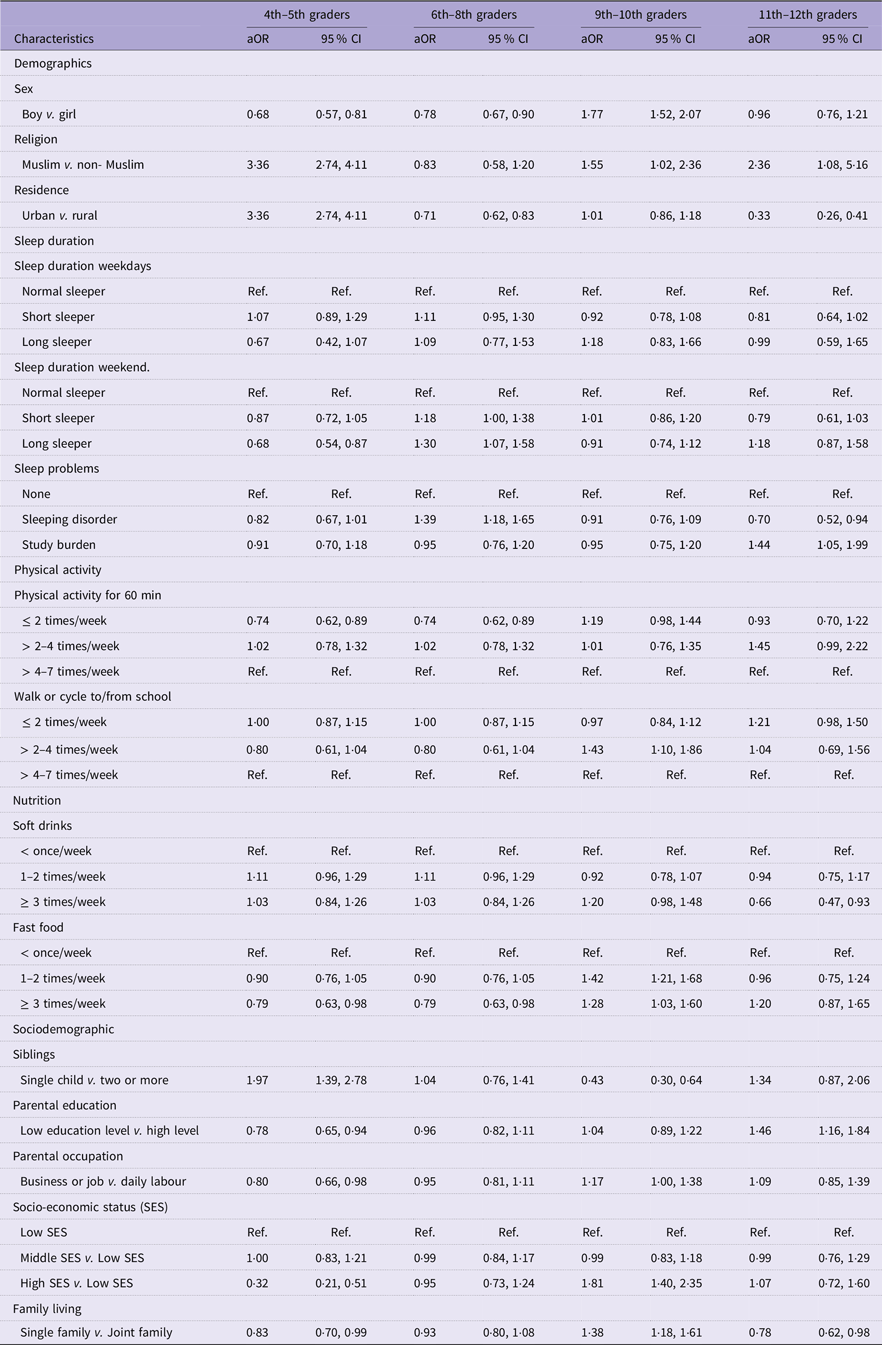
Table 3 shows regression analyses of grade-specific associations between lifestyle behaviours, socio-economic factors and overweight/obesity. Boys in higher secondary school were more likely to be overweight/obese than girls (aOR = 1·52). Muslim students had higher odds of overweight/obesity in primary and higher secondary grades. Urban residence was strongly associated with overweight/obesity in primary students (aOR = 2·74), decreasing in older grades. Low physical activity (≤ 2 times/week) increased risk in primary and middle school students, whereas high activity (> 4–7 times/week) was protective. Soft drink consumption (≥ 3 times/week) decreased odds in higher secondary students (aOR = 0·66), while fast-food intake (≥ 3 times/week) increased risk in secondary students (aOR = 1·28). Being an only child increased risk in primary students (aOR = 1·97) but was protective in secondary students (aOR = 0·43). Low parental education reduced risk in primary students (aOR = 0·78), but higher education increased risk in higher secondary students (aOR = 1·46). High SES was protective in primary (aOR = 0·32) but a risk factor in secondary students (aOR = 1·81). Joint-family status increased risk in secondary (aOR = 1·38) but decreased it in higher secondary students (aOR = 0·78). These results indicate complex, grade-specific interactions between lifestyle and socio-economic factors, highlighting the need for tailored interventions.
Regression analysis of grade differences in lifestyle behaviours nutrition, physical activity and sleep duration and socio-economic status among students with overweight or obesity

aOR, adjusted OR; Ref, reference category.
Table 4 shows the multivariate logistic regression results for lifestyle behaviours and socio-economic factors associated with overweight and obesity in Pakistani school-aged children and adolescents. In model 1 (n 4108), short and long sleep duration on weekdays and weekends, low physical activity (≤ 2 times/week), infrequent active commuting (≤ 2 times/week) and high fast-food consumption (≥ 3 times/week) were linked to increased odds of overweight and obesity. Frequent soft drink intake (≥ 3 times/week) was associated with obesity only in model 1. After adjusting for sociodemographic factors in model 2 (n 3371), boys had lower odds of overweight (OR = 0·79) and obesity (OR = 0·66), whereas urban residence, being an only child, high SES and highly educated parents were associated with higher odds. These findings highlight sex-specific, dietary, behavioural and socio-economic disparities influencing weight status among Pakistani youth.
Stagewise/stepwise multivariate logistic regression adjusted OR (95 % CI) for lifestyle behaviours: nutrition, physical activity and sleep duration, considering socio-economic status as risk factors for individuals with overweight and obesity

Table 4. Long description
The table presents multivariate logistic regression results for lifestyle behaviors and socio-economic factors associated with overweight and obesity in Pakistani school-aged children and adolescents. It includes two models: Model 1 with 4108 participants and Model 2 with 3371 participants. The table has 19 rows and 10 columns. Column headers are Characteristics, Adjusted OR, 95% CI, Adjusted OR, 95% CI, Adjusted OR, 95% CI, Adjusted OR, and 95% CI. Row labels include characteristics such as Sex, Religion, Residence, Sleep duration weekdays, Sleep duration weekend, Sleep problems, Physical activity for 60 min, Walk or cycle to/from school, Soft drinks, Fast food, Sociodemographic factors, Siblings, Parental education, Parental occupation, Socio-economic status (SES), and Family living. Each row provides adjusted odds ratios (OR) and 95% confidence intervals (CI) for different characteristics. Notable trends include associations between short and long sleep duration, low physical activity, infrequent active commuting, high fast-food consumption, and increased odds of overweight and obesity. Boys had lower odds of overweight and obesity, while urban residence, being an only child, high SES, and highly educated parents were associated with higher odds.
Ref, reference category.
*P ≤ 0·05, **P < 0·01, ***P < 0·001.
Discussion
This study provides evidence of the complex associations between lifestyle behaviours, socio-economic disparities and overweight/obesity among school-aged children and adolescents in Pakistan. Children from higher SES families exhibited greater odds of overweight and obesity, likely due to increased access to energy-dense foods and reduced physical activity opportunities(Reference Tanveer, Hohmann and Roy2–Reference Williams, Ge and Petroski5,Reference Tanveer, Cai and Badicu26) . Conversely, low SES appeared protective in certain younger age groups, reflecting a context-specific gradient between SES and obesity. Both short and long sleep durations, particularly on weekends, were associated with higher obesity risk, highlighting the significance of sleep compliance as a behavioural factor(Reference Garaulet, Ortega and Ruiz17–Reference de Lima, Bernardino and Leal19). Sex differences were evident: boys had higher overall obesity prevalence, whereas girls showed distinct associations between sleep patterns, fast-food intake and obesity(Reference Mushtaq, Gull and Mushtaq23,25,Reference Tanveer, Cai and Badicu26) . These findings underscore the need for integrated, school- and community-based interventions that promote healthy sleep, physical activity and nutrition and address socio-economic inequities to mitigate childhood obesity in Pakistan(Reference Tanveer, Cai and Badicu26).
The study highlights the complex interplay between lifestyle behaviours, socio-economic disparities and childhood obesity in Pakistan. BMI increased progressively with higher school grades, and boys had a higher prevalence of overweight and obesity, particularly those with disrupted sleep patterns(Reference Taheri, Lin and Austin34,Reference Wu, Liu and Zhang35) . Short sleep duration, especially on weekends, was strongly associated with elevated overweight and obesity risk(Reference Anam, Akter and Hossain7). SES also emerged as a key determinant, with children from higher SES backgrounds exhibiting a greater likelihood of obesity(Reference Tanveer, Cai and Badicu26,Reference Hirshkowitz, Whiton and Albert36) . Sex-specific differences were evident: boys showed stronger associations between sleep problems and obesity, whereas long sleep duration had more pronounced effects in girls(Reference Reilly, Armstrong and Dorosty37). These findings emphasise the need for targeted interventions that address behavioural, environmental and socio-economic factors to prevent overweight and obesity in school-aged children.
The study examined the associations between lifestyle behaviours, socio-economic disparities and overweight/obesity among Pakistani school-aged children and adolescents. Short sleep duration was strongly associated with increased odds of overweight and obesity, likely mediated by disrupted appetite regulation and metabolic changes(Reference Kiyani, Kayani and Kayani38,Reference Huang, Roberts and Kaur39) . Both insufficient and excessive sleep durations were linked to higher obesity risk, underscoring the importance of optimal sleep for healthy weight maintenance(Reference Li, Wang and Wang40,Reference Zhang, Wang and Zhang41) . Sleep disturbances, including sleep disorders and study-related sleep burden, were similarly associated with elevated overweight/obesity prevalence(Reference Wu, Gong and Zou42,Reference Miller, Lumeng and LeBourgeois43) , highlighting sleep hygiene as a potential intervention target. Physical inactivity and low active commuting were significant predictors of obesity, consistent with global evidence on sedentary behaviour(Reference Anam, Akter and Hossain7,Reference Tanveer, Cai and Badicu26,Reference Deng, He and He44) . Fast-food consumption showed sex-specific patterns, with higher intake increasing obesity risk in boys but inversely associated in girls, suggesting potential behavioural or reporting differences. Socio-economic and demographic factors also influenced weight status: urban residence and higher parental education were linked to increased obesity risk(Reference Kim45,Reference Alasqah, Mahmud and East46) , while single-child status was associated with higher risk, possibly reflecting familial resource allocation(Reference Sekine, Yamagami and Handa47). Overall, these findings emphasise the interrelated roles of sleep, nutrition, physical activity and socio-economic factors in shaping overweight and obesity risks, supporting the need for comprehensive, age- and sex-sensitive public health interventions(Reference Tanveer, Hohmann and Roy2,Reference Hashmi, Soomro and Saleem6,Reference Anam, Akter and Hossain7,Reference Mushtaq, Gull and Mushtaq23,Reference Tanveer, Cai and Badicu26) .
This study demonstrates significant associations between lifestyle behaviours, socio-economic disparities and overweight/obesity among Pakistani school-aged children and adolescents. Both short and long sleep durations were linked to higher obesity risk, consistent with prior studies(Reference Tanveer, Cai and Badicu26,Reference Chen, Liu and Tremblay30,Reference Sekine, Yamagami and Handa47–Reference Derks, Bolhuis and Sijbrands49) . Emerging evidence highlights that sleep timing, particularly late bedtimes, may more strongly influence obesity-related behaviours than total sleep duration(Reference Sekine, Yamagami and Handa47–Reference Derks, Bolhuis and Sijbrands49). Children with later bedtimes had higher odds of obesity, possibly due to associated unhealthy eating and sedentary behaviours(Reference Sekine, Yamagami and Handa47). These findings underscore the importance of promoting healthy sleep habits as part of obesity prevention strategies(Reference Štefan, Horvatin and Baić31,Reference Sekine, Yamagami and Handa47) . Short sleep also adversely affects metabolic and cognitive functions, compounding obesity risk(Reference Barr-Anderson, Flynn and Dowda50,Reference Skjåkødegård, Danielsen and Frisk51) , with inconsistent weekday and weekend sleep further reinforcing the need for stable sleep patterns(Reference Skjåkødegård, Danielsen and Frisk51). Socio-economic factors showed complex relationships with obesity. Higher parental education and SES were associated with increased overweight and obesity in some subgroups, suggesting greater access to energy-dense foods and sedentary lifestyles(Reference Ames, Holfeld and Leadbeater52). Urban residence also correlated with elevated obesity risk, reflecting environmental and lifestyle differences, such as reduced physical activity and greater processed food availability(Reference Tanveer, Asghar and Badicu53). Physical activity remained protective; lower frequency of moderate-to-vigorous activity and limited active commuting were strongly linked to obesity, supporting global evidence on the inverse relationship between activity and obesity(Reference Kim45–Reference Dutta, Mukherjee and Das48). Dietary behaviours exhibited sex-specific associations. Frequent fast-food consumption increased obesity risk in boys but was inversely associated with obesity in girls, while soft drink intake showed no consistent effect, indicating complex interactions of diet, sex and reporting(Reference Derks, Bolhuis and Sijbrands49,Reference Barr-Anderson, Flynn and Dowda50) . Family structure also influenced outcomes; single-child households had higher odds of overweight/obesity in boys but lower odds in girls, suggesting differential familial influences by sex(Reference Skjåkødegård, Danielsen and Frisk51). Overall, these findings highlight the multifactorial and sex-specific determinants of obesity, emphasising the need for integrated interventions addressing sleep, physical activity, nutrition and socio-economic contexts, particularly during early primary school years when lifestyle habits are forming(Reference Zhang, Wang and Zhang41,Reference Skjåkødegård, Danielsen and Frisk51) .
Longitudinal and cross-sectional studies indicate that bedtime and sleep timing significantly influence obesity risk in children and adolescents(Reference Anam, Akter and Hossain7,Reference Snell, Adam and Duncan32,Reference Barr-Anderson, Flynn and Dowda50) . Early bedtimes on weekdays have been associated with lower obesity incidence in adolescence(Reference Barr-Anderson, Flynn and Dowda50), while delayed bedtimes in early childhood (ages 3–8 years) may increase long-term obesity risk(Reference Snell, Adam and Duncan32). Social jetlag and late sleep schedules are linked to higher screen time, poor dietary habits, reduced physical activity and increased BMI(Reference Tanveer, Cai and Badicu26,Reference Chen, Liu and Tremblay30,Reference Štefan, Horvatin and Baić31,Reference Dutta, Mukherjee and Das48,Reference Skjåkødegård, Danielsen and Frisk51) . Sex- and age-specific variations exist: males with shorter baseline sleep tend to have higher BMI, whereas females show stronger associations during late adolescence(Reference Dutta, Mukherjee and Das48,Reference Ames, Holfeld and Leadbeater52) . Consistent sleep patterns aligned with developmental stage and sex may mitigate obesity risk(Reference Wu, Gong and Zou42). Evidence also highlights that both insufficient and excessive sleep negatively affect metabolic and cognitive processes, with 6–7 h per night considered optimal for cognitive function in school-aged children(Reference Štefan, Horvatin and Baić31,Reference Dutta, Mukherjee and Das48,Reference Ames, Holfeld and Leadbeater52) . Moreover, sedentary behaviours, particularly increased screen time, exacerbate the effects of short or long sleep on weight gain(Reference Chen, Liu and Tremblay30,Reference Štefan, Horvatin and Baić31) . Integrating sleep hygiene strategies into early childhood and school-based interventions, especially in underserved regions, is essential for long-term obesity prevention and promoting overall physical and mental well-being(Reference Skjåkødegård, Danielsen and Frisk51,Reference Tanveer, Asghar and Badicu53) .
Strengths of the study
This study provides robust, population-based evidence on the complex interplay of lifestyle behaviours and socio-economic disparities with overweight and obesity among Pakistani school-aged children and adolescents. It uniquely integrates sleep patterns, dietary habits, physical activity and socio-economic background, examining both weekday and weekend sleep, sleep disruptions and academic stress. The large, diverse sample enhances generalisability and allows systematic assessment of how sleep-related variables interact with behavioural and socio-economic factors across BMI categories. These findings offer foundational data to inform targeted school- and community-based interventions and guide national policy to address childhood overweight and obesity in Pakistan and comparable settings globally.
Limitations of the study
This study has several limitations. Its cross-sectional design prevents causal inferences. Some variables, including sleep habits and anthropometric measures, relied on self-reports, which may introduce reporting bias. The study excluded children in Grades 1–3, limiting generalisability to younger populations. Female adolescents aged 12–17 years were under-represented due to school restrictions. Finally, using BMI alone does not reflect body fat percentage, which could more accurately assess adiposity. Future research should employ longitudinal designs and more precise measurement tools.
Conclusions
This population-based cross-sectional study highlights the complex associations between lifestyle behaviours (sleep, nutrition and physical activity), socio-economic disparities and overweight/obesity among school-aged children and adolescents in Pakistan. Inadequate sleep, particularly on weekends, was consistently linked with higher obesity risk, with study-related sleep problems showing the strongest associations. Socio-economic factors influenced weight status: children from higher SES families and those with highly educated parents were more likely to be overweight or obese, while rural residency and living in joint families were generally protective. Sex- and grade-level differences were evident, with boys in higher grades and urban areas more prone to obesity, and lifestyle behaviours such as low physical activity, limited active commuting and high fast-food consumption significantly increasing obesity odds, especially among boys.
These findings underscore the need for comprehensive, multifaceted interventions that promote healthy sleep, regular physical activity and a balanced diet and address socio-economic inequalities. Age- and sex-specific strategies are recommended, with early intervention in primary school likely to prevent long-term obesity. Future research should use longitudinal or interventional designs to clarify causal relationships and inform context-sensitive policies.
Supplementary material
For supplementary material/s referred to in this article, please visit https://doi.org/10.1017/S0007114526107715
Acknowledgements
The authors would like to express their sincere gratitude to the children, parents, guardians and teachers whose participation made this study possible. The authors also acknowledge the support of the Department of Rescue-1122 for facilitating the data collection process and the Punjab School Education Department for granting permission to conduct the study in participating schools. In addition, the authors thank the Department of Physical Education and Sport Sciences, Health Services Academy, Islamabad, Pakistan, for providing partial financial support, and the School of Physical Education and Sport Training, Shanghai University of Sport, Shanghai, China, for approving the study.
This research received no external funding.
Conceptualisation: M.T. and Y.C.; methodology: M.T., N.A.A., Y.C. and G.B.; software: M.T. and U.T.; validation: M.T., N.R. and A.R.; formal analysis: G.B.; investigation: M.T., A.O.A., A.S.A., N.A.A., Z.D.A., A.S. and A.R.; resources: M.T., A.S., Y.C. and G.B.; data curation: E.A. and G.B.; writing – original draft preparation: M.T.; writing – review and editing: M.T., A.O.A., A.S.A., G.B., E.A., U.T., N.R., N.A.A., Z.D.A., A.S. and A.R.; visualisation: M.T.; supervision: M.T., Y.C., G.B. and A.R.; funding acquisition: M.T., A.O.A., A.S.A., G.B., N.A.A., Z.D.A., A.S. and A.R. All authors have read and agreed to the published version of the manuscript.
The authors declare no conflicts of interest.
This study adhered to the principles of the Declaration of Helsinki and received approval from the Institutional Ethics Committee of Shanghai University of Sport on 23 December 2022 (Ethical Code: 1816111009–2022). Approval to conduct the study was also obtained from the Punjab School Education Department (Approval Code: PU180220-633357) and from the principals and teachers of the participating schools.
Written informed consent was obtained from all participants. For participants under the age of 16 years, consent was obtained from their parents or legal guardians. Participants were assured of the confidentiality and anonymity of their responses throughout the study.
The original contributions presented in this study are included in the article and its Supplementary Material. Further inquiries can be directed to the corresponding author.