


The political impact of resource inequality is an increasingly vexing problem in contemporary democracies, especially the United States (Fraser and Gerstle 2005; Krugman 2003; Phillips 2002). An enduring hallmark of popular government is the expectation that politics will be accessible and responsive to all citizens on a relatively equal basis. Yet democratic theorists and policy analysts currently seldom raise a question that was central to the life of pre-eighteenth-century republics: what institutions will prevent wealthy citizens from dominating the political process? The motivations and resources of the wealthy were often considered among the chief threats—sometimes, the greatest threats—to stability and liberty in such regimes. Unless formally restrained, the richest citizens tended to use their privilege to molest fellow citizens with impunity and direct the workings of government toward their own benefit rather than toward that of the general citizenry. Wealthy individuals and families would often subvert popular governments, maneuvering them in more narrowly oligarchic or autocratic directions, even, on occasion, going so far as to deliver them over to foreign powers (see Baehr 1997; Martines 1979; and Molho Raaflaub, and Emlen, 1991, 251–354).
On the contrary, modern republics conceptualize control of elites in narrowly political terms: their constitutions concentrate almost exclusively on the inappropriate power and influence that public officials, not wealthy citizens, might wield. Even when enacted within relatively class conscious contexts (see Hunt 1984; Fitzsimmons 1994), these constitutions never explicitly guard against either the likelihood that wealthy individuals will fill the ranks of elected magistracies disproportionately or the possibility that they will manipulate the behavior of less-wealthy citizens who do manage to gain office. As a result, the institutional arrangements of modern republics may better realize the policy preferences and interests of the few than those of the many.
When the constitution-framers of modern republics, especially the United States, did look beyond office-holders to consider potentially pernicious social groups, they most frequently identified citizens with less or no property—the masses, the mob, the multitude—as the principal threat to the stability of government and the liberty of fellow citizens (Farrand 1966, vol. I, 423, vol. II, 203–4; Nedelsky 1991). The preeminent dangers facing republics are avariciously or fanatically motivated popular majorities who expropriate or persecute vulnerable minorities. Although the Framers sometimes entertained the notion that wealthy citizens could threaten a republic's liberty (Farrand, vol. I, 146–47; Meyers 1981, 395), they explicitly designed the U.S. constitution to “control the government and the governed,” that is, the magistrates and the majority of the people (Hamilton, Madison, and Jay [1788] 2003, nos. 10 and 51).
I contend that the socioeconomic disposition of modern republicanism and the institutional choices that follow from it have deleterious implications for contemporary democracies. After all, the latter are no less vulnerable than their historical antecedents to corruption, subversion, and usurpation by the wealthy (Domhoff 2001). Compelling evidence suggests, on the one hand, that money more than votes, and resources rather than rights decisively determine policy in the republics of our age (see, critically, Kersh 2003); and, on the other, that election, the institutional centerpiece of modern democracy, is a less than fully robust means of keeping public officials accountable (Przeworski, Stokes, and Manin 1999). Democratic accountability may require even more formal, direct, and vigorous control of political and socioeconomic elites than even, for instance, contemporary campaign finance reformers propose (Behn 2000).
Reflections on the history and institutions of earlier republics suggest that the accountability problems plaguing contemporary democracies are structural and require substantive reforms to correct them. Inspired by the writings of early-sixteenth-century Florentine republicans, Francesco Guicciardini and Niccolò Machiavelli, I excavate extra-electoral techniques by which common citizens constrained wealthy citizens and public magistrates in ancient, medieval, and Renaissance republics, and imagine how these techniques might be reconstructed within contemporary democracies. This enterprise refocuses attention on the centrality of class in the domestic politics of republics (see Aristotle 1997; Boix 2003, 6–16, 47–58; Yack 1993, 209–31) and revives the argument that the resources of the wealthy along with the wide discretion enjoyed by office-holders—not the purported ignorance, envy, indifference, and caprice of the general citizenry—pose the principle threats to the liberty of such regimes.1
The idea that the people cannot or should not participate much beyond choosing which set of elites rule or represent them is prevalent in economic models of democracy inspired by Joseph Schumpeter, neo-republican models inspired by the U.S. Founders, and approaches combining both: see, respectively, Przeworski 1999, 23–55; Hamilton 1997, 1–18; Posner 2004.
The writings and interactions of Guicciardini and Machiavelli, who reflected at length on the political history of their native city, as well as on constitutional arrangements in the ancient Roman and contemporary Venetian republics, mark a crossroads in the history of Western political thought. Machiavelli is often dubbed the “founder” of modern political science, modern republicanism, or “modernity” itself (cf., respectively, Plamenatz 2006; Pocock 1975; Strauss 1958). But because he recommends that class division and class conflict be built into the constitutions of popular government, Machiavelli's writings can be read as the most radical summation, if last gasp, of traditional populist republicanism. On the contrary, Guicciardini is the largely unacknowledged father of modern democracy understood as elective oligarchy: it was Guicciardini who first theoretically combined unqualified elections, wide suffrage, and general eligibility to hold office within a framework anticipating modern representative government (Gilbert 1965; Manin 1997, 53–54, 70). Writing as one political epoch, presciently articulated by Guicciardini, eclipsed another, vividly summarized by Machiavelli, these thinkers offer fresh but historically informed insights into the elite accountability institutions available to republics generally.
Part I of the essay is historical and interpretive, focusing on institutional alternatives to modern, election-fixated methods of selecting and citizen-excluding means of controlling elites. Machiavelli and Guicciardini analyzed magistrate appointment procedures combining lottery and election, considered offices and assemblies reserved exclusively for common as opposed to wealthy citizens, and weighed the appropriate roles of magistrates versus the general citizenry in accusing and judging public officials and/or powerful citizens suspected of political impropriety. Part II of the article is analytic and prescriptive; it explicates a typology of regimes based on the arrangement of lottery and election in the nomination and appointment of public magistrates, and it proposes that the U.S. Constitution be amended with a hypothetical elite-accountability institution that combines the randomization, wealth-exclusion, and use of popular denunciation/appeal so prominent in pre-eighteenth-century republican constitutions and populist reform proposals.
PART I. ELITE ACCOUNTABILITY IN PRE-EIGHTEENTH-CENTURY REPUBLICS
Mixing Lottery and Election
The constitutions of modern republics attempt to keep public officials accountable and responsive in three principle ways: through the reward/sanction scheme of election and prospective reelection, the institutional counterposition of functionally separated powers, and, in extreme cases, by the threat of removal-through-impeachment procedures conducted by other public officials. All citizens are formally eligible to hold office in such schemes, and the category “elite” applies technically only to those who do. These constitutions posit a sociologically anonymous political subject, “the sovereign people,” out of which political elites are made and unmade through general elections. These institutional arrangements and the principles underlying them would strike many adherents of premodern popular government as odd, unjust, and dangerous. If wealthy citizens are free to stand for all magistracies, if they can participate in every public council, and if unqualified election is the only device that determines office-holding or assembly-attendance, the wealthy would maintain distinct and persistent political advantages over poorer citizens. Wealth enables such citizens to cultivate greater reputation, a more distinctive appearance, and (traditionally at least) better public speaking skills such that voters almost inevitably choose them in electoral contests (Manin 1997, 132–60). In addition, financial resources allow the wealthy to fund, groom, and/or bribe nonwealthy candidates to serve their interests at the expense of broader constituencies. Put simply, election is a magistrate selection method that directly and indirectly favors the wealthy and keeps political offices from being distributed widely among citizens of all socioeconomic backgrounds.
Ancient democracies assumed that law and public policy would not express the common good unless large numbers of nonwealthy citizens participated in government by holding office themselves. Wealthy citizens, despite promises to the contrary, were expected to pursue their own interests, and not those of the general populace on ascension to office—a danger exacerbated in electoral systems where the wealthy monopolize offices. To avoid the “aristocratic effect” of election (Manin 1997, 42–93), ancient democracies assigned most magistracies by citizen-wide lotteries or “sortitions” and observed frequent rotation in office (Hansen 1991, 230–31; cf. Duxbury 1999). In keeping with the egalitarian aspirations and distrust of oligarchy characterizing such regimes (Ober 1993), lottery conducted over the entire citizenry ensured that the wealthy and notable would have little chance of governing to an extent exceeding their percentage of the citizenry; it guaranteed that offices would be distributed randomly among all classes. Moreover, the regular and frequent turnover of office ensured that wealthy magistrates could deploy their greater financial resources neither to ensconce themselves in an office nor to influence or determine the appointment of like-minded or similarly interested successors. As straightforward sortition became increasingly rare in Western popular governments, republics attempted to ameliorate the aristocratic effect of elections and ensure wider distribution of offices in two alternate ways: by combining election with lottery-like randomization measures and/or by establishing class-specific eligibility stipulations for specific offices. The first strategy is the focus of this section.
Francesco Guicciardini [1483–1540], a patrician who served Florence as a statesman and historian, first fully articulated the intuition that so disturbed ancient democrats and that James Madison would later systematize: elections produce virtually the same aristocratic effect whether or not voters are formally separated from an electable elite (Guicciardini [1524] 1994, [1530]. 2002, 381–438; Hamilton, Madison, and Jay [1788] 2003, nos. 10, 37, 39, 57, 60, 63). General elections, especially if conducted in a large population or over a wide territory, tend to elevate the most virtuous, prudent, just (read: wealthy) citizens to office (in the British context, see Bagehot [1867] 2001). On his way to these conclusions about election, Guicciardini critically analyzed the mixing of sortition and election characteristic of Florentine politics in his youth, an analysis from which we may draw contemporary lessons.
The many different republican constitutions that Florence observed from the thirteenth through much of the fifteenth century attempted to neutralize antagonisms corresponding with external alliances, family rivalries, and the like (see, chronologically, Najemy 1982; Brucker 1977; Rubinstein 1966, 1954; Butters 1985; Stephens 1983; cf., also Bock, Skinner, and Viroli, 1990, 1–71). But class conflict between the ottimati, members of families with wealth and good name, and the popolo, or the people, was a consistently intense form of competition playing itself out in the struggle for office. The ottimati preferred a stretto or narrow regime in which a few prominent citizens from patrician families (magnati) or wealthy guilds (popolani) rotated magistracies of long duration under short reeligibility stipulations. The people, lower guildsmen and workers not organized in guilds (popolo minuti or sottoposti), pursued a governo largo, a more widely participatory regime in which many more citizens held office due to relaxed property and residency requirements, shorter terms, and stricter limits on re-appointment.
Writing during the republic established under the influence of Friar Girolamo Savonarola after the expulsion of the Medici in 1494, the young Guicciardini discusses election and lottery as means of nominating and appointing magistrates. In both his History of Florence ([c. 1508] 1970, 106, hereafter HF) and “Discorso on Bringing Order to Popular Government” ([1512] 1998, 126, hereafter DL), Guicciardini seems content with lot as a method that draws a group of nominators from among the approximately 3,200 citizens collected in a large assembly, the Great Council (see Silvano 1990, 41). However, these works begin to reveal a preference for elections over lot in the final appointment of magistrates.
In the “Discorso,” Guicciardini suggests that the appointment process for the republic's executive committee, the Signoria (or Priorate), and for other governing committees, be re-formed as follows: the names agreed on and submitted by the lot-determined nominators should be voted on in the Great Council, and those who win a majority may then be voted on again, or submitted to sortition to determine who will actually fill the open position(s) (DL, 126–27). In this scheme the lot-election combination is fairly complex: lottery ensures that nominators will be chosen at random and hence cannot be expected to have a preconceived bias toward the kind of candidates they eventually name. The presumably diverse set of candidates that results is then submitted to election, such that Guicciardini likely expects the most wealthy or notable individuals to have an advantage. Having incorporated both democratic and aristocratic elements into the appointment process through the use of lottery and election up to this point, Guicciardini is ambivalent in the final stage about whether to use the democratic or aristocratic method. But when observing how such a combination of lot and election actually worked in reality, Guicciardini is more skeptical of lottery and more enthusiastic of election as the decisive mode of appointment.
In the History, when he discusses Florence's constitutional innovations of 1497–99 (see Rubinstein 1954, 154), Guicciardini reports that the move from election to lot at the definitive stage of magistrate appointment expanded the effectual pool of possible office-holders from 200 members of the best families to a much wider, much less “suitable,” segment of the citizenry (HF, 128–29). Taking into account Guicciardini's aristocratic prejudices, we might question whether the newly appointed magistrates really were unsatisfactory (see Butters 1985, 36). More importantly, the episode suggests that election used in tandem with lot, especially in the ultimate moment of appointment, can produce much more equitable and less oligarchic effects than election used by itself or as the final means of selection. On the basis of Guicciardini's own account, it appears that when election serves a narrowing function in advance of lot as the definitive mode of selection, the electorate is much less biased toward “distinction” when winnowing down the number of candidates. Although the requirement that a nominee gain an initial fifty percent vote of approval ensures against the emergence of candidates who would be completely unacceptable to the ottimati (Butters 1985, 36), the citizenry assembled in the Council have the opportunity to vote at the narrowing stage for a group of candidates with a wide range of personal qualities, social backgrounds, and political opinions. We may conclude that the option to approve more than one candidate electorally somewhat neutralizes the impact of qualities like wealth and notability on the electorate when citizens know that they are leaving the ultimate “choice” of magistrate to chance, that is, the lottery. In other words, something less than the “aristocratic effect” prevails when, on the one hand, elections produce a slate of candidates wider than, say, two individuals, or, on the other, when they winnow down a large slate to something like half a dozen candidates who will gain office eventually on the basis of lot.
His critical stance in the History notwithstanding, Guicciardini's relative openness in the “Discorso” to election or lot as the decisive means by which individuals become magistrates such as “priors” in the Signoria may be explained by his lifelong campaign to establish a proper senate in Florence. Like many Florentine ottimati, Guicciardini attributed the longevity and stability of Venice's “mixed constitution” to the preeminence of its Senate over the Doge and its Great Council—that is, of the constitution's “noble” over its “kingly” and “popular” elements (Gilbert 1968, 442–62, and 1977, 215–46; Skinner 2002, 126–30, 138–39; 148). Once established in Florence, Guicciardini proposed to transfer to such a senate most of the powers wielded in contemporary practice by the Signoria, the Great Council, and, that constitution's life-tenured chief executive, the Gonfalonier of Justice. In other words, Guicciardini may not mind employing lot to constitute political bodies that he hopes eventually to emasculate. Perhaps not surprisingly then, lot plays no role in determining the composition of his proposed 200-member senate. More than half of the senate would bypass the Council's central function of directly or indirectly appointing magistrates. Although the Great Council would regularly elect 80 citizens to finite terms as senators, in addition, as many as 120 former magistrates and ambassadors would immediately assume lifetime membership in the senate without a Council vote (DL, 137).
A possible rationale for legitimating such appointments, unstated by Guicciardini, is that the Council had already “approved” or “selected” these individuals when they originally served in the Signoria, on other government committees or as ambassadors. But a cynic might read the proposal as doubly oligarchic: the rotating members of the senate are “aristocratically” elected, not assigned through the quasi-democratic method of sortition; and they themselves are outnumbered by a grandfathered-in, permanent, set of notables. However, the Council would play some limited role in replacing permanent members of the senate once they die or retire, according to Guicciardini's plan. By majority vote, the Great Council would choose one of three replacement candidates, scrutinized by the senate and nominated by that body on the basis of an internal two-thirds vote (DL, 137–38).
Class-Specific and Wealth-Excluding Institutions
Niccolò Machiavelli's [1469–1527] magnum opus, the Discourses,2
Machiavelli [c. 1513–19] 1997, hereafter cited within the text with book and chapter numbers in parentheses. The interpretation here is fully elaborated in McCormick n.d.
For holding back the “insolence” of the grandi, Machiavelli lavishes his highest praise on an institution of the common people, the “tribunes of the plebs” (I.3; cf. Coby 1999, 25–31, 60; Lintott 1999, 11–15, 121–28, 205–11; McCormick 2001, 299–301; Nicolet 1980, 325, 340–59). According to Machiavelli, the grandi's insolence, and the appetite for domination from which it arises, are threats to the liberty of citizens, and to the stability of republican regimes: the grandi will eventually raise up a prince or enlist a foreign power to further their inexhaustible efforts at oppressing the people, or the latter will resort to such measures themselves for protection from or in retaliation for persistent abuse. The tribunate's success in acting on behalf of Rome's plebs (plebeians) or poorer citizens earns it Machiavelli's praise as the one domestic institution above all others contributing to Rome's extraordinary ability to maintain liberty and attain glory. Over the course of Roman republican history, two to five to a dozen plebs would serve as tribunes for 1-year terms. The plebeians elected the tribunes in their assembly, the concilium plebis, which excluded patrician citizens (I.18, III.30; cf., Lintott, 43, 53, 54, n. 67; Taylor 1990, 60–64).
The tribunes conducted deliberation over the passage of law (the plebiscite) in the concilium. Their bodies were “sacrosanct”; that is, patricians could not touch them physically, and the plebs pledged to kill those who did. Relatedly, the tribunes wielded a power akin to habeas corpus, as they could demand the release of plebs who had been seized, for whatever reason, by a patrician citizen or a magistrate. Furthermore, the tribunes vetoed laws favored by the grandi-dominated senate and about to be enacted by their agents, the consuls. As I discuss in the next section, the tribunes also wielded the authority to accuse magistrates or powerful citizens of political crimes. Despite the fact that the tribunate was an elected office, because plebs selected tribunes from their own ranks, class specificity minimized election's aristocratic effect (Lintott 1999, 120). The wealthiest or most notable citizens among the plebs likely became tribunes on a consistent basis, but it was only when the republic became corrupt that this became consequential (I.4, I.6, I.37).
Quite strikingly, Machiavelli's reconstruction of Roman republican politics is, as it were, a tale of two cities: within the one republic there is, on the one hand, a poorer, popular polity, which shadows, on the other, an elite, more wealthy one. The former serves as the latter's mirror, its negative image: The grandi deliberate policy in the senate, the plebs in the concilium (and both in assemblies called concioni [I.4–5, III.34]). The senate influences the consuls to enact laws that it favors; the people press the tribunes to veto them. The consuls wield the power of life and death; but the tribunes deliver plebeians from just such a threat. Indeed, it seems that the formal separation of these two polities within one allowed the less dangerous one, the plebeian polity that wants only to avoid domination, to patrol the one that Machiavelli explicitly claims is more dangerous, a grandi polity that seeks perpetual oppression over others.3
It is often asserted in poststructuralist and Straussian literatures (e.g., Strauss 1958, 134, 169, 250; Vatter 2000, 197) that Machiavelli understood the grandi as a class that was driven by the desire for glory or honor rather than the acquisition and preservation of wealth. Yet Machiavelli declares quite explicitly that, in the Roman context, the grandi “always yielded honors to the plebs without extraordinary scandals,” but when it came to “property,” they defended it with the utmost “obstinacy” (I.37). Because, according to Machiavelli, the Roman elite cherishes their material goods much more than their reputation and prestige, economics ought not be dismissed too casually as a key factor in Machiavellian domestic politics. In a similar vein, many interpreters read Machiavelli as a critic of “the Agrarian Laws,” a legislative initiative aimed at distributing wealth from rich Romans to plebeians. Because Machiavelli attributes the seeds of the republic's destruction to the controversies that emerged from the proposal and promulgation of these laws (I.37), many such interpreters understand Machiavelli to be an opponent of redistributive politics and a critic of the deleterious “ennobling” of the plebeians supposedly signified by popular demands for redistribution (e.g., Vatter, 229, 231, no. 30). However, Machiavelli's evaluation of the laws is at best ambiguous: as the previous quote suggests, he understands the obstinacy of grandi to be responsible for the “scandals” that eventually destroy Rome. In fact, he insists that the grandi would have ruined the republic much earlier had they not been constrained by pro-plebeian policies precisely like the Agrarian Laws (I.37). Furthermore, Machiavelli does not denounce the tribunes, Tiberius and Gaius Gracchus, for pursuing redistribution, as such; he only criticizes the Gracchi for their timing in introducing these laws, “not their intention” in proposing them, generally (I.37). Machiavelli is by no means the steadfast opponent of redistributive politics that many interpreters, themselves perhaps averse to class-conflict or redistribution, believe him to be.
There were echoes of this “two-polities-in-one” scenario in medieval Florence and throughout the other Italian republics of the thirteenth century: as the people, organized in trade guilds, gained confidence and engaged in political and even armed conflict with their cities' traditional aristocracies, the magnati or grandi, they set up alternative institutions within the communes. Alongside the legislative and executive institutions dominated by the magnates, such as the Council of the Commune and the Podestà, in Florence and elsewhere the guild-organized people established the councils of the popolo and the office of the people's Capitano (Martines 1979, 34–62). The grandi and popolo both openly competed to be priors within the Signoria, just as their Roman counterparts competed over terms in the consulate, once the plebeians realize that the tribunate is a necessary but not sufficient guard of their liberty against the patricians (I.47).
However, general election did not determine seats in Florence's Signoria; class-, or more precisely, occupational-specification and randomization characterized the appointment process. At its most widely and substantively participatory (1343–48, and especially 1378–82) the republic went so far as to reserve two of the six seats in the Signoria for members of the three sets of politically recognized guilds: in descending order of wealth and status, the major, minor, and minuti guilds. Without such quotas for middling and lower guildsmen, the rich popolani of the major guilds and the patrician magnates (when permitted to enroll in the upper guilds) would have consistently dominated offices in the priorate (Najemy 1982, 126–65, 217–63). In the more progressive schemes, the heads of each of the 23 guilds nominated members of their rank-and-file whose names were then submitted, along with those nominated by sitting magistrates and ward officials, into bags (borse). Out of the latter were drawn the number of names conforming with the number of open seats in the Signoria and satisfying the equal distribution requirement across higher, middling, and lower guilds.
Unlike citizen-wide general elections, or even geographically demarcated ward-based ones, this procedure ensured that lower tradesmen, artisans, and shopkeepers had a relatively equal chance of holding office with bankers and owners of large-scale production: guild-specific nominations precede a lottery, the results of which met corporate quotas. Nominations supplied by all the guilds and the allotment of seats according to classes of guilds ensured that offices were distributed more widely among citizens. Successive waves of oligarchic or princely alterations undermined and destroyed the guild-basis of the early Florentine republics (Brucker 1977; Rubinstein 1966), but the latter's corporate or class specificity is very close to what Machiavelli attempts to revive with his neo-Roman model: socioeconomic specificity in political institutions better ensures participation by common citizens in government than do class-anonymous institutions and formally wide, general eligibility for office.
However, it is worth noting that Machiavelli's Rome-derived proposal for grandi- and popolo-specific institutions in the Discourses avoids a major mistake committed by popular republics in the history of Florence: making outright enemies of the magnate class above the guilds. The Florentine popolo were often provoked into disenfranchising the magnates because these grandi could not refrain from acts of physical violence and political intimidation (Martines 1979, 48–50; Salvemini 1899, 198–207). This course of action rendered Florentine popular government perpetually unstable as the disenfranchised magnates were always eager: either (a) to aid an external enemy against the city in the hopes of reassuming their political prominence or (b) to co-opt or collude with members of the major, wealthier guilds, especially those engaged in banking and finance, in shutting out the lower guilds of merchants and artisans and undermining the republic (Martines 1979, 58–71, 94–110). Machiavelli's model assures the grandi class of its place within a republic and allows socially mobile upper popolo to integrate into it without causing the demise of republican forms.4
See Machiavelli's own account of this collusion in his Florentine Histories [1525] 1988, Book III, chap. 21, 134–35. Indeed, by his time, the Florentine ottimati or grandi effectively fused old magnate families and newer, upper-guild popolani.
In this spirit, Machiavelli often concedes that the Roman institutions dominated by the wealthy citizens, the senate and consuls, had greater agenda setting and proactive authority than did the tribunes or the popular assemblies (e.g., I.37). However, plebeian institutions do protect the people from grandi domination and provide them with enough negative authority over grandi behavior to channel it in liberty-preserving ways.5
This negative check on the grandi within Machiavelli's scheme does not preclude active, positive governing by the people through legislation proposed via the tribunes, and then discussed and voted on in the popular assemblies (I.18). The aversion to rule by the people in poststructuralist democratic theory, generally (see Laclau and Mouffe 1984), is manifest in even the best poststructuralist appropriations of Machiavelli (see Vatter 2000, 91–93). But Machiavelli's view of what the people should actually do—actively and institutionally—was neither so normatively pure nor so practically enfeebled as such readings insist.
It cannot be overstated how difficult it is to sell the grandi on the establishment of a tribunate, or some functional equivalent thereof (e.g., Cicero 1999, 164–67; de Montesquieu 1999, 84).6
On Machiavelli's rhetorical strategies for inducing elite audiences to adopt policies that serve the people, see Dietz 1986 and McCormick 2006.
In the “Discursus on Remodeling Florence,” Machiavelli first proposes the establishment of an exclusive class of 65 life-tenured, elite citizens to take turns in the Signoria (Machiavelli [1519–20] 1958, 102, henceforth DR).7
Italian references correspond with, “Discursus Florentinarum Rerum Post Mortem Iunioris Laurentii Medices,” in Machiavelli 1997, henceforth DF.
Then, as if almost an afterthought to an already complete constitutional order founded on the personal appointment and election of elite citizens, Machiavelli introduces the office of the provosts, a class-specific, lottery-determined magistracy reserved for common citizens. His discussion of the provosts is so subtle, apparently, that most commentators completely ignore it (see, especially, Silvano 1990, 56–61; Viroli 1990, 154–55). These provosts will be a subset of 16 “Gonfaloniers of the Companies of the People.” Machiavelli leaves open whether his reconstructed popular Gonfaloniers will be selected each year by city ward, by the guilds, the Great Council, or Leo himself as long as he lives. But Machiavelli insists that this popular magistracy not be held by individuals belonging to the signorial class—grandi must be excluded (DR, 111). And those who serve as provosts must not gain rapid reappointment “so that the office will be distributed more widely through the city” (DR, 111). Lottery determines which of the popular Gonfaloniers serve short, week- or month-long terms as provosts, attending the proceedings of the Signoria, sitting in on sessions of the Select Council, and participating as full-voting members in the Great Council.
In Machiavelli's description, it first appears as if the provosts are merely nonvoting “witnesses” of the two upper assemblies comprised of their social superiors. But then he insists that neither the Signoria nor the Select Council should be permitted to convene without provosts present (DR, 111). Moreover, the provosts can delay enactment of decisions made by these bodies and appeal them to their broader, immediately subordinate councils. Machiavelli explains neither why provosts must be designated from among the popular Gonfaloniers by lot nor why their terms in any particular body are as short as a week. A plausible reason is that lot prevents the ottimati in the upper councils from gaining advance knowledge of exactly which popular Gonfaloniers will be convocating with them as provosts, thereby thwarting their attempts to corrupt or intimidate the provosts beforehand. Moreover, the provosts' short terms guard against political cooptation while they serve among the ottimati. Machiavelli clearly expresses a desire that as many nonsignorial citizens as possible take part in this office that effectively serves as the people's eyes and ears in the republic's upper councils, and that explicitly wields veto or referral power over the legislation proposed within them.
Machiavelli writes: it is “not good that magistrates should not have somebody observe them and make them abstain from actions that are not good” (DF, 742; DR, 112). Machiavelli expects that this popular surveilling and vetoing of magistrate behavior will be particularly intense, because common citizens would now be closed off formally from the highest signorial offices for which they had come to expect eligibility. But in taking from common citizens something for which they previously competed at a disadvantage with the ottimati, Machiavelli now reserves for them exclusively something much more potent. In the Roman republic, the tribunate functioned as the plebeian answer to magistracies from which plebs were formally excluded initially, and then obtained only with great difficulty—it was a counter-consulate, if you will; the tribunes, in effect, counter-consuls. Similarly, in Machiavelli's proposed Florentine republic, the popular Gonfaloniership functions as a “counter-Signoria;” the provosts as counter-priors.8
The Gonfaloniers of the Companies of the People originally led the popular militias against the magnates before evolving into one of the Signoria's advisory bodies. In the Florentine Histories, Machiavelli asserts that the popular Gonfaloniers acted “against the insolence of the great” (Machiavelli [1525] 1988, Bk. II, Chap. 22, 76), the same function he attributes to the tribunes in The Discourses. Machiavelli served Florence as secretary to the executive committee, the “Ten of Liberty,” which was foundeded “to protect the weak from the strong.”
Provoking the people by excluding them from the most powerful magistracies and giving them a subordinate magistracy that is nevertheless theirs exclusively is Machiavelli's way of better empowering the people, both emotionally and institutionally, to make elites accountable. On the one hand, common citizens will no longer suffer from the delusion that they are effectually eligible for higher offices that they actually seldom attain and, if they do, within which they are marginalized. On the other, they will not be overwhelmed by the ottimati within the new magistracies created for them alone. Letting the people use offices reserved exclusively for themselves in efforts to check grandi rule and perhaps to re-attain offices from which they are excluded better empowers them than formal eligibility for all offices, generally. Machiavelli insists that the Pope's ottimati friends, who will “sit in the highest seats of government,” need not fear the loss of their property from this proposed constitution. Yet he states candidly that the “generality of the citizens” will expect more allotments of power, “little by little,” to fall into their hands over time. The Great Council, the Gonfaloniers of the Companies of the People and the provosts are the vehicles to achieve this.
Machiavellian popular government clearly requires class-specific institutions that both raise the class-consciousness of common citizens and enable them to patrol more exalted citizens with a vigor that elections alone do not provide. For Machiavelli, a basic aversion to politics and, hence, a natural inclination to class-quiescence and deference are attitudes concomitant with common citizens' desire “not to be oppressed.” The modern, socially homogeneous notion of the “sovereign people” and the establishment of class-anonymous government institutions play on the people's general disposition not to want to know, or to do anything, about their subordinate position—just as Guicciardini hoped. As a result, wealthy citizens and public magistrates are given free rein to follow their natural inclinations, in Machiavellian terms, free rein to oppress others. Machiavelli's constitutional analyses suggest that the supposed absence of class-consciousness in modern republics is not the result of a change in material conditions or a supercession of class as an objective fact—empirical falsehoods, in any case (Domhoff 2001; Fraser and Gerstle 2005; Krugman 2003; Phillips 2002). Social mobility, for instance, is too frequently underestimated in the context of pre-eighteenth-century republics and notoriously overestimated in the context of contemporary ones (Keller 2005; Taylor 2005)—and in neither case does it obviate the objective reality or political ramifications of class divisions. On the contrary, Machiavelli would attribute the contemporary absence of healthy class-consciousness and class-contestation to a failure on the part of modern republican constitutions to remind common people of their subordination to socioeconomic and political elites and their failure to provide the people with the proper institutional techniques by which they can challenge those elites.
Citizen Accusations and Appeals
Both Guicciardini and Machiavelli frequently acknowledge the difficulty of keeping prominent citizens from overstepping appropriate boundaries in a republic (e.g., Guicciardini, DL, 122; Guicciardini [1530] 1965, 85, 130; Machiavelli, DR, 113). Ordinary citizens intimidated by the prospect of retaliation by those with greater economic or political resources will not readily accuse or indict ottimati citizens of wrongdoing. But if “liberty” is to be more than an empty slogan, then common citizens must be free to live unmolested and unthreatened by fellow citizens of whatever rank (Pettit 1999). Common people, as well as good-intentioned but perhaps weak magistrates, must be willing to take steps to protect such freedom, and there must be procedures available through which they can do so in a safe and orderly manner. According to Machiavelli and Guicciardini, such procedures must distinguish correct from false charges, and provide an appeals process to insure that convictions are appropriate (see de Grazia 1989, 140; Ridolfi 1963, 112, 286n., 18; Ridolfi 1968, 172–206). Not surprisingly, Guicciardini places the accusation and final appeal processes firmly in the hands of a few public officials, thus anticipating modern citizen-excluding “impeachment” provisions. Machiavelli's recommendations emphasize the institutions and judgment of the entire citizenry, an idea largely abandoned by modern republics.
In the “Discorso,” Guicciardini assigns his proposed senate the role of trying the republic's chief executive, the Gonfalonier of Justice, should he be indicted of crime: a member of the Signoria, not just any citizen at large, could denounce the Gonfalonier to the senate and request a particular punishment including censure, fine, removal, and even death. But that particular prior could launch only one accusation per term in the Signoria, so as not to become a persistent nuisance to the chief magistrate. A two-thirds vote in the senate would decide the Gonfalonier's guilt or innocence and the appropriateness of the proposed penalty (DL, 147). Other citizens would be tried for such crimes before an ad hoc tribunal, or quarantìa. Once someone accused a private citizen or public magistrate, either anonymously or with personal attribution, to another magistrate, the latter must call a quarantìa before which the accused or their proxy must appear. At this point, the accuser must come forward as a witness, and the tribunal must provide a written decision within one month (DL, 146). If the sentence is death, an appeal is handled in the same way as the Gonfalonier's trial before the senate, mentioned earlier. Therefore, common citizens have the right of accusation against magistrates below the Gonfalonier of Justice, and against other citizens, but not the right to serve en masse as the body of judgment or to participate in any appellate capacity.
When Guicciardini wrote, appeals of death sentences for political crimes were directed to the Great Council in its entirety (HF, 106; cf., Machiavelli I.45). Savonarola, against fierce ottimati opposition, insisted that the people, via a two-thirds vote of the whole Council, be given the opportunity to commute such sentences. But in an infamous case discussed by both Guicciardini (FH, 132–33) and Machiavelli (I.7, I.45), five ottimati condemned to death for planning to overthrow the republic and reinstall the Medici in 1497 were denied an appeal to the Council by Savonarolan partisans and were summarily executed. Shortly thereafter, relatives of the dead Mediceans, with popular support, murdered the principal Savonarolans in retaliation (FH, 142; Machiavelli I.7). Whether a reflection of Guicciardini's general distrust of the Great Council in any circumstance, or a reaction to the inefficacy of a “right” of appeal to it in crisis circumstances like these, Guicciardini's reform seeks to place the appeals process for all political crimes under the control of an ottimati-dominated magistracy only slightly larger than the body that made the initial judgment. This proposal stands in marked contrast to Machiavelli's ideas on political accusations and appeals.
In both the Roman republic and in Machiavelli's reconstruction of it, any citizen could publicly accuse a magistrate of corruption or malfeasance, or even indict a prominent private citizen for wielding excessive political influence. Such an accusation would prompt a hearing in a concione or a more formal assembly that decides whether the individual in question should retain their office, pay a fine, suffer exile or execution, and so forth. However, Machiavelli emphasizes that the tribunes, given their authority with the people and against the grandi, most effectively leveled accusations. They could compel a patrician citizen or public magistrate to give account of their actions before the popular assemblies, rather than allow the people to “kill him in a tumult” on the street (I.7; cf. Livy 1988, Book 2, chaps. 34–39). Machiavelli argues that formal and popularly accessible accusation procedures punish those who deserve it, deter others who might consider misbehavior in the future and prevent the escalation of factional violence that too often results from unofficial and arbitrary punishments in such cases: if ambitious and powerful citizens are “crushed ordinarily”; that is, legally, private or foreign forces will rarely be enlisted by their friends and family to exact vengeance (I.7).
Machiavelli distinguishes accusations, corroborated by facts and witnesses, and directed to legal authorities, from “calumnies,” anonymous and unsubstantiated charges that are whispered in piazzas, loggias, and backrooms (I.8). Although small public councils are better than no institution at all for airing political accusations, Machiavelli declares a distinct preference for hearing bodies of “very many judges” (I.7). Whether overly susceptible to intimidation, corruption, or self-interest, Machiavelli suggests that small trial and appellate bodies such as Florence's Eight of Ward, usually comprised of ottimati, are less useful to a republic than larger assemblies, or the people as a whole. In this context, Machiavelli makes a declaration perhaps emblematic of his theory of popular government overall: such bodies are ineffective because “the few always behave in the mode of the few” (I.7, cf., I.49).
Both Guicciardini and Machiavelli recognize that ottimati prefer to be tried before and offer appeals to small bodies of their peers rather than larger ones composed of the people whom they consider “ignorant” and “envious” (e.g., Guicciardini [1530] 1965, 76, 123, 125). But Machiavelli uses the Roman case of Manlius to illustrate that the people can judge patricians objectively even when the people themselves are a party to the controversy (I.8). When shown that their champion, Manlius, has calumniated the senate for cheating the people, the latter forsake their anger toward the patricians and abandon their support of Manlius. Moreover, Machiavelli demonstrates that the people's magistrates, the tribunes, do not simply persecute the patricians incessantly on behalf of their pleb constituency. In an instance where the people overreacted against the patricians after the Decemvirate had infringed on popular liberty, the tribunes impose a 1-year moratorium on accusations against the grandi (I.45). In other words, Machiavelli suggests that the ottimati need fear neither a structural disadvantage in political trials where the people are judges nor perpetual persecution through accusations by plebeian magistrates. But in regimes where such institutions exist, the grandi ought to think twice about oppressing the people and threatening their liberty.
According to Machiavelli, the lack of legally established and broadly popular accusation procedures in Florence was one of the chief causes of the republic's instability. With an effective accusation process, he avers, Florence could have avoided both the blood-letting of prominent citizens in the wake of the Medici Five execution and the enlistment of the Spanish army during the ouster of Gonfalonier Piero Soderini and reinstallion of the Medici. Had their ottimati opponents recourse to appropriate accusation procedures, the Savonarolans and Soderini would have been either punished or absolved individually, without factional violence or the fall of the republic ensuing. But the Eight of Ward and the Signoria, ineffective in these instances, respectively, are bodies oftentimes too small to be willing to hear such cases, to judge them properly or to be trusted to refer their decisions to the Great Council upon appeal by the convicted. One might draw the conclusion from Machiavelli's analysis that a body as large as the entire citizenry should serve as both the initial judge and the appellate fora in political cases. If the magistrates or smaller collegial assemblies perform the first function, matters may never get to the people to perform the second one.
Guicciardini and Machiavelli both recognize that the greater freedom of action enjoyed by political and socioeconomic elites in republics than in principalities (where, according to republican philosophy, only one individual is truly “free”) was a threat to the liberty of other citizens and to the stability of the regime itself. Yet Machiavelli and other populist partisans of premodern republics disapprove of the total exclusion of the general citizenry from censure, impeachment, or removal proceedings directed at suspect public officials. Leaving such matters only to political colleagues and rivals in government, as Guicciardini recommends and modern republics do, is a greater invitation to corruption than is the practice of putting the ultimate judgment in such cases to the people at large. Guicciardini and his eighteenth-century constitutionalist heirs overcompensate in an antipopulist manner for the purportedly arbitrary and excessive use of exile, ostracism, and public punishment in ancient democracies, particularly, Athens (Allen 2000; Forsdyke 2005): they both tighten the legal procedures of political trials and exclude the general citizenry from them. Machiavelli, on the other hand, offers a model for punishing prominent citizens and public magistrates that is both grounded in the rule of law and inclusive of common citizens.
PART II. RETHINKING ELITE ACCOUNTABILITY TODAY
Lot, Election, and a Typology of Regimes
Clearly, Guicciardini, Machiavelli, and the republics they analyzed, were more attentive to the asymmetrical power relations that exist between, on the one hand, magistrates and wealthy citizens and, on the other, common citizens, than are most modern republican political theorists and practitioners. In particular, Machiavelli's adaptation of the Roman tribunate in his constitutional proposal for Florence goes much further than either traditional or modern attempts to make offices within republics more fully inclusive and widely representative. Certainly, modern democracies that employ proportional representation or that adopt corporatist or consociationalist arrangements are much better than first-past-the-post, majoritarian systems at providing a voice in government to a wider array of social groups—notably, labor, and more recently, environmentalists (Grofman and Lijphart 2003; Lijphart 1992). However, such arrangements are not immune to the criticism that they facilitate “domination by one's own”; that is, party and union elites enjoy tremendous informational and power advantages over average members of political organizations in such systems (Michels [1911] 1990). On the contrary, Machiavelli's tribunes cum provosts seem designed to place members of “rank-and-file” plebs in positions of political authority on a regular basis.
Returning to lottery and election as means of selecting magistrates, each method exhibits “negative” and “positive” attributes. In a negative sense, lot keeps socioeconomic elites from monopolizing the magistracies, and elections supposedly sanction political elites retrospectively. Conceived in positive terms, lottery within ancient democracies realized the principle of equitable political participation among citizens; it put into practice the egalitarian standard of “ruling and being ruled in turn” (Aristotle 1997, Book 8, chap. 2). For modern advocates of popular government, election positively operationalizes the normative principles of representation: the people do not rule but consent to rule by elites whom they choose and who are assumed to be more adept than the people themselves at acting in the people's interest, even when that interest is best served by policies that defy the popular will at any given nonelectoral moment. The electorate purportedly deters abuse of this discretionary latitude by reconsidering an official's performance and voting accordingly during the next election (Fiorina 1981; Powell 2000). This is, of course, a stylization: ancient democracies valued expertise, often assigning military and financial offices via election; and modern republics value participation and egalitarianism, if not as much as they do expertise and the norm of “consent” legitimating it.
Ideally, each appointment method offers the following advantages to popular government: lot, via randomization, draws on a wide spectrum of perspectives and talents throughout the citizenry and prevents the wealthy from monopolizing law- and policymaking; election purports to fill the government with worthy and competent magistrates and functions as a political authorization mechanism for citizens who themselves cannot or do not wish to hold office. It must be noted that the advantages of lottery are more verifiable than those of election: lot is guaranteed to distribute offices randomly among citizens—in fact, given demographics, it is likely to place most magistracies in the hands of poorer citizens. On the other hand, there is no empirical evidence demonstrating that those who win elections are especially capable of providing good government or are significantly constrained in their behavior by retrospective voting patterns. We can be certain only that those who emerge victorious within electoral systems are good at winning elections. The drawbacks of each method are obvious: the inherent amateurism of politics conducted by magistrates appointed through lottery and the aristocratic biases of electoral regimes.
As the history of Italian peninsular republics and Guicciardini's discussion—if not endorsement—of Florence's electoral reforms circa 1497 confirm, the two appointment methods have been combined. One might expect that various combinations of lottery and election could mitigate the respective disadvantages of each method, maximize their specific attributes, and possibly satisfy both major social groups who favor them individually. Along these lines, I introduce the following typology of regimes that schematizes lot, election, and their mixture. There are two stages of the process to fill public offices that we observed Guicciardini consider: identifying candidates and appointing magistrates. In advance of the two major appointment options, lottery and election, candidates for office may be identified randomly within the citizenry by lot, or selected by nominators who themselves may be appointed through sortition, election, or by the choice of small bodies of elites (Figure 1).

Democracy: (1, A)
The theoretical combination corresponding with (1, A) uses lot to establish a small set of names (say, six to a dozen) drawn from among the citizenry; names that are then subjected to a second lottery, which determines who will assume an open magistracy. Indeed, a nominating sortition has no practical impact on the overall distribution of offices among eligible citizens. It might be used to focus public attention on a narrower group of potential magistrates or discarded for a general sortition that fills magistracies from the whole pool of citizens in a one-stage process. In principle, therefore, (1, A) conforms closely with the ancient model that enlists randomization to ensure equitable participation among citizens. For reasons stated previously, one can classify such a regime quite easily as a democracy.
Popular Republics: (2, a, A), (2, b, A), (2, a, B)
Things become somewhat murky with the mixing of lot and election in these cases. If election is an elite-enabling, “aristocratic” device, then how can we classify a regime that deploys it to any extent as a “popular” or “populist” republic? This depends on how lot is used to mitigate election's aristocratic bias. Model (2, a, A) corresponds almost identically with the democratic one discussed previously, save for the insertion of the nominators' discretion over and choice of candidates between the two moments of sortition. However, because lot determines the nominators themselves, their preferences cannot be predetermined or discerned in advance. Thus, we cannot conclude that such preferences are oligarchic or democratic a priori; sometimes their preferences will be mostly one; other times, mostly the other; and sometimes, mixed. There is sufficient indeterminacy in their nominations that the results drawn from the final lottery can be evaluated as sufficiently random. Hence, such an arrangement possesses a democratic or populist quality, because any kind of citizen might hold office as a result. On the other hand, the arrangement enlists the consent and discretion of certain citizens, such that cognitive considerations of quality (notability, competence, virtue, etc.) factor into the selection of candidates.
In (2, b, A), the preferences of the nominators might be determined by the fact that they are elected; hence, the kinds of distinctions that come into play to influence the election of magistrates may operate here: because the nominators are elected by the citizens at large, they may reflect a disproportionately wealthy and/or notable segment of the citizenry. There is no reason to suppose, on the basis of evidence provided by Guicciardini and Machiavelli, or the republics that they analyzed, that voters use different criteria to judge nominators, as opposed to candidates. The nominators, in turn, may be expected to select citizens most like themselves as candidates, which would bias the ultimate magistracy selection in an overly oligarchic fashion: after all, the subsequent lottery would mostly draw on a pool of wealthy or wealth-serving candidates. However, recall Guicciardini on the 1497 electoral reforms, whereby slates of candidates were elected in advance of an ultimate lottery that performs the final appointment. If we apply this method to the selection of a whole slate of nominators rather than of only one or a very few individuals, the aristocratic quality of election, in fact, might be minimized in this instance as well. If election of a large slate of individuals (say, half a dozen or more) mitigates the aristocratic effect of elections, then the nominators may reflect a broader spectrum of political preferences, which might be expressed in their nominations of candidates, such that the ultimate lottery may yield alternatives to wealthy magistrates.9
I do not consider the “scrutinies” that preceded lottery in the Florentine republics to be, as they are often called, “elections,” because the process determining eligibility for magistracies often culminated with the ratification of over 5,000 names (Brucker 1962, 67; Najemy 1982, 177). As both Guicciardini and earlier civic humanist, Leonardo Bruni, intuited, judgment over such a large number of persons who might possibly hold office is not as discriminating as the selection of one or two individuals to actually hold a specific, presently available, office. See Bruni [1442] 2004, 73.
This would not quite be the case with (2, a, B), which therefore would be the least populist of the popular republics: while the nominators would be selected through lot such that there is no a priori bias in favor of the wealthy and notable, the nominators must choose candidates in a process that may or may not, as indicated earlier, have an aristocratic effect. More importantly, elections make the final determination on the magistracies, a process that advantages candidates of distinction, whether only some or whether most of them are in fact notable and wealthy. But this model remains within the parameters of a popular republic as a result of the randomization at the beginning of the process, on the one hand, and the indeterminacy over the extent of the aristocratic effect in the intervening nominating stage, on the other.
A Republic: (1, B)
In some sense, (1, B) can be considered the paradigmatic case of a mixed regime, politeia or republic, which is ambiguously democratic and aristocratic, populist and oligarchic. Because lot alone determines candidates, there is no agenda setting or preferences imposed by the wealthy in advance; all citizens, rich or poor, have a substantive, not merely formal, chance to stand for office. On the other hand, because the final determination over office-holding is secured through election of one or very few magistrates, wealthy and notable candidates can be confident that they will more often than not attain these offices. This is the regime in the typology that perhaps most closely approximates what Aristotle identified as the most just of realizable governments, and what Manin describes as the most stable. Aristotle deemed such a regime just because different parts of the polity contribute their different positive attributes to it (the excellence and ability of the few versus the desire of the many for freedom and their good judgment; see Aristotle 1997, Book 3, chaps. 11, 13, 15; Book 6, chap. 8; and Book 8, chap. 2). Manin (1997, 128) deems it stable because neither the oligarchs nor the people can be sure that they could benefit from any alteration of the constitutional status quo. The few will likely rule as a result of election, but because lot provides the people with candidates they can choose to elect candidates not necessarily of the few, if they so desire. In this way, such a regime differs from contemporary republics, which, without recourse to randomization of any kind, structurally ensure that the few, almost invariably, will be elected. Hence, Manin perhaps too complacently affiliates contemporary, exclusively electoral, representative government with the most just version of a mixed constitution (1997, 238). A republic that combines lot and election like (1, B) is perhaps equally stable, certainly as attainable, and, arguably more just.
The Oligarchic Republic: (2, b, B)
A regime where nominators are elected, where they themselves elect a slate of candidates, and where magistracies are filled ultimately through a general election among the citizenry is an oligarchic republic. There is no control for the aristocratic effect at any level, and even the softening of this effect that might take place through the selection of a wide slate of candidates at the nominating stage is mitigated by the overall, thoroughly electoral, quality of the framework. One would expect the wealthy or their clients to enjoy disproportionate advantage at gaining office over common citizens. The latter possess no claim on such magistrates besides having “chosen” them, and by reserving the option not to reelect them at the appropriate time. A “primary-convention-general election” sequence conforms well with this abstract model.
Oligarchy: (2, c, B), (2, c, A)
The term oligarchy is usually reserved for a closed system of rule among a few individuals or families. However, this type of regime may use constitutional arrangements and even enlist some broader segment of the general populace to help sort out appointments that interelite rivalry and faction has rendered controversial. Besides excluding lower classes of the regime from a share in government, the goal of the oligarchs is to confine the list of candidates for office to only those individuals among themselves that they all can live with no matter what the result. The oligarchs may achieve this in two ways that amount to the naming of candidates by an “upper assembly,” “council of notables,” or “selection committee”: by constituting themselves formally as a “senate” that officially names candidates or by negotiating and agreeing on a group of nominators to select candidates. (If they themselves could agree on candidates, there would be no reason to resort to constitutional measures at all.) In circumstances where a small assembly or clique appoints the nominators, the latter presumably know which names are acceptable to all of the wealthy families and leading citizens, and which ones are not. In scheme (2, c, B), the names that the nominators propose are then submitted to the people for an election. But such elections are not aimed at garnering popular consent or encouraging wider participation; rather they serve the primary function of arbitrating among competing elites (see Wantchekon 2004, 17–34). In (2, c, A), lot, the paradigmatic democratic device, serves an oligarchic function because the candidates “in the bag” have already been restricted severely by the preferences of the wealthy through the nominating body that they select. This is, in fact, how lot was used by Venice, an oligarchy calling itself a republic, and by Florence under the Albizzi and Medici regimes.10
See Lane 1973, 110, 259. The increasingly wide discretion exercised by the arroti, who performed the scrutinies, and the accoppiatori, who drew names from the bags of eligibility in the appointment lotteries, allowed the Albizzean oligarchy and Mediciean principate to appear republican in form. See Rubinstein 1966, 1–135. Padgett and Ansell (1993, 1259–1319) suggest that the Medici maintained power in Florence through the clientage system established by Cosimo de'Medici and not by control of appointment mechanisms alone.
This Guicciardini-inspired typology puts the constitutions of modern popular governments into some institutional-historical perspective, and hopefully will inspire more critical analysis on the normative and practical status of magistracy distribution in such regimes today. The most intriguing regimes in the typology, for the purposes of this article, are those that combine lot and election in a populist way. If, on either empirical (“territorial scale”) or normative (“representation”) grounds, lot cannot or should not completely supplant election, the randomizing quality of sortition nevertheless might be incorporated into broader electoral schemes. Whether lot is used to broaden the range of candidates who may be voted on in an ultimate electoral stage (1, B) or deployed to fill offices after candidates have been elected as a slate of nominees by the general populace (2, b, A), the results would mitigate the dominance of the privileged over magistracies in most “representative democracies” (2, b, B). The intention behind such proposed innovations is not to guarantee every citizen a rotating term in office, nor would that result ensue from them. However, those citizens who are willing and able to serve and yet do not possess the resources to make themselves appear “electable” (as do the wealthy and their clients) might actually gain a more reasonable chance to hold office under such reforms. Randomization in these circumstances would not actualize ancient democracy's positive aspiration of ruling and being ruled in turn, but it might help realize the negative one of keeping the wealthy and notable from dominating a popular government's offices and thereby disproportionately determining its policies.
The Tribunes Revived
When contrasted with Machiavelli's neo-Roman model of popular government, and his proposal for reinstituting a republic in Florence, contemporary representative democracy suffers from at least two defects: (1) the absence of extra-electoral means by which the general citizenry renders political elites accountable, especially those exercised through the tribunes and the provosts (the veto, accusations, and/or plebiscites); and (2) the lack of a quasi-formal distinction between economic-political elites and common citizens (as well as institutions corresponding with it, e.g., a Senate or Council of the Commune for patricians, ottimati, grandi, etc., and a tribunate or concilium plebis for the popolo, plebeians, multitude, etc.). Reflections on the aristocratic effect and the privileged access to resources and information enjoyed by magistrates in modern republics suggest that elections are insufficient or at least incomplete mechanisms of elite accountability and responsiveness (see Bartels 2002; Przeworski, Stokes, and Manin 1999). Moreover, the sociopolitical definition of “the people” that includes wealthy citizens rather than one that sets the latter apart from or even opposed to the people allows the wealthy to dominate common citizens in anonymous and uncontested ways. Indeed, Florentine “civic humanism” or “civic republicanism,” which emphasized socially holistic rather than class- or guild-contestatory notions of citizenship often served to legitimate Florence's more oligarchic republics (Hankins 2000, 75–178). This fact is unfortunately lost on many contemporary political theorists and intellectual historians who study and attempt to revive it today, as several critics have noted (see Isaac 1988; Patten 1996; Jurdjevic 1999; McCormick 2003; Sunstein 1988).
Why did late- and post-eighteenth-century republicans abandon conceptual and institutional class-specificity while drafting their constitutions? When not in the excessively mobophobic state of mind mentioned at the outset, perhaps many were heartened by what seemed to be a dawning “pluralist” age when a wide spectrum of numerous social groups, relatively equal in power and influence, might supplant the rich/poor citizen cleavage that prevailed in the republics of previous ages (Wootton 1994). Note how Madison, in Federalist no. 10, famously begins with a discussion of “faction” understood in terms of class and inequitable property relations, but increasingly describes factions in terms of a multiplicity of interests as the essay progresses. Certainly, modern republicans fully subscribed to the recently developed political idea of absolute, indivisible, and unitary “sovereignty,” transposed in a revolutionary age from monarch to citizenry (Morgan 1989). The notion of a “sovereign people” and, relatedly, formal juridical equality discouraged legal distinctions among citizens, particularly any corresponding with socioeconomic status. But whatever the reasons—sociological presumptions of a newly emerging pluralism, political prescriptions for a more homogeneous citizenry, or other factors entirely—modern constitutional framers clearly demurred from designing institutions that acknowledged, addressed, or reflected socioeconomic distinctions.11
Steeped in knowledge of classical theory and practice, the American Founders (see Richard 1994; Sellers 1994), in particular, considered but rejected such institutions: John Adams ([1790] 1805, 280) floated the idea of a Roman-style Senate, arguing that a body reserved for the wealthiest citizens would minimize their influence. Madison toyed with the idea of one legislative branch elected by propertied citizens and the other elected by those without property (Meyers 1981, 398–99). Moreover, he discussed but rejected Pennsylvania's version of the Roman censors (who originally supervised the census, taxation, voting brackets, admission to the senate, and sumptuary regulations: see Lintott 1998, 94–103) to review the constitutionality of legislative and executive actions (Hamilton, Madison, and Jay [1788] 2003, nos. 48 and 50).
If the need for class-specific institutions was underestimated in the eighteenth century, one might expect that it would have become apparent in the wake of the Industrial Revolution. Intense concentration of wealth and increasing inequality reminiscent of traditional republics reemerged as the “commercial republics” theorized by enlightenment political philosophy became the “capitalist democracies” of historical reality. Yet in such circumstances, critics of democratic deficits in modern popular governments have not availed themselves of the institutional lessons offered by traditional, class-based republics. Why has no one proposed, for instance, in a U.S. context, the installation of a wealth-ceiling on eligibility for the House of Representatives, and a wealth-floor in the Senate, such that national collegial bodies better resemble traditional republican assemblies?
Although seeming to entrench the privilege of the wealthy, such an arrangement may spark, in a Machiavellian spirit, sufficient resentment and class-consciousness to assure a more vigorous surveillance of the upper house and its constituencies by both the lower one and the populace at large. One of Machiavelli's most profound teachings is that the inevitable power disparities between grandi and popolo within republics should be arranged institutionally so as to make the latter more not less conscious of it, and perhaps motivate them to attempt actively to minimize such disparities. Separate institutions for wealthy and nonwealthy citizens flatter the grandi and aggravate the popolo, thus fostering the social dispositions necessary for a republic's stability: a relatively loyal elite and an agitated, antielitist citizenry. The unitary notion of a “sovereign people” and strictly electoral/representative institutional arrangements corresponding with it may be, on the contrary, inducements to elite insularity and popular slumber (Arnold 1993; Mansbridge 2003).
Another question is why no one has considered buying the wealthy out of the political process altogether: as opposed to disenfranchising the magnates without their consent as the early Florentine republic did with deleterious results, perhaps contemporary republics should offer the wealthy political disenfranchisement in exchange for economic insulation. With “money in politics” an increasingly troublesome issue, we might consider whether individuals earning more than, say, $150,000 in income, or belonging to households of more than $400,000 in net wealth (income, property, and assets),12
The top 10% richest households, measured at $345,000, controlled over 70% of wealth in the United States, according to 1998 statistics: see http://www.ufenet.org/research/wealth_charts.html.
Because of the spectacle of the “California Recall” in 2004, popular accusations against sitting magistrates that result in real sanctions may have fallen to a level of ill-repute from which they can never be rehabilitated.13
See the symposium on the Recall and its ramifications in PS: Political Science and Politics 37, no. 1 (January 2004), 7–32.
As a thought experiment inspired by such questions, I offer the following sketch of an institutional reform that would bring the U.S. Constitution into some closer conformity with institutional efforts to control elites in premodern popular governments: the establishment of a Tribunate Assembly of 51, lottery chosen, nonwealthy citizens who would wield the powers held by the Roman tribunes for 1-year, nonrenewable terms. This is a heuristic proposal intended for critical but not necessarily immediately practical purposes. Certainly, I would like to see contemporary democracies experiment with tribunate alternatives, but they need not take this exact institutional form.14
In other words, it is not intended for direct implementation as are the progressive reforms proposed by Bruce Ackerman, James Fishkin, and/or their protégés. I have not taken the same care, for instance, in exploring the feasibility of the model, calculating its cost, finalizing its details, and so forth, as they do in Ackerman and Fishkin 2004.
A contemporary tribunate assembly might look like this:
a. A group of 51 private citizens, selected by lottery, gather for one year, nonrenewable, nonrepeatable terms.
b. They will be compensated fully for a year's salary and guaranteed the return of their jobs, as well as granted added incentives such as free college tuition for their children and/or a full-year's tax immunity.
c. Political and economic elites are excluded from eligibility: that is, anyone who has held a major municipal, state or federal elected office for two consecutive terms at any time in their life; and anyone whose net household worth equals or exceeds $345,000 (i.e., members of the top 10% wealthiest families in the United States).15
d. Citizens must be at least 25 years old to qualify for the Tribunate.
e. Besides excluding socioeconomic and political elites, the pool of citizens from which the tribunes are drawn may be adjusted in the following way: Given the particular history of the United States, and the kind of extra-class forms of structural inequality that have plagued the polity, the pool of citizens should be altered to give African-American and Native-American citizens a greater chance of serving as tribunes than straightforward demographics would yield. However, such selection adjustments must be used sparingly, as randomization must bear most of the burden of distributing this magistracy among different kinds of citizens. Of course, inequality between the sexes is addressed directly through demographics and randomization. Thus, the Tribunate Assembly would tend not to replicate the disparity between the number of women in prominent political and socioeconomic positions and in the general population.
f. The duties of the tribunes are to study and discuss the business of the federal government, five days per week, six hours per day. The tribunes may invite scholars and policy experts (but not sitting magistrates) to present information pertinent to their deliberations.
g. The tribunes are empowered, upon majority vote, to veto one piece of congressional legislation, one executive order, and one Supreme Court decision in the course of their one-year term. The originating institution may not attempt to take up this action again for one calendar year after the end of the tribunate term during which the veto was invoked. The tribunes need not avail themselves of this power.
h. The tribunes may call one national referendum, upon majority vote, on any issue they wish. The referendum will take place without any advertising sponsored by parties or interest groups. A nationally televised debate between two tribunate-approved advocates—policy experts, public officials, or private citizens—one in favor of and one opposed to the proposition, will precede the referendum. The referendum, if ratified by a majority of the electorate, will take on the force of Federal statute. Only a unanimous vote of the Supreme Court may declare the statute be unconstitutional. The tribunes need not avail themselves of this power.
i. Upon a minimum 38/51 vote, the tribunes are empowered to initiate impeachment proceedings against one Federal official during their term of office. Apart from the initiation of the proceedings, the impeachment will be conducted according to the stipulations of the U.S. Constitution. If convicted, the magistrate may appeal the sentence in a national referendum, to which the stipulations of article (h) apply. The tribunes need not avail themselves of this power.
The idea of a Tribunate Assembly resonates with several strands of contemporary democratic theory. Like proposals devised by Robert Dahl (1989) and James Fishkin (1991), this model attempts to recreate the citizenry writ small—not merely to “represent” it, but actually, to present it in a microfunctional form. Dahl and Fishkin promote the establishment of small bodies of citizens drawn randomly from the population, whose job it would be to deliberate over policy issues with each other and with appointed experts. Dahl would empower his “minipopulus” to make binding decisions over its particular area of expertise. Fishkin tests the extent to which deliberation in the controlled environments of his “deliberative polls”—or, as they've been operationalized, “citizen juries”—promotes better informed and consensus-oriented opinions among participants (see, skeptically, Shapiro 2003, 33). The neo-tribunate model also exhibits affinities with contestatory democratic theory: Philip Pettit and Iris Marion Young, for instance, have also called for a reconsideration of group-specific magistracies and institutions, and in Young's case, the veto (Pettit 2000, 105–46; Young 1990, 184–85). They argue that particular groups who suffer disproportionately from specific policies should have the opportunity to contest such policies formally and directly.
However, serious criticisms leveled against “real-world” deliberative bodies such as town hall meetings and juries would obtain against Dahl's and Fishkin's models: evidence suggests that professional, white males tend to dominate discussion within such fora (Sanders 1997). The revived tribunate model may render deliberative interactions more equitable. The historically inspired exclusion of the wealthy from the Tribunate Assembly, and the increased chances for structurally disadvantaged citizens to serve as tribunes, potentially ameliorates the extent to which professional white men will monopolize proceedings: white male tribunes would tend to be of similar socioeconomic backgrounds as tribunes of color and as female tribunes. The class specificity of the Tribunate also addresses some of the perversely inegalitarian implications of veto options that realist critics raise against contestatory democrats (Shapiro 2003, 48; cf. also 16–19). Vetoes, they note, hold majorities hostage to minorities, especially in cases where the latter benefit from the status quo. This effectively insulates structurally empowered minorities against efforts for redress on the part of less privileged majorities. But when wielded by an institution that excludes socioeconomic elites, or that functions to some extent beyond their influence as the Roman institution did and the American tribunate hopefully would, the veto might be deployed to block reactionary as opposed to progressive policy initiatives.
CONCLUSION
To argue that the institutions of modern democracies keep elites accountable and responsive in a less than perfect fashion is not to prove that earlier popular governments performed this task any better. This is an empirical issue that I do not know how to go about addressing. Nonetheless, participants in and analysts of earlier republics, especially “lower guildsmen” and Machiavelli, would have predicted that contemporary popular governments, relying exclusively on general elections, would perform poorly in this regard. Again, in elections, prospective magistrates, usually the wealthy or those best funded by them, try to influence ex ante the people who would select them; and the former can draw on considerable resources to exert such influence. Moreover, the most consequential form of sanction against an elected magistrate who betrays the populace is almost hopelessly ex post: the follow-through on a standing threat not to reelect an unsatisfactory official is postponed for a considerably extended period of time, specifically, until the end of a magistrate's term.
Of course, building on Guicciardini's intuitions, modern constitutional framers professed and believed that novel economic, social, and political conditions inclined the oligarchy emerging from narrowly electoral politics toward a “natural aristocracy.” They might have been reminded that no oligarchy ever considered itself “unnatural.” If a popular government or republic is not to veer dangerously toward an unaccountable oligarchy, natural or not, institutional affirmative action for common citizens is necessary. In this light, contemporary democracies could do worse than reconsider the extra-electoral practices that earlier republics, their partisans and their theorists often thought were crucial to insure the genuine liberty of citizens. They should temper the aristocratic biases of elections when appointing magistrates; reserve for common citizens assemblies or magistracies that exclude the wealthiest citizens; and enlist the participation of the entire citizenry in accusation/appellate processes dealing with political offenses. The ramifications of such institutional innovations are not purely procedural. Machiavelli, who considered patricians not the people to be the primary political problem in a republic, intimated that such institutions made elites more careful, as well as marginally more content, and they inspire more spirited class-consciousness and political contentiousness among common citizens. Such are the forgotten preconditions of political accountability and liberty within popular government.
I thank the following for comments and criticisms on earlier versions of this essay: Seyla Benhabib, Carles Boix, Dan Carpenter, Yasmin Dawood, Arthur Jacobson, Bernard Manin, Mara Marin, Patchen Markell, Michael Neblo, John Padgett, Alan Patten, Nancy Rosenblum, Frances Rosenbluth, Melissa Schwartzberg, Lee Sigelman, Susan Stokes, Bruce Western, Iris Young, as well as three anonymous reviewers for the APSR.
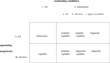



Comments
No Comments have been published for this article.