Introduction
Aging is a social phenomenon concerning nearly all the high income countries (Kinsella and He, 2008). In particular, the Eurostat estimations suggest that in 2030 over a fourth of the European population will be over 65 years old. Elder people present an increased risk of social isolation (Findlay, Reference Findlay2003). This condition affects individual health, and it appears to be associated with a higher risk of hypertension, depression, cognitive decline, and even suicide (Fratiglioni et al., Reference Fratiglioni, Wang, Ericsson, Maytan and Winblad2000; Findlay, Reference Findlay2003; Iliffe et al., Reference Iliffe, Kharicha, Harari, Swift, Gillmann and Stuck2007). Conversely, social involvement for elders can be extremely advantageous (Fratiglioni et al., Reference Fratiglioni, Wang, Ericsson, Maytan and Winblad2000; Findlay, Reference Findlay2003; Varma et al., Reference Varma2015). In recent years, multiple initiatives promoting active aging have been developed worldwide, including the use of innovative technologies (Christophorou et al., Reference Christophorou2016), multidisciplinary support (Arai et al., Reference Arai2012), physical activity (Lee et al., Reference Lee, Hui-Chan and Tsang2015; Fong et al., Reference Fong2016), and social participation (Willie-Tyndale et al., Reference Willie-Tyndale2016). In this context, the intergenerational (IG) activities aim to improve interactions and communication between different ages throughout shared experiences (Epstein and Boisvert, Reference Epstein and Boisvert2006). The first engagements in programs combining children and elders are dated back to the 60’s (Hanks and Ponzetti, Reference Hanks and Ponzetti2004). The IG programs were firstly developed in the USA; then, starting from the 90’s, similar programs have spread worldwide (Epstein and Boisvert, Reference Epstein and Boisvert2006; Ayala et al., Reference Ayala, Hewson, Bray, Jones and Hartley2007; Sugimoto, Reference Sugimoto2008; Yasunaga et al., Reference Yasunaga2016). An innovative solution, in this context, is the co-location of adult care centers (e.g. nursing homes) and kindergartens or nursery schools for children in the same building (Doll and Bolender, Reference Doll and Bolender2010; Jarrott and Smith, Reference Jarrott and Smith2011; Low et al., Reference Low, Russell, McDonald and Kauffman2015). The activities implemented during IG projects can be extremely variegated, including both structured and spontaneous tasks (Epstein and Boisvert, Reference Epstein and Boisvert2006; Holmes, Reference Holmes2009; Jarrott et al., Reference Jarrott, Morris, Burnett, Stauffer, Stremmel and Gigliotti2011). For example, in Japan, integrated programs of horticulture were developed in order to magnify the positive effects of gardening in elders and children (Sugimoto, Reference Sugimoto2008). Instead, in the American program “Experience Corps” senior citizens act as mentors in elementary schools (Varma et al., Reference Varma2015). Other common IG activities include reading (Isaki and Harmon, Reference Isaki and Harmon2014; Yasunaga et al., Reference Yasunaga2016), singing (Bales et al., Reference Bales, Eklund and Siffin2000; Belgrave, Reference Belgrave2011), playing games (Low et al., Reference Low, Russell, McDonald and Kauffman2015), and participating to artistic projects (Teater, Reference Teater2016). Despite the wide range of potential shared activities, the IG programs can be summarized in four main groups: elder people taking care of the youth, children visiting, and assisting senior citizens, elders and children cooperating in voluntary works, youth and elders who participate collectively to learning or leisure activities (Hatton-Yeo and Toshio, Reference Hatton-Yeo and Toshio2000).
International experiences outlined some important benefits for all participants, both elders and the youth (Newman, Reference Newman1997; Holmes, Reference Holmes2009; Yasunaga et al., Reference Yasunaga2016). In children, moreover, similar programs help to develop a positive attitude towards elder people, increasing children's knowledge about aging (Newman, Reference Newman1997; Bales et al., Reference Bales, Eklund and Siffin2000; Holmes, Reference Holmes2009). At the same time, IG activities present multiple benefits for elders, such as a higher self-reported health, stress reduction, and a reduced presence of depressive symptoms (Scott et al., Reference Scott, Sipsas-Herrmann, Stafford and Herrmann2005; Reisig and Fees, Reference Reisig and Fees2007; Kamei et al., Reference Kamei, Itoi, Kajii, Kawakami, Hasegawa and Sugimoto2011; Murayama et al., Reference Murayama2015; Teater, Reference Teater2016; Yasunaga et al., Reference Yasunaga2016). These programs appear to be valuable also when addressed towards people with dementia (Camp et al., Reference Camp1997; Skropeta et al., Reference Skropeta, Colvin and Sladen2014). Besides the individual benefits, important advantages of IG exchanges can affect the whole community since it may improve the public well-being and the promotion of a better integration (Greengross, Reference Greengross2003; Jarrott et al., Reference Jarrott, Morris, Burnett, Stauffer, Stremmel and Gigliotti2011).
Even if the majority of IG experiences are positive, some works outlined the risk, that may occur when the IG program's organization is not adequate, of the infantilization of older participants (Steining and Simon Reference Steinig and Simon2005). Nevertheless, the implemented programs often lacked of theoretical organization and evidence-based activities (Hamilton et al., Reference Hamilton, Brown, Alonzo, Glover, Mersereau and Willson1999; Mancini and Marek, Reference Mancini and Marek2004). Moreover, the presence of specifically trained staff appeared to be extremely important for the good outcome of the IG programs (Epstein and Boisvert, Reference Epstein and Boisvert2006; Jarrott and Smith, Reference Jarrott and Smith2011). Moreover, data regarding IG programs are often heterogeneous, and most of the studies evaluating the impact of these projects were not systematic.
To our knowledge, no previous reviews have collected and summarized data regarding the impact of IG activities. Therefore, we aim to carry out a comprehensive review of the studies regarding IG programs, in order to summarize the evidence of the effects of these programs on both elders and children. Moreover, we intend to identify the key elements of the IG activities, determining the success of these programs.
Methods
Our review followed the Preferred Reporting Items for Systematic Review and Meta-analysis (PRISMA) statements (Liberati et al., Reference Liberati2009).
We employed multiple search strategies in order to summarize the existing evidence related to non-familiar IG programs involving school- or pre-school children and elder people. We considered all papers that report data about IG programs involving children, papers that report the effects of this type of intervention on children or elders, studies that compare different types of programs, and those that analyze the staff's attitude towards these interventions.
Our research was conducted on the two following databases: PubMed and Scopus. Two researchers (EC and GV) independently performed a systematic research using the following keywords: “Intergenerational program,” “Intergenerational exchange,” “Intergenerational interaction,” “Intergenerational activity,” “Intergenerational service learning.”
Studies were considered eligible for inclusion if:
1. They considered IG programs
2. They involved school or pre-school children
3. They were written in English, Italian, Spanish, or Portuguese
No restriction was performed based on the setting where the program was performed, the sample size or the characteristics of the elder populations involved in the different studies. All types of papers were included, since RCTs were few and did not provide a complete overview of the topic.
Articles were excluded if:
1. They involved high-school or university students in IG programs
2. They involved two generations connected by family ties (e.g.: grandfather–grandson)
3. They were letters to editor.
We decided to focus specifically on IG programs involving elementary school and pre-school children, since they appear to be types of intervention more comparable between them, and considering that previous studies outlined the main results of similar programs in this age category (Bales et al., Reference Bales, Eklund and Siffin2000; Heyman et al., Reference Heyman, Gutheil and White-Ryan2011).
Two investigators (EC and GV) independently conducted a first literature research, sorting sources by title and abstract, and selecting eligible studies for full text review. During the first screening, the irrelevant or duplicated papers were excluded. Subsequently, we completed our research throughout a reference list screening. Finally, the researchers independently assessed the articles following the criteria enunciated above.
Quality assessment
Two investigators (EC and GV) independently assessed the methodological risk of bias of included studies with any disagreements being solved by discussion to reach consensus. They evaluated the studies in accordance with the Cochrane Handbook (Higgins and Green, 2011) and the guidelines of the Cochrane Consumers and Communication Review Group (Ryan and Cochrane Consumers and Communication Review Group, 2016), which recommend the explicit reporting of the following individual elements for RCTs: random sequence generation; allocation sequence concealment; blinding (participants, personnel); blinding (outcome assessment); completeness of outcome data, selective outcome reporting. They analyzed the bias risk separately for different outcomes where appropriate. They classified each item as “high,” “low,” or “unclear” risk of bias as set out in the criteria provided by Higgins and Green (2011). Studies were deemed to be at the highest risk of bias if they were classified as “high” or “unclear” risk of bias for either the “random sequence generation” or “allocation concealment” domains, based on a growing empirical evidence that these factors are particularly important potential sources of bias (Higgins and Green, 2011). The results of the risk of bias assessment were incorporated into the review. The investigators assessed quasi-RCTs as “high” risk of bias on the “random sequence generation” item of the risk of bias tool. They assessed pre-/post-studies against the same criteria as RCTs but reported them as “high” risk of bias on both the “random sequence generation” and “allocation sequence concealment” items.
Data extraction
The investigators, solving any discrepancies by consensus, independently extracted data from the selected studies, collecting information about the country, the study design, the setting, the sample characteristics, the type of intervention, the outcomes, and the results.
Due to the variety of study designs, interventions, and outcomes measured, it was not possible to perform a meta-analysis.
Results
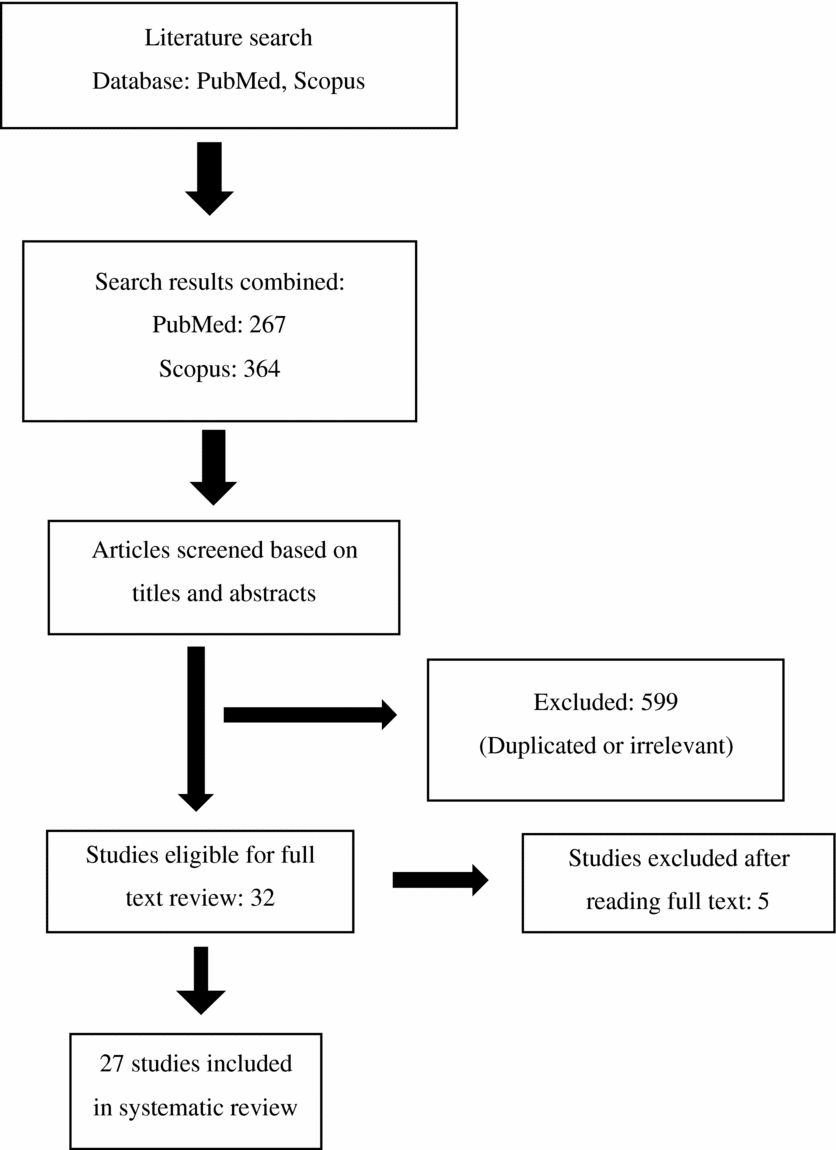
Our research returned 631 results. After removing the duplicates and irrelevant results, we obtained 55 articles for full text review. The final selection obtained 27 sources (Figure 1) (Camp et al., Reference Camp1997; Newman, Reference Newman1997; Travis et al., Reference Travis, Stremmel and Kelly-Harrison1997; Bales et al., Reference Bales, Eklund and Siffin2000; Middlecamp and Gross, Reference Middlecamp and Gross2002; Rosebrook, Reference Rosebrook2002; Scott et al., Reference Scott, Sipsas-Herrmann, Stafford and Herrmann2005; Epstein and Boisvert, Reference Epstein and Boisvert2006; Ayala et al., Reference Ayala, Hewson, Bray, Jones and Hartley2007; Reisig and Fees, Reference Reisig and Fees2007; Holmes, Reference Holmes2009; Doll and Bolender, Reference Doll and Bolender2010; Belgrave, Reference Belgrave2011; Heyman et al., Reference Heyman, Gutheil and White-Ryan2011; Jarrott and Smith, Reference Jarrott and Smith2011; Jarrott et al., Reference Jarrott, Morris, Burnett, Stauffer, Stremmel and Gigliotti2011; Kamei et al., Reference Kamei, Itoi, Kajii, Kawakami, Hasegawa and Sugimoto2011; Morita and Kobayashi, Reference Morita and Kobayashi2013; Isaki and Harmon, Reference Isaki and Harmon2014; Skropeta et al., Reference Skropeta, Colvin and Sladen2014; Low et al., Reference Low, Russell, McDonald and Kauffman2015; Murayama et al., Reference Murayama2015; Thompson and Weaver, Reference Thompson and Weaver2015; Varma et al., Reference Varma2015; Sakurai et al., Reference Sakurai2016; Teater, Reference Teater2016; Yasunaga et al., Reference Yasunaga2016). Ten studies assessed the impact of IG programs upon children (Newman, Reference Newman1997; Bales et al., Reference Bales, Eklund and Siffin2000; Middlecamp and Gross, Reference Middlecamp and Gross2002; Rosebrook, Reference Rosebrook2002; Holmes, Reference Holmes2009; Heyman et al., Reference Heyman, Gutheil and White-Ryan2011; Kamei et al., Reference Kamei, Itoi, Kajii, Kawakami, Hasegawa and Sugimoto2011; Isaki and Harmon, Reference Isaki and Harmon2014; Thompson and Weaver, Reference Thompson and Weaver2015; Yasunaga et al., Reference Yasunaga2016), 15 referred to the elder population (Camp et al., Reference Camp1997; Scott et al., Reference Scott, Sipsas-Herrmann, Stafford and Herrmann2005; Reisig and Fees, Reference Reisig and Fees2007; Doll and Bolender, Reference Doll and Bolender2010; Belgrave, Reference Belgrave2011; Kamei et al., Reference Kamei, Itoi, Kajii, Kawakami, Hasegawa and Sugimoto2011; Morita and Kobayashi, Reference Morita and Kobayashi2013; Isaki and Harmon, Reference Isaki and Harmon2014; Skropeta et al., Reference Skropeta, Colvin and Sladen2014; Low et al., Reference Low, Russell, McDonald and Kauffman2015; Murayama et al., Reference Murayama2015; Varma et al., Reference Varma2015; Sakurai et al., Reference Sakurai2016; Teater, Reference Teater2016; Yasunaga et al., Reference Yasunaga2016), three works evaluated the program organization (Epstein and Boisvert, Reference Epstein and Boisvert2006; Jarrott and Smith, Reference Jarrott and Smith2011; Jarrott et al., Reference Jarrott, Morris, Burnett, Stauffer, Stremmel and Gigliotti2011), and the last two assessed the staff opinions (Travis et al., Reference Travis, Stremmel and Kelly-Harrison1997; Ayala et al., Reference Ayala, Hewson, Bray, Jones and Hartley2007). All the retrieved works were published between 1997 (Camp et al., Reference Camp1997; Newman, Reference Newman1997; Travis et al., Reference Travis, Stremmel and Kelly-Harrison1997), and 2016 (Sakurai et al., Reference Sakurai2016; Yasunaga et al., Reference Yasunaga2016). Only one study (Low et al., Reference Low, Russell, McDonald and Kauffman2015) showed “low” risk of bias, while all the others presented a “high” risk of bias, mostly due to their study design.
Information's flow chart of the different steps of the review.

Impact on children participants
Ten studies evaluated children's outcomes (Newman, Reference Newman1997; Bales et al., Reference Bales, Eklund and Siffin2000; Middlecamp and Gross, Reference Middlecamp and Gross2002; Rosebrook, Reference Rosebrook2002; Holmes, Reference Holmes2009; Heyman et al., Reference Heyman, Gutheil and White-Ryan2011; Kamei et al., Reference Kamei, Itoi, Kajii, Kawakami, Hasegawa and Sugimoto2011; Isaki and Harmon, Reference Isaki and Harmon2014; Thompson and Weaver, Reference Thompson and Weaver2015; Yasunaga et al., Reference Yasunaga2016). The main characteristics of the retrieved studies are summarized in Table 1. They were written between 1997 (Newman, Reference Newman1997) and 2016 (Yasunaga et al., Reference Yasunaga2016). Eight works were conducted in the US (Newman, Reference Newman1997; Bales et al., Reference Bales, Eklund and Siffin2000; Middlecamp and Gross, Reference Middlecamp and Gross2002; Rosebrook, Reference Rosebrook2002; Holmes, Reference Holmes2009; Heyman et al., Reference Heyman, Gutheil and White-Ryan2011; Isaki and Harmon, Reference Isaki and Harmon2014; Thompson and Weaver, Reference Thompson and Weaver2015), while two in Japan (Kamei et al., Reference Kamei, Itoi, Kajii, Kawakami, Hasegawa and Sugimoto2011; Yasunaga et al., Reference Yasunaga2016). The sample size ranged from 7 (Kamei et al., Reference Kamei, Itoi, Kajii, Kawakami, Hasegawa and Sugimoto2011) to over 940 children (Thompson and Weaver, Reference Thompson and Weaver2015). Most programs took place in school or preschool environments (Newman, Reference Newman1997; Bales et al., Reference Bales, Eklund and Siffin2000; Rosebrook, Reference Rosebrook2002; Isaki and Harmon, Reference Isaki and Harmon2014; Yasunaga et al., Reference Yasunaga2016).
The table summarized the main characteristics of the retrieved works describing the impact of IG programs on children participants, reporting the countries in study, the sample characteristics, the program features, the outcomes, and the main findings

The oldest study interviewed 71 children (fourth and fifth grade) using the “CVOA Questionnaire” (Children's View of Older Adult Questionnaire) (Newman, Reference Newman1997). The evaluation was performed before and after the implementation of a program which brought elders into classrooms on a weekly basis. Pre- and post-participation responses did not show great differences, but when the children were asked if they felt desirable the presence of an elder in classrooms as a helper, more children answered “yes” in post-test questionnaires than in pre-test (Newman, Reference Newman1997). Similarly, in another study, 63 children attending second and fourth grade were asked to provide descriptors (categorized either as positive, negative, or physical) for older people using a less structured interview performed before and after the program implementation. The results outlined a significant increase of the number of positive words used to describe old people, as well as a decrease of the number of negative words used (Bales et al., Reference Bales, Eklund and Siffin2000). This study evaluated the effects of the “Learning and Growing Together Intergenerational Program,” which paired elders with students from second-, fourth-, and fifth-grade classes (Bales et al., Reference Bales, Eklund and Siffin2000). Comparable outcomes were assessed in two studies of 2011 and 2014 (Heyman et al., Reference Heyman, Gutheil and White-Ryan2011; Isaki and Harmon, Reference Isaki and Harmon2014). The first showed that preschool children's attitudes toward elders were more positive in the IG program compared to the traditional education (Heyman et al., Reference Heyman, Gutheil and White-Ryan2011). The second work enrolled 12 school-aged children in an exploratory IG program focused on reading. The children participated to 45-minutes weekly sessions for eight weeks with older people with mild dementia. In this study, significant positive findings were obtained for the school-aged children's perceptions of elder people (Isaki and Harmon, Reference Isaki and Harmon2014). Furthermore, Thompson et al. in 2015 performed an interesting study assessing the long-term effects of IG activities (Thompson and Weaver, Reference Thompson and Weaver2015). Moreover, the investigators assessed the image of elder people in a high school from five to nine years after the involvement in an IG program (held in fourth grade). They interviewed 994 high-school students and the results showed that those students who participated to the IG program while attending fourth grade had a more positive image of elder people. In addition, positive images of elders were significantly related to having grandparents or other older relatives as primary older adult contacts (Thompson and Weaver, Reference Thompson and Weaver2015).
Furthermore, a study performed in 2016 enrolled 470 students from first to sixth grade, 230 parents, and 141 seniors (Yasunaga et al., Reference Yasunaga2016). They were involved in an IG picture-book reading program, with group activities that involved playing a hand game, and reading picture books to children at kindergartens, elementary schools, and public childcare centers, once every 1–2 weeks. Data on children were collected three times by using a self-administered questionnaire: at baseline, and at first and second follow-upset every six months after the beginning of the program. This study showed that the students were relieved from the mental and physical stress response after participation in the program (Yasunaga et al., Reference Yasunaga2016).
On the other hand a study performed in 2002 assessed children's perception of the elders using CATE Questionnaire (Children's Attitudes Towards Elderly) and Activity Scale (Middlecamp and Gross, Reference Middlecamp and Gross2002). Thirty-three preschoolers were included, and in this case, despite program-related differences in attitudes towards aging or elder people were expected, the two groups showed overall very similar results.
In a Japanese study from 2011, similar outcomes were measured (Kamei et al., Reference Kamei, Itoi, Kajii, Kawakami, Hasegawa and Sugimoto2011). This longitudinal study assessed the effects of a weekly IG day program in an urban community during a six-months period. The convenience sample involved only seven schoolchildren. In this study, the children's initial positive perspective of elder people showed no statistically significant changes over the time (Kamei et al., Reference Kamei, Itoi, Kajii, Kawakami, Hasegawa and Sugimoto2011).
Differently, a trial performed in Ohio, compared social and personal skills between preschool children involved in IG programs and preschool children not involved in similar activities (Rosebrook, Reference Rosebrook2002). This study, including 200 children, showed that IG childcare enhanced personal/social development in preschoolers (Rosebrook, Reference Rosebrook2002).
Finally, a report from 2009 evaluated the first year of implementation of an IG program (Holmes, Reference Holmes2009). This program had a major logistical advantage; infact, the childcare center was located in the same building of the nursing home facility. This advantage minimizes the need to organize transportation. Planned activities are offered on a regular basis. The findings from this study provided evidence that IG programs can promote positive attitudes towards elders. Additional benefits for both children and elders included sensory stimulation and meeting of special needs with individual attention. All individuals involved in the program benefited an enhancement of basic human needs such as acceptance and self-esteem, socialization, and intellectual development (Holmes, Reference Holmes2009).
Impact on elderly participants
Fifteen works assessed the impact of IG programs on elderly participants (Camp et al., Reference Camp1997; Scott et al., Reference Scott, Sipsas-Herrmann, Stafford and Herrmann2005; Reisig and Fees, Reference Reisig and Fees2007; Doll and Bolender, Reference Doll and Bolender2010; Belgrave, Reference Belgrave2011; Kamei et al., Reference Kamei, Itoi, Kajii, Kawakami, Hasegawa and Sugimoto2011; Morita and Kobayashi, Reference Morita and Kobayashi2013; Isaki and Harmon, Reference Isaki and Harmon2014; Skropeta et al., Reference Skropeta, Colvin and Sladen2014; Low et al., Reference Low, Russell, McDonald and Kauffman2015; Murayama et al., Reference Murayama2015; Varma et al., Reference Varma2015; Sakurai et al., Reference Sakurai2016; Teater, Reference Teater2016; Yasunaga et al., Reference Yasunaga2016). The main features of the collected works are reported in Table 2. Seven of the retrieved works were conducted in the USA (Camp et al., Reference Camp1997; Scott et al., Reference Scott, Sipsas-Herrmann, Stafford and Herrmann2005; Reisig and Fees, Reference Reisig and Fees2007; Doll and Bolender, Reference Doll and Bolender2010; Belgrave, Reference Belgrave2011; Isaki and Harmon, Reference Isaki and Harmon2014; Varma et al., Reference Varma2015), five in Japan (Kamei et al., Reference Kamei, Itoi, Kajii, Kawakami, Hasegawa and Sugimoto2011; Morita and Kobayashi, Reference Morita and Kobayashi2013; Murayama et al., Reference Murayama2015; Sakurai et al., Reference Sakurai2016; Yasunaga et al., Reference Yasunaga2016), two in Australia (Skropeta et al., Reference Skropeta, Colvin and Sladen2014; Low et al., Reference Low, Russell, McDonald and Kauffman2015), and one in the UK (Teater, Reference Teater2016). Sample size ranged from 6 (Isaki and Harmon, Reference Isaki and Harmon2014) to 162 older participants (Sakurai et al., Reference Sakurai2016). The IG programs took place in schools (Scott et al., Reference Scott, Sipsas-Herrmann, Stafford and Herrmann2005; Reisig and Fees, Reference Reisig and Fees2007; Murayama et al., Reference Murayama2015; Varma et al., Reference Varma2015; Sakurai et al., Reference Sakurai2016; Teater, Reference Teater2016; Yasunaga et al., Reference Yasunaga2016), in aged care facility (Camp et al., Reference Camp1997; Doll and Bolender, Reference Doll and Bolender2010; Belgrave, Reference Belgrave2011; Morita and Kobayashi, Reference Morita and Kobayashi2013; Low et al., Reference Low, Russell, McDonald and Kauffman2015) or in the community (Kamei et al., Reference Kamei, Itoi, Kajii, Kawakami, Hasegawa and Sugimoto2011). Only one of the retrieved papers was a RCT (Low et al., Reference Low, Russell, McDonald and Kauffman2015), while the others included non-randomized clinical trials (Belgrave, Reference Belgrave2011; Sakurai et al., Reference Sakurai2016; Yasunaga et al., Reference Yasunaga2016), observational studies (Camp et al., Reference Camp1997; Kamei et al., Reference Kamei, Itoi, Kajii, Kawakami, Hasegawa and Sugimoto2011; Morita and Kobayashi, Reference Morita and Kobayashi2013), and surveys (Teater, Reference Teater2016).
The table summarizes the characteristics of the studies considering the impact of IG programs on elderly participants, reporting the countries in study, the sample characteristics, the program features, outcomes, and main findings
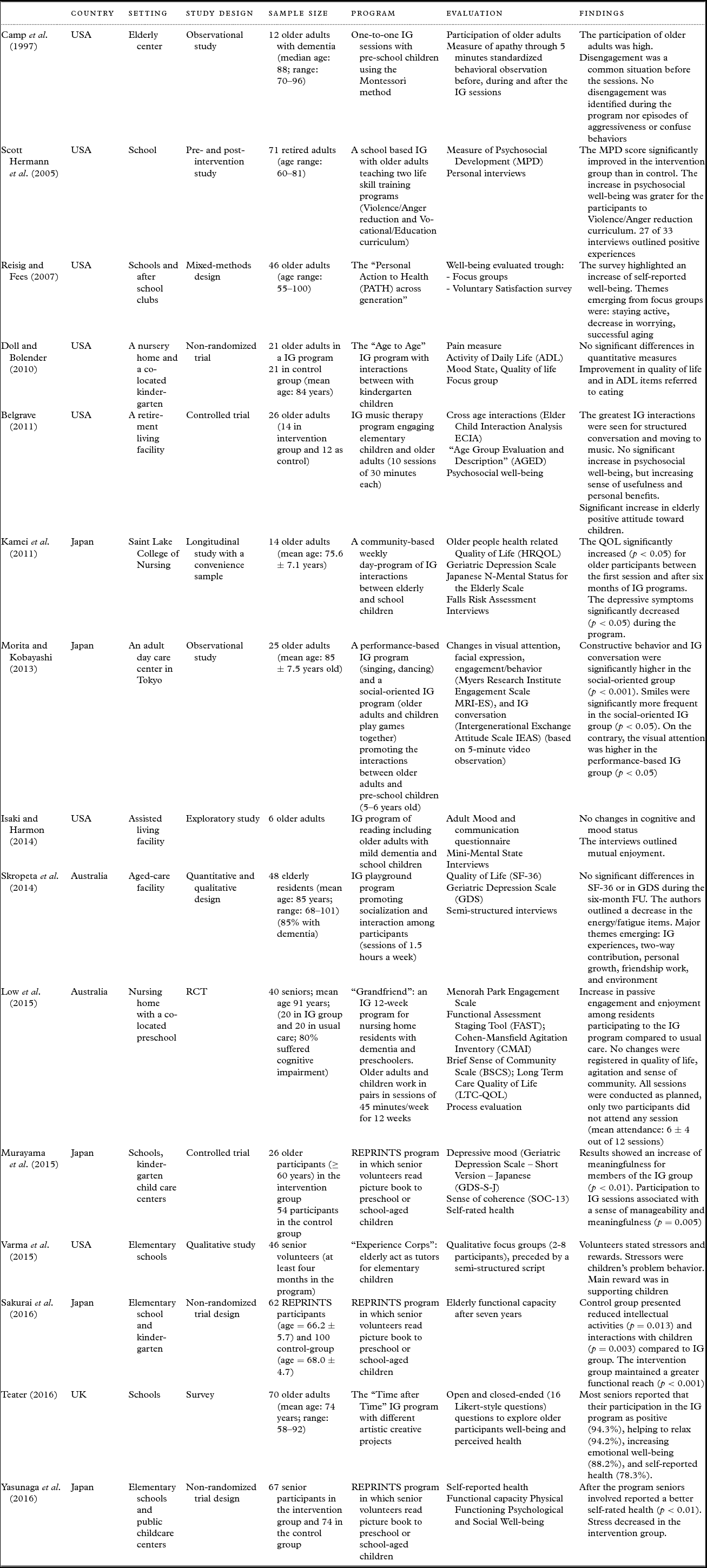
Three Japanese studies assessed the impact of the same IG program upon different outcomes (Kamei et al., Reference Kamei, Itoi, Kajii, Kawakami, Hasegawa and Sugimoto2011; Sakurai et al., Reference Sakurai2016; Yasunaga et al., Reference Yasunaga2016). The program under discussion is “REPRINTS,” in which senior volunteers (≥ 60 years old) read picture books to kindergarten and elementary children. The volunteers before the beginning of the activities attended a three-months intensive training. Two studies assessed the impact on elders immediately after the program (Murayama et al., Reference Murayama2015; Yasunaga et al., Reference Yasunaga2016), while one considered the long-term effects after a seven years period of follow-up (Sakurai et al., Reference Sakurai2016). The program consented to increase the sense of coherence, and decrease the depressive mood of participants (evaluated through validated scales). In particular, the researchers outlined a significant increase in meaningfulness and manageability items (p < 0.01) (Murayama et al., Reference Murayama2015). Moreover, these activities effectively improved self-reported health and reduced stress (p < 0.01) (Yasunaga et al., Reference Yasunaga2016). At long-term follow-up, the REPRINTS participants maintained greater functional abilities (p < 0.001), intellectual activities (p = 0.013), and IG interactions (p = 0.003) than controls (Sakurai et al., Reference Sakurai2016).
Two studies, instead, considered programs in which older volunteers acted as mentors for school children (Scott et al., Reference Scott, Sipsas-Herrmann, Stafford and Herrmann2005; Varma et al., Reference Varma2015). Both IG programs took place in USA schools. In the first study, 71 retired adults taught two life-skill training programs; namely, violence/anger reduction and vocational/education curriculum (Scott et al., Reference Scott, Sipsas-Herrmann, Stafford and Herrmann2005). In this case, the researchers assessed a significant increase in psychosocial well-being (MPD Score). This improvement was greater for the elders participating to the violence/anger reduction curriculum (Scott et al., Reference Scott, Sipsas-Herrmann, Stafford and Herrmann2005). The second study assessed the IG program “Experienced Corps;” in this context elders act as tutors for elementary children (Varma et al., Reference Varma2015). This study evaluated both the rewards and stressors for senior volunteers participating. Stressors included, mainly, children problematic behaviors and social stressors, while rewards included children support and IG interaction. Overall, the rewards outweighed the stressors (Varma et al., Reference Varma2015). Finally, in both cases, the majority of elders described the program as a positive experience. In particular, in the first study 27 out of 33 (Scott et al., Reference Scott, Sipsas-Herrmann, Stafford and Herrmann2005; Varma et al., Reference Varma2015). Furthermore, also, Reisig et al. in their survey outlined an increase of self-reported well-being in older participants (Reisig and Fees, Reference Reisig and Fees2007). The IG program in study (Personal Action to Health, PATH) promoted interactions between older adults (age range: 55–100 years) and children, from pre-school to grade 12. Moreover, the focus groups identified an increase in staying active, a decrease of worrying, and an increased perception of successful aging. These positive effects were greater for the age group from 74 to 85 years (Reisig and Fees, Reference Reisig and Fees2007). On the contrary, Belgrave et al. in their study did not recorded any significant change in participant psychosocial well-being (Belgrave, Reference Belgrave2011). In this latter case, the authors investigated the impact of a music IG program in a retirement living facility, involving residents and elementary children. Despite the little effect upon well-being, the program consented to increase interactions between the two considered groups, and the sense of usefulness and personal benefits in elderly. In particular, interactions were higher in case of structured conversations and when moving to music activities. Furthermore, after the ten-session program, a significant increase of positive attitude toward children amongst residents was registered (Belgrave, Reference Belgrave2011).
Two studies investigated other advantages for elders involved in IG activities (Doll and Bolender, Reference Doll and Bolender2010; Kamei et al., Reference Kamei, Itoi, Kajii, Kawakami, Hasegawa and Sugimoto2011). In particular, Doll et al. investigated the impact of IG activities in a nursery home for adults with a co-located kindergarten. The project included an intensive IG program with 6–7 opportunities of interaction per day overall. The study identified an improvement, not statistically significant, in mood measures, ADL, and self-reported health. Moreover, from the focus groups, an improvement in the quality of life for seniors participating to IG activities emerged (Doll and Bolender, Reference Doll and Bolender2010). Instead, Kamei et al. investigated the impact of a community-based IG program in Japan. The program included a component of shared activities and a component in which senior participants shared their wisdom, culture, and personal history with children. The Quality of Life, assessed with HRQOL questionnaire, significantly increased (p < 0.05) for older participants between the first session and after six months of IG programs. The depressive symptoms, assessed with Geriatric Depression Scale, significantly decreased (p < 0.05) during the program (Kamei et al., Reference Kamei, Itoi, Kajii, Kawakami, Hasegawa and Sugimoto2011).
Furthermore, Teater et al. considered the participants’ opinions towards a variegated IG program including a wide range of activities as singing, dancing, and art works promoting interactions between older volunteers and elementary kids. Nearly, all participants considered their experience in the program as positive. Precisely, over 75% rated their involvement as excellent, and over 25% as good. From the post-intervention questionnaire, an increase in confidence, self-esteem, social skills, and overall health and well-being emerged. Finally, the program contributed to strengthen the sense of community (Teater, Reference Teater2016).
Moreover, four studies assessed the feasibility and impact of IG programs involving adults with dementia (Camp et al., Reference Camp1997; Isaki and Harmon, Reference Isaki and Harmon2014; Skropeta et al., Reference Skropeta, Colvin and Sladen2014; Low et al., Reference Low, Russell, McDonald and Kauffman2015). Three programs involved preschool children (Camp et al., Reference Camp1997; Skropeta et al., Reference Skropeta, Colvin and Sladen2014; Low et al., Reference Low, Russell, McDonald and Kauffman2015), while one included elementary students (mean age: nine years old) (Isaki and Harmon, Reference Isaki and Harmon2014). The IG activities implemented included playground activities (Skropeta et al., Reference Skropeta, Colvin and Sladen2014), reading programs (Isaki and Harmon, Reference Isaki and Harmon2014), crafts (Low et al., Reference Low, Russell, McDonald and Kauffman2015), games (Low et al., Reference Low, Russell, McDonald and Kauffman2015), and activities conceived from the Montessori method (Camp et al., Reference Camp1997). All the works highlighted the feasibility of similar programs; indeed, no disengagement, nor aggressive, or confuse behaviors were documented (Camp et al., Reference Camp1997). The participants enjoyed the IG sessions more than usual care (Isaki and Harmon, Reference Isaki and Harmon2014; Low et al., Reference Low, Russell, McDonald and Kauffman2015), and also passive engagement appears to increase (Low et al., Reference Low, Russell, McDonald and Kauffman2015). However, no significant changes were recorded for self-reported health (Skropeta et al., Reference Skropeta, Colvin and Sladen2014; Low et al., Reference Low, Russell, McDonald and Kauffman2015), depressive symptoms (Isaki and Harmon, Reference Isaki and Harmon2014; Skropeta et al., Reference Skropeta, Colvin and Sladen2014), cognitive status (Isaki and Harmon, Reference Isaki and Harmon2014), and sense of community (Low et al., Reference Low, Russell, McDonald and Kauffman2015). From the interviews of older participants, the following major themes emerged: personal growth, two-way contribution, and friendship work (Skropeta et al., Reference Skropeta, Colvin and Sladen2014).
Finally, one Japanese study compared two different approaches of IG programs taking place in the same elderly day service, namely a performance-based IG program (singing and dancing) and a social oriented approach (playing games together). Both programs promoted interactions between elderly and pre-school children. However, from the analysis, constructive behaviors and IG conversations were higher in case of the social oriented program (p < 0.001). On the other side, visual attention appeared higher for performance-based activities (p < 0.05). In conclusion, both programs contributed to smiles and conversations among elderly (Morita and Kobayashi, Reference Morita and Kobayashi2013).
Program evaluation
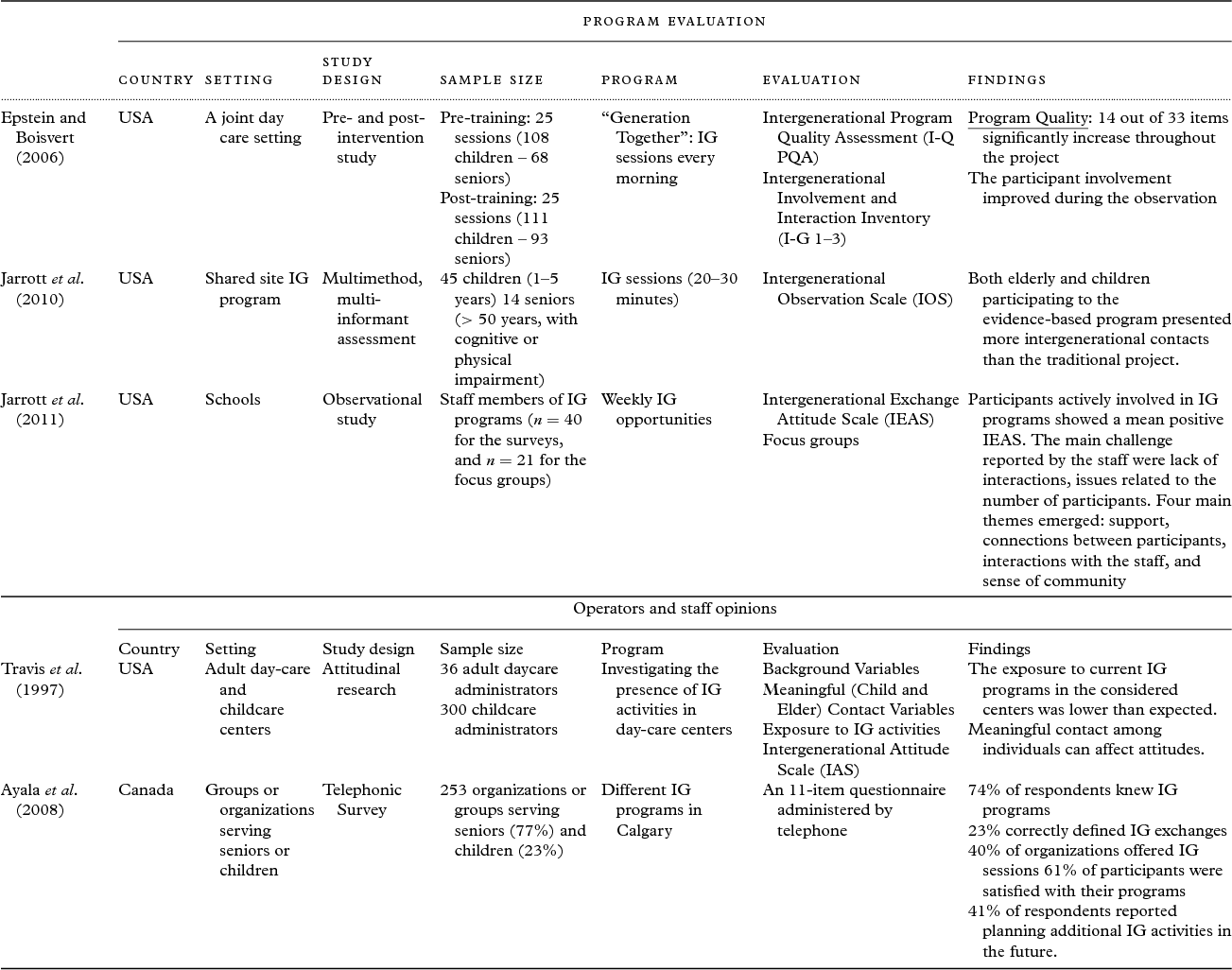
Three works evaluated the organization of IG programs, identifying the fundamental characteristics determining the success of these programs (Epstein and Boisvert, Reference Epstein and Boisvert2006; Jarrott and Smith, Reference Jarrott and Smith2011; Jarrott et al., Reference Jarrott, Morris, Burnett, Stauffer, Stremmel and Gigliotti2011). Table 3 summarizes the main characteristics of these papers. All studies were conducted in the USA (Epstein and Boisvert, Reference Epstein and Boisvert2006; Jarrott and Smith, Reference Jarrott and Smith2011; Jarrott et al., Reference Jarrott, Morris, Burnett, Stauffer, Stremmel and Gigliotti2011).
The table describes the main characteristics of studies assessing, respectively, the program evaluation and those assessing operators and staff opinions, reporting the countries in study, the participant characteristics, the program characteristics, the outcomes, and the main findings

Epstein et al. assessed the quality of a program and the interactions between participants before and after a training course addressed to the staff (Epstein and Boisvert, Reference Epstein and Boisvert2006). The examined schedule included different activities that involved both seniors and pre-school children in shared activities. The program quality improved after the training course in all the considered items, including physical setting, schedules, and staff-participant interactions. Moreover, after the training, the involvement of participants, both elderly and children, significantly increased. In particular, after the sessions the children improved their ability to take care of themselves, while the interested seniors did not show significant signs of decline. Overall, this evaluation showed the importance of an adequate setting, accessible to all participants, and of open-ended activities that appeared more interesting for both children and seniors. Finally, sharing results with families appeared to be a key element for the program success (Epstein and Boisvert, Reference Epstein and Boisvert2006). The same key elements were outlined, also, in another study dated 2010 (Jarrott and Smith, Reference Jarrott and Smith2011). Moreover, this work compared two different shared-location IG programs, namely a standard project and a second program organized following evidence-based indications derived from previous works. This latter program presented higher increases of interaction between participants than the standard one (Jarrott and Smith, Reference Jarrott and Smith2011). Finally, a work of 2011 employed a multi-method approach in order to evaluate an IG project organization, considering staff opinions and experiences. The survey outlined an increase of positive attitude of the staff members actively involved in the project. The main issues emerging from interviews were related to the organization of the activities. Particularly, the operators reported a lack of interactions for some activities, and issues related to the number of participants (too many or too little) or to staff shortage. From the focus groups, an important emerging theme was the growing sense of community throughout the sessions (Jarrott et al., Reference Jarrott, Morris, Burnett, Stauffer, Stremmel and Gigliotti2011).
Operators and staff opinions
The studies presented in the previous sections considered the impact of IG contacts on participants or assessed the overall program organization. In addition to this, our research found out two works investigating the attitude of operators and staff regarding these opportunities (Travis et al., Reference Travis, Stremmel and Kelly-Harrison1997; Ayala et al., Reference Ayala, Hewson, Bray, Jones and Hartley2007). The main features of these works are reported in Table 3. The two retrieved studies were conducted, respectively, in the USA (Travis et al., Reference Travis, Stremmel and Kelly-Harrison1997), and Canada (Ayala et al., Reference Ayala, Hewson, Bray, Jones and Hartley2007). Travis et al. conducted a mail survey among Virginia adult daycare or childcare administrators to investigate their attitude towards IG activities. First, the survey retrieved a poor implementation of IG activities in the over 300 considered facilities. Second, the administrators involved directly in IG organization identified more potential benefits of IG exchanges than professionals not experiencing similar activities (Travis et al., Reference Travis, Stremmel and Kelly-Harrison1997). Similarly, a more recent survey investigated the characteristics of the IG programs available in Calgary. In this case, 75% of respondents stated to be familiar with IG programs. However, only a limited amount of them (around 25%) correctly defined IG exchanges and identified the key elements of similar programs. Nearly a half of the organizations telephonically reached offered IG activities in their structures. Over 60% of staff, providing IG programs, declared they were highly satisfied by the organization and results. The main expressed needs to reach an improvement were: increase of the number of participants or staff, the necessity of higher resources and the expansion of the projects. 41% of respondents reported to be planning additional IG activities in the future (Ayala et al., Reference Ayala, Hewson, Bray, Jones and Hartley2007).
Discussion
In the last decades, aging has become an important social phenomenon, in particular in developed countries. In this age cohort, social isolation represents a concerning issue (Findlay, Reference Findlay2003). Therefore, in this context, IG programs became more popular in the last decades (Newman, Reference Newman1997; Epstein and Boisvert, Reference Epstein and Boisvert2006; Ayala et al., Reference Ayala, Hewson, Bray, Jones and Hartley2007; Sugimoto, Reference Sugimoto2008; Yasunaga et al., Reference Yasunaga2016). Therefore, we carried out a review in order to provide a clear view of the potentiality and benefits of IG activities considering the effects on both children and elders.
First of all, the settings of implementation of the IG programs appear to be, from our review, extremely variegated, including schools and pre-schools (Newman, Reference Newman1997; Bales et al., Reference Bales, Eklund and Siffin2000; Rosebrook, Reference Rosebrook2002; Isaki and Harmon, Reference Isaki and Harmon2014; Yasunaga et al., Reference Yasunaga2016), aged-care facilities (Camp et al., Reference Camp1997; Doll and Bolender, Reference Doll and Bolender2010; Belgrave, Reference Belgrave2011; Morita and Kobayashi, Reference Morita and Kobayashi2013), and general community (Kamei et al., Reference Kamei, Itoi, Kajii, Kawakami, Hasegawa and Sugimoto2011). This wide range of settings suggests the extensive potential of an implementation of similar experiences. However, the major logistical and organizational advantages were recorded in those studies where the setting was made of co-location of pre-schools and nursery homes in the same building (Holmes, Reference Holmes2009; Doll and Bolender, Reference Doll and Bolender2010). More precisely, in these cases numerous intensive interactions resulted feasible. The wide potentialities of application were highlighted, also, considering the feasibility and benefits of IG programs involving elder people with dementia (Camp et al., Reference Camp1997; Isaki and Harmon, Reference Isaki and Harmon2014; Skropeta et al., Reference Skropeta, Colvin and Sladen2014; Low et al., Reference Low, Russell, McDonald and Kauffman2015). As well as the variety of settings, a wide heterogeneity of IG activities emerged, such as reading (Isaki and Harmon, Reference Isaki and Harmon2014; Yasunaga et al., Reference Yasunaga2016), mentoring (Newman, Reference Newman1997; Scott et al., Reference Scott, Sipsas-Herrmann, Stafford and Herrmann2005; Varma et al., Reference Varma2015), dancing (Belgrave, Reference Belgrave2011), or playing (Morita and Kobayashi, Reference Morita and Kobayashi2013; Teater, Reference Teater2016). Anyhow, independently from the IG activity chosen, our review highlights the importance of specific trainings for the operators (Epstein and Boisvert, Reference Epstein and Boisvert2006; Varma et al., Reference Varma2015). In particular, the careful organization of evidence-based IG activities appeared to be extremely important (Jarrott and Smith, Reference Jarrott and Smith2011; Jarrott et al., Reference Jarrott, Morris, Burnett, Stauffer, Stremmel and Gigliotti2011). Finally, the strongest IG interactions occurred in case of activities that promoted conversation among participants and in the event of less structured activities (Belgrave, Reference Belgrave2011; Morita and Kobayashi, Reference Morita and Kobayashi2013).
From our research, the positive impact upon children results to be widely proved. In fact, nearly all the studies retrieved highlighted an improvement of children perceptions of elder people. Moreover, IG programs can reduce the gap between the two generations involved and promote mutual awareness and understanding. These findings were confirmed despite the broad range of outcomes and tools used, as questionnaires (Newman, Reference Newman1997; Middlecamp and Gross, Reference Middlecamp and Gross2002; Heyman et al., Reference Heyman, Gutheil and White-Ryan2011; Isaki and Harmon, Reference Isaki and Harmon2014; Thompson and Weaver, Reference Thompson and Weaver2015; Yasunaga et al., Reference Yasunaga2016), semantic descriptors (Bales et al., Reference Bales, Eklund and Siffin2000; Kamei et al., Reference Kamei, Itoi, Kajii, Kawakami, Hasegawa and Sugimoto2011), and interviews (Holmes, Reference Holmes2009; Isaki and Harmon, Reference Isaki and Harmon2014). Interestingly, one of the retrieved studies outlined the persistence of these positive effects even throughout a long-term period going from five to nine years after the end of the IG activities (Thompson and Weaver, Reference Thompson and Weaver2015). Finally, considering kids, the major advantages were recorded for preschoolers (Bales et al., Reference Bales, Eklund and Siffin2000).
Similarly, the most investigated outcome for older participants was the psychosocial well-being. Despite the heterogeneous results and the different evaluation scales employed, most studies agreed regarding the positive effect upon this outcome (Scott et al., Reference Scott, Sipsas-Herrmann, Stafford and Herrmann2005; Reisig and Fees, Reference Reisig and Fees2007; Belgrave, Reference Belgrave2011; Murayama et al., Reference Murayama2015; Teater, Reference Teater2016). Other positive effects identified for senior citizens participating to IG activities included an improvement in self-reported health (Camp et al., Reference Camp1997; Doll and Bolender, Reference Doll and Bolender2010; Skropeta et al., Reference Skropeta, Colvin and Sladen2014; Teater, Reference Teater2016; Yasunaga et al., Reference Yasunaga2016), and a decrease in stress (Reisig and Fees, Reference Reisig and Fees2007; Yasunaga et al., Reference Yasunaga2016) and depressive mood (Kamei et al., Reference Kamei, Itoi, Kajii, Kawakami, Hasegawa and Sugimoto2011; Skropeta et al., Reference Skropeta, Colvin and Sladen2014; Low et al., Reference Low, Russell, McDonald and Kauffman2015; Teater, Reference Teater2016). The advantages of similar programs persisted throughout a long-term period even for elders. Precisely, after a seven years follow-up, the elders in the IG intervention group maintained greater functional abilities and intellectual activities than the control group (Sakurai et al., Reference Sakurai2016). Eventually, beyond the individual effects, these programs seemed to increase the sense of community for all the involved participants (Camp et al., Reference Camp1997; Teater, Reference Teater2016).
Four studies assessed the feasibility and impact of IG programs involving adults with dementia (Camp et al., Reference Camp1997; Isaki and Harmon, Reference Isaki and Harmon2014; Skropeta et al., Reference Skropeta, Colvin and Sladen2014; Low et al., Reference Low, Russell, McDonald and Kauffman2015). Although no significant changes were recorded for self-reported health (Skropeta et al., Reference Skropeta, Colvin and Sladen2014; Low et al., Reference Low, Russell, McDonald and Kauffman2015), depressive symptoms (Isaki and Harmon, Reference Isaki and Harmon2014; Skropeta et al., Reference Skropeta, Colvin and Sladen2014), nor cognitive status (Isaki and Harmon, Reference Isaki and Harmon2014); all the studies underlined the feasibility of these programs. Finally, the staff involved expressed positive opinions regarding the implemented IG activities (Travis et al., Reference Travis, Stremmel and Kelly-Harrison1997; Ayala et al., Reference Ayala, Hewson, Bray, Jones and Hartley2007; Jarrott and Smith, Reference Jarrott and Smith2011; Jarrott et al., Reference Jarrott, Morris, Burnett, Stauffer, Stremmel and Gigliotti2011), declaring their wish to increase and intensify these activities (Travis et al., Reference Travis, Stremmel and Kelly-Harrison1997; Ayala et al., Reference Ayala, Hewson, Bray, Jones and Hartley2007). Moreover, a Canadian survey highlighted the broad scope for action in the implementation of IG agendas as well as the need to improve the knowledge regarding these opportunities among both operators and parents (Travis et al., Reference Travis, Stremmel and Kelly-Harrison1997).
The IG programs are part of the composite initiatives aiming to promote active aging. Active aging represents a particularly salient issue, with an emerging core of evidence regarding its importance (Arai et al., Reference Arai2012; Lee et al., Reference Lee, Hui-Chan and Tsang2015; Fong et al., Reference Fong2016; Willie-Tyndale et al., Reference Willie-Tyndale2016). Therefore, in light of the evidence retrieved, IG activities appear to be a valuable tool to fight social isolation.
One limitation of our review is to ascribe to the paucity of RCTs regarding this topic. The majority of the works retrieved were, indeed, non-randomized clinical trials (Belgrave, Reference Belgrave2011; Sakurai et al., Reference Sakurai2016; Yasunaga et al., Reference Yasunaga2016), observational studies (Camp et al., Reference Camp1997; Kamei et al., Reference Kamei, Itoi, Kajii, Kawakami, Hasegawa and Sugimoto2011; Morita and Kobayashi, Reference Morita and Kobayashi2013), or surveys (Travis et al., Reference Travis, Stremmel and Kelly-Harrison1997; Teater, Reference Teater2016). Moreover, in some cases the studies considered extremely limited samples (Camp et al., Reference Camp1997; Kamei et al., Reference Kamei, Itoi, Kajii, Kawakami, Hasegawa and Sugimoto2011; Isaki and Harmon, Reference Isaki and Harmon2014) which could lead to results that can be hardly compared to general population. Due to this study type, considering the Cochrane Handbook (Higgins and Green, 2011), the overall risk of bias is high. Therefore, additional and more standardized studies regarding IG program's effectiveness are desirable, also considering the wide range of different outcomes investigated. A meta-analysis would be desirable, but now-a-days data consider too many different outcomes and samples are too small to perform it. Another limitation of our work is related to the language selection of our review (English, Spanish, Portuguese, and Italian). In fact, additional works potentially significant to our aim, could have been excluded consequently to this criterion.
Summarizing, the IG activities appear as useful instruments to fight social isolation and to maintain elders active. The positive effects affect also the children participating to these programs. However, in order to describe better in detail the psychological and physical health effects of IG tasks, more works are required. Nearly, all the collected works referred to experiences conducted in the USA or in Japan. Therefore, it could be interesting to extend these experiences to other settings. In conclusion, the implementation of strictly evidence-based IG activities appears to be remarkably fascinating.
Conflict of interest
None.
Description of author's roles
MG Gualano and F Bert supervised the data collection and supervised the paper writing. G Voglino, R Thomas, and E Camussi performed the data collection and wrote the paper. R Siliquini designed the study and supervised the data collection and supervised the paper writing.