




No CrossRef data available.
Article contents
Perioperative predictors of developmental outcome following cardiac surgery in infancy
Published online by Cambridge University Press: 21 January 2005
Abstract
At 1 year we assessed the neurodevelopmental outcomes in infants undergoing cardiac surgery, seeking to explore the predictive value of perioperative markers of cerebral injury. We prospectively enroled 47 neurodevelopmentally normal infants prior to planned cardiac surgery. Postoperative monitoring consisted of 10-channel video synchronised, continuous electroencephalography from 6 to 30 h, Doppler assessment of cerebral blood flow in the anterior cerebral artery at 1, 2, 3 and 5 h, and measurement of serum S-100B at 0 and 24 h. Neurodevelopmental assessments were performed using the second edition of the Bayley Scale of Infant Development. Follow-up at 1 year was available on 35 infants. The mean age of these patients at surgery had been 57 ± 15 days. We observed clinical seizures in 1 patient, with 3 other patients having electroencephalographic abnormalities. At follow-up of 1 year, neurodevelopmental scores were lower than preoperative scores, with mean mental scores changing from 103 ± 5 to 94 ± 13 (p = 0.001), and mean motor scores changing from 99 ± 8 to 89 ± 20 (p = 0.004). No association was found between electroencephalographic abnormalities, reduced cerebral blood flow, or elevation of serum S-100B levels and impaired neurodevelopmental outcome at 1 year. Infants with electroencephalographic abnormalities had elevation of the levels of S-100B in the serum (p = 0.02). At 1 year of follow-up, infants undergoing cardiac surgery demonstrated a reduction in the scores achieved using the second edition of the Bayley Scale of Infant Development. They require ongoing assessment of their progress. Electroencephalographic abnormalities, cerebral blood flow, or levels of S-100B in the serum were not useful perioperative markers for predicting a poor neurodevelopmental outcome in the clinical setting.
Information
- Type
- Original Article
- Information
- Copyright
- © 2004 Cambridge University Press
Children who undergo surgical procedures utilising cardiopulmonary bypass to correct congenital cardiac abnormalities have been shown to be at risk of neurological injury at the time of surgery. Clinically detected adverse events are recorded in up to one-twentieth of cases, and include sequels ranging from transient seizures with no apparent long-term injury, injuries resulting in specific learning disabilities, to patients who are left with permanent and severe neurological disabilities.1–4 Strategies of operative management, such as long periods of circulatory arrest, have been identified as risk factors for poor neurological outcome, and this has resulted in the modification of surgical techniques over the past decade to minimise the risk of neurological injury.5, 6
Multidisciplinary programs of early intervention, which target children who have sustained a neurological insult early in life, have been shown to improve long-term outcomes.7, 8 Infants with congenital cardiac disease are unequivocally at risk for such injuries, and thus require careful assessment of their neurodevelopment progress.9 The identification of subgroups at particular risk would be advantageous in caring for these children, and in maximising the utilisation of limited resources.
With this in mind, our study aims to assess the value of three perioperative markers associated with neurological injury in selecting a subgroup of patients at increased risk of having neurodevelopmental delay 1 year following surgery. The markers selected for assessment were electroencephalographic abnormality,5 reduced velocity of cerebral arterial blood flow,10 and elevated levels of S-100B in the serum.11 S-100B is a small protein that binds calcium that is present in glial and Schwann cells, and which is found in cerebrospinal fluid and serum following neuronal injury.
Subjects and methods
Subjects
All infants with structural heart disease, aged from 16 days to 4 months, admitted to Prince Charles Hospital for cardiac surgery requiring cardiopulmonary bypass, were considered for enrolment in this study. We excluded those with known chromosomal abnormalities, associated extracardiac abnormalities, or an abnormal neurological examination. Informed consent was obtained from all parents. Using these criterions, 47 infants were enroled prior to surgery during the period from December, 1999, to August, 2001. This study was approved by the Prince Charles Hospital Human Research Ethics Committee.
Methods
Demographics, including age, weight and cardiac diagnosis, were collected at the time of enrolment. The infants underwent cardiac surgery utilising cardiopulmonary bypass. Surgical and anaesthetic techniques were not influenced by the protocol, and remained uniform throughout the period, with 2 surgeons and 3 anaesthetists performing all these procedures. All infants received postoperative sedation using infusions of morphine and midazolam. Significant postoperative complications, which could potentially influence neurological outcome, were recorded. Three perioperative markers for neurological insult were monitored during the postoperative period.
Continuous video synchronised 10-channel electroencephalography monitoring was performed for 24 h, from 6 to 30 h following completion of surgery. All electroencephalographic studies were interpreted in a blinded manner by a single paediatric neurologist (CJB). Results were classified as normal or abnormal. Either an abnormal electroencephalographic background, such as slow waves, low voltage, or burst-suppression, or epileptiform activity, such as unifocal, multifocal, or generalised discharges, were classified as pathological.12, 13
The velocity of cerebral blood flow was measured by transcranial Doppler ultrasonography using an Acuson XP10 machine with a 5 MHz probe in all infants preoperatively, and at 1, 2, 3 and 5 h postoperatively. The probe was placed over the anterior fontanelle, and the flow in the anterior cerebral artery was sampled using pulsed wave Doppler. All measurements were performed by the same operator (DRR). The mean velocity was recorded at each time interval, and normalised against the value obtained prior to bypass to determine relative changes in velocity over time.10, 14
Blood was collected upon completion of cardiopulmonary bypass, and 24 h later, for measurement of levels of S-100B in the serum. The blood samples were centrifuged to separate the serum, frozen to −20°C, and stored for analysis. Levels of the protein were quantitatively determined by use of a commercially available immunoradiometric assay (Sangtel 100, A.B. Sangtel Medical, Bromma, Sweden). The lower sensitivity of this assay was 0.2 μ/l.11, 15
Neurodevelopmental assessment
All infants underwent a detailed neurological assessment, including examination of cranial circumference, cranial nerves, muscle tone, deep tendon reflexes, and posture prior to inclusion in the study, and were assessed as normal. The second edition of the Bayley Scales of Infant Development was used to assess neurodevelopmental state.16 This assessment tool is a standardised test appropriate for infants from 16 days of age, and provides a flexible administration format, which yields a Mental Developmental Index and a Psychomotor Developmental Index normalised for age. Scores for mental and psychomotor development >85 are considered to be in normal range. The preoperative assessment was performed by a trained paediatrician (DRR), and the follow-up assessment at 1 year was performed by a trained psychologist.
Statistical analysis
Results are expressed as mean values with the standard deviation. For comparison of the change in mean values for mental and motor activity, we used two-sided paired t-tests, using two-sided Wilcoxon two-sample rank sum tests for differences in median values. Simple and multiple linear regression methods were used to analyse risk factors associated with adverse neurodevelopmental outcome. Spearman correlation, with two-sided hypothesis testing, was used to examine the correlation between variables. These tests were considered statistically significant when the p value was <0.05. The Statistical Package for the Social Sciences: version 10 was used for all of the analyses.
Results
Of the 47 infants enroled in the study, 2 died and 10 (21%) were lost to follow-up at 1 year when families were contacted to have their child reassessed with the Bayley Scales. An infant who underwent a Norwood procedure died several months later following aspiration. The second infant who died had a relatively hypoplastic left ventricle with a large ventricular septal defect, and initially underwent banding of the pulmonary trunk. He subsequently died due to complications related to a bidirectional cavo-pulmonary shunt. These 12 patients have been excluded from the study.
The mean age of the 35 infants at time of surgery was 57 ± 15 days, and their weight at surgery was 4.3 ± 3.4 kg. No infants required ventilation prior to surgery. Table 1 details the cardiac diagnoses treated. Mean cardiopulmonary bypass time was 147 ± 74 min. Circulatory arrest was required in 8 operations, with a mean duration of 12 ± 3 min. Postoperative paralysis with a vecuronium infusion was utilised in 9 (28%) patients, with all patients receiving an infusion of morphine and midazolam for sedation. Peritoneal dialysis was used in 7 (20%) patients. The only significant postoperative complication was junctional ectopic tachycardia, which occurred in 7 (20%) patients. The infants were ventilated for a mean of 69 ± 29 h, and were discharged from intensive care 96 ± 52 h following surgery.
Table 1. Cardiac diagnoses in patients undergoing surgical treatment.

Three infants required repair of aortic coarctation, which did not involve cardiopulmonary bypass, prior to the index procedure. Three patients underwent further bypass procedures during the 1-year period of follow-up, and have not been excluded from the study as the procedures were uncomplicated. The first patient underwent repair of tetralogy of Fallot at 2 months, and subsequently required further resection of a right ventricular outflow obstruction at the age of 5 months. The second patient underwent repair of tetralogy of Fallot at 3 months, and required repair of stenosis of 1 pulmonary artery at 1 year. The third patient had tricuspid atresia, with the index operation being a bidirectional cavo-pulmonary anastomosis at 4 months. He required resection of subaortic obstruction at age 10 months.
All infants had mental scores within the normal range prior to surgery. In 2 (5.7%) patients, however, the motor scores were 80. At 1-year follow-up, only 20 (57%) children had both mental and motor scores in the normal range, with 18 patients demonstrating deterioration of both these scores. In 1 infant with a poor outcome, both mental and motor scores were less than 70, while 5 infants had motor scores less than 70. The scores at 1 year were significantly lower, with the mean mental score changing from 103 ± 5 to 94 ± 13 (p = 0.001), and the mean motor score changing from 99 ± 8 to 89 ± 20 (p = 0.004) (Table 2).
Table 2. Changes following surgery in the mental and motor scores as assessed using the second edition of the Bayley Scales of Infant Development.

Age at the time of surgery, length of cardiopulmonary bypass, aortic cross clamp time, and the use of circulatory arrest were not useful in predicting changes in either the mental or motor scores. Examination of the residuals indicated that assumptions of normality were not reasonable for the regressions involving change in motor scores. As such, the results for these regressions should be treated with caution.
The group with an abnormal electroencephalogram was small, with postoperative abnormalities detected in 4 (11%) patients. Seizures were observed in 2 patients, with 1 (2.8%) patient having clinical seizures. Another patient exhibited burst-suppression activity, with yet another having an electroencephalogram with abnormally low voltages. Longer cardiopulmonary bypass time was not a risk factor for the presence of electroencephalographic abnormalities (p = 0.08). Testing for a difference in median change in the scores obtained in the Bayley Scales at follow-up between the patients with abnormal and normal electroencephalograms showed no significant difference for either mental (p = 0.23) or motor scores (p = 0.08).
The mean velocity of cerebral blood flow reached its nadir at 2 h, and then showed recovery 3 and 5 h subsequent to bypass. Variable velocities at 1, 2, 3 and 5 h were not a significant predictor of changes to in the mental and motor scores at follow-up. Results for velocities measured at 5 h should be treated with caution, since normality assumptions were not met. There was no significant difference in median velocities between patients who had normal mental and motor scores as compared to those with abnormal scores (Fig. 1).

Figure 1. Cerebral blood flow velocity changes seen in patients with normal versus abnormal follow-up Bayley Scales of Infant Development II scores (p = ns).
Elevated levels of S-100B in the serum immediately following surgery were not associated with changes in mental (p = 0.78) or motor (p = 0.49) scores at follow-up. Similarly, elevated levels 24 h after bypass did not predict changes in mental (p = 0.63) or motor (p = 0.28) outcomes. The regression assumptions, however, were not met for the analyses involving change in motor scores. There was no significant difference (p = 0.77) in median levels at 24 h after bypass for patients who had normal mental and motor scores versus those who had abnormal scores (Fig. 2).

Figure 2. Serum S-100B levels in patients with normal and abnormal Bayley Scales of Infant Development II scores at follow-up (p = 0.77).
Patients with an abnormal electroencephalogram had significantly higher median levels of S-100B 24 h after bypass, when compared to normal patients (p = 0.02) (Fig. 3). High levels 24 h after bypass were significantly but weakly correlated with reduced velocities of cerebral blood flow at 1 h (p = 0.02), 2 h (p = 0.03), 3 h (p = 0.01) and 5 h (p = 0.01) after bypass. There was no association demonstrated between velocity of cerebral flow and the presence of an abnormal electroencephalogram (p = 0.10).

Figure 3. Serum S-100B levels in patients with normal and abnormal electroencephalograms (p = 0.02).
Discussion
Our cohort of infants with a variety of cardiac abnormalities, who were assessed prospectively over a 1-year period after surgery, and used as their own control, showed significant impairment of both mental and motor neurodevelopmental outcomes at follow-up. While there are difficulties in reliably assessing neurodevelopmental status in an infant with cardiac disease,17, 18 we chose the second edition of the Bayley Scales of Infant Development for our study as it is a validated tool widely utilised in paediatric research and clinical settings. It proved to be an assessment tool that was reliable to administer in infants with a mean age of 57 days, who were clinically stable, non-ventilated and assessed as neurologically normal.16 At follow-up, only 20 (57%) children had both mental and motor scores as assessed with the tool in the normal range, and overall there was a mean reduction of 9 points in mental scores, and 10 points in motor scores. The changes seen in our population are consistent with other studies that suggest that cardiac surgery has an adverse effect on neurodevelopmental outcome.9, 19–25
These findings occurred in a group of patients where there was only one overt neurological complication during admission for surgery, although 3 other patients had subclinical electroencephalographic abnormalities. In our centre, many of these children with neurodevelopmental problems would not have been identified if they had not participated in the study. This suggests that there is a need for those involved in paediatric cardiology more carefully to assess and monitor the neurodevelopmental progress of all children undergoing cardiac surgery.
The complexity and multiplicity of procedures involved in paediatric cardiac surgery make it difficult to identify children at risk of a poor neurological outcome. The operative period is a time of great risk for neurological insult, and perioperative markers of neurological insult were investigated as predictors of poor long-term outcome. The limitation of this hypothesis is that adverse events in the postoperative intensive care unit, cardiac state following surgery, and family and social influences following discharge7, 26 will influence neurodevelopmental outcome, and potentially confound the association between perioperative markers and outcome. The other limitation of this study was that our numbers were small, with one-quarter of our patients lost to follow-up. There was also a low incidence of neurological complications and abnormal electroencephalographic outcomes. This limited the statistical power to determine if the markers that were studied had predictive value, and it is possible that a study with a larger sample size would identify significant relationships. Studies also suggest that those lost to follow-up have systematically worse outcomes,27 and this may indicate that we have potentially underestimated the adverse effect of surgery on neurodevelopmental outcome.
The occurrence of transient seizures detected both clinically and by continuous electroencephalographic monitoring has been shown to be associated with a pattern of worse neurodevelopmental outcomes.23 The incidence of electroencephalographic abnormalities in the perioperative period has been reported in up to one-fifth,5 but in the current era, with improved strategies for surgery and cardiopulmonary bypass, this incidence has probably decreased. The incidence of electroencephalographic abnormalities in our population was 11%. Despite this low incidence of abnormality, over two-fifths of our infants studied showed impairment of neurodevelopmental outcome at 1 year. This study did not confirm the association between postoperative electroencephalographic abnormality and poor outcome. Our failure to confirm this association is possibly due to small numbers, low incidence of injury, and the possibility of preoperative electroencephalographic abnormalities that were not detected confounding the results. It is also clear that a normal postoperative electroencephalogram does not guarantee a normal neurodevelopmental outcome.
The postoperative reduction of cerebral blood flow seen in this cohort of patients is consistent with previous reports.10 We assessed the hypothesis that this reflects inadequate cerebral perfusion during this period, placing the patient at increased risk of neurological injury, but the differences in cerebral blood flow seen in infants with normal versus abnormal outcomes did not demonstrate a predictive value which would be clinically useful.
Elevation of levels of S-100B in the serum following cardiac surgery in adults has been associated with impaired neuropsychological function.28, 29 We explored the possibility of a similar association in infants undergoing cardiac surgery, but again we were unable to demonstrate any such association. Measurable levels of S-100B have been demonstrated in the serum of neonates prior to cardiopulmonary bypass, and this is thought to reflect active turnover of protein in the maturing central nervous system, an immature less impermeable blood–brain barrier, and low renal excretion.11, 30 These factors, when combined with the multiple neurodevelopmental influences that occur in the first year of life, significantly impact on the predictive value of this marker in the infant population, and are likely to explain why measurement of S-100B was not demonstrated to be a useful clinical predictor of neurodevelopmental outcome.
Significant increases above levels found prior to bypass in infants following cardiac surgery has been repeatedly demonstrated, and the degree of elevation has been associated with length of cardiopulmonary bypass and circulatory arrest. Previous studies have not shown any association with neurological symptoms assessed clinically in the perioperative period.11, 30–32 The strong association between electroencephalographic abnormality and postoperative elevation of S-100B in the serum demonstrated in our study is supportive evidence that elevated levels do reflect acute neurological injury rather than a transient increase in the permeability of the blood–brain barrier to this protein.
The perioperative markers assessed in our study failed to identify the patients at risk of a poor neurodevelopmental outcome at one year following surgery. But we included only 35 infants. It is possible that, with a larger population, it may prove possible to demonstrate an association between neurological outcome and electroencephalographic abnormality, cerebral flow of blood, and/or levels of S-100B in the serum, but we acknowledged that, even if this could be demonstrated, the clinical application of these investigations would be very limited in the setting of an average cardiac unit performing 300–400 cases per year. The identification of a single test that would reliably predict long-term neurodevelopmental outcome was an optimistic goal, but the possibility does remain that a logistic regression model could be developed which combines some of the markers studied with other operative and physiological variables. If this were possible, it would be invaluable in identifying those patients at risk. Models for such scores exist in the setting of paediatric intensive care that predict survival,33, 34 but a score predictive of neurological outcome would be more difficult to create because of the numerous variables involved in reaching the end point.
In this era, where it is now customary to anticipate excellent rates of survival following complex cardiac surgery, clinicians are obliged to monitor the neurodevelopmental progress of their patients with congenital cardiac disease. The significant incidence of neurodevelopmental injury related to cardiac surgery in infancy, and the inability reliably to identify those groups at risk, suggests that ideally all infants undergoing major cardiac surgery should undergo formal neurodevelopmental assessment. This would ensure that all injured patients are identified early in life, and they and their families can then be referred early for appropriate assessment, counselling, and treatment of these disabilities. Our cohort of patients requires ongoing follow-up, with further formal neurodevelopmental assessments, to determine if the changes identified at an early age will have a significant impact on their long-term developmental outcome and performance at school.
Acknowledgement
We acknowledge the assistance of Gabrielle Hindmarsh, of the Queensland University of Technology, who performed the follow-up psychological testing. Our study was funded in part by a grant from the British Red Cross Society. The work was financial supported by the Prince Charles Hospital Foundation, and the Australian Research Council SPIRT grant C10024120.
References
Menache CC, du Plessis AJ, Wessel DL, Jonas RA, Newberger JW. Current incidence of acute neurological complications after open-heart operations in children. Ann Thorac Surg 2002; 73: 1752–1758.Google Scholar
Justo RN, Janes EF, Sargent PH, Jalali H, Pohlner PG. Quality assurance of paediatric cardiac surgery: a prospective 6 year analysis. J Paediatr Child Health 2004; 40: 140–148.Google Scholar
Kirkham FJ. Recognition and prevention of neurological complications in pediatric cardiac surgery. Pediatr Cardiol 1998; 19: 331–345.Google Scholar
Fallon P, Aparicio JM, Elliot MJ, Kirkham FJ. Incidence of neurological complications of surgery for congenital heart disease. Arch Dis Child 1995; 72: 418–422.Google Scholar
Helmers SL, Wypij D, Constantinou JE, Newberger JW, Hickey PR, Carrazana EJ, Barlow JK, Kuban KC, Holmes GL. Perioperative electroencephalographic seizures in infants undergoing repair of complex congenital cardiac defects. Electroencephalogr Clinical Neurophysiol 1997; 102: 27–36.Google Scholar
Newberger JW, Jonas RA, Wernovsky G, Wypij D, Hickey PR, Kuban KC, Farrell DM, Holmes GL, Helmers SL, Constantinou J, Carrazanna E, Barlow JK, Walsh AZ, Lucius KC, Share JC, Wessel DL, Hanley FL, Mayer JE, Castaneda AR, Ware JH. A comparison of the perioperative neurological effects of hypothermic circulatory arrest versus low-flow cardiopulmonary bypass in infant heart surgery. N Engl J Med 1993; 329: 1057–1064.Google Scholar
Ment LR, Vohr H, Allan W, Katz KH, Schneider KC, Westerveld M, Duncan CC, Makuch RW. Change in cognitive function over time in very low-birth-weight infants. JAMA 2003; 289: 705–711.Google Scholar
Majnemer A. Benefits of early intervention for children with developmental disabilities. Semin Pediatr Neurol 1998; 5: 62–69.Google Scholar
Dittrich H, Buhrer C, Grimmer I, Dittrich S, Abdul-Khaliq H, Lange PE. Neurodevelopment at 1 year of age in infants with congenital heart disease. Heart 2003; 89: 436–441.Google Scholar
O'Hare B, Bissonnette B, Bohn D, Cox P, Williams W. Persistent low cerebral blood flow velocity following profound hypothermic circulatory arrest in infants. Can J Anaesth 1995; 42: 964–971.Google Scholar
Lindberg L, Olsson A, Anderson K, Jogi P. Serum S-100 protein levels after pediatric cardiac operations: a possible new marker for postperfusion cerebral injury. J Thorac Cardiovasc Surg 1998; 116: 281–285.Google Scholar
Shewmon DA. What is a neonatal seizure? Problems in definition and quantification for investigative purposes. J Clin Neurophysiol 1990; 7: 315–368.Google Scholar
Monod N, Pajot N, Guidasci S. The neonatal EEG: statistical studies and prognostic value in full-term and pre-term babies. Electroencephalogr Clin Neurophysiol 1972; 32: 529–544.Google Scholar
Trivedi UH, Patel RL, Turtle MRJ, Venn GE, Chambers DJ. Relative changes in cerebral blood flow during cardiac operations using Xenon-133 clearance versus transcranial Doppler sonography. Ann Thor Surg 1997; 63: 167–174.Google Scholar
Jonsson H, Johnsson P, Alling C, Westaby S, Blomquist S. Significance of serum S100 release after coronary artery bypass grafting. Ann Thorac Surg 1998; 65: 1639–1644.Google Scholar
Bayley N. Bayley Scales of Infant Development, 2nd edn. The Psychological Corporation. Harcourt Brace and Company, San Antonio, 1993.
Bellinger DC. Cardiac surgery and the brain: differences between adult and paediatric studies. Heart 2003; 89: 365–366.Google Scholar
Limperopoulos C, Majnemer OT, Shevell MI, Rosenblatt B, Rohlicek C, Tchervenkov C. Neurologic status of newborns with congenital heart defects before open heart surgery. Pediatrics 1999; 103: 402–408.Google Scholar
Hovels-Gurich HH, Seghaye MC, Schnitker R, Wiesner M, Huber W, Minkenberg R, Kotlarek F, Messmer BJ, von Bernuth G. Long-term neurodevelopmental outcomes in school-aged children after neonatal arterial switch. J Thorac Cardiovasc Surg 2002; 124: 448–458.Google Scholar
Hovels-Gurich HH, Seghayeb MC, Sigler M, Kotlarekn F, Bartl A, Neuser J, Minkenberg R, Messmer B, von Bernuth G. Neurodevelopmental outcome related to cerebral risk factors in children after neonatal arterial switch. Ann Thorac Surg 2001; 71: 881–888.Google Scholar
Sharma R, Choudhary SK, Mohan MR, Padma MV, Jain S, Bhardwaj M, Bhan A, Kiran U, Saxena N, Venugopal P. Neurological evaluation and intelligence testing in the child with operated congenital heart disease. Ann Thorac Surg 2000; 70: 575–581.Google Scholar
Bellinger DC, Wypij D, Kuban KC, Rappaport LA, Hickey PR, Wernovsky G, Jonas RA, Newberger JW. Developmental and neurological status of children 4 years of age after heart surgery with hypothermic circulatory arrest or low-flow cardiopulmonary bypass. Circulation 1999; 100: 526–532.Google Scholar
Rappaport LA, Wypij D, Bellinger DC, Helmers SL, Holmes GL, Barnes PD, Wernovsky G, Kuban KC, Jonas RA, Newberger JW. Relation of seizures after cardiac surgery in early infancy to neurodevelopmental outcome. Circulation 1998; 97: 773–779.Google Scholar
Bellinger DC, Rappaport LA, Wypij D, Wernovsky G, Newberger JN. Patterns of developmental dysfunction after surgery during infancy to correct transposition of the great arteries. J Dev Behav Pediatr 1997; 18: 75–83.Google Scholar
Bellinger DC, Wernovsky G, Rappaport LA, Mayer JE, Castaneda AR, Farrell DM, Wessel DM, Lang P, Hickey PR, Jonas RA, Newberger JW. Cognitive development of children following early repair of transposition of the great arteries using deep hypothermic circulatory arrest. Pediatrics 1991; 87: 701–707.Google Scholar
Hack M, Wright LL, Shankaran S. Very-low-birth-weight outcomes of the National Institute of Child Health and Human Neonatal Developmental Network, November 1989 to October 1990. Am J Obstet Gynecol 1995; 172: 457–464.Google Scholar
O'Shea TM, Goldstein DJ. Follow-up data: their use in evidence-based decision making. Clin Perinatal 2003; 30: 217–250.Google Scholar
Kilminster S, Treasure T, McMillan T, Holt DW. Neuropsychological change and S-100 protein release in 130 unselected patients undergoing cardiac surgery. Stroke 1999; 30: 1869–1874.Google Scholar
Shaaban M, Harmer M, Vaughan R. Serum S100 protein as a marker of cerebral damage during cardiac surgery. Br J Anaesth 2000; 85: 287–298.Google Scholar
Koide M, Kunii Y, Moriki N, Ayusawa Y, Sakai A. Clinical significance of serum S-100B protein level after paediatric cardiac surgery. Jpn J Thorac Cardiovasc Surg 2002; 50: 280–283.Google Scholar
Camci E, Tugrul M, Korkut K, Tireli E. Blood S-100 protein concentration in children undergoing cardiac surgery. J Cardiothoracic Vasc Anaesth 2001; 15: 29–34.Google Scholar
Jensen E, Sandstrom K, Andreasson S, Nilsson K, Berggren H, Larsson LE. Increased levels of S-100 protein after cardiac surgery with cardiopulmonary bypass and general surgery in children. Paediatr Anaesth 2000; 10: 297–302.Google Scholar
Shann F, Pearson G, Slater A, Wilkinson K. Paediatric index of mortality (PIM): a mortality prediction model for children in intensive care. Intensive Care Med 1997; 23: 201–207.Google Scholar
Pollack MM, Patel KM, Ruttimann UE. PRISM III: an updated pediatric risk of mortality score. Crit Care Med 1996; 24: 743–752.Google Scholar
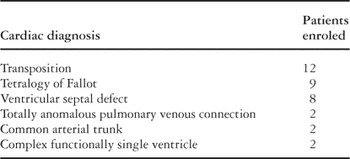
Table 1.
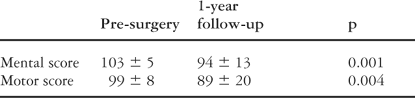
Table 2.

Cerebral blood flow velocity changes seen in patients with normal versus abnormal follow-up Bayley Scales of Infant Development II scores (p = ns).

Serum S-100B levels in patients with normal and abnormal Bayley Scales of Infant Development II scores at follow-up (p = 0.77).

Serum S-100B levels in patients with normal and abnormal electroencephalograms (p = 0.02).
 You have
Access
- 26
- Cited by