Introduction
Severity subtyping of depression in DSM-5 is based on 3 variables: the number of criteria met, the level of distress caused by the intensity of the symptoms, and the extent of impairment in social and occupational functioning. While the DSM conceptualization of the severity of depression has been around for nearly 40 years, this approach toward determining severity has been largely ignored, and almost all research on the severity of depression is based on scores on depression symptom scales. Importantly, the DSM-5 severity definition has not been used in treatment studies. Rather, in almost all treatment studies, severity is determined by a score on a symptom rating instrument—usually the Hamilton Depression Rating Scale (HAMD)Reference Hamilton1 or Montgomery–Asberg Depression Rating Scale (MADRS).Reference Montgomery and Asberg2
Almost all depression measures have been developed without discussing how to best conceptualize and assess the severity of depression. It is therefore not surprising that measures differ in both how items are rated (symptom frequency, symptom persistence, and/or symptom intensity), and item content. With regard to scale content, several questions can be asked. Should a severity scale only include symptom items that reflect the diagnostic criteria of depression? Should the measure include other symptoms of depression that are not components of the diagnostic criteria (eg, low motivation)? Should a measure of depression severity include symptoms that are frequent in depressed patients but are defining features of other disorders (eg, anxiety, irritability)? In the present report, we examine the last of these questions.
One of the 10 items of the MADRS assesses anxiety. Two of the first 17 items of the HAMD assess anxiety, and a third assesses hypochondriacal concerns. Other scales, such as the Inventory of Depressive Symptomatology, also include items assessing anxiety, irritability, and somatization.Reference Rush, Gullion, Basco, Jarrett and Trivedi3 It is well known that patients with depression have elevated symptom levels of anxiety, irritability, and somatization.Reference Zimmerman, Martin and McGonigal4–Reference Vaccarino, Sills, Evans and Kalali9 Moreover, item analyses of depression scales, which include these nondepressive constructs, have found that these items correlate significantly with total scale scores, Reference Rush, Gullion, Basco, Jarrett and Trivedi3, Reference Trivedi, Rush and Ibrahim10 thereby suggesting that these features can be considered valid indicators of depression severity. However, a significant correlation between an associated feature of depression severity does not mean that such a variable should be included on a measure of depression severity. For example, the degree of physical pain may be significantly correlated with a measure of depression symptom severity, but physical pain should not be included on a measure of the severity of depression because it is not a defining or core feature of the disorder.
We previously examined the relationship between the DSM-5 criteria symptoms of major depression and global severity ratings of depression and found that all 9 criteria were significantly and independently associated with overall severity.Reference Zimmerman, Balling, Chelminski and Dalrymple11 In the present report from the Rhode Island Methods to Improve Diagnostic Assessment and Services (MIDAS) project, we examined whether ratings of anxiety, irritability, and somatization were associated with global ratings of depression severity after controlling for the severity of the diagnostic criteria for depression.
Methods
The MIDAS project represents an integration of research methods into a community-based outpatient practice affiliated with an academic medical center.Reference Zimmerman12 Psychiatric outpatients presenting for treatment in the Rhode Island Hospital Department of Psychiatry outpatient practice were evaluated with a semi-structured diagnostic interview. Patients are offered the opportunity to have a more comprehensive evaluation as part of the research program though they are not required to undergo this evaluation. The varying number of diagnostic interviewers influenced the number of patients who are invited to participate. Because one of the goals of the MIDAS project has been to develop and study the reliability and validity of self-administered questionnaires, patients with significant cognitive limitations were not included; thus, we disproportionately excluded elderly patients. As reported elsewhere, patients who did and did not participate in the study were similar in scores on a self-administered symptom questionnaire.Reference Zimmerman and Mattia13 The focus of the present report is the 1210 outpatients with a principal diagnosis of MDD.
Patients were interviewed by a diagnostic rater who administered the Structured Clinical Interview for DSM-IV (SCID)Reference First, Spitzer, Williams and Gibbon14 supplemented with questions from the Schedule for Affective Disorders and Schizophrenia (SADS)Reference Endicott and Spitzer15 assessing the severity of symptoms during the week prior to the evaluation. We inquired about all diagnostic criteria of MDD. For compound criteria that encompass more than one symptom (eg, indecisiveness or impaired concentration; guilt or worthlessness) we made separate ratings of each component of the diagnostic criterion. Thus, we made dimensional symptom severity ratings for 16 symptoms (depressed mood, loss of interest/pleasure, decreased appetite, weight loss, increased appetite, weight gain, insomnia, hypersomnia, reduced concentration, indecisiveness, worthlessness, guilt, psychomotor retardation, psychomotor agitation, loss of energy, suicidal thoughts). In addition, all patients were evaluated on the SADS items assessing psychic anxiety, somatic anxiety, subjective irritability, overt irritability, and somatization. The SADS is a semi-structured interview. All symptom items are rated on a 6-point rating scale except the depressed mood item which is rated on a 7-point scale. Symptom specific rating guidelines are provided for each level of severity.
The overall severity of the depressive syndrome was rated on the Clinical Global Impression Severity scale (CGI)Reference Guy16 by the same interviewer who conducted the diagnostic evaluation. The CGI is a commonly used indicator of the global assessment of severity that has been used for a variety of psychiatric illnesses. The level of severity was rated from not depressed to extreme depression. The instructions to rate the CGI were: Considering your clinical experience rate the severity of depression. No direction was given which symptoms to consider in making this rating.
The interviewers were highly trained and were monitored throughout the project to minimize rater drift. The raters included PhD level psychologists and research assistants with college degrees in the social or biological sciences. The research assistants received 3 to 4 months of training during which they observed at least 20 interviews, and they were observed and supervised in their administration of more than 20 evaluations. Psychologists only observed 5 interviews; however, they too were observed and supervised in their administration of 15 to 20 evaluations. During training, the senior author met with each rater to review the interpretation of every item on the SCID/SADS interview. Also, during training every interview was reviewed on an item-by-item basis by the senior rater who observed the evaluation. At the end of the training period the raters were required to demonstrate exact, or near exact, agreement with a senior diagnostician on 5 consecutive evaluations. Throughout the MIDAS project, ongoing supervision of the raters consisted of weekly diagnostic case conferences involving all members of the team. In addition, the item ratings of every case were reviewed by the senior author. The Rhode Island Hospital institutional review committee approved the research protocol, and all patients provided informed, written consent.
As an ongoing part of the MIDAS project, joint-interview diagnostic reliability information was collected on 48 participants. The reliability of the SADS symptoms of depression was good (mean = .79). Likewise, the reliability of nondepressive symptoms were high (subjective anger/irritability, r = .90; overt anger/irritability, r = .93; psychic anxiety, r = .85; somatic anxiety, r = .92; and somatization, r = .88). The reliability of the CGI rating was r = .79.
Data analysis
We computed the correlation between the ratings of nondepressive symptoms (ie, anxiety, irritability, and somatization) and the CGI. We summed the symptom severity ratings of the MDD symptom criteria items and examined the correlation between the total depression score and the CGI. We then computed partial correlations between the nondepressive symptom severity ratings and the CGI controlling for the severity of the MDD symptoms.
Results
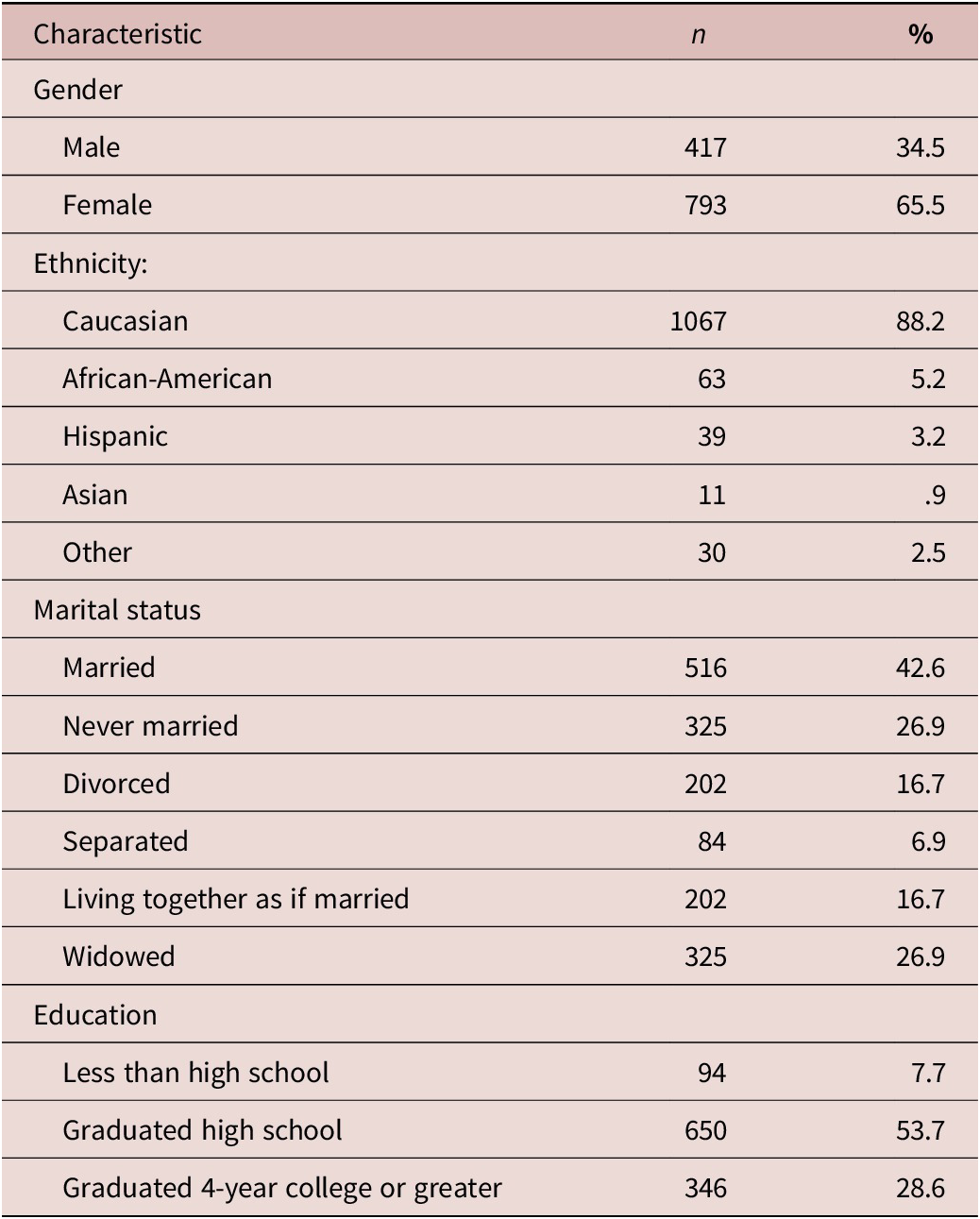
The data in Table 1 shows that the majority of the 1210 patients were female, white, and graduated high school. The mean age of the sample was 40.7 years (SD = 12.7).
Demographic characteristics of sample (N = 1210).

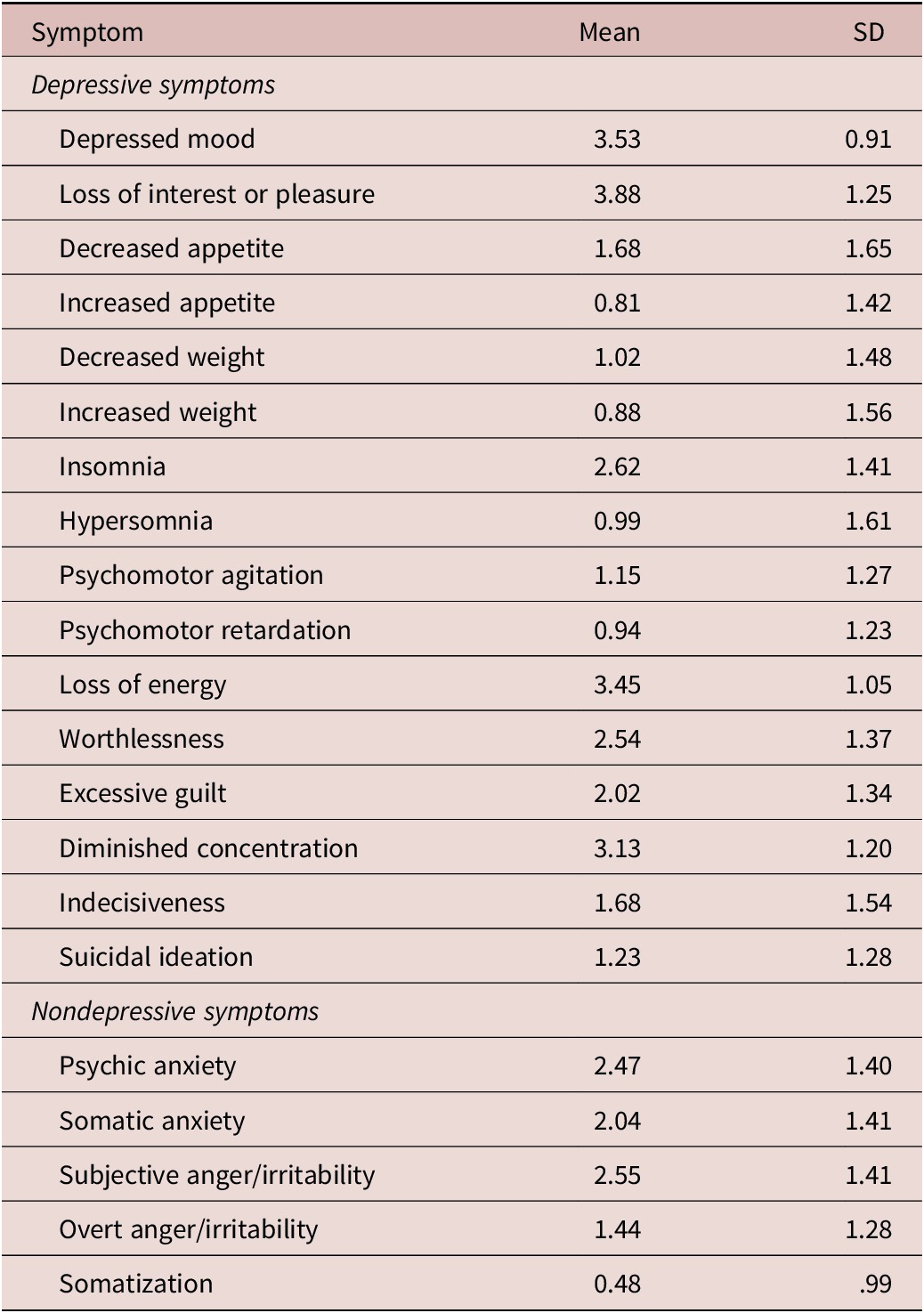
The mean scores on each of the nondepressive symptom items except somatization were within the range of the depressive symptoms ( Table 2). The mean scores of the subjective anger and psychic anxiety items were higher than the mean scores of the majority of the depressive symptoms.
Mean scores on depressive and nondepressive symptom items.

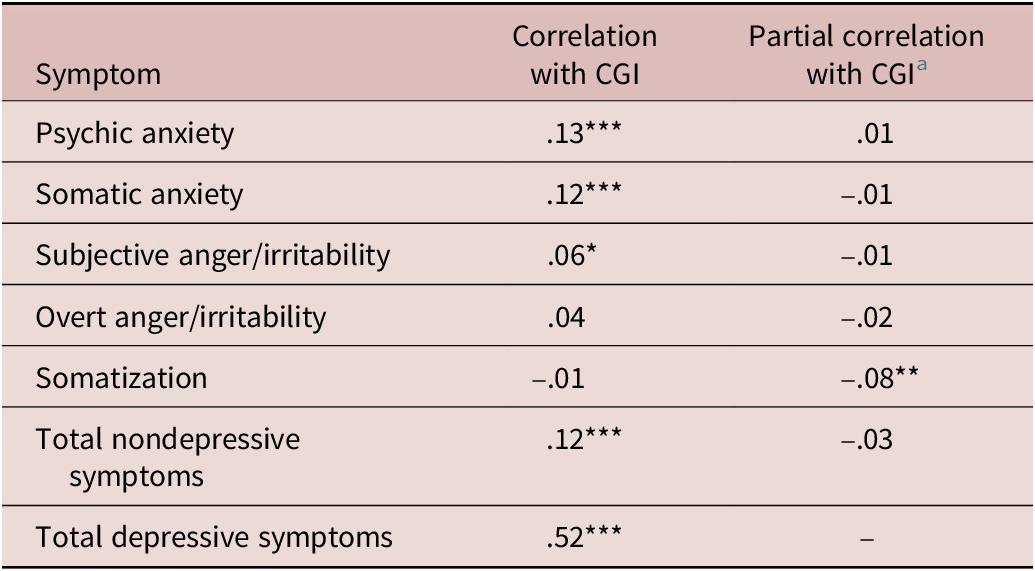
Three of the 5 nondepressive symptoms (psychic anxiety, somatic anxiety, subjective anger) were significantly correlated with the CGI ( Table 3). The correlation between the sum of all 5 nondepressive symptoms and the CGI was 0.12 (p < .001), significantly lower than the correlation between the CGI and the sum of the depressive symptom severity ratings (0.12 vs 0.52, z = 11.0, p < .001). The partial correlation between the CGI and the nondepressive symptom severity ratings (after controlling for the total depressive symptom ratings) was nonsignificant.
Correlation between nondepressive symptoms and Clinical Global Index of Severity (CGI) (n = 1210).

*p < .05; **p < .01; ***p < .001
a Partial correlation between the CGI and the intensity rating after controlling for depression symptom total.
Discussion
Anxiety is common in patients with depression.Reference Zimmerman, Martin and McGonigal4, Reference Ionescu, Niciu, Henter and Zarate5, Reference Fava, Rankin and Wright17, Reference Zimmerman, McDermut and Mattia18 Depressed patients with anxiety tend to have poorer psychosocial functioning and poorer outcome than depressed patients without anxiety.Reference Coryell, Endicott and Andreasen19–Reference Fichter, Quadflieg, Fischer and Kohlboeck22 Does this mean that measures of the severity of depression should include items assessing anxiety? A similar question can be asked regarding the inclusion of other associated features of depression such as irritability and somatization.
In the present study we found that the mean scores for the symptoms of anxiety and irritability were within the range of other symptoms of depression, thereby suggesting that these symptoms were as frequent as depressive symptoms. The severity of anxiety, and to a lesser extent, the severity of irritability, was significantly correlated with the CGI. However, after accounting for the severity of depressive symptoms, the severity of the nondepressive symptoms were not associated with global ratings of depressive severity. These findings raise questions regarding the appropriateness of including ratings of anxiety, irritability, and somatization on a measure that purportedly assesses the severity of depression.
It could be argued that depression scales should include nondepressive features because these are also important to assess when evaluating the efficacy of treatment. Had the HAMD not included nondepressive items, the literature on the efficacy of antidepressants in treating anxious depression would be greatly attenuated.Reference Ionescu, Niciu, Henter and Zarate5 The lack of a comparable literature on irritable depression is likely due to the lack of irritability items on the HAMD. However, while the inclusion of nondepressive symptoms on a scale may facilitate secondary analyses examining the spectrum of treatment effectiveness, this does not justify the inclusion of such items on a scale intended to characterize the severity of the disorder.
Considerations of illness severity have potentially great clinical importance. Severity influences decisions about level of care (eg. inpatient vs. outpatient) and impacts decisions to grant government assistance due to psychiatric disability. Measures of severity are used to evaluate outcome in treatment studies. Severity also impacts expectations in the fulfillment of role function either at home, school, or work. But how should one grade disorder severity? DSM-5 does not provide any clarity as the severity of various disorders is defined in different ways.
Statistical approaches have been taken toward developing measures of depression that only include items that have adequate psychometric properties. However, this can result in a measure that does not include core features of depression such as suicidal ideation, sleep disturbance, or changes in appetite.Reference Pilkonis, Choi, Reise, Stover, Riley and Cella23–Reference Vaccarino, Evans and Kalali25 Because of the importance accorded to the severity of depressive symptoms, whereby it is the basis for recommending one form of treatment over another, Reference Zimmerman26 and it has been used to select patients into treatment studies, Reference Zimmerman, Posternak and Chelminski27 we believe that measures of depression should be based on the symptoms used to define the disorder. To be sure, there is a movement afoot that may result in the reconceptualization of psychopathology to a more dimensional perspective, Reference Kotov, Krueger and Watson28, Reference Insel, Cuthbert and Garvey29 but this movement has not yet taken hold. If, and when, it does, it may be appropriate to update instrumentation.
It should be considered that the DSM definition of major depression has influenced clinicians’ global ratings of severity. The symptom criteria for MDD do not include anxiety, irritability, or somatization—symptoms that Max Hamilton included on his scale 60 years ago. We found that the severity ratings of anxiety and irritability were as high as those of most of the symptoms that are used to diagnose MDD. Perhaps the prevailing approach toward diagnosing MDD rendered the nondepressive symptoms to a secondary role when considering the overall severity of a patient’s condition.
Before concluding, the limitations of the study should be acknowledged. The sample of patients was recruited from a single clinical practice in which the majority of the patients were white, female, and had health insurance. The generalizability of any single-site study is limited. However, a strength of the study was that the patients were unselected with regards to meeting any inclusion or exclusion criteria. The MIDAS project includes patients with a variety of diagnoses and does not select cases that are prototypic, and thus more severe variants, of the diagnostic construct. Thus, a minimum score on a symptom severity scale, which is common in treatment studies of depression, was not required for inclusion in the present study.
Disclosures.
Mark Zimmerman has received consultant fees from Otsuka Pharmaceuticals and Praxis Precision Medicines. Caroline Balling, Iwona Chelminski, and Kristy Dalrymple have nothing to disclose.