Introduction
Soybean has high economic and social importance as a source for grain, bran, and oil production for animal and human food in Brazil and in several other countries. Since the 1970s, there has been an increase in the area planted with soybean, with this crop showing the greatest increase among all major crops and occupying approximately 6% of the world’s arable land (Hartman et al. Reference Hartman, West and Herman2011). In addition, 80% of global soybean cultivation is located in North and South America (Chang et al. Reference Chang, Hwang, Conner, Ahmed, Zhou, Turnbull, Strelkov, McLaren and Gosse2015). Brazil is the second-largest producer and the world’s largest exporter of soybean and produced 114.9 million metric tons of grain during the 2016/17 harvest (CONAB 2017). Brazil supplies countries that consume large quantities of this commodity, including China, which is the main importer of Brazilian soybean (Oliveira and Schneider 2015).
Weeds are a major yield limitation in soybean, causing average losses of approximately 40% when not managed (Oerke et al. Reference Oerke2006). In Brazil, glyphosate-resistant (GR) cultivars are planted on 93% of the area intended for soybean production so that glyphosate can be used for weed management (Brookes and Barfoot Reference Brookes and Barfoot2016). Adoption of this system has resulted in intense use of glyphosate, an overreliance that has resulted in eight documented GR species (Adegas et al. Reference Adegas, Vargas, Gazziero, Karam, Silva and Agostinetto2017; Heap Reference Heap2018).
The use/overuse of glyphosate has also induced changes in the weed flora through the selection of tolerant species, such as Benghal dayflower (Commelina benghalensis L.), Brazil pusley (Richardia brasiliensis Gomes), oval-leaf false-buttonweed (Spermacoce latifolia Aubl.), coat buttons (Tridax procumbens L.), and morningglory species. These species are naturally more difficult to control with glyphosate and have become more common in Brazilian soybean production areas (Cerdeira et al. Reference Cerdeira, Gazziero, Duke and Matallo2011; Paduch et al. Reference Paduch, Trezzi, Guimarães, Barancelli, Pasini and Vidal2017; Vargas et al. Reference Vargas, Nohatto, Agostinetto, Bianchi, Paula, Polidoro and Toledo2013).
GR and glyphosate-tolerant weeds cause considerable yield losses and represent a growing threat to Brazil’s soybean production systems. Despite the relevance of this topic, only a few studies have evaluated the distribution of these species within Brazil. However, Adegas et al. (Reference Adegas, Vargas, Gazziero, Karam, Silva and Agostinetto2017) estimated that herbicide-resistant weeds have infested 20.1 million hectares in Brazil.
Detailed studies on the total area, the geographic distribution, and the frequency of the most important herbicide-resistant or herbicide-tolerant weeds in Brazil would allow estimates of yield losses, economic losses, and the costs associated with weed control. In addition, such studies could be used to associate those variables with soil–climatic conditions and common agricultural practices and could ultimately be used to optimize weed management strategies (Soteres and Peterson Reference Soteres and Peterson2015).
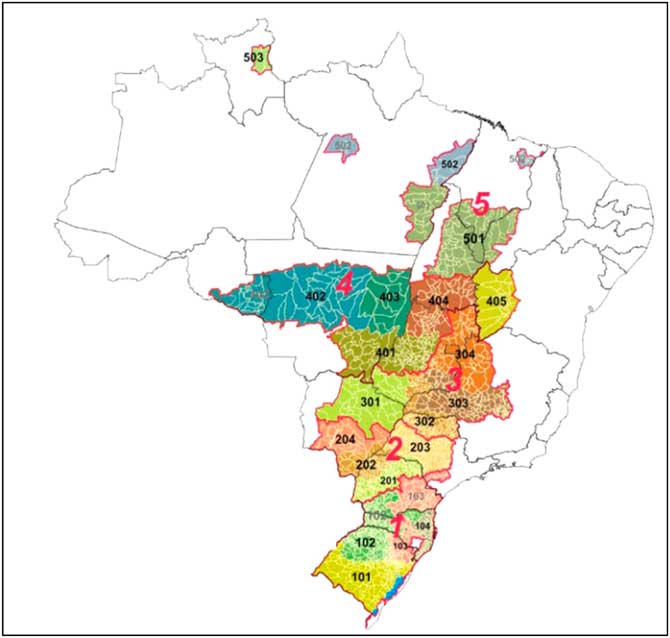
In accordance with Kasper and Farias (Reference Kasper and Farias2012), specific soybean cultivars are recommended for five macroregions (MRSs) and 20 edaphoclimatic microregions (ECRs) in Brazil (Table 1; Figure 1). The factors that determine the MRSs are the rainfall regime and latitude, which influence the temperature and photoperiod, while the ECRs are differentiated by altitude and soil type. In addition to their soil and climatic characteristics, these regions differ by technological level of production, which influences the weed flora and its management. Therefore, studies on the evaluation of weed infestation and management of soybean in Brazil should consider as many regions as possible (Davis et al. Reference Davis, Gibson and Johnson2008). Given the relevance of this topic and lack of information from across Brazil, the present study aimed to evaluate the geographic dispersal and frequency of weeds that are either glyphosate-tolerant or have developed resistance to glyphosate in soybean microregions within Brazil.
Five soybean-producing macroregions and 20 soybean-producing edaphoclimatic microregions. Adapted from Kasper and Farias (Reference Kasper and Farias2012).

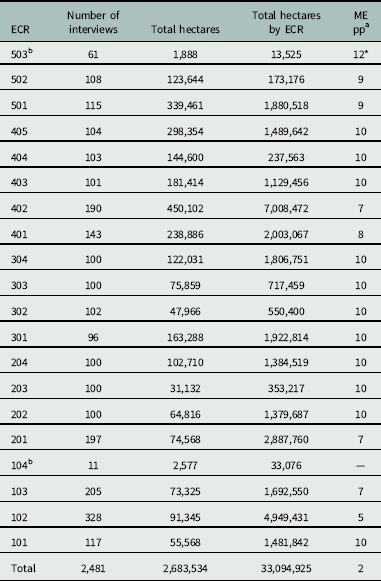
Number of interviews, total hectares represented by surveyed farmers, total number of hectares in the soybean-producing edaphoclimatic microregions (ECRs), and margin of error (ME) in 20 ECRs in Brazil during the 2016/17 harvest.

* Confidence level=95%
a pp, percentage point.
b ECRs 104 and 503 were not included in the analyses. Total soybean area was below 50,000 ha.
Materials and Methods
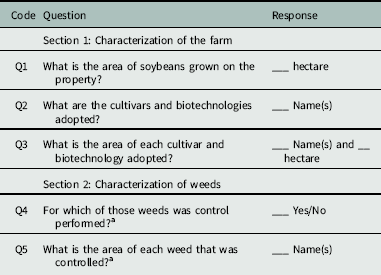
To characterize selection of soybean cultivar and biotechnology and frequency and distribution of GR and glyphosate-tolerant weeds in soybean-producing regions of Brazil, a questionnaire was provided to farmers. The questionnaire contained predetermined questions that required objective and/or descriptive responses and was divided into two sections: (1) characterization of the soybean production system and (2) characterization of weeds and their level of infestation on a farm (Table 2). The questionnaire was administered by personnel of the Spark Company (30 Luiz Spiandorelli Neto Street, Valinhos, São Paulo, Brazil), who visited each farm but did not assist the farmers in completing the questionnaire.
Questionnaire presented to farmers and technicians in charge of soybean farms in 20 edaphoclimatic microregions of Brazil during the 2016/17 harvest.

a The evaluated weeds with glyphosate-resistant biotypes already reported in Brazil were: Amaranthus spp. (pigweed), Chloris spp. (windmillgrass, Chloris truncata R. Br.), Conyza spp. (horseweed), Digitaria insularis (L.) Mez ex Ekman (sourgrass), Eleusine indica (L.) Gaertn. (goosegrass), and Lolium multiflorum Lam. (Italian ryegrass). The evaluated weeds that exhibited natural tolerance to glyphosate were Alternanthera tenella Colla (parrotleaf), Commelina spp. (dayflower species), Euphorbia heterophylla L. (wild poinsettia), Chamaesyce hirta (L.) Millsp. (garden spurge), Ipomoea spp. (morningglory species), Richardia brasiliensis Gomes (Brazil pusley), Sida rhombifolia L. (arrowleaf sida), Sorghum halepense (L.) Pers. (johnsongrass), Spermacoce latifolia Aubl. (oval-leaf false-buttonweed), Spermacoce verticillata L. (shrubby false-buttonweed), and Tridax procumbens L. (coat buttons).
Section 1 sought to determine total soybean hectares planted on each farm, soybean cultivars and biotechnologies adopted, and the area in which each cultivar and biotechnology was used. Section 2 focused on the level of infestation of 17 weedy genera or species that are documented as GR or have increased tolerance to glyphosate (Heap Reference Heap2018; Santos et al. Reference Santos, Silva, Ferreira, Miranda and Pinheiro2001; Vargas and Roman Reference Vargas and Roman2006) (Table 2). For 5 of the 17 weeds, only the genus level was considered because the target species presented morphological characteristics similar to those of other weed species. Thus, species belonging to the genera Amaranthus, Chloris, Commelina, Conyza, and Ipomoea were grouped in the evaluation and the analysis of the results. To assist farmers with correct identification, images of seedlings, adult plants, flowers, and seeds of all 17 genera or species were presented on a portable 24-cm tablet for them to refer to while answering the questionnaire. This method was used to avoid errors with scientific names and particularly with common names, because farmers may be more familiar with regional names (Lorenzi Reference Lorenzi2006).
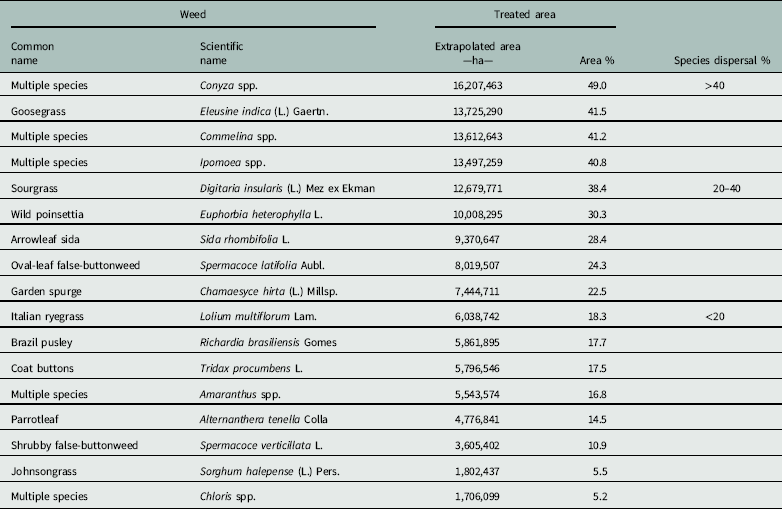
A total of 2,481 questionnaires were completed from November 14, 2016, to March 24, 2017, encompassing a sampled area of 2,683,534 ha, which was extrapolated to 33,094,925 ha among the 20 soybean-producing ECRs in Brazil (Table 1). The sample size was determined to achieve a margin of error of ≤10% in the ECRs and ≤5% in the country as a whole, based on the official estimate of the crop (IBGE 2018). Furthermore, the farms that were evaluated were selected based on their representativeness of their regions, considering aspects such as the size of the cultivated area and the cropping system. Considering the extrapolated soybean area (33,094,925 ha), the weeds were split by incidence in hectares and percentage of treated area (area that received at least one herbicide application) (Table 2). The weeds were also segmented by dispersal: >40%, 20% to 40%, and <20% across all ECRs.
The values for the famers’ responses were extrapolated to the total soybean production area of each ECR and the country as a whole, and the absolute value of each response was normalized as a percentage value. The range of values was defined for the answers for sections 1 and 2 of the questionnaire, and bar graphs or maps were created to determine their geographic distribution and visually compare the ECRs. Values of ≤5% were disregarded for the questions in section 2 of the questionnaire due to the high probability of weed misidentification.
Results and Discussion
Farm Characterization
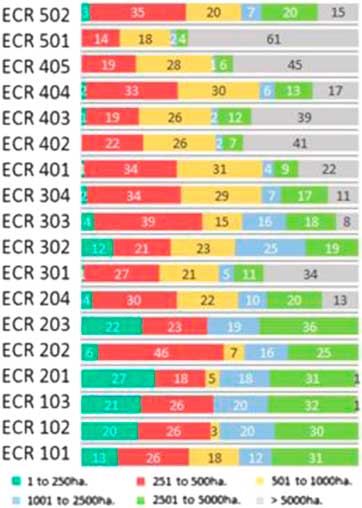
The area under soybean cultivation for the farms that were evaluated was divided into six ranges as described in Figure 2. In general, the area under soybean cultivation increased as the latitude decreased. ECRs 102, 103, 201, and 203 showed the highest proportion of the smallest cultivated areas (from 1 to 250 ha), whereas ECRs 402, 405, and 501 had the highest percentage of the largest cultivated areas (≥5,001 ha). Regarding the cultivars and biotechnologies used by the soybean producers, glyphosate-resistant cultivars were used in 96% of the soybean hectares. There was no variation in the adoption of this technology among ECRs, except in ECR 503, where the use of conventional soybean cultivars was predominant, that is, there was no herbicide resistance or insect resistance technology.
Ranges of cultivated areas (in hectares) in 20 soybean-producing edaphoclimatic microregions (ECRs) of farms in Brazil where interviews were conducted during the 2016/17 harvest.

Weed Characterization
Most of the evaluated areas (ECRs 301 to 503) have a tropical climate, located in the Cerrado biome and characterized as a dry autumn/winter with high temperatures and a pronounced rainy season in the spring/summer (Souza et at. Reference Souza, Mota, Zamadei, Martim, Almeida and Paulino2013). On the other hand, ECRs 101 to 104 have a mesothermic (temperate) climate with no pronounced dry season or period, and those from 201 to 204 are classified as climatic transition regions of type Cfa in the south to Cwa in the center of the country (Kasper and Farias Reference Kasper and Farias2012). Consequently, the weeds of higher dispersion and frequency in the microregions have adapted to the predominant edaphoclimatic conditions, especially to temperature and rainfall, but also to other factors related to agricultural management practices of the region, such as the application of a certain group of herbicides and the particular cropping system (e.g., no-tillage or conventional tillage).
When analyzing the dispersal and frequency maps, it should be noted that central Brazil (ECRs 301 to 405), in general, is characterized by more recent soybean cultivation adoption compared with the higher-latitude areas of the country (Freitas and Mendonça Reference Freitas and Mendonça2016). Cultivation time and the history are key factors in understanding the dynamics of weeds.
Species Dispersed across More Than 40% of Soybean in Brazil
Conyza spp., goosegrass, Commelina spp., and Ipomoea spp. infested between 40.8% and 49% of the areas planted with soybean throughout Brazil (Table 2).
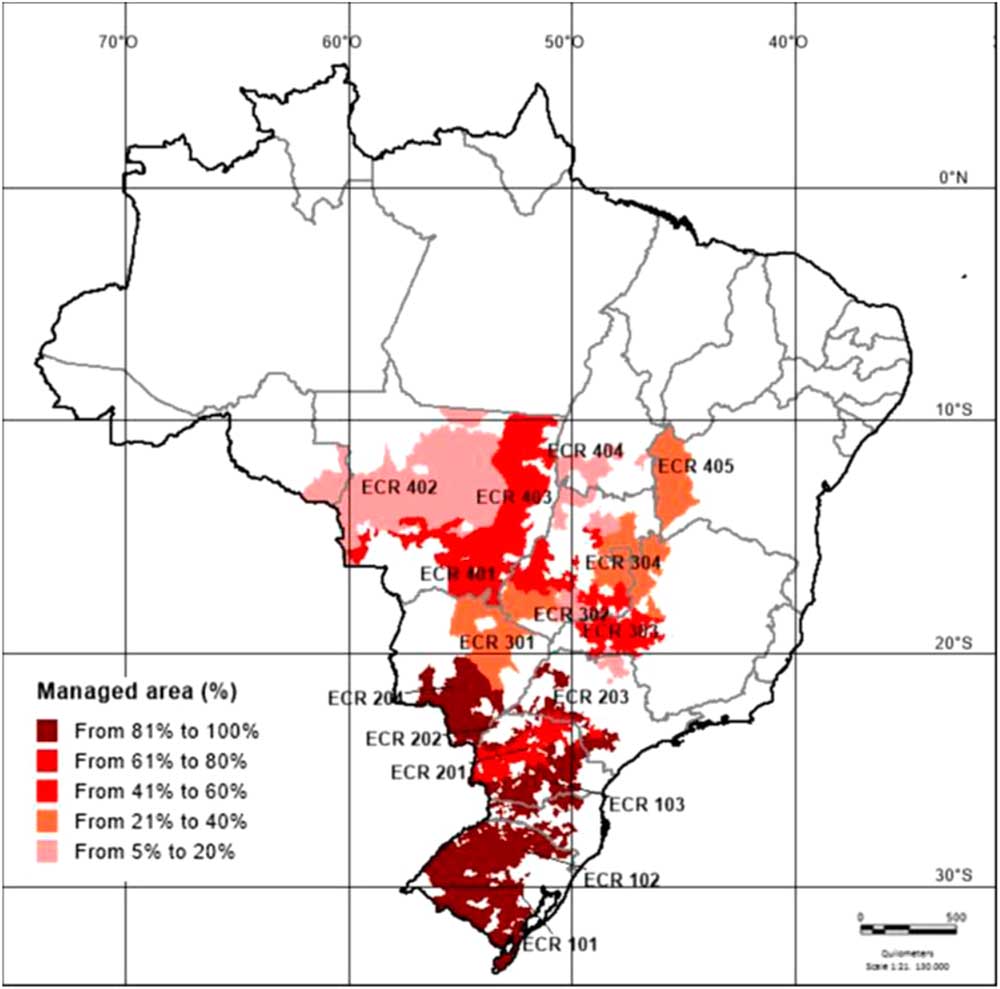
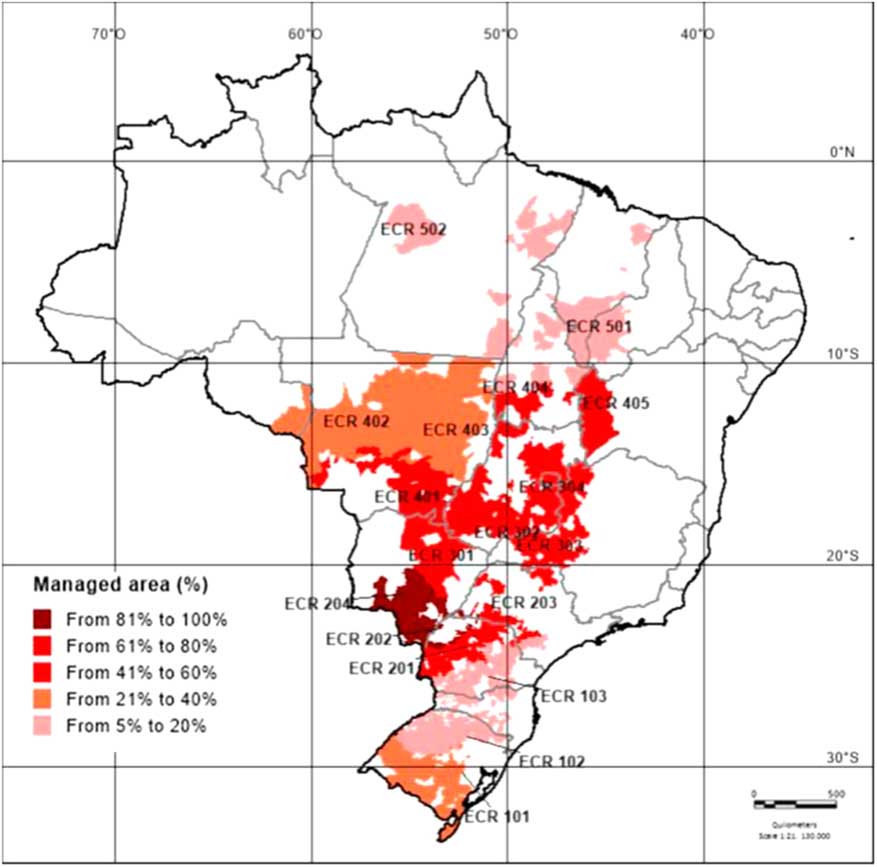
Among these species, Conyza spp. were present in approximately half of the soybean area evaluated in this study, which corresponds to an extrapolated area of approximately 16,207,463 ha. In the southern and southeastern ECRs (101, 102, 103, 202, 203, and 204), Conyza spp. were the primary target for 81% of herbicide applications (Figure 3). The highest percentages of Conyza spp.–infested areas occur primarily in ECRs 101 to 204, which are located above 20°S latitude, where climate and cropping patterns may be more favorable for growth and development of Conyza spp. (Moreira et al. Reference Moreira, Nicolai, Carvalho and Christoffoleti2007). Another potential reason Conyza spp. are problematic in these ECRs is because glyphosate was used for weed management in GR soybean 10 yr before the technology was officially released by the Brazilian government. Multiple glyphosate applications during the year and improper implementation, such as using a lower rate than recommended on the label, quickly contributed to the selection of GR Conyza spp. in southern Brazil.
Dispersal and frequency of Conyza spp. based on the area treated for the weed during the 2016/17 harvest in 20 soybean-producing edaphoclimatic microregions (ECRs) in Brazil.

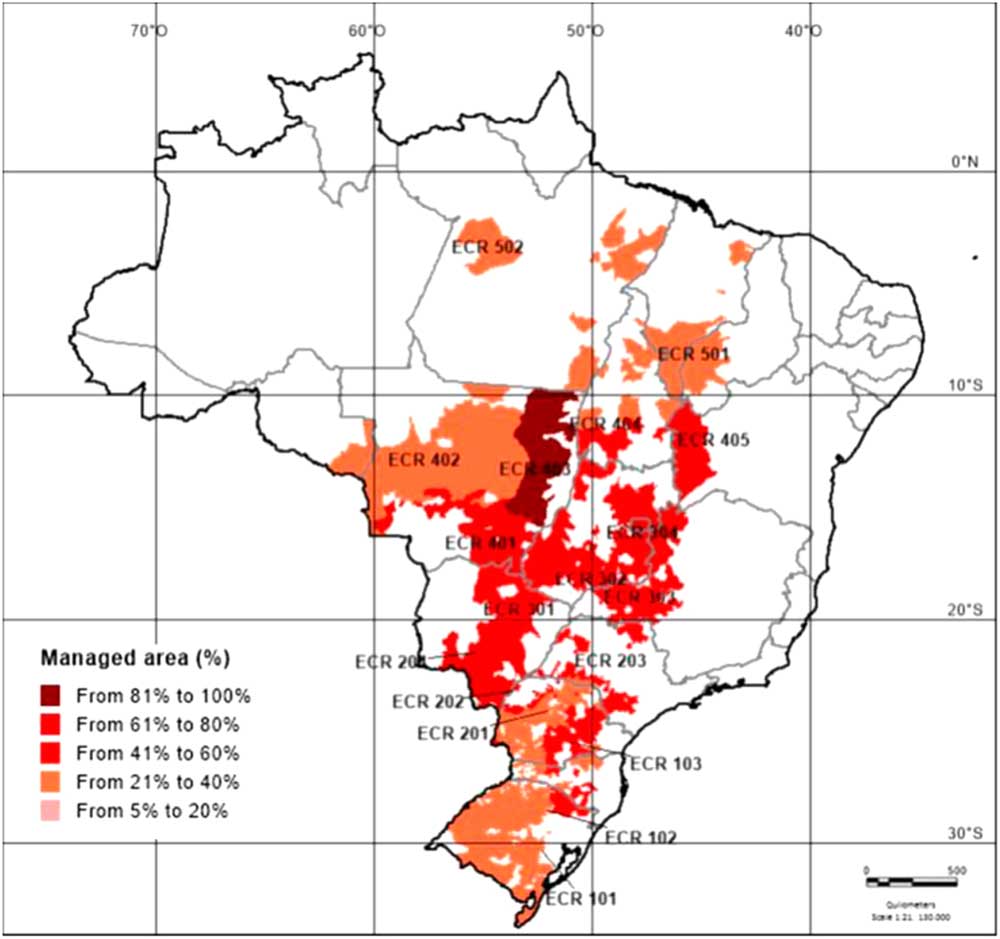
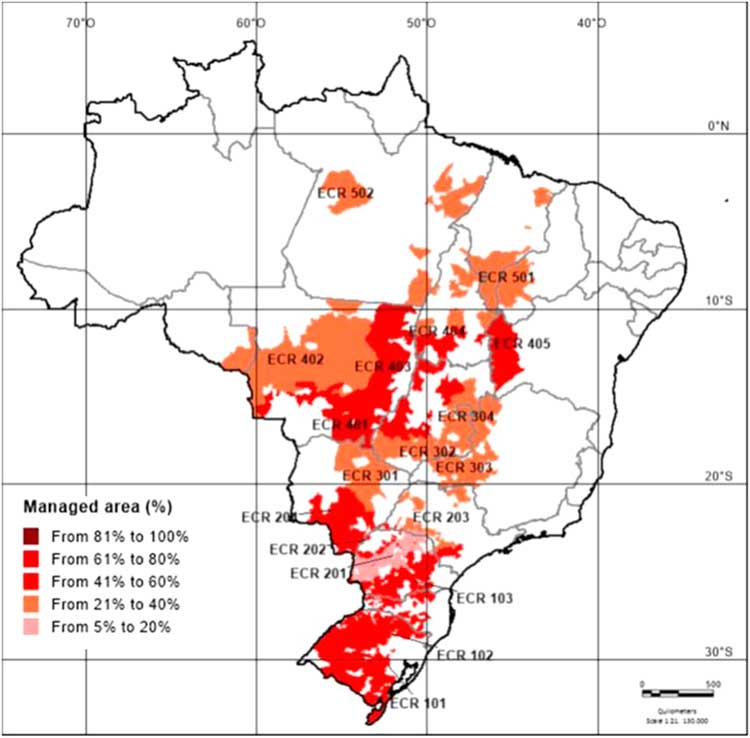
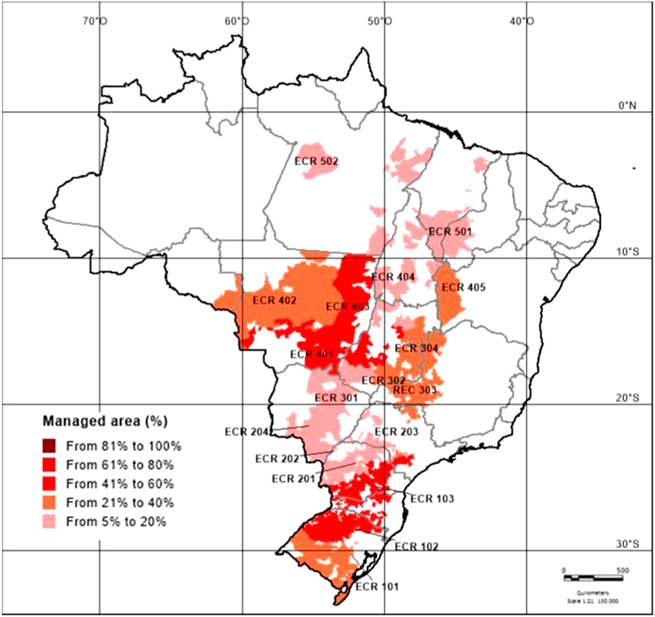
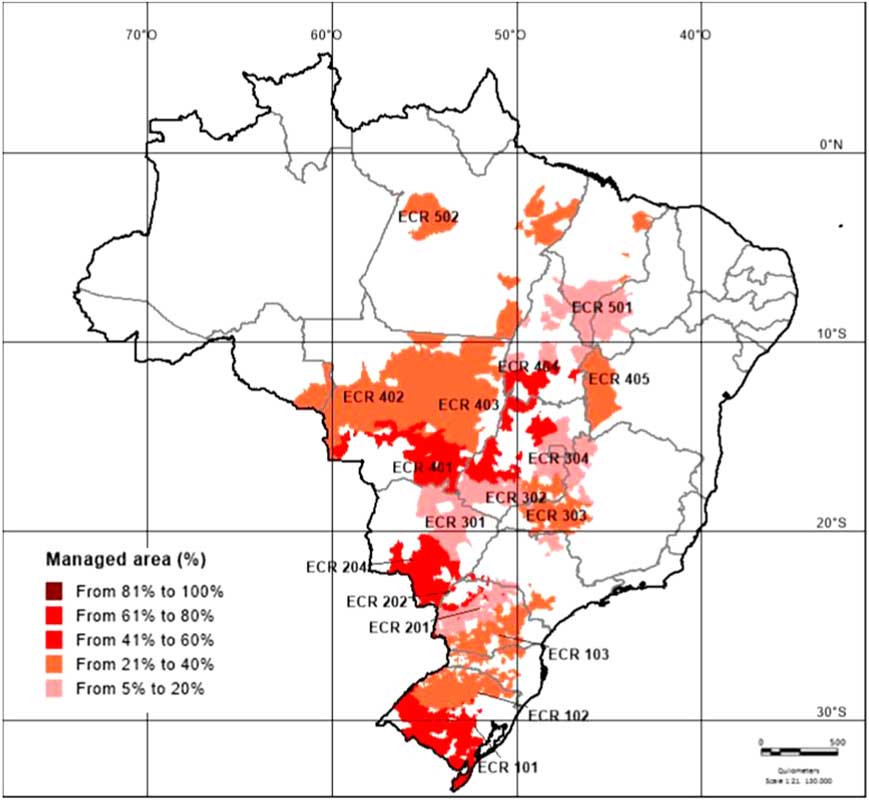
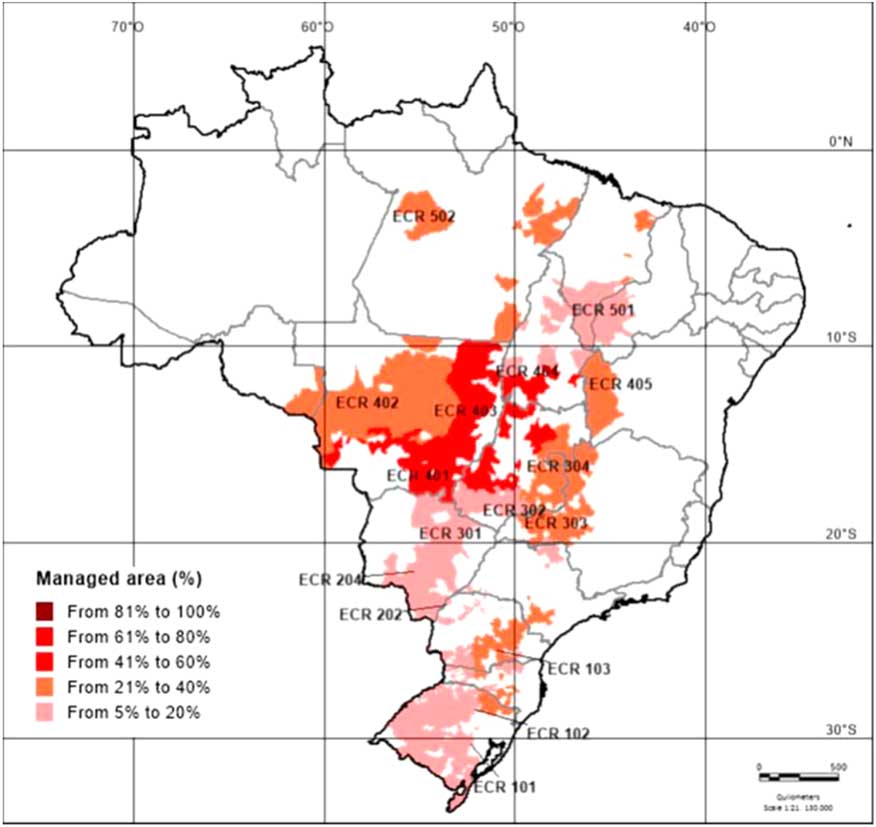
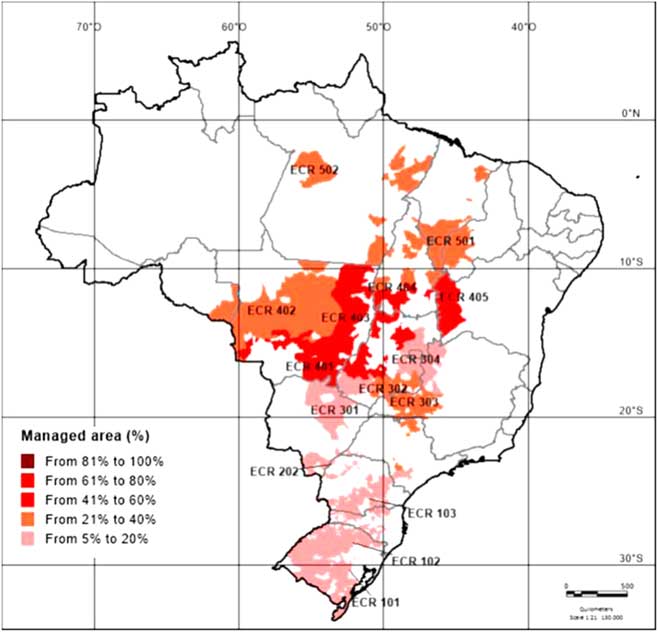
Goosegrass, Commelina spp., and Ipomoea spp. also had high levels of dispersal, albeit across a smaller area, and were common in most ECRs (Figures 4–6). The highest proportion of areas with goosegrass and Commelina spp. are in ECRs with higher temperatures throughout the year. This is expected given that both species are characterized by C4 metabolism. The first record of a GR goosegrass biotype in Brazil was in 2016 from the western region of the state of Paraná (Heap Reference Heap2018), and frequent claims of lack of control are made by growers. Not all control failures observed in agricultural areas can be attributed to resistance. Many times, these failures are associated with herbicide application outside the recommended usage, either in terms of the stage of development of the plants or the dose of herbicide applied.
Dispersal and frequency of goosegrass based on the area treated for the weed during the 2016/17 harvest in 20 soybean-producing edaphoclimatic microregions (ECRs) in Brazil.

Dispersal and frequency of Commelina spp. based on the area treated for the weed during the 2016/17 harvest in 20 soybean-producing edaphoclimatic microregions (ECRs) in Brazil.

Dispersal and frequency of Ipomoea spp. based on the area treated for the weed during the 2016/17 harvest in 20 soybean-producing edaphoclimatic microregions (ECRs) in Brazil.

The pattern use of particular herbicides influences the selection of tolerant or resistant species, with a direct impact in the area where the selection occurred and also in neighboring areas. This occurs because one of the main characteristics of several weed species is prolific production of seeds, which in most cases are extremely light and easily spread by animals, water, wind, or humans. This facilitates their establishment and dissemination in the environment either within the same area or from one area to bordering fields. Therefore, related factors such as climate, soybean management, and biological characteristics of the weed species could interfere with the dynamics of weed seed production and movement within a microregion, influencing their dispersion and frequency.
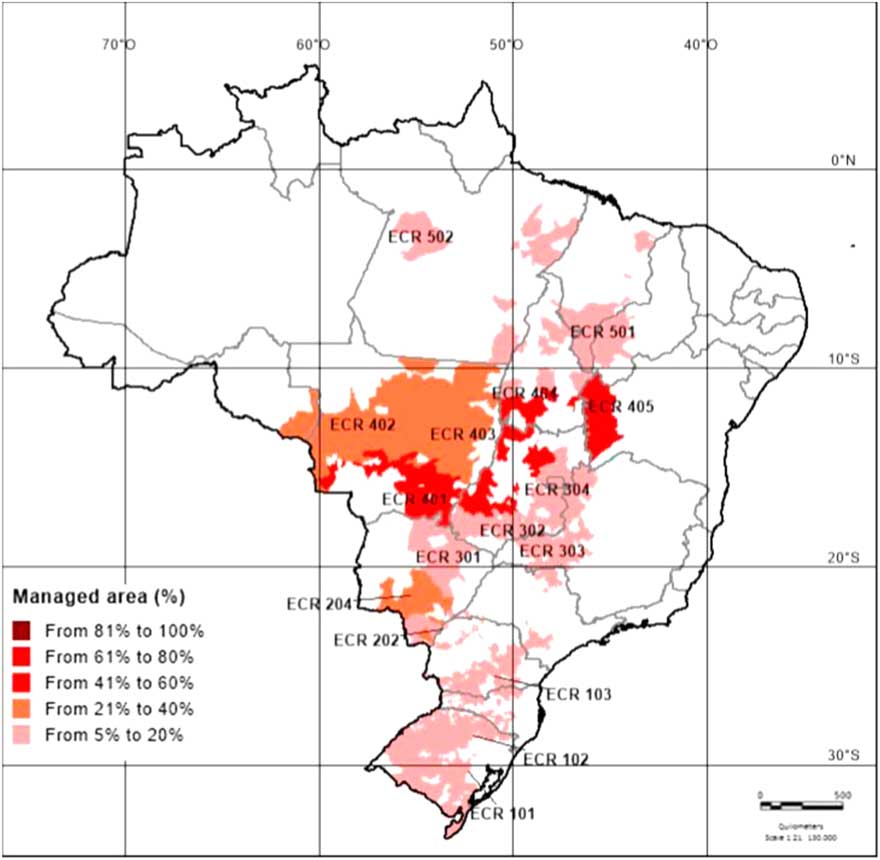
Macroregion 4, which encompasses microregions 401, 402, 403, 404, and 405, showed the highest rate of infestation of Ipomoea spp. (Figure 6). Species of this genus (Ipomoea) are characterized by adaptation to tropical and subtropical regions and by the presence of several emergence events during the year due to the dormancy of their seeds (Azania et al. Reference Azania, Azania, Pizzo, Schiavetto, Zera, Marcari and Santos2009).
Species Dispersed across 20% to 40% of Soybean in Brazil
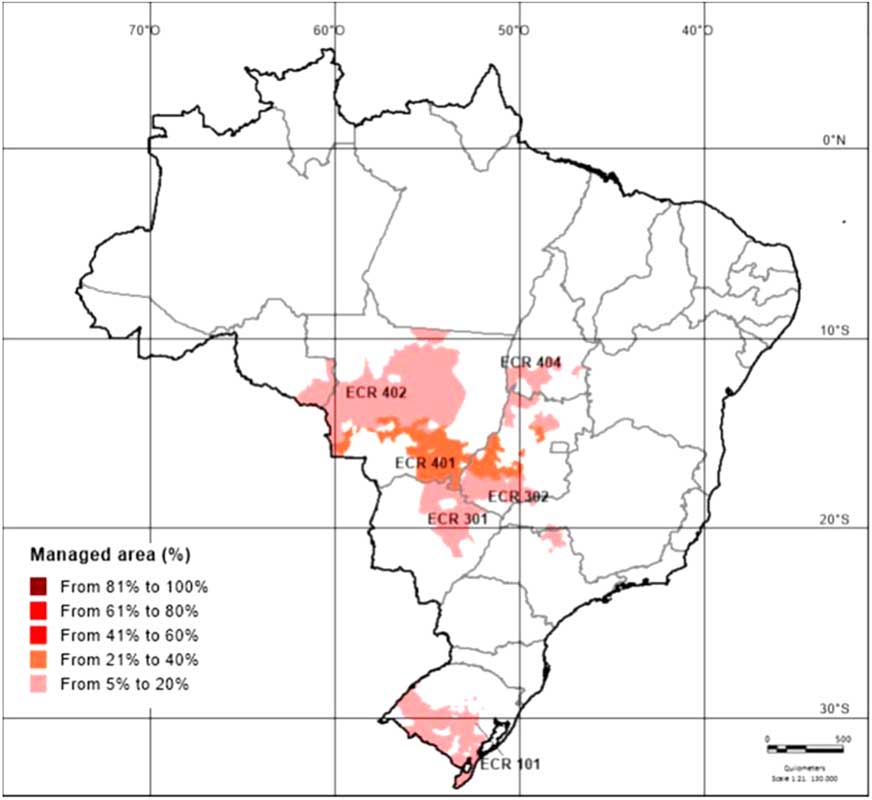
Sourgrass, wild poinsettia (Euphorbia heterophylla L.), arrowleaf sida (Sida rhombifolia L.), oval-leaf false-buttonweed, and garden spurge [Chamaesyce hirta (L.) Millsp.] were present in 22.5% to 38.4% of soybean production areas in Brazil (Table 3).
Weeds and the respective area treated with herbicide on soybean farms in 20 edaphoclimatic microregions of Brazil during the 2016/17 harvest.

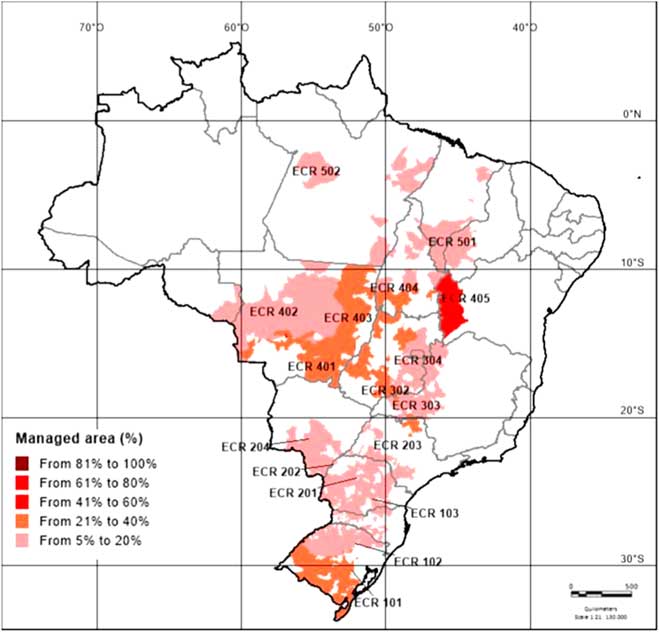
Sourgrass was found in the southeastern and west-central regions, particularly in ECRs 202, 203, 204, 401, 404, and 405 (Figure 7). Among the species with a dispersal rate between 20% and 40%, sourgrass was the only species that has GR biotypes. López-Ovejero et al. (Reference López-Ovejero, Takano, Nicolai, Ferreira, Melo, Cavenaghi, Christoffoleti and Oliveira2017) reported the presence of resistant biotypes of this species in several regions of Brazil, primarily in the southern (Paraná), southeastern, west-central, and northeastern regions of the country. This species has the ability to germinate under a wide range of temperatures and light intensities (Mendonça et al. Reference Mendonça, Martins, Martin and Costa2014), which contributes to its presence throughout most of the year in agricultural areas.
Dispersal and frequency of sourgrass based on the area treated for the weed during the 2016/17 harvest in 20 soybean-producing edaphoclimatic microregions (ECRs) in Brazil.

However, poinsettia and arrowleaf sida were well-dispersed throughout most of the country (Figures 8 and 9). The wide dispersal of poinsettia and arrowleaf sida across the different macro- and microregions indicates the ability of these species to adapt well to different environments. Oval-leaf false-buttonweed and garden spurge were of greater significance, particularly in the Brazilian Cerrado (savanna) region (Figures 10 and 11). This biome is characterized by well-defined seasons, a rainy season and a dry season, as well as low-pH soils.
Dispersal and frequency of wild poinsettia based on the area treated for the weed during the 2016/17 harvest in 20 soybean-producing edaphoclimatic microregions (ECRs) in Brazil.

Dispersal and frequency of arrowleaf sida based on the area treated for the weed during the 2016/17 harvest in 20 soybean-producing edaphoclimatic microregions (ECRs) in Brazil.

Dispersal and frequency of oval-leaf false-buttonweed based on the area treated for the weed during the 2016/17 harvest in 20 soybean-producing edaphoclimatic microregions (ECRs) in Brazil.

Dispersal and frequency of garden spurge based on the area treated for the weed during the 2016/17 harvest in 20 soybean-producing edaphoclimatic microregions (ECRs) in Brazil.

Species Dispersed across Less Than 20% of Soybean in Brazil
Italian ryegrass [Lolium perenne L. ssp. multiflorum (Lam.) Husnot], Brazil pusley, coat buttons, Amaranthus spp., parrotleaf (Alternanthera tenella Colla), shrubby false-buttonweed (Spermacoce verticillata L.), johnsongrass [Sorghum halepense (L.) Pers.], and Chloris spp. showed the lowest dispersal among the evaluated species, occurring in 5.2% to 18.3% of the soybean production areas (Table 3). Four of these weed species (Italian ryegrass, Amaranthus spp., Brazil pusley, and Chloris spp.) were concentrated in specific regions, whereas two species (shrubby false-buttonweed and johnsongrass) were present at low levels of infestation throughout the country.
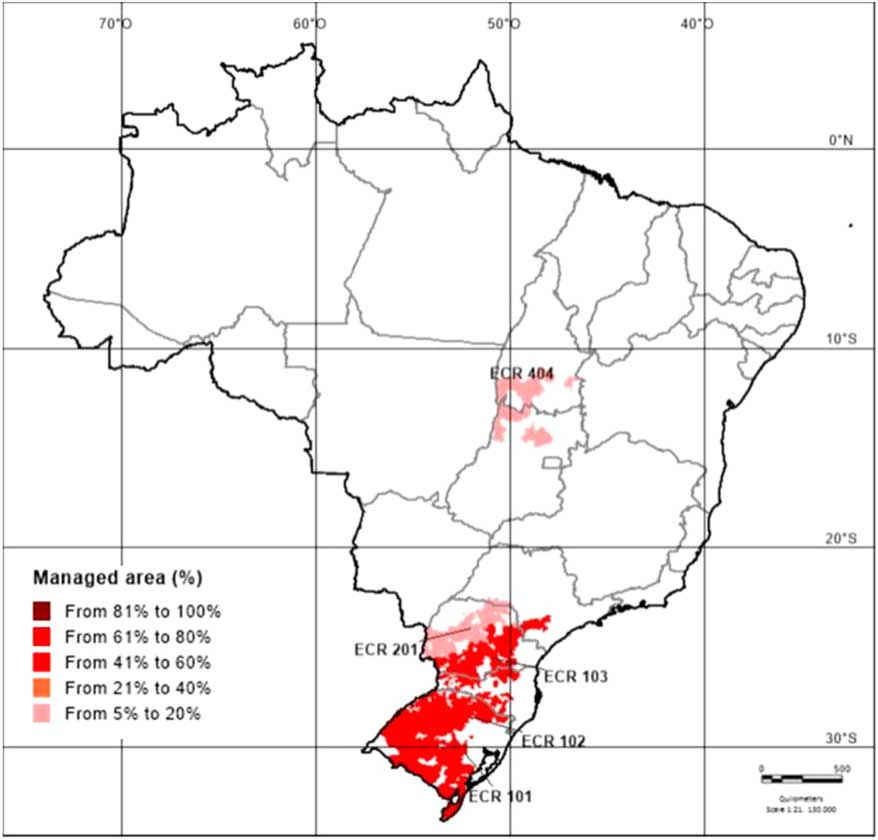
The data show that Italian ryegrass was distributed only in soybean production areas of the southern region (ECRs 101, 102, 103, and 201; Figure 12). This species is adapted to low temperatures and cannot withstand the heat of tropical regions Lorenzi (Reference Lorenzi2000), which explains why its infestation is restricted to those microregions. The first record of Italian ryegrass resistance to glyphosate in Brazil was in 2003 (Heap Reference Heap2018).
Dispersal and frequency of Italian ryegrass based on the area treated for the weed during the 2016/17 harvest in 20 soybean-producing edaphoclimatic microregions (ECRs) in Brazil.

Amaranthus spp. were mainly mentioned in Cerrado (Figure 13), but these weeds deserve attention from Brazilian producers, particularly those bordering Argentina, as there are cases of GR biotypes in that country (Heap Reference Heap2018). The main Amaranthus species in Brazil is smooth pigweed (Amaranthus hybridus L.), and it primarily infests non-transgenic soybean and cotton (Gossypium hirsutum L.) crops. In 2015, in the state of Mato Grosso, the presence of Palmer amaranth (Amaranthus palmeri S. Watson)(Andrade et al. Reference Andrade, Cavenaghi, Guimarães and Carvalho2015), an extremely aggressive exotic weed that can cause severe yield losses in soybean, was detected (Whitaker et al. Reference Whitaker, York, Jordan and Culpepper2010). The identified biotype shows multiple resistance to 5-enolpyruvylshikimate-3-phosphate synthase and acetolactate synthase inhibitors. However, its infestation is restricted to certain municipalities in the state, and containment and eradication measures have been established by official control agencies (Gazziero and Silva Reference Gazziero and Silva2017).
Dispersal and frequency of Amaranthus spp. based on the area treated for the weed during the 2016/17 harvest in 20 soybean-producing edaphoclimatic microregions (ECRs) in Brazil.

Brazil pusley was also concentrated more in some regions, particularly in the southern ECRs (101, 102, and 103) and in the west-central ECRs (401 and 403) (Figure 14). Chloris spp. had one of lower dispersal and frequency and did not reach 20% infestation in any of the ECRs (Figure 15). The first report of Chloris spp. resistant to glyphosate in Brazil was in 2016 (Brunharo et al. Reference Brunharo, Patterson, Carrijo, de Melo, Nicolai, Gaines, Nissen and Christoffoleti2016). However, it primarily infests marginal areas of crops and perennial crops.
Dispersal and frequency of Brazil pusley based on the area treated for the weed during the 2016/17 harvest in 20 soybean-producing edaphoclimatic microregions (ECRs) in Brazil.

Dispersal and frequency of Chloris spp. based on the area treated for the weed in the 2016/17 harvest in 20 soybean-producing edaphoclimatic microregions (ECRs) in Brazil.

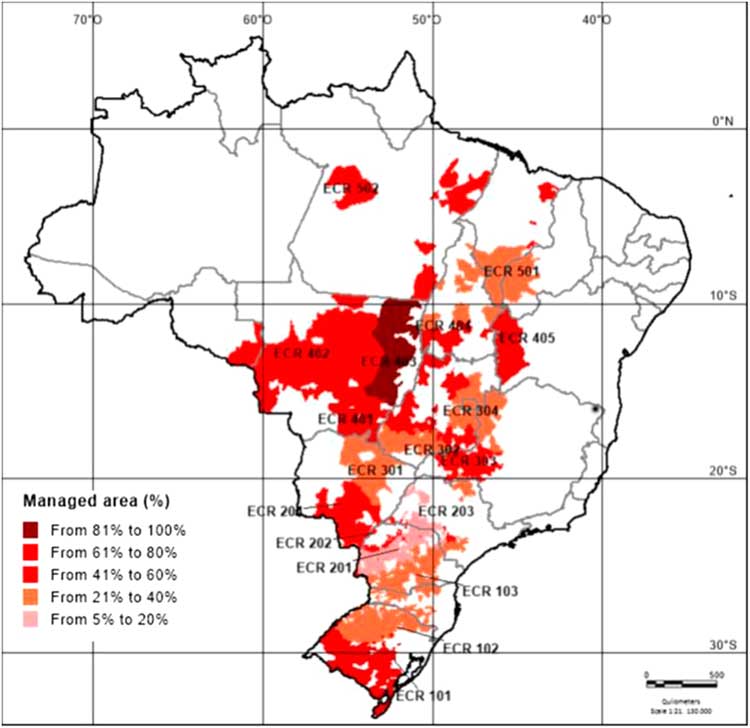
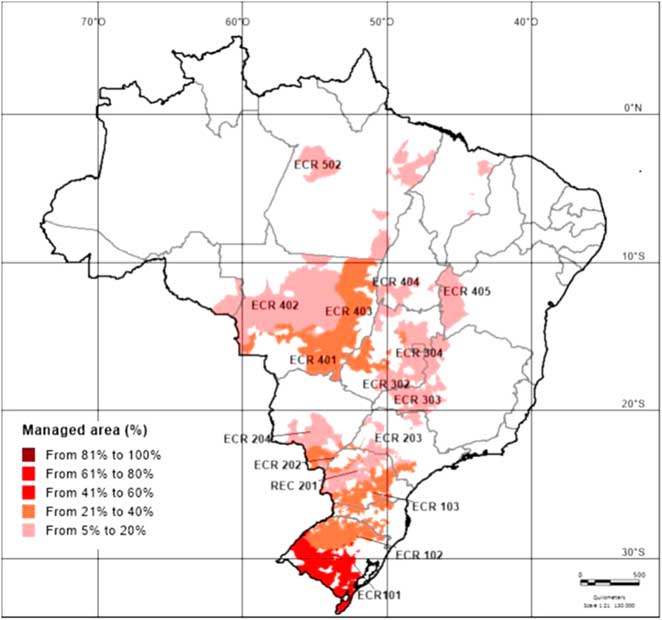
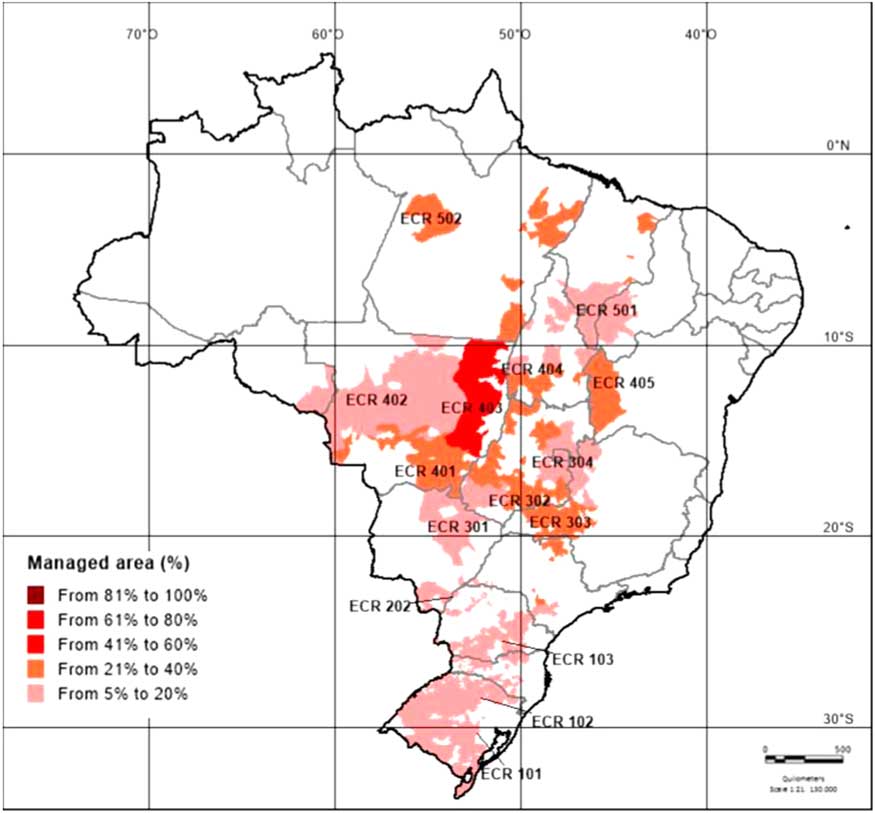
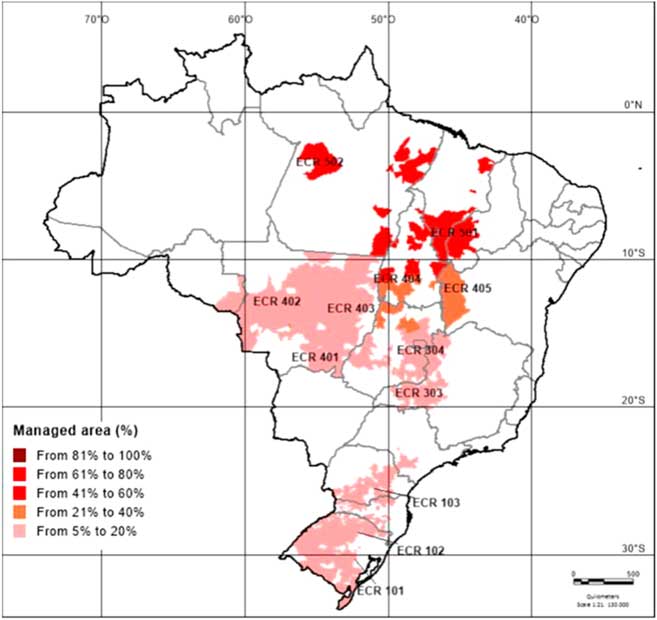
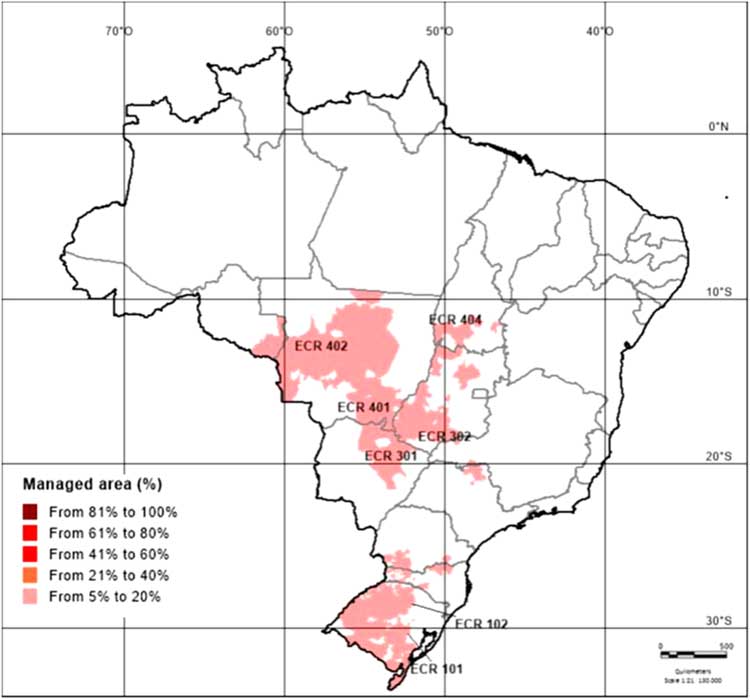
Coat buttons and parrotleaf were concentrated predominantly in the west-central region (ECRs 403 and 404), and shrubby false-buttonweed was concentrated in the northern region (ECRs 501 and 502) (Figures 16, 17, and 18, respectively). As for Chloris spp., the dispersal and frequency of johnsongrass was limited to less than 5% infestation across all ECRs (Figure 19).
Dispersal and frequency of coat buttons based on the area treated for the weed during the 2016/17 harvest in 20 soybean-producing edaphoclimatic microregions (ECRs) in Brazil.

Dispersal and frequency of parrotleaf based on the area treated for the weed during the 2016/17 harvest in 20 soybean-producing edaphoclimatic microregions (ECRs) in Brazil.

Dispersal and frequency of shrubby false-buttonweed based on the area treated for the weed during the 2016/17 harvest in 20 soybean-producing edaphoclimatic microregions (ECRs) in Brazil.

Dispersal and frequency of johnsongrass based on the area treated for the weed during the 2016/17 harvest in 20 soybean-producing edaphoclimatic microregions (ECRs) in Brazil.

The dispersal and management maps presented here demonstrate a loss of efficiency of glyphosate-resistance technology. Given this scenario, farmers are forced to use herbicides other than glyphosate for weed management in GR soybean. This leads to increased weed control costs. Adegas et al. (Reference Adegas, Vargas, Gazziero, Karam, Silva and Agostinetto2017) reported that in Cerrado areas with horseweed and sourgrass biotypes, the cost of weed control in soybean may increase by 400%. In fields with horseweed and Italian ryegrass, the cost may exceed 200%.
The major weed species present in the soybean-producing edaphoclimatic regions in Brazil were species that are naturally tolerant to the herbicide glyphosate, particularly Commelina spp. and Ipomoea spp., as well as biotypes identified as GR, such as horseweed (Conyza spp.), goosegrass, and sourgrass due to the large area cultivated with GR soybean and the concomitant high frequency of use of this herbicide (Culpepper et al. Reference Culpepper, Flanders, York and Webster2004; Heap Reference Heap2018; López-Ovejero et al. Reference López-Ovejero, Takano, Nicolai, Ferreira, Melo, Cavenaghi, Christoffoleti and Oliveira2017).
This result demonstrates a loss of efficiency of the glyphosate resistance technology and indicates that to reduce or avoid further dispersal of the identified species, producers should adopt a set of strategies for the preventative, cultural, mechanical, and chemical control of these weeds according to the characteristics of each region.
Acknowledgments
The authors are grateful for the efforts and technical assistance of colleagues and partners of Dow AgroSciences LCC. The authors also thank the collaborators who supported the interviews across the 20 ECRs. This research received no specific grant from any funding agency or commercial or not-for-profit sectors. No conflicts of interest have been declared.