Introduction: trends in agriculture
During the first ten years of the 21st Century, we have witnessed a rapid transformation in the face and practice of agriculture, one of the oldest enterprises in human civilisation. Among the major new developments or trends are:
1. Commercialisation: Agricultural production is merging with agribusiness and operating at ever-increasing scales with greater efficiency and profit. Agriculture is moving from labour intensive toward more capital intensive enterprise.
2. Globalisation: Trade and exchange of products are becoming even more active. Treaties such as WTO, FTA, and ECFA are having far-reaching effects on agriculture. Multi-national companies with international production and marketing are becoming the key players.
3. Science and technology: Science- and technology-driven agriculture is critical for survival and success. Biotechnology, in particular, will be part of the solution to deal with issues such as food safety, food shortages, etc.
4. Environmental protection: Excessive use of chemical fertilizers and agro-chemicals are increasingly problematic to the environment. The larger scale of animal production today has a negative impact on land, air, and water quality. Solutions to these problems— new regulations and environmentally-friendly technologies—are not only increasing in demand, but also becoming a necessity for sustainable agricultural development.
5. Energy production: A fifth trend in agriculture has emerged recently around the time that oil price rose above $100 per barrel in 2008 and increased concern about global climate change. Governments, industries, and research institutes around the world have stepped up research to decrease the use of fossil fuels and to invest in clean, renewable energy sources, including bio-ethanol, bio-diesel, and biogas. For the production of these bio-fuels, the agricultural system—with its scale, infrastructure, and logistics—is uniquely qualified to offer cost-effective solutions. This will be a new and vital aspect of agriculture in the 21st Century.
Biogas production from animal waste
Anaerobic digestion of animal and agricultural wastes is one example of agricultural energy production. In this process, waste materials are broken down by bacteria and converted into biogas, a mixture of methane and carbon dioxide. With 60 to 70% methane content, biogas is a combustible gaseous fuel suitable for heating and/or power generation.
laboratory research
In the late 70's, this laboratory at North Carolina State University (NCSU) was set up to study the potential of biogas production from chicken manure (Figure 1). Systematically, various sources of bacteria and different operational parameters were studied to determine optimal conditions to maximize biogas production. It was found that chicken manure is potentially a good substrate for biogas production. When digestion takes place at thermophilic temperatures (50-60°C), it is 4 and 10 times more efficient than conventional digesters operated at mesophilic (30-40°C) and ambient (10-20°C) temperatures, respectively. An egg farm with one million hens, for example, generates approximately 100 tons of fresh manure a day. From the laboratory results, it is estimated that could produce 8,000 m3 of biogas (Huang and Shih, Reference HUANG and SHIH1981). An engine/generator system can convert this amount of biogas into 16,000 kwh per day, or 6 million kwh per year. The estimated energy production has been recently verified by several large-scale digesters in China and Europe.
Laboratory digesters.

pilot project
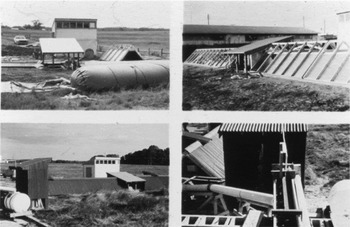
Encouraged by the laboratory results, this research team constructed a simple prototype digester for a 4,000 hen house on the NCSU research farm. Approximately 400 kg of wet manure was processed daily at 50 to 55°C (Figure 2). During three years of operation, the performance reached the potential as predicted in the laboratory (Steinsberger and Shih, Reference STEINSBERGER and SHIH1984). This field test was successful in proving the concept and feasibility of thermophilic anaerobic digestion (TAnD). In addition, many environmental benefits associated with the technology were demonstrated with the pilot digester system on the research farm (Shih, Reference SHIH1987).
Pilot digester on research farm.

full-size digester
The next step for TAnD was to determine its feasibility on a larger scale. An opportunity became available, not at NCSU, nor in the US, but in China, where anaerobic digesters and biogas have been used for nearly 100 years. As TAnD technology was new to China, the feasibility study was presented at the International Symposium on Anaerobic Digestion 1985 in Guangzhou (Shih, Reference SHIH1985). Five years later, with a grant support from UNDP, our laboratory was invited to help design and construct a full-scale TAnD system in a village called Liumingying in Beijing (Figure 3). Based on the NCSU prototype, it was built with an insulated 100 m3-concrete tank and a heating system. All together, the compact digester was able to process five tons of fresh manure per day from 50,000 hens, producing 300 m3 of biogas daily. De-sulphurised biogas was piped underground to 200 households of the village for cooking and heating. Effluent and sludge from the digester were used locally and sold as organic fertilizer. The initial financial investment for the digester was recouped in three years. During the last 20 years, nearly 20,000 visitors from around the world have been in Liumingying to learn about the TAnD system. Three years ago, a large digester system of 4 x 3,000 m3, processing manure from 2.6 million hens was constructed in China to generate electric power (Figure 4).
100-m3 Liuminying digester for 50,000 hens in Beijing.

Large biogas power plant for 2.6 million hens in Beijing.

Biotechnology of keratinase
Despite the focus on TAnD as a source of bio-fuel production, it was a serendipitous discovery that opened up a new avenue that ultimately led to entirely new developments.
feather degradation and the discovery of keratinase
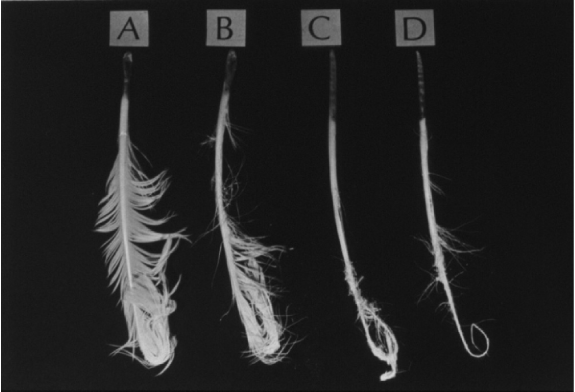
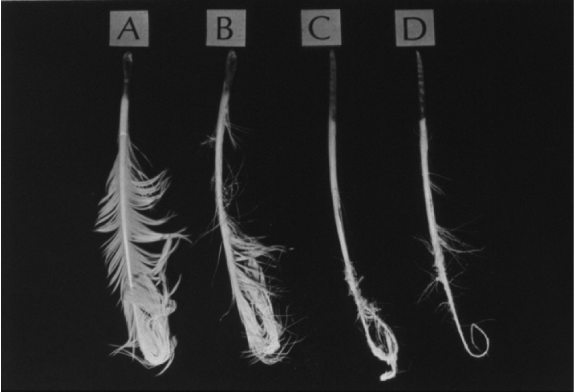
While operating the digester on the NCSU university farm, an interesting phenomenon was observed when chicken feathers shed into the manure disappeared in the digester. On one occasion, a hen fell from its cage and inadvertently ended up in the digester. When the tank was opened, there was no trace of the hen of it, not even a single feather. This was noteworthy because feathers—like human hair and fingernails—are composed of a very recalcitrant protein called keratin, which is resistant to common digestion processes. After this episode, two years were spent trying to solve this puzzle and finally a feather-degrading bacterium was isolated from the digester, Bacillus licheniformis PWD-1 (Figure 5), the first bacterium isolated from a poultry waste digester (Williams et al., Reference WILLIAMS, RICHTER, MACKENZIE and SHIH1990). As it turns out, this bacterium produces a unique enzyme capable of degrading hard proteins such as keratin. Given this property, the enzyme was named ‘keratinase’ (Lin et al., Reference LIN, LEE, CASALE and SHIH1992; Shih, Reference SHIH1993).
Feather degradation in test tubes by Bacillus licheniformis PWD-1.
genetics and production of keratinase
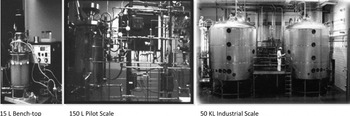
Where there is an enzyme, there must be a gene that encodes the enzyme. This was pursued in the bacterium, and the gene was finally isolated and sequenced to determine its basic gene structure (Lin et al., Reference LIN, KELEMEN, MILLER and SHIH1995). Genetic manipulations allowed us to improve the enzyme yield four to five fold. With a 150 l fermentor in the laboratory, the enzyme could be produced in quantities large enough with which to conduct application research (Wang and Shih, Reference WANG and SHIH1999). Subsequently the keratinase was commercialised (www.briworldwide.com) and produced in 50,000 l industrial scale fermentors (Figure 6). After the discovery of PWD-1 keratinase, many laboratories around the world made similar research and found many new keratinases (Gupta and Ramnani, Reference GUPTA and RAMNANI2006; Brendelli et al., Reference BRENDELLI, DAROIT and REFFEL2009).
Application of the keratinase
Based on the application research with keratinase, a number of ways to use the enzyme were found—some predictable, and some less so.
feather meal processing
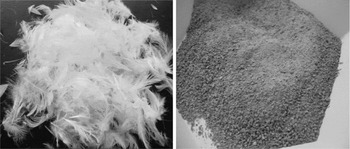
Every year, approximately one million tons of feathers are collected in the US and four to five million tons worldwide. Since 90% of feathers is keratin protein, it is possible to use the keratinase enzyme to convert feathers into a more digestible feather meal for feed use. In addition, the enzyme facilitates the cooking process by reducing time and temperature requirements. The enzymatic process improves the nutritional quality and utilisation of this major by-product of the poultry industry (Figure 7).
Conversion of feathers into the improved feather meal.

enzyme as a feed additive
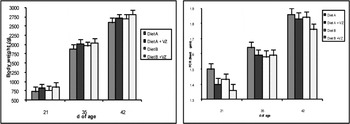
In 2001, another interesting observation was made. A small amount of keratinase (<0.1%) added to the feed of young chicks appeared to improve feed efficiency. In fact, birds raised on a low-protein diet supplemented with the enzyme grew as large as those raised on a standard protein diet Follow-up experiments concluded that keratinase as a dietary supplement improved body weight gain by approximately 100 g per chicken at market age (42 days) (Odetallah et al., Reference ODETALLAH, WANG, GARLICH and SHIH2003; Reference ODETALLAH, WANG, GARLICH and SHIH2005). Alternatively, it could also be used to reduce dietary protein intake by 10% without compromising growth (Wang et al., Reference WANG, GARLICH and SHIH2006). As we now know, keratinase is a potent broad-range protease and, therefore, improves the digestibility of protein in the intestinal tract of the chicken. With the enzyme added to the feed, birds have better access to nutrients and increased growth (Figure 8). Based on the improvement, the monetary value of the feed enzyme additive is estimated to save US$20 to US$30 per ton of feed, depending on the market price of soybean meal. The total potential cost-saving worldwide for growing chickens and pigs is estimated at billions of dollars. The enzyme product, VersazymeTR (VZ), is now produced and marketed worldwide (Wang et al., Reference WANG, GARLICH and SHIH2006).
degradation of prion protein
Seventeen years ago, Europe experienced the outbreak of mad cow disease, or bovine spongiform encephalopathy (BSE). According to the prion theory (Prusiner, Reference PRUSINER1991), it is believed that the disease is caused by the unusual prion protein, which has two iso-forms—one is harmless, and another, PrPSc, infectious. PrPSc is able to misfolding and aggregating into an extremely stable structure that is resistant to standard sterilization methods including alcohol, heating, and autoclaving, as well as to common proteases. The prion protein is remarkably similar in structure to feather keratin. Following this discovery, in 2001 a sample of keratinase was bought to the Centre of Animal Diseases in Lelystad, the Netherlands, to test its ability in degrading PrPSc, where it was shown, after three day of laboratory analysis, to be able to degrade BSE PrPSc (Figure 9). This discovery opened up the possibility of enzymatic disinfection of prion protein to prevent the spread of such diseases (Langeveld et al., Reference LANGEVELD, WANG, SHIH, BOSSERS, GARSSEN and SHIH2003).
Versazyme (VZ) improved body weights and feed conversion ratios (FCR) during the 42 days of growth of broiler chickens.

Keratinase degradation of brain stem prion protein. P: standard, N: normal animals, B1-3: 3 BSE cows, and S1-2: 2 scrapie sheep.

From biogas and keratinase to BRI
Beginning as a pursuit for a waste management and energy production process, the past thirty-five years of teaching and research have brought not only that initial goal to fruition, but many other unforeseen and unpredicted benefits and opportunities. Along the way, the laboratory group at NCSU has accumulated a total of ten US and international patents – beginning with the invention of the thermophilic anaerobic digester, to the discovery of the feather-degrading bacterium, the isolation of keratinase enzyme and its gene, the scale-up production of keratinase, the application of keratinase as a feed additive, and the discovery of enzymatic degradation of prion protein. Furthermore, a spin-off biotechnology company was established to commercially develop the enzyme product and bring it from the laboratory into the world market (Shih and Wang, Reference SHIH and WANG2006). This series of research, development and commercialisation is an interesting case study that reflects the general trends of modern agriculture: energy, environment, science & technology, internationalisation and commercialisation.
Acknowledgement
Many thanks to the graduate students, post-doctoral fellows, and international and U.S. collaborators whom have been involved with these projects over the years. The authors would like to acknowledge grant funding from USDA, USDOE, USFDA, NC Institute of Energy, NC Biotechnology Center, US Poultry & Egg Assoc. and National Cattlemen & Beef Assoc. are greatly appreciated. In particular, Dr. Giles Shih and Dr. Jeng-Jie Wang, deserve credit for their entrepreneurship and hard work in the development of BRI.