




No CrossRef data available.
Article contents
- Abstract
- LEXICAL ACQUISITION
- NEGOTIATION, COMPREHENSION, AND ACQUISITION
- COMPUTER-MEDIATED COMMUNICATION AND INTERACTION
- RESEARCH QUESTIONS
- METHOD
- SELECTION AND DISTRIBUTION OF TARGET LEXICAL ITEMS
- ANALYSIS
- ESTABLISHING LEXICAL GAINS
- RESULTS
- DISCUSSION
- CONCLUSION
- APPENDIX A: SAMPLE TASK
- APPENDIX B
- APPENDIX C
- References
COMPUTER-MEDIATED NEGOTIATED INTERACTION AND LEXICAL ACQUISITION
Published online by Cambridge University Press: 01 September 2004
Article contents
- Abstract
- LEXICAL ACQUISITION
- NEGOTIATION, COMPREHENSION, AND ACQUISITION
- COMPUTER-MEDIATED COMMUNICATION AND INTERACTION
- RESEARCH QUESTIONS
- METHOD
- SELECTION AND DISTRIBUTION OF TARGET LEXICAL ITEMS
- ANALYSIS
- ESTABLISHING LEXICAL GAINS
- RESULTS
- DISCUSSION
- CONCLUSION
- APPENDIX A: SAMPLE TASK
- APPENDIX B
- APPENDIX C
- References
Abstract
This paper reports a paired-groups experimental study, which tests the Interaction Hypothesis in a computer-mediated communicative environment. Pairs of intermediate-level nonnative speakers of English (n = 24) interacted with one another in a synchronous mode over a local area network while attempting to jointly complete jigsaw and decision-making tasks that were seeded with largely unknown target lexical items. The data suggest that learners often engage in negotiated interaction when presented with unknown lexical items during the course of task completion. Results also show that previously unknown lexical items that were negotiated were retained significantly better as measured by immediate and delayed recognition (receptive) and object labeling (productive) posttests than those items where preemptive input alone was provided and where target items were not engaged. The results are interpreted as being supportive for the interactionist perspective on SLA, especially the importance of attention, as they provide evidence of a more direct link between negotiated interaction and acquisition.I would like to thank the following people for their input and interaction with various aspects of this work: Roby Ariew, Sue Gass, Greta Gorsuch, Jun Liu, and Mary Wildner-Bassett. I would also like to thank the five anonymous SSLA reviewers whose insightful comments certainly helped strengthen this article. Finally, I would like to thank the participants in the study, to whom I am greatly indebted.
Information
- Type
- Research Article
- Information
- Copyright
- © 2004 Cambridge University Press
The interactionist perspective on SLA argues that, rather than being purely a venue for language practice, conversational interaction in the target language (TL) forms the basis for language development. Long's updated version of the Interaction Hypothesis (1996) stated that negotiation for meaning, and especially negotiation work that triggers interactional adjustments by a native speaker (NS) or more competent interlocutor, facilitates acquisition because it connects input, internal learner capacities—particularly selective attention—and output in productive ways. Such negotiation can direct learners' attention to either a discrepancy between their interlanguage and the TL or to an area of the TL about which a learner has little or no information. Learning may take place during this negotiated interaction, or negotiation may provide an initial step, serving as a “priming device” for learning (Gass, 1997; Mackey, 1999).1
Gass (1997), in specific reference to Mackey's (1995) work, which found evidence for more developmentally advanced structures in delayed posttests rather than immediate posttests, suggested that interaction may serve as a priming device that allows learners to focus attention on areas they are working on. She noted that “thinking time” may be required before any notable change takes place.
Although it is widely accepted in the SLA research community that interaction is beneficial for SLA at some level, studies attempting to more explicitly link negotiated interaction with second language (L2) development, although providing some support, are less than conclusive. Indeed, Long (1985), acknowledging the potential difficulty in designing studies to explore such a direct relationship between the two, suggested that researchers assume a more indirect approach. Increasingly, though, researchers have taken on the challenge of attempting to establish a more direct, measurable link between interaction and SLA.
The present study provides further evidence of an explicit link between negotiated interaction and SLA (specifically the acquisition of new lexical items) in the context of computer-mediated communication. Accordingly, a discussion of some of the recent and relevant literature on vocabulary acquisition is in order before turning our attention to the research on face-to-face and computer-mediated negotiated interaction.
LEXICAL ACQUISITION
Vocabulary is no longer a neglected aspect of language learning (Meara, 1980) and is now recognized as fundamental to the development of L2 proficiency (Harley, 1996). Indeed, the lexicon may be the most important component for language learners (Gass & Selinker, 2001). Accordingly, much of the recent research into L2 vocabulary explores just how this knowledge is acquired and what conditions favor its development.
Research has suggested that the highly complex and incremental process of lexical acquisition (Hulstijn, 1992; Nation, 1990, 2001; Schmitt, 2000) involves, at a minimum, noticing the various properties (i.e., morphological, phonological, syntactic, semantic, stylistic, and collocational) of the new lexical item, the storage of the item in the internal lexicon, and the consolidation of such storage (Groot, 2000). Determining exactly what it means to know a word is an equally complex issue and several aspects of word knowledge have been suggested. These include receptive and productive knowledge of its spoken and written form, its grammatical and collocational behavior, its frequency and structure, its stylistic register constraints, its conceptual, referential, affective, and pragmatic meanings, and its lexical relations to other words (Laufer, 1997; McCarthy & Carter, 1997; Melka, 1997; Nation; Schmitt). Furthermore, research has suggested that some of these kinds of word knowledge are interrelated (Schmitt & Meara, 1997).
Many factors have been found to affect the learnability of new words. These include the word's phonotactic features or regularity, its frequency, orthography, length, morphology, synformy, idiomaticity, number of meanings, as well as a word's semantic properties such as abstractness, specificity and register restriction, word class, and imageability of concept (see Ellis & Beaton, 1993; Laufer, 1997; Nation, 1990, 2001; Schmitt & McCarthy, 1997; and Schmitt, 2000, for detailed discussions of each). The learnability of a new word can also be affected by the way the word is taught, with some research suggesting that repeated exposure alone may positively affect acquisition (Rott, 1999; Saragi, Nation, & Meister, 1978).
Recently, the respective roles of incidental and intentional vocabulary learning have also received much attention. Precisely what constitutes incidental learning is an issue currently debated in the SLA literature (see Gass, 1999; and Singleton, 1999, for discussion). However, in general terms, incidental learning is said to occur when a word is acquired as a by-product of the learner being engaged in some language learning activity. Additionally, learners are assumed to be focused primarily on comprehending meaning rather than having the explicit goal of learning new words during such activities. Telling or not telling students that they will be tested on their knowledge after a particular activity is arguably the critical operational and definitional feature distinguishing incidental from intentional learning (Hulstijn, 2001).2
Hulstijn (2001) also suggested that the L1 claims for incidental vocabulary acquisition are the “default argument,” given that no one has been able to advance a better explanation. In other words, there is no direct proof that L1 vocabulary is mainly acquired incidentally. I owe thanks to an anonymous SSLA reviewer for pointing this out.
“More elaborate processing” refers to relatively more attention by a learner to a word's pronunciation, orthography, grammatical category, meaning, and its semantic relations to other words.
Laufer and Hulstijn (2001) have further posited the importance of task-induced involvement, the basic assumption of which is that the retention of unknown vocabulary words depends on the degree of involvement in processing these words. Although their model specifically addresses incidental vocabulary learning, it seems that many of the concepts are appropriate for intentional vocabulary learning as well. Involvement, in Laufer and Hulstijn's model, is made up of three components: need, search, and evaluation. Need is based on a drive to comply with the task requirements and is moderate when induced by an external agent such as the teacher asking the student to use the word in a sentence and strongest when it is learner induced. Search is an attempt to find the meaning of an unknown L2 word through the consultation of a dictionary or other authority (e.g., a teacher or more competent peer). Finally, evaluation consists of comparing a given word with other words, comparing a specific meaning of the target word with its other meanings, or combining the word with other words to determine if it fits the context. The involvement load is the combination of the presence or absence of these three involvement factors. Based on this model, Laufer and Hulstijn suggested that words processed with higher involvement loads are retained better than those processed with lower involvement loads. Thus, for vocabulary retention, tasks with a higher involvement load are more effective than tasks with a lower involvement load.
Additionally, research has suggested that the potential effect of individual differences on vocabulary acquisition should not be underestimated. Of particular interest to the present study is the role of individual strategy use by learners. Although far from conclusive, the evidence suggests that learners employ a wide range of strategies in learning new words, that some strategies seem to be more effective than others, and that strategy training does not benefit all students equally (Cohen & Aphek, 1981; Ellis & Beaton, 1993; Oxford & Crookall, 1990). Also, learner use and effectiveness of such strategies may vary as a function of learner proficiency level (Lessard-Clouston, 1996; Morrison, 1996).
Informed by the previously cited research, the present study uses lexical acquisition, specifically that of unambiguous concrete nouns, as the vehicle through which to further test the Interaction Hypothesis. Furthermore, interactive tasks were designed so as to yield a higher involvement load. Finally, as this study sought to explicitly compare the effectiveness of two interactional strategies during task completion, learner proficiency level was held constant.
NEGOTIATION, COMPREHENSION, AND ACQUISITION
Key to the interactionist position is the notion that SLA is promoted when learners have opportunities to solve communication problems by means of conversational modifications or the negotiation of meaning. When learners and interlocutors engage in negotiation to resolve impasses in communication, they signal and respond in ways that enhance their comprehension of input and assist their production of modified or pushed output, which thus facilitates the process of SLA. Negotiation also elicits negative feedback, which focuses learners' attention on problematic areas in communication and induces a focus on form.
There is fairly solid evidence supporting the view that negotiation assists comprehension (Ellis, Tanaka, & Yamazaki, 1994; Pica, Doughty, & Young, 1986; Pica, Young, & Doughty, 1987) with more mixed results regarding a link between negotiation and grammatical development (Loschky, 1994; Mackey, 1995, 1999) and lexical acquisition (de la Fuente, 2002; Ellis, 1995; Ellis & He, 1999; Ellis et al.; Gass & Varonis, 1994; Loschky). Research examining the relationship between negotiation, comprehension, and acquisition has done so largely in terms of the respective roles of unmodified, premodified, and interactionally modified input and pushed output (Swain, 1985, 1995) in learner comprehension and acquisition of the TL. This work suggested that interactionally modified input leads to better comprehension than both unmodified input and premodified input (Ellis et al.; Loschky; Pica et al., 1986, 1987).4
Long (1996) has drawn a distinction between simplification and elaboration “adjustments” used to compensate for linguistic complexity. Simplification is normally “premodified” in nature and typically results in shorter, syntactically less complex utterances, a narrower range of verb tenses, fewer modifiers, and often some loss of semantic content. In contrast, interactional modifications compensate for linguistic complexity by elaboration, which maintains utterance length (or even lengthens it) and syntactic complexity. Elaboration is argued to be more beneficial as it makes semantic structures more explicit and adds redundancy through the use of repetition and paraphrase.
Ellis and He (1999), in a comparison of premodified input, interactionally modified input, and modified output groups, found no difference in the comprehension scores of the premodified and interactionally modified groups. Further, whereas their modified output group significantly outscored both the premodified and interactionally modified groups in the vocabulary recognition and production posttest, there was no significant difference between the two input groups in receptive and productive measures of acquisition. Although results showed that reasonable levels of comprehension and acquisition can be achieved in all three conditions and maintained over time, Ellis and He demonstrated that learners who had the opportunity to produce and modify their own output outperformed the two groups who had only experienced modified input in measures of comprehension and acquisition. It should be noted, however, that Ellis and He's interactionally modified input group involved learner-teacher interaction, whereas the modified (negotiated) output group involved learner-learner interaction.5
It seems that their distinction between the interactionally modified input and modified output groups is of questionable value when considering authentic classroom situations and task-based, learner-learner interaction. The “interactionally modified input” group participated in largely scripted teacher-student input modifications, whereas their “modified output” group participated in student-student interaction. Using Ellis and He's (1999) criteria, all participants in the present study would be in their “modified output” group.
In contrast, de la Fuente (2002) found that the two negotiated interaction groups in her study attained higher levels of comprehension of target lexical items than the premodified input group.6
It appears that de la Fuente's (2002) “Negotiated Interaction without Pushed Output” group (NIWO) may very well have been able to engage in pushed output as they were able to negotiate meaning during their interaction with their NS interlocutor. That is, their NIWO classification, although perhaps offering slightly less opportunity to use the target lexical items productively than the NIPO (pushed output) group, does not necessarily preclude their use of pushed output.
Ellis et al. (1994) found that learners who received interactionally adjusted input achieved (and maintained) higher vocabulary retention scores in an immediate posttest than those who received premodified input. Ellis (1995), however, concluded that the apparent benefits to acquisition associated with the interactionally modified input group are tempered by the fact that the rate of acquisition was faster for the premodified group. His results also suggested that overelaborated input may negatively affect word-meaning acquisition, a point compatible with Ehrlich, Avery, and Yorio's (1989) discussion of embroiderers and skeletonizers.7
Embroiderers refers to those speakers who provide information that expands and embellishes beyond what is required to perform the task, whereas skeletonizers are those speakers who provide only the basic information needed to perform the task.
Although Loschky (1994) found no main effect for acquisition of vocabulary, nor grammatical structures among his premodified, interactionally modified, and unmodified input with no interaction groups, Mackey (1995, 1999) provided strong evidence linking conversational interaction with grammatical development. In a study that explored the relationship between conversational interaction, learner progression through developmental stages of English question formation, and learner production of higher level question structures, Mackey found that only the group that actively participated in interaction was significantly more likely to demonstrate a sustained increase in developmental stage and production of higher level question forms.
Interactionist research clearly suggests that learners tend to negotiate around lexical rather than grammatical features. This may have to do with the nature of learner attention during negotiation (Pica, 1994; Pica, Lincoln-Porter, Paninos, & Linnell, 1996) and is likely to be influenced by proficiency level (VanPatten, 1990, 1996). It may well be, though, that this failure to negotiate around grammar is more a reflection of task design than the nature of negotiation per se (Loschky & Bley-Vroman, 1993), especially because the kinds of activities typically found in communicative classrooms rarely require them to do so (Pica, 1997). A related possibility is that learners fail to notice nonsalient morphosyntactic features, which are not essential for comprehension (Harley, 1994). This notion was largely supported by Mackey, Gass, and McDonough (2000), who found that despite a significant amount of feedback directed at morphosyntax by NSs (or near-native speakers), learners usually failed to acknowledge this feedback as such, often perceiving it as targeting lexical items.
Thus, although negotiation has been observed over grammatical morphology, it seems that learners negotiate more frequently over lexis than morphosyntax. More importantly, there seems to be a positive role for interactional modifications in the SLA process. Accordingly, the present study focuses on two specific types of interactional modifications (preemptive and responsive) and their relative effectiveness during computer-mediated negotiated interaction in terms of lexical acquisition among intermediate-level English as a second language (ESL) learners.
COMPUTER-MEDIATED COMMUNICATION AND INTERACTION
Synchronous computer-mediated communication (CMC) refers to real-time interaction—usually written communication—between people over either a local or a wide area network. Messages are typed, sent, and received instantaneously, and participants are required to communicate in the same session. This is contrasted with asynchronous CMC, in which participants are not required to be online at the same time and there is a longer delay between the time the message is sent and when it is received by the addressee. Synchronous CMC has been found to exhibit characteristics that resemble spoken communication, others that are similar to written interaction, and still others that are unique to CMC discourse (Blake, 2000; Collor & Bellmore, 1996; Werry, 1996; Yates, 1996).
Yates (1996), for example, found that CMC possesses some textual features, such as lexical density, that are similar to those associated with writing and others, such as the use of first person, which are most often found in oral language. She also found that CMC is affected by “numerous social structural and social situational factors which surround and define the communication taking place” (p. 46). CMC has also been found to exhibit a simplified register compared to face-to-face communication. These features include an increased use of abbreviations, simplified syntax (such as subject or modal deletion), the acceptance of surface errors (such as typographical errors or misspellings), the use of emoticons to express emotional meaning, and the use of formulaic phrases (Murray, 2000). The structure of CMC conversations has been shown to differ from face-to-face exchanges in at least two ways, including optional openings and closings and differences in turn-taking behavior (Gains, 1999). There also seems to be a requirement in CMC to be more explicit in indicating understanding and nonunderstanding, largely due to its reduced sensory nature (Smith, 2001). Further, learners have been found to address one topic at a time during synchronous CMC, much like conventional face-to-face interaction and in contrast to asynchronous modes such as e-mail (Murray). Finally, some research has suggested that instructors may dominate electronic classroom discussions as much as they do in face-to-face discussions (Hawisher & Selfe, 1998), which suggests that some aspects of interactional behavior are not substantially altered by the CMC medium.
The Benefits of Computer-Mediated Communication: An Interactionist Perspective
The key interest in CMC, from an interactionist perspective on L2 learning, involves the specific ways in which CMC is relevant to and facilitative of the processes believed to be beneficial to SLA. Among the most important issues is establishing the facility of CMC to supply rich input, promote pushed output, provide plentiful and dynamic feedback, focus learners' attention on aspects of the TL, and enhance noticing. Although this research in no way suggests that CMC can or should supplant face-to-face communication in the L2 classroom, CMC research has suggested several potential benefits over face-to-face interaction. These benefits include an increased participation—equity—among students (Beauvois, 1992; Kelm, 1992; Kern, 1995; Kim, 1998; Sullivan & Pratt, 1996; Warschauer, 1996a), an increased quantity of learner output (Chun, 1994; Kelm), and an increased quality of learner output (Chun; Kelm; Kern; Warschauer, 1996a, 1996b). There is also evidence that CMC is viewed by students as being less threatening than face-to-face interaction, which often results in an increased willingness to take risks and try out new hypotheses (Kelm, 1996; Kern; Warschauer, 1996a, 1997). Warschauer (1996a), for example, found that students were more inclined to pursue idea-generating discourse and were less inhibited during written production than in oral discussion. Similarly, Meunier (1998) noted that students take more risks experimenting with ideas during online discussions. The potential for anonymity may complement this willingness for risk taking as it has been found to create a certain distance between participants that may contribute to an observed atmosphere of critical receptivity (Kern, 1998). A heightened quality of learner output was reported by Kern (1995), who found that students were linguistically more creative and sophisticated during CMC than during traditional whole-class discussions and that 80% of the students reported feeling more confident in writing French during the CMC sessions.
In terms of pushed output, Blake and Zyzik (2003) in a unique study exploring interaction between heritage speakers and learners of Spanish, suggested that the demands of electronic chatting seem to force participants to produce the TL. In this study, the CMC environment seemed to offer the Spanish heritage speakers a chance to expand their bilingual range, including grammatical, textual, illocutionary, and sociolinguistic competencies. Blake and Zyzik also suggested that the output elicited by the CMC environment can serve to remedy the incessant problem of disfluency among Spanish heritage speakers by serving to facilitate automatization of language processing. Moreover, the Spanish heritage speakers seem to gain a sense of empowerment through CMC with Spanish learners because, despite a degree of shared incompetence with the learners of Spanish, they take on the role of the more competent peer, thus bolstering their largely negative opinions of their own Spanish abilities.
There is some indication that the text-based CMC medium can amplify students' attention to linguistic form (Warschauer & Kern, 2000) by offering learners ample opportunity to notice lexical and grammatical features in the input. As Chapelle (2001) noted, written communication likely affords more opportunity for attention to form than spoken language. The visual saliency of incoming and outgoing messages as well as the ability to reread previous messages may allow students to better attend to such formal aspects without substantially hindering the flow of communication. CMC may also afford learners more processing time, the importance of which has been addressed by Dörnyei and Kormos (1998). This extra time may lead to better comprehension and more accurate production and may also help facilitate a higher quality interlanguage than would occur in a nonelectronic environment (Pellettieri, 1999).
The modest-yet-growing body of CMC research grounded in an interactionist theoretical framework suggests that learners can and do negotiate for meaning during CMC and that computer-mediated negotiated interaction is quite similar in many ways to that observed in the face-to-face literature. For example, as with face-to-face interaction, lexical items have been found to trigger the vast majority of computer-mediated negotiation, with morphosyntax triggering very little negotiation (Blake, 2000; Blake & Zyzik, 2003; Fernández-García & Martínez-Arbelaiz, 2002; Fidalgo-Eick, 2001; Pellettieri, 1999; Toyoda & Harrison, 2002). CMC has also been found to be a good venue for providing learners opportunities to attend to and engage in pushed output. Finally, task types typically used during face-to-face instruction (Pica, Kanagy, & Falodun, 1993) have proven successful in eliciting high amounts of learner interaction and negotiation in a CMC environment as well (Blake; Pellettieri).
CMC, then, seems to be a favorable venue through which to test the Interaction Hypothesis. Through this medium, the present study seeks to provide additional evidence for the positive role of negotiated interaction in L2 development by examining the effects of NNS-NNS negotiated interaction in connection with learners' ability to subsequently recognize and produce target lexical items with which the tasks were seeded.
RESEARCH QUESTIONS
As there are currently no studies that attempt to explicitly link learner-learner negotiated interaction and SLA in a synchronous computer-mediated environment, this study attempts to bridge this gap.8
The term negotiation in the present study is based on that first offered by Varonis and Gass (1985) and includes those exchanges in which there is some overt indication that understanding between participants has not been complete. There must be some recognized asymmetry between message transmission and reception with both participants being willing to attempt resolution of the difficulty (Gass, 1997).
- Does NNS-NNS computer-mediated negotiated interaction facilitate learners' ability to recognize and produce new lexical items?
- Which type of interactionally modified input—responsive (negotiated interaction), or preemptive (preemptive input)—best facilitates learners' ability to recognize and produce new lexical items?
- Do any observed differences hold up over time?
On the basis of the research cited, the corresponding directional hypotheses below were established:
- Computer-mediated negotiated interaction will facilitate learners' ability to recognize and produce new lexical items.
- Responsive modifications (negotiated interaction) will facilitate learners' ability to recognize and produce new lexical items better than preemptive input modifications.
- Any observed differences between gain scores in the negotiated interaction condition and preemptive input condition will hold up over time.
METHOD
Participants
Participants consisted of 24 intermediate-level ESL students (14 females and 10 males) from an intensive English language program at a large Midwestern university.9
Intermediate-level learners of English were selected for this study because research suggests that negotiation is especially useful in the earlier stages of L2 acquisition (Long, 1983) and that learners with more advanced comprehension skills may not need to rely on negotiation to comprehend input to the same extent as those with lower comprehension ability (Pica, 1992).
The Michigan State University English Language Test (MSUELT) is a test of basic English proficiency and is receptive in nature, consisting of a listening section with four subsections and a reading comprehension section with three subsections. It is intended to assess the understanding of the English that international students can expect to encounter while studying at an American university. The listening sections contain short lectures on nonacademic topics, conversations, and listening passages about which learners must answer multiple-choice questions. The reading section contains reading comprehension questions about short passages, a section where learners must interpret graphs and tables, and a section on vocabulary where learners must provide a synonym or definition. The MSUELT has been determined to have a high degree of reliability with reliability coefficients (Cronbach alpha) for the various versions of the listening and reading tests ranging from .830 to .945 (Cook, 2001).
The country and L1 characterizations listed here are taken directly from the background questionnaires completed by students.
Procedures
Following Chapelle's (2001) call for more methodologically convincing demonstrations of the language-learning potential of Computer Assisted Language Learning, a within groups pretest–posttest–delayed posttest design was employed. The learners met once a week in a campus computer lab during regularly scheduled class meeting times over a 5-week period. Because of occasional absences and lateness during the data-collection phase, the dyads were not necessarily the same for every task performed. Accordingly, the random pairings occasionally yielded dyads with the same first language (L1), though the majority of dyads spoke different L1s.
During the first meeting, students participated in a training session in which they received an introduction to ChatNet, a popular Internet Relay Chat (IRC) program, and were allowed to practice interacting with an unidentified partner online in real time.12
There was no evidence from the chatscripts that learners attempted to discover the identity of their interlocutor.
The potentially confounding variable time-on-task was controlled in this study. This offers an advantage over several previous studies that explored negotiation.
Immediately following the task, the researcher took control of the computer terminal screens via a master control, and all student terminals went black. At this point learners completed the immediate productive posttest (P1), which was limited to 7 minutes. During this posttest participants were required to view an overhead color transparency containing images of the eight target items in the task as well as eight distracters arranged randomly. Following Bialystok (1983), the distracters were chosen (where possible) on the basis of the distracter items' semantic similarities to the target items and the distracter items' fit with the overall context of the picture. Participants were required to provide the English word for all 16 objects on the transparency. Of course, the answers (correct or incorrect) for the distracter items were disregarded when calculating the posttest scores.
For the immediate receptive posttest (R1), learners viewed a second color transparency of the same eight target items and eight distracters (in a different order). Participants also held an R1 answer sheet containing only the text of the eight target items and a space for them to enter in the letter for the corresponding picture on the overhead. After 5 minutes these answer sheets were collected and the session was declared over. Each delayed posttest was administered 7 days after the respective CMC session. This procedure mirrored the immediate posttest procedures exactly with the exception that the target lexical items, distracters, and corresponding images were presented in a different order. In both the immediate and delayed posttest sessions the productive ability was measured first to avoid a test effect. The researcher was present at each posttest administration to ensure that participants did not receive outside help in completing the tests. Although a longer delay between the immediate and delayed posttests would have been favorable, the participants' academic schedules prohibited this possibility. This is viewed as a limitation to the study.
The testing procedures, although admittedly limited in that they measure only a basic dimension of lexical acquisition—namely, that of basic word meanings with concrete referents—are consistent with other recent interactionist studies that are often cited as providing evidence for a positive relationship between negotiated interaction and acquisition. For example, several recent studies have designed productive posttests that require learners to view images of the target lexical items and then, in either written or oral form, label each in the TL (de la Fuente, 2002; Ellis & He, 1999; Ellis et al., 1994). This procedure is essentially the same as that in the present study. Receptive acquisition has often been measured by simply asking participants to translate the newly acquired L2 word into their L1 (de la Fuente; Ellis et al.), or through a picture matching task, whereby learners are provided images of the target items and asked to match each one with the corresponding text of the L2 word (Ellis & He). Again, the latter procedure is largely similar to that in the current study. The present study, however, may offer an advantage to the studies discussed previously in that each posttest presented participants with an equal number of distracter items and target items. Further, task time limits (30 minutes per task) were strictly enforced, thus eliminating time on task as a potentially confounding variable.
Tasks
The two task types chosen for this study were jigsaw and decision-making tasks. Keeping to the specifications outlined in Pica et al.'s (1993) task typology, four appropriate and relevant original tasks were designed. The jigsaw tasks were essentially sequential ordering tasks, which presented each learner with a series of three pictures that needed to be combined in the correct order to reveal a humorous story (see Appendix A for sample task). In contrast, the decision-making tasks provided learners with situations that required them to reduce their total number of items or objects held from eight to four. Each task included a total of eight target lexical items (four for each learner) with the text and corresponding color graphic images listed at the bottom of the task sheet (see Appendix B for all target items listed by task). The tasks each consisted of two parts. Part 1 was the main focus of the task whereby learners attempted to solve the problem presented. It was in this section that learners normally engaged with the target items. Part 2 of each task was an extension of part 1 that asked learners to discuss a topic related to the activity presented in part 1. The purpose of part 2 was to elicit more discourse from learners and to ensure that dyads who finished part one quickly did not spend the extra time reviewing their chat logs, studying the target items, and so forth. All dyads completed part 1 of all tasks; however, not all dyads completed part 2 of all tasks. Although the tasks were essentially pedagogical in nature (Nunan, 1989), the researcher strove to maintain a certain degree of authenticity in the task design. The tasks compelled learners to attend primarily to meaning while drawing their attention to the various target lexical items. These tasks were piloted on several NSs and NNSs of English, who were consistently able to solve all four tasks in the intended manner.
SELECTION AND DISTRIBUTION OF TARGET LEXICAL ITEMS
Prior to week 1, participants were pretested on a written list of 83 lexical items (concrete nouns) and asked to indicate if (a) they knew the word, (b) they had seen the word before but were not entirely sure of its meaning, or (c) they definitely did not know the word. This self-report procedure is based on that used in a study of the relationship between modified input and output on lexical acquisition by Ellis and He (1999). The original list of low-frequency words was compiled by selecting concrete nouns that were deemed to be compatible with and relevant to draft versions of the tasks to be used. A second, seasoned ESL teacher was consulted regarding the potential compatibility of each word for the respective tasks and the likelihood that these words would or would not be already known by intermediate-level learners of English.
The words used in each treatment were then selected from the pool of vocabulary words on the pretest. The 32 least known words were selected as the target lexical items for the study (8 for each task). An analysis of learner individual pretest scores suggests that many of the words selected were completely unknown to all of the participants in both groups. Overall, learners reported 24% of the potential target lexical items as previously known. This procedure was intended to increase the internal validity of the study, as it allowed us to first establish which of the potential target items were previously unknown by each learner and then carefully track the gains made on each of the four posttest measures by each individual learner relative to the interactional modification strategy employed and also to those ignored items.
Each target lexical item was then assigned a relative difficulty level based on how many of the participants reported already knowing that particular word. Based on this difficulty level, each item was then assigned to one of the four tasks in alternating fashion to ensure that all four tasks possessed target items of about equal relative difficulty. The relevance of a particular item to a given task was given high priority during this matching phase. Additionally, as there is evidence suggesting the learnability of a word decreases as a function of increased syllables (Ellis & Beaton, 1993), the total number of syllables each word contained was taken into consideration when distributing the target items to either task sheet A or B within each task. The result was that the total number of syllables reflected in the target items for task sheets A and B across all four tasks was 32 and 33, respectively. Likewise, the task sheets had roughly an equal number of multiple-word units (compound words) as target items (five and four, respectively).
After matching the tasks with eight appropriate target items, each individual task was reconfigured to explicitly incorporate the assigned items. For example, in the case of the jigsaw tasks, images reflecting the target items were included in a meaningful way into the picture sequences. For the decision-making tasks, minor adjustments were made to the task prototype so that the target items fit well with the task scenarios. In this way, rather than being only peripherally related to the task, the words were either essential, or at least very helpful, in completing the task.
It should be noted at this point that, although the target lexical items contained in each task were consistent for all dyads, the potential target lexical items for each learner were those held by his or her partner. Of these potential target items, the items considered relevant for each individual learner were those potential items listed as unknown by that learner on his or her pretest. For example, in task 1, learner A held task sheet A, which contained the text and images for the lexical items goat, binoculars, raccoon, and barn. For the same task, learner B held task sheet B, which contained the text and images for the items wrench, tow truck, pliers, and swing set (see Appendix A). On the pretest, learner A indicated that he or she knew goat, barn, and swing set. Likewise, learner B indicated that he or she knew tow truck, pliers, and binoculars. In this scenario, each learner has three relevant target lexical items for task 1. Initially, the four items from the learner's own task sheet were discarded for that learner regardless of pretest score. Second, those words appearing on the partner's task sheet that were already known by the learner were discarded for that learner as well. Therefore, were student B to get goat and barn correct on the immediate receptive posttest but miss the word raccoon, he or she would receive an immediate receptive posttest score of .67. It should be noted here that careful analysis of the chatscripts allowed us to confirm the self-report data from the pretest. There were no apparent mismatches in this regard.
ANALYSIS
Based on an earlier pilot study, which explored task-based learner-learner CMC interaction, it was determined that learners essentially employed two types of interactional modification approaches when dealing with new lexical items. First, they could choose to negotiate meaning, a responsive tactic, to use Long's (1983) terminology, which functions to repair discourse after trouble occurs. Alternatively, learners could opt for a more preemptive input strategy whose goal is to avoid conversational trouble. There were also many cases when learners did not actively engage unknown target items.
In the case of negotiation, the initiator signals or indicates (I) that nonunderstanding or incomplete understanding has occurred. This is followed (at a minimum) by a response (R) from the respondent and usually a reply to the response by the initiator (RR). The initiator is designated as such because of his or her role in initiating the negotiation routine through a signal of nonunderstanding. In contrast, the option of providing preemptive input occurs when a learner is compelled to describe a potentially unknown item to his or her interlocutor before any negotiation can occur. That is, student A may anticipate that student B does not know the lexical item he or she is about to use and, therefore, provides a short description of the item immediately after it is used in context. In this respect, preemptive input is essentially a preemptive type of interactional modification.
The third option learners made use of, termed here ignored, was essentially the absence of any observable strategy. Target items were coded as such if the item was not explicitly addressed in any meaningful way during interaction or if the item never appeared in the chatscript at all. That is, though such items may appear at some point in the chatscript, they are not presented in any contextualized fashion but, rather overwhelmingly, appear in relative isolation. Thus, these items were ignored in real terms or in the sense that they were not actively engaged by learners when presented in a somewhat decontextualized way. Although the data do not reveal learners' intentions when ignoring these words, this nonengagement may have been the result of an avoidance strategy or simply a lack of time. The learners used the preemptive input strategy least during task completion (21% of responses), opting most often to negotiate the unknown words (41% of responses). The seemingly high percentage (38%) of target items ignored by learners is also interesting to note; however, this is not unlike that observed in previous studies of vocabulary acquisition (Fraser, 1999; Paribakht & Wesche, 1999). Paribakht and Wesche, for example, in a study of incidental vocabulary acquisition through reading, found that learners ignored approximately one-half of the words they had previously identified as unknown.
Negotiated Interaction versus Preemptive Input
An analysis of the chatscripts suggests that the nature of the input provided by respondents during negotiated interaction and that supplied through a preemptive input strategy was largely the same. Recall that in the case of negotiation the initiator signals that nonunderstanding or incomplete understanding has occurred, whereas preemptive input occurs when a learner describes a potentially unknown or problematic item without such an explicit indication of nonunderstanding. The latter may best be viewed as an unsolicited and preemptive compensatory strategy. It seems that learners often employed this preemptive strategy operating under the assumption that their interlocutor may not know this item. This strategy seems a reasonable and pragmatic way to set about the task given the design; however, no consistent patterns of strategy choice (or ignoring an item) were evident in the data. That is, dyads normally employed a mix of negotiating, providing preemptive input, and ignoring target items in no particular order. Examples of each strategy drawn from the present data are provided in (1) and (2). The text appears exactly as written by participants.

It is important to make this comparison and distinction between preemptive input and negotiated interaction to better answer research question 2, which was concerned with precisely which types of interactionally modified input (preemptive or reactive) best facilitated the acquisition of target lexical items during task completion. Because this study was essentially a classroom-based, within-groups design, it was possible to compare learners' gain scores of target lexical items against themselves across the conditions—preemptive input, negotiated interaction, and ignored. By coding the data for negotiation episodes as well as instances of preemptive input, we are better able to isolate the independent variable of negotiation. This is perhaps more compelling than simply comparing potential posttest gains on negotiated lexical items with those items ignored by interactants altogether. This methodological approach, then, builds on and expands previous methods in interactionist research that specified and limited learners' roles in the interaction and task completion (see Pica, 1987).
ESTABLISHING LEXICAL GAINS
The goal of the posttests was to determine whether learners acquired the basic word meaning of the target items with which each task was embedded. As previously mentioned, all target lexical items were coded as previously known or unknown for each participant, which allowed a direct comparison of pretest and posttest scores for each participant.
Word Recognition Posttest Scores (Receptive)
Receptive posttest scores were calculated by determining the mean number of relevant target items correct out of the total number of relevant target items for each individual participant. Target items were counted as either correct or incorrect based on whether the learner entered the correct letter next to the text of the matching target lexical item on the receptive posttest answer sheet. Scores were entered as either 0 or 1 for each item. The total gain score for each participant was determined by simply calculating the percentage of those relevant target lexical items scored correct on the posttest by that participant. That is, if a learner indicated that he or she already knew one of the four potential target items for this posttest (as determined by the pretest), the number of relevant target items for this same learner on this particular task or posttest would be three. If this learner scored two of these three items correct on the posttest sheet, then he or she would be awarded a score of .67.
Object Labeling Posttest Scores (Productive)
As with the receptive posttests, the productive posttest scores were calculated by examining only the relevant target lexical items for each participant. The productive posttest scores were anticipated to be lower than the receptive posttest scores and to be fraught with misspellings and partially correct answers. Thus, unlike the scoring procedure for the receptive posttests, an instrument for assigning partial credit to participant answers was developed. This instrument is based on one used in a study of the effect of text enhancement on (lexical) SLA (see Barcroft, 2002) but was modified and tailored to this study. The relevant target lexical items were given a score between 0 and 1, depending on the degree of accuracy for each item (see Appendix C). In all cases, participants appeared to approach the posttests in the expected manner—that is, in good faith. No irregularities in the posttesting situation were noted.
RESULTS
The first research question asked if computer-mediated negotiated interaction facilitates learners' ability to recognize and produce new lexical items. The data reveal that learners were involved in negotiated interaction in about one-third of all turns (492 out of a total 1,455 turns, or 34%).14
A turn is defined here as a transfer of the floor from one participant to the other. That is, each time the chatscript indicated a switch in “speakers,” a new turn was recorded.
For this analysis, learner interaction that was clearly off task in nature was omitted from the data. Such off-task discourse normally occurred when participants initially logged on to the chat program, yet before they began the task, and after they had declared the task finished.
After controlling for the lexical items that were reported as already known by the learners, there were a total of 170 unknown words. That is, there were 170 instances where a target item was scored unknown on the pretest. To answer the first research question, the gain scores for each negotiated item were calculated for all participants.16
The Cronbach alpha procedure was employed as a measure of internal reliability. These statistics for each of the posttests are as follows: immediate receptive posttest, .99; immediate productive posttest, .96; delayed receptive posttest, .98; and delayed productive posttest, .96.
Gain scores for all target items by posttest

The second research question asked which type of interactionally modified input—responsive (negotiated interaction) or preemptive (preemptive input)—best facilitates learners' ability to recognize and produce new lexical items. In an effort to better isolate negotiated interaction as the key independent variable in learner acquisition of the target lexical items, the gains for those items where learners negotiated meaning were compared with those where preemptive input was provided. Table 2 shows the results of paired groups t-tests comparing the mean scores for those target items negotiated with those items where preemptive input alone was provided. Only those learners who used both strategies (preemptive input and negotiated interaction) were included in this pair-wise analysis. The means listed in Table 2 reflect the scores on the respective posttests for the strategy type used, either preemptive input or negotiated interaction.
Paired groups comparisons of mean gain scores by interactional modification strategy for lexical items

Table 2 shows that, for both the immediate posttests as well as the delayed receptive posttest, the mean score for the target words that were negotiated is significantly higher than for target items where preemptive input alone was provided. In the case of P2, the negotiated words had a higher mean than the preemptive input items, but this difference was not statistically significant. Based on this data, we can say that hypothesis 2, which posited that negotiated interaction would facilitate learners' ability to recognize and produce new lexical items better than preemptive input, is supported.
The third research question asked if any observed differences hold up over time. I have established that when learners negotiate new vocabulary, they score higher on these words on immediate and delayed posttests than when they employ a preemptive input strategy in dealing with these same words. I have partially answered this research question in the discussion of the second research question; however, to truly determine whether these negotiation gains held up over time, a one-way ANOVA was run with gain score as the dependent variable and posttest as the independent variable (see Table 3). This test was found to be statistically significant, F(3, 87) = 9.14, p <.01, eta2 = .24. Although the receptive scores were substantially higher for both the immediate and delayed posttests as expected, a Tukey HSD post hoc test revealed that this difference reached statistical significance only for the delayed posttest. The post hoc tests further indicated that there was no significant difference in the immediate receptive and delayed receptive posttest scores. Similarly, there was no significant difference between the immediate productive and delayed productive scores. As learner scores showed no significant differences either between the immediate receptive and delayed receptive posttest scores or between the immediate productive and delayed productive scores, we may say that the gain scores in each case held up over time. Accordingly, hypothesis 3 is supported.
One-way ANOVA comparison of negotiated item scores for all four posttests

Ignored Items
The findings just discussed compared the effects of two levels of the variable interactional modification strategy on posttest gain scores for previously unknown target lexical items. The question remains, however, as to how each of these strategies compares to those cases where target words were seemingly ignored by learners. Accordingly, separate correlated groups t-tests were performed comparing the mean gain scores for preemptive input and negotiation, respectively, with those scores for item that were ignored. As can be seen from Table 4, negotiated items witnessed significantly higher gain scores than items that were ignored, as expected. This held for all four posttests.
Comparison of gain scores for negotiated and ignored items

The results for the preemptive input strategy are less clear, as evidenced in Table 5. Although this strategy yielded higher gain scores than the ignored items, these differences were only statistically significant in one of the four posttest measures. These results lend further support to the effectiveness of negotiated interaction over preemptive input as a strategy for acquiring unknown lexical items in a task-based CMC environment.
Comparison of gain scores for preemptive input and ignored items

The Possible Role of Learner Uptake
Until now, the data have been addressed in terms of input and interaction. Although the research questions do not explicitly address notions of pushed output, the opportunity for learners to produce pushed output was present in all conditions and across all tasks. The possibility that learner uptake (a type of pushed output) played a role in the gains reported, however, cannot be overlooked if one is to take full account of current theorizing about the role of negotiation in SLA. Learner uptake has received much attention recently in the SLA literature and has been defined in several ways. Lyster and Ranta (1997)—perhaps the most widely cited study exploring learner uptake—have defined it as “a student's utterance that immediately follows the teacher's feedback and that constitutes a reaction in some way to the teacher's intention to draw attention to some aspect of the student's initial utterance” (p. 49). Ellis, Basturkmen, and Loewen (2001) expanded on this definition and take a “broader perspective” on learner uptake, acknowledging that uptake can occur even when the previous move does not involve corrective feedback. Ellis et al. also pointed out that learner uptake may occur in response to a student- rather than teacher-initiated move. Indeed, the present data suggest that such moves (preemptive input) are common during task-based CMC interaction. In this case, it is not a learner error that may elicit feedback but rather an anticipated problem (anticipated by the interlocutor). In terms of the present study, both negotiated interaction and preemptive input provide an opportunity for learner uptake to occur.
Of greater interest for SLA may be the potential effectiveness of learner uptake. Two recent studies have suggested a positive role for learner uptake in SLA. Lyster (1998) found that, of all teacher-generated postfeedback grammatical repairs reported (n = 56), 61% followed negotiation compared to 34% following recasts, which inversely reflected the overall occurrence of these two feedback types. Of the lexical repairs (n = 55), 80% followed negotiation episodes with 15% following recasts. Ellis et al. (2001), in another study of teacher-student interaction, examined the relative success of uptake. Success in their study was defined as “uptake in which a student correctly repaired a linguistic feature or clearly demonstrated understanding of an item” (p. 299). This study found that uptake occurred in close to three-fourths of those focus on form episodes where it was possible. When uptake occurred, it was successful almost three-fourths of the time. Uptake was also more likely to occur in episodes involving negotiation of meaning, which in this study included negotiation around vocabulary.
It could be, then, that uptake played an important role in the subsequent acquisition of the target lexical items in the present study. That is, although the data suggest thus far that words that were negotiated were acquired better than those target words where preemptive input was supplied, it could feasibly be the case that uptake occurs predominantly during negotiation (rather than during preemptive input) and that it is the presence of uptake that leads to superior gains. To explore this possibility a post hoc analysis of the data was conducted. For this reanalysis the chatscripts were recoded for instances of successful uptake only, as it is such uptake that we may expect to be most relevant to the acquisition of the target items. For clarity, the present reanalysis further limits this definition of successful uptake to include only those cases where a learner explicitly demonstrated that he or she could use the feature (target item) correctly.
The reanalysis yielded two major findings regarding learner uptake in a CMC environment. First, it seems that successful uptake in the conventional sense, even when allowing for Ellis et al.'s (2001) broader perspective, occurred very rarely (see Table 6). Second, it appears that the amount of successful uptake was not related to which input modification strategy learners employed. A chi-square test was applied to the relationship between interactional modification strategy type and the occurrence of learner uptake and yielded nonsignificant results, χ2(1, N = 66) = .533, p > .05. One can therefore say that input modification strategy type and successful learner uptake did not appear to be related in this study.
Frequency of successful uptake based on interactional modification strategy

DISCUSSION
The results of this study add to the growing evidence for a more direct link between negotiated interaction and SLA and provide initial evidence that negotiated interaction may facilitate acquisition in a computer-mediated environment. No claims are made that learners had fully acquired the target items, however. Nevertheless, there is robust evidence that negotiated interaction helped facilitate initial steps in the acquisition of word meanings for the target items embedded in the tasks, at least in the short and middle term. Moreover, when gain scores for negotiated items were compared specifically to the preemptive input and ignored gains, the gain scores for the negotiated items were found to be significantly higher in three out of four posttest measures in the case of the former and in all four posttest measures in the case of the latter. These gains were also found to hold up over time (1 week). This is especially striking, as it has been shown that the nature of the preemptive input was similar to that provided during negotiated interaction. In contrast, lexical gain scores for the preemptive input strategy were significantly higher than those in the ignored category in only the immediate-receptive posttest.
Gass (1997) suggested that the crucial factor in exploring the role of input during interaction is “whether a learner attends to the input at a given point in time” (p. 19). I argue that, as a rule, learners in this study did not attend to the preemptive input provided regarding unknown lexical items to the same degree that they attended to the relevant input during negotiated interaction. Indeed, in this respect it appears that there was little difference between employing a preemptive strategy and ignoring a target item. Accordingly, I also argue that negotiated interaction leads to a heightened degree of attention not afforded when the same or similar input is provided in a preemptive format. During lexical negotiation learners arguably process new and problematic target items deeper, involving greater mental effort (Hulstijn, 1992; Joe, 1995). The benefits of negotiated interaction for lexical acquisition may also be partially explained by the concept of involvement load suggested by Laufer and Hulstijn (2001). Negotiation of meaning may heighten the degree of involvement in processing the target words. In negotiation, the need, in Laufer and Hulstijn's terms, is strong because it is learner initiated. In the preemptive input strategy, an unsolicited compensatory strategy resulting in a supplied synonym or description of the problematic or potentially problematic word(s) is provided. Thus, the need may be characterized as weak at best. Subsequently, there is also no search by the target learner. Although evaluation after receiving preemptive input may occur if there is still some ambiguity, the level of evaluation is not likely to be as active as during negotiation (when a hypothesis is likely to be generated).
It is the conditions created by negotiation itself, then, that become the impetus for learners to not only recognize the gaps in their lexical knowledge but also to actually comprehend the input, which possibly leads to intake and some degree of integration all within the span of one negotiation episode. Indeed, learner-initiated use of new lexical knowledge in production may be one way that a lexical entry matures in the mental lexicon (Wesche & Paribakht, 2000).
The results also suggest that successful learner uptake (in the traditional sense) did not often occur. Further, the type of interactional modification strategy employed did not affect the amount of successful learner uptake present. It may be the case that in a CMC environment learner uptake is simply less likely to occur. This may be a function of the additional processing time afforded by CMC or the possibility that visible chat logs make such uptake redundant. Because the role and nature of learner uptake have not been explicitly addressed in the CMC and SLA literature, more focused research in this area is required.
CONCLUSION
This study provides direct empirical support for the claims of the Interaction Hypothesis (Long, 1996). One caveat is in order, however. Although previous research has shown CMC to be similar in some ways to face-to-face interaction, several distinguishing features have also been discussed. Acknowledging the differences in the interactional behavior of the two modes of communication, recent work, including the present study, has avoided direct comparisons across modality. Accordingly, the findings from this study only directly inform our understanding of learner-learner interaction in a synchronous CMC environment.
This study has shown that learners can and do negotiate meaning when problems in communication arise in a CMC environment and that such routines are extremely successful at resolving these difficulties, especially as they relate to negotiation around lexical items. It has also shown that learners can and do provide one another with preemptive input in this electronic environment, which is also quite valuable in helping their partner learn a new word. However, this preemptive input, though effective, seems to be less effective than negotiated interaction. Thus, language learners may be said to be potentially good sources of modified input for one another. Indeed, it seems that learners at a similar level of proficiency may ask for clarification and provide modified input in ways that are suited to their respective productive and receptive ability levels, which thus facilitate successful resolutions. This is in contrast to some of the recent literature that claimed that learners do not negotiate meaning enough to warrant the attention that those in the interactionist camp give to it (Foster, 1998). The results of this study may also be interpreted as supportive for the role of attention and noticing in SLA (Gass, 1988, 1997; Schmidt, 1990, 1993, 1995), as the efficacy of negotiated interaction as a mechanism for focusing learners' attention on problematic areas seems to be superior to that of unsolicited, preemptive input. Thus, it may be the case that negotiated interaction promotes attention and that it is attention that is most important in lexical acquisition. In sum, the present study offers evidence that, in a CMC environment, learners often choose to negotiate unknown lexical items and that this negotiation is quite effective, leading in most cases to some acquisition of basic word meanings of previously unknown lexical items.
Although there is much evidence in the face-to-face literature supporting an indirect link between negotiation and acquisition as well as a modest amount suggesting a more direct link, this study is the first attempt at explicitly linking NNS-NNS negotiated interaction with lexical acquisition in a task-based CMC environment. The present data show not only that learners attain impressive short- and middle-term lexical gains on previously unknown vocabulary through negotiation but also that negotiation is more effective than other ways learners choose to address these target words during task completion. At a minimum, the data suggest that these target items are good candidates for more permanent acquisition. Furthermore, the participants, who essentially served as their own control group when comparing the relative effectiveness of two types of interactionally modified input, clearly performed better after negotiating on three out of the four posttest measures of acquisition.
These findings have important implications for SLA theory and pedagogy. First of all, unlike most interactionist studies discussed previously, the present study involved task-based NNS-NNS interaction in a classroom setting.17
Computer lab meetings were a regular part of the course for all learners in this study.
As previously mentioned, the studies cited involved NS-NNS interaction rather than NNS-NNS interaction. As an anonymous SSLA reviewer pointed out, this may possibly explain the observed differences in this regard. It should also be noted that Ellis (1995) involved teacher-NNS group interaction and not pairs.
As there is often insufficient class time for adequate reinforcement of vocabulary learning (Grace, 1998), task-based CMC may also help improve the quality of exposure to and interaction with new vocabulary. This study offers an alternative to relying exclusively on more traditional vocabulary teaching techniques. Although the ideal methods for constructing conditions for SLA in task-based instruction remain a current topic of research, sufficient theoretical and empirical evidence exists to suggest that it is worthwhile to attempt to get learners to focus on form (Long, 1996) while engaged in meaning-based tasks (Chapelle, 2001). Task-based CMC activities such as those outlined in this study may allow for the introduction of new vocabulary within such a form-focused context. Finally, because the present findings occur in an arguably more ecologically valid environment than many experimental studies, the results may be inherently more relevant to pedagogical settings.
Limitations of This Study
Among the major limitations of this study is the modest participant sample size. Although a within-groups design has certain advantages regarding empirical as well as ecological validity, not to mention practicality, we must exercise caution in generalizing the results. Further, the participants in this study were highly motivated learners paying a great deal of money to attend intensive English courses at a major university. The teaching philosophy at this institution was clearly one espousing the role of student interaction in the learning process. Moreover, these participants had ready access to computer lab technology and were reasonably proficient in basic word processing and Internet-related skills.
Certain aspects of the research design also limit the implications of this study. First, the pretest relied entirely on student self-report data to determine whether a potential target lexical item was to be included. Although this pretest procedure is not unique to this study (see Ellis & He, 1999), the normal precautions taken in interpreting any self-report data apply. Additionally, the CMC interface used was ChatNet, a text-based synchronous communication tool. Although this software was chosen for its simplicity, thus ensuring the relevance of any findings to the widest possible audience, we cannot definitively say that how learners interact using this program will be identical to other programs. However, because ChatNet does not seem fundamentally different from other freely available chat programs like Net Meeting, AOL Instant Messenger, and Yahoo Messenger, we may assume that the general nature of the interaction will be similar, which makes the present results relevant to teachers and learners who may not have the benefit of access to more advanced, commercially available software.
Finally, and perhaps most importantly, a rather restricted view of L2 vocabulary learning was used. The target lexical items employed in this study were all concrete nouns, but these types of items were selected as the basis to measure lexical gains for a reason. SLA research suggests that word class may indeed affect lexical learning, with nouns being the easiest to learn, followed by adjectives and then verbs and adverbs (Rodgers, 1969). Further, research from L1 and L2 acquisition suggests that concrete words are acquired earlier (Brown, 1957; Schwanenflugel, 1991) and better (Ellis & Beaton, 1993) than abstract words. This is supported by de Groot and Keijzer (2000), who found that concrete words were easier to learn and less susceptible to forgetting than abstract words. This may be partly due to the imageability of concrete words—that is, the degree to which a word arouses a mental image (see Paivio, 1971).
Although the results of this study do not provide evidence addressing the truly dynamic range of lexical acquisition, providing no indication regarding learners' mastery of, say, an item's spoken form or lexical relation to other words, the results can nevertheless be interpreted as supportive of the interactionist perspective on SLA. Because the main goal of the present study was to establish a more direct link between (computer-mediated) negotiated interaction and acquisition, an attempt was made to create conditions where this link may be most readily confirmed. Accordingly, receptive and productive acquisition of basic word meanings was chosen as this vehicle. With this said, a clear limitation of this study is that it cannot be claimed that negotiation proves equally facilitative for the acquisition of abstract words or other parts of speech, which may be more difficult to acquire. Moreover, although the present study did incorporate both receptive and productive posttests as well as delayed measures of each, this delay was only 1 week. Thus, although the delayed-posttest results were largely impressive, we cannot comment on a truly lasting effect for the treatment—a problem not unique to this study.
Future research should address the limitations outlined as well as several other areas. For example, it would be beneficial for future studies to explore whether other classes of words such as verbs can also be acquired in ways similar to those demonstrated here with concrete nouns. More dynamic measures of vocabulary acquisition should also be employed. Additionally, CMC may offer a fertile venue for exploring the relationship between negotiated interaction and the acquisition of morphosyntax. An explicit investigation into the role of active participation in tasks that promote negotiated interaction (rather than simply observing such tasks) should be undertaken as well. This area seems especially relevant to the CMC context, where several learners may be in the same chatroom but not actively participating. Another important topic in need of further exploration is whether gains such as those reported in this study transfer into similar receptive and productive gains in the oral and aural mode. Finally, future interactionist research should explicitly examine the relationship among pushed output, learner uptake, and acquisition in task-based, computer-mediated negotiated interaction.
APPENDIX A: SAMPLE TASK
Task Type: Jigsaw
Title: Bus Trip
Directions
Part 1
Look at the series of pictures about a bus trip. You have three scenes (pictures) and your partner has three different scenes. Together with your partner put the scenes in the correct order. To do this, you will need to describe each of your scenes to your partner because he or she cannot see your pictures. You may use the words below to help you describe your pictures. Your partner will do the same for you.
The scenes are marked A, B, C, D, E, F. When you finish, please type the correct order. For example: “The correct order is C, B, F, A, D, E.”

Picture sequence and lexical items held by student A.

Picture sequence and lexical items held by student B.
Part 2
With your partner, discuss public transportation in the United States and your country. How do most people get around in your country? Is this the same or different to your partner's country/the United States?
Note. The directions were identical for all participants.
APPENDIX B
Target lexical items by task

APPENDIX C
Productive posttest lexical evaluation scale

References
REFERENCES
Barcroft, J.
(2002).
Semantic and structural elaboration in L2 lexical acquisition.
Language Learning,
52,
323–363.CrossRefGoogle Scholar
Beauvois, M. H.
(1992).
Computer-assisted classroom discussion in the foreign language
classroom: Conversation in slow motion.
Foreign Language Annals,
25,
455–464.CrossRefGoogle Scholar
Bialystok, E.
(1983).
Some factors in the selection and implementation of communication
strategies. In
C. Faerch &
G. Kasper (Eds.),
Strategies in interlanguage communication (pp.
100–118).
London:
Longman.
Blake, R.
(2000).
Computer mediated communication: A window on L2 Spanish
interlanguage.
Language Learning & Technology,
4,
120–136.Google Scholar
Blake, R., &
Zyzik, E.
(2003).
Who's helping whom? Learner/heritage-speakers'
networked discussions in Spanish.
Applied Linguistics,
24,
519–544.CrossRefGoogle Scholar
Brown, R. W.
(1957).
Linguistic determinism and the part of speech.
Journal of Abnormal and Social Psychology,
55,
1–5.CrossRefGoogle Scholar
Chapelle, C.
(2001).
Computer applications in second language acquisition: Foundations
for teaching, testing, and research.
New York:
Cambridge University Press.CrossRef
Chun, D. M.
(1994).
Using computer networking to facilitate the acquisition of
interactive competence.
System,
22,
17–31.CrossRefGoogle Scholar
Cohen, A., &
Aphek, E.
(1981).
Easifying second language acquisition.
Studies in Second Language Acquisition,
3,
221–236.CrossRefGoogle Scholar
Collor, M., &
Bellmore, N.
(1996).
Electronic language: A new variety of English. In
S. Herring (Ed.),
Computer-mediated communication: Linguistic, social, and
cross-cultural perspectives (pp.
13–28).
Amsterdam:
Benjamins.
Cook, H. G.
(2001).
Investigating growth trajectories on English as a second language
listening and reading comprehension tests.
Unpublished doctoral dissertation,
Michigan State University,
East Lansing.
de Groot, A. M. B., &
Keijzer, R.
(2000).
What is hard to learn is easy to forget: The roles of word
concreteness, cognate status, and word frequency in foreign language
vocabulary learning and forgetting.
Language Learning,
50,
1–56.Google Scholar
de la Fuente, M.
(2002).
The roles of input and output in the receptive and productive
acquisition of words.
Studies in Second Language Acquisition,
24,
81–112.CrossRefGoogle Scholar
Dörnyei, Z., &
Kormos, J.
(1998).
Problem-solving mechanisms in L2 communication.
Studies in Second Language Acquisition,
20,
349–385.CrossRefGoogle Scholar
Ehrlich, S.,
Avery, P., &
Yorio, C.
(1989).
Discourse structure and the negotiation of comprehensible input.
Studies in Second Language Acquisition,
11,
397–414.CrossRefGoogle Scholar
Ellis, N. C., &
Beaton, A.
(1993).
Factors affecting the learning of foreign language vocabulary:
Imagery keyword mediators and phonological short-term memory.
Quarterly Journal of Experimental Psychology,
46,
533–558.CrossRefGoogle Scholar
Ellis, R.
(1995).
Modified oral input and the acquisition of word meanings.
Applied Linguistics,
16,
409–435.CrossRefGoogle Scholar
Ellis, R.,
Basturkmen, H., &
Loewen, S.
(2001).
Learner uptake in communicative ESL lessons.
Language Learning,
51,
281–326.CrossRefGoogle Scholar
Ellis, R., &
He, X.
(1999).
The roles of modified input and output in the incidental
acquisition of words meanings.
Studies in Second Language Acquisition,
21,
285–301.Google Scholar
Ellis, R.,
Tanaka, Y., &
Yamazaki, A.
(1994).
Classroom interaction, comprehension, and the acquisition of L2
word meanings.
Language Learning,
44,
449–491.CrossRefGoogle Scholar
Fernández-García, M., &
Martínez-Arbelaiz, A.
(2002).
Negotiation of meaning in non-native speaker–non-native
speaker synchronous discussions.
CALICO Journal,
19,
279–294.Google Scholar
Fidalgo-Eick, M.
(2001, February).
Synchronous on-line negotiation of meaning by intermediate learners
of Spanish.
Paper presented at the annual meeting of the American Association
for Applied Linguistics, St. Louis, MO.
Foster, P.
(1998).
A classroom perspective on the negotiation of meaning.
Applied Linguistics,
19,
1–23.CrossRefGoogle Scholar
Fraser, C.
(1999).
Lexical processing strategy use and vocabulary learning through
reading.
Studies in Second Language Acquisition,
21,
225–241.Google Scholar
Gains, J.
(1999).
Electronic mail: A new style of communication or just a new medium?
An investigation into the text features of email.
English for Specific Purposes,
18,
81–101.CrossRefGoogle Scholar
Gass, S. M.
(1988).
Integrating research areas: A framework for second language studies.
Applied Linguistics,
9,
198–217.CrossRefGoogle Scholar
Gass, S. M.
(1997).
Input, interaction, and the second language learner.
Mahwah, NJ:
Erlbaum.
Gass, S. M.
(1999).
Incidental vocabulary learning.
Studies in Second Language Acquisition,
21,
319–333.Google Scholar
Gass, S. M., &
Selinker, L.
(2001).
Second language acquisition.
Mahwah, NJ:
Erlbaum.
Gass, S. M., &
Varonis, E.
(1994).
Input, interaction, and second language production.
Studies in Second Language Acquisition,
16,
283–302.CrossRefGoogle Scholar
Grace, C.
(1998).
Retention of word meanings inferred from context and sentence-level
translations: Implications for the design of beginning-level CALL
software.
Modern Language Journal,
82,
533–544.CrossRefGoogle Scholar
Groot, P.
(2000).
Computer-assisted second language vocabulary acquisition.
Language Learning & Technology,
4,
60–81.Google Scholar
Harley, B.
(1994).
Appealing to consciousness in the L2 classroom.
AILA Review,
11,
57–68.Google Scholar
Harley, B.
(1996).
Vocabulary learning and teaching in a second language.
Canadian Modern Language Review,
53,
3–12.Google Scholar
Hawisher, G., &
Selfe, C.
(1998).
Reflections on computers and composition studies at the
century's end. In
I. Snyder (Ed.),
Page to screen: Taking literacy into the electronic era (pp.
3–19).
London:
Routledge.
Hulstijn, J. H.
(1992).
Retention of inferred and given word meanings: Experiments in
incidental vocabulary learning. In
P. J. Arnaud &
H. Bejoint (Eds.),
Vocabulary and applied linguistics (pp.
113–125).
London:
MacMillan.
Hulstijn, J. H.
(2001).
Intentional and incidental second language vocabulary learning: A
reappraisal of elaboration, rehearsal, and automaticity. In
P. Robinson (Ed.),
Cognition and second language instruction (pp.
258–286).
New York:
Cambridge University Press.
Joe, A.
(1995).
Text-based tasks and incidental vocabulary learning.
Second Language Research,
11,
149–158.CrossRefGoogle Scholar
Kelm, O.
(1992).
The use of synchronous computer networks in second language
instruction: A preliminary report.
Foreign Language Annals,
25,
441–454.CrossRefGoogle Scholar
Kelm, O.
(1996).
Applications of computer networking in foreign language education:
Focusing on principles of second language acquisition. In
M. Warschauer (Ed.),
Telecollaboration in foreign language learning (pp.
19–28).
University of Hawai‘i at Manoa:
Second Language Teaching and Curriculum Center.
Kern, R.
(1995).
Restructuring classroom interaction with networked computers:
Effects on quantity and characteristics of language production.
Modern Language Journal,
79,
457–476.CrossRefGoogle Scholar
Kern, R.
(1998).
Technology, social interaction, and FL literacy. In
J. A. Muyskens (Ed.),
New ways of learning and teaching: Focus on technology and foreign
language education (pp.
57–92).
Boston:
Heinle & Heinle.
Kim, Y.
(1998).
The effect of a networked computer-mediated discussion on
subsequent oral discussion in the ESL classroom.
Unpublished doctoral dissertation,
University of Texas,
Austin.
Laufer, B.
(1997).
What's in a word that makes it hard or easy: Some
intralexical factors that affect the learning of words. In
N. Schmitt &
M. McCarthy (Eds.),
Vocabulary: Description, acquisition, and pedagogy (pp.
140–155).
New York:
Cambridge University Press.
Laufer, B., &
Hulstijn, J. H.
(2001).
Incidental vocabulary acquisition in a second language: The
construct of task-induced involvement.
Applied Linguistics,
22,
1–26.CrossRefGoogle Scholar
Lessard-Clouston, M.
(1996).
ESL vocabulary learning in a TOEFL preparation class: A case study.
Canadian Modern Language Review,
53,
97–119.Google Scholar
Long, M. H.
(1983).
Native speaker/non-native speaker conversations in the second
language classroom. In
M. A. Clarke &
J. Handscombe (Eds.),
On TESOL '82 (pp.
207–225).
Washington, DC:
TESOL.
Long, M. H.
(1985).
Input and second language acquisition theory. In
S. M. Gass &
C. Madden (Eds.),
Input and second language acquisition (pp.
377–393).
Rowley, MA:
Newbury House.
Long, M. H.
(1996).
The role of the linguistic environment in second language
acquisition. In
W. Ritchie &
T. Bhatia (Eds.),
Handbook of second language acquisition (pp.
413–468).
San Diego, CA:
Academic Press.
Loschky, L.
(1994).
Comprehensible input and second language acquisition: What is the
relationship?
Studies in Second Language Acquisition,
19,
37–66.Google Scholar
Loschky, L., &
Bley-Vroman, R.
(1993).
Grammar and task-based methodology. In
G. Crookes &
S. M. Gass (Eds.),
Tasks and language learning: Integrating theory and practice (pp.
123–167).
Clevedon, UK:
Multilingual Matters.
Lyster, R.
(1998).
Recasts, repetition, and ambiguity.
Studies in Second Language Acquisition,
20,
51–81.CrossRefGoogle Scholar
Lyster, R., &
Ranta, L.
(1997).
Corrective feedback and learner uptake: Negotiation of form in
communicative classrooms.
Studies in Second Language Acquisition,
19,
37–67.CrossRefGoogle Scholar
Mackey, A.
(1995).
Stepping up the pace: Input, interaction, and interlanguage
development—An empirical study of questions in ESL.
Unpublished doctoral dissertation,
University of Sydney,
Australia.
Mackey, A.
(1999).
Stepping up the pace: An empirical study of input, interaction, and
second language development.
Studies in Second Language Acquisition,
21,
557–588.Google Scholar
Mackey, A.,
Gass, S. M., &
McDonough, K.
(2000).
How do learners perceive interactional feedback?
Studies in Second Language Acquisition,
22,
471–497.Google Scholar
McCarthy, M., &
Carter, R.
(1997).
Written and spoken vocabulary. In
N. Schmitt &
M. McCarthy (Eds.),
Vocabulary: Description, acquisition, and pedagogy (pp.
20–39).
New York:
Cambridge University Press.
Meara, P.
(1980).
Vocabulary acquisition: A neglected aspect of language learning.
Language Teaching and Linguistics: Abstracts,
13,
221–246.CrossRefGoogle Scholar
Melka, F.
(1997).
Receptive vs. productive aspects of vocabulary. In
N. Schmitt &
M. McCarthy (Eds.),
Vocabulary: Description, acquisition, and pedagogy (pp.
84–102).
New York:
Cambridge University Press.
Meunier, L. E.
(1998).
Personality and motivational factors in computer-mediated foreign
language communication. In
J. A. Muyskens (Ed.),
New ways of learning and teaching: Focus on technology and foreign
language instruction (pp.
145–197).
Boston:
Heinle & Heinle.
Morrison, L.
(1996).
Talking about words: A study of French as a second language
learners' lexical inferencing procedures.
Canadian Modern Language Review,
53,
41–75.Google Scholar
Murray, D. E.
(2000).
Protean communication: The language of computer-mediated
communication.
TESOL Quarterly,
34,
397–421.CrossRefGoogle Scholar
Nation, I. S. P.
(1990).
Teaching and learning vocabulary.
Rowley, MA:
Newbury House.
Nation, I. S. P.
(2001).
Learning vocabulary in another language.
New York:
Cambridge University Press.CrossRef
Nunan, D.
(1989).
Toward a collaborative approach to curriculum development: A case
study.
TESOL Quarterly,
23,
9–25.CrossRefGoogle Scholar
Oxford, R., &
Crookall, D.
(1990).
Vocabulary learning: A critical analysis of techniques.
TESL Canada Journal,
7,
9–30.CrossRefGoogle Scholar
Paivio, A.
(1971).
Imagery and verbal processes.
New York: Holt, Rinehart and Winston.
Paribakht, T. S., &
Wesche, M.
(1999).
Reading and “incidental” L2 vocabulary acquisition: An
introspective study of lexical inferencing.
Studies in Second Language Acquisition,
21,
195–224.CrossRefGoogle Scholar
Pellettieri, J.
(1999).
Why-talk? Investigating the role of task-based interaction through
synchronous network-based communication among classroom learners of
Spanish.
Unpublished doctoral dissertation,
University of California,
Davis.
Pica, T.
(1987).
Second language acquisition, social interaction, and the classroom.
Applied Linguistics,
8,
3–21.CrossRefGoogle Scholar
Pica, T.
(1992).
The textual outcomes of native speaker-nonnative speaker
negotiation: What do they reveal about second language learning? In
C. J. Kramsch &
S. McConnell-Ginet (Eds.),
Text and context: Cross-disciplinary perspectives on language study (
pp.
198–237).
Rowley, MA:
Newbury House.
Pica, T.
(1994).
Research on negotiation: What does it reveal about second-language
learning conditions, processes, and outcomes?
Language Learning,
44,
493–527.Google Scholar
Pica, T.
(1997).
Tradition and transition in second language teaching methodology.
Working Papers in Educational Linguistics,
13,
1–22.Google Scholar
Pica, T.,
Doughty, C., &
Young, R.
(1986).
Making input comprehensible: Do interactional modifications help?
ITL Review of Applied Linguistics,
72,
1–25.Google Scholar
Pica, T.,
Young, R., &
Doughty, C.
(1987).
The impact of interaction on comprehension.
TESOL Quarterly,
21,
737–758.CrossRefGoogle Scholar
Pica, T.,
Kanagy, R., &
Falodun, J.
(1993).
Choosing and using communication tasks for second language
research and instruction. In
G. Crookes &
S. M. Gass (Eds.),
Tasks and second language learning (pp.
9–34).
Clevedon, UK:
Multilingual Matters.
Pica, T.,
Lincoln-Porter, F.,
Paninos, D., &
Linnell, J.
(1996).
Language learners' interaction: How does it address the input,
output, and feedback needs of L2 learners?
TESOL Quarterly,
30,
59–84.Google Scholar
Rodgers, T.
(1969).
On measuring vocabulary difficulty: An analysis of item variables
in learning Russian–English vocabulary pairs.
International Review of Applied Linguistics,
7,
327–343.CrossRefGoogle Scholar
Rott, S.
(1999).
The effect of exposure frequency on intermediate language
learners' incidental vocabulary acquisition and retention through
reading.
Studies in Second Language Acquisition,
21,
589–619.Google Scholar
Saragi, T.,
Nation, I. S. P., &
Meister, G.
(1978).
Vocabulary learning and reading.
System,
6,
72–78.CrossRefGoogle Scholar
Schmidt, R.
(1990).
The role of consciousness in second language learning.
Applied Linguistics,
11,
129–158.CrossRefGoogle Scholar
Schmidt, R.
(1993).
Awareness and second language acquisition.
Annual Review of Applied Linguistics,
13,
206–226.Google Scholar
Schmidt, R.
(1995).
Consciousness and foreign language learning: A tutorial on the
role of attention and awareness in learning. In
R. Schmidt (Ed.),
Attention and awareness in foreign language learning and teaching
(Tech. Rep. No. 9).
Honolulu:
University of Hawai‘i Press.
Schmitt, N.
(2000).
Vocabulary in language teaching.
New York:
Cambridge University Press.
Schmitt, N., &
McCarthy, M. (Eds.).
(1997).
Vocabulary: Description, acquisition, and pedagogy.
New York:
Cambridge University Press.
Schmitt, N., &
Meara, P.
(1997).
Researching vocabulary through a word knowledge framework: Word
associations and verbal suffixes.
Studies in Second Language Acquisition,
19,
17–36.CrossRefGoogle Scholar
Schwanenflugel, P. J.
(1991).
Why are abstract concepts hard to understand? In
P. J. Schwanenflugel (Ed.),
The psychology of word meanings (pp.
223–250).
Mahwah, NJ:
Erlbaum.
Singleton, D.
(1999).
Exploring the second language mental lexicon.
New York:
Cambridge University Press.CrossRef
Smith, B.
(2001).
Taking students to task: Task-based computer-mediated communication
and negotiated interaction in the ESL classroom.
Unpublished doctoral dissertation,
University of Arizona,
Tucson.
Sullivan, N., &
Pratt, E.
(1996).
A comparative study of two ESL writing environments: A
computer-assisted classroom and a traditional oral classroom.
System,
29,
491–501.CrossRefGoogle Scholar
Swain, M. K.
(1985).
Communicative competence: Some roles of comprehensible input and
comprehensible output in its development. In
S. M. Gass &
C. G. Madden (Eds.),
Input in second language acquisition (pp.
235–253).
Rowley, MA:
Newbury House.
Swain, M. K.
(1995).
Three functions of output in second language learning. In
G. Crookes &
G. Seidhofer (Eds.),
Principles and practice in applied linguistics: Studies in honor of
H. G. Widdowson (pp.
125–144).
Oxford:
Oxford University Press.
Toyoda, E., &
Harrison, R.
(2002).
Categorization of text chat communication between learners and
native speakers of Japanese.
Language Learning & Technology,
6,
82–99.Google Scholar
VanPatten, B.
(1990).
Attending to form and content in the input: An experiment in
consciousness.
Studies in Second Language Acquisition,
12,
287–301.CrossRefGoogle Scholar
VanPatten, B.
(1996).
Input processing and grammar instruction.
New York:
Ablex.
Varonis, E. M., &
Gass, S. M.
(1985).
Nonnative/nonnative conversations: A model for negotiation of
meaning.
Applied Linguistics,
6,
71–90.CrossRefGoogle Scholar
Warschauer, M.
(1996a).
Comparing face-to-face and electronic communication in the second
language classroom.
CALICO Journal,
13,
7–25.Google Scholar
Warschauer, M.
(1996b).
Telecollaboration in foreign language learning.
Manoa, HI:
Second Language Teaching and Curriculum Center.
Warschauer, M.
(1997).
Computer-mediated collaborative learning: Theory and practice.
Modern Language Journal,
81,
470–481.CrossRefGoogle Scholar
Warschauer, M., &
Kern, R. (Eds.).
(2000).
Network-based language teaching: Concepts and practice.
New York:
Cambridge University Press.CrossRef
Werry, C.
(1996).
Linguistic and interactional features of Internet Relay Chat. In
S. Herring (Ed.),
Computer-mediated communication: Linguistic, social, and
cross-cultural perspectives (pp.
47–63).
Amsterdam:
Benjamins.
Wesche, M., &
Paribakht, T.
(2000).
Reading-based exercises in second language vocabulary learning: An
introspective study.
Modern Language Journal,
84,
196–213.CrossRefGoogle Scholar
Williams, J.
(2001).
Learner-generated attention to form.
Language Learning,
51,
303–346.CrossRefGoogle Scholar
Yates, S. J.
(1996).
Oral and written linguistic aspects of computer conferencing: A
corpus-based study. In
S. C. Herring (Ed.),
Computer-mediated communication: Linguistic, social, and
crosscultural perspectives (pp.
29–46).
Amsterdam:
Benjamins.
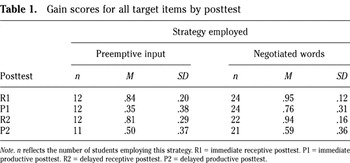
Gain scores for all target items by posttest
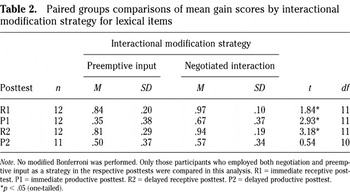
Paired groups comparisons of mean gain scores by interactional modification strategy for lexical items
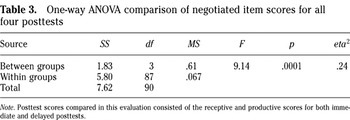
One-way ANOVA comparison of negotiated item scores for all four posttests
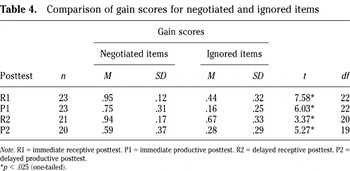
Comparison of gain scores for negotiated and ignored items
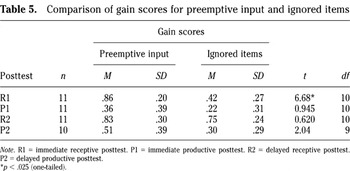
Comparison of gain scores for preemptive input and ignored items
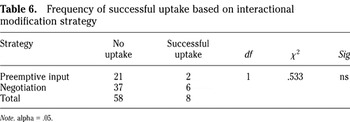
Frequency of successful uptake based on interactional modification strategy
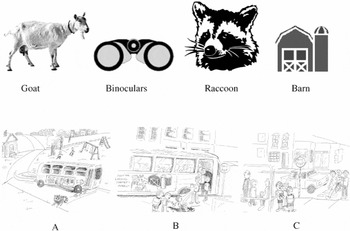
Picture sequence and lexical items held by student A.
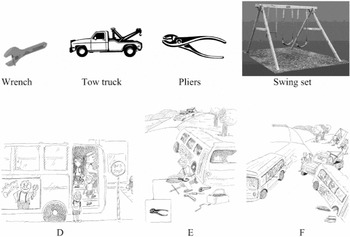
Picture sequence and lexical items held by student B.
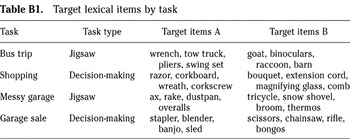
Target lexical items by task
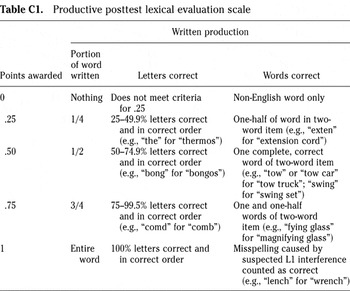
Productive posttest lexical evaluation scale
 You have
Access
- 115
- Cited by