





1. Introduction
We study the moduli of hypersurfaces in toric orbifolds. The main tool we use to do this is geometric invariant theory (GIT), both reductive and non-reductive. We work over an algebraically closed field k of characteristic 0.
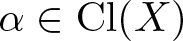
Suppose that X is a projective variety and  $\alpha \in \operatorname{Cl}(X)$ is an ample class. We are interested in the quotient stack:
 \begin{equation*}\mathcal M(X,\alpha) = \left[\vphantom{\int}{|\alpha|}/{G}\right], \end{equation*}
which we define as the moduli stack of hypersurfaces of class α in X where  $G=\operatorname{Aut}(X,\alpha)$, the automorphisms of X fixing α. As it is, this stack has very little chance of possessing any desirable properties and, as with all moduli problems, we must define a notion of stability which will instruct us to remove certain hypersurfaces to obtain a stack with a more manageable geometry. In this paper, we apply a non-reductive GIT-stability condition to the case where X is a toric orbifold, which provides a coarse moduli space (which is a variety) for a substack and prove in a number of cases that quasismooth hypersurfaces are semistable. Further we shall be able to prove stability when X falls into a class of certain weighted projective spaces. From this point on, when we refer to a moduli space of hypersurfaces, we mean a coarse moduli space of a substack of
 $\mathcal M(X,\alpha)$.
The moduli space of stable hypersurfaces in projective space was constructed by Mumford using reductive GIT. Consider the n-dimensional projective space  $\mathbb P^n$ and let d > 2 be an integer. The linear system
 $Y_d = |dH| = \mathbb P(k[x_0 , \dots , x_n]_d)$ is a parameter space for all hypersurfaces of degree d in
 $\mathbb P^n$ and the action of the reductive group
 $\operatorname{Aut}(\mathbb P^n) = \mathrm{PGL}_{n+1}$ on
 $\mathbb P^n$ extends naturally to an action of
 $\mathrm{PGL}_{n+1}$ on Yd. It turns out to be hard to describe the open set of stable points in Yd, let alone the actual quotient variety. However, what Mumford does prove is that if d > 2 (and d > 3 if n = 1), then a smooth hypersurface is stable. Thus reductive GIT constructs a moduli space of smooth hypersurfaces.
By a toric orbifold we mean a projective toric variety with at worst orbifold singularities. One cannot mirror the construction of moduli spaces of hypersurfaces given above for toric orbifolds: the algebraic groups in question are in general non-reductive. Recent work of Kirwan, Bérczi, Doran and Hawes [Reference Bérczi, Doran, Hawes and Kirwan4–Reference Bérczi, Hawes, Kirwan and Doran6] develops a non-reductive GIT and allows one to construct such moduli spaces as non-reductive quotients.
There has been much work in search of GIT for non-reductive groups; see [Reference Doran and Kirwan16] for a comprehensive account of work undertaken in this area. We use the non-reductive GIT (NRGIT) developed in [Reference Bérczi, Doran, Hawes and Kirwan4–Reference Bérczi, Hawes, Kirwan and Doran6] where one requires that the unipotent radical of the group is graded (Definition 2.6). For these theorems to apply, we must assume that a property we call the  $(\mathfrak C)$ condition holds; see Definition 2.12.
In [Reference Cox10], Cox showed that the automorphism group of a complete simplicial toric variety can be calculated from graded automorphisms of the Cox ring. We use Cox’s construction and show that the automorphism group of a toric orbifold admits a graded unipotent radical (see Proposition 3.10 and [Reference Bérczi, Doran, Hawes and Kirwan5, Section 4]) and thus the theory of NRGIT is applicable to the problem of moduli of hypersurfaces in toric orbifolds.
Let X be a well-formed weighted projective space where the condition  $(\mathfrak C)$ is satisfied for the action of
 $\operatorname{Aut}(X)$. Recall that a weighted projective space is well formed if the weights satisfy a coprime property (see discussion above Lemma 3.5). Any weighted projective space is isomorphic (as a variety) to a well-formed weighted projective space. Theorem 5.18 proves that a Cartier quasismooth hypersurface in X is stable. Let
 $\mathcal Y_d$ be the parameter space of degree d hypersurfaces. The group
 $\operatorname{Aut}(X)$ acts on
 $\mathcal Y_d$ and we denote the stable locus by
 $\mathcal Y_d^{\text{s}}$ and the quasismooth locus by
 $\mathcal Y_d^{\text{QS}}$. We use NRGIT to construct a quotient space of such hypersurfaces which is a coarse moduli space. In particular, this coarse moduli space is a quasi-projective variety.
Theorem (Theorem 5.18)
Let  $X = \mathbb P(a_0, \dots , a_n) = \operatorname{Proj} k[x_0, \dots , x_n]$ be a well-formed weighted projective space and let
 $d \geq \max\{a_0, \dots , a_n\} + 2$. Suppose that the
 $(\mathfrak C)$ condition holds for the action of
 $G=\operatorname{Aut}(X)$ on
 $\mathcal Y_d = \mathbb P(k[x_0 , \dots , x_n]_d)$. Then a quasismooth hypersurface of degree d is a stable hypersurface. In other words, there is an inclusion of open subsets:
 \begin{equation*} \mathcal Y^{\text{QS}}_d \subset \mathcal Y_d^{\text{s}}.\end{equation*}
In particular, there exists a geometric quotient  $ \mathcal Y^{\text{QS}}_d / G$ and hence a coarse moduli space of quasismooth hypersurfaces of degree d in X. Moreover, the NRGIT quotient
 $\mathcal Y_d \mathbin{/\mkern-4mu/} \! G$ is a compactification of
 $ \mathcal Y^{\text{QS}}_d / G$.
The proof of the theorem relies on a discrete-geometric version of the Hilbert–Mumford criterion for NRGIT. We also provide an explicit construction for quasismooth hypersurfaces in  $X = \mathbb P(1, \dots , 1,r)$ which works without the heavy machinery of NRGIT.
To study the quasismooth locus in a given linear system, one uses the A-discriminant, defined and studied in [Reference Gelfand, Kapranov and Zelevinsky18] for general toric varieties and denoted by  $\Delta_A$. We show that
 $ \mathcal Y^{\text{QS}}_d \subset (\mathcal Y_d)_{\Delta_A}$ and discuss the possible difference between these two sets. We prove in
 $\S$ 4 that the A-discriminant can be interpreted as an invariant section of an appropriate line bundle, just as for the classical discriminant.
Theorem (Corollary 4.12)
Let X be the toric variety associated to a polytope P and let A be the lattice points of P. The A-discriminant  $\Delta_{A}$ is a semi-invariant section for the G-action on
 $\mathcal Y_\alpha$ and a true U-invariant, where
 $U \subset G$ is the unipotent radical of G.
Restricting our attention to a weighted projective space X, we prove in  $\S$ 3 that the stabiliser groups of the action of
 $G=\operatorname{Aut}(X)$ on
 $ \mathcal Y^{\text{QS}}_d$ is finite for
 $d \geq \max(a_0, \dots , a_n)+2$. For a quasismooth hypersurface
 $Y \in \mathcal Y^{\text{QS}}_d$, denote the stabiliser group by
 $\operatorname{Aut}(Y;X)$.
Theorem (Theorem 3.15)
A quasismooth hypersurface in  $X = \mathbb P(a_0, \dots , a_n)$ of degree
 $d \geq \max\{a_0, \dots , a_n\} + 2$ has only finitely many automorphisms coming from the automorphisms of the ambient weighted projective space. That is, the group
 $\operatorname{Aut}(Y;X)$ is finite for a quasismooth hypersurface
 $Y \subset \mathbb P(a_0,\dots,a_n)$.
A corollary of this theorem is the existence of a moduli space as an algebraic space, a generalisation of a scheme, made up of affine schemes glued along étale neighbourhoods. This is a direct consequence of the Keel-Mori theorem [Reference Keel and Mori23]. However, Theorem 5.18 implies that this algebraic space is in fact a quasi-projective variety.
There are many different classes of varieties which present themselves as hypersurfaces in weighted projective spaces; for example, genus 2 curves are degree 6 curves in  $\mathbb P(1,1,3)$, Petri special curves are degree 6 curves in
 $\mathbb P(1,1,2)$ and degree 2 del Pezzo surfaces are degree 4 surfaces in
 $\mathbb P(1,1,1,2)$ to name a few. Hence we find constructions of new moduli spaces or new constructions of well-known moduli spaces.
There are many applications of the constructions we provide in this paper. The moduli spaces and notions of stability we present in this paper are related to K-stability and mirror symmetry and can be seen as a natural extension of work of Batyrev and Cox [Reference Batyrev and Cox8].
2. Non-reductive geometric invariant theory
In this section, we introduce non-reductive GIT and present some recent results due to Bérczi, Doran, Hawes and Kirwan [Reference Bérczi, Doran, Hawes and Kirwan4, Reference Bérczi, Doran, Hawes and Kirwan5]. We call these results the  $\hat{U}$-Theorems and they will be the main tools used in constructing the moduli spaces of hypersurfaces in complete simplicial toric varieties.
The method adopted in [Reference Bérczi, Doran, Hawes and Kirwan4, Reference Bérczi, Doran, Hawes and Kirwan5] requires additional structure on the algebraic groups and the linearisations chosen. With this additional structure, many of the properties of reductive GIT can be recovered. In this section, we now introduce and explore this additional structure and state the resulting theorems. It must be noted that we introduce definitions and state theorems in only as much generality as is required. The definitions and results hold in greater generality than is stated and we refer the reader to [Reference Bérczi, Doran, Hawes and Kirwan4, Reference Bérczi, Doran, Hawes and Kirwan5] for statements in full generality.
We define notions of semistability and stability for linear algebraic group actions. One motivation of this definition is to have a quotient locally of finite type. Due to the presence of a global stabiliser for the actions we will be considering, we need our definition of stability to allow for a positive dimensional stabiliser, so we adopt a variant of the definition given in [Reference Bérczi, Doran, Hawes and Kirwan4], in analogy to the construction of the moduli space of quiver representations [Reference King24]. We do this as it is easier to work a modified definition of stability rather than with than the group resulting from quotienting out by this global stabiliser.
Let X be a projective variety acted on by a linear algebraic group G with respect to a very ample linearisation  $\mathcal L$, where G is not necessarily reductive. Let
 $G \simeq R \lt imes U $ be the Levi decomposition. Associated to the inclusion of graded rings:
 \begin{equation*}A(X,\mathcal L)^G \subset A(X,\mathcal L),\end{equation*}
we have the morphism of schemes:
 \begin{equation*} q_G : X -\!\rightarrow X \mathbin{/\mkern-4mu/}_{\!\mathcal L} G,\end{equation*}
where  $X \mathbin{/\mkern-4mu/}_{\!\mathcal L} G = \operatorname{Proj} A(X,\mathcal L)^G$. Note that X is a scheme, not necessarily of finite type.
Definition 2.1. [Reference Bérczi, Doran, Hawes and Kirwan4, Definition 3.4]
Suppose additionally that  $D \subset G$ is a torus acting trivially on X. We define:
 \begin{equation*}I^{\text{fg}} = \{\sigma \in A(X,\mathcal L)^G_+ \, \, | \, \, \mathcal O(X_\sigma) \text{is finitely generated}\},\end{equation*}
and the finitely generated semistable locus to be:
 \begin{equation*}X^{\text{ss}} = \bigcup_{\sigma \in I^{\text{fg}}} X_\sigma.\end{equation*}
The enveloping quotient is the image:
 \begin{equation*}q_G(X^{\text{ss}}) \subset X \mathbin{/\mkern-4mu/}_{\!\mathcal L} G.\end{equation*}
Further, we define  $I^s \subset I^{\text{fg}}$ to be G-invariant sections satisfying the following conditions:
• the action of G on Xf is closed and for every
 $x \in X_f$ we have $D \subset \operatorname{Stab} _G(x)$ with finite index; and
• the restriction of the U-enveloping quotient map:
\begin{equation*}q_U : X_\sigma \longrightarrow \operatorname{Spec}(\mathcal O(X)_{(\sigma)}^U),\end{equation*}is a principal U-bundle for the action of U on Xσ.


Then, we define
 \begin{equation*}X^{\text{s}} = \bigcup_{\sigma \in I^{\text{s}}}X_\sigma,\end{equation*}
to be the stable locus.
Notation 2.2.
When there is a possibility of confusion, we write  $X^{\text{s},G}$ and
 $X^{\text{ss},G}$ for X s and X ss respectively when we want to emphasise the group.
Remark 2.3. When the torus  $D \subset G$ is trivial, Definition 2.1 coincides with the original definition of [Reference Bérczi, Doran, Hawes and Kirwan4, Reference Bérczi, Doran, Hawes and Kirwan5]. Alternatively, if the group G is reductive, so that
 $U = \{e\}$, the definition agrees with King’s notion of stability [Reference King24].
The following lemma details how we may study the quotient of an action of G on X in two stages. If we first deal with the action of U on X, then we may consider the action of R on  $X / U$, provided it exists, using reductive GIT.
Lemma 2.4. [Reference Bérczi, Hawes, Kirwan and Doran6, Lemma 3.3.1]
Suppose G is a linear algebraic group, N is a normal subgroup of G and X is a scheme with a G-action. Suppose all the stabilisers for the restricted action of N on X are finite and this action has a geometric quotient  $\pi : X \to X/N$. Note that
 $G/N$ acts canonically on
 $X/N$. Then the following statements hold.
(1) For all the
$G/N$-orbits in $X/N$ to be closed, it is necessary and sufficient that all the G-orbits in X are closed;(2) given
$y \in X/N$, the stabiliser $\operatorname{Stab} _{G/N}(y)$ is finite if and only if $\operatorname{Stab} _G(x)$ is finite for some (and hence all) $x \in \pi^{-1}(y)$; and(3) if
$G/N$ is reductive and $X/N$ is affine, then $X/N$ has a geometric $G/N$-quotient if and only if all G-orbits in X are closed.


Using Lemma 2.4, we can construct a geometric quotient of the stable locus as defined in Definition 2.1.
Theorem 2.5. [Reference Bérczi, Hawes, Kirwan and Doran6, Theorem 3.4.2]
Let X be a projective variety and G a linear algebraic group acting on X with respect to a very ample line bundle. There is a commutative diagram.

where the first arrow is a geometric quotient and all inclusions are open.
Note that the middle vertical morphism in the diagram in the above theorem may not be surjective and, moreover, the image may only be a constructible set. The question remains of how one can compute the stable and semistable locus. The following discussion aims to address this.
Let U be a unipotent group and  $\lambda : \mathbb G_m \to \operatorname{Aut}(U)$ be a 1-parameter subgroup of automorphisms and let,
 \begin{equation*}\hat{U}_{\lambda} = \mathbb G_m \lt imes_{\lambda} U,\end{equation*}
be the semi-direct product, where multiplication is given as follows:
 \begin{equation*}(u_1,t_1) \cdot (u_2,t_2) = (\lambda({t_2^{-1}})(u_1) + u_2, t_1t_2), \quad u_i \in U, \, \, t_i \in \mathbb G_m.\end{equation*}
The pointwise derivation of λ defines a  $\mathbb G_m$-action on
 $\operatorname{Lie} U$. This action defines a grading
 $\operatorname{Lie} U = \bigoplus_{i \in \mathbb{Z}}(\operatorname{Lie} U)_{i}$ with respect to weights
 $i \in \mathbb{Z} = \operatorname{Hom}(\mathbb G_m,\mathbb G_m)$.
Definition 2.6. [Reference Bérczi, Doran, Hawes and Kirwan4, Definition 2.2]
We say that  $\hat{U}_{\lambda}$ is positively graded if the induced action of
 $\mathbb G_m$ on
 $\operatorname{Lie} U$ has strictly positive weights. That is
 $(\operatorname{Lie} U)_{i} \neq 0$ implies that i > 0.
Let  $G \simeq R \lt imes U$ be a linear algebraic group. We say that G has a graded unipotent radical if there exists a central 1-parameter subgroup
 $\lambda_g : \mathbb G_m \to R$ such that the adjoint action on
 $\operatorname{Lie} U$ has strictly positive weights. We often drop the grading 1-parameter subgroup from the subscript and write
 $\hat{U}_{\lambda_g} = \hat{U}$. Note that
 $\lambda_g(t)$ is an automorphism of U since U is a normal subgroup of G.
Let X be a projective variety and  $\mathcal L \in \operatorname{Pic}(X)$ be a very ample line bundle. Suppose that
 $\hat{U}$ acts on X with respect to
 $\mathcal L$. By restricting the
 $\hat{U}$-action to
 $\mathbb G_m$, we have a
 $\mathbb G_m$-action on
 $V = H^0(X,\mathcal L)^\vee$; let
 \begin{equation*}\omega_{\min} = \text{minimal weight in } \mathbb{Z} = \operatorname{Hom}\left( \mathbb G_m , \mathbb G_m \right) \text{for the } \mathbb G_m \text{-action on }V,\end{equation*}
and
 \begin{equation*}V_{\min} = \{v \in V \, \, | \, \, t \cdot v = t^{\omega_{\min}}v\, \text{for all } t \in \mathbb G_m\},\end{equation*}
the associated weight space. Then  $\mathbb P(V_{\min})$ is a linear subspace of
 $\mathbb P(V)$.
Definition 2.7. [Reference Bérczi, Doran, Hawes and Kirwan4, Definition 2.1]
Suppose that  $X, \mathcal L$ and
 $\hat{U}$ are as above. We define,
 \begin{equation*}Z_{\min} = X \cap \mathbb P(V_{\min}), \end{equation*}
and
 \begin{equation*}X_{\min}^0 = \{x \in X \, \, | \, \, \lim_{t \to 0} t \cdot x \in Z_{\min}\}, \quad \text{where } t \in \mathbb G_m \subset \hat{U}.\end{equation*}
Remark 2.8. The subvarieties  $Z_{\min}$ and
 $X_{\min}^0$ are unaffected by replacing the linearisation
 $\mathcal L$ by any element of the positive
 $\mathbb Q$-ray defined by
 $\mathcal L$ in
 $\operatorname{Pic}^{\hat{U}}( X )\otimes_{\mathbb{Z}} \mathbb{Q}$. Also note that
 $X_{\min}^0$ and the U-sweep
 $U \cdot Z_{\min}$ of
 $Z_{\min}$ are
 $\hat{U}$-invariant subsets.
We may twist the linearisation  $\mathcal L$ by a character
 $\chi : \hat{U} \to \mathbb{G}_m$. We denote the twisted linearisation by
 $\mathcal L^\chi$ and the minimum
 $\mathbb{G}_m$-weight of
 $V = H^0(X,\mathcal L^\chi)^\vee = H^0(X,\mathcal L)^\vee$ by
 $\omega^\chi_{\min}$.
Definition 2.9. We say that a linearisation  $\mathcal L \in \operatorname{Pic}^{\hat{U}}(X)$ is adapted if we have the following inequality:
 \begin{equation*}\omega_{\min} \lt 0 \lt \omega_{\min +1},\end{equation*}
where  $\omega_{\min}$ is the lowest
 $\mathbb{G}_m$-weight and
 $\omega_{\min +1}$ is the second smallest weight.
Remark 2.10. Fix  $\mathcal L \in \operatorname{Pic}^{\hat{U}}(X)$ a linearisation and note that every character of
 $\hat{U} = \mathbb{G}_m \lt imes U$ is of the form:
 \begin{equation*}\hat{U} \to \mathbb{G}_m \, ; \quad (t,u)\mapsto t^r,\end{equation*}
for some  $r\in \mathbb{Z}$. We identify the characters of
 $\hat{U}$ with
 $\mathbb{Z}$. Let ϵ > 0 be a rational number and consider the rational character
 $\chi = -\omega_{\min} - \frac{\epsilon}{2}$. Twist
 $\mathcal L$ by the character χ and denote this linearisation
 $\mathcal L^{\chi} \in\operatorname{Pic}^{\hat{U}}(X)_{\mathbb Q}$. Then for ϵ > 0 small enough,
 $\mathcal L^{\chi}$ is adapted: indeed, we have that:
 \begin{equation*}\omega_{\min}^{\chi} = \omega_{\min} + \chi = -\frac{\epsilon}{2} \lt 0 \lt \omega_{\min}^{\chi}+\epsilon.\end{equation*}
Remark 2.11. For the proofs of finite generation of invariants given in [Reference Bérczi, Doran, Hawes and Kirwan4, Reference Bérczi, Doran, Hawes and Kirwan5] to work, we must twist the linearisation by a rational character so that it is not merely adapted but so that the weight  $\omega_{\min}$ is within some sufficiently small ϵ > 0 of the origin. That is,
 $\omega_{\min} \lt 0 \lt \omega_{\min} + \epsilon$. We say that a linearisation is well-adapted when this inequality holds for a sufficiently small ϵ > 0. In the case of
 $\hat{U}$-actions, it follows from Remark 2.10, that an adapted linearisation can be twisted to a well-adapted linearisation. We refer the reader to [Reference Bérczi, Doran, Hawes and Kirwan5, Reference Bérczi, Jackson and Kirwan7] for a more in depth discussion.
Before we state the  $\hat{U}$-theorem, there is a technical condition which we require. Compare with the definition in the discussion preceding [Reference Bérczi, Doran, Hawes and Kirwan4, Theorem 2.4] and [Reference Bérczi, Doran, Hawes and Kirwan4, Remark 2.7].
Definition 2.12. The G-action is said to satisfy the semistability equals stability condition if:
 \begin{align}
\tag{($\mathfrak C$)}
\operatorname{Stab} _U(z) = \{e\}\, \text{for every } z \in Z_{\min}^{\text{ss},R} \enspace,
\end{align}
where  $Z_{\min}^{\text{ss},R}$ is the semistable locus for the induced linear action of R on
 $Z_{\min}$.
We can now state the  $\hat{U}$-theorem. The exact form we state is found in [Reference Bérczi, Doran, Hawes and Kirwan5], however it coincides with [Reference Bérczi, Doran, Hawes and Kirwan4, Theorem 2.16] when one takes the torus therein to be trivial.
Theorem 2.13. [Reference Bérczi, Doran, Hawes and Kirwan5, Theorem 2]
Let X be a projective variety acted on by a graded unipotent group  $\hat{U}$ with respect to a very ample linearisation
 $\mathcal L$. Suppose that the action satisfies the condition
 $(\mathfrak C)$. Then the following statements hold.
(1) The restriction to
$X_{\min}^0$ of the enveloping quotient for the U-action:
\begin{equation*}q_U : X_{\min}^0 \longrightarrow X_{\min}^0 / \, U,\end{equation*}is a principal U-bundle, in particular, qU is a geometric quotient.


Suppose furthermore that  $X_{\min}^0 \neq U \cdot Z_{\min}$ and that the linearisation
 $\mathcal L$ is well-adapted, then the following statements hold.
(2) There are equalities
$X_{\min}^0 - U \cdot Z_{\min} = X^{\text{s},\hat{U}}(\mathcal L)$.(3) The enveloping quotient
$X \mathbin{/\mkern-4mu/}_{\mathcal L} \hat{U}$ is a projective variety, and
\begin{equation*}q_{\hat{U}} : X^{\text{s} , \hat{U}}(\mathcal L) \longrightarrow X \mathbin{/\mkern-4mu/}_{\mathcal L} \hat{U},\end{equation*}is a geometric quotient for the
$\hat{U}$-action. In particular, the ring of $\hat{U}$-invariants is finitely generated.


Remark 2.14. It follows from the proof of the  $\hat{U}$-hat theorem [Reference Hawes21, Theorem 5.1.3] that if
 $Z_{\min}$ is a point (so that
 $\dim V_{\min} = 1$), then
 $X_{\min}^0 = X_\sigma$ for some non-zero section
 $\sigma \in (V_{\min})^\vee$. Thus
 $X_{\min}^0$ is an affine open subscheme of X. Then a result of Asok and Doran [Reference Asok and Doran2, Theorem 3.12] gives us that affine unipotent principal bundles are trivial. Hence the U-quotient
 $q_U : X_{\min}^0 \to X_{\min}^0 / U$ is a trivial U-bundle.
We now state the result for general linear algebraic groups. Let  $G \cong R \lt imes U$ be a linear algebraic group with unipotent radical
 $U \subset G$ and Levi factor R. Suppose that there exists a 1-parameter subgroup
 $\lambda_g:\mathbb G_m \to R$ lying in the centre of R such that
 $\hat{U} = \lambda_g(\mathbb G_m) \lt imes U$ is a graded unipotent group.
Definition 2.15. [Reference Bérczi, Doran, Hawes and Kirwan4, Definition 2.1]
A linearisation of the G-action is said to be (well-)adapted if its restriction to  $\hat{U}$ is a (well-)adapted in the sense of Definition 2.9.
Theorem 2.16. [Reference Bérczi, Doran, Hawes and Kirwan4, Theorem 2.4]
Let G be a linear algebraic group acting on a projective variety X with respect to  $\mathcal L$. Assume that G has graded unipotent radical such that
 $(\mathfrak C)$ holds. Further, assume that
 $\mathcal L$ is well-adapted. Then the following statements hold.
(1) The G-invariants are finitely generated and the enveloping quotient:
\begin{equation*}X \mathbin{/\mkern-4mu/}_{\mathcal L} G = \operatorname{Proj} A(X,\mathcal L)^G\end{equation*}is a projective variety.
(2) The inclusion
$A(X,\mathcal L)^G \subset A(X,\mathcal L)$ induces a categorical quotient of the semistable locus
\begin{equation*}X^{\text{ss},G} \longrightarrow X \mathbin{/\mkern-4mu/}_{\mathcal L} G,\end{equation*}which restricts to a geometric quotient:
\begin{equation*}X^{\text{s},G} \longrightarrow X^{\text{s},G} / G.\end{equation*}


We now state a Hilbert–Mumford criterion, whose proof is outlined in [Reference Bérczi, Doran, Hawes and Kirwan4].
Theorem 2.17. [Reference Bérczi, Doran, Hawes and Kirwan4, Theorem 2.20]
Keep the notation and assumptions as in Theorem 2.16. The following Hilbert–Mumford criterion holds.
 \begin{equation*}X^{(\text{s})\text{s} , \, G} = \bigcap_{g \in G} gX^{(\text{s})\text{s}, \, T},\end{equation*}
where  $T\subset G$ is a maximal torus of G containing the grading
 $\mathbb G_m$.
2.1. Weight polytopes
Using Theorem 2.17, we can reduce the study of stability to the study of stability of a maximal torus. The discrete-geometric version of the Hilbert–Mumford criterion for a torus described in [Reference Mumford, Fogarty and Kirwan27] must be adapted to work in the presence of global stabilisers. Suppose that a torus T is acting on a projective space  $X=\mathbb P^n $ with respect to a very ample linearisation
 $\mathcal O(1)$. Consider the canonical identification
 $X= \mathbb P(V)$, where
 $V = H^0(X , \mathcal O(1))^\vee$. Suppose further that there exists a 1-parameter subgroup:
 \begin{equation*}\lambda_{\underline{a}}:\mathbb G_m \longrightarrow T,\end{equation*}
such that  $\lambda_{\underline{a}}(\mathbb G_m) \subset \operatorname{Stab} _T(x)$ for every
 $x \in X$, where
 $\underline{a}\in \mathbb{Z}^{n+1}$ is the vector of weights of the action. Consider the weight space decomposition:
 \begin{equation*}V = \bigoplus_{\chi \in X^*(T)} V_{\chi},\end{equation*}
where  $X^*(T) = \operatorname{Hom}(T,k^*)$ is the character group and
 $V_\chi = \{v \in V \, \, | \, \, t\cdot v = \chi(t)v \,\, \forall t \in T \}$. The 1-parameter subgroup
 $\lambda_{\underline{a}}$ defines a point in
 $W = X^*(T)\otimes_{\mathbb{Z}} \mathbb Q$ given by
 $\underline{a} \in W$. Define the quotient vector space
 $H_{\underline{a}} = W / \mathbb Q \cdot \underline{a}$ and write
 $\overline{w} \in H_{\underline{a}}$ for the image of an element
 $w \in W$ in
 $H_{\underline{a}}$.
Let  $\overline{T} = T / \lambda_{\underline{a}}(\mathbb G_m)$ and consider
 $x \in X$ and some
 $v \in V$ lying over x and write
 $v = \sum v_\chi$. Note that we can equivalently construct
 $H_{\underline{a}} = X^*(\overline{T}) \otimes_{\mathbb{Z}} \mathbb Q$. We define the
 $\overline{T}$-weight set of x to be:
 \begin{equation*}\operatorname{wt}_{\overline{T}}(x) = \{\overline{\chi} \, \, | \, \, v_\chi \neq 0\} \subset H_{\underline{a}},\end{equation*}
and the associated weight polytope to be the convex hull of these weights:
 \begin{equation*}\operatorname{Conv}_{\overline{T}}(x) = \operatorname{Conv}(\chi \, \, | \, \, \chi \in \operatorname{wt}_T(x)) \subset H_{\underline{a}}.\end{equation*}
We get the discrete-geometric Hilbert–Mumford Criterion for (semi)stability with respect to the torus in the presence of a global stabilising  $\mathbb G_m$ combining the numerical criteria of King [Reference King24, Lemma 2.2] and the well-known polytope formulation of the Hilbert–Mumford criterion, see for example [Reference Dolgachev15, Theorem 9.2] or [Reference Bérczi, Doran, Hawes and Kirwan4, Proposition 3.2].
Theorem 2.18. (Reductive Hilbert–Mumford criterion)
Let T be a torus acting on a projective scheme X with linearisation  $\mathcal L$ such that there is a global stabiliser
 $\lambda_{\underline{a}} : \mathbb G_m \to T$ acting trivially on X. Then
 \begin{align*}
x \in X^{\text{ss},T}(\mathcal L) &\iff 0 \in \operatorname{Conv}_{\overline{T}}(x) , \\
x \in X^{\text{s},T}(\mathcal L) &\iff 0 \in \operatorname{Conv}_{\overline{T}}( x)^\circ,
\end{align*}
where  $\operatorname{Conv}_{\overline{T}}(x)^\circ$ is the interior of the polytope.
Combining this with Theorem 2.17, we have a non-reductive Hilbert–Mumford criterion.
Theorem 2.19. (Non-reductive Hilbert–Mumford criterion)
Let G be a linear algebraic group acting on a projective variety X with respect to  $\mathcal L$. Assume that G has graded unipotent radical and assume that
 $(\mathfrak C)$ holds for the linearised action. The following Hilbert–Mumford criterion holds.
 \begin{align*}
x \in X^{\text{ss},G} & \iff 0 \in \operatorname{Conv}_T(g \cdot x)\, \text{for every } g \in G, \\
x \in X^{\text{s},G} & \iff 0 \in \operatorname{Conv}_T(g \cdot x)^\circ\, \text{for every } g \in G. \\
\end{align*}
Example 2.20. We consider degree 4 curves in  $\mathbb P(1,1,2)$, such curves are parametrised by the projective space of weighted forms
 $\mathcal Y = \mathbb P(k[x,y,z]_4)$, where
 $\deg x = \deg y = 1$ and
 $\deg z =2$. Then
 $\mathrm{GL}_2$ acts on (x, y) via matrix multiplication and
 $\mathbb G_m$ acts on z via multiplication. This defines an action of
 $G =\mathrm{GL}_2 \times \mathbb G_m$ on
 $\mathcal Y$. Consider the maximal torus of G defined by:
 \begin{equation*}T = \left\{\left( \operatorname{diag}(t_1,t_2), s \right) \in \mathrm{GL}_2 \times \mathbb G_m \, \, | \, \, t_1,t_2,s \in k^* \right\}.\end{equation*}
Consider the restricted action of T on  $\mathcal Y$. Then for a general monomial
 $x^iy^jz^k \in k[x,y,z]_4 = V$ with
 $i+j+2k = 4$, we have that:
 \begin{equation*}(t_1,t_2,s) \cdot x^i y^j z^k = t_1^i t_2^j s^k x^i y^j z^k.\end{equation*}
Denote such a weight by  $(i,j,k)\in X^*(T) \cong \mathbb{Z}^3$. Note that by collecting all possible weights as columns in a matrix, one gets the following matrix:
 \begin{equation*}A = \begin{pmatrix}
4&3&2&1&0&2&1&0&0\\
0&1&2&3&4&0&1&2&0\\
0&0&0&0&0&1&1&1&2
\end{pmatrix}, \end{equation*}
which is the matrix from Example 4.6.
Define P 4 to be the section polytope to be the convex hull of all torus weights in either W or  $H = H_{\underline{a}}$ (see Figure 1). One sees directly that the 1-parameter subgroup
 $\lambda_{\underline{a}}$ with
 $\underline{a}=(1,1,2)$, normal to W, is contained inside the global stabiliser. The weight polytope of any element
 $[f] \in \mathcal Y_4$ will be a subpolytope of the section polytope. As shown in Figure 1, the section polytope considered in W is not full-dimensional, and is a 2-simplex in
 $W \cong \mathbb Q^3$ which does not contain the origin. We will always consider the section polytope in H, where it is full dimensional and contains the origin.
P 4, the section polytope of  $\mathcal O(4)$ in W and H.

Explicitly, if e 1 and e 2 are a basis for H, then  $P_4 = \operatorname{Conv}(4e_1,4e_2,-e_1-e_2)$.
3. Automorphisms and toric varieties
In this section, we study the automorphism groups of toric varieties and prove that they carry the extra structure required by NRGIT; that is, that they admit graded unipotent radicals. We first recall some aspects of toric geometry; specifically toric orbifolds and their quasismooth hypersurfaces.
3.1. Toric orbifolds
Let X be a projective simplicial toric variety. These are precisely the projective toric varieties with at worst orbifold singularities and we refer to such varieties simple as toric orbifolds. The notion of quasismoothness was first introduced for subvariaties of weighted projective spaces by Dolgachev [Reference Dolgachev14] and then generalised to toric varieties by Cox and Batyrev [Reference Batyrev and Cox8].
We recall the Cox ring and the quotient construction of a toric variety. We refer the reader to [Reference Arzhantsev, Derenthal, Hausen and Laface1, Reference Cox10] for details.
Definition 3.1. Suppose that  $X = X_{\Sigma}$ is a toric variety associated to a fan Σ. The 1-dimensional cones in Σ are called rays and the set of rays is denoted
 $\Sigma(1)$. Let
 \begin{equation*}S = k[x_{\rho} \, | \, \rho \in \Sigma(1)],\end{equation*}
be the polynomial ring in  $|\Sigma(1)|$ variables. Every monomial
 $\prod x_{\rho}^{a_{\rho}} \in S$ defines an effective torus-invariant divisor
 $D = \sum a_{\rho} D_{\rho}$, we write this monomial as xD. In this way, we define the following notion of degree:
 \begin{equation*}\deg(x^D) = [D] \in \operatorname{Cl}(X).\end{equation*}
Thus, we have
 \begin{equation*}S = \bigoplus_{\alpha \in \operatorname{Cl}(X)}S_{\alpha},\end{equation*}
where  $S_\alpha = \{f \in S \, \, | \, \, \text{all monomials of } f \text{of degree } \alpha \}$. Then
 $S_{\alpha} \cdot S_{\beta} \subset S_{\alpha + \beta}$ and we define the Cox ring of X to be S with this grading by the class group
 $\operatorname{Cl}(X) = \text{CH}_{n-1}(X)$ where
 $\dim X =n$.
Now when X is a projective orbifold, every Weil divisor is  $\mathbb Q$-Cartier and for every
 $\alpha \in \operatorname{Cl}(X)$ we denote the corresponding rank 1 reflexive sheaf by
 $\mathcal O_X(\alpha)$. By [Reference Cox10, Proposition 1.1], the Cox ring of X is the algebra of global sections of the rank 1 reflexive sheaves and denoted by
 \begin{equation*}S = \bigoplus_{\alpha \in \operatorname{Cl}(X)} H^0(X,\mathcal O_X(\alpha)).\end{equation*}
Since X is toric,  $\operatorname{Cl}(X)$ is a finitely generated abelian group. The grading of S by
 $\operatorname{Cl}(X)$ defines an action of
 $\mathbf D = \operatorname{Hom}_{\mathbb{Z}}(\operatorname{Cl}(X),k^*)$ on
 $\mathbb A^r = \operatorname{Spec} S$ (for example, see [Reference Craw13]). Cox proved ([Reference Cox10, Theorem 2.1], although for the way we have formulated the action the proof can be found in [Reference Craw13, Theorem 2.12]) that
 $X = \mathbb A^r \mathbin{/\mkern-4mu/}_{\chi} \mathbf D$ as the affine GIT-quotient of this action twisted by any character
 $\chi \in X^*(\mathbf D) = \operatorname{Cl}(X)$ corresponding to an ample line bundle. We denote the the quotient morphism restricted to the stable locus
 $q : (\mathbb A^r)^{\text{s}} \to X$.
Definition 3.2. Let X be a toric orbifold and fix a class  $\alpha \in \operatorname{Cl}(X)$. Let
 $Y \subset X$ be a hypersurface defined by
 $f \in S_{\alpha}$. We say that Y is quasismooth if
 $q^{-1}(Y) \subset (\mathbb A^{r})^{\text{s}}$ is smooth. Equivalently, Y is quasismooth if
 $\textbf{V}(f) \subset \mathbb A^r$ is smooth in
 $(\mathbb A^r)^{\text{s}}$.
Let  $\mathcal Y_\alpha = \mathbb P(S_\alpha)$. We define the quasismooth locus to be the open set:
 \begin{equation*} \mathcal Y^{\text{QS}}_\alpha = \{Y \subset X\, \, | \, \, Y \text{is a quasismooth hypersurface of class }\alpha \} \subset \mathcal Y_\alpha.\end{equation*}
We denote its complement, the non-quasismooth locus, by:
 \begin{equation*}\mathcal Y^{\text{NQS}}_\alpha = \mathcal Y_\alpha - \mathcal Y^{\text{QS}}.\end{equation*}
Example 3.3. Let  $X = \mathbb P(a_0, \dots , a_n)$ be a weighted projective space. Then
 $S = \bigoplus_{d\geq 0}k[x_0,\dots , x_n]_d$ where
 $\deg x_i = a_i$ and
 $q : \left(\mathbb A^{n+1} - \{0\} \right) \to \mathbb P(a_0,\dots ,a_n)$ is the quotient morphism for the
 $\mathbb G_m$-action on
 $\mathbb A^{n+1}$ defined by
 $t \cdot (x_0, \dots , x_n) = (t^{a_0}x_0,\dots , t^{a_n}x_n)$. Moreover, a hypersurface defined by
 $f \in k[x_0, \dots , x_n]_d$ is quasismooth if and only if
 $\left( \frac{\partial f}{\partial x_0}(\tilde{x}) , \dots , \frac{\partial f}{\partial x_n}(\tilde{x}) \right) \neq (0,\dots ,0)$ for every
 $\tilde{x} \in \mathbb A^{n+1} - \{0\}$.
Theorem 3.4. [Reference Iano-Fletcher22, Theorem 8.1]
The general hypersurface of degree d in  $\mathbb P(a_0, \dots a_n)$ is quasismooth if and only if either
(1) there exists a variable xi of degree d, or
(2) for every non-empty subset
$I = \{i_0, \dots , i_{k-1}\}$ of $\{0, \dots , n\}$ one of the following holds:(a) there exists a monomial
$x_I^M = x_{i_0}^{m_0} \cdots x_{i_{k-1}}^{m_{k-1}}$ of degree d or(b) for
$\mu = 1, \dots , k$ there exists monomials:
\begin{equation*}x_I^{M_\mu}x_{e_\mu} = x_{i_0}^{m_{0,\mu}} \cdots x_{i_{k-1}}^{m_{k-1,\mu}}x_{e_\mu}\end{equation*}of degree d, where
$\{e_\mu\}$ are k distinct elements.


The following lemma will be needed for the proof of Theorem 5.18. It is a more explicit version of Theorem 3.4 and allows us to remove the general hypothesis. It follows from arguments used in the proof of Theorem 3.4 given in [Reference Iano-Fletcher22].
Recall that the weighted projective space  $\mathbb P(a_0, \dots , a_n)$ is well formed if for any i with
 $0 \leq i \leq n$ then
 $\gcd(a_0, \dots , a_{i-1}, a_{i+1}, \dots , a_n) = 1$.
Lemma 3.5. Suppose that  $X = \mathbb P(a_0, \dots , a_n)$ is well formed and d a Cartier degree and denote
 $d_i = \frac{d}{a_i}$. Consider an
 $f \in k[x_0, \dots , x_n]_d$ which is quasismooth. For each variable xi, either
 $x_i^{d_i}$ is a monomial of f or
 $x_i^{d_i - \frac{a_j}{a_i}}x_j$ is a monomial of f for some j ≠ i where
 $a_i | a_j$.
Example 3.6. Let  $X=\mathbb P(1,1,2)$. Consider the degree 6 hypersurfaces defined by
 $x^4y^2 + y^6 + z^3$ and
 $x^5y +x^4y^2+ y^6+z^3$. The first has a unique singularity at
 $(1:0:0)$ and the second is quasismooth. One sees that on including the monomial
 $x^5y$ the hypersurface satisfies the conditions of the lemma and becomes quasismooth.
Remark 3.7. Note that if for a fixed ai, there exists no aj such that  $a_i | a_j$, then we must have that
 $x_i^{d_i}$ is a monomial of f.
3.2. Graded automorphisms of the Cox ring
The construction of the automorphism group of a complete simplicial toric variety X is a generalisation of the construction of the automorphism group of projective space. The generalisation is to be seen as follows. The Cox ring of projective space with the grading of the class group given in Definition 3.1 is the standard homogeneous coordinate ring; that is, the polynomial ring with the usual  $\mathbb{Z}$-grading given by the total degree. The group of graded automorphisms of this ring is
 $\mathrm{GL}(n+1)$ which fits into the following short exact sequence:
 \begin{equation*}0 \longrightarrow \mathbb G_m \longrightarrow \mathrm{GL}(n+1) \longrightarrow \mathrm{PGL}(n+1) \longrightarrow 0,\end{equation*}
where  $ \mathrm{PGL}(n+1) = \operatorname{Aut}(\mathbb P^n)$. More generally, let X be a complete toric variety associated to a fan Σ. Let
 $S = k[x_{\rho} \, | \, \rho \in \Sigma(1)]$ be the Cox ring of X. We denote the graded automorphisms of the Cox ring by
 $\operatorname{Aut}_{\operatorname{g}}(S)$. In [Reference Cox10, Theorem 4.2 and Proposition 4.3], Cox provided a description of
 $\operatorname{Aut}(X)$. Central to this description is the following short exact sequence:
 \begin{equation*}0 \longrightarrow \mathbf D \longrightarrow \operatorname{Aut}_{\operatorname{g}}(S) \longrightarrow \operatorname{Aut}^0(X) \longrightarrow 0,\end{equation*}
where  $\operatorname{Aut}^0(X)$ is the connected component a the identity.
Theorem 3.8. Let X be a complete toric variety and let  $S = \operatorname{Cox} (X)$ be its Cox ring. Then the following statements hold.
(1) The group of graded algebra automorphisms
$\operatorname{Aut}_{\operatorname{g}}(S)$ is a connected affine algebraic group of dimension $\sum_{i=1}^l |\Sigma_i| \dim_k S_i$.(2) The unipotent radical U of
$\operatorname{Aut}_{\operatorname{g}}(S)$ is of dimension $\sum_{i=1}^l |\Sigma_i| (\dim_k S_i - |\Sigma_i|)$.(3) We have the following isomorphism:
\begin{equation*} \operatorname{Aut}_{\operatorname{g}}(S) \cong \prod_{i=1}^l \mathrm{GL}(S_i') \lt imes U,\end{equation*}where
$S_i' \subset S_i$ is the vector subspace spanned by variables $x_{\rho} \in S_i$.


We refer the reader to [Reference Cox11, Theorem 4.2 and Proposition 4.3] for a proof and to [Reference Cox11, Lemma 4.4] for a more detailed description of the unipotent radical.
We consider the group of graded automorphisms as a matrix group via the following lemma, whose proof is taken from the proof of the corrected version of [Reference Cox11, Proposition 4.3]. We include the proof since we will need the explicit matrix description of the automorphism group. Note that when we refer to the degree of an element of S, we mean the degree with respect to the class group and by total degree we mean the degree with respect to the usual  $\mathbb{Z}$-grading of the polynomial ring.
Lemma 3.9. The endomorphism algebra of S is a linear algebraic monoid with unit group  $\operatorname{Aut}_{\operatorname{g}}(S)$ and there is an inclusion of linear algebraic monoids:
 \begin{align*}
\operatorname{End}_{\operatorname{g}}(S) & \longrightarrow \prod_{i=1}^l \operatorname{End}_k(S_i)\\
\phi & \longmapsto (\phi|_{S_i} : S_i \to S_i)_{i=1}^l.
\end{align*}
In particular,  $\operatorname{Aut}_{\operatorname{g}}(S)$ is a linear algebraic group.
The definition of a linear algebraic monoid is identical to that of a linear algebraic group except that one does not require that every element has an inverse.
Proof. We show that the map:
 \begin{equation*}\operatorname{End}_{\operatorname{g}}(S) \longrightarrow \prod_{i=1}^l \operatorname{End}_k(S_i),\end{equation*}
is a closed immersion and hence  $\operatorname{End}_g(S)$ is an affine submonoid. Since S is generated as an algebra by elements in
 $S_1,\ldots,S_l$, an endomorphism is completely determined by the above restrictions and hence the map is injective. The fact that the map respects composition (and is well-defined) is immediate since we consider only graded endomorphisms. Thus
 $\operatorname{End}_{\operatorname{g}}(S)$ is a submonoid and it only remains to show that it is a closed subset; that is, cut out by polynomials.
To do this, we write down the corresponding collection of matrices with respect to the basis of each  $S_i = S_i' \oplus S_i^{\prime\prime}$ given by monomials of degree αi:
 \begin{equation}
\phi \longleftrightarrow
\left( \left( \begin{array}{c|c}
A_i & 0 \\
\hline
B_i & C_i\\
\end{array} \right)\right)_{i=1}^l,
\end{equation}
where  $B_i \in \operatorname{Hom}_k(S_i' , S_i^{\prime\prime})$. We shall often suppress the brackets in this notation.
The matrices Ai and Bi come from evaluating the single variables in  $S_i'$. The Ci come from evaluating monomials in
 $S_i^{\prime\prime}$ which are products of 2 or more variables in
 $S_j'$ with j ≠ i and hence Ci is completely determined by Aj and Bj for j ≠ i. We claim that the elements of Ci are polynomials in elements of Aj and Bj for j ≠ i.
Let us prove this claim. Consider monomials  $x^D,x^E \in S_i^{\prime\prime}$, where D and E are effective non-prime divisors with class αi. Both xD and xE are elements of the monomial basis of
 $S_i^{\prime\prime}$ so that for
 $\phi \in \operatorname{End}_{\operatorname{g}}(S)$:
 \begin{equation*}\phi(x^D) = \cdots + c_i^{DE}x^E + \cdots,\end{equation*}
where  $c_i^{DE}$ is the corresponding entry in Ci. Then
 $x^D = x_{\rho_1} \cdots x_{\rho_s}$ is a product of variables allowing duplications with
 $x_{\rho_i} \not\in S_i'$. Thus,
 \begin{equation*}\phi(x_{\rho_1}) \, \cdots \,\phi(x_{\rho_s}) = \cdots + c_i^{DE}x^E + \cdots.\end{equation*}
But each  $\phi(x_{\rho_k})$ is a linear combination of monomials with coefficients given by elements of Aj and Bj with j ≠ i. Thus the elements of the Ci are given by polynomials in the elements of
 $A_{j},B_{j}$ and we are done.
On the other hand, the Ai and Bi are chosen completely arbitrarily. In other words we have a bijection of sets:
 \begin{align*}
\operatorname{End}_{\operatorname{g}}(S) & \longleftrightarrow \prod_{i=1}^l \operatorname{Hom}_k(S_i',S_i), \\
\phi & \longleftrightarrow \begin{pmatrix}
A_i\\
B_i
\end{pmatrix}.
\end{align*}
The 0 in the top right-hand corner of the matrices (*) comes from the fact that:
 \begin{equation*}\phi(S_i^{\prime\prime}) \cap S_i' = 0,\end{equation*}
since  $S_0 = k$, and monomials in
 $S_i^{\prime\prime}$ contain more than one variable.
It remains to remark that  $\operatorname{Aut}_{\operatorname{g}}(S)$ is the group of invertible elements in a linear algebraic monoid. It follows from [Reference Putcha29, Corollary 3.26] that
 $\operatorname{Aut}_{\operatorname{g}}(S)$ is a linear algebraic group.
Proposition 3.10. The unipotent radical U of  $\operatorname{Aut}_{\operatorname{g}}(S)$ is given by matrices of the form:
 \begin{equation*}\left(\begin{array}{c|c}
I_{n_i} & 0 \\
\hline
B_i & C_i
\end{array} \right), \end{equation*}
under the correspondence in (*), where Ci are lower triangular matrices with 1’s on the diagonal and  $I_{n_i}$ is the
 $(n_i \times n_i)$-identity matrix with
 $n_i = \dim S_i'$.
Moreover, the 1-parameter subgroup given by:
 \begin{align*}
\lambda_g : \, \, \mathbb G_m & \longrightarrow \operatorname{Aut}_{\operatorname{g}}(S), \\
t & \longmapsto (\phi_t : x_{\rho} \mapsto t^{-1} x_{\rho}),
\end{align*}
gives U a positive grading. We refer to λg as the distinguished  $\mathbb G_m$.
Remark 3.11. Note that this result was already given in the paper [Reference Bérczi, Doran, Hawes and Kirwan5]. The proof uses the original incorrect construction of the automorphism group given in the paper [Reference Cox10]. We present a proof using the corrected construction given in [Reference Cox11].
Proof. It is clear that the matrices above form a unipotent subgroup and we refer the reader to [Reference Cox11, Theorem 4.2] for a proof that it is in fact the unipotent radical. We prove that it is positively graded by the distinguished  $\mathbb G_m$.
Under (*), we have
 \begin{equation*}\lambda_g(t) \longleftrightarrow \left( \begin{array}{c|c}
t^{-1} I_{n_i} & 0 \\
\hline
0 & Q_i(t)
\end{array}\right), \end{equation*}
where
 \begin{equation*}Q_i(t) = \operatorname{diag}(t^{-l_1},\ldots,t^{-l_k}),\end{equation*}
are diagonal matrices with  $l_j \geq 2$. To see this, consider
 $x^D = x_{\rho_1} \cdots x_{\rho_l} \in S_i^{\prime\prime}$ again allowing duplications. Then,
 \begin{equation*}\lambda_g(t)(x^D) = \lambda_g(t)(x_{\rho_1}) \cdots \lambda_g(t)( x_{\rho_l}) = t^{-l}x^D\end{equation*}
where l has to be greater than 2 since D was a non-prime divisor.
To calculate the weights on the Lie algebra of U consider the conjugation action:
 \begin{equation*}
\lambda_g(t^{-1}) \left(\begin{array}{cc}
I_{n_i} & 0 \\
B_i & C_i
\end{array} \right)
\lambda_g(t) =
\left(\begin{array}{c|c}
I_{n_i} & 0 \\
\hline
t Q_i(t^{-1})B_i & Q_i(t)C_iQ_i(t)
\end{array} \right),
\end{equation*}
of an arbitrary element of U by  $\lambda_g(t)$. Then the matrix in the bottom left hand corner is given by:
 \begin{equation*}\begin{pmatrix}
t^{l_1 -1} && \\
& \ddots & \\
& & t^{l_k-1}
\end{pmatrix}B_i\end{equation*}
and since each  $l_j \geq 2$, the exponents here are strictly positive. This suffices to show that the group is graded unipotent since the matrices Bi describe the Lie algebra.
Remark 3.12. For a general weighted projective space  $X = \mathbb P(a_0, \dots , a_n) = \operatorname{Proj} S$, where
 $S = k[x_0, \dots , x_n]$, we describe the Levi factor of the group
 $G = \operatorname{Aut}_{\operatorname{g}}(S)$ explicitly. First, partition the variables xi into distinct weights
 $\Sigma_j = \{x_i \, \, | \, \, \deg x_i = a_j\}$ and set
 $n_i = |\Sigma_i|$. Then the Levi factor of G is equal to:
 \begin{equation*}\prod_{\Sigma_i} \mathrm{GL}_{n_i} \subset G,\end{equation*}
where the product is taken over the distinct  $\Sigma_i$. Thus the Levi factor contains all linear automorphisms: that is, automorphisms which take variables to linear combinations of other variables. As an automorphism must respect the grading, these linear combinations only contain variables of the same weight.
The unipotent radical of G is given by ‘non-linear’ automorphisms: that is, automorphisms which involve a monomial of total degree higher than 1.
Let us illustrate this in an example.
Example 3.13. Consider  $\mathbb P(1,1,2)$ so that
 $S = k[x,y,z]$ with
 $\deg x = \deg y =1$ and
 $\deg z=2$. Then,
 $S_1 = S_1' =\{x,y\}$ and
 $S_2 = S_2' \oplus S_2^{\prime\prime} = \operatorname{Span}(z) \oplus \operatorname{Span}(x^2,xy,y^2)$. We see that the only unipotent automorphisms are given by
 $z \mapsto z + Ax^2 + Bxy +Cy^2$ for
 $A,B,C \in k$. Thus automorphisms are described by the map
 $S_2=S_2' \oplus S_2^{\prime\prime} \mapsto S_2' \oplus S_2^{\prime\prime}$ given by the matrix:
 \begin{equation*}\left(\begin{array}{cc}
I_1 & 0 \\
M& I_3
\end{array} \right), \quad \quad \text{where } M = \begin{pmatrix}
A\\
B\\
C
\end{pmatrix}.
\end{equation*}
Let  $X = \mathbb P(a_0, \dots , a_n)$. Assume the weights are in ascending order and label the distinct weights
 $a_0 =b_1 \lt b_2 \lt \cdots \lt b_l = a_n$ so that the weight bi occurs exactly ni times (the ni coincide with the ni in Remark 3.12). Let
 $m = n_1 + \cdots + n_{l-1}$ and let
 $x_1,\dots , x_m,y_1, \dots, y_{n_l}$ be coordinates on X where variables of the highest weight bl are given by yj and all others given by xi. For weighted projective space we define another 1-parameter subgroup which grades the unipotent radical
 $U \subset G$ positively depending on a parameter
 $N \in \mathbb{Z}$.
Proposition 3.14. Let N > 0 be a positive integer. The 1-parameter subgroup  $\lambda_{g,N} : \mathbb G_m \to G$ defined by:
 \begin{equation*}\lambda_{g,N} : t \longmapsto \left( \left(t^{-N}I_{n_i}\right)_{i=1}^{l-1} , tI_{n_l} , 0\right) \in G=\left( \prod_{i=1}^{l-1} \mathrm{GL}_{n_i} \times \mathrm{GL}_{n_l} \right) \lt imes U,\end{equation*}
gives  $U \subset G$ a positive grading.
Proof. Let  $X = \mathbb P(a_0 ,\dots a_n) = \operatorname{Proj} S$ where
 $S = k[x_1, \dots , x_{m} , y_1,\dots , y_{n_l}]$ so that the yj have the maximum weight
 $b_l = a_n$. Then
 $\lambda_{g,N}(\mathbb G_m) \subset G = \operatorname{Aut}_{\operatorname{g}}(S)$ acts on X as follows:
 \begin{align*}
\lambda_{g,N}(t) \cdot (0: \dots :x_i: \dots : 0) &= (0: \dots :t^{-N}x_i:0: \dots : 0)\\
\lambda_{g,N}(t) \cdot (0: \dots :y_j: \dots : 0) &= (0: \dots: 0 :ty_j: \dots : 0),
\end{align*}
for  $1\leq i \leq m$ and
 $1 \leq j \leq n_l$. Let
 $u \in U \subset G$ be an element of the unipotent radical. By Remark 3.12, u acts on S as follows:
 \begin{align*}
u \cdot x_i &= x_i + p_i(x_0, \dots , x_{n'})\\
u \cdot y_j &= y_j + q_j(x_0, \dots , x_{n'}),
\end{align*}
for  $0\leq i \leq n'$ and
 $0 \leq j \leq n_l$, where
 $p_i,q_j \in k[x_1,\dots ,x_{m}]$ are weighted homogeneous polynomials (possibly 0) of degree ai and an respectively. Note that
 $p_i = 0$ for those i such that
 $a_i = b_1$ is the minimum weight and that pi and qj do not contain any factors of yj, since the yj all have the same maximal weight. In particular, if
 $p_i \neq 0$, then
 $\deg p_i \gt 1$.
Consider the action by conjugation of  $\lambda_{g,N}(\mathbb G_m)$ on U, first on the xi:
 \begin{align*}
\left(\lambda_{g,N}(t) \cdot u \cdot \lambda_{g,N}(t^{-1}) \right)\cdot x_i &= \left(\lambda_{g,N}(t) \cdot u \right)\cdot t^{N}x_i\\
& = \lambda_{g,N}(t) \cdot (t^{N}x_i + p_i(t^{N}x_0, \dots , t^{N}x_{n'}))\\
& = x_i + t^{-N} p_i(t^{N}x_0, \dots , t^{N}x_{n'}).
\end{align*}
Those pi’s which are non-zero have degree  $a_i \gt 1$ and hence if u is a weight vector for the
 $\lambda_{g,N}(\mathbb G_m)$-action, it has weights
 $a_iN - N \gt 0$. The argument for the yi is identical and is omitted.
3.3. Finiteness of the stabilisers
Let  $S =\operatorname{Cox}(X)= k[x_0,\ldots,x_n]$ be the Cox ring of the weighted projective space
 $X=\mathbb P( \underline{a})$, where
 $\underline{a} =(a_0,\ldots,a_n)$ and assume that
 $a_0 \leq a_1 \leq \cdots \leq a_n$. Label the distinct values of the ai’s by
 $b_1, \ldots, b_l$ such that
 $b_1 \lt \cdots \lt b_l$. Define numbers
 $n_1,\ldots,n_l$ such that each of the bj occur exactly nj times, so that the nj sum to n + 1. Recall from Theorem 3.8 that:
 \begin{equation*}\operatorname{Aut}_{\operatorname{g}}(S) = \prod_{j=1}^l \mathrm{GL}_{n_j} \lt imes U,\end{equation*}
where U is the unipotent radical. Let  $G=\operatorname{Aut}_{\operatorname{g}}(S)$ and denote the 1-parameter subgroup of G by:
 \begin{equation*}\lambda_{\underline{a}} : t \longmapsto ((t^{b_j} I_{n_j})_{j=1}^l, 0).\end{equation*}
Note that the 0 is the unipotent part of the image. Since the automorphism group of weighted projective space is connected, we have that:
 \begin{equation*}\operatorname{Aut}(\mathbb P(a_0,\ldots,a_n)) \cong \operatorname{Aut}_{\operatorname{g}}(S) / \lambda_{\underline{a}}(\mathbb G_m).\end{equation*}
Theorem 3.15. Let  $S = k[x_0,\ldots,x_n]$ be the polynomial ring with the weighted grading
 $\deg x_i = a_i$ and let
 $f \in k[x_0,\ldots,x_n]_d$ define a quasismooth hypersurface
 $\textbf{V}(f) \subset \mathbb P(a_0,\dots,a_n)$ where
 $d \geq \max\{a_i\}+2$. Define the subgroup
 $\operatorname{Aut}(f) \subset \operatorname{Aut}_{\operatorname{g}}(S)$ as follows:
 \begin{equation*}\operatorname{Aut}(f) = \{\phi \in \operatorname{Aut}_{\operatorname{g}}(S) \, | \, \textbf{V}(\phi(f)) = \textbf{V}(f)\}.\end{equation*}
Then  $\operatorname{Aut}(f) =\mu \lt imes \lambda_{\underline{a}}(\mathbb G_m)$, with
 $\lambda_{\underline{a}} : \mathbb G_m \to G$ defined as above and µ is a finite group.
Proof. We write  $G = \operatorname{Aut}_{\operatorname{g}}(S) = \prod_{j=1}^l \mathrm{GL}_{n_j} \lt imes U$ and denote
 $\operatorname{Lie} G$ by:
 \begin{equation*}\mathfrak g = \prod_{j=1}^l \mathfrak g\mathfrak l_{n_j} \lt imes \mathfrak u.\end{equation*}
It is clear that  $\lambda_{\underline{a}}(\mathbb G_m) \subset \operatorname{Aut}(f)$. To obtain the desired result it suffices to show that the Lie algebras of
 $\operatorname{Aut}(f)$ and
 $\lambda_{\underline{a}}(\mathbb G_m)$ agree as sub-Lie algebras of
 $\mathfrak g$.
The Lie algebra  $\mathfrak g$ acts on S by derivation: let
 $\xi \in \mathfrak g$ and
 $F \in S$ be arbitrary elements of
 $\mathfrak g$ and S respectively, then
 \begin{equation*}\xi(F) = \sum_{i = 0}^n F_i \, \xi(x_i),\end{equation*}
where  $F_i = \frac{\partial F}{\partial x_i}$. Suppose that
 $\xi \in \operatorname{Lie} (\operatorname{Aut}(f)) \subset \mathfrak g$. Then since f is semi-invariant under the action of
 $\operatorname{Aut}(f)$, it is also a semi-invariant for the action of
 $\operatorname{Lie} (\operatorname{Aut}(f))$; that is,
 $\xi(f) = \tilde{\alpha} f$ for some
 $\tilde{\alpha} \in k$. The weighted Euler formula tells us that
 $f = \frac{1}{d}\sum_{i=0}^n a_if_i$ and so,
 \begin{equation*}\sum_{i=0}^n f_i (\xi (x_i) - \alpha a_i x_i) = 0,\end{equation*}
where  $\alpha = \frac{\tilde{\alpha}}{d}$.
Rearranging, for each i we get an equation:
 \begin{equation*}p_if_i = -(p_0f_0 + \cdots +p_{i-1}f_{i-1}+p_{i+1}f_{i+1} + \cdots + p_nf_n),\end{equation*}
where  $p_j = \xi(x_j) - \alpha a_j x_j$. Thus
 $p_i f_i \in(f_0, \ldots ,f_{i-1},f_{i+1}, \ldots , f_n)$.
Since f is quasismooth, its partial derivatives  $f_0,\ldots,f_n$ form a regular sequence. Moreover, any permutation of the fi is a regular sequence. Thus fi is a non-zero divisor in the ring
 $S / (f_0, \ldots ,f_{i-1},f_{i+1}, \ldots , f_n)$ and hence
 $p_i \in (f_0, \ldots ,f_{i-1},f_{i+1}, \ldots , f_n)$. However,
 $\deg p_i = a_j$ and since we assumed
 $\deg f \geq \max\{a_j\}+2$, this forces
 $p_i = 0$ and
 $\xi(x_i) = \alpha a_i x_i$. Thus α is the only parameter and we have shown that
 $\operatorname{Lie} (\operatorname{Aut}(f))$ is one dimensional and hence agrees with that of
 $\operatorname{Lie} \lambda_{\underline{a}}(\mathbb G_m)$.
Moreover, we can see explicitly that:
 \begin{equation*}\operatorname{Lie} (\operatorname{Aut}(f)) = \{((\alpha b_j I_{n_j})_{j=1}^l,0) \, | \, \alpha \in k\} \subset \mathfrak g,\end{equation*}
which is precisely the Lie algebra of  $\lambda_{\underline{a}}(\mathbb G_m)$.
Remark 3.16. Let  $X = \mathbb P(a_0, \dots , a_n)$ be a weighted projective space
 $d \geq \max(a_0, \dots , a_n)+2$ be an integer. Then the algebraic stack
 $\mathcal M(X,d) = \left[ \mathcal Y^{\text{QS}}_d / \operatorname{Aut}(X) \right]$ admits a coarse moduli space as an algebraic space. This is an immediate consequence of Theorem 3.15 and the Keel-Mori Theorem [Reference Keel and Mori23, Corollary 1.2].
4. The A-discriminant of a toric variety
In the following section, we take our definitions and conventions from [Reference Gelfand, Kapranov and Zelevinsky18, Chapter 9].
4.1. The A-discriminant
Consider a torus  $(k^*)^{r+1}$ with coordinates
 $(x_0,\dots,x_r)$ and consider a matrix:
 \begin{equation*}A = ( \omega^{(0)} \, | \,\cdots \, | \, \omega^{(N)} ) \in \mathbb{Z}^{(r+1) \times (N+1)},\end{equation*}
where  $\omega^{(j)} \in \mathbb{Z}_{}^{r+1}$ is a column vector for
 $0 \leq j \leq N$. Then, A defines a toric variety as in [Reference Cox, Little and Schenck12, Definition 2.1.1] and [Reference Gelfand, Kapranov and Zelevinsky18, Section 5.1.B]. Define the vector space of Laurent functions on
 $(k^*)^{r+1}$ associated to A by:
 \begin{equation*}k^A := \Big\{\sum_{i=0}^N a_i x^{\omega^{(i)}} \, \, | \, \, a_i \in k \Big\},\end{equation*}
here  $x^{\omega^{(i)}} = x_0^{\omega^{(i)}_0}\cdots \, \, x_n^{\omega^{(i)}_r}$, where
 $\omega^{(i)}$ is a column vector defined to be the transpose of
 $(\omega^{(i)}_0,\dots,\omega^{(i)}_r)$.
Definition 4.1. [Reference Gelfand, Kapranov and Zelevinsky18, Section 9.1.A]
Consider the following subset of  $\mathbb P(k^A)$ consisting of Laurent functions (up to scalar multiple) with a singular point on the torus:
 \begin{equation*} \nabla_A^\circ = \Big\{f \in \mathbb P(k^A) \, \, | \, \, \exists \, x \in (k^*)^{r+1} \text{s.t. } f(x) = \frac{\partial f}{\partial x_i}(x) = 0\, \text{for all } i=0,\dots , n \Big\}.\end{equation*}
Then, define the A-discriminant locus to be:
 \begin{equation*}\nabla_A= \overline{\nabla_A^\circ} \subset \mathbb P(k^A).\end{equation*}
We define the defect of A to be:
 \begin{equation*}\operatorname{Def} A = \operatorname{codim}_{\mathbb P(k^A)} (\nabla_A) - 1.\end{equation*}
If  $\operatorname{Def} A = 0$, then define the A-discriminant
 $\Delta_A$ as the polynomial defining
 $\nabla_A$ which is well defined and unique up to a scalar multiple. If the codimension is greater than 1, we set
 $\Delta_A = 1$. We shall only work with embeddings where
 $\operatorname{Def} A = 0$ and we shall always assume that this is the case. We refer to [Reference Gelfand, Kapranov and Zelevinsky18, Corollary 1.2] for a geometric characterisation of this property.
We now apply this theory in the context of toric varieties. The following definition is [Reference Gelfand, Kapranov and Zelevinsky18, Definition 1.2].
Definition 4.2. Let  $X = X_{\Sigma}$ be a toric variety and
 $\alpha \in \operatorname{Cl}(X)$ and
 $S = k[x_0,\dots,x_r]$ be the Cox ring of X. Let
 $N = \dim S_\alpha - 1$. We define a matrix
 $A_{\Sigma,\alpha} \in \mathbb{Z}^{(r+1) \times (N+1)}$ by collecting the exponents of the monomial basis of Sα as columns of this matrix with respect to some ordering of the monomials. We define the A-discriminant associated to X and α to be
 $\Delta_{A_{\Sigma,\alpha}}$. When it is clear from context, we shall drop the Σ and α from the subscript and write simply
 $A = A_{\Sigma,\alpha}$.
Remark 4.3. Let X and α be as above, then  $k^A = S_\alpha$ and hence
 \begin{equation*}\nabla_A \subset \mathbb P(S_\alpha).\end{equation*}
Let X be a simplicial projective toric variety and suppose that α is a very ample class. The corresponding A-discriminant is a special case of the discriminant as defined in [Reference Gelfand, Kapranov and Zelevinsky18, Chapter 1] in terms of the projective dual of a variety, as the following proposition shows.
Proposition 4.4. [Reference Gelfand, Kapranov and Zelevinsky18, Proposition 1.1]
Let X be a projective toric variety,  $\alpha \in \operatorname{Cl}(X)$ be a very ample class and
 $A=A_{\Sigma,\alpha} \in \mathbb{Z}^{(r+1) \times (N+1)}$ be the associated matrix of exponents of the monomial basis of Sα. Then
 \begin{equation*}\nabla_A = X^{\vee, \,\alpha},\end{equation*}
where  $X^{\vee, \, \alpha}$ denotes the projective dual of X with respect to the embedding given by α.
Proof. Since α is very ample and A corresponds to the monomial basis of Sα, the toric variety  $X_A \subset \mathbb P(k^A)^\vee$ is the toric variety X with the embedding defined by α. Thus
 $X^{\vee, \,\alpha} = X_A^\vee$.
It remains to see that  $X_A^\vee = \nabla_A$. To see this, we consider the map
 $\widetilde{\Phi}_A : (k^*)^{n+1} \to k^A$ as local parameters on the torus in the cone
 $Y_A \subset (k^A)^\vee$ over XA. Note that since α is very ample, YA is an affine toric variety and that
 $Y_A - \{0\} \to X_A$ is a toric morphism. We claim that
 $X_A^\vee = \nabla_A$.
For some  $f \in (k^A)^\vee$, if
 $\mathbf T_yY_A \subset V(f) \subset (k^A)$ for some
 $y \in T_{Y_A}$, where
 $T_{Y_A}$ is the torus in YA, then
 $f \in Y_A^\vee$. However, if it holds that
 $\mathbf T_yY_A \subset V(f) \subset (k^A)$ for some torus point
 $y \in T_Y$, then
 $f \in \nabla_A^\circ$ (see Definition 4.1), since the torus
 $T_{Y_A} \subset Y_A$ is contained in the smooth locus of A.
Thus we have identified  $\nabla_A^\circ$ with a non-empty open (and hence dense) subset of
 $X^{\vee}_A$ given by hyperplanes containing the tangent space to points on the torus. Note that
 $\nabla_A^\circ \subset \nabla_A$ is a dense subset by definition. Since both
 $\nabla_A$ and
 $X_A^\vee$ are irreducible hypersurfaces in
 $\mathbb P(k^A)$, we must have
 $X_A^\vee = \nabla_A$.
Remark 4.5. This proposition has a very nice geometric meaning. It tells us that for projective toric varieties, the locus of non-quasismooth hypersurfaces in a given complete linear system associated to a very ample class contains (as an irreducible component) the dual to the variety, where the dual is taken with respect to the embedding defined by the very ample line bundle. That is,
 \begin{equation*}X_\Sigma^{\vee,\alpha} = \nabla_{A_{\Sigma,\alpha}} \subset \mathcal Y^{\text{NQS}}_\alpha \subset \mathcal Y_\alpha = \mathbb P(S\alpha) = \mathbb P(k^{A_{\Sigma,\alpha}}),\end{equation*}
where the first containment is as an irreducible component and the second containment is closed.
Example 4.6. Let  $X = \mathbb P(1,1,2)$ and
 $\alpha = 4 \in \operatorname{Cl}(X) \simeq \mathbb{Z}$. Then
 $S = k[x,y,z]$ where
 $\deg x = \deg y =1$ and
 $\deg z = 2$. The monomial basis of
 $S_\alpha = k[x,y,z]_4$ gives the following matrix:
 \begin{equation*}A = \begin{pmatrix}
4&3&2&1&0&2&1&0&0\\
0&1&2&3&4&0&1&2&0\\
0&0&0&0&0&1&1&1&2
\end{pmatrix}. \end{equation*}
For example, the first and second column corresponds to the monomials x 4 and  $x^3y$ respectively. An element
 $F \in k^A$ is given by
 $F(x,y,z) = a_0 x^4 + a_1 x^3y + \cdots + a_4 y^4 + a_5 x^2 z + a_6 xyz +a_7 y^2z + a_8 z^2$ where
 $a_i \in k$. Note that
 $S_\alpha = k^A$ is a parameter space for degree 4 hypersurfaces in
 $\mathbb P(1,1,2)$.
Then  $X_A \simeq \mathbb P(1,1,2)$ and
 $\mathcal O_X(4)$ is very ample. Explicitly,
 \begin{equation*}X_A = \overline{\{[x^4: x^3y:x^2y^2:xy^3:y^3:x^2z:xyz:y^2:z^2] \, \, | \, \, x,y,z \in k^* \}} \subset \mathbb P^8.\end{equation*}
4.2. Invariance of the A-discriminant
In this section, we prove that the A-discriminant of a toric variety X is a semi-invariant for the action of the automorphism group of X on  $\mathbb P(S_\alpha)$. Since the unipotent radical U of
 $\operatorname{Aut}(X)$ admits no characters, it follows that the discriminant is a true U-invariant. To prove this, and to put ourselves in a better position to study the moduli spaces we shall construct in
 $\S$ 5, we prove some results on the geometry of the discriminant locus.
Let  $X = X_{\Sigma}$ be a projective toric variety and
 $\alpha \in \operatorname{Cl}(X)$ an effective class. By effective class, we mean a class such that the linear system
 $|\alpha|$ is non-empty. Let us fix some notation: let
 $G = \operatorname{Aut}_{\alpha}(X)$ and let
 $T \subset X$ be the torus in X. By the definition of toric varieties, the action of T on itself extends to an action on X. Thus, we have a map
 $T \hookrightarrow \operatorname{Aut}(X)$, which is injective since T acts faithfully on itself. In fact we have a morphism
 $T \hookrightarrow \operatorname{Aut}^0(X) \subset \operatorname{Aut}_\alpha(X)$ since T is connected.
Recall that  $ |\alpha| = \mathbb P(S_\alpha)$. Consider the projection maps.

We define the closed set:
 \begin{equation*}W = \{(x,[f]) \in X \times |\alpha| \, \, | \, \, f_i(x) = 0 \, \text{for } \, 0 \leq i \leq r \} \subset X \times |\alpha|,\end{equation*}
where  $f_i = \frac{\partial f}{\partial x_i}$ and
 $r = |\Sigma(1)| - 1$. We define the restrictions of the projection maps.

Clearly, we have a G-action on  $X \times |\alpha|$ given by
 $g \cdot (x,[f]) = (g \cdot x, g \cdot [f])$. With respect to this action W is an invariant subscheme. Indeed, for
 $g \in G$ and
 $(x,[f]) \in W$ we have
 $\frac{\partial (g \cdot f)}{\partial x_i} (g \cdot x) = f_i(x) = 0$ for every i, and hence
 $g \cdot (x, [f]) = (g \cdot x, g \cdot [f]) \in W$. We prove the following result describing the flattening stratification of the morphism p 1.
Proposition 4.7. For any point  $x_0 \in X$, the fibre
 $p_1^{-1}(x_0) \subset |\alpha|$ is a linear subspace. Moreover, suppose that
 $x,y \in X$ are in the same G-orbit, then
 $p_1^{-1}(x) \cong p_1^{-1}(y)$.
Proof. We can describe the fibre explicitly:
 \begin{align*}
p_1^{-1}(x_0) & = \big\{(x_0,[f]) \, \, | \, \, \frac{\partial f}{\partial x_i}(x_0) = 0 \, \, \, 0 \leq i \leq r \big\} \\
& = \bigcap_{i=0}^r \big\{(x_0 , [f]) \, \, | \, \, \frac{\partial f}{\partial x_i}(x_0) = 0 \big\}.\\
\end{align*}
Each of the sets  $\{(x_0 , [f]) \, \, | \, \, \frac{\partial f}{\partial x_i}(x_0) = 0\}$ is the vanishing of a linear polynomial in the coefficients of the polynomial f. It follows that
 $p_1^{-1}(x_0)$ is the intersection of hyperplanes and thus a linear subspace.
For  $g \in G$, we have that:
 \begin{equation*}g \cdot p_1^{-1}(x_0) = p_1^{-1}(g\cdot x_0),\end{equation*}
as  $g \cdot (x_0,[f]) = (g \cdot x_0 , g\cdot [f])$. In particular, they are all linear subspaces of the same dimension.
Proposition 4.7 implies that the map p 1 is flat when restricted to the the G-sweep of the torus.
Corollary 4.8. Define  $W' = p_1^{-1}(G \cdot T) \subset W$. Then the map
 $p_1 |_{W'} : W' \to G \cdot T$ is flat.
Proof. Since  $B: = G \cdot T = \bigcup_{g \in G} g \cdot T \subset X$ is an open subset of X, it is an integral noetherian scheme. Then
 \begin{equation*}B\times |\alpha| = |\alpha|_B \subset |\alpha|_X = X \times |\alpha|,\end{equation*}
is open and  $W\subset |\alpha|_X$ is closed, so
 $W' \subset |\alpha|_B$ is a closed subscheme. To see that all fibres over points in B have the same Hilbert polynomial, we observe that, since the torus acts transitively on itself,
 $G \cdot x = G \cdot T = B$ for all
 $x \in T$. So applying Lemma 4.7, we have that all the fibres over B are linear subspaces of the same dimension and thus have the same Hilbert polynomial. Hence we can apply [Reference Hartshorne20, Theorem III.9.9] and conclude that
 $p_1|_{W'}$ is a flat morphism.
By [Reference Grothendieck19, IV.2, Corollaire 2.3.5 (iii)], we know that a flat map to an irreducible variety with irreducible generic fibre has an irreducible source. The result holds more generally for open maps (see [30, Tag 004Z]).
Proposition 4.9. Let Wʹ be defined as in Corollary 4.8. Then Wʹ is irreducible.
Proof. Consider the map  $p_1|_{W'}:W' \to G \cdot T$. Since X is irreducible and
 $G \cdot T$ is open,
 $G \cdot T$ is also irreducible. By Corollary 4.8,
 $p_1|_{W'}$ is flat and hence open. By Lemma 4.7, every fibre is isomorphic to the same projective space, and hence all fibres are irreducible.
Hence we can apply [Reference Grothendieck19, IV.2, Corollaire 2.3.5 (iii)] to  $p_1|_{W'}$ and conclude that Wʹ is irreducible.
We are now in position to prove the main theorem of this section.
Theorem 4.10. Suppose that  $X = X_{\Sigma}$ is a complete toric variety and that
 $\alpha\in \operatorname{Cl}(X)$ is a class such that
 $|\alpha|$ is non-empty. Let
 $G=\operatorname{Aut}_\alpha(X)$ be the automorphism group preserving α. Let
 $A=A_{\Sigma,\alpha} \in \mathbb{Z}^{r \times N}$ be defined as in Definition 4.2. Then the discriminant locus
 $\nabla_A \subset |\alpha|$ has the following description:
 \begin{equation*}\nabla_A = \overline{\{[f] \in |\alpha| \, \, | \, \, \exists \, x_0 \in G \cdot T \text{such that } \frac{\partial f}{\partial x_i}(x_0) = 0 \, \, \text{for all } i\} }.\end{equation*}
In particular,  $\nabla_A$ is a G-invariant subvariety of
 $|\alpha|$.
Proof. Note that by the definition of  $\nabla$
 \begin{equation*}\nabla_A = \overline{\{[f] \in |\alpha| \, \, | \, \, \exists x \in T\, \text{such that } \frac{\partial f}{\partial x_i}(x) = 0\, \text{for all } i\} } = \overline{p_2(p_1^{-1}(T))},\end{equation*}
where  $T \subset X$ is the torus. Then since
 $ T \subset G \cdot T$, it holds that
 $p_1^{-1}(T) \subset p_1^{-1}(G \cdot T)$. Thus
 \begin{equation*}\overline{p_2(p_1^{-1}(T))} \subset \overline{p_2(p_1^{-1}(G \cdot T))}.\end{equation*}
Applying the definition of Wʹ and the observation that  $\overline{p_2(p_1^{-1}(T))} =\nabla_A$, we conclude:
 \begin{equation*}\nabla_A \subset \overline{p_2(W')}.\end{equation*}
Then since Wʹ is irreducible,  $\overline{p_2(W')}$ is irreducible. Also note that
 $\operatorname{codim} p_2(W') \geq 1$, since the quasismooth locus in
 $|\alpha|$ is open and Wʹ is disjoint from
 $|\alpha|^{\text{QS}}$. Hence
 $\overline{p_2(W')}$ is an irreducible closed subvariety of codimension 1. Then as
 $\nabla_A$ is an irreducible subvariety of codimension 1, we conclude that:
 \begin{equation*}\nabla_A = \overline{p_2(W')},\end{equation*}
which completes the first part of the theorem.
Now we prove that  $\nabla_A$ is G-invariant. Note that both maps p 1 and p 2 are G-equivariant since they are restrictions of projections. Then as
 $G \cdot T$ is G-invariant it follows that
 $W' = p_1^{-1} (G \cdot T)$ is G-invariant and thus
 $\nabla_A = \overline{p_2(W')}$ is also G-invariant.
Remark 4.11. This means that the A-discriminant will check for hypersurfaces with singularities on the G-sweep of the torus in X. Note that by Remark 4.5 we have the inclusion:
 \begin{equation*}|\alpha|^{\text{QS}} \subseteq |\alpha|_{\Delta_A}. \end{equation*}
In general these subvarieties do not coincide.
Corollary 4.12. Keep the notation of Theorem 4.10. The A-discriminant  $\Delta_{A}$ is a semi-invariant section for the G-action on
 $|\alpha|$ and a true U-invariant, where
 $U \subset G$ is the unipotent radical of G.
Proof. By definition,  $\nabla_A = \textbf{V}(\Delta_A) \subset |\alpha|$. The automorphism group G acts on
 $H^0(|\alpha|,\mathcal O_{|\alpha|}(\deg \Delta_A))$. Since
 $\nabla_A$ is G-invariant, for every
 $g \in G$ we have that
 $\textbf{V}(g \cdot \Delta_A) = \textbf{V}(\Delta_A)$. Thus
 $g \cdot \Delta_A = \chi(g) \Delta_A$ for some
 $\chi(g) \in k^*$. It follows from the group action laws that
 $\chi(g' g) = \chi(g')\chi(g)$ and thus
 $\chi : g \mapsto \chi(g)$ is a character. This proves the result.
Remark 4.13. The character for which the A-discriminant is a semi-invariant is denoted by χA and we denote the degree by  $r=\deg \Delta_A$. Thus if we consider the action of G on
 $|\alpha|$ linearised with respect to
 $(\mathcal O(r),\chi_A)$ (or any linearisation on the ray in
 $\operatorname{Pic}^G(|\alpha|)_{\mathbb{Q}}$ defined by this linearisation), it follows that
 $|\alpha|^{\text{QS}}$ lies in the naively semistable locus defined in [Reference Bérczi, Hawes, Kirwan and Doran6]. If this linearisation is also well-adapted (or if G is reductive), then it follows that
 $|\alpha|^{\text{QS}}$ lies in the semistable locus and thus there exists a categorical quotient. See Section 5.4 for an example.
Example 4.14. Let  $X= \mathbb P^n$ be standard projective space and d > 0 a positive integer. In this case
 $ G \cdot T = \mathbb P^n$, since the action of
 $G = \mathrm{GL}_{n+1}$ on
 $\mathbb P^n$ is transitive. In this case we have that
 $\nabla_A = \nabla$ is the classical discriminant and that quasismoothness is equivalent to smoothness since X is smooth. Thus,
 \begin{equation*}|\mathcal O(d)|^{\text{QS}} = \mathbb P(k[x_0,\dots,x_n]_d)^{\text{SM}} = \mathbb P(k[x_0,\dots,x_n]_d) - \nabla.\end{equation*}
This is the ideal situation. The quasismooth locus is given by the vanishing of one invariant section. In general this won’t be true. However, we can generalise a little: for an arbitrary complete toric variety X, we have that  $G \cdot T = X$ if and only if the action of G on X is transitive, and thus by [Reference Bazhov9] X is a product of projective spaces.
Example 4.15. Let  $X = \mathbb P(1,\dots,1,r) = \operatorname{Proj} k[x_0, \dots , x_{n-1},y]$ be the rational cone of dimension n, let G the automorphism group of X and let
 $d = d'r \gt 1$ an integer divisible by r. Then X has a single isolated singularity at
 $(0:\cdots :0:1)$. Let
 $S_d = k[x_0,\dots,x_{n-1},y]_d$, where
 $\deg x_i = 1$ and
 $\deg y = r$. Suppose that
 $F \in S_d$ is a weighted homogeneous polynomial; then,
 \begin{equation*}F(x_0,\dots,x_{n-1},y) = \sum_{j=0}^{d'}F_j(x_0,\dots,x_{n-1})y^j,\end{equation*}
where the  $ F_j \in k[x_0,\dots,x_{n-1}]_{d-rj}$ are homogeneous (possibly 0) polynomials of degree d − jr. Note that
 $F_{d'} \in k$ is a constant, write
 $F_{d'} = c \in k$, then
 $F(0,\dots,0,1) = c$. Thus
 $(0: \cdots :0:1)\in \textbf{V}(F)$ if and only if c = 0. Moreover, if c = 0 then
 $(0: \cdots :0:1)$ is a singular point of
 $\textbf{V}(F)$. Indeed, the derivatives are given by:
 \begin{align*}
\frac{\partial F}{\partial x_i}(x_0,\dots,x_{n-1},y) & = \sum_{j=0}^{d'} \frac{\partial F_j}{\partial x_i}(x_0,\dots,x_{n-1})y^j, \\
\frac{\partial F}{\partial y}(x_0,\dots,x_{n-1},y) & = \sum_{j=1}^{d'}jF_j(x_0,\dots,x_{n-1})y^{j-1}.
\end{align*}
Since d > 1, the  $\frac{\partial F_j}{\partial x_i}$ are either 0 or non-constant homogeneous polynomials in the xi. Thus
 $\frac{\partial F}{\partial x_i}(0,\dots,0,1) = 0$ for every i and
 $\frac{\partial F}{\partial y}(0,\dots,0,1) = d'c$. Thus the point
 $(0: \cdots :0:1)$ is a singular point if and only if c = 0. Note that this means for hypersurfaces in X, quasismooth is equivalent to being smooth.
We can write down explicitly the non-quasismooth locus:
 \begin{equation*}|\alpha|^{\text{NQS}} = |\alpha| - |\alpha|^{\text{QS}} = \nabla_A \cup \textbf{V}(c) = \textbf{V}(\Delta_A \cdot c),\end{equation*}
where  $\nabla_A = \mathbb P(1, \dots , 1,r)^{\vee , \, d}$ and we are considering c as a coordinate on
 $|\alpha|$. In this example
 $G \cdot T = X - \{(0:\cdots:0:1)\}$. To see this, note that
 \begin{equation*}G = \operatorname{Aut}(X) =( (\mathbb G_m \times \mathrm{GL}_{n} ) \lt imes \mathbb G_a^M) / \mathbb G_m,\end{equation*}
and that:  $\mathrm{GL}_{n} \hookrightarrow \operatorname{Aut}(X)$ acts transitively on the set
 $\{(x_0: \cdots :x_{n-1}:1) \, \, | \, \, x_i \neq 0 \text{for some } i\} \subset X$. We prove in Proposition 5.12 that the unipotent radical is abelian and that:
 \begin{equation*}M = \begin{pmatrix}
n-1+r \\ r
\end{pmatrix}.\end{equation*}
5. Moduli of quasismooth hypersurfaces
In this section, we construct coarse moduli spaces of quasismooth hypersurfaces of fixed degree in certain of toric orbifolds. We prove that quasismooth hypersurfaces of weighted projective space (excluding some low degrees) are stable when the  $(\mathfrak C)$ condition is satisfied for the action of a grading of the unipotent radical of the automorphism group of this weighted projective space. Once stability is established, we apply the non-reductive GIT Theorem (Theorem 2.16) to conclude that a coarse of moduli space of quasismooth hypersurfaces exists as a quasi-projective variety. Moreover, Theorem 2.16 provides a compactification of this moduli space. We also discuss the
 $(\mathfrak C)$ condition and show that it holds for certain weighted projective spaces. We give examples when it does not hold; in this case, one should be able to construct moduli spaces of quasismooth hypersurfaces using the blow-up procedure in [Reference Bérczi, Doran, Hawes and Kirwan4].
We also consider smooth hypersurfaces in products of projective spaces and prove that smoothness implies semistability. If we suppose further that the degree is such that the hypersurfaces are of general type, then we prove that smoothness implies stability. Hence we construct a coarse moduli space of such hypersurfaces.
5.1. $\hat{U}$-stability for quasismooth hypersurfaces in weighted projective space

Let  $X = \mathbb P(a_0, \dots , a_n)$ be a well-formed weighted projective space and assume that
 $a_0 \leq \cdots \leq a_n$. Let us give coordinates on X as in
 $\S$ 3. Label the distinct weights
 $b_1 \lt \cdots \lt b_l$ so that
 $a_0=b_1$ and
 $a_n=b_l$. Let
 \begin{equation*}X = \operatorname{Proj} k[x_1, \dots , x_{m} , y_1 , \dots , y_{n_l}],\end{equation*}
such that variables  $x_1,\dots , x_m$ have weights less than an and variables
 $y_1,\dots , y_{n_l}$ have maximum weight an. If all the weights coincide then
 $X = \mathbb P^n$, so we disregard this case.
Let d be a positive integer such that  $a_j \mid d $ for
 $0 \leq i \leq n$ so that hypersurfaces of degree d of X are Cartier divisors; recall that we call such an integer a Cartier degree.
Notation 5.1.
We give the parameter space:
 \begin{equation*}\mathcal Y_d = \operatorname{Div}_X^d = \mathbb P(k[x_1, \dots , y_{n_l}]_d),\end{equation*}
the following coordinates of the coefficients of the monomials:  $(u_0:\cdots : u_{L} : v_0 : \cdots : v_M) \in \mathcal Y_d$, where the vj correspond to monomials in the yj and all have the same total degree, and the ui are the coefficients of monomials containing an xi for some
 $1 \leq i \leq n'$. The integer M is defined by:
 \begin{equation*}M = \begin{pmatrix}
n_l + d_n \\
d_n
\end{pmatrix},
\end{equation*}
where  $d_n = \frac{d}{a_n}$ and the integer L is computed in terms of the
 $a_i's$, but its exact value is not required for the subsequent discussion.
Recall  $G = \operatorname{Aut}_{\operatorname{g}}(S)$ and that:
 \begin{equation*}G \simeq \prod_{i=1}^l\mathrm{GL}_{n_i} \lt imes U,\end{equation*}
where U is the unipotent radical and that  $b_1 \lt \cdots \lt b_l$ are the distinct values of
 $a_0 , \dots , a_n$ with each bi occurring with multiplicity ni. By Proposition 3.14, the 1-parameter subgroup of G given by:
 \begin{equation*}\lambda_{g,N} : t \longmapsto \big( (t^{-N}\operatorname{Id}_{n_i})_{i=1}^{l-1},t\operatorname{Id}_{n_l} \, , 0 \big),\end{equation*}
for N > 0 defines a positive grading of the unipotent radical of G and we define the graded unipotent group  $\hat{U}_N = \lambda_{g,N}(\mathbb G_m) \lt imes U$.
Remark 5.2. Note that  $\hat{U}_N$ depends on the integer N > 0: that is, for different values of N, the subgroups
 $\lambda_{g,N}(\mathbb G_m) \lt imes U$ are different. However, we shall see in Remark 5.4 that the semistable and stable locus for
 $\hat{U}_N$ is the same for all
 $N \gt \gt 0$.
Let G act on  $\mathcal Y_d$ with respect to the linearisation
 $\mathcal O(1)$. Suppose that
 $\underline{x}^I$ is a monomial in
 $k[x_1, \dots , x_{n'},y_1,\dots , y_{n_l}]_d$. Then
 \begin{equation*}\lambda_{g,N}(t) \cdot \underline{x}^I = t^{r(N,I)} \underline{x}^I,\end{equation*}
where  $r(N,I) \in \mathbb{Z}$ is an integer depending on N and the monomial. Note that for
 $\underline{y}^I \in k[y_1, \dots , y_{n_l}]_d$ we have that
 $r(N,I) = -d_n$ is independent of N, and
 \begin{equation*}\lambda_{g,N}(t) \cdot \underline{y}^I = t^{-d_n} \underline{y}^I.\end{equation*}
Recall the definition of  $Z_{\min}$ and
 $(\mathcal Y_d)_{\min}^0$ from Definition 2.7. Both subsets are defined with respect to a
 $\hat{U}_N$-action.
Lemma 5.3. Let  $X = \mathbb P(a_0, \dots , a_n)$ and
 $d \in \operatorname{Pic}(X)$ be a Cartier degree. Fix
 $\hat{U}_N = \lambda_{g,N}(\mathbb G_m) \lt imes U$. Then
 \begin{equation*} Z_{\min} = \{(0: \cdots : 0 : v_0 : \cdots : v_M) \, \, | \, \, \exists j: \, \, v_j \neq 0 \} \subset \mathcal Y_d,\end{equation*}
and the minimum weight of the  $\lambda_{g,N}(\mathbb G_m)$-action on
 $V = H^0(\mathcal Y_d,\mathcal O(1))^\vee$ is
 $\omega_{\min} = -d_n$.
Note that both  $Z_{\min}$ and
 $\omega_{\min}$ are independent of N.
Proof. As noted above,  $\lambda_{g,N}$ acts on monomials containing only variables yi with weight
 $-d_n$. Suppose that
 $\underline{x}^I \in V = k[x_1, \dots , y_{n_l}]_d$ is another monomial containing at least one xi variable. Then
 $\lambda_{g,N}(t) \cdot \underline{x}^I = t^{r(N,I)}\underline{x}^I$ and since
 $\lambda_{g,N}(t) \cdot x_i = t^N x_i$ we have that
 $r(N,I) \gt -d_n$. Hence
 $V_{\min} = k[y_1, \dots , y_{n_l}]_d$ and thus
 \begin{equation*}Z_{\min} = \mathbb P(V_{\min})=\{(0: \cdots : 0 : v_0 : \cdots : v_M) \, \, | \, \, \exists j: \, \, v_j \neq 0 \},\end{equation*}
using Notation 5.1.
Remark 5.4. It follows from the lemma that:
 \begin{equation*}(\mathcal Y_d)_{\min}^0 = \{(u_0 : \cdots : u_{M'} :v_0 : \cdots : v_M) \, \, | \, \, \exists j: \, \, v_j \neq 0 \} \subset \mathcal Y_d. \end{equation*}
The following lemma follows immediately from Lemma 5.3.
Corollary 5.5. Let  $X = \mathbb P(a_0, \dots , a_n)$ such that
 $a_n \gt a_{n-1} \geq \cdots \geq a_0$. Then for every Cartier degree
 $d \in \mathbb{Z}$, we have
 \begin{equation*}Z_{\min} = \{(0: \cdots : 0 : 1)\} \subset \mathcal Y_d,\end{equation*}
is a point.
Example 5.6. Let  $X = \mathbb P(1,1,2) = \operatorname{Proj} k[x_1,x_2,y]$ and d = 2. Then the monomial basis for
 $V = H^0(\mathcal Y,\mathcal O_{\mathcal Y}(1))^\vee$ is
 $(x_1^2, x_1x_2, x_2^2,y)$. Writing down an arbitrary polynomial
 \begin{equation*} [f(x_1,x_2,y)] =[u_1x_1^2 + u_2x_1x_2 + u_3x_2^2 + vy ] \in \mathcal Y_2,\end{equation*}
in coordinates gives  $(u_1:u_2:u_3:v) \in \mathcal Y_2$. Now let us calculate the weights for the grading
 $\mathbb G_m$-action defined by
 $\lambda_{g,N}$, with N > 0. For positive integers i and j such that
 $i+j =2$ we have:
 \begin{equation*}\lambda_{g,N}(t) \cdot x_1^ix_2^j = \left( t^Nx_1\right)^i\left(t^Nx_2 \right)^j= t^{2N}x_1^ix_2^j \, \,\text{ and } \, \, \lambda_{g,N}(t) \cdot y = t^{-1} y.\end{equation*}
Hence, we have two distinct weights 2N and 1 and the decomposition into weight spaces is given by:
 \begin{equation*}V = V_{2N} \oplus V_{-1}=\operatorname{Span}(x_1^2, x_1x_2, x_2^2) \oplus \operatorname{Span} (y).\end{equation*}
Thus,  $Z_{\min} = \mathbb P(V_{-1}) = \{(0:0:0:1)\}$.
Notation 5.7.
For the rest of this section, we fix N > 0 and  $\hat{U} = \lambda_{g,N} \lt imes U$.
Proposition 5.8. Let  $X = \mathbb P(a_0, \dots , a_n)$ be a well-formed weighted projective space and d be a Cartier degree. Denote
 $\mathcal Y = \mathcal Y_d$. Then we have the following inclusion:
 \begin{equation*} \mathcal Y^{\text{QS}} \subset \mathcal Y_{\min}^0 - U \cdot Z_{\min}.\end{equation*}
Proof. We begin by observing that
 \begin{equation*}\mathcal Y - \mathcal Y_{\min}^0 = \{(u_0 : \cdots : u_{M'} : 0 : \cdots : 0)\}.\end{equation*}
Take some  $f \in \mathcal Y - \mathcal Y_{\min}^0$. We know that f contains no monomials made up of only the yi. Thus
 $(0 : \dots : 0 : 1) \in X$ will be a common zero for all
 $\frac{\partial f}{\partial x_i}$ and
 $\frac{\partial f}{\partial y_i}$ since d is a Cartier degree (as monomials of the form
 $y_{n_l}^{d_n-1}x_i$ can never be homogeneous of degree d). It follows that f is not quasismooth and hence
 \begin{equation*} \mathcal Y^{\text{QS}} \subset \mathcal Y_{\min}^0.\end{equation*}
Suppose that  $f \in Z_{\min}$. Then f is a polynomial in the yi and so
 $(1:0: \cdots : 0) \in X$ will be a common zero for all
 $\frac{\partial f}{\partial x_i}$ and
 $\frac{\partial f}{\partial y_i}$. Thus f is not quasismooth and we have that:
 \begin{equation*}Z_{\min} \subset \mathcal Y^{\text{NQS}}.\end{equation*}
Since  $\mathcal Y^{\text{NQS}}$ is a G-invariant subset, it follows that:
 \begin{equation*}U \cdot Z_{\min} \subset \mathcal Y^{\text{NQS}}\end{equation*}
and so we conclude that:
 \begin{equation*} \mathcal Y^{\text{QS}} \subset \mathcal Y_{\min}^0 - U \cdot Z_{\min}.\end{equation*}
Suppose that  $T \subset G = \operatorname{Aut}_{\operatorname{g}}(S)$ is the maximal torus of G given by diagonal matrices and define
 $\overline{T} = T / \lambda_{\underline{a}}(\mathbb G_m)$ to be the quotient by the 1-parameter subgroup
 $\lambda_{\underline{a}}$. Recall from
 $\S$ 2.1 that the stability of a hypersurface with respect to T is determined by its weight polytope considered inside the character space
 $H = X^*\left(\overline{T}\right) \otimes_{\mathbb{Z}} \mathbb Q \simeq \mathbb Q^{n+1} / \mathbb Q \cdot \underline{a}$. The weight polytope is a subpolytope of the section polytope and in the case of hypersurfaces we refer to the weight polytope for the canonical maximal torus as the Newton polytope (see Definition 5.10 below).
Definition 5.9. Let  $X = \mathbb P(a_0, \dots , a_n)$ be a well-formed weighted projective space and
 $d \in \mathbb{Z}_{ \gt 0}$ be a Cartier degree. Consider
 $H^0(X,\mathcal O_X(d)) = k[x_0, \dots , x_n]_d$ and define:
 \begin{equation*}A = \{(i_0, \dots , i_n) \in \mathbb{Z}^{n+1} \, \, | \, \, i_j \geq 0 \text{ and } \sum a_ji_j = d\}\end{equation*}
to be the set of exponent vectors of the monomials. The set A is precisely the set of torus weights and let  $\tilde{P_d} = \operatorname{Conv}(A) \subset \mathbb Q^{n+1}$. We define the section polytope to be
 $P_d \subset H=\mathbb Q^{n+1}/ \mathbb Q \cdot \underline{a}$, the image of
 $\tilde{P_d}$ in H. Note that Pd contains the origin, indeed, the origin is its barycentre. One can also work with
 $\tilde{P}_{d} \subset \mathbb Q^{n+1}$ as the section polytope of X; both produce the same toric variety, however,
 $\tilde{P}_d$ is not full-dimensional, so for explicit computations it is often be simpler to work in H.
Definition 5.10. For a degree d hypersurface  $Y \subset X$, we define the Newton polytope of Y by:
 \begin{equation*}\operatorname{NP}(Y) = \operatorname{Conv}(\operatorname{wt}_{\overline{T}}(Y)) \subset H = X^*\left(\overline{T}\right) \otimes_{\mathbb{Z}} \mathbb Q.\end{equation*}
Example 5.11. Let  $X = \mathbb P(1,1,2)$ and consider Figure 2 where we have the section polytope of
 $\mathcal O_{X}(4)$ and the Newton polytope of
 $f = xy^3 + x^2z+y^2z+z^2 $. Note that by
 $\hat{U}$-stability, for a point to be semistable we must have that the circled vertex corresponding to
 $Z_{\min} = \{z^2\}$ appear in the weight space and thus also in the Newton polytope.
On the left is the section polytope P of  $\mathcal O(4)$. On the right is the Newton polytope of
 $\textbf{V}(f)$ where
 $f = xy^3 + x^2z+y^2z+z^2$.

We now show that the condition  $(\mathfrak C)$ (see Definition 2.12) holds in the case for weighted projective spaces of the form
 $\mathbb P(a, \dots ,a, b, \dots ,b)$.
Proposition 5.12. Suppose  $X = \mathbb P(a, \dots , a , b , \dots , b) = \operatorname{Proj} k[x_1, \dots x_n,y_1,\dots , y_m]$ is a weighted projective space such that b > a and let
 $d \gt b+1$ be a Cartier degree (so that ab divides d).
Then the graded automorphism group of  $S = k[x_1, \dots x_n,y_1,\dots , y_m]$ is of the following form:
 \begin{equation*}\operatorname{Aut}_{\operatorname{g}}(S) = (\mathrm{GL}_n \times \mathrm{GL}_m) \lt imes \mathbb G_a^L,\end{equation*}
where  $L\geq 0$. In particular, the unipotent radical
 $U = \mathbb G_a^L$ is abelian. Moreover, the action of G on
 $\mathcal Y_d$ with respect to
 $\mathcal O(1)$ satisfies the condition
 $(\mathfrak C)$; that is, the stabiliser group is trivial:
 \begin{equation*}\operatorname{Stab} _U([f]) = \{e\},\end{equation*}
for every  $[f] \in Z_{\min}^{\text{ss},R} \subset \mathcal Y_d$, where
 $R \cong \mathrm{GL}_n \times \mathrm{GL}_m$.
Proof. Let  $G = \operatorname{Aut}_{\operatorname{g}}(S)$; then a general automorphism in the unipotent radical
 $\phi \in U \subset G$ is given by:
 \begin{equation*}
\phi : \left\{\begin{array}{lr}
x_i \longmapsto x_i \\
y_j \longmapsto y_j+ p_{\phi,j}(x_1, \dots , x_{n}),
\end{array}\right.
\end{equation*}
for  $1 \leq i \leq n$ and
 $1 \leq j \leq m$ and with
 $p_{\phi,j} \in k[x_1, \dots , x_{n}]_r$. Composing two such elements
 $\phi,\psi \in U$ gives
 \begin{equation*}
\phi \circ \psi : \left\{\begin{array}{lr}
x_i \longmapsto x_i \\
y_j \longmapsto y_j+ p_{\phi,j}(x_1, \dots , x_{n})\!\!\!\!&+ \,\, p_{\psi,j}(x_1, \dots , x_{n}).
\end{array}\right.
\end{equation*}
It follows that any two automorphisms commute and hence U is abelian and thus
 \begin{equation*}U \simeq \mathbb G_a^L.\end{equation*}
Let us prove the second statement. Let  $d' = \frac{d}{b}$ and recall that
 $Z_{\min} = \mathbb P(k[y_1, \dots , y_m]_{d'})$. Take some
 $[f] \in Z_{\min}^{\text{ss},R}$ and
 $\phi \in \operatorname{Stab} _U([f])$. Assume that ϕ in non-trivial.
Since the  $\mathrm{GL}_n$ acts trivially on
 $Z_{\min}$ it follows that
 $Z_{\min}^{\text{ss},R} = Z_{\min}^{\text{ss},\mathrm{GL}_m}$. Note that this only holds for semistability. Then considering the standard maximal torus in
 $\mathrm{GL}_m$, the reductive Hilbert–Mumford criteria imply that the barycentre of the section polytope of
 $\mathcal O_{Z_{\min}}(d')$ is contained in the Newton polytope of
 $[f]$. Since
 $d \gt b+1$, it follows that each variable yj appears in
 $[f]$ and thus
 $\phi \cdot [f]$ must contain at least one xi. Hence
 $\phi \cdot [f] \neq [f]$ and we have a contradiction.
This encompasses many interesting examples of weighted projective hypersurfaces. For example smooth degree 4 hypersurfaces in  $\mathbb P(1, \dots , 1 ,2)$ from a large family of Fano varieties of Fano index 2. Moreover, degree 2 smooth del Pezzo surfaces are completely described by degree 4 surfaces in
 $\mathbb P(1,1,1,2)$ and a blow-up of the corresponding moduli space has been shown to describe the K-stable degree 2 del Pezzo surfaces [Reference Odaka, Spotti and Sun28]. Other examples of interest [Reference Liu and Petracci25] are the K-stable del Pezzo surfaces of Fano index 2 which present themselves as degree 2a hypersurfaces in
 $\mathbb P(1,1,a,a)$ for
 $a\geq 2$.
Remark 5.13. The condition  $(\mathfrak C)$ is not satisfied for every weighted projective space; for example, consider
 $X= \mathbb P(1,2,3) = \operatorname{Proj} k[x,y,z]$ and d = 6. Then
 \begin{equation*}Z_{\min} = \{(0: \cdots : 0 :1)\} = \left\{\left[ z^2\right]\right\},\end{equation*}
is a point by Corollary 5.5 and corresponds to the hypersurface defined by z 2. However, the additive 1-parameter subgroup of U
 \begin{equation*}a(u) : y \longmapsto y + ux^2,\end{equation*}
acts trivially on  $Z_{\min}$.
There are other examples of weighted projective space for which the condition  $(\mathfrak C)$ is satisfied. For example, let
 $X = \mathbb P(2,2,3,3,5)$ with coordinates
 $x_1,x_2,y_1,y_2,z$ such that
 $\deg x_i = 2$,
 $\deg y_i = 3$ and
 $\deg z = 5$. Let d = 20 and note that:
 \begin{equation*}\operatorname{Aut}(X) = ((\mathrm{GL}_2 \times \mathrm{GL}_2 \times \mathbb G_m) \lt imes (\mathbb G_a)^4) / \lambda_{\underline{a}}(\mathbb G_m).\end{equation*}
Again we have that  $Z_{\min}$ is a point corresponding to the hypersurface z 4. Then the action of
 $(\mathbb G_a)^4$ is trivial on coordinates
 $x_1,x_2,y_1,y_2$ and on z the action is defined by
 \begin{equation*}(A_1,A_2,A_3,A_4) \cdot z = z+ A_1x_1y_1 + A_2x_1y_2 + A_3x_2y_1 + A_4x_2y_2,\end{equation*}
where  $(A_1,A_2,A_3,A_4) \in (\mathbb G_a)^4$. It follows that the
 $(\mathbb G_a)^4$-stabiliser of
 $\left[z^4\right]$ is trivial.
Remark 5.14. Let  $X = \mathbb P(a_0 ,\dots , a_n)$ be a weighted projective space and
 $d = \operatorname{lcm}(a_0, \dots ,a_n)$. If the condition
 $(\mathfrak C)$ holds for the action of
 $\hat{U} \subset G$ on
 $\mathcal Y_d$ with respect to
 $\mathcal O(1)$, an induction argument on l shows it also holds for the G-action on
 $\mathcal Y_{ld}$ for every l > 0. Hence the condition
 $(\mathfrak C)$ for
 $\hat{U}$ is an intrinsic property of X. Thus we may talk about X satisfying the condition
 $(\mathfrak C)$.
Remark 5.15. Let us revisit the definition of a well-adapted linearisation from Remark 2.11. The well-adapted requirement is needed in the proof of the  $\hat{U}$-theorem [Reference Bérczi, Doran, Hawes and Kirwan4, Reference Bérczi, Doran, Hawes and Kirwan5] and insures that semistability and stability coincide for the grading
 $\mathbb G_m$ once a high tensor power of the linearisation is taken. However, this high power is determined only by the U-invariants. Hence if we take
 $N \gt d'$ then we have the weight diagram shown in Figure 3, where
 $\omega_{\min +1}$ is the next biggest weight whose value we denote by r(N), which grows linearly with N, see Example 5.6.Footnote 1 Thus, we can choose some
 $N \gt \gt 0$ such that the linearisation
 $\mathcal O(1)$ is well-adapted and we can readily apply the
 $\hat{U}$-theorem. For the details of the proof we refer to [Reference Bérczi, Doran, Hawes and Kirwan4, Reference Bérczi, Doran, Hawes and Kirwan5] and for a discussion on the variation of the grading 1-parameter subgroup we refer to [Reference Bérczi, Jackson and Kirwan7]. From now on we shall assume that we fixed
 $N \gt \gt 0$.
The weight diagram for  $\hat{U} = \lambda_{g,N}(\mathbb G_m) \lt imes U$ for
 $N \gt \gt 0$.

Corollary 5.16. Let  $X = \mathbb P(a_0, \dots , a_n)$ be a weighted projective space and d be a Cartier degree. Assume that X satisfies the condition
 $(\mathfrak C)$ for the action of
 $\hat{U}$ on
 $\mathcal Y_d$ with respect to
 $\mathcal O(1)$, where
 $\hat{U} = \lambda_{g,N}(\mathbb G_m) \lt imes U \subset G = \operatorname{Aut}_{\operatorname{g}}(S)$ for
 $N \gt \gt 0$. Then the following statements hold.
(a) The quotient morphism:
\begin{equation*}q_U :\mathcal Y_{\min}^0 \to \mathcal Y_{\min}^0 / U,\end{equation*}is a principal U-bundle.
(b) The quotient morphism:
\begin{equation*}q_{\hat{U}} : \mathcal Y_d^{\text{s} , \hat{U}} \longrightarrow \mathcal Y_d \mathbin{/\mkern-4mu/} \hat{U}, \end{equation*}is a projective geometric quotient, where
$\mathcal Y_d^{\text{s} , \hat{U}} = \mathcal Y_{\min}^0 - U \cdot Z_{\min}$.(c) The subset:
\begin{equation*} \mathcal Y^{\text{QS}} / \hat{U} = q_{\hat{U}} ( \mathcal Y^{\text{QS}}) \subseteq \mathcal Y_d \mathbin{/\mkern-4mu/} \hat{U},\end{equation*}is open, and thus
$ \mathcal Y^{\text{QS}} / \hat{U}$ is quasi-projective.


Proof. The first statement follows directly from the  $\hat{U}$-Theorem (Theorem 2.13) and the second statement follows from the fact that a geometric quotient is an open map (since it is a topological quotient) and that Proposition 5.8 we that
 $ \mathcal Y^{\text{QS}} \subset \mathcal Y^{s,\hat{U}}$ is an open subset.
5.2. Stability of quasismooth hypersurfaces in weighted projective space
We present a proof that quasismooth hypersurfaces are stable using the non-reductive Hilbert–Mumford criteria of Theorem 2.19. The Hilbert–Mumford criterion says that if G is a linear algebraic group with graded unipotent radical acting on a projective variety Y, then a point  $y \in Y$ is stable if and only if every G translate
 $g \cdot y$ is stable for a maximal torus
 $T\subset G$ containing the grading
 $\mathbb G_m$. We shall prove stability of quasismooth hypersurfaces for a maximal torus T and then use the fact that the quasismooth locus is invariant under the action of the automorphism group and the NRGIT Hilbert–Mumford criterion to deduce stability for G. The proof of T-stability uses the Newton polytope of a hypersurface.
Lemma 5.17. Suppose that  $Y \subset X = \mathbb P(a_0, \dots ,a_n)$ is a quasismooth hypersurface of degree
 $d \geq \max\{a_0, \dots a_n\}+2$ defined by a weighted polynomial
 $f \in k[x_0, \dots , x_n]_d$. Then,
 $\operatorname{NP}(Y)^{\circ}$ contains the barycentre of the section polytope of X.
This result follows directly from the corresponding result for smooth hypersurfaces in straight projective space.
Proof. Consider the geometric quotient map  $q:\mathbb P^n \rightarrow X$ defined by the injective map of graded rings
 $q^* : k[x_0,\dots , x_n] \rightarrow k[\overline{x}_0, \dots \overline{x}_n]$ sending
 $x_i \mapsto \overline{x}_i^{a_i}$. Let
 $\widetilde{Y} = q^{-1}(Y) \subset \mathbb P^n$, then
 $\widetilde{Y}$ is the hypersurface defined by the polynomial
 $f(x_0^{a_0}, \dots , x_n^{a_n})$ and is of degree
 $d \geq \max\{a_0, \dots , a_n\} + 2 \geq 3$. As Y is quasismooth, we have that
 $\widetilde{Y}$ is smooth (see for example [Reference Batyrev and Cox8, Proposition 3.5]). This implies that the barycentre of the section polytope of
 $\mathbb P^n$ is contained in the interior of the Newton polytope of
 $\widetilde{Y}$ by the reductive moduli problem for hypersurfaces of degree
 $d \geq 3$ [Reference Mumford, Fogarty and Kirwan27, Proposition 4.2].
Let  $P = \operatorname{Conv}(de_0, \dots , de_n)$ denote the section polytope of
 $\mathbb P^n$ and
 $P_{X} = \operatorname{Conv}(d_0e_0, \dots , d_ne_n)$ denote the section polytope of X, where
 $d_i = \frac{d}{a_i}$. Then the respective barycentres are given by
 $B = \frac{1}{n+1}\sum_{i=1}^nde_i$ and
 $B_X = \frac{1}{n+1}\sum_{i=0}^nd_ie_i$.
Consider the map  $\varphi : \mathbb Q^{n+1} \rightarrow \mathbb Q^{n+1}$ given by
 $\varphi(e_i) = \frac{1}{a_i}e_i$ for
 $i = 0, \dots , n$, where the ei are the unit vectors. Note that
 $\varphi(B) = B_X$. Under this linear map, the Newton polytope of
 $\widetilde{Y}$ is sent to the Newton polytope of Y. Moreover,
 $B \in NP(\widetilde{Y})^{\circ}$ implies that
 $B_X \in NP(Y)^{\circ}$.
We are now in a position to prove the main theorem of the section.
Theorem 5.18. Let  $X = \mathbb P(a_0 , \dots , a_n)$ be a well-formed weighted projective space such that n > 1 which satisfies the condition
 $(\mathfrak C)$ and let
 $d \geq \max\{a_0, \dots , a_n\}+2$ be a Cartier degree. Let
 $G = \operatorname{Aut}_{\operatorname{g}}(S)$ be the graded automorphism group of the Cox ring and consider the action of G on
 $\mathcal Y = \mathcal Y_d$ linearised with respect to
 $\mathcal O(1)$. Define the graded unipotent radical
 $\hat{U} = \lambda_{g,N}(\mathbb G_m) \lt imes U \subset G$ for some fixed
 $N \gt \gt d$. We have the inclusion:
 \begin{equation*} \mathcal Y^{\text{QS}} \subset \mathcal Y^{\text{s},G}.\end{equation*}
In particular, there exists a geometric quotient  $ \mathcal Y^{\text{QS}} / G$ and hence a coarse moduli space of quasismooth hypersurfaces as a quasi-projective variety. Moreover,
 $\mathcal Y \mathbin{/\mkern-4mu/} \! G$ is a compactification of
 $ \mathcal Y^{\text{QS}} / G$.
Proof. We drop the linearisation from the notation. Note that it suffices to prove that  $ \mathcal Y^{\text{QS}} \subset \mathcal Y^{\text{s},T}$, since by the non-reductive Hilbert–Mumford criterion of Theorem 2.19 we get
 $ \mathcal Y^{\text{QS}} \subset \mathcal Y^{\text{s},G}$. Indeed, as
 $ \mathcal Y^{\text{QS}}$ is G-invariant, we have that
 $ \mathcal Y^{\text{QS}} \subset g \cdot \mathcal Y^{\text{s},T}$ and hence
 \begin{equation*} \mathcal Y^{\text{QS}} \subset \bigcap_{g \in G} g \cdot \mathcal Y^{\text{s},T} = \mathcal Y^{\text{s},G},\end{equation*}
by Theorem 2.19.
Let us prove that  $ \mathcal Y^{\text{QS}} \subset \mathcal Y^{\text{s},T}$. Suppose that
 $Y \subset X$ is a quasismooth hypersurface of degree d. Then by Lemma 5.17, the polytope
 $\operatorname{NP}(Y)$ contains the origin O. Thus by the Hilbert–Mumford criterion of Theorem 2.18 quasismooth hypersurfaces are T-stable for the twisted linearisation
 $\mathcal O(1)$.
Remark 5.19. In the case where the condition  $(\mathfrak C)$ is not satisfied, there is a blow-up procedure outlined in [Reference Bérczi, Doran, Hawes and Kirwan4] where one performs a sequence of blow-ups of the locus in
 $\mathcal Y$ where there is a positive dimensional U-stabiliser. Using this procedure it is expected that we can remove the requirement that the
 $(\mathfrak C)$ condition holds. This will be pursued in further work.
5.3. Explicit construction for $\mathbb P(1,\dots,1,r)$

We provide an explicit construction of a coarse moduli spaces of quasismooth hypersurfaces in the case where  $X = \mathbb P(1, \dots , 1 , r) = \operatorname{Proj} k[x_1, \dots , x_n , y]$ and
 $d = d' \cdot r$ with
 $d' \gt 0$ and n > 1. This example illustrates the ‘quotienting in stages’ procedure.
We give a direct construction of these coarse moduli space using Lemma 2.4. Recall that a projective over affine variety X is a variety admitting a projective morphism  $X \rightarrow A$, where A is an affine variety.
Theorem 5.20. Let  $X = \mathbb P(1, \dots , 1 , r)$ and
 $d = d' \cdot r$ be a Cartier degree such that
 $d \geq r+2$. Let
 $\mathcal Y = \mathbb P(k[x_1, \dots , x_n , y]_d)$ be the parameter space of degree d hypersurfaces. Then there exists a geometric quotient for the G-action on
 $ \mathcal Y^{\text{QS}}$:
 \begin{equation*} \mathcal Y^{\text{QS}} \longrightarrow \mathcal Y^{\text{QS}} / G, \end{equation*}
which is coarse moduli space and a projective over affine variety.
Proof. Let  $c \in H^0(\mathcal Y,\mathcal O(1)) = (k[x_1, \dots , x_n ,y]_d)^\vee$ be the section corresponding to the coefficient of the monomial
 $y^{d'}$. By Example 4.15, we have that
 $ \mathcal Y^{\text{QS}} = \mathcal Y_{c \cdot\Delta_A} \subset \mathcal Y_c$ and hence
 $ \mathcal Y^{\text{QS}}$ is an affine variety. In this case,
 $Z_{\min} = \{(0: \cdots : 0 : c) \, \, | \, \, c \neq 0\}$ is a point, and so by Remark 2.14 the quotient:
 \begin{equation*}q_U : \mathcal Y_{\min}^0 \longrightarrow \mathcal Y_{\min}^0/U,\end{equation*}
from Corollary 5.16 is a trivial U-bundle. Hence  $\mathcal Y_{\min}^0/U$ is affine by [Reference Asok and Doran3, Theorem 3.14]. Thus
 $ \mathcal Y^{\text{QS}} \to \mathcal Y^{\text{QS}} /U$ is a trivial bundle and
 $Q = \mathcal Y^{\text{QS}}/U$ is an affine variety.
Consider the action of  $R = G /U $ on Q. Since
 $ \mathcal Y^{\text{QS}}$ is affine, Lemma 2.4 implies that Q admits a geometric quotient by R if and only if all the G-orbits are closed in
 $ \mathcal Y^{\text{QS}}$. Then as
 $d \geq r+2$, Theorem 3.15 implies that all stabiliser groups are finite giving that the action on
 $ \mathcal Y^{\text{QS}}$ is closed. Hence we have a geometric quotient:
 \begin{equation*} \mathcal Y^{\text{QS}} / G = Q / R.\end{equation*}
Since Q is an affine variety and  $Q/R$ is a reductive quotient, we conclude that
 $ \mathcal Y^{\text{QS}} / G$ is a projective over affine variety.
Example 5.21. Suppose that  $X = \mathbb P(1,1,2)$ and d = 6. Then quasismooth hypersurfaces are exactly Petri special curves of genus 4 in X. Thus
 $(\mathcal Y_6)^{\text{QS}} / G$ is an projective over affine coarse moduli space of Petri special curves. This moduli space is a divisor on the moduli space of genus 4 curves (see [Reference Tommasi31]).
Example 5.22. Let  $X = \mathbb P(1,1,1,2)$ and consider d = 4. In this case quasismoothness coincides with smootheness. The smooth hypersurfaces are exactly degree 2 del Pezzo surfaces. Hence
 $(\mathcal Y_4)^{\text{QS}} / G$ is a projective over affine coarse moduli space of degree 2 del Pezzo surfaces.
5.4. Stability of hypersurfaces in products of projective space
Let  $X = \mathbb P^n \times \mathbb P^m$ and
 $(d,e) \in \mathbb{Z}^2 \simeq \operatorname{Pic}(X)$. Then
 $\operatorname{Aut}_{\operatorname{g}}(S) = \mathrm{GL}_{n+1} \times \mathrm{GL}_{m+1}$ and we consider the action of G on the projective space
 $\mathcal Y = \mathbb P(k[x_0, \dots , x_n ; y_0, \dots , y_m]_{(d,e)})$. Note that every stabiliser contains the subgroup:
 \begin{align*}
\lambda : \mathbb G_m^2& \longrightarrow \operatorname{Aut}_{\operatorname{g}}(S) \\
(t_1,t_2) &\longmapsto (t_1 I_{n+1} , t_2 I_{m+1}).
\end{align*}
We may replace the action of  $\operatorname{Aut}_{\operatorname{g}}(S)$ with the action of the subgroup
 $G = \mathrm{SL}_{n+1} \times \mathrm{SL}_{m+1} \subset \operatorname{Aut}_{\operatorname{g}}(S)$, as the orbits are the same. By doing this, we remove the global stabiliser and moreover, we are now in the situation where G has no non-trivial characters and so
 $\Delta_A$ is a true invariant for the G-action.
Proposition 5.23. Let  $X = \mathbb P^n \times \mathbb P^m$ be a product of projective spaces and
 $Y \subset X$ be a smooth hypersurface of degree
 $(d,e) \in \mathbb{Z}^2$. If
 $d \gt n+1$ and
 $e \gt m+1$, then
 $\dim \operatorname{Stab} _G(Y) = 0$.
Proof. Since Y is a proper algebraic scheme, by [Reference Matsumura and Oort26, Lemma 3.4], we can identify the Lie algebra of the automorphism group of Y with the vector space  $H^0(Y,\mathcal T_Y)$ of global vector fields on Y, where
 $\mathcal T_Y$ is the tangent sheaf. If we show that
 $ H^0(Y,\mathcal T_Y) = 0$, then we can conclude that
 $\dim \operatorname{Aut}(Y) = 0$ and since
 $\operatorname{Stab} _{G}(Y) \subset \operatorname{Aut}(Y)$ we have that
 $\dim \operatorname{Stab} _G(Y) = 0$.
Let us prove that  $H^0(Y,\mathcal T_Y) = 0$. Let
 $N = \dim Y = n+m -1$; then by Serre duality:
 \begin{equation*}H^0(Y,\mathcal T_Y) \simeq H^N(Y, \Omega_Y \otimes \omega_Y)^\vee,\end{equation*}
where ωY is the canonical line bundle of Y. Let  $\mathcal O_Y(1,1)$ be the restriction of
 $\mathcal O_X(1,1) = \mathcal O_{\mathbb P^n}(1) \boxtimes \mathcal O_{\mathbb P^m}(1)$ to Y. By the adjunction formula we have that
 $\omega_Y \cong \mathcal O_Y(d-n-1,e-m-1)$ and hence by our assumption we have that ωY is very ample. Then by Kodiara-Nakano vanishing ([Reference Esnault and Viehweg17, Theorem 1.3]) we have that
 $H^N(Y,\Omega_Y(d-n-1,e-m-1)) = 0$. Hence
 \begin{equation*}H^0(Y,\mathcal T_Y) \simeq H^N(Y,\Omega_Y(d-n-1,e-m-1))^\vee = 0.\end{equation*}
We conclude that  $\dim \operatorname{Aut}(Y) = 0$.
Theorem 5.24. Let  $X = \mathbb P^n \times \mathbb P^m$ be a product of projective spaces and
 $Y \subset X$ be a smooth hypersurface of degree
 $(d,e) \in \mathbb{Z}^2$. Consider the action of
 $G = \mathrm{SL}_{n+1} \times \mathrm{SL}_{m+1}$ on
 $\mathcal Y = \mathbb P(k[x_0, \dots , x_n ; y_0, \dots , y_m]_{(d,e)})$ with linearisation given by
 $\mathcal O_{\mathcal Y}(1)$. Then, we have the open inclusion:
 \begin{equation*}\mathcal Y^{\text{SM}} \subset \mathcal Y^{\text{ss}}(\mathcal O(1)),\end{equation*}
where  $\mathcal Y^{\text{SM}}$ is the of smooth hypersurfaces. If
 $d \gt n+1$ and
 $e \gt m+1$ then we have the open inclusion:
 \begin{equation*}\mathcal Y^{\text{SM}} \subset \mathcal Y^{\text{s}}(\mathcal O(1)).\end{equation*}
In particular, there exists a coarse moduli space of smooth hypersurfaces of degree (d, e).
Proof. First, note that the discriminant  $\Delta_A$ is a true invariant for the G-action since G has no non-trivial characters. Then by Theorem 4.10, we have that:
 \begin{equation*}\mathcal Y^{\text{SM}} = \mathcal Y_{\Delta_A},\end{equation*}
since G acts transitively on X and hence  $\mathcal Y^{\text{SM}} \subset \mathcal Y^{\text{ss}}$. Finally, if
 $d \gt n+1$ and
 $e \gt m+1$, by Proposition 5.23, we have that the stabiliser for every point in
 $\mathcal Y^{\text{SM}}$ is finite and hence all the orbits are closed. It follows that
 $\mathcal Y^{\text{SM}} \subset \mathcal Y^{\text{s}}$.
Acknowledgements
This work forms part of the author’s thesis which was funded by the FU Berlin. The author is very grateful to their supervisor Victoria Hoskins for her support and guidance over the last few years. The final touches to this paper were made whilst at Oxford university and the author would like to thank Frances Kirwan for the hospitality. The author would like to thank Joshua Jackson for many useful discussions and bringing to my attention a possible generalisation of Proposition 5.9. Finally, the author would like to thank the anonymous referee for the very useful comments and corrections.



