1. Introduction
Permanent magnet synchronous motors (PMSMs), with their high efficiency, elevated power density, and superior dynamic performance [Reference Sun, Shi, Lei, Guo and Zhu1], enabling them to fulfill critical requirements such as high burst power capability, lightweight design, and cost-effectiveness. These merits establish PMSMs as the preferred solution for robotic joint actuation systems [Reference Attar, Abu-Jassar, Lyashenko, Al-qerem, Sotnik, Alharbi and Solyman2]. Direct torque control (DTC) [Reference Liu and Cheng3] and field-oriented control (FOC) [Reference Zheng, Cao, Wang, Man and Chuei4] are two principal control methodologies for PMSM.
Proportional-Integral-Derivative (PID) control is extensively employed in several industrial sectors inside closed-loop control systems, owing to its excellent stability, ease of parameter change, and high dependability [Reference Borase, Maghade, Sondkar and Pawar5, Reference Wang, Xu and Hu6]. PMSM is a nonlinear, highly interdependent, and multivariable system. Traditional proportional-integral (PI) control is inadequate when the control system is influenced by external disturbances or internal parameter fluctuations [Reference Zheng, Tang, Song, Lu and Ye7, Reference Zhao, Wei, Zhang and Qiao8].
Consequently, several control algorithms exhibiting enhanced performance have been proposed. Researchers in ref. [Reference Brosch, Hanke, Wallscheid and Böcker9] utilized data-driven technology to enhance the model predictive current control of PMSM, hence improving the precision and efficiency of current regulation. Authors in ref. [Reference Bai, Yin, Zhang and Liu10] utilized an augmented internal model disturbance observer to estimate aggregated disturbances, with the objective of improving the control performance of the linear PMSM drive system. Nonetheless, these enhancements considerably augmented the intricacy of the control framework.
In contrast, sliding mode control (SMC) provides benefits including minimal model complexity and robustness against shocks. Authors in ref. [Reference Lu, Yang and Su11] utilized fuzzy SMC to improve the efficacy of the PMSM servo system. Authors in ref [Reference Li, Liu, Yin and Zhao12] devised a super-twisting non-singular fast terminal SMC approach for internal PMSMs to enhance control performance amid time-varying disturbances. The efficacy of SMC can be augmented by the formulation of reaching laws. Researchers in ref. [Reference Yang, Tang and Chien13] tackled the issues of inadequate disturbance rejection and speed oscillation associated with PI control in PMSM vector control mode by devising an innovative reaching law, which significantly diminished chattering and enhanced control precision. Furthermore, the amalgamation of SMC with observers could further mitigate the chattering phenomenon induced by SMC. Researchers in ref. [Reference Nguyen, Nguyen, Le, Tran and Jeon14] enhanced the position tracking precision of PMSM under diverse operational situations by integrating a disturbance torque observer into an adaptive backstepping SMC approach. Researchers in ref. [Reference Xu, Zhang and Ji15] integrated an enhanced non-singular fast terminal sliding mode controller (NFTSMC) with a sliding mode disturbance observer (SMDO) and introduced a novel sliding mode reaching rule for the updated NFTSMC, addressing the tension between swift response and significant chattering in PMSM drives. The superior control performance of this method relies on the precise adjustment of its parameters. However, in the NFTSMC scheme, as many as ten parameters must be tuned, which makes rapid parameter optimization a challenging task.
Traditionally, controller settings were designed utilizing the trial-and-error approach. This strategy was deemed unacceptable because of its indiscriminate, protracted, suboptimal, and potentially hazardous characteristics. Parameter tuning can be regarded as an optimization problem. Currently, numerous heuristic optimization techniques have substantially advanced optimization problems and are progressively employed to ascertain controller settings. Researchers in ref. [Reference Neath, Swain, Madawala and Thrimawithana16] utilized genetic algorithms (GA) to ascertain the parameters of PID controllers in bidirectional inductive power transfer systems. Particle swarm optimization (PSO) was employed in the design of nonlinear speed controllers for PMSM [Reference Yadav and Verma17] and fuzzy PI control [Reference Wang, Jiang, Tu, Shu and Zhu18]. Researchers in ref. [Reference Yang, Lu, Sun, Ji and Ding19] integrated the benefits of PSO and GA in the active disturbance rejection control of the bearingless induction motor (BIM), significantly enhancing its starting performance and disturbance resistance. Besides the aforementioned two classical heuristic search methods, authors in ref. [Reference Ciabattoni, Ferracuti, Foresi, Freddi, Monteriù and Pagnotta20] utilized the artificial bee algorithm for discrete-time variable structure control. Researchers in ref. [Reference Sun, Jin, Cai, Yang and Chen21] employed the gray wolf optimizer (GWO) algorithm to resolve the coupling and nonlinear challenges inherent in axle-less PMSM, therefore enhancing control precision. The GWO was utilized in the design of sliding mode direct torque control [Reference Jin, Sun, Lei, Guo and Zhu22], model reference adaptive systems [Reference Sun, Zhang, Tian, Cao and Zhu23], and state feedback control [Reference Sun, Hu, Lei, Guo and Zhu24]. Researchers in ref. [Reference Templos-Santos, Aguilar-Mejia, Peralta-Sanchez and Sosa-Cortez25] evaluated the efficacy of different search methods in PI parameter optimization, revealing that all these algorithms were capable of identifying optimal control parameters.
Despite the application of numerous heuristic optimization methods in controller design yielding significant optimization results, the majority of studies have stayed at the simulation phase, with limited publications implementing these strategies in motor controllers. A fuzzy PI parameter optimization scheme based on PSO was proposed and experimentally validated. The proportion factor and quantization factor in fuzzy PI control were optimized through the iteration of a PSO algorithm [Reference Wang, Jiang, Tu, Shu and Zhu18]. The Honey Badger Algorithm (HBA) was successfully deployed in the controller [Reference Zhu, Hu, Yu, Zeng, Yang and Carbone26], and a fault suppression mechanism (FSM) was introduced to ensure system stability. The improved Zebra Optimization Algorithm (IZOA) [Reference Qin, Jiang, Xing, Wang, Yin, Zhou and He27] has also been applied to the optimization of control parameters in NFTSMC. However, most of the literature has focused on the advantages of the new search algorithm. There has been very little written about how the fitness values are computed and how the algorithm is deployed in controllers.
Computing the fitness value is critical to the deployment of a heuristic algorithm within the controller because the objective of the search algorithm is to minimize the fitness value. Typically, the fitness value is calculated through the evaluation indicator. In control performance optimization problems, the evaluation indicator was generally constituted by the integral of velocity error. Researchers in ref. [Reference Jagatheesan, Anand, Samanta, Dey, Ashour and Balas28] utilized integral time absolute error (ITAE) across many heuristic techniques to enhance PID controllers employed in power control systems. Experimental findings proved the efficacy of ITAE in optimizing PID controllers. Integral squared error (ISE) was utilized for the optimization of PID controllers in induction motors [Reference Ghoulemallah, Sebti, Abdesselem and Said29]. The controller’s performance was primarily influenced by the evaluation indicator; however, the current evaluation indicators failed to differentiate the system’s dynamic response metrics, including overshoot, settling time, and steady-state error.
To address the aforementioned issues, we selected two improvements to the GWO algorithm to reduce optimization time in this application environment. In addition, we improved the deployable parameter optimization scheme to implement the improved gray wolf optimizer (IGWO)-based NFTSMC into the real-time control system, thereby resolving the parameter tuning issue. Compared with other studies, this paper details the combination of the search and control algorithms, thereby enhancing reproducibility. Finally, considering the influence of the evaluation indicator on the optimization results, this paper proposes a comprehensive evaluation indicator. The weight of these metrics can be adjusted to allow for the targeted optimization of different control performances to satisfy various control needs.
The organizational structure of this paper is as follows: Section 2 establishes the mathematical model of PMSM and NFTSMC. Section 3 describes the IGWO principle, the evaluation indicator design, and the search algorithm deployment scheme in the controller. Section 4 validates the effectiveness of the scheme, the superiority of the IGWO algorithm, and the better optimization performance achieved by the new fitness indicator. The conclusion is presented in Section 5.
2. Modeling of PMSM drive systems
2.1. PMSM system model description
The PMSM controller is a multivariable, nonlinear, and highly interdependent system. To streamline the study, it is presumed that the PMSM magnetic circuit remains unsaturated and that the magnetic field exhibits a spatial sinusoidal distribution, disregarding the influences of hysteresis and eddy current losses. The d-axis aligns with the excitation axis of the permanent magnet, whereas the q-axis corresponds to the rotor’s spinning direction. The mathematical representation of the PMSM in the d-q reference frame is delineated as follows [Reference Xu, Shen, Ji, Shi, Xu and Ding30]:
 \begin{equation} \left \{ \begin{array}{l} {{{u}}_d} = R{i_d} + \dfrac {d}{{dt}}{\psi _{\textrm {d}}} - {\omega _e}{\psi _q}\\[12pt]{{{u}}_q} = R{i_q} + \dfrac {d}{{dt}}{\psi _q} + {\omega _e}{\psi _d} \end{array} \right ., \end{equation}
where
 $R$
is the resistance of the three-phase winding,
 $\omega _e$
is the electrical angular velocity of the motor,
 $u_d$
and
 $u_q$
are the voltages of the
 $d$
and
 $q$
axes in the synchronous rotating coordinate system, respectively, and
 $i_d$
and
 $i_q$
are the currents of the
 $d$
and
 $q$
axes in the synchronous rotating coordinate system, respectively.
The stator flux linkages
 $\psi _d$
and
 $\psi _q$
can be obtained from the
 $d-q$
axis inductance, calculated as follows:
 \begin{equation} \left \{ \begin{array}{l} {\psi _d} = {L_d}{i_d} + {\psi _f}\\ {\psi _q} = {L_q}{i_q} \end{array}\right.\kern-5pt, \end{equation}
where
 $\psi _f$
represents the permanent magnet flux linkage, and where
 $L_d$
and
 $L_q$
are the inductances of the
 $d$
and
 $q$
axes, respectively.
By combining Eqs. (1) and (2), the stator voltage equations can be expressed as
 \begin{equation} \left \{\begin{array}{l} {{{u}}_d} = R{i_d} + {L_d}\dfrac {d}{{dt}}{i_d} - {\omega _e}{L_q}{i_q}\\[-5pt]\\ {{{u}}_q} = R{i_q} + {L_q}\dfrac {d}{{dt}}{i_q} - {\omega _e}({L_d}{i_d} + {\psi _f}) \end{array} \right .\kern-5pt. \end{equation}
In addition to this, the electromagnetic torque
 $T_e$
of the motor in the natural coordinate system is equal to the derivative of the magnetic field storage energy with respect to the displacement of the mechanical angle
 $\theta _m$
. Thus, the electromagnetic torque can be described as
 \begin{equation} T_{\mathrm{e}}=\dfrac {1}{2} p_{\mathrm{n}} \dfrac {\partial }{\partial \theta _{\mathrm{m}}}\left (\boldsymbol{i}_{3\mathrm{s}}^{\mathrm{T}} \cdot \boldsymbol{\psi }_{3\mathrm{s}}\right )\kern-2pt, \end{equation}
where
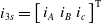 ${i_{3s}} = {\left [ {\begin{array}{*{20}{c}} {{i_A}}&{{i_B}}&{{i_c}}\end{array}} \right ]^{\textrm {T}}}$
and
 ${\psi _{3s}} = {\left [ {\begin{array}{*{20}{c}}{{\psi _A}}&{{\psi _B}}&{{\psi _c}}\end{array}} \right ]^{\textrm {T}}}$
are the phase currents and flux linkages of the three-phase windings, respectively, and
 $p_n$
is the number of pole pairs of the PMSM. Transforming the equation into a rotating synchronous coordinate system yields
 \begin{equation} T_{\mathrm{e}} = \dfrac {3}{2}{p_n}{i_q}\left [ {{i_d}({L_d} - {L_q}) + {\psi _{\textrm {f}}}} \right ]. \end{equation}
In addition, the mechanical equations of motion of the motor are described as
 \begin{equation} J\dfrac {{d{\omega _m}}}{{dt}} = {T_e} - {T_L} - B{\omega _m}, \end{equation}
where
 $J$
is the moment of inertia,
 $B$
is the damping factor, and
 $T_L$
is the load torque.
2.2. Speed controller based on non-singular fast terminal sliding mode control
NFTSMC introduces nonlinear terms on the sliding surface and employs a fractional-order SMC scheme, which not only improves the system’s robustness but also ensures that the tracking error reaches a steady state within a finite time. In addition, by adjusting the sliding mode reaching law, the dynamic quality of the approaching motion can be further enhanced.
In a surface PMSM, the stator inductance
 $L_s$
is equivalent to both the d-axis inductance
 $L_d$
and the q-axis inductance
 $L_q$
. Implementing rotor magnetic FOC with
 $i_d=0$
can enhance control performance. At this juncture, the amalgamation of Eqs. (3) and (6) produces the subsequent mathematical model:
 \begin{equation} \begin{cases}\dfrac {\mathrm{d}i_q}{\mathrm{d}t}=\dfrac {l}{\mathrm{L}_s}(-Ri_q-p_n\varphi _f\omega _m+u_q)\\[-10pt]\\ \dfrac {\mathrm{d}\omega _{\mathrm{m}}}{\mathrm{d}t}=\dfrac {l}{J}\Bigg (-T_L+\dfrac {3p_n\varphi _f}{2}i_q\Bigg )\end{cases}\kern-10pt. \end{equation}
The state variables of the PMSM system are defined as follows:
 \begin{equation} \begin{cases}x_l=\omega _{ref}-\omega _m\\x_2=\dot {x}_l=-\dot {\omega }_m&\end{cases}\kern-10pt, \end{equation}
where
 $\omega _{ref}$
is the reference rotational speed and
 $\omega _m$
is the actual rotational speed. For the convenience of controller design, the torque load is temporarily considered as constant, thus
 $\dot {T}_{I}=0$
. Based on Eqs. (6) and (8), the state equations of the PMSM can be described as follows:
 \begin{equation} \left [ {\begin{array}{*{20}{c}} {{{\dot x}_1}}\\ {{{\dot x}_2}} \end{array}} \right ] = \left [ {\begin{array}{*{20}{c}} 0&1\\ 0&{ - \dfrac {B}{J}} \end{array}} \right ]\left [ {\begin{array}{*{20}{c}} {{x_1}}\\ {{x_2}} \end{array}} \right ] + \left [ {\begin{array}{*{20}{c}} 0\\ { - \dfrac {{3{p_n}{\varphi _f}}}{{2J}}} \end{array}} \right ]{\dot i_q}. \end{equation}
In traditional NFTSMC, the sliding surface is represented as follows:
 \begin{equation} s=x_1+\alpha x_1^{l/h}+\beta x_2^{\,p/q}, \end{equation}
where
 $\alpha$
,
 $\beta$
are positive parameters;
 $p$
,
 $q$
,
 $h$
, and
 $l$
are all odd integers, satisfying the constraints
 $1\lt p/q\lt 2$
,
 $l/h\gt p/q$
.
 $x_1$
and
 $x_2$
have no negative terms. Therefore, the controller designed based on this sliding surface can avoid the singularity problem.
Taking the derivative of the sliding mode surface yields the following equation:
 \begin{equation} \dot{\!s}=x_2+\frac {\alpha l}{h}x_1^{l/h-1}x_2+\beta \frac {p}{q}x_2^{\,p/q-1}\dot {x}_2. \end{equation}
Furthermore, this paper adopts a novel reaching law [Reference Xu, Zhang and Ji15], as presented in Eq. (12), which effectively mitigates the chattering phenomenon associated with traditional reaching laws.
 \begin{equation} \begin{cases} \dot{\!s}=-f(x_1,s)\mathrm{sgn}(s)-k_1s \\[4pt] f(x_1,s)=\dfrac {\gamma |x_1|}{k_2+(1-k_2)e^{-\delta |s|}} \\[8pt] \mathop {\lim }\limits _{t \to 0}{|x_1|=0},\gamma \gt 0,\delta \gt 0,k_1\gt 0,0\lt k_2\lt 1. & \end{cases} \end{equation}
The reaching law mentioned above includes the variable speed reaching law
 $f(x_1, s)sgn(s)$
and the index reaching law
 $k_1s$
. When the system trajectory deviates significantly from the sliding surface, both the variable speed reaching law and the index reaching law work together to achieve a faster reaching rate. As the system trajectory approaches the sliding surface, the variable speed reaching law plays a dominant role, with
 $f(x_1, s)$
converging to
 $\gamma |x1|$
to suppress chattering.
Substituting the reaching law in Eq. (12) into Eq. (11), and combining with Eq. (9), the reference current of the q-axis can be expressed as follows.
 \begin{align} i_q^*=\frac {2J}{3 p_{n} \psi }&\int _{0}^{t}\left [\frac {q}{\beta p}x_{2}^{2 - p/q}\left (1+\frac {ol}{h}x_{1}^{l/h-1}\right )-\frac {b_{m}}{J}x_{2}\right ] \nonumber\\ & +\frac {\gamma |x_{1}|}{k_{2}+(1-k_{2})e^{-\delta |s|}}\mathrm{sgn}(s)+k_{1}s\biggr ]dt. \end{align}
To achieve the excellent control performance of the above methods, precise adjustment of the control parameters is essential. NFTSMC involves up to 10 control parameters. Although stability analysis can determine the value ranges for some parameters, manually tuning the control performance to the desired range is still a difficult task. To address this, we introduce heuristic search algorithms to tune the control parameters.
3. Improvement and deployment of the GWO
The optimization objective for tuning the parameters of the control algorithm using GWO can be described as follows:
 \begin{equation} \begin{aligned}\min &&f_{fitness}(\mathbf{P})\\\mathrm{s.t.}&&\mathbf{P}\in T\end{aligned}, \end{equation}
where
 $\mathbf{P}$
represents the control parameters that need to be optimized.
 $T$
represents the range of control parameter values that can satisfy the system stability conditions.
To integrate the heuristic search algorithms into the controller, researchers in ref. [Reference Zhu, Hu, Yu, Zeng, Yang and Carbone26] proposed an online deployable parameter optimization strategy (ODPOS), which utilizes the system’s response curve to step signals to evaluate the optimization effectiveness. However, the fundamental determinant of controller performance lies in how the fitness value is calculated. The fitness value is calculated based on the evaluation indicator. Various heuristic algorithms optimize the motor’s control performance by minimizing this fitness value. Thus, the evaluation indicator predominantly determines the optimized control performance of the motor. For this reason, this paper proposes a comprehensive evaluation indicator to meet diverse control requirements.
In addition, this paper improves the deployable parameter optimization scheme, accelerates the search speed, and clarifies the structure of the scheme, thereby facilitating the deployment of different heuristic search algorithms.
3.1. Improvement of the GWO algorithm
3.1.1. The theory of GWO
The GWO algorithm, introduced by Australian researchers, is a heuristic method inspired by the hunting behavior of gray wolf packs. The GWO algorithm emulates the leadership structure and hunting strategies of gray wolves in the wild, encompassing three primary phases: Prey Search, Prey Encirclement, and Prey Attack.
Gray wolves encircle their prey during hunting. To mathematically describe this action, the following equations are proposed:
 \begin{equation} D{=}\left |C{\cdot }X_p(t){-}X(t)\right |, \end{equation}
 \begin{equation} X(t+1)=X_p(t)-A\cdot D, \end{equation}
Where
 $t$
represents the current iteration number,
 $X_p$
is the position of the prey, and
 $X$
denotes the position of the gray wolf.
 $A$
and
 $C$
are coefficients which can be calculated by the following equations:
 \begin{equation} A=2a\cdot r_l-a, \end{equation}
 \begin{equation} C=2r_2, \end{equation}
where
 $r_1$
,
 $r_2$
are random numbers in the range [0,1]. The value of
 $a$
is linearly decreased from 2 to 0 as the number of iterations increases.
Initially, wolves disperse to locate prey and subsequently regroup to launch an assault. The parameter
 $A$
is utilized in the mathematical model to compel the gray wolves to diverge from the prey, as illustrated in Eq. (17). When
 $|A|\gt 1$
, it compels the gray wolves to avoid the prey in pursuit of a superior solution. A further element advantageous to the search process is
 $C$
, determined by Eq. (18). This parameter assigns random weights to the prey to accentuate or diminish the influence of the prey’s position on the distance
 $D$
in Eq. (15).
To mathematically simulate the social hierarchy of wolves, the ideal solution is denoted as
 $\alpha$
, representing the position of the lead wolf, whereas the second and third optimal solutions are labeled as
 $\beta$
and
 $\delta$
, respectively. The residual candidate solutions are presumed to be
 $\omega$
. In the GWO algorithm, the hunting process is directed by
 $\alpha , \beta , and\ \delta$
. The
 $\omega$
wolves pursue these three wolves.
Gray wolves can locate prey and encircle the prey for hunting purposes. The encirclement procedure, which is often orchestrated by the
 $\alpha$
wolf with
 $\beta$
and
 $\delta$
wolves occasionally joining the hunt, is mathematically represented as:
 \begin{equation} \begin{aligned} &D_{\alpha } =\left |C_1\cdot X_\alpha -X\right | \\ &D_{\beta } =\left |C_2\cdot X_\beta -X\right | \\ &D_{\delta } =\left |C_3\cdot X_\delta -X\right | \end{aligned}, \end{equation}
 \begin{equation} \begin{aligned} &{X_1} = {X_\alpha } - {A_1} \cdot {D_\alpha }\\ &{X_2} = {X_\beta } - {A_2} \cdot {D_\beta } \\ &{X_3} = {X_\delta } - {A_3} \cdot {D_\delta } \end{aligned}, \end{equation}
where
 $X_1, X_2$
, and
 $X_3$
represent the adjusted positions of
 $X$
wolf influenced by the
 $\alpha , \beta$
, and
 $\delta$
, respectively. The final position is averaged as shown in Eq. (21).
 \begin{equation} X(t+l)=\frac {X_1+X_2+X_3}3. \end{equation}
The search process commences with the generation of a random population of gray wolves by the GWO algorithm. Throughout the iterations, the
 $\alpha , \beta$
, and
 $\delta$
wolves assess the potential location of the prey, whereas the remaining gray wolf individuals (candidate solutions) adjust their locations according to their proximity to the prey. The inclusion of parameters
 $A$
and
 $C$
enhances the exploration process, and when
 $|A| \lt 1$
, the candidate solutions converge toward the prey’s position. The GWO algorithm concludes upon meeting a termination requirement.
3.1.2. The improvement of GWO
Since the search algorithm needs to be deployed in the controller, the control performance of each parameter in the population must be evaluated by the system’s response to the set speed. An excessively large population size can lead to longer optimization times; therefore, it is necessary to reduce the population size and the number of iterations. To this end, this paper combines the GA and introduces a nonlinear attenuation factor to improve the GWO algorithm, thereby enhancing its search performance.
In the GWO algorithm, all gray wolf individuals move toward the alpha wolf. If the alpha wolf does not represent the global optimum, the algorithm may become trapped in a local optimum [Reference Li, Li, Zhao and Liu31]. To address this issue, this paper incorporates crossover operations from GA to update the positions of the gray wolves and utilizes a nonlinear attenuation factor to balance the exploration and exploitation process. To facilitate deployment in drivers, the operating logic of the GWO has also been redefined.
Define “cross” as the crossover operation in GA. Modify Eq. (21) to perform crossover operations on the gray wolf individuals, thereby reducing the likelihood of falling into local optima. The specific changes are as follows:
 \begin{align} X(t+1)= \begin{cases} \operatorname {cross}[X(t),X_1(t)],\operatorname {rand}\leqslant \dfrac {1}{3} \\[10pt] \operatorname {cross}[X(t),X_2(t)],\dfrac {1}{3}\lt \operatorname {rand}\lt \dfrac {2}{3} \\[10pt] \operatorname {cross}[X(t),X_3(t)],\operatorname {rand}\geqslant \dfrac {2}{3} & \end{cases} \end{align}
where rand is a random number between 0 and 1.
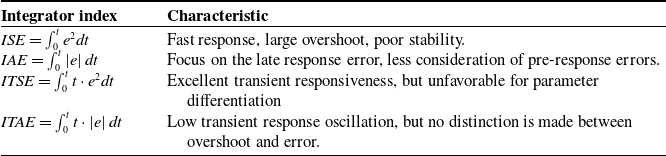
Error integrator index.

In addition, from Eq. (17), it is evident that parameter
 $a$
is crucial for distinguishing between the exploration and exploitation phases. To better balance these two phases, we designed a nonlinear attenuation factor to adapt to the algorithm’s natural dynamic search. Thus, the relationship between parameter
 $a$
and the number of iterations in this paper is as follows:
 \begin{equation} a=1+\sin \left(\frac {\pi }{2}+\pi \cdot \frac {t}{t_{\max }}\right) \end{equation}
where the
 $t_{max}$
is the maximum number of iterations.
From the above equation, it is evident that the value of
 $a$
is relatively large in the early stages of iteration, which causes the search individuals to be spread across the solution space, enhancing exploration of the entire solution space. In the later stages of iteration, the value of
 $a$
decreases, facilitating local exploitation by the algorithm in order to find better solutions.
3.2. A comprehensive evaluation indicator
In the assessment of the performance of control systems, the primary evaluation indicators utilized are integral indicators, namely ISE, IAE, ITSE, and ITAE. Table I illustrates the characteristics of these indicators. ISE squares the error and thus necessitates that the system swiftly diminishes errors during the early ascent phase to attain a reduced rise time. ITAE employs a linear penalty on errors and does not vigorously minimize errors during optimization, thus mitigating the possibility of overshoot. Nevertheless, these indications inadequately differentiate various reaction performance metrics and are incapable of highlighting or downplaying a singular control performance.
Traditionally, the measurement of control performance usually includes two groups of indicators: dynamic performance and static performance. The dynamic performance of a system is characterized by dynamic indicators, primarily comprising rise time, peak time, settling time, and overshoot. The steady-state performance is defined by the steady-state error.
This paper used four control performance indicators – rise time, settling time, overshoot, and steady-state error – to develop an evaluation indicator, given the strong association between rise time and peak time. Rise time
 $t_r$
is defined as the duration required for the reaction to increase from 10% to 90% of the reference speed. The setting time,
 $t_s$
, denotes the minimum duration necessary for the reaction to attain and maintain a range within
 $\pm 0.5\%$
of the reference speed. The overshoot is the percentage of the highest divergence of the response speed
 $\omega _P$
from the reference speed
 $\omega _{ref}$
, which is represented as:
 \begin{equation} \sigma =\frac {\omega _P-\omega _{ref}}{\omega _{ref}}\times 100\%. \end{equation}
The steady-state error
 $e_s$
is calculated using the formula
 \begin{equation} e_s=\lim _{t\to \infty }e(t), \end{equation}
where
 $e(t)$
represents the speed error at moment
 $t$
.
In order to ensure comparability among the four performance indicators, they were normalized using the following equations:
 \begin{equation} y=\frac {x_i-x_{\min }}{x_{\max }-x_{\min }}, \end{equation}
where
 $x_i$
represents the indicator to be normalized.
 $y$
is the mapped value obtained.
 $x_{max}$
and
 $x_{min}$
represent the maximum and minimum values of the indicator that the system is likely to achieve under different control parameters, respectively. The IGWO algorithm randomly generates its control parameters in the initial iteration, and the maximum and minimum values of each control performance metric observed during this iteration are recorded and designated as
 $x_{max}$
and
 $x_{min}$
, respectively. This approach ensures that the normalized metrics are directly comparable.
Ultimately, the evaluation indicators of optimization algorithm are described as follows
 \begin{equation} fitness=w_1t_r+w_2\sigma +w_3t_s+w_4e_s, \end{equation}
where
 $w_1, w_2, w_3$
, and
 $w_4$
denote the weights of each control performance metric, respectively.
 $t_r, t_s, \sigma ,$
and
 $e_s$
are all performance indicators after normalization.
The suggested evaluation indicators allow for the precise allocation of significance to each performance indicator, hence aiding in the attainment of diverse control performance targets. An increased weight attributed to a specific indication signifies that the optimization algorithm will prioritize the enhancement of that performance metric throughout the search phase. This adaptable weight assignment technique offers a tailored approach for optimizing control systems and enhances performance in particular application contexts.
3.3. Deployment of the IGWO in the controller
Due to discrepancies between simulation and real-world environments, control parameters optimized in simulation fail to achieve identical performance in practical applications. To address this limitation, this paper modifies the structure of the deployable parameter optimization and embeds it into the metaheuristic algorithm module. The fitness evaluation function and the FSM are integrated into the Fitness evaluation module. As depicted in Figure 1, these two modules collaborated to accomplish optimization of the control system’s performance.
Algorithm architecture.

The fitness evaluation module comprises two functions: the generation of the reference speed and the assessment of the fitness of individuals. The heuristic algorithm module generates control parameters and modifies search agents based on the fitness values. Figure 2 illustrates that the reference speed signal produced by the fitness calculation module bifurcates the system into a response stage and a stabilization stage.
Individual fitness evaluation process.

During the response stage, the fitness calculation module generates an elevated reference speed, typically the rated rotational speed
 $\omega _r$
. The heuristic algorithm module concurrently generates the search agents (gray wolf individuals) whose fitness requires evaluation as system control parameters. At this point, the fitness evaluation module begins to document the system response outcomes. To ensure comparability among different agents, the duration of this stage should remain consistent throughout the evaluation process. Based on the system’s response time, the single-run duration of this stage was set to 1 s for the experiments.
During the stabilization stage, the fitness calculation module produces a relatively low reference speed
 $\omega _s$
, typically corresponding to the stationary condition. This module simultaneously evaluates the agents’ fitness based on recorded speed and transmits the results to the heuristic algorithm module, which then modifies the agents. At this step, the heuristic algorithm module produces the ideal agent to stabilize the system. The duration of this stage is determined by the system stabilization requirements, which took an average of 0.5 s in this study.
The fitness evaluation of a search agent comprises a response stage and a stabilization stage. Upon the completion of one evaluation, the algorithm reiterates this procedure to assess the fitness of further search agents. In fact, this repeated response to the step signal is similar to the joint motor continuously repeating an action. Therefore, the optimization of the PMSM control performance can be regarded as the optimization of the dynamic performance of the joint motor when executing this action.
The optimization behavior of heuristic search algorithms possesses a certain degree of randomness. To prevent system instability caused by suboptimal solutions during the search process, this paper introduces FSM [Reference Zhu, Hu, Yu, Zeng, Yang and Carbone26] to monitor the system status and terminate the response phase before the system becomes uncontrollable, thereby maintaining system stability. This mechanism causes the evaluation process of certain inferior solutions to be prematurely terminated during the response stage, resulting in a duration shorter than the typical one second for this stage.
4. Experimental results
4.1. Experimental equipment
An experimental platform was constructed by using the LinksRT semi-physical simulation equipment to assess the feasibility of the optimization technique. This platform can directly connect with MATLAB/Simulink to develop control programs based on the simulation model. Figure 3a illustrates that the complete experimental platform included a PMSM with an encoder, a torque sensor, a hysteresis brake, and a hysteresis load controller. The configuration comprised a DRV8302 motor driver board, an EDR-120-24 switching power supply module, a host computer for control program development, and the LINKS-BOX rapid prototyping machine created by Beijing LINKSTM. Figure 3b depicts the interconnections and communication among various devices.
Experimental platform.

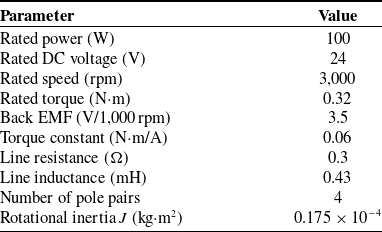
A 100 W PMSM manufactured by TODE was utilized in these trials, with the specific characteristics of the motor presented in Table II. The control algorithm’s sampling frequency was 0.0001 s, whereas the transformer’s switching frequency was 10 kHz. The hysteresis brake utilized in the studies can deliver a consistent load torque within the range of 0-1
 $N\cdot m$
.
Parameters of the 100 W interior PMSM.

4.2. Optimization performance under varying operating conditions
Although the NSFSMC control scheme is highly robust, the nonlinear features of PMSM make it difficult to achieve high-performance control in various operating circumstances with a single control parameter. Figure 4 demonstrates that under no-load conditions at 1,000 rpm, traditional stability analysis and manual parameter adjustment can yield control parameters that ensure optimal performance. Nevertheless, when the motor functions at 3,000 rpm under no-load conditions, the same control parameters lead to a substantial rise in overshoot, extending the duration necessary for system stability. Consequently, it is imperative to implement distinct control settings for diverse operating circumstances to attain optimal control efficacy.
The motor response diagram under the same control parameters. (a) 1000 rpm reference speed setting. (b) 3000 rpm reference speed setting.

This study implemented the proposed optimization technique for diverse speed and torque parameters. Figure 5 especially shows the optimization process under no-load conditions at a speed of 3000 rpm. In the figure, the horizontal axis represents time, and the vertical axis shows the actual speed and some control parameters, including the sliding surface parameter
 $\alpha$
, the fractional-order parameter
 $l$
, and the reaching law parameter
 $\gamma$
. The optimization approach follows the algorithmic procedure outlined in Section 3.3. Referring to the experimental setup in ref. [Reference Djerioui, Houari, Ait-Ahmed, Benkhoris, Chouder and Machmoum32], the number of iterations for IGWO is determined to be 20. Based on numerous experimental validations, the population size is set to be 10, which significantly reduces optimization time and guarantees results.
Optimization process: (a) is the first 30 s of the optimization process, (b) is the final stage of the optimization process.

In the preliminary phase, the heuristic algorithm module first generates a set of control parameters that facilitates the system’s swift attainment and maintenance of a stationary state. Upon confirming system stability, the system controller concurrently adjusts its control parameters and reference speed, thus concluding the stabilization stage and initiating the response stage. To ensure uniformity in fitness calculation, if the system can remain stable during the response stage, this stage lasts for 1 s. If FSM is triggered during this stage, the response stage ends immediately. During this stage, a solitary search agent is relayed to the controller as a collection of control parameters. Upon the completion of the response stage, the system reverts to a stable stage, readying itself for the subsequent round of fitness evaluation for the search agents, thus sustaining this cycle.
Figure 5a depicts the optimization process of the approach during the early phase. Oscillation issues and recurrent speed overshoots have arisen due to the random generation of initial control parameters by the IGWO. The FSM terminates the evaluation process of the fitness values of poor solutions in advance, thus reducing the optimization time. In the advanced phases of the optimization process, as depicted in Figure 5b, the IGWO algorithm has discerned control parameters that satisfy the control requirements and are suitable for the prevailing operating conditions. It subsequently sought to identify supplementary control parameters that exhibit superior performance in the vicinity. Upon satisfying the algorithm’s termination requirements, the fitness evaluation module established the reference speed at zero and ceased the optimization process. The heuristic algorithm module concurrently produced the optimal control parameters. The entire online search process took 242.42 s, which is less than the time spent on manual parameter tuning.
Figure 6 demonstrates the improved control effectiveness of the optimized system. The control parameters derived by online optimization have markedly diminished the overshoot in response to step signals relative to the original values. Furthermore, the system’s steady-state performance has been improved, keeping the steady-state inaccuracy within one thousandth.
Comparison of performance before and after optimization.

To validate the optimization efficacy of the suggested technique under motor load situations, parameter optimization experiments were performed under such settings. The trial speed was established at 1000 rpm with a load of 0.32
 $N\cdot m$
at the rated torque. Figure 7 presents a comparative analysis of the various optimization outcomes under both no-load and load scenarios.
Comparison of control effects when a load is suddenly applied. (a) represents the control effect optimized under the scenarios of applying a 0.32
 $N\cdot m$
load. (b) represents the control effect optimized under the no-load scenarios.

Figure 7a depicts the reaction of the optimal control settings derived under no-load conditions when a sudden load is introduced. Upon the application of the rated torque, the motor speed swiftly diminishes to 88.24 rpm, necessitating 0.57 s to revert to the rated speed. Upon load removal, the speed swiftly escalated to 1014.23 rpm and stabilized after 0.48 s. Figure 7b depicts the control effect of the optimal control parameters identified by the optimization algorithm under the specified load scenario. In contrast to the optimization outcome obtained without load, the revised control parameters exhibit only a 5.04 rpm reduction upon load application. The velocity reverts to its reference speed within 0.28 s. Post-unloading, the speed variance is merely 5.74 rpm, stabilizing within 0.17 s. The examination of Figures 7a and 7b demonstrates that the suggested optimization technique results in substantial improvements in the motor’s control performance under loaded conditions.
The experimental results indicate that the proposed optimization technique functions well under diverse settings and determines the best control parameters that fulfill the requirements, thereby markedly improving the system’s dynamic performance.
4.3. Evaluation indicator effect
The choice of the evaluation indicator is essential for the ultimate outcomes of heuristic optimization algorithms. Currently, integral indices are the most commonly employed functions. This article conducted comparison experiments that included the IAE, ITAE, ISE, and ITSE integral indices as well as the suggested evaluation indicator.
Figures 8 and 9 demonstrate the optimal control outcomes attained by utilizing four integral indicators as optimization objectives in the proposed technique. The ISE rapidly diminishes the system’s early response error due to the squaring process done to the error, leading to considerable overshoot. Conversely, the ITSE, by incorporating a temporal element, facilitates a more calibrated correction of initial errors, thus reducing the system’s overshoot. IAE and ITAE, due to the absence of squared terms, can significantly reduce overshoot. However, they are difficult to reduce the steady-state error of the system.
Optimized control effects using integral indicators.

Comparison of steady-state for integral indicators.

By adjusting the weights of the proposed evaluation indicator, different control performances can be achieved. As shown in Table III, four different weight configurations are presented, and the corresponding control performances obtained through optimization are illustrated in Figures 10 and 11.
Weighting of proposed evaluation indicators.

Optimized control effects using the proposed indicators.

Comparison of steady-state error for proposed indicators.

As depicted in the enlarged section of Figure 10, the curve
 $F_1$
reaches 90% of the rated speed first, indicating that increasing the weight
 $w_1$
resulted in a faster response of the optimized control algorithm. The objective of optimizing the indicator with the smallest overshoot in the figure is also curve
 $F_2$
, which is consistent with expectations. The curve
 $F_3$
also takes the lead in stabilizing the speed within
 $\pm 0.5\%$
. Figure 11 depicts the steady-state errors throughout the stabilization phase of the various curves presented in Figure 10. As the differences among the experimental results were relatively small, a one-sample t-test was performed to determine whether the result of 2.43 rpm obtained using the
 $F_4$
evaluation indicator exhibits a statistically significant difference compared to the other three experimental results. First, the null hypothesis is defined as no significant difference, i.e.
 $\mu = 2.430$
. The alternative hypothesis states that a significant difference exists, i.e.
 $\mu \ne 2.430$
. Using the one-sample t-test, the calculated t-statistic is 12.410. Second, at a significance level of
 $\alpha = 0.05$
and with two degrees of freedom, the critical value of the t-distribution is found to be 4.303. Since the computed t-statistic 12.410 exceeds this value, the null hypothesis is rejected in favor of the alternative hypothesis. This indicates that the optimization result achieved using the
 $F_4$
evaluation indicator differs significantly from the results obtained using the other three indicators. A lower steady-state error stems from the reduced sensitivity of the system to noise. However, this property also diminishes the sensitivity of the system to control errors, leading to larger overshoots. To mitigate this issue, the value of the
 $w_2$
parameter can be increased appropriately to reduce overshoot. However, this may result in a slight increase in steady-state error. This phenomenon is associated with the inherent characteristics of the controlled system. In practical applications, fine-tuning of parameters
 $w_2$
and
 $w_4$
is required to achieve the desired control performance.
Control performance achieved by different evaluation indicators.

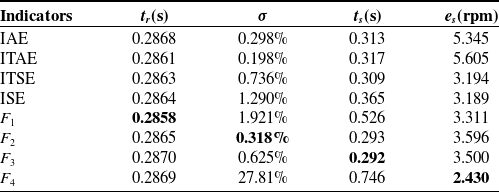
Furthermore, by comparing the proposed indicator with the integral indicators, Table IV presents the control performance achieved by different indicators. The optimal results for response time
 $t_r$
, settling time
 $t_s$
, and steady-state error
 $e_s$
in the table are all realized by the proposed evaluation indicator. Although the overshoot
 $\sigma$
is higher than that of the IAE and ITAE indicators, these two indicators almost eliminate the overshoot while bringing unacceptable steady-state errors. Therefore, the proposed indicator can achieve better optimization effects according to different control performance requirements, thereby meeting the requirements of different working scenarios.
By combining the weight configurations in Table III with the experimental results in Table IV, it can be observed that, within the proposed evaluation framework, the performance metrics associated with higher weights tend to have optimization results. This demonstrates that the normalization method introduced in Eq. (26) makes different performance metrics comparable, which makes adjusting weight parameters easier. Consequently, the optimization focus in practical experiments can be conveniently guided by tuning the relative magnitudes of the weights.
4.4. Comparison with other heuristic optimization algorithms
This study compares the IGWO algorithm with the original GWO algorithm, the PSO algorithm [Reference Wang, Jiang, Tu, Shu and Zhu18], and the HBA algorithm [Reference Zhu, Hu, Yu, Zeng, Yang and Carbone26]. These methods are utilized to optimize motor control settings and have been integrated into the controllers. The comparative studies were performed at 1000 rpm without any load. The optimization goal was set as follows:
 \begin{equation} fitness=t_r+2\sigma +t_s+3e_s. \end{equation}
This evaluation indicator can significantly mitigate overshoot while preserving a minimal steady-state inaccuracy. The number of iterations for each algorithm was established at 20, and the population size was determined to be 10. The parameters of each algorithm were carefully tuned to ensure optimal performance.
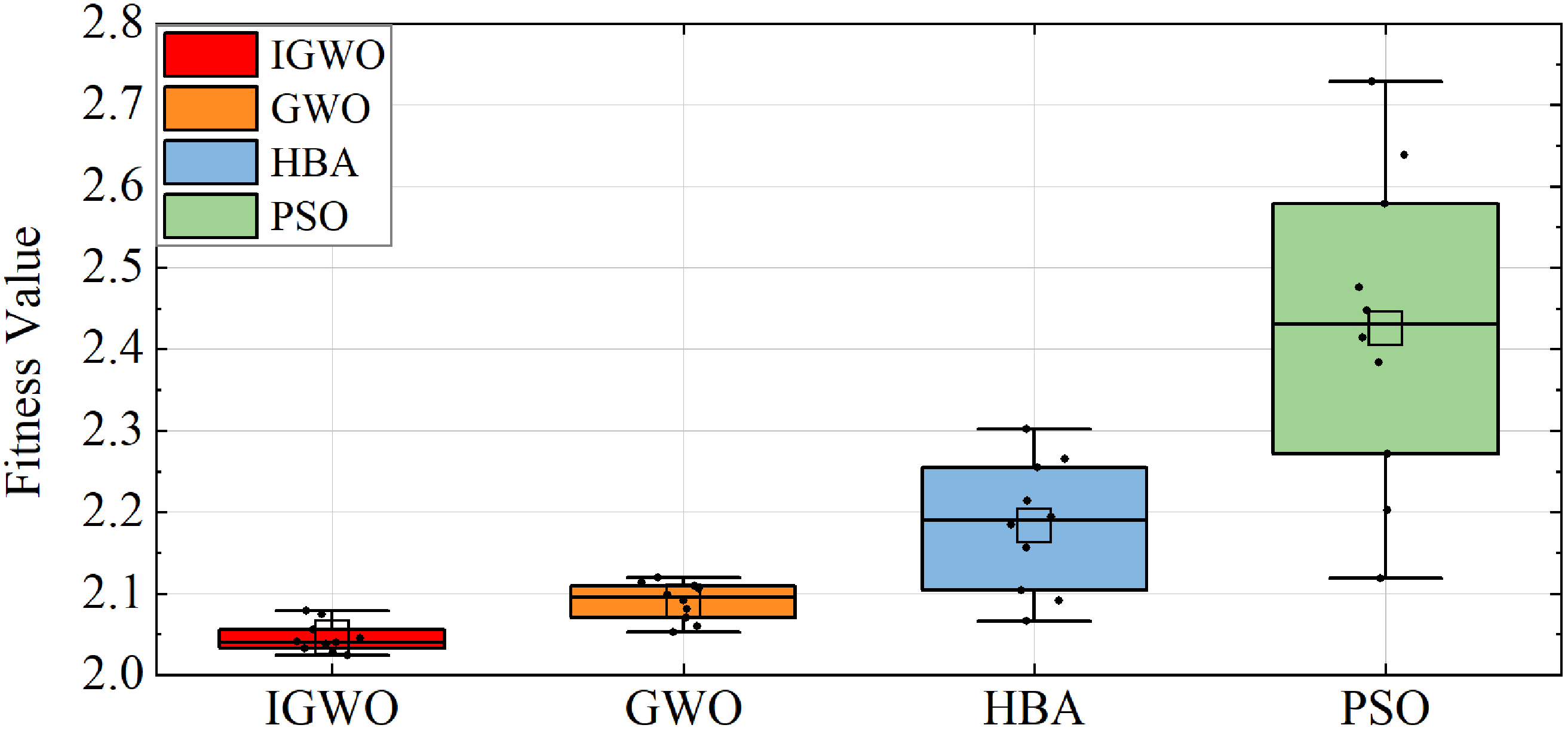
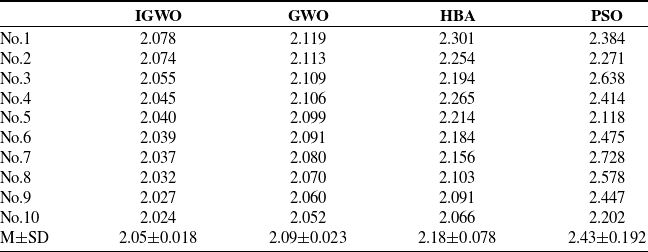
Given the intrinsic randomness of heuristic search algorithms, in this study, 10 independent optimization tests were performed for each algorithm to guarantee the dependability of the results. Figure 12 illustrates the optimization outcomes of these distinct algorithms through box plots. Each point in the figure represents an optimization result, and the corresponding fitness value, along with the mean and standard deviation, is presented in Table V. The smaller the fitness value, the better the control parameters found by the algorithm.
Boxplot of optimization results for different algorithms.

During 10 optimization processes, the mean value of the IGWO algorithm is 2.05, lower than that of the other three algorithms, indicating that its optimization results are closer to the optimal control parameters. In addition, from the comparison of standard deviations, we can observe that the optimization results of the IGWO algorithm have a higher concentration, which shows that under the influence of random initial values, it can achieve good control effects in each optimization.
Fitness values obtained from different algorithms for each optimization instance.

The convergence curve is a crucial metric for evaluating algorithm efficacy. Figure 13 shows the convergence curves of the best optimization process among the four optimization algorithms. As each indicator in the formula has been normalized, the fitness value is anticipated to reside within the range of 0 to 7. By comparing the curves of IGWO and GWO, it can be seen that after finding a relatively good solution in the early stage, the GWO algorithm fails to further optimize in the later stage. This phenomenon is due to the fact that the value of the linear decay factor
 $a$
is relatively large in the later stages of the optimization, resulting in an excessively wide search range. On the contrary, the IGWO with a nonlinear decay factor narrows down the search range in the later stage, enabling it to further find a better solution.
Convergence curves for each optimization process.

The HBA algorithm is inferior to the IGWO algorithm in terms of both the convergence speed in the early stage and the search ability around the optimal solution in the later stage, and the optimization ability of the PSO algorithm is even worse.
The aforementioned results are primarily due to the reduction in the number of iterations and population size. Both the HBA and PSO algorithms rely on a large population for optimization; therefore, a reduction in population size leads to suboptimal search outcomes. In contrast, the GWO algorithm primarily depends on the three best individuals to optimize other members within the population, making it less susceptible to the impact of a reduced population size. Through improvement, the IGWO algorithm can continue to seek optimal solutions in the later stages of iteration, enhancing the optimization capability of the algorithm.
In summary, the IGWO proposed in this paper minimizes the population size and the number of iterations while ensuring the optimization results, thereby reducing the optimization time. Consequently, this scheme is more suitable for the optimization of control parameters in actual controllers.
5. Conclusion
To address the issues of multiple parameters and difficulty in tuning in the NFTSMC control method for robot joint motor applications, this paper proposes an NFTSMC control scheme based on an IGWO algorithm. First, considering the differences between the simulation environment and the actual application environment, the parameter optimization process is deployed in the controller, enabling the optimized parameters to be directly used for motor control. Second, in order to reduce the parameter optimization time, the number of iterations and the population size of the GWO are decreased. Two existing GWO improvement methods were chosen to enhance the performance of this application.
Finally, to meet the requirements of different production demands for control performance, four commonly used control performance indicators are integrated into a single evaluation indicator through normalization treatment. Then, by adjusting the weights of the evaluation indicator, the optimization algorithm is directed to optimize the control performance in the desired direction. The proposed technique has been empirically validated on a 100W PMSM rapid prototyping control platform. The experimental results show that this technology can find the optimal control parameters in a short time, eliminating the need for manual adjustment and reducing the time and resources traditionally required for parameter tuning. The comparison between IGWO and other optimization algorithms proves the effectiveness of the improvement. In addition, the experiment also shows that the proposed evaluation indicator can achieve a smaller overshoot or steady-state error, thus meeting different control requirements. In the future, we expect to apply this scheme to the fault-tolerant control of PMSM to improve their control performance under fault conditions and prolong the service life of the equipment.
Author contributions
X.Z. wrote the main manuscript text, Y.H. contributed to the conception and design of the work, Y.H. and D.Z. reviewed and revised the article, and J.Y. provided guidance on the theoretical section. All authors read and approved the final manuscript.
Financial support
This work was supported in part by the Natural Science Foundation of Jiangxi Province under Grant 20224BAB214045. The work of Yiming Hu was supported by the Young Scientists Fund of the National Natural Science Foundation of China under Grant 52302470 and Key R & D Program of Jiangxi Province under Grant 20232BBE50010. The work of Dequan Zeng was supported in part by the Natural Science Foundation of Jiangxi Province under Grant 20232BAB214092 and in part by the Ganpo Talent Support Program-Leading Academic and Technical Personnel in Major Disciplines of Jiangxi Province under Grant 20232BCJ23091.
Competing interests
The authors declare no conflicts of interest exist.
Ethical approval
Not applicable.