1. Introduction
In what follows, we consider three space-time conditions of interest: geodesic completeness, hole-freeness, and inextendibility. How are these three conditions related? Here, we review what is known and contribute a few (minor) results of our own. We take no position as to which of these conditions are satisfied by any or all physically reasonable space-times.Footnote 1 We seek only to shed light on the connections among them.
2. Background Structure
We begin with a few preliminaries concerning the relevant background formalism of general relativity.Footnote 2 An n-dimensional, relativistic space-time (for n ≥ 2) is a pair of mathematical objects (M, gab). Object M is a connected n-dimensional manifold (without boundary) that is smooth (infinitely differentiable). Here, gab is a smooth, nondegenerate, pseudo-Riemannian metric of Lorentz signature (+, −, … , −) defined on M.
Note that M is assumed to be Hausdorff; for any distinct p, q ∈ M, one can find disjoint open sets Op and Oq containing p and q, respectively. We say two space-times (M, gab) and (M′, g′ab) are isometric if there is a diffeomorphism 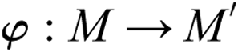 such that
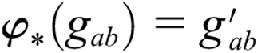 .
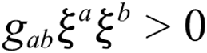
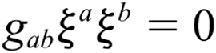
For each point p ∈ M, the metric assigns a cone structure to the tangent space Mp. Any tangent vector  in Mp will be timelike if
 , null if
 , or spacelike if
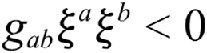 . Null vectors create the cone structure; timelike vectors are inside the cone, while spacelike vectors are outside. A time orientable space-time is one that has a continuous timelike vector field on M. A time orientable space-time allows one to distinguish between future and past lobes of the light cone. In what follows, it is assumed that space-times are time orientable.
For some open (connected) interval 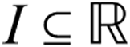 , a smooth curve
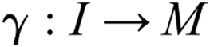 is timelike if the tangent vector
 at each point in
 is timelike. Similarly, a curve is null (respectively, spacelike) if its tangent vector at each point is null (respectively, spacelike). A curve is causal if its tangent vector at each point is either null or timelike. A causal curve is future directed if its tangent vector at each point falls in or on the future lobe of the light cone.
We say a curve 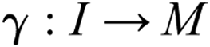 is not maximal if there is another curve
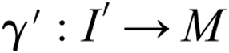 such that I is a proper subset of I′ and
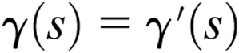 for all s ∈ I. A curve
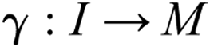 in a space-time (M, gab) is a geodesic if
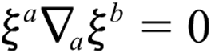 , where
 is the tangent vector and
 is the unique derivative operator compatible with gab.
For any two points p, q ∈ M, we write p ≪ q if there exists a future-directed timelike curve from p to q. We write p < q if there exists a future-directed causal curve from p to q. These relations allow us to define the timelike and causal pasts and futures of a point p: I −(p) = {q : q ≪ p}, I +(p) = {q : p ≪ q}, J −(p) = {q : q < p}, and J +(p) = {q : p < q}. Naturally, for any set S ⊆ M, define J +[S] to be the set ∪{J +(x) : x ∈ S}, and so on. A set S ⊂ M is achronal if  . We say a space-time (M, gab) is stably causal if there is a smooth function
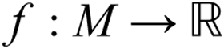 such that, for any distinct points p, q ∈ M, if p ∈ J +(q), then f(p) > f(q).
A point p ∈ M is a future endpoint of a future-directed causal curve 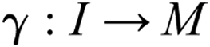 if, for every neighborhood O of p, there exists a point t 0 ∈ I such that
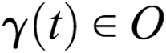 for all t > t 0. A past endpoint is defined similarly. A causal curve is future inextendible (respectively, past inextendible) if it has no future (respectively, past) endpoint.
For any set S ⊆ M, we define the past domain of dependence of S, written D −(S), to be the set of points p ∈ M such that every causal curve with past endpoint p and no future endpoint intersects S. The future domain of dependence of S, written D +(S), is defined analogously. The entire domain of dependence of S, written D(S), is just the set D −(S) ∪ D +(S). The edge of an achronal set S ⊂ M is the collection of points p ∈ S such that every open neighborhood O of p contains a point q ∈ I +(p), a point r ∈ I −(p), and a timelike curve from r to q that does not intersect S. A set S ⊂ M is a slice if it is closed, achronal, and without edge. A space-time (M, gab) that contains a slice S such that D(S) = M is said to be globally hyperbolic.
3. Singularities and Holes
There are a number of ways to define a space-time singularity but “none, with the exception of geodesic incompleteness, seems to have found any significant applications” (Geroch and Horowitz Reference Geroch, Horowitz, Hawking and Isreal1979, 258). Here, we take this position for granted and refer the reader to Curiel (Reference Curiel1999) for thorough and convincing arguments in its favor. We now make the condition precise.
Definition 1.— A space-time (M, gab) is geodesically complete (GC) if every maximal geodesic 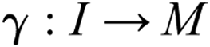 is such that
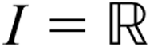 . A space-time is geodesically incomplete if it is not geodesically complete.
Physically, a timelike incomplete geodesic represents a freely falling observer who does not record all possible watch readings. If an incomplete geodesic is timelike or null, there is a useful distinction one can introduce. We say that a future-directed timelike or null geodesic 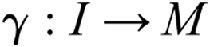 without future endpoint is future incomplete if there is an
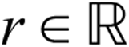 such that s < r for all s ∈ I. A past incomplete timelike or null geodesic is defined analogously.
The singularity theorems of Hawking and Penrose (Reference Hawking and Penrose1970) show that a large number of seemingly physically reasonable space-times fail to be geodesically complete. Thus, the condition is somewhat strong.
Of course, there are also a large number of geodesically incomplete space-times that seem to have “artificial” singularities. Indeed one can show that any space-time with one point removed from the manifold is geodesically incomplete. In such a space-time, a type of indeterminism is also present; the domain of dependence of some spacelike surface is not “as large as it could have been.” We turn our attention now to this type of indeterminism—due to space-time “holes”—and its connections with geodesic incompleteness.
Initially, one defined (Geroch Reference Geroch, Earman, Glymour and Statchel1977) a space-time (M, gab) to be hole-free if, for every spacelike surface S ⊂ M and every isometric embedding  into some other space-time (M′, g′ab), we have
 . The definition seemed to be satisfactory. Indeed, one can show that any space-time with one point removed from the manifold is not hole-free. But surprisingly, it turns out that the definition is too strong; Minkowski space-time fails to be hole-free under this formulation (Krasnikov Reference Krasnikov2009). But one can make minor modifications to avoid this consequence (Manchak Reference Manchak2009).
Let (K, gab) be a globally hyperbolic space-time. Let 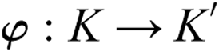 be an isometric embedding into a space-time (K′, g′ab). We say (K′, g′ab) is an effective extension of (K, gab) if, for some Cauchy surface S in (K, gab),
 and
 is achronal. Hole-freeness can then be defined as follows.
Definition 2.— A space-time (M, gab) is hole-free (HF) if, for every set K ⊆ M such that (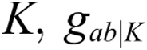 ) is a globally hyperbolic space-time with Cauchy surface S, if
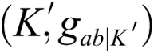 is not an effective extension of (
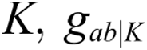 ) where K′ = int(D(S)), then there is no effective extension of (
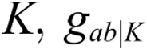 ).
What is the relationship between hole-freeness and geodesic completeness? One can easily show that the former does not imply the latter.
Example 1.— Let (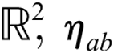 ) be Minkowski space-time, and let p be any point in
 , and let q be any point in I −(p). Let M be the manifold I −(p) ∩ I +(q). Clearly, the space-time (
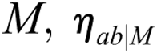 ) satisfies HF but not GC.
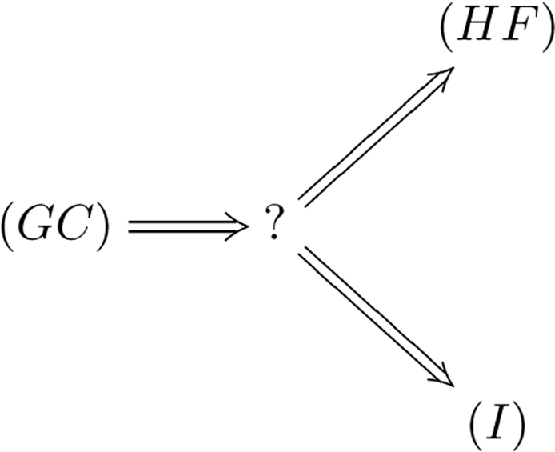
One wonders whether the implication relation holds in the other direction. And it has been conjectured by Geroch (private communication) that there even exists some physically significant intermediate completeness condition that is weaker than geodesic completeness but stronger than hole-freeness (see fig. 1).
Is there a physically significant intermediate condition that is implied by GC and implies HF?

Why might such an intermediate condition be of interest? As noted above, geodesic completeness is a somewhat strong condition in the sense that not all seemingly physically reasonable space-times satisfy it. However, hole-freeness is a somewhat weak condition in the sense that some space-times (e.g., example 1) that satisfy it can be constructed by removing points from otherwise geodesically complete space-times. An intermediate condition may be strong enough to rule out these seemingly artificial singularities but weak enough to allow the more physically reasonable, geodesically incomplete space-times guaranteed by the singularity theorems.
4. Singularities and Extensions
One way to rule out space-times that are constructed by removing points from the manifold is to require that space-time be “as large as it could have been.” In other words, one can require that space-time be inextendible. We have the following definition.
Definition 3.— A space-time (M, gab) is extendible if there exists a space-time (M′, g′ab) and an isometric embedding 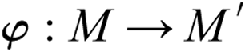 such that
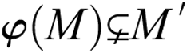 . Here, the space-time (M′, g′ab) is an extension of (M, gab). A space-time is inextendible (I) if it has no extension.
One can show that every extendible space-time has a (not necessarily unique) inextendible extension. What is the relationship between geodesic completeness and inextendibility? One can show that the former implies the latter (Clarke Reference Clarke1993). And a simple example shows that the implication does not run in the other direction.
Example 2.— Let (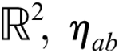 ) be Minkowski space-time, and let p be any point in
 . Let M be the manifold
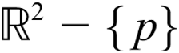 , and let (M′, gab) be the universal covering space-time of (
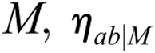 ). Clearly, the space-time (M′, gab) satisfies I but not GC.
The example above shows that inextendibility is a somewhat weak condition. Indeed, some inextendible space-times that are extraordinarily well behaved (e.g., have flat metrics and manifolds diffeomorphic to  ) may nonetheless be geodesically incomplete. As before, one wonders whether there is a physically significant intermediate condition that is strong enough to rule out these seemingly artificial singularities but weak enough to allow the more physically reasonable, geodesically incomplete space-times guaranteed by the singularity theorems (see fig. 2).
Is there a physically significant intermediate condition that is implied by GC and implies I?

One such intermediate condition was thought to have been given by Hawking and Ellis (Reference Hawking and Ellis1973). A space-time (M, gab) is said to be locally extendible if there is an open set O ⊂ M with noncompact closure and an isometric embedding 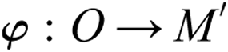 into some other space-time (M′, g′ab) such that the closure of
 is compact. A space-time is locally inextendible if it is not locally extendible. Clearly, local inextendibility implies inextendibility. And the problematic example 2 given above is counted as locally extendible. But it turns out that the condition is not implied by geodesic completeness. Indeed, the condition is much too strong in the sense that Minkowski space-time can be shown to be locally extendible (Beem Reference Beem1980).
5. Holes and Extensions
Hole-freeness and inextendibility are independent conditions. Example 1 shows that hole-freeness does not imply inextendibility. And example 2 shows that inextendibility does not imply hole-freeness. So, the conditions serve to rule two different types of seemingly artificial singularities. And therefore one routinely finds that both hole-freeness and inextendibility are assumed to be satisfied by all physically reasonable space-times (see Clarke [Reference Clarke1976, Reference Clarke1993] and Earman [Reference Earman1989, Reference Earman1995] for examples).
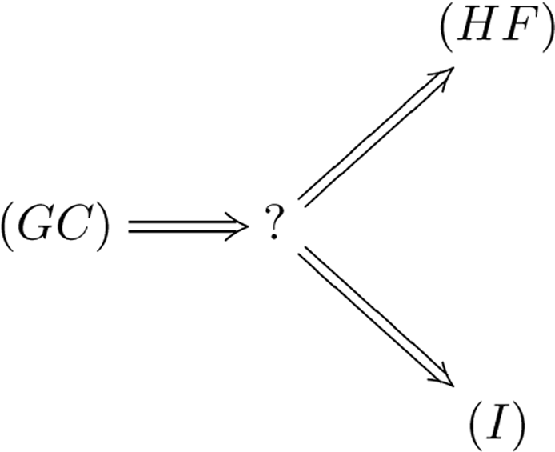
In the two previous sections we have wondered about the existence of two intermediate conditions: one between geodesic completeness and hole-freeness and another between geodesic completeness and inextendibility. Might there be a single (physically significant) intermediate condition that is implied by geodesic completeness and implies both hole-freeness and inextendibility (see fig. 3)? Such an intermediate condition may be strong enough to rule out, in one fell swoop, both types of seemingly artificial singularities at issue (and possibly other types as well) but weak enough to allow the more physically reasonable, geodesically incomplete space-times guaranteed by the singularity theorems.
Is there a physically significant intermediate condition that is implied by GC and implies both HF and I?
6. An Intermediate Condition
Here, we show the existence of the intermediate condition mentioned in the previous section. We introduce the following definition.
Definition 4.— A space-time (M, gab) is effectively complete (EC) if, for every future or past incomplete timelike geodesic 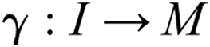 and every open set O containing
 , there is no isometric embedding
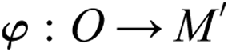 into some other space-time (M′, g′ab) such that
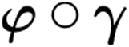 has future and past endpoints.
The condition is a variation of one found in Clarke (Reference Clarke1982) and Earman (Reference Earman1989). But these authors use the mathematically cumbersome and physically dubious concept of “b-incomplete” curves instead of incomplete timelike geodesics.Footnote 3 The physical significance of effective completeness is as follows: if a space-time fails to be effectively complete, then there is a freely falling observer who never records some particular watch reading but who “could have” in the sense that nothing in her vicinity precludes it. The condition is satisfied by the (geodesically incomplete but physically reasonable) standard “big bang” cosmological models (Wald Reference Wald1984).
We note here that a variant of effective completeness can be formulated using arbitrary (instead of timelike) geodesics. The two conditions are not equivalent.Footnote 4 But the stronger variant seems to be less significant physically and moreover is simply not needed to show that effective completeness implies hole-freeness and inextendibility (see below). And it follows immediately from our formulation that geodesic completeness implies effective completeness.
Proposition 1.— GC ⇒ EC.
A simple example shows that the two conditions are not equivalent.
Example 3.— Let (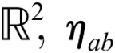 ) be Minkowski space-time, and let p be any point in
 . Let M be the manifold
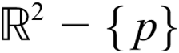 . Let
 be a smooth, strictly positive function that approaches zero as the missing point p is approached. Let gab be the conformally flat metric
 . Clearly, the space-time (M, gab) satisfies EC but not GC.
Examples 1 and 2 above show that hole-freeness and inextendibility each do not imply effective completeness. It follows as a direct corollary to proposition 1.3.1 in Clarke (Reference Clarke1993) that a violation of inextendibility implies a violation of effective completeness. So, we have the following proposition.
Proposition 2.— EC ⇒ I.
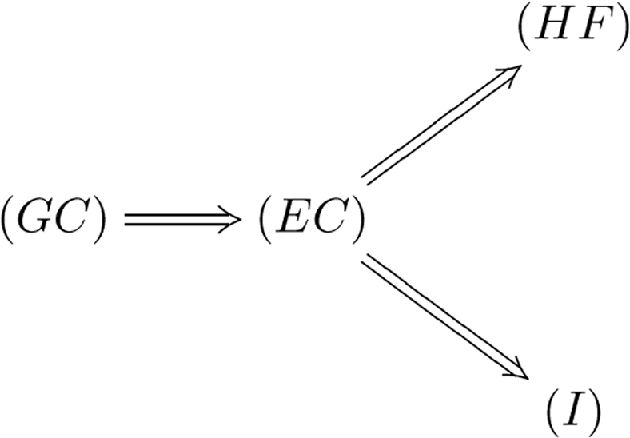
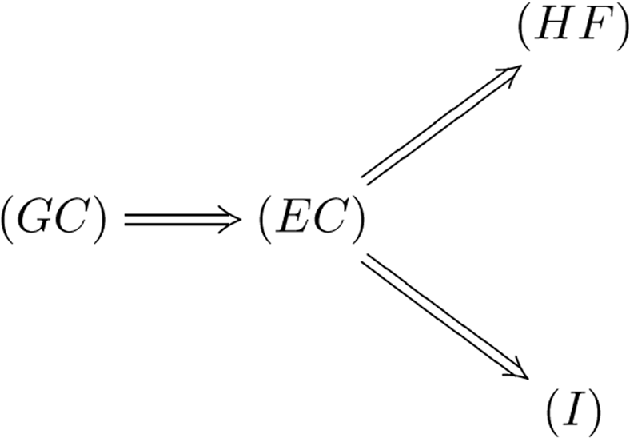
Finally, we show here that effective completeness implies hole-freeness. (All of the implication relationships between the four conditions can be summarized in fig. 4.)
Proposition 3.— EC ⇒ HF.
Relationships among EC, GC, HF, and I.
Proof.—Let (M, gab) be a space-time that does not satisfy HF. Then for some K ⊆ M such that (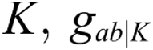 ) is a globally hyperbolic space-time with Cauchy surface S, we know that (i) int(D(S)) = K and (ii) there is a space-time (M′, g′ab) and an isometric embedding
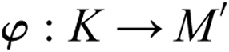 such that
 is achronal and
 . Without loss of generality, we may take
 . So, (M′, g′ab) is globally hyperbolic with Cauchy surface
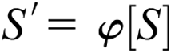 .
Let p′ be a point in  where
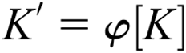 . Now, assume p′ ∈ D +(S′). (A similar proof can be constructed if p′ ∈ D −(S′).) Clearly, p′ ∈ I +[S′]. Let
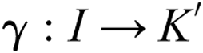 be a timelike geodesic with future endpoint p′ and past endpoint in S′. Either
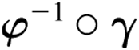 has a future endpoint or not.
First, assume 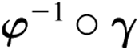 does not have a future endpoint. It follows that
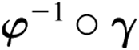 is a timelike future incomplete geodesic. But by construction,
 has future and past endpoints. So in this case, (M, gab) does not satisfy EC. Second, assume that
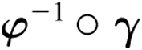 does have a future endpoint p in
 . Consider the open set U′ = I −(p′) ∩ I +[S′]. Clearly, U′ ⊂ K′. Let
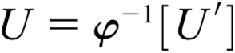 . Note that U ⊂ D +(S). We also know that
 is compact (Wald Reference Wald1984, theorem 8.3.12). Now, either
 is compact or not. Our next step is to show that the former case is impossible.
Assume that  is compact. Now, let
 be any past inextendible casual curve with future endpoint p. Either
 leaves the set
 or not. Assume the latter case first. Since
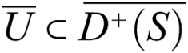 , we can show that, for every
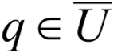 , either
 or every past inextendible timelike curve from q intersects S (see Wald Reference Wald1984, proposition 8.3.2). But one can verify that, because
 never leaves
 ,
 never intersects
 . So, for all s ∈ I, there is a timelike curve
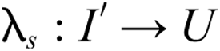 with future endpoint
 and past endpoint in S. We know that, for each s ∈ I, the timelike curve
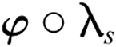 has a future endpoint in
 (Wald Reference Wald1984, lemma 8.2.1). Let
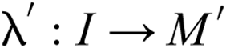 be a (continuous) causal curve defined as follows: for each s ∈ I, let
 be the future endpoint of
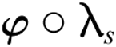 . Since
 is confined to
 , it has a past endpoint
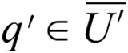 (Wald Reference Wald1984, lemma 8.2.1). Let {si} be a sequence of points in I such that the sequence
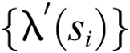 has an accumulation point q′. Now consider the sequence
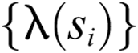 in
 . Since
 is compact by assumption,
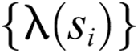 has an accumulation point
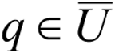 . But this implies that
 can be extended in the past: a contradiction.
Now, assume that  leaves
 at point
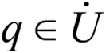 . For some I′ ⊂ I, let
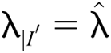
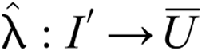 be the (unique) past-directed causal curve with future endpoint p and past endpoint q such that
 . There are two subcases to consider: q is in
 or not. Assume the latter. Let {qi} be a sequence in U that accumulates at q. The compactness of
 ensures that
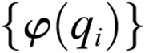 has an accumulation point
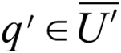 . Clearly, q′ ∉ S′. So, every past directed causal curve from q′ must remain in
 for some interval. But this implies that every past directed causal curve from q must remain in
 for some interval: an impossibility since
 leaves
 at q.
Now assume that  . It is not hard to verify that q cannot be in
 . (If it were, one could find a sequence of points {qi} in S ∩ U that accumulate at q. But the sequence
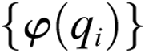 accumulates at a point q in S′. Therefore,
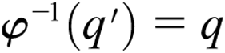 is in S: a contradiction since S is open.) Thus,
 meets S. And since
 was chosen arbitrarily, we have p ∈ D +(S). Now, let {pi} be a sequence of points in
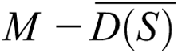 with limit point p. Let
 be a sequence of past inextendible causal curves with corresponding future endpoints {pi} that also fail to meet S. We know that there is a past inextendible causal curve through p that is a limit curve of the sequence (Wald Reference Wald1984, lemma 8.2.6). Since p ∈ D +(S), this limit curve must intersect S. But S is open, and therefore some of the
 must meet S as well: a contradiction. So,
 is not compact.
Finally, let {ri} be a sequence of points in U without accumulation point in  . Since
 is compact, the sequence
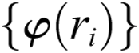 accumulates at some point
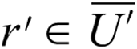 . One can verify that r must be in I +[S′]. Let
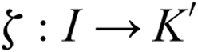 be a timelike geodesic with future endpoint r′ and past endpoint in S′. Clearly,
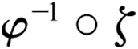 has no future endpoint. It follows that
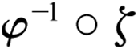 is a timelike future incomplete geodesic. But by construction,
 has future and past endpoints. So in this case as well, (M, gab) does not satisfy EC. QED
7. Conclusion
One final note on how the causal structure of space-time is connected with the preceding.Footnote 5 Of course, under the assumption of any causal condition, the implication relations outlined in the previous section remain intact. And all the counterexamples given satisfy stable causality (and therefore any causal condition it implies). What about the stronger causal condition of global hyperbolicity?
One can easily find globally hyperbolic examples showing that effective completeness does not imply geodesic incompleteness, inextendibility does not imply effective completeness, hole-freeness does not imply effective completeness, and hole-freeness does not imply inextendibility. (All of the examples can be constructed using the manifold in example 1 and adding various conformally flat metrics.)
But it turns out that under the assumption of global hyperbolicity, we find that inextendibility implies hole-freeness (Manchak Reference Manchak2009). It has been conjectured (Penrose Reference Penrose, Hawking and Isreal1979) that all physically reasonable space-times are globally hyperbolic. Thus, if the conjecture is true, we seem to have a useful hierarchy of conditions (see fig. 5).
Relationships among GC, EC, I, and HF under the assumption of global hyperbolicity.

 is spacelike and no timelike geodesic can reach the “apex” point.